What Remains After They’re Gone

Daily writing prompt
How do significant life events or the passage of time influence your perspective on life?

Image source

There are losses that come with sudden announcements and those that slip in quietly. This loss falls into the latter category. I slowly came to understand that someone I loved had chosen not to stay in contact. This sudden change didn’t involve death or drama. There was no final argument or clear explanation. It was a distance that grew until it was gone. There were messages one day. Then they were gone. There was familiarity one day. After that, there was nothing.

At first, I didn’t know it was grief. I told myself that this was normal. People go their separate ways and lives move in different directions. Not every connection lasts through change. Still, the body notices things before the mind does. I reread old conversations and paused before sending messages. I knew I wouldn’t send it, so I held on to my phone longer than I needed to, as if I was waiting for something that had already decided not to arrive.

This month has been full of transitions. I’m leaving a church community that has been a big part of my adult life. I’m finally giving up a part of myself that learned to put up with things by remaining small and compliant. Along with that, I carry the loss of someone who was important to me and was a part of my daily life.

None of these changes came with clear endings. Leaving a community takes shape through many small choices that build on each other. First, the practical tasks, and then the emotional ones. Memories come back to me at the worst possible times: familiar songs, old habits, and routines that make up almost two decades of my life. You don’t leave cleanly. Pieces linger even if you don’t want them to.

Estrangement follows a similar pattern. The loss is evident in mundane instances—such as the impulse to share something and then halting midway, or the instinct to reach out followed by the silent adjustment that you no longer do that. It lives in little things and in spaces where another person used to be.

I used to think that as I got older, I would learn how to let go and carry less weight. The years have made me more aware, though. I notice what I hold on to and how much I let people into my private life. Even brief connections can make a big difference. Age hasn’t made me tougher. It only made me more honest about how I feel.

You can show up, be there, and care for someone, but you can’t make them remain in your life. When they leave, all that is left is how you deal with the absence, probably not in big ways but in how you carry that loss within you.

Some days I feel fine. Some days I feel grief over unfinished conversations or bonding. Sometimes relief, sadness, clarity, and weariness all come together. When you leave the church, you feel both free and lost. Losing someone I loved makes me feel both grief-ridden and accepting. Both changes happen at the same time, and neither one makes things easier.

Transitions don’t usually come one at a time. One ending loosens another. One shift makes room for the next. You can’t always deal with them one at a time; sometimes you have to deal with many changes at once and do your best to stay present.

There is no big breakthrough or a sudden resolution here. I’m just paying attention to things in my life. Mornings are different. Some memories resurface without warning. Silence is more valuable now than it used to be. I also feel a growing sense of stability, not because life is easier, but because I have stopped fighting against change.

Estrangement teaches something quiet but powerful: love doesn’t last forever. People come into your life for reasons you may never fully understand, and sometimes they leave without saying why. There is no guarantee of closure, and answers may never come. Your task is to keep going while carrying what matters.

Right now, that task looks like letting the absence exist without rushing to replace it. It means letting sadness exist without turning it into a story about failure. It means accepting that this season is about letting go, even though I would have liked things to stay the same.

Time moves the days forward without healing these particular wounds, and I do the same. Not with certainty or everything worked out, but with awareness and willingness to remain with what is, even when it means losing someone you loved.


I write about Iban culture, ancestral rituals, creative life, emotional truths, and the quiet transformations of love, motherhood, and identity. If this speaks to you, subscribe and journey with me.
The Art of Subtle Complaints

Daily writing prompt
What do you complain about the most?

Image source

Some people complain loudly. You can hear them from the next room: loud voices, sharp words, and their hands thrown in the air. That has never been my way. My complaints are more subtle, and most of the time they are only in my head; they never leave my mouth. Most days, if you asked, I would say I have nothing to complain about. If you knew me long enough, though, you would notice the places where my patience thins.

I complain about feeling invisible, though I rarely say it aloud.  Sometimes I sit in the middle of a conversation and laugh while my mind wanders. I become a spectator in my own life. People around me don’t notice the things I want them to, like how I become quiet or how I focus on small details. I think that if someone really listened, they would hear the pain in my silence. Most people don’t, so I let it go.

I also have a subtle need for reassurance. It doesn’t have to be grand. I don’t want promises written down or words repeated until they lose their meaning. I want little things that I can count on: someone who is always there. I want to matter, not just when I’m joyful and bright, but also when I’m quiet, unsure, or difficult to love.

My complaints are not always about others. Often, they turn inward. I wish I didn’t care so much or that I wasn’t so sensitive. I notice every change in tone, every unspoken hesitation, and every silence that drags. It can be tiring to live with this awareness, and I sometimes wonder if anyone else feels the same way. I grumble to myself about how restless I am and how I’m never fully satisfied with the present moment or always want a little more than what is offered.

Some days I wish for more warmth and honesty before I have to ask. I don’t like chasing affection or trying to figure out hidden meanings. I want things to be simple, even though I know I’m not built for it. I study what most people overlook, a habit that can make me feel better and worse at the same time. I know I can be hard to read and that I expect a lot from the people I love, but I’d rather feel too much than not at all.

Sometimes I complain about not being in the know and having to guess what someone else is thinking or why their mood has changed. I want clarity. I want to know where I stand, even if it hurts. More than anything, I hope to be met where I am, not where it is convenient.

If you pay attention to what I’m saying, you’ll see that my complaints show what I value: being present, paying attention, giving reassurance, and having someone steady to lean on. These things aren’t obvious. Most of them fade away before anyone finds out. Instead, they live in the spaces between conversations, in the small annoyance of not getting a proper explanation, and in the longing for things to resolve. The truth is, I don’t need much. I just need to know I’m not invisible and to feel like I belong.


I write about Iban culture, ancestral rituals, creative life, emotional truths, and the quiet transformations of love, motherhood, and identity. If this speaks to you, subscribe and journey with me.

Reading at My Own Pace

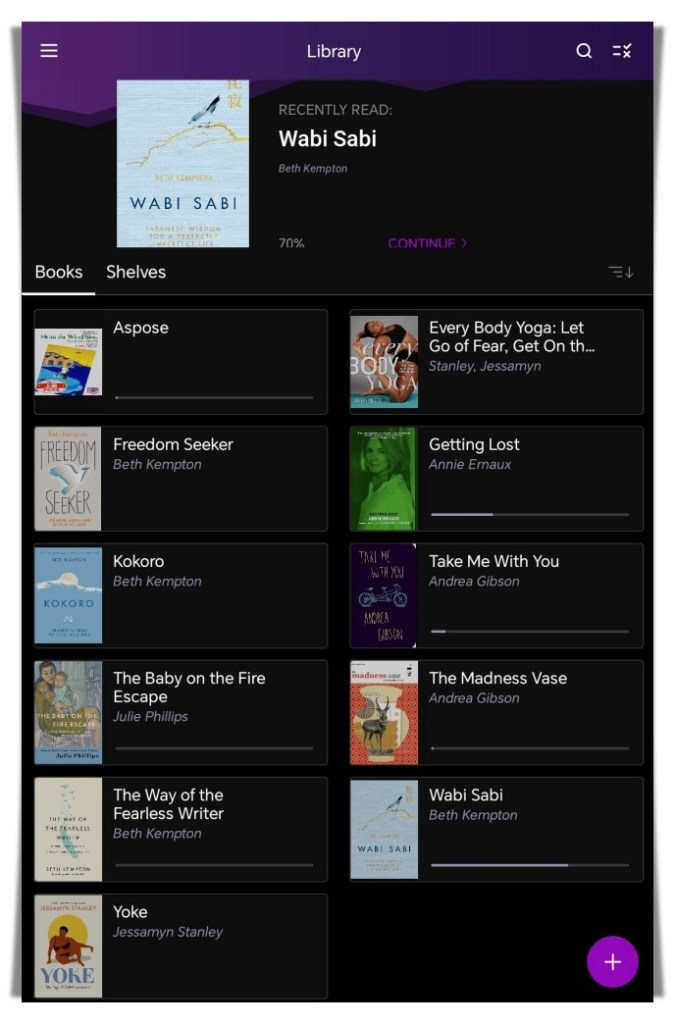
Some months I read with hunger. Other times, a book sits unopened for weeks, waiting for me to catch up to whatever it’s trying to say. I used to feel guilty about it, for not finishing or for moving too slowly. Now, I treat it like a ritual. The book finds me when I’m ready or it doesn’t. It doesn’t matter. I’m not competing with anyone. 

This year, my to-read shelf is more invitation than obligation. I don’t care about finishing stacks. I want each page to be a gentle interruption, like rain on my balcony while I’m working or the way dusk slips through the window when I’m too busy to notice it.

Fiction

Hear the Wind Sing by Haruki Murakami
This is Murakami’s first novel. It is short and understated. Some people said it wasn’t as good as the rest, but I don’t care. I’m drawn to where his work began, long before the fame. I expect quiet nights, music, and empty spaces. 

Getting Lost by Annie Ernaux
I love Ernaux. Her writing style is very clinical.’ This book is a raw diary of obsession and doubt. Ernaux writes with clarity about longing and uncertainty. The subject matter is personal and direct. 

Poetry

Take Me With You by Andrea Gibson
I started to pay attention to Gibson’s work after discovering her on Instagram. She was bravely battling cancer and was very public about her struggles, but it was her message that touched me the most. This collection opens into pain, love, and vulnerability. Gibson doesn’t disguise what hurts. I want to spend time with poems that stay close to real feeling.

The Madness Vase by Andrea Gibson
Another book by Gibson. These poems circle fear, survival, and tenderness. The language stays plain, even when the emotions are complex and raw. 

Yoga & Body

Every Body Yoga by Jessamyn Stanley
I return to yoga after abandoning my practice several years ago. I figured I need a gentler form of exercise so my perimenopausal body can cope. And since I am struggling with my larger body, I naturally gravitate to Jessamyn Stanley. Stanley welcomes every level of experience. Her voice stays grounded and open. I’m looking for guidance that doesn’t expect perfection.

Yoke: My Yoga of Self-Acceptance by Jessamyn Stanley
A collection of essays on making peace with your own body. Stanley is candid about what that process has looked like for her.

Japanese Philosophy & Non-Fiction

Wabi Sabi by Beth Kempton
I’m reading this now. I have gravitated to Eastern philosophy since I began to deconstruct my Christian faith. Kempton explores imperfection and beauty in ordinary life. Reading this book gives me a peaceful feeling.

Kokoro by Beth Kempton
This book considers “heart” and spirit in Japanese culture. She writes with clarity and restraint.

Freedom Seeker by Beth Kempton
Kempton traces the slow return to self beneath noise and duty. I love her, Wabi Sabi, so I think this book will resonate with me as a dogmatic religious dissenter. 

The Way of the Fearless Writer by Beth Kempton
A book on writing with less fear and more presence. I’m curious what she sees that I don’t yet.

The Baby on the Fire Escape by Julie Phillips

I am so looking forward to reading this one. I think this is the first book I found on this subject. It’s a study of women who made art while raising children. It gathers stories of how creativity and care live beside each other.

I am a slow reader because I want to savor the text and let the message sink into my heart. There are days I chase after answers, but sometimes I just want to reflect on the beauty of a good line. I know these books will keep me company. They will remind me I’m not the only one who desires or questions things. 

Maybe you read like this too, like a habit. If you do, I hope you find something on your shelf that waits for you and meets you quietly, without asking you to be anywhere else.


I write about Iban culture, ancestral rituals, creative life, emotional truths, and the quiet transformations of love, motherhood, and identity. If this speaks to you, subscribe and journey with me.

Living in the Gaps

I left church early this month, right at the beginning of another year. Maybe it just lined up that way. But I like to think I want to start afresh with a new spiritual direction after years of being conditioned to think and behave a certain way. I don’t mention this to brag, express bitterness, or suggest some dramatic unraveling. It was just time. The rituals I’d lived by for almost two decades fell away, and in their place, there was a space in my soul that needed filling. There are mornings now when I notice how empty the calendar looks and how the old routines have faded into habits I no longer keep. Sometimes the silence feels clean. Other times, it’s just unheard noise echoing in my head.

What comes after that kind of ending stays unclear for a while. I’ve been reading about Japanese philosophy. Wabi sabi, mono no aware, all those names for things I’ve always sensed but never managed to explain. There’s something grounding in how it speaks to imperfection or how it leans into acceptance without chasing resolution. Not everything is a lesson. Some things are just facts. Life changes, and I find myself moving slower, sometimes unsure if I’m pausing or simply stuck.

Right now, my days are crowded with interruptions. My daughter is starting Form 4. The house shifts on a new schedule, full of reminders and small emergencies. I keep thinking I’ll find a stretch of time. A few hours in the morning, or an evening when everyone is asleep, to work without interruption. That stretch never comes. The days are chopped into fragments: drive here, answer that, sew a button, check a schedule, stir a pot, fold the laundry. The idea of “flow” feels distant, like something I used to believe in but haven’t seen in months.

Some days, I catch myself measuring everything. I have work I want to do. Books on the shelf, half-finished zines, old artwork I think I might want to bring back to life for an upcoming festival. I keep thinking of artists with quiet studios and long blocks of time, while I’m piecing together minutes from whatever’s left. Sometimes, when I’m honest, I wonder if it’s enough to just keep going at this pace, never catching up, always watching the unfinished stack grow a little higher.

But I read. It’s less than I’d like, but still something. I journal, at times with purpose. Other times, just to sort through the mess in my head. Lately, I’m reading about wabi sabi and the value of things left incomplete, the quiet beauty of days that never fit into a neat story. There are passages I highlight, sentences that feel familiar even though I’m seeing them for the first time. Some days I manage a few pages, sometimes less. But I let it count.

When my mind is too tangled, I move. I walk outside just to breathe under the trees. After years of abandoning it, I return to my yoga practice, but I do it at my own pace. I don’t follow anyone else’s rhythm, and I’ve stopped tying value to flexibility or control. Sometimes I sit in silence and watch the room change with the light. Most days, I have more questions than answers. That seems to be how it is now.

This isn’t a season of high productivity. My kids’ schooling, the changing schedules, the constant need for adjustment—none of it feels like the life of an artist I used to imagine. But there’s something in the interruptions themselves that feels honest. My work is built from what’s left after everyone else’s needs are met. I don’t resent it, even when I’m tempted to. Some days I wish it were less chaotic, but it’s still the life I chose.

There’s an indigenous festival in May. I plan to participate, but nothing is confirmed. I think about it more than I admit. I wonder if what I have is enough artwork to sell, or if I should be making more or pushing harder. The urge to push is still there, even though I’ve seen where it leads. I try to remind myself that journaling, reading, and living through this time are not a detour. They shape the work, whether I see the results yet or not.

Most days I don’t feel behind or ahead. I just feel present. Some days I’m restless, convinced I’m wasting time. Other days, I find relief in moving slow, in giving myself permission to pause. I’m not heading toward anything specific. I’m just living, one interruption at a time.

My shelves are full of books I haven’t read yet. Some I’ve kept for years. I’ve stopped treating them like tasks I need to finish. I pick one up, read a few pages, underline something that catches my attention. I put it down, sometimes for weeks. The book waits. So do I.

If there’s any lesson in this season, it isn’t obvious. The days pass. The interruptions pile up. The unfinished work waits on the table. I don’t know when I’ll finish the next zine, or if the festival will happen, or if I’ll ever catch up on all the books. But I’m still here, moving quietly, not rushing the days or trying to make them mean more than they do.


I write about Iban culture, ancestral rituals, creative life, emotional truths, and the quiet transformations of love, motherhood, and identity. If this speaks to you, subscribe and journey with me.

Clutter and Deconstruction | An Ongoing Inventory

There’s a distinct silence when you leave a place that once ordered your days. After nearly two decades, I quit church. The decision formed slowly, after years of tension I tolerated until it grew extremely intolerable. 

I now stand closer to agnosticism than belief, letting questions stay open instead of forcing answers. The air at home feels changed, heavier in some corners, lighter in others. When routines fall away, you notice the clutter, not only what sits on the kitchen table but also the weight you’ve carried for years.

Most people picture clutter as stacks on a shelf or a drawer in disarray. Lately I’ve started spotting it elsewhere. I feel it in how my shoulders settle when I walk through the house, in the space that appears when I stop bending to others’ expectations. Life after a big change feels quiet and unfinished, as though I’m watching to see what remains and what slips away.

Old loyalties settle quietly, like dust on my cheap formica desk. I kept showing up for people and places out of habit, drawn by an obligation I couldn’t quite figure out. For years, leaving felt impossible even when every part of me was worn out. The routines outlined my life, and familiar faces offered belonging, but the price was always a private ache. I tried to convince myself gratitude was enough, but the truth is, I was shrinking to fit a space that no longer fit me. In the end, walking away involved no spectacle, only a simple moment when I realized I owed no one loyalty if it meant losing myself. The relief felt strange, almost unwelcome. 

I carried self-blame like a child’s favorite blanket. When something went wrong, I looked inward, convinced I could have tried harder, meeker, humbler, demanded less. Apologies formed before I even knew why I was sorry. It’s a habit that takes time to unlearn. Even now, when voices rise or tension thickens a room, my first instinct is to smooth things over, to make myself smaller so others stay comfortable. But I am starting to see that shrinking doesn’t save anyone; it only erases the person I am. These days, I let discomfort and silence linger. It’s uncomfortable, but I’m being honest with myself. 

People can fill up space in your life, sometimes so gradually that constant fatigue sneaks up on you. I think about those who never noticed the toll their presence took. Letting go brings no drama and no confrontation, only a quiet shift in where I place my energy. I’m learning to keep my circle small, giving my best to those who show up without asking for more than I can offer. The others drift to the edges. The distance feels necessary and carries no resentment.

The clutter that rings loudest lives in my own head. Voices linger as fragments of sermons, advice from people who never really knew me, and anxious run-throughs of every conversation where I might have chosen the wrong words. These layers pile up until I can’t tell which thoughts are mine and which belong to someone else. Lately I pay attention to the pauses, the moments between bursts of noise or activity. When my mind is quiet, I notice what I miss and what I don’t. Some voices fade on their own. Others, I have to let go by choice. I keep what matters, and the rest slips away with time.

What remains after clearing everything feels unfamiliar. The house still clatters each morning, the calendar still crowds the wall with reminders, but something has shifted. There is more space, more air. I linger at the window a little longer, breathe more slowly, refuse to pack every minute with motion or explanation. The openness feels odd, as though I am learning to live without the old weight. There is no hurry to fill the silence.


I write about Iban culture, ancestral rituals, creative life, emotional truths, and the quiet transformations of love, motherhood, and identity. If this speaks to you, subscribe and journey with me.
Fragments of Obsession VI: The Art of Lingering

This is one of the things I did for fun and did it with only my memory and imagination as company. It’s an old habit: writing fragments of obsession that I started years ago and keep coming back to when I’m feeling heavy or restless. When I finished Fragments of Obsession V: What Remains of Him, I knew there was still more to figure out—more shadows, more tenderness, and more moments haunted by tragedy. So I let myself return to his rooms, his silences, and his gaze, and I wrote a few more. This is what play looks like for me now. This is not an escape but a way for me to process past experiences and to turn them into gentle longing, finally tame and set free. 

Riverside

I fall behind pretending I care about the river, when all I really want to do is watch him move ahead. He never misses anything. His hands in his pockets and his shoulders tight. But then he slows down, turns around, and gives me that look, like he’s been waiting for me all his life. I see that half-smile he only gives me. It almost feels private, something he keeps to himself and lets slip just for me.

I could live in that space between us just for the thrill of him staying still and making me want to get closer. He doesn’t say my name. He never does. He stands there with his boots on, the city and river catching in the leather of his jacket, making him look both real and unattainable.

He watches every step I take. He doesn’t fill the gap. He makes me feel the anguish of wanting to be closer. He let me reach him and let me be the one to move first. He tilts his head, keeps his eyes focused and drawls softly, “Took you long enough.”

I can’t help it. I smile. Because I know I’ll always keep chasing him, and he’ll always let me find him.

His Apartment

His apartment is nothing like I imagined, though in some ways it’s exactly what I expected. There are books all over the place. Some were stacked, some were abandoned in the middle of a thought, and some had bent pages where he stopped reading. When he isn’t looking, I run my fingers along the spines and read the titles like clues. I wonder about the books he returns to, those he doesn’t finish, and the ones he holds close. I try to picture which lines he remembered and which sentences he underlined in his mind.

His boots are next to the door, with the laces loose and the toes pointing out like he kicked them off without thinking. There’s a mug on the table with a faint coffee ring drying at the bottom. I pick it up, turn it slowly, and picture his mouth there. I always do that—touch the things he touched, like maybe I can learn something from him that he doesn’t say.

A jacket hangs off the chair, slumped over and heavy in the shoulders. It looks worn out. I wonder how long it’s been carrying him like that. A scarf draped carelessly over the back, still holding the shape of his neck. I don’t touch it. I don’t want to change how he left it.

There are pictures by the window. I look at them when he’s in the other room. Family. People I don’t know. I study them for too long, trying to remember their faces and figure out where he came from and what made him who he is now. He doesn’t explain them. I don’t ask. But my mind keeps going around and around them, restless and unfulfilled. I want to know who he was before he learned how to hold back.

In the morning, sunlight spills over the rug, revealing dust, creases, and the signs of the days he’s lived without me. I see everything. The fact that he always puts his keys in the same place. The small pile of my belongings that have started to gather—a pen, a hair tie, and a notebook that I left on purpose and pretended was an accident. He never moves them.

When I sit on his couch, I pull the blanket over my legs and breathe in his scent. His smell is faint but stubbornly sticking to the fabric. There are dents in the pillows. I press my hand into the hollow and imagine how he fell asleep there on the nights he was too exhausted to care.

In his bedroom, the bed is never made. The sheets were twisted, and the blankets were half fallen to the floor. A shirt is hanging over the chair, and the sleeves are knotted like it was taken off in a hurry. I lie there and stare at the ceiling, counting the cracks and listening to the city breathe outside. Here, my body relaxes in a way it doesn’t anywhere else. Here, his hands don’t have to hold evidence, or grief, or anything but me.

At night, I watch him sleep. I memorize how he breathes, the slight pause before it settles. I tell myself that I will remember it later. That’s what I always think. Like memory is something I can stockpile.

In the morning, the light climbs the wall slowly, indifferent. I know I’ll be leaving again. I do it all the time. But I also know that I leave parts of myself behind that are too small to see but impossible to take back. A strand of hair in his bed. A warmth that stays even after my body is gone. A familiarity he’ll feel later and not know why.

His apartment is not mine. But my desire is everywhere in it. And every time I leave, I can’t help but think that I know him better through his absence than his words.

Haunted

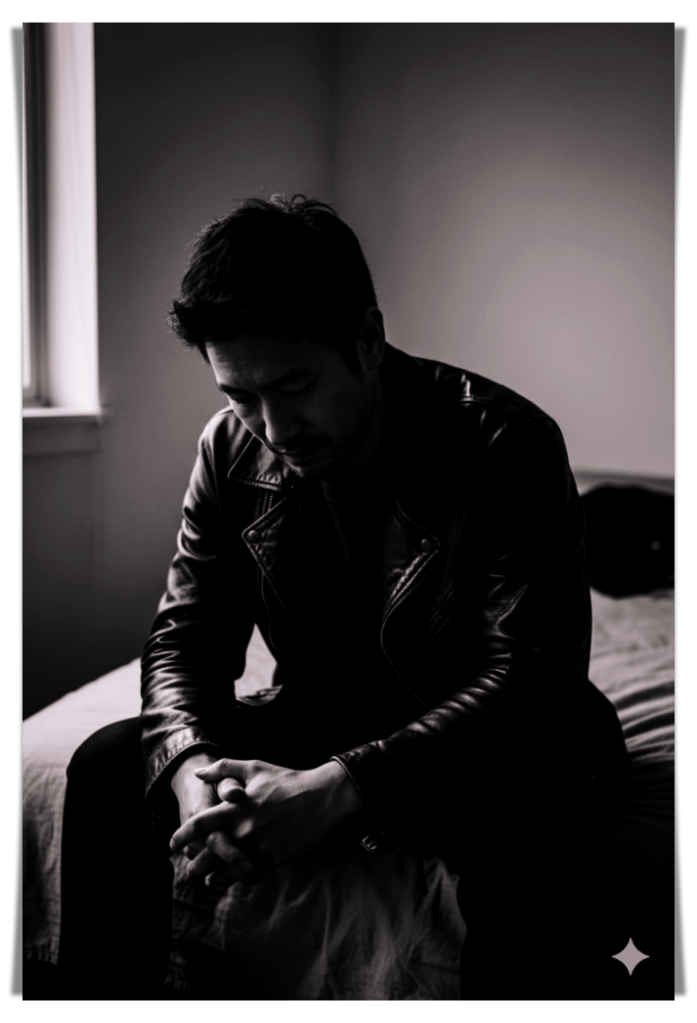
He comes in late, and the door closes quietly behind him. He doesn’t turn on the main lights; instead, he lets the dusk hang softly between us. His shoulders are hunched under the old leather jacket, and I know right away that something heavy followed him home. I can tell by the way he takes off his boots and the silence he carries with him.

He sits on the couch, elbows on his knees, head bowed, and hands dangling. There is blood on the edge of his shirt cuff, but it might not be his. I see how his fingers flex and how he runs a hand through his hair. He’s not with me yet. Still stuck in whatever he saw and can’t say out loud.

This is how I remember him: the hollows under his eyes, the day-old stubble on his jaw, the cut on his knuckle from a door he probably shouldn’t have punched. I look at him and see the small tremor in his hands and the shallow breaths he inhaled. He stares at the wall instead of me.

He doesn’t talk about work, at least not the real stuff. But the story always creeps into the room, clinging to his skin, hair, and the distance between us. I want to reach out to him, pull the darkness off his back, and hold all the sorrow he tries to hide. But I don’t. I just watch and let myself memorize him when he’s like this: unreachable, falling apart, but still here.

He finally looks up, and there’s something wild in his eyes. A flash of pain that isn’t meant for me but finds me anyway. I take it all at once. I tell myself that if I can remember him like this, haunted and broken, then nothing the world throws at us will ever make me forget him.

So I keep watching. I let my eyes linger, wanting to see every scar and every unnamed pain. I keep watching until he starts to come back, when his breathing slows and his hands stop shaking. And when he finally looks me in the eye, it feels like apologies and resignation to survive.


I write about Iban culture, ancestral rituals, creative life, emotional truths, and the quiet transformations of love, motherhood, and identity. If this speaks to you, subscribe and journey with me.

Noticing What Has Changed

I feel like the question “What have you learned recently?” is simple, but when I try to answer it, I have to pause. I don’t notice most changes in my life until I look back. I go about my day, dealing with whatever comes up, without really thinking about whether I’m getting better or not. But sometimes it’s clear that something has changed. That’s what this is, an attempt to notice what’s changed or improved.

Lately, I’ve been more aware of how much space I let myself take up. I made myself small for most of my life. I only spoke up when I was sure I wouldn’t hurt anyone’s feelings. I tried to guess what people wanted, what they would put up with, and what would make me look out of place. Staying hidden can make you feel safe, but it wears you down over time. I didn’t realize that waiting for permission to share an idea, make something, or want something for myself was a choice because it had become such a habit. I don’t remember when it changed, but I do know that I don’t ask for so much approval anymore. I write or draw what I want, when I want. I publish things with my name on them sometimes, and other times I use a different name. Other times, I just leave the words on my hard drive. I don’t have to do anything for anyone. I quietly came to this realization, and it has remained with me.

I have also slowed down, both by necessity and by choice. It’s difficult to put into words how heavy this year has been. There were times when my body just gave up on me, like when I was always tired and had migraines that came out of nowhere and persisted. I quit working out. I stopped pretending that pushing myself harder would help. I waited for a while, trying to deal with the pain and uncertainty by not moving much. I did figure out the cause of my fatigue and migraines, and since then, they have improved a lot. That experience taught me to slow down and listen to my body and get the help it needed. 

The worst of the symptoms have disappeared, allowing me to move again. I don’t mean that in a figurative way; I really do walk and jog more. Three kilometers, three or four times a week, and there’s no need to hurry. There isn’t any more pressure to “get fit.” I just walk. I see the trees, hear the birds, and feel my legs moving again after months of inertia. It’s normal, but it means a lot to me. It feels like returning to my skin after months of being wrecked by fatigue and pain.

Setting boundaries is still new. For years, I thought it was my job to be there for others, take on their moods, and ensure things went well. Now, I say no more often. I let people deal with their problems. I don’t explain myself as much. It doesn’t feel empowering or freeing; it’s awkward and tense at times, but it’s real. Guilt comes and goes but I let it go. I’m starting to realize that saying yes won’t fix everything.

Another lesson learned and change made: I don’t doubt my right to want things as much as I used to. For a long time, I told myself that I was easy to please and that wanting too much would only make me disappointed. It was better to keep my needs vague and not say them out loud. However, I want more lately—more peace, more meaning, a stronger connection, and more room for my writing and art. I’m not sorry for it, even though I know I won’t get everything I want. I write and create because I need to, not to please anyone or gain more followers and likes. Those things are undoubtedly flattering, but they are just a bonus.

Trust is also a big deal, especially knowing that my voice matters. I still doubt myself, especially when I write in English. The urge to hold back is still there, but I keep going. I write what I think is honest, even if it’s not perfect. I establish boundaries when necessary. I don’t pretend like I know more than I do. Sharing is a form of practice in and of itself. I don’t know if anyone is interested in what I have to say. It doesn’t matter as much now; I just write and create.

Routine is what keeps me grounded. My days are typically plain. I get up, do what needs to be done, take a morning walk or jog, cook, read, draw, and write. Repetition is comforting. Things that used to be trivial are now important, like how the light changes during the day, the sound of rain in the morning, or a quick note from a friend. I don’t ignore these things anymore. I remember days by their texture and temperature and not by what I accomplished.

There’s nothing dramatic about the last few months. The most significant changes are internal, and I can’t see them unless I write them down. I’m not as interested in what looks appealing as I am in what feels right and true. I still mess up and sometimes I fall back into old habits. I’m not sure if there’s a lesson here at all. It’s just a slow process of living and noticing what’s different.

If you asked me a year ago what I’d learn, I wouldn’t have guessed any of this. Most things happen without a plan. They reveal themselves in silence after the fact, when I look up and realize I’m not in the same place anymore.


I write about Iban culture, ancestral rituals, creative life, emotional truths, and the quiet transformations of love, motherhood, and identity. If this speaks to you, subscribe and journey with me.

What Sparks My Admiration in Others

Image source

There are many qualities people celebrate in this world: confidence, achievement, ambition, and charm. I understand why those traits draw attention, but the things that spark my admiration are usually less noticeable, simpler, and harder to measure. I’m drawn to people who move through life in a steady, consistent way that is easy to miss. Their strength is not loud or dramatic. It does not demand attention. You feel it more than you see it, and it appears in small, everyday moments.

One quality I admire deeply is quiet strength. Some people carry difficult histories, but they never turn their pain into a performance. They don’t talk about what they have survived or how exhausting their days can be. They wake up and continue living with purpose. They make thoughtful choices. They speak gently even when life has not been kind to them. This kind of strength does not need recognition to exist. It reminds me that courage isn’t always fierce or loud. Sometimes it sits in the background, unnoticed but ever present. 

I also admire consistency. There are people who show up the same way regardless of what season they are in. They do not disappear when things become complicated, and they do not change their personality based on convenience. Their presence feels reliable, like a rhythm you can return to when everything else feels uncertain. Consistency requires emotional maturity and the willingness to take responsibility for your actions, which is why it is uncommon. When someone carries the same sincerity on ordinary days as they do on meaningful ones, it leaves an impression on me. It feels like witnessing integrity as a lived practice rather than an idea.

Another quality I value is the ability to handle emotional weight with grace. These are people who can sit through difficult conversations without becoming defensive or dismissive. They try to be honest with themselves and acknowledge their shortcomings instead of hiding behind excuses. They grow without needing applause. They apologize when they hurt anyone. They listen carefully and speak clearly. Seeing someone go through life with this level of emotional awareness feels like observing wisdom in action. It encourages me to reflect on my habits and to grow at a pace that feels true to me.

Another thing that draws me in is depth. I admire people who see the world in layers rather than quick snapshots. They pay attention to little things, like how the light moves through a window at a certain time of day, how someone’s tone changes when they’re trying to hide their sadness, or the meaning behind a seemingly ordinary gesture. They remember things that other people forget.  They ask sincere questions because they want to understand, not because they want to impress. You can tell that they are really paying attention. Being around them feels like exploring something together rather than exchanging information. I appreciate how they make room for complexity without turning it into confusion.

Authenticity is another trait I hold in high regard. I respect people who remain true to themselves even when the world pressures them to fit into narrow definitions of success, beauty, or worth. They do not pretend or shrink themselves to gain approval. They do not hide the parts of themselves that feel different. Living this way honestly takes courage, especially in environments that reward conformity. When I meet someone who seems comfortable in their skin, it reminds me to honor my path. Their presence gives others permission to be real as well.

These traits all share one thing: they don’t relate to performance. They show who they are slowly, through small actions instead of big ones. They come from character rather than image. They are lived, not displayed. I admire them because they feel human in a world that moves too rapidly for humanity. These qualities remind me of the kind of person I want to be: steady, focused, brave enough to change, and honest enough to stay true to myself.

Admiration is a gentle emotion. It comes softly, and I don’t always notice it right away. It happens when I see how someone deals with the stress of everyday life and how they cope with uncertainty. It also happens when I see how someone treats people who can’t provide them anything in return. It grows when kindness doesn’t seek attention and when strength doesn’t seek reward. It deepens whenever someone chooses integrity even when no one is watching.

When I contemplate what makes me admire something, I always come back to how simple it is. I like how people carry themselves. I admire the choices they make when it would be easier to pick something else. I notice moments where truth matters more than convenience. These are the qualities that remain with me. They might seem small at first glance, but they become meaningful when you truly see them.


I write about Iban culture, ancestral rituals, creative life, emotional truths, and the quiet transformations of love, motherhood, and identity. If this speaks to you, subscribe and journey with me.

Antu Ngarung | The Guardian Spirit That Shapes My Iban Identity

In Iban belief, the souls of those who die go to Sebayan, the afterworld. Some remain there permanently, but certain individuals are believed to return. These are people who lived with exceptional courage or accomplishment during their lifetime. When these ancestors come back, they do not appear as humans. They come ngarung, meaning concealed, taking the form of animals. These returning spirits are called tua, or guardian spirits.

In the Saribas region, guardian spirits are often seen as snakes such as cobras or pythons. They move quietly, stay in the shadows, and leave without drawing attention. When I picture antu ngarung, I always imagine a cobra coiled in the dark corner of a house or at the edge of the forest. It stays still for a long time and slips away the moment it decides to leave. To many people, it would be just an ordinary animal. To us, it can be an ancestor paying a visit.

A guardian spirit usually belongs to an entire lineage. Because of that connection, the family must never harm or eat the animal that represents their guardian. This is a form of respect. The belief is straightforward: the guardian protects the family, and the family must protect the guardian’s form on earth.

In my family, our guardian is the kijang, the Bornean yellow muntjac. When I was four or five, my late grandparents reminded us repeatedly never to harm, kill, or eat kijang. They did not offer long explanations, but the message was clear. Someone in our line was once a brave person, and that ancestor is believed to return as the kijang to watch over us.

That instruction frightened me growing up. I was afraid I might break the rule by accident. I used to remind myself to always ask what kind of meat was being served when we visited people. At that age, it felt like a tremendous responsibility. Over time, the fear changed. I started to feel that my life was connected to something older and larger than myself. I also realised that this experience was not common among many non-Iban communities, which made me value my heritage even more.

The belief in the kijang has shaped the way I understand myself. It gives me a sense of courage. I am still afraid of many things, but this belief keeps me steady. It reminds me that my ancestors lived through hardship, violence, and uncertainty. My problems today are nothing like what they endured. I often tell myself to live in a way that does not dishonor the people who came before me. I exist today because they survived so much. That thought helps me face difficult moments.

When I imagine the kijang watching me now, I think it sees a woman who lives differently from the Iban women of earlier generations. My lifestyle and interests are not the same. Yet I believe it recognises my effort to understand my roots. It may also encourage me to continue forging my own path even when no one else in my family is doing this kind of work. Many women in my family excel in traditional crafts like beadwork and weaving, but none of them are writers. I have to accept that I may be the first woman in my family to preserve our heritage through writing. Someone younger in the future may look at my work the way I once looked at my namesake, the master weaver. Remembering this keeps me going, even when the work feels lonely.

This leads to something important.

We risk losing our identity when we do not learn about our heritage. The loss does not happen suddenly. It happens slowly. We begin identifying more with other cultures. We forget the meaning behind our names, our customs, and our stories. When we fail to protect what we inherit, we leave an empty space that can be filled by influences that do not reflect who we are. This is happening in many communities around the world, and the Iban are no exception.

Iban identity will not endure by chance. It survives because someone chooses to learn, write, document, and share it. It stays alive when people believe their heritage is worth protecting. It continues when people care enough to ask questions and remember the stories their elders passed down.

Our ancestors returned as antu ngarung for a reason. We owe it to them to honor the heritage they entrusted to us.


I write about Iban culture, ancestral rituals, creative life, emotional truths, and the quiet transformations of love, motherhood, and identity. If this speaks to you, subscribe and journey with me.
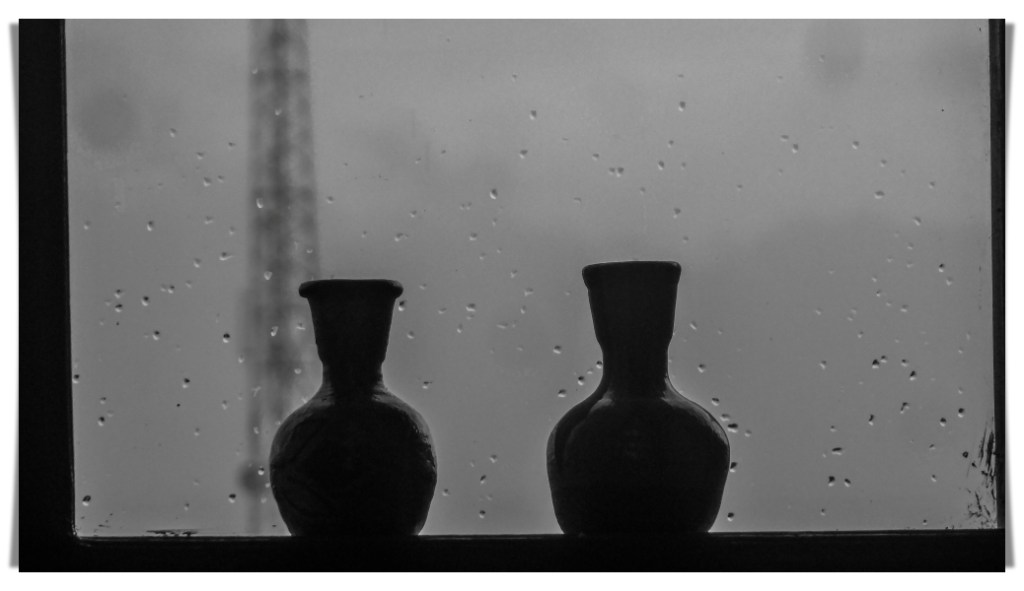
What Beserara’ Bungai Taught Me About Letting Go

I used to think that rituals like beserara’ bungai were just old traditions that had no place in today’s world. Growing up, I believed they belonged to the past. I thought the Iban needed to leave them behind to move forward. Whenever elders talked about these beliefs, I felt restless. My world revolved around progress, education, and the principles of organized religion. I didn’t see the value of rituals, and I never took the time to understand what they really meant.

That mindset began to shift—slowly at first, then more clearly—as I read more about the Iban worldview. It wasn’t emotion or nostalgia that changed me, but understanding. I began to see that the Iban learned about life by watching the natural world. They noticed patterns in nature and connected them to how we live. For example, they saw how bamboo and banana plants grow in clusters. Each shoot is part of a single root system underground. If one shoot is unhealthy, it affects the others. When one dies, the root still supports new life. Death was not an ending but part of the cycle. This wasn’t superstition, but wisdom based on careful observation.

The bungai, the “plant-image” that represents each Iban person in the cosmic realm of Menjaya (the god of healing), began to make sense to me. I understood how it symbolized family and community. Each person is like a shoot, but we all come from the same root. When someone passes, the rest carry on, still connected. New life can grow from the same source. It’s a way of seeing life that is deeply connected and respectful of nature. The ancestors weren’t imagining things—they were describing the interconnected world they knew.

As I learned more, I started to feel a quiet pride in where I come from. I discovered that my ancestors included warriors and raja berani, people whose stories are still told in my family. I began to understand that even though I live far from my homeland, I am still part of that root system. This connection also extends to my children. They may not know all the customs or speak the language well, but the roots are still there. They are part of something that has been passed down through generations.

When I learned about beserara’ bungai, the ritual that separates the living from the dead, I felt something shift in me. This ritual is about care—not forgetting what we have lost. It helps both the living and the dead let go so they don’t hold each other back. The living need to keep moving forward, and the dead need peace on their journey to Sebayan. It’s a ritual of compassion that affirms the connection with the dead even as they journey on to the otherworld.

This understanding arrived at a time when I was wrestling with my own spiritual ties. I had been part of the same church community for many years. It shaped how I saw God, faith, and morality. But as I grew older, those teachings started to feel burdensome. I found myself questioning doctrines that encouraged separation from people who did not meet certain standards of spirituality. I began noticing the tension between fear-based expectations and the compassion-centered teachings of Jesus in the Gospels. As I continued to question, the burden of belonging to a system that no longer aligned with my conscience intensified.

Learning about beserara’ bungai gave me words for what I was feeling. I realized I was trying to protect my spirit. I wasn’t leaving faith behind—I was returning to what felt true. Jesus became the real rootstock. I wanted a faith grounded in his teachings: kindness, justice, presence, love, and compassion—not fear or guilt. I needed space to grow without feeling judged by a community that often equated questions with spiritual instability.

In a way, I’m experiencing my own kind of separation from the church rootstock. It is not a rejection of my past or of the people who have been a huge part of my life for the past two decades. It is a necessary separation so I can continue growing without feeling suffocated by expectations that no longer fit the life I am trying to build. I’m holding onto what still nourishes me and letting go of what drains me. The Iban worldview helped me understand that letting go can be a way of protecting both myself and the things I want to keep alive.

The more I reflect on it, the more I hope my children learn something different from what I learned in my early years of faith. I hope they are not afraid to ask questions. I hope they do not feel inferior in front of people who sound knowledgeable but speak without warmth. I want them to grow into a faith that welcomes curiosity, thoughtfulness, and conscience. I want them to recognize that their connection to God is direct, personal, and rooted in compassion—not fear. I want them to inherit a sense of strength that comes from understanding where they come from, both culturally and spiritually.

As I learn more about rituals like beserara’ bungai, I’ve come to understand that my ancestors didn’t divide life into “spiritual” and “ordinary.” Everything was connected. Life, death, nature, community, and spirit were all part of one whole. That way of seeing the world teaches me to live with care and humility. It shows me that letting go can be a loving act, and returning to our roots can take courage.


I write about Iban culture, ancestral rituals, creative life, emotional truths, and the quiet transformations of love, motherhood, and identity. If this speaks to you, subscribe and journey with me.