If you could go back in time and give your younger self advice, what would it be?
View all responses

There are many things I could tell my younger self, but writing them all down would make this post lengthy. So, I will pick only one: leave sooner when something keeps shrinking you.
When I say “leave sooner”, I don’t mean leave the moment something gets hard. That would be stupid because you would just be avoiding the issue. Sometimes it’s good to stay through the hard stuff because it can teach you a thing or two. We should learn to tell the difference between difficulty and the damage caused by shrinking. They are not the same thing. There are things that are worth having, like marriage, motherhood, creative work, growth, and responsibility. These things often stretch us past what we thought we could endure. These are the things that demand more from us than we think we have, and somehow we find more.
I can say all these things now because I have gone through things in life. But when I was young, I was just groping around, trying to find my way like everyone else.
Difficulty can be good for us because stretching asks us to become more of ourselves. It builds our endurance and character. It forces us to grow. We can become more patient, more honest, more capable. Oh, it is hard. I am not going to lie to you and say the process is smooth. Not at all. But I can say that the experience is expansive. You might cry in private after a hard day of parenting and still not disappear. You might struggle with work and not feel smaller for it.
Shrinking is different. Shrinking looks like this: you make yourself smaller to keep the peace. You censor yourself before you speak. You distrust your instincts even when they have been right before. You feel watched or judged even when no one is watching. You feel relief only when you are away.
The difference between the two is that difficulty builds you, whereas shrinking erases you. And the worst thing is how long it takes to tell the difference.
I used to believe that staying was always the right thing to do. To me, endurance was the hallmark of a wise and mature person. I believed that loyalty to people, institutions, or commitments was a form of holiness and that adjusting myself to conform was simply being spiritually strong.
However, in each of those beliefs, there was a grain of truth. Sometimes staying can be genuinely the right thing to do. Endurance can be genuinely a mark of a mature person. Loyalty can be a virtue, and adjusting for the sake of others can truly be generous. The tricky thing is that shrinking knows how to wear all of them. It often calls itself being the bigger person. It gaslights you. It convinces you that leaving is selfish, that your discomfort is weakness, and that if you were more patient, prayerful, or spiritual, things would be different. So you stay and convince yourself that this is growth, a trial by fire, so to speak.
No one wakes up one morning and realises they have become smaller. Shrinking is insidious. It happens gradually through small compromises that seem reasonable at the time.
What do those “small” compromises look like? I can’t speak for others, but here are the things I noticed: you become careful about what you say. You rehearse conversations in your head before they happen. You stop asking certain questions because the answers may create tension. You learn which version of yourself to offer in which room. You become afraid of disappointing people, so you give in more often than you should. You stop trusting what you feel because your feelings always seem to be the problem.
Then one day, I realised that I had become irritable for no apparent reason. I felt stressed, worried, and angry almost all the time.
This year, I left a high-control evangelical church I had attended for nearly two decades. The decision to leave was probably shocking to others, but for me, it was something I had been thinking about for many years. I simply lacked the courage to do it. By the time I left, I had developed an efficient system of self-monitoring that was deeply damaging to me. I had learned to distrust my own questions. I had filtered my spiritual instincts through what would be acceptable, what would be approved, and what wouldn’t raise concern. I didn’t know the extent of that damage until I was no longer in that environment.
It felt so strange after I left. It was a mix of feelings: anger, relief, grief, and joy. I was so exhausted and didn’t know how to process the experience. What I did know was that I was tired of the constant internal audit and the need to ask permission to think or feel. I was tired of shrink-wrapping my soul to fit spaces that were never designed for its full dimensions.
Church was not the only place I left. I left some online spaces too. Social media often made me anxious and reactive. There were too many posts that made me feel as though I had to prepare for battle. The internet is a wonderful invention and it offers many benefits. However, there are sections of the internet that can train you to be perpetually braced, and I don’t think that is healthy for our mental well-being.
I don’t believe the church and the online spaces were all harmful. I think both have strengths and weaknesses. I won’t go into them here; I want to focus on who I became in those spaces. I had absorbed habits of self-surveillance that cost me greatly, and leaving gave me back some peace and room in my own chest.
I no longer believe that staying is automatically noble, but I also know that leaving is not always the answer. Sometimes leaving is necessary when something costs more of you than you are willing to surrender. I now strongly believe that no amount of loyalty, endurance, or maturity is worth the slow disappearance of who you are.
I wish I had understood that ambiguity earlier. I wish I had learnt sooner to tell the difference between a stretch and a shrink, and trusted myself enough to act on what I saw.
These are the questions I would ask my younger self:
Do I become more myself here?
Am I allowed to question?
Am I becoming more curious or more afraid?
Do I feel constantly monitored?
Do I feel lighter when I leave?
These may seem like simple questions, but the answers can be difficult. Sometimes we don’t want to ask them, but they are still worth asking early, often, and honestly.
If I could change anything in the past, would I rescue my younger self from every place that affected her negatively? The answer is NO. Some of those places taught me things I couldn’t have learned any other way. They taught me what shrinking felt like, how insidious it was, how it disguises itself as virtue, and how deeply it can embed itself in a person without her noticing.
Those experiences also taught me a valuable lesson: what expansion feels like. Expansion gives me confidence to be myself without apology. I don’t have to rehearse before giving my opinions. I can ask questions without fear. I can connect with others without wondering if I am too much or not enough.
I stayed too long in places that mistook my shrinking for loyalty. And now I know the difference between being stretched and being erased. Since leaving, I feel peaceful, content, and more like my true self. And that, I think, is what my younger self was looking for all along.
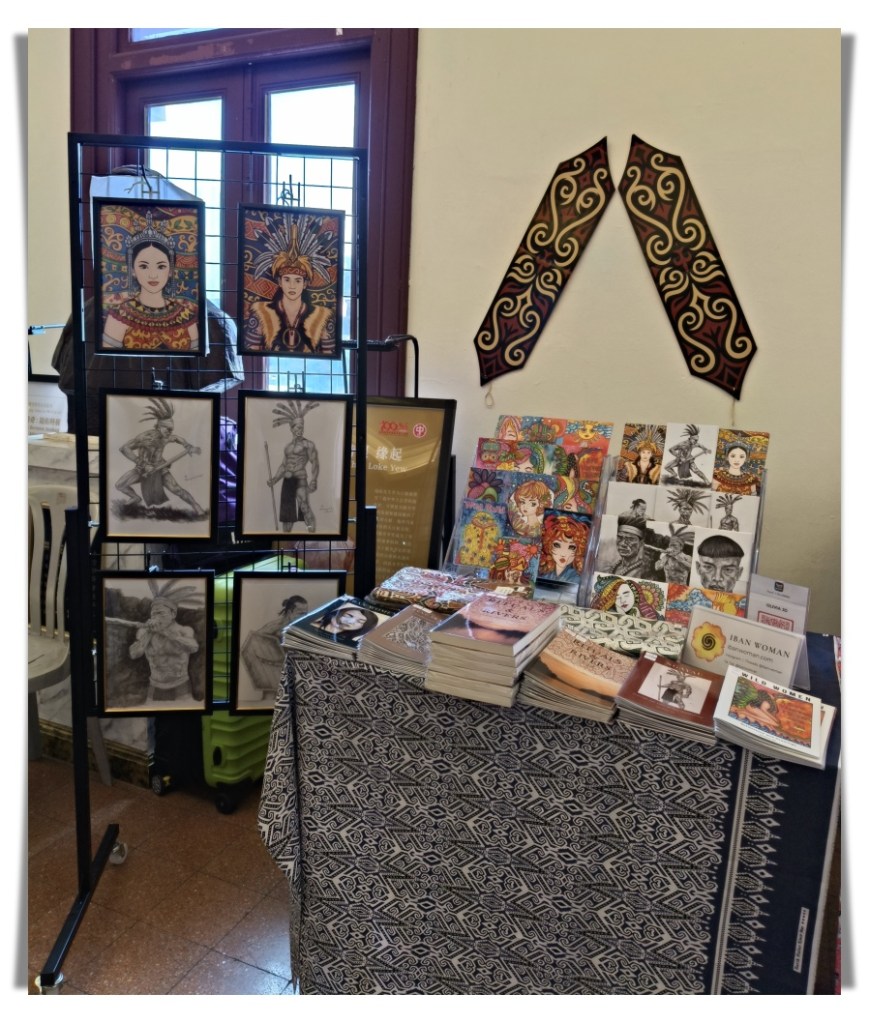
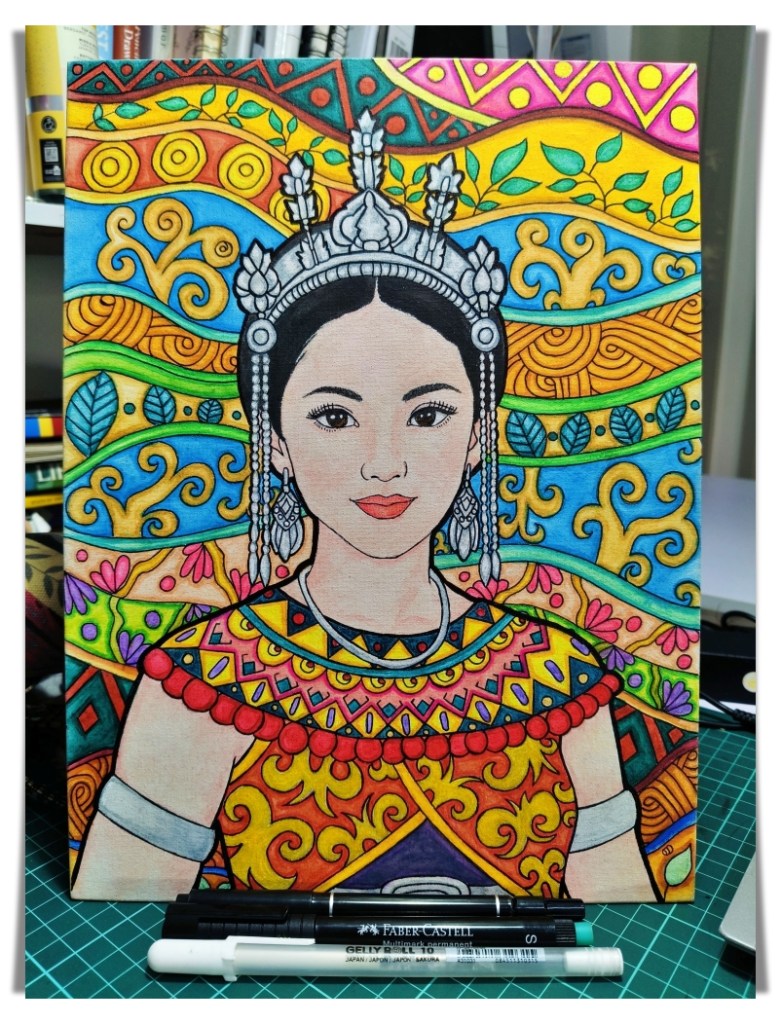
I write about Iban culture, ancestral rituals, creative life, emotional truths, and the quiet transformations of love, motherhood, and identity. If this speaks to you, subscribe and journey with me.