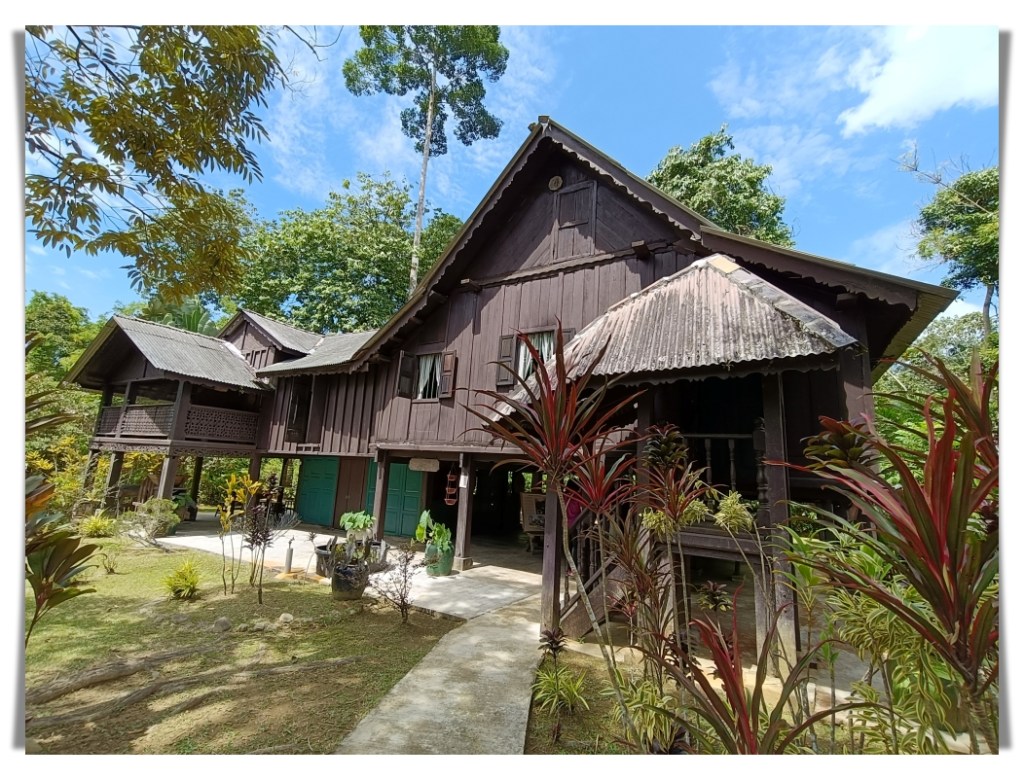
Not Everything Difficult Is Worth Enduring

If you could go back in time and give your younger self advice, what would it be?

View all responses
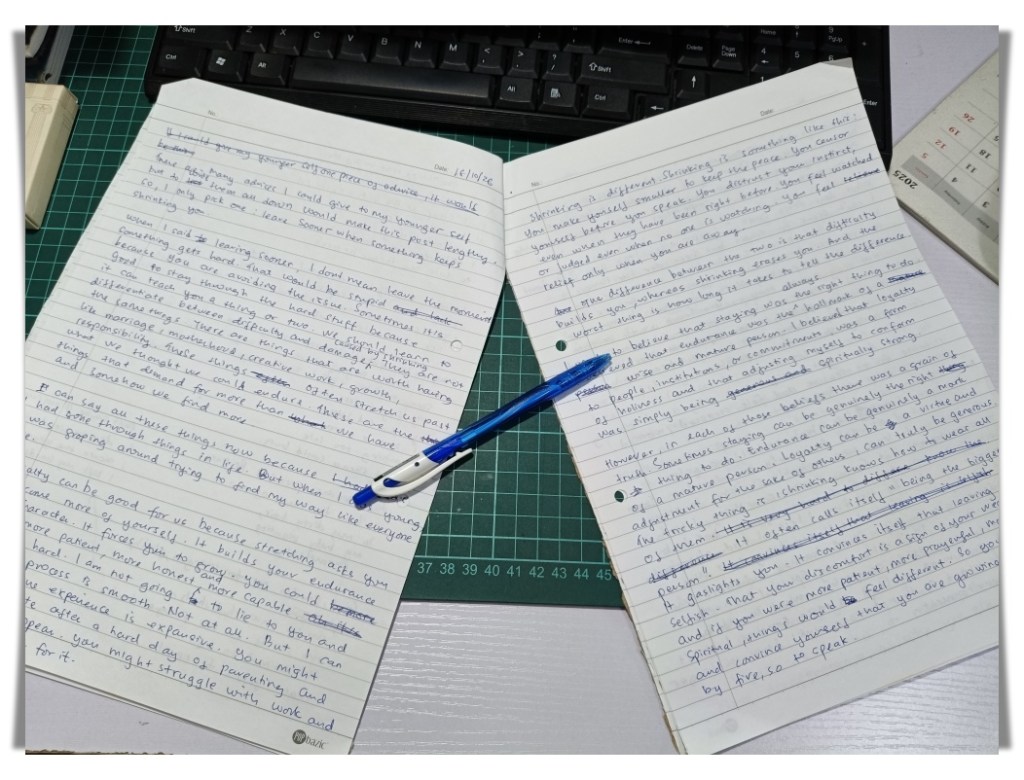
Handwritten draft of this blog post

There are many things I could tell my younger self, but writing them all down would make this post lengthy.  So, I will pick only one: leave sooner when something keeps shrinking you.

When I say “leave sooner”, I don’t mean leave the moment something gets hard. That would be stupid because you would just be avoiding the issue. Sometimes it’s good to stay through the hard stuff because it can teach you a thing or two. We should learn to tell the difference between difficulty and the damage caused by shrinking. They are not the same thing. There are things that are worth having, like marriage, motherhood, creative work, growth, and responsibility. These things often stretch us past what we thought we could endure. These are the things that demand more from us than we think we have, and somehow we find more. 

I can say all these things now because I have gone through things in life. But when I was young, I was just groping around, trying to find my way like everyone else. 

Difficulty can be good for us because stretching asks us to become more of ourselves. It builds our endurance and character. It forces us to grow. We can become more patient, more honest, more capable. Oh, it is hard. I am not going to lie to you and say the process is smooth. Not at all. But I can say that the experience is expansive. You might cry in private after a hard day of parenting and still not disappear. You might struggle with work and not feel smaller for it. 

Shrinking is different. Shrinking looks like this: you make yourself smaller to keep the peace. You censor yourself before you speak. You distrust your instincts even when they have been right before. You feel watched or judged even when no one is watching. You feel relief only when you are away.

The difference between the two is that difficulty builds you, whereas shrinking erases you. And the worst thing is how long it takes to tell the difference.

I used to believe that staying was always the right thing to do. To me, endurance was the hallmark of a wise and mature person. I believed that loyalty to people, institutions, or commitments was a form of holiness and that adjusting myself to conform was simply being spiritually strong. 

However, in each of those beliefs, there was a grain of truth. Sometimes staying can be genuinely the right thing to do. Endurance can be genuinely a mark of a mature person. Loyalty can be a virtue, and adjusting for the sake of others can truly be generous. The tricky thing is that shrinking knows how to wear all of them. It often calls itself being the bigger person. It gaslights you. It convinces you that leaving is selfish, that your discomfort is weakness, and that if you were more patient, prayerful, or spiritual, things would be different. So you stay and convince yourself that this is growth, a trial by fire, so to speak. 

No one wakes up one morning and realises they have become smaller. Shrinking is insidious. It happens gradually through small compromises that seem reasonable at the time.

What do those “small” compromises look like? I can’t speak for others, but here are the things I noticed: you become careful about what you say. You rehearse conversations in your head before they happen. You stop asking certain questions because the answers may create tension. You learn which version of yourself to offer in which room. You become afraid of disappointing people, so you give in more often than you should. You stop trusting what you feel because your feelings always seem to be the problem.

Then one day, I realised that I had become irritable for no apparent reason. I felt stressed, worried, and angry almost all the time. 

This year, I left a high-control evangelical church I had attended for nearly two decades. The decision to leave was probably shocking to others, but for me, it was something I had been thinking about for many years. I simply lacked the courage to do it. By the time I left, I had developed an efficient system of self-monitoring that was deeply damaging to me. I had learned to distrust my own questions. I had filtered my spiritual instincts through what would be acceptable, what would be approved, and what wouldn’t raise concern. I didn’t know the extent of that damage until I was no longer in that environment.

It felt so strange after I left. It was a mix of feelings: anger, relief, grief, and joy. I was so exhausted and didn’t know how to process the experience. What I did know was that I was tired of the constant internal audit and the need to ask permission to think or feel. I was tired of shrink-wrapping my soul to fit spaces that were never designed for its full dimensions. 

Church was not the only place I left. I left some online spaces too. Social media often made me anxious and reactive. There were too many posts that made me feel as though I had to prepare for battle. The internet is a wonderful invention and it offers many benefits. However, there are sections of the internet that can train you to be perpetually braced, and I don’t think that is healthy for our mental well-being. 

I don’t believe the church and the online spaces were all harmful. I think both have strengths and weaknesses. I won’t go into them here; I want to focus on who I became in those spaces. I had absorbed habits of self-surveillance that cost me greatly, and leaving gave me back some peace and room in my own chest.

I no longer believe that staying is automatically noble, but I also know that leaving is not always the answer. Sometimes leaving is necessary when something costs more of you than you are willing to surrender. I now strongly believe that no amount of loyalty, endurance, or maturity is worth the slow disappearance of who you are.

I wish I had understood that ambiguity earlier. I wish I had learnt sooner to tell the difference between a stretch and a shrink, and trusted myself enough to act on what I saw. 

These are the questions I would ask my younger self:

  • Do I become more myself here?

  • Am I allowed to question?

  • Am I becoming more curious or more afraid?

  • Do I feel constantly monitored?

  • Do I feel lighter when I leave?

These may seem like simple questions, but the answers can be difficult. Sometimes we don’t want to ask them, but they are still worth asking early, often, and honestly. 

If I could change anything in the past, would I rescue my younger self from every place that affected her negatively? The answer is NO. Some of those places taught me things I couldn’t have learned any other way. They taught me what shrinking felt like, how insidious it was, how it disguises itself as virtue, and how deeply it can embed itself in a person without her noticing. 

Those experiences also taught me a valuable lesson: what expansion feels like. Expansion gives me confidence to be myself without apology. I don’t have to rehearse before giving my opinions. I can ask questions without fear. I can connect with others without wondering if I am too much or not enough. 

I stayed too long in places that mistook my shrinking for loyalty. And now I know the difference between being stretched and being erased. Since leaving, I feel peaceful, content, and more like my true self. And that, I think, is what my younger self was looking for all along.


I write about Iban culture, ancestral rituals, creative life, emotional truths, and the quiet transformations of love, motherhood, and identity. If this speaks to you, subscribe and journey with me.
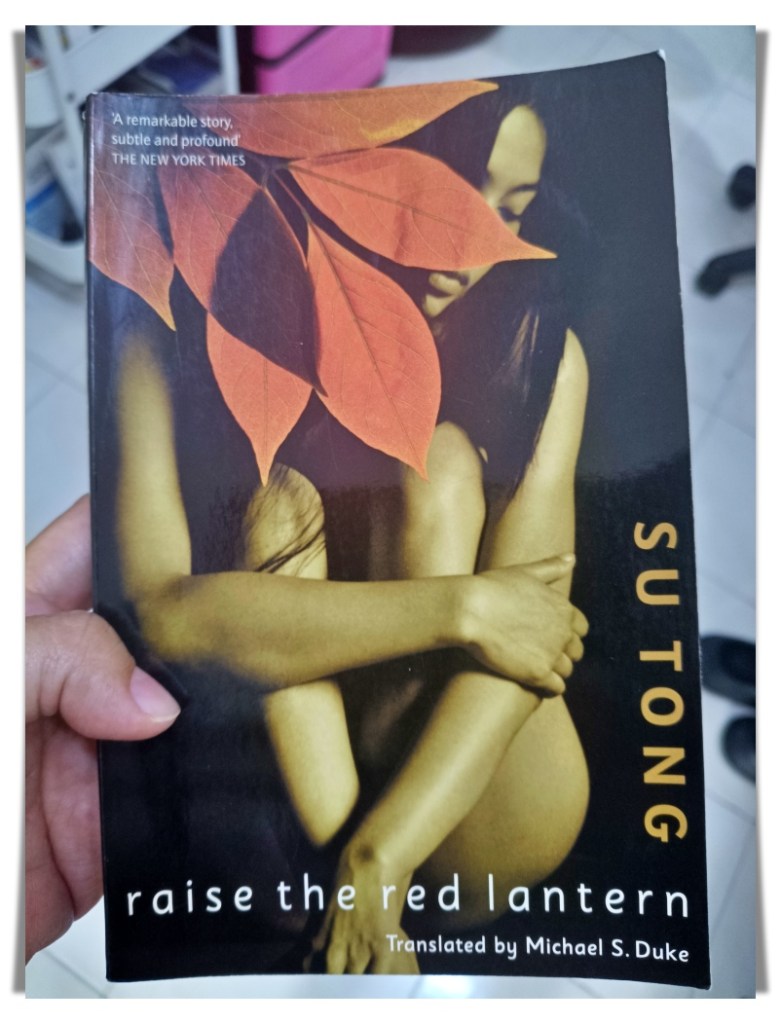
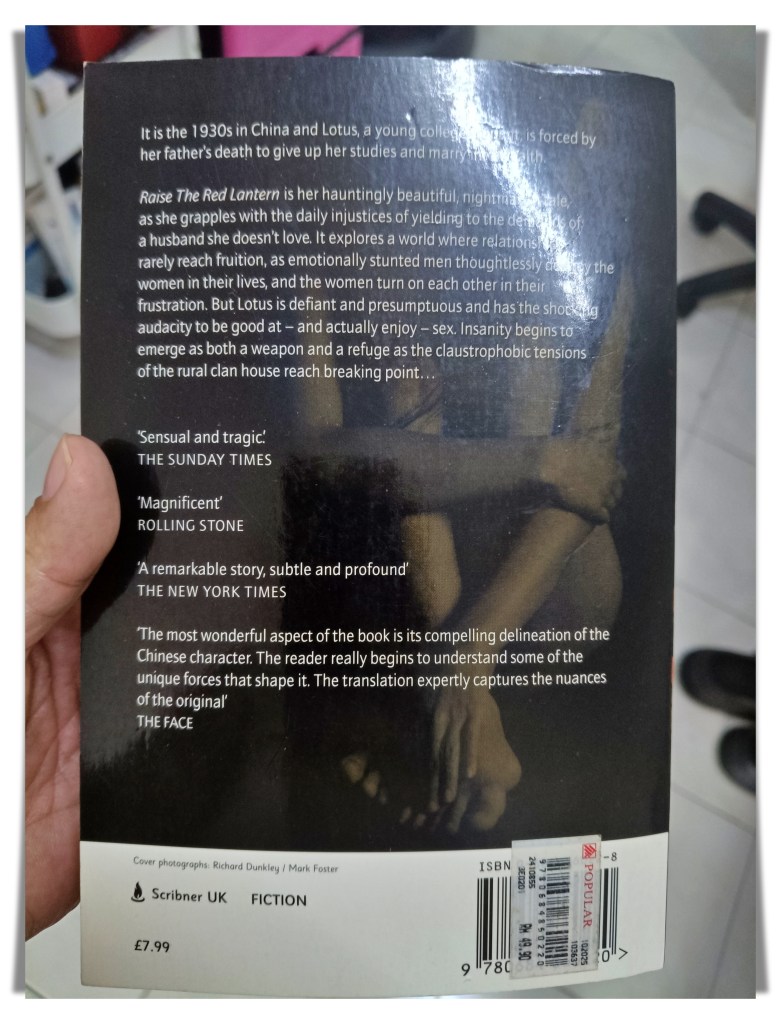
The Price of Being Chosen | Reading Su Tong’s Raise the Red Lantern

I found Su Tong’s Raise the Red Lantern while rummaging through books at Bookaholics’s Jom Baca! RM5 Book Fair. I have been reading Asian literature lately and this book naturally went home with me.

When I finished reading it, my first reaction was something like: what the hell did I just read? The story is almost unassuming, very ordinary and plain on the surface. A young woman named Lotus marries a wealthy fifty-year-old man, Chen Zuoqian, as his fourth wife. She enters his household and finds three women already there: Joy, Cloud, and Coral. What follows is a story of jealousy, rivalry, deceit, and eventually death and madness.

There is nothing particularly elaborate about Su Tong’s prose but I kept stopping while reading, going back to certain scenes and asking myself: why did he do that? Why is Lotus so emotional? Why are these wives organising their entire emotional lives around whether this ageing old man visits them tonight?

That is when I realised the story was doing something clever. It was showing me a system and letting me figure out the rules.

The Novella vs Zhang Yimou’s Film Adaptation

I was fairly new to Su Tong’s work even though I came across his books several times in the past. I wasn’t aware that the novella was originally titled Wives and Concubines. It was published as Raise the Red Lantern in some editions following Zhang Yimou’s film adaptation.

In the film adaptation, the red lanterns were raised outside a wife’s quarters when she was being chosen for the night. The whole household can see who has favour and who does not. Those lanterns don’t exist in the novella. In the original story, Chen Zuoqian simply goes to whichever wife’s room he fancies for the night.

The Wives Are Not Waiting for Sex

I admit my first reaction to the wives’ conniving and petty behaviours was disgust. These women spend their waking hours scheming, competing and humiliating each other. They wait around for an old man who, by the end of the story, is struggling with impotence.

That reaction was too simple and easy. They are not just waiting for sex. In that household, Chen Zuoqian’s favour determines everything. If he visits you, you get better food, better treatment from servants and more respect from others. If he doesn’t, you become invisible and lose ground. Sexual favour becomes status.

In other words, sex has become currency and they did not design the world in which they are living. Take away women’s choices, their money, their freedom to leave, their control over their own futures. And put them under one powerful man and make his attention the only path to comfort and dignity, then watch them compete.

The system can point at the result and say: look how petty and vicious women are. It is easy to blame the person rather than the conditions they are living in. The system created those conditions. Chen Zuoqian doesn’t need to actively oppress anyone every minute of the day. Because once the hierarchy exists, the women police themselves and each other.

Lotus and Her Impossible Position

Lotus is the most tragic character because she enters the household believing she made a choice. After her father dies and her circumstances change dramatically, she decides to become a rich man’s concubine rather than marry an ordinary man. She thinks she’s choosing Chen Zuoqian and a life of comfort. She doesn’t realise that she is actually choosing the Chen household.

Once she’s inside, almost every relationship becomes contaminated by hierarchy. She can’t be friends with the other wives because they are competitors. She can’t trust the servants because they gossip and have ulterior motives of their own. Even her own body becomes a site of conflict. She is young and her husband is old enough to be her father. She has desires and eventually Chen Zuoqian cannot satisfy them. When he asks something of her sexually that she finds degrading and she refuses him, his resentment becomes punishment and he withdraws his affection.

Her descent into madness happens through accumulation. She fears that her servant, Swallow, is being used against her. She becomes obsessed with the mysterious well where women of the household who violated the sexual order were disposed of.

Lotus is also drawn towards Feipu, Chen Zuoqian’s eldest son, who is older than her. Feipu fascinates me because Su Tong never gives a proper explanation of his character. Lotus tries to seduce him but he refuses her advances. Is he a homosexual? Is he frightened of his father? Has he been so overshadowed by his father that even his desires have become inhibited? Or is Feipu himself still confused about what he wants? 

Coral’s Crime

Coral’s fate makes the double standard absolutely clear. Chen Zuoqian can marry Joy, Cloud, Coral, Lotus, and fondle servants. He eventually marries a fifth wife even when he is impotent. His sexual plurality is institutionalised and society sees no issue with that.

But when Coral seeks a lover outside the household, she is thrown into the mysterious well. Coral and the women accused of adultery in Chen’s family history are punished because their sexuality belongs to the patriarch, while his sexuality belongs solely to himself. Coral’s crime is to exercise sexual autonomy.

Lotus witnesses that and she understands the danger. The possibility that she might someday desire someone else is not out of the ordinary. What is extraordinary is living in a world where acting upon that desire could kill her. Lotus knows on some level that she might end up in that well herself.

Swallow’s Tragedy

Lotus’s descent into madness also appears more complex than simple jealousy. She lives in a household where paranoia is often warranted. The wives plot against and undermine one another while the servants gossip. Alliances change, and so does their position in the hierarchy. 

Lotus’s fears are not unfounded when she discovers that Swallow has made a doll bearing her name and pierced it with needles. However, Swallow is just a lowly servant, beneath Lotus in the hierarchy.

There are many things beyond Lotus’s control. Chen Zuoqian’s favour. His other wives. The structure that imprisoned her. But she can control Swallow; therefore her fear travels downward.

She humiliates and punishes Swallow. When Swallow dies, Lotus must live with the consequences and her guilt. This is one of the distressing things in the story. The person on top doesn’t have to be the one performing every violent act for an oppressive system to work. Once a hierarchy is established, those lower down may start hurting each other.

Cloud’s Cunning

The character I found myself admiring, almost against my will, is Cloud. Amid the vicious competition between the wives, Cloud survives through social intelligence. She knows when to use her charm, when to appear harmless, when to gather information, and when to act accordingly. She works through whatever channels are available to her instead of brute confrontation. She doesn’t act dramatically, but she becomes very good at living in Chen Zuoqian’s little kingdom. 

This Is Still Happening

Here is what makes Raise the Red Lantern feel contemporary rather than like a story about a distant past. We still see these things today. Women undermine other women everywhere. Working mothers versus stay-at-home mothers. Married women versus single women. Women with children versus women without. Women who abort versus women who keep the pregnancy. The list goes on and on. There is no winner when we argue over which version of womanhood deserves approval.

It makes me think of the term “pick-me.” Originally, it describes a woman who presents herself as ‘not like other women’ and therefore more deserving of male approval. However, when women start using “pick-me” to police other women, we create another category of performing femininity incorrectly.

But I have to tread carefully here because not every disagreement between women is caused by patriarchy. Women have free will and we can be selfish, judgemental, competitive, prejudiced, and cruel for all the ordinary reasons human beings can.

However, it is undeniable that patriarchy has historically created systems in which women gain security and social legitimacy through their relationships to men. Under those conditions, it’s not surprising that female competition thrives.

Feminism Is Not a Dirty Word

And that is why I think feminism is not a dirty word, though somehow it has become one for some women. I find that odd because many choices women now take for granted exist partly because women before us fought for them. The right to education, to work, to own property, to enter politics, to divorce, to have children. Those rights are incomplete and not the same everywhere in the world.

Feminism does not have to mean that every woman makes the same liberated choice. A woman who chooses marriage and children is not necessarily less free than a woman who chooses neither. A woman who stays home is not necessarily oppressed, just as a woman with a career is not necessarily liberated.

It all comes down to one thing: choice. And Raise the Red Lantern made me think about what that word means. Lotus made a choice. She chose concubinage over marrying an ordinary man. But how meaningful was that choice when the alternatives were already so constrained? How free is a woman who can choose between one form of dependence and another?

Those questions are not confined to Lotus’s world. I am an Iban woman reading this story in Malaysia, many decades after the world Su Tong depicts. My life is infinitely freer than Lotus’s. My circumstances, culture, and time are different from hers. I don’t want to iron out those differences by assuming that all women’s experiences are the same.

There is a bigger question: How much of what women call choice is genuinely ours and how much of it is dictated by what our families, cultures, religions, and societies have taught us to believe a woman should be?

After finishing Raise the Red Lantern, I no longer found those women pathetic for waiting for Chen Zuoqian.  I found their situation tragic. They had been placed in a world where their status, their security and eventually their survival might be determined by one man’s attention.

And while our world is radically different from theirs, women are still arguing about who among us is doing femininity right. Maybe the more pertinent issue is why we are still being expected to prove it at all.


I write about Iban culture, ancestral rituals, creative life, emotional truths, and the quiet transformations of love, motherhood, and identity. If this speaks to you, subscribe and journey with me.
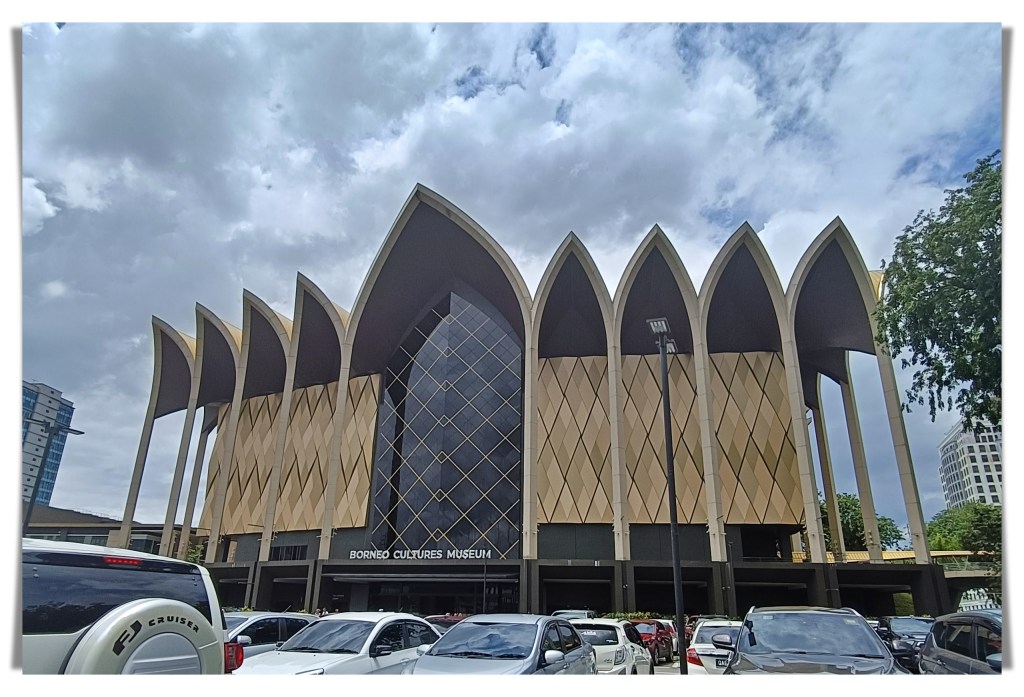
A Visit to Borneo Cultures Museum, Kuching, Sarawak

Have you heard of the Borneo Cultures Museum? It is in Kuching, Sarawak, and from the outside, it seems quiet, though the building looks very unique. However, the scale becomes clear once you get inside. It is the biggest museum in Malaysia and the second largest in Southeast Asia. My family and I visited on our last vacation to Kuching and spent a few hours there in the afternoon. We thought it would be enough, but it quickly became clear that it wasn’t.

There is too much to take in at once, so I will share a few things that caught my attention the most.

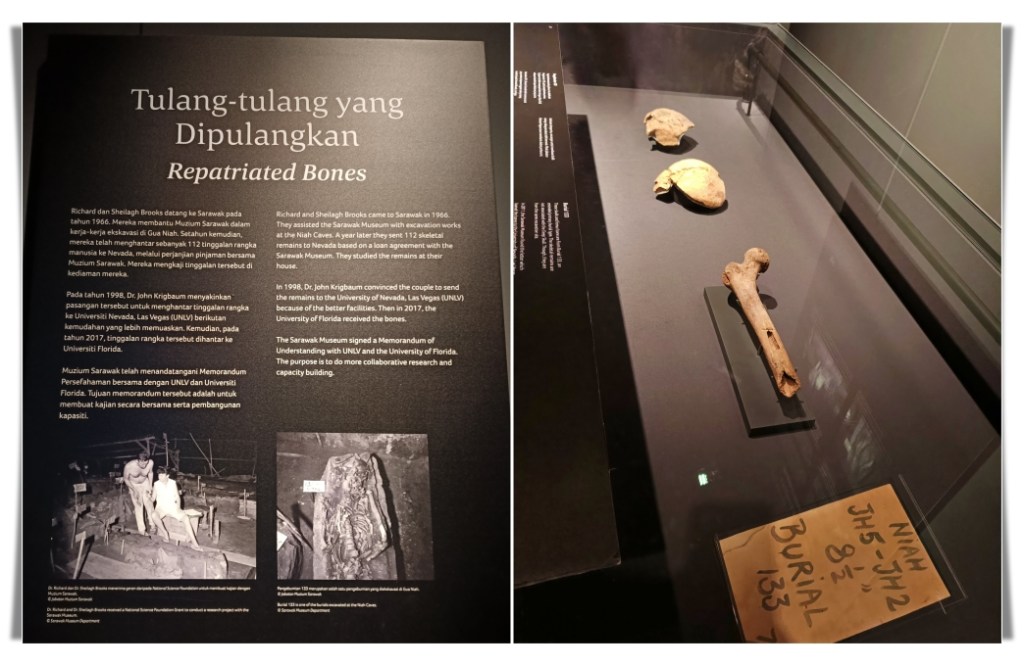
Repatriated bones of Niah Caves

The repatriated bones from the Niah Caves were one of the first things that caught my attention. However, not all of the remains are displayed. Only fragments are shown, including one from Burial 133, which is part of the Neolithic cemetery found in the cave’s West Mouth. This site has one of the largest prehistoric burial cemeteries in Southeast Asia. Excavations in the 1950s and 1960s, as well as more recent studies, have found more than a hundred burials here. The University of Nevada used to keep these bones for research and safekeeping, but they have since been returned to Sarawak. I visited Niah Cave in my youth, and I have read about these bones in the past, and standing right beside them felt so surreal.

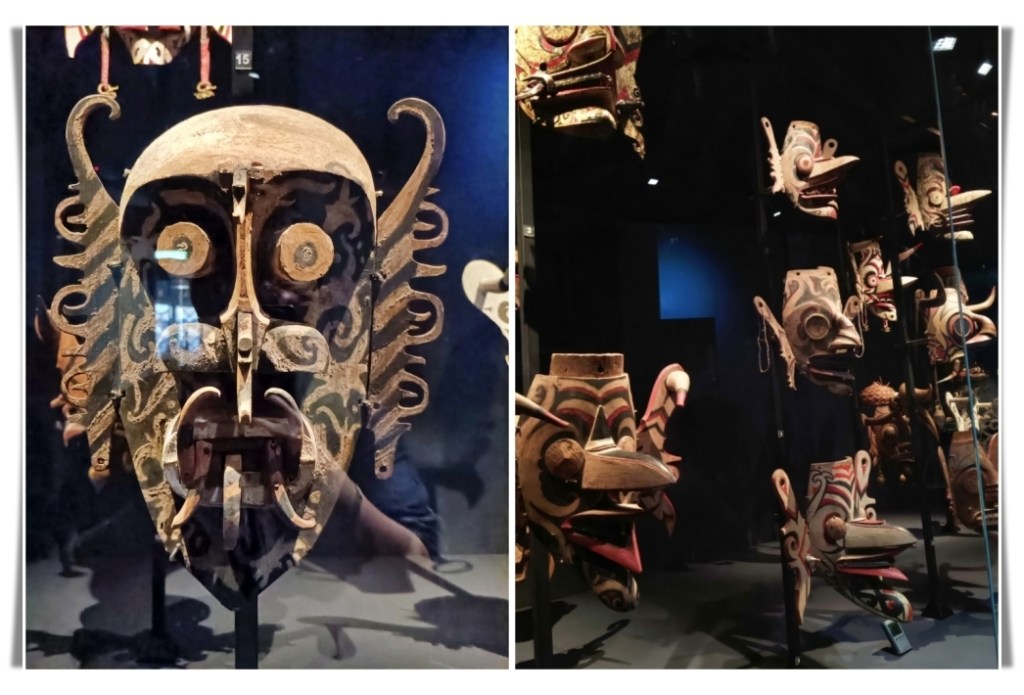
Orang Ulu Masks or the Hudo’ masks

The Kayan and Kenyah people use these masks during harvest festivals to cast away bad spirits and make sure the crops are healthy. The masks are displayed on the fifth floor in the “Objects of Desire” gallery. I admit this section of the museum felt slightly unsettling with the masks quietly staring at you from the glass display. At first, I didn’t say anything but later, my sister said she felt the same way and even had goosebumps.

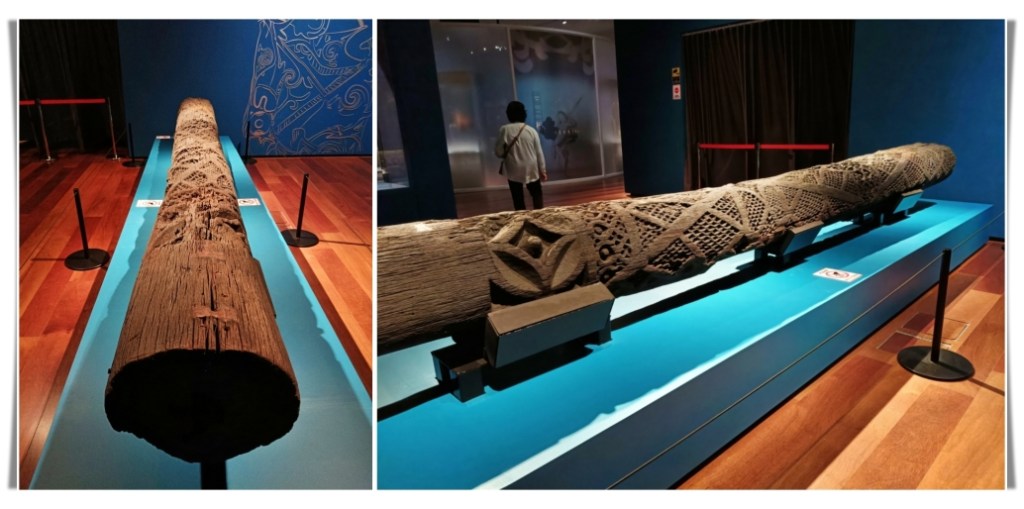
The Melanau burial pole or Jerunai

These carved wooden poles were used to bury wealthy Melanau people and nobility. The remains of the dead were placed in jars and kept in the hollow parts of the pole. The Jerunai was reserved for the Liko, or Melanau pagan nobility. Ancient rituals associated with the Jerunai often involved human sacrifice. Slaves were sometimes placed at the base of the structure believed to serve their dead master in the hereafter. This practice was long abolished when the community converted to Islam and Christianity.

Kelirieng – burial pole of the Punan Bah or Sekapan tribes

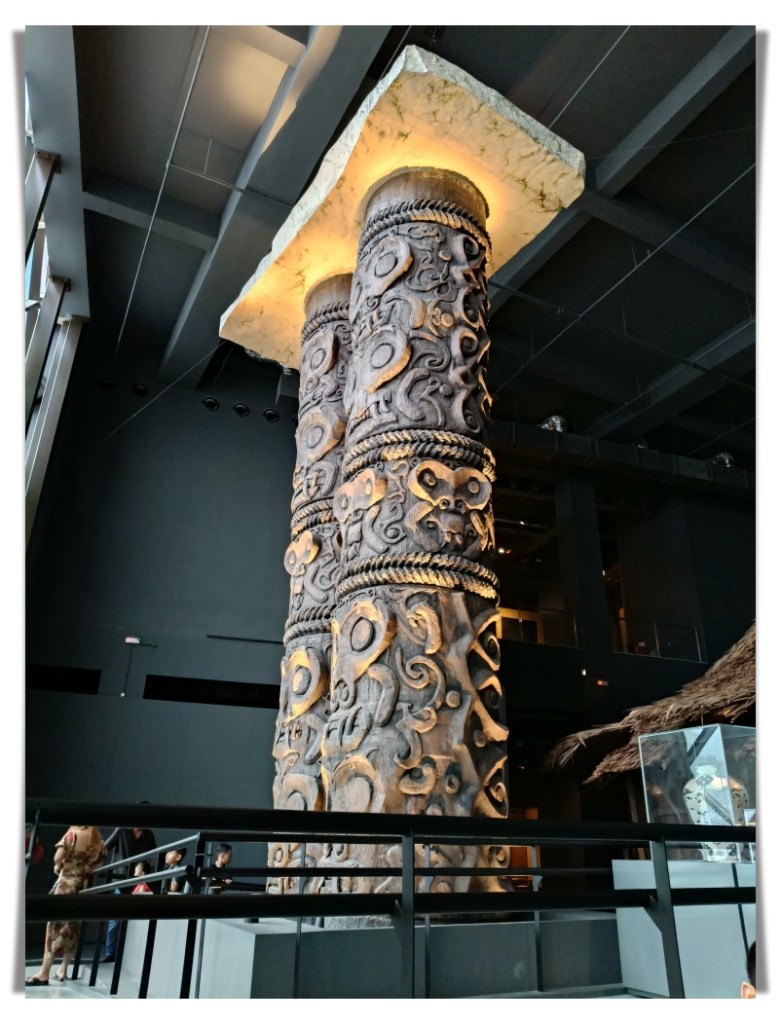
There was also a similar structure called the Kelirieng, a burial pole used by the Punan Bah and Sekapan communities. Like the Jerunai, it functioned as a secondary burial structure. The dead person’s bones were placed in large ceramic jars and then they were hauled up into a hollowed part at the top of the pole. The height of the structure symbolized status and was believed to bring the deceased closer to the spirit world.  To protect the jars, most of these poles have a huge stone slab on top.

However, the massive Kelirieng in this picture are replicas, and the original ones can be found outside within the museum’s compound. As I was staring at these burial poles, I kept thinking about the slaves. I heard that the slaves were crushed to death as they raised these poles on the ground. It’s a gruesome mental scene, but it’s part of our history. One benefit of religions is that they abolished slavery, as no one deserves to be treated as subhuman at the mercy of their masters. 

Headhunters swords

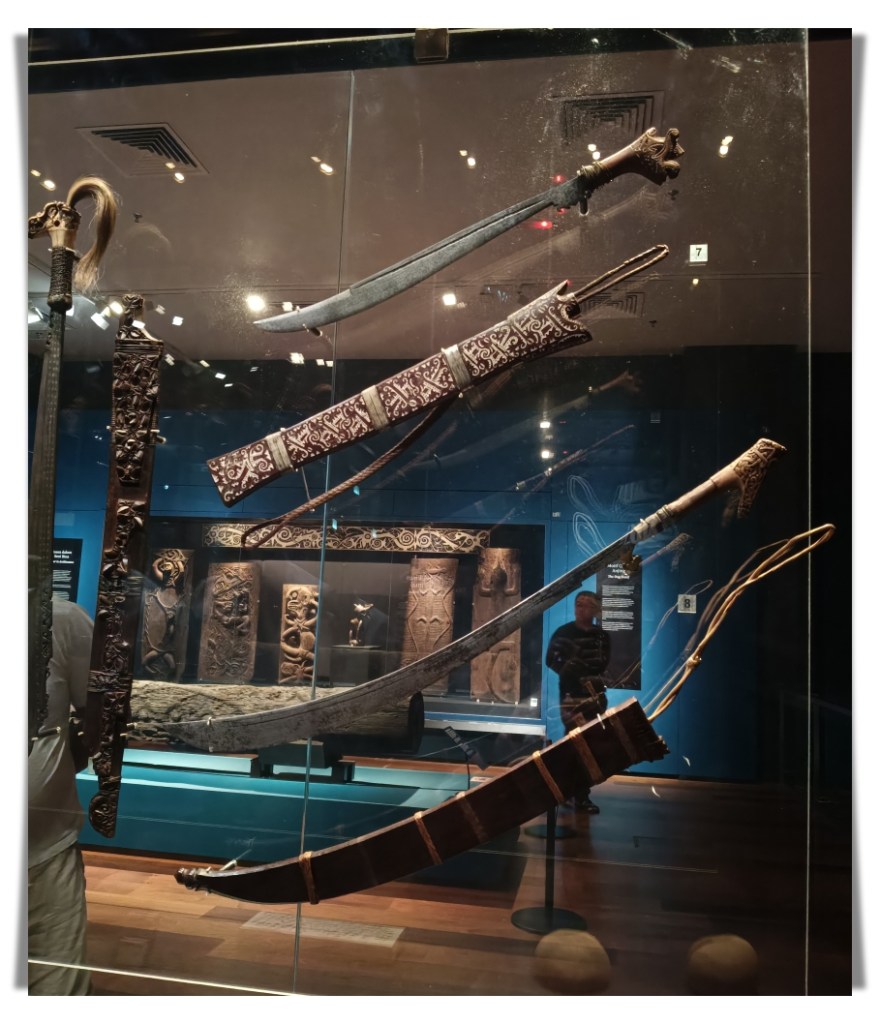
These swords were historically used for headhunting. While I was lingering near this exhibit and admiring their craftmanship, my husband had a different experience. He told me later that he felt a strong impulse, as if a voice was urging him to take one of the swords and kill someone. He felt so uncomfortable that he quickly left this section. I didn’t experience anything like that, and I believed him when he told me. The Iban people believe that such swords need to be kept properly, and certain rituals need to be conducted to appease the restless spirits of the swords. 

 Dayak human skull trophies

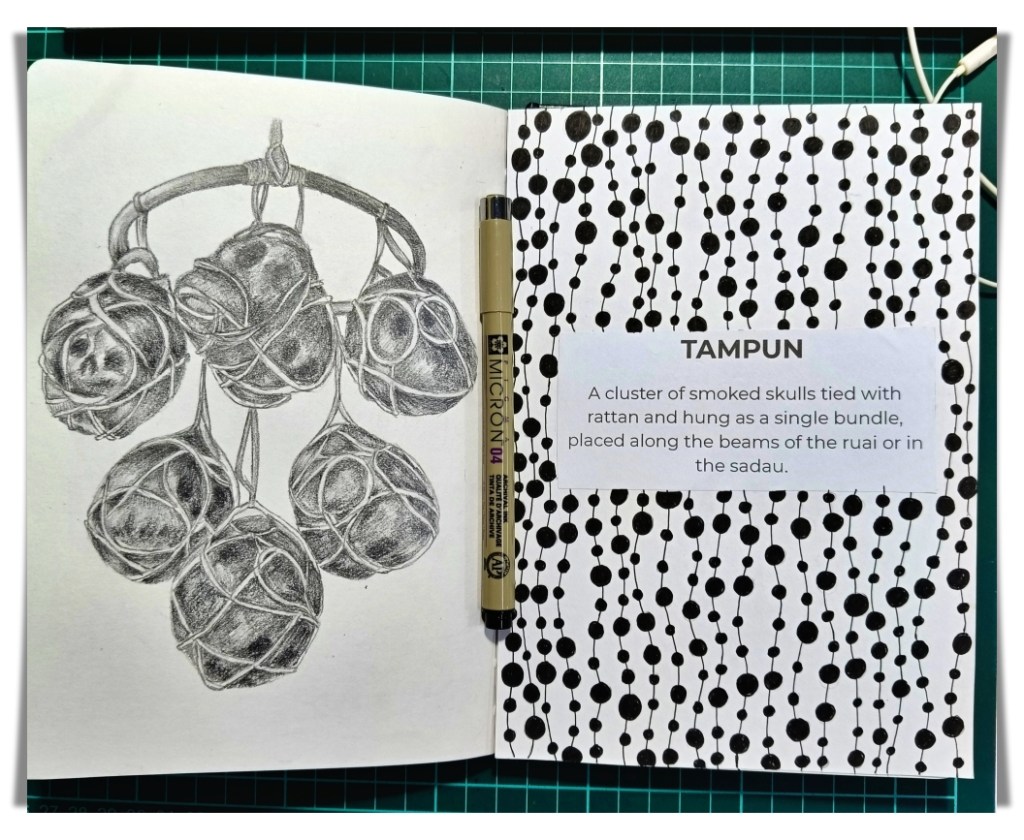
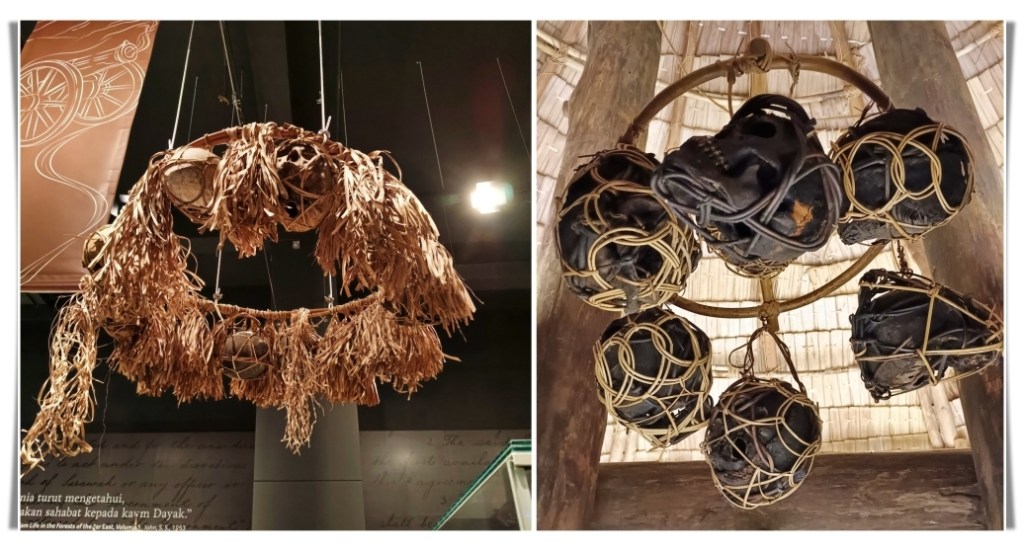
Finally, there were the skulls. These are real human skulls from Sarawak’s headhunting past. They are arranged in round rattan frames decorated with dried leaves. This collection is known as a tampun and is traditionally hung in the longhouse. Some of my relatives still keep them. The Iban people believe that the souls are still present, thus they should be treated with care. My family no longer keeps them, as my great-great grandparents gave up these practices after converting to Christianity in the early 20th century.

We were at the museum for about three hours, but it wasn’t enough time to view everything. If I go again, I shall go in the morning and take my time to view and read the information about every exhibit. You need to take your time so your visit will be totally worth it. 

If you ever go to Kuching, I suggest you spend a whole day there. It’s more than just looking at the exhibits. As I mentioned, I highly encourage you to understand the stories behind them in order to fully appreciate our cultures and Indigenous way of life.


I write about Iban culture, ancestral rituals, creative life, emotional truths, and the quiet transformations of love, motherhood, and identity. If this speaks to you, subscribe and journey with me.
Writing About Iban Culture Without Taking the Easy Way Out

Indu Iban
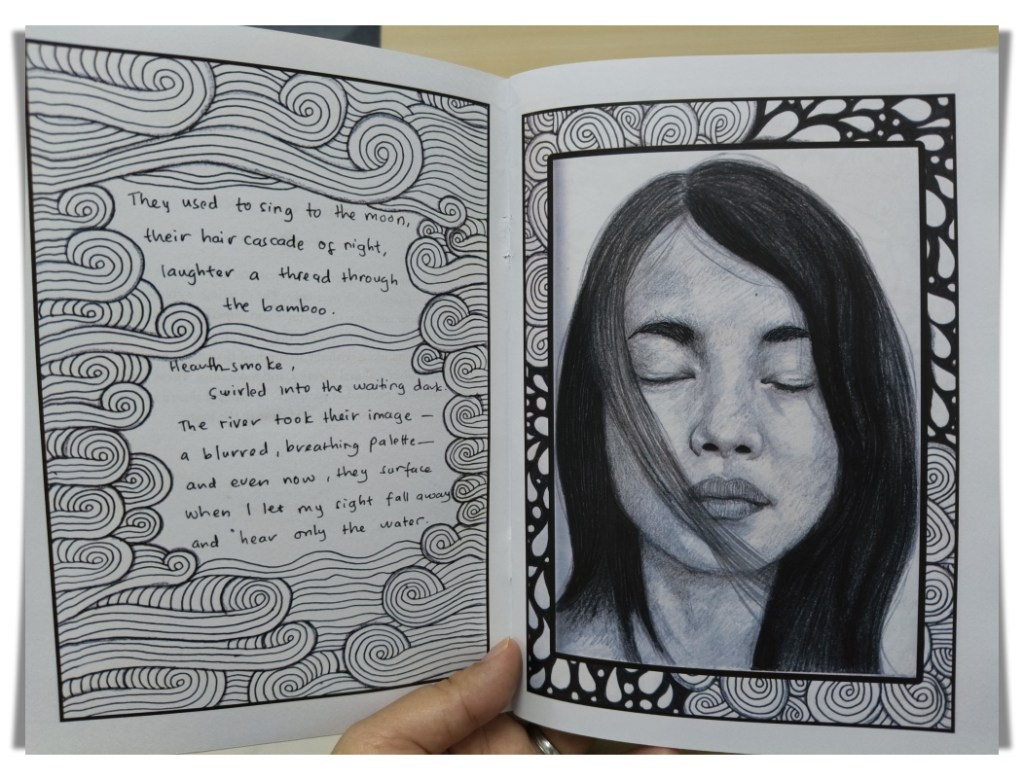
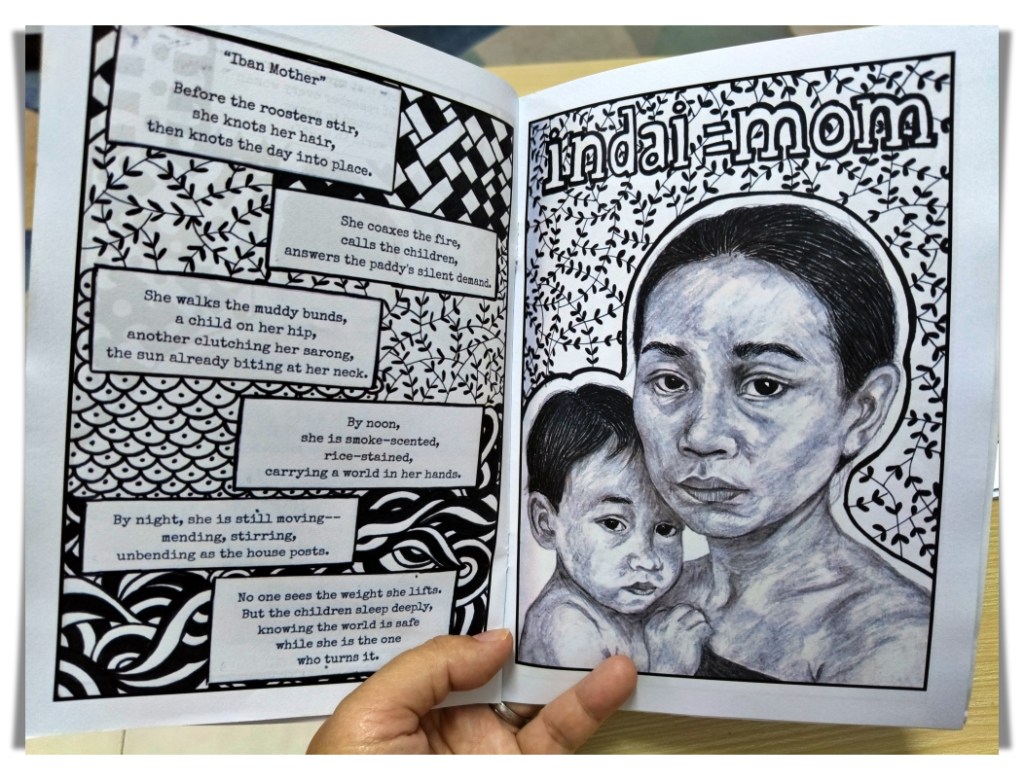
A spread from Iban Women zine

When I first read the CBC article on AI-generated Indigenous content, my stomach tightened. Not because I generated my content with AI, which I don’t, but because I understood how easy it would be for someone looking for Iban culture to find made-up “elders’ teachings” or made-up Iban phrases and think they were the real thing. I am an Iban woman living far from Sarawak and raising children of mixed heritage. While I utilize AI to assist in my writing process, I don’t generate it using an algorithm. My sources are from my family history and lived experiences. These are the datasets I train on. They are living memory and not predictive text.

The article quotes Michael Sherbert saying generative AI is “optimized for fluency, not for truth or for ethical or cultural responsibility.” I think about this every time I sit down to write a poem or draw cultural art. Cultural truth is difficult to tell and requires effort to check for accuracy. Telling cultural truth also means admitting I don’t know many things and need to learn from those who are more knowledgeable. I read all kinds of academic resources and cross-check my facts with family members before I post them on my blog or publish a new cultural zine. I avoid making assumptions, and when I am not sure of the accuracy, I admit that I don’t know and encourage others to share their experiences or information so we can all learn from one another.

Kaitlyn Lazore from the Mohawk community said something that stayed with me: “There’s no easy way to learn the language or gain culture without getting out in your community.” She is right. Still, I am raising my children far away from my homeland. I can’t take my children to a local social gathering to hear native speakers speak Iban. I can’t take them to Sungai Stambak and let the mud cling at their ankles like it did mine. So what do I do? I write and I draw. I make zines like Rituals and Rivers, Iban Women, and Iban Headhunters. I know that all these things are not substitutes for community. But they can turn into a perau, a small boat that will wait for them until they are ready to learn about their roots. They can launch it whenever they want. They can find their way to their roots through the names I’ve kept alive in my writings and art.

Budaya Iban
A spread from Iban Women zine

But I also do what the article emphasized: I am transparent. I include Iban words with definitions in most of the cultural poems I wrote. Every story distinguishes between traditional knowledge and my personal interpretation. I do not claim to be an elder. I am a mother and a learner who is learning to preserve her culture in her own ways.

The article talks about “pan-Indigenous representations that flatten distinct nations into one interchangeable identity.” This is very important to me. I am Iban, not a generic “Borneo culture” or simply an “Indigenous” group. When I write about details like the bungai terung tattoo motif, I name it instead of being vague. When I describe perau pengayau, I explain that they are tied to certain histories. My children are of mixed heritage, and I don’t want their Iban side becoming a blur; thus, I need to be more precise. Brian Ritchie of kama.ai said, “It can be difficult for any user to understand how responsible or accurate or authentic the information is.” That’s why I always mention my sources. I write down who my sources are: my family histories and Iban cultural experts or academicians. I don’t believe in vague statements like “tradition said this and this, so…”

My children may not grow up speaking Iban fluently. Some days, that thought breaks my heart. But they will know that their mother didn’t take the easy way out. She didn’t ask ChatGPT for a “traditional Iban sampi” and then copy and paste it. She had to deal with the pain of forgetting, so she read and conducted her own research to learn the real truth and facts.

Iban culture
A spread for an upcoming zine (still in progress)

At the end of the article, there is a reminder to use your judgment and ask for community vetting. This is what I would add: If you like my work, my poems, my art, or my zines, please also look for Iban elders or experts in Iban studies. Please use my work as an invitation to explore further. It should not be a replacement. I am just one voice who is trying to preserve my culture for the future generations. 

My children observe me write. They see me struggle with information, memory, and the pain of being far away from my homeland. And I hope that when they are adults, they will know the difference between something that is made up and something that is real. The difference between a perau that really floats on water and one that only exists in a machine’s algorithm. I will keep making perau until then: one article, one poem, one drawing, and one zine at a time.

When They Are Ready
for the ones I raise far from home

We build our lives on foreign soil,
where rivers have no stories
and the wind sighs emptily.
My children’s tongues are borrowed,
their laughter shaped by cities
that have never heard a gong.

I tell them of the longhouse glow,
the smell of rain,
the river bends like an elder.
They listen, but cannot feel
the ancient soil that holds their roots.

So I write these rivers into words,
each poem a small perau waiting.
When they are ready,
they will launch them,
navigate by the names I’ve kept alive
and find, at the source,
a home that never stopped calling.

(a poem from Rituals and Rivers)


I write about Iban culture, ancestral rituals, creative life, emotional truths, and the quiet transformations of love, motherhood, and identity. If this speaks to you, subscribe and journey with me.
Who Gets to Choose Simple Living? A Reflection on The Abundance of Less

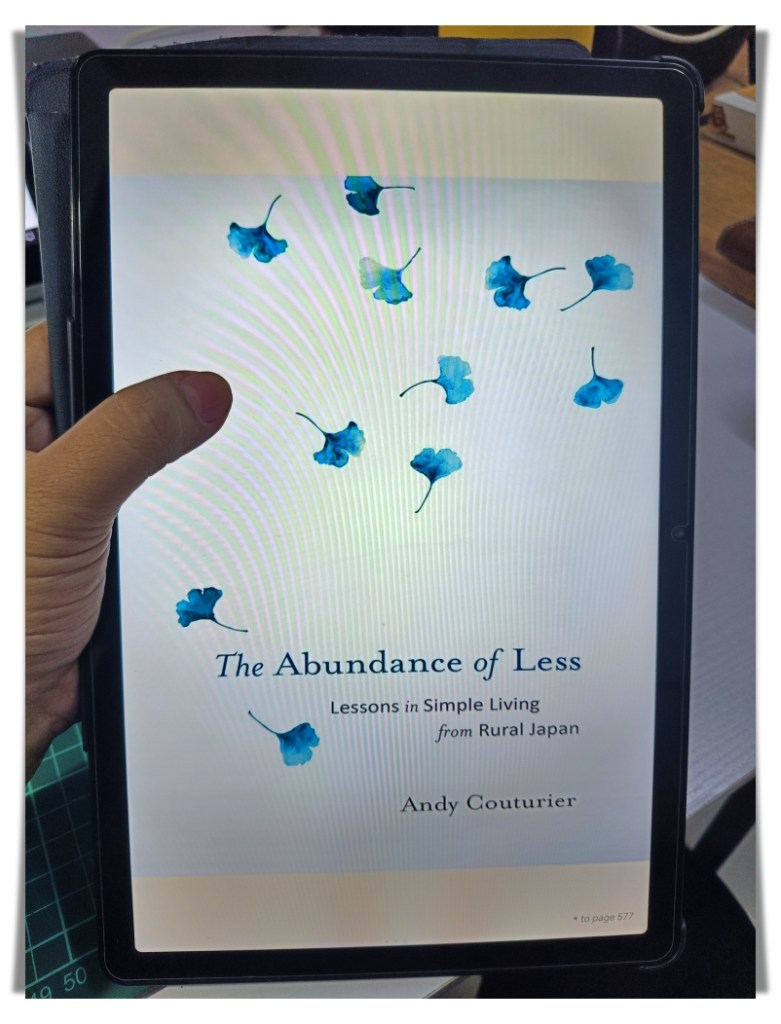
I finished The Abundance of Less today. I don’t think I’ll read this book from start to finish again. There are parts of the book that I might read again because some of the people in it have inspired me one way or another. Their lives were at peace and consistent over time. That has remained with me.

What I liked most was how some of them lived without separating things. There was no separation between work, art, and everyday life. Making meals, growing food, making art or writing, or carving wood all come from the same place. There was no clear line between survival and meaning and I can see why that might be appealing because it feels solid and complete.

Some of the people in the book choose to live with less. They kept their needs minimal. They worked with their hands and they were aware of their surroundings. Living that way takes discipline but it brings clarity. You know what you need and what you don’t. However, a tension that was hard to ignore grew as I read on.

In the Afterword chapter, the author mentioned one of his book reading sessions when someone asked if these people were just surviving at a basic level of survival. That question lingered because it sounded familiar. Where I come from, many people already live that way. It’s not a philosophy or a decision made after reflecting on it. That’s just how life is.

I come from an Iban background. My grandparents were paddy farmers who lived in longhouses. They grew their own food and they depended on the land. Life in the longhouse community was close and practical. It wasn’t considered meaningful or spiritual. It was simply necessary and it wasn’t easy. Farming is hard work and the yield is sometimes uncertain. There are limits to what you can access, especially education and healthcare. Many people in these communities wish to have a stable income. They need money to send their kids to school or pay for healthcare. They want to repair their homes or build new ones. They want to help their elderly parents. These concerns are genuine and constant.

When I read about people who want to live a simpler life, I see two separate realities. Some people choose to live with less. And some people have always lived with less. The difference is in the choosing. Choice allows you to choose that life and leave whenever you want to. Choice lets you regard it as meaningful. If something goes wrong, it allows you to return to a system that supports you. But without that choice, that same life would look very different. 

In the Afterword, the author asks if small “green” changes to one’s lifestyle are really meaningful. They say that these changes let people stay comfortable while calling it sustainability. The concern is real, especially when certain changes are made more for show than for a good reason. But this perspective doesn’t take into account that not everyone can make big adjustments to their lives. Some people can’t move away from the city, change jobs, or move closer to nature. They can’t make those kinds of adjustments because of their jobs, finances, and other circumstances in their lives.

For them, small changes let them do things within their limits. Making small changes like consuming less, being more mindful, or doing less harm to the environment can still reflect a genuine effort to live with awareness. These decisions may not seem like enough from the outside, but they are based on what a person can realistically change at that point in their life.

This doesn’t mean that the people in the book are wrong. I understand what they’re attempting to achieve. I can see the benefits of living with purpose and cutting back on things I don’t need. I can see they care about the land and their communities. But I can’t ignore the other side either. Moving to a city or looking for a job that pays cash does not mean giving up on values. People are just responding to their circumstances. They are trying to make their life more stable by making decisions based on what they need.

Both ways of living arise from different needs and situations and are shaped by different circumstances. One is often chosen and can be left behind. The other is lived without the option to leave. That difference should not be overlooked. To be frank, this book did not give me a model to follow. It just offered me another perspective to consider and it made me think more about my own life and what I already value. It also made me think about how some ways of living are described and seen in a higher regard.

I will remember certain chapters of this book. The chapters about Asha Amemiya, Akira Ito, Koichi Yamashita, and Wakako Oe are worth reading. They are not offering answers, but rather something that can fuel my inspiration. I will return to those chapters when I need a reminder of some kind of discipline or attention. I will also give my perspective the same weight because it also means something important to me.


I write about Iban culture, ancestral rituals, creative life, emotional truths, and the quiet transformations of love, motherhood, and identity. If this speaks to you, subscribe and journey with me.
On Making and Keeping | Iban Cultural Preservation

People typically consider cultural preservation to be something that is conducted on a large scale. It is generally placed in the context of institutions, archives, or official documents. But it can also happen on a smaller, personal scale.

I have been making a series of handmade zines that are based on Iban culture and history. Each page of these zines pairs a drawing with a text of information or a poem. The drawings are hand-drawn, and the pages are put together painstakingly, one at a time. Every decision, from picture placement to word space, needs to be carefully considered. The whole thing is done entirely by hand.

While working on these pages, I learned that preservation is more than just keeping information intact. It also has to do with how that information is passed on. The information in these zines is not new. They have been told before, and they exist in oral histories, family accounts, and old literature. What I do is simply place them into a different form.

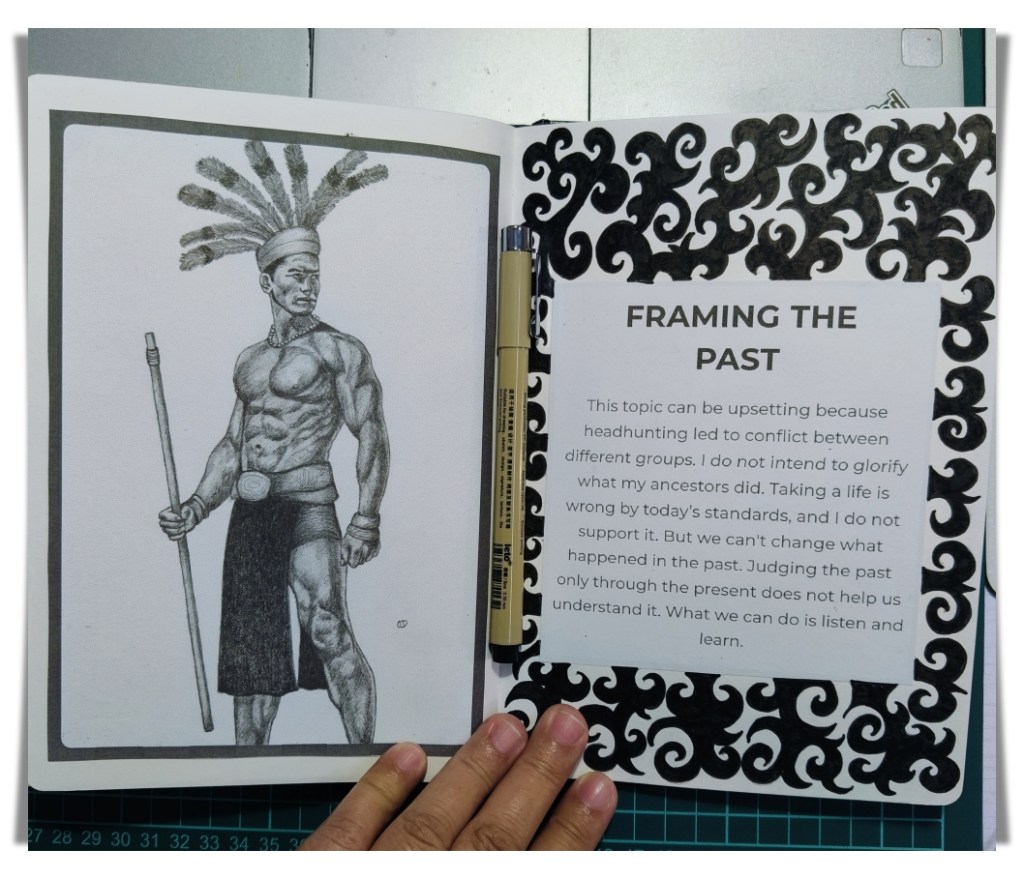
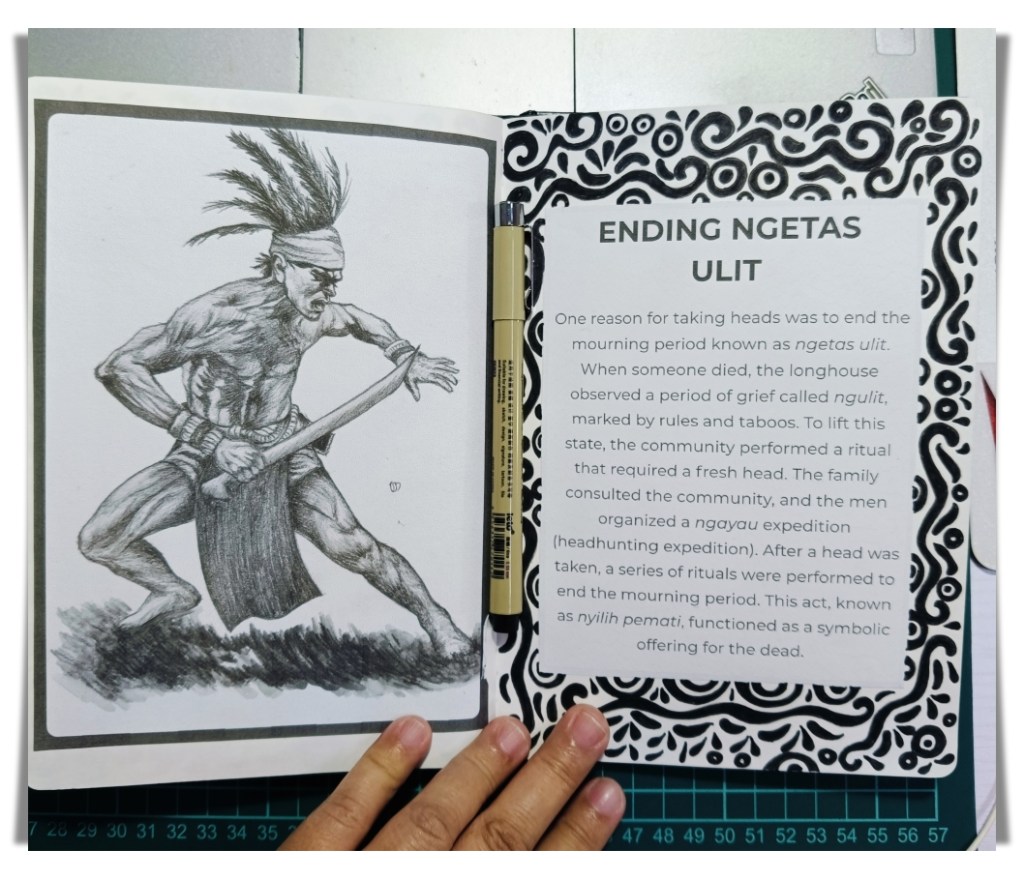
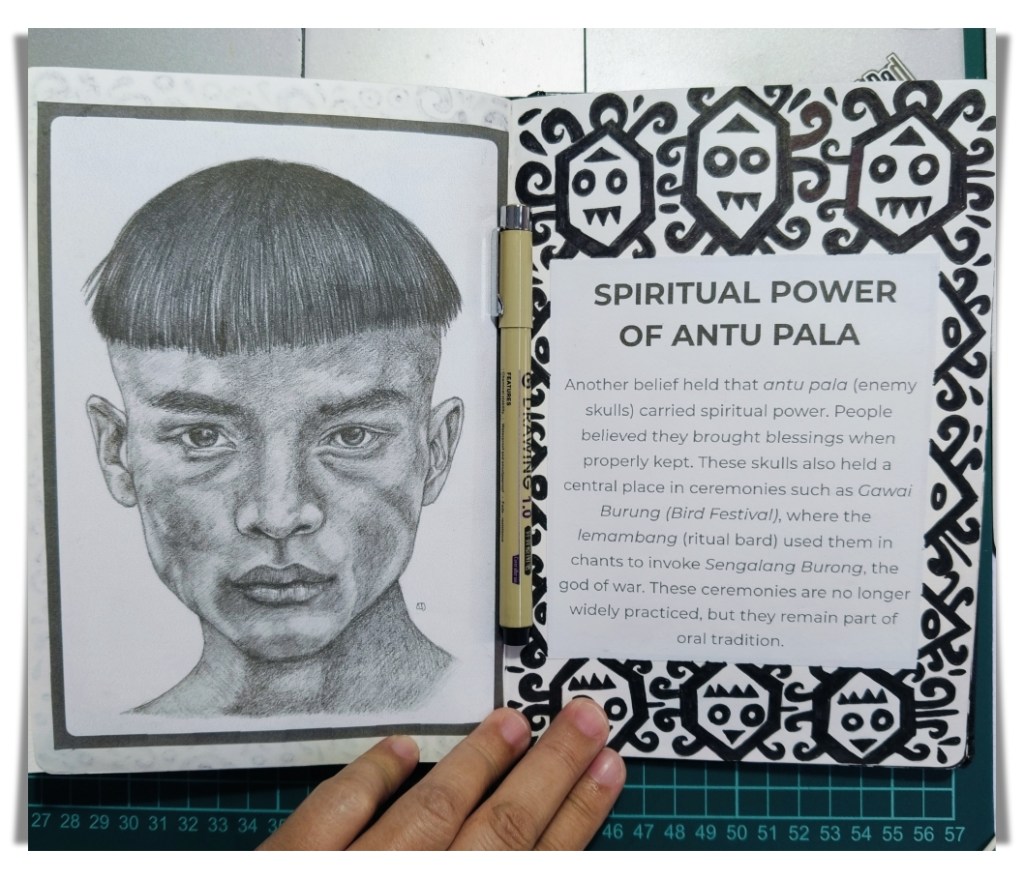
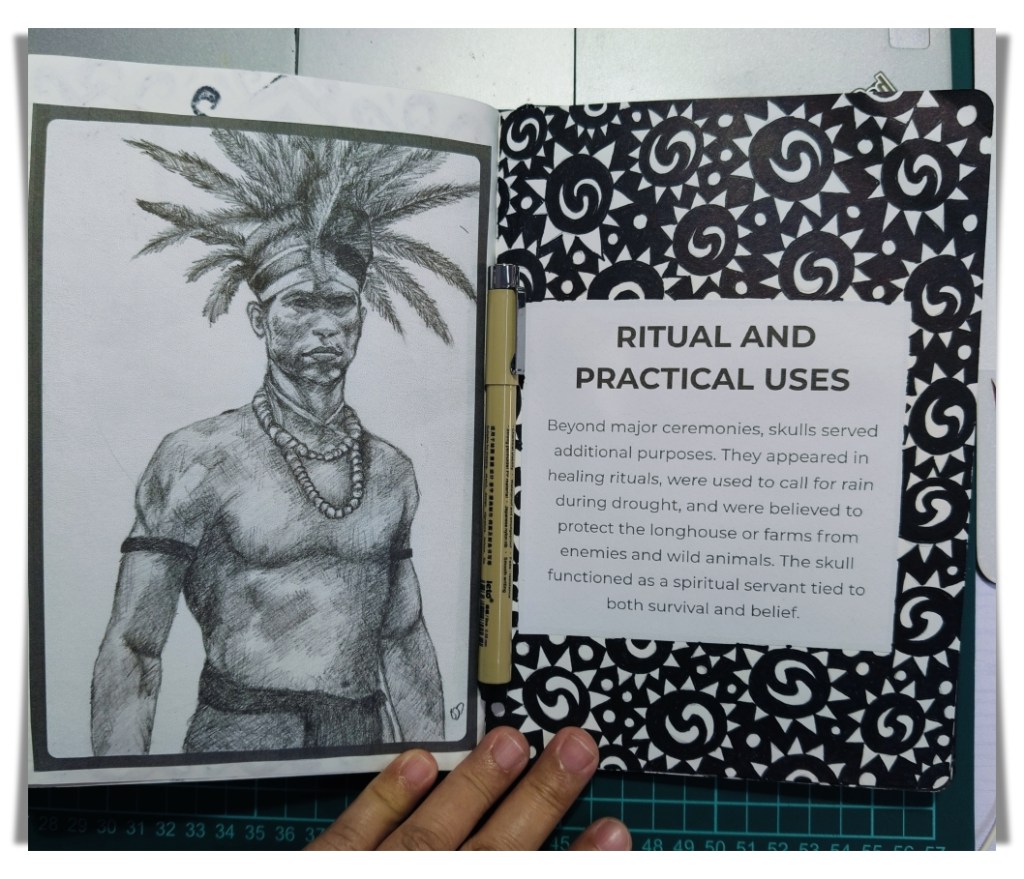
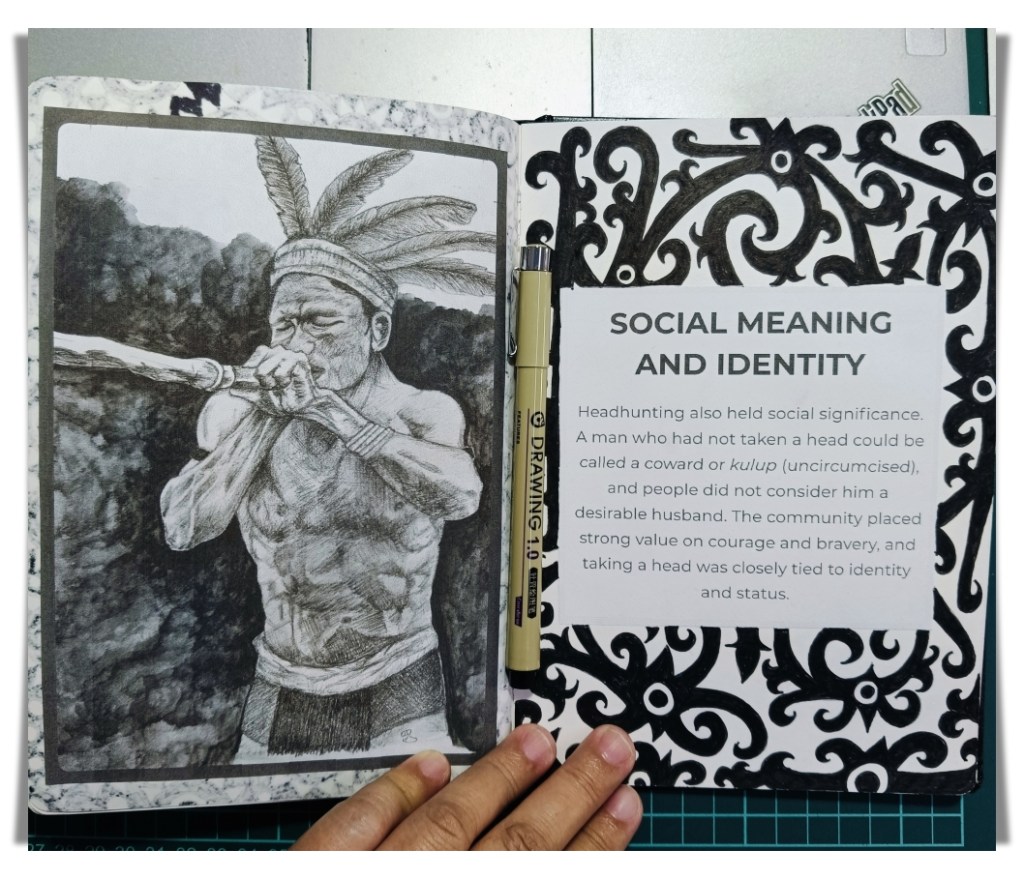
For instance, in these sketchbook pages, I talked about why the Ibans practiced headhunting in the past. It’s a difficult topic that people often misunderstand or only see one side of. I give it context instead of simplifying it. Each section describes a specific reason or belief and is paired with a hand-drawn drawing of an Iban warrior instead of an abstract idea. When I draw, it influences how I feel about the subject. When I sketch a figure, I pay attention to details that I would otherwise overlook. 

This zine doesn’t attempt to be a full record of the Iban history. It keeps some parts of it. The imperfections in the pages are part of that process. They show that it was created by hand, with time and care. In this regard, preservation isn’t only about accuracy or completeness. It’s also about continuity, working with it, and allowing it to exist again in the present.


I write about Iban culture, ancestral rituals, creative life, emotional truths, and the quiet transformations of love, motherhood, and identity. If this speaks to you, subscribe and journey with me.
When the World Tightens | Impact of Global Crisis on My Livelihood

The ceiling fan’s constant, repetitive whirring used to fade into the background. But I notice it more these days, like everything else that is going on around me. I have noticed that the price of raw food at the wet market has increased slightly, goods everywhere have also become more expensive, and my Ringgit seems to disappear faster than it used to. I sit here on my desk staring at my screen. The familiar Web3 blogging interface is staring back at me. This site has been my digital home for the past 10 years. This platform rewarded my thoughts and ideas with cryptocurrency. However, the value of the reward has declined steadily lately.

I’ve been trying to make sense of it by connecting the news about happenings across the world with the worry I feel when I look at my bank account. The news articles I read today helped me understand the situation better. It explained that the volatility I’m sensing in both the global oil market and the cryptocurrency space isn’t a coincidence. It is part of a larger change.

The war between the US and Iran has disrupted the global oil supply. Markets respond to current events and what they anticipate could happen in the future as tensions increase in the Strait of Hormuz, where 25% of global daily oil consumption passes through. I can see the Strait of Hormuz on the map. It’s a tight chokepoint half the world away, but I can feel its impacts here on my desk. This uncertainty pushes oil prices up. In Malaysia, the effects are both softened and more complicated. We earn revenue from crude petroleum through PETRONAS, but we also import a significant amount of refined petroleum products from other countries. Higher import costs partly offset the increased revenue, while subsidies exert additional pressure on national spending. The result shows up in groceries, in transport, in daily life.

This environment also has an effect on another aspect of life. As global instability rises and inflation stays elevated, central banks keep interest rates high. When interest rates go up, borrowing becomes more expensive, and money moves toward safer assets. In this environment, riskier markets like cryptocurrencies become less appealing. Cryptocurrency prices go down as money flows out.

I remember when I believed cryptocurrency was a means to insulate myself from economic instability and generate value outside of the traditional economy. Now it becomes a risky asset. It rises with confidence and falls with caution. Geopolitical tensions, rising oil costs, inflation that won’t go away, and tight monetary conditions are all to blame for the present crisis. These conditions tighten the flow of money into the crypto market. I feel it in my income.

I feel the impact of this decline more keenly here on Web3. Unlike bigger cryptocurrencies (Bitcoin and Ethereum) that are backed by institutional investors, the token I earned is mostly run by its community. Changes in sentiment and liquidity have a bigger effect on its value. When the market as a whole gets weaker, it declines more quickly. I have seen it drop from stable levels to much lower ones, and I see why the decline feels so severe.

The experience on the Web3 site is different for everyone. Despite the decline in token prices, the ecosystem remains structured to reward those who consistently produce high-quality content. The system seems unstable, although certain aspects of it keep working behind the scenes. This is what keeps my income stable for now. Even if its value has declined, my high-quality writing and art, engagement, comments, and curation still bring in a little bit of money.

This situation has been a daily worry for me. I am a Malaysian woman, a mother, and a creator. As fuel costs go up, my expenses go up too. At the same time, my earnings that come from cryptocurrencies become less stable. Both sides are shifting at the same time.

In this situation, writing, creating artwork, posting, and engaging with the Web3 site community has become a way to adapt. I focus on keeping things moving steadily instead of hoping for quick growth. To cover my daily expenses, I have started converting my tokens into USDT and some into Ringgit even when the value is low. I am also looking for other streams of income, like turning old writing and artwork into physical products that I sell on various local and international markets. It is my way of connecting an uncertain digital economy with a more stable one.

This leads to a process of adjustment. Global events are changing the way economies and people work. Prices for oil go up, inflation follows, interest rates stay high, and risk markets shrink. As this contraction goes on, smaller Web3 systems grow weaker, yet they continue to function at a lower value.

This moment is a transition for me and the pressure is real. I keep going even if I don’t know what will happen, since if I quit, I will be more exposed to the same forces that are currently at work. What looks like a simple thing, just a woman typing at her computer, is actually a purposeful attempt to adapt to a world that is getting more expensive and less predictable. I keep writing and creating because it’s what I rely on the most in the middle of all this chaos. 


I write about Iban culture, ancestral rituals, creative life, emotional truths, and the quiet transformations of love, motherhood, and identity. If this speaks to you, subscribe and journey with me.
The First Hour of My Day

The first hour of my day is quiet. The house is still asleep. I sit up in bed and reach for my phone. I tell myself I am just checking one thing. The time. Messages that arrived overnight. I hold the phone close to my face. The screen lights up the room. I scroll. I do not notice how long I stay there. It is already April. I turned 49 in February, and it has been almost two months. Lately I have been feeling like I am living in a fog.

I want to spend my time on meaningful things: reading, walking in nature, journaling, and reflecting. But somehow the hours slip away. I sit down to check one message, and then it is an hour later and I am watching a stranger argue about politics. I feel hollow afterward, as if I have given something away without intending to.

The word is “attention.” I am reading a book, Four Thousand Weeks by Oliver Burkeman. In one chapter it says attention is the beginning of devotion. Only with full focus can you truly love, care for, or experience something. I thought about my daughter telling me something sweet from her day while I nodded along, still scrolling. I let many such moments pass because I was too distracted. Am I even having these moments? The book asks: Can you have an experience you do not experience? That stopped me cold.

I knew social media was harmful. I knew I was the product being sold. But I did not fully understand that I am losing time. I am being systematically manipulated. The platforms use slot-machine psychology, variable rewards, and persuasive design. The author called it the “attention economy,” and we are the products, not the users. Their profits come from seizing our attention and selling it to advertisers. They track what I pay attention to, what makes me angry or afraid, and they feed me more of it. The author says we’re not even products anymore. We’re fuel like logs thrown on a fire and used up until there’s nothing left. They benefit from our resources, time, energy, and attention.

What struck me most is that the damage extends beyond the hour I lose on social media. It changes how I see the world. The book says social media distorts what we think matters, what threats we face, and how we see others. I have noticed I am more anxious now. More cynical. I catch myself assuming the worst about people, even friends whose politics I disagree with. The fear carries over to real life. And then I wonder: is this really me? Or has my attention been hijacked for so long that I’ve forgotten what I actually care about?

There is a line in the book about how attention cannot easily monitor itself. The only tool you have to see what is happening to your attention is your attention. If that is already captured, you may not notice anything is wrong. That was difficult to ignore. I have told myself for years that I am fine, that I am in control, and that scrolling is harmless. But what if that’s exactly what captured attention would say?

I also appreciated the honesty about our own role in this mess. The book says we give in willingly. Something in us wants distraction. I notice this when I sit down to write or draw. I feel restless. I often feel the urge to check my phone and deeply feel the need to do research on a topic. It feels like avoidance: avoiding solitude or being alone with myself. The distractions come from within, not outside.

There is also the political side. I see how outrage is rewarded. One scandal replaces the last, from the Epstein case to the US-Israel-Iran war. It feels difficult to have a grounded conversation. The book emphasizes this is part of the business model. I feel that deeply with steady exhaustion, yet I keep returning to it. I am tired of feeling like this. I am tired of feeling fractured. I would rather not look back in ten years and realize I spent my finite life scrolling through things I did not care about.

The chapter ends by saying political crises need political solutions, and we also need to understand our own role in this. I do not have a clear answer yet. But I can begin with admitting this: I am distracted and frustrated. I want to care about what matters to me. I want to want what I actually care about. And maybe by admitting it, it can be a perfect place to begin.


I write about Iban culture, ancestral rituals, creative life, emotional truths, and the quiet transformations of love, motherhood, and identity. If this speaks to you, subscribe and journey with me.
A Word for Living Between Places

I came across The Dictionary of Obscure Sorrows several years ago. I found the Youtube channel first. I remember watching one video late at night. It was called Sonder: The Realization That Everyone Has A Story. The narrator’s voice was calm and unhurried. He described the word “sonder,” and I knew I had felt that feeling before but I couldn’t describe it. Here’s an excerpt taken from the book that describes sonder:

SONDER (the awareness that everyone has a story):

You are the main character. The protagonist. The star at the center of your own unfolding story. You’re surrounded by your supporting cast: friends and family hanging in your immediate orbit. Scattered a little further out, a network of acquaintances who drift in and out of contact over the years. 

But there in the background, faint and out of focus, are the extras. The random passersby. Each living a life as vivid and complex as your own. They carry on invisibly around you, bearing the accumulated weight of their own ambitions, friends, routines, mistakes, worries, triumphs, and inherited craziness.

When your life moves on to the next scene, theirs flickers in place, wrapped in a cloud of backstory and inside jokes and characters strung together with countless other stories you’ll never be able to see. That you’ll never know exist. In which you might appear only once. As an extra sipping coffee in the background. As a blur of traffic passing on the highway. As a lighted window at dusk.

That word stayed in my mind and every time I’m out in the crowd watching strangers passing by, I would think of sonder.

Just like sonder, the rest of the words in that book describe small and specific experiences. They do not refer to objects or actions. They name moments that are easy to overlook because they do not demand attention. Reading them made me more aware of how much I move through life without naming what I feel.

Today’s prompt asks what I would want named after me. I thought about it for a while. I could not think of any place or object that felt right. Those things feel distant from how I experience my life day to day. And I do not relate to them in a meaningful way.

And I thought about the book. I would love to be an entry in such a book. A word feels closer because it can hold something that is lived but not always spoken. It can remain small and still carry meaning. It does not need visibility to exist.

I have been writing about living between places. I am Iban. I grew up in Sarawak, and I have lived in Kuala Lumpur for many years now. My life is here and I am raising my family here. I know the places, the roads, the routines, and the pace of this city.

When I return to the longhouse, I notice the difference. I’m fluent in Iban, but sometimes I pause to find the right word. The rhythm is familiar, but I am not fully inside it anymore. I am received with warmth, but there is also a sense that I have come from somewhere else. 

That experience has remained with me, but it does not belong to a single location. It moves with me wherever I go. It shows up in small, ordinary moments like in the food I cook. In the stories I tell my children. In the way I think about the place where I come from.

Over time, I have come to see this as a connection that continues across distance. It is not always visible, but it is present. If I were to name that experience, I would keep it simple.

livselaka (n.)
the quiet state of living between places, where connection remains even when belonging is incomplete


I write about Iban culture, ancestral rituals, creative life, emotional truths, and the quiet transformations of love, motherhood, and identity. If this speaks to you, subscribe and journey with me.
Living Between Places

Most people don’t understand what it feels like to live between places. It is not exactly sadness. That is what I would want people to understand first. When they hear “between places,” they think of a wound, like a hole in the heart that never heals. That description does not fit. A “stretching” is more accurate. 

I am Iban. My bones know the red earth of Sarawak. That is what my body recognizes first. But I have now lived in Kuala Lumpur longer than I ever lived there. I have a husband who grew up in Penampang, Sabah, and children who have only ever known this city as home. I pay the condo rent and fees. I navigate the highway to Puchong. I visit the Pasar Borneo in Seri Kembangan, where vendors sell dabai that has been flown in from Sarawak. My life is here but “here” does not feel like home in a complete way.

When I go back to the longhouse, I notice it in my cousins’ expressions. I am “the one from KL.” I speak the language, but sometimes the rhythm is slightly off. I have to pause to remember the right word for something I haven’t touched in years. I am welcomed, always, with warmth, food, and laughter, but there is a politeness to it. It’s a subtle sense that I am now a guest. My children, when they come with me, are treated with affection, but also with a gentle bewilderment. They are Iban, but they do not know how to be Iban in the way that is expected. I am no longer fully at home there either.

This leaves me in a scattered position. My identity is not a single point on a map. It is a thread that runs back and forth across the South China Sea. My children are the living proof of this stretch. Their identity extends across even more layers than mine. They are Iban-Kadazan by blood and suburban KL-ites by every lived experience. They eat nasi lemak for breakfast and request ayam pansoh or hinava for their birthday dinner. They speak English and Malay with a city accent and only understand a word or two of Iban or Kadazan. They are not disconnected from their heritage, I make sure of that, but they are also not rooted in it the way I once was. I see them working through their sense of being between places at school when asked where they’re “from.”

I used to feel guilty about this. As if I had not given them a single, stable foundation. I do not feel that way anymore. I have come to understand that geographical distance often reflects a connection, not a lack of it. I remain connected to my family through WhatsApp or Facebook.

Living between places means I am constantly translating language, meaning, belonging, and self. To my KL friends, I am the “exotic” one from Borneo, with the tattoos, living atop the trees, and the stories of the headhunter ancestors. To my family back home, I am the modern one, the city-dweller, and the one who left. Neither captures the full picture. The full truth is that I am both. People who have never left their home place might see this as a tragedy of loss. This misses something important. Staying in one place would have limited what I could carry with me.

I am not fully home in one place. The result is that I have made small homes in many. My identity is scattered like seeds. I am watching them grow, in my children and in the friendships I have built across this country.

It is a complicated way to live, but it is mine. It has made me capable of understanding something essential: that you can love a place deeply and still not belong to it entirely. That belonging can be a choice, a meal you cook, a story you tell, or a journey you make again and again. Many people do not understand what it feels like to live between places. But I do. And in that stretching I have found a form of wholeness I did not expect.


I write about Iban culture, ancestral rituals, creative life, emotional truths, and the quiet transformations of love, motherhood, and identity. If this speaks to you, subscribe and journey with me.