


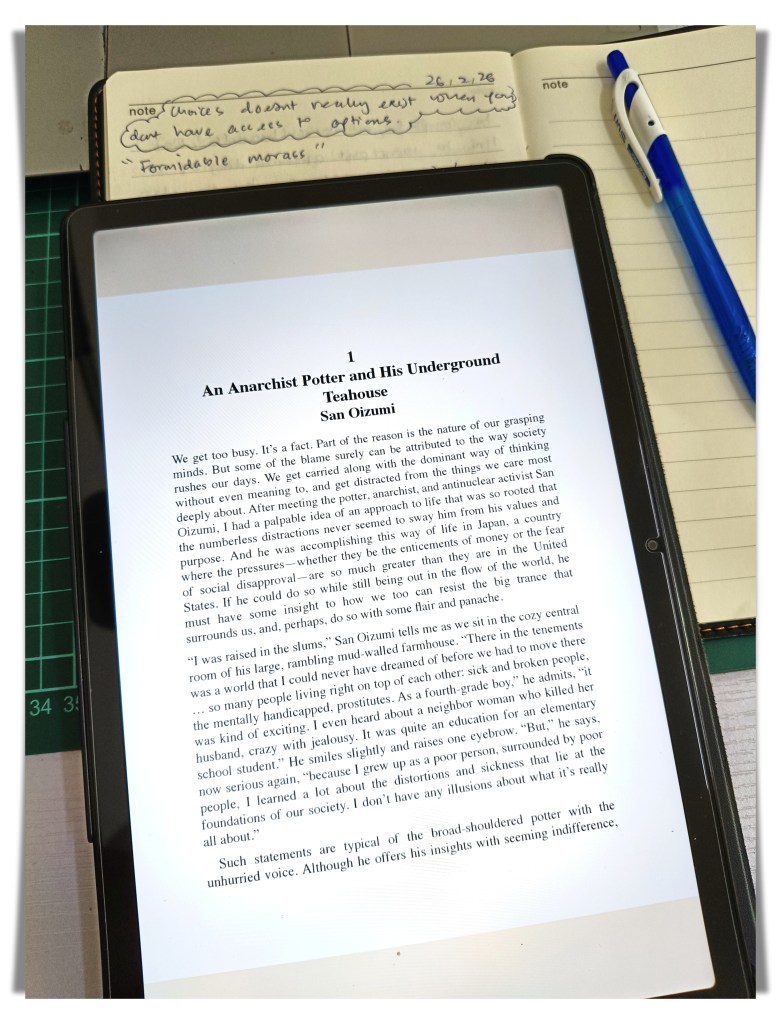
I have been reading The Abundance of Less by Andy Couturier. I’m only on the first few chapters, but the people he writes about stay with me long after I’ve put the book down. They live in the countryside of Japan, far away from the fast pace of cities and the demands of the digital world. The scenery isn’t what draws me in. What attracts me is how gracefully they go about their days. For anyone curious about the author’s thinking, his interview with Kyoto Journal offers a thoughtful look into the ideas behind the book: https://kyotojournal.org/conversations/making-a-life-not-merely-a-living/#top
Here are some of the people featured in this book:
San Oizumi is a potter who makes tea bowls, builds small structures, and allows his work to take the time it needs. His life unfolds at its own pace, shaped by intentional choices rather than external pressure.
Osamu Nakamura is a woodblock craftsman who carves slowly and on purpose keeps his world small. He rereads the same books for years. He commits to depth and does so quietly.
Atsuko Watanabe is an activist and mother who plans her days around what she can accommodate, not what she accumulates.
Kogan Murata, a Zen practitioner, sings the same songs repeatedly to make him more at ease with himself.
The artist Akira Ito studies ordinary objects and folk art. He sees the beauty in the work of unknown hands and in the little things that life leaves behind.
Gufu Watanabe, a traveler and journal keeper, writes down mundane things like a meal, a corner of a room, or the light on a plant just because they are there.
Koichi Yamashita, the gardener, understands how long one meal actually takes when you follow its beginnings back to the soil. Everything slows when traced back to its true starting point.
And throughout his life, Masanori Oe keeps asking the same questions, letting the act of asking change him instead of expecting clear answers.
They all live in different ways, but there is something that connects them. That connection doesn’t come from a common rule or way of thinking. It is a way of being with one’s own life. Their choices are calm and measured. They follow a rhythm that is shaped by staying focused. Everyone has a small world inside them, and their interior lives feel wide.
As I read, I have no desire to replace my life with theirs. What I want is the core of their choices: a way to get through the day without rushing to the next thing. It is a way of working that doesn’t require you to prove the worth of your work or put on a show for anyone else. I am drawn to the inner posture that lies beneath their rural setting.
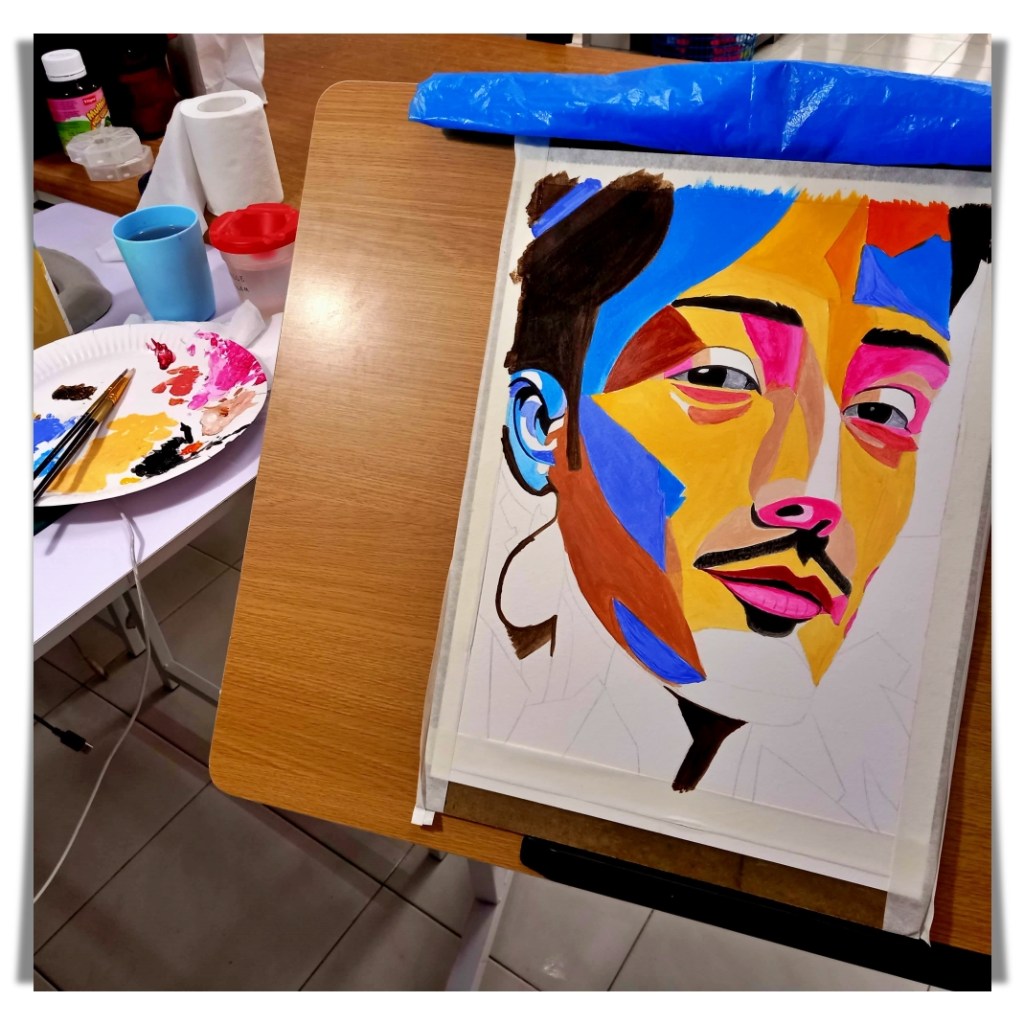
I live in a city where I am surrounded by noise and responsibilities. My days are shaped by family, work, and all the challenges of living in a city. Sometimes I experience something similar to what these people embody, like when I go back to writing or my art without the need to explain myself. I sense it when I commit to my small routines and when I choose to keep my world manageable. The external environment may be different, but the intention seems to be the same.
The essence I admire exists independently of place. It has more to do with how time is held, what is noticed, and what is allowed to matter. I have no intention of becoming these people. A quieter rhythm has begun to take shape in my days, influencing how I move through the life I already inhabit.
I write about Iban culture, ancestral rituals, creative life, emotional truths, and the quiet transformations of love, motherhood, and identity. If this speaks to you, subscribe and journey with me.







 Olivia's Atelier