Painting an Iban Woman in Ngepan Indu Iban | Between Chaos and Colour

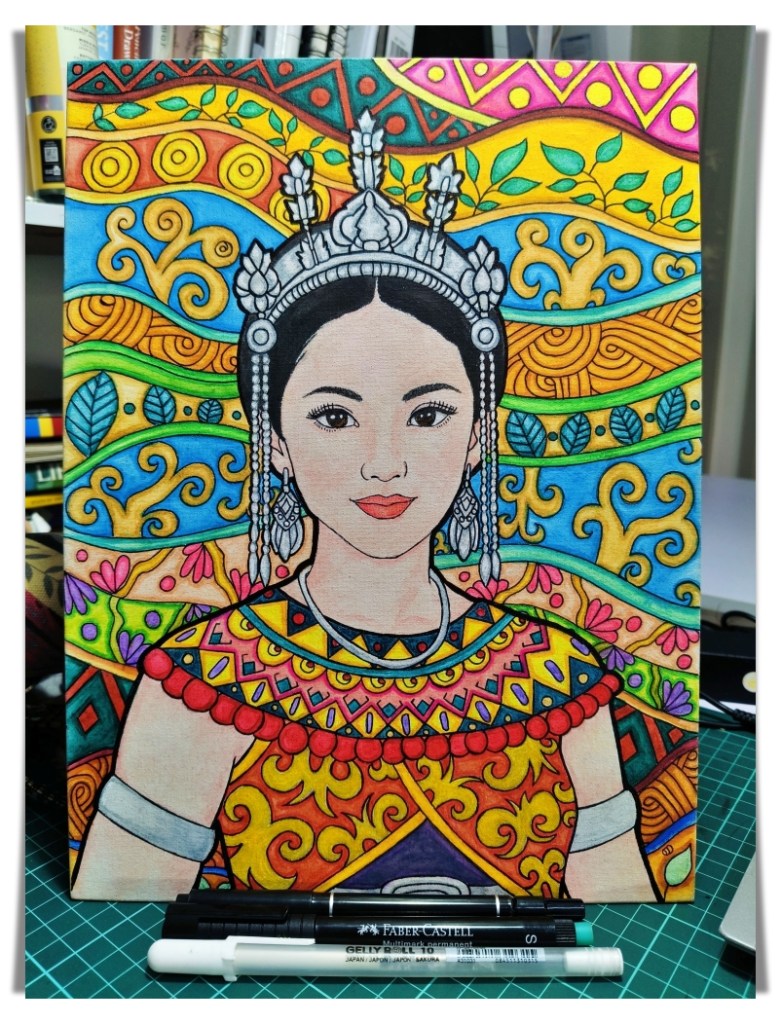
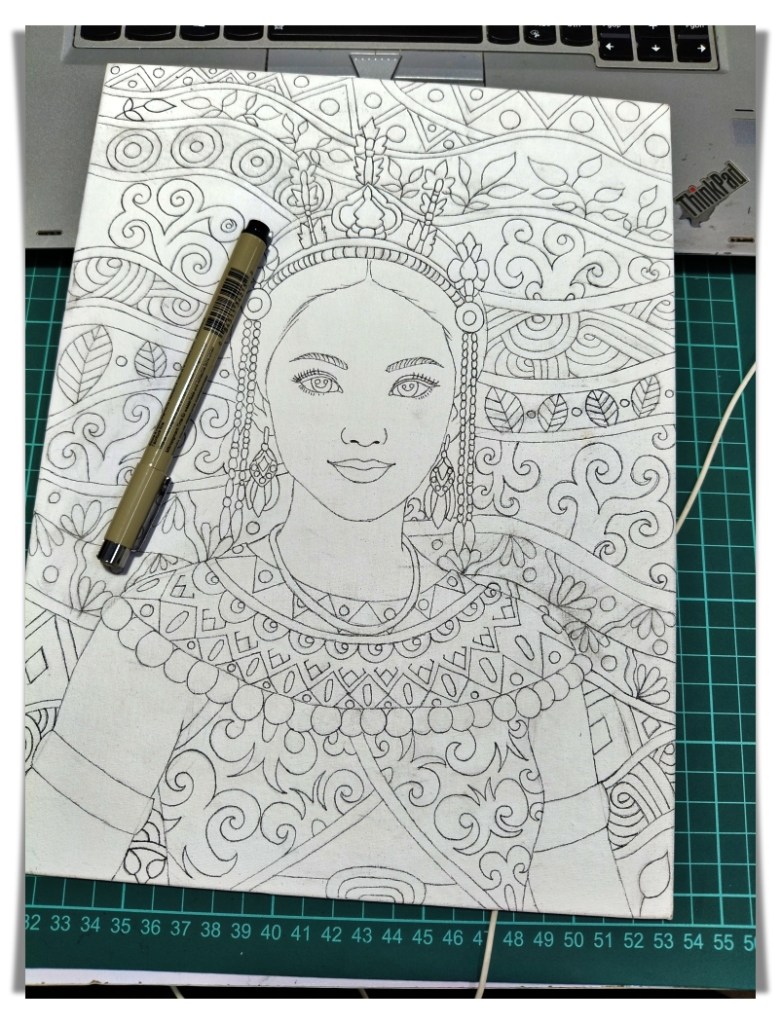
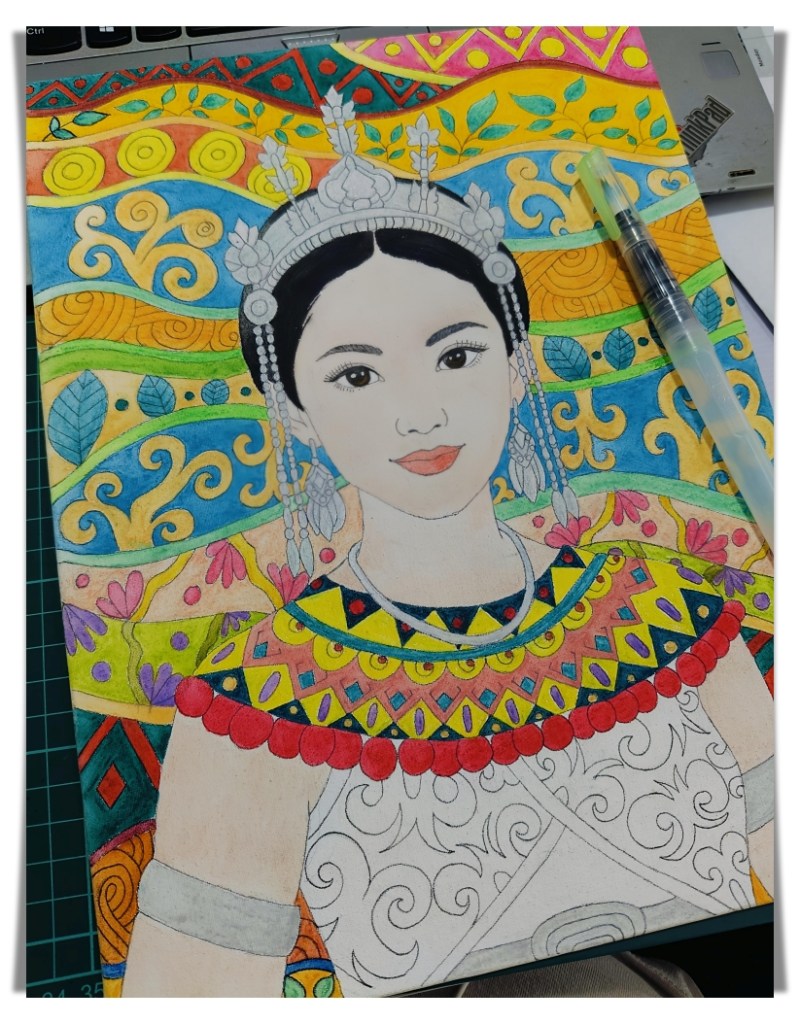
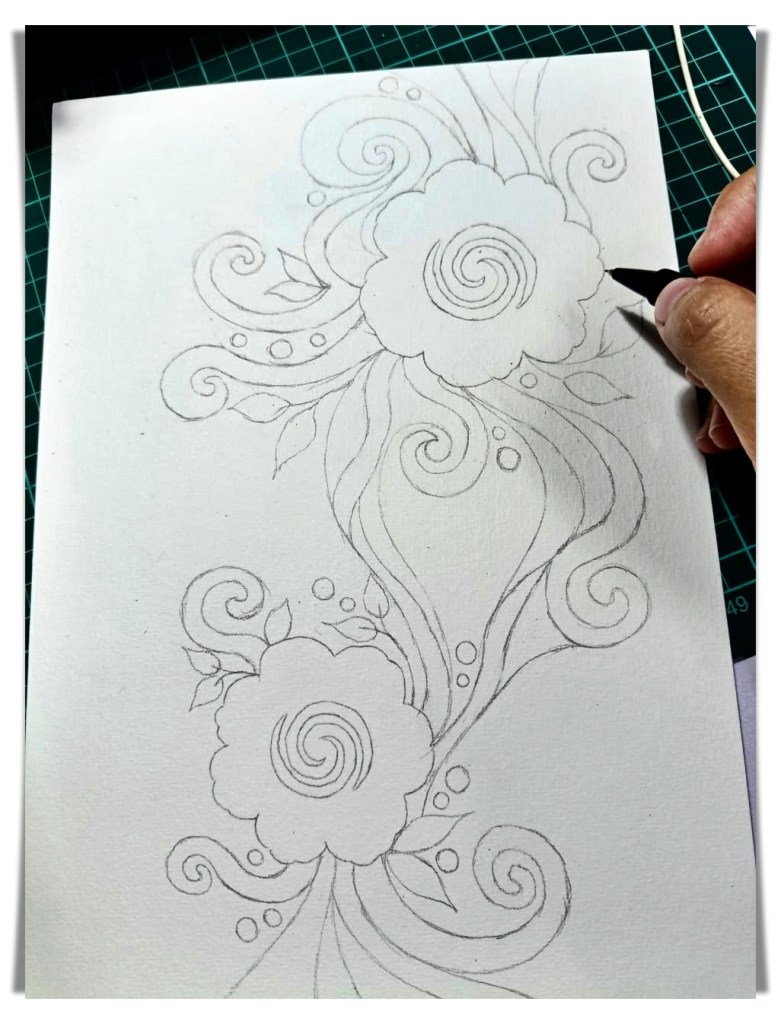
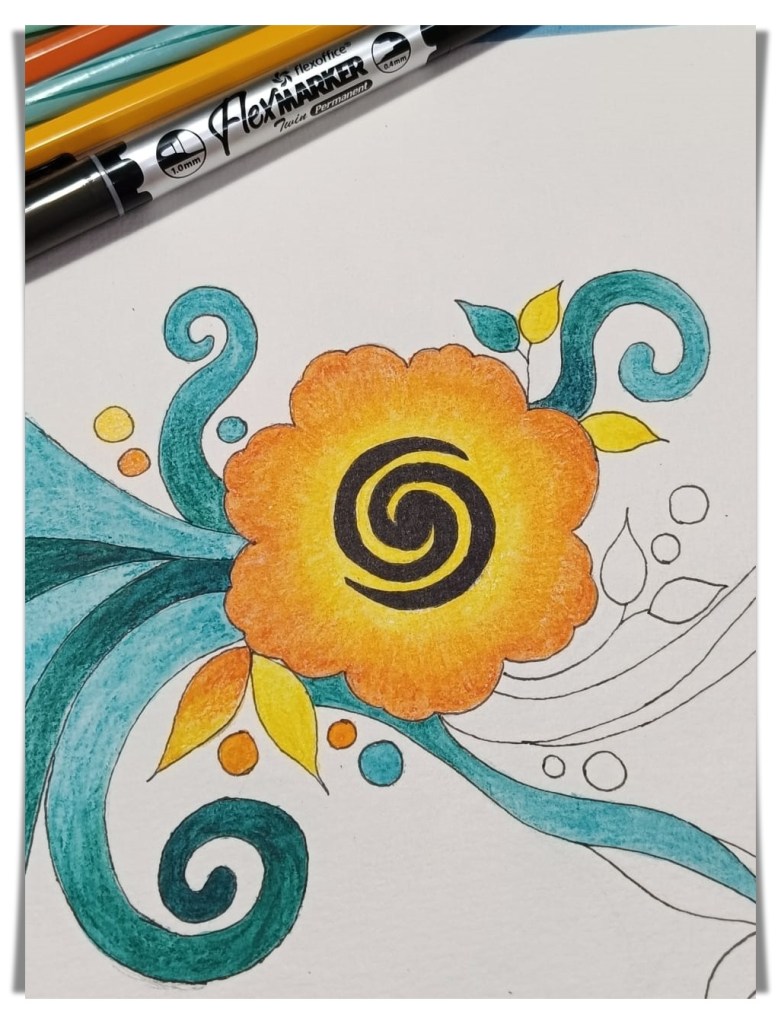
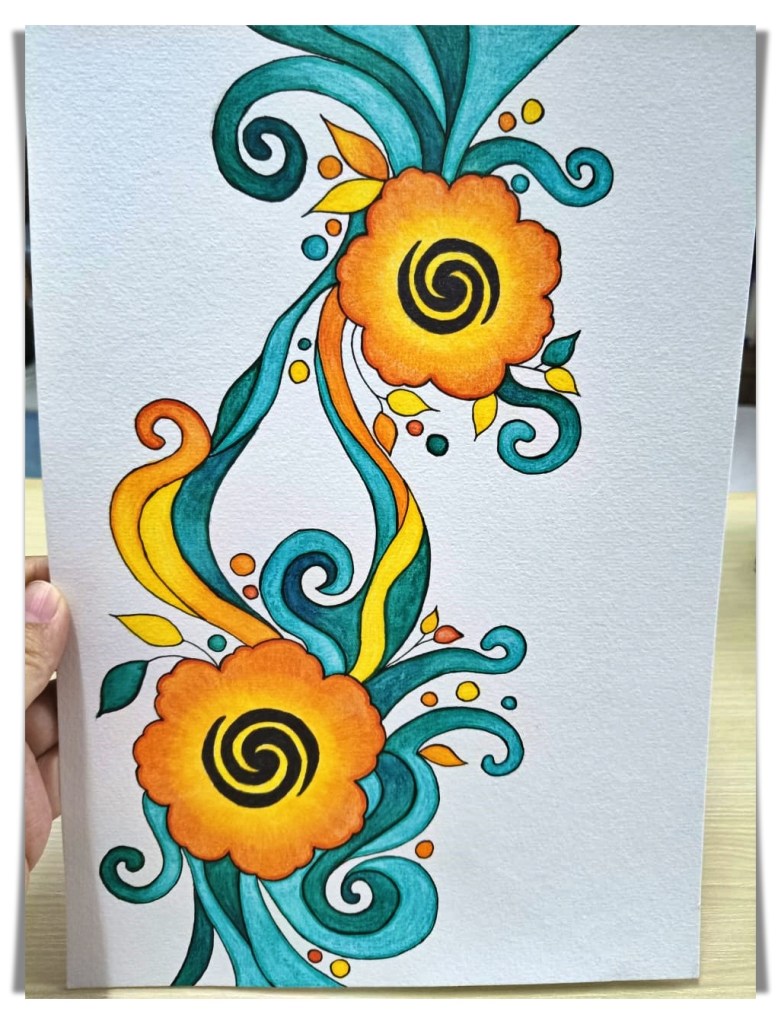
I have been working on this mixed media painting for the past ten days. It is of an Iban woman wearing a traditional costume called “ngepan indu Iban.” The piece has elements such as the sugu tinggi headpiece, the marik empang or tangu worn across the shoulders, the selampai crossing the chest, the tumpa on the arms, and the lampit around the waist. Instead of creating an accurate historical painting, I wanted to reinterpret these traditional elements in my visual language of doodle patterns, flowing lines, and brilliant colors. 

At first, I thought this painting would simply take a few days. But after a while, it just became part of my routine. And life kept interfering in between coloring little sections and drawing patterns. My car broke down and I had to have it fixed at the mechanic’s. One of my molars chipped after I accidentally chewed on a tiny piece of chicken bone, so I had to go to an emergency dentist appointment. There was still housework, my son’s schoolwork, and the usual weariness that comes with adulthood. Some days I just worked on the painting for an hour or two. And there were other days when I sat with it late into the night, hours after everyone went to bed. Even so, I kept returning to it. 

After a while, the painting stopped feeling like just an art project. It became an exercise in finishing something. I tend to jump around between ideas too fast and I find it hard to finish them. But this time I worked on one artwork for ten days straight until it was finished.

And I wanted the picture to be alive and not historical or “museumy.” Perhaps that’s why I tend to choose vivid, vibrant colors rather than subtle earth tones. I wanted the background to feel crowded and flowing behind her. Some designs were influenced by traditional themes and others were instinctual throughout the process itself.

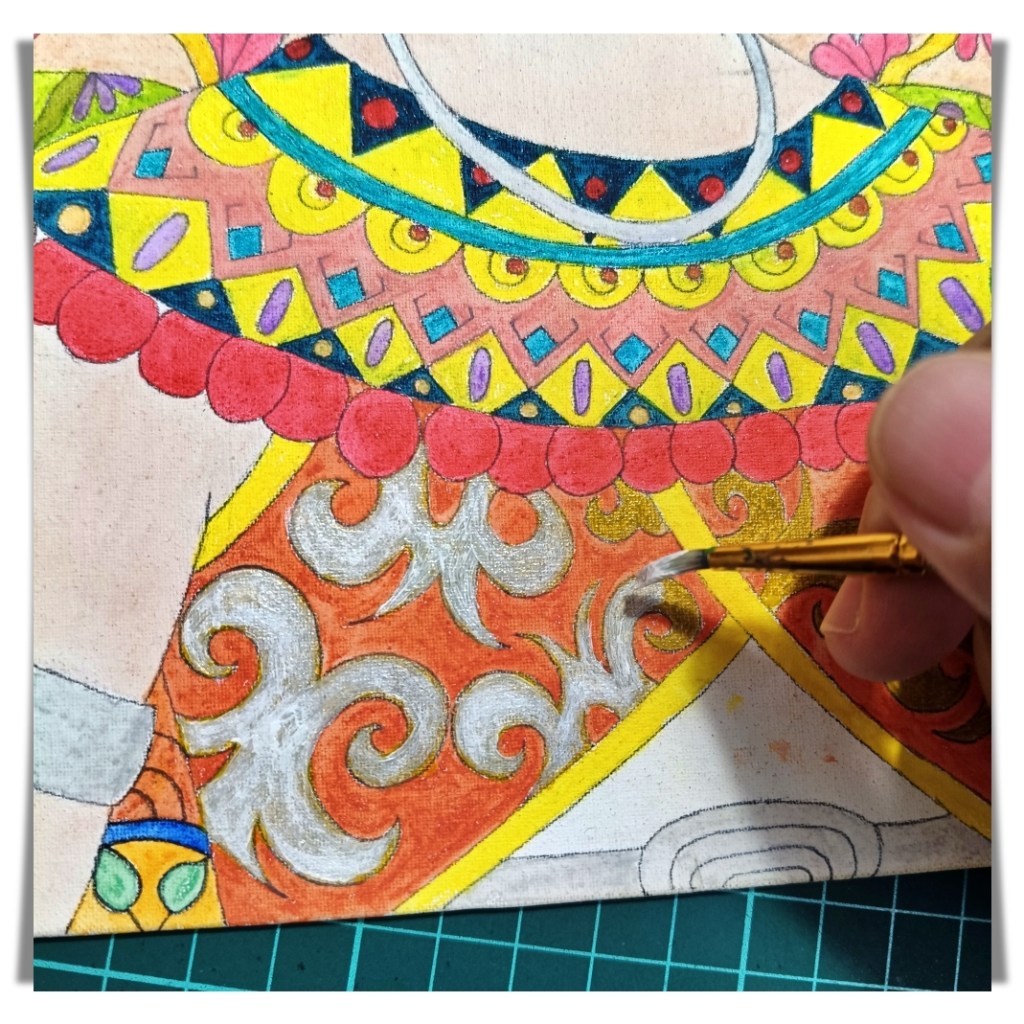
There was one point during the painting process when I really feared I’d botched the whole thing. The patterns on the selampai were meant to be golden yellow, but I layered the wrong colors together and it turned into murky bronze. I tried to fix it with acrylic paint and regretted it instantly. I remember looking at it in utter frustration, totally convinced that I had messed up the painting after days of work. Finally, I walked away from it, let it dry, came back later, and repaired it painstakingly, layer by layer. Looking back, that mistake turned out to be part of the process. I thought those sections turned out great, but they weren’t the main lesson. The actual lesson was that I didn’t ditch the work halfway through.

The finished artwork was created using mixed media materials such as colored pencils, markers, acrylic paint, fine liners, and gel pen highlights. I mostly used non-archival materials, but I actually liked working with them instead of waiting for things to be perfect. In the end, the painting reflects the ten days it took to finish it: color, frustration, interruptions, patience, and finally getting it done. 


I write about Iban culture, ancestral rituals, creative life, emotional truths, and the quiet transformations of love, motherhood, and identity. If this speaks to you, subscribe and journey with me.
Creating Ngayau | An Iban Headhunting Zine

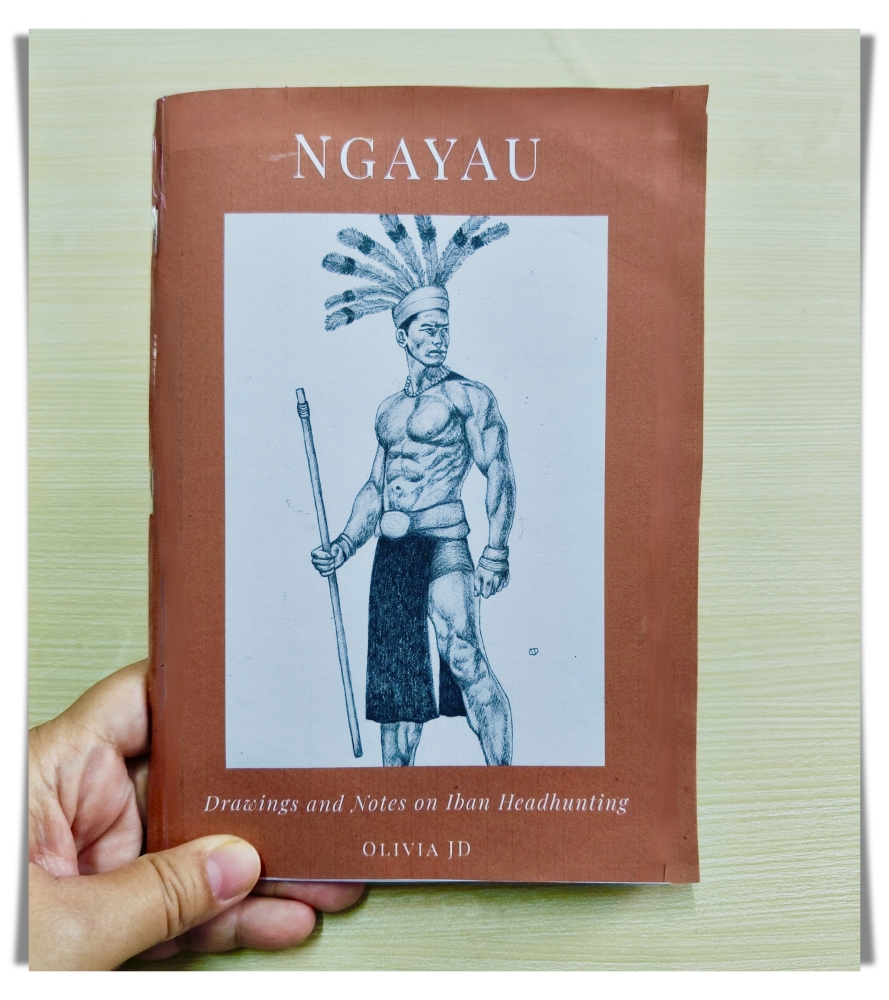
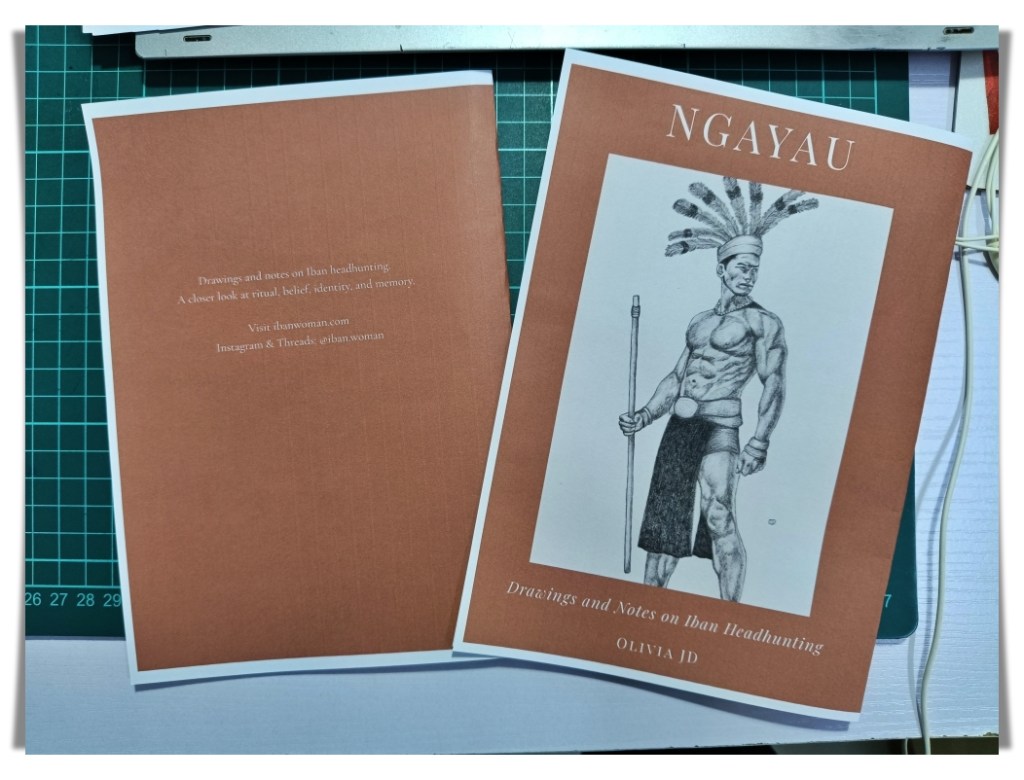
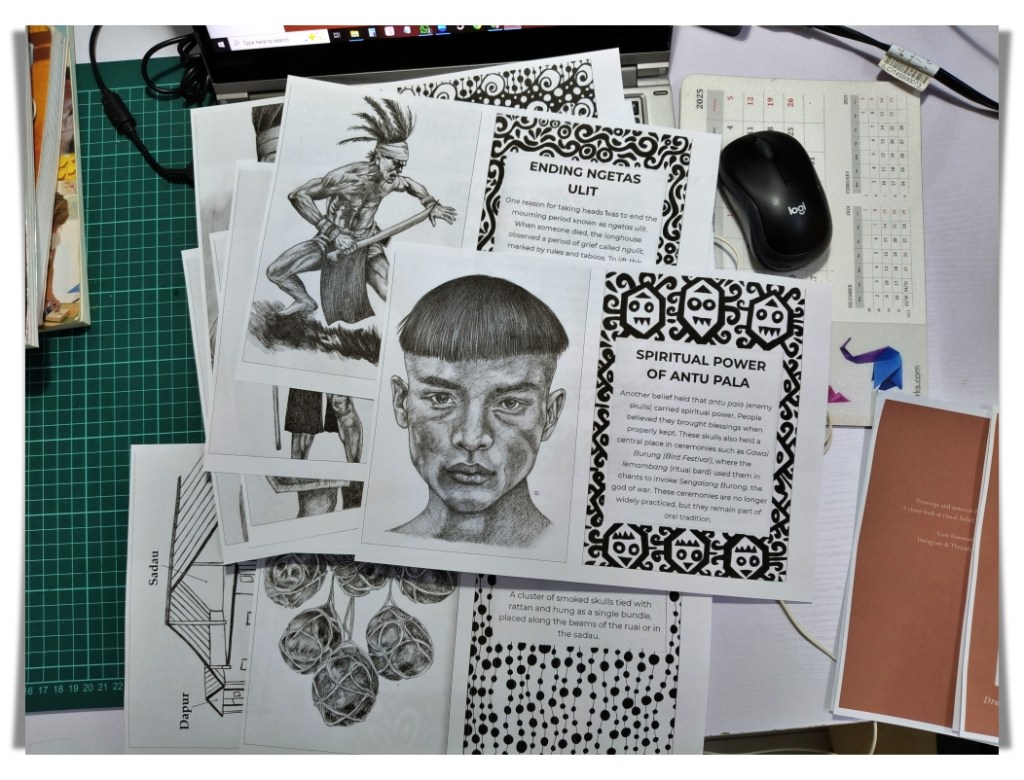
A few weeks ago I started putting together the first physical prototype of Ngayau, a small zine that explores Iban headhunting through drawings and short notes. At first it was just pencil drawings scattered on my desk. These drawings were of warriors and handwritten notes of research I made regarding the subject. At some point these materials began to form a real booklet. 

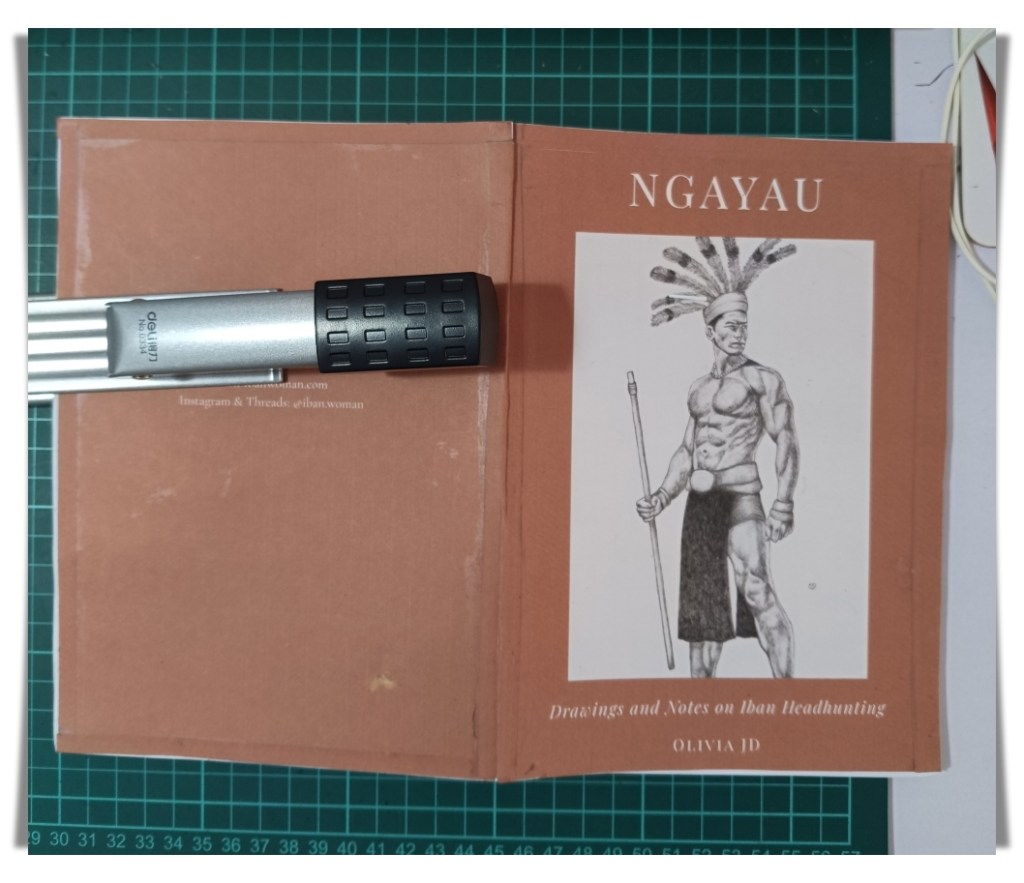
There’s satisfaction after seeing your own work in booklet form for the first time. A PDF on a screen may looks good but it feels temporary and obviously untouchable. But after the pages are printed and folded and cut and glued together, the work suddenly has weight. It becomes a tangible thing that you can put on a shelf, forget for years, and rediscover again.

I wanted Ngayau to feel simple and homemade. Not shiny or over-designed. The process itself was messier than I had thought. I adjusted margins repeatedly, reprinted pages after noticing tiny alignment issues, and spent hours arranging drawings beside explanatory texts. My desk gradually disappeared under graphite drawings, patterned layouts, failed prints, paper trimmings, and coffee mugs. 

Some of the drawings were made years before the zine was even in my mind. Seeing them all at once hit me more than I thought, like pieces from different times of my life had finally met. What interests me most about this subject is not violence for the sake of spectacle. I am more fascinated by the worldview surrounding it, grieving rituals, spiritual beliefs, protection, courage, sorrow, memory, and the way Iban culture interpreted the interaction between the living and the unseen world. 

Modern discussions about Iban headhunting often reduce it to a caricature. The Ibans of old are seen as savage, primitive, and brutal. But history is rarely simple. The more I explore and create, the more I see how much ritual, spirituality, and community importance were embedded in activities that outsiders typically dismiss as shock value. This zine is not an attempt to glorify the past. My goal is to see it as it is without dismissing it as barbaric, understand the reasons behind this practice, and finally pass the knowledge to others. I felt content when I had finished the prototype. It felt like coming home to something that was meant to be held and shared after sitting in my mind for months.


I write about Iban culture, ancestral rituals, creative life, emotional truths, and the quiet transformations of love, motherhood, and identity. If this speaks to you, subscribe and journey with me.

What is a Lemambang? The Iban Ritual Bard

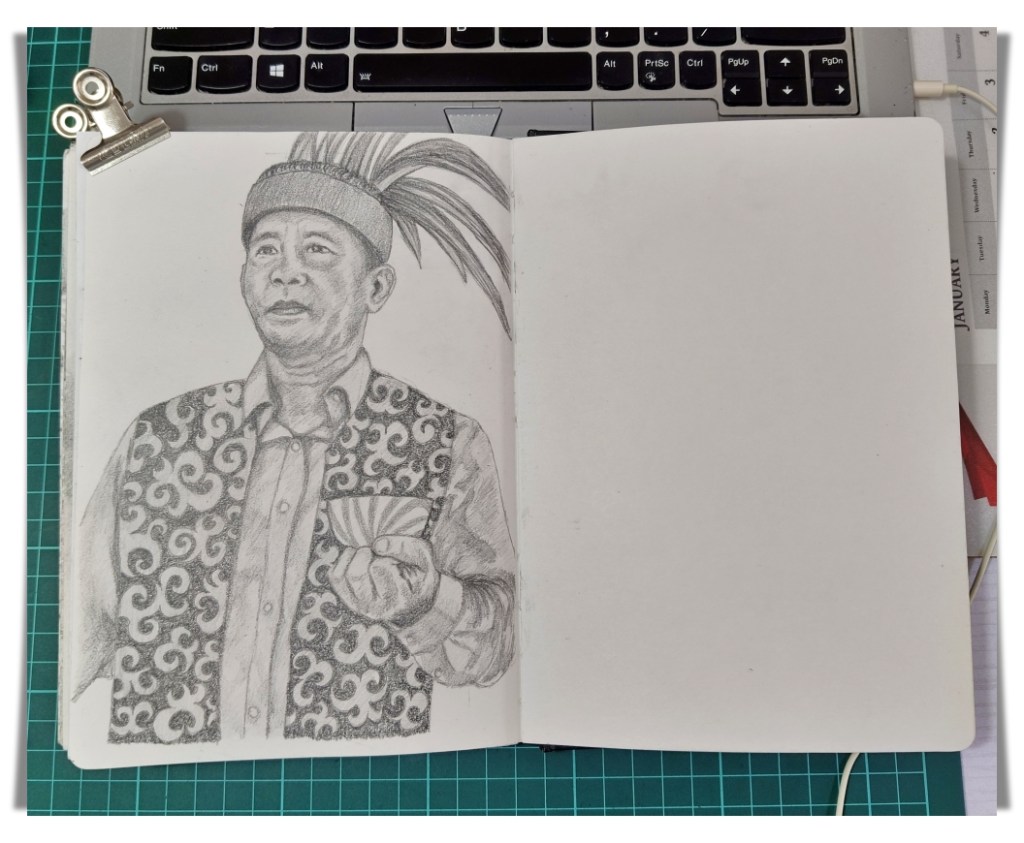
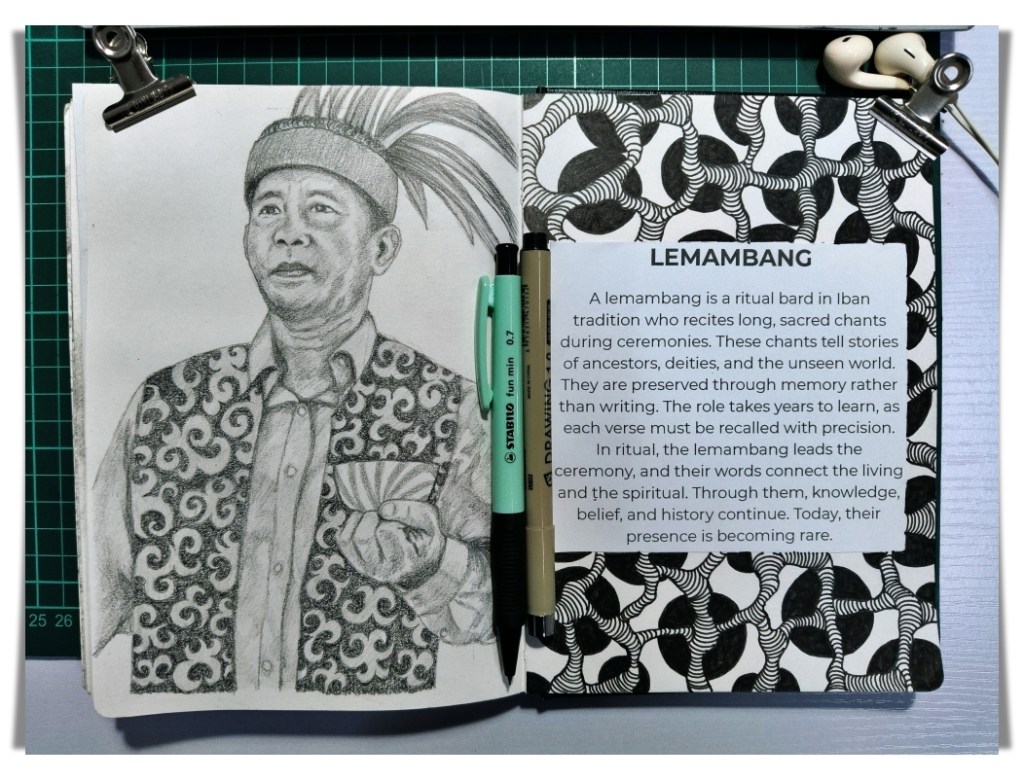
The Iban lemambang is a ritual bard who recites long, sacred chants or invocations at ceremonies or rituals. These chants are the stories of ancestors, deities, and the unseen realm. They are preserved through memory and passed down from one generation to the next. 

The role of a lemambang takes years to learn. Each verse must be remembered with care and precision. During a ritual, the lemambang guides the ceremony through these chants that become part of the process that bridges the seen and the unseen. In some cases, papan turai was used as a guide. They are wooden boards carved to help the lemambang remember the sequence of their chants. These papan turai are memory aids, reinforcing what has previously been taught and internalized.

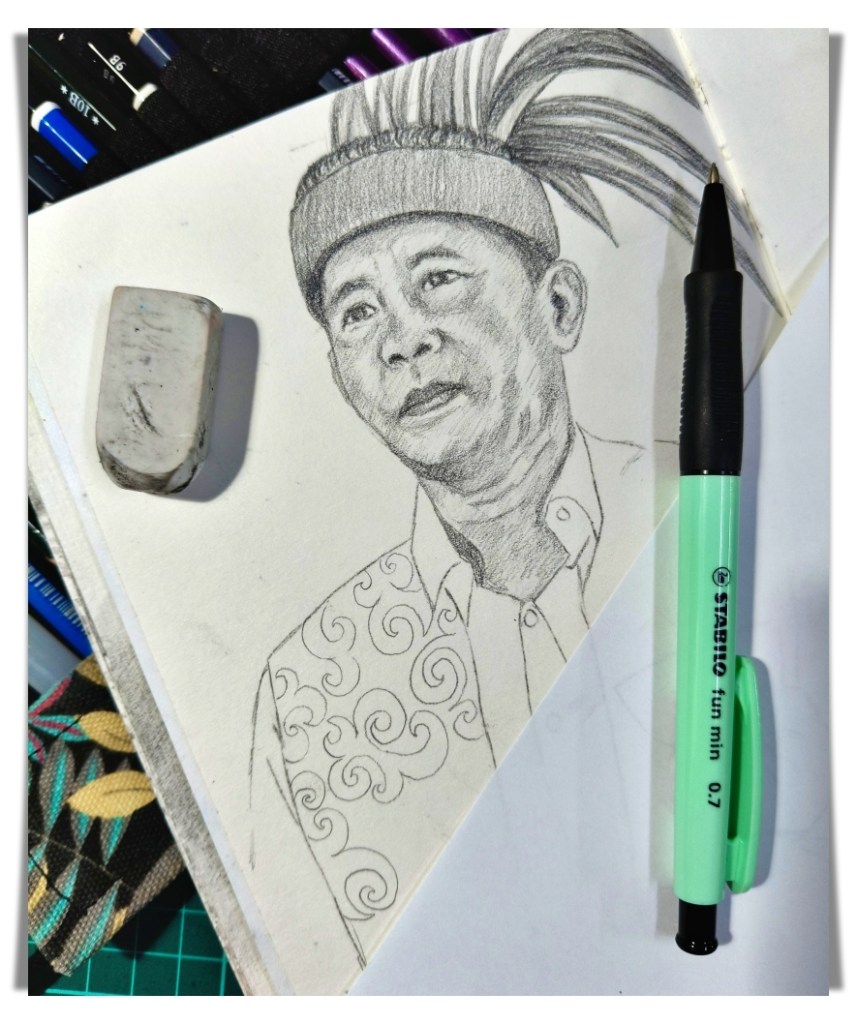
I drew this while working on a zine about Iban headhunting and its cultural origins. As I moved from one page to the next, I realized the zine was also about those who passed the knowledge forward. One of those figures was the group of people known as the lemambang. I wanted to place him (who represents this group) among the pages to acknowledge their big contribution as the guardian of Iban culture and heritage. 

This way of preserving knowledge is different from how we learn today. It depends on discipline, repetition, and memory rather than written records. It also depends on a faith and trust that what is handed down will be remembered and passed on accurately.  

Today the number of lemambang is getting smaller. The number of people who are learning to become lemambang is dwindling, and much of this knowledge is at risk of being lost with time. What remains are fragments, memories, and the efforts of those who persist in holding on to them. Writing and illustrating this page is a small way for me to honor them. 

Here’s a video of a group of lemambang chanting during Gawai Antu or Festival of the Dead.


I write about Iban culture, ancestral rituals, creative life, emotional truths, and the quiet transformations of love, motherhood, and identity. If this speaks to you, subscribe and journey with me.
The Tortoise Who Broke Its Shell | A Classic Iban Folktale

In the old days, it is said that the tortoise was not small like it is today. It was very large back then. If it stood up, it would be almost as tall as a person. It had a smooth, polished shell, unlike the patterned or segmented one we see now. The tortoise was also quite smart and could talk well, but it had one bad trait: it liked to make fun of and trick other animals. Because of this, its wicked nature often got it into problems.

At one time, a long drought struck the land. Plants in the forest dried out and could hardly grow. The animals struggled to find food because many trees had withered or died. The tortoise had the worst time since it moved so slowly. It got thinner, its stomach shrank, and its eyes got dull because it was so thirsty. It gave in to fate and thought its end was near since it was so weak. It crept slowly in search of water, using up the last of its strength while it waited for death.

The tortoise crawled for a long time before reaching a small river. It drank as much as it could because it was so thirsty, and then it fell asleep from being so tired. It looked like it was already dead since its body was motionless and its eyes were closed. A short time later, a flock of birds came to bathe in the river. The tortoise could still hear the commotion around it, even though it was feeble. It pretended to be dead. Unfortunately, at that moment, it had to fart. It attempted to hold it in to keep up the charade. But the longer it kept it, the more it wanted to let it out, and finally it did so with a loud bang.

The explosion stirred the river water and caused the tortoise to flip onto its back. The birds were startled. They turned and saw the tortoise on its back and assumed it had died.

“Oh, how pitiful. The tortoise is dead and didn’t get to fly with us high up into the sky to visit the King of the Sky,” the birds lamented, and the tortoise could hear them clearly.

The birds then prepared to leave. The tortoise quickly got up and decided to go with them to visit the King of the Sky. It opened its eyes wide, gathered all of its might, and crawled as swiftly as it could toward the group. When it reached them, it expressed its wish to follow them into the sky.

“We don’t know how to bring you along because you don’t have wings,” the birds said.

“Oh, it’s not that difficult,” said the tortoise. “Each of you can donate a feather so I can build wings and fly.”

“We refuse to give you our feathers because you are known as a liar. We do not want to be deceived by you,” one of the birds replied.

“Hah! All of you are stupid and narrow-minded,” the tortoise said. “There are many kinds of tortoises. There are deceitful tortoises, hard-shelled tortoises, spiny tortoises, hermit tortoises. In your eyes, what kind of tortoise am I? I am not a deceitful tortoise,” it continued.

The birds fell silent upon hearing its words. They looked at one another and discussed among themselves. In the end, each agreed to contribute one feather to build wings for the tortoise. Even the larger birds such as the peacock, hornbill, eagle, and rhinoceros hornbill agreed. When the wings were completed, they all flew to visit the King of the Sky.

After a long journey, they finally arrived in the realm of the King of the Sky. At that time, the King was hosting a grand gawai festival. The tortoise and the group of birds cleaned themselves in preparation to attend the feast. While they were getting ready, they could smell the rich aroma of delicious food.

Seeing this, the tortoise whispered to itself, “It’s been a long time since I’ve had anything good to eat. I thought I would starve to death during this drought. But I know I’ll live if I get to eat the food at the feast.”

Once they were ready, they lined up to enter the house of the King of the Sky. But before they went up, the tortoise announced, “According to local custom, before entering the house here, guests must change their names to new ones.”

The birds believed that the tortoise was knowledgeable because it had been to many places. They all agreed to change their names, including the tortoise. Various names were chosen. The tortoise announced right away, “My new name is… ‘All of You.’ From now until we return, all of you must call me by my new name: All of You.”

Then they all went into the house, with the tortoise in the lead. When they arrived, they were invited to sit in the ruai. The King of the Sky invited the tortoise to sit in the center, assuming it was the leader of the group. Once everyone was comfortable in their seats, all kinds of food were served. The King of the Sky delivered a speech before the guests started eating to say how happy he was to have visitors from far away. When he was done, he asked them to eat. But the tortoise spoke up before anyone could begin.

“Your Majesty, before anyone eats, since our group is quite large, who do you intend to give this food to?”

“Oh! This food is served for all of you,” replied the King of the Sky.

Hearing the words “all of you,” the tortoise turned to the birds.

“Did you all hear what the King said? Don’t say I have bad intentions,” said the tortoise. “I do want all of you to eat, but the King said this food is only for me because my new name is ‘All of You,'” it added.

The tortoise started to eat right away. It devoured the food greedily because it hadn’t had anything delicious to eat throughout the drought. The birds could only look on in shock as the tortoise enjoyed the feast. Only after it was completely full did it invite the birds to eat the leftovers. However, they refused because they were outraged that they had been lied to. The Eagle was the only one who was willing to eat the scraps, while the others would rather be hungry than humiliated. They were so angry that they ripped off all the feathers that made the tortoise’s wings and flew away, leaving the tortoise and the Eagle behind.

Seeing the birds abandon it, the tortoise panicked. It had lost all of its feathers, save for the Eagle’s. When the Eagle finished eating, it too flew away. Before it left, the tortoise begged the Eagle to alert its dear friend, the Mousedeer, to make a big soft bed for it to land on when it jumped from the sky.

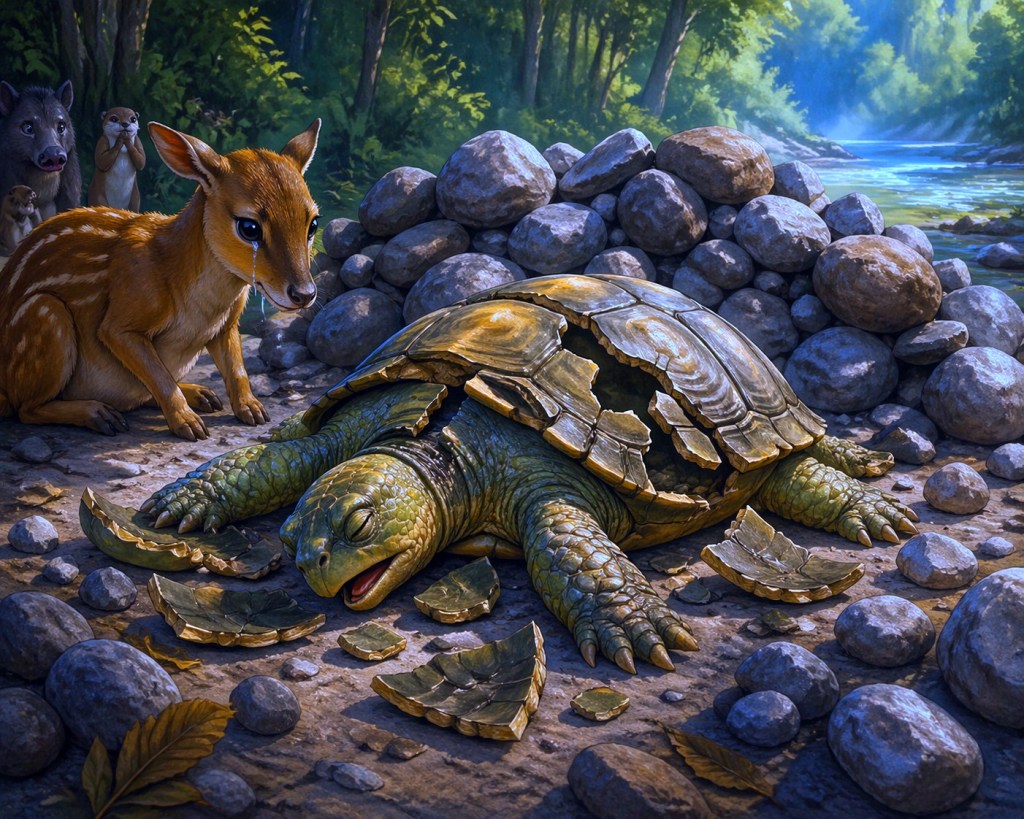
When the Eagle landed, it delivered the message. The Mousedeer immediately called all the creatures in the forest when it heard it. They worked together to make a place to land. But sadly, instead of a mattress, they made a mound of stones because the Eagle delivered the wrong message.

Once everything was ready, the tortoise leapt from the sky. Without wings, it fell rapidly and crashed onto the pile of stones. The sound of the impact was deafening. Hearing it, the Mousedeer rushed over and found the tortoise’s shell shattered into pieces. The tortoise lay unconscious. The Mousedeer cried when it saw this, thinking that the tortoise was beyond help. After crying, it gathered the scattered pieces of shell and carried the tortoise home for treatment.

At home, the Mousedeer sought help from the Lizard Shaman to heal the tortoise. That evening, the shaman conducted a ritual in which he used his wisdom to put the fractured shell back together. But not all of the pieces could be found since they had broken too finely. It took a long time, but the shell was finally reassembled.

The rebuilt shell was a lot smaller than the original. The tortoise itself became smaller because of this. This is why tortoises are smaller now and not as big as they used to be. Their shells are no longer smooth as they once were. Instead, they are patterned and segmented, as if they were put together.

Note:

I translated and adapted this story into Malay (shared on Threads) and English (here on my blog), based on the Iban version originally shared by Gregory Nyanggau Mawar on the Iban Cultural Heritage website.


I write about Iban culture, ancestral rituals, creative life, emotional truths, and the quiet transformations of love, motherhood, and identity. If this speaks to you, subscribe and journey with me.
A Visit to Borneo Cultures Museum, Kuching, Sarawak

Have you heard of the Borneo Cultures Museum? It is in Kuching, Sarawak, and from the outside, it seems quiet, though the building looks very unique. However, the scale becomes clear once you get inside. It is the biggest museum in Malaysia and the second largest in Southeast Asia. My family and I visited on our last vacation to Kuching and spent a few hours there in the afternoon. We thought it would be enough, but it quickly became clear that it wasn’t.

There is too much to take in at once, so I will share a few things that caught my attention the most.

Repatriated bones of Niah Caves

The repatriated bones from the Niah Caves were one of the first things that caught my attention. However, not all of the remains are displayed. Only fragments are shown, including one from Burial 133, which is part of the Neolithic cemetery found in the cave’s West Mouth. This site has one of the largest prehistoric burial cemeteries in Southeast Asia. Excavations in the 1950s and 1960s, as well as more recent studies, have found more than a hundred burials here. The University of Nevada used to keep these bones for research and safekeeping, but they have since been returned to Sarawak. I visited Niah Cave in my youth, and I have read about these bones in the past, and standing right beside them felt so surreal.

Orang Ulu Masks or the Hudo’ masks

The Kayan and Kenyah people use these masks during harvest festivals to cast away bad spirits and make sure the crops are healthy. The masks are displayed on the fifth floor in the “Objects of Desire” gallery. I admit this section of the museum felt slightly unsettling with the masks quietly staring at you from the glass display. At first, I didn’t say anything but later, my sister said she felt the same way and even had goosebumps.

The Melanau burial pole or Jerunai

These carved wooden poles were used to bury wealthy Melanau people and nobility. The remains of the dead were placed in jars and kept in the hollow parts of the pole. The Jerunai was reserved for the Liko, or Melanau pagan nobility. Ancient rituals associated with the Jerunai often involved human sacrifice. Slaves were sometimes placed at the base of the structure believed to serve their dead master in the hereafter. This practice was long abolished when the community converted to Islam and Christianity.

Kelirieng – burial pole of the Punan Bah or Sekapan tribes

There was also a similar structure called the Kelirieng, a burial pole used by the Punan Bah and Sekapan communities. Like the Jerunai, it functioned as a secondary burial structure. The dead person’s bones were placed in large ceramic jars and then they were hauled up into a hollowed part at the top of the pole. The height of the structure symbolized status and was believed to bring the deceased closer to the spirit world.  To protect the jars, most of these poles have a huge stone slab on top.

However, the massive Kelirieng in this picture are replicas, and the original ones can be found outside within the museum’s compound. As I was staring at these burial poles, I kept thinking about the slaves. I heard that the slaves were crushed to death as they raised these poles on the ground. It’s a gruesome mental scene, but it’s part of our history. One benefit of religions is that they abolished slavery, as no one deserves to be treated as subhuman at the mercy of their masters. 

Headhunters swords

These swords were historically used for headhunting. While I was lingering near this exhibit and admiring their craftmanship, my husband had a different experience. He told me later that he felt a strong impulse, as if a voice was urging him to take one of the swords and kill someone. He felt so uncomfortable that he quickly left this section. I didn’t experience anything like that, and I believed him when he told me. The Iban people believe that such swords need to be kept properly, and certain rituals need to be conducted to appease the restless spirits of the swords. 

 Dayak human skull trophies

Finally, there were the skulls. These are real human skulls from Sarawak’s headhunting past. They are arranged in round rattan frames decorated with dried leaves. This collection is known as a tampun and is traditionally hung in the longhouse. Some of my relatives still keep them. The Iban people believe that the souls are still present, thus they should be treated with care. My family no longer keeps them, as my great-great grandparents gave up these practices after converting to Christianity in the early 20th century.

We were at the museum for about three hours, but it wasn’t enough time to view everything. If I go again, I shall go in the morning and take my time to view and read the information about every exhibit. You need to take your time so your visit will be totally worth it. 

If you ever go to Kuching, I suggest you spend a whole day there. It’s more than just looking at the exhibits. As I mentioned, I highly encourage you to understand the stories behind them in order to fully appreciate our cultures and Indigenous way of life.


I write about Iban culture, ancestral rituals, creative life, emotional truths, and the quiet transformations of love, motherhood, and identity. If this speaks to you, subscribe and journey with me.
Writing About Iban Culture Without Taking the Easy Way Out

Indu Iban
A spread from Iban Women zine

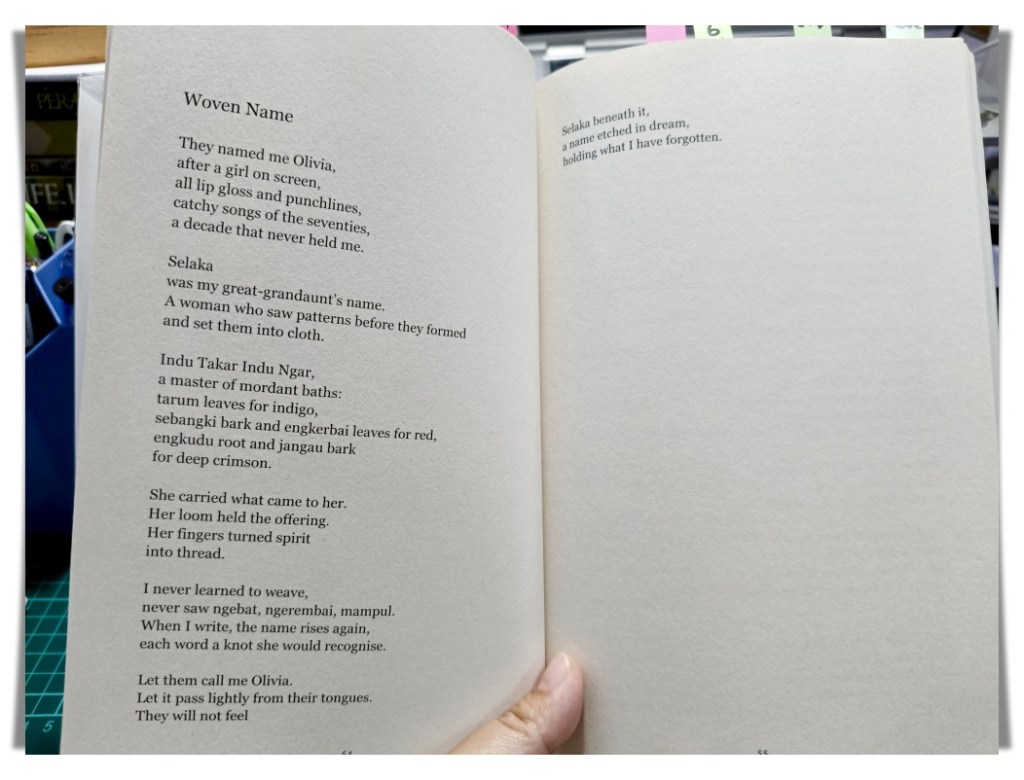
When I first read the CBC article on AI-generated Indigenous content, my stomach tightened. Not because I generated my content with AI, which I don’t, but because I understood how easy it would be for someone looking for Iban culture to find made-up “elders’ teachings” or made-up Iban phrases and think they were the real thing. I am an Iban woman living far from Sarawak and raising children of mixed heritage. While I utilize AI to assist in my writing process, I don’t generate it using an algorithm. My sources are from my family history and lived experiences. These are the datasets I train on. They are living memory and not predictive text.

The article quotes Michael Sherbert saying generative AI is “optimized for fluency, not for truth or for ethical or cultural responsibility.” I think about this every time I sit down to write a poem or draw cultural art. Cultural truth is difficult to tell and requires effort to check for accuracy. Telling cultural truth also means admitting I don’t know many things and need to learn from those who are more knowledgeable. I read all kinds of academic resources and cross-check my facts with family members before I post them on my blog or publish a new cultural zine. I avoid making assumptions, and when I am not sure of the accuracy, I admit that I don’t know and encourage others to share their experiences or information so we can all learn from one another.

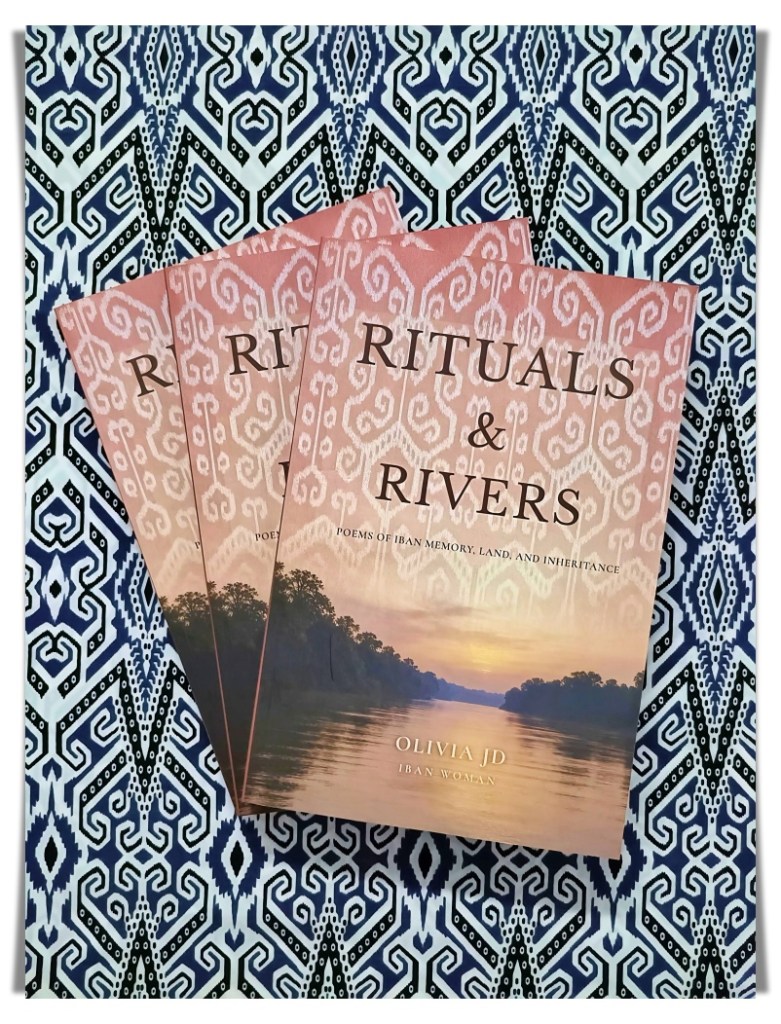
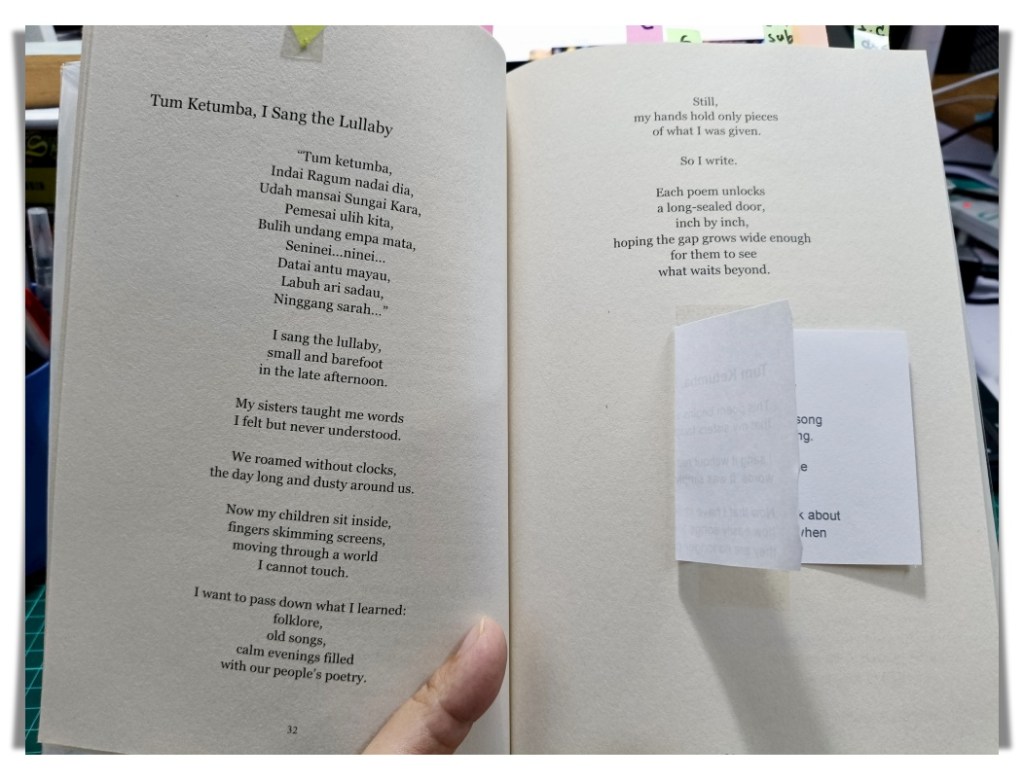
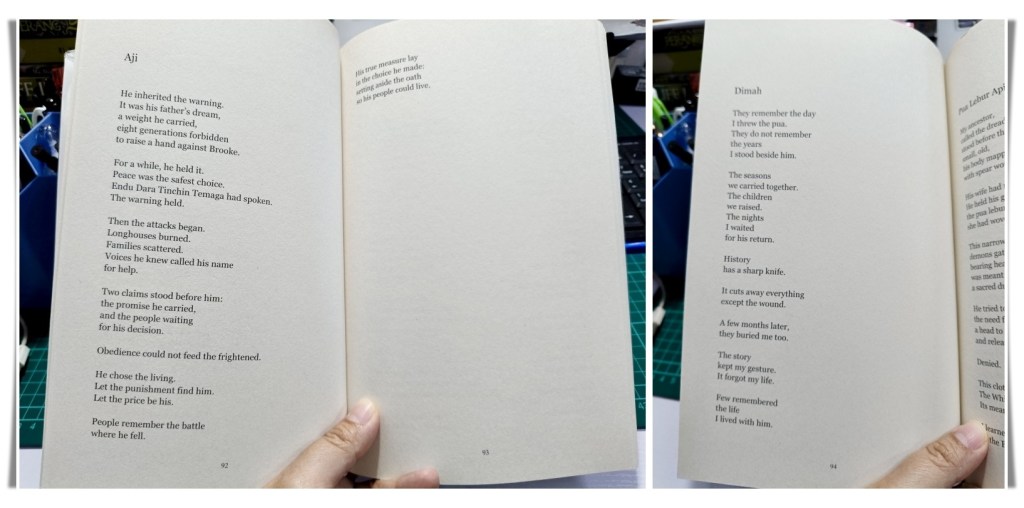
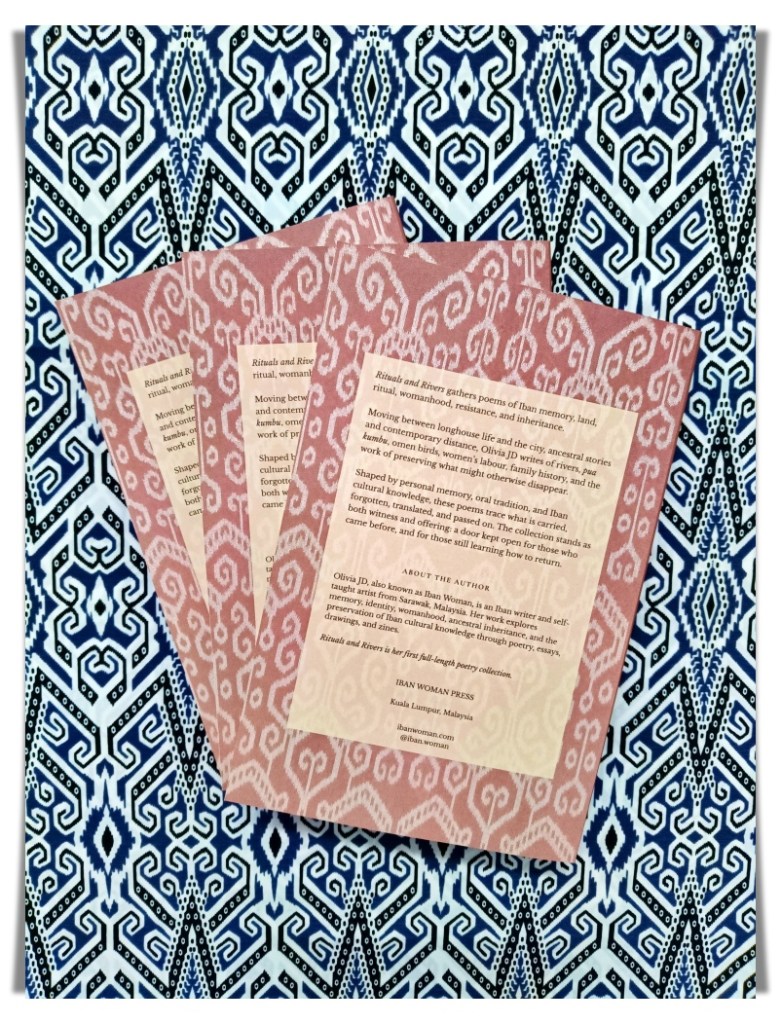
Kaitlyn Lazore from the Mohawk community said something that stayed with me: “There’s no easy way to learn the language or gain culture without getting out in your community.” She is right. Still, I am raising my children far away from my homeland. I can’t take my children to a local social gathering to hear native speakers speak Iban. I can’t take them to Sungai Stambak and let the mud cling at their ankles like it did mine. So what do I do? I write and I draw. I make zines like Rituals and Rivers, Iban Women, and Iban Headhunters. I know that all these things are not substitutes for community. But they can turn into a perau, a small boat that will wait for them until they are ready to learn about their roots. They can launch it whenever they want. They can find their way to their roots through the names I’ve kept alive in my writings and art.

Budaya Iban
A spread from Iban Women zine

But I also do what the article emphasized: I am transparent. I include Iban words with definitions in most of the cultural poems I wrote. Every story distinguishes between traditional knowledge and my personal interpretation. I do not claim to be an elder. I am a mother and a learner who is learning to preserve her culture in her own ways.

The article talks about “pan-Indigenous representations that flatten distinct nations into one interchangeable identity.” This is very important to me. I am Iban, not a generic “Borneo culture” or simply an “Indigenous” group. When I write about details like the bungai terung tattoo motif, I name it instead of being vague. When I describe perau pengayau, I explain that they are tied to certain histories. My children are of mixed heritage, and I don’t want their Iban side becoming a blur; thus, I need to be more precise. Brian Ritchie of kama.ai said, “It can be difficult for any user to understand how responsible or accurate or authentic the information is.” That’s why I always mention my sources. I write down who my sources are: my family histories and Iban cultural experts or academicians. I don’t believe in vague statements like “tradition said this and this, so…”

My children may not grow up speaking Iban fluently. Some days, that thought breaks my heart. But they will know that their mother didn’t take the easy way out. She didn’t ask ChatGPT for a “traditional Iban sampi” and then copy and paste it. She had to deal with the pain of forgetting, so she read and conducted her own research to learn the real truth and facts.

Iban culture
A spread for an upcoming zine (still in progress)

At the end of the article, there is a reminder to use your judgment and ask for community vetting. This is what I would add: If you like my work, my poems, my art, or my zines, please also look for Iban elders or experts in Iban studies. Please use my work as an invitation to explore further. It should not be a replacement. I am just one voice who is trying to preserve my culture for the future generations. 

My children observe me write. They see me struggle with information, memory, and the pain of being far away from my homeland. And I hope that when they are adults, they will know the difference between something that is made up and something that is real. The difference between a perau that really floats on water and one that only exists in a machine’s algorithm. I will keep making perau until then: one article, one poem, one drawing, and one zine at a time.

When They Are Ready
for the ones I raise far from home

We build our lives on foreign soil,
where rivers have no stories
and the wind sighs emptily.
My children’s tongues are borrowed,
their laughter shaped by cities
that have never heard a gong.

I tell them of the longhouse glow,
the smell of rain,
the river bends like an elder.
They listen, but cannot feel
the ancient soil that holds their roots.

So I write these rivers into words,
each poem a small perau waiting.
When they are ready,
they will launch them,
navigate by the names I’ve kept alive
and find, at the source,
a home that never stopped calling.

(a poem from Rituals and Rivers)


I write about Iban culture, ancestral rituals, creative life, emotional truths, and the quiet transformations of love, motherhood, and identity. If this speaks to you, subscribe and journey with me.
Who Gets to Choose Simple Living? A Reflection on The Abundance of Less

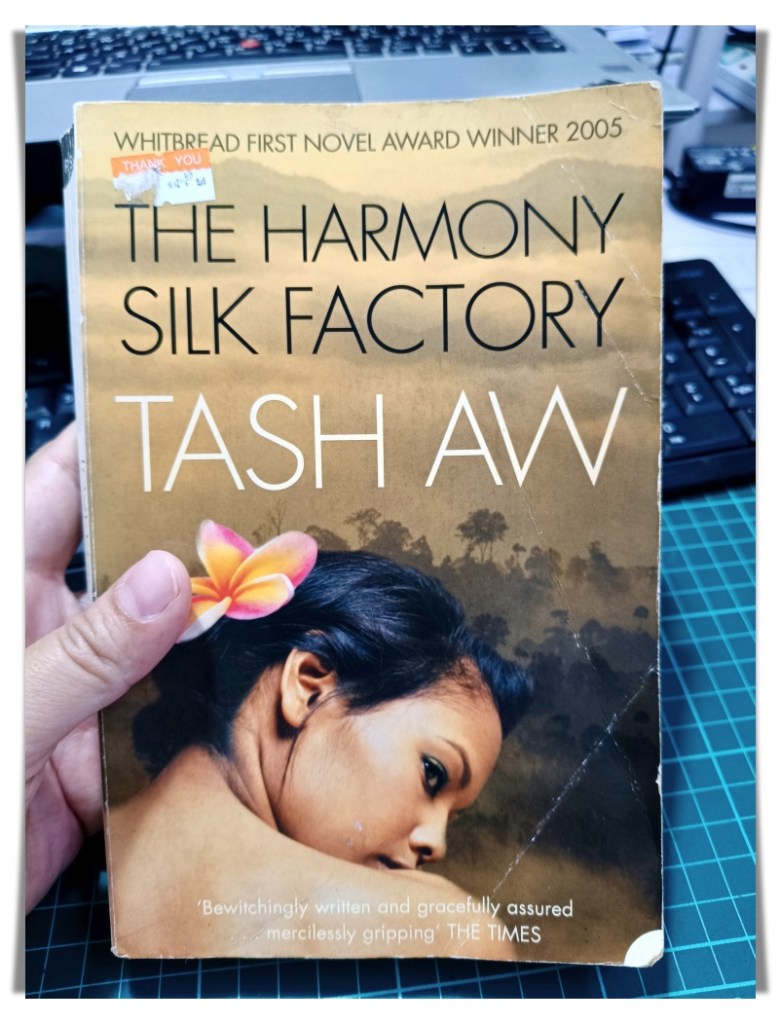
I finished The Abundance of Less today. I don’t think I’ll read this book from start to finish again. There are parts of the book that I might read again because some of the people in it have inspired me one way or another. Their lives were at peace and consistent over time. That has remained with me.

What I liked most was how some of them lived without separating things. There was no separation between work, art, and everyday life. Making meals, growing food, making art or writing, or carving wood all come from the same place. There was no clear line between survival and meaning and I can see why that might be appealing because it feels solid and complete.

Some of the people in the book choose to live with less. They kept their needs minimal. They worked with their hands and they were aware of their surroundings. Living that way takes discipline but it brings clarity. You know what you need and what you don’t. However, a tension that was hard to ignore grew as I read on.

In the Afterword chapter, the author mentioned one of his book reading sessions when someone asked if these people were just surviving at a basic level of survival. That question lingered because it sounded familiar. Where I come from, many people already live that way. It’s not a philosophy or a decision made after reflecting on it. That’s just how life is.

I come from an Iban background. My grandparents were paddy farmers who lived in longhouses. They grew their own food and they depended on the land. Life in the longhouse community was close and practical. It wasn’t considered meaningful or spiritual. It was simply necessary and it wasn’t easy. Farming is hard work and the yield is sometimes uncertain. There are limits to what you can access, especially education and healthcare. Many people in these communities wish to have a stable income. They need money to send their kids to school or pay for healthcare. They want to repair their homes or build new ones. They want to help their elderly parents. These concerns are genuine and constant.

When I read about people who want to live a simpler life, I see two separate realities. Some people choose to live with less. And some people have always lived with less. The difference is in the choosing. Choice allows you to choose that life and leave whenever you want to. Choice lets you regard it as meaningful. If something goes wrong, it allows you to return to a system that supports you. But without that choice, that same life would look very different. 

In the Afterword, the author asks if small “green” changes to one’s lifestyle are really meaningful. They say that these changes let people stay comfortable while calling it sustainability. The concern is real, especially when certain changes are made more for show than for a good reason. But this perspective doesn’t take into account that not everyone can make big adjustments to their lives. Some people can’t move away from the city, change jobs, or move closer to nature. They can’t make those kinds of adjustments because of their jobs, finances, and other circumstances in their lives.

For them, small changes let them do things within their limits. Making small changes like consuming less, being more mindful, or doing less harm to the environment can still reflect a genuine effort to live with awareness. These decisions may not seem like enough from the outside, but they are based on what a person can realistically change at that point in their life.

This doesn’t mean that the people in the book are wrong. I understand what they’re attempting to achieve. I can see the benefits of living with purpose and cutting back on things I don’t need. I can see they care about the land and their communities. But I can’t ignore the other side either. Moving to a city or looking for a job that pays cash does not mean giving up on values. People are just responding to their circumstances. They are trying to make their life more stable by making decisions based on what they need.

Both ways of living arise from different needs and situations and are shaped by different circumstances. One is often chosen and can be left behind. The other is lived without the option to leave. That difference should not be overlooked. To be frank, this book did not give me a model to follow. It just offered me another perspective to consider and it made me think more about my own life and what I already value. It also made me think about how some ways of living are described and seen in a higher regard.

I will remember certain chapters of this book. The chapters about Asha Amemiya, Akira Ito, Koichi Yamashita, and Wakako Oe are worth reading. They are not offering answers, but rather something that can fuel my inspiration. I will return to those chapters when I need a reminder of some kind of discipline or attention. I will also give my perspective the same weight because it also means something important to me.


I write about Iban culture, ancestral rituals, creative life, emotional truths, and the quiet transformations of love, motherhood, and identity. If this speaks to you, subscribe and journey with me.
On Making and Keeping | Iban Cultural Preservation

People typically consider cultural preservation to be something that is conducted on a large scale. It is generally placed in the context of institutions, archives, or official documents. But it can also happen on a smaller, personal scale.

I have been making a series of handmade zines that are based on Iban culture and history. Each page of these zines pairs a drawing with a text of information or a poem. The drawings are hand-drawn, and the pages are put together painstakingly, one at a time. Every decision, from picture placement to word space, needs to be carefully considered. The whole thing is done entirely by hand.

While working on these pages, I learned that preservation is more than just keeping information intact. It also has to do with how that information is passed on. The information in these zines is not new. They have been told before, and they exist in oral histories, family accounts, and old literature. What I do is simply place them into a different form.

For instance, in these sketchbook pages, I talked about why the Ibans practiced headhunting in the past. It’s a difficult topic that people often misunderstand or only see one side of. I give it context instead of simplifying it. Each section describes a specific reason or belief and is paired with a hand-drawn drawing of an Iban warrior instead of an abstract idea. When I draw, it influences how I feel about the subject. When I sketch a figure, I pay attention to details that I would otherwise overlook. 

This zine doesn’t attempt to be a full record of the Iban history. It keeps some parts of it. The imperfections in the pages are part of that process. They show that it was created by hand, with time and care. In this regard, preservation isn’t only about accuracy or completeness. It’s also about continuity, working with it, and allowing it to exist again in the present.


I write about Iban culture, ancestral rituals, creative life, emotional truths, and the quiet transformations of love, motherhood, and identity. If this speaks to you, subscribe and journey with me.
When the World Tightens | Impact of Global Crisis on My Livelihood

The ceiling fan’s constant, repetitive whirring used to fade into the background. But I notice it more these days, like everything else that is going on around me. I have noticed that the price of raw food at the wet market has increased slightly, goods everywhere have also become more expensive, and my Ringgit seems to disappear faster than it used to. I sit here on my desk staring at my screen. The familiar Web3 blogging interface is staring back at me. This site has been my digital home for the past 10 years. This platform rewarded my thoughts and ideas with cryptocurrency. However, the value of the reward has declined steadily lately.

I’ve been trying to make sense of it by connecting the news about happenings across the world with the worry I feel when I look at my bank account. The news articles I read today helped me understand the situation better. It explained that the volatility I’m sensing in both the global oil market and the cryptocurrency space isn’t a coincidence. It is part of a larger change.

The war between the US and Iran has disrupted the global oil supply. Markets respond to current events and what they anticipate could happen in the future as tensions increase in the Strait of Hormuz, where 25% of global daily oil consumption passes through. I can see the Strait of Hormuz on the map. It’s a tight chokepoint half the world away, but I can feel its impacts here on my desk. This uncertainty pushes oil prices up. In Malaysia, the effects are both softened and more complicated. We earn revenue from crude petroleum through PETRONAS, but we also import a significant amount of refined petroleum products from other countries. Higher import costs partly offset the increased revenue, while subsidies exert additional pressure on national spending. The result shows up in groceries, in transport, in daily life.

This environment also has an effect on another aspect of life. As global instability rises and inflation stays elevated, central banks keep interest rates high. When interest rates go up, borrowing becomes more expensive, and money moves toward safer assets. In this environment, riskier markets like cryptocurrencies become less appealing. Cryptocurrency prices go down as money flows out.

I remember when I believed cryptocurrency was a means to insulate myself from economic instability and generate value outside of the traditional economy. Now it becomes a risky asset. It rises with confidence and falls with caution. Geopolitical tensions, rising oil costs, inflation that won’t go away, and tight monetary conditions are all to blame for the present crisis. These conditions tighten the flow of money into the crypto market. I feel it in my income.

I feel the impact of this decline more keenly here on Web3. Unlike bigger cryptocurrencies (Bitcoin and Ethereum) that are backed by institutional investors, the token I earned is mostly run by its community. Changes in sentiment and liquidity have a bigger effect on its value. When the market as a whole gets weaker, it declines more quickly. I have seen it drop from stable levels to much lower ones, and I see why the decline feels so severe.

The experience on the Web3 site is different for everyone. Despite the decline in token prices, the ecosystem remains structured to reward those who consistently produce high-quality content. The system seems unstable, although certain aspects of it keep working behind the scenes. This is what keeps my income stable for now. Even if its value has declined, my high-quality writing and art, engagement, comments, and curation still bring in a little bit of money.

This situation has been a daily worry for me. I am a Malaysian woman, a mother, and a creator. As fuel costs go up, my expenses go up too. At the same time, my earnings that come from cryptocurrencies become less stable. Both sides are shifting at the same time.

In this situation, writing, creating artwork, posting, and engaging with the Web3 site community has become a way to adapt. I focus on keeping things moving steadily instead of hoping for quick growth. To cover my daily expenses, I have started converting my tokens into USDT and some into Ringgit even when the value is low. I am also looking for other streams of income, like turning old writing and artwork into physical products that I sell on various local and international markets. It is my way of connecting an uncertain digital economy with a more stable one.

This leads to a process of adjustment. Global events are changing the way economies and people work. Prices for oil go up, inflation follows, interest rates stay high, and risk markets shrink. As this contraction goes on, smaller Web3 systems grow weaker, yet they continue to function at a lower value.

This moment is a transition for me and the pressure is real. I keep going even if I don’t know what will happen, since if I quit, I will be more exposed to the same forces that are currently at work. What looks like a simple thing, just a woman typing at her computer, is actually a purposeful attempt to adapt to a world that is getting more expensive and less predictable. I keep writing and creating because it’s what I rely on the most in the middle of all this chaos. 


I write about Iban culture, ancestral rituals, creative life, emotional truths, and the quiet transformations of love, motherhood, and identity. If this speaks to you, subscribe and journey with me.
The First Hour of My Day

The first hour of my day is quiet. The house is still asleep. I sit up in bed and reach for my phone. I tell myself I am just checking one thing. The time. Messages that arrived overnight. I hold the phone close to my face. The screen lights up the room. I scroll. I do not notice how long I stay there. It is already April. I turned 49 in February, and it has been almost two months. Lately I have been feeling like I am living in a fog.

I want to spend my time on meaningful things: reading, walking in nature, journaling, and reflecting. But somehow the hours slip away. I sit down to check one message, and then it is an hour later and I am watching a stranger argue about politics. I feel hollow afterward, as if I have given something away without intending to.

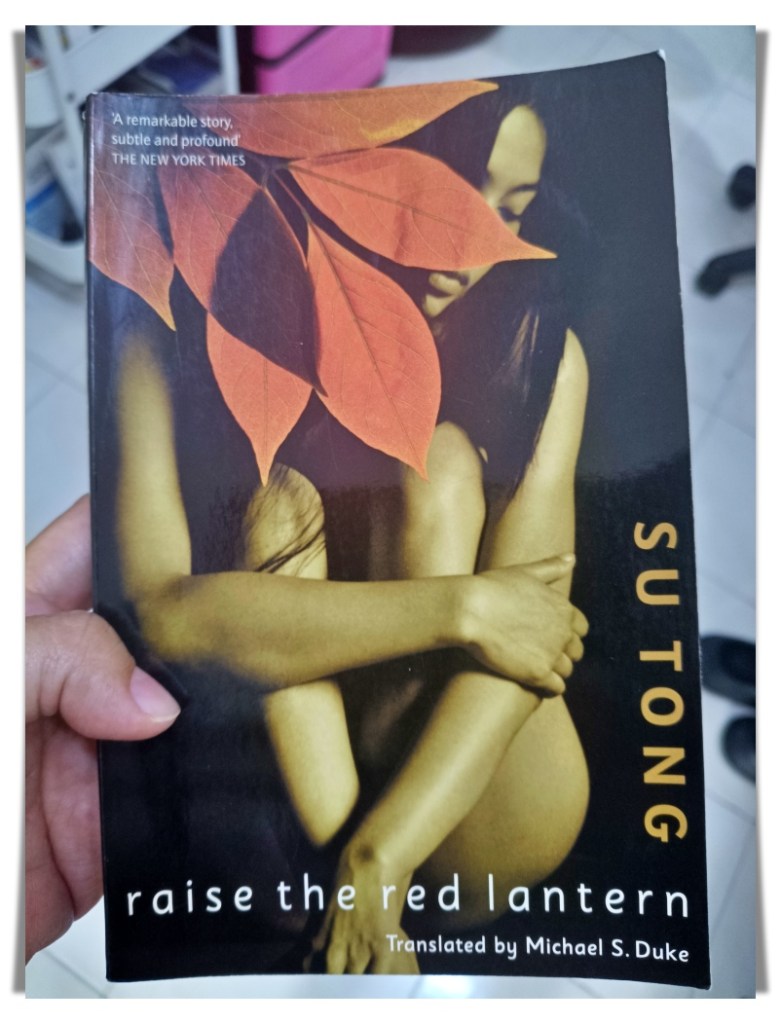
The word is “attention.” I am reading a book, Four Thousand Weeks by Oliver Burkeman. In one chapter it says attention is the beginning of devotion. Only with full focus can you truly love, care for, or experience something. I thought about my daughter telling me something sweet from her day while I nodded along, still scrolling. I let many such moments pass because I was too distracted. Am I even having these moments? The book asks: Can you have an experience you do not experience? That stopped me cold.

I knew social media was harmful. I knew I was the product being sold. But I did not fully understand that I am losing time. I am being systematically manipulated. The platforms use slot-machine psychology, variable rewards, and persuasive design. The author called it the “attention economy,” and we are the products, not the users. Their profits come from seizing our attention and selling it to advertisers. They track what I pay attention to, what makes me angry or afraid, and they feed me more of it. The author says we’re not even products anymore. We’re fuel like logs thrown on a fire and used up until there’s nothing left. They benefit from our resources, time, energy, and attention.

What struck me most is that the damage extends beyond the hour I lose on social media. It changes how I see the world. The book says social media distorts what we think matters, what threats we face, and how we see others. I have noticed I am more anxious now. More cynical. I catch myself assuming the worst about people, even friends whose politics I disagree with. The fear carries over to real life. And then I wonder: is this really me? Or has my attention been hijacked for so long that I’ve forgotten what I actually care about?

There is a line in the book about how attention cannot easily monitor itself. The only tool you have to see what is happening to your attention is your attention. If that is already captured, you may not notice anything is wrong. That was difficult to ignore. I have told myself for years that I am fine, that I am in control, and that scrolling is harmless. But what if that’s exactly what captured attention would say?

I also appreciated the honesty about our own role in this mess. The book says we give in willingly. Something in us wants distraction. I notice this when I sit down to write or draw. I feel restless. I often feel the urge to check my phone and deeply feel the need to do research on a topic. It feels like avoidance: avoiding solitude or being alone with myself. The distractions come from within, not outside.

There is also the political side. I see how outrage is rewarded. One scandal replaces the last, from the Epstein case to the US-Israel-Iran war. It feels difficult to have a grounded conversation. The book emphasizes this is part of the business model. I feel that deeply with steady exhaustion, yet I keep returning to it. I am tired of feeling like this. I am tired of feeling fractured. I would rather not look back in ten years and realize I spent my finite life scrolling through things I did not care about.

The chapter ends by saying political crises need political solutions, and we also need to understand our own role in this. I do not have a clear answer yet. But I can begin with admitting this: I am distracted and frustrated. I want to care about what matters to me. I want to want what I actually care about. And maybe by admitting it, it can be a perfect place to begin.


I write about Iban culture, ancestral rituals, creative life, emotional truths, and the quiet transformations of love, motherhood, and identity. If this speaks to you, subscribe and journey with me.