I think my past self would be proud that I never gave up on writing and making art. I continued working despite not having a large audience, praise, or assurance that the work would go anywhere. I understand why people stop when their work receives little support. But for me, I never thought to quit. I did it because something in me still needed to make things, even when life seemed uncertain and I worried whether anyone was paying attention. I kept writing and making art because that invisible, persistent urge would not leave me alone.
Nothing glamorous or sexy about persistence. It meant making zines nobody asked for, experimenting with drawing when I didn’t even know I was any good at it, and picking up new skills just because a project needed them. Persistence required me to continue despite doubt, illness and the constant question: Does any of this matter? I had no answer and I simply kept going.
Perhaps that is why receiving an invitation to create a cover for the Mossery × KL Art Book Fair 2026 collaboration felt so special. It did not arrive because I had it all figured out. It arrived while I was still creating, learning and finding my way.
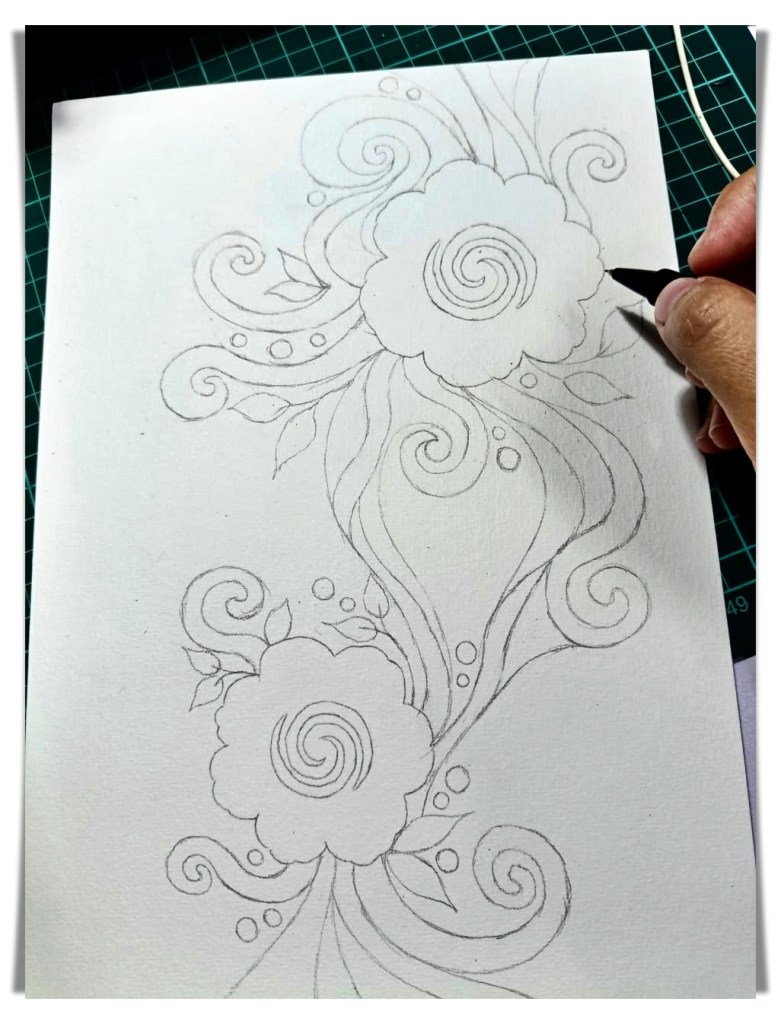
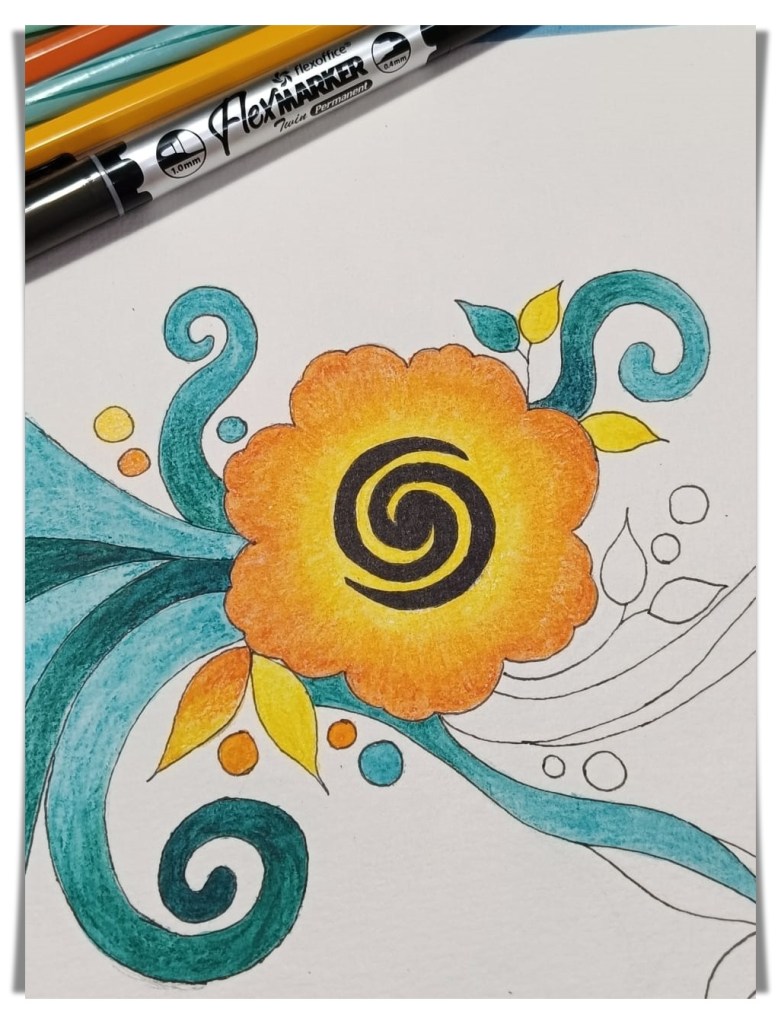
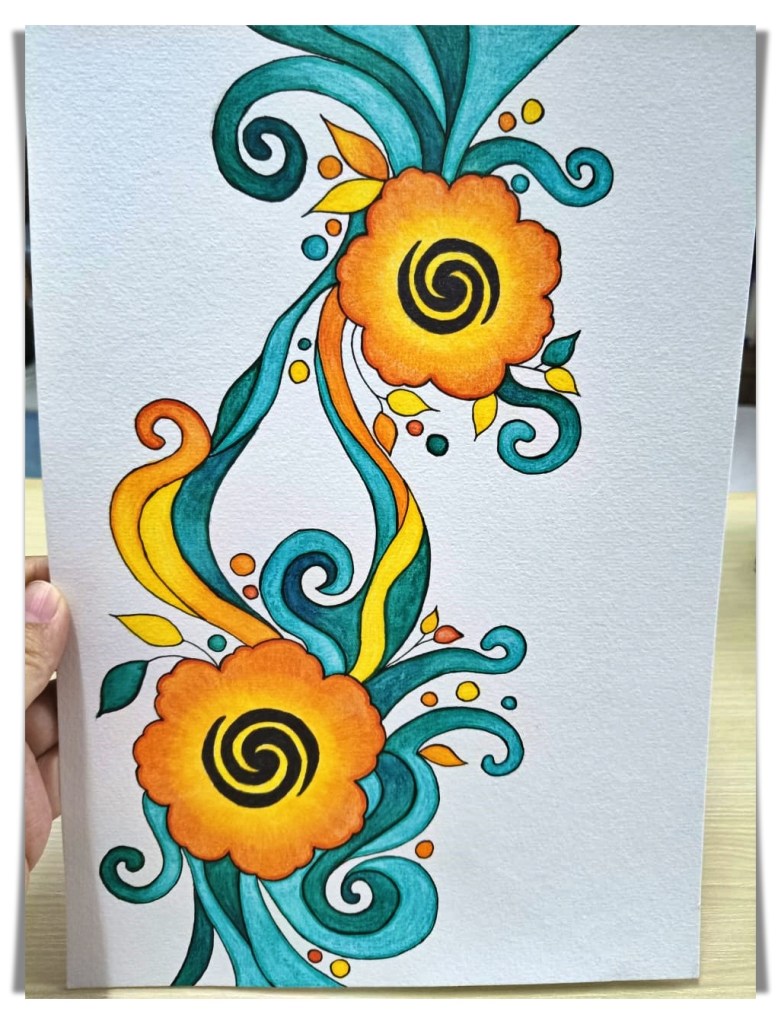
The cover is called Bejalai. Bejalai is an Iban word associated with journeying beyond the familiar in search of experience, knowledge and growth. The design features two bungai terung or eggplant flowers, traditionally recognised as the first tattoo an Iban young man receives. It marks his passage into a new stage of life.
At their centres are spirals called tali nyawa, the rope of life. The flowing forms connecting them suggest a river, representing movement and connection to home. I drew and coloured everything by hand using watercolour pencils, markers and black fineliners. The cover itself embodies, in many ways, the persistence that made it.
Pre-orders for the Mossery × KLABF 2026 cover run from 16–29 October. You can customise your name on the cover when you order. You can pre-order it here.
I don’t know where any piece of work will lead, and most may never lead anywhere measurable. But I think my past self would be happy that I kept producing them nonetheless.
I write about Iban culture, ancestral rituals, creative life, emotional truths, and the quiet transformations of love, motherhood, and identity. If this speaks to you, subscribe and journey with me.
I published my first poetry collection in August, brought it with me to KL Zine Etc. Festival, read from it in public, sold copies of it, and somehow never wrote about it here.
The reason is simple. Shortly after the festival, I became very ill. It was not the kind of illness that passes after a couple of days of rest. I was hospitalised a couple of times and was at risk of developing sepsis. I am not going to disclose the actual illness, but it was serious enough that I was unwell for almost two months. I had to stop writing and making artwork. I disappeared from this blog and from most other things while I recuperated. The book, however, did not disappear. It existed quietly while I was recovering and waiting for my return.
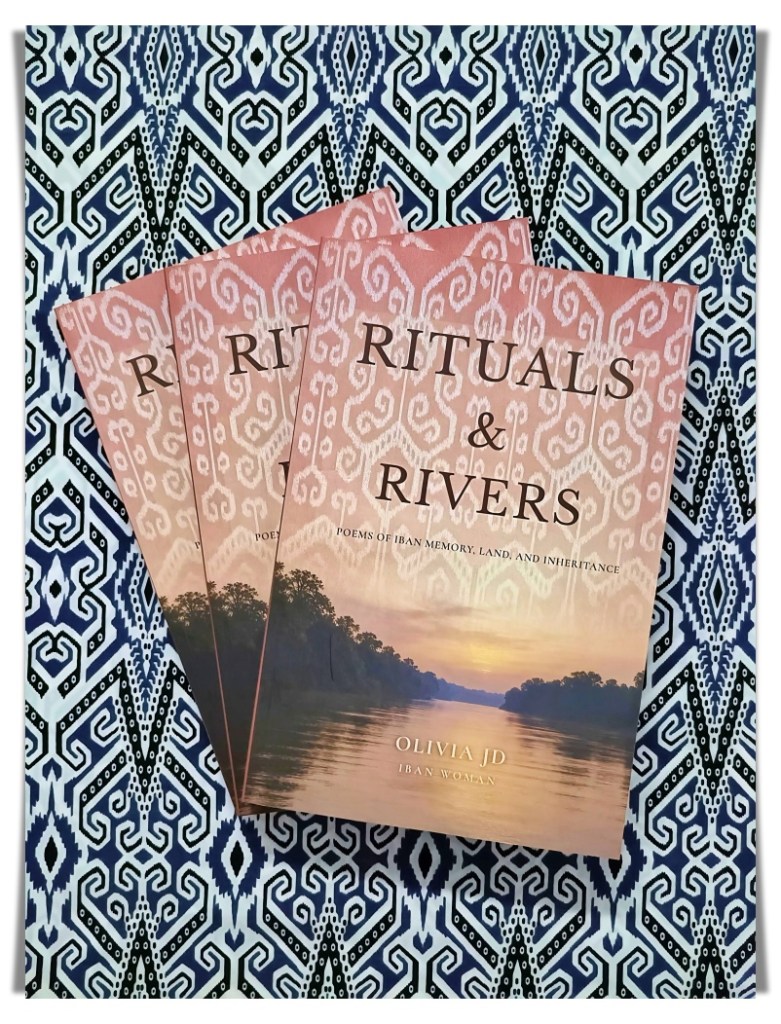
Now that I am blogging again, I have realised that Rituals & Rivers has never had a proper post of its own. So here we are. This is not a launch announcement because that ship sailed in August. I just want to introduce my book to my blog readers and visitors.
Where The Book Came From
Rituals & Rivers began with a simple fear: that what I remembered would not be enough. I grew up with fragments of Iban life around me: my family history, tales of my ancestors, old songs and omens, rituals, family names, women’s work and remembered journeys. Many of the things that shaped me were never written down. They lived in memory, in work and warning, in speech and in gesture. They were part of my life and I didn’t think of recording any of them.
However, as I grew older and lived away from Sarawak, I became more aware of what I had taken for granted. The Iban language that I grew up with is not part of my everyday life. The stories I heard as a child became fragmented or forgotten. As a mother raising children far from ancestral land, I learned that inheritance does not always pass down by itself. Sometimes we have to be intentional in researching, recording, and passing that knowledge down to the next generation.
The fear of forgetting is really the seed of this collection.
What The Book Became
What began with personal memory eventually grew into a collection of 69 poems across six sections. However, the more I wrote, the wider the scope became. I realised I was no longer only writing about myself. I started to write about language, longhouse life, women, rituals, spiritual beliefs, family history, colonial resistance, land and environmental change, and eventually about what happens when cultural knowledge is no longer passed down naturally.
The poems are organised into six sections that together form a journey of sorts. They begin with questions of belonging and move backwards into childhood, longhouse life, and the women who shaped that world. From there, the collection goes deeper into Iban rituals and spiritual beliefs before turning to my family history, colonial resistance and eventually the question that rests underneath much of this book: what remains, and what do we pass on?
The six sections are:
The Question of Belonging
The Longhouse Remembers
Women Who Hold the House
Rituals, Signs, and the Unseen
War, Resistance, and Inherited Courage
What Remains, What We Pass On
Four Poems and Why I Wrote Them
I want to feature four different poems and the story behind each of them.
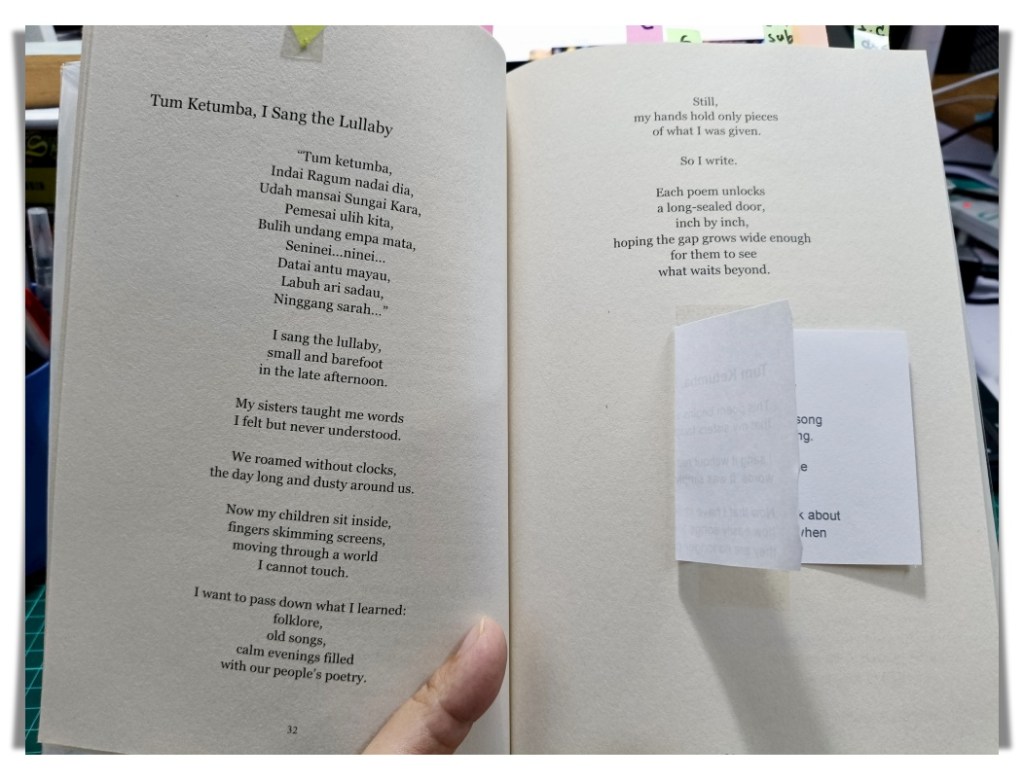
a) Tum Ketumba, I Sang the Lullaby
This poem is about a childhood song my sister taught me when I was small. I remember the lyrics even though much of the world around them has mostly vanished. I tried to preserve whatever I still recall of that world. Hopefully, through writing, I can pass it down to my children.
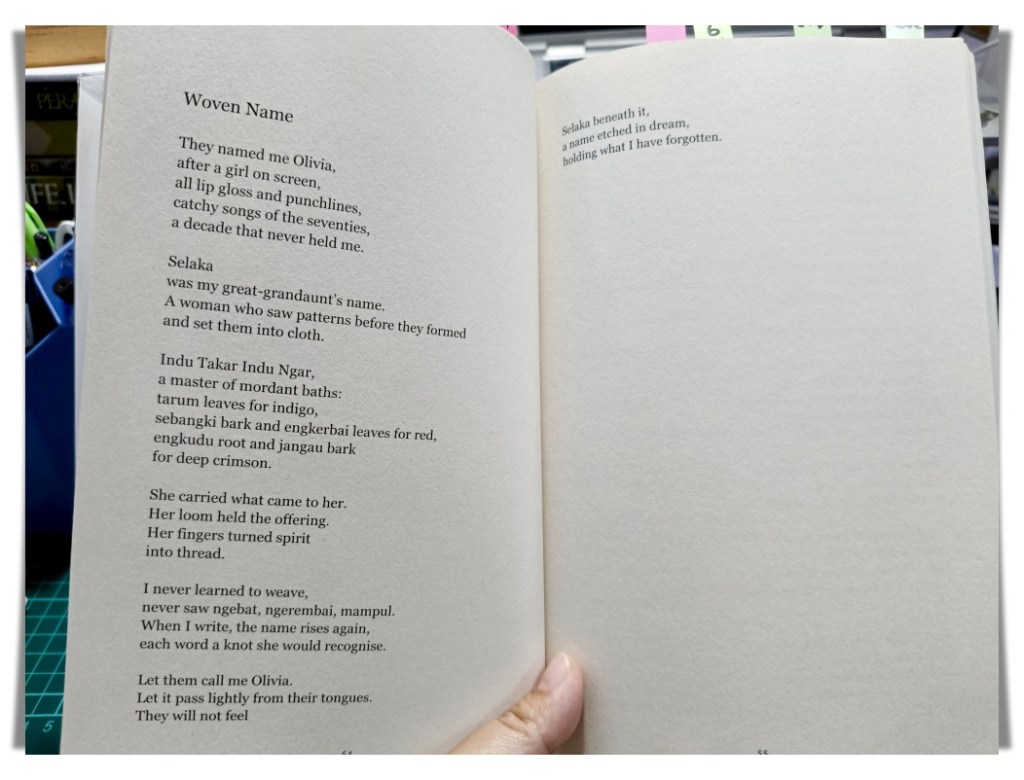
b) Woven Name
This poem is about my great-grandaunt, Selaka, who was a master weaver of pua kumbu, and also about me. Even though I never learned to weave, when I write, I feel connected to what she did. She wove her pua kumbu from dreams, signs, and patience, whereas I write and make art from memory and words.
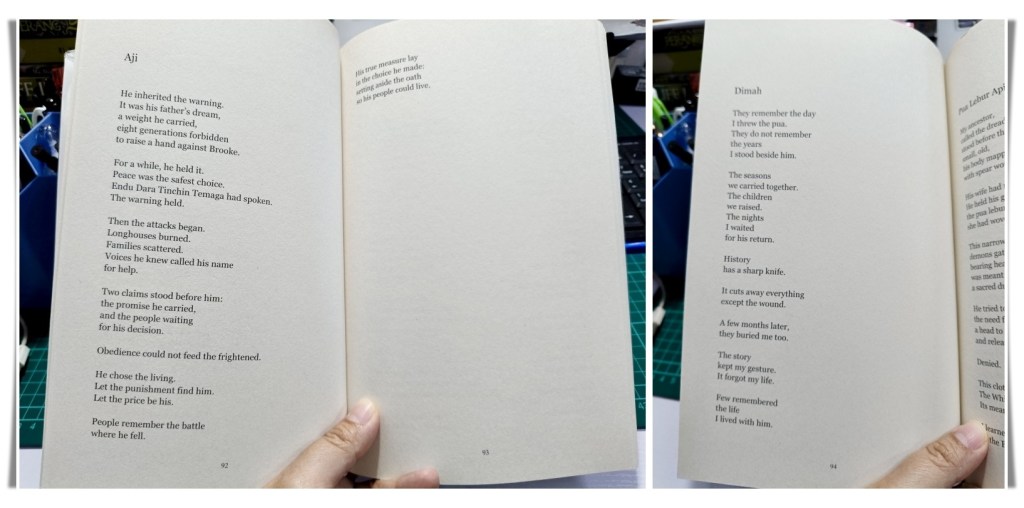
c) Aji and Dimah (Two Poems)
These poems were inspired by my family history. Aji Apai Limpa was my great-great-great-grandfather, an Iban war leader who resisted the Brooke government and died in battle at Sungai Langit in 1858. Dimah was his wife, often remembered for one tragic incident before the battle. Writing about them was not simply a matter of saying “my ancestor was a warrior.” I was trying to understand them as people, but I was also thinking about what happens when a name you have heard within your family becomes someone you are trying to see clearly.
Research and Uncertainty
Some of these poems came directly from memory, while others required me to research things I remembered only partially. I read ethnographic and historical sources as much as I could. I revisited family histories and tried to understand practices I had grown up around.
I want to be clear that this collection is not presented as a definitive record of Iban culture. It is a personal offering, drawing from memory, family history, oral tradition, and cultural knowledge.
There are gaps and uncertainties in it, and I have allowed those gaps to stay rather than fill them in with something I cannot honestly claim.
Why Rituals & Rivers?
The title came to mind because those two words seemed large enough to contain the entire collection.
The poems are full of rivers. Sungai Layar is the river connected to my ancestral longhouse. Its water carried people and news to and from home before roads existed. Rivers appear as routes, witnesses, and places where history is laid down and life continues.
Rituals are an important part of traditional Iban life. Healing rites, funeral laments, child naming ceremonies, and wedding customs: these are communal rituals that sustain and strengthen a community. They are how we mark what matters and how we pass it on.
Together, rituals and rivers describe what this collection is trying to achieve. Rivers carry things across distance and rituals hold everything together. I am trying to do both.
Dedication
This book is dedicated to my children. The final poem, “When They Are Ready”, emphasises that idea. In it, I describe the poems in this collection as perau, or small boats that will carry my children to the things that can reveal their roots.
“… So I write these rivers into words, each poem a small perau waiting.
When they are ready, they will launch them, follow the names I have kept alive, and find, at the source,
a home that never stopped calling.”
Final Thoughts
After years of working on this collection, the book is finally here. I sold copies during the festival and have continued selling them since. I have read from it publicly, and only now am I sitting down to write about it here.
I am back and writing again. The book exists, waiting for whoever needs it.
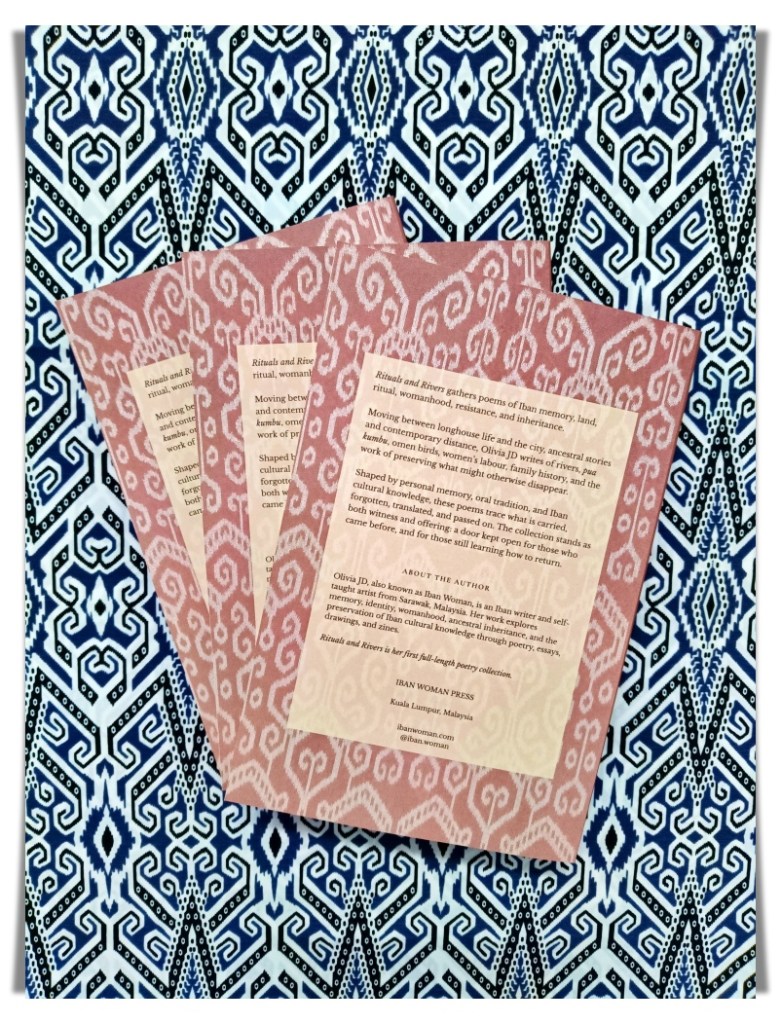
Rituals & Rivers is my first full-length poetry collection. If you would like a copy, you can purchase it from my Shopee online store.
I write about Iban culture, ancestral rituals, creative life, emotional truths, and the quiet transformations of love, motherhood, and identity. If this speaks to you, subscribe and journey with me.
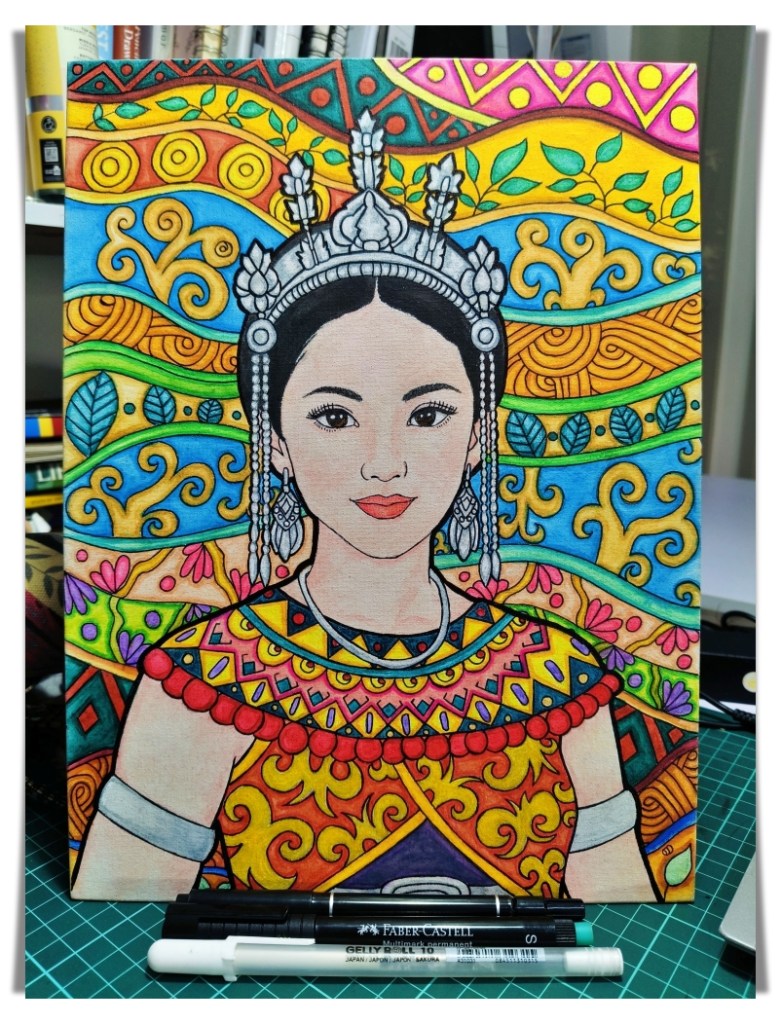
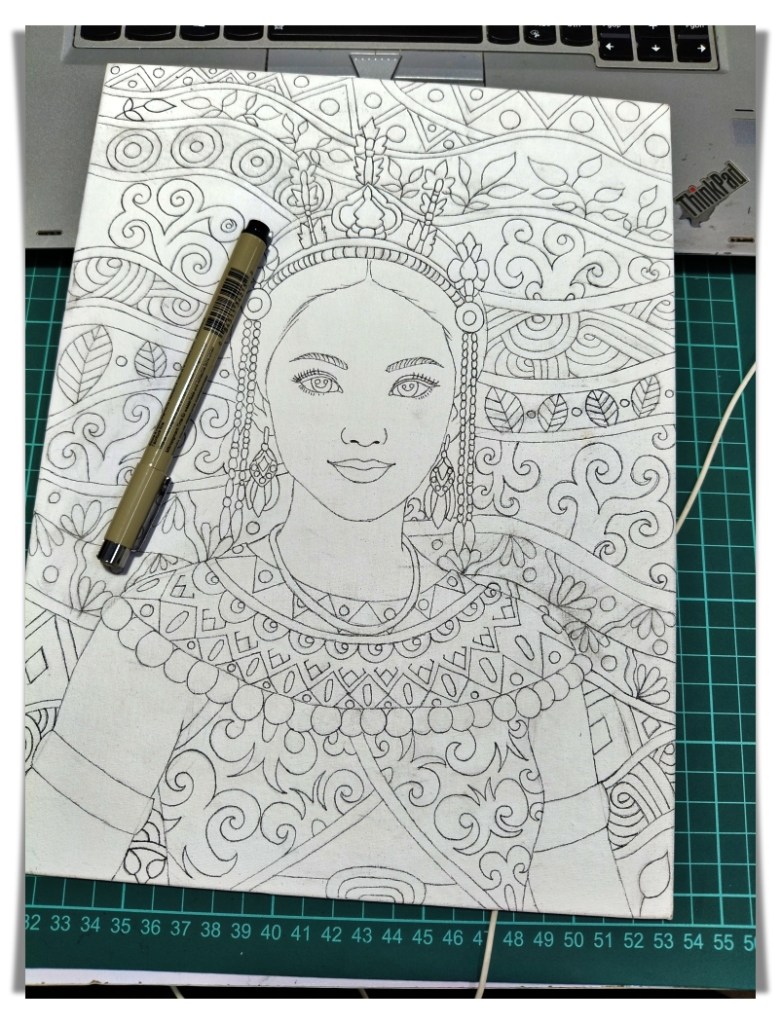
I have been working on this mixed media painting for the past ten days. It is of an Iban woman wearing a traditional costume called “ngepan indu Iban.” The piece has elements such as the sugu tinggi headpiece, the marik empang or tangu worn across the shoulders, the selampai crossing the chest, the tumpa on the arms, and the lampit around the waist. Instead of creating an accurate historical painting, I wanted to reinterpret these traditional elements in my visual language of doodle patterns, flowing lines, and brilliant colors.
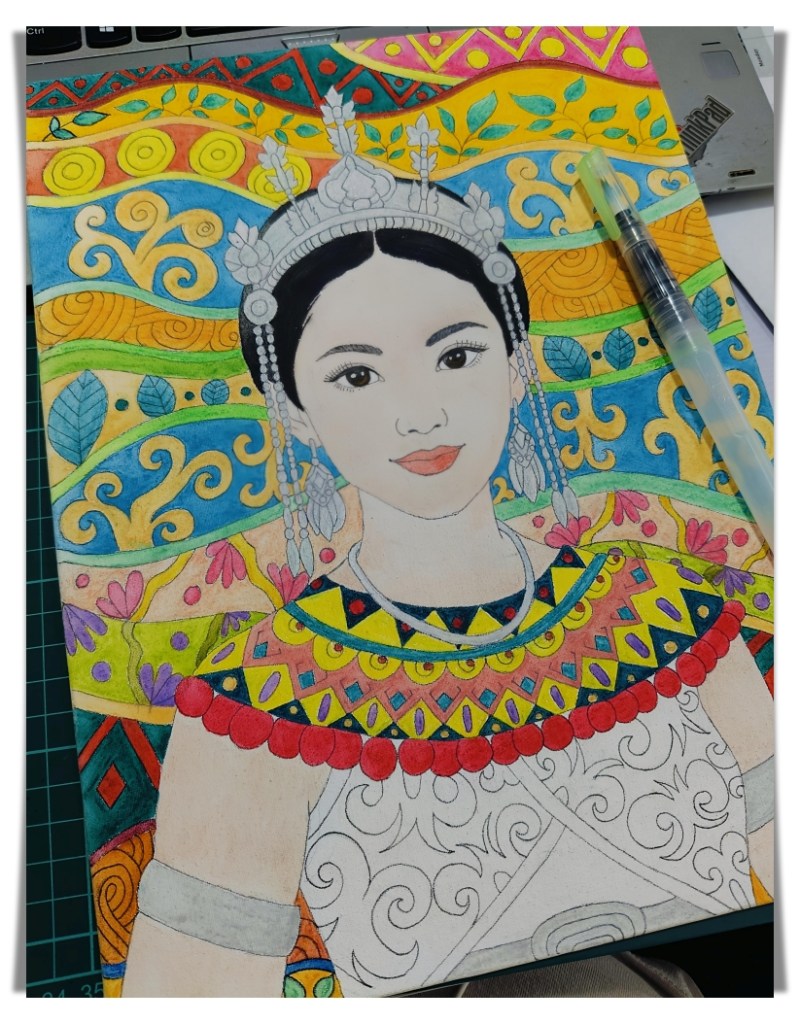
At first, I thought this painting would simply take a few days. But after a while, it just became part of my routine. And life kept interfering in between coloring little sections and drawing patterns. My car broke down and I had to have it fixed at the mechanic’s. One of my molars chipped after I accidentally chewed on a tiny piece of chicken bone, so I had to go to an emergency dentist appointment. There was still housework, my son’s schoolwork, and the usual weariness that comes with adulthood. Some days I just worked on the painting for an hour or two. And there were other days when I sat with it late into the night, hours after everyone went to bed. Even so, I kept returning to it.
After a while, the painting stopped feeling like just an art project. It became an exercise in finishing something. I tend to jump around between ideas too fast and I find it hard to finish them. But this time I worked on one artwork for ten days straight until it was finished.
And I wanted the picture to be alive and not historical or “museumy.” Perhaps that’s why I tend to choose vivid, vibrant colors rather than subtle earth tones. I wanted the background to feel crowded and flowing behind her. Some designs were influenced by traditional themes and others were instinctual throughout the process itself.
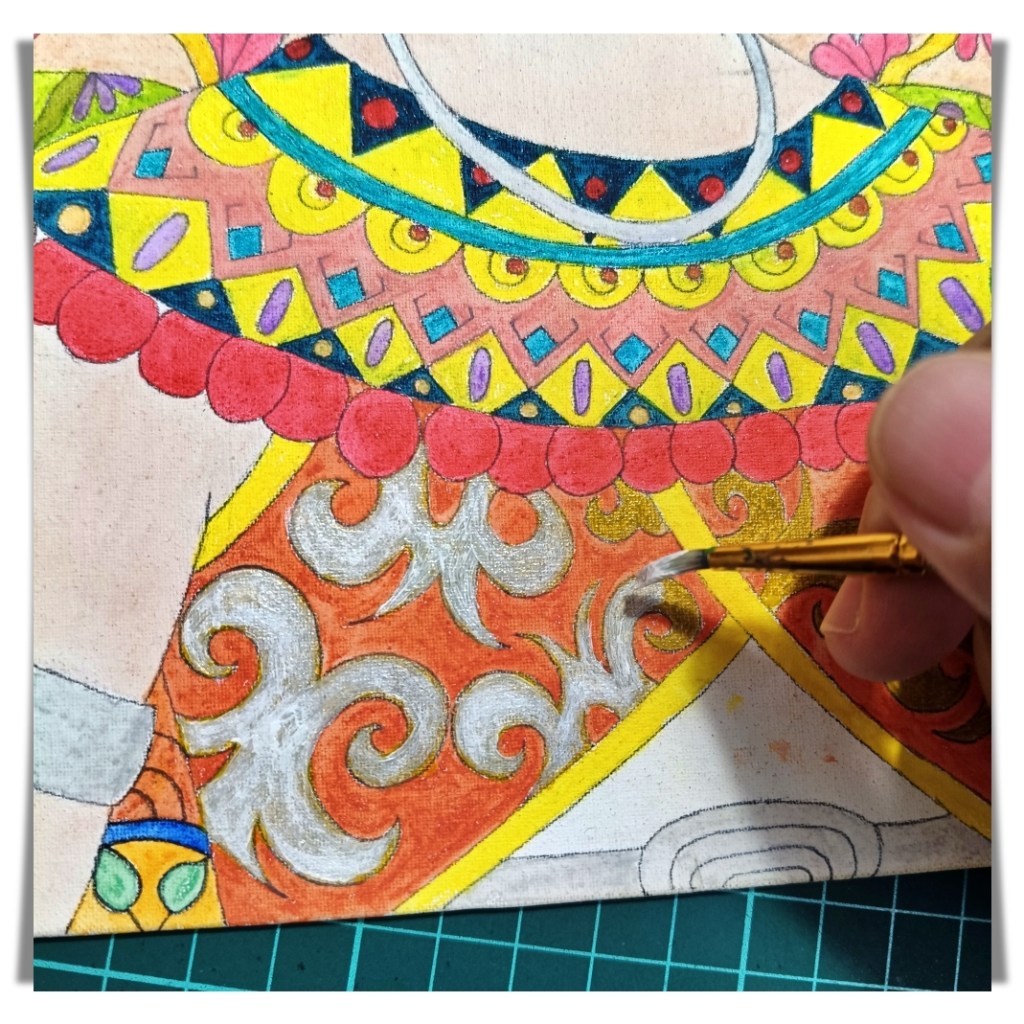
There was one point during the painting process when I really feared I’d botched the whole thing. The patterns on the selampai were meant to be golden yellow, but I layered the wrong colors together and it turned into murky bronze. I tried to fix it with acrylic paint and regretted it instantly. I remember looking at it in utter frustration, totally convinced that I had messed up the painting after days of work. Finally, I walked away from it, let it dry, came back later, and repaired it painstakingly, layer by layer. Looking back, that mistake turned out to be part of the process. I thought those sections turned out great, but they weren’t the main lesson. The actual lesson was that I didn’t ditch the work halfway through.
The finished artwork was created using mixed media materials such as colored pencils, markers, acrylic paint, fine liners, and gel pen highlights. I mostly used non-archival materials, but I actually liked working with them instead of waiting for things to be perfect. In the end, the painting reflects the ten days it took to finish it: color, frustration, interruptions, patience, and finally getting it done.
I write about Iban culture, ancestral rituals, creative life, emotional truths, and the quiet transformations of love, motherhood, and identity. If this speaks to you, subscribe and journey with me.
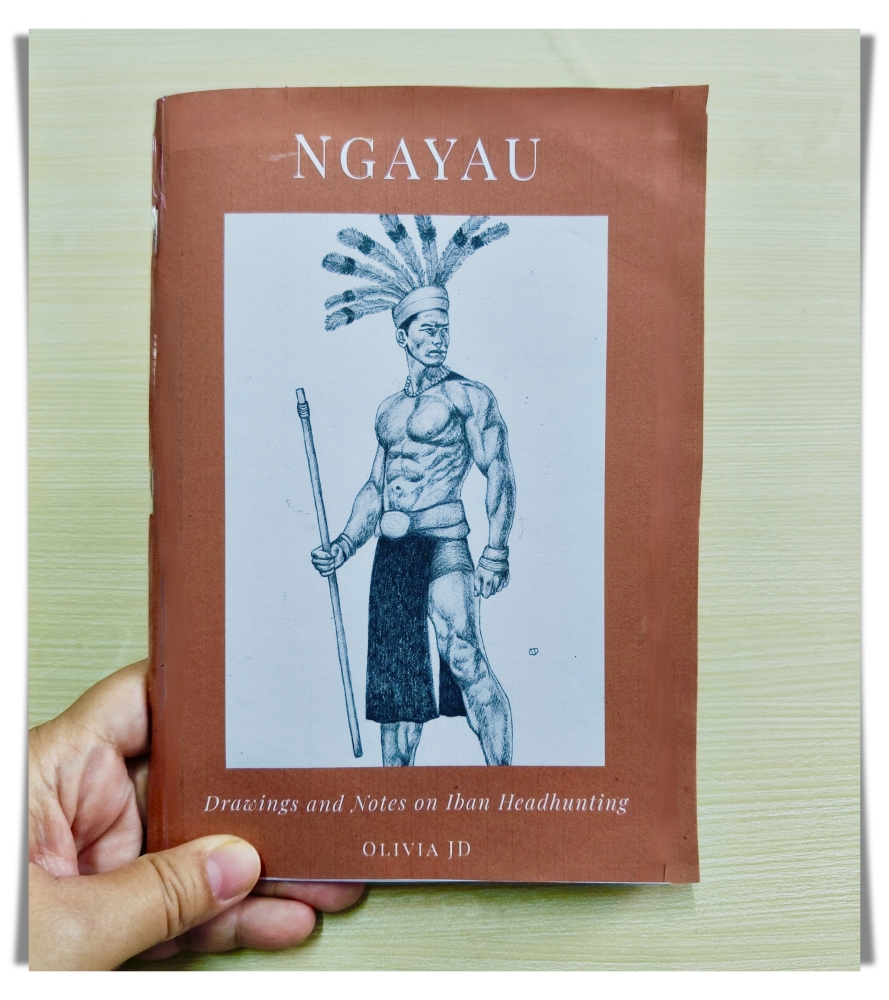
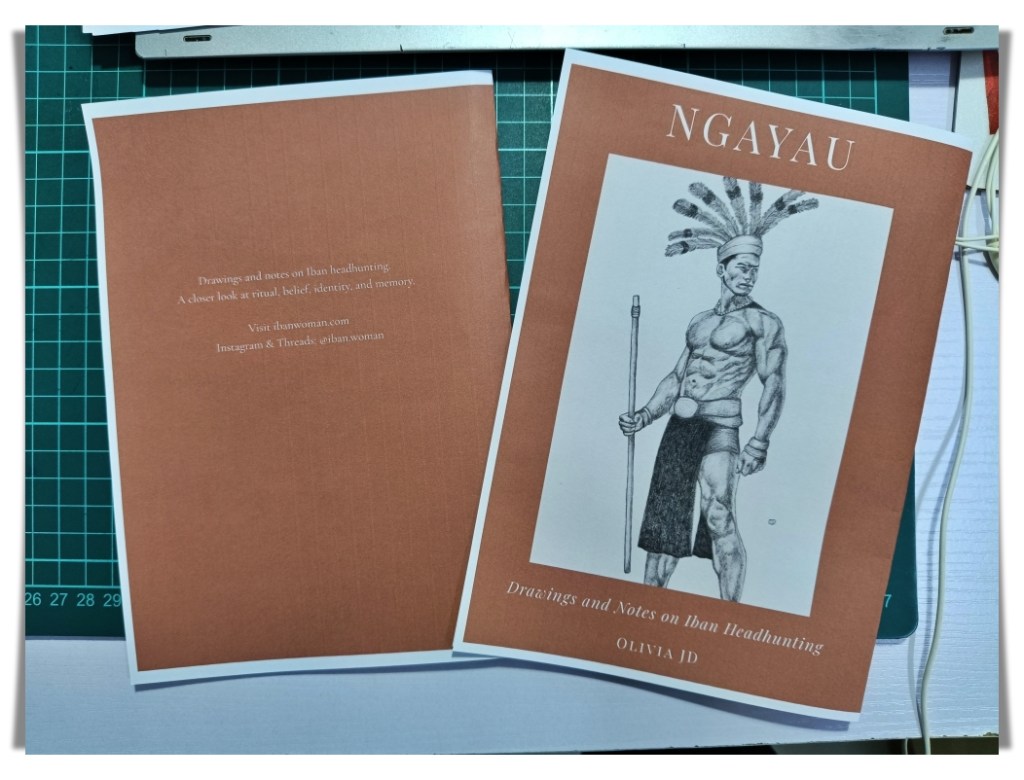
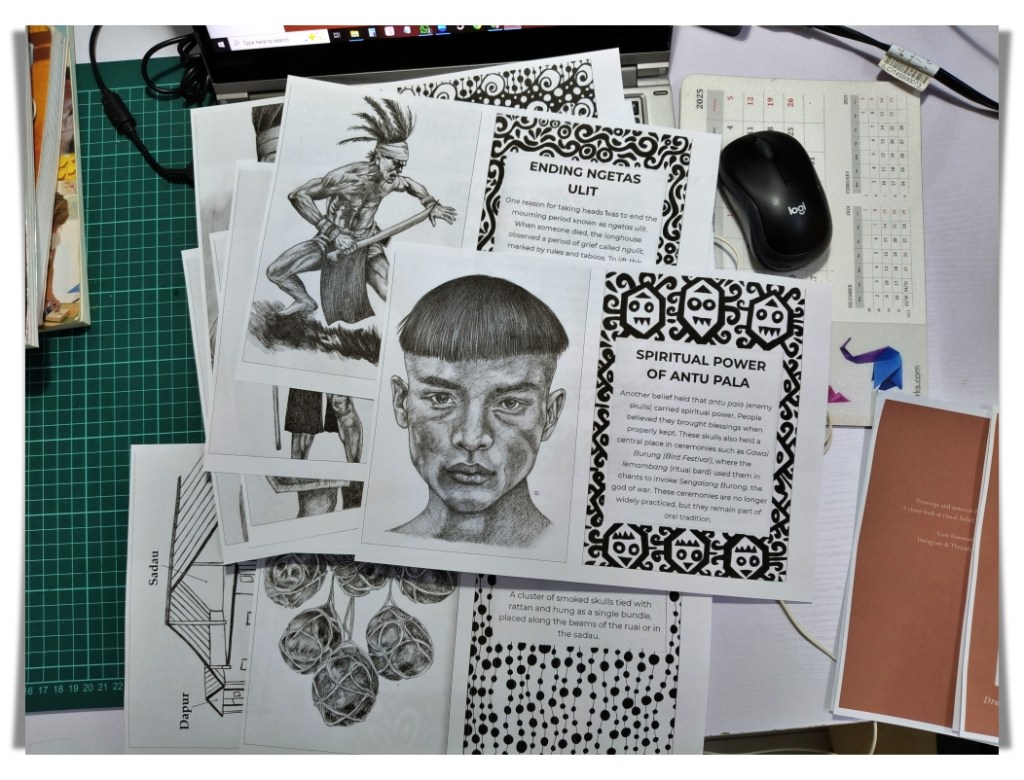
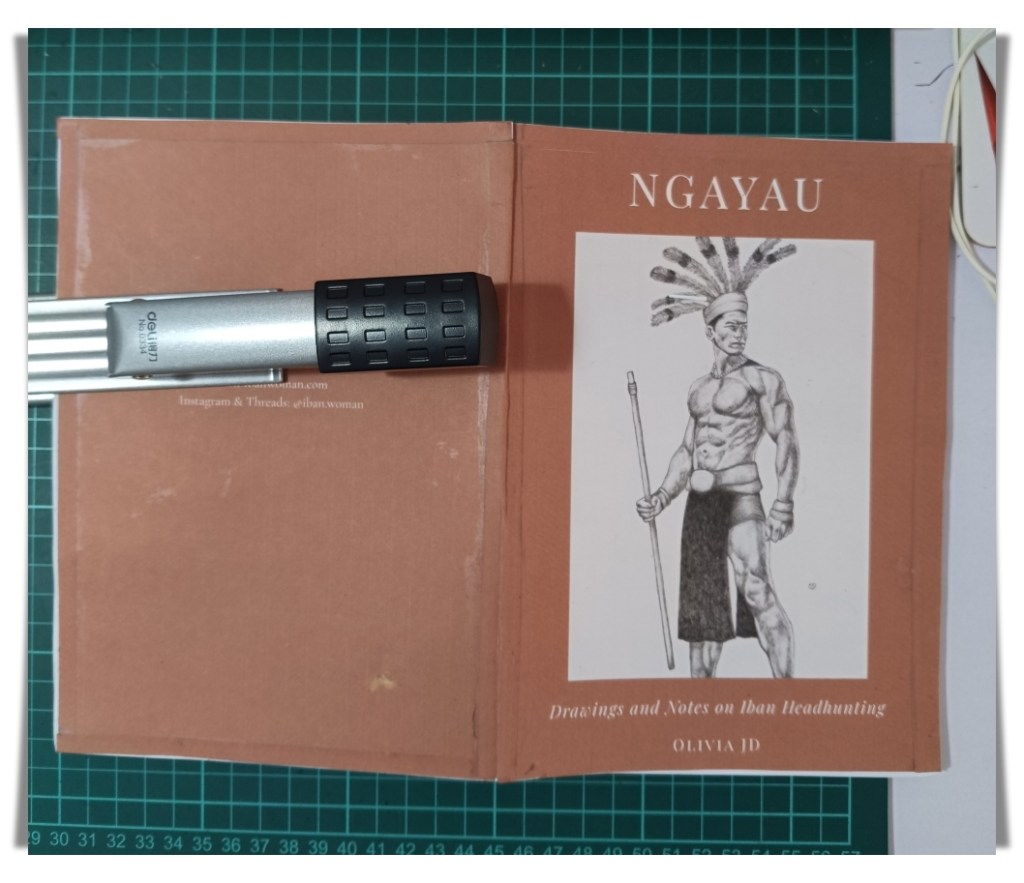
A few weeks ago I started putting together the first physical prototype of Ngayau, a small zine that explores Iban headhunting through drawings and short notes. At first it was just pencil drawings scattered on my desk. These drawings were of warriors and handwritten notes of research I made regarding the subject. At some point these materials began to form a real booklet.
There’s satisfaction after seeing your own work in booklet form for the first time. A PDF on a screen may looks good but it feels temporary and obviously untouchable. But after the pages are printed and folded and cut and glued together, the work suddenly has weight. It becomes a tangible thing that you can put on a shelf, forget for years, and rediscover again.
I wanted Ngayau to feel simple and homemade. Not shiny or over-designed. The process itself was messier than I had thought. I adjusted margins repeatedly, reprinted pages after noticing tiny alignment issues, and spent hours arranging drawings beside explanatory texts. My desk gradually disappeared under graphite drawings, patterned layouts, failed prints, paper trimmings, and coffee mugs.
Some of the drawings were made years before the zine was even in my mind. Seeing them all at once hit me more than I thought, like pieces from different times of my life had finally met. What interests me most about this subject is not violence for the sake of spectacle. I am more fascinated by the worldview surrounding it, grieving rituals, spiritual beliefs, protection, courage, sorrow, memory, and the way Iban culture interpreted the interaction between the living and the unseen world.
Modern discussions about Iban headhunting often reduce it to a caricature. The Ibans of old are seen as savage, primitive, and brutal. But history is rarely simple. The more I explore and create, the more I see how much ritual, spirituality, and community importance were embedded in activities that outsiders typically dismiss as shock value. This zine is not an attempt to glorify the past. My goal is to see it as it is without dismissing it as barbaric, understand the reasons behind this practice, and finally pass the knowledge to others. I felt content when I had finished the prototype. It felt like coming home to something that was meant to be held and shared after sitting in my mind for months.
I write about Iban culture, ancestral rituals, creative life, emotional truths, and the quiet transformations of love, motherhood, and identity. If this speaks to you, subscribe and journey with me.
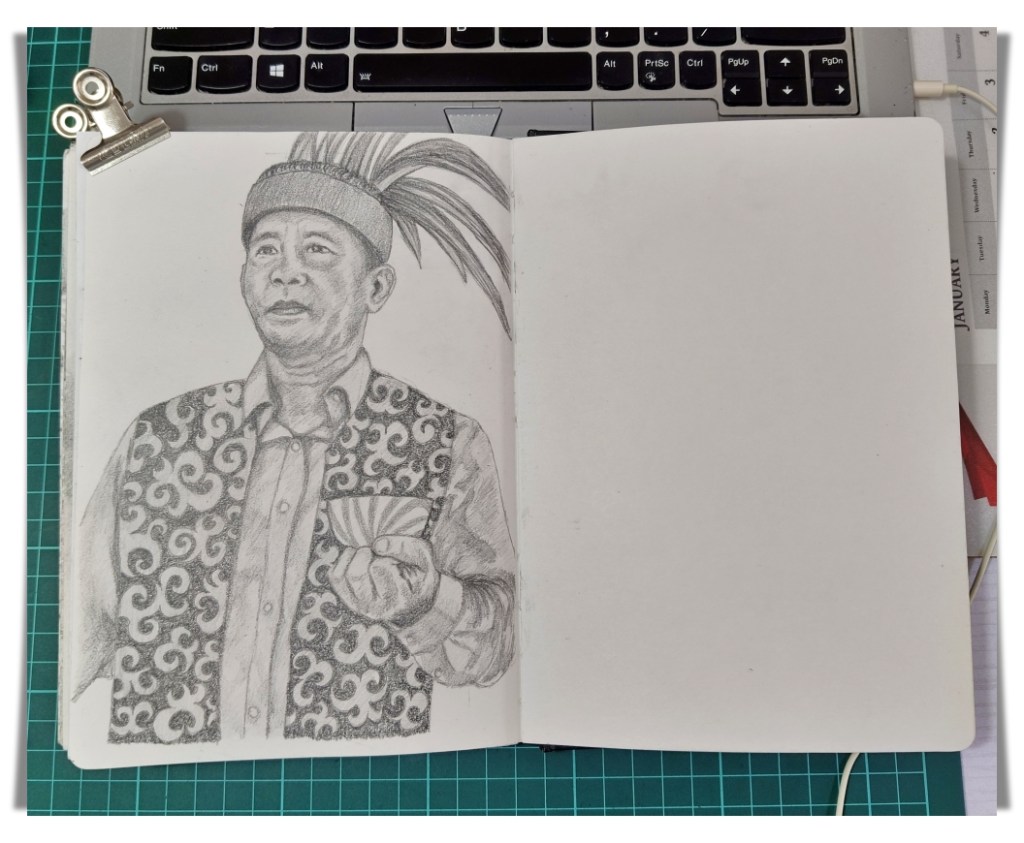
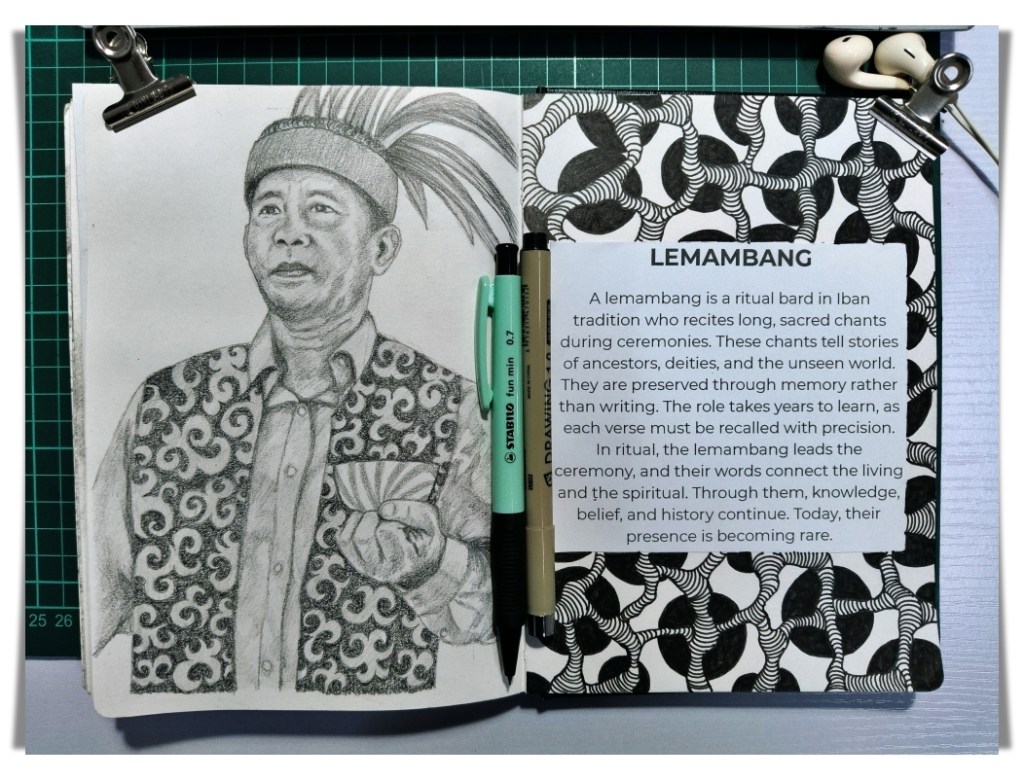
The Iban lemambang is a ritual bard who recites long, sacred chants or invocations at ceremonies or rituals. These chants are the stories of ancestors, deities, and the unseen realm. They are preserved through memory and passed down from one generation to the next.
The role of a lemambang takes years to learn. Each verse must be remembered with care and precision. During a ritual, the lemambang guides the ceremony through these chants that become part of the process that bridges the seen and the unseen. In some cases, papan turai was used as a guide. They are wooden boards carved to help the lemambang remember the sequence of their chants. These papan turai are memory aids, reinforcing what has previously been taught and internalized.
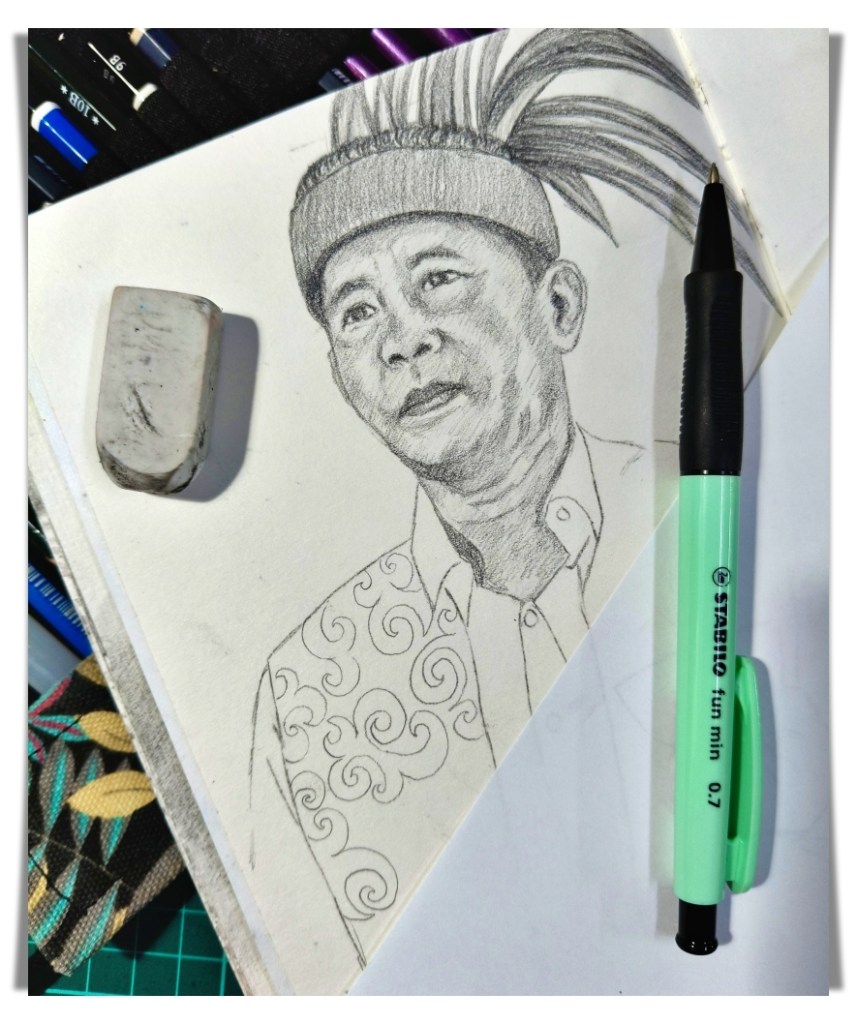
I drew this while working on a zine about Iban headhunting and its cultural origins. As I moved from one page to the next, I realized the zine was also about those who passed the knowledge forward. One of those figures was the group of people known as the lemambang. I wanted to place him (who represents this group) among the pages to acknowledge their big contribution as the guardian of Iban culture and heritage.
This way of preserving knowledge is different from how we learn today. It depends on discipline, repetition, and memory rather than written records. It also depends on a faith and trust that what is handed down will be remembered and passed on accurately.
Today the number of lemambang is getting smaller. The number of people who are learning to become lemambang is dwindling, and much of this knowledge is at risk of being lost with time. What remains are fragments, memories, and the efforts of those who persist in holding on to them. Writing and illustrating this page is a small way for me to honor them.
Here’s a video of a group of lemambang chanting during Gawai Antu or Festival of the Dead.
I write about Iban culture, ancestral rituals, creative life, emotional truths, and the quiet transformations of love, motherhood, and identity. If this speaks to you, subscribe and journey with me.
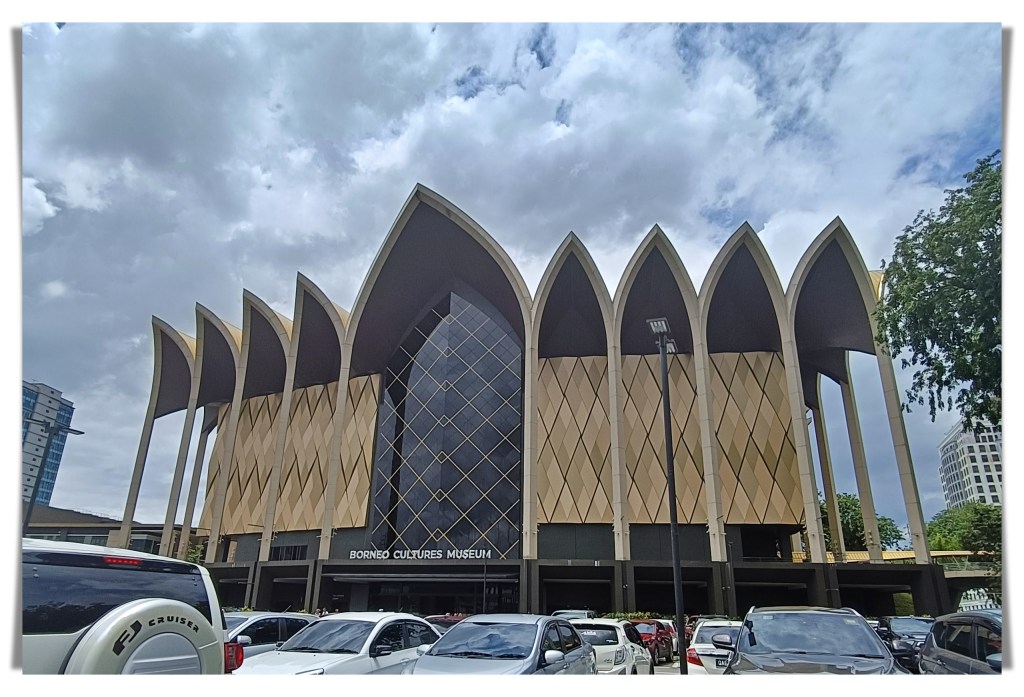
Have you heard of the Borneo Cultures Museum? It is in Kuching, Sarawak, and from the outside, it seems quiet, though the building looks very unique. However, the scale becomes clear once you get inside. It is the biggest museum in Malaysia and the second largest in Southeast Asia. My family and I visited on our last vacation to Kuching and spent a few hours there in the afternoon. We thought it would be enough, but it quickly became clear that it wasn’t.
There is too much to take in at once, so I will share a few things that caught my attention the most.
Repatriated bones of Niah Caves
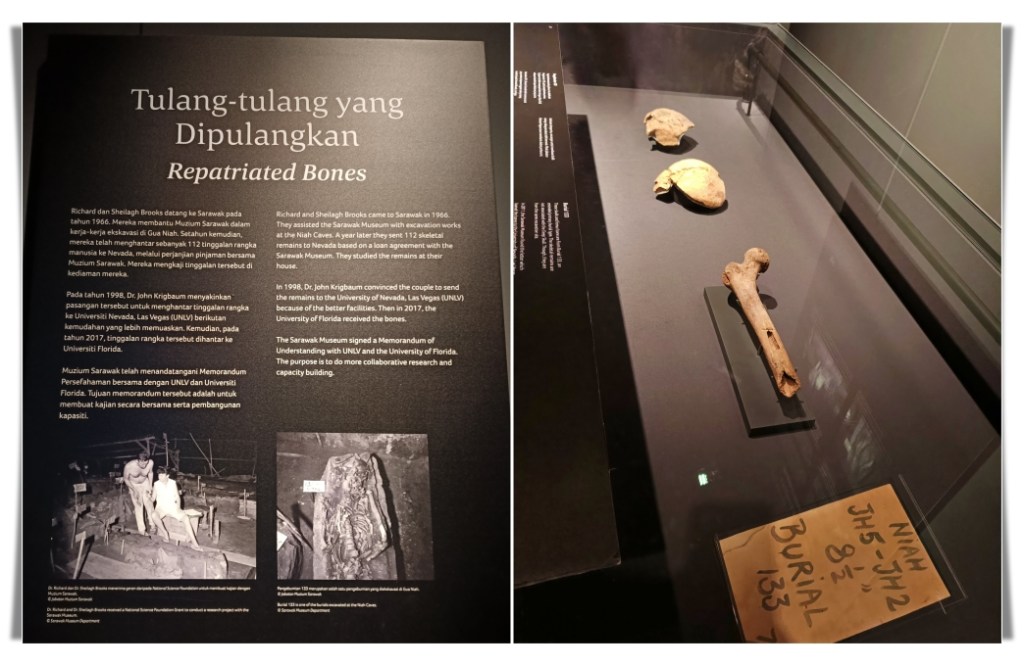
The repatriated bones from the Niah Caves were one of the first things that caught my attention. However, not all of the remains are displayed. Only fragments are shown, including one from Burial 133, which is part of the Neolithic cemetery found in the cave’s West Mouth. This site has one of the largest prehistoric burial cemeteries in Southeast Asia. Excavations in the 1950s and 1960s, as well as more recent studies, have found more than a hundred burials here. The University of Nevada used to keep these bones for research and safekeeping, but they have since been returned to Sarawak. I visited Niah Cave in my youth, and I have read about these bones in the past, and standing right beside them felt so surreal.
Orang Ulu Masks or the Hudo’ masks
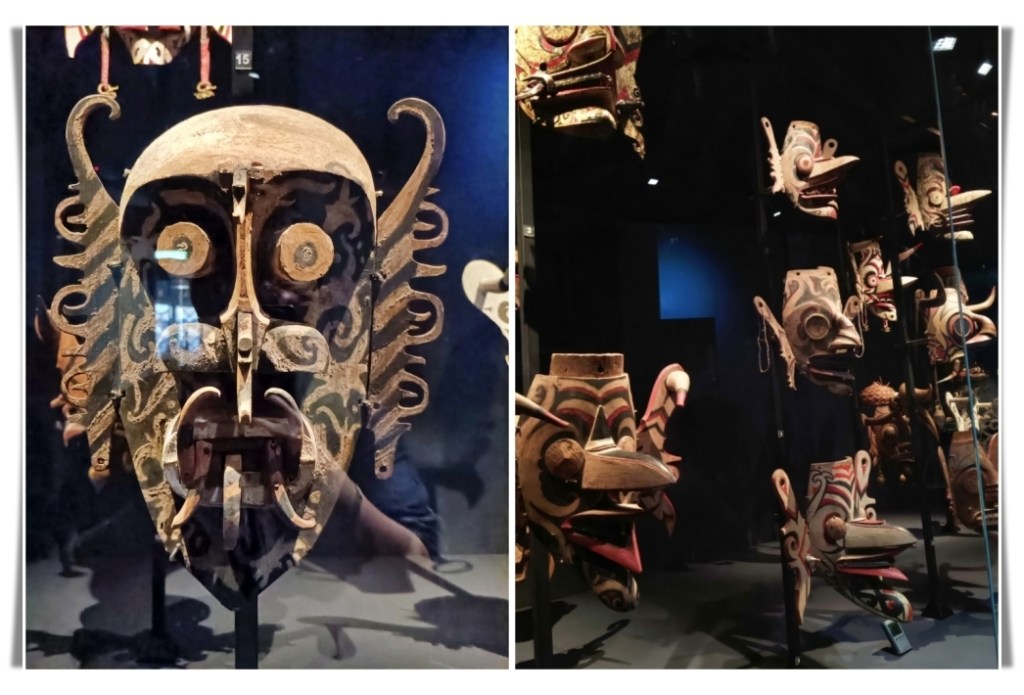
The Kayan and Kenyah people use these masks during harvest festivals to cast away bad spirits and make sure the crops are healthy. The masks are displayed on the fifth floor in the “Objects of Desire” gallery. I admit this section of the museum felt slightly unsettling with the masks quietly staring at you from the glass display. At first, I didn’t say anything but later, my sister said she felt the same way and even had goosebumps.
The Melanau burial pole or Jerunai
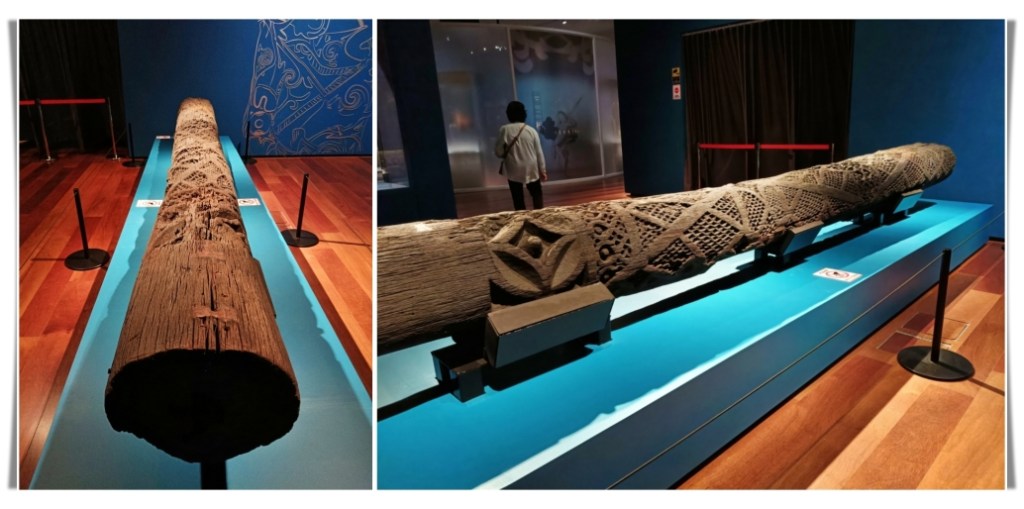
These carved wooden poles were used to bury wealthy Melanau people and nobility. The remains of the dead were placed in jars and kept in the hollow parts of the pole. The Jerunai was reserved for the Liko, or Melanau pagan nobility. Ancient rituals associated with the Jerunai often involved human sacrifice. Slaves were sometimes placed at the base of the structure believed to serve their dead master in the hereafter. This practice was long abolished when the community converted to Islam and Christianity.
Kelirieng – burial pole of the Punan Bah or Sekapan tribes
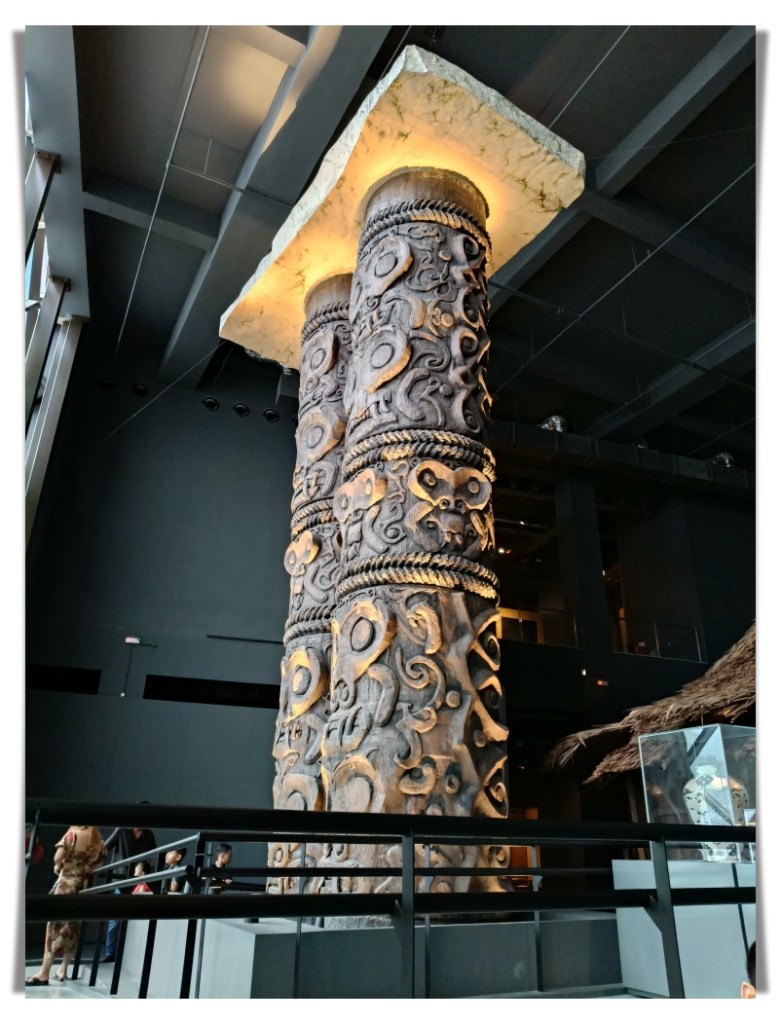
There was also a similar structure called the Kelirieng, a burial pole used by the Punan Bah and Sekapan communities. Like the Jerunai, it functioned as a secondary burial structure. The dead person’s bones were placed in large ceramic jars and then they were hauled up into a hollowed part at the top of the pole. The height of the structure symbolized status and was believed to bring the deceased closer to the spirit world. To protect the jars, most of these poles have a huge stone slab on top.
However, the massive Kelirieng in this picture are replicas, and the original ones can be found outside within the museum’s compound. As I was staring at these burial poles, I kept thinking about the slaves. I heard that the slaves were crushed to death as they raised these poles on the ground. It’s a gruesome mental scene, but it’s part of our history. One benefit of religions is that they abolished slavery, as no one deserves to be treated as subhuman at the mercy of their masters.
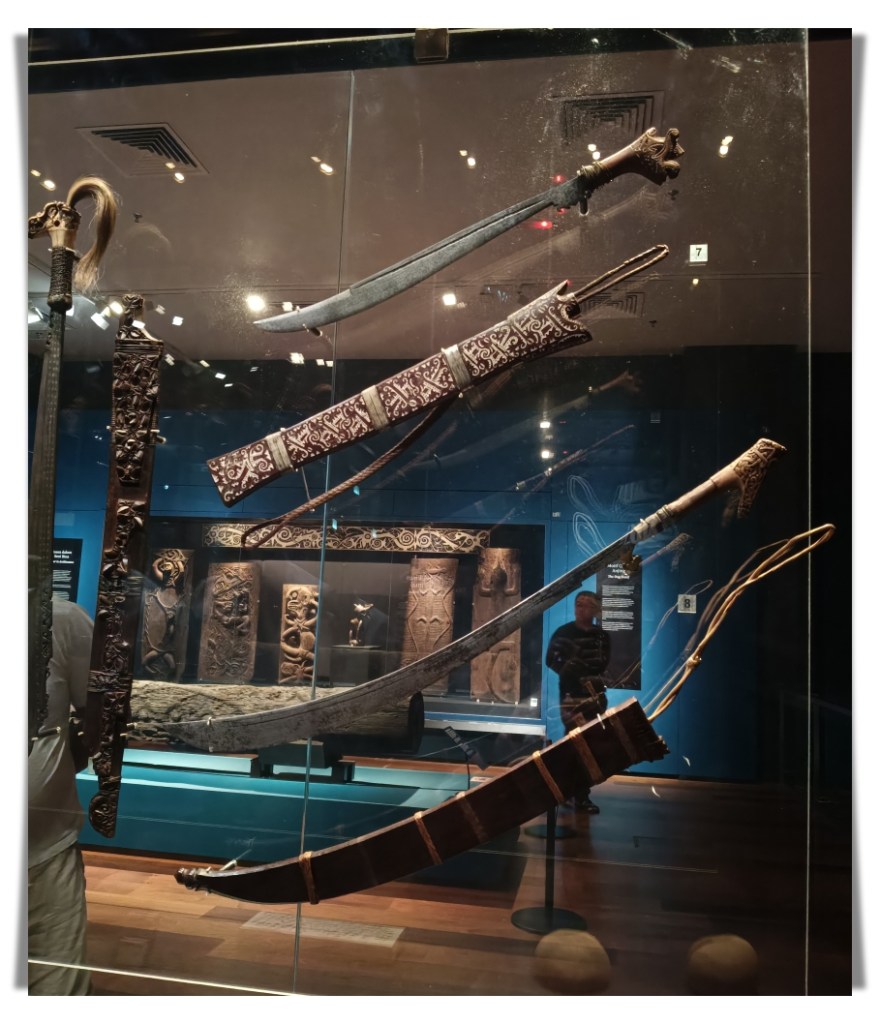
Headhunters swords
These swords were historically used for headhunting. While I was lingering near this exhibit and admiring their craftmanship, my husband had a different experience. He told me later that he felt a strong impulse, as if a voice was urging him to take one of the swords and kill someone. He felt so uncomfortable that he quickly left this section. I didn’t experience anything like that, and I believed him when he told me. The Iban people believe that such swords need to be kept properly, and certain rituals need to be conducted to appease the restless spirits of the swords.
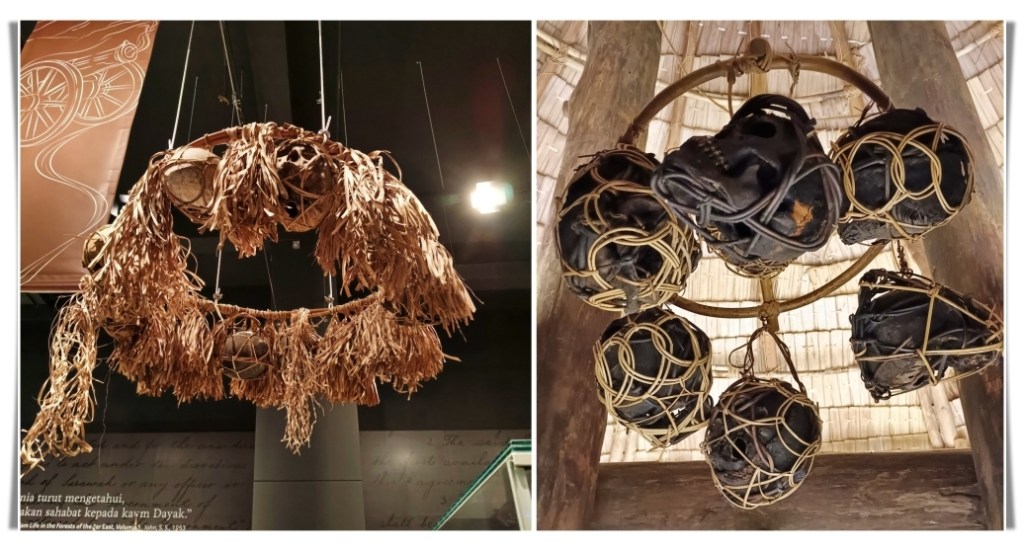
Dayak human skull trophies
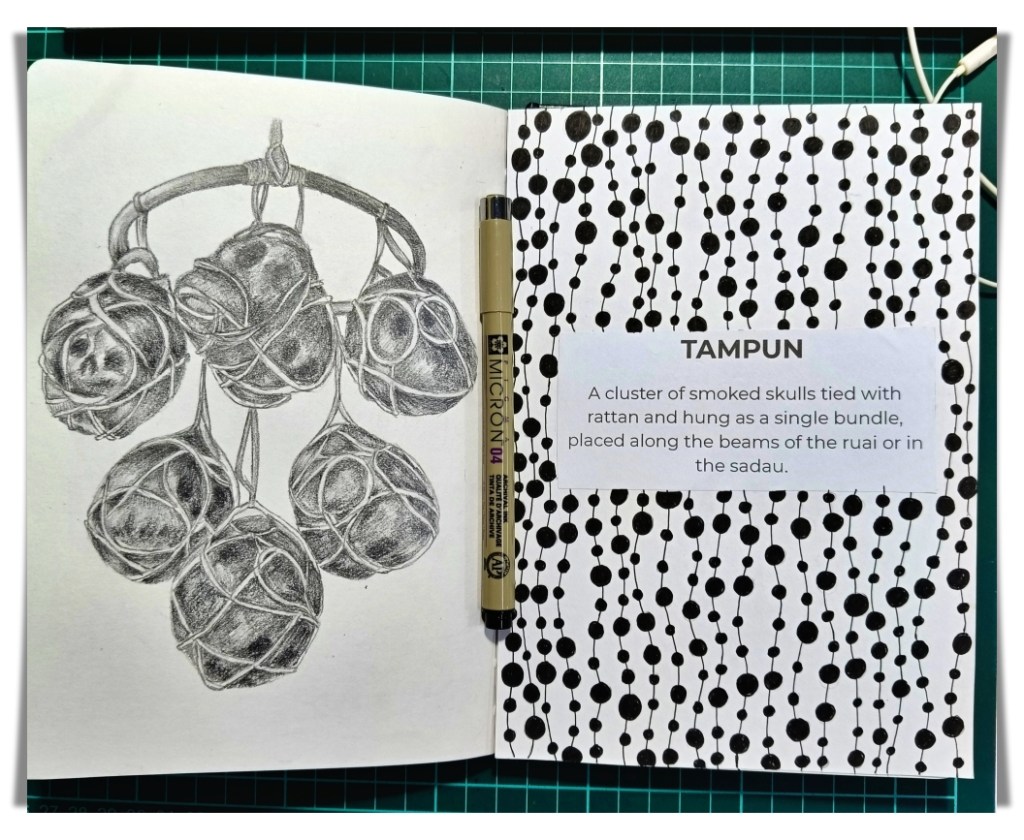
Finally, there were the skulls. These are real human skulls from Sarawak’s headhunting past. They are arranged in round rattan frames decorated with dried leaves. This collection is known as a tampun and is traditionally hung in the longhouse. Some of my relatives still keep them. The Iban people believe that the souls are still present, thus they should be treated with care. My family no longer keeps them, as my great-great grandparents gave up these practices after converting to Christianity in the early 20th century.
We were at the museum for about three hours, but it wasn’t enough time to view everything. If I go again, I shall go in the morning and take my time to view and read the information about every exhibit. You need to take your time so your visit will be totally worth it.
If you ever go to Kuching, I suggest you spend a whole day there. It’s more than just looking at the exhibits. As I mentioned, I highly encourage you to understand the stories behind them in order to fully appreciate our cultures and Indigenous way of life.
I write about Iban culture, ancestral rituals, creative life, emotional truths, and the quiet transformations of love, motherhood, and identity. If this speaks to you, subscribe and journey with me.
When I first read the CBC article on AI-generated Indigenous content, my stomach tightened. Not because I generated my content with AI, which I don’t, but because I understood how easy it would be for someone looking for Iban culture to find made-up “elders’ teachings” or made-up Iban phrases and think they were the real thing. I am an Iban woman living far from Sarawak and raising children of mixed heritage. While I utilize AI to assist in my writing process, I don’t generate it using an algorithm. My sources are from my family history and lived experiences. These are the datasets I train on. They are living memory and not predictive text.
The article quotes Michael Sherbert saying generative AI is “optimized for fluency, not for truth or for ethical or cultural responsibility.” I think about this every time I sit down to write a poem or draw cultural art. Cultural truth is difficult to tell and requires effort to check for accuracy. Telling cultural truth also means admitting I don’t know many things and need to learn from those who are more knowledgeable. I read all kinds of academic resources and cross-check my facts with family members before I post them on my blog or publish a new cultural zine. I avoid making assumptions, and when I am not sure of the accuracy, I admit that I don’t know and encourage others to share their experiences or information so we can all learn from one another.
Kaitlyn Lazore from the Mohawk community said something that stayed with me: “There’s no easy way to learn the language or gain culture without getting out in your community.” She is right. Still, I am raising my children far away from my homeland. I can’t take my children to a local social gathering to hear native speakers speak Iban. I can’t take them to Sungai Stambak and let the mud cling at their ankles like it did mine. So what do I do? I write and I draw. I make zines like Rituals and Rivers, Iban Women, and Iban Headhunters. I know that all these things are not substitutes for community. But they can turn into a perau, a small boat that will wait for them until they are ready to learn about their roots. They can launch it whenever they want. They can find their way to their roots through the names I’ve kept alive in my writings and art.
But I also do what the article emphasized: I am transparent. I include Iban words with definitions in most of the cultural poems I wrote. Every story distinguishes between traditional knowledge and my personal interpretation. I do not claim to be an elder. I am a mother and a learner who is learning to preserve her culture in her own ways.
The article talks about “pan-Indigenous representations that flatten distinct nations into one interchangeable identity.” This is very important to me. I am Iban, not a generic “Borneo culture” or simply an “Indigenous” group. When I write about details like the bungai terung tattoo motif, I name it instead of being vague. When I describe perau pengayau, I explain that they are tied to certain histories. My children are of mixed heritage, and I don’t want their Iban side becoming a blur; thus, I need to be more precise. Brian Ritchie of kama.ai said, “It can be difficult for any user to understand how responsible or accurate or authentic the information is.” That’s why I always mention my sources. I write down who my sources are: my family histories and Iban cultural experts or academicians. I don’t believe in vague statements like “tradition said this and this, so…”
My children may not grow up speaking Iban fluently. Some days, that thought breaks my heart. But they will know that their mother didn’t take the easy way out. She didn’t ask ChatGPT for a “traditional Iban sampi” and then copy and paste it. She had to deal with the pain of forgetting, so she read and conducted her own research to learn the real truth and facts.
A spread for an upcoming zine (still in progress)
At the end of the article, there is a reminder to use your judgment and ask for community vetting. This is what I would add: If you like my work, my poems, my art, or my zines, please also look for Iban elders or experts in Iban studies. Please use my work as an invitation to explore further. It should not be a replacement. I am just one voice who is trying to preserve my culture for the future generations.
My children observe me write. They see me struggle with information, memory, and the pain of being far away from my homeland. And I hope that when they are adults, they will know the difference between something that is made up and something that is real. The difference between a perau that really floats on water and one that only exists in a machine’s algorithm. I will keep making perau until then: one article, one poem, one drawing, and one zine at a time.
When They Are Ready for the ones I raise far from home
We build our lives on foreign soil, where rivers have no stories and the wind sighs emptily. My children’s tongues are borrowed, their laughter shaped by cities that have never heard a gong.
I tell them of the longhouse glow, the smell of rain, the river bends like an elder. They listen, but cannot feel the ancient soil that holds their roots.
So I write these rivers into words, each poem a small perau waiting. When they are ready, they will launch them, navigate by the names I’ve kept alive and find, at the source, a home that never stopped calling.
(a poem from Rituals and Rivers)
I write about Iban culture, ancestral rituals, creative life, emotional truths, and the quiet transformations of love, motherhood, and identity. If this speaks to you, subscribe and journey with me.
People typically consider cultural preservation to be something that is conducted on a large scale. It is generally placed in the context of institutions, archives, or official documents. But it can also happen on a smaller, personal scale.
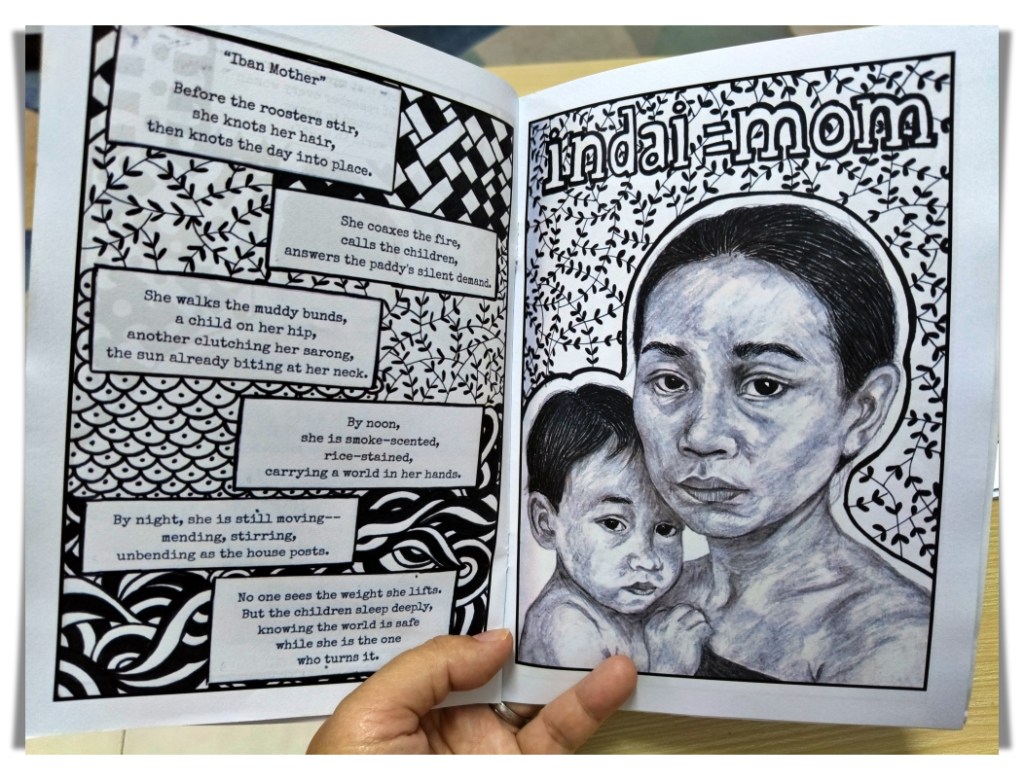
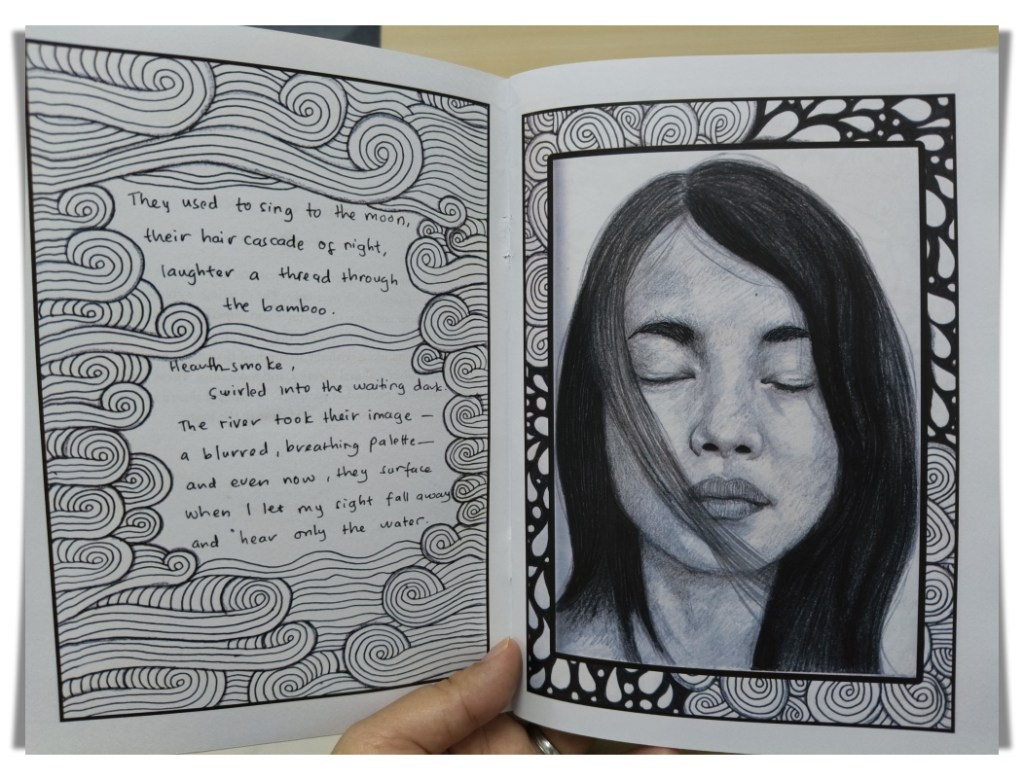
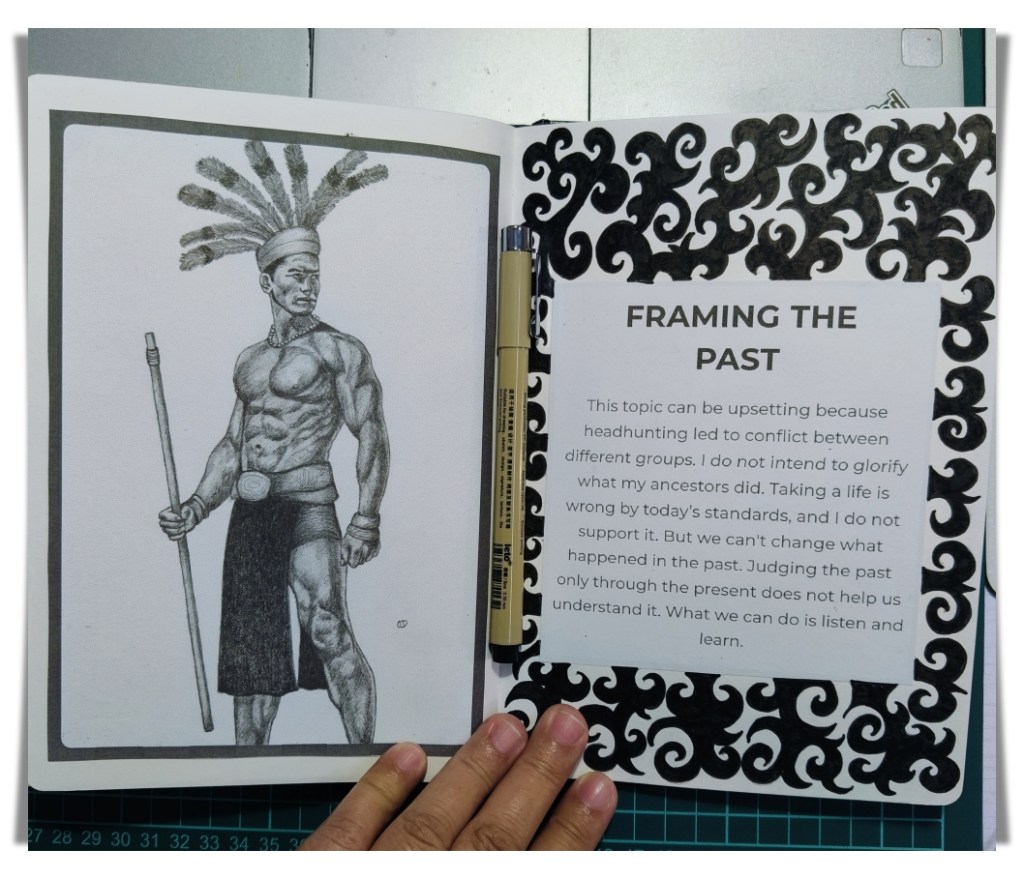
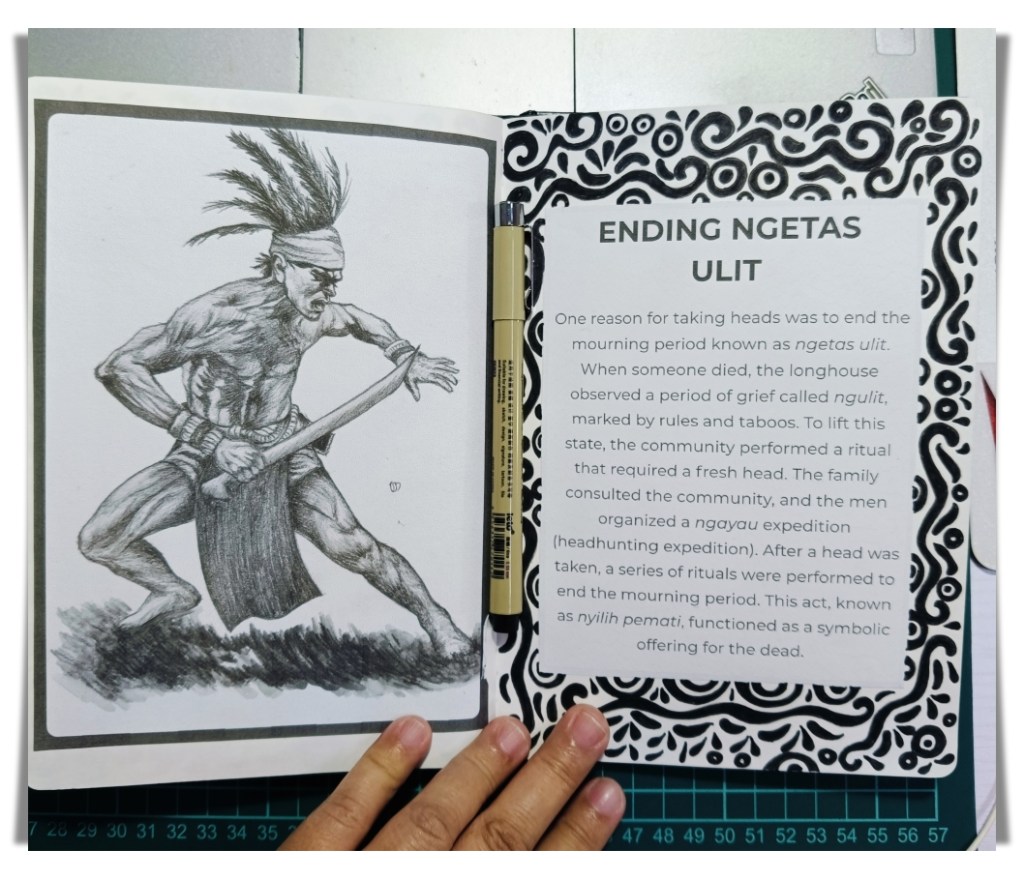
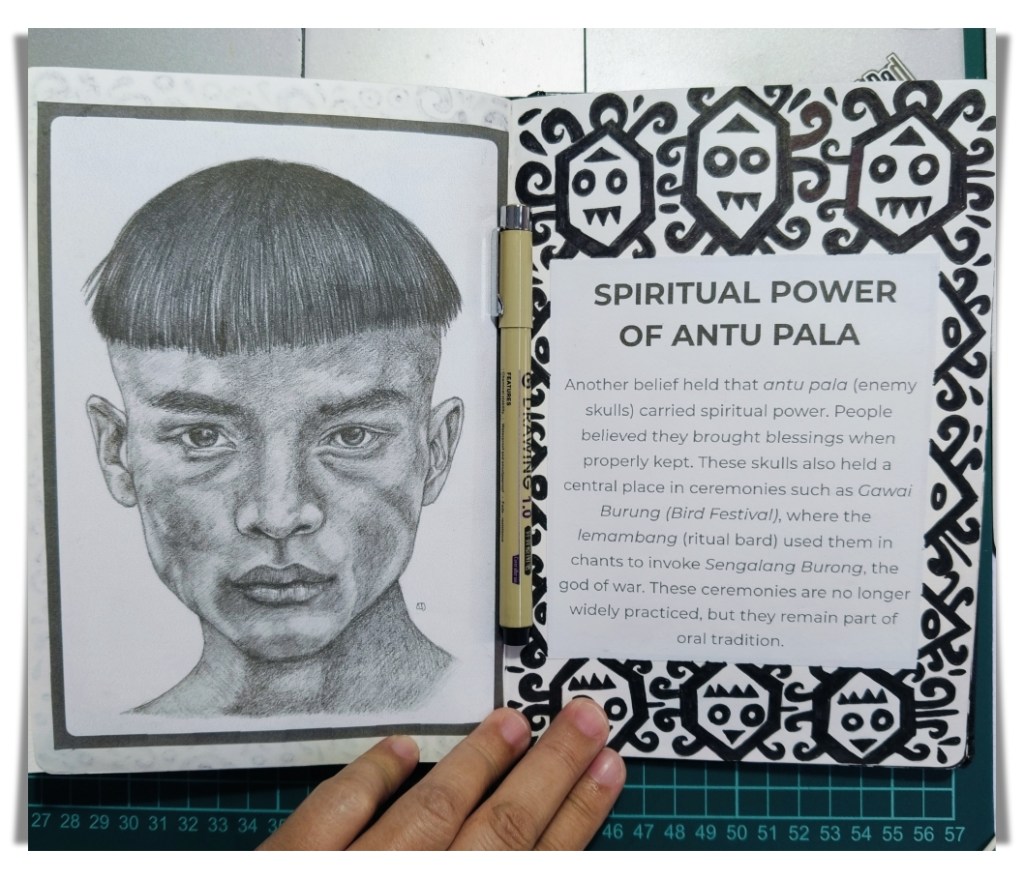
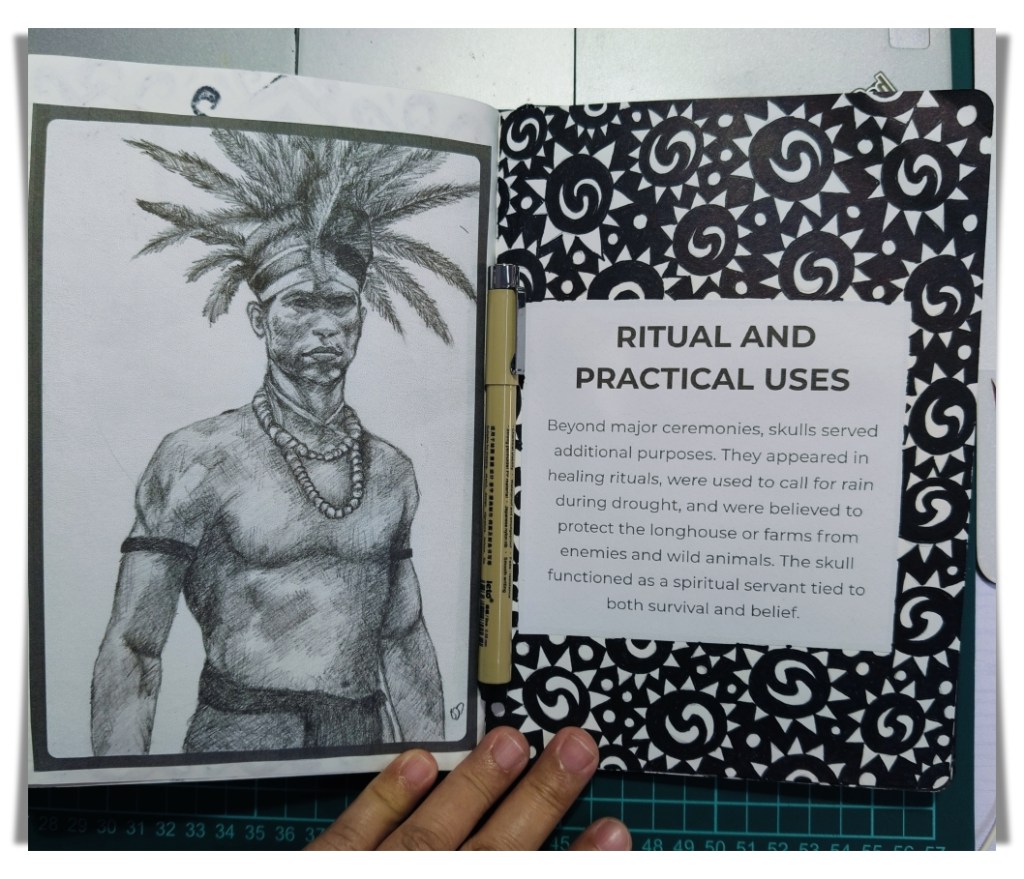
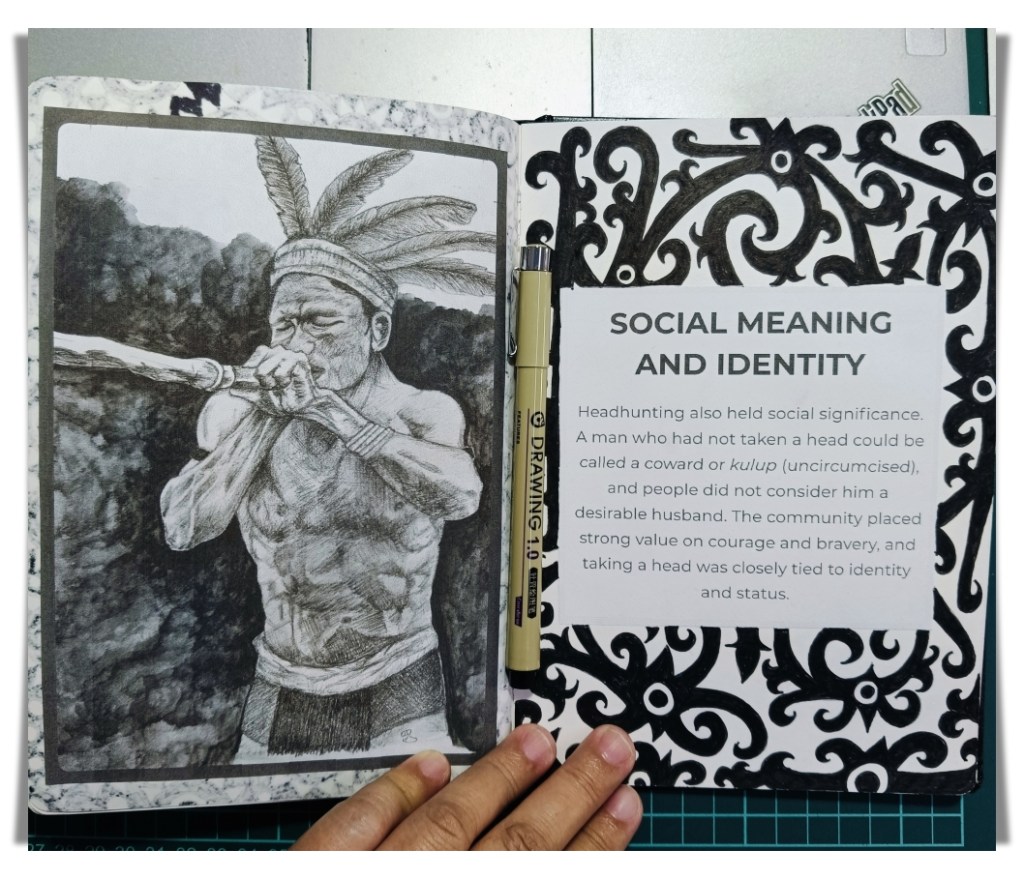
I have been making a series of handmade zines that are based on Iban culture and history. Each page of these zines pairs a drawing with a text of information or a poem. The drawings are hand-drawn, and the pages are put together painstakingly, one at a time. Every decision, from picture placement to word space, needs to be carefully considered. The whole thing is done entirely by hand.
While working on these pages, I learned that preservation is more than just keeping information intact. It also has to do with how that information is passed on. The information in these zines is not new. They have been told before, and they exist in oral histories, family accounts, and old literature. What I do is simply place them into a different form.
For instance, in these sketchbook pages, I talked about why the Ibans practiced headhunting in the past. It’s a difficult topic that people often misunderstand or only see one side of. I give it context instead of simplifying it. Each section describes a specific reason or belief and is paired with a hand-drawn drawing of an Iban warrior instead of an abstract idea. When I draw, it influences how I feel about the subject. When I sketch a figure, I pay attention to details that I would otherwise overlook.
This zine doesn’t attempt to be a full record of the Iban history. It keeps some parts of it. The imperfections in the pages are part of that process. They show that it was created by hand, with time and care. In this regard, preservation isn’t only about accuracy or completeness. It’s also about continuity, working with it, and allowing it to exist again in the present.
I write about Iban culture, ancestral rituals, creative life, emotional truths, and the quiet transformations of love, motherhood, and identity. If this speaks to you, subscribe and journey with me.
As I walked toward the bamboo grove, the morning air in Arashiyama was cool against my skin. At forty-nine, I have learned to cherish these quiet hours before the world awakens. I had risen before dawn, leaving my hotel while Kyoto still slept, hoping to find that peace between sleep and waking where the spirit feels most alive.
I am Iban, born in Sarawak, though I have lived away from my homeland for more years than I care to count. My journey has taken me far from my roots. I came to Kyoto for a brief getaway and to seek an elusive urging, perhaps a reminder that I am still connected to something larger than myself.
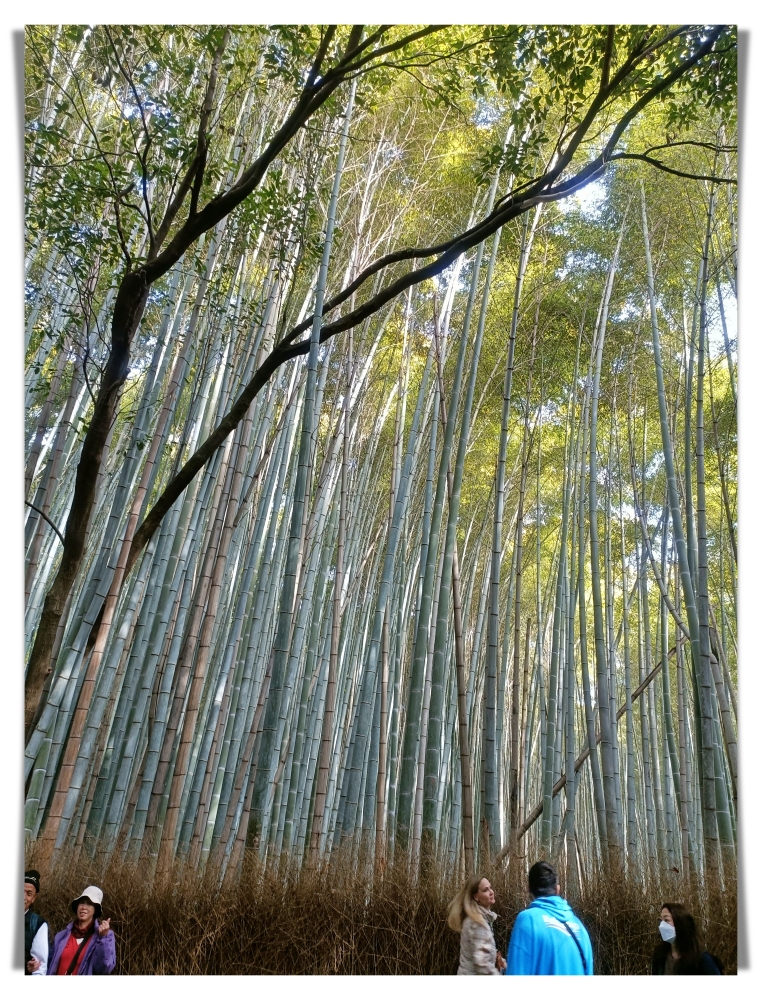
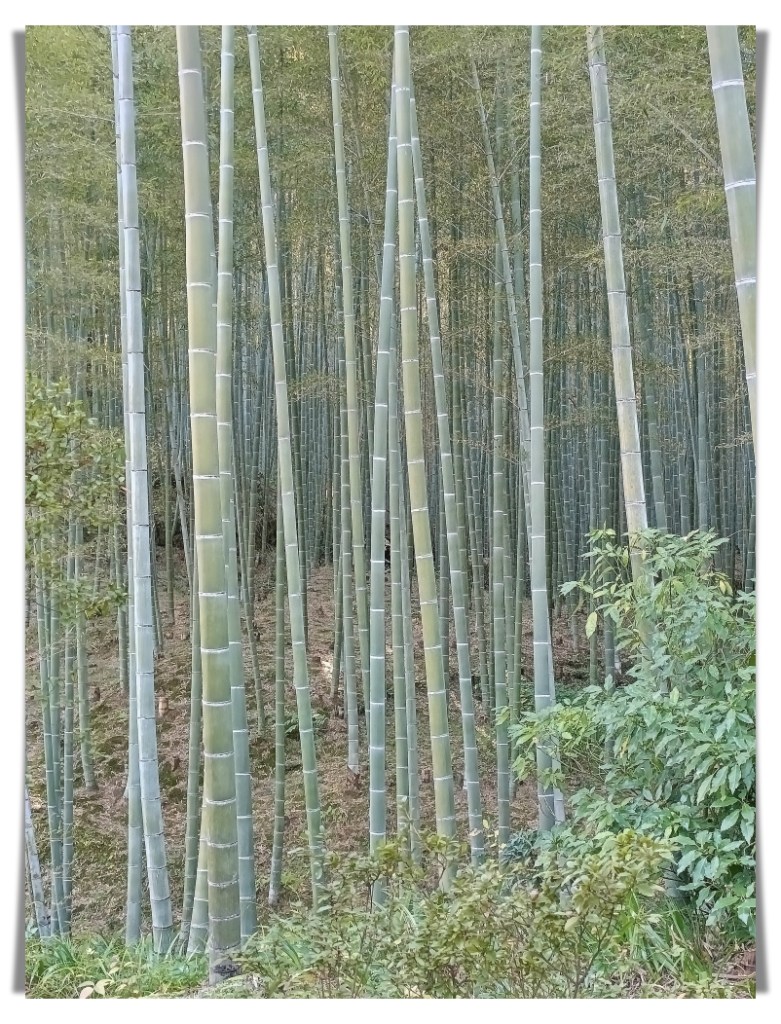
As I entered the grove, the first thing I noticed was the silence. Then the wind stirred. The rustling of the bamboo stalks, creaking and clicking against one another, filled the air with a sound so distinctive that the Japanese government has named it one of the “100 Soundscapes of Japan.” To me, it sounded like a longhouse at dusk, a murmur of voices blending into one.
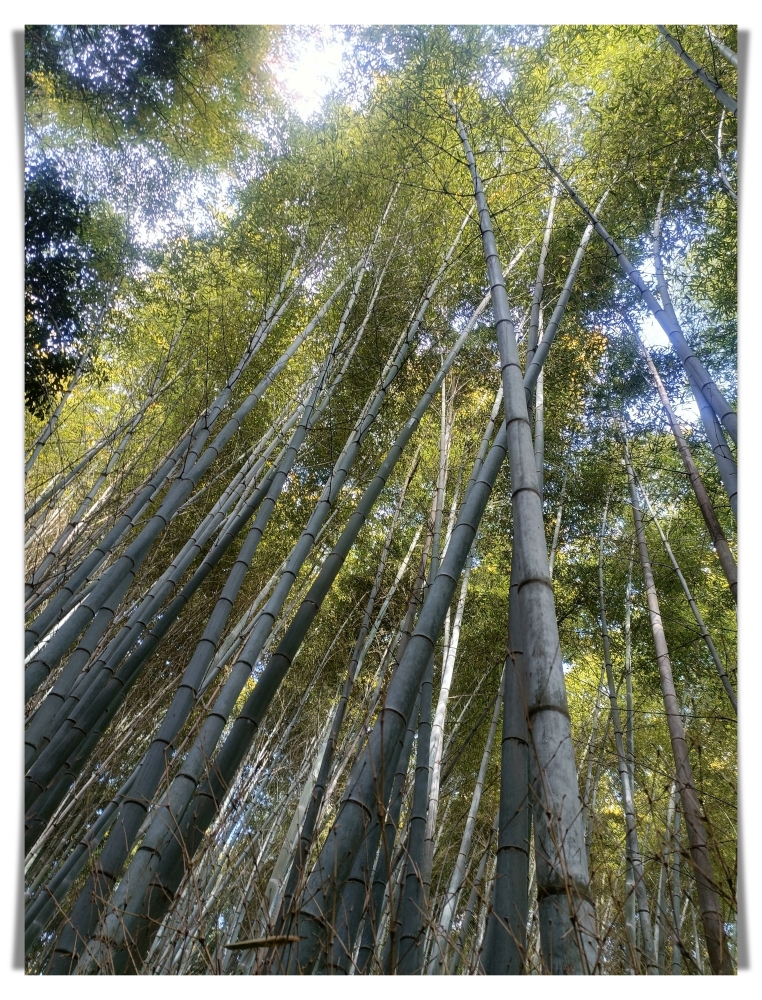
The Moso bamboo rose around me, some stalks reaching sixteen meters toward the sky. I walked slowly along the Chikurin-no-Komichi, the main path that runs for five hundred meters through the forest. The morning light filtered through the canopy, casting pale green shadows on the ground. I stopped and placed my palm against one of the stalks. It was cool and smooth, surprisingly solid for something that grows so tall and bends so easily in the wind.
This is when I remembered what my cousin in Kuching shared with me last year, the Iban traditional concept about the “bungai”. She had written to me about the bungai, a plant-image that lives in the invisible world of Manang Menjaya, the Iban god of healing. According to Iban traditional belief, each person has a bungai that takes the form of bamboo, growing in clumps from a single rootstock. The bungai grows, strengthens, weakens, dies, and falls, just as a person does.
Standing in that grove, surrounded by thousands of stalks rising from what I knew must be a shared underground network of roots, I understood this more clearly than before. The bamboo does not grow alone. Each shoot is part of a “pumpun”, a clump. Every stalk has its own height, direction, and shape. They all draw from the same roots and source. No one grows alone.
I thought of my own bungai, wherever it grows in the cosmic garden of Manang Menjaya. I imagined it as bamboo, tall, flexible, rooted in the same clump as my mother and my relatives who still live in the longhouse by the Layar River. For years I felt out of place, as if I were growing away from where I began. I left Sarawak for school, then for work and marriage. I felt disconnected, as though my stalk had been cut from the clump and planted somewhere it did not belong.
The bamboo shifted that understanding. Walking through that grove, I realized that the rootstock never disappears. The connection endures, no matter the distance. The clump remains, hidden but flourishing. My bungai is still there, nurtured by the unseen garden, sustained by the same roots that support my kin. Though I’ve been gone for years, the lineage continues.
I kept walking, finally arriving at the Nonomiya Shrine, a modest Shinto shrine tucked away in the grove. I stopped, feeling the familiar stirrings within me. Our ancestors recognized this pattern clearly when they chose bamboo for the bungai. These plants grow in clumps. They survive storms by bending rather than breaking. They send up new shoots even after the old ones fall. The Iban watched this pattern daily, living close to the land, and they recognized it as a mirror of human life.
This is how my people once understood family and community. A family is one clump. A longhouse community is many clumps standing together, sharing the same ground. The well-being of one shoot affects the whole. When someone is sick, the bungai weakens. When someone wanders, it withers. When someone dies, it falls, but the clump remains, ready to push new growth upward for the next generation.
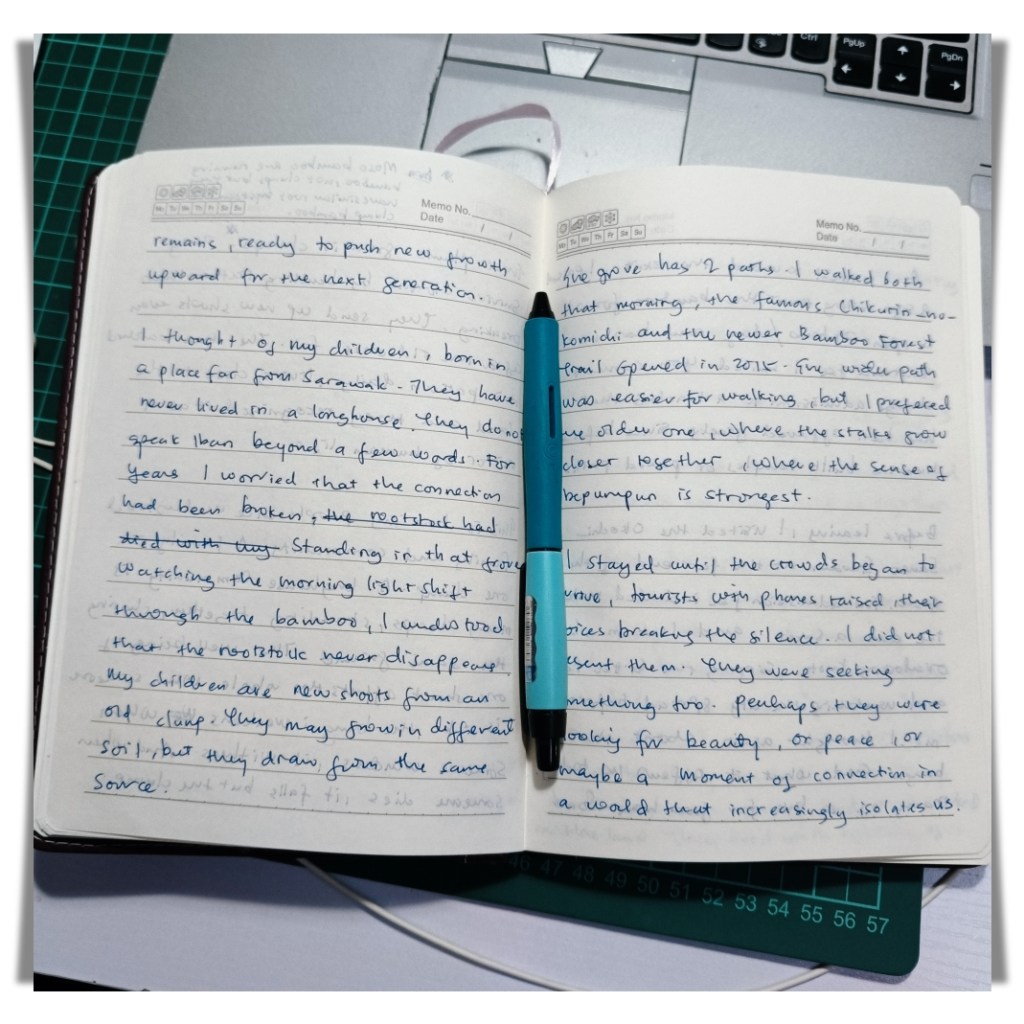
I thought of my own children, born in a place far from Sarawak. They have never lived in a longhouse. They do not speak Iban beyond a few words. For years I worried that the connection had been broken. Standing in that grove, watching the morning light shift through the bamboo, I understood that the rootstock never disappears. My children are new shoots from an old clump. They may grow in different soil, but they draw from the same source.
The grove has two paths. I walked both that morning, the famous Chikurin-no-Komichi and the newer Bamboo Forest Trail opened in 2015. The wider path was easier for walking, but I preferred the older one, where the stalks grow closer together, where the sense of bepumpun is strongest. I stayed until the crowds began to arrive, tourists with phones raised, their voices breaking the silence. I did not resent them. They were seeking something too. Perhaps they were looking for beauty, peace, or a moment of connection in a world that increasingly isolates us.
As I walked toward the exit, I passed a sign noting that the bamboo forest is open 24 hours a day and has no entrance fee. I smiled. You cannot charge admission to a teaching that has been offered freely since before humans built temples or paved paths.
Before leaving, I visited the Okochi-Sanso Garden at the far end of the grove. The admission fee included matcha tea and a sweet, and I sat on a bench overlooking Kyoto, sipping the bitter tea and watching the city spread out below me. I thought again about the bungai and what it offers us today. Many of us live far from home. Some grow up with mixed heritage, navigating several identities at once. Some have lost their language, their land, and their connection to family history. The bungai shows that belonging extends beyond physical closeness. It rests in memory, lineage, and the ties that remain.
The forest had shown me that I cannot survive alone. Bamboo stands because the clump stands. A community endures because its roots are strong. Long before the words “ecology” or “sustainability” were used, our ancestors knew this concept. They practiced it when they built longhouses, shared food, and worked the land. Their lives were intertwined with nature and community that supported each other. The bamboo reminded me of what I had forgotten: we are not alone. We grow in clumps, we sway together when the storm comes, and we push up fresh growth from roots that have endured for ages.
I left Arashiyama that morning with a clearer understanding. I am still a shoot from the old clump. The rootstock holds. The bungai grows, even when I cannot see it. I am connected to those who came before me and those who will come after. No matter how far I travel, my roots are in the garden of Manang Menjaya, where our lives rise from the same source and intertwine across generations.
This post is extracted from my journal entry
Note: Moso bamboos are running bamboos, but they have similar root systems to clump bamboos.
I write about Iban culture, ancestral rituals, creative life, emotional truths, and the quiet transformations of love, motherhood, and identity. If this speaks to you, subscribe and journey with me.
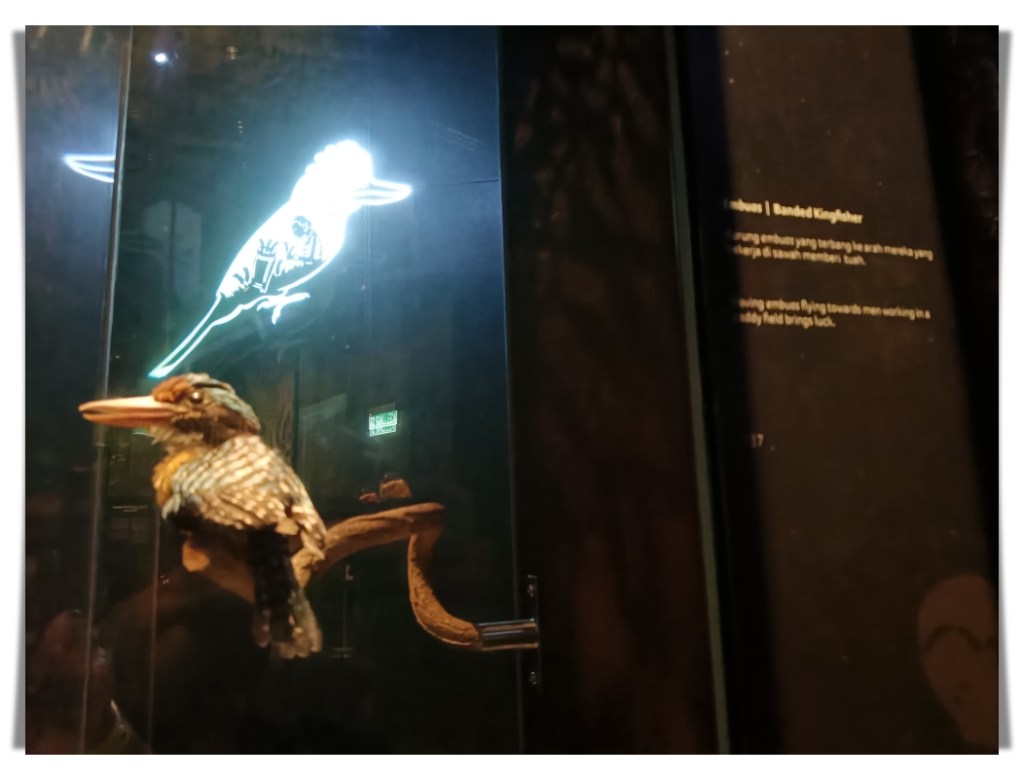
Embuas (banded kingfisher), one of the Iban’s omen bird. Photo taken at the Borneo Cultures Museum.
People sometimes ask whether I am superstitious. I never know how to answer that question. I grew up Iban in Sarawak, where the stories people carry about the world are different from those taught in textbooks. And these stories often include elements that some might consider superstitious. In many conversations today, the word “superstition” is used to describe beliefs that seem irrational or outdated. It implies a bygone era and a belief system that should be abandoned.
But the word doesn’t fit when I think about the beliefs I heard as a child growing up in Sarawak. Among the Iban, there was once a system of augury known as “beburong.” Certain birds were believed to carry messages from the spirit world. The Iban believed that these birds had a special purpose. People paid close attention to their calls, and the direction of the bird’s flight was important. People listened to them when deciding whether to begin a journey, clear land for farming, or carry out other important tasks such as headhunting.
These practices were linked to Sengalang Burong, a powerful god associated with war and omen birds. Iban people believed that he and his children watched over human affairs through the voices of these birds. The forest was never silent because every sound had a meaning. From the outside, it looks like superstition. People who depend on data, evidence, and measurable results find it hard to believe that birds could help individuals make important decisions.
The Iban once lived very closely with the land. Rivers determined travel. Forests provided food, medicine, and shelter. Paying attention to patterns in nature was part of daily life and also part of survival.
I don’t try to figure out if the birds really brought messages from the spirit world. These beliefs shaped how people saw the world and how they understood their connection to nature and the spiritual meaning of their surroundings. They taught people to pay attention and reminded communities that humans and the land that supported them were not separate.
Most Iban communities no longer depend on omens from birds. Electricity and internet connections power the longhouses that once practiced these beliefs. Younger generations leave for cities, universities, and office jobs. The old systems of interpretation are fading, and many people now refer to them as cultural history. However, the stories remain.
When elders talk about encountering certain birds, they do so with the same calm seriousness they would use to talk about a change in the weather or the flow of a river. These memories are not embarrassing for the elders to share. They are just a part of how earlier generations understood their lives.
Modern language often labels such beliefs as superstition. The word closes the conversation quickly, as if discussing it were shameful or in conflict with Abrahamic religious beliefs. It suggests that there is nothing more to examine. But as I grow older, I feel less certain about dismissing things so easily.
Beburong is part of my cultural heritage, but I never relied on omen birds to guide my decisions. Now, my days are filled with work, art, writing, family obligations, and the normal routines of modern life. But when I’m walking outdoors and hear certain birds, those beliefs return to my mind. It doesn’t ask for faith. It only reminds me that there were once other ways of listening to the world.
I write about Iban culture, ancestral rituals, creative life, emotional truths, and the quiet transformations of love, motherhood, and identity. If this speaks to you, subscribe and journey with me.