Are Iban Superstitious?

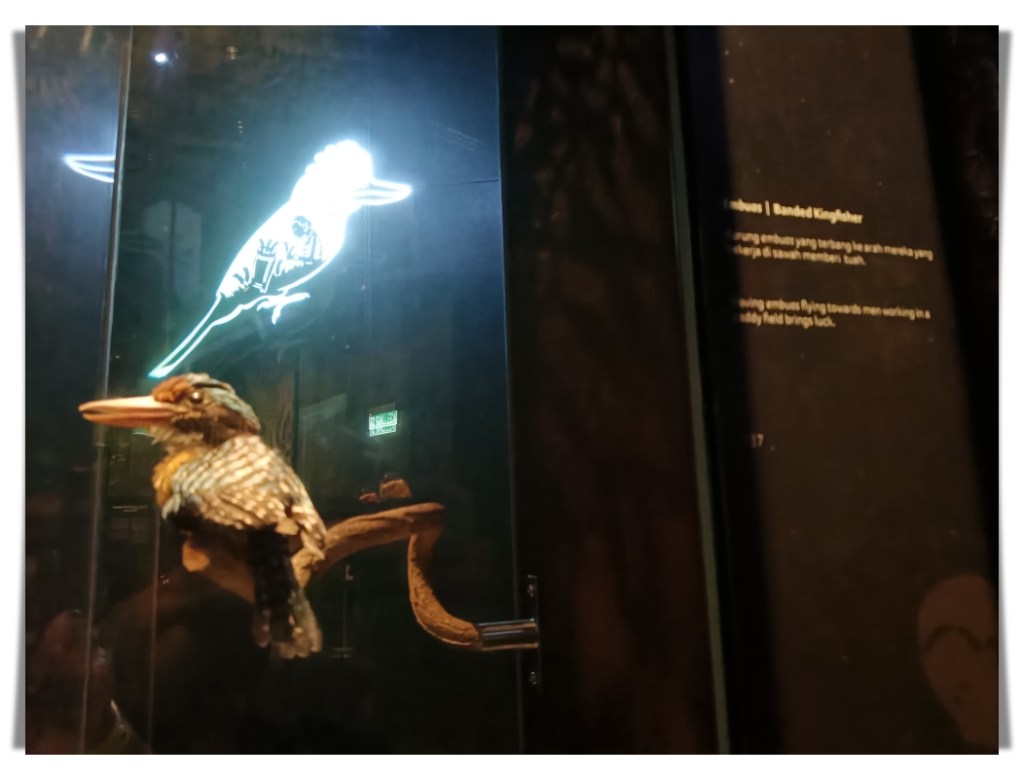
Embuas (banded kingfisher), one of the Iban’s omen bird. Photo taken at the Borneo Cultures Museum.

People sometimes ask whether I am superstitious. I never know how to answer that question. I grew up Iban in Sarawak, where the stories people carry about the world are different from those taught in textbooks. And these stories often include elements that some might consider superstitious. In many conversations today, the word “superstition” is used to describe beliefs that seem irrational or outdated. It implies a bygone era and a belief system that should be abandoned. 

But the word doesn’t fit when I think about the beliefs I heard as a child growing up in Sarawak. Among the Iban, there was once a system of augury known as “beburong.” Certain birds were believed to carry messages from the spirit world. The Iban believed that these birds had a special purpose. People paid close attention to their calls, and the direction of the bird’s flight was important. People listened to them when deciding whether to begin a journey, clear land for farming, or carry out other important tasks such as headhunting.

These practices were linked to Sengalang Burong, a powerful god associated with war and omen birds. Iban people believed that he and his children watched over human affairs through the voices of these birds. The forest was never silent because every sound had a meaning. From the outside, it looks like superstition. People who depend on data, evidence, and measurable results find it hard to believe that birds could help individuals make important decisions.

The Iban once lived very closely with the land. Rivers determined travel. Forests provided food, medicine, and shelter. Paying attention to patterns in nature was part of daily life and also part of survival.

I don’t try to figure out if the birds really brought messages from the spirit world. These beliefs shaped how people saw the world and how they understood their connection to nature and the spiritual meaning of their surroundings. They taught people to pay attention and reminded communities that humans and the land that supported them were not separate.

Most Iban communities no longer depend on omens from birds. Electricity and internet connections power the longhouses that once practiced these beliefs. Younger generations leave for cities, universities, and office jobs. The old systems of interpretation are fading, and many people now refer to them as cultural history. However, the stories remain.

When elders talk about encountering certain birds, they do so with the same calm seriousness they would use to talk about a change in the weather or the flow of a river. These memories are not embarrassing for the elders to share. They are just a part of how earlier generations understood their lives.

Modern language often labels such beliefs as superstition. The word closes the conversation quickly, as if discussing it were shameful or in conflict with Abrahamic religious beliefs. It suggests that there is nothing more to examine. But as I grow older, I feel less certain about dismissing things so easily.

Beburong is part of my cultural heritage, but I never relied on omen birds to guide my decisions. Now, my days are filled with work, art, writing, family obligations, and the normal routines of modern life. But when I’m walking outdoors and hear certain birds, those beliefs return to my mind. It doesn’t ask for faith. It only reminds me that there were once other ways of listening to the world.


I write about Iban culture, ancestral rituals, creative life, emotional truths, and the quiet transformations of love, motherhood, and identity. If this speaks to you, subscribe and journey with me.
Learning to Trust My Own Mind

As I write this, the world feels tense and unstable. The escalating conflict involving the United States, Israel, and Iran weighs heavily on many of us watching from afar. I condemn war, bombing, and any form of oppression, because civilians absorb the damage. I do not support governments that enable violence, nor leaders who remain in power to control their people indefinitely. None of these positions justify harm. My thoughts are with the ordinary families, the displaced, the children, the elderly, and even the animals whose lives are disrupted or ended by decisions they did not make.

To be honest, writing this post is challenging for me, as it requires me to acknowledge some shortcomings and feelings of shame stemming from my past experiences with the church. For those who read my blog regularly, you might notice that I mentioned deconstructing my Christian faith and leaving the church several months ago. However, as a writer, I believe I should not only write about the rosy parts of life but also the ugly ones. So what experiences in life helped me grow the most?

Disorientation, not achievement or visible milestones, was what helped me grow the most. Five years ago, I thought I would fall apart without the church. I thought I needed other people to help me make important decisions. I used to think that being obedient would keep me safe. If I questioned advice given by church members or made a different choice, I thought something was wrong with me. I told myself I was hardheaded, rebellious, proud, and even divisive. I didn’t hear those labels yelled at me every day, but they were implied often enough that I absorbed them.

I kept those words to myself, and slowly, throughout the years, they changed the way I thought about my thoughts. I imagined how other people might see my choices before I made them. I believed that being humble meant following the rules, and I assumed that having doubts meant being morally weak. And yes, when you spend years in a highly controlled environment, you will have these toxic thinking patterns. I haven’t decided to write about it yet because I’m still processing my experiences over the last 20 years. 

If I were being honest, I didn’t feel courageous leaving the church. In fact, it made me feel unstable. For a while, I thought things would fall apart and I waited for proof that I couldn’t steer my life without guidance from the church. I believed if I didn’t get regular feedback or advice, I would make mistakes. I closely monitored myself, expecting to fail.

Instead, something happened gradually. I started making decisions without checking with anyone first. I started with minor decisions and worked my way up to bigger ones. My judgment was correct. I wasn’t being careless or crazy, and I wasn’t falling apart. The world didn’t end because I trusted my own judgment.

Without constant guidance, I had to pay more attention to myself. I had to distinguish between fear and discernment. I had to deal with uncertainty without immediately looking for reassurance. The process was uncomfortable, and it made me realize that a lot of my previous obedience was based on fear rather than belief in Christian conviction.

Another area that helped me grow the most is being a mother. It changed me in ways I didn’t expect. It took a lot of strength to raise kids while dealing with fatigue, migraines, and changing health. This tedious work of mothering often happened in silence and without an audience. Perseverance didn’t happen overnight. I had to build it slowly throughout the years and without drama. Being a responsible parent meant making choices even when I wasn’t sure what to do.

Financial instability made things even worse. It showed me how much of my hesitation was due to fear of being wrong. When income is uncertain, every choice feels amplified. As time went on, I learned that instability doesn’t always mean you’re not good at what you do. It just means you are in a hard season, and the seasons will change.

However, the most significant change was internal. I no longer believe that being independent meant being rebellious. I stopped thinking that disagreeing was a sign of moral failure. I no longer believe that valid guidance must come from a single authority or religion. These days, I trust my reasoning with steadiness instead of pride or certainty.


I write about Iban culture, ancestral rituals, creative life, emotional truths, and the quiet transformations of love, motherhood, and identity. If this speaks to you, subscribe and journey with me.

The Essence of a Smaller Life

Daily writing prompt
If you could be someone else for a day, who would you be, and why?

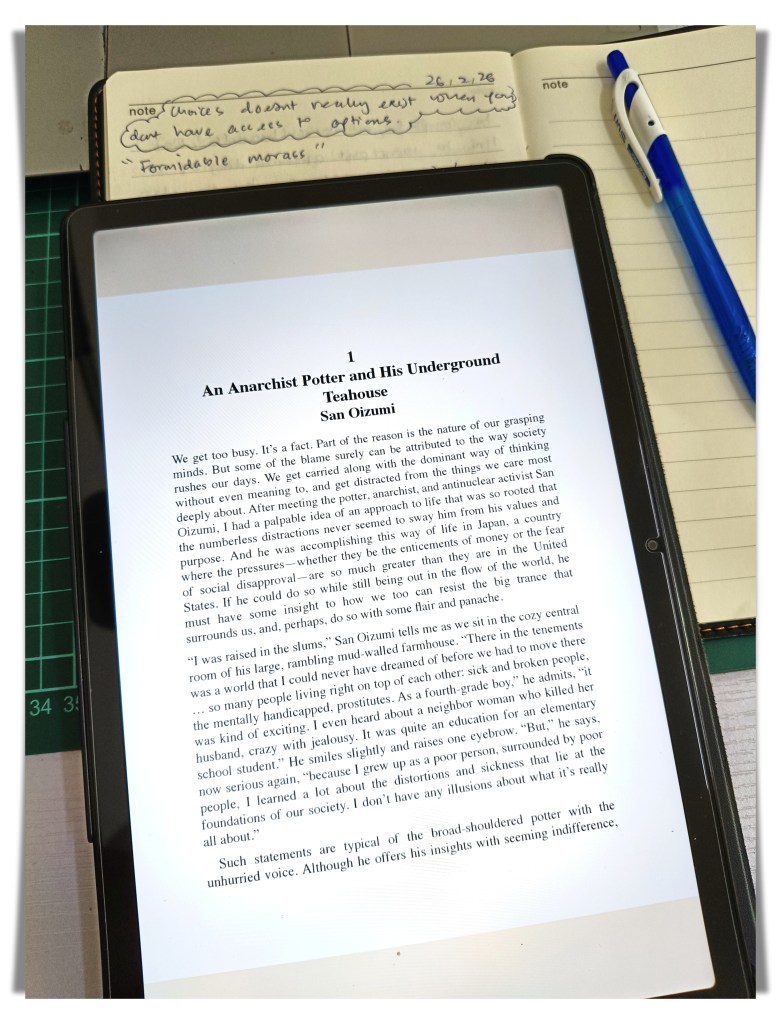
I have been reading The Abundance of Less by Andy Couturier. I’m only on the first few chapters, but the people he writes about stay with me long after I’ve put the book down. They live in the countryside of Japan, far away from the fast pace of cities and the demands of the digital world. The scenery isn’t what draws me in. What attracts me is how gracefully they go about their days. For anyone curious about the author’s thinking, his interview with Kyoto Journal offers a thoughtful look into the ideas behind the book: https://kyotojournal.org/conversations/making-a-life-not-merely-a-living/#top

Here are some of the people featured in this book:

San Oizumi is a potter who makes tea bowls, builds small structures, and allows his work to take the time it needs. His life unfolds at its own pace, shaped by intentional choices rather than external pressure.

Osamu Nakamura is a woodblock craftsman who carves slowly and on purpose keeps his world small. He rereads the same books for years. He commits to depth and does so quietly.

Atsuko Watanabe is an activist and mother who plans her days around what she can accommodate, not what she accumulates. 

Kogan Murata, a Zen practitioner, sings the same songs repeatedly to make him more at ease with himself.  

The artist Akira Ito studies ordinary objects and folk art. He sees the beauty in the work of unknown hands and in the little things that life leaves behind.

Gufu Watanabe, a traveler and journal keeper, writes down mundane things like a meal, a corner of a room, or the light on a plant just because they are there.

Koichi Yamashita, the gardener, understands how long one meal actually takes when you follow its beginnings back to the soil. Everything slows when traced back to its true starting point.

And throughout his life, Masanori Oe keeps asking the same questions, letting the act of asking change him instead of expecting clear answers.

They all live in different ways, but there is something that connects them. That connection doesn’t come from a common rule or way of thinking. It is a way of being with one’s own life. Their choices are calm and measured. They follow a rhythm that is shaped by staying focused. Everyone has a small world inside them, and their interior lives feel wide.

As I read, I have no desire to replace my life with theirs. What I want is the core of their choices: a way to get through the day without rushing to the next thing. It is a way of working that doesn’t require you to prove the worth of your work or put on a show for anyone else. I am drawn to the inner posture that lies beneath their rural setting.

I live in a city where I am surrounded by noise and responsibilities. My days are shaped by family, work, and all the challenges of living in a city. Sometimes I experience something similar to what these people embody, like when I go back to writing or my art without the need to explain myself. I sense it when I commit to my small routines and when I choose to keep my world manageable. The external environment may be different, but the intention seems to be the same.

The essence I admire exists independently of place. It has more to do with how time is held, what is noticed, and what is allowed to matter. I have no intention of becoming these people. A quieter rhythm has begun to take shape in my days, influencing how I move through the life I already inhabit.


I write about Iban culture, ancestral rituals, creative life, emotional truths, and the quiet transformations of love, motherhood, and identity. If this speaks to you, subscribe and journey with me.

Teaching Myself How to Be an Artist

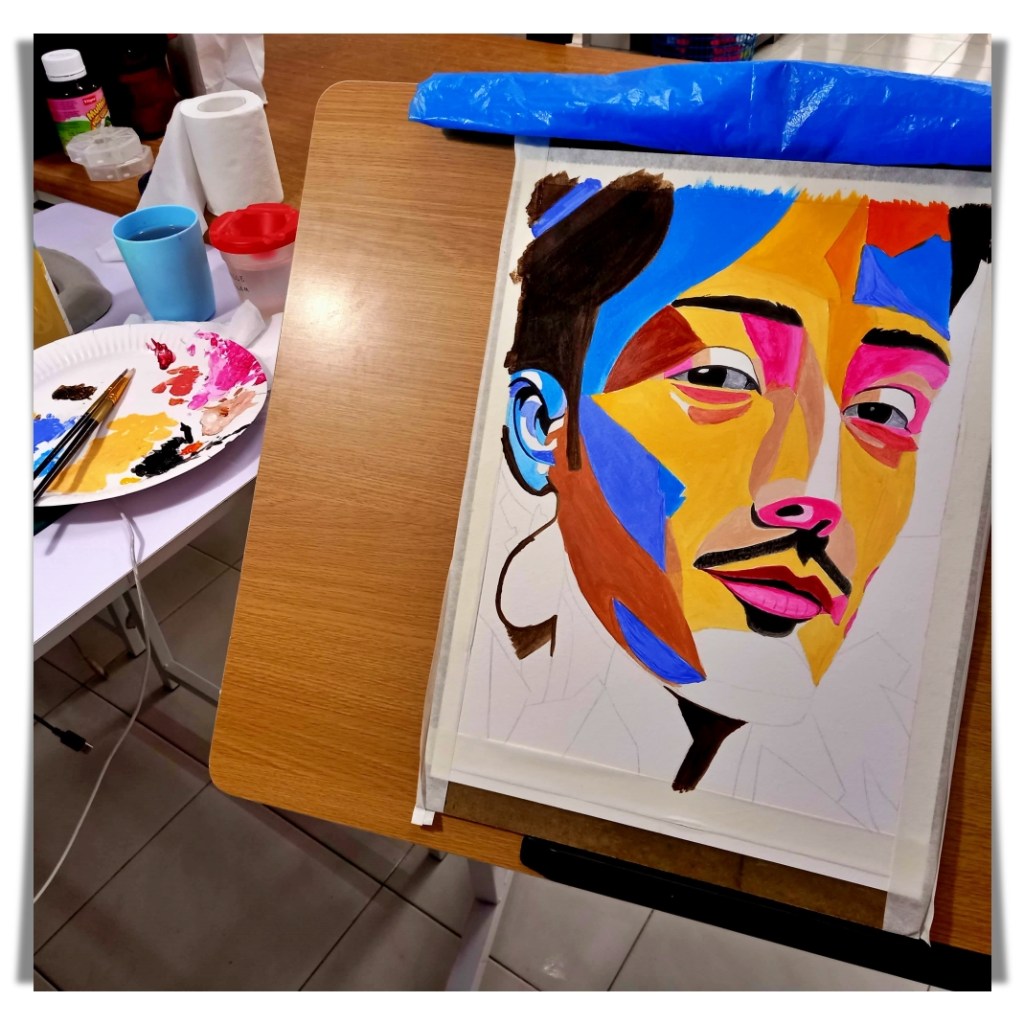
The hardest DIY project I’ve ever done was teaching myself how to be an artist. I did not attend art school or take any formal art classes or workshops. I learned by watching YouTube videos, reading books, and continuing to draw or write throughout the years. I learned by drawing and writing badly and taking long breaks before going back to both. Most of the learning happened in solitude, without validation or fanfare. 

For a long time, I thought of this as just something I kept doing regardless of the outcome. I drew, I wrote, and when life got too overwhelming, I stopped. Then I began again. Some tries took years to happen and  every time I return to them, it always feels unnatural. My hands were stiff and my confidence weakened. I had to learn again how to sit still, pay attention, and believe that the work would eventually show me what it needed.

There were no external ways to measure progress without formal training. There were no grades or teachers to tell me if something worked. I had to decide when a piece was done, or if it had to be abandoned, or simply put aside. It wasn’t easy to make that kind of choice. It took me a long time to learn that, and I had to do it over and over again. I learned how to deal with uncertainty without rushing to fix anything.

The work grew over time to include more than just individual pieces. Instead of just adding to my writing, I learned how to edit existing pieces. I learned how to put together drawings, poems, and pieces of writing to become finished products. Sometimes I reworked my drawings or writings or redid them again if I wasn’t pleased with the results.

This project of teaching myself art happened at the same time as regular life. I have kids to raise, bills to pay, and a social life to attend to. At times, responsibilities, fatigue, and distractions pushed the art project to the periphery of my life. I often thought during those times that I had lost the drive I used to have. However, upon my return, I discovered that my skills and instincts remained intact, ready for action. When I resumed, the work started up again even if I encountered hiccups.

Teaching myself also meant I had to work within limits. I didn’t always have the vocabulary others had. I worked more slowly than others who had help or extra resources. I learned through repetition rather than progression. Sometimes I kept going back to the same themes for years and that used to bother me. However, I finally gave up on trying to change that pattern. I accepted that repetition turned into a way to learn instead of a sign of failure.

Looking back, the purpose of doing those things was to stick with the process, even when years went by without anyone noticing or championing my work. It was always a lonely pursuit, but the work continued anyway. It always changed with the seasons of life. I’m still teaching myself to this day, decades after I started. The methods might have changed, but the practice stays the same. And there is no end to this self-taught project until the day I die. The project goes on as a way of working, gradually evolving, moving forward without ceremony, and being shaped by whatever the day brings.


I write about Iban culture, ancestral rituals, creative life, emotional truths, and the quiet transformations of love, motherhood, and identity. If this speaks to you, subscribe and journey with me.

The Problem With “Should”

Image source

If I could get rid of one word for good, it would be “should.” That word is not rude or offensive. When someone uses it in a sentence, it doesn’t hurt or shock on impact. What gives it power is its subtlety. “Should” sounds innocent and gets overlooked easily. It often comes up in conversations disguised as common sense, advice, or concern. It sounds reasonable and hardly ever raises alarm. However, it changes how people feel about themselves without their knowledge or consent. I have noticed many people say “should” when they talk about how to live, how to feel or respond, and how to move on from something bothering them. Here are some examples: 

You should be grateful.

You should know better by now.

You should forgive.

You should stay.

You should want this.

The word has power without needing to explain itself. It makes an assumption without giving any context. When spoken, it compares someone’s current situation to an implied standard. My biggest concern about “should” is how sinister it could be. Like for example, solicited advice can be helpful when it is invited. However, the harm can happen when the advice giver uses “should” to replace the important part, which is to truly listen to the person who asked for advice. When we use “should,” it enters the space before understanding has had time to grow. So you see, it comes with an assumption already in place.

I have heard “should” used most often when people aren’t sure what to do. For example, when someone is grieving or questioning their faith. Other common situations are when someone is worn out, overwhelmed, or unsure of their next step. In those times, “should” makes things less uncomfortable and easier to understand. “Should” gives direction when being patient and thinking things through might be a better option.

The word “should” does something subtle over time. It trains people to monitor themselves all the time and judge their thoughts and feelings against an unseen standard. They start to compare how they feel to what they think they should feel. They also start to compare their needs against what they believe is expected of them.

I’ve seen this happen in religious settings, where “should” is used to make people obey and not question things. I’ve seen it in conversations regarding productivity, where rest is treated as something to be earned and not a necessity. I’ve seen it used abundantly in discussions about relationships that often encouraged someone to be patient and endure instead of drawing firm boundaries. The word “should” adapts easily, and it is often used to control a narrative so it fits the controller.

One reason “should” is hard to challenge is that it often comes with good intentions. The person using it might think they are helping and being sincere. But sincerity and the impact of the word are two different things. They aren’t mutually exclusive. The impact of the word is dependent upon what it forces the listener to disregard, no matter how sincere it is being delivered. When “should” comes into a sentence, the present moment loses its value. What is felt, known, or experienced becomes temporary, like something that needs to be fixed and gotten over with.

I don’t want to replace “should” with another option. I know that certainty is still limited and that expectations still exist even without the word. In life, there will always be choices, obligations, and consequences. To get rid of “should,” we would need a different way of getting our messages across. And that would include empathy, perspectives, thorough explanation, and room for nuance. Without “should,” we would have to say what we actually mean. And we would have to talk about what we really think instead of what we think is supposed to be.

I have learned that that word, “should,” directly contributed to many difficult periods in my life. It was said so many times that I didn’t see how insidious the harm it caused. It drove me to doubt my own timing, my own limits, and also my own instincts. Banning “should” might not make things easier but it could give honesty more room to breathe. Without “should,” it would remove one of the most efficient ways to quietly erase oneself. And of course, without “should,” other ways of relating would have to take its place.


I write about Iban culture, ancestral rituals, creative life, emotional truths, and the quiet transformations of love, motherhood, and identity. If this speaks to you, subscribe and journey with me.
A Season Without Clear Answers

Daily writing prompt
What is the biggest challenge you will face in the next six months?

When I think about the next six months, I don’t see one defining obstacle. I see a few changes happening at the same time. None of them are dramatic on their own, but when you put them all together, they change how I live my life. The hard part is staying composed when things that used to feel stable start to change.


One of the most significant changes is my relationship with faith. I began deconstructing my faith last year, before leaving the church in early January. For almost twenty years, I have been a member of the same church community. It changed the way I thought, spoke, and saw myself. Leaving happened gradually, without any clear signs or relief. It is a never-ending process of untangling habits, dogmatic beliefs, and expectations that used to seem unquestionable.

I will still be carrying parts of that structure with me in the next few months, even as I try to let go of it. Some days I feel certain about my distance. Some days I feel lost and don’t know what will take the place of what I’ve left behind. The work now is to simply exist without quickly replacing it with another religious system or set of answers. It takes time and requires the ability to deal with unknowns longer than I’m used to.

At the same time, my writing life is expanding. My writing has gone beyond private experimentation. There are ongoing projects now: several zines that need finishing. An Iban heritage poetry collection that I want to publish in May. This blog has become a place I return to regularly, not only when I feel inspired but also because I feel responsible for showing up. It’s something that I expect to do consistently from now on, regardless of the size of the audience or subscribers.

This growth comes with steady demands. It needs discipline without urgency. I have to figure out how much of myself I can give without making the work feel like another source of stress. The work now is to keep a steady pace, even when I want to push myself harder.

There is also a quieter loss that goes along with these changes. I am grieving because someone who was always there for me is no longer there. I didn’t lose them to death. I lost their daily presence, attention, and familiarity. The loss may be subtle but it is persistent. It shows up in little things, like habits that don’t work anymore and thoughts that don’t get a response.

This grief arrives quietly. It doesn’t change life in obvious ways. It fades into the background and changes how things feel on normal days. I’m still doing my job and living my life like any other day. However, a steady awareness of what’s missing, and carrying it without letting it take over everything else, takes a lot of mental power and energy.

These three movements will have a big impact on me in the next six months. A spiritual framework that is transforming. A creative life that needs some order. And a personal loss that lingers and doesn’t resolve neatly. These are the conditions I will be living inside.

I am learning to take all of this in without jumping to conclusions. I’m trying not to make things clear when they aren’t. I won’t give up one part of myself to make another part of me stronger. I’m learning that even when things are uncertain, there can still be stability. Sometimes, stability comes from being present when things aren’t resolved.

I think the next six months will need my attention instead of closure. It will need my restraint and my willingness to keep going even when my internal landscape feels unfamiliar. That’s where I need to keep my focus.


I write about Iban culture, ancestral rituals, creative life, emotional truths, and the quiet transformations of love, motherhood, and identity. If this speaks to you, subscribe and journey with me.
Toxic Modern Beauty Standard | Looking Back at the Girl I Was

Image source

I grew up in the 90s, an era when beauty was defined in strict, unyielding ways. The girls in the magazines didn’t look like the women I knew at all. They had thin bodies, sharp cheekbones, long arms and legs, and faces that hadn’t changed with age or life. At the time, I didn’t have the words to articulate it. I only knew that I didn’t look like the girls on the covers, and something inside me subconsciously decided that meant I wasn’t good enough.

Back then, I thought that being beautiful was necessary to fit in. I thought that people who judged worth by physical appearance were the ones who gave approval. I thought that the only way to make up for what I was missing was to be good at other things. So I worked hard and made sure my grades were good. I worked hard to get a good job. Throughout the years I learned how to pretend and not draw attention to myself and how not to embarrass myself. It felt like the safest way to get around in a world where my body never matched the acceptable standard.

It took years for me to see how fake and shallow that standard was. The Western beauty standard that we got from TV, fashion magazines, and advertisements was very narrow and spread far beyond where it started. It glorified extreme thinness, having smooth skin, hairlessness, small features, and not showing signs of aging. These traits were shown as universal signs of beauty, even though they didn’t apply to most real women. I didn’t think about this when I was a teenager. I assumed the failure was my fault.

As more information from the Epstein files has come to light in the last few months, I’ve been looking back at that period in my life in a different way. I don’t want to accuse anyone or make direct connections between crimes and culture. But it’s impossible to ignore how closely some parts of the fashion and beauty industries were linked to powerful men who surrounded themselves with very young girls. When youthfulness was not only admired but also aggressively idealized, and when the individuals who shaped those ideals possessed significant power and influence, the standards ceased to appear neutral. They start to look like reflections of a gaze that was never meant to be good for women.

For decades, feminists have been critical of beauty culture. I could understand the criticism in theory long before I felt it in my life. I didn’t know any of this when I was a teenager. I only knew that my body looked different from what the world thought was beautiful and celebrated. I only felt the silent, constant feeling of not being good enough. Now that I know that some of those ideals were reinforced in places where people were taken advantage of, that old insecurity feels more profound and complicated, and it’s harder to brush off as teenage self-doubt.

When I think about my teenage self now, I see a girl who was trying to figure out where she fit in a world that kept narrowing the definition of beauty. I see her flipping through fashion or teenage magazines with her friends at school and tracing the lines of faces she thought she was supposed to aspire to. I see the way she was hiding her pain behind success. She didn’t know that what she was doing was part of a much more complex system. She only knew that she felt like she was outside of something she couldn’t see but felt deeply in her core.

If I could sit with her today, I would not offer some cliche advice. Advice points to a resolution, but I honestly don’t have any resolutions to offer when I still carry the echoes of those insecurities. I still notice how easily I slip back into old comparisons. I still feel the effects of growing up in a culture that taught girls to always judge themselves. Even decades later, the healing process has not been smooth, and I doubt I will ever fully heal. Some days are better. Some days are not. When the pattern is deeply rooted in you, it’s impossible to heal, though mindset can be trained and shifted.

These are the things I would do:

I wouldn’t tell her to be confident. I wouldn’t tell her to love herself more. Those instructions would still feel empty and shallow. I would tell her that I’m sorry they lied to her. Nothing was wrong with her body, I would assure her. That she was never supposed to look like the girls she compared herself to. That the standard she used to judge herself was not made for real women, and definitely not for teenage girls who are still figuring out who they are. This standard was shaped by power, profit, and a perspective that narrowed the definition of womanhood while objectifying women. I would tell her that the shame she felt didn’t come from inside her. It was learned and religiously absorbed. It was reinforced daily by images and messages she had no reason to mistrust at that age.

I can’t change what she went through. I can’t restore the years she felt insignificant or invisible. However, I can accept what happened without trying to justify it or improve it.

The anger I feel now is not directed at her. It is directed at a culture that normalized her self-doubt and insecurity. It’s an evil culture that told girls to shrink themselves to be accepted and then rewarded them for compliance. My rage is directed at a culture that taught vulnerable women to mistake discomfort for personal failure.

This is all I can give her. I don’t have a solution or any comfort to offer: You were never the problem. You were growing up in a system that didn’t know how to treat girls with respect and dignity. And confronting that truth now reshapes how I understand those early years.


I write about Iban culture, ancestral rituals, creative life, emotional truths, and the quiet transformations of love, motherhood, and identity. If this speaks to you, subscribe and journey with me.
The Hour Between Us

I have been grieving these past few days. It’s not intense but ever present, making every morning feel like a careful step. I have been taking things slowly. I sleep when my body asks. I journal when I feel overwhelmed. I make simple meals and spend less time on social media or reading the news.

Today, on Valentine’s Day, the pain rises closer to the surface. I read that the brain areas that register physical pain also register emotional hurt. The idea almost makes a paracetamol seem logical, as if the heart carried a headache, though I know medicine will not soothe it.

I am sharing two poems I wrote years ago because they hold what I feel more clearly than I can right now. They come from two sides of the same moment. The first poem speaks from her view, aware that time never pauses. The second answers from his side of the same room, the same bed, the same slowly emptying hourglass.

Image source

Her Perspective

Slipping Away

We are dying a little more each day,
you, me, the neighbor with the cracked glasses,
the woman at the train station
who waits for no one.
The boy who lost his dog
last November.

But,
we live like we have
all the time in the world,
we wake to alarms that steal
the dreams from our skin,
eat breakfast,
leave dishes in the sink,
argue about the bills,
make love as if our bodies
aren’t maps of vanishing places.

Denial is an art,
we are its faithful painters.
We fill our days with notifications,
deadlines, grocery lists,
traffic jams, dinner plans,
laughter.
We say, “see you later”
knowing full well that one day,
one of us won’t.

I watch you
in the soft glow of evening,
the furrow in your brows,
the absent scratch of your fingers.
I watch the flicker of your eyes,
as you skim through a book.
You mutter beneath your breath,
making sense of your read.

Later,
in the hush between midnight and morning,
our fingers trace unseen
constellations across warm skin.
For a moment, time disappears,
leaving only us.

I want to tell you,
the sand in the hourglass
doesn’t pause because
we are too afraid to look.
Instead,
I kiss you,
as if that will keep you here,
just a little longer.


His Perspective

Before the Hourglass Breaks (for Liv)

We are fading,
you and I,
like paper that yellows under glass.
Each day lifts a little color.
I count the changes, afraid
I’ll miss the exact moment
we become part of the past.

And still,
I meet you in the mornings
as though the clock has stalled.
I pour coffee,
listen to the three slow turns
of spoon on porcelain.
We talk about nothing urgent,
leave the bed unmade,
let the light spill over our carelessness.

I keep my hands busy
because if I stop,
I’ll touch your face
and give away too much.
Instead, I watch the shadows
move over your shoulders,
trace the curve of your wrist
as you turn a page,
note the small frown
that settles when a sentence traps you.

Later,
when the world finally goes quiet,
your fingertips search for me in the dark.
I memorize their path,
the pauses,
the breath you release
before you closing the space between us.

I want to tell you,
I feel the sand running too.
That I’ve been learning
how to love without holding,
how to stay without staying.
Instead,
I let my lips find yours,
hoping the taste carries forward
into whatever comes after,
and that you’ll feel me there,
just a little longer
.


I write about Iban culture, ancestral rituals, creative life, emotional truths, and the quiet transformations of love, motherhood, and identity. If this speaks to you, subscribe and journey with me.
A Woman on the Fourteenth Floor

Image source

Last Saturday, a woman from the 14th floor of my apartment block ended her life, jumping from her balcony in the early morning. I never knew her. She was simply another resident, a stranger to me. I live on the third floor, far below. As far as I know, our paths never crossed, though we might have shared the lobby or an elevator at some point.

When I woke up that morning, everything felt ordinary. I didn’t know the police and ambulance were already outside. A neighbor later told us he had been taking a cigarette break on his balcony when he heard a loud crash. At first, he thought it was a car accident. Only when he looked down did he realize what had happened. She had jumped just before dawn and landed on her parking bay. Security was called, then the police. People began gathering at their windows, looking down in silence. A few drifted into the lobby, but most didn’t stay long. I only learned about it when my husband went out to buy breakfast and saw the body already covered on the ground.

My husband spoke with the security guard, as he always does when something unusual occurs. The guard told him she was in her late forties, divorced, and living alone. She had left a note, labeled her belongings, moved her car to another spot, cleaned her apartment, and paid her bills. She had meticulously planned every detail. No one was left wondering about her intentions.

The police left quietly. Cleaners came later to wash the area, but her parking bay remained cordoned off for a while. A faint stain lingered on the ground, noticeable if you happened to look down. By Monday, life in the building had largely returned to normal. Neighbors went about their daily routine, children ran through the corridors, and doors opened and closed as they always did.

I found myself thinking about her more than I expected. I wondered if I had ever seen her in the lobby or the car park or heard her door close above mine, though that seemed unlikely. She lived fourteen floors up, always out of reach, a life carried overhead, distant yet close enough for her absence to register. In buildings like this, you share an address with dozens of strangers, known not by name but by unit numbers on mailboxes or passing shadows in stairwells.

I didn’t feel grief, exactly. There was no surge of sadness, no urge to gather people or speak about it aloud. What I felt instead was a pause and lingering awareness of the space she left behind. Life continued as usual, but for a while I noticed the silence and somberness that settled over the building.

I pictured her last days in fragments: the careful way she arranged her affairs, her decision to land where no one would witness it by chance. There was a precision to the ending, free of drama and leaving little for others to clean up beyond what could not be helped.

Now the parking bay is just another space again. The tape is gone, the surface washed, and the usual comings and goings have resumed. I wonder whether her family will put up her unit for sale or rent. Sometimes at night, when the building is quiet and I hear the faint shifting of furniture from above, I remember her, someone I never knew, living her life high above mine until one morning she was gone.

There is no lesson here, only the fact of it. Her life ran parallel to mine, a story I never read. Now a small gap remains where she once was, and the rest of us keep living under the same roof, carrying on.


I write about Iban culture, ancestral rituals, creative life, emotional truths, and the quiet transformations of love, motherhood, and identity. If this speaks to you, subscribe and journey with me.
What Remains After They’re Gone

Daily writing prompt
How do significant life events or the passage of time influence your perspective on life?

Image source

There are losses that come with sudden announcements and those that slip in quietly. This loss falls into the latter category. I slowly came to understand that someone I loved had chosen not to stay in contact. This sudden change didn’t involve death or drama. There was no final argument or clear explanation. It was a distance that grew until it was gone. There were messages one day. Then they were gone. There was familiarity one day. After that, there was nothing.

At first, I didn’t know it was grief. I told myself that this was normal. People go their separate ways and lives move in different directions. Not every connection lasts through change. Still, the body notices things before the mind does. I reread old conversations and paused before sending messages. I knew I wouldn’t send it, so I held on to my phone longer than I needed to, as if I was waiting for something that had already decided not to arrive.

This month has been full of transitions. I’m leaving a church community that has been a big part of my adult life. I’m finally giving up a part of myself that learned to put up with things by remaining small and compliant. Along with that, I carry the loss of someone who was important to me and was a part of my daily life.

None of these changes came with clear endings. Leaving a community takes shape through many small choices that build on each other. First, the practical tasks, and then the emotional ones. Memories come back to me at the worst possible times: familiar songs, old habits, and routines that make up almost two decades of my life. You don’t leave cleanly. Pieces linger even if you don’t want them to.

Estrangement follows a similar pattern. The loss is evident in mundane instances—such as the impulse to share something and then halting midway, or the instinct to reach out followed by the silent adjustment that you no longer do that. It lives in little things and in spaces where another person used to be.

I used to think that as I got older, I would learn how to let go and carry less weight. The years have made me more aware, though. I notice what I hold on to and how much I let people into my private life. Even brief connections can make a big difference. Age hasn’t made me tougher. It only made me more honest about how I feel.

You can show up, be there, and care for someone, but you can’t make them remain in your life. When they leave, all that is left is how you deal with the absence, probably not in big ways but in how you carry that loss within you.

Some days I feel fine. Some days I feel grief over unfinished conversations or bonding. Sometimes relief, sadness, clarity, and weariness all come together. When you leave the church, you feel both free and lost. Losing someone I loved makes me feel both grief-ridden and accepting. Both changes happen at the same time, and neither one makes things easier.

Transitions don’t usually come one at a time. One ending loosens another. One shift makes room for the next. You can’t always deal with them one at a time; sometimes you have to deal with many changes at once and do your best to stay present.

There is no big breakthrough or a sudden resolution here. I’m just paying attention to things in my life. Mornings are different. Some memories resurface without warning. Silence is more valuable now than it used to be. I also feel a growing sense of stability, not because life is easier, but because I have stopped fighting against change.

Estrangement teaches something quiet but powerful: love doesn’t last forever. People come into your life for reasons you may never fully understand, and sometimes they leave without saying why. There is no guarantee of closure, and answers may never come. Your task is to keep going while carrying what matters.

Right now, that task looks like letting the absence exist without rushing to replace it. It means letting sadness exist without turning it into a story about failure. It means accepting that this season is about letting go, even though I would have liked things to stay the same.

Time moves the days forward without healing these particular wounds, and I do the same. Not with certainty or everything worked out, but with awareness and willingness to remain with what is, even when it means losing someone you loved.


I write about Iban culture, ancestral rituals, creative life, emotional truths, and the quiet transformations of love, motherhood, and identity. If this speaks to you, subscribe and journey with me.