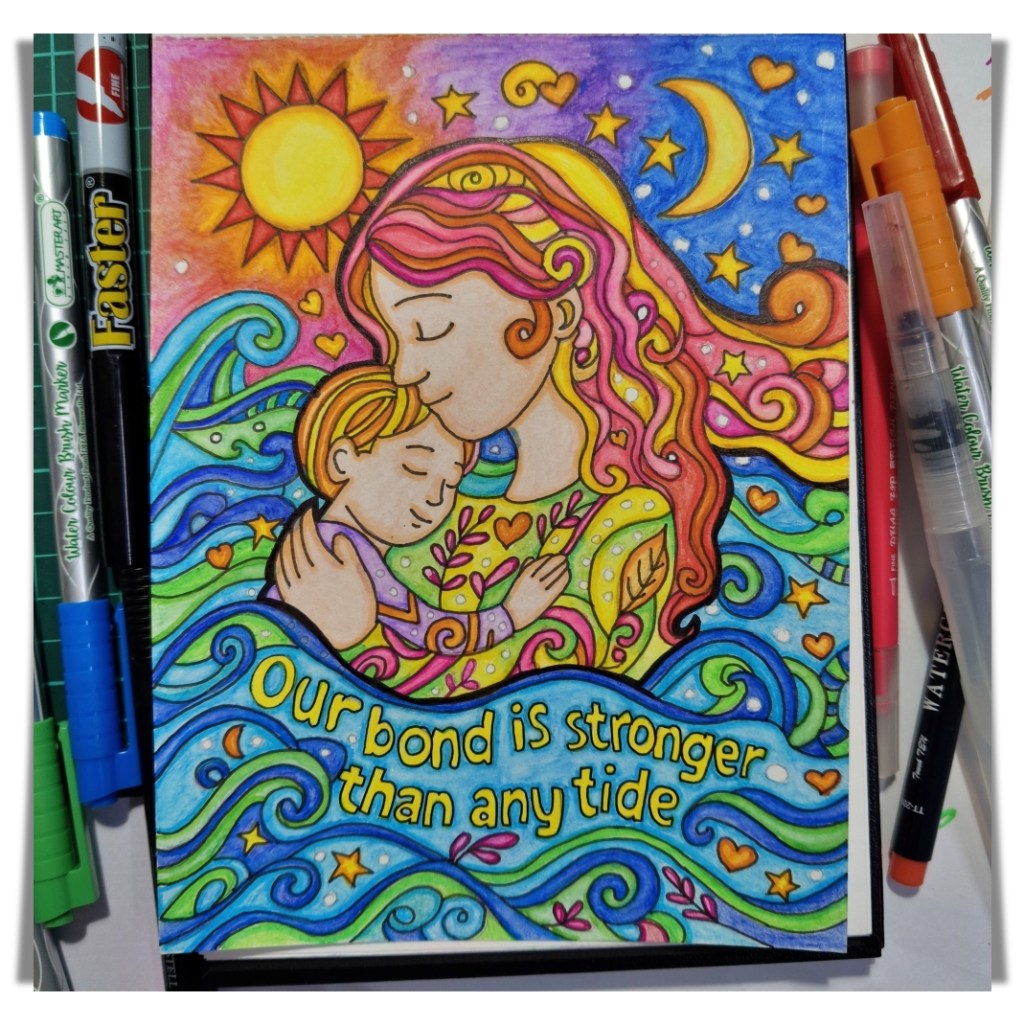
I Kept Creating and My Art Became a Mossery Cover

What’s something you’ve done that your past self would be proud of?

View all responses

I think my past self would be proud that I never gave up on writing and making art. I continued working despite not having a large audience, praise, or assurance that the work would go anywhere. I understand why people stop when their work receives little support. But for me, I never thought to quit. I did it because something in me still needed to make things, even when life seemed uncertain and I worried whether anyone was paying attention. I kept writing and making art because that invisible, persistent urge would not leave me alone. 
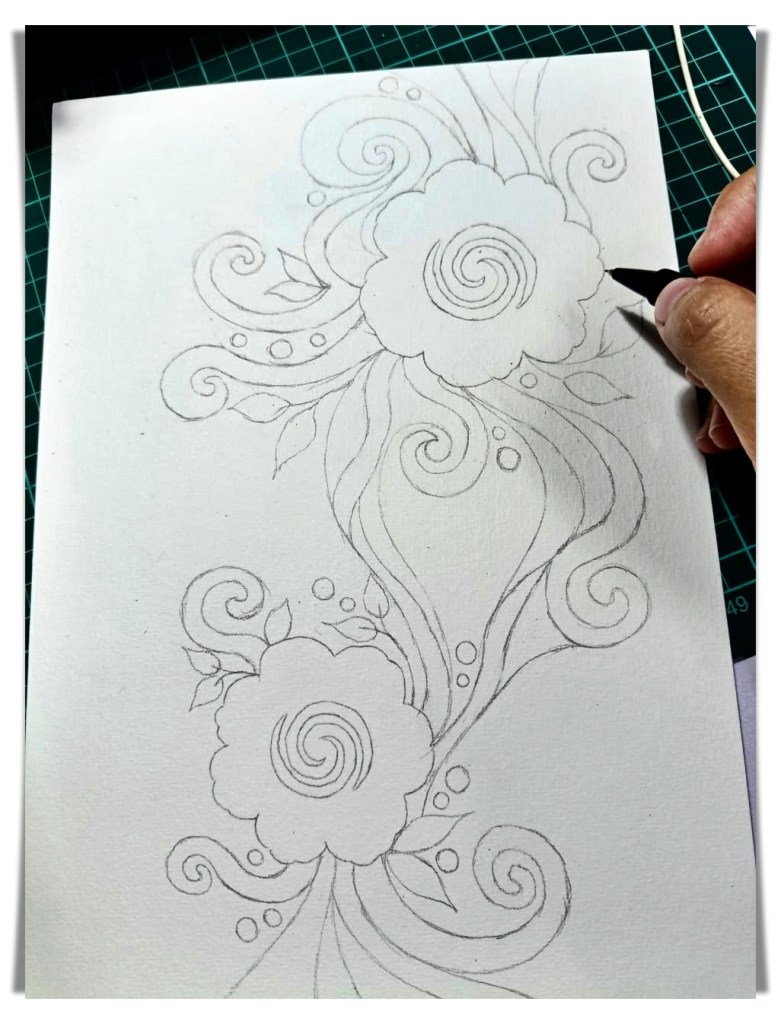
Bejalai Mossery Cover 1

Nothing glamorous or sexy about persistence. It meant making zines nobody asked for, experimenting with drawing when I didn’t even know I was any good at it, and picking up new skills just because a project needed them. Persistence required me to continue despite doubt, illness and the constant question: Does any of this matter? I had no answer and I simply kept going.

Perhaps that is why receiving an invitation to create a cover for the Mossery × KL Art Book Fair 2026 collaboration felt so special. It did not arrive because I had it all figured out. It arrived while I was still creating, learning and finding my way.
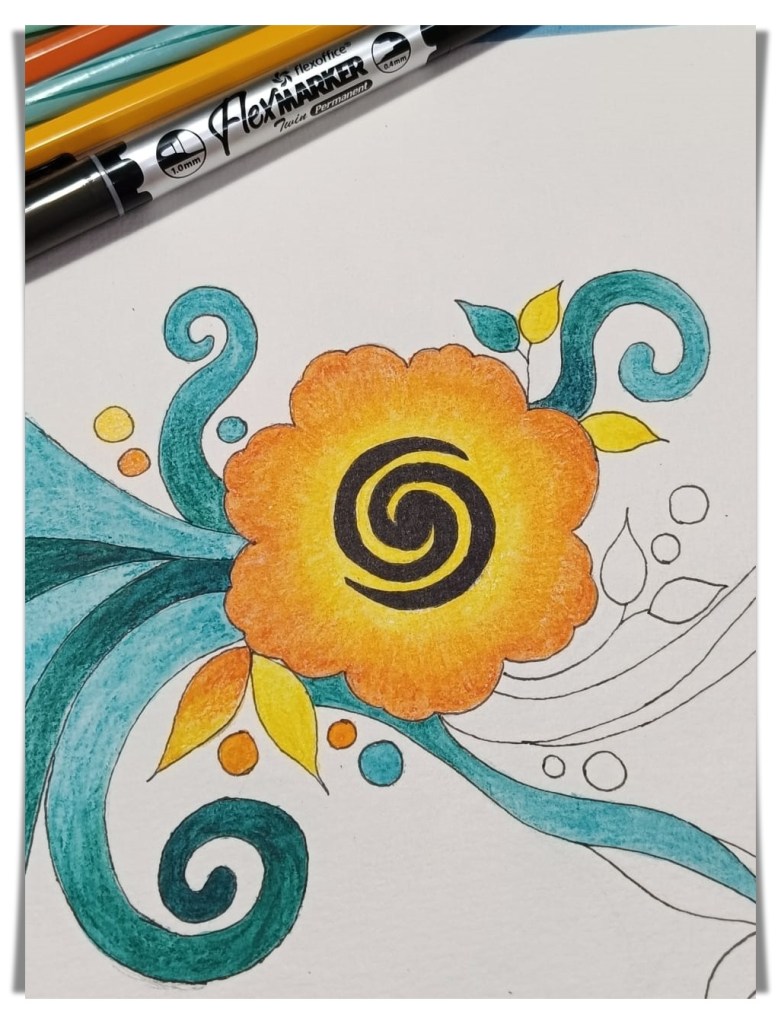
Bejalai Bungai Terung Mossery Cover 2

The cover is called Bejalai. Bejalai is an Iban word associated with journeying beyond the familiar in search of experience, knowledge and growth. The design features two bungai terung or eggplant flowers, traditionally recognised as the first tattoo an Iban young man receives. It marks his passage into a new stage of life.

At their centres are spirals called tali nyawa, the rope of life. The flowing forms connecting them suggest a river, representing movement and connection to home. I drew and coloured everything by hand using watercolour pencils, markers and black fineliners. The cover itself embodies, in many ways, the persistence that made it.
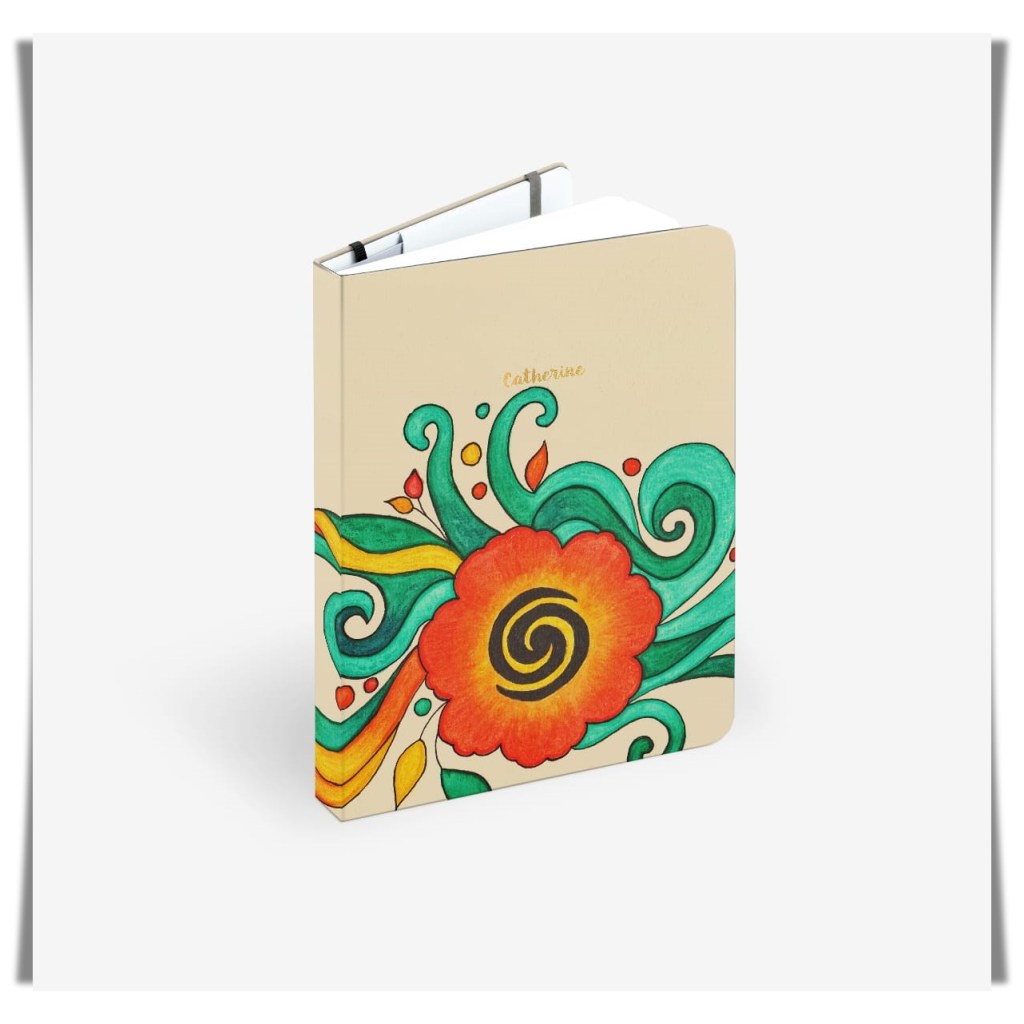
Bejalai Bungai Terung Mossery Cover 3

Pre-orders for the Mossery × KLABF 2026 cover run from 16–29 October. You can customise your name on the cover when you order. You can pre-order it here. 

I don’t know where any piece of work will lead, and most may never lead anywhere measurable. But I think my past self would be happy that I kept producing them nonetheless.
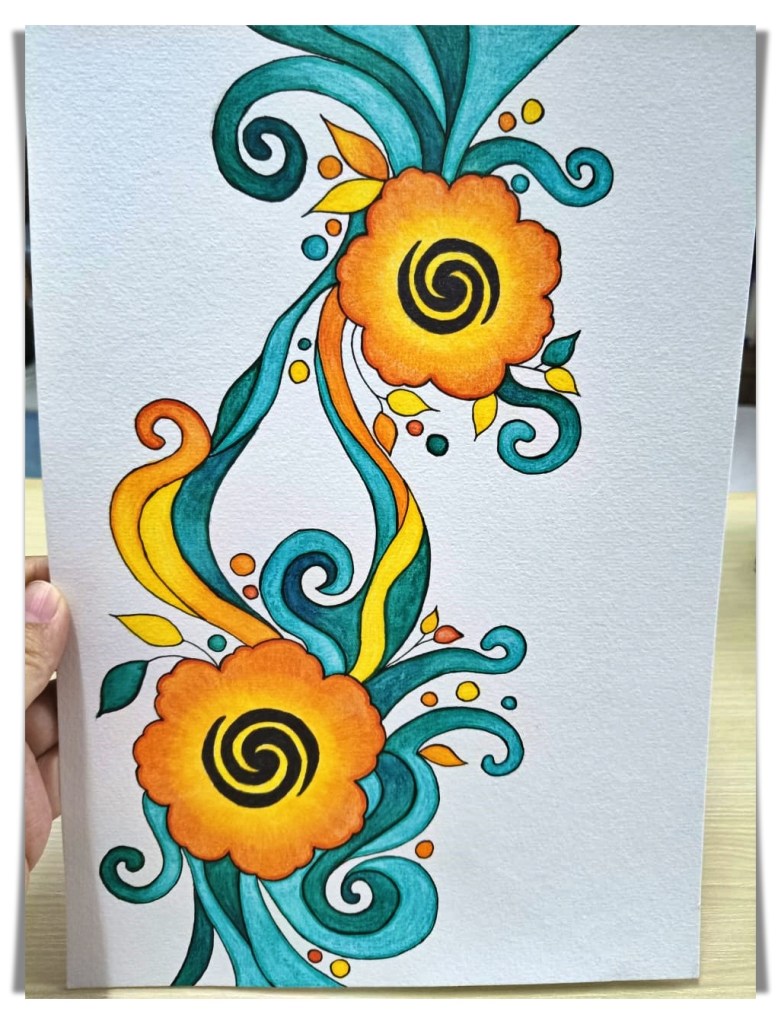
Bungai terung art 4

I write about Iban culture, ancestral rituals, creative life, emotional truths, and the quiet transformations of love, motherhood, and identity. If this speaks to you, subscribe and journey with me.
A Weekend at KL Zine Etc Festival

I meant to write about this sooner, but I was seriously unwell over the past couple of months and had to put a few things aside. Now that I feel a lot better, I am returning to some of the things I wanted to share, including my weekend at KL Zine Etc Festival, or KLZE.

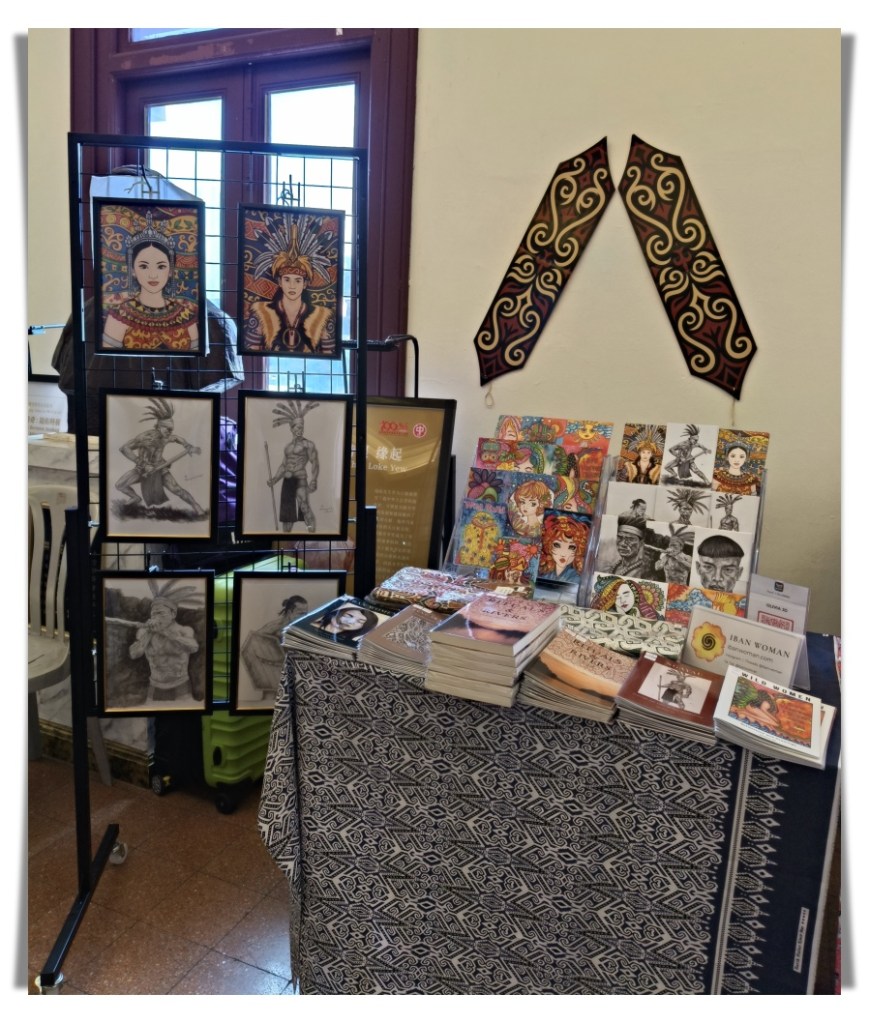
From 7 to 9 August, I took part in KLZE at the Kuala Lumpur and Selangor Chinese Assembly Hall. It was my first zine festival as an exhibitor, so I was eager, worried and a little overwhelmed by everything.

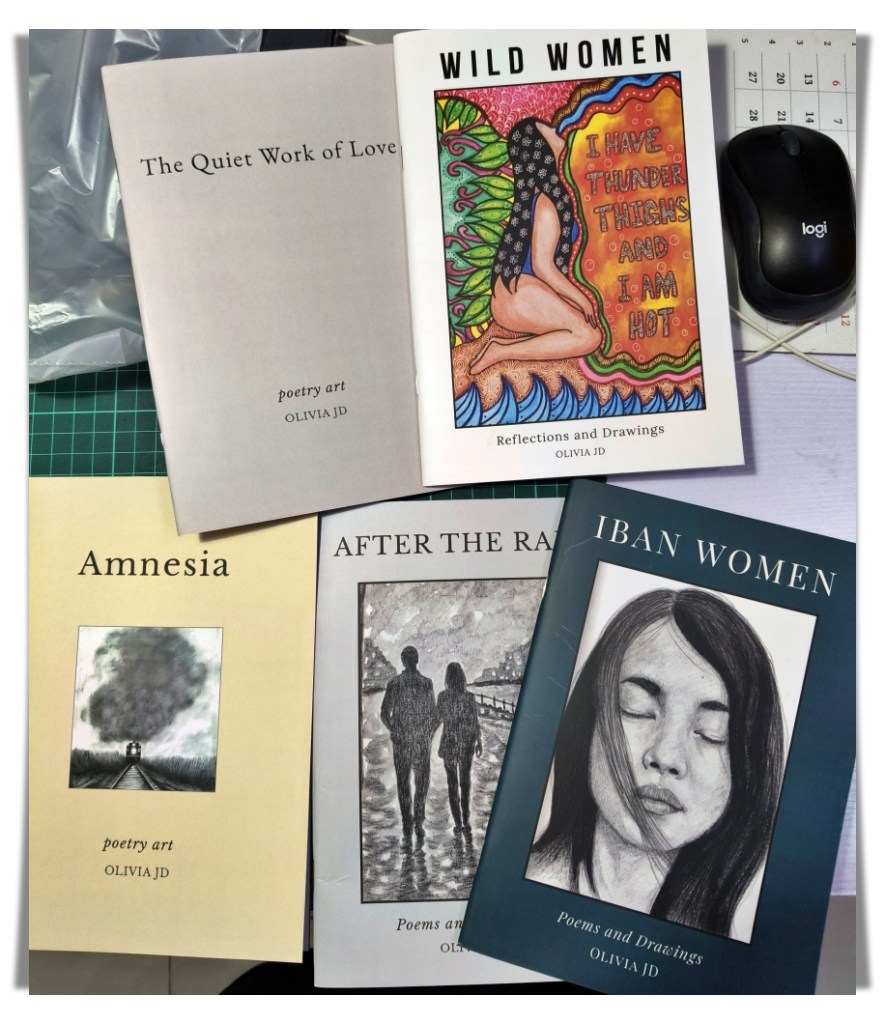
I had half a table, sharing it with another exhibitor, Not Just Love Stories from Taiwan. I brought my newly published poetry collection, Rituals and Rivers, together with several of my zines, art prints and drawings.

Much of this work began at home, long before I decided to publish any of it. My handwritten drafts and drawings had filled countless notebooks and sketchbooks over the years. Over the past few years, some of those pages gradually became books.

Preparing for the festival meant dealing with the less romantic part of making things: printing, pricing, packing and deciding what would fit on the table. By the time everything was laid out, I could see how much I had made.

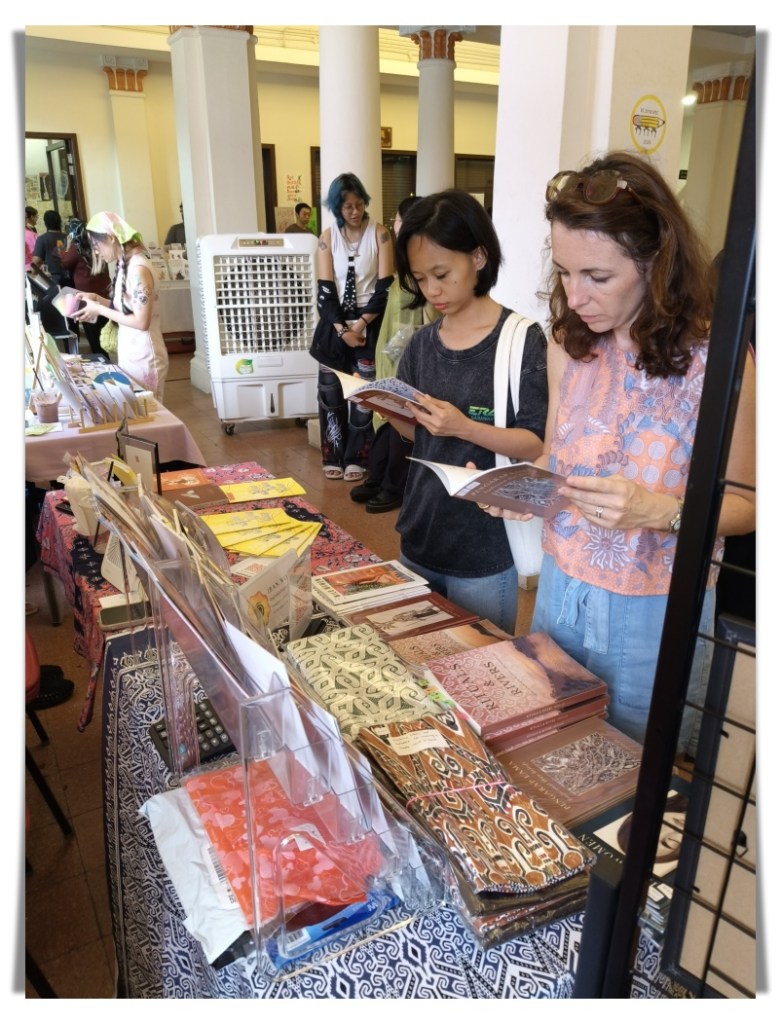
It was a strange experience watching strangers look through my books, turn the pages carefully, ask questions about Iban culture and even buy them to take home. These things had existed privately for so long, as ideas, scribbles and files in my notebooks and on my computer. Suddenly, they were travelling home with other people. For the first time, I felt that people outside my immediate circle were supporting my work.

My work often returns to my Iban heritage. At KLZE, those stories could reach people who might never have come across my blog or found my work online, especially Iban people living away from Sarawak and those of mixed heritage. I have always wanted to share Iban culture through simple forms such as zines, particularly with younger people of Iban descent who grew up away from Sarawak.

I liked that directness. The work was there for them to look through, and I was there if they wanted to ask about it.

Selling my work was part of why I was there, of course. Independent publishing costs money, and every purchase helps me continue. I am grateful to everyone who bought something, whether it was a card, a zine or the poetry collection.

I also appreciated the chance to see people encounter the work in person. Publishing online gives me very little sense of what happens after someone reads a poem or looks at a drawing. A festival offers a different kind of contact, even if it is only a brief conversation across a table.

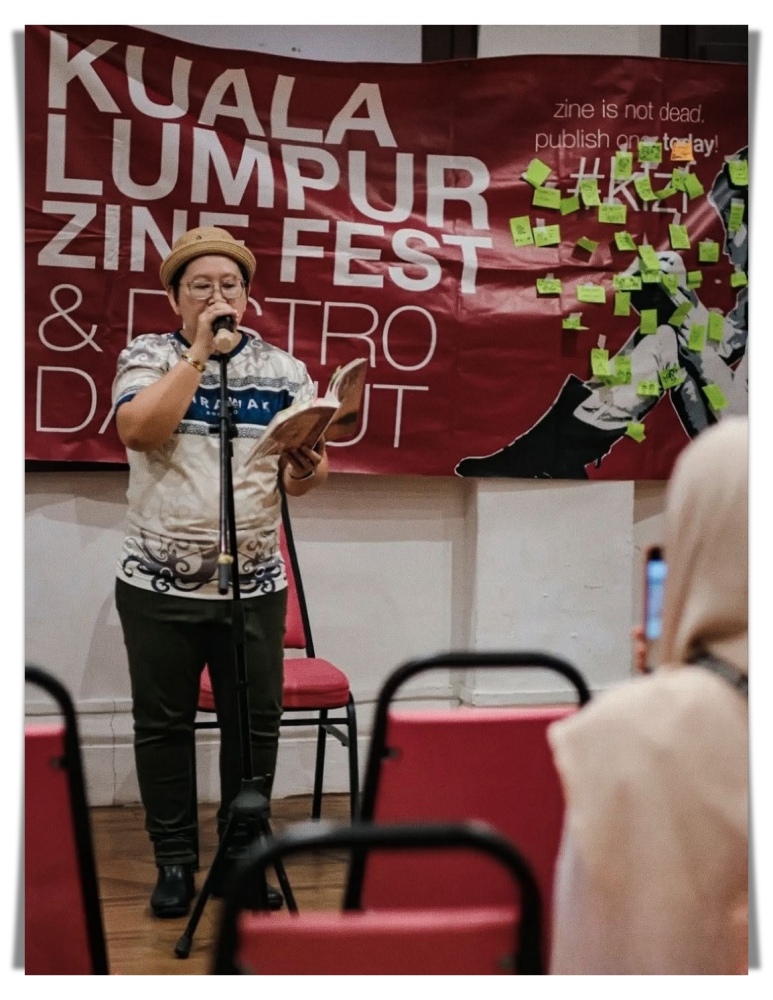
On Saturday, 8 August, I also gave a poetry reading from Rituals and Rivers. It was my first public reading.

Before the festival, the organisers invited anyone interested to give a talk or a public reading. I jumped at the chance without thinking too much about it. I was not nervous and had no hesitation about doing it, even knowing there was a chance no one would turn up to listen.

Writing a poem and reading it aloud to an audience are quite different experiences. On the page, I can take my time and revise in private. At a reading, I have to give the words a voice and let people hear them. I am glad I took that step and grateful to those who sat and listened.

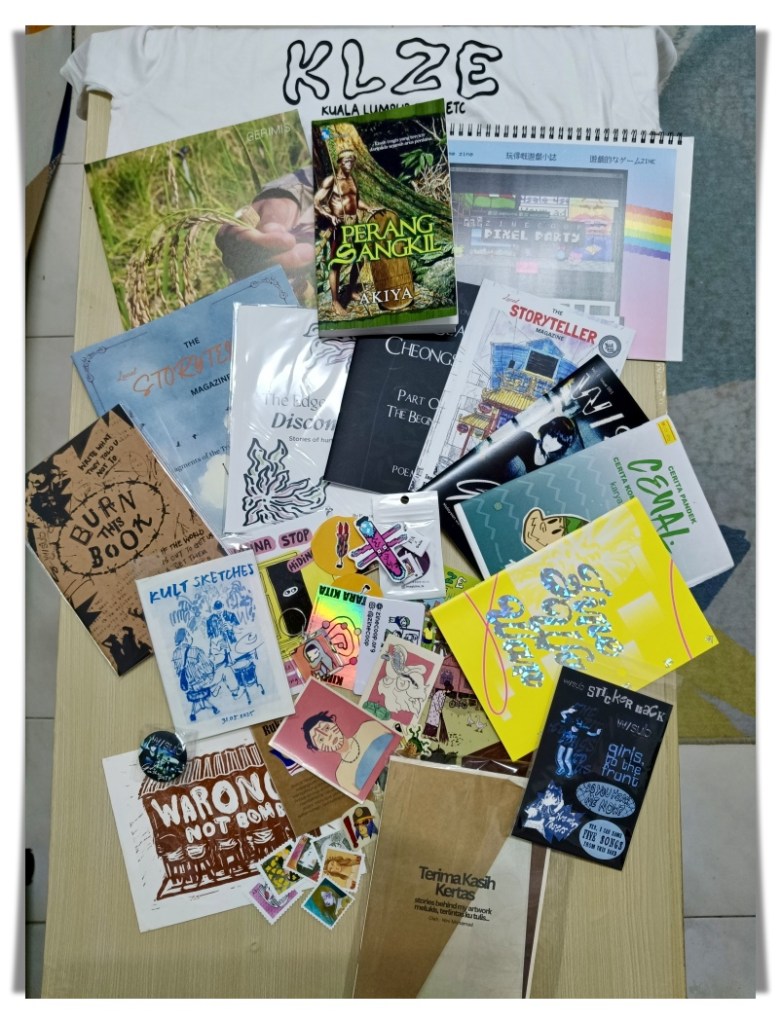
I also came home with work by other makers. Part of the pleasure of a festival like this is being able to browse what everyone else has brought and take some of it home. Being an exhibitor did not stop me from being a reader and a buyer too.

Looking back, KLZE gave me a chance to bring together parts of my creative life that usually happen quietly at home. The writing, drawing and making became something I could share across a table, and the poems became something I could read aloud.

Thank you to the organisers, everyone who stopped by, and those who supported my work. This post is late, but I still wanted to give that weekend a place here.


I write about Iban culture, ancestral rituals, creative life, emotional truths, and the quiet transformations of love, motherhood, and identity. If this speaks to you, subscribe and journey with me.
Painting an Iban Woman in Ngepan Indu Iban | Between Chaos and Colour

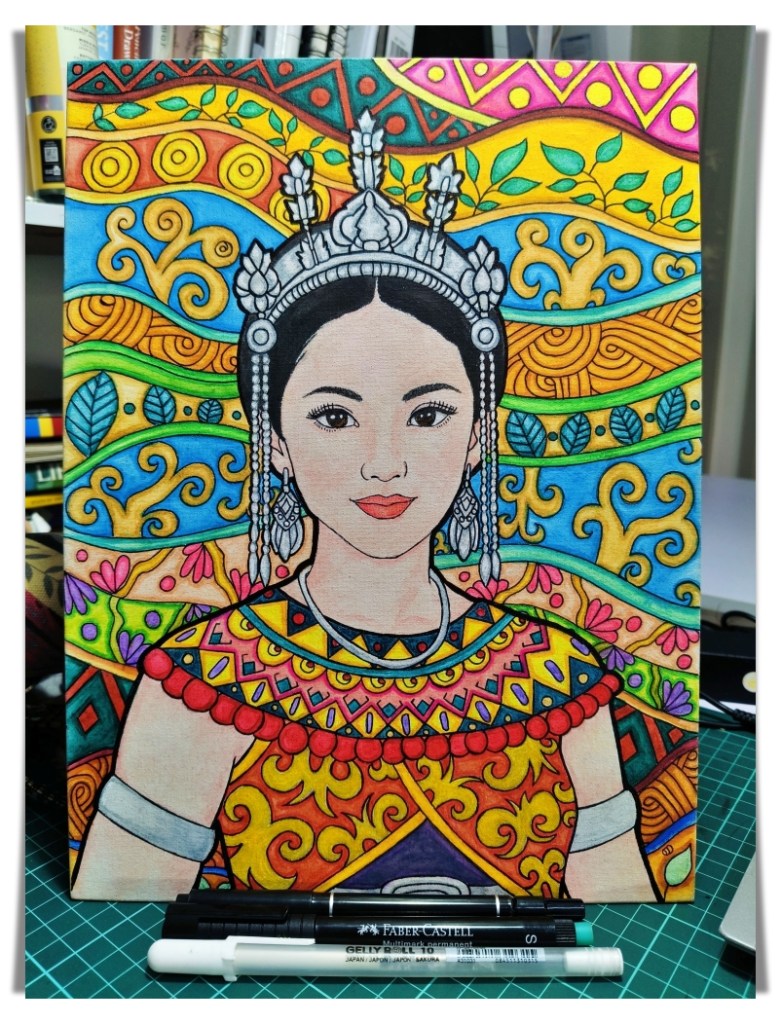
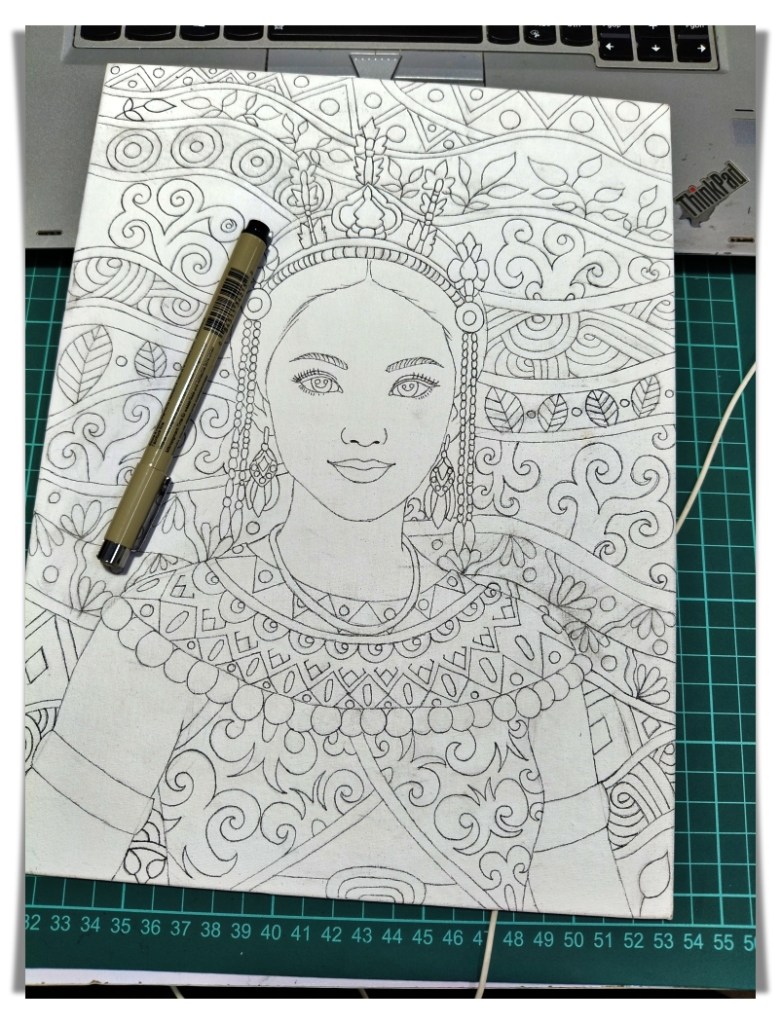
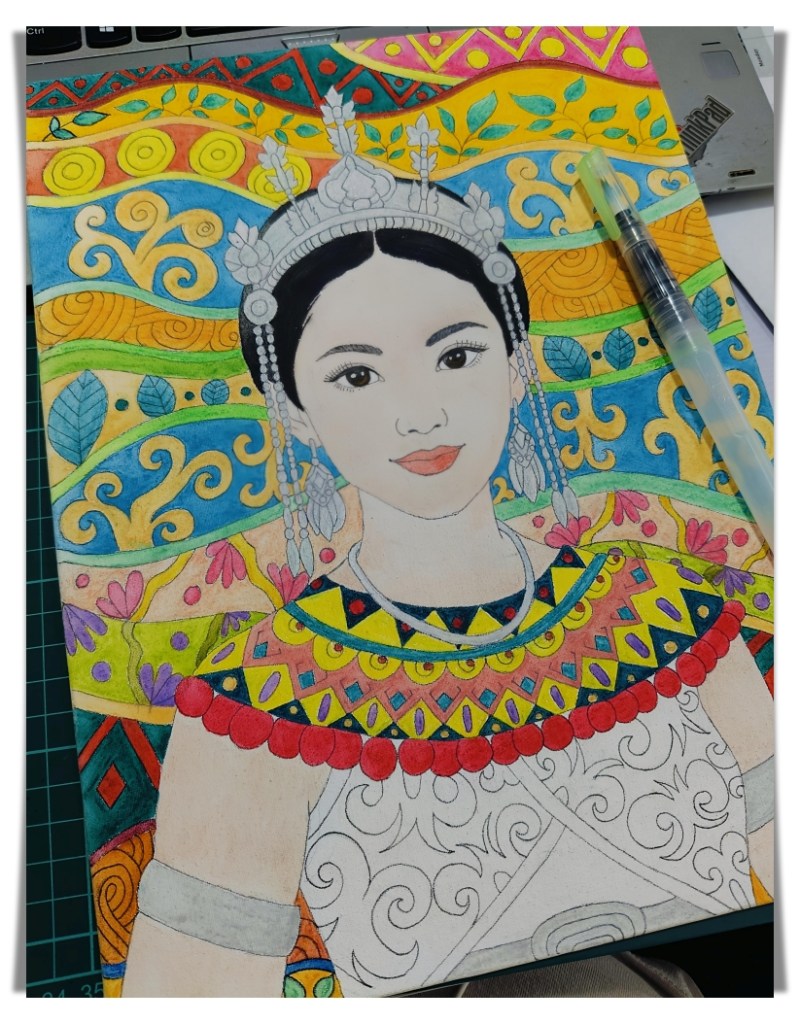
I have been working on this mixed media painting for the past ten days. It is of an Iban woman wearing a traditional costume called “ngepan indu Iban.” The piece has elements such as the sugu tinggi headpiece, the marik empang or tangu worn across the shoulders, the selampai crossing the chest, the tumpa on the arms, and the lampit around the waist. Instead of creating an accurate historical painting, I wanted to reinterpret these traditional elements in my visual language of doodle patterns, flowing lines, and brilliant colors. 

At first, I thought this painting would simply take a few days. But after a while, it just became part of my routine. And life kept interfering in between coloring little sections and drawing patterns. My car broke down and I had to have it fixed at the mechanic’s. One of my molars chipped after I accidentally chewed on a tiny piece of chicken bone, so I had to go to an emergency dentist appointment. There was still housework, my son’s schoolwork, and the usual weariness that comes with adulthood. Some days I just worked on the painting for an hour or two. And there were other days when I sat with it late into the night, hours after everyone went to bed. Even so, I kept returning to it. 

After a while, the painting stopped feeling like just an art project. It became an exercise in finishing something. I tend to jump around between ideas too fast and I find it hard to finish them. But this time I worked on one artwork for ten days straight until it was finished.

And I wanted the picture to be alive and not historical or “museumy.” Perhaps that’s why I tend to choose vivid, vibrant colors rather than subtle earth tones. I wanted the background to feel crowded and flowing behind her. Some designs were influenced by traditional themes and others were instinctual throughout the process itself.

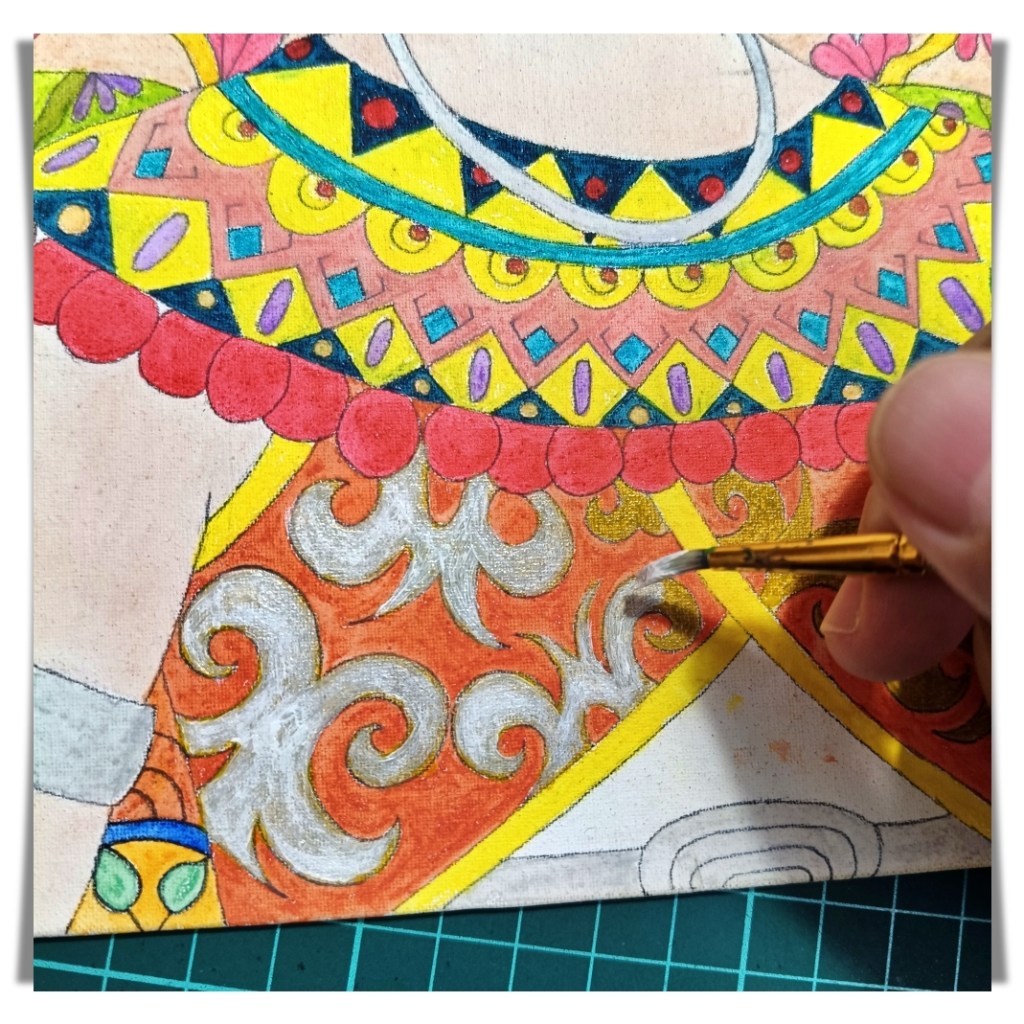
There was one point during the painting process when I really feared I’d botched the whole thing. The patterns on the selampai were meant to be golden yellow, but I layered the wrong colors together and it turned into murky bronze. I tried to fix it with acrylic paint and regretted it instantly. I remember looking at it in utter frustration, totally convinced that I had messed up the painting after days of work. Finally, I walked away from it, let it dry, came back later, and repaired it painstakingly, layer by layer. Looking back, that mistake turned out to be part of the process. I thought those sections turned out great, but they weren’t the main lesson. The actual lesson was that I didn’t ditch the work halfway through.

The finished artwork was created using mixed media materials such as colored pencils, markers, acrylic paint, fine liners, and gel pen highlights. I mostly used non-archival materials, but I actually liked working with them instead of waiting for things to be perfect. In the end, the painting reflects the ten days it took to finish it: color, frustration, interruptions, patience, and finally getting it done. 


I write about Iban culture, ancestral rituals, creative life, emotional truths, and the quiet transformations of love, motherhood, and identity. If this speaks to you, subscribe and journey with me.
On Making and Keeping | Iban Cultural Preservation

People typically consider cultural preservation to be something that is conducted on a large scale. It is generally placed in the context of institutions, archives, or official documents. But it can also happen on a smaller, personal scale.

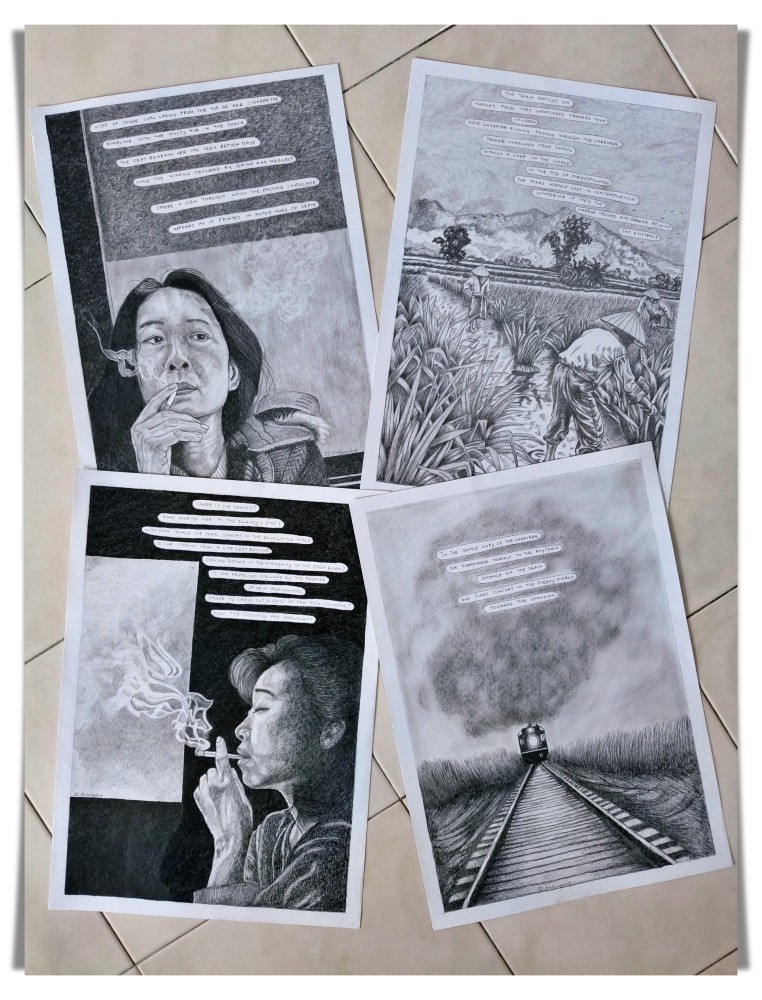
I have been making a series of handmade zines that are based on Iban culture and history. Each page of these zines pairs a drawing with a text of information or a poem. The drawings are hand-drawn, and the pages are put together painstakingly, one at a time. Every decision, from picture placement to word space, needs to be carefully considered. The whole thing is done entirely by hand.

While working on these pages, I learned that preservation is more than just keeping information intact. It also has to do with how that information is passed on. The information in these zines is not new. They have been told before, and they exist in oral histories, family accounts, and old literature. What I do is simply place them into a different form.

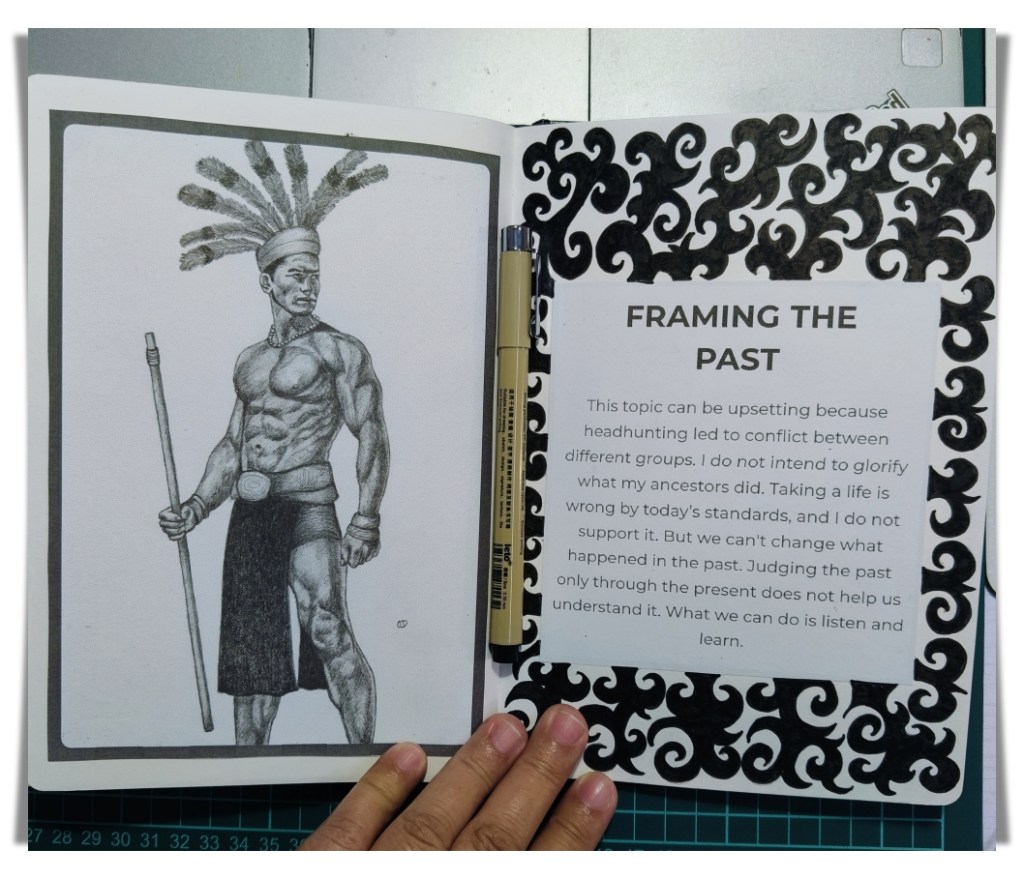
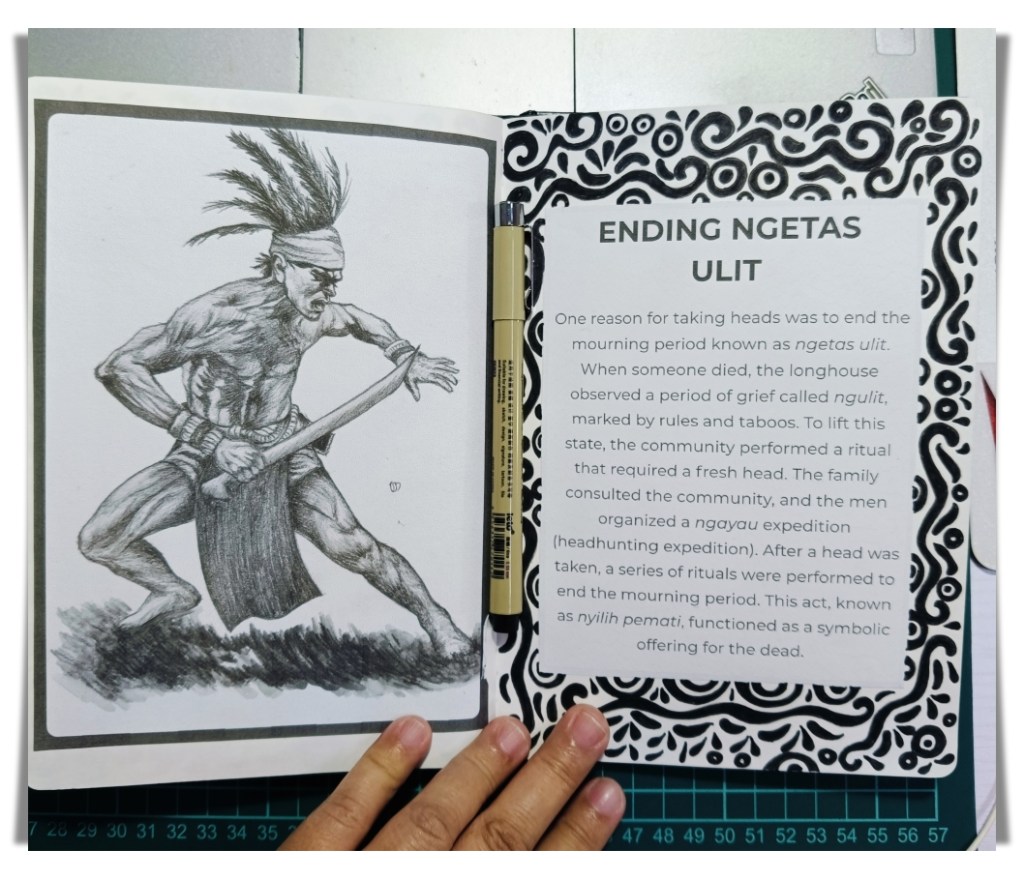
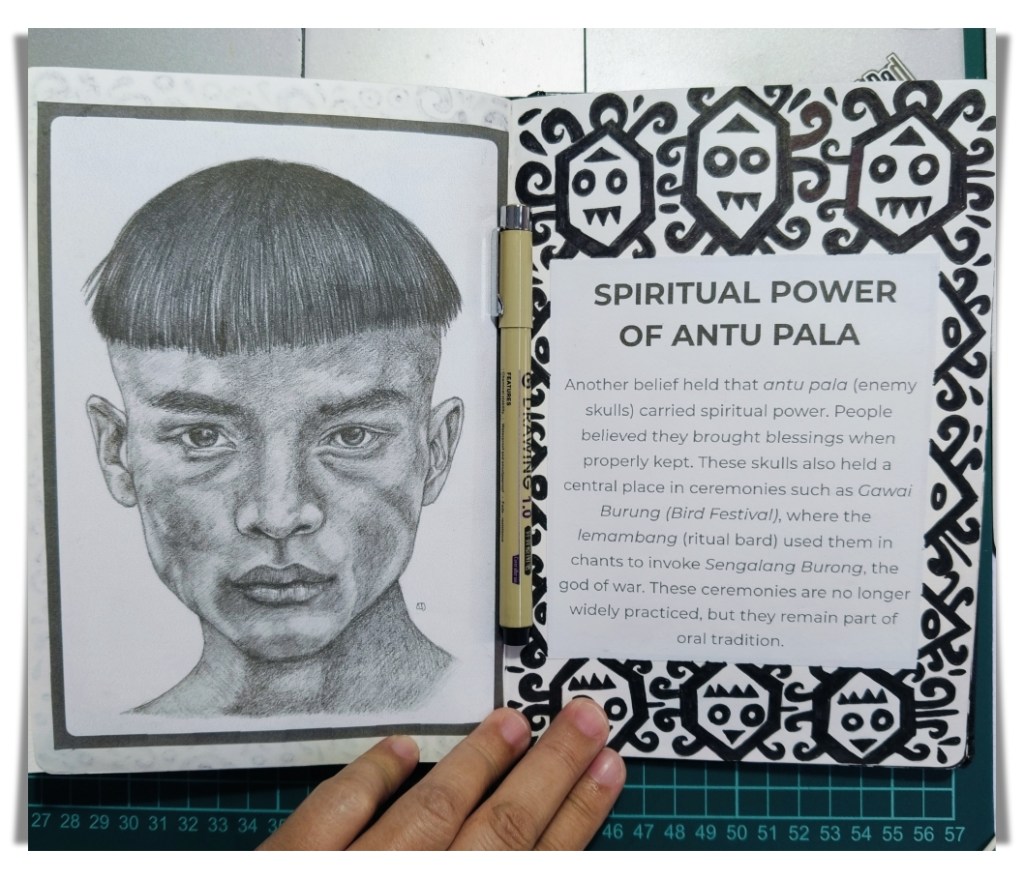
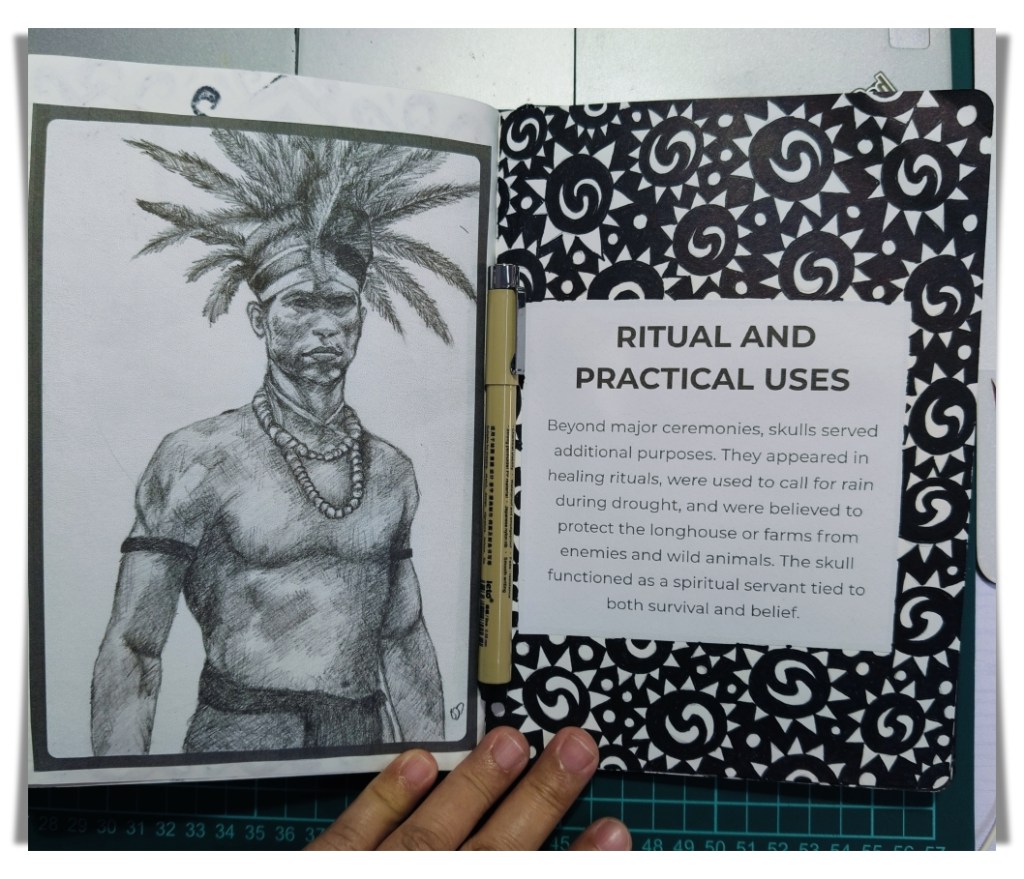
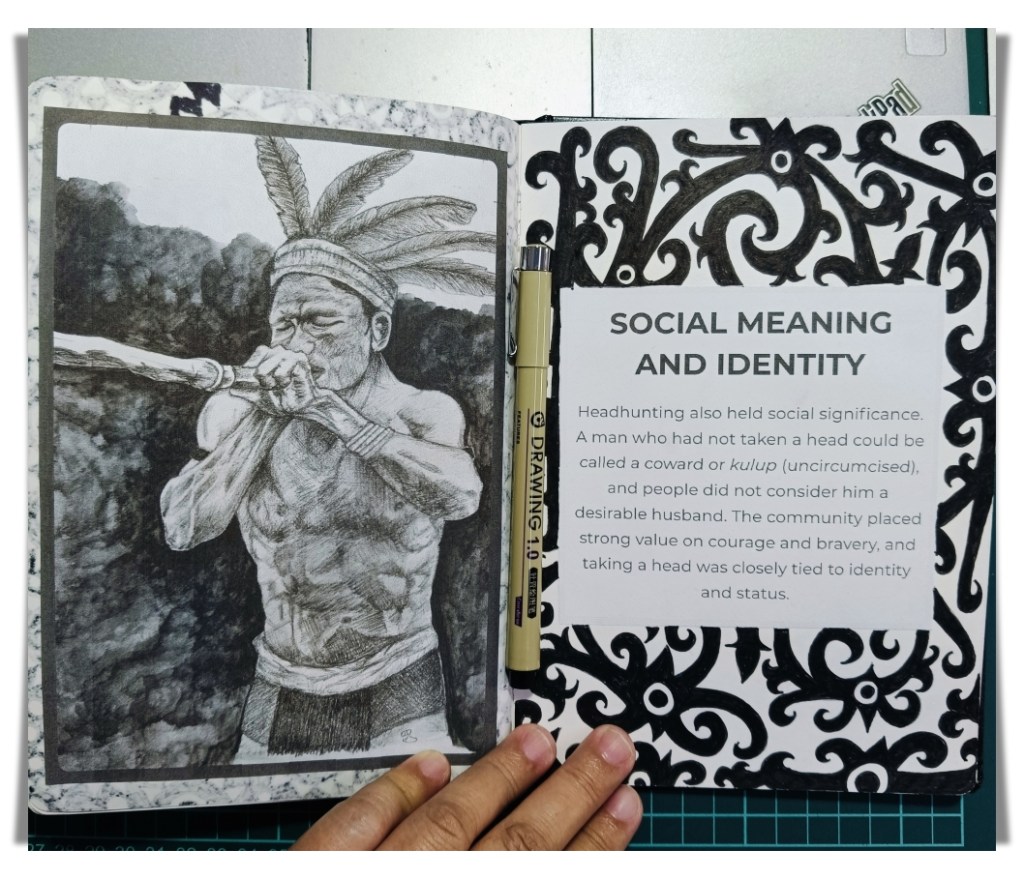
For instance, in these sketchbook pages, I talked about why the Ibans practiced headhunting in the past. It’s a difficult topic that people often misunderstand or only see one side of. I give it context instead of simplifying it. Each section describes a specific reason or belief and is paired with a hand-drawn drawing of an Iban warrior instead of an abstract idea. When I draw, it influences how I feel about the subject. When I sketch a figure, I pay attention to details that I would otherwise overlook. 

This zine doesn’t attempt to be a full record of the Iban history. It keeps some parts of it. The imperfections in the pages are part of that process. They show that it was created by hand, with time and care. In this regard, preservation isn’t only about accuracy or completeness. It’s also about continuity, working with it, and allowing it to exist again in the present.


I write about Iban culture, ancestral rituals, creative life, emotional truths, and the quiet transformations of love, motherhood, and identity. If this speaks to you, subscribe and journey with me.
A Return

What is one word that describes you? Just one word? If it’s only a word, then I feel it seems too narrow for something that changes as much as a person. One word makes it sound like something is set in stone. I don’t think I’ve ever been that. I sat with it for a while to find the right word. Finally, the word that came to mind was “return”. 

It’s less about a return to something untouched and more about picking up something I set down for a while. I’ve found myself reaching for my sketchbooks again in the past few weeks.

I go through old paintings, rewrite poetry, change the margins, and print pages. The tasks are simple but they require my full attention. Every little decision affects the outcome and time passed by silently as I focused on each task.

I recently blogged about the process of producing my zines and art cards. These are real and tangible things and unlike digital work, this is a slower way of working and nothing happens instantly. That post was a result of sitting at the table and crafting the zines, whereas this post is when I start to let them go and release them to the world. It’s been a while since I last put my work out on Etsy. I went on a hiatus when other things in life got in the way.

However, my art sat there waiting for me to return and produce something for the shop. It feels odd to come back to it now. I need time to readjust and relearn how to do some of the things, like working on Canva. I don’t want to make everything at once. I’m putting together one zine at a time, assembling each one carefully. I don’t force myself or think too far ahead on future projects. It is enough to just work on what is in front of me. So, I launched my Etsy shop again today.

It sits there quietly for now with five simple listings. All of them are the printable versions of my zines. They sit there waiting for the algorithm to index them and finally appear on the search results. No matter how excited and proud I am about them, I don’t feel the need to announce it loudly to the world. The act of listing them on the shop and making them public is enough for me. 

I realized how familiar the process felt as I worked on the listings. The tasks of writing descriptions, picking titles, and putting pages in order are the things I have done in the past. However, I’m doing things now with a different way of thinking. There is less doubt while making small decisions and I go through them without overthinking.

The work itself hasn’t changed much. It is still made of the same things: words, ink, graphite, and paper. What has changed is my approach to it. I’m not trying to make something big and complicated. I’m just working on one zine at a time, finishing it, and moving on to the next.

There are still certain things that are unclear. I don’t know how people will react to it or how often I will add more listings. Right now, I’m not trying to answer those questions. I just let it be and do not stress myself about the outcome. For now, I am here again, sitting at the table, working on my art and poems. The shop is open and life flows on. It all feels like a “return” or homecoming, somehow.


I write about Iban culture, ancestral rituals, creative life, emotional truths, and the quiet transformations of love, motherhood, and identity. If this speaks to you, subscribe and journey with me.
On Making Zines and Art Cards

Daily writing prompt
What activities do you lose yourself in?

I’ve been spending a lot of time working with paper lately. It starts off quietly. I look through my folders to find a drawing that fits. After that, I edit the poem that goes with it. Then comes the layout of the page. My table slowly fills with printed sheets waiting to be assembled into small booklets. I sit down to adjust a margin or review a page, and before I know it, the afternoon is gone. The work is simple, but it needs careful attention.

For the past few weeks I have been turning some of my drawings and poems into small zines. I created many of these pieces years ago and stored them in sketchbooks or folders. Putting them all together in a small printed booklet makes it feel like they have a place to sit next to each other. The format is modest. A4 pages, folded and stapled. Seeing my drawings and words in the same space makes me feel pleased and grateful.

There are a lot of minor adjustments that need to be made to get them ready for printing. These include the order of the pages, margins, and size of the paper. I just learned about “bleed,” which is a small extension of color that goes past the edge of the page so that the final cut doesn’t leave a white border. It’s a small technical detail, only a few millimeters wide, but learning about it helped the process move more slowly. When you start to notice these little things, the work becomes more purposeful.

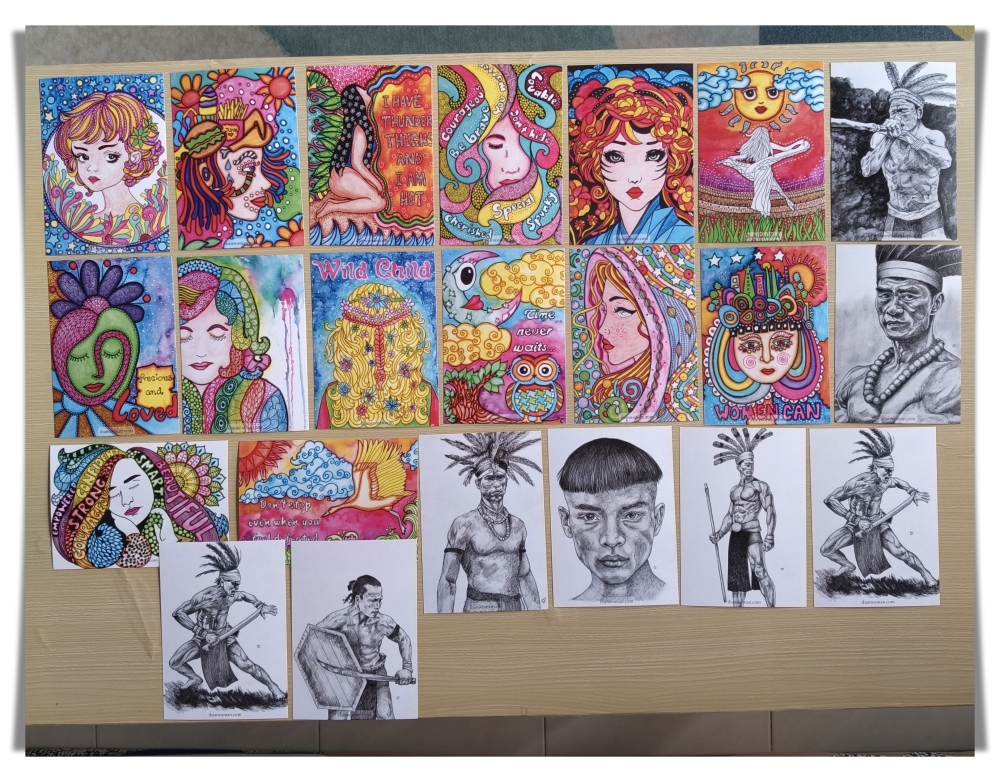
In addition to the zines, I’ve also been making art cards out of some of my drawings. These are small reproductions of older works I made over the years. Some are colorful illustrations from past projects, and others are drawings in graphite. They look different when you print them on postcards. They don’t seem like things from a sketchbook anymore but something that I can now share with the world.

I start to see how different the work has been when I lay it out on the table. Next to quiet graphite portraits, there are bright, fun drawings. Cultural drawings next to fun characters. Each of these drawings belongs to a different moment in time.

There is a rhythm of simple tasks that goes into making these small prints and booklets: looking through the files, assembling the booklets, and sending them to the printer. Waiting. When the printed copies come, open the package. Looking through the pages to make sure everything is in the right place.

I received the first set of zines yesterday afternoon. They came back with some problems. The paper was thin, and the binding looked like it was done quickly and poorly. I took out the staples, added a thicker sheet to the covers, and then stapled them back together. These are just prototypes but holding them in my hands made the work feel more real.

There is something absorbing about the physical nature of these steps. The papers were stacked on the desk. The smell of fresh prints. And the newly folded booklet along the middle line.

While I work on these small paper projects, time moves slowly in the background. I only notice it when the light in the room changes or when I see that the stack of pages next to me has gotten smaller. The poems and drawings slowly settle into their places. The cards are lined up on the table. The zines rest in a small pile, ready for the next step.


I write about Iban culture, ancestral rituals, creative life, emotional truths, and the quiet transformations of love, motherhood, and identity. If this speaks to you, subscribe and journey with me.
My First Group Exhibition in Malaysia and A New Zine in the Making

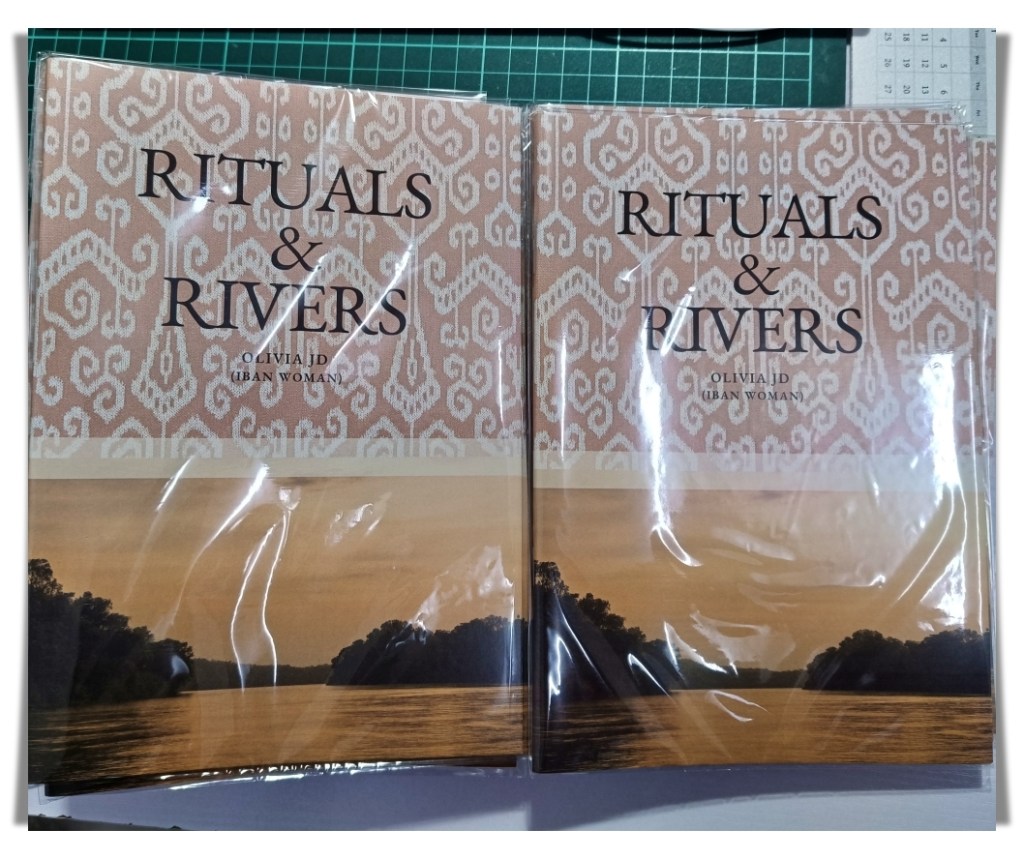
Tomorrow is the soft launch of Akar Kita Abadi, the group exhibition I’ve been preparing for the past few weeks. I will exhibit several of my Iban heritage poems called Rituals and Rivers, and holding these printed booklets, which just arrived, feels like a confirmation of all the time spent writing, editing, and polishing. This little booklet (or zine) has 10 poems from a much bigger collection of Iban heritage poetry that I want to publish in 2026. I will be selling these booklets during the exhibition and they are quite limited in number. I will share more about the exhibition after the launch tomorrow. I can’t share pictures until after the launch so I can’t really say much about the whole thing. The exhibition will last until 23 November so if you’re in Klang Valley, you may want to drop by and give us your support. 

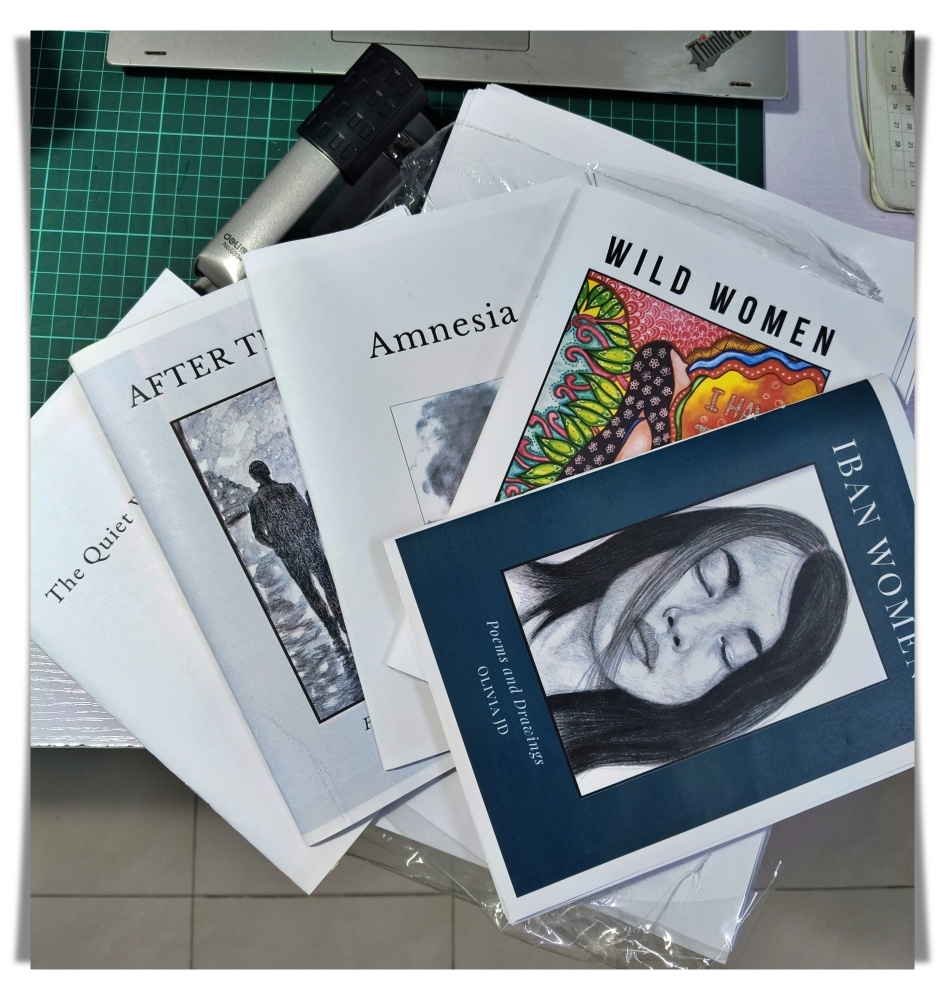
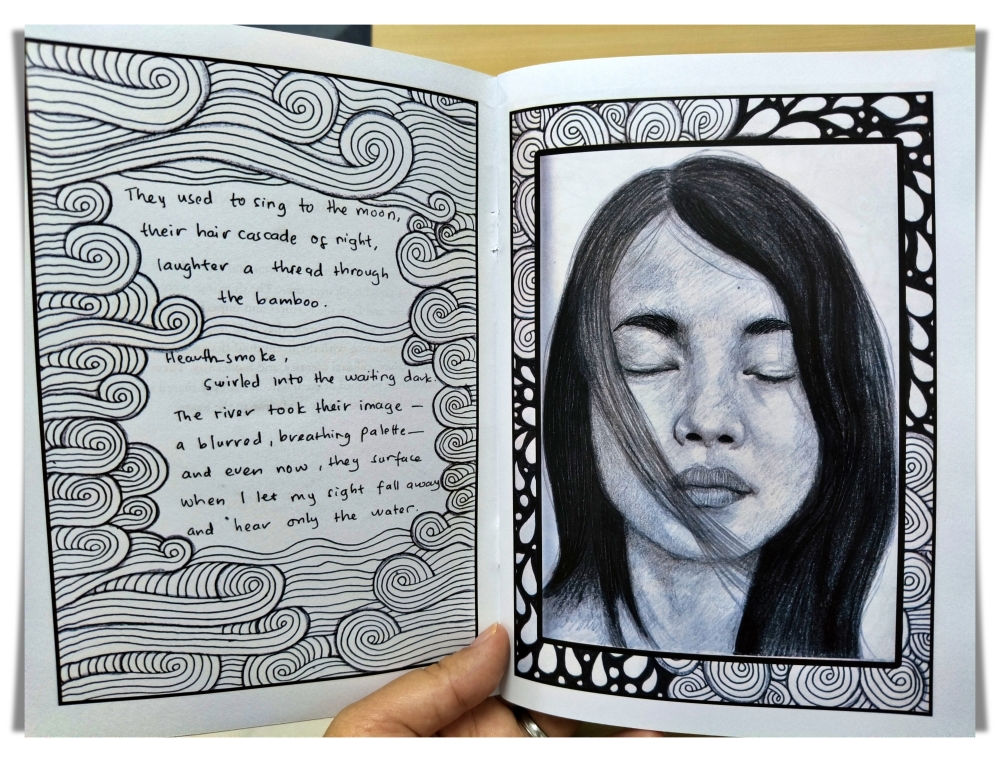
While this exhibition marks the beginning of sharing that collection publicly, another project has started to take root in parallel. I have begun working on a new zine that will focus entirely on Iban women. This project seems like a continuation of Rituals & Rivers, but through a more personal viewpoint. It will look at various facets of Iban womanhood, from ancient times to the present.

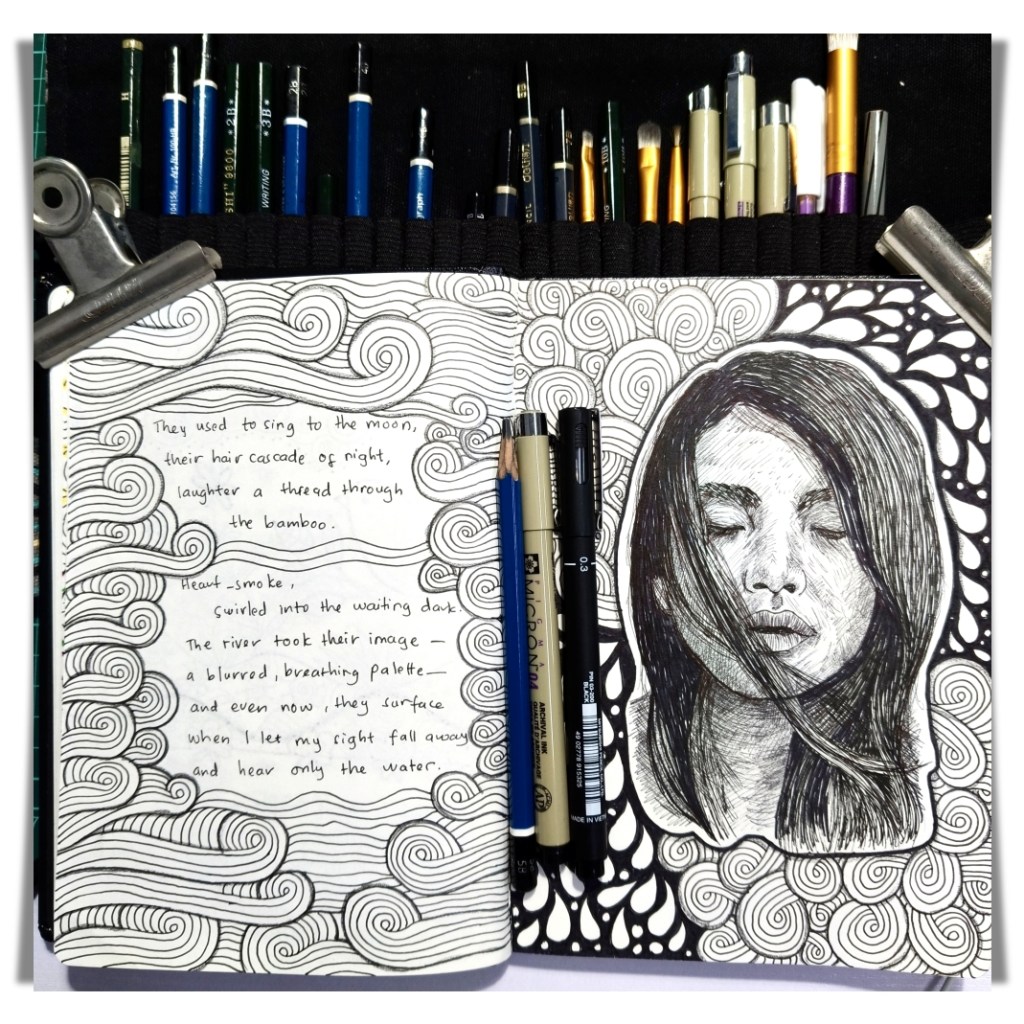
Every page will be hand-drawn using pencil and black fine liners, but for the actual zine they will be edited and printed. Drawing by hand has a grounding effect, allowing each line to have its own rhythm and imperfection. The only printed text will be the longer passages and explanations, saving space while keeping the design balanced. I have not planned the number of pages or illustrations yet. I like to let the process evolve spontaneously. Each piece generally begins as a poem or a brief reflection before taking on a visual shape.

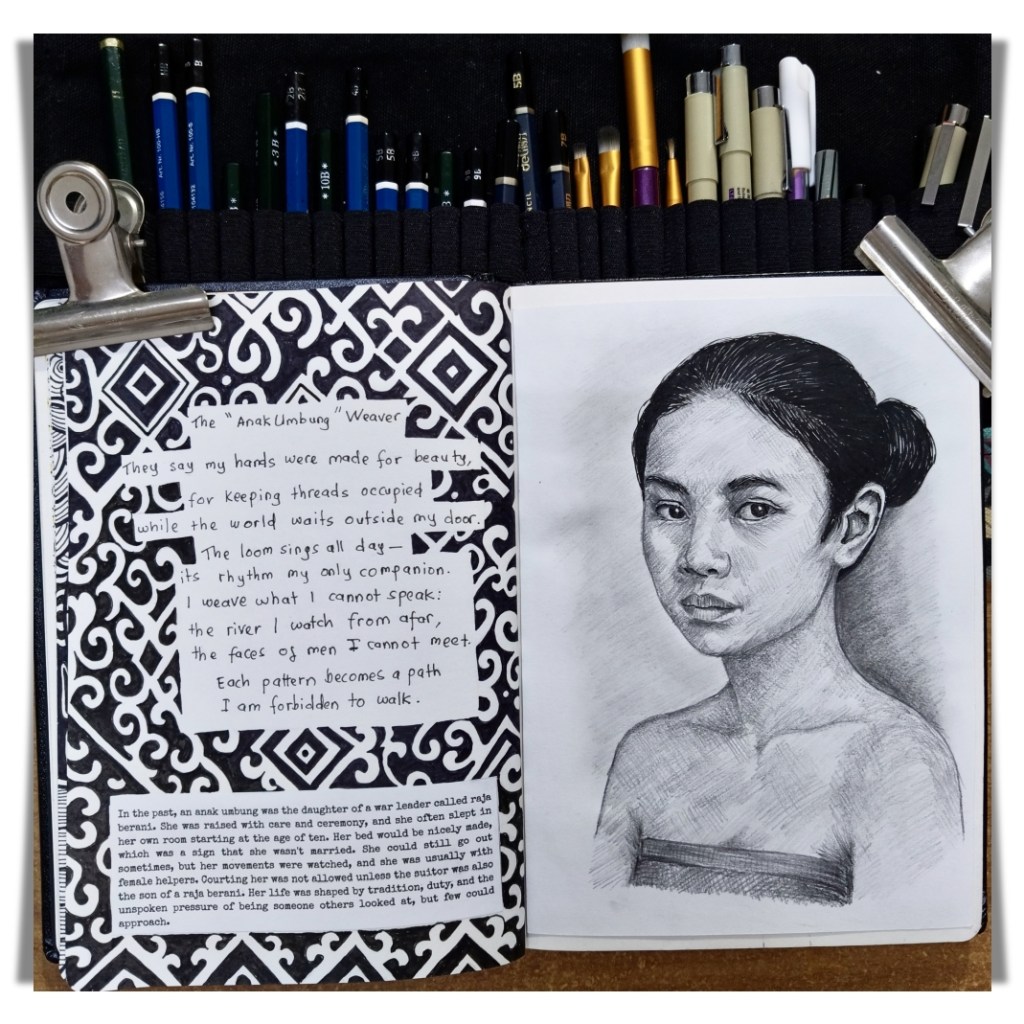
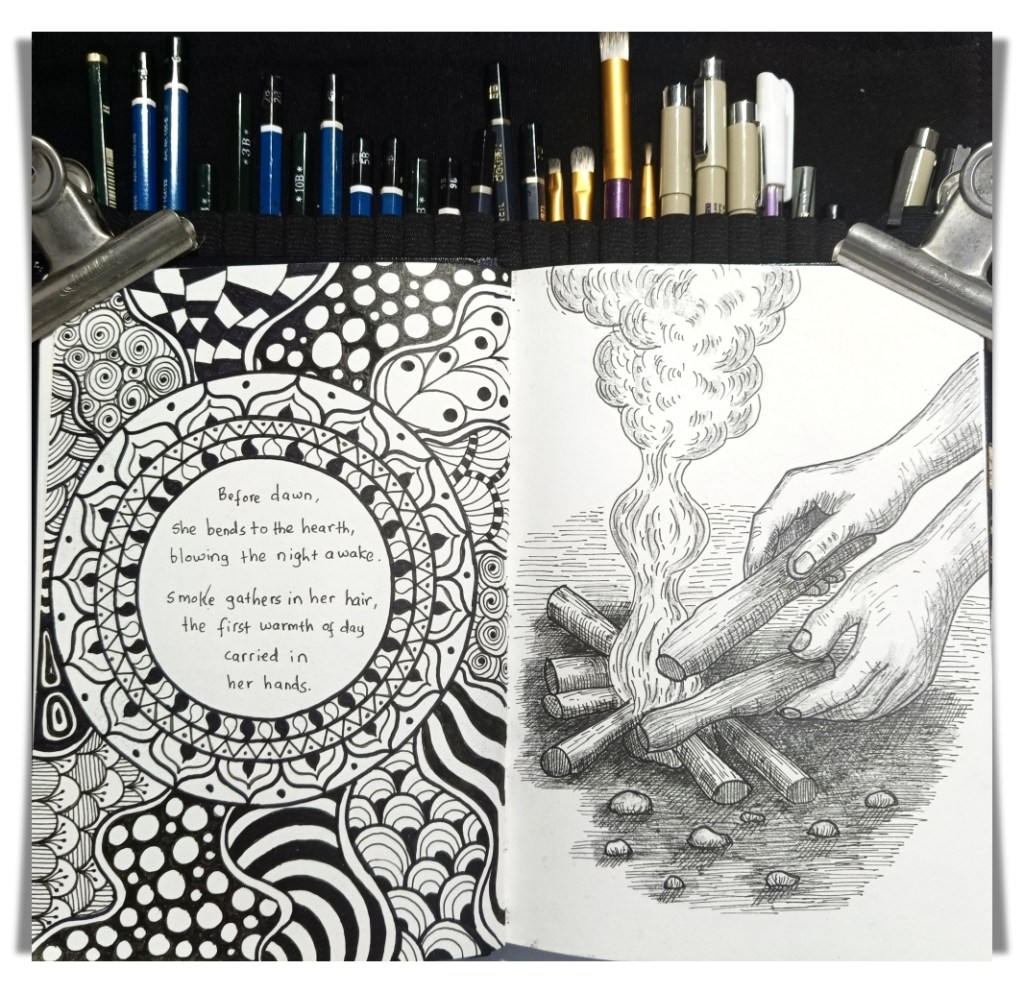
One of the first illustrations is inspired by women who sing to the moon as their laughter threads through the bamboo. Another drawing shows the anak umbung, the daughter of an Iban war leader who was raised apart from others and taught weaving skills. Her story has stayed with me, serving as a reminder of the beauty and self-control that once entwined women’s lives. There is also a drawing of a woman tending to the hearth before dawn. These aren’t big moments; they’re small actions that show tenderness, duty, and strength in Iban women. 

This new zine will be based on the same ideas as Rituals & Rivers, but it will focus more closely on the daily and the personal.  It will explore what it means to be an Iban woman across generations, including the traditions that are passed down, the unspoken resilience, and the actions that connect one life to another. It’s a way for me to listen to the voices of the women who came before me and to honor how their spirit still lives on in us now.

I don’t know what the completed zine will be like, but I know it will develop slowly, page by page, just like stories used to do, with care and patience.


I write about Iban culture, ancestral rituals, creative life, emotional truths, and the quiet transformations of love, motherhood, and identity. If this speaks to you, subscribe and journey with me.
If We Had Stayed | A Prose Poem from an Alternate Life

It was never loud between us. Our love never needed proof. Just subtle signs. A gaze that lasted too long. A jacket shrugged off without being asked. How his silence moved toward mine and made room.

We live above the bookstore near the station. The one with crooked shelves and a leaking pipe that drips near the poetry section. On quiet mornings, I wake first. The kettle whispers steam. He is still asleep, half-buried in the blankets, one arm flung across my side of the bed. I write before the city wakes up. One lamp on. My pen moves slowly and carefully across the page because some mornings are fragile. 

Some days, we walk to the cafe where we first met. The one where the windows get foggy, and I forgot a pen once. He never mentions that he kept it. Never asks why I replaced it. But he returns it anyway, weeks later, as if it was never gone. The pen, not the moment we shared.

We have a habit of not explaining. He says it once, at the door, without turning around. 

We often stroll to Yanping Riverside Park. It is our routine. We never call it that, but we keep coming back to it. On quieter days, we walk under trees that offer more than just shade. Kids dart past on scooters, while we walk slowly. His hand near mine. Sometimes he stops at the railing and looks at the river. I can feel him and the constellation he carries between us.

He rarely talks about work, and when he does, it’s only in fragments. Just enough to remind me that there are things that can’t be put into words. And that’s enough. I don’t have to know everything about him to love him.

I learn to read his silences. The way he checks the locks twice. The way his eyes drift when he’s too tired to pretend. I never think of his silence as distance. It’s a huge part of the whole.

We don’t talk about forever. We just stay.

There are rooftops and rain, the wind carrying jasmine from someone else’s balcony. Matcha soft-serve he buys without asking. The way he looks at me when I hand him a poem. How he holds it like a feather.

We don’t make any promises. But he and I stay.

He once told me that being around me hurt him like a third lung. I don’t say anything. I just trace my thumb over his knuckles and let the silence remain. There are no anniversaries. No statements. Just the ritual of being there.

He catches me when I slip on uneven pavement. His fingers wrap around my arm like the answer to the questions I’ve been too scared to ask. He says, “I guess I’m here to catch you.” I smile and file that sentence in the back of my mind, where the most important things live. 

Our life together isn’t always perfect. We fight. We turn our backs in sleep. But we stay. He doesn’t save me. I don’t save him. We just stop pretending we don’t need each other.

And in this world we’ve carved our lives into, the silence isn’t absence—it’s alive, trembling like a living thing.


Olivia Atelier offers printables, templates, and art designed to inspire reflection, healing, and creativity. Visit Olivia’s Atelier for more.

Pompeii’s Water Boy and the Curious Case of the Calamity Mushroom

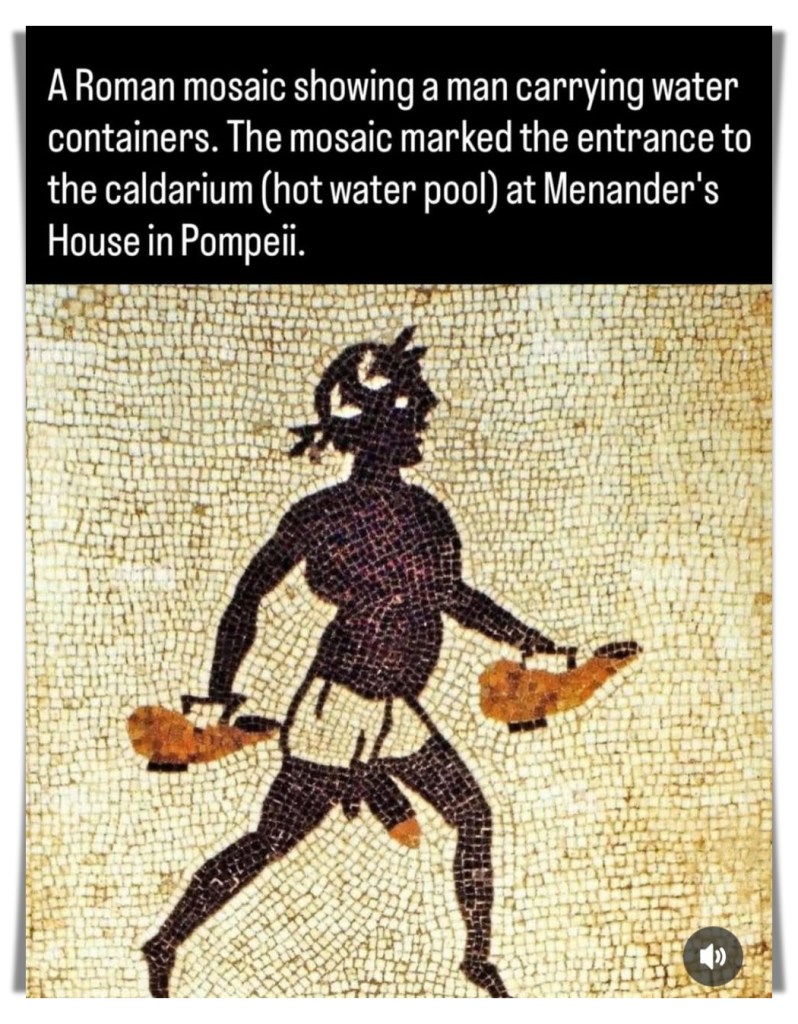
Image source

This is my 102nd post on this blog. I could’ve gone deep and reflective, writing about growth or gratitude or my journey so far. Instead, I’m giving you a man with water jugs and what appears to be a very confident, very unnecessary “thing” between his legs.

I was just going about my day when I came across a picture of this Roman mosaic while scrolling through Instagram. It was a harmless scroll and the account is offering historical tidbits. I thought I would see broken pottery, ruins, and maybe a few faded frescoes or ancient skulls and stuff. I didn’t expect this guy would be there.

It was a mosaic of a man carrying water jugs with the confidence of someone who knows he’s being watched. His muscles flexed, and his hips are a little tilted. I guess he is the original water influencer? But what really caught my attention and shamelessly wouldn’t let go?

His private part. Yup.

It was not a bulge smacked in between his legs. It was exposed. Damn. How scandalous. A big, bold mushroom swinging like a pendulum between his thighs. I looked at the screen for a long time, about thirty seconds, before whispering to myself, “But why?”

Was it supposed to be a symbol? A warning? A flex? A symbol of fertility? Or was it an inside joke from an ancient Roman tile maker who was just trying to make a boring work order more spicy? Imagine the scenario. The customer probably said, “Make it tasteful.” The artist replied, “Got it.”

The mosaic seems to have been the entrance to the caldarium, or hot water pool, in Menander’s House in Pompeii. That makes it even better. Can you picture walking into a spa and being met by a man with jugs in hand and a strange mushroom situation?

Welcome to the ancient Roman hot baths, where the water isn’t the only thing that’s hot. This might seem a little out of character for me, since I usually write about personal reflection and cultural memory. But really? Sometimes life puts a mushroom between your legs and dares you not to laugh. And at that point, you just give in and be silly. So just chill.

But after I stopped laughing (and I mean really stopped; it took a while), I became curious. Why would a Roman artist make a mosaic of this? Sure it wasn’t just for fun, right? So I asked ChatGPT and this is where things get interesting:

Art historians think that what we’re laughing at could be a waterskin, which is a leather pouch used to hold liquids. They were often shaped like penises (I don’t know why) and people carried them between their legs to keep their hands free.

So, no, it might not be an ancient anatomical exaggeration but a useful accessory. But still, they could have shaped it differently. I think many people are aware that the Romans were no strangers to sexual symbols. Their art, buildings, and even things around the house often included:

  • Phallic symbols as a sign of fertility, power, or protection (yewww).
  • Mosaics of sex in bathhouses, bedrooms, and garden walls (cringe).
  • And a general cultural comfort with the human body that was much less squeamish than our modern-day society.

Some historians say that mosaics like this at the entrance to the caldarium could have been:

  • A fun reference to the sensuality of bathing culture.
  • A good luck charm that kept evil spirits away (phallic images were thought to do this. Imagine a wife saying this to her hubby, “Honey, I think the place is haunted; why don’t you strip down?”) But I digress. 

Romans weren’t shy. Their bathhouses were shared, their jokes were dirty, and their art was often obscene. So, it could be a waterskin or a nod to something more suggestive. The fact that it’s not clear might be the whole point.

And you know what? That makes me love this mosaic even more. Maybe it wasn’t just meant for wall decoration. It could have been a reminder to not take life too seriously. We should own our stride, haul our jugs with pride, and march into the steam with a suspiciously shaped mushroom and not a hint of shame in our hearts.


Olivia Atelier offers printables, templates, and art designed to inspire reflection, healing, and creativity. Visit Olivia’s Atelier for more.

Printable Affirmation for Moms | Our Bond Is Stronger Than Any Tide

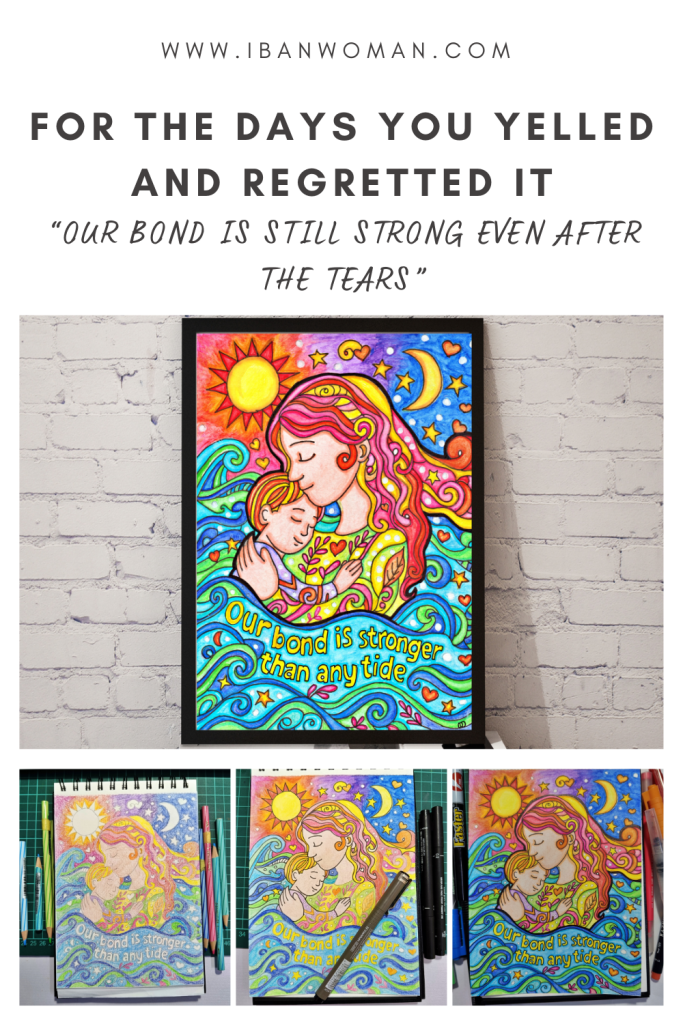
Hand-drawn printable affirmation art of mother and child with sun, moon, and waves — emotional support for overwhelmed moms.

My kids are older now. I’ve long moved past the stage of yelling. Through years of learning and reflection, I’ve softened. I still scold my kids when needed, but never in the uncontrolled way I used to when I was younger and overwhelmed. That part of me has grown quieter. But the memory? It still lives somewhere inside me, not to shame me, but to remind me of how far I’ve come.

I remember one particular moment when I yelled at my daughter. This happened many years ago. Later that evening, I sat on the edge of the bed, silent. My hands remained tightly clenched. My throat still raw. And my heart? That was the worst part. It stung with guilt and regret I’d experienced too often. When I saw her small shoulders shake, I wanted to swallow every hurtful word and undo my mistakes. But, of course, that’s not how time works.

I remembered a post I wrote not long ago, This Is Not the Mother I Meant to Be. Those words came from the same place where this printable affirmation was born: a dull aching between failure and love, a desperate desire to do better, to be more patient, to un-yell the things we shouted when we were too exhausted or too raw.

This new art piece—Our Bond Is Stronger Than Any Tide—came from reading late-night Reddit posts written by exhausted mothers. Posts full of remorse and shameful confessions. Most of these women probably didn’t need guidance. They just needed someone to sit next to them and say, “I know. I was there too.”

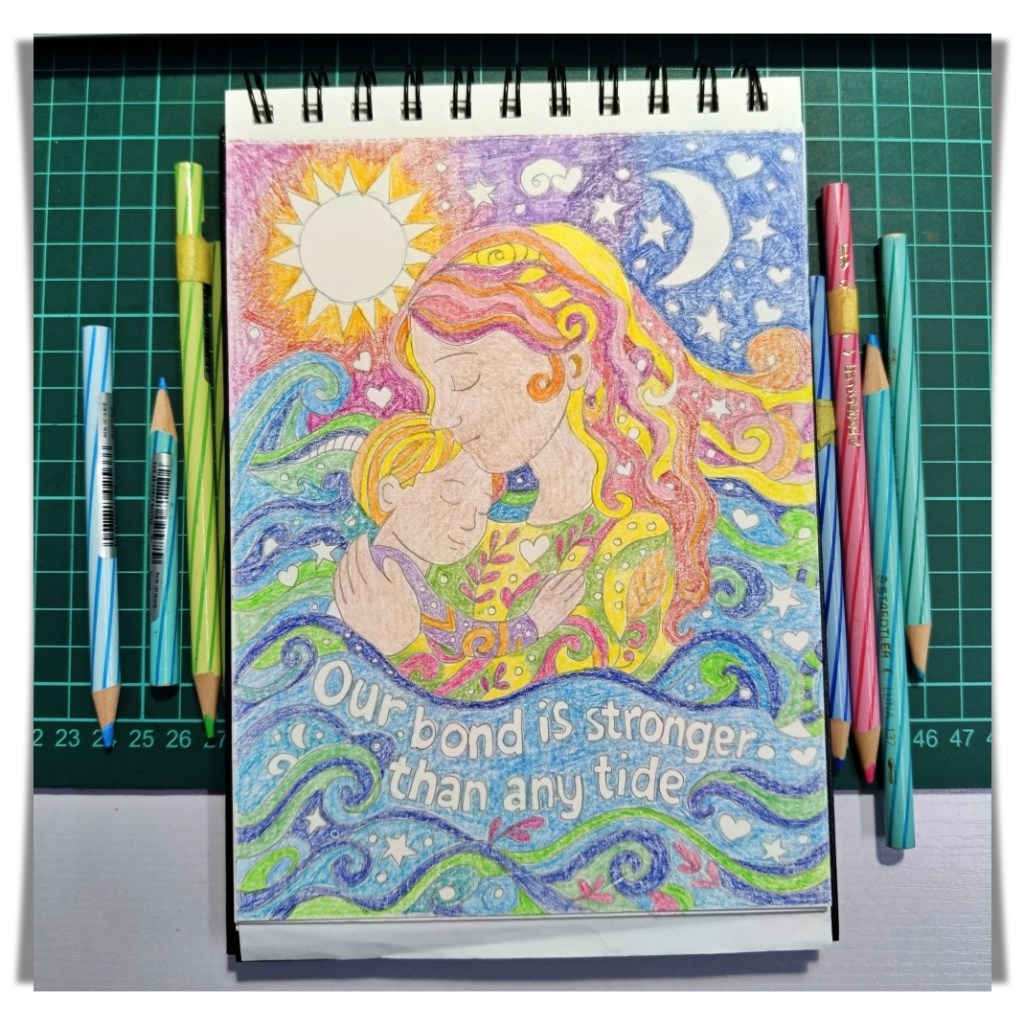
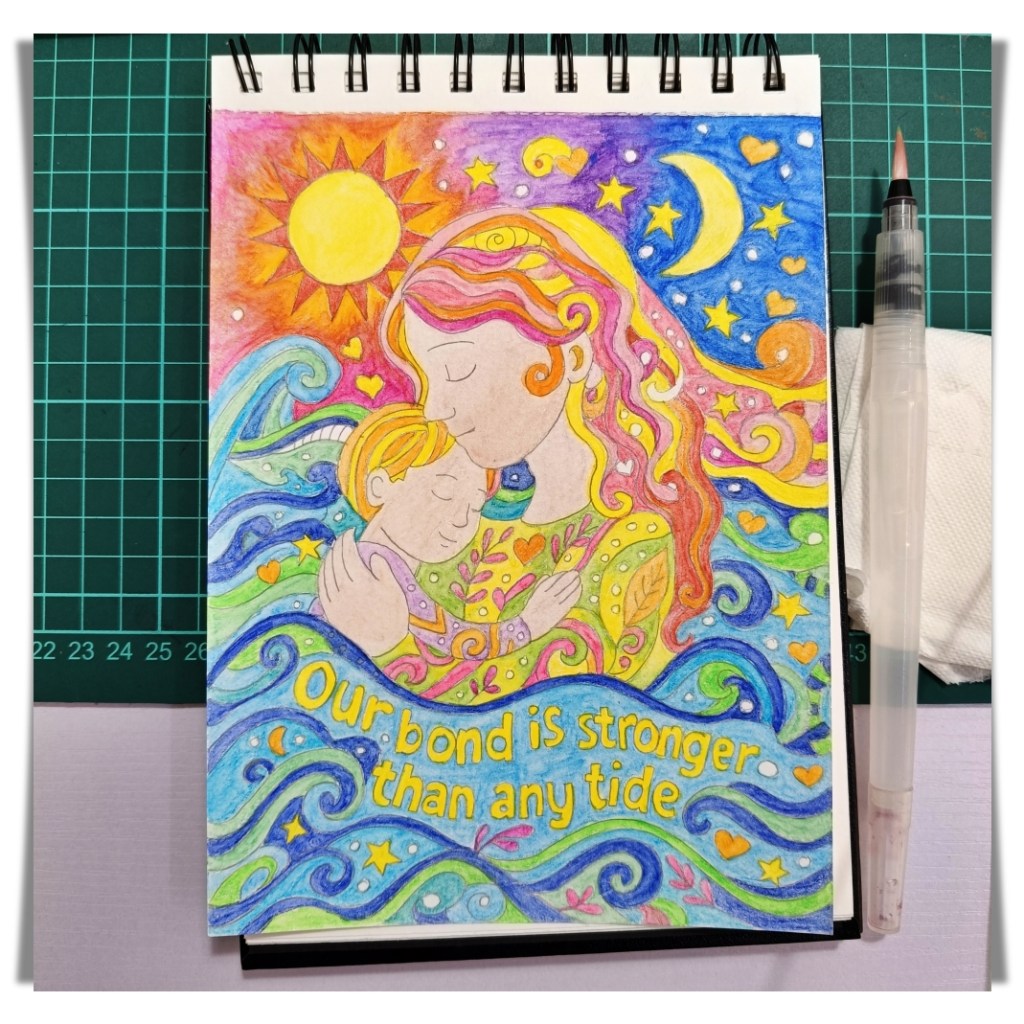
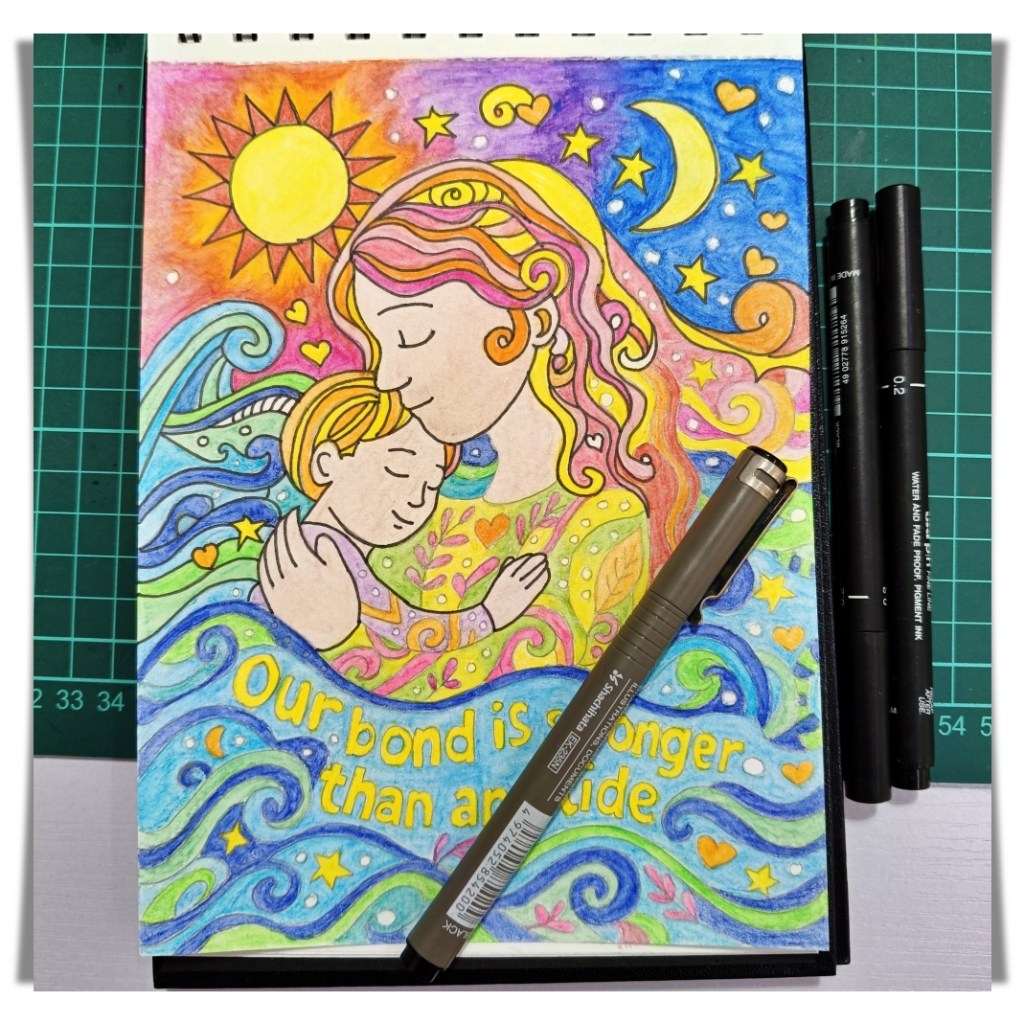
In the illustration, I drew a mother and child surrounded by waves. Above them, the sun and moon coexist, as if to indicate that both light and shadow belong together. It was my way of acknowledging that we all have both. The love that rocks us, and the exhaustion that drags us down. There are days we sing, and there are days we snap. And still, our bond endures. It may be bruised and tender. But never broken.

I wanted this printable affirmation to serve as a comforting presence in someone’s home. Not in a Pinterest-perfect way, but in the way love still finds its way in—despite the irritation, despite the frustration.

We don’t talk enough about these moments. When we talk about motherhood, we often focus on the good things while ignoring the difficult ones that come with a lot of guilt. The moments when we despise ourselves for our tone, for slamming doors, for causing disconnection when all we wanted was to connect. We show up for our kids with snacks, schedules, and crafts, but we sometimes forget to show up for ourselves. We forget that we are human, too.

And this is what I want this piece to convey: You are not alone. You are not defined by your worst moment. You are a mother, and that is the most human thing of all.

If you’ve ever whispered apologies through the crack of a bedroom door…

If you’ve sobbed in the bathroom, wondering why your patience never seems to last…

If you’ve ever thought, “This is not the mother I was meant to be”…

Then I hope that this printable affirmation for moms speaks to you.

Because our bond with our children isn’t defined by one bad day. Or even a hundred. It’s shaped by the “rhythm of return”: the apologies, the “I love yous,” the bedtime cuddles even after chaos.

Our Bond Is Stronger Than Any Tide is now available in my Etsy shop, Olivia’s Atelier. You can print this motherhood affirmation for your desk, your mirror, your journal, or your wall. Let it be a companion and a reminder. A safe place to land when everything else feels hard.

Because you, mom, are still growing and changing. And love? It never stops trying.

Explore the art here: Printable Affirmation – Our Bond Is Stronger Than Any Tide
© 2025 Olivia JD