The Farthest I’ve Been From Home

I always feel like I have to do more. Write more, draw more, make more, improve more, and perform more. There’s always something I haven’t finished. A file I haven’t uploaded, a design I need to tweak, a poem I must refine, a post I need to write, a plan I need to make. The list goes on for days and weeks, and even when I finish one thing, another takes its place before I can breathe.

I wake up thinking about it. I go to bed, still mentally rearranging tasks. I convince myself I am being responsible. I convince myself that I’m doing what I love. I tell myself that this is what I have chosen. But to be honest, most days all I want is to be done. I’m done with the expectations. I’m done with continually showing up. I’m done with the excessive urge to be productive. Everything seems to be extremely tiring, and I’ve almost reached the limit of what my mental, emotional, and physical state could cope with. 

Most days, all I really want to do is read in bed in the afternoon. I want to let myself fall asleep while a book slips from my grasp. I want to wake up when I want to, not when the alarm goes off or someone needs me. I want to stop feeling guilty for taking a break. I want to stop seeing time as something I owe to others. 

It sounds easy, right? Not at all, because I’ve built a life where I have to earn my rest. I keep telling myself that I don’t deserve to stop until everything is done. I’ve always believed that slowing down was a sign of weakness and that being worn out was proof that I was accomplishing enough.

Maybe it’s aging or the weariness of parenting. Maybe it’s the silent accumulation of years spent prioritizing the needs of others. However, these days I don’t dream of escape or achievement. I want silence. I want weightlessness. I want the freedom to stop carrying everything for everyone all the time. Sometimes I think the farthest I’ve ever been from home isn’t an actual place, but rather this version of myself that feels I must earn my rest.

Even when I traveled far, like when I lived in other countries, stayed in new cities, or walked streets where no one knew my name—I still carried the same urge to prove my worth. I wish I could go back and tell the younger version of myself that you don’t have to fill every moment. Your life doesn’t have to be a performance. You’re allowed to exist without having to produce or create anything. You’re free to just be. 

The truth is, I’m struggling to believe it now. I can’t convince myself that it’s okay to read in bed anytime I want, and I doze off when my eyes feel heavy. I’m struggling to believe that everything I’ve built won’t fall apart if I do nothing for a few hours. Because if I never feel free in my creative life, what good is it?

I experienced that same heaviness after lunch today. I guess it stems from sheer exhaustion. 

I looked at my to-do list. I looked at my computer. And then I looked away. I carried a novel and jumped into bed. I let the afternoon go. I could always write and draw something new tomorrow. They all could wait. And right now, I need to read. And sleep. 


I write about Iban culture, ancestral rituals, creative life, emotional truths, and the quiet transformations of love, motherhood, and identity. If this speaks to you, subscribe and journey with me.
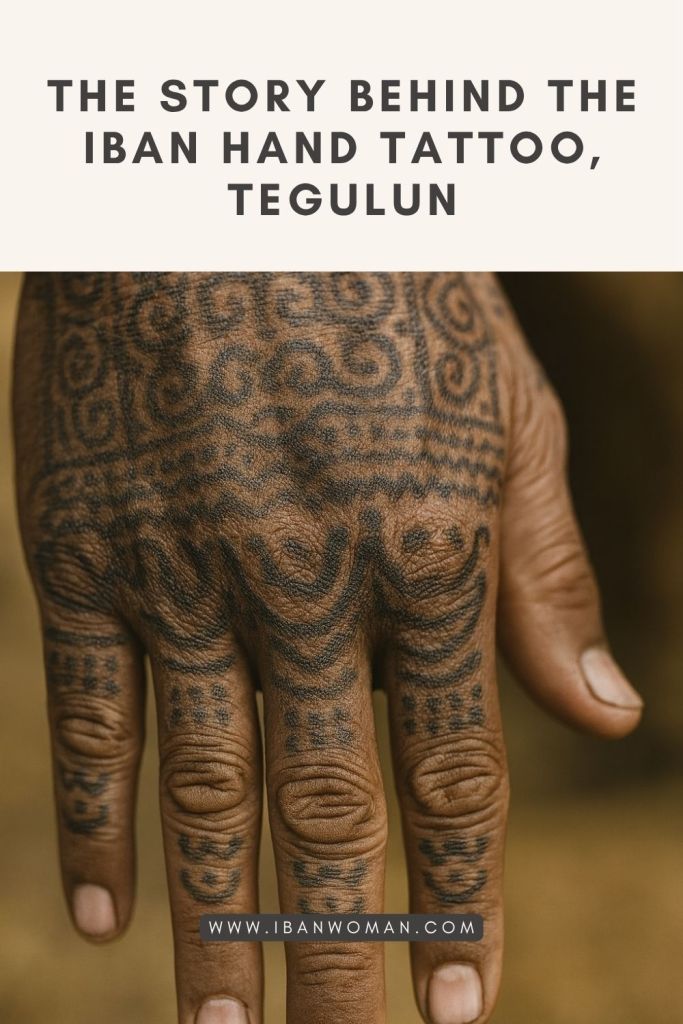
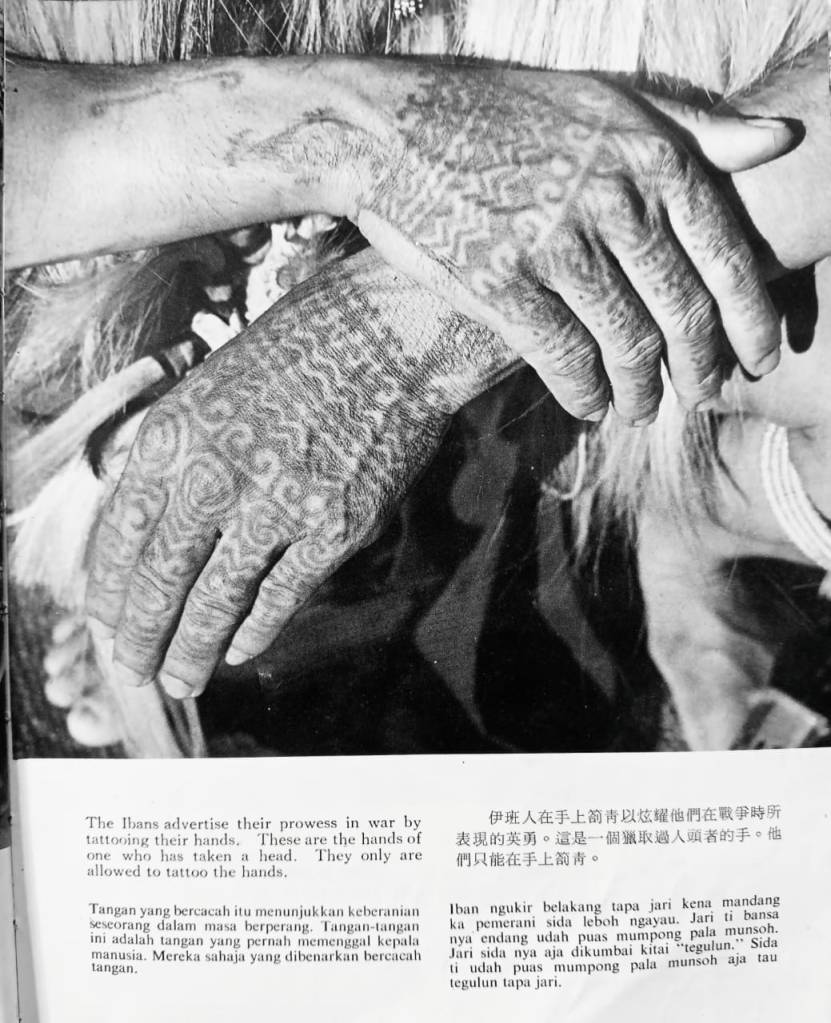
Sarawak Folk Noir | Red Eyes at the Ara Tree

This story was inspired by a real event, a memory from my childhood. I’ve always loved noir—the sense of dread, the fatalism, the uncertainties, and the things left unsaid. But I couldn’t find any noir stories told in an indigenous voice from Borneo. So I wrote my own. Red Eyes at the Ara Tree is what I call Sarawak folk noir. It carries the core tenets of classic noir: unseen forces, a haunting past, and the slow unraveling of certainty; but roots them in a rural, post-colonial setting where belief and memory still shape the edges of reality. There is no detective here. Just a child, and the adult they become, trying to make sense of what cannot be explained. The crime is an intrusion of something ancient and watching. It’s of the unknown stepping into an ordinary life.


When I was seven years old, we lived on top of a hill in a government housing complex. It was a modest row of boxy flats nestled along the slope, built for civil servants like my dad. Thick jungle pressed in from all sides. People said that years ago, communists camped all over this hill and the jungle beyond it. I guess that rumor was true because one afternoon while I was playing near the black drain, I saw a group of soldiers going down the hill. The town lay below. It was quiet during the day, but after nightfall, it was ghostlike, as if it had shrunk back to the edges of the footpath at night. 

My parents kept chickens and grew vegetables like kangkung, changkok, and daun ubi in our small backyard. There was always the smell of dirt, raw chicken feed, and shit in the air. My siblings and I played barefoot in the yard after school, with the red earth staining our soles. Life was simple and boring back then, until it wasn’t.

There was an ara jejawi tree about three hundred meters down the road, on the slope of the hill. People said these trees were old, too old, and not all of them were empty. Spirits dwelt in such trees. They were not necessarily bad, but never to be disturbed. The tree was huge. Its roots stretched over the earth like petrified pythons. In the afternoons, the tree cast wide shadows that spread to the road. Every family on the hill passed it on their way to town. Most of us walked faster around it or crossed to the other side of the road. Some others, like my mom, muttered short prayers. 

Our kitchen faced the ara tree. There were two doors at the back. One was a solid wooden door with a metal latch, and the other a lighter screen door made of wood and mesh. We usually left the solid door open so the air could move through, but we kept the screen door closed to keep mosquitoes and flies out. I never gave that door much thought. It was simply part of the kitchen, like the tiled counter or the creaky faucet. 

That night, everything was normal. It hadn’t rained for weeks. The heat lingered on your skin long after the sun went down. The cicadas were shrieking in the trees, and the chickens were quiet. We had dinner. My dad was at the head of the table, my mom was next to him, and the rest of us were spread out around the small table. My eldest sister sat right across from the screen door, looking out to the backyard and the ara tree beyond it. 

I remember my spoon scraping the bottom of the plate. My mom asked if anyone wanted more sambal belacan. Someone knocked over a cup and somebody wondered out loud who would win the WWE match later tonight. My sister stood up to get another helping of rice.

She paused. 

That’s what I remember. Her hand hovered above the rice cooker. Her face had gone still. Almost blank. She didn’t utter a word. She shifted her gaze and quietly scooped her rice and went back to her seat. The conversation went on. None of us noticed anything strange. Not then. 

She didn’t say a word until later, when we were in the living room and the dishes were clean. My dad had switched on the TV to watch the evening news and my brothers were bickering about whose armpits stank the most. 

She said she had seen eyes. Big, red, staring right at her from the ara tree. Right through the screen door. The eyes didn’t blink or move; they grew. Larger and larger with radial blur around the edges. Even while they stayed still, it appeared like they were getting closer. She swore they pulsed, like slow breathing. 

We didn’t speak for a long time after she told us. My mom told her not to bring it up again. That night my dad closed the solid kitchen door and pulled the bolt tighter than usual. No one complained. 

The next morning, it was a Tuesday and like any school day, we got up early to go to school. However, my sister complained of feeling chilly, though her skin was hot. My mom instructed her to stay home and prescribed Panadol. By afternoon, her temperature continued to rise. Her brow was sticky with sweat and her eyes couldn’t focus. Her appetite disappeared. She lay curled on her thin foam mattress, sweating and mumbling, eyes drifting in and out of focus. The doctor called it a viral fever and sent her home with Panadol. But after two more days, my parents started asking around and were given a number to contact. He was a manang who lived in a village near the town. 

I remember the manang arriving late in the evening, when it was a little cooler. His rusty white Corolla E70 arrived at precisely 7PM. A balding man with two beady eyes emerged from the car. He shook hands with my parents and my dad invited him in. He didn’t say much. He took off his sandals at the door and nodded politely at us. One of my brothers started to point to a strange-looking bag he was carrying on his back. It was an old wooden cylinder bag that looked more like a box—lupong manang, his healing kit. I had never seen one before, but I knew better than to ask. 

The manang sat next to my sister and opened his bag. Inside were small vials of various sizes, each one containing suspicious-looking liquid. A smooth stone that sparkled under the light—batu ilau—my mom whispered—and a small bundle of dried plants, a small bowl, and a white armlet. He softly murmured words I couldn’t understand and touched my sister’s forehead. 

My parents prepared a piring on a tray with betel nut, leaf, tobacco, glutinous rice, salt, two chicken eggs, and a small glass of tuak. I don’t remember how long he stayed because I fell asleep halfway through the strange healing ritual. But by the next morning, her fever had subsided. It wasn’t completely gone, but it seemed like something had finally released its grasp. 

The fever broke after five days. My sister woke up as if from a long dream. She never talked about the eyes anymore and refused to sit in that chair again. No one wanted to sit at that chair so we ended up squeezing on one side of the table, our elbows touching as we scooped food into our mouths. And after that, every time we drove by the ara tree in dad’s mung bean green Datsun, she would look at the miding sprouting above the bush along the road and never ahead.  

After all these decades, it’s likely that the tree is still standing. I never returned to that town, though my siblings had visited on their various work trips. None of them bother to check on our old neighborhood or the ara tree. The last time I looked on Google Maps, the area had been cleared and developed. More houses and buildings. The surrounding jungle is still there, but less menacing, somehow tamed. Even now, as an adult, I don’t try to explain it away. Maybe the fever would’ve broken on its own. Maybe the manang did nothing at all. But something changed that week—and I’ve never looked at shadows the same since.

Whether the tree still stands or not, in my memory it always does. It stands motionless with its thick trunks and aerial roots guarding its inhabitant.

Watching. Waiting. 

Note:

  • Kangkung – water spinach
  • Changkok – pucuk manis (popular leafy vegetable native to Southeast Asia
  • Daun ubi – cassava leaves
  • Ara jejawi – banyan tree
  • Sambal belacan – shrimp paste
  • Manang – shaman
  • Lupong manang – shaman healing/medicine kit
  • Batu ilau – divining stone used by Iban shamans during healing rituals.
  • Piring – offering
  • Tuak – rice wine
  • Miding – a type of fern, Stenochlaena palustris, a popular edible plant in Malaysia and other Southeast Asian countries.

I write about Iban culture, ancestral rituals, creative life, emotional truths, and the quiet transformations of love, motherhood, and identity. If this speaks to you, subscribe and journey with me.
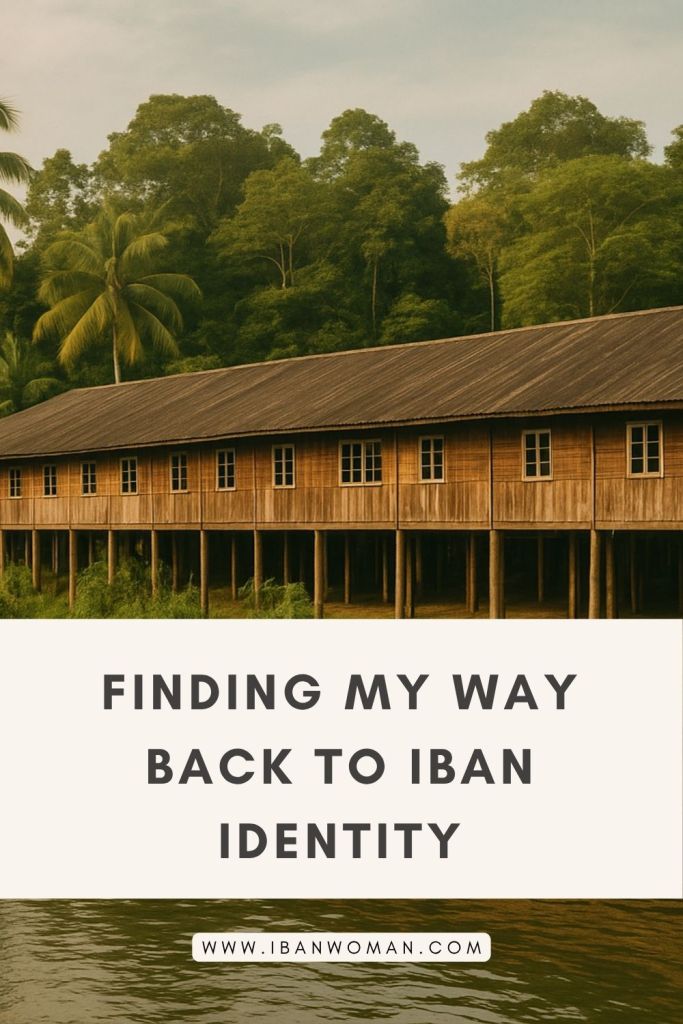
The Tale of Endu Engkejemu and Endu Engkejuang

This is an Iban folktale I grew up with. I translated this old Iban folktale in my pursuit to preserve the Iban oral literature in my own little way. The Iban version is available online, but as far as I know, no English translation has been made. I translated this in hope I can share my obscure culture with the world. I didn’t profit from this work, and I plan to translate more stories in the future and make them available on this blog. This is the story of two women, one patient and one impulsive, and how their choices led them down very different paths.


Long ago, in a place called Lubok Meram, near Lansar Kerangan Betumpu Man and Rantau Rutan, the sacred domain of Raja Ganali (King Ganali) and Bunsu Ikan, the fish god – there lived two young women named Endu Engkejemu and Endu Engkejuang.

Both were beautiful, but Endu Engkejemu’s beauty stood out. She was graceful and brilliant. Aside from her beauty, she was wise, skilled, and thoughtful. Her calmness and ability to do things well were her strengths. Endu Engkejuang, on the other hand, was full of life and quick-tongued. She was usually the first to welcome guests and try new things. She hated being second, but her impatience showed in the fact that she didn’t always do things right. For her, how quickly something was completed was more important than the quality.

One day, as they were bathing at the river, Endu Engkejuang admired her friend’s long, beautiful hair and asked, “Wai (dear), your hair is so lovely. What’s your secret?”

Endu Engkejemu replied, “Eh, no secret, wai sulu (dear friend). I just use tilan fish bones to comb my hair.”

That evening, Endu Engkejuang found a tilan fish bone and combed her hair while chanting, “Comb my hair, oh tilan fish bones, comb it to the very end.”

But she had not spoken the request properly. The bones obeyed her words exactly, and by the time they finished, she was completely bald! Crying, she ran to Endu Engkejemu for help. Her friend gently explained, “You must ask kindly. Say, “Oh, bones of the tilan, I ask you to comb my hair well so it will grow long and thick.”

Endu Engkejuang followed her advice, and slowly, her hair began to grow again.


Not long after that, Endu Engkejuang saw a handsome man sitting at Endu Engkejemu’s ruai, the communal space of the longhouse. Curious, she rushed to her friend and asked, “Wai, who is that handsome man?”

“He appeared after I pounded some rangan lime leaves,” Endu Engkejemu replied.

Without hesitation, Endu Engkejuang gathered some leaves but picked them carelessly, including old and rotten ones. She pounded them, hoping to summon someone like the man her friend had met. Instead, an old, wrinkled, and scarred man with warts appeared!

Horrified, she ran to her friend again. “Why is yours so handsome and mine so ugly?”

Endu Engkejemu answered simply, “Because you didn’t choose the leaves properly. Only pick the young and nicest leaves. Good things come from good intentions, wai.”


Later, while working in the paddy fields, the two friends were swarmed by mosquitoes. Irritated, Endu Engkejemu said aloud, “There are so many of you! If you love me so much, why not take me as your wife?”

To her surprise, the mosquitoes lifted her gently and carried her to Raja Nyamok, the Mosquito King. There, she became his wife.

Life in the mosquito kingdom was difficult. The mosquitoes fed on blood, and Endu Engkejemu could not eat what they ate. But she never complained. She continued to treat her husband with kindness and respect, even though she was silently suffering.

Eventually, she pretended to be ill. Raja Nyamok, concerned, summoned a manang (shaman) to heal her, but she only became worse. Finally, she pretended to die.

Heartbroken, Raja Nyamok arranged a grand funeral for her. He ordered her body to be placed on a high altar, as was the custom for royal family members. He provided her with new clothes, jars, traditional musical instruments like setawak, dumbak, bendai, menyarai, engkerumong, and gong. There were many other valuable items to accompany her in the afterlife.

When the mourners returned home, Endu Engkejemu quietly unwrapped herself and took everything back with her to her longhouse. Her return amazed everyone. No one could believe what she had brought home.

Endu Engkejuang heard that she was back and she was filled with burning envy. Determined not to be left behind, she hastily went to the paddy fields and let herself be bitten by the swarming mosquitoes. “Take me as your wife if you want me so badly!” she yelled.

The mosquitoes carried her to Raja Nyamok, who accepted her as his wife. But unlike Endu Engkejemu, Endu Engkejuang couldn’t hide her disgust. At the sight of blood everywhere, she whined and complained, “My father never raised me to drink blood like this. I could never be married to someone like you!”

Insulted, Raja Nyamok declared, “You have humiliated me in front of my people and insulted our food and our way of life.”

He ordered his followers to tie her hands and feet and leave her in a part of the jungle where no one would find her. Alone in the middle of the jungle and covered in bruises and mosquito bites, Endu Engkejuang eventually freed herself and stumbled back to her longhouse.

Her family was shocked to see her when she arrived. She looked terrible: her face was swollen, her clothes were ripped, and she was crying pitifully.

Endu Engkejemu, on the other hand, lived on with quiet dignity. Her story, which has been passed down through the generations, reminded everyone that being wise, patient, humble, and caring pays off, while being envious, petty, and rushing often leads to disaster.

Note:

I translated and adapted this story into Malay (shared on Threads) and English (here on my blog), based on the version originally shared by Gregory Nyanggau Mawar on the Iban Cultural Heritage website.


I write about Iban culture, ancestral rituals, creative life, emotional truths, and the quiet transformations of love, motherhood, and identity. If this speaks to you, subscribe and journey with me.
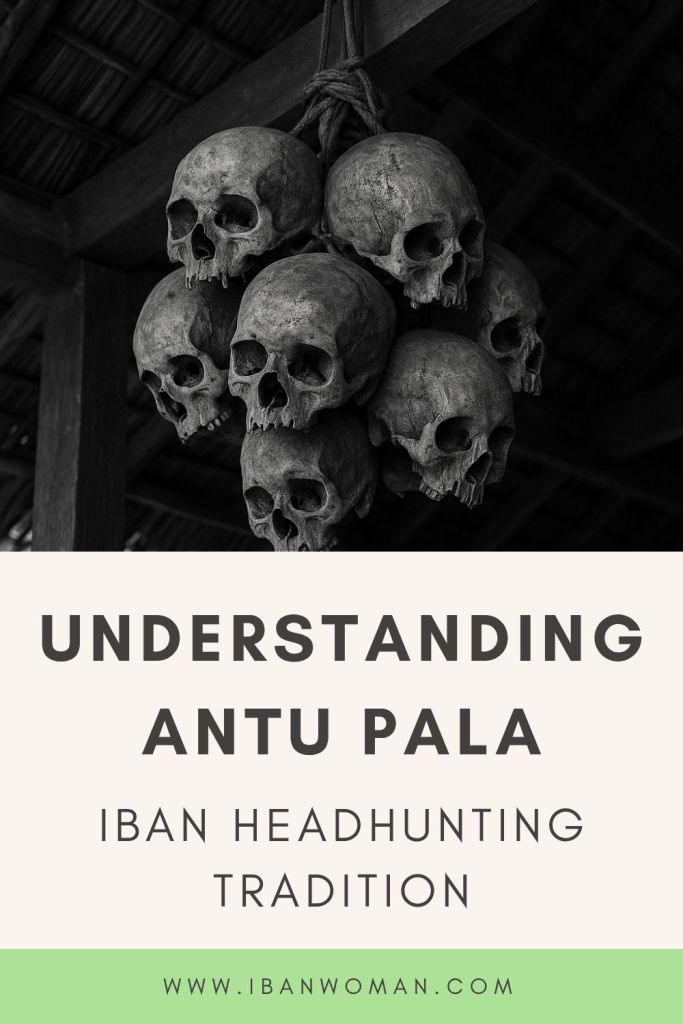
The Cry of the Koklir | An Iban Ghost Story

Before I share my experiences, I’d want to clarify who the koklir is and what she represents in Iban belief.

People often think of the Iban people of Sarawak as headhunters, which is a part of our history, but it tends to eclipse the deeper aspects of who we are. However, our culture is not only based on headhunting. We have a strong spiritual connection to the natural world, which is rich in stories about spirits that live in rivers, lands, mountains, and dreams. Our folklores are alive with omens, taboos, and the spirits of people who have departed. Some spirits protect, some guide, and others, like the koklir, are said to return because something in their death was left unresolved.

In Iban culture, the koklir is one of the most feared spirits. She is believed to be the spirit of a woman who died during childbirth or shortly thereafter, specifically during the vulnerable bekindu period, which lasts for forty days of healing and recuperation. Her death is known as busong mati, or a spiritually unfortunate death, and her soul is considered to become jai (malevolent). Her soul is malevolent not because she did something wrong in life, but because her death was unnatural and tragic. Her spirit doesn’t cross over to the other side in peace; instead, it lingers behind, transformed by pain and grief.

As a ritual precaution, lime thorns (duri limau) are poked into her hands and soles before she is buried. It’s a symbolic act aimed at weakening her spirit and preventing her from becoming a koklir. Some people allege that her tongue is also pierced.

Then a prayer is being offered, asking her to rest and not come back to bother the living. But if the ritual isn’t done or if the death is really violent or sudden, people say she might still come back to haunt, seek, and punish.

The koklir is believed to target men. Most of the time, you can hear her presence through a chilling cry that starts out like a hen calling her chicks: “kok, kok, kok…” and ends with a piercing, terrifying “haiiiiii waiiiiii!” Before she attacked her victim, she would scream “kokliiiiiiiiiiiiiiirrrrrrrrrr”. She sometimes takes the form of a beautiful woman, hiding her face with a tanggui serawong (woven sunhat) or a kubong leaf. Sometimes she manifests as an enturun, a shaggy, nocturnal bearcat with long claws. Some men say they’ve heard her voice in the jungle or by the river at night. Some people say they’ve seen her scratch at windows or doors with fingers that look like claws. The stories are shared quietly among men, usually late at night, and sometimes with fear or bravado.

I’ve never seen her. But would you believe me if I told you I heard her twice? And I remember it very well both times.

First Encounter

I was fourteen. It was the first day of the school break. Because my flight home was later that night, I was the only student left at the girls’ hostel at my boarding school. Everyone else had left throughout the day. The hostel was quiet and empty.

That morning, the warden told me to turn off the lights and close all the doors before I left. I said I would. After dinner, at about 6 PM, I took my bags outside and waited for my cousin to pick me up. It was getting dark already.

Before leaving, I went back in to do what I promised: turn off the lights and close the doors. I went up to the first floor, strolled through the empty corridor, and did what I had to do. The only sound was the rustling leaves blowing in the breeze. Everything else was still and quiet.

I heard something as I came back down, near the bathroom on the ground floor.

Kok… kok… kok…

It was soft and faint, exactly like a hen calling its chicks.

But this was a school compound. No nearby houses, no chickens. Just trees and a greenhouse. I stopped and listened again. I thought maybe I imagined it. I finished what I was doing and went back to the entrance. I stood there in the light of the corridor, looking out at the road. Everything else around me was dark.

Then, around 7PM, I heard it again.

Kok… kok… kok… kok…

It was slower and closer.

I felt chills and goosebumps all over my body. I was too scared to look around. I just kept my eyes on the road, expecting to see my cousin’s headlights. He came soon after that. I hastily loaded my bags into the car and drove away. I never looked back.

I didn’t see her, but I know what I heard. We believe that the koklir doesn’t harm girls or women because she only targets men. That gave me some comfort, but the sound stuck with me for years.

Second Encounter

I was still living in the same hostel a year later. I didn’t hear her voice this time, but I did hear something else. My bed was next to the door. Sometimes, I would wake up to a loud scratching sound at the door. I believed it was stray dogs trying to get in, so I went back to sleep.

However, I looked at the door one morning because I was curious. There were scratch marks, but they weren’t at the bottom where a dog could reach them. They were higher up, around chest height. That detail stuck with me. What kind of dog can scratch that high?

I didn’t say anything to anyone. I didn’t want to scare the others, especially the younger girls. But I remembered what the elders used to say: the koklir scratches at doors and windows with her long nails to find a way in.

After that, the scratching happened every now and then. I didn’t say anything about it until much later. I told the story years later in our WhatsApp group for former dormmates. I was surprised to learn that I wasn’t the only one. Others remembered the same sounds from the same door and that same feeling of unease. However, we all stayed quiet, but we were all scared.

Some people might not believe these stories. They can argue it’s merely animals, wind, imagination, or ridiculous stories from the natives. But I don’t think I made anything up since I know what I heard.

These encounters aren’t just stories about ghosts. She is a reminder of how deeply the Iban people see death and life as intertwined, how even grief has a place in our stories. As Iban people, we understand spiritual realms that involve death, grief, and the things that linger. The koklir is a reminder of women who died too young or too soon, often forgotten or feared, yet still searching for peace. She didn’t show herself to me. But I heard her cry and have never forgotten it, even after decades have passed.


I write about Iban culture, ancestral rituals, creative life, emotional truths, and the quiet transformations of love, motherhood, and identity. If this speaks to you, subscribe and journey with me.

The Ritual of Water | An Iban Ceremony for New Life

Last weekend, I found myself standing knee-deep in a shallow river in Janda Baik. The sunlight came through a canopy of trees above, casting soft streaks of light on the water’s surface. Everything felt quiet and peaceful. My kids splashed further upstream, and their laughter echoed off of rocks and trees. I stood still, closed my eyes, and let the water swirl around my legs as it flowed downstream.

It reminded me of the Iban traditional child-naming ritual. I’ve never seen it with my own eyes, but I learned about it from the elders and through reading. This ritual was held following the naming of the child and to formally “introduce” the child to the river. 

In the Iban way of life, water is more than a physical element. A body of water like a river is also a spiritual space. It gives life, but it is also a source of danger. We wash with water from the river, and sometimes, when the water is clear, we even drink and cook with it. It carries our boats to other villages, fields, and faraway places. However, it’s also where crocodiles and other dangers live. No Iban has grown up without hearing stories about someone who was attacked at the river. When a child is born, we don’t just give them a bath. We also hold a ritual to beg the river not to harm them. 

After the child is named, the bathing ritual begins. The night before the ceremony, the father informs the longhouse community of his intention. At dawn the next morning, the whole longhouse community walks to the river in a solemn procession. A flag bearer is at the front, and a man carrying a fowl follows him. Both of these men are chosen from among the respected elders. Two women walk behind them. One carries offerings and the other carries the child wrapped in handwoven pua kumbu. The rest follow, beating the gongs as they walk.

At the riverbank, the flag bearer cuts the water with a knife. The man with the fowl recites an invocation to call upon the spirits of water, earth, sky, and all the creatures that swim below the surface. He asks that the child be given good fortune, sharp vision, and safety. He calls the crocodile, the soft-shelled turtle, the barbus fish, the semah, and the tapah. He calls each one by name and tells them to regard this child as family, not food. He says, 

“If this son or grandson of ours happens to capsize and sink while he is visiting, you are the only ones who can lift him up and keep him afloat.”

It is not a metaphor but a real request, born out of fear and hope.

After the invocation, the child is bathed and the fowl is slaughtered. People make noise on purpose, like banging gongs and laughing, to drown out any bad omens. If the child is a boy, one wing of the bird is tied to a spear with red ribbon. The wing is attached to a heddle rod if it’s a girl. A bamboo basket full of offerings is then hung from a leafy pole. 

After that, they return to the longhouse and sprinkle the child with sacred water to get rid of bad omens. A feast is held and the gongs ring out to mark the ritual’s success. The child is now considered truly part of the community, and both the people and the river know it.

As I stood in that river at Janda Baik, I began to think about the rituals we’ve forgotten. What would it mean to reclaim a gesture like this, perhaps not literally but in spirit? The Ibans don’t all live in longhouses anymore. Some of us reside in cities and raise our kids as urbanites, but water still calls us. Maybe part of why we seek places like Janda Baik is because something in us still longs to make peace with the river. Rivers still take us places. They still give and take. And we too are still vulnerable to things we can’t see.

Maybe modern mothers need more moments like this, when they can recognize their fears, their prayers, and their desire to protect the people they love. We might not need to cut the water with a knife, but we can still offer a prayer, still whisper a blessing:

“We beseech you to confer on him fortune, give him sharp vision so that he will be fortunate, wealthy, and blessed with good health throughout his life. 

We can still speak to the river, and certainly we can still be heard. 


I write about Iban culture, ancestral rituals, creative life, emotional truths, and the quiet transformations of love, motherhood, and identity. If this speaks to you, subscribe and journey with me.

Flash Fiction | Before the Sun Takes Me

The night sky stretched out like a thick dark veil that would never end. The stars blinked, their usual brightness faded, seemingly taking the brunt of the choice I had to make. My warriors remained silent. Their eyes were full of trust in me. And yet, my heart roared with doubt. 

The dream from the night before clung to me like a second skin. Kumang had appeared. Her face sorrowful and her voice clear: “Do not strike at dawn. To do so would mean your death.”

I was raised to heed such signs. Dreams are not dismissed in our way of life. They come from the realm above the sky, Panggau Libau and Gelong, where spirits still keep watch and gods whisper their warnings to those willing to listen. 

But how could I pause now? I am Aji Apai Limpa, son of Dana Bayang. I carry the weight of my lineage and the blood of warriors. I have a duty to protect our land from those orang putih who pretend to come in peace but seek to conquer it. The White Rajah’s men moved through our rivers and jungles like relentless mold beneath the rotten bark. I had promised my people to fight back. 

Doubt wound around me like a snake, growing tighter with each passing second. I thought about each consequence carefully. If I held back, people might think I was weak and couldn’t handle the challenges of war. And yet, to march forward meant possibly embracing the death that Kumang had warned me of. It’s not just my life but the lives of those who depended on me for safety. 

The fire beside me crackled softly, radiating out small bursts of warmth that couldn’t reach the cold in my bones. I thought of my father and the things he taught me. I could almost hear his voice now. “Son, a leader’s strength isn’t measured by how loud he yells or how many people he kills, but by how deeply he listens to the land and the spirits.”

There was only silence tonight.

I stared into the embers and saw our longhouse. The ruai filled with children’s laughter. I saw the old ones with rheumy eyes by the bedilang, telling stories even as war crept closer. I saw my people, worn out and wounded but still holding on. Could I really ask them to wait and trust in the dreams and omens that only I heard and saw?

I thought of Kumang’s face again. Her expression softened and a gentle acceptance shone in her eyes. Was she trying to test me? Did she see the path that I couldn’t? Or was this simply the fate of every leader to make choices in the shadows? 

I looked to the heavens for answers but none came. There was only an unrelenting silence. The river sprang to mind. It doesn’t resist the earth but bends and curves, following the land it loves. Maybe this was the lesson Kumang wanted to teach me. Sometimes strength is not found in striking but in knowing when not to. 

Still, I couldn’t look away from what the morning would bring. I couldn’t stop seeing flames that had burned our longhouses and fields. I’m haunted by the blood and the lifeless bodies of my warriors. I couldn’t ask my warriors to retreat into silence when everything within them was ready to rise. 

I gripped my sangkuh, finding strength on its solid surface. Death is never far from a warrior. If Kumang’s vision was true, my demise awaited me at daybreak. But what about it? My life has never been mine alone. It belongs to this land, the spirits, and the people who look to me for courage. 

Still, doubt gnawed at me. Would my death make any difference? Would it make my men fight harder, or would it break their spirits, making them vulnerable to the enemy’s advances? Such questions couldn’t be answered tonight. 

I closed my eyes and prayed for the strength to choose. I got up when the horizon began to pale with the morning sun. My men stirred and looked at me. No one said a word. They only waited for my voice. 

I took a deep breath, letting the air of our land fill me one last time. 

“Kitai mupuk udah makai pagi,” I said. The words tasted bitter. It carried the sorrow of defying a goddess. But these words were mine and the resolve of a man who had chosen. 

I looked up at the sky one more time as the warriors were getting their weapons ready. I half-expected to see Kumang’s face among the clouds. But there was only the rising sun shining over the land I loved. 

I would meet it standing, no matter if it marked my beginning or my end. 


Footnote:

This flash fiction is inspired by the life of my great-great-great-grandfather, Aji Apai Limpa, a well-known war leader of the Iban people of Borneo in the mid-nineteenth century. From 1854 to 1858, Aji commanded his warriors in resistance to the White Rajah’s forces. He died in a fierce battle at Sg. Langit (Langit River) in 1858. Aji’s courage and valor have been immortalized in Iban poetry, which is passed down through generations by bards.

The Iban people of Borneo were traditionally animists, believing that spirits, animals, nature, and other aspects of the earth are living and interrelated. Even though most Ibans are now Christians or Muslims, animist ideas are still very much a part of our traditional beliefs and customs. One of these traditions is augury, which is the practice of interpreting god’s signs based on the behavior of certain birds that are thought to be divine messengers. Along with dream interpretation, augury is an important part of Iban divination. These practices are based on a way of thinking that sees the sacred in nature and gives guidance and warnings to those who can read its signs.

Translation of Iban words

  • Ruai: the communal open area or covered verandah that runs along the length of a traditional longhouse.
  • Bedilang – hearth
  • Sangkuh – spear
  • “Kitai mupuk udah makai pagi” – we make a move after breakfast
  • Kumang – a supreme goddess of the Iban from the realm above the sky, Panggau Libau and Gelong
  • Orang putih – white men

The Story Behind My Name | Pop Culture, Ancestral Power, and the Pua Kumbu

My first name, Olivia, was given to me by my aunt, who was an avid Olivia Newton-John fan. She loved the music and for her, the name represented something beautiful and worth passing on. So I became Olivia, named after a beautiful and talented singer. 

Growing up, I didn’t think much about it. It was just my name, four syllables, easy enough to pronounce, and slightly more trendy than the names around me. But back then it was common to see kids with names such as Donny Osmond or Cliff Richard. It was tacky, I admit, but I still take the compliment of being named after a superstar. However, over time, I began to notice how names carry stories and I realized mine was only half told. 

While Olivia came from pop culture, my second name came from something far older, deeper, and more spiritual. It was given to me in honor of a woman in my family, a great-grand-aunt who was once an early 20th-century Iban master weaver of the sacred pua kumbu (ceremonial cloth). She was not only skilled in her craft but also legendary. In our culture, women like her were known as “indu takar, indu ngar.” These were women who could receive weaving patterns in dreams from the supreme deity, Kumang, and translate them into woven cloths imbued with spiritual power. 

In days of old, the pua kumbu held a sacred role in the ritual and festival of enchaboh arung, where severed enemy heads were received. These clothes were woven by the wives or mothers of Iban warriors, guided by spiritual forces from the heavenly realms of Panggau Libau and Gelong. Upon their husbands’ and sons’ return from war, the women would spread the pua kumbu across their arms, welcoming them home and placing the enemy heads upon the cloth. (Refer to the footnote for more details). 

For Iban women, including my great-grand-aunt, weaving was more than just a craft. It was their “warpath,” parallel in sacredness and risk to the men’s headhunting expeditions. Before they could begin a new ceremonial piece, they needed to receive it in a dream and enter a specific spiritual state. One wrong move, even in how they prepared their threads, may lead to misfortune or even death. Their work carried great responsibility and risk. It required focus, discipline, and faith in the divine. 

I may not entirely understand the weight my great-grand-aunt bore, but I have always felt an echo of it. Receiving her name was an inheritance. It connected me not only to her but also to the spirit of her work and her path. 

I don’t weave cloth, but I do write and draw. Often it begins with a dreamy vision, like a found phrase or an emotion that I can’t fully articulate. There’s always that strong urge to make sense of it and mold it into something tangible. When I started my blog, I named it Olivia’s Atelier because I wanted it to be a personal and meaningful space. As Virginia Woolf once said, this is a room of my own. This is a space where I could shape something substantial based on my truths. 

Recently, I updated the blog header to reflect more of where I come from. I didn’t want anything generic or trendy but I wanted something that expressed my culture and heritage. So I chose an image of pua kumbu, the sacred textile woven by women like my great-grand-aunt. It carries more than visual beauty, with rich deep reds, blacks, and intricate patterns throughout. It holds power, dignity, and sacredness. 

To some, it may just look decorative. However, for me, it serves as a subtle way to assert my identity and heritage in this fast-moving, globalized world. 

My great-grand-aunt likely never imagined her name and legacy would live on in a digital space, passed down to a woman who lives a century apart. But I think of her often when I work, especially late at night when the house is quiet and I am writing or drawing. I wonder if this page I write or draw on is my version of the loom. 

That thought changes the way I approach my work. I don’t follow trends or write for algorithms. I build my work and portfolio slowly and with care. I try to create things that have meaning, even if they are simple. This is my way of remembering and continuing a legacy that is otherwise pushed aside by the more flashy things the crowd chases. 

I won’t mention my great-grand-aunt’s or my second name here. Some things should be kept private but rest assured, I carry her with me. She is part of my story and also why this blog exists. 

I was named after a singer whose voice brought joy to many. And I was also named after a woman whose hands transformed dreams into sacred cloth. Both of those women live inside me. They influenced how I perceive the world and the way I write or create. 

When you visit this blog and notice the patterned header, know that it holds a layer of memory and pride of a culture. It holds a legacy and strength that runs beneath everything I share. 

I have a first and a second name. One name was given; the other inherited, and both live on in everything I write and create. 

Footnote:
After returning from war expeditions, Iban warriors would spend about a week in huts away from the longhouse, cleansing themselves and preparing their “war trophies” (enemy heads). The heads were carefully skinned, the brains removed, and then smoked for several days. Once properly preserved, the warriors dressed in their finest regalia for a grand arrival during the enchaboh arung festival, where the skulls were placed into the waiting arms of their wives or mothers.


Olivia Atelier offers printables, templates, and art designed to inspire reflection, healing, and creativity. Visit Olivia’s Atelier for more.

What Motivates Me to Keep Creating as a Writer and Artist

I sometimes wonder if it’s foolish to keep doing this. I write, create, draw, and start all over again. There’s no assurance that anyone is listening or anything will come of it. But still, I keep coming back. I wake up before the world stirs and write. I build and dream out loud. Why? Because something inside me refuses to stay silent. 

I believe my primary motivation is the need to express myself truthfully. I don’t do it for performance or to convince anyone. I just express myself either through writing or drawing without having any expectations. I’ve spent far too many years conforming to the expectations of others. I am a wife and a mother. I am reliable and strong. But when I write, I can be tender, unfiltered, and fully myself. Even if the words come out wrong or the idea is incomplete, it is still mine. Creating allows me to regain the parts of myself that were left behind. It’s how I come back to myself. 

Writing helps me express things I can’t say out loud. It makes room for contradictions like guilt and delight, compassion and tiredness. It allows me to say things that I’ve been holding back for years. Some of my poems or essays contain silent confessions. Others are simply letters I’ve never sent. However, they all stem from the same place: a desire to live truthfully, even if just on the page. 

And something wonderful happens when I release that into the world. My words reach out and connect with the right people. People crave connection. Everyone. You and me. My words may give comfort to those who scroll past the noise and pause at a sentence because it sounds like something they previously felt but never said out loud. I don’t share my writing for likes or analytics, but I have hopes that someone, somewhere, would read what I wrote and feel seen. 

Connection doesn’t always mean interaction. Sometimes it’s just the feeling of being less alone. A stranger may read my words and find a piece of themselves in them. It may seem trivial and unimportant, but there’s something deeply rooted about it. It’s honest, authentic, even mundane. 

And there’s something else that draws me in—my culture. Iban women weren’t always taught to speak up, though they did have important roles in the hierarchy of things. No matter where I am in the world, I carry my ancestors with me. I carry their strength and courage in my veins. And I want to record that because I want to remember. I want my children to remember too. Writing helps me to cling onto what the world keeps trying to erase. 

When I write about Iban culture or way of life, I feel as if I am reconstructing myself. I know these stories matter even if just a handful of people read them. 

I am also deeply motivated by creative freedom. I’ve had roles, jobs, and seasons where I adhered to the rules. It paid the bills, certainly, but it drained my spirit. This space I’ve built—my blogs, art, and shops—is mine. I don’t need to wait for anyone’s permission. I can write anything I want, like a parenting essay on Monday, publish a poem on Wednesday, and draw something for fun on Friday. The flexibility and ownership are essential for my creative spirit. 

There’s something powerful about knowing I can change course if I need to. I don’t have to adhere to a specific niche or present a specific version of myself. All my creative work reflects every aspect of me, whether they are messy, raw, or incomplete, they are all mine. 

Perhaps the most tender motivation is I do this for my children. Money is important, of course; I do earn from some of my work, but money is less important when it comes to showing my children who their mother truly is. It’s important for them to know that I have dreams and aspirations, and I wasn’t just the mother who prepared their meals and helped with homework. I want them to know that I was also someone who wrote her way through pain and hope. I want them to see me grow and not simply survive. This, I hope, may give them permission to do the same. 

I want my children to know that it’s okay to change direction, to outgrow old narratives and start again. I want them to see that growth doesn’t always look like a straight line. Sometimes it’s slow, silent, or even invisible. But regardless of the progress, it’s still growth. And I want them to have the courage to follow their own paths, no matter how long or winding they get. 

So when things become hard, and they do, I try to come back to these five truths. I don’t always get it right. There were days when I doubted or gave up, but the fire never completely went out. And when I return, it welcomes me back like a lover with wide open arms. 


Olivia Atelier offers printables, templates, and art designed to inspire reflection, healing, and creativity. Visit Olivia’s Atelier for more.

Passing Stories Along | A Visit to BFBW Subang Parade

Books are expensive in Malaysia. Anyone who reads a lot already know this. A single paperback can cost as much as a meal for two people at times. And when you’re trying to pay your bills, parenting, buy groceries, or just get through the month, buying a new book feels like a luxury that’s easy to postpone.

That’s why I’ve always liked used bookstores. Yesterday I went to a small, quiet bookstore in Subang Parade called BFBW – Books for a Better World. I wrote a short post about it on Threads, but the visit stayed with me. The variety of titles and the reasonably priced books weren’t the only factors. It was the mood and what the place stands for.

The bookstore is small. There aren’t any cozy corners or mood lighting for photos. There were just clean white shelves, a blue donation box with a cartoon bear on it, and fluorescent lights above. There were no frills in the room, and the floor was just cement. But it still felt good, simple, welcoming, and real.

What made it feel meaningful was the sense that every book had already lived a life. Each one had been read, or maybe left unread, carried in someone’s bag, or left waiting on a nightstand. They were now waiting for someone else to bring them home. That continuity, stories passed from person to person, makes used books unique and special.

I ended up buying three books for RM10 each. One was Committed by Elizabeth Gilbert, which I’ve wanted to read for a long time. KL Noir was another one that caught my eye because of its subtitle: “Without shadows, there can be no light.” The last one was Life Inside My Mind, a book of essays by different writers about mental health. That one hit home.

These books weren’t in perfect shape. One had corners that were folded. The edges of the other one had faded. But that didn’t matter. I liked that they had been somewhere before me. Someone else had opened these pages and read them, or maybe they didn’t. It’s possible that the book was passed on without being read. It had traveled in any case.

That’s one of the little things that make used bookstores so nice. When you buy a book, you’re getting more than just a book; you’re getting a piece of someone else’s journey. It gives the book a deeper meaning that new books don’t always have.

At the front of the store, BFBW also has a donation box where people can leave books they don’t need anymore. The donated books aren’t just sold again; they’re also given to literacy programs and charities. Communities, schools, and small libraries benefit directly. It’s a simple system that supports access to reading.

While standing there, I reflected on my own bookshelves at home and the books I have kept but no longer read. Some of those books meant something to me at one time, but now they’re ready to go. I also bought books on a whim and never read them all the way through. I realized that giving them away could give them a new life.

It reminded me that sharing stories is more than just writing and publishing. It’s also about letting go and letting a book continue its journey by giving it to someone else. By letting go, we are passing on what helped us in the past or what we never got around to reading.

As a mother and a writer/artist, I often think about the kind of legacy I want to leave behind. This includes not only my own work but also the values I pass on. I want my kids to grow up in a world where they can get their hands on books. Where knowledge and imagination aren’t limited by price and where stories travel. Bookstores like BFBW make that vision feel possible.

If you live in the Klang Valley and have books that are in good shape, whether they are fiction, nonfiction, or children’s books, think about giving them away. Or take a little time to look around and pick up a few. You might find something you didn’t expect. You might rediscover the joy of reading without pressure.

I’m glad I stopped by. I left with three books and the feeling that I was part of something bigger. You are not just a reader but a link in a generous chain of people passing stories along. It really is that simple sometimes.


Olivia Atelier offers printables, templates, and art designed to inspire reflection, healing, and creativity. Visit Olivia’s Atelier for more.

What I Enjoy Most About Writing

I’ve been writing since I was a child, but it wasn’t until I was an adult that I figured out what I enjoyed most about it. It’s not always the act of writing itself, like filling up notebook after notebook or the satisfying click of the “publish” button. What I love most about writing is how it helps me understand myself and the world in ways that nothing else can.

Writing has always helped me see things more clearly. It calms my mind and helps me sort through complicated feelings and thoughts. I sometimes start writing without knowing what I want to say. But as the words come, my ideas begin to settle. The unpleasant feelings start to fade and the fog clears. Writing gives me a sanctuary to think, reflect, and heal.

I often write to work through feelings I haven’t fully processed, like grief, confusion, doubt, or painful memories. Writing gives those emotions a safe place to land. It helps me carry what would otherwise feel too heavy. Sometimes I don’t need a solution. Just putting the words down is enough. It becomes a form of release that quietly brings me back to myself.

Writing also helps me connect with others. Whether it’s a blog post, a poem, or a message on social media, it creates an invisible thread between me and someone else. I may not know who reads my work, but I write with the hope that my words might make someone feel seen, understood, or a little less alone. That subtle and honest connection has become something I deeply value.

Writing is also a wonderful way to leave a legacy. My Iban poems and cultural reflections are more than just creative expressions. They are a way to preserve and pass on language, traditions, and identity to the next generation. I want my kids to know where they came from when they grow up. I want them to read my words and experience a sense of recognition, rootedness, and curiosity about their heritage. This is how I use writing to become a bridge between generations.

I also love how writing lets me be creative. Fiction allows me to step into different characters and have different experiences. I can explore new points of view, see other possibilities, and live other lives without leaving my own. It stretches my thinking and enhances my sense of empathy. Writing fiction helps me deal with truths that I’m not ready to face head-on yet. And it sometimes leads me to discoveries I didn’t expect, like revealing emotions or insights I didn’t know I had.

Writing also makes me think more clearly. It helps me make sense of an issue or an argument by breaking it down and looking at it from different perspectives. It forces me to be honest, think more deeply, and clarify what I really believe. That process is good for my mind and heart. It helps me sit with complicated things without rushing to resolve them.

And then there’s the simple joy of making something that never existed before. It is satisfying to create something that has meaning for me and perhaps for others, whether it’s a poem, a blog post, or a whole collection of work. I like the feeling of completing a piece of writing and being proud of how I shaped it from start to finish.

Some days I write because I feel inspired and some days I write because I need to. But no matter what, writing never feels like work. It feels like returning to something that has always belonged to me. It’s a place where I don’t have to perform or pretend and can just be me.

So, when I think about what I enjoy most about writing, it comes down to this: it helps me live more honestly. It helps me think better, feel better, and observe the world better. It helps me connect, remember, and make sense of things. Writing has helped me heal, find clarity, find purpose, and build connection with others. I can’t think of anything more satisfying than that.


Olivia Atelier offers printables, templates, and art designed to inspire reflection, healing, and creativity. Visit Olivia’s Atelier for more.