What Most People Don’t See

Most people think I’m soft by nature. They think that gentleness is something I was born with. When people read my poems or see my drawings, they often describe them as whimsical, calm, tender, or peaceful. I don’t correct them. It is true in a way, but not the whole truth.

Softness was not something that came naturally to me. It took me years to realize that it can exist with pain. It took even longer to choose it on purpose. I learned it through exhaustion, heartbreak, and slowly putting myself back together after each disappointment. My softness is not passive. It’s a choice I made like a defiance against the hardness that threatened my heart once.

When I was younger, I thought survival meant staying guarded. I thought that being kind would let the world take advantage of me, so I learned to keep my feelings to myself and not talk as much. I became observant and cautious, studying people before deciding if it’s safe to let others in. I had that habit for years without understanding how difficult it was to break.

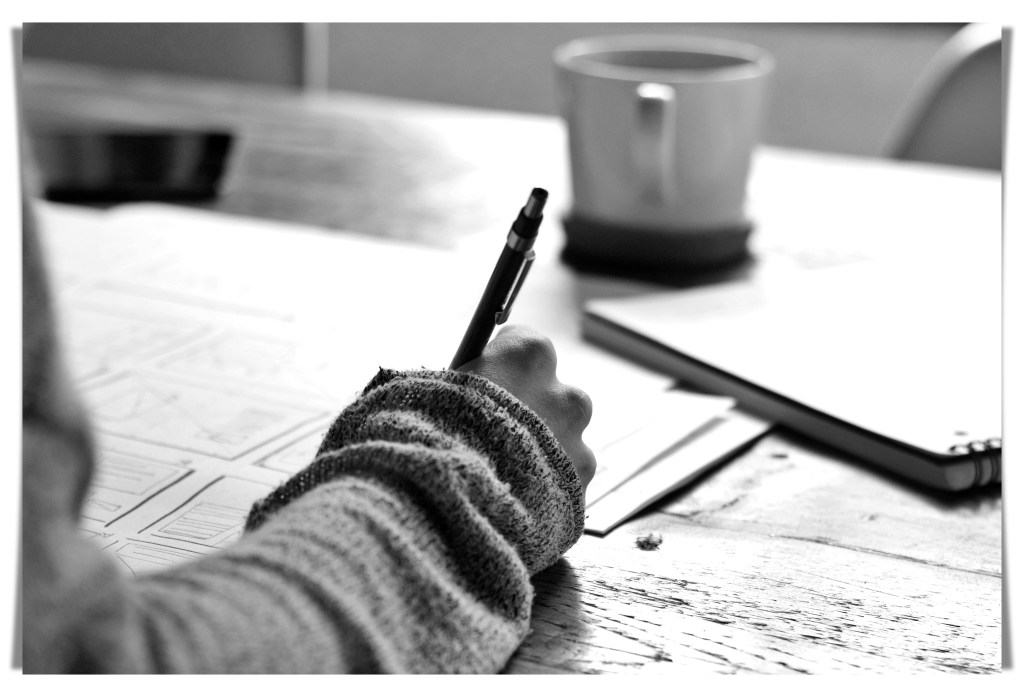
Art eventually taught me that erecting walls doesn’t always keep you secure. Sometimes it comes from creating something that is honest enough to show who you really are. I find peace when I write, draw, or pair my poems with drawings (“poetry art”). The page doesn’t judge or demand that I do well. It only needs me to be present. That silent conversation between me and the page taught me that being gentle can be strong. It could mend what silence had only kept concealed.

Still, I often feel like I don’t really belong anywhere. I was born into an Iban culture that is rich and layered, but the world I live in now moves quickly and values things differently. I write mostly in English, think partly in Malay, and dream in Iban, a language that doesn’t belong in the world I live in. Every day, I move between these spaces, trying to find balance between them. I can see both the person I used to be and the person I’ve become in these two mirrors, but never both at the same time.

This in-between space is where I create from. It’s where the poems and art begin. I write about rituals, rivers, tattoos, and stories from my ancestors since they are all part of who I am. I draw and write about love and longing because they are a part of the world I live in now. My art is an attempt to bring these two worlds close enough to touch. Even if it’s just for a moment, each poem or drawing is a small way to feel like I belong.

Many people ask me what makes me want to keep creating. The truth is that I create art to feel grounded. Writing helps me return to myself when I start to drift too far from the person I want to be. It reminds me that I still have something to say, even if I don’t say it out loud. Every time I write, I rediscover that softness and strength are not opposites. They are two parts of the same language, which I am still learning to speak fluently.

I’ve learned that belonging doesn’t always mean having a fixed place or community. It could mean accepting that your identity is still changing. Or it could mean carrying your culture and memories in your work, even if those around you don’t always see where they come from. It could also mean finding peace in creating without expecting approval from others.

Most people don’t know these things about me because I rarely share them. But they exist in everything I create. The older I get, the less I feel like I have to explain myself to everyone or to gain approval from anybody. I just need to keep making work that feels honest and can stand as a small reflection of where I’ve been and who I’m becoming.

Softness or gentleness doesn’t mean you don’t feel pain. It is the space that remains vulnerable and courageous despite it. And belonging, for me, will probably always be in that space between the languages I speak, the places I’ve lived, and the stories I continue to tell.


I write about Iban culture, ancestral rituals, creative life, emotional truths, and the quiet transformations of love, motherhood, and identity. If this speaks to you, subscribe and journey with me.
What Rest Looks Like After Fifteen Years of Mothering

It’s been a long time since I’ve had a truly lazy day.

I’m not talking about a day off from chores or deadlines. I’m referring to a day when I let go of everything without feeling pulled in any direction. It’s the day where I don’t feel like I have to be useful or productive or show up for someone else.

Most of my days for the last 15 years have been spent on others. When my kids were younger, especially when they were babies and toddlers, everything was about them. Feeding, bathing, cleaning, holding, and comforting them came first. When they were sick, it meant even less sleep and more work. At that time, I was tired all over, not just my body. It got into my thoughts and emotions as well. Everything was affected by the exhaustion.

There was no such thing as a lazy day back then. It seemed like I had to work for rest. And even when I tried to rest, it cost me something. Waking up from a nap meant a mess. A slower morning meant that I was already behind when I started my day. A moment alone was always interrupted.

At night, when everyone else was asleep, I had the house to myself. Finally, the house was quiet, and I could breathe. I stayed up, though, although I was tired. I wanted a moment when no one needed me so I could be a person again. I found out later that this was called “revenge bedtime procrastination.” It made sense to me. I wasn’t staying up because I had energy, but I stayed up because I didn’t have any other time to be alone.

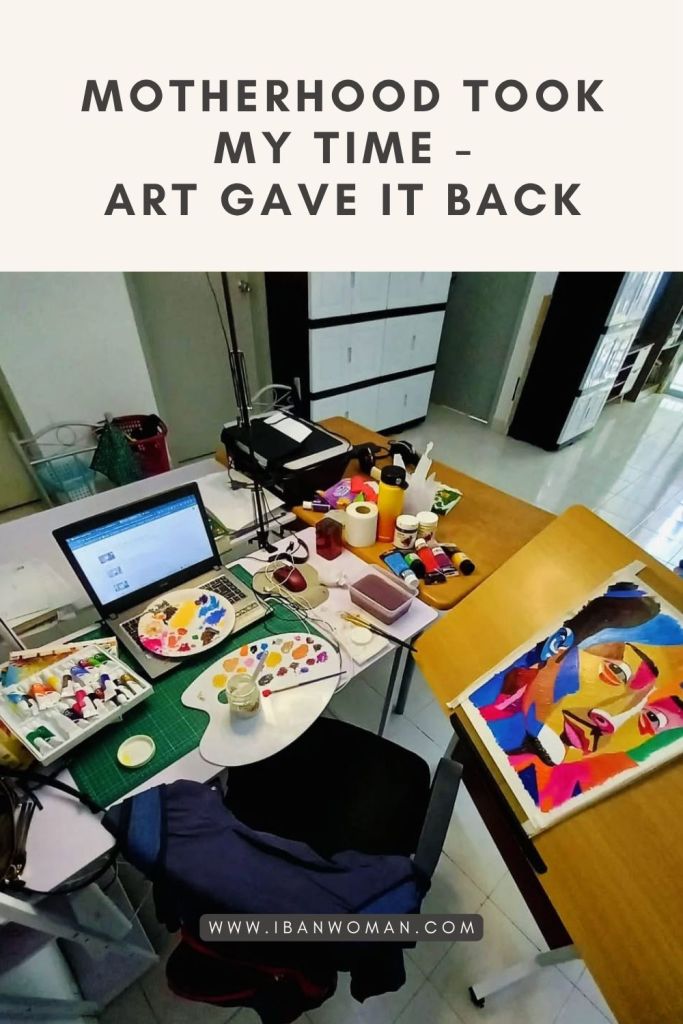
Back then, I still made time for art. I still wrote in my journal. It was not consistent but enough to keep a small part of myself alive. My creative work never stopped; it just happened in the margins during stolen hours. Or in between picking up the kids from school and doing laundry. I didn’t think of it as something extra but as something I depended on. 

Now, with the kids older, I have more “free time” or space. The demands on my time are different. My kids are more self-sufficient, and I can finally enjoy long periods of peace. But I still don’t take lazy days. 

Even on weekends when I don’t have any plans or on school holidays when things are slower, I still gravitate toward my work. And by work, I don’t mean a job. I mean things that feed my mind and spirit, like writing, painting, and reading. These things are not obligations. They’re what make me feel most alive.

Some people might think what I do is work. But for me, it’s the opposite of draining because it gives back and keeps me grounded. I don’t create to be productive. It’s in my nature to create.

That’s why the idea of lazy days is strange to me. I don’t resist rest. I just experience it differently. When I spend time writing or making art, I’m not trying to prove anything. This is how I return to myself and how I unwind inwardly while still moving.

If you ask me if lazy days make me feel rested or unproductive, I would say neither. I don’t have lazy days. I have quiet and slow days or days where I work inward, even if nothing shows on the outside.

Rest doesn’t always look like lying on the couch doing nothing. Putting on soft music and painting without a goal in mind is one way to relax. Sometimes it’s writing in a journal in the early morning, before anyone else wakes up. Sometimes it’s reading a book that makes me feel less alone.

To be honest, I don’t think I want a life full of lazy days. I want to live a life where I feel like I’m really there in everything I do. Whether it’s being a parent, creating something, or just being still. Maybe that’s what I’ve been working toward all this time.


I write about Iban culture, ancestral rituals, creative life, emotional truths, and the quiet transformations of love, motherhood, and identity. If this speaks to you, subscribe and journey with me.
What a Million Dollars Could Build

I’ve come across this question more times than I can count: “If you had a million dollars to give away, who would you give it to?” And every time, I wonder why I would give it all away. If I’m being honest, I’d keep it. It’s not that I’m greedy, but I know exactly what I’d do with it. I’ve spent most of my life putting off dreams, setting aside passions, and delaying joy in the name of responsibility. That would change with a million dollars. It would let me breathe and stop merely getting by and begin living with a little more softness and space. 

First, I would look after my family. I would pay off all of our debts, every last sen, until there would be no more worries about bills, school fees, or emergencies that come up out of the blue. I would put some of the money into investments, save some of it, and then I would finally let myself enjoy something I have always loved: books.

I’d buy all the books I’ve always wanted. These aren’t the ones found in chain stores, but the rare ones. The hard-to-find books that tell the history and tradition of my people. I’d look for heritage books published by the now-defunct Borneo Literature Bureau. These slim, worn books contain the voices of writers who wrote about us long before I was born. I’d buy the complete Encyclopedia of Iban Studies set from the Tun Jugah Foundation and every contemporary book that strives to record what we might forget. I wouldn’t hoard them, but I’d preserve these gems in my private collection. And I would keep them safe in a room with shelves and sunlight. A library for me and anyone else who needs to learn and remember where we came from.

Maybe that sounds selfish, but it’s a way for me to preserve my heritage, which is for the whole family and the generations after. But if I had to give it away, like if the million had to leave my hands and go to someone else, I wouldn’t give it away in cash. I’d use it to build something that would last and grow.

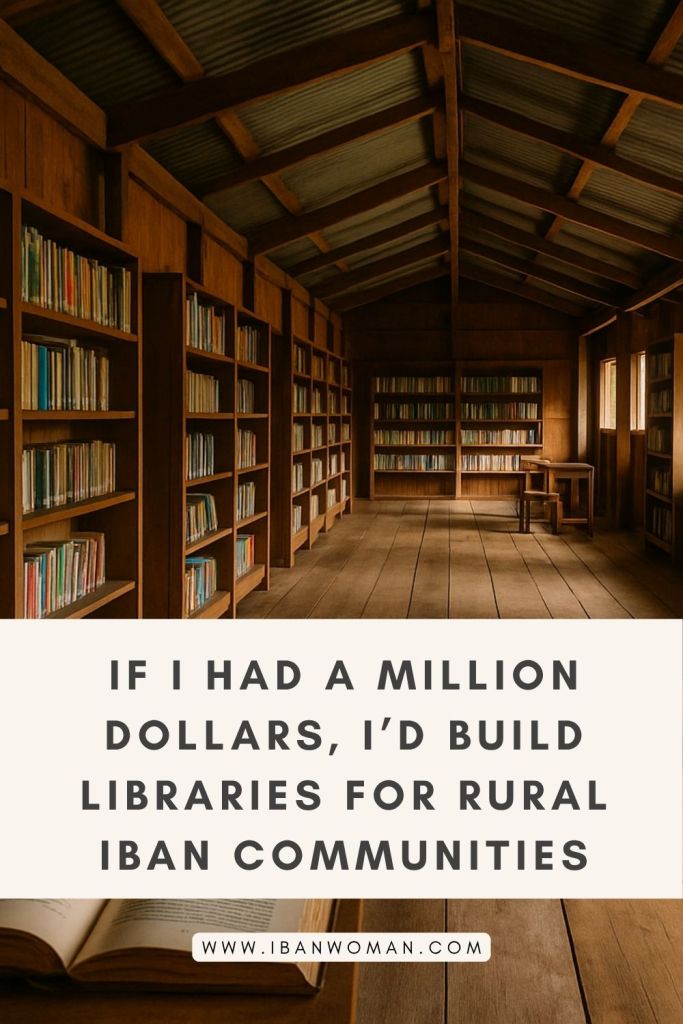
I’d set up a library. Perhaps more than one. In the interior of Sarawak, where villages are still without decent access to books, let alone libraries. Where stories are passed down through voices but never written. I’d create a place where kids could find books in their own language and where Iban stories are just as important as stories from other parts of the world. I’d build a place where books wouldn’t be locked behind glass but placed in the hands of the community to read and savor. And who knows, maybe a child who never saw herself reflected in school textbooks will see her village, her ancestors, and her identity printed on paper, validated in ink.

I’d make sure the internet actually works. I would stock not only novels and dictionaries but also materials that could broaden the mind, such as bilingual books, local folktales, science and art books, poetry, comics, storybooks for toddlers, and plenty of activity books. I’d make room for community events, nights of storytelling, and maybe even small poetry workshops in the future. The kind of space I never had when I was young.

To be honest, I wouldn’t give away a million dollars just to feel good about myself or tick a box labeled “generous.” I would use it to make something that is useful and necessary. I want to create one or more spaces where my Iban language can coexist with other languages. I want to help fund a place where the next generation won’t have to look so hard to find themselves.


I write about Iban culture, ancestral rituals, creative life, emotional truths, and the quiet transformations of love, motherhood, and identity. If this speaks to you, subscribe and journey with me.

The Pain of Dislocation | Writing My Way Back Home

There are moments in life when the ground feels stable, and other times it tilts, making you feel unsure of your footing. For me, those moments have to do with who I am, where I come from, where I live, and strange places in between. Being Iban has always been a big part of who I am, but there have been times when it felt like that part of me was invisible.

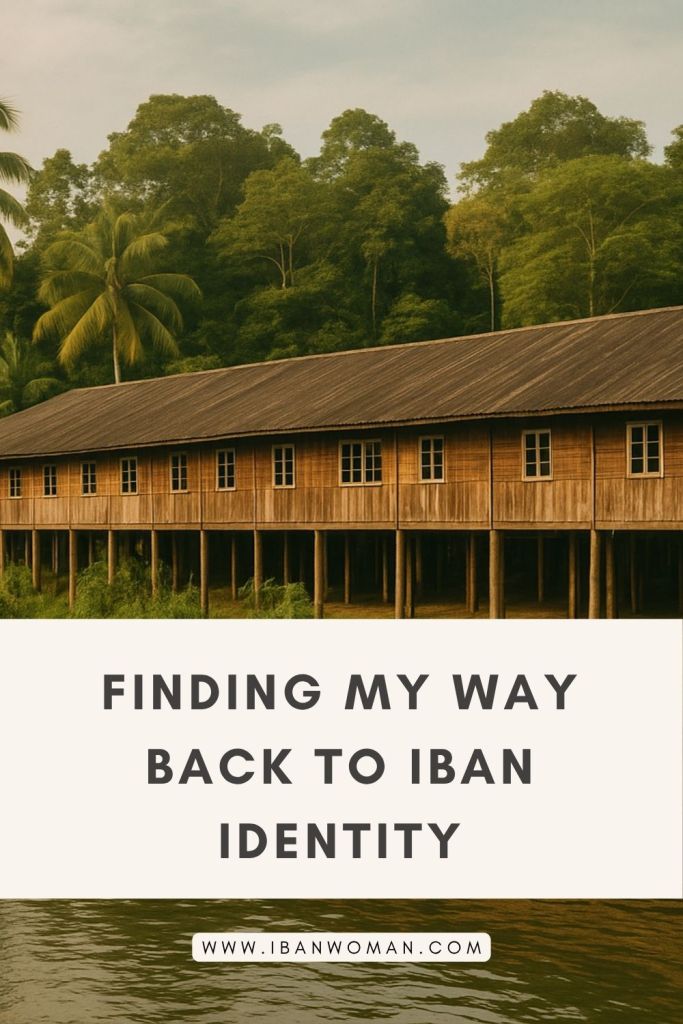
I grew up with stories of the longhouse, our folktales, and the old ways of life where dreams and rituals guided decisions. I heard the rhythm of the Iban language before I fully understood it. But outside of that space, I often felt like I was losing my identity. In classrooms filled with English and Malay textbooks, it felt like I had lost touch with my own culture. Teachers spoke of history, but it was always someone else’s story. My people’s stories were at best footnotes. I understood how it felt to be out of place without moving an inch.

When I moved to bigger cities later in life, the feeling got more prevalent. In Kuala Lumpur, I was just another face in the crowd, often mistaken for something other than Iban. It was more distinct in foreign countries. The language barrier was always there. Those around me spoke Mandarin or other languages, while I stayed quiet and tried to figure out what they were saying by watching their body language and tone. I carried silence with me on the train, in bookstores, and even in conversations at work. I had come looking for growth and new opportunities, but I often felt like I was shrinking and struggled to express who I really was. Being out of place became a daily condition.

The church was another complicated place. Faith helped me find my way, but there were times when I felt like I was giving up my roots for an identity that didn’t quite fit. The language, practices, lifestyle, and even the way people spoke about culture and tradition made it seem like there was no room for who I truly am. I sometimes felt the most alone when I was sitting on the pew with people I was supposed to belong with. The dissonance between my beliefs and my identity was truly difficult for me.

Watching younger generations of Ibans, including my children, drift away from the language and customs that shaped us has always been the hardest part. Many of them don’t even know how to speak Iban. They can speak English, Malay, or other languages, but they have trouble speaking or understanding the language of their parents or grandparents. When I see that, I feel the pain of dislocation in a different way. It’s not just that I don’t fit in with the world anymore; it’s that my culture is out of place in its own home. There is a drifting, like waves being pulled farther from shore, and I’m worried about how far it might go before it’s too late to return.

These experiences, though painful, have also taught me something important. Feeling out of place has made me want to reconnect with my roots even more. It has made me more determined to keep stories and traditions alive. It has made me contemplate how language and rituals hold memories and meaning and why remembering is important. What used to feel like absence has turned into a call to action.

This is why I return to writing. Poems, essays, and stories are more than self-expression; they are ways of keeping connection alive. When I write about the land where my ancestors lived or the river that carried their boats, I connect the past with the present. When I share cultural history on my blog, I am planting small reminders for my children and for anyone who might reconnect with their roots.

I have also come to understand that I am not only writing to preserve my culture but also to finally accept my cultural voice in my writing. My culture and identity are not distinct from my craft; they are the foundation from which it develops. The way I see the world and write about it is shaped by the Iban point of view. My unique voice possesses a texture and truth that no one else can match.

If you’ve ever felt like you are out of place, I want to tell you that that feeling doesn’t mean you don’t belong. It means that you are carrying a part of yourself that other people haven’t learned how to see yet. And maybe your role, like mine, is to bring that hidden part back into view. One story and one memory at a time.

Being out of place has become both a wound and a gift for me. It hurts to feel invisible, but it also makes you want to create, remember, and preserve. And maybe that’s the lesson: you don’t always get to belong. Sometimes, we have to keep building it for ourselves with art, words, and memories. When we build it from our core, based on our unique voice, that sense of belonging is unbreakable.


I write about Iban culture, ancestral rituals, creative life, emotional truths, and the quiet transformations of love, motherhood, and identity. If this speaks to you, subscribe and journey with me.
The Skill I Want to Learn | Remembering My Roots

When I first read the prompt, “What skill would you like to learn?” I hesitated. My mind didn’t wander to something new, like playing an instrument or taking up pottery. Instead, it returned to what has recently taken up the most of my heart and time: immersing myself in my people’s stories. I’ve been documenting my family history, translating Iban folktales into English and Malay, and researching the animistic beliefs that influenced how my ancestors lived in the past. It may not seem like a skill in the traditional sense, but it needs patience, dedication, and a consistent commitment to learning.

This kind of learning doesn’t feel like adding something new to my life; it feels more like uncovering something that was always there. I now realize that remembering is a skill in and of itself. It requires listening, interpreting, and writing in a way that stays true to the original voice while still making sense in today’s language. It is a craft that requires me to sit with pieces—sometimes just a phrase, a half-remembered childhood folktale, or a story told from one elder to another—and give them structure without losing their meaning.

In the past couple of years, I’ve been interested in customs, dreams, and oral traditions that were once a big part of the Iban’s daily life. Our ancestors believed that dreams weren’t just random things our brains conjured but guidance or warnings from the spirit world. To learn about these beliefs is to learn how closely they were tied to nature, animals, rivers, and things we can’t see. It’s not easy to translate stories like this. Each word has layers, and when you put them in a different language, each layer can change the meaning. I’m learning how to translate not just words but also worlds.

This process has shown me that preservation is an active skill. You can’t just admire a culture from afar or talk about heritage in general terms. To preserve heritage, you have to write it down, understand it, and pass it on. I know that these stories could disappear at any time if no one bothers to pass them on. It feels like weaving: taking loose strands and tying them together to make something strong enough to last.

I think often of my children. I picture them reading these writings one day and seeing parts of themselves reflected back. They might read about how brave their ancestors were or the rituals that used to guide community life. This could make them feel both wonder and a sense of belonging. That hope keeps me going. I don’t want them to get just bits and pieces. I want them to have a living archive that they can go back to when they feel rootless or want to know more about themselves. In this way, writing is both a gift and an inheritance.

This learning also helps me understand my own role in the chain. I’m not just preserving stories for the future; I’m also standing in the middle, receiving them from the past. There is humility in this position. Sometimes the stories seem too big for me to tell or too sacred to put into words. Sometimes I feel like I’m not qualified, like I’m trespassing on something I don’t fully understand. I feel like an imposter. But then I remember that this is also part of the task. Even if you’re not sure, simply paying attention is a form of dedication.

There are also challenges. To translate, you need to do research, compare things carefully, and sometimes spend a long time staring at a confusing sentence. Writing family histories requires being careful and accurate when deciding which details to include and which to leave out, as well as how to honor different voices in the same story. It’s not glamorous to learn these skills, but they make me more patient and give me more respect for those who came before me.

I’ve also been thinking about how I write. As someone who doesn’t speak English as their first language, I’ve had a hard time developing a consistent style. I wonder if my words will ever sound as smooth or polished as those of people who grew up with the language. But the more I write, the more I see that my culture and heritage are not barriers but strengths. They give me a writing voice that is shaped by the rhythms of the Iban language or by the oral storytelling traditions. These are the things that set my writing apart from a lot of other people who write about the same things. I could only come into my own when I embraced who I truly am: an Iban woman rich with cultural memory and life experience.

I’m also thankful for the resources that make this work possible. Old books, articles, and museum archives have been lifesavers for me because they have helped me learn things I couldn’t have found on my own. There are many people who worked hard and spent time writing down and putting together our culture into words. I wouldn’t be able to keep writing if they didn’t do their part. This gratitude keeps me focused and reminds me that I am part of a much bigger effort to keep culture alive.

If I had to sum up what I’m learning, I’d say that three things stand out. First, the ability to really listen to what is said and what isn’t said. Second, the ability to translate not only between languages but also between different meanings. Third, the skill of preserving, which means having the courage to hold memory in your hands and carefully write about it for the future generations. And now, maybe a fourth: the ability to trust my own writing voice, even when it sounds different than the ones expected.

So when I answer the prompt, “What skill would you like to learn?” my answer isn’t easy to show. I want to keep learning how to remember things. I want to get better at writing authentically, listening closely, honoring my culture, and sharing what I can while I am still here. These skills may not make a lot of impact, but they are important. They might not get a lot of praise, but they could keep a culture alive.


I write about Iban culture, ancestral rituals, creative life, emotional truths, and the quiet transformations of love, motherhood, and identity. If this speaks to you, subscribe and journey with me.
I’d Rather Be Doubted Than Silent

Not too long ago, someone flagged a piece I wrote. There was nothing mean in that piece, and I didn’t break any rules. Can you guess what the reason is? Because it was too well written for a non-native English writer. Ridiculous! But someone really thought it didn’t sound like it came from me.

I didn’t respond publicly. I didn’t start a thread or reply to her accusation to defend myself. I didn’t even remove the post. What I did do was let the shame sink in. Today I want to write about it. I don’t intend to reopen a wound but I want to acknowledge the silent damage that stays with you when someone tells you that this can’t be yours. 

Writing has been a part of my life since I was a child. I wrote in journals, on pieces of paper, and as letters to myself. I write as naturally as I breathe. Sometimes as letters to myself. Sometimes raw. Sometimes lyrical and poetic. Sometimes with confidence or insecurity. They are all mine. Always. So when someone flagged my post for sounding too polished, I was in disbelief. Like it was some kind of a joke. I didn’t quite know how to describe it. Because if I dug deeper, I knew it wasn’t about that particular post, but what that skepticism implied—that my voice, my lived experience, my hard work, and my growth couldn’t possibly be real. 

That I, as an Indigenous woman, mother, artist, and non-native English writer/speaker, couldn’t write with depth, nuance, or clarity without cheating. That if my writing sounded confident, careful, or flawless, it had to be fake or AI-generated. 

The fear that comes from that is weird. It doesn’t rage or roar loudly. It feels like something petty that you should quietly let go. However, it lingers in the shadows of your next sentence. Should I simplify this sentence? Should I cut the metaphor? Should I get rid of this em dash or that Oxford comma so it doesn’t sound AI-ish? 

Should I water myself down to avoid suspicion?

I hate that I have those thoughts right now. But I know I’m not the only one. I’ve seen it in other writers as well, especially those who write from the margins: obscure and unknown. Or in those who write in a language that is foreign to them. I’ve seen it in the ones who tell hard truths through rhythm, restraint, and image. Or those who write not to impress, but to stay alive. We’re often told to write honestly but punished when we do it well. We’re told to share our stories but questioned when our pieces are too good. We are told to write in our voice, but only if that voice sounds a certain way. 

There are too many gatekeepers who claim to be defenders. People who think they’re protecting literature when they’re really just reinforcing old hierarchies in place. 

They think people like me who didn’t grow up with English can’t produce good stories or poems. That if I do, God forbid, that must have been AI generated. That’s bloody censorship. It’s not imposed by platforms but by what they internalize. Prejudice. Don’t write like that. That sounds too good to be written by you. 

Some of us shrink before we even begin. 

I’m done dumbing myself down. I never write to impress anyone. I use it to express my truth. And the truth is that it has taken me years to find the right words. Years spent with memories. Years spent revising, rewriting, and returning to the page—not to make it sound perfect, but to sound like the real me. 

If that voice has become sharper, it’s because I’ve earned it. If it sounds clear, that’s because I’ve been carrying fog for too long. If it rings true, it’s because I wrote long hours struggling with myself to put truth into words. 

To the ones who doubted me: I won’t name you, but fuck you, paloi ko ya, and remember this—every time you silence a writer who has finally found her voice, you aren’t protecting integrity. You’re only showing how little you believe in growth, change, and acceptance. People grow, even those of us you didn’t expect to. 

Sometimes I can still feel the sting of that rejection. But I won’t feel ashamed anymore. And this voice you hear now—shaped by memory, motherhood, culture, and survival—is real. I’d rather be doubted than stay silent. 


I write about Iban culture, ancestral rituals, creative life, emotional truths, and the quiet transformations of love, motherhood, and identity. If this speaks to you, subscribe and journey with me.

The Farthest I’ve Been From Home

I always feel like I have to do more. Write more, draw more, make more, improve more, and perform more. There’s always something I haven’t finished. A file I haven’t uploaded, a design I need to tweak, a poem I must refine, a post I need to write, a plan I need to make. The list goes on for days and weeks, and even when I finish one thing, another takes its place before I can breathe.

I wake up thinking about it. I go to bed, still mentally rearranging tasks. I convince myself I am being responsible. I convince myself that I’m doing what I love. I tell myself that this is what I have chosen. But to be honest, most days all I want is to be done. I’m done with the expectations. I’m done with continually showing up. I’m done with the excessive urge to be productive. Everything seems to be extremely tiring, and I’ve almost reached the limit of what my mental, emotional, and physical state could cope with. 

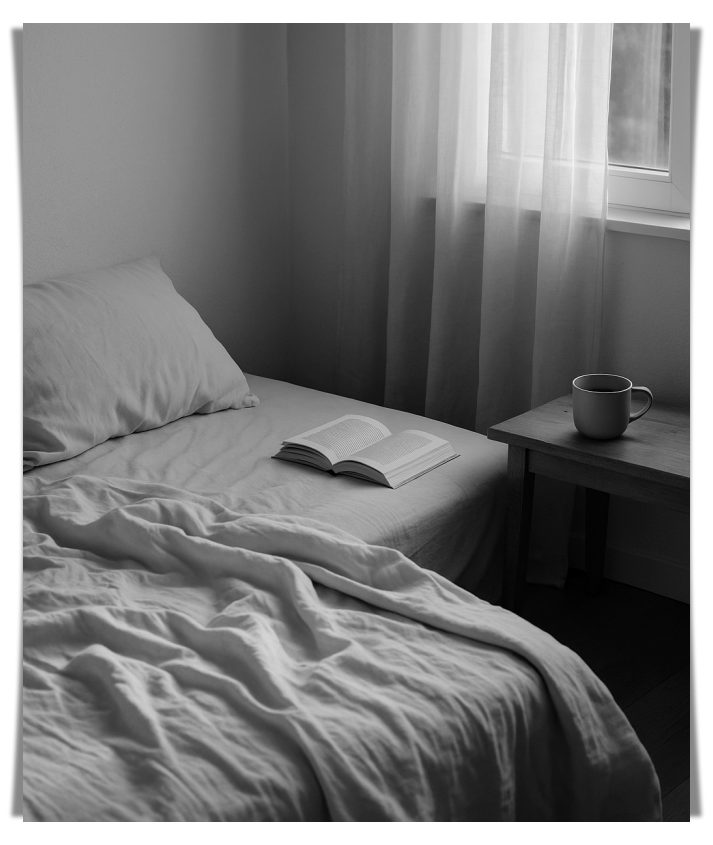
Most days, all I really want to do is read in bed in the afternoon. I want to let myself fall asleep while a book slips from my grasp. I want to wake up when I want to, not when the alarm goes off or someone needs me. I want to stop feeling guilty for taking a break. I want to stop seeing time as something I owe to others. 

It sounds easy, right? Not at all, because I’ve built a life where I have to earn my rest. I keep telling myself that I don’t deserve to stop until everything is done. I’ve always believed that slowing down was a sign of weakness and that being worn out was proof that I was accomplishing enough.

Maybe it’s aging or the weariness of parenting. Maybe it’s the silent accumulation of years spent prioritizing the needs of others. However, these days I don’t dream of escape or achievement. I want silence. I want weightlessness. I want the freedom to stop carrying everything for everyone all the time. Sometimes I think the farthest I’ve ever been from home isn’t an actual place, but rather this version of myself that feels I must earn my rest.

Even when I traveled far, like when I lived in other countries, stayed in new cities, or walked streets where no one knew my name—I still carried the same urge to prove my worth. I wish I could go back and tell the younger version of myself that you don’t have to fill every moment. Your life doesn’t have to be a performance. You’re allowed to exist without having to produce or create anything. You’re free to just be. 

The truth is, I’m struggling to believe it now. I can’t convince myself that it’s okay to read in bed anytime I want, and I doze off when my eyes feel heavy. I’m struggling to believe that everything I’ve built won’t fall apart if I do nothing for a few hours. Because if I never feel free in my creative life, what good is it?

I experienced that same heaviness after lunch today. I guess it stems from sheer exhaustion. 

I looked at my to-do list. I looked at my computer. And then I looked away. I carried a novel and jumped into bed. I let the afternoon go. I could always write and draw something new tomorrow. They all could wait. And right now, I need to read. And sleep. 


I write about Iban culture, ancestral rituals, creative life, emotional truths, and the quiet transformations of love, motherhood, and identity. If this speaks to you, subscribe and journey with me.
The Story Behind My Name | Pop Culture, Ancestral Power, and the Pua Kumbu

My first name, Olivia, was given to me by my aunt, who was an avid Olivia Newton-John fan. She loved the music and for her, the name represented something beautiful and worth passing on. So I became Olivia, named after a beautiful and talented singer. 

Growing up, I didn’t think much about it. It was just my name, four syllables, easy enough to pronounce, and slightly more trendy than the names around me. But back then it was common to see kids with names such as Donny Osmond or Cliff Richard. It was tacky, I admit, but I still take the compliment of being named after a superstar. However, over time, I began to notice how names carry stories and I realized mine was only half told. 

While Olivia came from pop culture, my second name came from something far older, deeper, and more spiritual. It was given to me in honor of a woman in my family, a great-grand-aunt who was once an early 20th-century Iban master weaver of the sacred pua kumbu (ceremonial cloth). She was not only skilled in her craft but also legendary. In our culture, women like her were known as “indu takar, indu ngar.” These were women who could receive weaving patterns in dreams from the supreme deity, Kumang, and translate them into woven cloths imbued with spiritual power. 

In days of old, the pua kumbu held a sacred role in the ritual and festival of enchaboh arung, where severed enemy heads were received. These clothes were woven by the wives or mothers of Iban warriors, guided by spiritual forces from the heavenly realms of Panggau Libau and Gelong. Upon their husbands’ and sons’ return from war, the women would spread the pua kumbu across their arms, welcoming them home and placing the enemy heads upon the cloth. (Refer to the footnote for more details). 

For Iban women, including my great-grand-aunt, weaving was more than just a craft. It was their “warpath,” parallel in sacredness and risk to the men’s headhunting expeditions. Before they could begin a new ceremonial piece, they needed to receive it in a dream and enter a specific spiritual state. One wrong move, even in how they prepared their threads, may lead to misfortune or even death. Their work carried great responsibility and risk. It required focus, discipline, and faith in the divine. 

I may not entirely understand the weight my great-grand-aunt bore, but I have always felt an echo of it. Receiving her name was an inheritance. It connected me not only to her but also to the spirit of her work and her path. 

I don’t weave cloth, but I do write and draw. Often it begins with a dreamy vision, like a found phrase or an emotion that I can’t fully articulate. There’s always that strong urge to make sense of it and mold it into something tangible. When I started my blog, I named it Olivia’s Atelier because I wanted it to be a personal and meaningful space. As Virginia Woolf once said, this is a room of my own. This is a space where I could shape something substantial based on my truths. 

Recently, I updated the blog header to reflect more of where I come from. I didn’t want anything generic or trendy but I wanted something that expressed my culture and heritage. So I chose an image of pua kumbu, the sacred textile woven by women like my great-grand-aunt. It carries more than visual beauty, with rich deep reds, blacks, and intricate patterns throughout. It holds power, dignity, and sacredness. 

To some, it may just look decorative. However, for me, it serves as a subtle way to assert my identity and heritage in this fast-moving, globalized world. 

My great-grand-aunt likely never imagined her name and legacy would live on in a digital space, passed down to a woman who lives a century apart. But I think of her often when I work, especially late at night when the house is quiet and I am writing or drawing. I wonder if this page I write or draw on is my version of the loom. 

That thought changes the way I approach my work. I don’t follow trends or write for algorithms. I build my work and portfolio slowly and with care. I try to create things that have meaning, even if they are simple. This is my way of remembering and continuing a legacy that is otherwise pushed aside by the more flashy things the crowd chases. 

I won’t mention my great-grand-aunt’s or my second name here. Some things should be kept private but rest assured, I carry her with me. She is part of my story and also why this blog exists. 

I was named after a singer whose voice brought joy to many. And I was also named after a woman whose hands transformed dreams into sacred cloth. Both of those women live inside me. They influenced how I perceive the world and the way I write or create. 

When you visit this blog and notice the patterned header, know that it holds a layer of memory and pride of a culture. It holds a legacy and strength that runs beneath everything I share. 

I have a first and a second name. One name was given; the other inherited, and both live on in everything I write and create. 

Footnote:
After returning from war expeditions, Iban warriors would spend about a week in huts away from the longhouse, cleansing themselves and preparing their “war trophies” (enemy heads). The heads were carefully skinned, the brains removed, and then smoked for several days. Once properly preserved, the warriors dressed in their finest regalia for a grand arrival during the enchaboh arung festival, where the skulls were placed into the waiting arms of their wives or mothers.


Olivia Atelier offers printables, templates, and art designed to inspire reflection, healing, and creativity. Visit Olivia’s Atelier for more.

What Motivates Me to Keep Creating as a Writer and Artist

I sometimes wonder if it’s foolish to keep doing this. I write, create, draw, and start all over again. There’s no assurance that anyone is listening or anything will come of it. But still, I keep coming back. I wake up before the world stirs and write. I build and dream out loud. Why? Because something inside me refuses to stay silent. 

I believe my primary motivation is the need to express myself truthfully. I don’t do it for performance or to convince anyone. I just express myself either through writing or drawing without having any expectations. I’ve spent far too many years conforming to the expectations of others. I am a wife and a mother. I am reliable and strong. But when I write, I can be tender, unfiltered, and fully myself. Even if the words come out wrong or the idea is incomplete, it is still mine. Creating allows me to regain the parts of myself that were left behind. It’s how I come back to myself. 

Writing helps me express things I can’t say out loud. It makes room for contradictions like guilt and delight, compassion and tiredness. It allows me to say things that I’ve been holding back for years. Some of my poems or essays contain silent confessions. Others are simply letters I’ve never sent. However, they all stem from the same place: a desire to live truthfully, even if just on the page. 

And something wonderful happens when I release that into the world. My words reach out and connect with the right people. People crave connection. Everyone. You and me. My words may give comfort to those who scroll past the noise and pause at a sentence because it sounds like something they previously felt but never said out loud. I don’t share my writing for likes or analytics, but I have hopes that someone, somewhere, would read what I wrote and feel seen. 

Connection doesn’t always mean interaction. Sometimes it’s just the feeling of being less alone. A stranger may read my words and find a piece of themselves in them. It may seem trivial and unimportant, but there’s something deeply rooted about it. It’s honest, authentic, even mundane. 

And there’s something else that draws me in—my culture. Iban women weren’t always taught to speak up, though they did have important roles in the hierarchy of things. No matter where I am in the world, I carry my ancestors with me. I carry their strength and courage in my veins. And I want to record that because I want to remember. I want my children to remember too. Writing helps me to cling onto what the world keeps trying to erase. 

When I write about Iban culture or way of life, I feel as if I am reconstructing myself. I know these stories matter even if just a handful of people read them. 

I am also deeply motivated by creative freedom. I’ve had roles, jobs, and seasons where I adhered to the rules. It paid the bills, certainly, but it drained my spirit. This space I’ve built—my blogs, art, and shops—is mine. I don’t need to wait for anyone’s permission. I can write anything I want, like a parenting essay on Monday, publish a poem on Wednesday, and draw something for fun on Friday. The flexibility and ownership are essential for my creative spirit. 

There’s something powerful about knowing I can change course if I need to. I don’t have to adhere to a specific niche or present a specific version of myself. All my creative work reflects every aspect of me, whether they are messy, raw, or incomplete, they are all mine. 

Perhaps the most tender motivation is I do this for my children. Money is important, of course; I do earn from some of my work, but money is less important when it comes to showing my children who their mother truly is. It’s important for them to know that I have dreams and aspirations, and I wasn’t just the mother who prepared their meals and helped with homework. I want them to know that I was also someone who wrote her way through pain and hope. I want them to see me grow and not simply survive. This, I hope, may give them permission to do the same. 

I want my children to know that it’s okay to change direction, to outgrow old narratives and start again. I want them to see that growth doesn’t always look like a straight line. Sometimes it’s slow, silent, or even invisible. But regardless of the progress, it’s still growth. And I want them to have the courage to follow their own paths, no matter how long or winding they get. 

So when things become hard, and they do, I try to come back to these five truths. I don’t always get it right. There were days when I doubted or gave up, but the fire never completely went out. And when I return, it welcomes me back like a lover with wide open arms. 


Olivia Atelier offers printables, templates, and art designed to inspire reflection, healing, and creativity. Visit Olivia’s Atelier for more.

What I Enjoy Most About Writing

I’ve been writing since I was a child, but it wasn’t until I was an adult that I figured out what I enjoyed most about it. It’s not always the act of writing itself, like filling up notebook after notebook or the satisfying click of the “publish” button. What I love most about writing is how it helps me understand myself and the world in ways that nothing else can.

Writing has always helped me see things more clearly. It calms my mind and helps me sort through complicated feelings and thoughts. I sometimes start writing without knowing what I want to say. But as the words come, my ideas begin to settle. The unpleasant feelings start to fade and the fog clears. Writing gives me a sanctuary to think, reflect, and heal.

I often write to work through feelings I haven’t fully processed, like grief, confusion, doubt, or painful memories. Writing gives those emotions a safe place to land. It helps me carry what would otherwise feel too heavy. Sometimes I don’t need a solution. Just putting the words down is enough. It becomes a form of release that quietly brings me back to myself.

Writing also helps me connect with others. Whether it’s a blog post, a poem, or a message on social media, it creates an invisible thread between me and someone else. I may not know who reads my work, but I write with the hope that my words might make someone feel seen, understood, or a little less alone. That subtle and honest connection has become something I deeply value.

Writing is also a wonderful way to leave a legacy. My Iban poems and cultural reflections are more than just creative expressions. They are a way to preserve and pass on language, traditions, and identity to the next generation. I want my kids to know where they came from when they grow up. I want them to read my words and experience a sense of recognition, rootedness, and curiosity about their heritage. This is how I use writing to become a bridge between generations.

I also love how writing lets me be creative. Fiction allows me to step into different characters and have different experiences. I can explore new points of view, see other possibilities, and live other lives without leaving my own. It stretches my thinking and enhances my sense of empathy. Writing fiction helps me deal with truths that I’m not ready to face head-on yet. And it sometimes leads me to discoveries I didn’t expect, like revealing emotions or insights I didn’t know I had.

Writing also makes me think more clearly. It helps me make sense of an issue or an argument by breaking it down and looking at it from different perspectives. It forces me to be honest, think more deeply, and clarify what I really believe. That process is good for my mind and heart. It helps me sit with complicated things without rushing to resolve them.

And then there’s the simple joy of making something that never existed before. It is satisfying to create something that has meaning for me and perhaps for others, whether it’s a poem, a blog post, or a whole collection of work. I like the feeling of completing a piece of writing and being proud of how I shaped it from start to finish.

Some days I write because I feel inspired and some days I write because I need to. But no matter what, writing never feels like work. It feels like returning to something that has always belonged to me. It’s a place where I don’t have to perform or pretend and can just be me.

So, when I think about what I enjoy most about writing, it comes down to this: it helps me live more honestly. It helps me think better, feel better, and observe the world better. It helps me connect, remember, and make sense of things. Writing has helped me heal, find clarity, find purpose, and build connection with others. I can’t think of anything more satisfying than that.


Olivia Atelier offers printables, templates, and art designed to inspire reflection, healing, and creativity. Visit Olivia’s Atelier for more.