The Word He Chose for Me

Daily writing prompt
What is one word that describes you?

I’ve never been able to describe myself in just one word. Maybe because I am too many things at once. Or maybe because I don’t see myself the way others do. The way I feel changes depending on the circumstances in my life, and often these circumstances involve family and those I hold dear. My feelings also shift depending on the things that weigh heavily on my mind. They could be anything—the weather, financial challenges, the news, or health issues. Some days, I am quiet and contemplative. Other days, I am restless with anxiety, burning with the need to create, to write, or to complete whatever in my to-do list. How could I ever reduce myself to a single word?
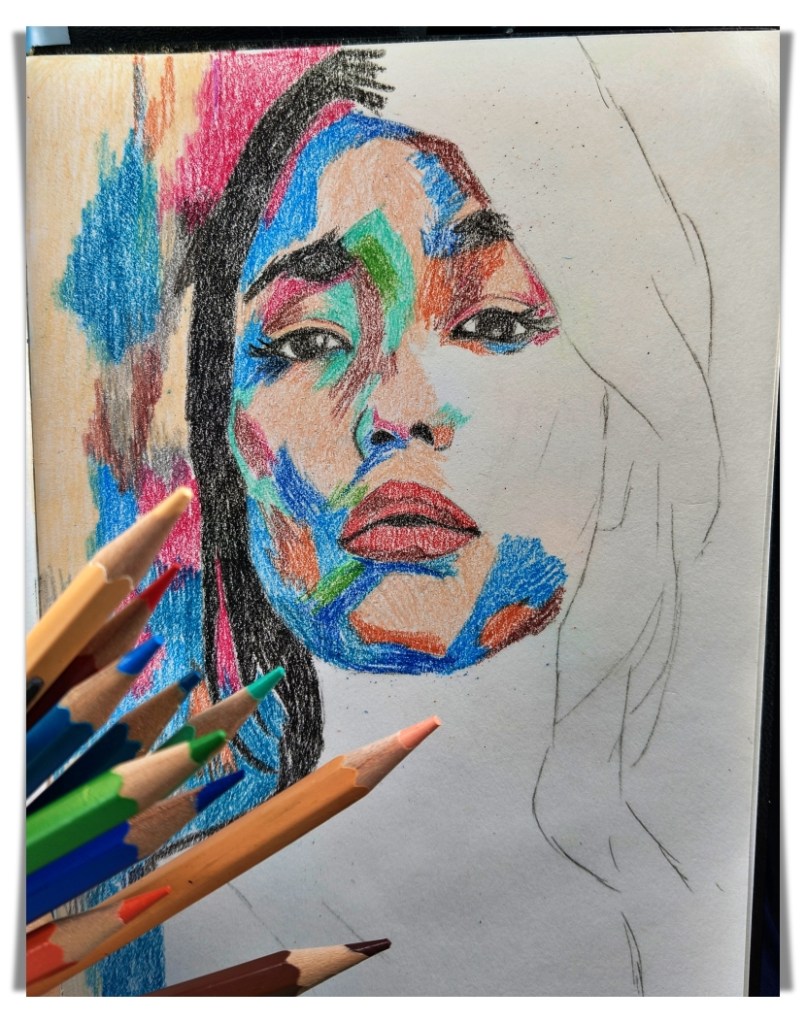
As an INFJ, I am made of many layers, each one revealing itself to different people in different ways. To some, I am reserved and intense. To others, I am something else entirely. I exist in fragments—never fully visible all at once. Perhaps that’s why I struggle to define myself. I am never just one thing.

So I asked him.

One word that describes me without hesitation. I want him to tell me the first thing that comes to mind when he thinks of me.


The room is quiet. The late afternoon light is slipping through the curtains and spilling across the floorboards. It illuminates the dust dancing in the air. The breeze blows the curtain gently, playing with the edge, lifting it, and letting it fall. It cools down my skin where the sweat still clings. His chest rises and falls under my cheek. The sheets lie twisted. Half are on the floor, while the remaining ones are still clinging to us.

I don’t know why I ask, but the question comes out before I can stop them.

Tell me. One word only. What’s one word to describe me?”

He pauses for a second. “Unforgettable.”

I didn’t expect that. I don’t move or look up. I let it sink into me before curiosity bubbles up.

Why?”

Because once someone knows you, they can’t go back to a time before you.”

The curtain lifts again. The breeze is brushing over us. His hand moves to my back, caressing. The light is fading now. I close my eyes and press my cheek closer to his heart.


Unforgettable.

It caught me off guard because I had never thought of myself that way. I had never thought that I could leave an impression on someone so deeply that the idea of me could never be erased. It made me wonder how much of myself I have left behind—in the places I’ve been, in the people I’ve met and loved. It made me question if I truly see my worth and accept and love myself as I truly am.

We all go through many things in life that alter our perceptions of ourselves. And our brains have ‘negativity bias,’ where they are wired to process negative information more intensely than positive ones. So it is safe to say we internalized unflattering things about ourselves, including lies, more than our good qualities.

And maybe other people see us differently than how we perceive ourselves. And maybe that’s the tragedy of it—we spend our lives searching for the words to best describe ourselves when all along we are already leaving our impact in ways we don’t even realize.

Unforgettable is not a word I would have chosen for myself. But maybe he is right after all.
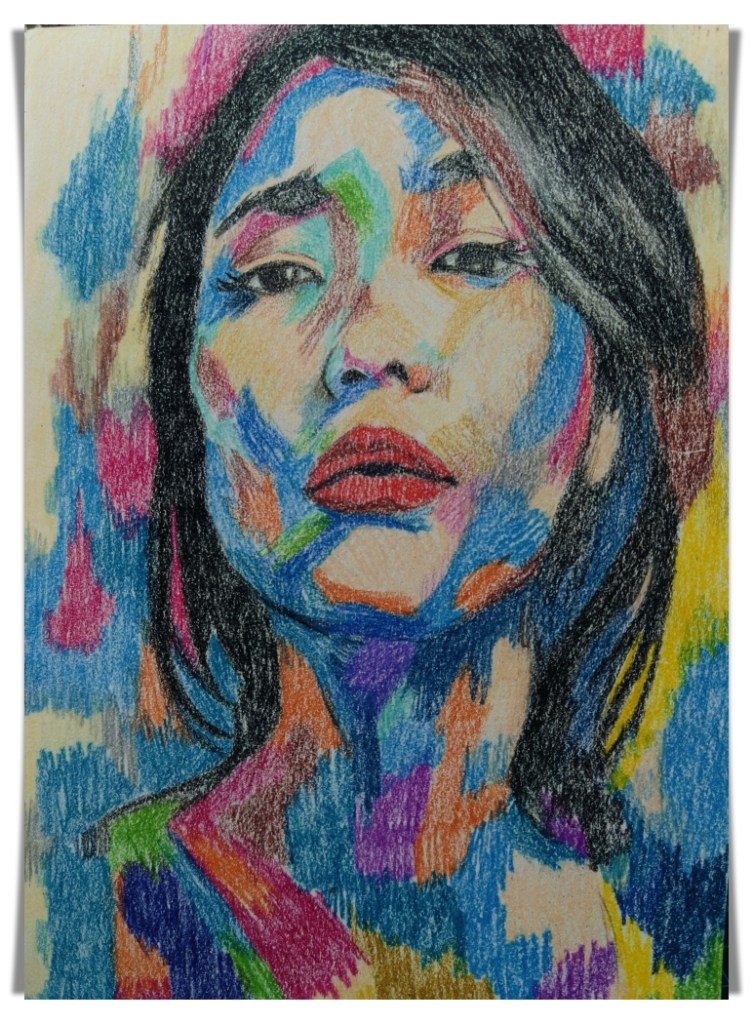
Copyright © Olivia JD 2025

All Rights Reserved.

Reflection | Writing Between Emotion and Detachment

I discovered Annie Ernaux’s writing pretty recently and at a time when I was learning to trust my own voice. I’ve been writing for a long time, but apart from blog updates, I almost never published my work. (I published 4 poems in online literary journals last year). Though I love writing, I spent the last 15 years focusing on my art, pushing writing to the back burner.

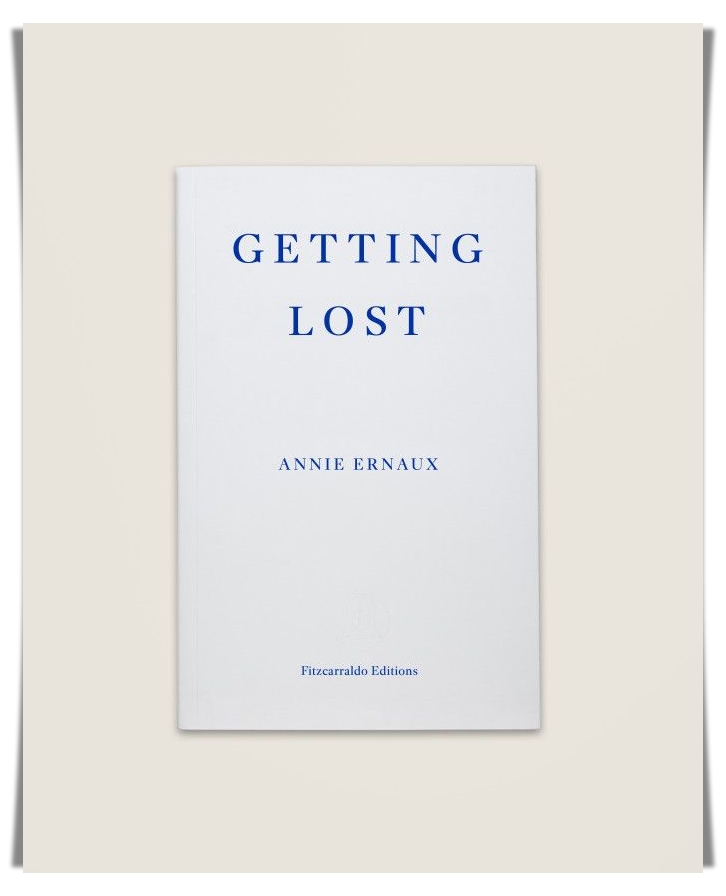
Image source: My Everand subscription

I write poetry and short stories now and then. They are nothing grand or serious because I don’t feel compelled to write a whole book with a complete plotline and characters. I collected my short stories; some are purely fiction, and some are based on true experiences and stories. I have never met anyone who writes like me until I came across Annie Ernaux’s work.

Reading Ernaux was like finding a mirror I never knew existed. Ernaux, like me, dissects the past obsessively. She revisits memories repeatedly, searching for meaning in fragmented events of the past. But there was a difference I couldn’t ignore. Ernaux writes with a stark, almost clinical detachment. She lays out the details of her life as if she is simply recording facts. She does not romanticize or dramatize; she just records the experiences. Her writing reads like an autopsy of the past, as if she had already processed it, wrapped it up, and put it on a shelf labeled “This happened in the past.” She records the details of her love affairs, including the lurid moments, without nostalgia, shame, or guilt. This is what she wrote about one of her lovers:

“The man for whom I had learned them had ceased to exist in me, and I no longer cared whether he was alive or dead.” ~ Getting Lost

And that, I realized, is where she and I diverge.

I don’t just remember the past—I relive it. Every emotion returns, undiluted by time. I don’t just recall what happened; I feel it as if it’s still unfolding inside me. The joy, the pain, the longing, the grief—they rush back in full force. Because of this, my writing is anything but detached. When I write essays, blog posts, poems, or stories inspired by past events, they carry the pulse of my emotions. They are raw and undiminished. And for a long, long time, I felt ashamed of my voice and lacked confidence in expressing myself. I thought that was a flaw.

Image source: My Everand subscription

I admired Ernaux’s ability to write without apology or hesitation. I wondered if I needed to learn detachment and strip my words of emotions so they could be seen as more “literary” and taken more seriously. After all, isn’t that what makes writing powerful—the ability to observe without being consumed? But the more I wrote, the more I realized: I don’t have to be like her. I don’t have to sever myself from my emotions to be a writer.

I realized that I don’t have to strive to be as detached as Ernaux. I can learn to be confident in my voice and embrace my own way of writing. My writing is where memory stays alive, where emotions breathe between the lines, unfiltered, unsoftened.

My words do not have to be clinical to be valid. They do not have to be detached to hold power. I am learning to write without shame, guilt, and hesitation. I will not erase the emotions—I will let them exist freely.

Perhaps I will never reach the kind of distance Ernaux has from her past. But that’s okay; my voice is mine, and it is enough.

So I wonder—must we detach from memory to write about it? Or is feeling everything deeply has its own power?

The Truth Hurts, But It Heals

Writing requires an intimacy few are ready for. To write with vulnerability on the page is to bare your soul, to peel back what protects you, to expose the raw truths of your life, some of which you may not, in fact, fully grasp yourself. It’s frightening, messy, and gut-wrenchingly human. But instead, it is that vulnerability that makes writing not just words on a page but a lifeline that connects us to other people. This is the fundamental truth of vulnerability that enables stories to resonate, yet achieving it is not effortless.

For the majority of us, the fear of being judged is ever present. Vulnerability means revealing your fears, desires, and truths—and thus relinquishing control over how others see you. You are declaring to the world, “This is who I am,” and inviting the world to respond. Do they embrace you, or do they consider your words mere piffle and your truths undesirable? This fear silences many writers, imprisoning their deepest truths.

“Write what disturbs you, what you fear, what you have not been willing to speak about. Be willing to be split open.” ~ Natalie Goldberg

I know this fear very well because I am still struggling with it. And I want to dig deep; I want to uncover what is beneath the surface. But whenever I come close to it, I waver. What happens if I face judgment? What if what I expose is too much? And yet, I also recognized that my writing without vulnerability will never touch the depths I so admire in others.

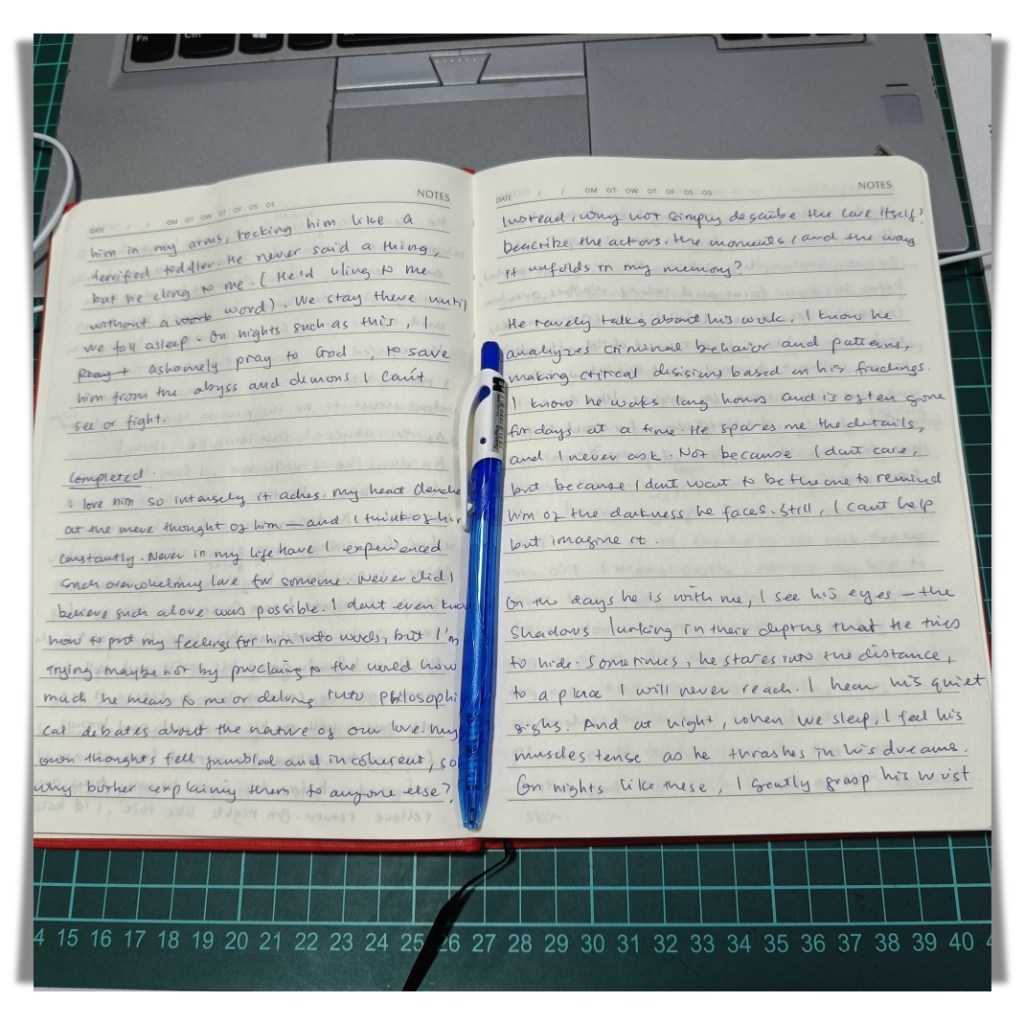
Recently, I wrote in my journal about this struggle, attempting to give shape to my thoughts. Here is an excerpt:

I have a muse, and I don’t know how long this affair with him will last. Let’s call him a “he.” He has inspired me in ways I never anticipated, uncovering memories and stories I had buried deep within myself for nearly 30 years. These memories are ripe with potential, rich material for my writing. But they are also deeply personal. Writing them down makes me feel exposed, as if I’ve peeled back the protective layers I’ve spent decades building.

For so long, I felt compelled to bury these memories, weighed down by a profound sense of shame. Even though many of these experiences were beautiful in their time, I couldn’t separate them from the shame I carried. Now, as I write them down one by one, I’m finally allowing myself to face them. If you ever read these stories, you may think of them as trash, boring, or mediocre. That’s okay. It doesn’t matter. What matters is that I am writing them as honestly as I can. I’m capturing the vulnerability, the yearning, the fear, the exhilaration, the fantasy, the lust, the love. I don’t know where these words will take me, but for now, I’m writing for myself. I’m writing the truth.

Reading back on this, I see how much I have hidden myself over the years. No one taught me to embrace vulnerability. Instead, I learned to shield myself, to appear strong and impervious. But writing requires the opposite. It invites you to soften, to let down your defenses, and to allow the world in. For me, this process resembles the gradual opening of a long-closed door.

Writing with vulnerability is akin to navigating a narrow path. It asks you to face your own truths without self-censorship and resist the temptation to embellish or dramatize for effect. Authentic vulnerability is subtle; it doesn’t shout, “Look at me!” It tells truths—truths that ring true because they’re passionately felt.

And despite this knowledge, vulnerability remains elusive. Writing for myself, as I have done with my journal, is one thing; it’s another to share that writing with others. This process of exposing your vulnerability is analogous to entering a stage naked under the bright glare of a spotlight. It is terrifying, but it is also necessary.

I frequently reflect on my reasons for writing. Do I write to make myself heard, to understand others, or just to connect? Perhaps it’s all three. What I do know is that the writers I admire most are those who are unafraid to be vulnerable. Their words linger, because they have the bravery to speak their truths, however flawed or uncomfortable. This is the kind of writer I aspire to be—one who writes with honesty and heart, one who has enough courage to be exposed.

The process of getting to this level of openness is ongoing. There are days when I feel courageous enough to face my truths and days when I slink back, too scared to face judgment. But every word I write brings me a little closer to that ideal. Vulnerability is not weakness but strength, I tell myself. It’s what makes us human, and it’s what makes writing worth reading.

So here I am, writing my truths, one hesitant word at a time. I don’t know where I’ll go from here, but I do know that I’m finally beginning to embrace the vulnerability that once terrified me. And in doing so, I hope to uncover not only the stories within me but also the courage to share them with the world.

Reflection | On Being Enough As I Am

I spent years believing I had to measure up to something or to someone. Like many people, the idea that I wasn’t good enough was planted early by well-meaning adults who thought comparisons were a form of encouragement. I believe the term was “reverse psychology.” This is especially prevalent in Asian households. Asian parents love comparing their kids to their peers. We have to study hard so we can be at the top of the class or outshine so-and-so’s son or daughter. We have to be more obedient, more successful, and more beautiful. The adults meant well, but what they didn’t realize was that they reinforced the belief that being “enough” is conditional. It’s exhausting. I spent years trying to prove I was enough. But enough for who?

I remember hints of comparison were occasionally discussed among the adults. I was a plain-looking child and didn’t resemble my siblings. My mom was a beauty in her younger days. And there was I, an awkward, sullen, pimply, tomboyish teenager who always scowled. I wasn’t graceful or dainty; I hated skirts and dresses. I was always wearing sneakers. I believed I was lacking in so many ways. To compensate for my perceived lack, I vowed to excel in school and get good grades—which I did, graduating magna cum laude with a BSc. (Hons) in Information Technology in 2002. And later on career successes and many other achievements. They became the measure of my worth.

After these impressive achievements, did I feel enough? Not even close. When I inevitably fell short, the voice in my head whispered, “See? You’re still not enough.”

It took me well into my 40s to realize that no finish line existed. I wish I could say that I woke up one day and felt instantly enlightened—“Stop this b******t. I am enough as I am!” No. The realization came gradually.

This happened after years of some pretty impressive achievements—publishing books, radio interviews, being featured in magazines and a newspaper, collaborating on projects with artists worldwide, and publishing my poems. Despite all of that, I always felt a huge void in my heart because I felt I needed to achieve more and more things in life. No final achievement or external approval would ever silence the feeling of not being enough. Even when I reached milestones, the goalposts moved. Even when I improved, it still wasn’t enough—because the world always demands more. I was completely burned out. I had reached my lowest point and required months of counseling to achieve a breakthrough. Writing and making art helped. I channeled my frustrations and heartbreak into my work.

Then I quit.

I quit chasing an undefined version of “more.” I quit tying my worth to productivity, praise, validation, or comparisons. Along with that decision, I asked myself, “What if I was enough exactly as I am?”

I started to ask myself, what does being enough mean to me? Not according to the eyes of society, family, or anyone else, but me? This is what I discovered: enough is waking up and existing with all my flaws, my fears, my joys, and my struggles. Enough is embracing my experiences, my voice, my thoughts, my pace, my perspectives, and my opinions—without feeling ashamed and the need for external validation. Enough is understanding that I don’t have to prove my worth or anything to anyone because I exist simply as I am, complete as God intended me to be.

It’s a radical shift but a necessary one. And believe me, it doesn’t happen overnight. Some days the negative thoughts return, but I’m learning to meet them with kindness and grace. I keep reminding myself every day, like a mantra—even when I’m unproductive, have no achievements, think lustful thoughts, write explicit fictions, gain weight, have more and more gray hairs, financially struggle, be perimenopausal, not pray or read my Bible, curse, hate, or love—I am still enough.

Change is not sustainable without changing old habits. This includes rewiring my brain to speak kindly to myself. Instead of chastising myself for not doing better, I remind myself, “That was a good experience. You’re learning, and that is enough.”  I also started to be mindful of my excuses and my sense of guilt and shame. I stop over-explaining things to people or bending to meet expectations that don’t align with me. And most important of all, I give myself the love, kindness, and grace to be fully human. I am not a robot. I have emotions, I make mistakes, and I get tired. It’s okay if I can’t anymore. I am free to rest without guilt.

There is nothing more exhausting than trying to justify your existence. And nothing more freeing than realizing you never had to. Here is a poem I wrote months ago that encapsulates this whole thing.

Enough

I peel the mask,
layers like sunburned skin—
soft, blistered—beneath
the face forgotten in mirrors.

Naked,
I walk into the jaws of daylight,
each step a confession,
bones rattling truth
like marbles in a jar,
heavy with silence,
weighted with breath.

I wear the scars like medals,
silvered lines map the wars
I never won—
but here,
in the raw air—
I am enough.

I am enough, as I am. And so are you.

Copyright © Olivia JD 2025

All Rights Reserved.
James Harrison Saved Lives—So Do Books and Storytellers

There’s a Facebook post circulating about James Harrison, an Australian man whose blood plasma donations saved 2.4 million babies. I never would have heard of this amazing man had I not stumbled upon this post on my newsfeed. So I did a quick Google search and found out he had passed away very recently at the age of 88. Harrison started donating his blood in 1954, and it was later discovered that his blood contained a high level of anti-D antibodies. I don’t know how to explain this, so I am going to quote Wikipedia verbatim:

Blood which contains a high level of anti-D antibodies can be processed to create immunoglobulin-based products used to prevent haemolytic disease of the newborn (HDN). These products are given to Rh(D) negative mothers of unknown or Rh(D) positive babies during and after pregnancy to prevent the creation of antibodies to the blood of the Rh(D) positive child. This antigen sensitization and subsequent incompatibility phenomenon causes Rh disease, the most common form of HDN. Source

Through his donations, he had provided countless doses of anti-D and helped prevent neonatal deaths and stillbirths. That is an extraordinary feat of kindness and human generosity.

Image source

However, underneath that Facebook post, a discussion erupted. Some commentators argued that he is more deserving of recognition than celebrities or authors who have won Nobel prizes. They said, after all, what is literature compared to saving human lives?

I beg to differ.

There is no doubt in anyone’s mind that saving a life through blood or plasma donation is unquestionably noble. His noble deed is tangible, irrefutable, with an immediate positive effect. But to dismiss the contributions of literature or to suggest that books and the written word (regardless of their form) do not save lives is to misunderstand the very essence of what it means to be human.

I was a reader long before I was an artist or a writer. Books have been my refuge since I was eight years old. They were my loyal and constant companions when the world felt too lonely, too loud, or too indifferent. And I believe with all my heart I am not alone in this. Across the world, people have found comfort in literature, be it in the carefully written stories of others or in poetry. There are countless, nameless people who stood on the edge of despair and were ready to give up their lives, only to find themselves pulled back from that edge by a book, a passage, a poem, or even a fictional character. All of these elements of literature become a reminder that they were never alone in facing their darkness.

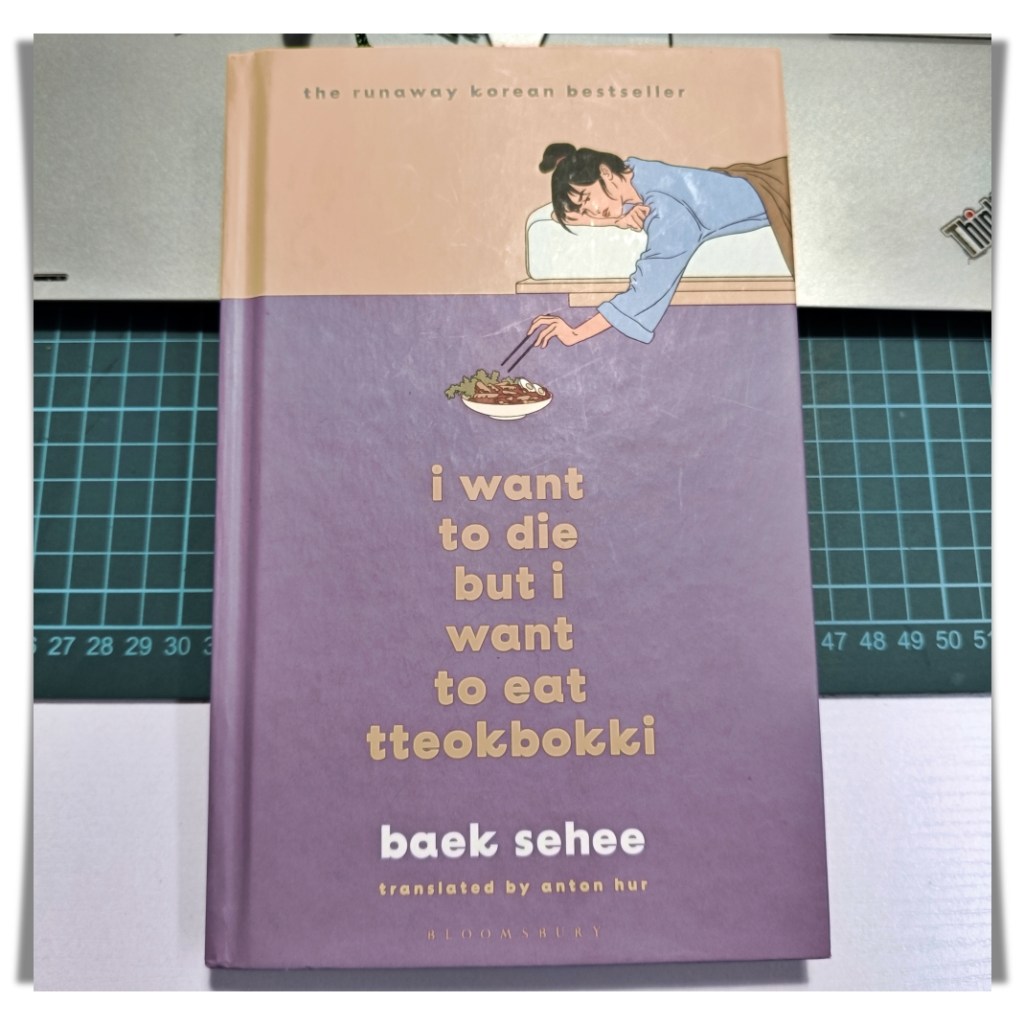
My latest read. It’s a comforting read for those suffering from depression (MDD or dysthymia).

Books do not just entertain. They also bring healing to those who invest time reading them. I wrote a post about this a couple of months ago, where I discussed the transformative power of literature. Literature and the written word offer clarity where confusion resides. They offer hope where darkness lingers. They validate the lonely, challenge the complacent, and give voice to the voiceless.

If a blood donor saves a body, an author can save a mind, a heart, and a reason to keep going.

So, should James Harrison be honored? Absolutely. But so should the authors, the poets, and all storytellers who brought comfort to the broken souls. There is a reason for every good thing we accomplished in this world. Our life is not just about survival. We can do good things too, just like blood/plasma donors, or write something to encourage someone. And both groups of people play their parts in making the world a place worth living in.

Declining Population Trend In Malaysia | My Perspective

Image source

I recently read a Facebook post that talked about how Malaysia’s population is going down. But it didn’t really surprise me because the birth rate has been falling around the world. Professor Dr. Sharifa Ezat Wan Puteh, a local health expert, said that if this trend keeps up, Malaysia could have a population that is mostly made up of older people by 2030. As a woman, I see this trend as a sign of how our lives and expectations are changing because of changes in society, the economy, and culture. Let’s look into what caused this change in the population and what it means for Malaysia and other places.

Mindset Shift

In the past few years, I’ve seen a lot of women decide not to get married or have kids. The way people think about family life is changing. In Malaysia and many other places, the idea that women should be the main providers is being examined again. More and more women want freedom and equality, and this can be seen in the choices they make about marriage and family. Birth rates are going down because more people want to be independent, travel, and find self-fulfillment.

In 1970, Malaysian women aged 15 to 49 had an average of 4.9 children per woman. This rate had dropped a lot by 2021, when it was only 1.7. This big drop shows that people’s priorities have changed. Many women are now focusing on education and jobs, which can be hard to balance with a traditional nuclear family. Women are changing how they think about fulfillment and achievement, and it’s not always about having children and getting married.

Economic Pressures and Career Priorities

As traditional views on family life change, women in Malaysia and around the world are putting their jobs and personal growth first. Pressures from the economy are a big part of this trend. As a mother, I am very aware of these problems. The sharp rise in the cost of living has made it harder for families to raise kids. People in Malaysia are having a hard time with money because more people are moving to cities, and the prices of housing, schooling, and health care are going up. This has caused many people to think about how big their families should be.

Access to Family Planning and Education

Women today have the freedom to make decisions that fit their desires and way of life. This includes making well-informed choices about their sexual health. Women in Malaysia have more power over their reproductive choices thanks to efforts to make family planning programs and sex education easier to access. This gives women more power so they can plan their families in ways that fit with their personal and work goals. This makes the drop in birth rates even greater.

Implications and Future Directions

This drop in population has effects that reach far and wide. In terms of the economy, it could cause a lack of workers, which would mean that foreign workers are needed. It also puts more stress on social aid services because there are fewer young people to help an aging population. In terms of society, this change can affect how communities are formed and how families work together.

As women continue to shape the future, it is important to deal with the reasons why birth rates are going down and make policies that help people match their work goals with family obligations. To solve Malaysia’s demographic problems, they will need to make workplaces more supportive and flexible for parents, offer cheap child care, and encourage a culture that values both career and personal success.

In conclusion, the world’s population is going down. This is a complicated problem that is caused by economic challenges, shifting perceptions about family size, and advancements in family planning. As a woman, I think that knowing about these things is important for dealing with and creating the future. We can lessen the effects of this trend by addressing its causes and backing policies that are fair for everyone, even though it is clear that the birth rate will probably never reach the levels it had in the 1980s and 1990s.

💃 Happy International Women’s Day 2025 💃

Why Stories Matter | The Transformative Power of Literature

There is a quiet power in stories that goes beyond entertainment and escapism. At its core, literature is the act of giving voice to things that can’t be seen or touched. It forms our feelings, hopes, fears, and questions into something we can hold and share. Stories don’t just reflect our lives; they also hold the weight of human experience across time and space.

The first thing that comes to mind when I think about the power of literature is how it can bring people together. Reading a book is like crossing a bridge; it lets us see and feel the world through someone else’s eyes. In this way, it breaks down the walls that separate us. By fostering empathy, literature reminds us of our shared humanity and allows us to see through another’s eyes. Literature makes us face the idea that our experiences, no matter how unique they seem, are reflections of something bigger than ourselves. When I was young, I read Catcher in the Rye by J.D. Salinger, and it changed the way I thought about how people connect with each other. Holden Caulfield’s cynicism and vulnerability proved how stories can reflect our deepest desire for understanding.

Literature helps us understand not only other people but also ourselves. A story can be like a mirror, showing us things we would rather not see. It reveals our inner wants and fears, as well as our flaws. Reading is a paradox. It makes us lose ourselves in another world, only to find pieces of ourselves reflected back. The lasting power of literature lies in this duality—the simultaneous journey both inside and outside of oneself. Also, Salinger’s book helped me see myself in new ways. Holden’s struggles with authenticity and alienation are a lot like my desire for belonging and self-acceptance.

In the same way, stories live on forever and can transcend time. Because writing is timeless, the words of a writer or a poet who has died a long time ago remain relevant to people today. This doesn’t mean that stories stay unchanged. In fact, they change with each reading based on the reader’s views and their context. What a text meant to the original audience might be very different from what it means to us now. A story is alive in the way it changes with us. Different generations’ readings and reinterpretations enrich it further. One Hundred Years of Solitude by Gabriel García Márquez was recently adapted into a drama, which debuted on Netflix in December 2024. The magical realism in the book has kept readers intrigued for decades, but this version gives the story new life. It enables a new group of viewers to experience its themes of love, loss, and history through a fresh lens.

There is also a bravery that comes with writing. When writing, a writer has to be courageous and believe that their words will touch someone and stay with them. When people write, they often reveal parts of themselves that they wouldn’t share in any other way. They embedded pieces of their own truths into the plot of a story or the flow of a poem. Ralph Keyes’s book The Courage to Write talks about how the courage to write comes from being ready to face overwhelming fears and self-doubt. Writing is brave because it forces the writer to be honest and open, even if the outcome is unknown. It’s not because it leads to fame or admiration. For readers, this vulnerability can change everything. It creates a bond between the writer and the readers, fostering a mutual understanding that surpasses the written word.

But, of course, not every story is pleasant. Some show us harsh realities and make us question what we believe. Some stories force us to face uncomfortable truths. But these stories are still important. The hallmark of enduring literature is that it does not shy away from complexity. It recognizes that beauty and pain, hope and sorrow, often go hand in hand. So, stories help us deal with the complicated things that happen in life; they don’t give us easy answers but instead push us to think, ask questions, and grow.

Stories have the capacity to establish continuity in a world that often appears fragmented. They remind us that we are a part of a bigger story that began a long time ago and will go on after we die. Literature connects us to each other and to the huge, complicated web of human experience.

Why do I write? It comes back to the idea that stories matter. It’s not that they make big, dramatic changes to the world; it’s that they change us in small, subtle ways. They invite us to pause, contemplate, and feel. Indeed, this invitation represents a revolution in a world that demands speed and certainty all the time.

I Am the Keeper of Memories

I have always been known for my strong memory. Friends, family, and even casual acquaintances have commented on it over the years on how I can recall details from years, even decades ago, with a clarity that surprises them. It surprises me too because I always assumed everyone could remember past events with the same vividness. But that’s not true. Many of my ex-school friends barely remember incidents from our school life. I remember names too. When I look at past photos, even ones from decades ago, I can point out who is who. No, I don’t spend my time reminiscing or dwelling on the past. The details are just there, fresh in my mind, ready to be plucked whenever needed.

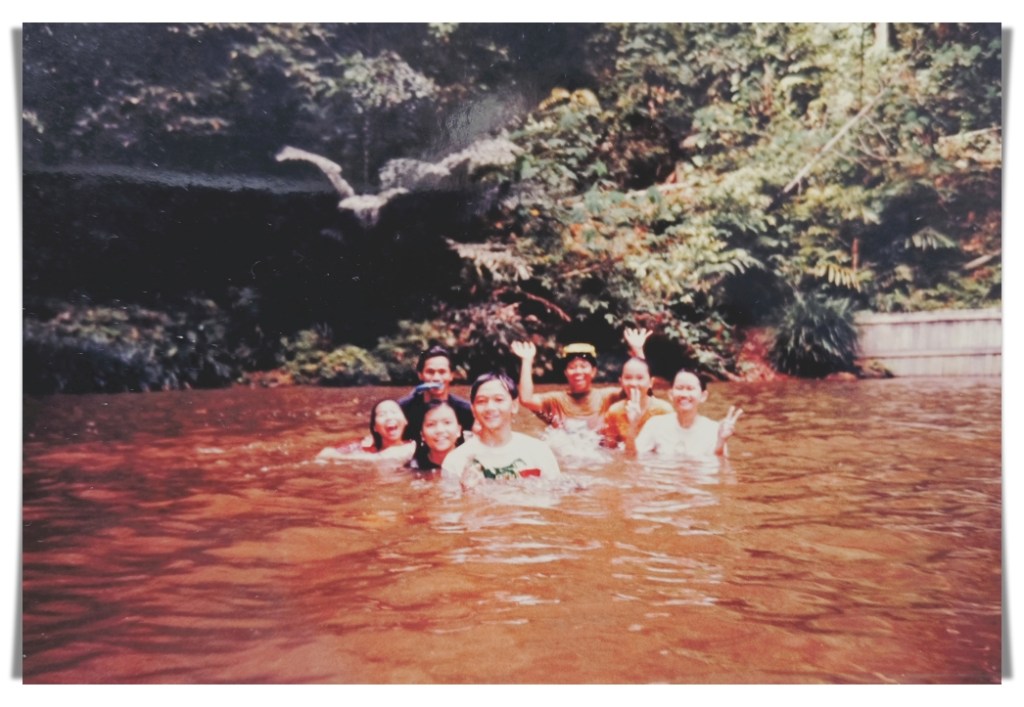
A photo with my school friends from 34 years ago. Many have become successful individuals in the community. One person has gone on to become the State Director of the Malaysia Public Works Department, and another, a pediatrician.

I don’t just remember past events. I remember the emotions and the atmosphere associated with those events. You could say that I’m a sensory person or someone with an eidetic memory because those vivid experiences still live within me. It could be anything—a song playing in the background, the scent of rain on warm pavement, the gentle breeze swaying the leaves, the color of the sky on a particular afternoon, or even the call of a lonesome nightbird that woke me up in the middle of the night when I was four.

Sometimes, it feels like a gift. It allows me to tell stories with depth and remember people and moments with an intimacy that others often lose to time.

Several months ago, my ex-schoolmate invited me into their chat group. I was delighted to reconnect with old friends I hadn’t spoken to in more than three decades. We talked about many past incidents, mostly funny moments from that time in our lives. I told stories as if they had just happened recently. Many friends come to me when they need to piece together an old memory, to recall things they’ve long since forgotten. In many ways, I have become the keeper of our shared histories.

However, it is not always easy to carry so much of the past. You might think nostalgia is a wistful feeling, but to me, it’s a lingering echo of what once was. Memories often return unbidden, resurfacing with the right song, a familiar scent, or a sudden shift in the wind. And sometimes, it feels like I am standing at the threshold of two worlds: one that has already been lived and one that I am trying to step into. Moving forward can be difficult when the past refuses to fade quietly.

I make art and write to make sense of it all. My poetry and art are more than just venues for self-expression—they are my way of processing, seeking closure. I have the habit of revisiting the same themes and emotions again and again until I have finally made peace with them. Only then can I move on, allowing the memory to rest. It is like closing a book. I don’t erase or discard these memories; they will always exist within me. They just no longer hold power over me.

Perhaps, through all of this, I am learning how to honor the past without being held captive by it. My memories shape the person I am, but they do not confine me. And maybe, in sharing these stories—putting words or images to what lingers—I can find a way to move forward without leaving anything behind.

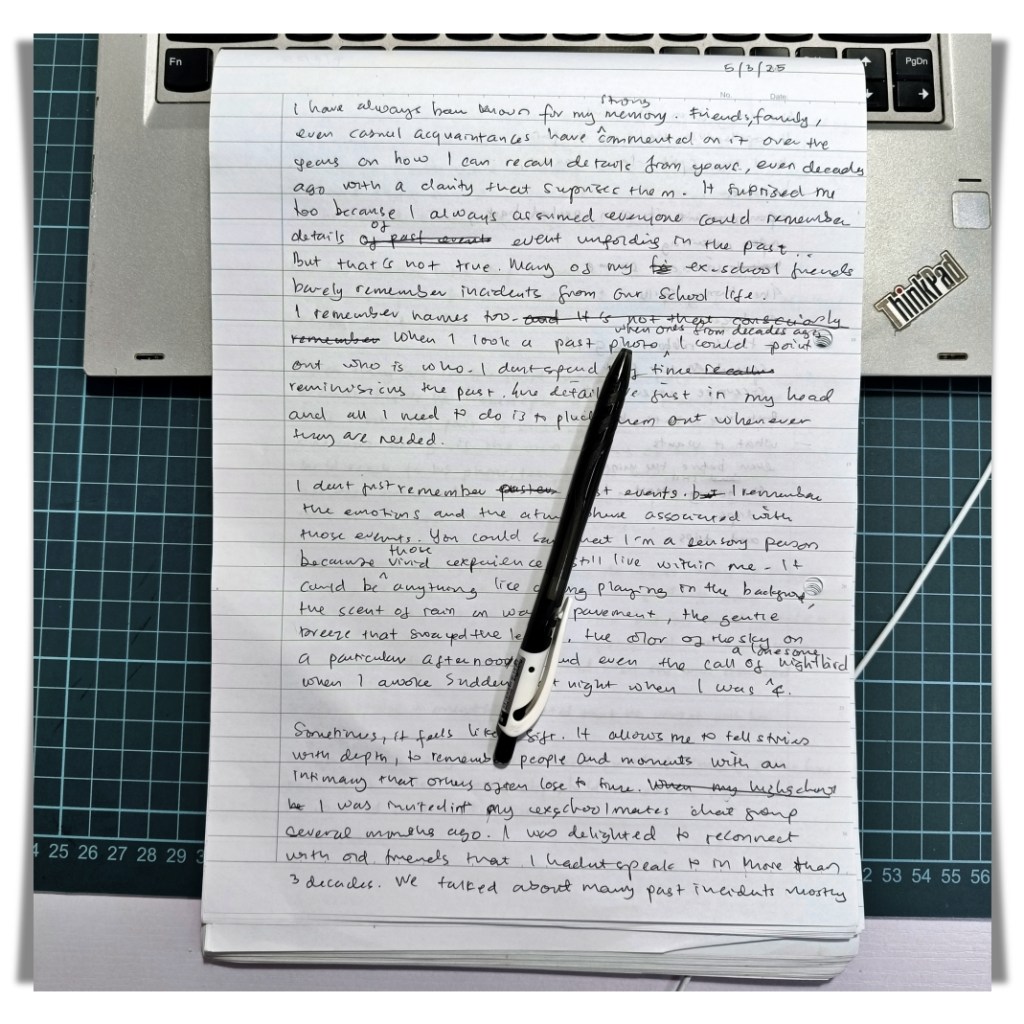
The handwritten draft of this post.

Reflection | Where We Go When We Die—The Physics of Goodbye

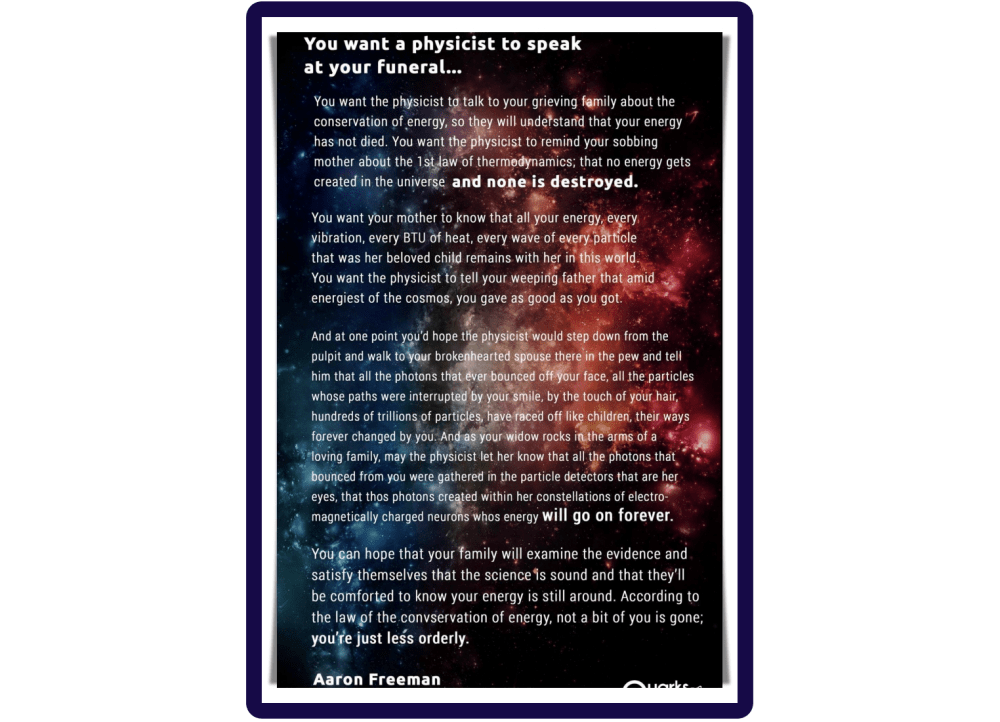
Recently I came across an article in Futurism—The Science of Death: The Best Eulogy, According to a Physicist (Aaron Freeman). Yesterday, I wrote about my friend who passed away recently. I think it’s apt that I continue to write about death because, let’s face it, every living being on the face of this earth will someday face the vast unknown. We don’t talk enough about death, believing that by talking about it, we are somehow inviting it closer. But I’m not someone who shies away from reflecting on things that make most people uncomfortable.

Image source

As I reflect on Aaron Freeman’s words, I realize there is something both cruel and beautiful about loss. The way it strips us bare, leaving us searching for traces of someone who no longer walks this earth. But if the laws of the universe have taught us anything, we have learned that nothing truly disappears. The First Law of Thermodynamics teaches us that energy is never lost, only transformed. And maybe, just maybe, the ones we lost aren’t as far away as we think.

We are made of stardust.

Did you know that most of the elements in our bodies were forged in the hearts of stars, across billions of years and multiple star lifetimes? However, certain elements within us, such as the hydrogen flowing through our veins and the faint traces of lithium within us, could be as ancient as time itself—the remnants of the Big Bang. You and I, quite literally, are fragments of the universe, bound together by forces older than memory.

So when we grieve for an unbearable loss and feel the crushing weight of absence, perhaps we can take comfort in knowing that nothing is ever truly gone.

The ones we miss exist in a different form now. They are scattered across the cosmos, carried in rays of sunshine, drifting in the gentle breeze. The photons that once danced across their skin continue their journey through space. Their laughter still lingers around us, waiting to be felt by those who remember.

If we explain death by physics alone, the conservation of energy means that when we die, our energy disperses into heat, into the environment, and into the people we loved. We become part of those we left behind. We are reborn into new beings. As I think about this, I can’t help but wonder: what about ghosts and spirits? As a Christian, I believe in the existence of the soul, but does that differ from ghosts and spirits? I honestly have no answer.

Could it be that some parts of a person, let’s call it a consciousness or remnants of their memory—remain bound to the world even after the body is gone? Maybe. Some believe that energy, especially from those who have passed with unfinished business or intense emotions, leaves imprints of themselves that replay like a recording in places they once lived or loved.

Or maybe these spirits exist because we keep them alive. I don’t mean in a haunting way, but rather in the way we cling to the memory of love. It’s in the way we still feel them in certain moments and places, as if they never truly left. Maybe we sense their spirits around us because our own energies interact with their memory.

I won’t claim to know the answer. But I will say this, purely my opinion, of course: if spirits exist, if ghosts are real, then maybe they aren’t here to haunt us. Maybe they’re still here simply because they loved too deeply to leave completely. And they are everywhere around us: among the rustling leaves in the trees, in the blooming flowers, waiting, always waiting for us to recognize their presence when we need them most.

I like to think that when my time comes, I will not vanish. I will be among the stars, among the florets of dandelions, the dust on the palms of your hands, and the unseen energy beneath the fabric of existence. I will return to the ultrasound and infrasound, ultraviolet and infrared, beyond human hearing and sight. And if you ever look up at the night sky and feel something familiar in your heart, maybe that will be me. Not gone. Just less orderly.

Reflection | The Legacies We Leave Behind

I wasn’t close to Michelle, but when I received news of her passing, it stirred something deep in me. It’s a quiet grief that lingered long after the news settled. It reminded me how one person’s kindness can ripple through your life and leave marks you only notice years later.

Michelle came into my life over 20 years ago when I was at my lowest and at a pivotal moment of my life. I barely knew her; she was literally a stranger, but she opened her door and her heart to me. She took me in and let me stay in her home for several days. She drove me around, and for a few precious days, she made me feel seen and safe. She introduced me to her wonderful family, and they welcomed me as if I belonged. In that moment she became a safe place for me when my world felt fractured.

She didn’t have to do that because we weren’t close friends. But there she was, extending a hand when I needed it most. Looking back, I can see how God placed her in my path like a lit candle in the dark. Her kindness changed something deep in my heart that changed the course of my life.

Since then, that memory has quietly shaped the way I move through the world. I made a promise to myself that I would pay that kindness forward in my own quiet ways. Michelle showed me that even the smallest gestures can leave lasting ripples far beyond what we might ever see.

Although I didn’t attend her wake service, I watched it live on Facebook. The hall was full with friends and family grieving and also celebrating her life. Eulogies painted a picture of someone who lived fully, who loved deeply, and who touched countless lives. And before she passed, Michelle left behind a message that touches my heart. Here’s an excerpt:

“My dearest friends and kindred spirits, do not cry, do not grieve, do not be sad for me, I have already taken flight—gracefully! The beauty of life lies in its fullness, to love and to hate, to laugh and to cry, to sing and to speak, to run and to dance, to journey through this world with passion and abandon, to stand against injustice, to live boldly and fiercely. I have lived, truly lived, and I leave this world without regret. Yet the hardest part is leaving behind my family and all of you. My heart is bound to you by love, and it is love that makes parting so bittersweet. My beloved ones, be brave. Live with strength, with purpose, with an unyielding spirit. Do not waste this precious journey on earth! Though imperfect, this world holds endless surprises of joy, sorrow, and wonder—do not let them pass you by.”

Her words are full of grace and clarity. It is a farewell I believe most of us never get the chance to write. It really made me think, what if life doesn’t give us that opportunity? What if we leave suddenly without a chance to say goodbye?

That question stays in my mind. Not everyone gets to leave behind a final message, but perhaps that’s why we should live in a way that doesn’t leave room for regret. We should make sure our love is felt in the present, not just left for the end. We can write our goodbyes not in a single letter before death but in the way we live, so that if tomorrow never comes, the people who matter already know what they meant to us.

Michelle’s passing made me think deeply about the kind of legacy I want to leave behind. While I may not touch lives in the same immediate way she did, I hope my art and words—through my blog and poetry—will be my offering. I want my way of self-expression to become a soft place for someone else to land.

We don’t always get to see the ripples we create in others’ lives. But I believe they exist somewhere because Michelle showed me that. And I hope in my own way, I can leave behind something meaningful: a legacy built not on outstanding achievements but on quiet truths.

Maybe for some of us, it’s not about how many people pay tribute at our funerals. Maybe it’s about the small, beautiful things we leave behind—kindness, goodness, or the moments when someone reads you words and feels understood, or when your art brings them a sense of belonging. And that’s the kind of legacy I hope to leave when my time comes.

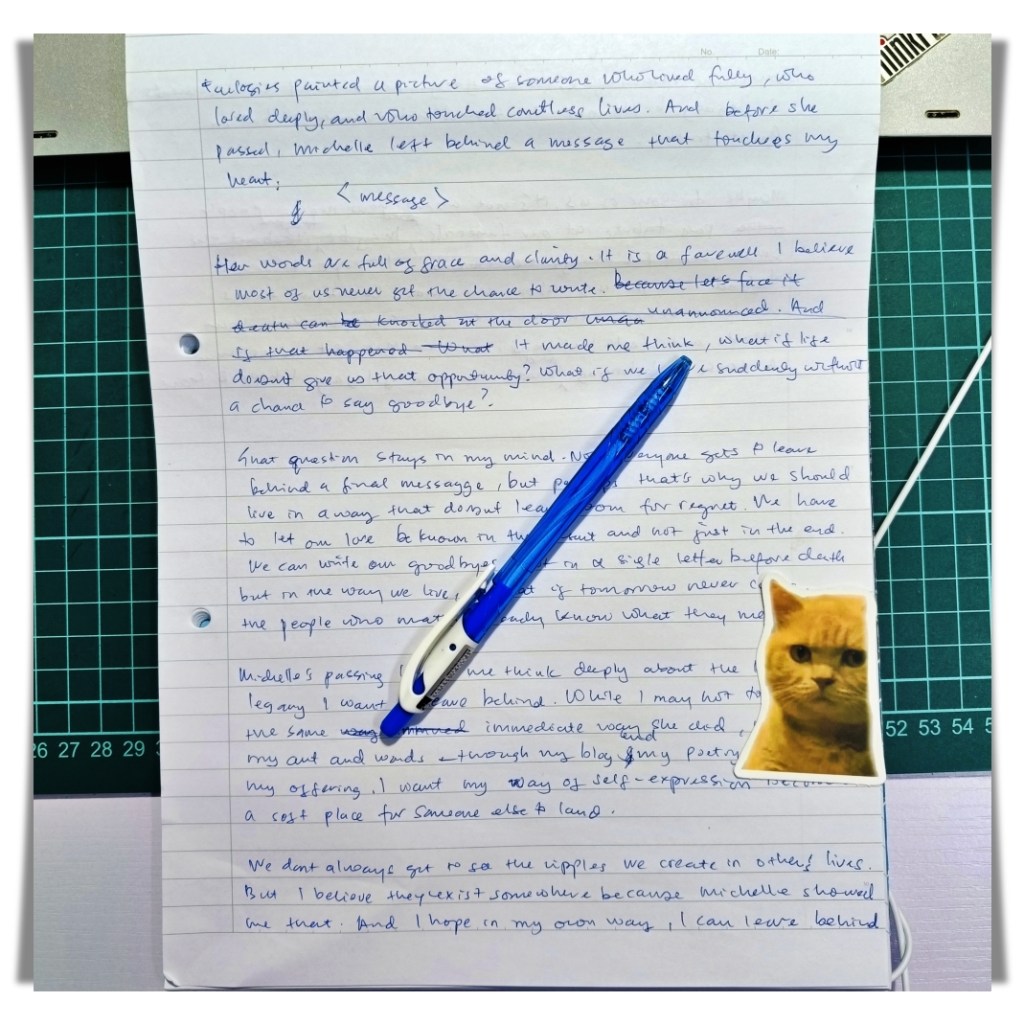
Handwritten draft of this post.