Reflection | The Legacies We Leave Behind

I wasn’t close to Michelle, but when I received news of her passing, it stirred something deep in me. It’s a quiet grief that lingered long after the news settled. It reminded me how one person’s kindness can ripple through your life and leave marks you only notice years later.

Michelle came into my life over 20 years ago when I was at my lowest and at a pivotal moment of my life. I barely knew her; she was literally a stranger, but she opened her door and her heart to me. She took me in and let me stay in her home for several days. She drove me around, and for a few precious days, she made me feel seen and safe. She introduced me to her wonderful family, and they welcomed me as if I belonged. In that moment she became a safe place for me when my world felt fractured.

She didn’t have to do that because we weren’t close friends. But there she was, extending a hand when I needed it most. Looking back, I can see how God placed her in my path like a lit candle in the dark. Her kindness changed something deep in my heart that changed the course of my life.

Since then, that memory has quietly shaped the way I move through the world. I made a promise to myself that I would pay that kindness forward in my own quiet ways. Michelle showed me that even the smallest gestures can leave lasting ripples far beyond what we might ever see.

Although I didn’t attend her wake service, I watched it live on Facebook. The hall was full with friends and family grieving and also celebrating her life. Eulogies painted a picture of someone who lived fully, who loved deeply, and who touched countless lives. And before she passed, Michelle left behind a message that touches my heart. Here’s an excerpt:

“My dearest friends and kindred spirits, do not cry, do not grieve, do not be sad for me, I have already taken flight—gracefully! The beauty of life lies in its fullness, to love and to hate, to laugh and to cry, to sing and to speak, to run and to dance, to journey through this world with passion and abandon, to stand against injustice, to live boldly and fiercely. I have lived, truly lived, and I leave this world without regret. Yet the hardest part is leaving behind my family and all of you. My heart is bound to you by love, and it is love that makes parting so bittersweet. My beloved ones, be brave. Live with strength, with purpose, with an unyielding spirit. Do not waste this precious journey on earth! Though imperfect, this world holds endless surprises of joy, sorrow, and wonder—do not let them pass you by.”

Her words are full of grace and clarity. It is a farewell I believe most of us never get the chance to write. It really made me think, what if life doesn’t give us that opportunity? What if we leave suddenly without a chance to say goodbye?

That question stays in my mind. Not everyone gets to leave behind a final message, but perhaps that’s why we should live in a way that doesn’t leave room for regret. We should make sure our love is felt in the present, not just left for the end. We can write our goodbyes not in a single letter before death but in the way we live, so that if tomorrow never comes, the people who matter already know what they meant to us.

Michelle’s passing made me think deeply about the kind of legacy I want to leave behind. While I may not touch lives in the same immediate way she did, I hope my art and words—through my blog and poetry—will be my offering. I want my way of self-expression to become a soft place for someone else to land.

We don’t always get to see the ripples we create in others’ lives. But I believe they exist somewhere because Michelle showed me that. And I hope in my own way, I can leave behind something meaningful: a legacy built not on outstanding achievements but on quiet truths.

Maybe for some of us, it’s not about how many people pay tribute at our funerals. Maybe it’s about the small, beautiful things we leave behind—kindness, goodness, or the moments when someone reads you words and feels understood, or when your art brings them a sense of belonging. And that’s the kind of legacy I hope to leave when my time comes.

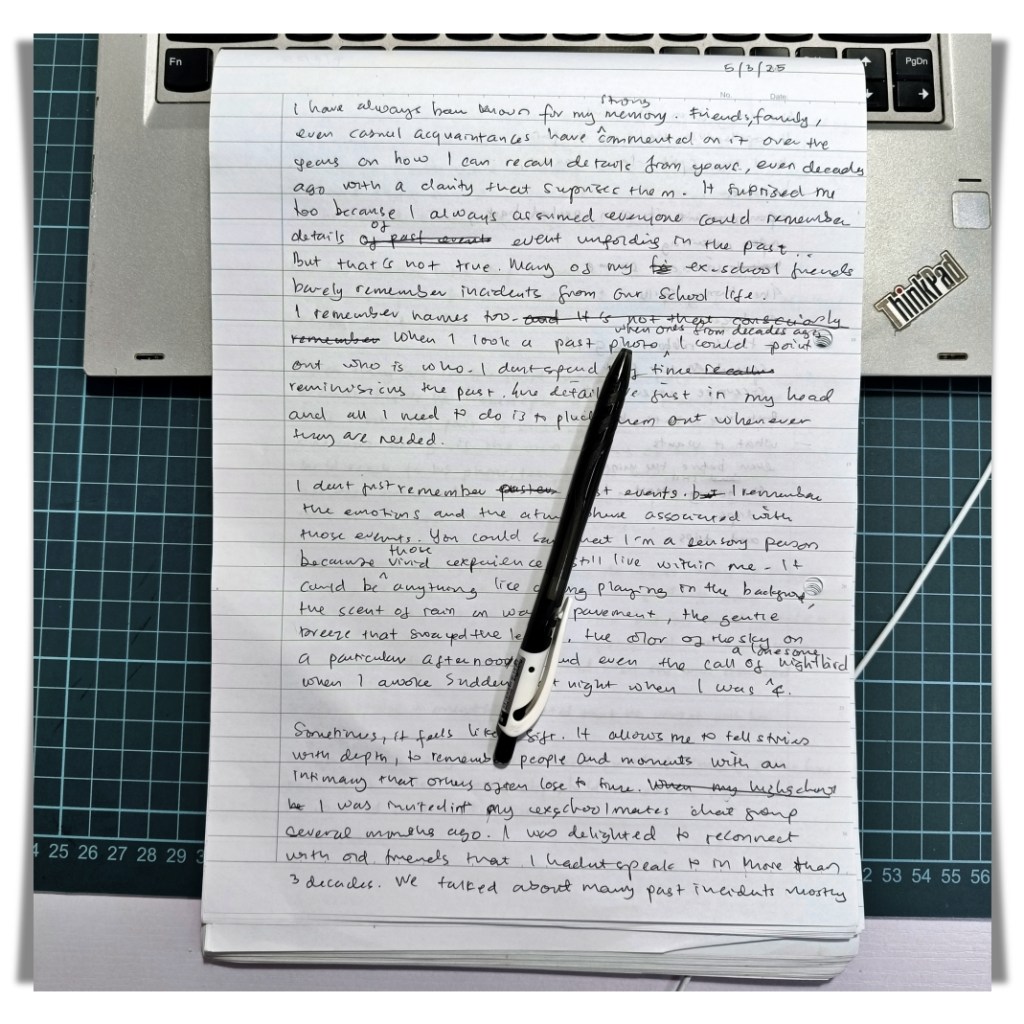
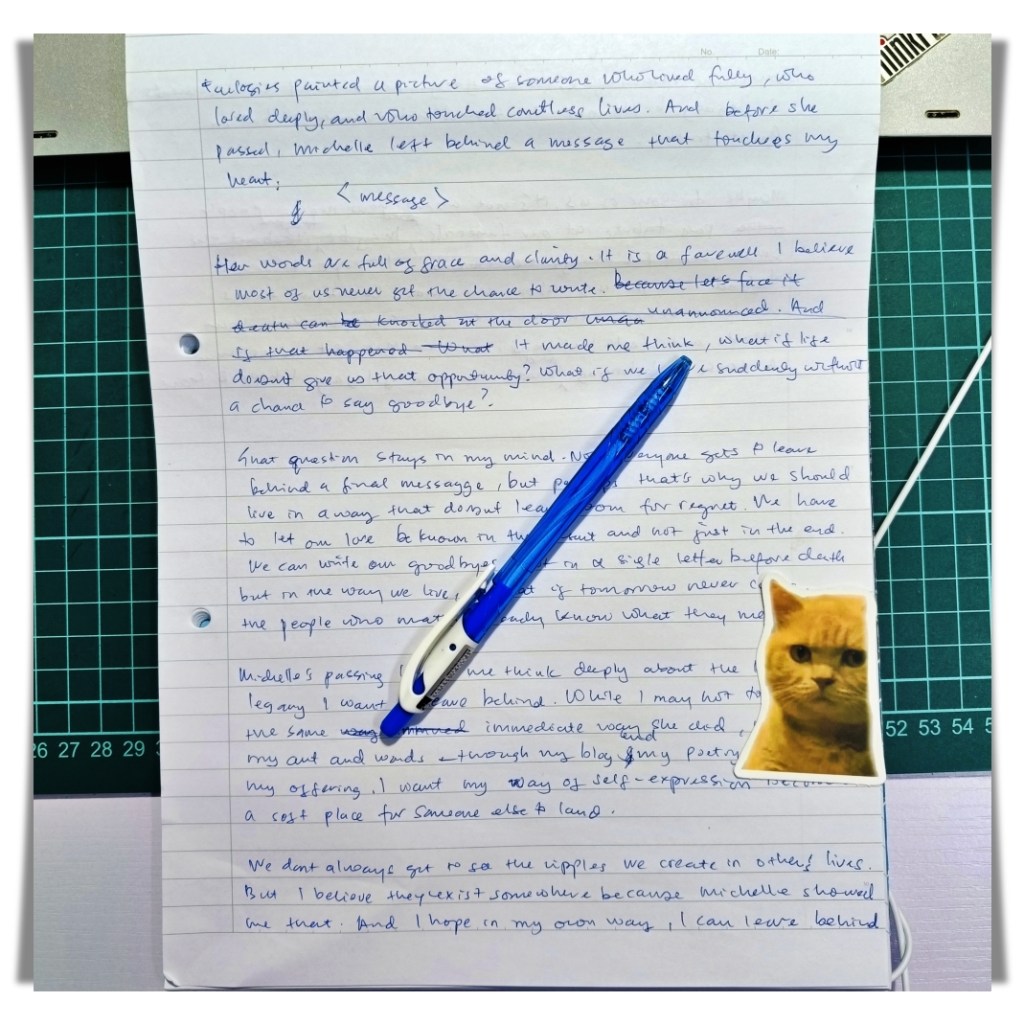
Handwritten draft of this post.

Reflection | Fossils, Letters, and Love Across Time

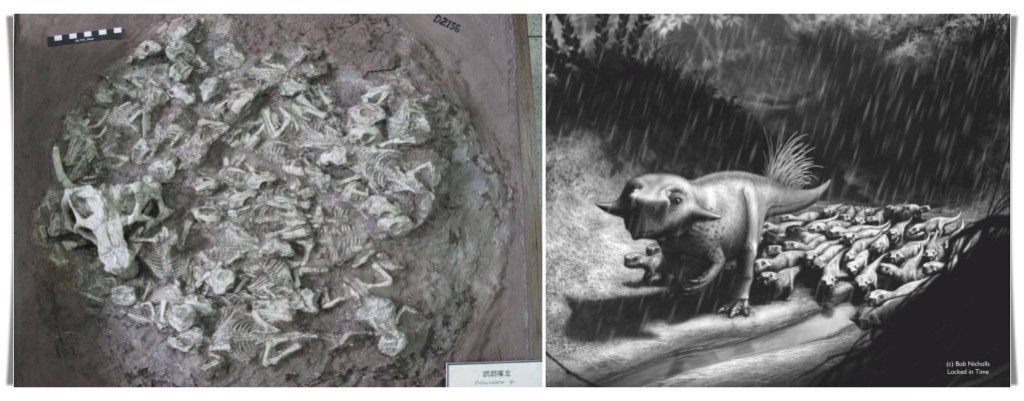
So, I came across The Last Guard the other day. No, it’s not the latest K-drama or Hollywood movie. It refers to the discovery of multiple fossilized psittacosaur cubs found alongside what appears to be an older sibling. The older sibling was guarding or babysitting the cubs when they were buried by a volcanic debris flow. This group of fossils was discovered by a paleontologist, Dean Lomax.

“The largest fossil does not have the dimensions of a sexually mature adult, so it is not it could have been one of the parents; most likely who has been the older brother of the little babies” The find is exceptionally preserved, and appears in his book “Locked in Time – Animal Behavior Unearthed in 50 Extraordinary Fossils” Source

Image source

It stopped me in my tracks and made me reflect. I mean, imagine that a big dino brother is protecting the younger siblings and its final act is frozen in time. It’s heartbreaking, but it got me thinking: why did dinosaurs even exist? Were they here just to live their lives and then become the fossil fuel that now powers our world?

It’s kind of wild to think about it. Now, just a side point: do you know that during the time of dinosaurs, the earth’s atmosphere was thicker due to higher levels of volcanic activity and greenhouse gases? The sky would be hazier, possibly obscuring the clarity of the night sky. So these dinosaurs probably couldn’t see the crystal-clear starlit night we enjoy today. These massive creatures never saw a sky full of stars the way we do, but now millions of years later, their fossils power our rockets, propelling us into that very sky. It’s poetic, isn’t it? That nothing in this world really lost. They were just transformed. Dinosaurs that once roamed the earth are now the force sending us into the universe. It’s all connected, a continuum of life, death, and dreams.

And millions of years later, here we are looking at their fossils and reflecting on their existence. An older sibling protecting the cubs. If this is not love, though instinctual in nature, I don’t know what is. Their story didn’t end with extinction. It lives on in the fuel that powers our world and in moments like this when we pause to think about them.

Have you heard about The Letter to Lee Eung Tae? The Last Guard made me think of that letter too. The Letter to Lee Eung Tae was written 500 years ago by a grieving pregnant Korean Joseon widow to her deceased husband Lee Eung Tae. The Last Guard versus The Letter to Lee Eung Tae. Two moments in history, so different but connected. One is a silent act of love embedded in ash, and the other is a deep grief written onto paper. Both moments are remnants of love carried through time.

Image source

I wept when I read the widow’s letter to her beloved husband. Five hundred years didn’t erase the pain and longing in her words.

“You always said to me, “We’ll be together until our hair turns gray, then die together”, so how could you go and leave without me? Whom should I and our child turn to; how should we live? How could you leave us all behind and go on your own?…Each time we lay together, I asked you “Dear, do other people love and cherish each other as we do? Are they like us?” How could you forget my words and abandon me?…I cannot live without you. I want to go to you quickly, so please take me to you. I cannot forget the feelings I had for you in this life, there is no limit to my sorrow. I don’t know if I can go on; where do I put these feelings that I have, while raising a child that misses their father? Please read this letter, then come to me in my dreams…” Source

Definitely stuff of K-drama.

This letter is like The Last Guard; it silently speaks of that protective love. This is love in all its forms, instinctual or deeply human, that transcends time.

And maybe that’s the real point. Nothing is ever really gone. Whether it’s a dinosaur’s final sacrifice or a widow’s grieving words, their legacies find us. They connect past and present, life and death, in this vast web of existence. Even in extinction or loss, there’s continuity and transformation that reached us at this present age.

It makes me wonder, what if millions of years from now, someone looks back at us? Someone finds our digital fossil buried beneath layers of forgotten time. And there they’d be reading our words and confessions, once alive and fragile but burning deeply. Would they feel the same reflection and connection we feel now when we look at fossils or read ancient letters?

In the end, maybe love is what truly matters. And maybe that’s also what it’s all about, leaving traces of ourselves behind. Traces of our existence, our love, our dreams, waiting for someone to find them and feel them all over again.

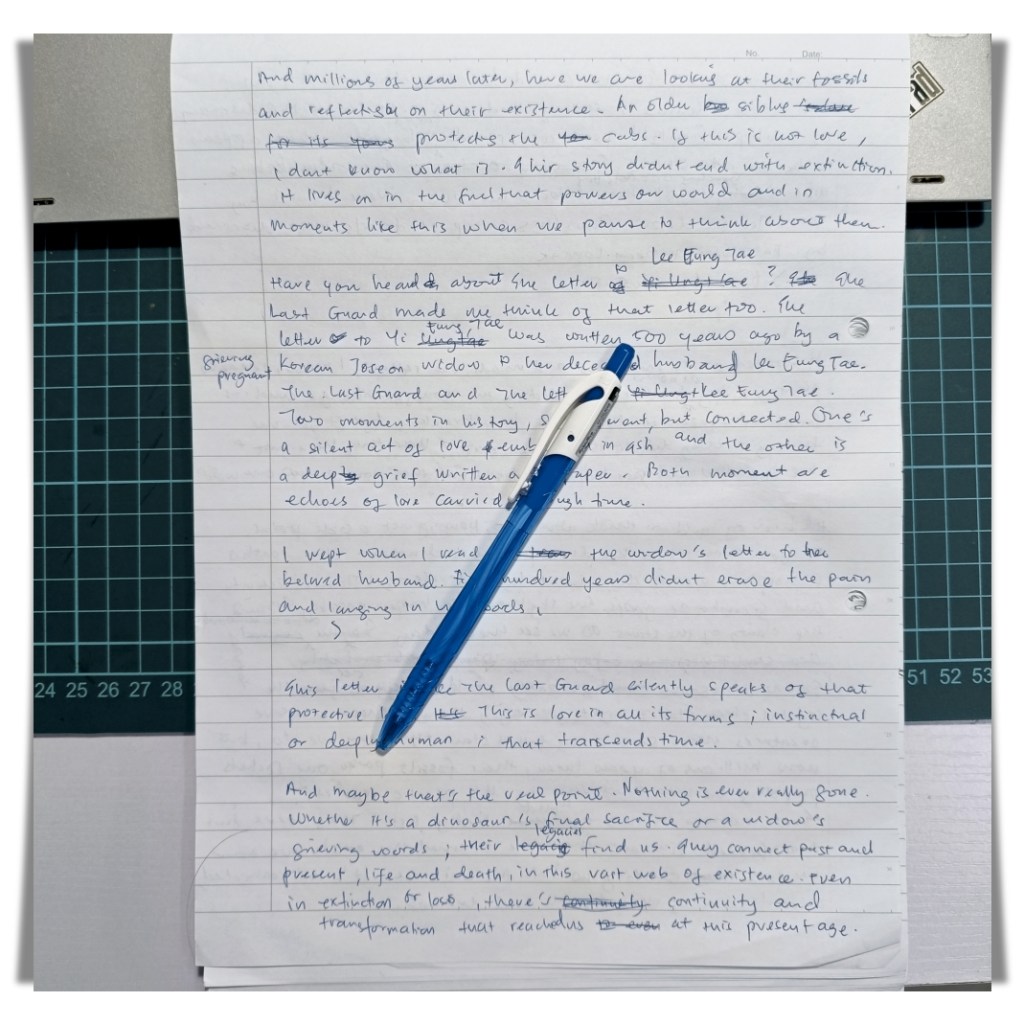
Handwritten draft of this post.

Reflection | Hidden Costs of Our Digital Lives

Lately, I’ve been thinking about something that pricks at my conscience—the hidden costs behind the things we do, even in moments that seem harmless. This thinking came about after I read an article in Forbes that said that AI is depleting the world’s scarcest natural resource, which is water. This is due to water being needed to cool the cooling systems to dissipate heat in data centers. And it’s not just AI; it’s the entire digital ecosystem. Every time we scroll through social media, stream videos, send emails, or even update this blog, data centers are working in the background, consuming energy, and using water for cooling. It feels harmless, but in reality, it’s not.

It’s strange, isn’t it? The idea that even our most intangible connections have a footprint.

At first, it disturbed me. I feel a lingering sense of guilt knowing that something as simple as writing, chatting, or even creating art online comes with a hidden cost. But then the more I reflect on it, the more I realize how much of life is built on similar contradictions. Take fast fashion, for example. It’s cheap, chic, and readily accessible almost everywhere, but at what cost? Somewhere in the world, cheap labor is working behind the scenes. Another example: plastic. Our modern life can’t survive without plastic. It’s so convenient to wrap our food and make life easier, but it ends up polluting our oceans, landfills, and eventually our bodies with microplastics that destroy our health.

We live in this web of contradictions where convenience often comes at an unseen price. And the hardest part is we can’t always escape it. Does it make us hypocrites? Maybe. Or maybe it just makes us humans who are stuck in a system we didn’t fully choose but still need every day.

But here’s where I found a sense of peace in all this. I can’t avoid all harm because, let’s face it, that’s almost impossible. But I can balance it. How? I’m not speaking for anyone else but myself. I can write and make art online with deeper purpose because knowing that even if it uses energy and resources, I can leave something meaningful behind. Words that comfort, art that connects, ideas that make someone feel seen. That’s how you and I can give back.

I think about my poetry art, my drawings, and how they carry pieces of my Iban heritage. If they can spark reflection or connection, then maybe they’ve earned their place.

I can choose to create with intention. If what I write and what I draw can offer someone a sense of understanding, comfort, or even just a moment of reflection, then maybe the cost feels more balanced. It’s like planting something in overused soil and hoping it takes root.

So yes, my writing on this blog or wherever I exist online, they do take something from the world. But I can use them for good and give something back. And that’s the kind of balance I want to aim for.

What about you? Have you ever thought about the hidden costs behind the things you do online or consume? And how do you find peace with it?

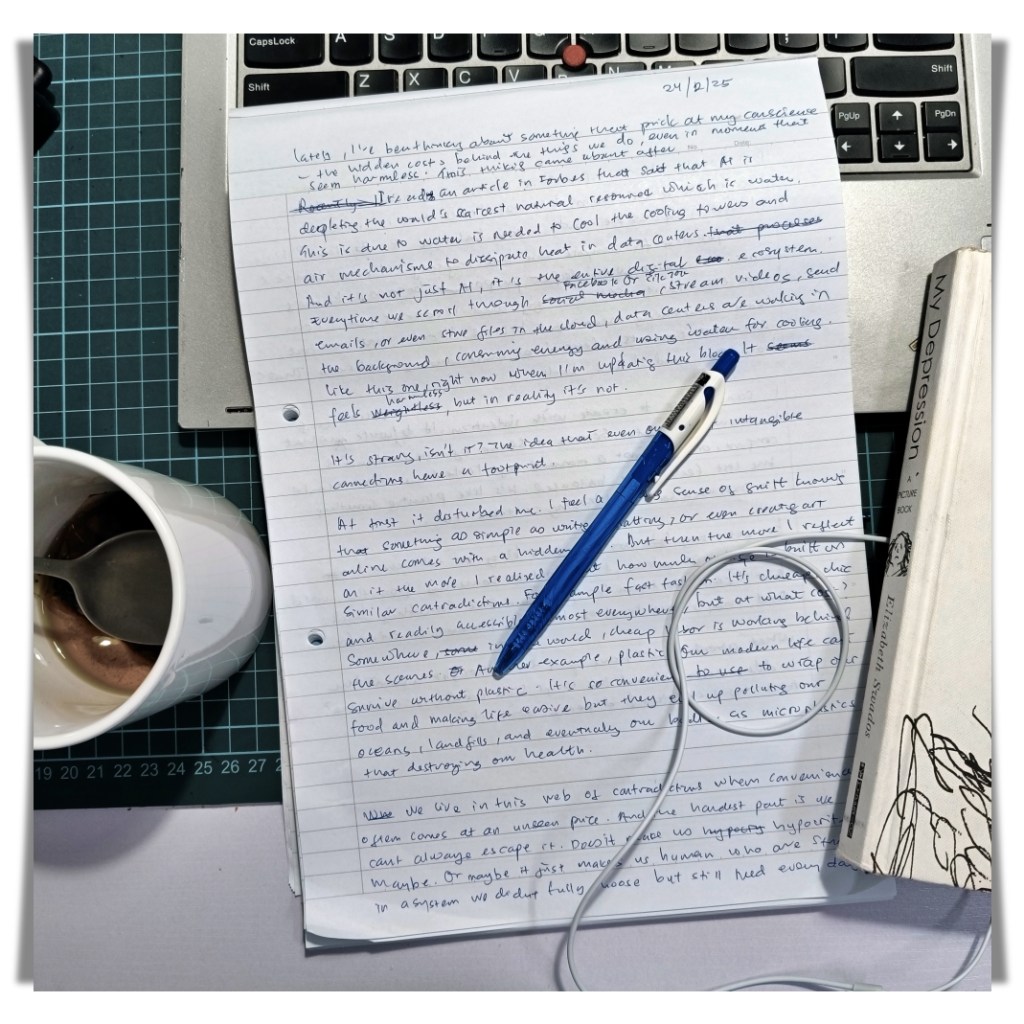
The handwritten draft of this post, the book I currently read, and a cup of cool tea.