The Problem With “Should”

Image source

If I could get rid of one word for good, it would be “should.” That word is not rude or offensive. When someone uses it in a sentence, it doesn’t hurt or shock on impact. What gives it power is its subtlety. “Should” sounds innocent and gets overlooked easily. It often comes up in conversations disguised as common sense, advice, or concern. It sounds reasonable and hardly ever raises alarm. However, it changes how people feel about themselves without their knowledge or consent. I have noticed many people say “should” when they talk about how to live, how to feel or respond, and how to move on from something bothering them. Here are some examples: 

You should be grateful.

You should know better by now.

You should forgive.

You should stay.

You should want this.

The word has power without needing to explain itself. It makes an assumption without giving any context. When spoken, it compares someone’s current situation to an implied standard. My biggest concern about “should” is how sinister it could be. Like for example, solicited advice can be helpful when it is invited. However, the harm can happen when the advice giver uses “should” to replace the important part, which is to truly listen to the person who asked for advice. When we use “should,” it enters the space before understanding has had time to grow. So you see, it comes with an assumption already in place.

I have heard “should” used most often when people aren’t sure what to do. For example, when someone is grieving or questioning their faith. Other common situations are when someone is worn out, overwhelmed, or unsure of their next step. In those times, “should” makes things less uncomfortable and easier to understand. “Should” gives direction when being patient and thinking things through might be a better option.

The word “should” does something subtle over time. It trains people to monitor themselves all the time and judge their thoughts and feelings against an unseen standard. They start to compare how they feel to what they think they should feel. They also start to compare their needs against what they believe is expected of them.

I’ve seen this happen in religious settings, where “should” is used to make people obey and not question things. I’ve seen it in conversations regarding productivity, where rest is treated as something to be earned and not a necessity. I’ve seen it used abundantly in discussions about relationships that often encouraged someone to be patient and endure instead of drawing firm boundaries. The word “should” adapts easily, and it is often used to control a narrative so it fits the controller.

One reason “should” is hard to challenge is that it often comes with good intentions. The person using it might think they are helping and being sincere. But sincerity and the impact of the word are two different things. They aren’t mutually exclusive. The impact of the word is dependent upon what it forces the listener to disregard, no matter how sincere it is being delivered. When “should” comes into a sentence, the present moment loses its value. What is felt, known, or experienced becomes temporary, like something that needs to be fixed and gotten over with.

I don’t want to replace “should” with another option. I know that certainty is still limited and that expectations still exist even without the word. In life, there will always be choices, obligations, and consequences. To get rid of “should,” we would need a different way of getting our messages across. And that would include empathy, perspectives, thorough explanation, and room for nuance. Without “should,” we would have to say what we actually mean. And we would have to talk about what we really think instead of what we think is supposed to be.

I have learned that that word, “should,” directly contributed to many difficult periods in my life. It was said so many times that I didn’t see how insidious the harm it caused. It drove me to doubt my own timing, my own limits, and also my own instincts. Banning “should” might not make things easier but it could give honesty more room to breathe. Without “should,” it would remove one of the most efficient ways to quietly erase oneself. And of course, without “should,” other ways of relating would have to take its place.


I write about Iban culture, ancestral rituals, creative life, emotional truths, and the quiet transformations of love, motherhood, and identity. If this speaks to you, subscribe and journey with me.
A Season Without Clear Answers

Daily writing prompt
What is the biggest challenge you will face in the next six months?

When I think about the next six months, I don’t see one defining obstacle. I see a few changes happening at the same time. None of them are dramatic on their own, but when you put them all together, they change how I live my life. The hard part is staying composed when things that used to feel stable start to change.


One of the most significant changes is my relationship with faith. I began deconstructing my faith last year, before leaving the church in early January. For almost twenty years, I have been a member of the same church community. It changed the way I thought, spoke, and saw myself. Leaving happened gradually, without any clear signs or relief. It is a never-ending process of untangling habits, dogmatic beliefs, and expectations that used to seem unquestionable.

I will still be carrying parts of that structure with me in the next few months, even as I try to let go of it. Some days I feel certain about my distance. Some days I feel lost and don’t know what will take the place of what I’ve left behind. The work now is to simply exist without quickly replacing it with another religious system or set of answers. It takes time and requires the ability to deal with unknowns longer than I’m used to.

At the same time, my writing life is expanding. My writing has gone beyond private experimentation. There are ongoing projects now: several zines that need finishing. An Iban heritage poetry collection that I want to publish in May. This blog has become a place I return to regularly, not only when I feel inspired but also because I feel responsible for showing up. It’s something that I expect to do consistently from now on, regardless of the size of the audience or subscribers.

This growth comes with steady demands. It needs discipline without urgency. I have to figure out how much of myself I can give without making the work feel like another source of stress. The work now is to keep a steady pace, even when I want to push myself harder.

There is also a quieter loss that goes along with these changes. I am grieving because someone who was always there for me is no longer there. I didn’t lose them to death. I lost their daily presence, attention, and familiarity. The loss may be subtle but it is persistent. It shows up in little things, like habits that don’t work anymore and thoughts that don’t get a response.

This grief arrives quietly. It doesn’t change life in obvious ways. It fades into the background and changes how things feel on normal days. I’m still doing my job and living my life like any other day. However, a steady awareness of what’s missing, and carrying it without letting it take over everything else, takes a lot of mental power and energy.

These three movements will have a big impact on me in the next six months. A spiritual framework that is transforming. A creative life that needs some order. And a personal loss that lingers and doesn’t resolve neatly. These are the conditions I will be living inside.

I am learning to take all of this in without jumping to conclusions. I’m trying not to make things clear when they aren’t. I won’t give up one part of myself to make another part of me stronger. I’m learning that even when things are uncertain, there can still be stability. Sometimes, stability comes from being present when things aren’t resolved.

I think the next six months will need my attention instead of closure. It will need my restraint and my willingness to keep going even when my internal landscape feels unfamiliar. That’s where I need to keep my focus.


I write about Iban culture, ancestral rituals, creative life, emotional truths, and the quiet transformations of love, motherhood, and identity. If this speaks to you, subscribe and journey with me.
Toxic Modern Beauty Standard | Looking Back at the Girl I Was

Image source

I grew up in the 90s, an era when beauty was defined in strict, unyielding ways. The girls in the magazines didn’t look like the women I knew at all. They had thin bodies, sharp cheekbones, long arms and legs, and faces that hadn’t changed with age or life. At the time, I didn’t have the words to articulate it. I only knew that I didn’t look like the girls on the covers, and something inside me subconsciously decided that meant I wasn’t good enough.

Back then, I thought that being beautiful was necessary to fit in. I thought that people who judged worth by physical appearance were the ones who gave approval. I thought that the only way to make up for what I was missing was to be good at other things. So I worked hard and made sure my grades were good. I worked hard to get a good job. Throughout the years I learned how to pretend and not draw attention to myself and how not to embarrass myself. It felt like the safest way to get around in a world where my body never matched the acceptable standard.

It took years for me to see how fake and shallow that standard was. The Western beauty standard that we got from TV, fashion magazines, and advertisements was very narrow and spread far beyond where it started. It glorified extreme thinness, having smooth skin, hairlessness, small features, and not showing signs of aging. These traits were shown as universal signs of beauty, even though they didn’t apply to most real women. I didn’t think about this when I was a teenager. I assumed the failure was my fault.

As more information from the Epstein files has come to light in the last few months, I’ve been looking back at that period in my life in a different way. I don’t want to accuse anyone or make direct connections between crimes and culture. But it’s impossible to ignore how closely some parts of the fashion and beauty industries were linked to powerful men who surrounded themselves with very young girls. When youthfulness was not only admired but also aggressively idealized, and when the individuals who shaped those ideals possessed significant power and influence, the standards ceased to appear neutral. They start to look like reflections of a gaze that was never meant to be good for women.

For decades, feminists have been critical of beauty culture. I could understand the criticism in theory long before I felt it in my life. I didn’t know any of this when I was a teenager. I only knew that my body looked different from what the world thought was beautiful and celebrated. I only felt the silent, constant feeling of not being good enough. Now that I know that some of those ideals were reinforced in places where people were taken advantage of, that old insecurity feels more profound and complicated, and it’s harder to brush off as teenage self-doubt.

When I think about my teenage self now, I see a girl who was trying to figure out where she fit in a world that kept narrowing the definition of beauty. I see her flipping through fashion or teenage magazines with her friends at school and tracing the lines of faces she thought she was supposed to aspire to. I see the way she was hiding her pain behind success. She didn’t know that what she was doing was part of a much more complex system. She only knew that she felt like she was outside of something she couldn’t see but felt deeply in her core.

If I could sit with her today, I would not offer some cliche advice. Advice points to a resolution, but I honestly don’t have any resolutions to offer when I still carry the echoes of those insecurities. I still notice how easily I slip back into old comparisons. I still feel the effects of growing up in a culture that taught girls to always judge themselves. Even decades later, the healing process has not been smooth, and I doubt I will ever fully heal. Some days are better. Some days are not. When the pattern is deeply rooted in you, it’s impossible to heal, though mindset can be trained and shifted.

These are the things I would do:

I wouldn’t tell her to be confident. I wouldn’t tell her to love herself more. Those instructions would still feel empty and shallow. I would tell her that I’m sorry they lied to her. Nothing was wrong with her body, I would assure her. That she was never supposed to look like the girls she compared herself to. That the standard she used to judge herself was not made for real women, and definitely not for teenage girls who are still figuring out who they are. This standard was shaped by power, profit, and a perspective that narrowed the definition of womanhood while objectifying women. I would tell her that the shame she felt didn’t come from inside her. It was learned and religiously absorbed. It was reinforced daily by images and messages she had no reason to mistrust at that age.

I can’t change what she went through. I can’t restore the years she felt insignificant or invisible. However, I can accept what happened without trying to justify it or improve it.

The anger I feel now is not directed at her. It is directed at a culture that normalized her self-doubt and insecurity. It’s an evil culture that told girls to shrink themselves to be accepted and then rewarded them for compliance. My rage is directed at a culture that taught vulnerable women to mistake discomfort for personal failure.

This is all I can give her. I don’t have a solution or any comfort to offer: You were never the problem. You were growing up in a system that didn’t know how to treat girls with respect and dignity. And confronting that truth now reshapes how I understand those early years.


I write about Iban culture, ancestral rituals, creative life, emotional truths, and the quiet transformations of love, motherhood, and identity. If this speaks to you, subscribe and journey with me.
The Hour Between Us

I have been grieving these past few days. It’s not intense but ever present, making every morning feel like a careful step. I have been taking things slowly. I sleep when my body asks. I journal when I feel overwhelmed. I make simple meals and spend less time on social media or reading the news.

Today, on Valentine’s Day, the pain rises closer to the surface. I read that the brain areas that register physical pain also register emotional hurt. The idea almost makes a paracetamol seem logical, as if the heart carried a headache, though I know medicine will not soothe it.

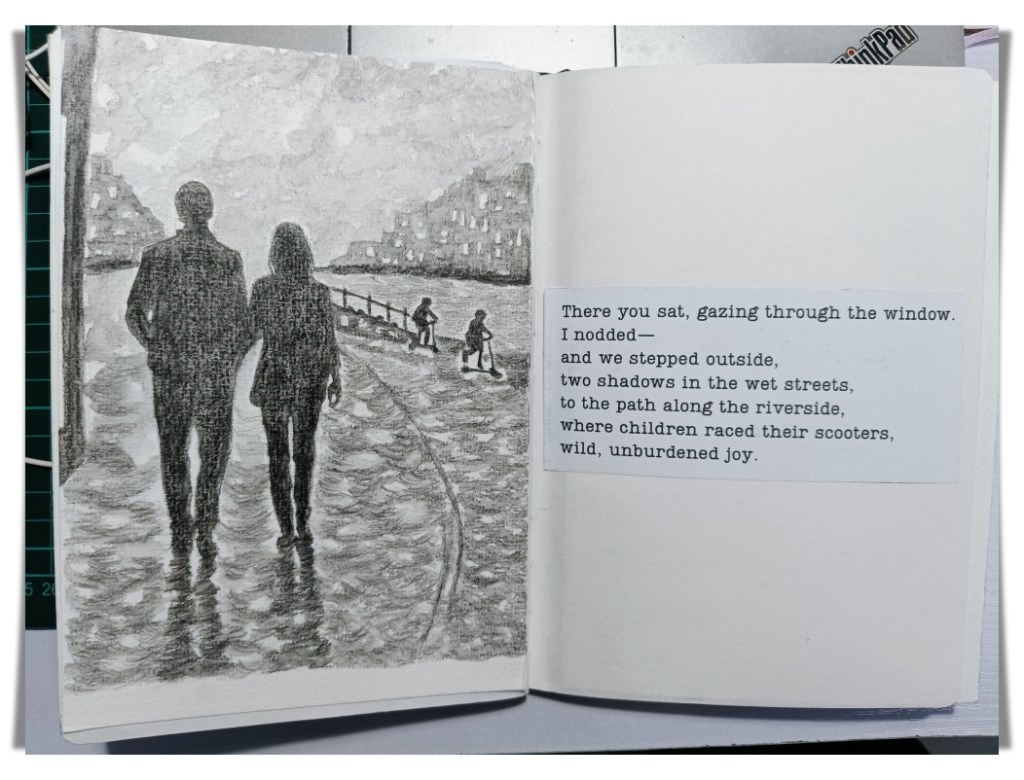
I am sharing two poems I wrote years ago because they hold what I feel more clearly than I can right now. They come from two sides of the same moment. The first poem speaks from her view, aware that time never pauses. The second answers from his side of the same room, the same bed, the same slowly emptying hourglass.

Image source

Her Perspective

Slipping Away

We are dying a little more each day,
you, me, the neighbor with the cracked glasses,
the woman at the train station
who waits for no one.
The boy who lost his dog
last November.

But,
we live like we have
all the time in the world,
we wake to alarms that steal
the dreams from our skin,
eat breakfast,
leave dishes in the sink,
argue about the bills,
make love as if our bodies
aren’t maps of vanishing places.

Denial is an art,
we are its faithful painters.
We fill our days with notifications,
deadlines, grocery lists,
traffic jams, dinner plans,
laughter.
We say, “see you later”
knowing full well that one day,
one of us won’t.

I watch you
in the soft glow of evening,
the furrow in your brows,
the absent scratch of your fingers.
I watch the flicker of your eyes,
as you skim through a book.
You mutter beneath your breath,
making sense of your read.

Later,
in the hush between midnight and morning,
our fingers trace unseen
constellations across warm skin.
For a moment, time disappears,
leaving only us.

I want to tell you,
the sand in the hourglass
doesn’t pause because
we are too afraid to look.
Instead,
I kiss you,
as if that will keep you here,
just a little longer.


His Perspective

Before the Hourglass Breaks (for Liv)

We are fading,
you and I,
like paper that yellows under glass.
Each day lifts a little color.
I count the changes, afraid
I’ll miss the exact moment
we become part of the past.

And still,
I meet you in the mornings
as though the clock has stalled.
I pour coffee,
listen to the three slow turns
of spoon on porcelain.
We talk about nothing urgent,
leave the bed unmade,
let the light spill over our carelessness.

I keep my hands busy
because if I stop,
I’ll touch your face
and give away too much.
Instead, I watch the shadows
move over your shoulders,
trace the curve of your wrist
as you turn a page,
note the small frown
that settles when a sentence traps you.

Later,
when the world finally goes quiet,
your fingertips search for me in the dark.
I memorize their path,
the pauses,
the breath you release
before you closing the space between us.

I want to tell you,
I feel the sand running too.
That I’ve been learning
how to love without holding,
how to stay without staying.
Instead,
I let my lips find yours,
hoping the taste carries forward
into whatever comes after,
and that you’ll feel me there,
just a little longer
.


I write about Iban culture, ancestral rituals, creative life, emotional truths, and the quiet transformations of love, motherhood, and identity. If this speaks to you, subscribe and journey with me.
A Woman on the Fourteenth Floor

Image source

Last Saturday, a woman from the 14th floor of my apartment block ended her life, jumping from her balcony in the early morning. I never knew her. She was simply another resident, a stranger to me. I live on the third floor, far below. As far as I know, our paths never crossed, though we might have shared the lobby or an elevator at some point.

When I woke up that morning, everything felt ordinary. I didn’t know the police and ambulance were already outside. A neighbor later told us he had been taking a cigarette break on his balcony when he heard a loud crash. At first, he thought it was a car accident. Only when he looked down did he realize what had happened. She had jumped just before dawn and landed on her parking bay. Security was called, then the police. People began gathering at their windows, looking down in silence. A few drifted into the lobby, but most didn’t stay long. I only learned about it when my husband went out to buy breakfast and saw the body already covered on the ground.

My husband spoke with the security guard, as he always does when something unusual occurs. The guard told him she was in her late forties, divorced, and living alone. She had left a note, labeled her belongings, moved her car to another spot, cleaned her apartment, and paid her bills. She had meticulously planned every detail. No one was left wondering about her intentions.

The police left quietly. Cleaners came later to wash the area, but her parking bay remained cordoned off for a while. A faint stain lingered on the ground, noticeable if you happened to look down. By Monday, life in the building had largely returned to normal. Neighbors went about their daily routine, children ran through the corridors, and doors opened and closed as they always did.

I found myself thinking about her more than I expected. I wondered if I had ever seen her in the lobby or the car park or heard her door close above mine, though that seemed unlikely. She lived fourteen floors up, always out of reach, a life carried overhead, distant yet close enough for her absence to register. In buildings like this, you share an address with dozens of strangers, known not by name but by unit numbers on mailboxes or passing shadows in stairwells.

I didn’t feel grief, exactly. There was no surge of sadness, no urge to gather people or speak about it aloud. What I felt instead was a pause and lingering awareness of the space she left behind. Life continued as usual, but for a while I noticed the silence and somberness that settled over the building.

I pictured her last days in fragments: the careful way she arranged her affairs, her decision to land where no one would witness it by chance. There was a precision to the ending, free of drama and leaving little for others to clean up beyond what could not be helped.

Now the parking bay is just another space again. The tape is gone, the surface washed, and the usual comings and goings have resumed. I wonder whether her family will put up her unit for sale or rent. Sometimes at night, when the building is quiet and I hear the faint shifting of furniture from above, I remember her, someone I never knew, living her life high above mine until one morning she was gone.

There is no lesson here, only the fact of it. Her life ran parallel to mine, a story I never read. Now a small gap remains where she once was, and the rest of us keep living under the same roof, carrying on.


I write about Iban culture, ancestral rituals, creative life, emotional truths, and the quiet transformations of love, motherhood, and identity. If this speaks to you, subscribe and journey with me.

What Remains After They’re Gone

Daily writing prompt
How do significant life events or the passage of time influence your perspective on life?

Image source

There are losses that come with sudden announcements and those that slip in quietly. This loss falls into the latter category. I slowly came to understand that someone I loved had chosen not to stay in contact. This sudden change didn’t involve death or drama. There was no final argument or clear explanation. It was a distance that grew until it was gone. There were messages one day. Then they were gone. There was familiarity one day. After that, there was nothing.

At first, I didn’t know it was grief. I told myself that this was normal. People go their separate ways and lives move in different directions. Not every connection lasts through change. Still, the body notices things before the mind does. I reread old conversations and paused before sending messages. I knew I wouldn’t send it, so I held on to my phone longer than I needed to, as if I was waiting for something that had already decided not to arrive.

This month has been full of transitions. I’m leaving a church community that has been a big part of my adult life. I’m finally giving up a part of myself that learned to put up with things by remaining small and compliant. Along with that, I carry the loss of someone who was important to me and was a part of my daily life.

None of these changes came with clear endings. Leaving a community takes shape through many small choices that build on each other. First, the practical tasks, and then the emotional ones. Memories come back to me at the worst possible times: familiar songs, old habits, and routines that make up almost two decades of my life. You don’t leave cleanly. Pieces linger even if you don’t want them to.

Estrangement follows a similar pattern. The loss is evident in mundane instances—such as the impulse to share something and then halting midway, or the instinct to reach out followed by the silent adjustment that you no longer do that. It lives in little things and in spaces where another person used to be.

I used to think that as I got older, I would learn how to let go and carry less weight. The years have made me more aware, though. I notice what I hold on to and how much I let people into my private life. Even brief connections can make a big difference. Age hasn’t made me tougher. It only made me more honest about how I feel.

You can show up, be there, and care for someone, but you can’t make them remain in your life. When they leave, all that is left is how you deal with the absence, probably not in big ways but in how you carry that loss within you.

Some days I feel fine. Some days I feel grief over unfinished conversations or bonding. Sometimes relief, sadness, clarity, and weariness all come together. When you leave the church, you feel both free and lost. Losing someone I loved makes me feel both grief-ridden and accepting. Both changes happen at the same time, and neither one makes things easier.

Transitions don’t usually come one at a time. One ending loosens another. One shift makes room for the next. You can’t always deal with them one at a time; sometimes you have to deal with many changes at once and do your best to stay present.

There is no big breakthrough or a sudden resolution here. I’m just paying attention to things in my life. Mornings are different. Some memories resurface without warning. Silence is more valuable now than it used to be. I also feel a growing sense of stability, not because life is easier, but because I have stopped fighting against change.

Estrangement teaches something quiet but powerful: love doesn’t last forever. People come into your life for reasons you may never fully understand, and sometimes they leave without saying why. There is no guarantee of closure, and answers may never come. Your task is to keep going while carrying what matters.

Right now, that task looks like letting the absence exist without rushing to replace it. It means letting sadness exist without turning it into a story about failure. It means accepting that this season is about letting go, even though I would have liked things to stay the same.

Time moves the days forward without healing these particular wounds, and I do the same. Not with certainty or everything worked out, but with awareness and willingness to remain with what is, even when it means losing someone you loved.


I write about Iban culture, ancestral rituals, creative life, emotional truths, and the quiet transformations of love, motherhood, and identity. If this speaks to you, subscribe and journey with me.
The Art of Subtle Complaints

Daily writing prompt
What do you complain about the most?

Image source

Some people complain loudly. You can hear them from the next room: loud voices, sharp words, and their hands thrown in the air. That has never been my way. My complaints are more subtle, and most of the time they are only in my head; they never leave my mouth. Most days, if you asked, I would say I have nothing to complain about. If you knew me long enough, though, you would notice the places where my patience thins.

I complain about feeling invisible, though I rarely say it aloud.  Sometimes I sit in the middle of a conversation and laugh while my mind wanders. I become a spectator in my own life. People around me don’t notice the things I want them to, like how I become quiet or how I focus on small details. I think that if someone really listened, they would hear the pain in my silence. Most people don’t, so I let it go.

I also have a subtle need for reassurance. It doesn’t have to be grand. I don’t want promises written down or words repeated until they lose their meaning. I want little things that I can count on: someone who is always there. I want to matter, not just when I’m joyful and bright, but also when I’m quiet, unsure, or difficult to love.

My complaints are not always about others. Often, they turn inward. I wish I didn’t care so much or that I wasn’t so sensitive. I notice every change in tone, every unspoken hesitation, and every silence that drags. It can be tiring to live with this awareness, and I sometimes wonder if anyone else feels the same way. I grumble to myself about how restless I am and how I’m never fully satisfied with the present moment or always want a little more than what is offered.

Some days I wish for more warmth and honesty before I have to ask. I don’t like chasing affection or trying to figure out hidden meanings. I want things to be simple, even though I know I’m not built for it. I study what most people overlook, a habit that can make me feel better and worse at the same time. I know I can be hard to read and that I expect a lot from the people I love, but I’d rather feel too much than not at all.

Sometimes I complain about not being in the know and having to guess what someone else is thinking or why their mood has changed. I want clarity. I want to know where I stand, even if it hurts. More than anything, I hope to be met where I am, not where it is convenient.

If you pay attention to what I’m saying, you’ll see that my complaints show what I value: being present, paying attention, giving reassurance, and having someone steady to lean on. These things aren’t obvious. Most of them fade away before anyone finds out. Instead, they live in the spaces between conversations, in the small annoyance of not getting a proper explanation, and in the longing for things to resolve. The truth is, I don’t need much. I just need to know I’m not invisible and to feel like I belong.


I write about Iban culture, ancestral rituals, creative life, emotional truths, and the quiet transformations of love, motherhood, and identity. If this speaks to you, subscribe and journey with me.
Reading at My Own Pace

Some months I read with hunger. Other times, a book sits unopened for weeks, waiting for me to catch up to whatever it’s trying to say. I used to feel guilty about it, for not finishing or for moving too slowly. Now, I treat it like a ritual. The book finds me when I’m ready or it doesn’t. It doesn’t matter. I’m not competing with anyone. 

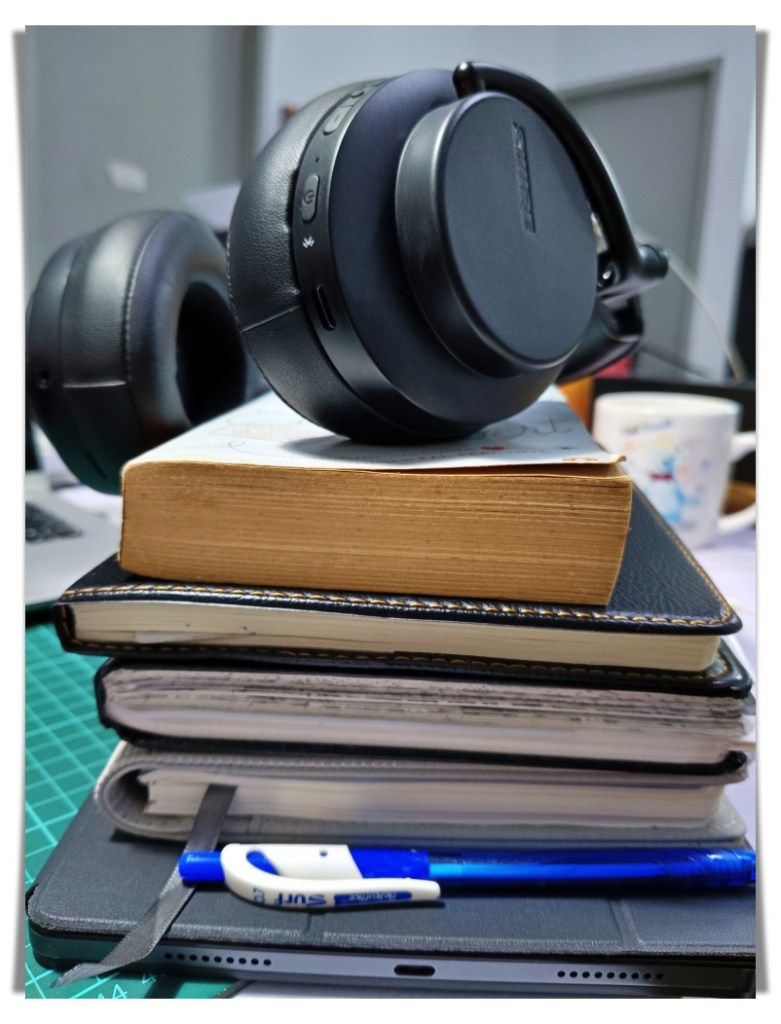
This year, my to-read shelf is more invitation than obligation. I don’t care about finishing stacks. I want each page to be a gentle interruption, like rain on my balcony while I’m working or the way dusk slips through the window when I’m too busy to notice it.

Fiction

Hear the Wind Sing by Haruki Murakami
This is Murakami’s first novel. It is short and understated. Some people said it wasn’t as good as the rest, but I don’t care. I’m drawn to where his work began, long before the fame. I expect quiet nights, music, and empty spaces. 

Getting Lost by Annie Ernaux
I love Ernaux. Her writing style is very clinical.’ This book is a raw diary of obsession and doubt. Ernaux writes with clarity about longing and uncertainty. The subject matter is personal and direct. 

Poetry

Take Me With You by Andrea Gibson
I started to pay attention to Gibson’s work after discovering her on Instagram. She was bravely battling cancer and was very public about her struggles, but it was her message that touched me the most. This collection opens into pain, love, and vulnerability. Gibson doesn’t disguise what hurts. I want to spend time with poems that stay close to real feeling.

The Madness Vase by Andrea Gibson
Another book by Gibson. These poems circle fear, survival, and tenderness. The language stays plain, even when the emotions are complex and raw. 

Yoga & Body

Every Body Yoga by Jessamyn Stanley
I return to yoga after abandoning my practice several years ago. I figured I need a gentler form of exercise so my perimenopausal body can cope. And since I am struggling with my larger body, I naturally gravitate to Jessamyn Stanley. Stanley welcomes every level of experience. Her voice stays grounded and open. I’m looking for guidance that doesn’t expect perfection.

Yoke: My Yoga of Self-Acceptance by Jessamyn Stanley
A collection of essays on making peace with your own body. Stanley is candid about what that process has looked like for her.

Japanese Philosophy & Non-Fiction

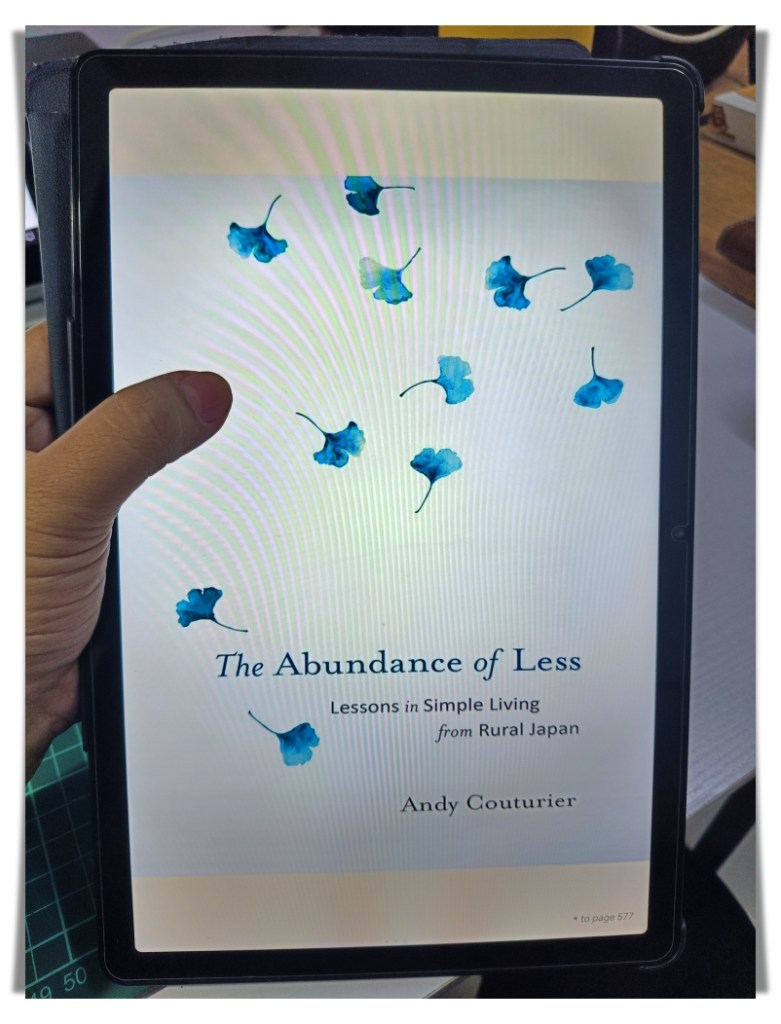
Wabi Sabi by Beth Kempton
I’m reading this now. I have gravitated to Eastern philosophy since I began to deconstruct my Christian faith. Kempton explores imperfection and beauty in ordinary life. Reading this book gives me a peaceful feeling.

Kokoro by Beth Kempton
This book considers “heart” and spirit in Japanese culture. She writes with clarity and restraint.

Freedom Seeker by Beth Kempton
Kempton traces the slow return to self beneath noise and duty. I love her, Wabi Sabi, so I think this book will resonate with me as a dogmatic religious dissenter. 

The Way of the Fearless Writer by Beth Kempton
A book on writing with less fear and more presence. I’m curious what she sees that I don’t yet.

The Baby on the Fire Escape by Julie Phillips

I am so looking forward to reading this one. I think this is the first book I found on this subject. It’s a study of women who made art while raising children. It gathers stories of how creativity and care live beside each other.

I am a slow reader because I want to savor the text and let the message sink into my heart. There are days I chase after answers, but sometimes I just want to reflect on the beauty of a good line. I know these books will keep me company. They will remind me I’m not the only one who desires or questions things. 

Maybe you read like this too, like a habit. If you do, I hope you find something on your shelf that waits for you and meets you quietly, without asking you to be anywhere else.


I write about Iban culture, ancestral rituals, creative life, emotional truths, and the quiet transformations of love, motherhood, and identity. If this speaks to you, subscribe and journey with me.
Living in the Gaps

I left church early this month, right at the beginning of another year. Maybe it just lined up that way. But I like to think I want to start afresh with a new spiritual direction after years of being conditioned to think and behave a certain way. I don’t mention this to brag, express bitterness, or suggest some dramatic unraveling. It was just time. The rituals I’d lived by for almost two decades fell away, and in their place, there was a space in my soul that needed filling. There are mornings now when I notice how empty the calendar looks and how the old routines have faded into habits I no longer keep. Sometimes the silence feels clean. Other times, it’s just unheard noise echoing in my head.

What comes after that kind of ending stays unclear for a while. I’ve been reading about Japanese philosophy. Wabi sabi, mono no aware, all those names for things I’ve always sensed but never managed to explain. There’s something grounding in how it speaks to imperfection or how it leans into acceptance without chasing resolution. Not everything is a lesson. Some things are just facts. Life changes, and I find myself moving slower, sometimes unsure if I’m pausing or simply stuck.

Right now, my days are crowded with interruptions. My daughter is starting Form 4. The house shifts on a new schedule, full of reminders and small emergencies. I keep thinking I’ll find a stretch of time. A few hours in the morning, or an evening when everyone is asleep, to work without interruption. That stretch never comes. The days are chopped into fragments: drive here, answer that, sew a button, check a schedule, stir a pot, fold the laundry. The idea of “flow” feels distant, like something I used to believe in but haven’t seen in months.

Some days, I catch myself measuring everything. I have work I want to do. Books on the shelf, half-finished zines, old artwork I think I might want to bring back to life for an upcoming festival. I keep thinking of artists with quiet studios and long blocks of time, while I’m piecing together minutes from whatever’s left. Sometimes, when I’m honest, I wonder if it’s enough to just keep going at this pace, never catching up, always watching the unfinished stack grow a little higher.

But I read. It’s less than I’d like, but still something. I journal, at times with purpose. Other times, just to sort through the mess in my head. Lately, I’m reading about wabi sabi and the value of things left incomplete, the quiet beauty of days that never fit into a neat story. There are passages I highlight, sentences that feel familiar even though I’m seeing them for the first time. Some days I manage a few pages, sometimes less. But I let it count.

When my mind is too tangled, I move. I walk outside just to breathe under the trees. After years of abandoning it, I return to my yoga practice, but I do it at my own pace. I don’t follow anyone else’s rhythm, and I’ve stopped tying value to flexibility or control. Sometimes I sit in silence and watch the room change with the light. Most days, I have more questions than answers. That seems to be how it is now.

This isn’t a season of high productivity. My kids’ schooling, the changing schedules, the constant need for adjustment—none of it feels like the life of an artist I used to imagine. But there’s something in the interruptions themselves that feels honest. My work is built from what’s left after everyone else’s needs are met. I don’t resent it, even when I’m tempted to. Some days I wish it were less chaotic, but it’s still the life I chose.

There’s an indigenous festival in May. I plan to participate, but nothing is confirmed. I think about it more than I admit. I wonder if what I have is enough artwork to sell, or if I should be making more or pushing harder. The urge to push is still there, even though I’ve seen where it leads. I try to remind myself that journaling, reading, and living through this time are not a detour. They shape the work, whether I see the results yet or not.

Most days I don’t feel behind or ahead. I just feel present. Some days I’m restless, convinced I’m wasting time. Other days, I find relief in moving slow, in giving myself permission to pause. I’m not heading toward anything specific. I’m just living, one interruption at a time.

My shelves are full of books I haven’t read yet. Some I’ve kept for years. I’ve stopped treating them like tasks I need to finish. I pick one up, read a few pages, underline something that catches my attention. I put it down, sometimes for weeks. The book waits. So do I.

If there’s any lesson in this season, it isn’t obvious. The days pass. The interruptions pile up. The unfinished work waits on the table. I don’t know when I’ll finish the next zine, or if the festival will happen, or if I’ll ever catch up on all the books. But I’m still here, moving quietly, not rushing the days or trying to make them mean more than they do.


I write about Iban culture, ancestral rituals, creative life, emotional truths, and the quiet transformations of love, motherhood, and identity. If this speaks to you, subscribe and journey with me.

Clutter and Deconstruction | An Ongoing Inventory

There’s a distinct silence when you leave a place that once ordered your days. After nearly two decades, I quit church. The decision formed slowly, after years of tension I tolerated until it grew extremely intolerable. 

I now stand closer to agnosticism than belief, letting questions stay open instead of forcing answers. The air at home feels changed, heavier in some corners, lighter in others. When routines fall away, you notice the clutter, not only what sits on the kitchen table but also the weight you’ve carried for years.

Most people picture clutter as stacks on a shelf or a drawer in disarray. Lately I’ve started spotting it elsewhere. I feel it in how my shoulders settle when I walk through the house, in the space that appears when I stop bending to others’ expectations. Life after a big change feels quiet and unfinished, as though I’m watching to see what remains and what slips away.

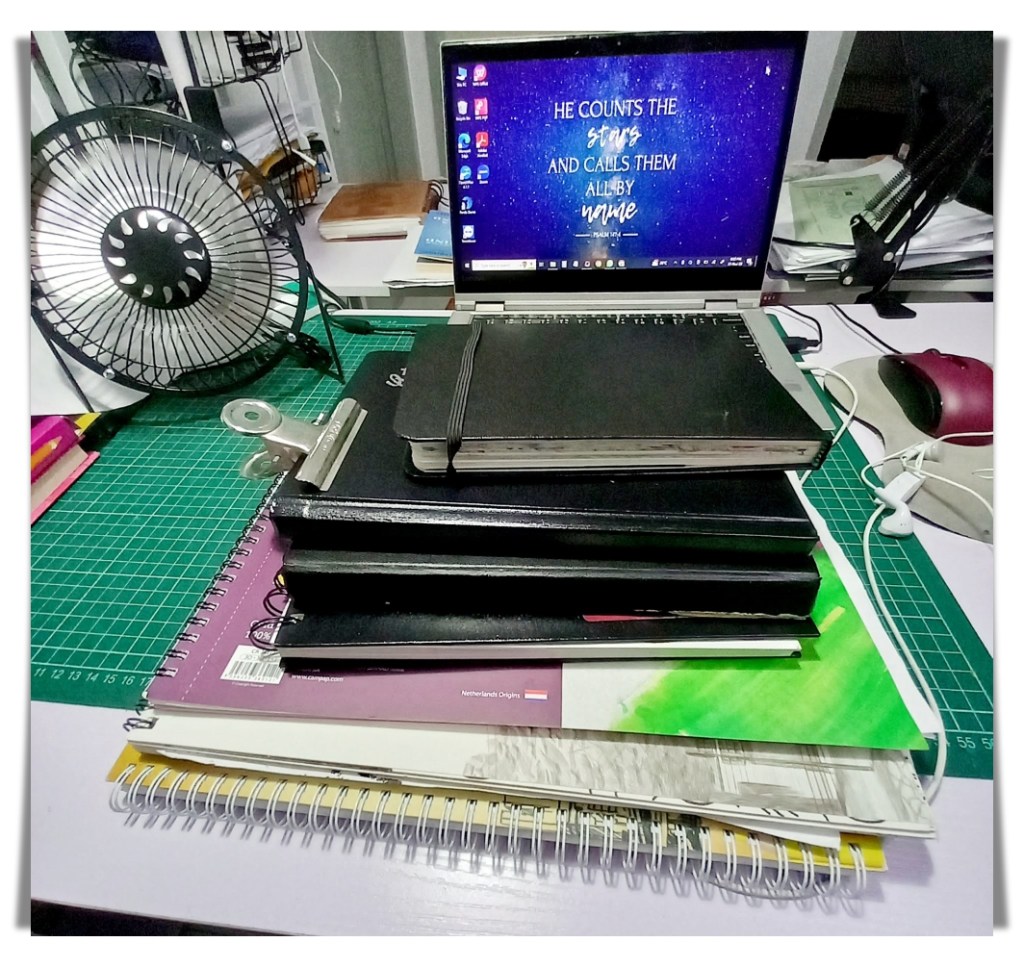
Old loyalties settle quietly, like dust on my cheap formica desk. I kept showing up for people and places out of habit, drawn by an obligation I couldn’t quite figure out. For years, leaving felt impossible even when every part of me was worn out. The routines outlined my life, and familiar faces offered belonging, but the price was always a private ache. I tried to convince myself gratitude was enough, but the truth is, I was shrinking to fit a space that no longer fit me. In the end, walking away involved no spectacle, only a simple moment when I realized I owed no one loyalty if it meant losing myself. The relief felt strange, almost unwelcome. 

I carried self-blame like a child’s favorite blanket. When something went wrong, I looked inward, convinced I could have tried harder, meeker, humbler, demanded less. Apologies formed before I even knew why I was sorry. It’s a habit that takes time to unlearn. Even now, when voices rise or tension thickens a room, my first instinct is to smooth things over, to make myself smaller so others stay comfortable. But I am starting to see that shrinking doesn’t save anyone; it only erases the person I am. These days, I let discomfort and silence linger. It’s uncomfortable, but I’m being honest with myself. 

People can fill up space in your life, sometimes so gradually that constant fatigue sneaks up on you. I think about those who never noticed the toll their presence took. Letting go brings no drama and no confrontation, only a quiet shift in where I place my energy. I’m learning to keep my circle small, giving my best to those who show up without asking for more than I can offer. The others drift to the edges. The distance feels necessary and carries no resentment.

The clutter that rings loudest lives in my own head. Voices linger as fragments of sermons, advice from people who never really knew me, and anxious run-throughs of every conversation where I might have chosen the wrong words. These layers pile up until I can’t tell which thoughts are mine and which belong to someone else. Lately I pay attention to the pauses, the moments between bursts of noise or activity. When my mind is quiet, I notice what I miss and what I don’t. Some voices fade on their own. Others, I have to let go by choice. I keep what matters, and the rest slips away with time.

What remains after clearing everything feels unfamiliar. The house still clatters each morning, the calendar still crowds the wall with reminders, but something has shifted. There is more space, more air. I linger at the window a little longer, breathe more slowly, refuse to pack every minute with motion or explanation. The openness feels odd, as though I am learning to live without the old weight. There is no hurry to fill the silence.


I write about Iban culture, ancestral rituals, creative life, emotional truths, and the quiet transformations of love, motherhood, and identity. If this speaks to you, subscribe and journey with me.