This piece captures the meaningful moments of a young narrator, an 18-year-old girl, as she deals with the unexpected shift in her reality. The clipped sentences show her youthful hesitancy. There is no over-explanation, only feeling—raw and unfiltered—told in a voice still learning how to express the depth of its own desire.
At first he was just another presence in the background, like a page in a book that I kept flipping back to without knowing why. He was handsome, though I had never given it much thought. Until one day the words slipped out before I could stop them.
I hadn’t expected it to become anything more. But my friend decided otherwise. She took my offhand comment and made sure it reached him.
Days passed before I learned what she had done. It was a casual mention, out of my silent observation, but now it had become something larger. But much to my relief, nothing came of it. No reaction. No acknowledgment. Life moved on, and that one blunder faded into the stream of ordinary days.
Then one afternoon, everything completely changed.
The bus ride home was a blur of exhaustion. The lull of the engine hummed in the background. My thoughts drifted aimlessly as the scenery flickered past the window. And then, he was there.
The bus was pretty empty, with plenty of free seats, but he walked up to where I was sitting and took the seat next to mine. For a second I froze, my breath catching in my throat. The entire world had shifted on its axis.
I risked a glance in his direction. He had a black jacket on top of a navy blue t-shirt, dark trousers, and brown shoes. His short, straight black hair framed his face. His hands were tucked into his pockets.
The silence stretched between us, saved for the sounds of late afternoon traffic and the occasional ring of the bell.
And then, a simple invitation.
I wasn’t prepared for it or expecting it, but the answer left my lips before doubt could take hold. And with that, the path was set. The bus rattled forward as if nothing had changed. But everything had.
When we arrived at our stop, he met my gaze. Then he turned towards the street. Without hesitation, I followed.
We walked side by side in silence. The long shadows of the streetlights lay on the pavement, and the faint chatter of office workers rushing home floated in the air. Once we reached the door, he stepped ahead and held it open for me. His hands rested lightly against the frame.
I stepped inside. The warmth of the cafe wrapped around us. For a moment, I wasn’t able to even look at him. A flurry of emotions brewed in my chest; my heart pounded. But when I finally looked up, there he was, a slight smile on his lips.
And in that moment, I felt it. A soft, trembling hope for something I didn’t know if I was ready for, but I couldn’t help wanting it anyway.
I don’t see a lot of articles anywhere that talk about the culture of my people, the Dayak Iban of Sarawak, Borneo. Maybe there are plenty in native languages, but so far not much is written in English, so I thought instead of lamenting about it, why not write it myself? I admit I don’t have a vast knowledge about my culture; however, it shouldn’t stop me from writing about what I know. In this post I’m going to talk about one aspect of our culture called Gawai Antu, or the Feast of the Dead. I believe the feast of the dead is widely celebrated worldwide across different countries and cultures. It’s no different with the Iban people. After all, who doesn’t want to memorialize and pay tribute to their departed loved ones?
The Iban people of Sarawak, Borneo, have a rich and deeply rooted culture that is shaped by mythology, oral traditions, and a close connection between the spiritual and physical worlds. At the heart of this culture are the many “gawai,” or feasts, that mark important moments in life, from celebrating a bountiful harvest (Gawai Dayak) to honoring the spirits of the departed (Gawai Antu). Each gawai carries its own meaning, traditions, and importance, but none have left a deeper impact on me than Gawai Antu, or the Feast of the Dead.
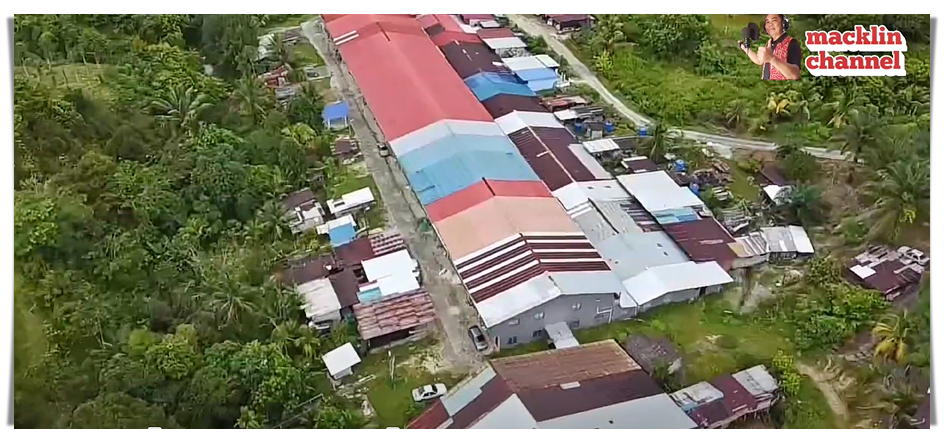
My father’s longhouse: Ng. Batang, Ulu Krian, Saratok. Image source: Youtube
I was ten years old when I first experienced Gawai Antu at my father’s longhouse in Ng. Batang, Ulu Krian, Saratok. At the time, I didn’t really understand its meaning. I just knew it was a rare and grand occasion that transformed the quiet longhouse into a place of celebration, ritual, and remembrance. Even now, decades later, I can still hear the loud gongs, see the elders in their ceremonial attire, and recall the haunting beauty of the invocations to the spirits and deities. It was a glimpse into something much bigger than myself, which was a connection between the living and the dead. This festival was deeply embedded into the very fabric of our identity.
Unlike Gawai Dayak, which is an annual celebration, Gawai Antu happens once in a generation. It is a collective effort that takes years of preparation, with families saving up to host this event in honor of their ancestors. This isn’t a normal feast. It’s an elaborate feast that symbolizes a final send-off for the souls of the departed. It’s a way of ensuring they are properly honored before moving on to the spirit world. It is both a farewell and a tribute, reinforcing the Iban belief that death is not an end but a transition to another realm.
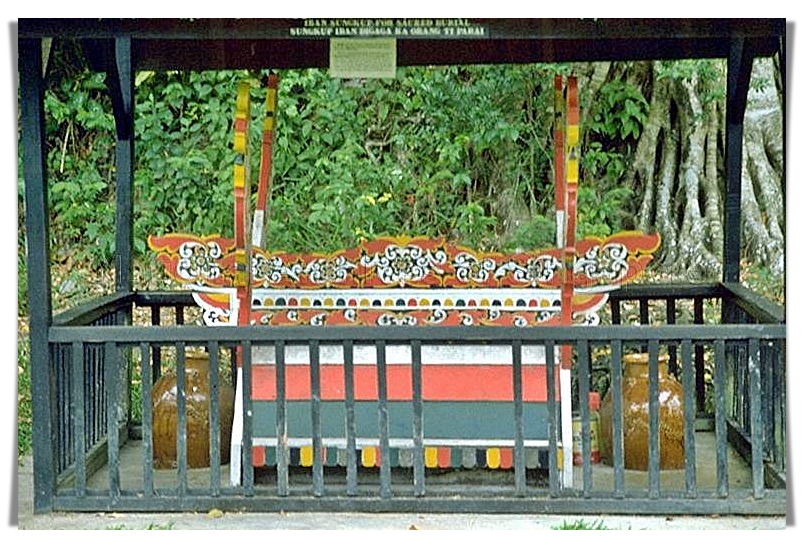
As a child, I was captivated by the sights and sounds of the festival. The longhouse came alive with music, laughter, and the smell of traditional food. Thousands of guests from neighboring longhouses (villages) gathered, filling the space with a sense of community and shared purpose. I watched as men skillfully built the “sungkup” (memorial huts) for the deceased, while women wove baskets called “garung” to hold the ceremonial rice wine, “tuak Indai Billai.”
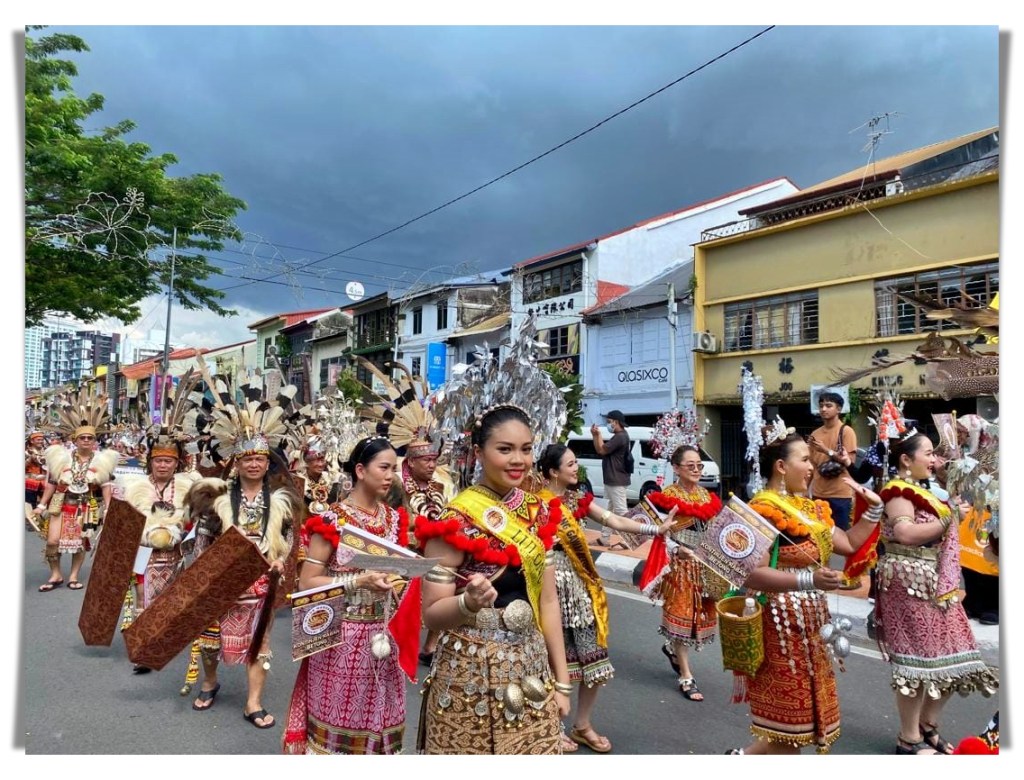
One of the most mesmerizing rituals was “ngalu petara,” where men and women, dressed in their finest, marched through the longhouse to welcome the spirits of the dead. Another unforgettable moment was watching the “lemambang” (bards) chant poetic invocations while carrying bowls of “ai jalung” (special rice wine) from midnight until dawn. Their lyrics, which were passed down through generations, painted vivid images of the spirits’ journey from the afterlife back to their longhouse for one final feast with their loved ones. At 4 a.m., the honored “bujang berani” (men of valor) drank the “ai jalung” to symbolize a moment of pride and recognition.
Image source: My sister
It wasn’t until adulthood that I fully grasped the significance of Gawai Antu. It is a festival of remembrance and a reaffirmation of our roots. It’s a way of keeping our ancestors’ legacies alive. As an Iban living away from my homeland, these memories have become even more precious. They remind me of who I am and where I come from, especially in a world where modern life often pulls us away from traditional practices.
Writing about Gawai Antu feels like my own way of preserving this tradition. In many ways, storytelling serves the same purpose as the rituals. It honors the past by keeping memories alive and strengthening our sense of belonging. But I won’t lie; this responsibility sometimes feels overwhelming. I wonder if my children will ever truly understand the depth of these traditions, or if they will see them as outdated practices of a time long gone. Still, I hold onto hope that through stories, whether in poetry, essays, or simple conversations, I can spark their curiosity and encourage them to explore their roots.
“Bujang Berani”, a man of valor drinking the “ai jalung”. Image source: Gawai Antu documentary
If there is one thing Gawai Antu has taught me, it is the value of memory. In a society that sometimes stresses development over history, this feast is a reminder that our identity is both about who we are and where we came from. Honoring our ancestors involves acknowledging their difficulties, successes, and sacrifices, as well as understanding how they influence our lives now.
Decades after my first Gawai Antu, the memories are still fresh in my mind. The loud gongs, sacred chanting, and communal spirit are memories from my childhood as well as pieces of a greater story about connection, heritage, and meaning. Gawai Antu has taught me that remembering our ancestors means, in many ways, honoring ourselves, as we are the living continuation of their journey.
My poem, “Gawai Antu”.
Note: A documentary about Gawai Antu was made several years ago, you may watch the trailer here:
I don’t have any photographs of Gawai Antu from my childhood. They are kept safely in my parents’ home in Sarawak. The photographs in this post are credited to the sources listed below each image. For more information on Gawai Antu, you may visit these sites:




 Olivia's Atelier