Fragments of Obsession V | What Remains of Him

This fragment of obsession is a continuation of Part 4. You can find the first four parts here: part 1, part 2, part 3, and part 4.


The Victims

They stay with him. That much I know. 

They weren’t merely evidence in sealed bags. They had names. They had voices. They were echoes in a room where someone had begged, bled, or died without being heard. They live somewhere behind his eyes, hidden deep down but never completely out of reach. 

He doesn’t discuss them. But I can sense it in the way he moves, sometimes too still like he’s bracing for the inevitable. I wonder which one visits him in sleep. Whose case file he opens up in his dream without meaning to. 

He must have a list in his head. A list of faces, some vaguely remembered, some impossible to forget. The girl with the red hoodie. The elderly man found with his hands tied. The body that no one claimed. 

I used to think that grief only belonged to families and those who loved them. However, there is a certain kind of pain that comes from being the last person to look at their picture, read their texts, or trace their final hour backwards. He carries that deep in his soul, mourning for people he never knew. 

Maybe it hardens something in him. Or maybe it makes him gentler in ways he doesn’t realize. The truth is I don’t know. I just know that he touches the evidence gently. And he blinks slower than usual when he stares at a photo too long. 

In my culture, the spirits—antu—linger when death is unresolved. Some say they roam, whispering into the ears of the living. He doesn’t fear ghosts or darkness. The ones that haunt him are printed on paper, kept in boxes, and saved on hard drives. There they remain. Always waiting. Always watching. 


The Walk

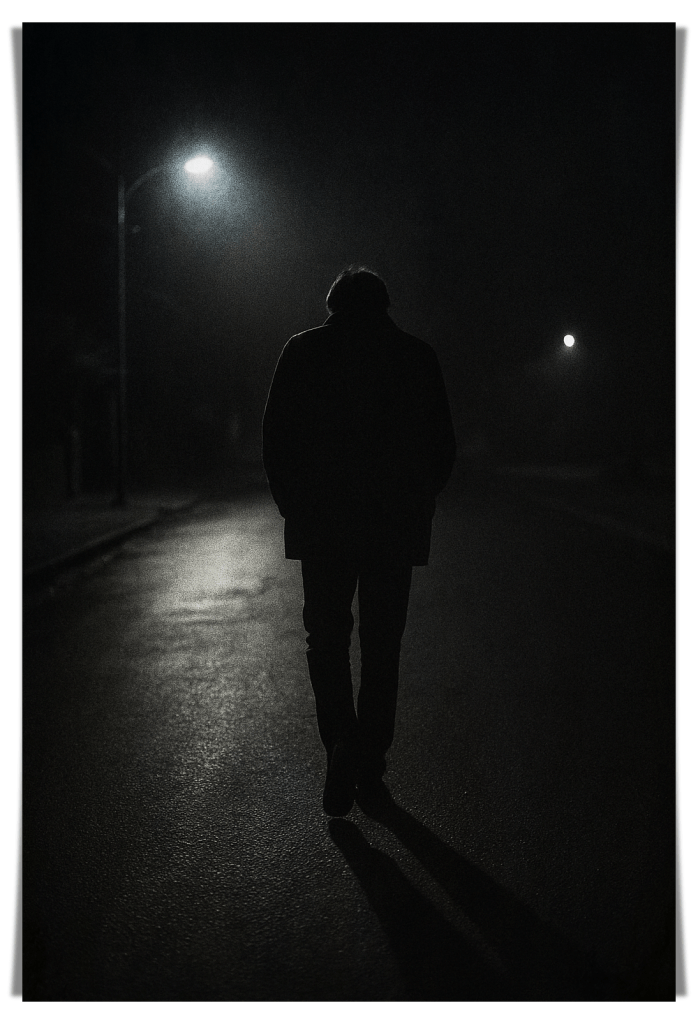
He walks at night, but not every night. Only on those when sleep is a stranger and the weight on his chest refuses to lift. He seeks the hour between two and four. That’s when the world goes quiet, signaling him to step out. 

He brings no phone, has no destination. Just his feet on the pavement, carrying his momentum through sleeping streets. He passed shuttered shops, empty lots, and the lonely glow of neon signs. In this slumber, the city is transformed—muted, and temporarily pacified. 

Is he trying to shake them off? The blood, the tragedies, and the ghosts that cling to the inside of his eyelids? Or is he chasing the silence he can’t find inside? Or maybe he just believes that if he walks long enough, the chaos in his head will have to settle.

Hands in pockets, shoulders a permanent slope. From afar, he’s just a man. But a closer look at his eyes would tell you everything. 

This is the unseen part. The aftermath, stripped of crime scenes and case files. There is no suspect to corner, no puzzle to solve. He’s a man alone with the night, waiting to feel human again.

In that moment, I don’t see the criminologist. I see a tired man who would rather move through the honest darkness of the streets than lie still in a loud, empty room.


Epilogue

All of this, I’ve only imagined. The desk. The scene. The interrogation. The victims. The walk. They’re a part of his life that I will never touch. He doesn’t talk about it much, at least not directly. A line may slip out from time to time, and that’s it. Most of it comes through in other ways, like when he gets too quiet and his hands stop moving. The tension in his jaw after a long day. The shadows beneath his eyes that no amount of sleep seems to erase. 

There are nights he startles awake. He never says why, just lies there, breathing heavily. I never ask either. I simply wait for his return. 

What he endures is his own. And I’ve stopped trying to reach for it. His work is an extension of who he is, bound to his bones. It affects how he sees the world and how he protects others without even thinking about it. 

However, there are times when it becomes apparent. Like when he touches me and listens to me even when I say something silly. Or how he holds silence like it’s sacred. 

I used to think he was distant. But now I understand: he was too full of things he could never say. I write these fragments not to know him better or to hope that he’ll find them. He won’t. The door closed two decades ago. These are the only pieces I kept. 


Copyright © Olivia JD 2025

All Rights Reserved.

I write about Iban culture, ancestral rituals, creative life, emotional truths, and the quiet transformations of love, motherhood, and identity. If this speaks to you, subscribe and journey with me.

A Stranger In the Rain

Daily writing prompt
Describe a random encounter with a stranger that stuck out positively to you.

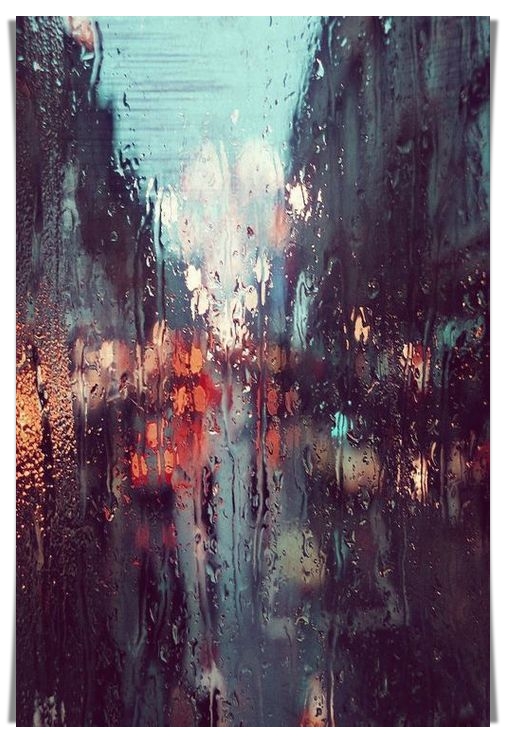
That evening it was pouring. The rain was unremarkable. It was a consistent, calm deluge that dulled the bustling city. Everything seemed muted: the buildings, the street signs, and the people walking by with their umbrellas slanted against the wind. The pavement glistened under headlights and puddles reflected fragments of neon from signs overhead. The air smelled like coffee, wet concrete, and something faintly sweet, perhaps caramel from the cafe I frequented. It was a little corner cafe with fogged-up windows, dim lighting, and jazz playing softly in the background. It was a place that usually smelled of freshly ground beans and spices.

Image source

I was there, like I usually am. I sat by the window with my notepad open and a blue pen in my fingers. I wasn’t writing, though. I was simply watching the rain blur the world outside. It was one of those times when the silence felt thicker than normal, and you began to hear the sound of your breathing. 

Then he walked in. 

I noticed the rain on his jacket first. He brushed it off at the door and ran a hand over his damp hair. He had short, tidy hair. There was something about him that I couldn’t quite put my finger on. A fluidity in his movements, a stillness that felt almost magnetic. Like he belonged in every room without having to announce it. Was he special? Perhaps not. All I could say was he knew how to take up space without drawing attention. He looked around and saw me. I shifted my gaze to the rivulets of rain on the glass. 

He sat a few tables away, ordered a coffee, and glanced out the window just like I did. I returned to my notepad, pretending not to notice him. I could sense him. He was handsome—strong jaw, deep-set brown eyes, tall, clean-shaven, with strong hands and long fingers that lightly tapped against his cup. There was something else, but I let that thought slide. 

He didn’t talk to anyone. He slowly sipped from his cup. At one point our eyes met briefly. 

And deep down, I knew that this moment, this stranger, meant something. Not in a romantic sense, but as if some quiet part of me recognized something familiar. I couldn’t pinpoint what exactly it was, but I felt silly for believing so.

When I got up to leave, I could feel his eyes on me. The bell above the door chimed as I stepped into the rain. 

At home, I realized I had forgotten my pen. I shrugged it off at first. It was just a pen. He was just a man. 

But still that encounter stayed with me. I couldn’t explain the strange pull it had on me. It reminded me that even in a foreign city where no one knows me, the world can still offer surprises. That maybe connections, even with strangers, don’t always require explanation. Some moments just are. 

And maybe that was the positive part. I didn’t feel less lonely. It simply reminded me that I’m still capable of feeling something real. Even if it begins and ends only in my mind. 

Yours, Once

Daily writing prompt
What tattoo do you want and where would you put it?

Image source

The Past

I found the tattoo parlor while wandering aimlessly through one of the narrow, lantern-lit streets of Datong District. The parlor looked old, tucked between a toy store and a Chinese medicine hall.

The needle vibrated and pierced. I closed my eyes and welcomed the sting. I imagined the ink seeping in, letter by letter.

Yours.

It was on my left breast, right above my heart.


Days later, his lips are on my skin. When he reaches the ink, he stops. His fingers tighten ever so slightly against my ribs. He exhales slowly. No questions asked. No words uttered. He kisses it tenderly at first, then again, firmer this time. His tongue traces the letters.

That night, it is different. Neither rough nor fast.

Just intense.


The Present

It’s been years. I have gray hairs now, mostly at my temples. I don’t think of him often—at least, not like I used to. But today, I catch a glimpse of myself in the mirror. Bare skin. My body is softer now, but there it is.

Yours.

My fingers brush over the letters, the ghost of his lips flickering behind my eyes. I should get it removed. I tell myself that sometimes.

But I won’t.


Back then, his fingertips grazed the ink absentmindedly. While the night bird called in the distance, he’d press his lips against it and whisper—mine.

Now, my fingers trace the letters, following the path his touch once took. The ink remains, but his touch is long gone. I keep waiting for the pain to dull, but it never does.

Back then, it was a vow.

Now, it’s just a relic.

Someone new notices it once. His fingertips pause over the letters.

“Who did this belong to?”

I hesitate. And then I say, “Me.”

Copyright © Olivia JD 2025

All Rights Reserved.

Fragmented Story | First Date

This piece captures the meaningful moments of a young narrator, an 18-year-old girl, as she deals with the unexpected shift in her reality. The clipped sentences show her youthful hesitancy. There is no over-explanation, only feeling—raw and unfiltered—told in a voice still learning how to express the depth of its own desire.

Image source

At first he was just another presence in the background, like a page in a book that I kept flipping back to without knowing why. He was handsome, though I had never given it much thought. Until one day the words slipped out before I could stop them.

I hadn’t expected it to become anything more. But my friend decided otherwise. She took my offhand comment and made sure it reached him.

Days passed before I learned what she had done. It was a casual mention, out of my silent observation, but now it had become something larger. But much to my relief, nothing came of it. No reaction. No acknowledgment. Life moved on, and that one blunder faded into the stream of ordinary days.

Then one afternoon, everything completely changed.

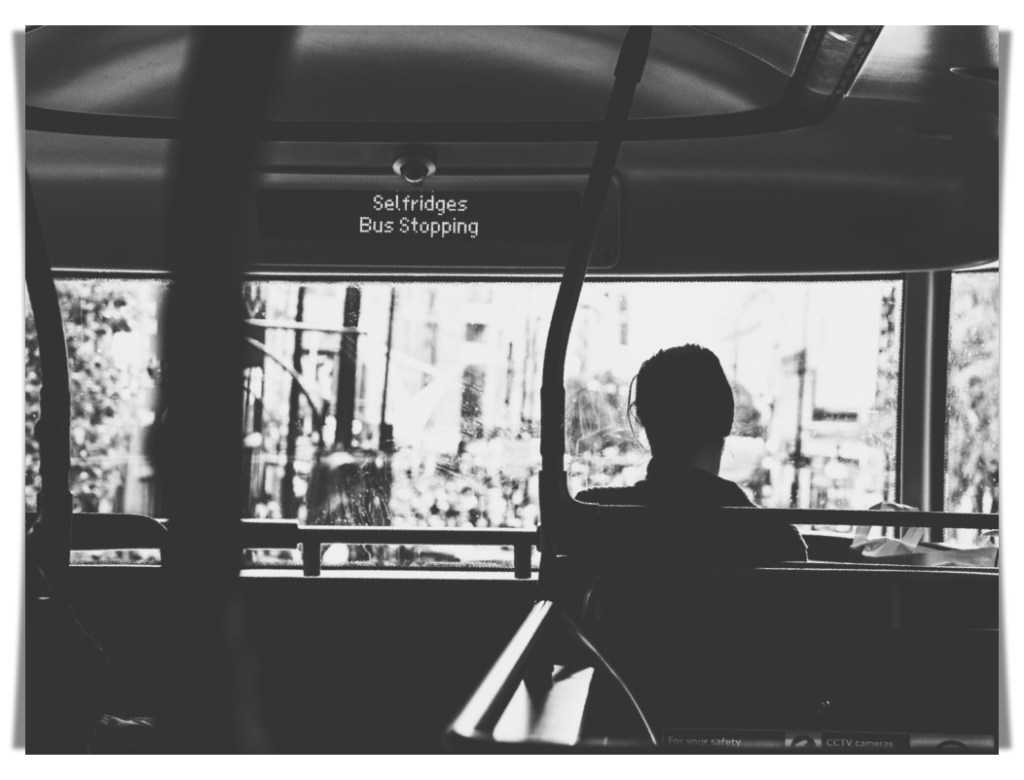
The bus ride home was a blur of exhaustion. The lull of the engine hummed in the background. My thoughts drifted aimlessly as the scenery flickered past the window. And then, he was there.

The bus was pretty empty, with plenty of free seats, but he walked up to where I was sitting and took the seat next to mine. For a second I froze, my breath catching in my throat. The entire world had shifted on its axis.

I risked a glance in his direction. He had a black jacket on top of a navy blue t-shirt, dark trousers, and brown shoes. His short, straight black hair framed his face. His hands were tucked into his pockets.

The silence stretched between us, saved for the sounds of late afternoon traffic and the occasional ring of the bell.

And then, a simple invitation.

I wasn’t prepared for it or expecting it, but the answer left my lips before doubt could take hold. And with that, the path was set. The bus rattled forward as if nothing had changed. But everything had.

When we arrived at our stop, he met my gaze. Then he turned towards the street. Without hesitation, I followed.

We walked side by side in silence. The long shadows of the streetlights lay on the pavement, and the faint chatter of office workers rushing home floated in the air. Once we reached the door, he stepped ahead and held it open for me. His hands rested lightly against the frame.

I stepped inside. The warmth of the cafe wrapped around us. For a moment, I wasn’t able to even look at him. A flurry of emotions brewed in my chest; my heart pounded. But when I finally looked up, there he was, a slight smile on his lips.

And in that moment, I felt it. A soft, trembling hope for something I didn’t know if I was ready for, but I couldn’t help wanting it anyway.

Related story: First Sight

Copyright © Olivia JD 2025

All Rights Reserved.

Fragmented Story | Being In the Same Room Again

I wrote this introspective piece to capture unresolved emotions, the passage of time, and the delicate dance between nostalgia and moving forward. It’s about past love that is neither fully rekindled nor entirely lost. It’s fragmented because there is no backstory. It’s intentional because the absence of a backstory forces the reader to feel rather than just understand. However, it is related to another story I wrote previously – After All These Years.


Image source

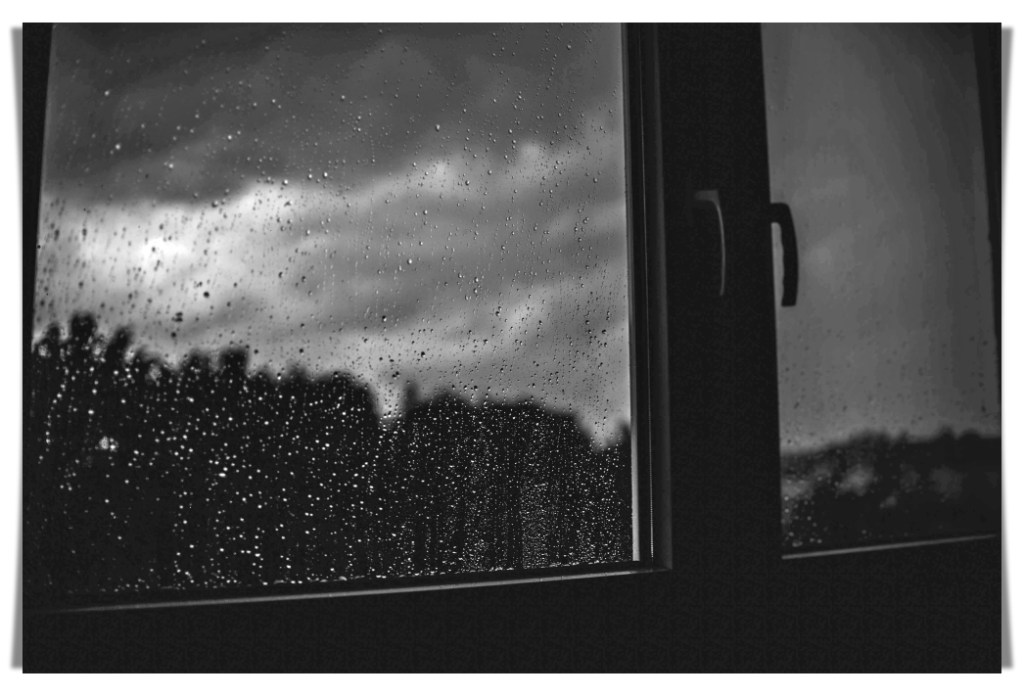
The rain kept pouring, turning everything into a soft blend of grays and greens, like a painting that had come to life. It reflected the fog in my mind, the doubt that had brought me here. I didn’t want to go back at all. What was waiting for me when I got back to the city? Plenty of bills were sitting on the kitchen counter, ready for me to pick them up. There were tax notices in each envelope, and they kept coming on time. Of course, I was constantly getting glossy brochures from real estate agents advertising different homes for rent or sale, as if they could give me the security I really craved. They claimed that property was the foundation of our modern life. Have we forgotten what it means to belong in our quest for a place to call home?

The town was so different from the hectic pace of daily life that it felt like a different world. You could feel like time was moving slower here. When I walked into that little bookshop with its worn shelves and familiar atmosphere, it stirred up something deeper inside me. Not only did the past resurface again, but it also brought up something that hadn’t been resolved. Why does that feeling persist even after years of being apart? That question hung in the air.

Was it a spark that was about to go off again, or was it just the light of ashes from the past? To bring back an old love, you have to dig up what was hidden and accept both the joy and the pain that come with it. But could it be something else—a chance to put things to rest? Is it finally possible to break free from the maze of what-ifs and let the past rest?

There was also the issue of trust. Did it still matter that you understood instead of being validated after all this time? And even if it did, would that be enough to begin a new relationship? Maybe not love, but friendship for sure. We could have maintained a bright shared past, unaffected by the decisions we’ve made along the way.

I’ve learned that desire and lasting devotion aren’t the only things that define love. It was about the possibilities, the countless ways it could evolve, even after it had already slipped away from you once. With the sound of rain on the windows and the faint smell of books in the air, I stayed in that space and thought about whether love might just be being in the same room again after all this time and finding peace between us.

Copyright © Olivia JD 2025

All Rights Reserved.

Why Stories Matter | The Transformative Power of Literature

There is a quiet power in stories that goes beyond entertainment and escapism. At its core, literature is the act of giving voice to things that can’t be seen or touched. It forms our feelings, hopes, fears, and questions into something we can hold and share. Stories don’t just reflect our lives; they also hold the weight of human experience across time and space.

The first thing that comes to mind when I think about the power of literature is how it can bring people together. Reading a book is like crossing a bridge; it lets us see and feel the world through someone else’s eyes. In this way, it breaks down the walls that separate us. By fostering empathy, literature reminds us of our shared humanity and allows us to see through another’s eyes. Literature makes us face the idea that our experiences, no matter how unique they seem, are reflections of something bigger than ourselves. When I was young, I read Catcher in the Rye by J.D. Salinger, and it changed the way I thought about how people connect with each other. Holden Caulfield’s cynicism and vulnerability proved how stories can reflect our deepest desire for understanding.

Literature helps us understand not only other people but also ourselves. A story can be like a mirror, showing us things we would rather not see. It reveals our inner wants and fears, as well as our flaws. Reading is a paradox. It makes us lose ourselves in another world, only to find pieces of ourselves reflected back. The lasting power of literature lies in this duality—the simultaneous journey both inside and outside of oneself. Also, Salinger’s book helped me see myself in new ways. Holden’s struggles with authenticity and alienation are a lot like my desire for belonging and self-acceptance.

In the same way, stories live on forever and can transcend time. Because writing is timeless, the words of a writer or a poet who has died a long time ago remain relevant to people today. This doesn’t mean that stories stay unchanged. In fact, they change with each reading based on the reader’s views and their context. What a text meant to the original audience might be very different from what it means to us now. A story is alive in the way it changes with us. Different generations’ readings and reinterpretations enrich it further. One Hundred Years of Solitude by Gabriel García Márquez was recently adapted into a drama, which debuted on Netflix in December 2024. The magical realism in the book has kept readers intrigued for decades, but this version gives the story new life. It enables a new group of viewers to experience its themes of love, loss, and history through a fresh lens.

There is also a bravery that comes with writing. When writing, a writer has to be courageous and believe that their words will touch someone and stay with them. When people write, they often reveal parts of themselves that they wouldn’t share in any other way. They embedded pieces of their own truths into the plot of a story or the flow of a poem. Ralph Keyes’s book The Courage to Write talks about how the courage to write comes from being ready to face overwhelming fears and self-doubt. Writing is brave because it forces the writer to be honest and open, even if the outcome is unknown. It’s not because it leads to fame or admiration. For readers, this vulnerability can change everything. It creates a bond between the writer and the readers, fostering a mutual understanding that surpasses the written word.

But, of course, not every story is pleasant. Some show us harsh realities and make us question what we believe. Some stories force us to face uncomfortable truths. But these stories are still important. The hallmark of enduring literature is that it does not shy away from complexity. It recognizes that beauty and pain, hope and sorrow, often go hand in hand. So, stories help us deal with the complicated things that happen in life; they don’t give us easy answers but instead push us to think, ask questions, and grow.

Stories have the capacity to establish continuity in a world that often appears fragmented. They remind us that we are a part of a bigger story that began a long time ago and will go on after we die. Literature connects us to each other and to the huge, complicated web of human experience.

Why do I write? It comes back to the idea that stories matter. It’s not that they make big, dramatic changes to the world; it’s that they change us in small, subtle ways. They invite us to pause, contemplate, and feel. Indeed, this invitation represents a revolution in a world that demands speed and certainty all the time.

Fragmented Story | His Days Were Long

Writing complete stories has never been my style. My mind wanders, seeking and focusing on moments and emotions that demand attention, even if they don’t always fit neatly into a beginning, middle, and end—like poetry. I find myself drawn to fragments of moments that exist between greater narratives. It’s in these fragments that I discover what I need to express, often eliciting more emotion with a single, still snapshot than an entire storyline.

This piece, His Days Were Long, is one such fragment. It’s a story of a man torn between his responsibilities and a yearning he can’t quite shake. It’s a little piece of a wider web of stories that live within me, ready to be told one at a time. These moments are disjointed and incomplete but filled with meaning, but these are where I feel most alive in my writing. So I’ll keep sharing them in bits and pieces, each with its own truth and emotion.

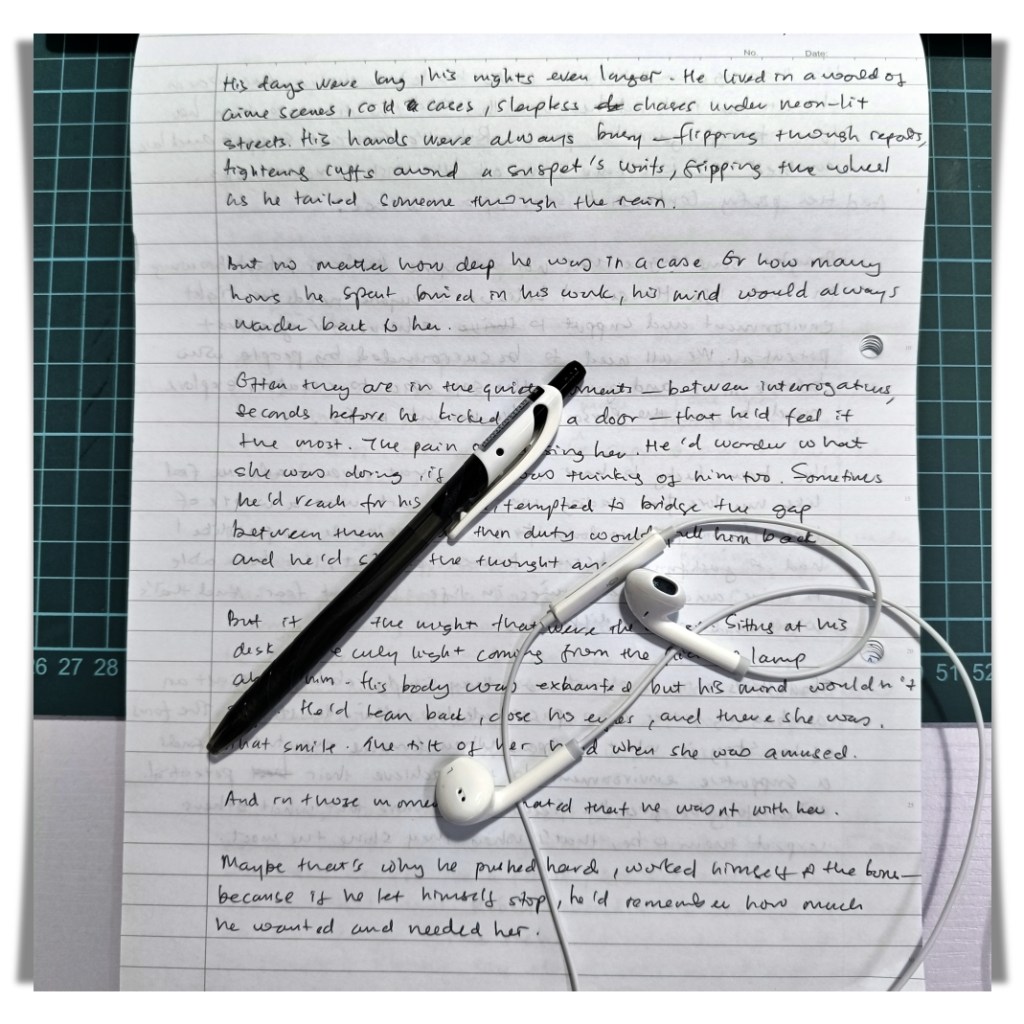
His days were long. His nights were even longer. He lived in a world of crime scenes, cold cases, and sleepless chases under neon-lit streets. Whether he was flipping through reports, putting cuffs on suspects, or driving while tailing someone through the rain, his hands were always busy.

But it didn’t matter how deep he was in a case or how many hours he worked; his mind would always go back to her.

He would often feel it in the quiet moments—between interrogations or right before he kicked open a door. The agony of missing her. He’d wonder what she was doing, if she was thinking of him too. Sometimes he’d reach for his phone, tempted to bridge the gap between them. But then duty would pull him back, and he’d shove the thought away.

But it was the nights that were the worst. Sitting at his desk, the only light coming from the flickering lamp above him. His body was exhausted, but his mind wouldn’t stop. He’d lean back, close his eyes, and there she was. That smile. Her giggle. The tilt of her head when she was amused.

And in those moments he hated that he wasn’t with her.

Maybe that’s why he pushed hard, worked himself to the bone because he was afraid that if he stopped, he’d remember how much he wanted and needed her.

Handwritten draft of this story.

Copyright © Olivia JD 2025

All Rights Reserved.