Antu Ngarung | The Guardian Spirit That Shapes My Iban Identity

In Iban belief, the souls of those who die go to Sebayan, the afterworld. Some remain there permanently, but certain individuals are believed to return. These are people who lived with exceptional courage or accomplishment during their lifetime. When these ancestors come back, they do not appear as humans. They come ngarung, meaning concealed, taking the form of animals. These returning spirits are called tua, or guardian spirits.

In the Saribas region, guardian spirits are often seen as snakes such as cobras or pythons. They move quietly, stay in the shadows, and leave without drawing attention. When I picture antu ngarung, I always imagine a cobra coiled in the dark corner of a house or at the edge of the forest. It stays still for a long time and slips away the moment it decides to leave. To many people, it would be just an ordinary animal. To us, it can be an ancestor paying a visit.

A guardian spirit usually belongs to an entire lineage. Because of that connection, the family must never harm or eat the animal that represents their guardian. This is a form of respect. The belief is straightforward: the guardian protects the family, and the family must protect the guardian’s form on earth.

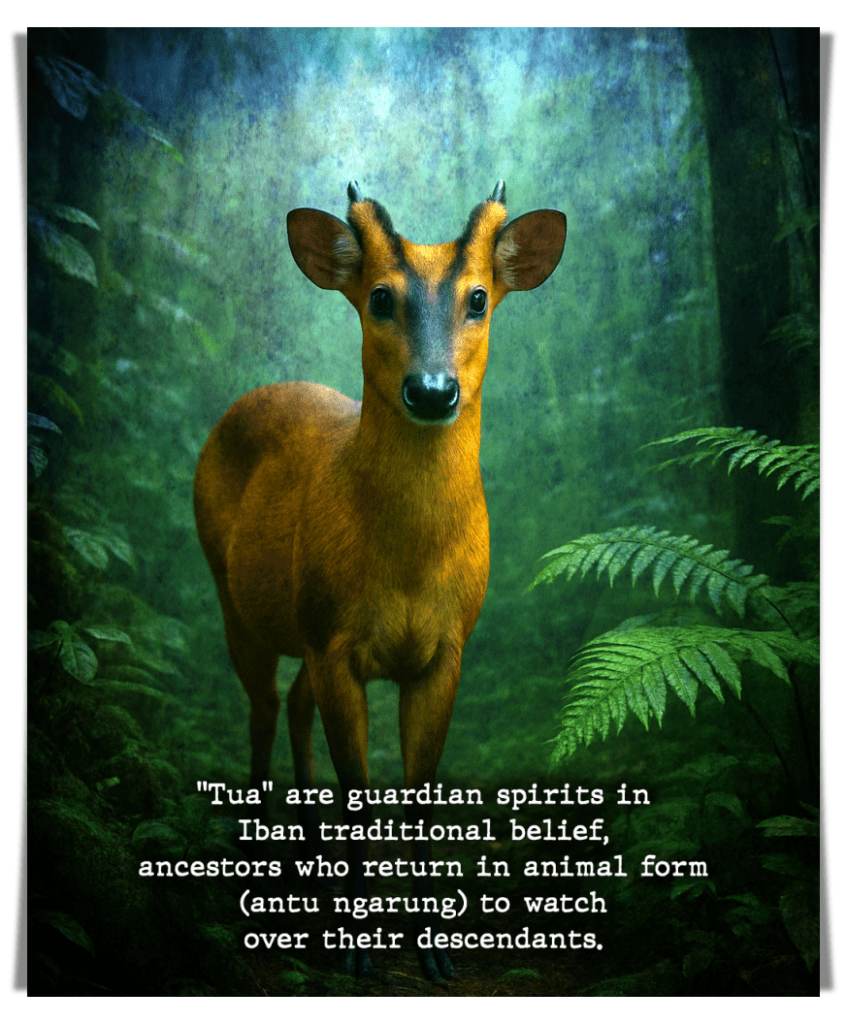
In my family, our guardian is the kijang, the Bornean yellow muntjac. When I was four or five, my late grandparents reminded us repeatedly never to harm, kill, or eat kijang. They did not offer long explanations, but the message was clear. Someone in our line was once a brave person, and that ancestor is believed to return as the kijang to watch over us.

That instruction frightened me growing up. I was afraid I might break the rule by accident. I used to remind myself to always ask what kind of meat was being served when we visited people. At that age, it felt like a tremendous responsibility. Over time, the fear changed. I started to feel that my life was connected to something older and larger than myself. I also realised that this experience was not common among many non-Iban communities, which made me value my heritage even more.

The belief in the kijang has shaped the way I understand myself. It gives me a sense of courage. I am still afraid of many things, but this belief keeps me steady. It reminds me that my ancestors lived through hardship, violence, and uncertainty. My problems today are nothing like what they endured. I often tell myself to live in a way that does not dishonor the people who came before me. I exist today because they survived so much. That thought helps me face difficult moments.

When I imagine the kijang watching me now, I think it sees a woman who lives differently from the Iban women of earlier generations. My lifestyle and interests are not the same. Yet I believe it recognises my effort to understand my roots. It may also encourage me to continue forging my own path even when no one else in my family is doing this kind of work. Many women in my family excel in traditional crafts like beadwork and weaving, but none of them are writers. I have to accept that I may be the first woman in my family to preserve our heritage through writing. Someone younger in the future may look at my work the way I once looked at my namesake, the master weaver. Remembering this keeps me going, even when the work feels lonely.

This leads to something important.

We risk losing our identity when we do not learn about our heritage. The loss does not happen suddenly. It happens slowly. We begin identifying more with other cultures. We forget the meaning behind our names, our customs, and our stories. When we fail to protect what we inherit, we leave an empty space that can be filled by influences that do not reflect who we are. This is happening in many communities around the world, and the Iban are no exception.

Iban identity will not endure by chance. It survives because someone chooses to learn, write, document, and share it. It stays alive when people believe their heritage is worth protecting. It continues when people care enough to ask questions and remember the stories their elders passed down.

Our ancestors returned as antu ngarung for a reason. We owe it to them to honor the heritage they entrusted to us.


I write about Iban culture, ancestral rituals, creative life, emotional truths, and the quiet transformations of love, motherhood, and identity. If this speaks to you, subscribe and journey with me.
What Beserara’ Bungai Taught Me About Letting Go

I used to think that rituals like beserara’ bungai were just old traditions that had no place in today’s world. Growing up, I believed they belonged to the past. I thought the Iban needed to leave them behind to move forward. Whenever elders talked about these beliefs, I felt restless. My world revolved around progress, education, and the principles of organized religion. I didn’t see the value of rituals, and I never took the time to understand what they really meant.

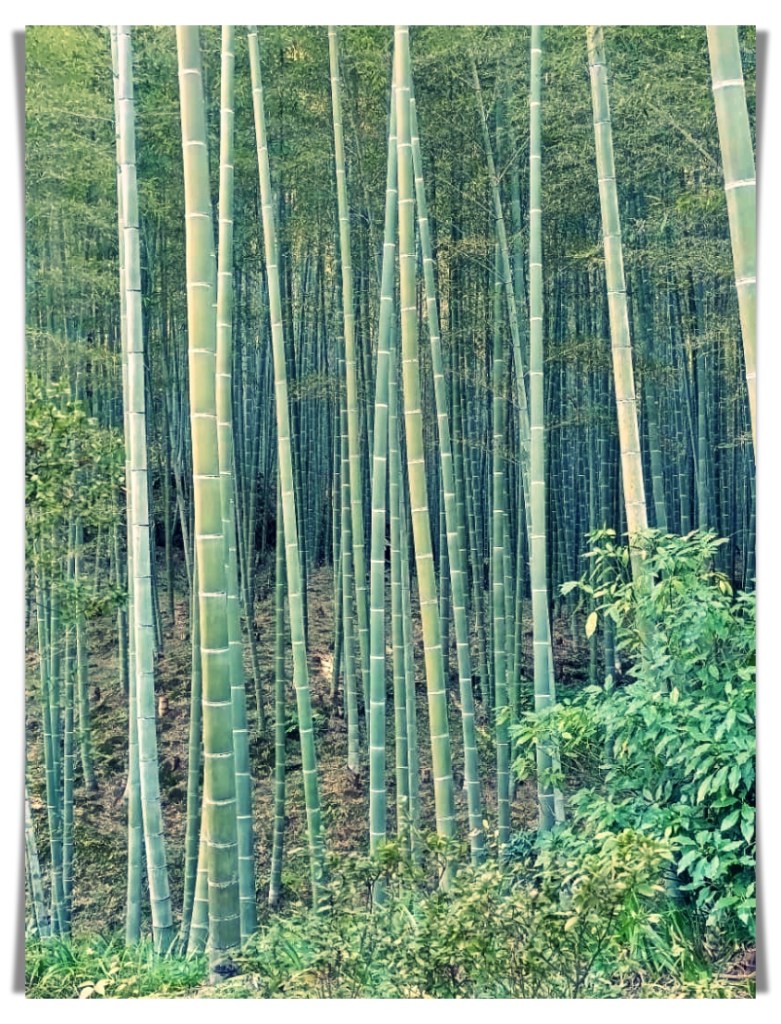
That mindset began to shift—slowly at first, then more clearly—as I read more about the Iban worldview. It wasn’t emotion or nostalgia that changed me, but understanding. I began to see that the Iban learned about life by watching the natural world. They noticed patterns in nature and connected them to how we live. For example, they saw how bamboo and banana plants grow in clusters. Each shoot is part of a single root system underground. If one shoot is unhealthy, it affects the others. When one dies, the root still supports new life. Death was not an ending but part of the cycle. This wasn’t superstition, but wisdom based on careful observation.

The bungai, the “plant-image” that represents each Iban person in the cosmic realm of Menjaya (the god of healing), began to make sense to me. I understood how it symbolized family and community. Each person is like a shoot, but we all come from the same root. When someone passes, the rest carry on, still connected. New life can grow from the same source. It’s a way of seeing life that is deeply connected and respectful of nature. The ancestors weren’t imagining things—they were describing the interconnected world they knew.

As I learned more, I started to feel a quiet pride in where I come from. I discovered that my ancestors included warriors and raja berani, people whose stories are still told in my family. I began to understand that even though I live far from my homeland, I am still part of that root system. This connection also extends to my children. They may not know all the customs or speak the language well, but the roots are still there. They are part of something that has been passed down through generations.

When I learned about beserara’ bungai, the ritual that separates the living from the dead, I felt something shift in me. This ritual is about care—not forgetting what we have lost. It helps both the living and the dead let go so they don’t hold each other back. The living need to keep moving forward, and the dead need peace on their journey to Sebayan. It’s a ritual of compassion that affirms the connection with the dead even as they journey on to the otherworld.

This understanding arrived at a time when I was wrestling with my own spiritual ties. I had been part of the same church community for many years. It shaped how I saw God, faith, and morality. But as I grew older, those teachings started to feel burdensome. I found myself questioning doctrines that encouraged separation from people who did not meet certain standards of spirituality. I began noticing the tension between fear-based expectations and the compassion-centered teachings of Jesus in the Gospels. As I continued to question, the burden of belonging to a system that no longer aligned with my conscience intensified.

Learning about beserara’ bungai gave me words for what I was feeling. I realized I was trying to protect my spirit. I wasn’t leaving faith behind—I was returning to what felt true. Jesus became the real rootstock. I wanted a faith grounded in his teachings: kindness, justice, presence, love, and compassion—not fear or guilt. I needed space to grow without feeling judged by a community that often equated questions with spiritual instability.

In a way, I’m experiencing my own kind of separation from the church rootstock. It is not a rejection of my past or of the people who have been a huge part of my life for the past two decades. It is a necessary separation so I can continue growing without feeling suffocated by expectations that no longer fit the life I am trying to build. I’m holding onto what still nourishes me and letting go of what drains me. The Iban worldview helped me understand that letting go can be a way of protecting both myself and the things I want to keep alive.

The more I reflect on it, the more I hope my children learn something different from what I learned in my early years of faith. I hope they are not afraid to ask questions. I hope they do not feel inferior in front of people who sound knowledgeable but speak without warmth. I want them to grow into a faith that welcomes curiosity, thoughtfulness, and conscience. I want them to recognize that their connection to God is direct, personal, and rooted in compassion—not fear. I want them to inherit a sense of strength that comes from understanding where they come from, both culturally and spiritually.

As I learn more about rituals like beserara’ bungai, I’ve come to understand that my ancestors didn’t divide life into “spiritual” and “ordinary.” Everything was connected. Life, death, nature, community, and spirit were all part of one whole. That way of seeing the world teaches me to live with care and humility. It shows me that letting go can be a loving act, and returning to our roots can take courage.


I write about Iban culture, ancestral rituals, creative life, emotional truths, and the quiet transformations of love, motherhood, and identity. If this speaks to you, subscribe and journey with me.
Sengalang Burong and the Origins of Iban Augury

Before the arrival of Christianity and Islam, the Iban people practiced a complex system of animistic belief. The world was seen as alive with spirits; some benevolent, some unpredictable, residing in rivers, jungles, animals, and dreams. The desire to stay in harmony with these unseen forces guided every aspect of farming, hunting, and war.

Scholars such as Benedict Sandin and Clifford Sather suggest that early contact with Hindu-Minangkabau traditions from Sumatra may have influenced some aspects of Iban spirituality. These influences probably came when noblemen and their followers from the Majapahit kingdom fled westward at the end of the empire to escape persecution as Muslim rule expanded. They brought with them knowledge of rituals, governance, war, and agriculture. These ideas were slowly taken in and reinterpreted through the Iban worldview.

From this convergence emerged a cosmology rich with ritual poetry, omens, and divine intermediaries. One of its most complicated systems is augury, a sacred form of divination that reads the calls and looks of certain birds as messages from the spirit world. These omen birds are still an important part of Iban ritual life, especially during farming and community events.

Sengalang Burong, the Iban God of War and messenger of the gods, is at the heart of this belief. He established the system of augury that connects the physical world with the spiritual world. Through him, communication between the two is made possible. The living interpret every sighting and call of an omen bird as a sign from God.

Sengalang Burong: The Iban God of War

In Iban belief, Sengalang Burong is the most revered of all deities. He is remembered as both the God of War and the divine messenger who connects the world of humans with the world of gods. Many ritual invocations and prayers include his name, and people often ask him for courage, protection, and clarity.

According to oral tradition, Sengalang Burong descends from Raja Jembu, a powerful deity whose family tree goes back to Raja Durong of Sumatra. It is said that Raja Durong and his followers fled their home near the end of the Majapahit era. They brought with them religious and cultural traditions that were influenced by Hindu-Minangkabau beliefs. These encompassed ritualistic practices, frameworks of social governance, agricultural knowledge, and strategies of warfare. Over time, these ideas merged with the Iban’s indigenous worldview, creating the spiritual framework that shaped their understanding of the cosmos.

In Iban ritual liturgy, Raja Jembu is the guardian of the batu umai, which is a sacred whetstone used in Iban farming rituals. He married Endu Endat Baku Kansat, and they had six sons and one daughter together. Their children became the main pantheon of the Iban gods, Bunsu Petara. 

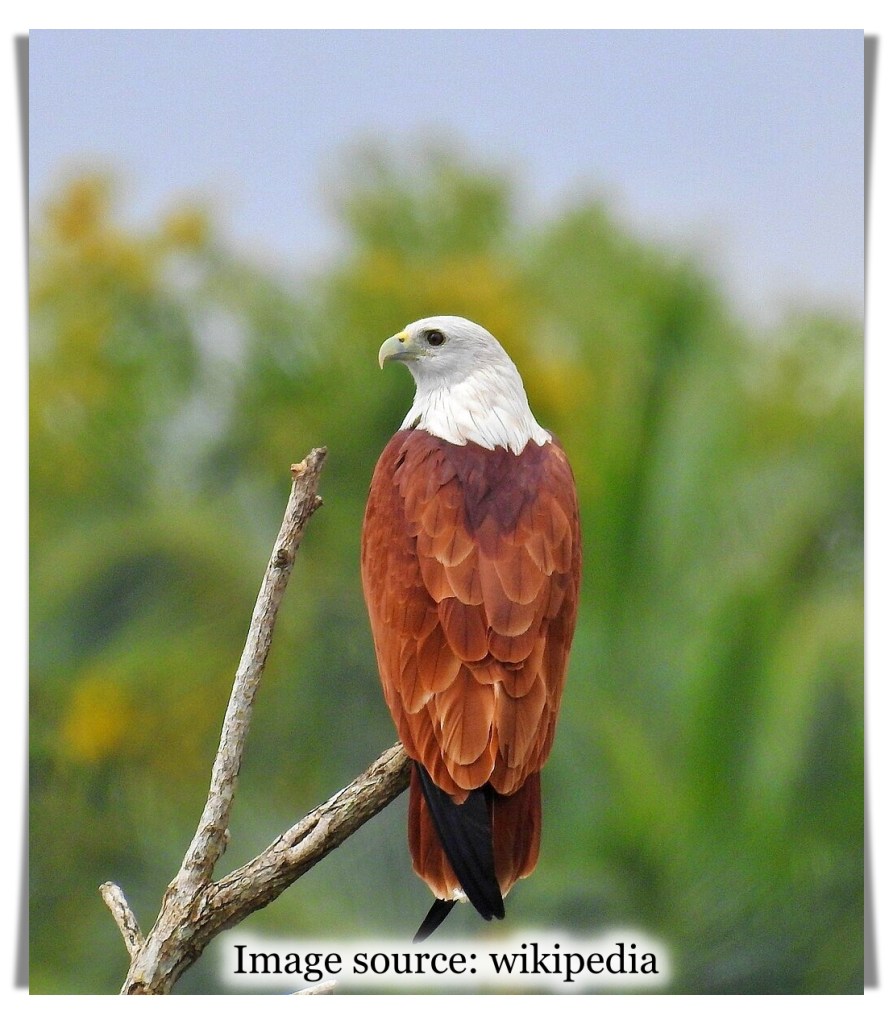
Sengalang Burong, the oldest son, rules from Tansang Kenyalang (Hornbill’s Nest), in a realm high in the sky. On earth, he transforms into a Brahminy Kite, known affectionately among the Iban as Aki Lang (Grandfather Lang). He guides humankind through omen birds that act as his messengers. Through these birds, he sends divine messages that govern decisions related to farming, war, and community affairs.

Sengalang Burong married Endu Sudan Berinjan Bungkong, and together they had seven daughters and one son. Each daughter married a nobleman who became one of the seven omen birds: Ketupong, Beragai, Bejampong, Pangkas, Embuas, Kelabu Papau, and Burung Malam. Nendak, the eighth omen bird, is Sengalang Burong’s faithful messenger.

These eight omen birds form the foundation of the Iban system of augury. Their calls, directions of flight, and behavior are interpreted during rituals to determine whether an action, such as starting a journey, planting paddy, or launching a war expedition—is blessed or forbidden. For the Iban, these signs are not superstition but sacred communication. They represent the continuing dialogue between the natural and the spiritual worlds, a system established by Sengalang Burong himself.

In future posts, I will explain more about each omen bird and its role within Iban augury.


I write about Iban culture, ancestral rituals, creative life, emotional truths, and the quiet transformations of love, motherhood, and identity. If this speaks to you, subscribe and journey with me.
Why the Ibans Took Heads In the Past

A quick disclaimer before I begin. Some people may find this topic upsetting because headhunting led to conflict between different ethnic groups. I don’t intend to glorify the practices of my ancestors; I just want to share what I know, especially since many people, even younger Ibans, don’t fully understand the reasons behind it. Taking a life is wrong by today’s standards, and from a modern perspective I do not support it. But we can’t change history, and judging the past by our present lens doesn’t help us understand it. What we can do is listen and learn.

The Iban had their own reasons and beliefs for taking heads. One of the most significant was to end the mourning period, a practice called ngetas ulit. When someone in the community died, the longhouse would mourn for a period of time. During this time, certain rules and taboos were followed. A ritual that demanded a fresh head was performed to end the mourning period. The family of the deceased would consult the longhouse community, and the men would plan a ngayau (head-hunting expedition) together. After getting a head, a series of complex rituals signaled the end of grief. Killing to end mourning may sound strange today, but for the Iban it was part of a cultural process called nyilih pemati, a symbolic offering for the dead.

Another reason was the belief that antu pala (enemy skulls) had spiritual power. The Iban in the old days  believed that these skulls would bring blessings if they were taken care of. Antu pala also played an important part in the Gawai Burung (the Bird Festival), which was one of the most important Iban ceremonies. As part of this complicated ceremony, the lemambang (bard) would use the skulls in his pengap (chants) to invoke the god of war, Sengalang Burong. This festival has probably disappeared because most Ibans are now Christian or Muslim, but it still holds a place in oral tradition.

There were other uses for skulls as well. They were used in healing rituals, ceremonies to call for rain during times of drought, and as guardians to protect the longhouse or farms from enemies and wild animals. In this regard, the skull became a spiritual servant for the person who kept it. They also carried social meaning. If a man didn’t take a head, he was likely called a coward or kulup (uncircumcised), and these men were not seen as good husbands. Iban society valued courage and bravery very highly.

Some have asked why heads were taken instead of other body parts. The answer lies in old beliefs. Our ancestors believed that the head was the center of a person’s life force. The head could be clearly identified, unlike the hands or feet. In the past, families knew exactly whose head was kept, even after years of blackening from smoke. Today, those identities are no longer shared openly. Imagine getting married to someone from another tribe and then walking into a longhouse and saying, “Honey, that skull belonged to your ancestor.” We have learned that silence is a way to protect the living while still honoring the past.

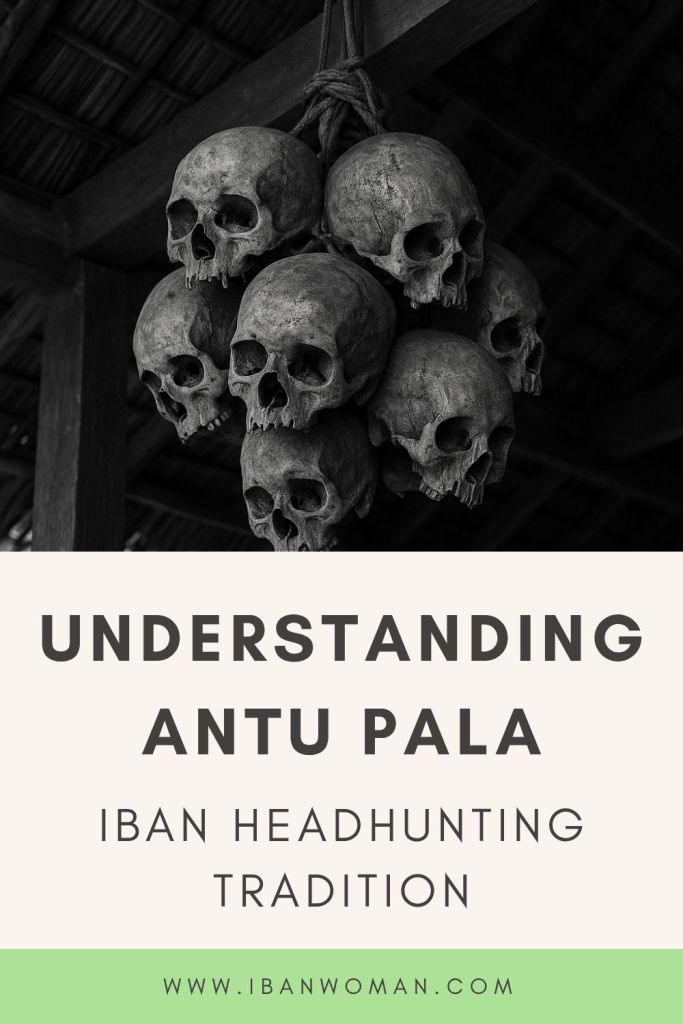
So, do antu pala still exist? Yes. Some Iban families keep them, like mine. They can be kept in the sadau (the top floor of the longhouse) or hung in groups called tampun on the roof. We don’t see them as trophies but as things that deserve respect. If you don’t take care of them, they can bring bad luck, so you must abide by strict rituals to keep them safe.

This picture shows a tampun that belonged to my ancestor, Unggang Lebur Menua, an Iban warrior from the late 18th century. It has 34 antu pala that are more than 200 years old, and is now kept by relatives at Rh. Panjang Matop, Paku, Betong. It serves as a reminder of a different time, when survival, belief, and identity were connected in ways that may be difficult for us to understand now.

I hope this helped you learn more about a part of Iban history that continues to live in our collective memory.

Image source: Youtube


I write about Iban culture, ancestral rituals, creative life, emotional truths, and the quiet transformations of love, motherhood, and identity. If this speaks to you, subscribe and journey with me.

Pengarap Lama Iban | Iban Animistic Beliefs

TL;DR:

A simplified overview of traditional Iban animistic beliefs, including the Supreme God (Petara), nature spirits, ancestral souls, and mystical beings like Kumang and Keling. These oral stories, once passed down generation to generation, are now slowly being archived here from my Threads posts for easier access and deeper reflection.

Prior to the arrival of Christianity and Islam, the Iban people practiced a form of animism. It’s a complex belief system where spirits existed in rivers, jungles, animals, dreams, and even illnesses. Though most Ibans today identify as Christians, many still observe traditional customs during weddings, festivals, and ancestral rites. It’s worth noting that the Iban never had a written system to record these beliefs. Every story and ritual was passed down orally from one generation to the next. Because of this, different river regions or divisions often have slightly different versions of the same story, each molded by the voices and landscapes that keep them alive. 

Here is a short, simple summary of this complex cosmology that you can use as a reference. I’ve been actively posting about Iban culture, legends, and folklore on Threads, but now I’m slowly fleshing them out and archiving them here for my readers. 

Note: I’ll touch more about the Sengalang Burong’s family when I write about Iban omens and augury. 

Core Beliefs

Iban animism is based on the idea that there are many spiritual beings that are part of everyday life and the afterlife. These include:

  • Supreme God, called Petara / Tuhan or Raja Entala
  • Deities and spirits, called Bunsu Petara – each with their own roles i.e Sengalang Burong
  • Spirits of ancestors, called Petara Aki Ini – often called upon during rites like Gawai Antu i.e roh nenek moyang
  • Spirits of nature, found in animals, plants, rivers, and forests and also include Bunsu Antu i.e jin, iblis
  • Mystical beings from the sky realm called Panggau Libau and Gelong i.e Kumang, Keling

Dreams were (and still are) taken seriously, often seen as spiritual messages. If a deity (i.e Sengalang Burong) or mystical being (i.e Kumang) appears in a dream, it’s treated as guidance that must be followed.

Categories of Gods and Spirits

1) Petara / Tuhan (Supreme God)

  • Also known as Raja Entala
  • Creator of all living things

2) Seven Main Deities / Bunsu Petara (Who live in the realm of Tangsang Kenyalang)

These seven deities are the children of Raja Jembu and Endu Endat Baku Kansat. Raja Jembu is the son of Raja Durong and Endu Kumang Cheremin Bintang. There is more to this lineage, but for simplicity, let’s just focus on Raja Jembu’s family. These seven deities or Bunsu Petara, are often invoked in Iban poetry, like pengap and timang

  • Sengalang Burong – God of war (Sengalang Burong’s wife is Endu Sudan Beringan Bungkong. They have eight children including a daughter, Endu Dara Tinchin Temaga)
  • Biku Bunsu Petara – God of resources
  • Sempulang Gana – God of agriculture
  • Selempandai – God of creation and procreation
  • Menjaya Manang – God of healing
  • Anda Mara – God of wealth
  • Ini Andan – Female spirit doctor and goddess of justice

3) Mystical Beings (Who live in the land above the sky, Panggau Libau and Gelong)

  • Kumang, Keling Gerasi Nading, Kelinah Indai Abang (Keling’s sister), Lulong, Laja, Pungga, Selinggar Matahari, Sempurai Bungai Nuing, Tutong (Kumang’s brother) – Divine beings who help humans succeed in life, especially warriors and brave people. Kumang and Keling appeared more in dreams compare to the rest.

4) Spirits of Nature

  • Bunsu Jelu – Animal spirits
  • Antu Utai Tumboh – Plant spirits
  • Bunsu Antu – Ghosts or restless spirits, some helpful, some harmful

5) Souls of Ancestors / Petara Aki Ini

  • Honored during rituals like Gawai Antu
  • Believed to offer blessings and protection when remembered properly

Copyright © Olivia JD 2025

All Rights Reserved.

I write about Iban culture, ancestral rituals, creative life, emotional truths, and the quiet transformations of love, motherhood, and identity. If this speaks to you, subscribe and journey with me.

The Ritual of Water | An Iban Ceremony for New Life

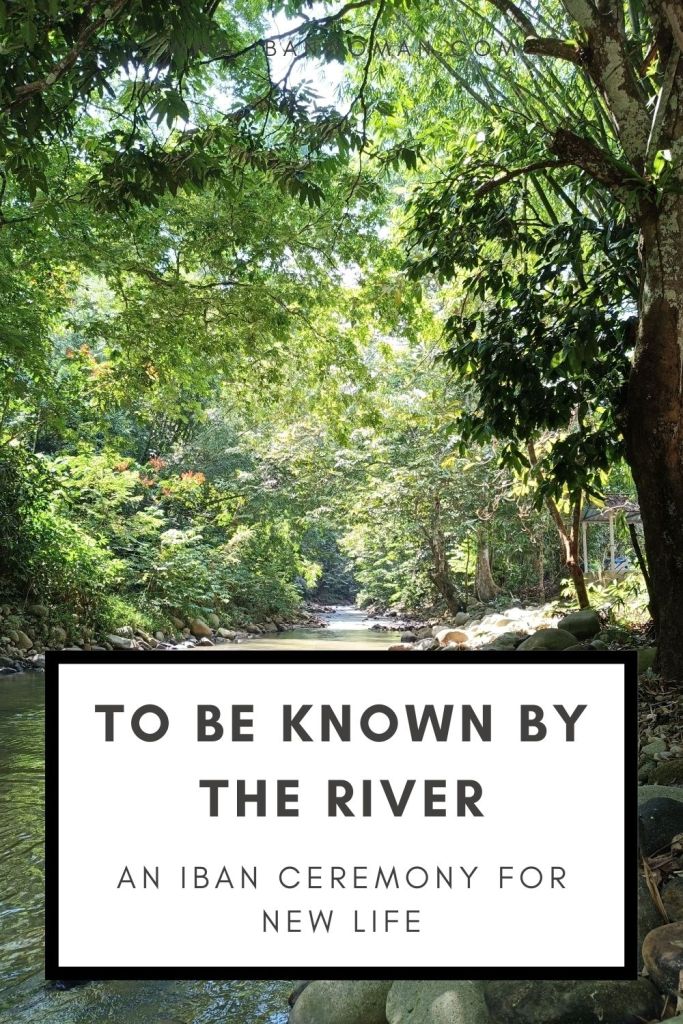
Last weekend, I found myself standing knee-deep in a shallow river in Janda Baik. The sunlight came through a canopy of trees above, casting soft streaks of light on the water’s surface. Everything felt quiet and peaceful. My kids splashed further upstream, and their laughter echoed off of rocks and trees. I stood still, closed my eyes, and let the water swirl around my legs as it flowed downstream.

It reminded me of the Iban traditional child-naming ritual. I’ve never seen it with my own eyes, but I learned about it from the elders and through reading. This ritual was held following the naming of the child and to formally “introduce” the child to the river. 

In the Iban way of life, water is more than a physical element. A body of water like a river is also a spiritual space. It gives life, but it is also a source of danger. We wash with water from the river, and sometimes, when the water is clear, we even drink and cook with it. It carries our boats to other villages, fields, and faraway places. However, it’s also where crocodiles and other dangers live. No Iban has grown up without hearing stories about someone who was attacked at the river. When a child is born, we don’t just give them a bath. We also hold a ritual to beg the river not to harm them. 

After the child is named, the bathing ritual begins. The night before the ceremony, the father informs the longhouse community of his intention. At dawn the next morning, the whole longhouse community walks to the river in a solemn procession. A flag bearer is at the front, and a man carrying a fowl follows him. Both of these men are chosen from among the respected elders. Two women walk behind them. One carries offerings and the other carries the child wrapped in handwoven pua kumbu. The rest follow, beating the gongs as they walk.

At the riverbank, the flag bearer cuts the water with a knife. The man with the fowl recites an invocation to call upon the spirits of water, earth, sky, and all the creatures that swim below the surface. He asks that the child be given good fortune, sharp vision, and safety. He calls the crocodile, the soft-shelled turtle, the barbus fish, the semah, and the tapah. He calls each one by name and tells them to regard this child as family, not food. He says, 

“If this son or grandson of ours happens to capsize and sink while he is visiting, you are the only ones who can lift him up and keep him afloat.”

It is not a metaphor but a real request, born out of fear and hope.

After the invocation, the child is bathed and the fowl is slaughtered. People make noise on purpose, like banging gongs and laughing, to drown out any bad omens. If the child is a boy, one wing of the bird is tied to a spear with red ribbon. The wing is attached to a heddle rod if it’s a girl. A bamboo basket full of offerings is then hung from a leafy pole. 

After that, they return to the longhouse and sprinkle the child with sacred water to get rid of bad omens. A feast is held and the gongs ring out to mark the ritual’s success. The child is now considered truly part of the community, and both the people and the river know it.

As I stood in that river at Janda Baik, I began to think about the rituals we’ve forgotten. What would it mean to reclaim a gesture like this, perhaps not literally but in spirit? The Ibans don’t all live in longhouses anymore. Some of us reside in cities and raise our kids as urbanites, but water still calls us. Maybe part of why we seek places like Janda Baik is because something in us still longs to make peace with the river. Rivers still take us places. They still give and take. And we too are still vulnerable to things we can’t see.

Maybe modern mothers need more moments like this, when they can recognize their fears, their prayers, and their desire to protect the people they love. We might not need to cut the water with a knife, but we can still offer a prayer, still whisper a blessing:

“We beseech you to confer on him fortune, give him sharp vision so that he will be fortunate, wealthy, and blessed with good health throughout his life. 

We can still speak to the river, and certainly we can still be heard. 


I write about Iban culture, ancestral rituals, creative life, emotional truths, and the quiet transformations of love, motherhood, and identity. If this speaks to you, subscribe and journey with me.
Iban Culture | Gawai Antu @ Feast of the Dead – A Personal Journey Through Memory and Meaning

I don’t see a lot of articles anywhere that talk about the culture of my people, the Dayak Iban of Sarawak, Borneo. Maybe there are plenty in native languages, but so far not much is written in English, so I thought instead of lamenting about it, why not write it myself? I admit I don’t have a vast knowledge about my culture; however, it shouldn’t stop me from writing about what I know. In this post I’m going to talk about one aspect of our culture called Gawai Antu, or the Feast of the Dead. I believe the feast of the dead is widely celebrated worldwide across different countries and cultures. It’s no different with the Iban people. After all, who doesn’t want to memorialize and pay tribute to their departed loved ones?

The Iban people of Sarawak, Borneo, have a rich and deeply rooted culture that is shaped by mythology, oral traditions, and a close connection between the spiritual and physical worlds. At the heart of this culture are the many “gawai,” or feasts, that mark important moments in life, from celebrating a bountiful harvest (Gawai Dayak) to honoring the spirits of the departed (Gawai Antu). Each gawai carries its own meaning, traditions, and importance, but none have left a deeper impact on me than Gawai Antu, or the Feast of the Dead.

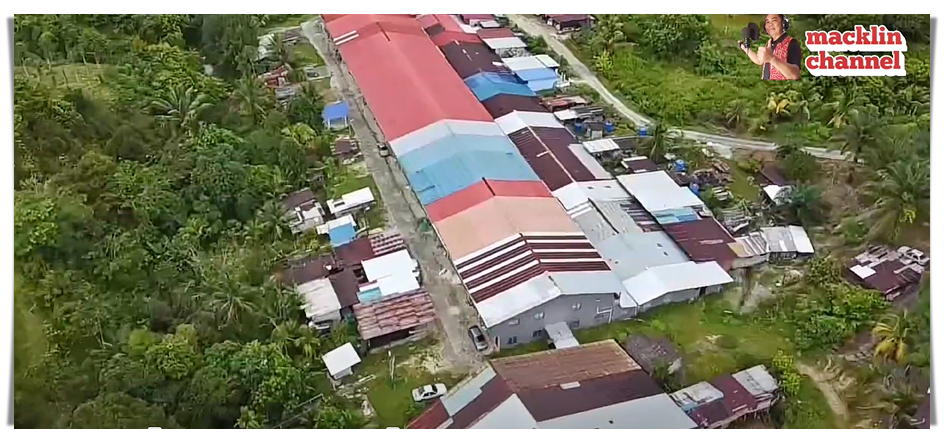
My father’s longhouse: Ng. Batang, Ulu Krian, Saratok. Image source: Youtube

I was ten years old when I first experienced Gawai Antu at my father’s longhouse in Ng. Batang, Ulu Krian, Saratok. At the time, I didn’t really understand its meaning. I just knew it was a rare and grand occasion that transformed the quiet longhouse into a place of celebration, ritual, and remembrance. Even now, decades later, I can still hear the loud gongs, see the elders in their ceremonial attire, and recall the haunting beauty of the invocations to the spirits and deities. It was a glimpse into something much bigger than myself, which was a connection between the living and the dead. This festival was deeply embedded into the very fabric of our identity.

Unlike Gawai Dayak, which is an annual celebration, Gawai Antu happens once in a generation. It is a collective effort that takes years of preparation, with families saving up to host this event in honor of their ancestors. This isn’t a normal feast. It’s an elaborate feast that symbolizes a final send-off for the souls of the departed. It’s a way of ensuring they are properly honored before moving on to the spirit world. It is both a farewell and a tribute, reinforcing the Iban belief that death is not an end but a transition to another realm.

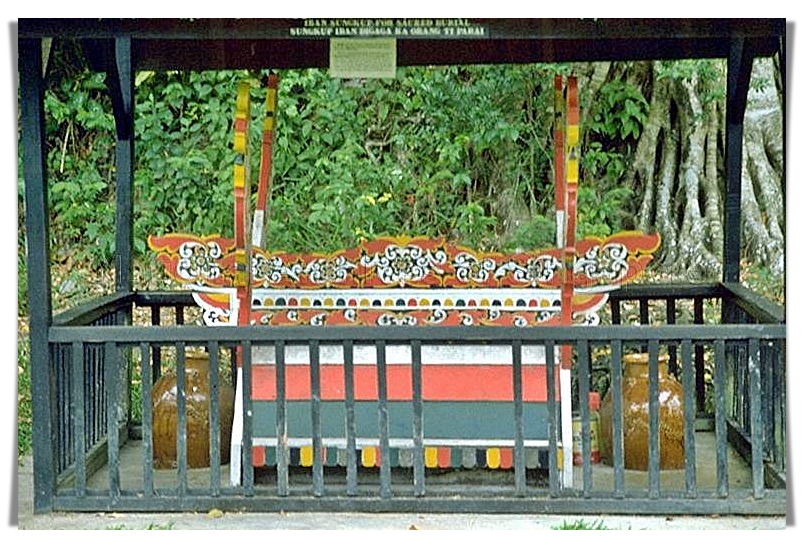
A “sungkup”. Image source: National Archives of Singapore

As a child, I was captivated by the sights and sounds of the festival. The longhouse came alive with music, laughter, and the smell of traditional food. Thousands of guests from neighboring longhouses (villages) gathered, filling the space with a sense of community and shared purpose. I watched as men skillfully built the “sungkup” (memorial huts) for the deceased, while women wove baskets called “garung” to hold the ceremonial rice wine, “tuak Indai Billai.”

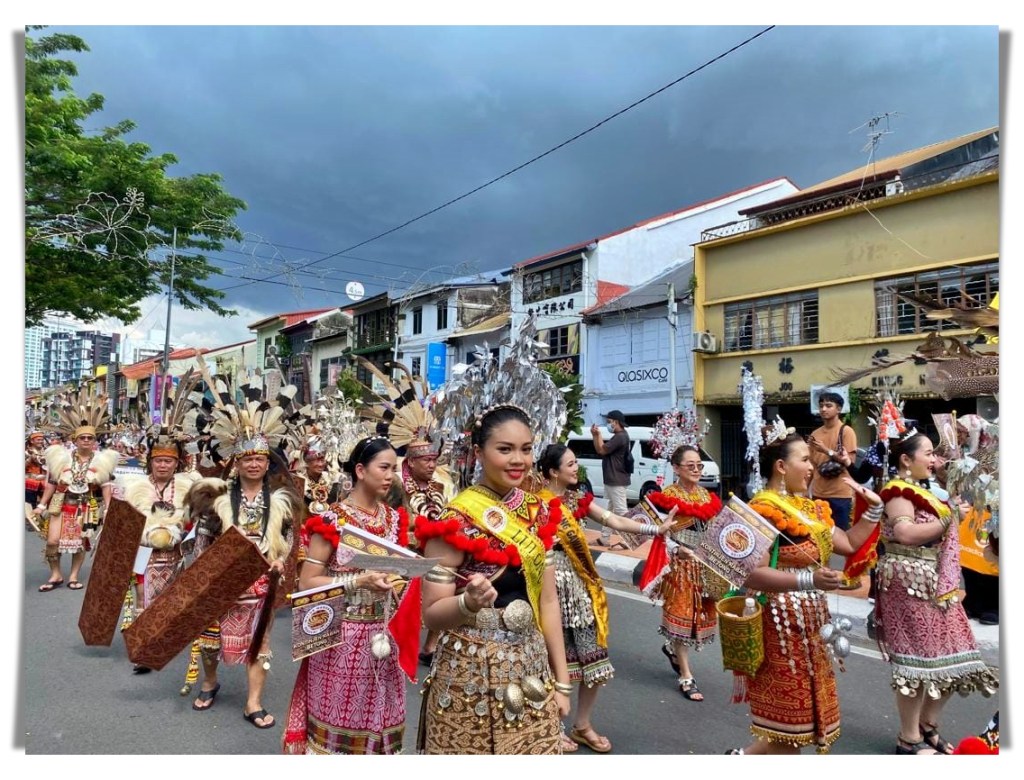
One of the most mesmerizing rituals was “ngalu petara,” where men and women, dressed in their finest, marched through the longhouse to welcome the spirits of the dead. Another unforgettable moment was watching the “lemambang” (bards) chant poetic invocations while carrying bowls of “ai jalung” (special rice wine) from midnight until dawn. Their lyrics, which were passed down through generations, painted vivid images of the spirits’ journey from the afterlife back to their longhouse for one final feast with their loved ones. At 4 a.m., the honored “bujang berani” (men of valor) drank the “ai jalung” to symbolize a moment of pride and recognition.

Image source: My sister

It wasn’t until adulthood that I fully grasped the significance of Gawai Antu. It is a festival of remembrance and a reaffirmation of our roots. It’s a way of keeping our ancestors’ legacies alive. As an Iban living away from my homeland, these memories have become even more precious. They remind me of who I am and where I come from, especially in a world where modern life often pulls us away from traditional practices.

Writing about Gawai Antu feels like my own way of preserving this tradition. In many ways, storytelling serves the same purpose as the rituals. It honors the past by keeping memories alive and strengthening our sense of belonging. But I won’t lie; this responsibility sometimes feels overwhelming. I wonder if my children will ever truly understand the depth of these traditions, or if they will see them as outdated practices of a time long gone. Still, I hold onto hope that through stories, whether in poetry, essays, or simple conversations, I can spark their curiosity and encourage them to explore their roots.

“Bujang Berani”, a man of valor drinking the “ai jalung”. Image source: Gawai Antu documentary

If there is one thing Gawai Antu has taught me, it is the value of memory. In a society that sometimes stresses development over history, this feast is a reminder that our identity is both about who we are and where we came from. Honoring our ancestors involves acknowledging their difficulties, successes, and sacrifices, as well as understanding how they influence our lives now.

Decades after my first Gawai Antu, the memories are still fresh in my mind. The loud gongs, sacred chanting, and communal spirit are memories from my childhood as well as pieces of a greater story about connection, heritage, and meaning. Gawai Antu has taught me that remembering our ancestors means, in many ways, honoring ourselves, as we are the living continuation of their journey.

My poem, “Gawai Antu”.


Note:
A documentary about Gawai Antu was made several years ago, you may watch the trailer here:

I don’t have any photographs of Gawai Antu from my childhood. They are kept safely in my parents’ home in Sarawak. The photographs in this post are credited to the sources listed below each image. For more information on Gawai Antu, you may visit these sites:

The Gawai Antu
Gawai Antu – the documentary