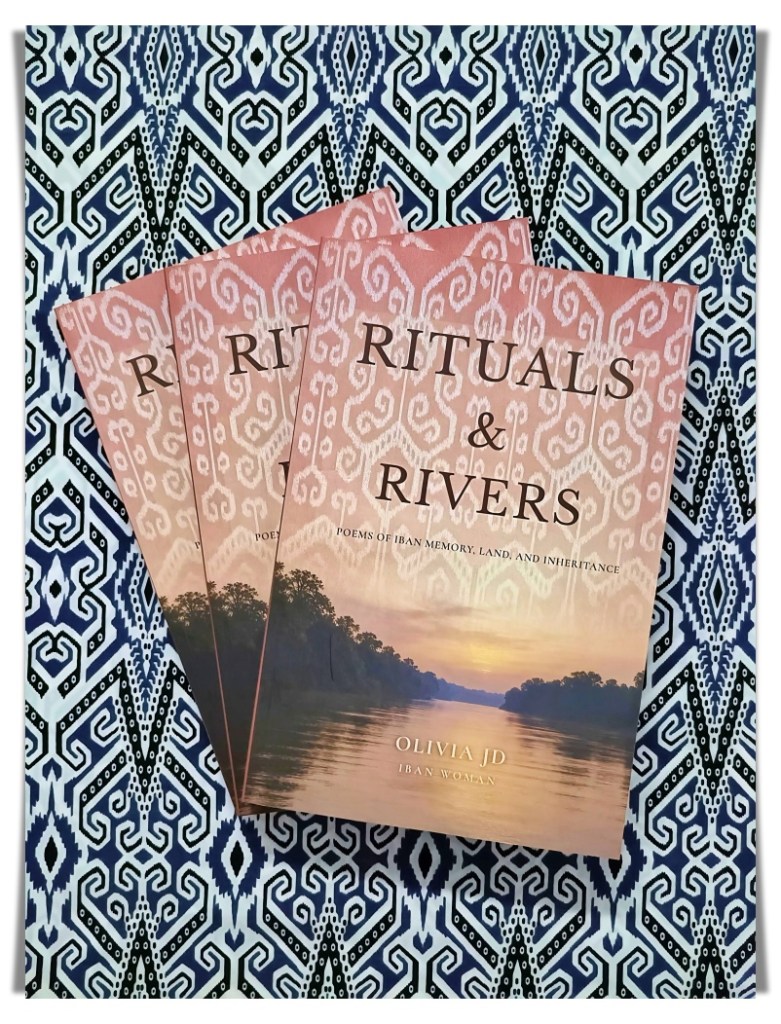
I published my first poetry collection in August, brought it with me to KL Zine Etc. Festival, read from it in public, sold copies of it, and somehow never wrote about it here.
The reason is simple. Shortly after the festival, I became very ill. It was not the kind of illness that passes after a couple of days of rest. I was hospitalised a couple of times and was at risk of developing sepsis. I am not going to disclose the actual illness, but it was serious enough that I was unwell for almost two months. I had to stop writing and making artwork. I disappeared from this blog and from most other things while I recuperated. The book, however, did not disappear. It existed quietly while I was recovering and waiting for my return.
Now that I am blogging again, I have realised that Rituals & Rivers has never had a proper post of its own. So here we are. This is not a launch announcement because that ship sailed in August. I just want to introduce my book to my blog readers and visitors.
Where The Book Came From
Rituals & Rivers began with a simple fear: that what I remembered would not be enough. I grew up with fragments of Iban life around me: my family history, tales of my ancestors, old songs and omens, rituals, family names, women’s work and remembered journeys. Many of the things that shaped me were never written down. They lived in memory, in work and warning, in speech and in gesture. They were part of my life and I didn’t think of recording any of them.
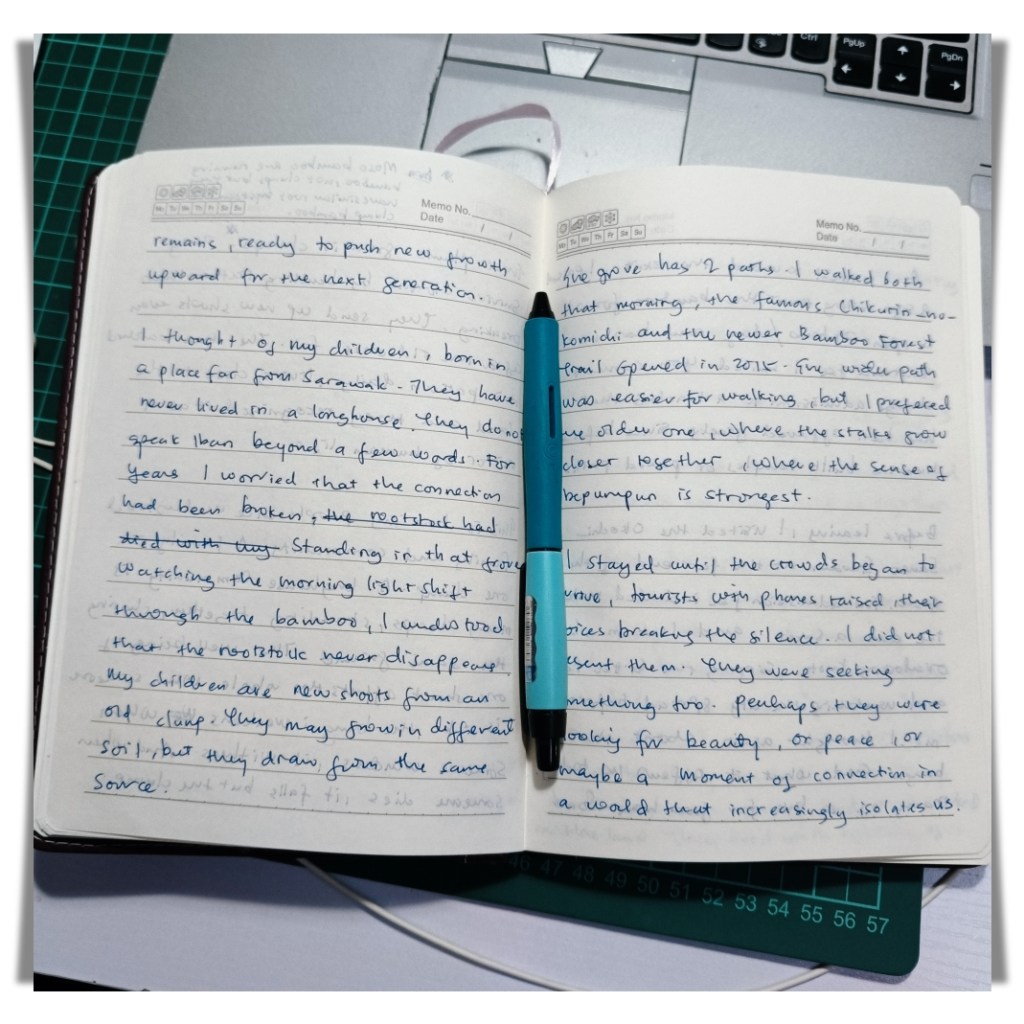
However, as I grew older and lived away from Sarawak, I became more aware of what I had taken for granted. The Iban language that I grew up with is not part of my everyday life. The stories I heard as a child became fragmented or forgotten. As a mother raising children far from ancestral land, I learned that inheritance does not always pass down by itself. Sometimes we have to be intentional in researching, recording, and passing that knowledge down to the next generation.
The fear of forgetting is really the seed of this collection.
What The Book Became
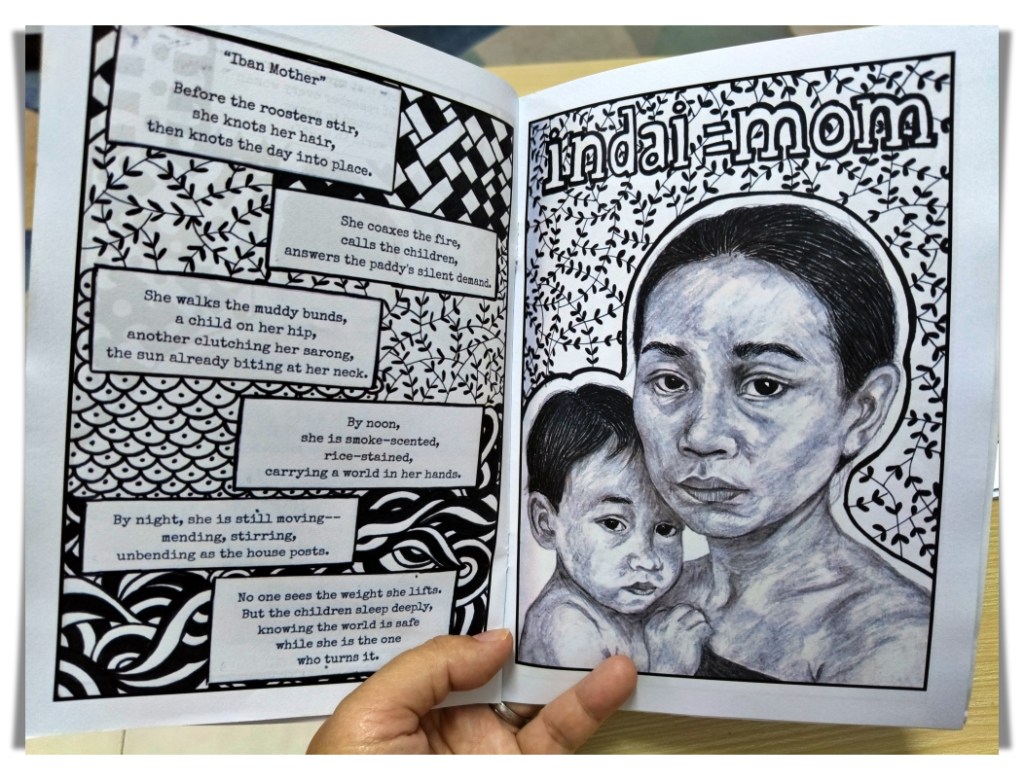
What began with personal memory eventually grew into a collection of 69 poems across six sections. However, the more I wrote, the wider the scope became. I realised I was no longer only writing about myself. I started to write about language, longhouse life, women, rituals, spiritual beliefs, family history, colonial resistance, land and environmental change, and eventually about what happens when cultural knowledge is no longer passed down naturally.
The poems are organised into six sections that together form a journey of sorts. They begin with questions of belonging and move backwards into childhood, longhouse life, and the women who shaped that world. From there, the collection goes deeper into Iban rituals and spiritual beliefs before turning to my family history, colonial resistance and eventually the question that rests underneath much of this book: what remains, and what do we pass on?
The six sections are:
- The Question of Belonging
- The Longhouse Remembers
- Women Who Hold the House
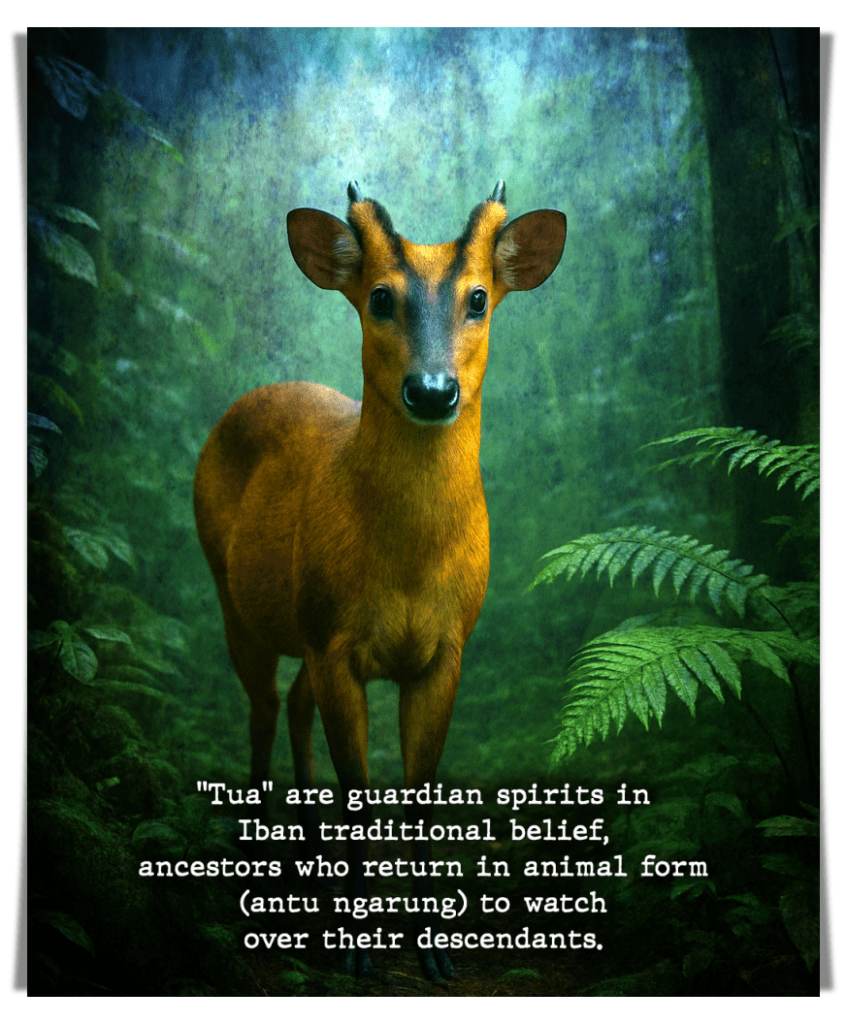
- Rituals, Signs, and the Unseen
- War, Resistance, and Inherited Courage
- What Remains, What We Pass On
Four Poems and Why I Wrote Them
I want to feature four different poems and the story behind each of them.
a) Tum Ketumba, I Sang the Lullaby
This poem is about a childhood song my sister taught me when I was small. I remember the lyrics even though much of the world around them has mostly vanished. I tried to preserve whatever I still recall of that world. Hopefully, through writing, I can pass it down to my children.
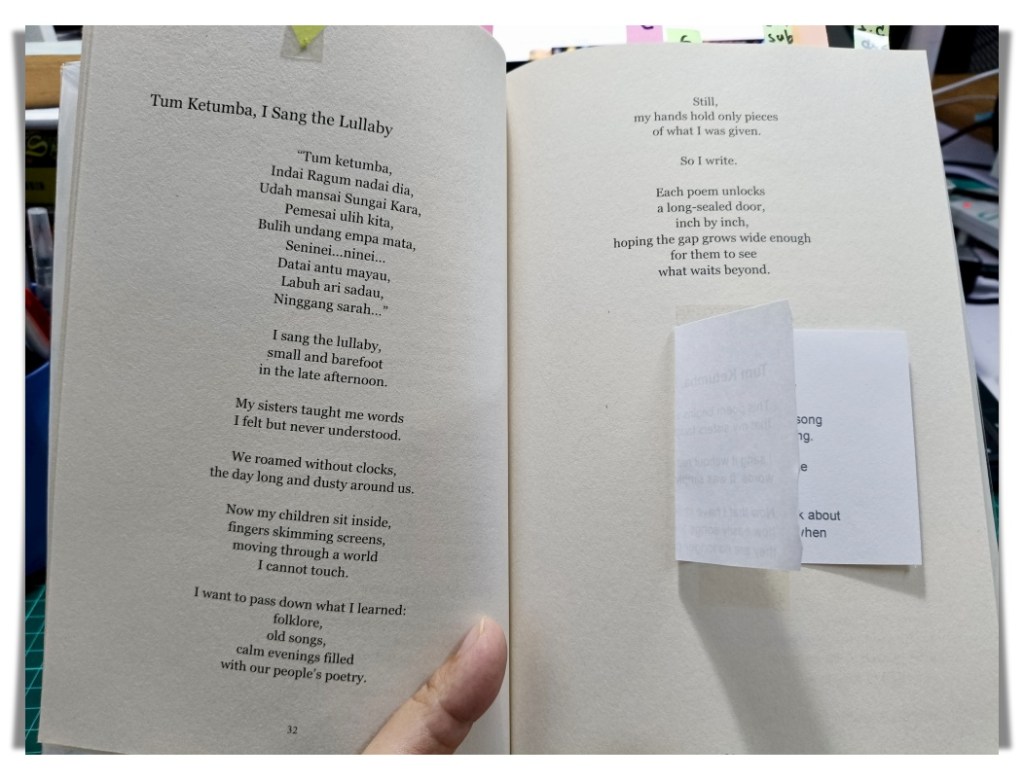
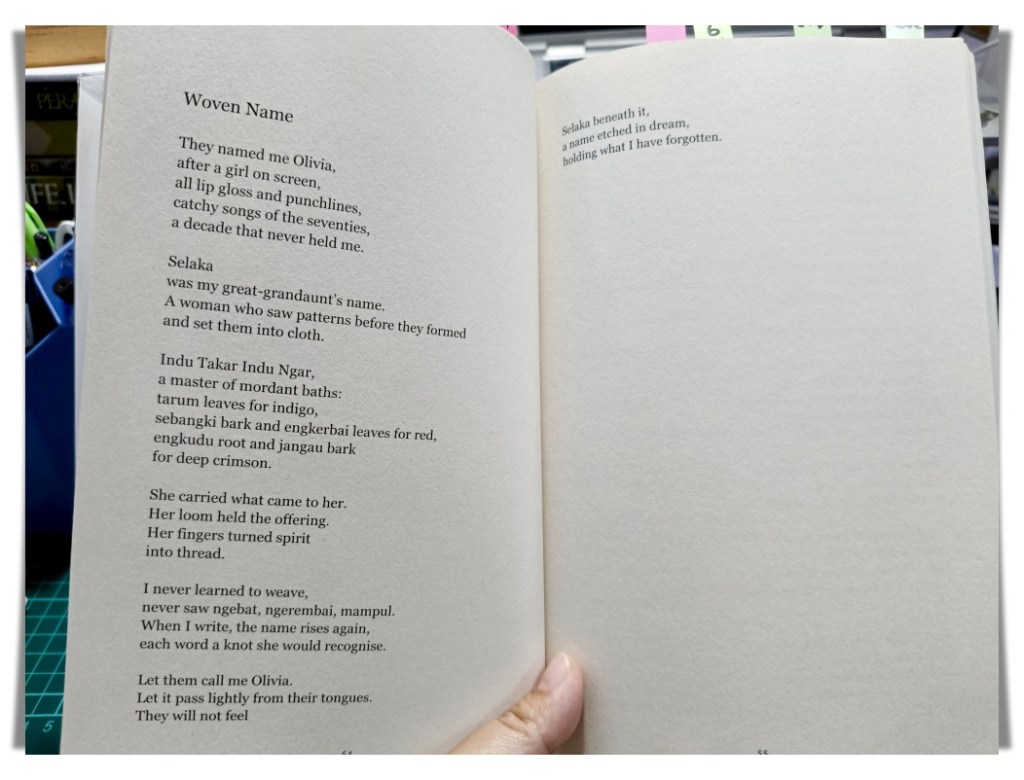
b) Woven Name
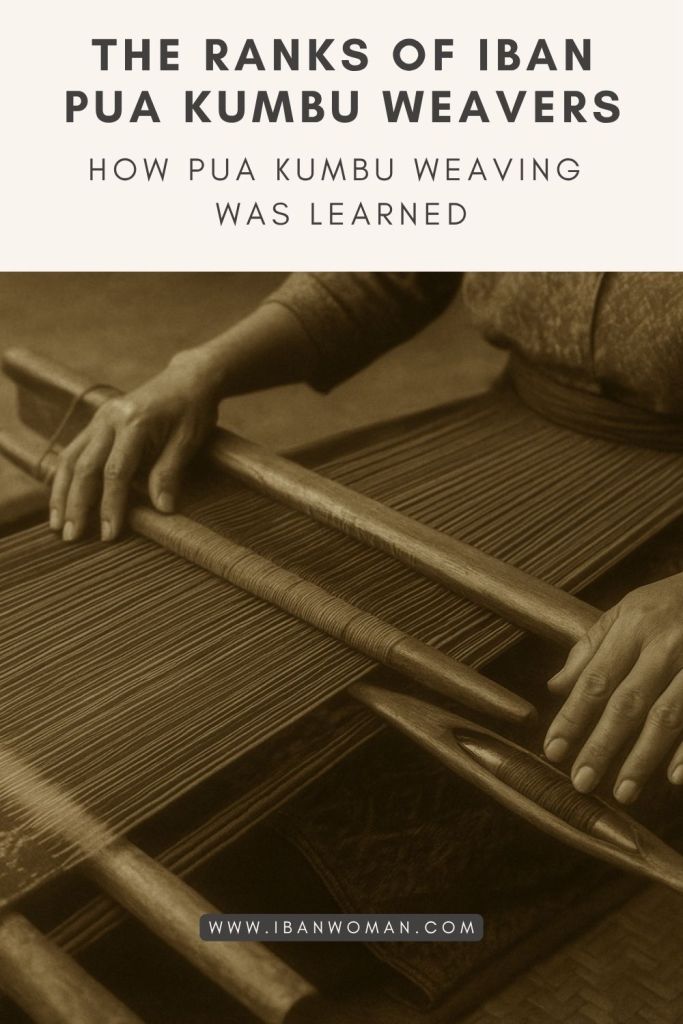
This poem is about my great-grandaunt, Selaka, who was a master weaver of pua kumbu, and also about me. Even though I never learned to weave, when I write, I feel connected to what she did. She wove her pua kumbu from dreams, signs, and patience, whereas I write and make art from memory and words.
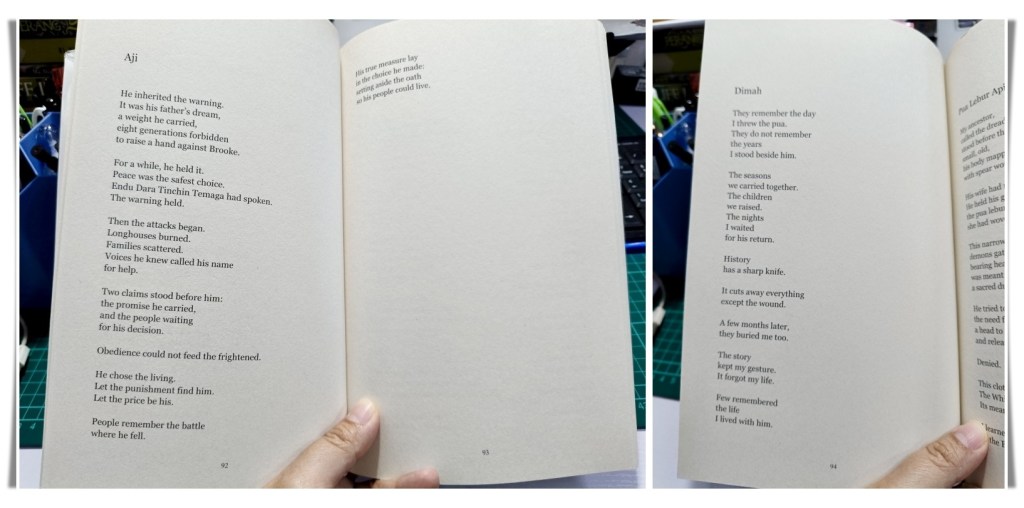
c) Aji and Dimah (Two Poems)
These poems were inspired by my family history. Aji Apai Limpa was my great-great-great-grandfather, an Iban war leader who resisted the Brooke government and died in battle at Sungai Langit in 1858. Dimah was his wife, often remembered for one tragic incident before the battle. Writing about them was not simply a matter of saying “my ancestor was a warrior.” I was trying to understand them as people, but I was also thinking about what happens when a name you have heard within your family becomes someone you are trying to see clearly.
Research and Uncertainty
Some of these poems came directly from memory, while others required me to research things I remembered only partially. I read ethnographic and historical sources as much as I could. I revisited family histories and tried to understand practices I had grown up around.
I want to be clear that this collection is not presented as a definitive record of Iban culture. It is a personal offering, drawing from memory, family history, oral tradition, and cultural knowledge.
There are gaps and uncertainties in it, and I have allowed those gaps to stay rather than fill them in with something I cannot honestly claim.
Why Rituals & Rivers?
The title came to mind because those two words seemed large enough to contain the entire collection.
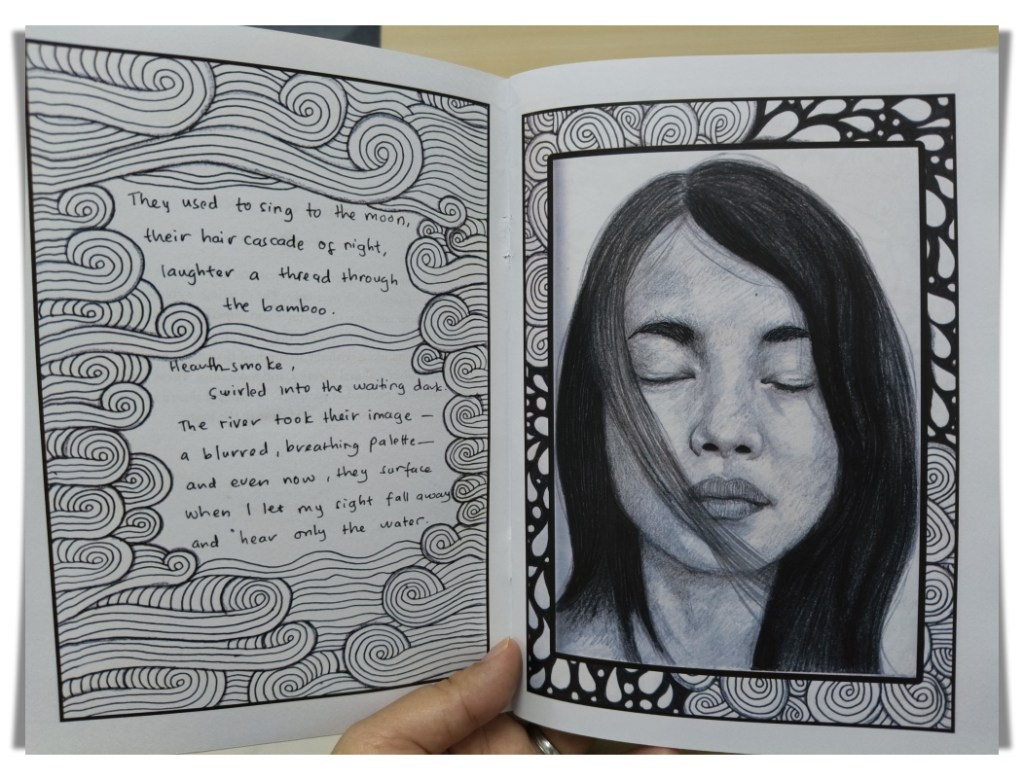
The poems are full of rivers. Sungai Layar is the river connected to my ancestral longhouse. Its water carried people and news to and from home before roads existed. Rivers appear as routes, witnesses, and places where history is laid down and life continues.
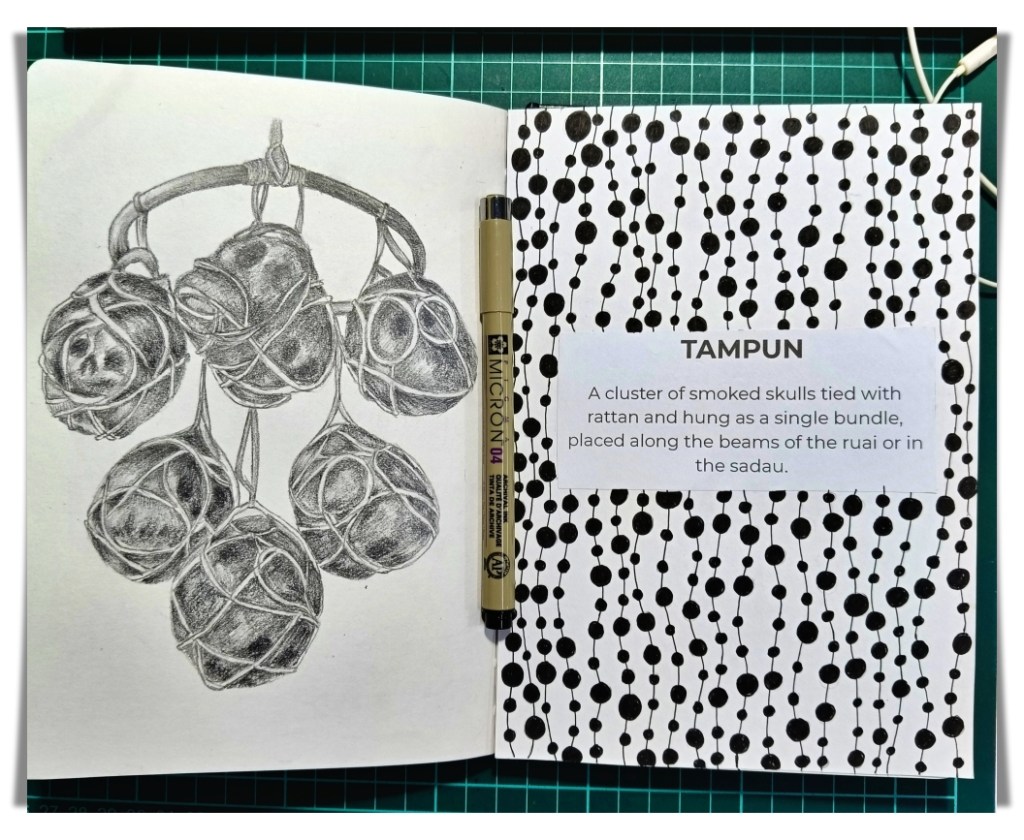
Rituals are an important part of traditional Iban life. Healing rites, funeral laments, child naming ceremonies, and wedding customs: these are communal rituals that sustain and strengthen a community. They are how we mark what matters and how we pass it on.
Together, rituals and rivers describe what this collection is trying to achieve. Rivers carry things across distance and rituals hold everything together. I am trying to do both.
Dedication
This book is dedicated to my children. The final poem, “When They Are Ready”, emphasises that idea. In it, I describe the poems in this collection as perau, or small boats that will carry my children to the things that can reveal their roots.
“… So I write these rivers into words,
each poem a small perau waiting.When they are ready,
they will launch them,
follow the names I have kept alive,
and find, at the source,a home that never stopped calling.”
Final Thoughts
After years of working on this collection, the book is finally here. I sold copies during the festival and have continued selling them since. I have read from it publicly, and only now am I sitting down to write about it here.
I am back and writing again. The book exists, waiting for whoever needs it.
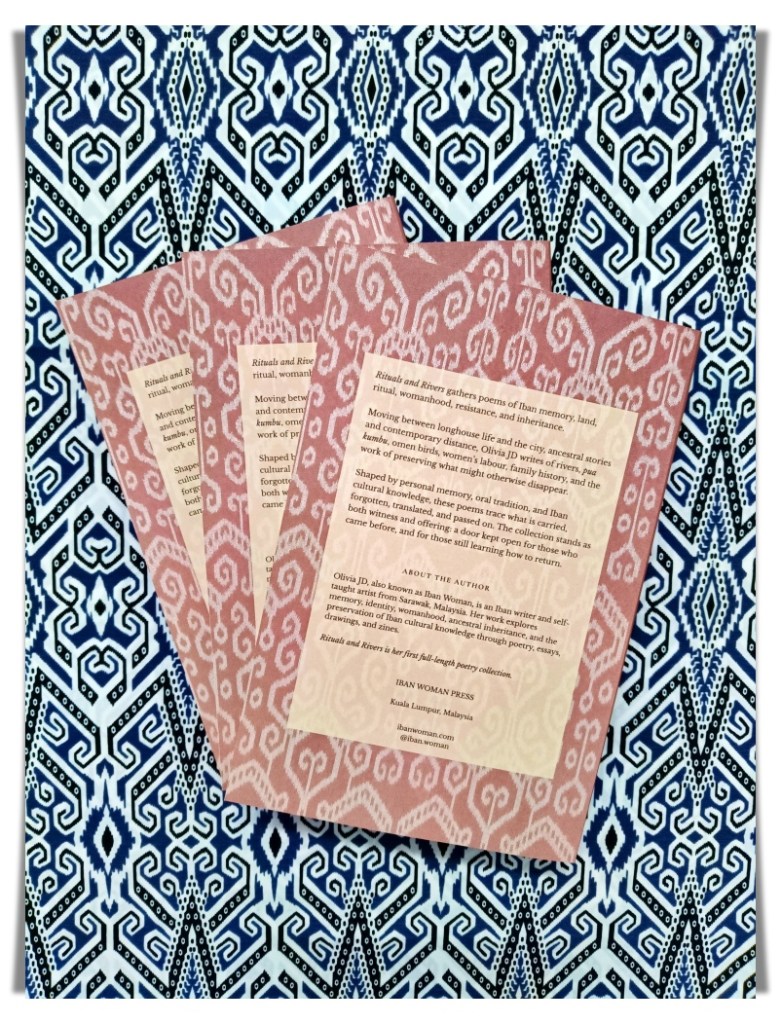
Rituals & Rivers is my first full-length poetry collection. If you would like a copy, you can purchase it from my Shopee online store.
I write about Iban culture, ancestral rituals, creative life, emotional truths, and the quiet transformations of love, motherhood, and identity. If this speaks to you, subscribe and journey with me.