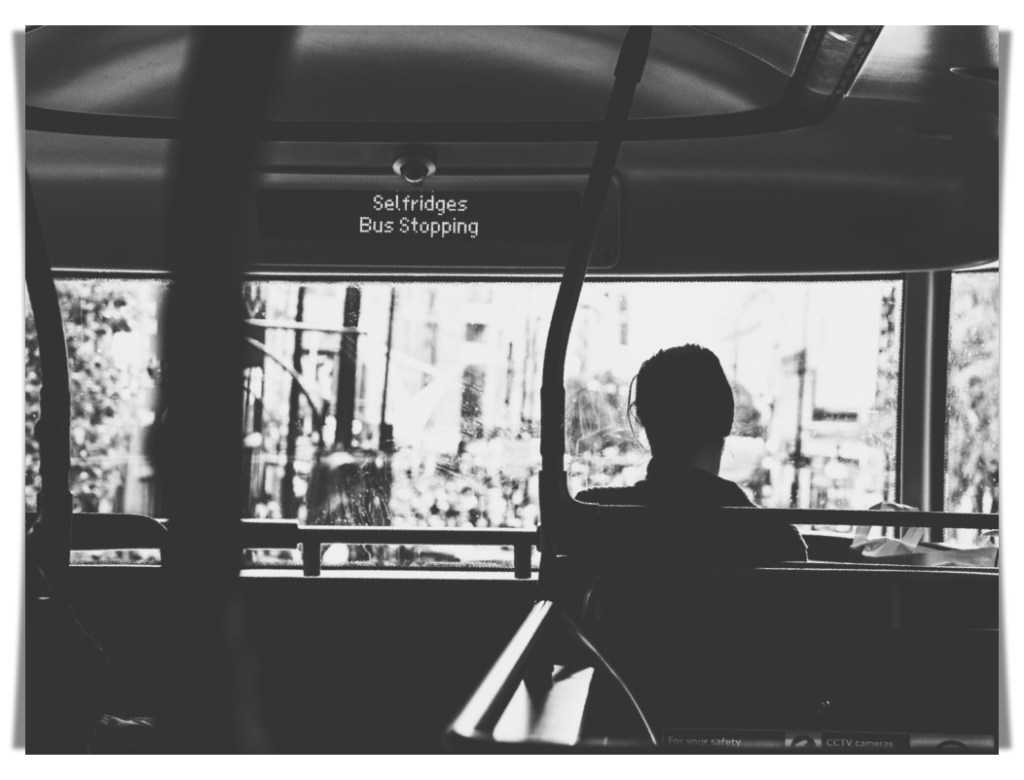
Fragments of Obsession V | What Remains of Him

This fragment of obsession is a continuation of Part 4. You can find the first four parts here: part 1, part 2, part 3, and part 4.


The Victims

They stay with him. That much I know. 

They weren’t merely evidence in sealed bags. They had names. They had voices. They were echoes in a room where someone had begged, bled, or died without being heard. They live somewhere behind his eyes, hidden deep down but never completely out of reach. 

He doesn’t discuss them. But I can sense it in the way he moves, sometimes too still like he’s bracing for the inevitable. I wonder which one visits him in sleep. Whose case file he opens up in his dream without meaning to. 

He must have a list in his head. A list of faces, some vaguely remembered, some impossible to forget. The girl with the red hoodie. The elderly man found with his hands tied. The body that no one claimed. 

I used to think that grief only belonged to families and those who loved them. However, there is a certain kind of pain that comes from being the last person to look at their picture, read their texts, or trace their final hour backwards. He carries that deep in his soul, mourning for people he never knew. 

Maybe it hardens something in him. Or maybe it makes him gentler in ways he doesn’t realize. The truth is I don’t know. I just know that he touches the evidence gently. And he blinks slower than usual when he stares at a photo too long. 

In my culture, the spirits—antu—linger when death is unresolved. Some say they roam, whispering into the ears of the living. He doesn’t fear ghosts or darkness. The ones that haunt him are printed on paper, kept in boxes, and saved on hard drives. There they remain. Always waiting. Always watching. 


The Walk

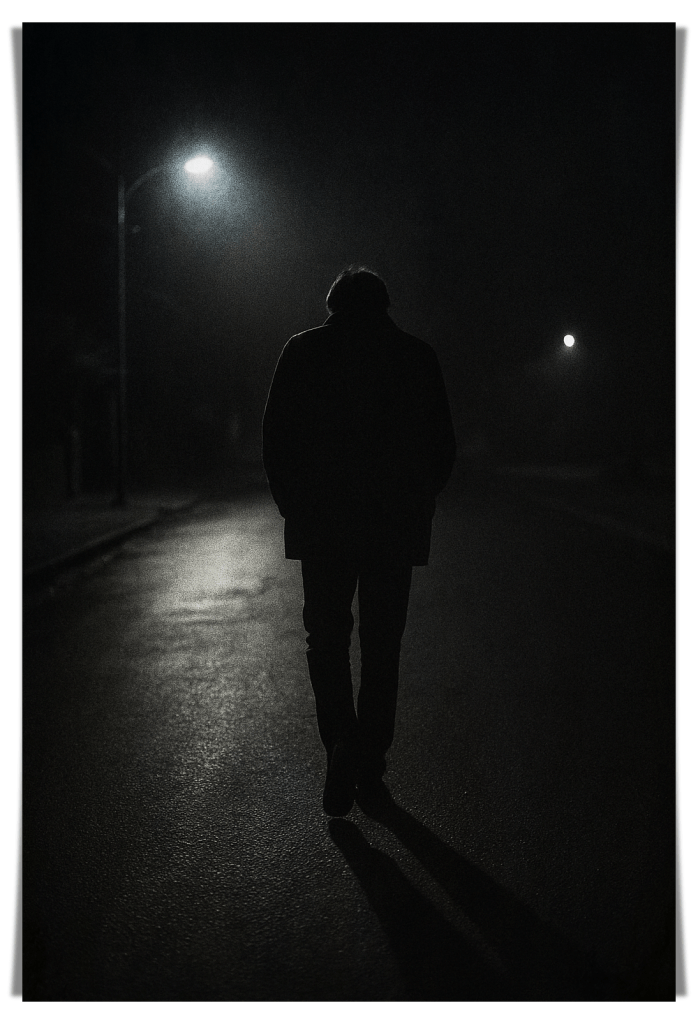
He walks at night, but not every night. Only on those when sleep is a stranger and the weight on his chest refuses to lift. He seeks the hour between two and four. That’s when the world goes quiet, signaling him to step out. 

He brings no phone, has no destination. Just his feet on the pavement, carrying his momentum through sleeping streets. He passed shuttered shops, empty lots, and the lonely glow of neon signs. In this slumber, the city is transformed—muted, and temporarily pacified. 

Is he trying to shake them off? The blood, the tragedies, and the ghosts that cling to the inside of his eyelids? Or is he chasing the silence he can’t find inside? Or maybe he just believes that if he walks long enough, the chaos in his head will have to settle.

Hands in pockets, shoulders a permanent slope. From afar, he’s just a man. But a closer look at his eyes would tell you everything. 

This is the unseen part. The aftermath, stripped of crime scenes and case files. There is no suspect to corner, no puzzle to solve. He’s a man alone with the night, waiting to feel human again.

In that moment, I don’t see the criminologist. I see a tired man who would rather move through the honest darkness of the streets than lie still in a loud, empty room.


Epilogue

All of this, I’ve only imagined. The desk. The scene. The interrogation. The victims. The walk. They’re a part of his life that I will never touch. He doesn’t talk about it much, at least not directly. A line may slip out from time to time, and that’s it. Most of it comes through in other ways, like when he gets too quiet and his hands stop moving. The tension in his jaw after a long day. The shadows beneath his eyes that no amount of sleep seems to erase. 

There are nights he startles awake. He never says why, just lies there, breathing heavily. I never ask either. I simply wait for his return. 

What he endures is his own. And I’ve stopped trying to reach for it. His work is an extension of who he is, bound to his bones. It affects how he sees the world and how he protects others without even thinking about it. 

However, there are times when it becomes apparent. Like when he touches me and listens to me even when I say something silly. Or how he holds silence like it’s sacred. 

I used to think he was distant. But now I understand: he was too full of things he could never say. I write these fragments not to know him better or to hope that he’ll find them. He won’t. The door closed two decades ago. These are the only pieces I kept. 


Copyright © Olivia JD 2025

All Rights Reserved.

I write about Iban culture, ancestral rituals, creative life, emotional truths, and the quiet transformations of love, motherhood, and identity. If this speaks to you, subscribe and journey with me.
Marriage Refines You (If You Let It)

Nobody warned me that marriage would teach me the lessons I never anticipated.

They said it would take work. They said communication was key. They said love changes. All of this is true. But no one told me that marriage is fundamentally a slow-burning crucible of personal transformation. Of course there are romance and domestic joy, but those aren’t the main things. Marriage refines you. But only if you allow it.

If I had written this post twenty years ago, things would have been different. I would have told you about the joys of growing older together, about shared jokes and parenting accomplishments, and the comfort of being wanted and desired. I might have glossed over the friction. Or made it poetic, full of excuses.

But now, I want to tell the truth: Marriage teaches you who you truly are, often through pain.

This isn’t the kind of pain that stays with you forever, at least not in a good marriage anyway. But this pain would show you how weak, selfish, and proud you are. It’d expose the parts of you that you didn’t realize needed healing until you kept bumping up against another human being who sees you completely, and sometimes unflatteringly.

In the early years, I believed that in order to be respected, I had to be right. I used to believe that a good wife was someone who was nice and made quiet sacrifices. I thought conflict meant something was wrong.

Then came the truth: Conflict is the classroom. Friction is the fire. Silence is not always peace, and compliance is not intimacy. I learned this slowly and painfully, through nights of misunderstanding, long periods of emotional detachment, and the grief of feeling invisible.

Marriage has pushed me to confront my shadow selves: the part of me that resents when he doesn’t read my mind, the part that wants to be acknowledged for invisible labor, and the part that withdraws rather than communicates when I’m upset.

He has his parts too. When both of us are weary, stressed, or simply being human, those parts collide like stones.

But here’s what I’ve learned: Stones sharpen one another.

We grow as a result of the friction, not in spite of it. This relationship has gradually dispelled some of my misconceptions. I’ve become less concerned with appearing good and more interested in becoming whole. I’ve learned how to stay present during an argument without dissociating. I’ve learned to say, “I need this,” without shame. I’ve learned to apologize and own up to my mistakes because I value the connection more than the ego battle.

Marriage has taught me about perseverance. This perseverance is not the kind where you smile and bear it, but the kind where you continue to show up to face the difficult conversations, the painful realities, and the pain of building your character.

It has taught me that love is not the absence of conflict, but the willingness to hold space for each other’s growth.

This isn’t a post about martyrdom. This isn’t about perpetuating toxic behaviors or glorifying suffering. This is about the refinement that happens in long-term relationships, when two people choose to keep coming back to the table, even when it is a mess. Especially when things are messy.

Some days, love looks like scrubbing the kitchen while the other sits quietly. Some days, it looks like asking, “Can we talk?” even when the previous talk didn’t end well. Some days, it means choosing forgiveness over keeping score. Other times, it involves setting a boundary that says, “I will not carry this alone anymore.”

Marriage as a teacher is subtle, persistent, and deeply transformative. Refinement doesn’t happen all at once. It’s gradual, and at times it feels like failure. But what I do know is that I am not the same person I was when I agreed to this life together. And I’m thankful.

Marriage, in its own imperfect, beautiful and annoying way, is a never-ending teacher. And I’m slowly turning into someone I can be proud of, not because I’ve mastered love, but because I’ve let love master me.


This Is Not a Love Poem (But It Is)

This is not a love poem.
It doesn’t lace silk into longing
or wraps itself around your wrist
like a bracelet of breathless metaphors.

It’s the crack under the door
when we don’t speak for hours.
The grease-stained dinner plate
left by your elbow
and the silence I sit with,
like a burning candle.

This is not a sonnet.
This is the sound
of your sigh in the middle of my sentence.
The way you leave the room,
still loving me.

I wanted something softer, once,
but this? This is love
that turns me over like soil.
That presses its palms into my spine
and says: grow here.

I have.

And it hurts.
And it heals.
And it is you.

© 2025 Olivia JD


Olivia’s Atelier offers printables, templates, and art designed to inspire reflection, healing, and creativity. Visit Olivia’s Atelier, Redbubble, and Teepublic for more.

Luther — The First Boy I Ever Loved

It was 1989. I was twelve, shy and dreamy-eyed, in Primary Six. Luther was fourteen and in Form Two. He had the most beautiful eyes I had ever seen. We met at Christening classes on Wednesday nights. I watched him from across the room, my heart racing. I was torn between wanting him to notice me and wanting to stay hidden.

It was my best friend who, with a cheeky grin, told him my secret. I was so embarrassed that I wanted to sink through the floor. But that night, everything changed. Luther noticed me and paid attention from then on. We exchanged love letters, filled with clumsy, big-hearted words, and met on small dates behind some buildings; nothing grand, not even kisses. We simply held hands and talked.

But by December of ’89, my father’s job took us to a new town, and just like that, our brief, sweet chapter ended. We didn’t keep in touch because we were too young, and maybe we both knew deep down that first loves are only supposed to last a short time.

Now that I think about it, that experience really changed how I think about love and connection. It wasn’t just about the boy or the letters or the stolen glances. It taught me that love, even in its simplest form, is about seeing and being seen. It’s about feeling, in that fleeting moment, that you matter to someone.

It makes me think of The Wonder Years, an American TV show that was on our local channel at the time. Kevin Arnold’s journey through the awkwardness, joy, and heartbreak of growing up felt so much like my own coming of age. His sweet, tentative relationship with Winnie Cooper; their shy glances, their first kiss, the way they kept circling back to each other through the ups and downs. I understood that kind of love, the sweet young love. Luther and I had our own little universe for a while, much like Kevin and Winnie. We taught each other about hope, tenderness, and letting go, just like they did.

Luther

You had eyes that swallowed me whole—
a storm behind glass,
soft enough to fool me.
Your lips never touched me,
but I felt them anyway,
like rain through a roof crack.

We wrote each other down in crooked lines,
gave ourselves to paper,
to the dark between stars.
For a while, you were a fever I didn’t want to break—
a name I kept folding smaller and smaller,
to hide.


Olivia Writes offers printables, templates, and art designed to inspire reflection, healing, and creativity. Visit Olivia’s Atelier, Redbubble, and Teepublic for more.

What His Silence Taught Me About Intimacy

It wasn’t an awkward silence. Nor the silence of distance or dismissal. His silence was something else entirely. It had gravity. Shape. It wrapped around me like twilight settling over the city. And in that silence, I discovered something I never fully understood before: intimacy does not necessarily manifest itself through words or touch.

In those early days, I remember him across the café table. We spoke, certainly. But it was in fragments. There were lengthy intervals where nothing needed to be said, yet I never felt compelled to fill the silence. He never pushed. Never filled silences just to hear himself speak. And maybe that’s why I found myself letting my guard down, little by little, without even meaning to.

There was something sacred in how he listened. He didn’t listen to respond. He listened like he was trying to memorize me. When he finally did speak, it wasn’t to impress or correct me but to reflect something I hadn’t realized I was trying to express. His silence wasn’t an absence. It was presence without intrusion.

One evening, we stood side by side on Lover’s Bridge. The river shimmered beneath us, and the sky was painted in pink and gold. We didn’t touch. We didn’t speak. But something passed between us, though, that couldn’t be seen or touched. Somehow right then and there, our bodies found a rhythm beside each other, like the choreography of trust.

What surprised me the most was how seen I felt in his silence. He didn’t demand performance. He didn’t ask for confessions. And yet, standing next to him, I felt understood. It felt as though he was able to hear everything I didn’t say yet still chose to stay.

That kind of intimacy is unusual. It asks nothing but provides everything. It is not based on lofty declarations but on humble agreements. Like how he read my poems and didn’t say anything after but looked at me with nonjudgmental eyes. Just understanding.

In a culture obsessed with noise and proof, he reminded me that some truths are whispered. Some of the most personal experiences we may have are felt rather than expressed. Some bonds are born not in words, but in willingness. To stay. To witness.

So no, his silence never made me anxious. It made me feel safe. It taught me that intimacy isn’t always loud or clear. Sometimes it’s a quiet agreement between two people who stop pretending they have to explain everything to be understood.


✨ Visit Olivia’s Atelier for printables, reel templates, and planners made to support overwhelmed moms with gentle, soulful tools.
🕊️ Enjoy 50% off everything until June 30.

If I Could Be a Criminologist for Just One Day

Some prompts ask for fantasy, but this one nudged me toward truthfulness and honesty. If I could choose any job for just one day, I wouldn’t reach for prestige or power. I wouldn’t imagine myself on a stage, in a lab, or leading a corporation. 

I’d choose to be a criminologist. 

No, I have no interest in solving crimes, examining evidence, or pursuing cold cases. Nothing like that. It is because, a long time ago, I met a criminologist and we fell in love. I want to understand him, this man who carries so much and says so little. 

What would it be like to spend a day in his shoes? I want to walk silently through his memories, particularly the ones that linger in crime scenes after everyone has left. I want to sift through his memory that stands still in front of a whiteboard full of tragedies. I want to walk through his memories because I could never reach that part of him no matter how hard I tried.

I wouldn’t be there for the thrill. I’d be there to observe the way he looks at the world when no one’s watching. I’d want to finally learn the stories he never said out loud to me, even when I cradled his head in my arms as he struggled to wake from his dark dreams. 

I’d trace the photographs he pins to the wall—the faces of the dead— and see his handwriting curve along the margins. I’d watch how he circles certain names darker than others, the lines thicker when the pen pressed harder with his instinct. 

At lunch, I’d sit across from him while he quietly picks at his food. I’d watch how his eyes drift with restraint. He sees everything. He just doesn’t always let it show.

Maybe by being a criminologist for a day, I’d learn what it means to hold other people’s pain without crumbling. And maybe I’d finally understand why he sometimes looks at me like I’m a mystery too.

By the end of the day, I’d return the badge, the case files, and boxes full of evidence. I wouldn’t need to stay. 

Because…I never want the job.

I just want the man behind it. 


Some days, love is remembering someone’s shadow. It’s like bearing witness to the way they disappear into themselves, hoping you’ve seen enough to still find them in the dark.

A poem to accompany this piece.

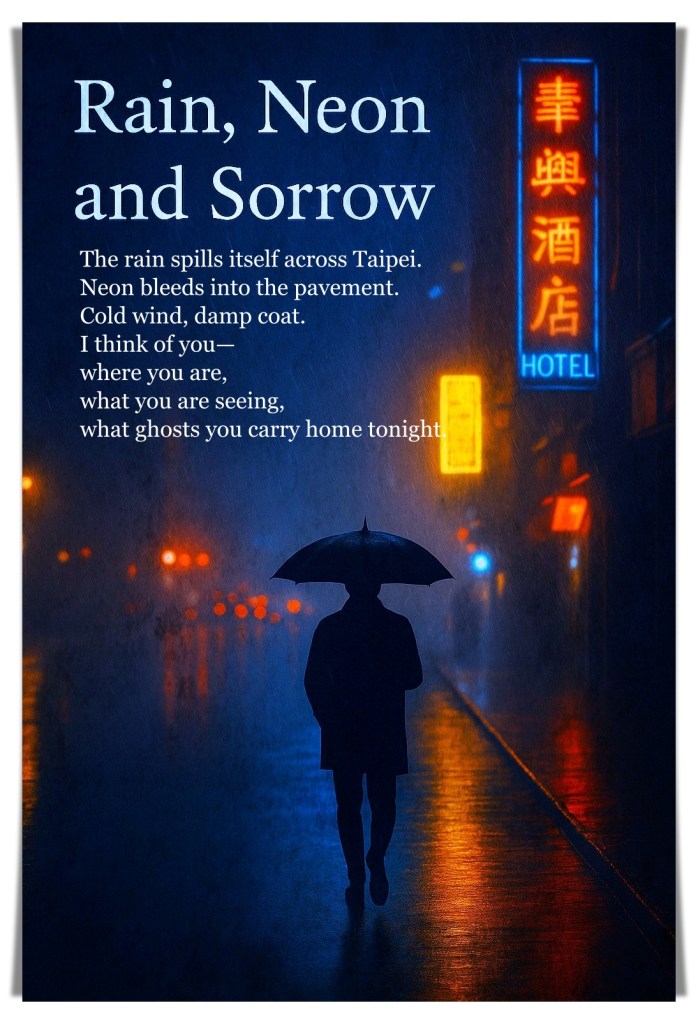
Rain, Neon and Sorrow

The rain spills itself across Taipei.
Neon bleeds into the pavement.
Cold wind, damp coat.
I think of you—
where you are,
what you are seeing,
what ghosts you carry home tonight.

Are you still bent over your desk,
searching for a disease,
fingers tracing the city’s veins—
sharp like a scalpel?

Are you peering again into the abyss?

Tell me—
how much blood have you washed off your hands?
how much stays,
burrowed beneath your nails,
tucked inside your sleepless bones?

I’ve seen you stare past me
with eyes that see things
you will never say.

You kiss me like a man
leaving a crime scene.
Touch me as if memorizing evidence.
Does love feel like guilt to you?

My love won’t pry open your fists,
won’t drag you back from the ledge
among the dead.
In this city of rain, neon and sorrow,
I wonder—
are you still whole?
still awake?
or has the night already claimed you?

Copyright © Olivia JD 2025
All Rights Reserved.

Why I’ll Always Come Back to The English Patient

Daily writing prompt
What book could you read over and over again?

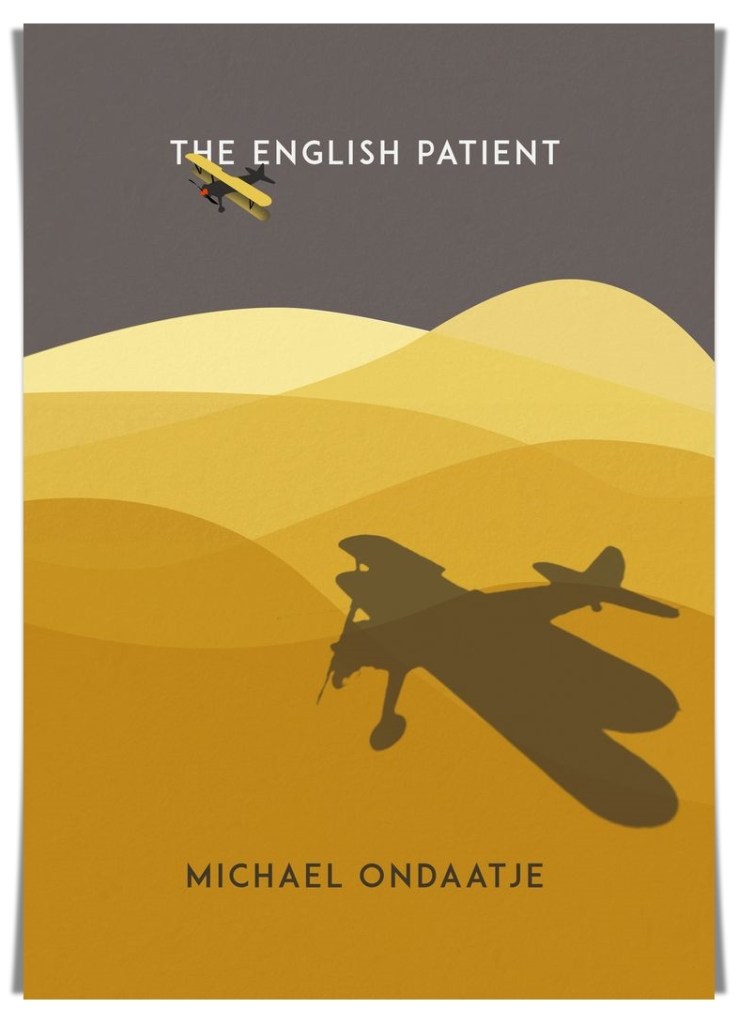
Some books become landmarks in your life. It becomes more than something you read when you return to its pages again and again, like a familiar scent or a half-remembered dream. For me, that book is The English Patient by Michael Ondaatje.

I got my copy in 1997 while waiting for my night shift to start. I was 20 at the time, working part-time while studying for my IT diploma. My shift began at 6 p.m. and finished at 6 a.m. the following day. After dinner, I went to a nearby bookshop and picked up the novel. The film adaptation was playing in cinemas at the time, but I didn’t watch it until years later. I read the book during my breaks at work, but it took me a long time to finish it.

Image source

Ondaatje’s prose was difficult. It didn’t care for neatness. The narrative was fragmented, the rhythm unpredictable—the whole narrative is a long lyrical poem. But I stuck with it, turning each page slowly, sometimes painfully. And I’m glad I did. While others found it disjointed, that was precisely what drew me in. It was too poetic for the mainstream, too fragmented for easy consumption, and too sensual for readers who prioritize plot. That’s what I enjoyed about it then—and still do.

When I went to university to pursue my IT degree, The English Patient became a silent friend. I read it during long, lonely afternoons in my hostel room as a soothing escape from the chaos of university life. Through Ondaatje’s pages, I could retreat to the worn walls of Villa San Girolamo, into the burned silence of the English Patient, and the sun-drenched memories of the Cave of Swimmers. I must have read the book ten times throughout the years. 

The story unfolds in the same way that memory does: disorganized, sensory, and half-lit. We learn about the English Patient’s past before, during, and after WWII. Of Katharine Clifton and their forbidden love. Of Hana, the grieving nurse who cares for him in the villa. Of Caravaggio, the thief turned British spy with missing thumbs. Of Kip, a gentle Indian sapper who dismantles bombs and falls in love with Hana despite their cultural differences.

The patient’s only possession is a battered, annotated copy of Herodotus’ Histories that survived the flames when his plane crashed in the desert. The crash badly burned him and caused amnesia. He couldn’t remember his name and lost his identity, but his voice led many to believe he was English. In time, we learn he is actually László de Almásy, a Hungarian cartographer and desert adventurer. Almásy’s character is loosely based on a real-life counterpart, Count László Almásy, a Hungarian aristocrat and explorer.

I remember reading passages aloud to my lover during late-night chats. We watched the movie adaptation on VCD, but I hated it. It lacked the haunting lyricism of the novel. The lushness of Ondaatje’s words cannot be translated to screen. His sentences breathe, linger, and seep in. They don’t just move the story forward. They remain in you long after you finish the novel.

I haven’t read the book in years. Maybe it’s time to read it again. Some parts of me have changed; others haven’t. I suspect the story will read differently now, the way all great books do when you return to them older and bruised with life.

There’s one passage that’s followed me for years, so much so that I placed it on my About Me page:

“She had always wanted words, she loved them; grew up on them. Words gave her clarity, brought reason, shape.”

This quote refers to Katharine Clifton, but I feel it suits me as well.

There are many other lines that have stayed with me through the years. There are too many to list, but here are a few that still haunt me:

“We die containing a richness of lovers and tribes, tastes we have swallowed, bodies we have plunged into and swum up as if rivers of wisdom, characters we have climbed into as if trees, fears we have hidden in as if caves. I wish for all this to be marked on by body when I am dead. I believe in such cartography—to be marked by nature, not just to label ourselves on a map like the names of rich men and women on buildings. We are communal histories, communal books. We are not owned or monogamous in our taste or experience.”

― Michael Ondaatje, The English Patient

“I believe this. When we meet those we fall in love with, there is an aspect of our spirit that is historian, a bit of a pedant who reminisces or remembers a meeting when the other has passed by innocently…but all parts of the body must be ready for the other, all atoms must jump in one direction for desire to occur.”

― Michael Ondaatje, The English Patient

“Moments before sleep are when she feels most alive, leaping across fragments of the day, bringing each moment into the bed with her like a child with schoolbooks and pencils. The day seems to have no order until these times, which are like a ledger for her, her body full of stories and situations.”

― Michael Ondaatje, The English Patient

“This was the time in her life that she fell upon books as the only door out of her cell. They became half her world.”

― Michael Ondaatje, The English Patient

“In the desert the most loved waters, like a lover’s name, are carried blue in your hands, enter your throat. One swallows absence.”

― Michael Ondaatje, The English Patient

“Sometimes when she is able to spend the night with him they are wakened by the three minarets of the city beginning their prayers before dawn. He walks with her through the indigo markets that lie between South Cairo and her home. The beautiful songs of faith enter the air like arrows, one minaret answering another, as if passing on a rumor of the two of them as they walk through the cold morning air, the smell of charcoal and hemp already making the air profound. Sinners in a holy city.”

― Michael Ondaatje, The English Patient

The English Patient is not a book you finish or a book you can read casually. It’s a book you carry, absorb, and savor.

And I’ll keep returning to it.

As long as I need to remember how language can ruin you.

And heal you.

And leave you haunted in the best way.

Lover’s Bridge | An Excerpt from My Novella-in-Progress

This is a short excerpt from my novella-in-progress. The story unfolds through fragments and moments that shape the narrative from beginning to end. It follows two people (a foreign woman and a local man) who meet by chance in Taipei, Taiwan, and how their bond deepens through small, ordinary exchanges.

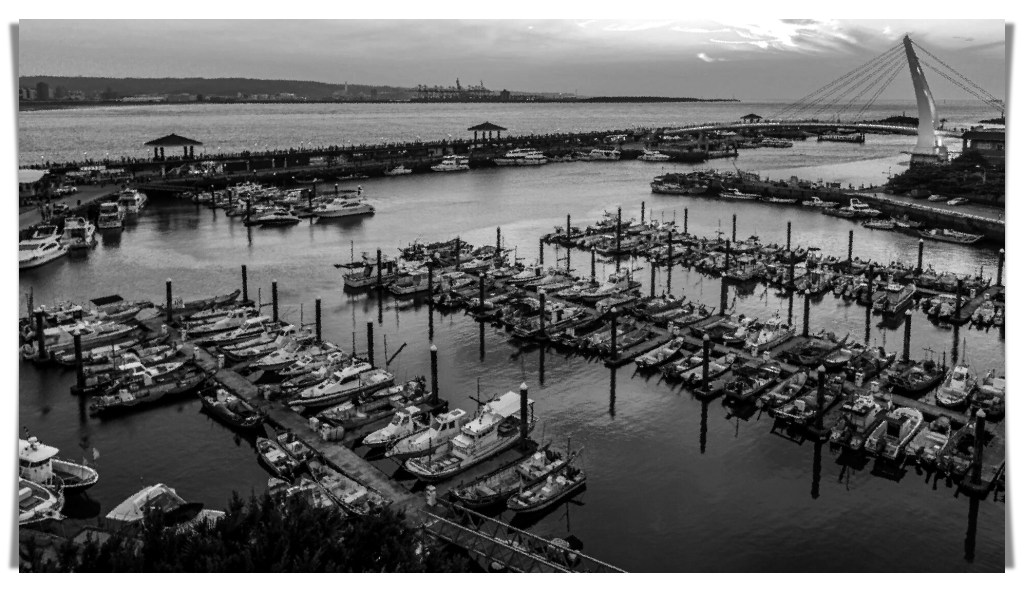
This scene takes place at Tamsui Fisherman’s Wharf, on a cold spring Sunday.

I chose to strip this piece (and the whole novella) of unnecessary description, leaving only the essentials—just enough for the reader to fill in the rest.

English is my third language. I used to think I needed big words or beautiful sentences to be taken seriously. But I don’t believe that anymore. This quote by Haruki Murakami reminds me why I write the way I do:

“Writing in a foreign language, with all the limitations that it entailed, removed this obstacle. It also led me to the realisation that I could express my thoughts and feelings with a limited set of words and grammatical structures, as long as I combined them effectively and linked them together in a skilful manner. Ultimately, I learned that there was no need for a lot of difficult words – I didn’t have to try to impress people with beautiful turns of phrase.”

I hope this piece lingers with you in its simplicity. If anything I write resonates with you, feel free to subscribe for updates on the novella and future posts.


Image source

It was a Sunday when he texted.

“Do you want to go somewhere you’ve never been?”

I stared at the message for a while. It was after three in the afternoon. The sky was cloudy, and it was quiet and dreary outside. I had just finished folding laundry, still in my shorts and tank top.

“Okay. But where?”

He picked me up at four. The car was warm, and the radio was set to low. We didn’t say anything on the journey to Tamsui. The windows blurred a little from the cold, and he touched the heater with the back of his knuckle. I remember watching the skyline thin out as the river widened.

It was a chilly spring day; it was slightly sunny, but the light appeared warmer than it actually was. I pulled the jacket around me as we strolled along the wharf. Couples were everywhere, holding hands and snapping photos, while children laughed with sticky hands.

When the cool breeze began to blow, he stayed close.

We went past the food kiosks, which offered grilled squid, fried sweet potatoes, and sugar-coated strawberries on skewers. He stopped at a freezer cart and bought us two soft-serve cones: one matcha and one black sesame.

I gave him a look. “Ice cream?”

He smirked. “Trust me.”

We sat on a bench facing the docks, eating silently. The ice cream quickly melted and dripped onto his wrist. He licked it clean without a word. I giggled. He looked at me and smiled.

As twilight drew near, we strolled toward the bridge.

The Lover’s Bridge arched across the river, its pale structure gleaming in the late afternoon sun. Tourists passed us, cameras in hand, but we strolled slowly, side by side, as if we had all the time in the world.

We stopped midway.

From there, the view widened. The water below shimmered with long strokes of orange and pink. The sun fell lower beneath the horizon. Boats bobbed softly in the harbor.

I stood silently beside him. The breeze brushed a loose strand of hair across my cheek.

We did not talk because there was no need for words.

I could feel him beside me, and that was enough.

We neither touch nor lean in.

But somehow, in that hush of twilight, we felt closer than we had before.

When we eventually turned to go, he said nothing. Neither did I.

But I believe we both realized something had changed.

Even if we weren’t quite ready to admit it.

Copyright © Olivia JD 2025
All Rights Reserved.

Fragments of Obsession III

Obsession is not just in longing; it’s also loving him in fragments. Here’s a series of short fragmented thoughts about him—scattered images, sensations, memories, desires. They are pieces of my obsession.

Part one – Fragments of Obsession | Part two – Fragments of Obsession 2

Image source

  • His hair gently brushing his forehead, blown by the fan as he sleeps on our bed.
  • Him standing on the kitchen sink washing the dishes after dinner. The slope of his bare shoulders, the muscles on his back, the scratches I made, naked except for his dark boxers.
  • The way he hums as he unloads the laundry.
  • He sits on the couch, shirtless, scrolling through the reels, smirking, chuckling depending on what he watches.
  • His prolonged silence after I uttered some cutting remarks.
  • The way my eyes drift lower, tracing the shift of fabric, wondering what lies beneath.
  • As he passes me on the way to the bathroom, I reach out, my fingers grazing over him in a teasing touch.
  • The curve of his shoulder in the half-light when we took a nap in the afternoon.
  • The way he stares at me, intense and serious, before he smiles.
  • The way his voice cracks when he’s tired, rough and tender at the edges.
  • The smell of earth and salt on his skin after rain.
  • As he shifts in his sleep, the fabric rides up, revealing just enough to make my breath catch.
  • The smell of his skin after a shower.
  • His hands, always his hands, calloused and tender, mapping my body in the late afternoon while the curtain gently blew by the breeze.
  • His gentle snores, and sometimes he snorted while sleeping. Depending on how tired I am, it either amuses me or annoys me.
  • The way he looks at me when he thinks I am not watching.
  • I gently kiss his scars on his arms and chest.
  • The taste of his lips.
  • The heat of his body against mine. The weight of his arm across my waist while spooning.
  • The sound of his key in the door. I could hear it jangle as he exited the lift.
  • The shadow of his stubble in the morning.
  • The sound of his footsteps faded down the hall.
  • The way he holds my legs and rests them on his shoulders, his breath mingling with mine as we dissolve into one another.
  • The way his mouth finds me, his tongue teasing, drawing a gasp from my lips.
  • The way he looks at the ocean and squeezes my hand gently.
  • The way his eyes turn dark after a desperate “I love you” right before he shatters.
  • The way he says “look at me” right before I unravel.
  • The way he moves through a room.
  • His pain and grief over the people he couldn’t save.
  • The emptiness he leaves behind, a hollow I carry with me, a shape I can’t stop trying to fill.

Copyright © Olivia JD 2025

All Rights Reserved.

Fragments of Obsession II

Obsession doesn’t always announce itself. Sometimes, it exists in the way his fingers grasp my arm and let go too slowly, or in the way I watch him without speaking. It’s in the moments I don’t say aloud. The glances stolen across a dinner table, or the scent of his cologne in a silent car ride home. I don’t need to explain this love. I only need to describe it—as it exists in my memory, in my body, in every small, quiet way it consumes me.

Part one – Fragments of Obsession

Image source

I didn’t like the things he said to me, so I retorted. He stared at me, raised his cup to his lips, and kept eating. We continued to eat amidst the clinks of cutlery and conversations around us. We finished our food, got up from our chairs, paid for it, and left. The air was balmy as we walked to the car. Nothing moved, not even a leaf. He switched the ignition; I reached for the AC, and seconds later, the radio. The DJ chattered on about a celebrity’s antics that I had no interest in, but I listened intently. When the ad came on, I kept listening. It was a promotion for a new fragrance. I thought about my almost empty perfume bottle at home. I glanced his way, taking a quick look at his jaw, hair, nose, lips, and eyes. Especially his eyes. He navigated the traffic cautiously, signaled before switching lanes, and braked when he needed to stop. The DJ continued to talk, the AC continued to hum—diffusing the heat between us.


It was late evening. The sky was deep navy, and the moon peeked gently over the clouds. I didn’t expect to see the stars, but a few dotted the sky. We had been sitting on the park bench right after leaving the cafe. We were in no rush to go home, though it was getting late. He wanted to walk me home, and I said okay. Trees lined the street. Their branches swaying softly in the breeze. Suddenly I misstepped slightly on the uneven sidewalk and stumbled. His hand darted out to steady me. His fingers wrapped around my arm, and he asked if I was okay. His grasp was firm, and after ensuring I was alright, his grip loosened but lingered slightly longer than necessary. I didn’t say anything but continued to walk, secretly hoping I would stumble again.


I love him so intensely that it aches. My heart clenches at the mere thought of him—and I think of him constantly. Never in my life have I experienced such overwhelming love for someone. Never did I believe such a love was possible. I don’t even know how to put my feelings for him into words, but I’m trying. Maybe not by proclaiming to the world how much he means to me or delving into philosophical debates about the nature of our love. My own thoughts feel jumbled and incoherent, so why bother explaining them to anyone else? Instead, why not simply describe the love itself? Describe the actions, the moments, and the way it unfolds in my memory?

He rarely talks about his work. I know he analyzes criminal behavior and patterns, making critical decisions based on his findings. I know he works long hours and is often gone for days at a time. He spares me the details, and I never ask. Not because I don’t care, but because I don’t want to be the one to remind him of the darkness he faces. Still, I can’t help but imagine it.

On the days he is with me, I see his eyes—the shadows lurking in their depths that he tries to hide. Sometimes, he stares into the distance, to a place I will never reach. I hear his quiet sighs. And at night, when we sleep, I feel his muscles tense as he thrashes in his dreams. On nights like these, I gently grasp his wrist and call his name, coaxing him back to me. His forehead and brows are damp with sweat, soaking his pillow. He wakes, startled, before his eyes focus and relief washes over him. On nights like these, I hold him in my arms, rocking him like a frightened child. He clings to me without a word, and we stay like that until we fall asleep. On nights like these, I pray—shamelessly, desperately—for God to pull him from the abyss, from demons I can neither see nor fight.

Copyright © Olivia JD 2025

All Rights Reserved.

Fragmented Story | First Date

This piece captures the meaningful moments of a young narrator, an 18-year-old girl, as she deals with the unexpected shift in her reality. The clipped sentences show her youthful hesitancy. There is no over-explanation, only feeling—raw and unfiltered—told in a voice still learning how to express the depth of its own desire.

Image source

At first he was just another presence in the background, like a page in a book that I kept flipping back to without knowing why. He was handsome, though I had never given it much thought. Until one day the words slipped out before I could stop them.

I hadn’t expected it to become anything more. But my friend decided otherwise. She took my offhand comment and made sure it reached him.

Days passed before I learned what she had done. It was a casual mention, out of my silent observation, but now it had become something larger. But much to my relief, nothing came of it. No reaction. No acknowledgment. Life moved on, and that one blunder faded into the stream of ordinary days.

Then one afternoon, everything completely changed.

The bus ride home was a blur of exhaustion. The lull of the engine hummed in the background. My thoughts drifted aimlessly as the scenery flickered past the window. And then, he was there.

The bus was pretty empty, with plenty of free seats, but he walked up to where I was sitting and took the seat next to mine. For a second I froze, my breath catching in my throat. The entire world had shifted on its axis.

I risked a glance in his direction. He had a black jacket on top of a navy blue t-shirt, dark trousers, and brown shoes. His short, straight black hair framed his face. His hands were tucked into his pockets.

The silence stretched between us, saved for the sounds of late afternoon traffic and the occasional ring of the bell.

And then, a simple invitation.

I wasn’t prepared for it or expecting it, but the answer left my lips before doubt could take hold. And with that, the path was set. The bus rattled forward as if nothing had changed. But everything had.

When we arrived at our stop, he met my gaze. Then he turned towards the street. Without hesitation, I followed.

We walked side by side in silence. The long shadows of the streetlights lay on the pavement, and the faint chatter of office workers rushing home floated in the air. Once we reached the door, he stepped ahead and held it open for me. His hands rested lightly against the frame.

I stepped inside. The warmth of the cafe wrapped around us. For a moment, I wasn’t able to even look at him. A flurry of emotions brewed in my chest; my heart pounded. But when I finally looked up, there he was, a slight smile on his lips.

And in that moment, I felt it. A soft, trembling hope for something I didn’t know if I was ready for, but I couldn’t help wanting it anyway.

Related story: First Sight

Copyright © Olivia JD 2025

All Rights Reserved.