When Entertainment Crosses the Line | On Exploiting Women’s Pain for Ratings

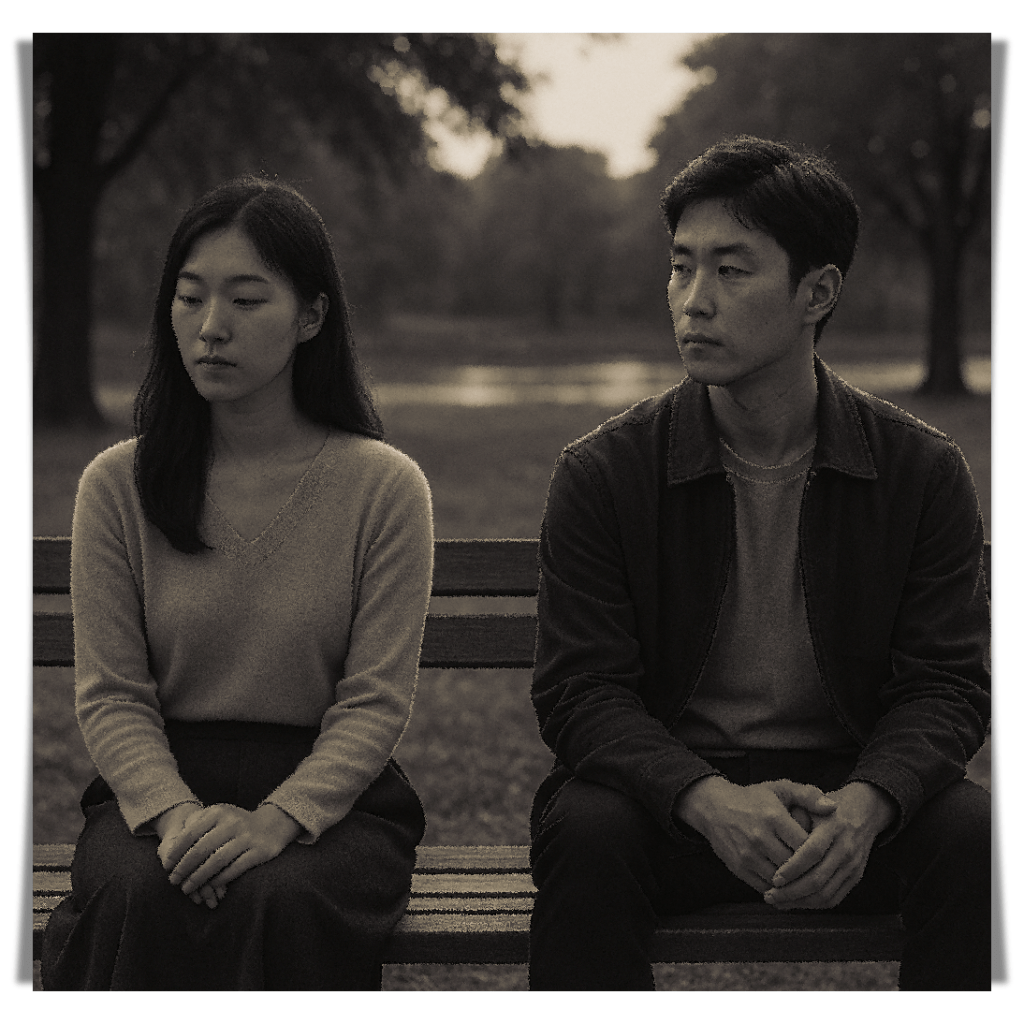
Something very disturbing happened on Malaysian live TV last night. During Anugerah Melodi, Bella Astillah was made to present an award to the woman her ex-husband had cheated on her with. It was like watching a slow-motion car crash; you want to look away, but you can’t because you can’t believe that something so cruel could be planned, aired, and packaged as entertainment.

And what’s worse? Some people had the nerve to call Bella unprofessional for walking away. Let me be clear: Bella didn’t overreact. She didn’t make a fuss and was able to hold back. And the fact that she had to hold back at all, in a situation that no woman should ever have to be in, is the real tragedy. What happened wasn’t entertainment. It was a public humiliation well-dressed with glitter and applause.

It’s absolutely shameful for a system to think it’s okay to put a woman in the same spotlight as the person who hurt her family, just for shock value. And then to show it live, knowing all the history and emotional turmoil that went into it? It’s bad taste with a total lack of respect for human dignity.

I usually don’t pay much attention to the entertainment industry, whether it’s local or international. I’ve never really been interested in it, and most news about celebrities goes right by me. But this incident made me livid. Because this wasn’t a drama for Slot Akasia (TV segment for local drama) but real pain being paraded as a spectacle. And as someone who has been through a lot of trauma myself, I couldn’t help but feel triggered by how easily that pain was exploited and dismissed.

This is where we need to have a larger conversation about the ethics of our entertainment industry. And it doesn’t stop there. What we show on TV isn’t a random thing. Our kids are watching. They’re learning how to treat people by watching how we treat them, especially how we treat people who are hurting. And in a country where bullying in schools is becoming all too common, moments like these send a dangerous message: that it’s okay to make fun of someone’s misfortune and to humiliate them in public for fun. We are showing our kids that it is okay to mock someone’s pain instead of showing compassion.

This was bullying, plain and simple, with stage lights and applause. And if we’re not careful, we’re teaching the next generation that being mean is acceptable and even rewarded. How did we end up here? When did we start treating other people’s pain as a show? Bella’s case is not one of a kind. We’ve seen this happen over and over again: trauma being used to get ratings, tears being turned into headlines, and women being told they have to keep it all together for the show.

Some might say that’s how show business works. But no, it isn’t. That’s exploitation and there’s nothing glamorous or entertaining about it.

We should talk about how the media often takes advantage of women’s shame. The pattern is disturbingly consistent, whether it’s reality TV setting women up to be shamed, talk shows baiting vulnerable guests for views, or award ceremonies like this one forcing a confrontation that never needed to happen. The main idea is that your pain is only worth as much as the clicks or views it gets.

The aftermath makes it worse. Many people who watched Bella instead of standing by her side mocked her, questioned her professionalism, and invalidated her trauma. Because it seems that when a woman doesn’t smile and appear “redha” through her sorrow, she becomes the problem.

But let’s turn the tables for a second. Think about how it would feel for a man to have to give an award to the man his wife cheated on him with. Would people think he was being dramatic? Or would we be outraged on his behalf?

People expect women to always be gracious and smile politely. Women are always expected to rise above and endure. But when they don’t, the reaction is quick. However, endurance is not the same as healing. And being polite when someone betrays you isn’t professionalism but emotional suppression that comes at a cost. 

Mental health is not a joke. Emotional abuse leaves real scars on people. And being triggered on live TV is not something to be mocked or dissected for gossip. People should be kind and show empathy. But last night, there was no empathy to be found. Instead, we saw a media industry that cares more about viral moments than about people’s lives.

So let’s call this out for what it is: unethical, tone-deaf, and deeply irresponsible.

TV3 Malaysia, you had many opportunities to do better. You knew the history and what was at stake. And you still chose to be sensational over being sensitive. You didn’t read the room and let Bella down. And by doing that, you failed every woman who has ever been told to suck it up, “redha,” and move on.

If you defended the setup or laughed it off, I ask you to think more deeply. Would you have been as calm as she was if you were in her shoes? If the pain were yours, would you call it “just an award presentation”?

We need to stop making trauma into entertainment. And we really need to stop expecting women to be composed when they are badly betrayed. We need to make a clear distinction between storytelling and exploitation to increase ratings and views.

Bella, you didn’t do anything wrong. Your emotions were valid and it took a lot of courage to say her name out loud and present her that award. Many of us saw you as a person who deserved respect and dignity and not a humiliating headline.

To the rest of us: let this be a reminder that empathy should never be optional, especially when the cameras are rolling.


Olivia Atelier offers printables, templates, and art designed to inspire reflection, healing, and creativity. Visit Olivia’s Atelier for more.
Marriage Refines You (If You Let It)

Nobody warned me that marriage would teach me the lessons I never anticipated.

They said it would take work. They said communication was key. They said love changes. All of this is true. But no one told me that marriage is fundamentally a slow-burning crucible of personal transformation. Of course there are romance and domestic joy, but those aren’t the main things. Marriage refines you. But only if you allow it.

If I had written this post twenty years ago, things would have been different. I would have told you about the joys of growing older together, about shared jokes and parenting accomplishments, and the comfort of being wanted and desired. I might have glossed over the friction. Or made it poetic, full of excuses.

But now, I want to tell the truth: Marriage teaches you who you truly are, often through pain.

This isn’t the kind of pain that stays with you forever, at least not in a good marriage anyway. But this pain would show you how weak, selfish, and proud you are. It’d expose the parts of you that you didn’t realize needed healing until you kept bumping up against another human being who sees you completely, and sometimes unflatteringly.

In the early years, I believed that in order to be respected, I had to be right. I used to believe that a good wife was someone who was nice and made quiet sacrifices. I thought conflict meant something was wrong.

Then came the truth: Conflict is the classroom. Friction is the fire. Silence is not always peace, and compliance is not intimacy. I learned this slowly and painfully, through nights of misunderstanding, long periods of emotional detachment, and the grief of feeling invisible.

Marriage has pushed me to confront my shadow selves: the part of me that resents when he doesn’t read my mind, the part that wants to be acknowledged for invisible labor, and the part that withdraws rather than communicates when I’m upset.

He has his parts too. When both of us are weary, stressed, or simply being human, those parts collide like stones.

But here’s what I’ve learned: Stones sharpen one another.

We grow as a result of the friction, not in spite of it. This relationship has gradually dispelled some of my misconceptions. I’ve become less concerned with appearing good and more interested in becoming whole. I’ve learned how to stay present during an argument without dissociating. I’ve learned to say, “I need this,” without shame. I’ve learned to apologize and own up to my mistakes because I value the connection more than the ego battle.

Marriage has taught me about perseverance. This perseverance is not the kind where you smile and bear it, but the kind where you continue to show up to face the difficult conversations, the painful realities, and the pain of building your character.

It has taught me that love is not the absence of conflict, but the willingness to hold space for each other’s growth.

This isn’t a post about martyrdom. This isn’t about perpetuating toxic behaviors or glorifying suffering. This is about the refinement that happens in long-term relationships, when two people choose to keep coming back to the table, even when it is a mess. Especially when things are messy.

Some days, love looks like scrubbing the kitchen while the other sits quietly. Some days, it looks like asking, “Can we talk?” even when the previous talk didn’t end well. Some days, it means choosing forgiveness over keeping score. Other times, it involves setting a boundary that says, “I will not carry this alone anymore.”

Marriage as a teacher is subtle, persistent, and deeply transformative. Refinement doesn’t happen all at once. It’s gradual, and at times it feels like failure. But what I do know is that I am not the same person I was when I agreed to this life together. And I’m thankful.

Marriage, in its own imperfect, beautiful and annoying way, is a never-ending teacher. And I’m slowly turning into someone I can be proud of, not because I’ve mastered love, but because I’ve let love master me.


This Is Not a Love Poem (But It Is)

This is not a love poem.
It doesn’t lace silk into longing
or wraps itself around your wrist
like a bracelet of breathless metaphors.

It’s the crack under the door
when we don’t speak for hours.
The grease-stained dinner plate
left by your elbow
and the silence I sit with,
like a burning candle.

This is not a sonnet.
This is the sound
of your sigh in the middle of my sentence.
The way you leave the room,
still loving me.

I wanted something softer, once,
but this? This is love
that turns me over like soil.
That presses its palms into my spine
and says: grow here.

I have.

And it hurts.
And it heals.
And it is you.

© 2025 Olivia JD


Olivia’s Atelier offers printables, templates, and art designed to inspire reflection, healing, and creativity. Visit Olivia’s Atelier, Redbubble, and Teepublic for more.

What His Silence Taught Me About Intimacy

It wasn’t an awkward silence. Nor the silence of distance or dismissal. His silence was something else entirely. It had gravity. Shape. It wrapped around me like twilight settling over the city. And in that silence, I discovered something I never fully understood before: intimacy does not necessarily manifest itself through words or touch.

In those early days, I remember him across the café table. We spoke, certainly. But it was in fragments. There were lengthy intervals where nothing needed to be said, yet I never felt compelled to fill the silence. He never pushed. Never filled silences just to hear himself speak. And maybe that’s why I found myself letting my guard down, little by little, without even meaning to.

There was something sacred in how he listened. He didn’t listen to respond. He listened like he was trying to memorize me. When he finally did speak, it wasn’t to impress or correct me but to reflect something I hadn’t realized I was trying to express. His silence wasn’t an absence. It was presence without intrusion.

One evening, we stood side by side on Lover’s Bridge. The river shimmered beneath us, and the sky was painted in pink and gold. We didn’t touch. We didn’t speak. But something passed between us, though, that couldn’t be seen or touched. Somehow right then and there, our bodies found a rhythm beside each other, like the choreography of trust.

What surprised me the most was how seen I felt in his silence. He didn’t demand performance. He didn’t ask for confessions. And yet, standing next to him, I felt understood. It felt as though he was able to hear everything I didn’t say yet still chose to stay.

That kind of intimacy is unusual. It asks nothing but provides everything. It is not based on lofty declarations but on humble agreements. Like how he read my poems and didn’t say anything after but looked at me with nonjudgmental eyes. Just understanding.

In a culture obsessed with noise and proof, he reminded me that some truths are whispered. Some of the most personal experiences we may have are felt rather than expressed. Some bonds are born not in words, but in willingness. To stay. To witness.

So no, his silence never made me anxious. It made me feel safe. It taught me that intimacy isn’t always loud or clear. Sometimes it’s a quiet agreement between two people who stop pretending they have to explain everything to be understood.


✨ Visit Olivia’s Atelier for printables, reel templates, and planners made to support overwhelmed moms with gentle, soulful tools.
🕊️ Enjoy 50% off everything until June 30.

Evolution, Sex, Survival | The Truth About How We Got Here

The idea to write this post came out of my curiosity. From that curiosity, I dug deeper and found myself lost in a maze of intricate details. My curiosity was simple—how did we, the human race, end up here as we are?

Image source

The answer is simple. We all exist because millions of people in the past had sex. Long before the existence of houses, rooms, wedding vows, and religions, hominins had sex in caves, open fields, and everywhere under the open skies. They had sex, but not modestly. Some did it tenderly or urgently. Some did it in a group and in the presence of their children. There were no rooms, no privacy, and no moral police. Back then it was just skin against skin and purely instinctual. We all survived to this day because of it. 

Our prehistoric ancestors didn’t just reproduce. They experienced pleasure too. They touched and explored like we do. Women experienced orgasms because pleasure wasn’t invented in the modern age. Pleasure is primordial. It’s embedded in our DNA just like fear and hunger. The clitoris, for instance, is designed solely for pleasure. Imagine that—a part of the female anatomy with over 8,000 nerve endings (twice that of the penis) exists only for pleasure. It is proof that nature didn’t just want us to breed and multiply. It wanted us to feel and enjoy intimacy too. 

Cavewomen may have lived hard, brutal lives, but they enjoyed pleasure just like we do. I like to imagine a cavewoman with her lover between her legs. And maybe others watched and joined them too. It wasn’t a perversion the way we interpret it now. It was simply being human.

I wonder if they had rituals and regarded sex as a celebration.

Shame, after all, is a recent invention. Shame associated with sex probably didn’t exist then. Cave people indulged themselves as and when they wanted. They bred, fought one another, and fought wild beasts to survive. The law of natural selection was at its peak during this period. Over time, with sperm competition in promiscuous mating systems, their genitals evolved. Natural selection favored a penis tip that could:

  • Displace rival semen using its flared ridge during thrusting
  • Create suction during withdrawal to pull competing fluid away from the cervix
  • Deliver deep, firm contact at the most fertile zone during ejaculation
  • Enhance female pleasure, because a woman who enjoys sex is more likely to return to the same partner

Amazing, isn’t it? The couple who made love the most wasn’t simply indulging. They were participating in the law of natural selection. They were selecting, refining, and perfecting the best genes to pass on to their future generations—us.

But these intense competitions existed long before religion taught us to shrink ourselves. Before religion, humans expanded in wild abandon and touched one another without apology. And somehow, in my opinion, the rawness of it feels more evolved than the shame-laced silences we carry today. 

I’m writing this out of curiosity and also because I want to remember. I want to remember that pleasure is part of our design. We exist today not just because our ancestors fought and survived but because they felt pleasure and indulged in intimacy. 

And somewhere, deep in our bones, I think we still remember what it felt like to be touched under the open skies, with no shame and no walls. 

Maybe it’s time we listened.


A 2021 BBC article titled ‘Here’s What Sex with Neanderthals Was Like’ explores how interbreeding between Homo sapiens and Neanderthals was not only real but frequent enough that most of us today carry traces of Neanderthal DNA. The piece confirms that sex among early human species was driven by instinct, opportunity, and survival—often without the moral or religious constructs that now dominate our understanding of intimacy. It even suggests that some encounters may have been tender or neutral, while others may not have been consensual by today’s standards. But the point remains: pleasure, reproduction, and adaptation were intricately linked. And some Neanderthal genes—particularly those associated with fertility—were naturally selected against, showing how deeply evolutionary biology shaped not only who we became, but how we love, bond, and survive.

Note: If you believe open discussion of sex is taboo, feel free to skip this post. Everything here is grounded in biology and human history—not smut or erotica. Just facts, perspective, and a little reverence for the bodies that brought us here.

Becoming Me | A Journey Through Love, Heritage, and Doubt

Daily writing prompt
What experiences in life helped you grow the most?

It’s funny how the experiences that change us the most often slip by quietly. There is little fanfare, and we rarely recognize them until much later. However, in retrospect, I can trace my growth to the struggles and the soft, persistent ways life nudged me forward.

I believe it started with loneliness. Growing up, I often felt invisible and alone. I wasn’t the most outgoing, pretty, or popular. I was just…there, among other outstanding siblings and peers. It’s strange, but loneliness formed the foundation of who I am now. It taught me to listen to both myself and others. It taught me to be more observant and sensitive to details that most people overlook, which I now use in my art and writing.

Then later came love. It was messy, imperfect, but glorious nonetheless. My relationship with my husband—my lover—has been one of my biggest teachers. We’re opposites in so many ways, and those differences have forced me to stretch, to compromise, and to forgive. Being married this long (two decades), going through joys, heartbreaks, financial strains, and raising kids has all been a daily practice of choosing love, even when it’s hard. Especially when it’s hard.

However, I believe that reconnecting with my Iban roots has been the most transforming experience for me. For a long time, I felt detached from my cultural identity, as if I were witnessing it from afar. It was not intentional. Life was tugging me in different directions. But being a mother changed that. I realized how much I wanted my children to know where they came from. I want them to learn and feel that deep connection I had almost let go of. Teaching them about my Iban heritage has been like teaching myself again by rediscovering the stories, the poetry, and the parts of me I had tucked away.

I am currently working on a collection of poems that explores my Iban roots and traditions, weaving together memories, folklore, and the cultural theme that continues to shape who I am today.

And then there’s the lifetime of inner journey: the insecurities, the doubts, and the fear of not being good enough. Those have been some of my hardest teachers. I’ve struggled with impostor syndrome more times than I can remember, particularly when it comes to my art and writing. Moments such as being harshly criticized for lack of originality, feeling misunderstood, or being dismissed had a deep effect on me. But these experiences also pushed me to create a space where I feel free without fear of judgment, like starting this blog.

All of these experiences—loneliness, love, the return to my Iban roots, and issues with self-doubt—have influenced me the most. These experiences didn’t come with shiny lessons, but they taught me to be more compassionate, patient, and a little kinder to myself.

I’m still growing and figuring things out. But if there’s one thing I’ve learned, it’s that growth doesn’t always happen in the big, loud moments. Sometimes it is in the moments you least expect, gently nudging you forward, one tentative step at a time.

What Bores Olivia? (From Her Lover’s Perspective)

Daily writing prompt
What bores you?

What bores me? Instead of answering the question like others did, I sent it to my lover to check how well he knew me. He said he’d send the responses via email since, in his words, “you’re a lot to handle.” 😂. Here are his answers, edited for clarity.

Perfection

What is the first thing that comes to mind? People who appear to have everything together: always happy, always in control, and never a hair out of place. You can’t bear it. It bores you because it feels so fake. You seek authenticity, those raw, unpolished moments that reveal who someone truly is. You’re not really interested in perfection. You are drawn to the faults and weaknesses that make someone real.

Small Talks

If someone wants to quickly lose your attention, they can engage you in small talk or any other surface-level conversation. Talk about the weather for too long, or go on about a reality program without getting into the underlying issues, and you’ll mentally fade out. You desire depth. You like discussions about emotions, dreams, fears, and everything in between.

Playing It Too Safe

It’s not that you despise routine and predictability. You thrive on them. What bores you is when individuals live too conservatively, never taking risks or venturing outside of their comfort zones. When someone lives their life strictly by the book, avoiding adventures and fresh experiences, it feels stagnant to you. You like those who embrace spontaneity, take risks, and are prepared to stray from the usual path.

Lack of Authenticity

This one relates to the perfection part, but it goes deeper. You despise fakery, whether it’s someone claiming to be someone they aren’t or stuff that shouts “look at me!” with no true substance. You require honesty, even if it is messy or uncomfortable.

Indulging in Fluff

Scrolling endlessly through social media, surrounded by polished perfection and trendy fluff? You become bored quickly. You enjoy thoughtful material because it challenges you to think, feel, or even question your own perspectives. Fluff without substance is simply pointless.

Surface-Level Relationships

This is a big one. You’re not wired for shallow connections. You desire depth and honesty in your relationships, and when someone keeps things light and never reveals their actual self, you lose interest. You seek the deep, real connections that result from being open and authentic.

Indecisiveness and Selfishness

Especially in men. This is a huge turnoff for you. You admire those who understand themselves and can make difficult decisions. But indecisiveness combined with selfishness? That combination is more boring than anything else.

Obsession with Outward Success

Nothing turns you off faster than those who solely care about outer appearances such as physical beauty, riches, high-paying jobs, position, and titles. You find it shallow and tiring when someone’s self-worth is primarily based on their accomplishments or appearance. You feel there is far more to a person than what appears on the surface or on paper.

At your core, Olivia, you want depth, honesty, and authenticity in people, conversations, and life itself. You want to experience something genuine, even if it is chaotic, confusing, or imperfect.

So that are his answers. Some may redundant but you know what? He got it right 😍🥰😘💋