

Disclaimer: This post is only for sharing purposes. I’m not an expert, just sharing what I know. The information here is general and may not cover every detail. For Iban readers who know more, feel free to add in the comments. This post is not meant to glorify the practice of headhunting but to share knowledge for better understanding.
As I mentioned in my previous post, headhunting among the Iban was not random violence but part of specific mourning rituals. It was carried out to complete rites after the death of a family member. But after the warriors returned from ngayau (headhunting expedition), what happened to the severed heads? Were they hung immediately? The answer is no. Certain rituals had to be performed before the heads could be brought into the longhouse and later hung in the ruai (communal gallery).
The first thing the bujang berani (warriors) did upon returning was to manjung, which means to shout and announce their arrival. They could not enter the longhouse right away because it was taboo. Specific rituals had to be followed. Practices varied from one Iban community to another, but what I’m sharing here is the way of the Saribas Iban from the Betong Division.
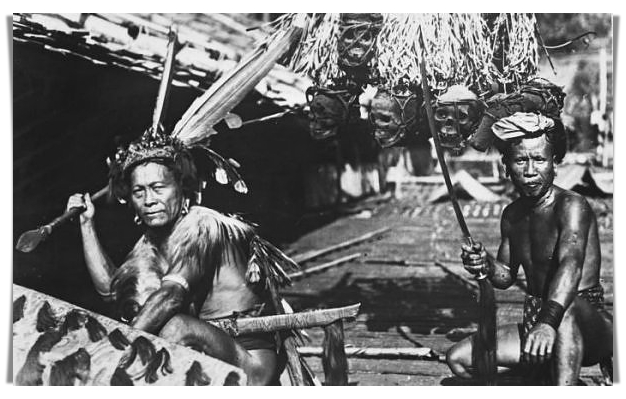
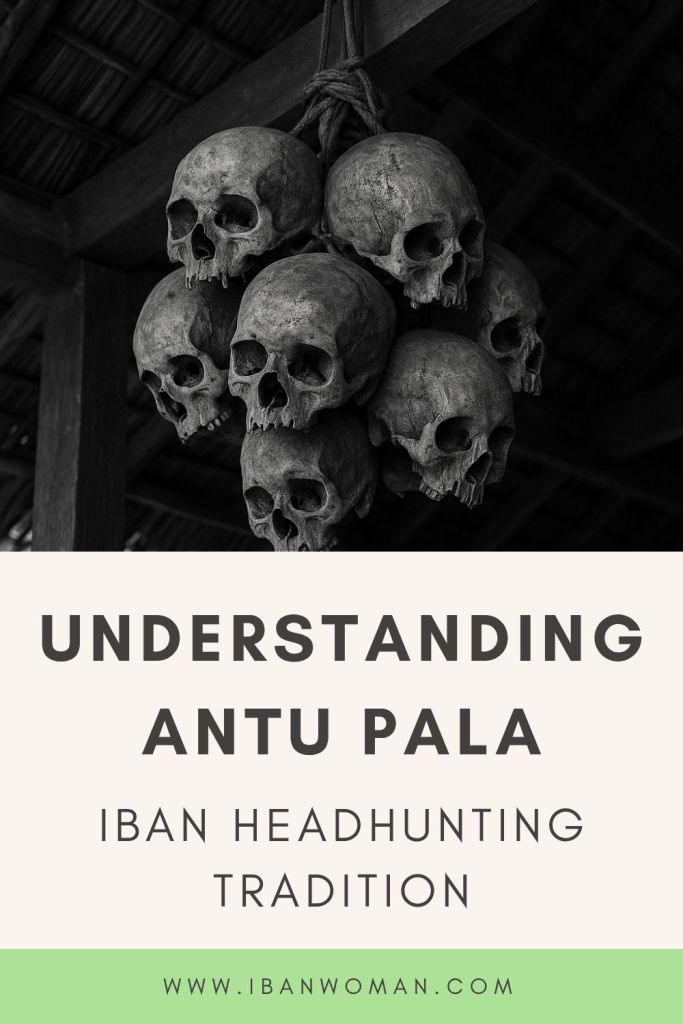
After announcing their arrival, the bujang berani stayed for a week in a small hut called langkau near the longhouse. During this time, they rested, cleansed themselves, and prepared the heads. This included cleaning and removing skin, flesh, and brain matter to prevent decay. The process took place by the river, where the heads were skewered on sticks, washed thoroughly, and boiled to loosen any remaining flesh. Once cleaned to bare skulls, they were smoked over the bedilang (hearth) until black and dry. At this stage, they were known as antu pala.
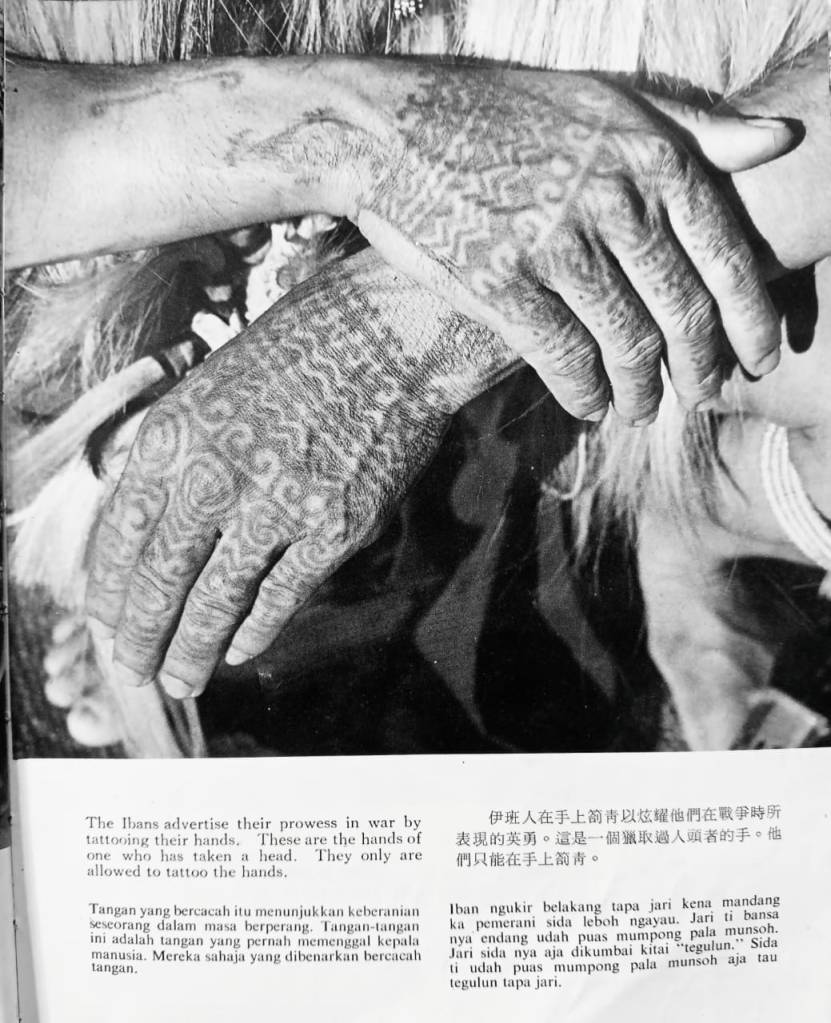
When the skulls were ready, the warriors prepared to re-enter the longhouse in full Iban regalia—baju gagong, ketapu or lanjang (headgear), sirat (loincloth), tumpa (silver armlets), and marik betaring (toothed beads). Only men who had gone on ngayau were permitted to wear the full attire. Those considered kulup (cowards) who had never participated in a headhunting expedition could only wear a sirat.

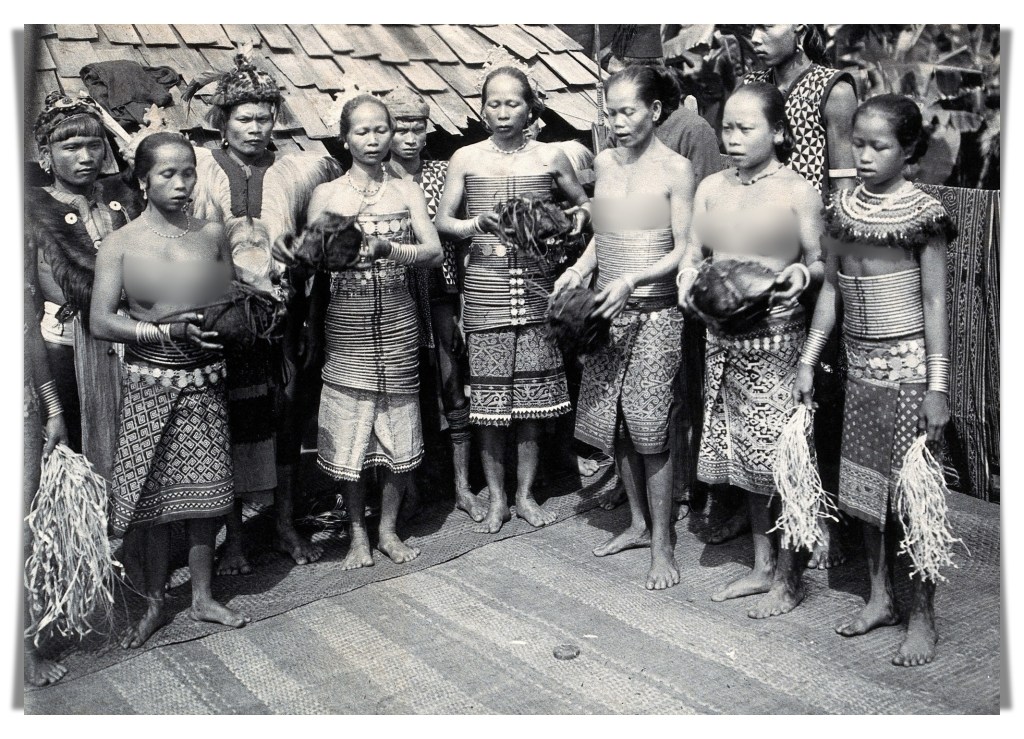
A procession called Mangka Ke Selaing was then held to welcome them home. The warriors were welcomed with panjung (victory shouts) and the beat of the Gendang Pampat. At the doorway, they were received by their mother or wife carrying a chapan (winnowing tray) covered with pua kumbu, a ceremonial textile woven only by the mother or wife of the warrior. The cleaned skulls were placed on the pua kumbu, not fresh or bloody as often imagined. The Iban always followed adat (custom) in their rituals, so there was never any confusion or disorder.
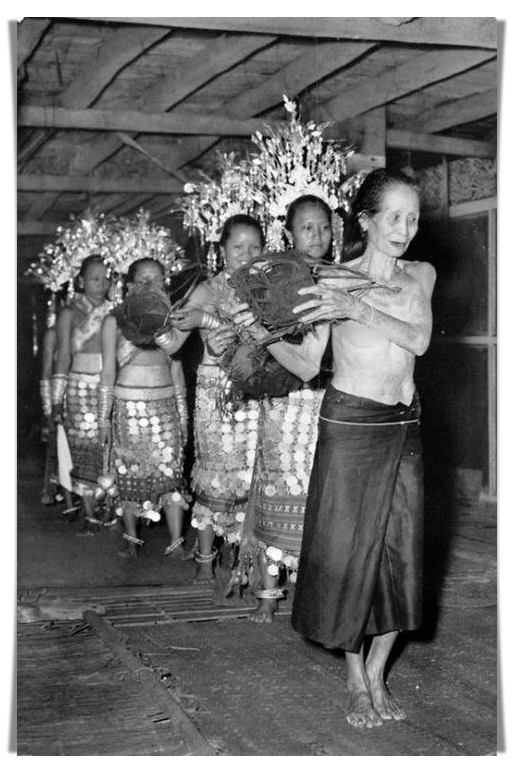
The mother or wife then played a key role in the Naku Antu Pala procession, carrying the tray of skulls along the ruai while nyangkah (chanting). The warriors marched behind the women to the rhythm of the Gendang Rayah. During this moment, they could not be touched or spoken to, as it was believed that the deities Keling and Kumang of Panggau Libau accompanied them. Disturbing them was said to cause one to faint.
The lemambang, or bards, were also present at the procession. They carried a garong, which is a bamboo container full of tuak, or rice wine. Only the bujang berani could drink this wine, and they drank it at the end of the procession. The ritual was over when the mother or wife performing Naku Antu Pala bit the skull, which meant that her spirit had won over the skull’s spirit. The antu pala then became the servant of its owner.
After the ritual, a feast called Gawai Enchaboh Arung was held in honor of Bujang Berani. There was food, ngajat (traditional dance), and happiness all night long. The mourning period came to an end with this feast. The antu pala was believed to nyilih pemati, to replace the soul of the deceased with that of the enemy, allowing the departed to rest peacefully in Sebayan (the afterlife).
Taking care of the antu pala also included different rituals, depending on the purpose. Whenever the skulls were moved or ceremonies were performed, miring or bedara’ was always required. Miring was a ceremony of prayers and offerings to Petara (God), the deities of Panggau Libau, and the ancestral spirits (Petara Aki Ini) for blessings, harmony, and protection from harm.
This was followed by bebiau, a rite using a fowl with accompanying prayers. Before it began, a piring (offering) was prepared, consisting of tobacco, betel nut, betel leaf, gambier, rice, salt, glutinous rice, rice flour, yellow rice, eggs, tuak, and chicken feathers dipped in blood from the sacrificed fowl. Larger ceremonies like Gawai Burong required even more offerings.
After miring, the antu pala had to be “fed.” This act was similar to the Chinese tradition of offering food to ancestors. Rice, water, and sometimes cigarettes were placed as offerings, and in some rituals, a pig was also sacrificed, especially when moving the antu pala to another location.
Not everyone was allowed to touch the antu pala. Only its owner or heirs could handle it. In some regions, this role was reserved for men. If a skull fell, it could not simply be picked up; a miring had to be done first, with a chicken offered before it was lifted and rehung.
These were only the basic practices. There are many more rituals surrounding the antu pala, each layered with meaning and guided by adat. These rituals may seem strange or even unsettling today, but they used to be crucial to the Iban’s understanding of life, death, and the spirit world. They show a community that was deeply guided by adat, a system that balanced courage with respect and ritual with meaning.
If you have stories or knowledge passed down from your elders about antu pala or other old practices, I’d love to hear them in the comments. Every story adds another thread to our shared history.
If you’d like to see a performance of the Naku Antu Pala procession, you can check out this video:
I write about Iban culture, ancestral rituals, creative life, emotional truths, and the quiet transformations of love, motherhood, and identity. If this speaks to you, subscribe and journey with me.


 Olivia's Atelier