I Am the Keeper of Memories

I have always been known for my strong memory. Friends, family, and even casual acquaintances have commented on it over the years on how I can recall details from years, even decades ago, with a clarity that surprises them. It surprises me too because I always assumed everyone could remember past events with the same vividness. But that’s not true. Many of my ex-school friends barely remember incidents from our school life. I remember names too. When I look at past photos, even ones from decades ago, I can point out who is who. No, I don’t spend my time reminiscing or dwelling on the past. The details are just there, fresh in my mind, ready to be plucked whenever needed.

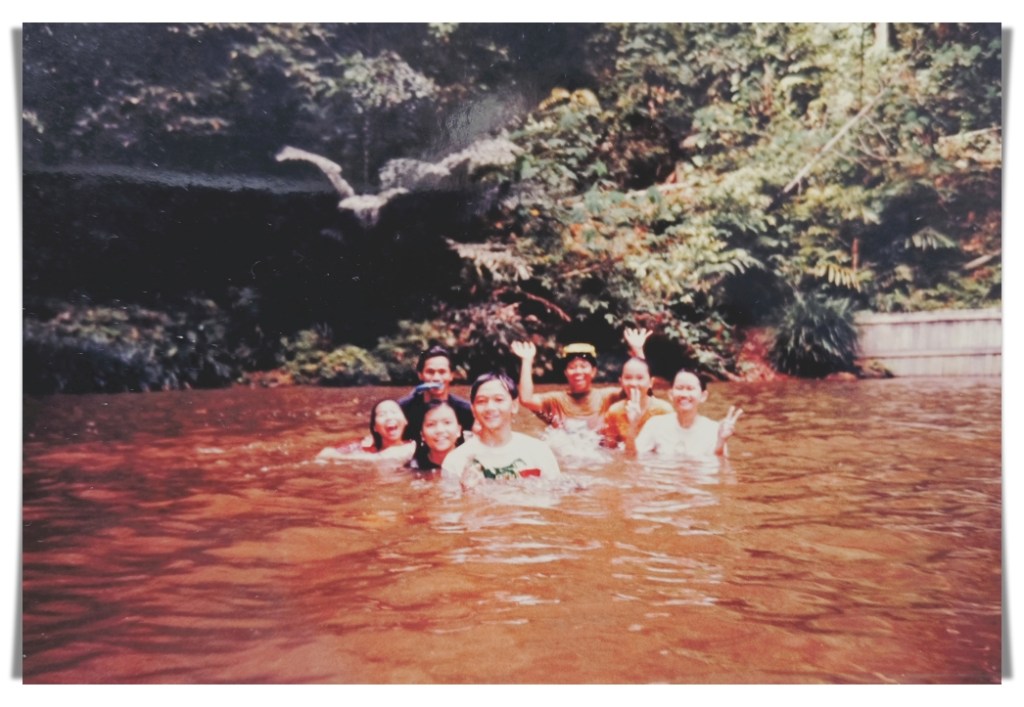
A photo with my school friends from 34 years ago. Many have become successful individuals in the community. One person has gone on to become the State Director of the Malaysia Public Works Department, and another, a pediatrician.

I don’t just remember past events. I remember the emotions and the atmosphere associated with those events. You could say that I’m a sensory person or someone with an eidetic memory because those vivid experiences still live within me. It could be anything—a song playing in the background, the scent of rain on warm pavement, the gentle breeze swaying the leaves, the color of the sky on a particular afternoon, or even the call of a lonesome nightbird that woke me up in the middle of the night when I was four.

Sometimes, it feels like a gift. It allows me to tell stories with depth and remember people and moments with an intimacy that others often lose to time.
Several months ago, my ex-schoolmate invited me into their chat group. I was delighted to reconnect with old friends I hadn’t spoken to in more than three decades. We talked about many past incidents, mostly funny moments from that time in our lives. I told stories as if they had just happened recently. Many friends come to me when they need to piece together an old memory, to recall things they’ve long since forgotten. In many ways, I have become the keeper of our shared histories.

However, it is not always easy to carry so much of the past. You might think nostalgia is a wistful feeling, but to me, it’s a lingering echo of what once was. Memories often return unbidden, resurfacing with the right song, a familiar scent, or a sudden shift in the wind. And sometimes, it feels like I am standing at the threshold of two worlds: one that has already been lived and one that I am trying to step into. Moving forward can be difficult when the past refuses to fade quietly.

I make art and write to make sense of it all. My poetry and art are more than just venues for self-expression—they are my way of processing, seeking closure. I have the habit of revisiting the same themes and emotions again and again until I have finally made peace with them. Only then can I move on, allowing the memory to rest. It is like closing a book. I don’t erase or discard these memories; they will always exist within me. They just no longer hold power over me.

Perhaps, through all of this, I am learning how to honor the past without being held captive by it. My memories shape the person I am, but they do not confine me. And maybe, in sharing these stories—putting words or images to what lingers—I can find a way to move forward without leaving anything behind.
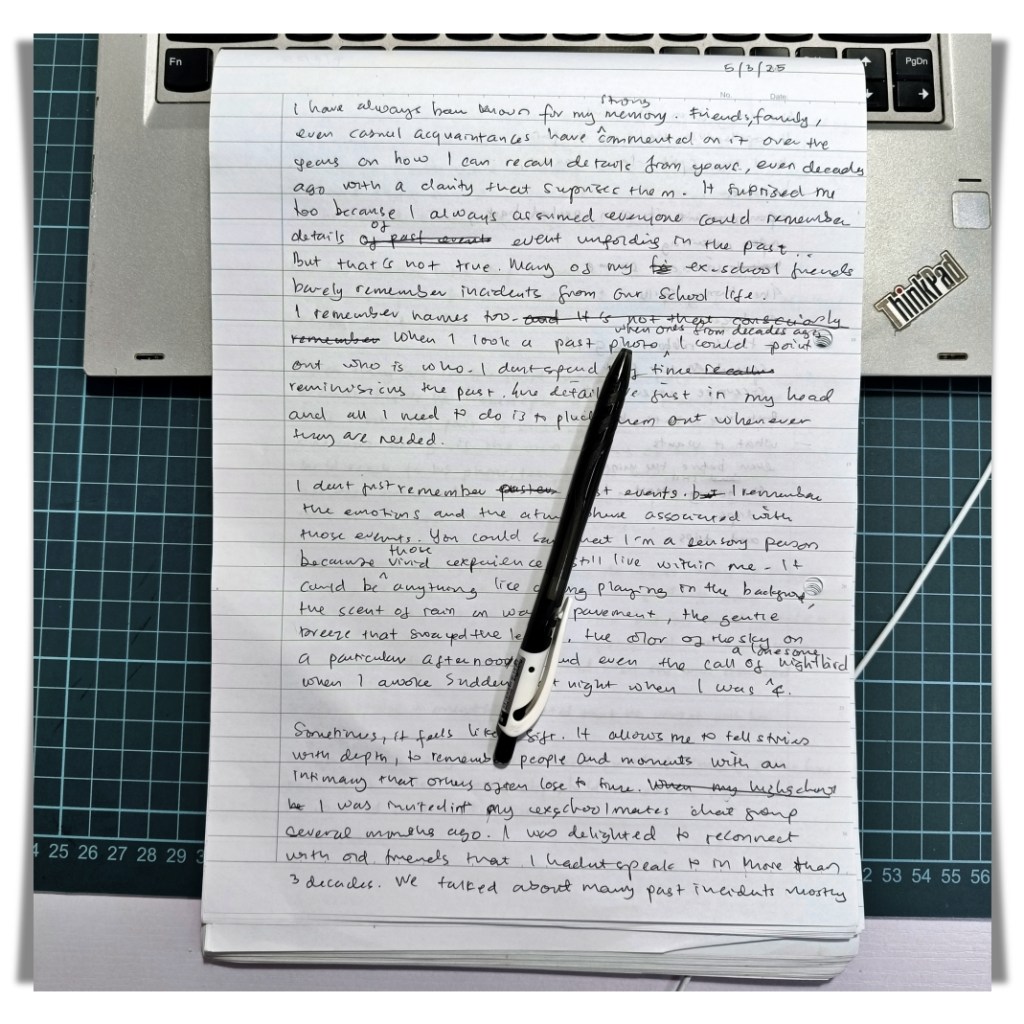
The handwritten draft of this post.
Reflection | Where We Go When We Die—The Physics of Goodbye

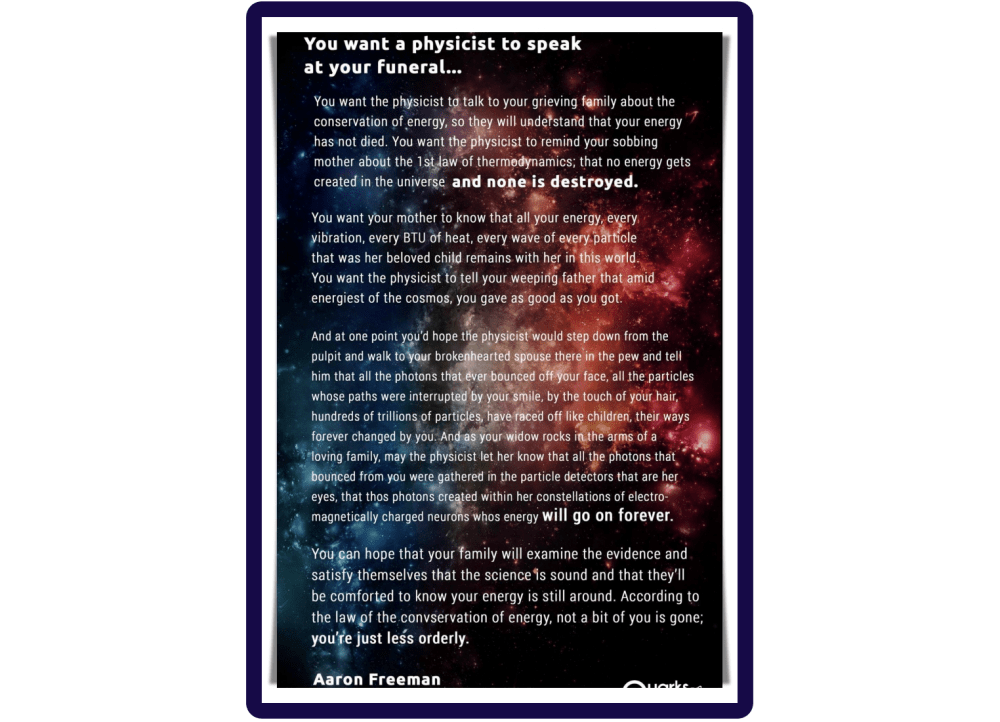
Recently I came across an article in Futurism—The Science of Death: The Best Eulogy, According to a Physicist (Aaron Freeman). Yesterday, I wrote about my friend who passed away recently. I think it’s apt that I continue to write about death because, let’s face it, every living being on the face of this earth will someday face the vast unknown. We don’t talk enough about death, believing that by talking about it, we are somehow inviting it closer. But I’m not someone who shies away from reflecting on things that make most people uncomfortable.

Image source

As I reflect on Aaron Freeman’s words, I realize there is something both cruel and beautiful about loss. The way it strips us bare, leaving us searching for traces of someone who no longer walks this earth. But if the laws of the universe have taught us anything, we have learned that nothing truly disappears. The First Law of Thermodynamics teaches us that energy is never lost, only transformed. And maybe, just maybe, the ones we lost aren’t as far away as we think.

We are made of stardust.

Did you know that most of the elements in our bodies were forged in the hearts of stars, across billions of years and multiple star lifetimes? However, certain elements within us, such as the hydrogen flowing through our veins and the faint traces of lithium within us, could be as ancient as time itself—the remnants of the Big Bang. You and I, quite literally, are fragments of the universe, bound together by forces older than memory.

So when we grieve for an unbearable loss and feel the crushing weight of absence, perhaps we can take comfort in knowing that nothing is ever truly gone.

The ones we miss exist in a different form now. They are scattered across the cosmos, carried in rays of sunshine, drifting in the gentle breeze. The photons that once danced across their skin continue their journey through space. Their laughter still lingers around us, waiting to be felt by those who remember.

If we explain death by physics alone, the conservation of energy means that when we die, our energy disperses into heat, into the environment, and into the people we loved. We become part of those we left behind. We are reborn into new beings. As I think about this, I can’t help but wonder: what about ghosts and spirits? As a Christian, I believe in the existence of the soul, but does that differ from ghosts and spirits? I honestly have no answer.

Could it be that some parts of a person, let’s call it a consciousness or remnants of their memory—remain bound to the world even after the body is gone? Maybe. Some believe that energy, especially from those who have passed with unfinished business or intense emotions, leaves imprints of themselves that replay like a recording in places they once lived or loved.

Or maybe these spirits exist because we keep them alive. I don’t mean in a haunting way, but rather in the way we cling to the memory of love. It’s in the way we still feel them in certain moments and places, as if they never truly left. Maybe we sense their spirits around us because our own energies interact with their memory.

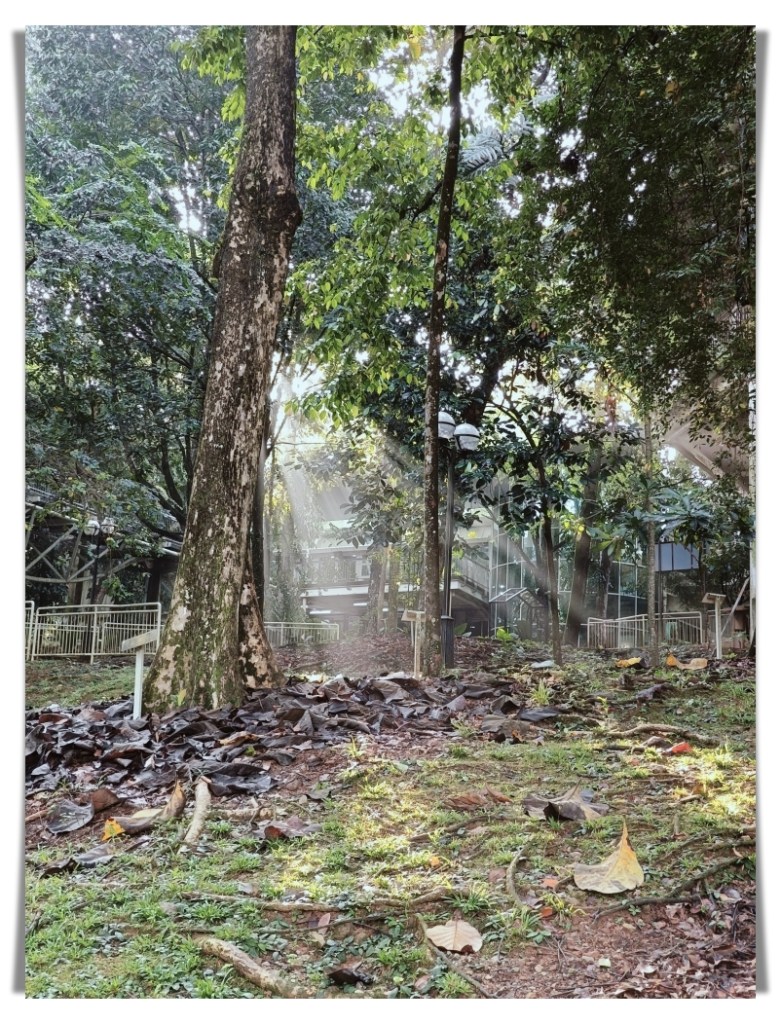
I won’t claim to know the answer. But I will say this, purely my opinion, of course: if spirits exist, if ghosts are real, then maybe they aren’t here to haunt us. Maybe they’re still here simply because they loved too deeply to leave completely. And they are everywhere around us: among the rustling leaves in the trees, in the blooming flowers, waiting, always waiting for us to recognize their presence when we need them most.

I like to think that when my time comes, I will not vanish. I will be among the stars, among the florets of dandelions, the dust on the palms of your hands, and the unseen energy beneath the fabric of existence. I will return to the ultrasound and infrasound, ultraviolet and infrared, beyond human hearing and sight. And if you ever look up at the night sky and feel something familiar in your heart, maybe that will be me. Not gone. Just less orderly.