Why Malaysians Can’t Debate and What Literature Has to Do with It

I have been thinking about this sentence for days: Literature is vital to the development of civilization. It sounds lofty and almost too academic, but the truth of it becomes painfully clear when you look at what’s going on around us right now. In Malaysia, social media has become a chaotic place where people shout at each other, often without understanding what they are shouting about. The topics change every week, from the Israel-Palestine conflict to alcohol to race to religion, but the pattern stays the same. The loudest voices get the most attention, and the most aggressive ones dominate the space. It doesn’t feel like engaging in conversation and more like moral warfare.

Every time you scroll through Threads or Facebook, you see another argument about who’s right and who’s wrong. There are a lot of insults, accusations, and name-calling in the debates. Malaysian netizens have been calling each other kafir, Yahudi Laknatullah or Zionist sympathizers, pemabuk, tak sedar diri, and poyo just for saying something that doesn’t fit into the dominant narrative. The moral superiority that oozes from these posts is exhausting. Many Malays—though NOT ALL—seem to think that their views are the most righteous and anyone who questions them is automatically condemned. This behavior is so common that it is now seen as virtuous.

Seeing all of this happen has made me deeply weary. There are times when I want to say something, stand up for those who are insulted, and fight against racism and hypocrisy. But I never do. I stop myself every time I want to type a response. I know that trying to reason with people who don’t want to understand is a waste of time. I also know that entering a discussion driven by anger will only drain me. Still, I can’t help but think about why our public discourse is so shallow and why we as a society seem incapable of having difficult conversations without turning them into battles. I think the answer has to do with our relationship with reading and literature.

Literature teaches us how to think, to see beyond ourselves, and how to listen to others even when we disagree. It teaches patience, builds creativity and empathy.  Reading widely and deeply helps people learn to see things from multiple perspectives at the same time. They understand subtleties. They acknowledge there are no absolutes in life. In a society that values literature, debates are chances to learn and grow. But in a society that lacks interest in literature, discussions turn into shouting matches. Without the habit of reading, people struggle to form coherent arguments. They react with their feelings, not their brains. Instead of engaging, they attack. They want to be validated, not told the truth.

The lack of reading in Malaysia is not a new issue. We all know the statistics. In 2024, Malaysia ranks 6th among nine Southeast Asian countries in a survey by CEOWORLD magazine, with an average of only 5 books read per year. There are Malaysians who proudly say they haven’t read a book since school. Many bookstores close down, and libraries stay empty. People who do read often stick to light, motivational books that make them feel good without challenging them.  Literature that makes us think, makes us uncomfortable, and makes us question ourselves is deemed boring or irrelevant. When we lose the habit of reading such works, we lose something crucial: the ability to think beyond our experience. And when that happens on a large scale, it affects how a nation speaks, argues, and grows.

The decline of reading is not only a cultural issue; it is a civilizational one. A society that stops reading is easy to manipulate. It forgets how to ask questions, or how to separate truth from propaganda, and how to think for itself. That’s when people start using emotional slogans and moral policing to show who’s in power. We can see this now in how some Malaysians use religion and race as weapons to silence others. The line between being morally right and being self-righteous gets blurry. People get hooked on how good it feels to be right. They use religion to protect themselves and their identity to attack others. In that environment, there is no room for contemplation or compassion. The only thing that is left is the sense of supremacy or dominance.

I often think about how literature could change this landscape. One novel or poem can’t solve racism or fanaticism, but it can help. It can make us pause and remind us that every opinion comes from one individual with a story. When we read stories from perspectives different from ours, we are forced to see the world in a wider frame. That is the beginning of understanding. Civilization moves forward not through arguments or viral posts, but through the slow work of broadening our minds.

I have learned how to use my frustration to write. Instead of arguing online, I write essays, poems, and reflections about the things that are important to me, like memory, stories, experiences, identity, culture, and belonging. I write from my Iban perspective because that’s how I see the world. I know that my writing won’t go viral, and I’m okay with that. I do work that may seem trivial to others, but it is important to me. It is my way of preserving a voice that might go unheard in the noise of bickering Malaysia.

Some days I wonder if my work matters. Even though I’ve published some art-related books, exhibited my art a couple of times, been featured in a newspaper and a magazine and two radio interviews—I’m still relatively obscure. I don’t belong to any literary groups. I only have my blogs and a small space on social media. It might not seem like much. But the more I think about it, the more I realize that literature starts right here: in small feats of expression and the bravery to write the truth even when no one is paying attention. Civilization does not develop solely from great orations. It grows from regular people who choose to share their stories, write down their thoughts, and share what they know. My poems and essays may not reach many people right now, but they carry pieces of history, language, and culture that should live on.

Choosing not to argue online doesn’t mean you’re weak. I choose to protect my peace and integrity on purpose. I don’t want to give up insight for outrage. If you have to lose your dignity to win an argument, it’s not worth it. I want to put my energy into something that will last. For me, writing is a way to get that energy back. It lets me deal with the world without getting stuck in its noise. It reminds me that silence, when it comes from being aware, is not the same as being absent. It is a form of strength.

The past week has reminded me that Malaysia is still struggling to mature in its discourse. Racism, feeling morally superior, and needing to control others through shame all show how weak our collective thinking still is. But I also think that change starts with small steps. Anyone who reads with an open mind helps make that change happen. Every writer who doesn’t give up helps society become more thoughtful, even if it takes a long time.

Literature is not entertainment for the elite. It is the basis of empathy and the record of human complexity. It is also the space where we learn to think beyond survival. Without it, civilization loses its soul. We might still have cities, technology, and institutions, but we wouldn’t have the inner structure that allows a society to reflect and grow. That’s what I see happening around me now: a country that is loud but empty and full of opinionated people but sadly, uninformed.

I don’t expect everyone to understand why I write or why I stay quiet when things are crazy. I do it because I believe that words have a slow power and they move differently. Words help us to remember who we are and who we could be.

I hope that when the noise dies down and the arguments stop, what is left is not anger. I hope what is left is the persistency of those who kept writing and reading. Literature may not change everything, but it is still the soul of civilization. Without it, we lose not only our stories but also our ability to envision a wiser, kinder world.


I write about Iban culture, ancestral rituals, creative life, emotional truths, and the quiet transformations of love, motherhood, and identity. If this speaks to you, subscribe and journey with me.

Iban Folktale | The Tale of Tekuyong and Pelandok

A long time ago, when animals could talk like we do, the river snail, Tekuyong, was slowly moving across a wide rock by the riverbank. His body glistened in the morning light as he licked moss off the stone and nibbled quietly.

Pelandok, the mousedeer, came along. He was light-footed and couldn’t sit still. He was sniffing the ground for soft buan leaves to chew. He stopped and yelled, “Oi, Sambi Tekuyong!” when he saw Tekuyong stuck to the rock with his head bowed. (Sambi means “friend or pal.”) “Why are you sitting there so still? You’re not moving at all.”

Tekuyong lifted his feelers. “I’m not idle, Sambi. I’m eating the moss by licking the stone. That is my food.”

Pelandok tossed his head back and chuckled as he heard this. He laughed until his little body shook. He laughed until his eyes welled up with tears, and his bladder gave way, soaking the ground.

Tekuyong watched silently. When Pelandok finally caught his breath, Tekuyong asked, “What is so funny, Sambi? Why are you laughing at me?”

Pelandok, however, pointed to Tekuyong’s sluggish, gliding body and continued to laugh. Shame burned at Tekuyong’s heart. “Enough, Sambi,” he finally said. “Since you find me so amusing, gather all the animals together to watch us race. We’ll find out who is actually faster in a week.”

Pelandok clapped his hoofs in delight at this. “A race? Against you? Ha! I will surely win.”

They decided that the course would run from the foot of the hill where they were standing to the great rock by the sea. 


Pelandok trotted through the jungle that evening to tell everyone about the race. “Come on, everyone! Watch me, the fastest creature in the forest, defeat Tekuyong the snail!” The monkeys shrieked with laughter, and the birds spread the news with their calls. Soon, the whole jungle was buzzing with excitement.

Tekuyong, on the other hand, crept home with a heavy heart. He called his family together and said, “I challenged Pelandok, but I wish I hadn’t. How can I ever outrun him? He runs as fast as lightning, but I crawl slower than a feather in the wind.”

Some of his family members whispered and shook their heads. One person said, “Why didn’t you think before you spoke? It is better to accept shame than to face certain defeat.”

But Tekuyong stood up straight and said, “If you won’t help me think, then I must think for myself.” He paused for a moment before revealing his plan.

Apai (Father), Aya (Uncle), and Aki (Grandfather), I need you.” You must wait at different points along the racecourse and pretend to be me. Aki, wait upon the rock by the shore. Aya, take your place at the midpoint. Apai, sit beneath the big tree near the finishing line. You all have to shout when Pelandok passes so he thinks I’m ahead of him. As for me, I’ll start the race next to him and then hide.”

The older snails nodded slowly. “It is cunning,” Aki said.  “Let us see if arrogance can be taught a lesson.”


The week went by quickly. On the appointed day, all the animals in the forest came together. Monkeys hung from branches, hornbills flew overhead, kendawang (red headed krait) snakes slithered on the ground, and wild boars dug around the edge of the clearing. The air was full of excitement.

At the starting line, Tekuyong and Pelandok stood next to each other. They picked rhinoceros to start the race. As he counted “One! Two! Three! Run!” his deep voice shook the ground. 

Pelandok shot forward like a dart from a blowpipe, his hooves hitting the ground like drums. Dust flew in his wake. While everyone was busy admiring Pelandok’s speed, Tekuyong moved slightly, then silently rolled into the grass and vanished from view.

The crowd cheered for Pelandok’s speed. “Look how fast he is!” the monkeys yelled. “The poor snail will never make it to the end.”

But when Pelandok reached the rocky shore, there sat Aki Tekuyong, waiting calmly.

Apu! (Oh no!)” Pelandok gasped in disbelief. “How can Tekuyong already be here?” He pushed himself harder.

At the midpoint, Aya Tekuyong called out cheerfully, “I’m ahead, Sambi! Why are you so slow?”

Pelandok’s heart raced. “Apu! Apu! He has beaten me again!” He ran until sweat streamed down his body and his breath tore at his chest.

Near the finish line, his legs trembling, he looked up, and there was Apai Tekuyong, waiting under the big tree! Pelandok collapsed, his sides heaving, his body drenched in sweat. “Apu! I am defeated,” he admitted.

Apai Tekuyong smiled gently. “Why are you so slow, Sambi? I’ve been waiting here for a long time.”

Pelandok bowed his head in shame. “Yes, I have lost.”

“Let this be your lesson, Sambi,” Apai Tekuyong said with a smile. “Don’t ever laugh at other people or think you’re better than them. Each of us has our strength, even the least of us.”

So Pelandok never mocked Tekuyong again. And all the animals who were there that day took the story home with them. That’s why the Iban people still say malu tekuyong today. It means shyness, which comes from respect. For example, when someone invites you to dance the ngajat (Iban traditional dance) or speak in front of the elders, you feel both honored and somewhat uncomfortable or embarrassed. We call that feeling malu tekuyong.

And that is how the snail taught the mousedeer and gave us a saying that we still use today.

Note:
I translated this folktale from Iban into English and Malay. The Malay version is available on my Threads. The original story was written by Gregory Nyanggau Mawar and published on the Iban Cultural Heritage website.


I write about Iban culture, ancestral rituals, creative life, emotional truths, and the quiet transformations of love, motherhood, and identity. If this speaks to you, subscribe and journey with me.
Sarawak Folk Noir | Red Eyes at the Ara Tree

This story was inspired by a real event, a memory from my childhood. I’ve always loved noir—the sense of dread, the fatalism, the uncertainties, and the things left unsaid. But I couldn’t find any noir stories told in an indigenous voice from Borneo. So I wrote my own. Red Eyes at the Ara Tree is what I call Sarawak folk noir. It carries the core tenets of classic noir: unseen forces, a haunting past, and the slow unraveling of certainty; but roots them in a rural, post-colonial setting where belief and memory still shape the edges of reality. There is no detective here. Just a child, and the adult they become, trying to make sense of what cannot be explained. The crime is an intrusion of something ancient and watching. It’s of the unknown stepping into an ordinary life.


When I was seven years old, we lived on top of a hill in a government housing complex. It was a modest row of boxy flats nestled along the slope, built for civil servants like my dad. Thick jungle pressed in from all sides. People said that years ago, communists camped all over this hill and the jungle beyond it. I guess that rumor was true because one afternoon while I was playing near the black drain, I saw a group of soldiers going down the hill. The town lay below. It was quiet during the day, but after nightfall, it was ghostlike, as if it had shrunk back to the edges of the footpath at night. 

My parents kept chickens and grew vegetables like kangkung, changkok, and daun ubi in our small backyard. There was always the smell of dirt, raw chicken feed, and shit in the air. My siblings and I played barefoot in the yard after school, with the red earth staining our soles. Life was simple and boring back then, until it wasn’t.

There was an ara jejawi tree about three hundred meters down the road, on the slope of the hill. People said these trees were old, too old, and not all of them were empty. Spirits dwelt in such trees. They were not necessarily bad, but never to be disturbed. The tree was huge. Its roots stretched over the earth like petrified pythons. In the afternoons, the tree cast wide shadows that spread to the road. Every family on the hill passed it on their way to town. Most of us walked faster around it or crossed to the other side of the road. Some others, like my mom, muttered short prayers. 

Our kitchen faced the ara tree. There were two doors at the back. One was a solid wooden door with a metal latch, and the other a lighter screen door made of wood and mesh. We usually left the solid door open so the air could move through, but we kept the screen door closed to keep mosquitoes and flies out. I never gave that door much thought. It was simply part of the kitchen, like the tiled counter or the creaky faucet. 

That night, everything was normal. It hadn’t rained for weeks. The heat lingered on your skin long after the sun went down. The cicadas were shrieking in the trees, and the chickens were quiet. We had dinner. My dad was at the head of the table, my mom was next to him, and the rest of us were spread out around the small table. My eldest sister sat right across from the screen door, looking out to the backyard and the ara tree beyond it. 

I remember my spoon scraping the bottom of the plate. My mom asked if anyone wanted more sambal belacan. Someone knocked over a cup and somebody wondered out loud who would win the WWE match later tonight. My sister stood up to get another helping of rice.

She paused. 

That’s what I remember. Her hand hovered above the rice cooker. Her face had gone still. Almost blank. She didn’t utter a word. She shifted her gaze and quietly scooped her rice and went back to her seat. The conversation went on. None of us noticed anything strange. Not then. 

She didn’t say a word until later, when we were in the living room and the dishes were clean. My dad had switched on the TV to watch the evening news and my brothers were bickering about whose armpits stank the most. 

She said she had seen eyes. Big, red, staring right at her from the ara tree. Right through the screen door. The eyes didn’t blink or move; they grew. Larger and larger with radial blur around the edges. Even while they stayed still, it appeared like they were getting closer. She swore they pulsed, like slow breathing. 

We didn’t speak for a long time after she told us. My mom told her not to bring it up again. That night my dad closed the solid kitchen door and pulled the bolt tighter than usual. No one complained. 

The next morning, it was a Tuesday and like any school day, we got up early to go to school. However, my sister complained of feeling chilly, though her skin was hot. My mom instructed her to stay home and prescribed Panadol. By afternoon, her temperature continued to rise. Her brow was sticky with sweat and her eyes couldn’t focus. Her appetite disappeared. She lay curled on her thin foam mattress, sweating and mumbling, eyes drifting in and out of focus. The doctor called it a viral fever and sent her home with Panadol. But after two more days, my parents started asking around and were given a number to contact. He was a manang who lived in a village near the town. 

I remember the manang arriving late in the evening, when it was a little cooler. His rusty white Corolla E70 arrived at precisely 7PM. A balding man with two beady eyes emerged from the car. He shook hands with my parents and my dad invited him in. He didn’t say much. He took off his sandals at the door and nodded politely at us. One of my brothers started to point to a strange-looking bag he was carrying on his back. It was an old wooden cylinder bag that looked more like a box—lupong manang, his healing kit. I had never seen one before, but I knew better than to ask. 

The manang sat next to my sister and opened his bag. Inside were small vials of various sizes, each one containing suspicious-looking liquid. A smooth stone that sparkled under the light—batu ilau—my mom whispered—and a small bundle of dried plants, a small bowl, and a white armlet. He softly murmured words I couldn’t understand and touched my sister’s forehead. 

My parents prepared a piring on a tray with betel nut, leaf, tobacco, glutinous rice, salt, two chicken eggs, and a small glass of tuak. I don’t remember how long he stayed because I fell asleep halfway through the strange healing ritual. But by the next morning, her fever had subsided. It wasn’t completely gone, but it seemed like something had finally released its grasp. 

The fever broke after five days. My sister woke up as if from a long dream. She never talked about the eyes anymore and refused to sit in that chair again. No one wanted to sit at that chair so we ended up squeezing on one side of the table, our elbows touching as we scooped food into our mouths. And after that, every time we drove by the ara tree in dad’s mung bean green Datsun, she would look at the miding sprouting above the bush along the road and never ahead.  

After all these decades, it’s likely that the tree is still standing. I never returned to that town, though my siblings had visited on their various work trips. None of them bother to check on our old neighborhood or the ara tree. The last time I looked on Google Maps, the area had been cleared and developed. More houses and buildings. The surrounding jungle is still there, but less menacing, somehow tamed. Even now, as an adult, I don’t try to explain it away. Maybe the fever would’ve broken on its own. Maybe the manang did nothing at all. But something changed that week—and I’ve never looked at shadows the same since.

Whether the tree still stands or not, in my memory it always does. It stands motionless with its thick trunks and aerial roots guarding its inhabitant.

Watching. Waiting. 

Note:

  • Kangkung – water spinach
  • Changkok – pucuk manis (popular leafy vegetable native to Southeast Asia
  • Daun ubi – cassava leaves
  • Ara jejawi – banyan tree
  • Sambal belacan – shrimp paste
  • Manang – shaman
  • Lupong manang – shaman healing/medicine kit
  • Batu ilau – divining stone used by Iban shamans during healing rituals.
  • Piring – offering
  • Tuak – rice wine
  • Miding – a type of fern, Stenochlaena palustris, a popular edible plant in Malaysia and other Southeast Asian countries.

I write about Iban culture, ancestral rituals, creative life, emotional truths, and the quiet transformations of love, motherhood, and identity. If this speaks to you, subscribe and journey with me.
The Cry of the Koklir | An Iban Ghost Story

Before I share my experiences, I’d want to clarify who the koklir is and what she represents in Iban belief.

People often think of the Iban people of Sarawak as headhunters, which is a part of our history, but it tends to eclipse the deeper aspects of who we are. However, our culture is not only based on headhunting. We have a strong spiritual connection to the natural world, which is rich in stories about spirits that live in rivers, lands, mountains, and dreams. Our folklores are alive with omens, taboos, and the spirits of people who have departed. Some spirits protect, some guide, and others, like the koklir, are said to return because something in their death was left unresolved.

In Iban culture, the koklir is one of the most feared spirits. She is believed to be the spirit of a woman who died during childbirth or shortly thereafter, specifically during the vulnerable bekindu period, which lasts for forty days of healing and recuperation. Her death is known as busong mati, or a spiritually unfortunate death, and her soul is considered to become jai (malevolent). Her soul is malevolent not because she did something wrong in life, but because her death was unnatural and tragic. Her spirit doesn’t cross over to the other side in peace; instead, it lingers behind, transformed by pain and grief.

As a ritual precaution, lime thorns (duri limau) are poked into her hands and soles before she is buried. It’s a symbolic act aimed at weakening her spirit and preventing her from becoming a koklir. Some people allege that her tongue is also pierced.

Then a prayer is being offered, asking her to rest and not come back to bother the living. But if the ritual isn’t done or if the death is really violent or sudden, people say she might still come back to haunt, seek, and punish.

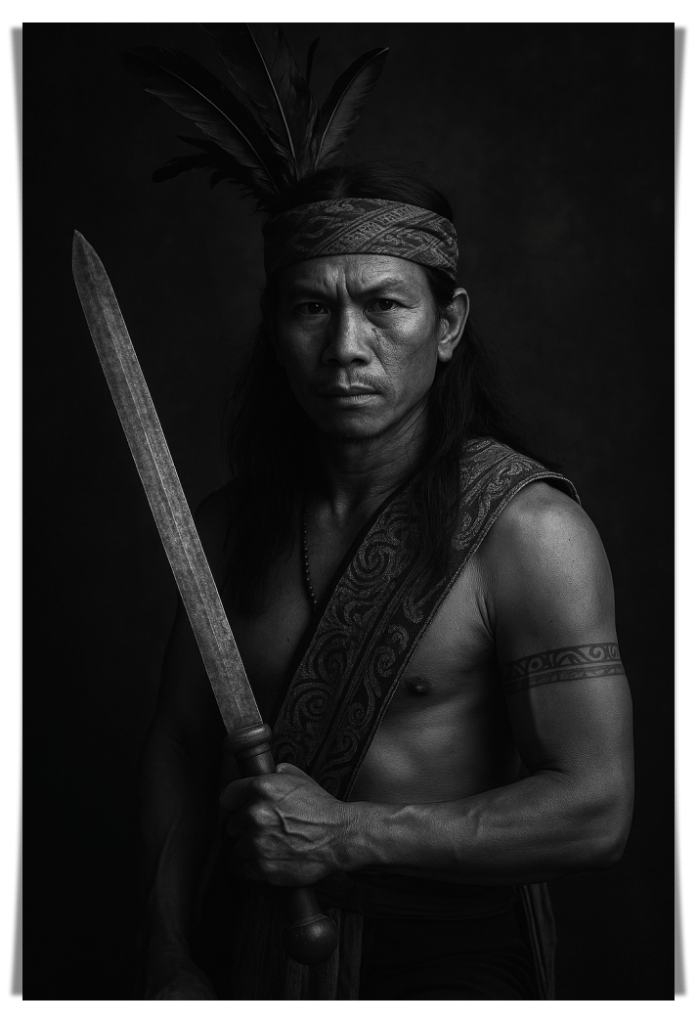
The koklir is believed to target men. Most of the time, you can hear her presence through a chilling cry that starts out like a hen calling her chicks: “kok, kok, kok…” and ends with a piercing, terrifying “haiiiiii waiiiiii!” Before she attacked her victim, she would scream “kokliiiiiiiiiiiiiiirrrrrrrrrr”. She sometimes takes the form of a beautiful woman, hiding her face with a tanggui serawong (woven sunhat) or a kubong leaf. Sometimes she manifests as an enturun, a shaggy, nocturnal bearcat with long claws. Some men say they’ve heard her voice in the jungle or by the river at night. Some people say they’ve seen her scratch at windows or doors with fingers that look like claws. The stories are shared quietly among men, usually late at night, and sometimes with fear or bravado.

I’ve never seen her. But would you believe me if I told you I heard her twice? And I remember it very well both times.

First Encounter

I was fourteen. It was the first day of the school break. Because my flight home was later that night, I was the only student left at the girls’ hostel at my boarding school. Everyone else had left throughout the day. The hostel was quiet and empty.

That morning, the warden told me to turn off the lights and close all the doors before I left. I said I would. After dinner, at about 6 PM, I took my bags outside and waited for my cousin to pick me up. It was getting dark already.

Before leaving, I went back in to do what I promised: turn off the lights and close the doors. I went up to the first floor, strolled through the empty corridor, and did what I had to do. The only sound was the rustling leaves blowing in the breeze. Everything else was still and quiet.

I heard something as I came back down, near the bathroom on the ground floor.

Kok… kok… kok…

It was soft and faint, exactly like a hen calling its chicks.

But this was a school compound. No nearby houses, no chickens. Just trees and a greenhouse. I stopped and listened again. I thought maybe I imagined it. I finished what I was doing and went back to the entrance. I stood there in the light of the corridor, looking out at the road. Everything else around me was dark.

Then, around 7PM, I heard it again.

Kok… kok… kok… kok…

It was slower and closer.

I felt chills and goosebumps all over my body. I was too scared to look around. I just kept my eyes on the road, expecting to see my cousin’s headlights. He came soon after that. I hastily loaded my bags into the car and drove away. I never looked back.

I didn’t see her, but I know what I heard. We believe that the koklir doesn’t harm girls or women because she only targets men. That gave me some comfort, but the sound stuck with me for years.

Second Encounter

I was still living in the same hostel a year later. I didn’t hear her voice this time, but I did hear something else. My bed was next to the door. Sometimes, I would wake up to a loud scratching sound at the door. I believed it was stray dogs trying to get in, so I went back to sleep.

However, I looked at the door one morning because I was curious. There were scratch marks, but they weren’t at the bottom where a dog could reach them. They were higher up, around chest height. That detail stuck with me. What kind of dog can scratch that high?

I didn’t say anything to anyone. I didn’t want to scare the others, especially the younger girls. But I remembered what the elders used to say: the koklir scratches at doors and windows with her long nails to find a way in.

After that, the scratching happened every now and then. I didn’t say anything about it until much later. I told the story years later in our WhatsApp group for former dormmates. I was surprised to learn that I wasn’t the only one. Others remembered the same sounds from the same door and that same feeling of unease. However, we all stayed quiet, but we were all scared.

Some people might not believe these stories. They can argue it’s merely animals, wind, imagination, or ridiculous stories from the natives. But I don’t think I made anything up since I know what I heard.

These encounters aren’t just stories about ghosts. She is a reminder of how deeply the Iban people see death and life as intertwined, how even grief has a place in our stories. As Iban people, we understand spiritual realms that involve death, grief, and the things that linger. The koklir is a reminder of women who died too young or too soon, often forgotten or feared, yet still searching for peace. She didn’t show herself to me. But I heard her cry and have never forgotten it, even after decades have passed.


I write about Iban culture, ancestral rituals, creative life, emotional truths, and the quiet transformations of love, motherhood, and identity. If this speaks to you, subscribe and journey with me.

My Ancestor | OKP Dana Bayang the Great Iban Headhunter & War Leader of Borneo

“The Orang Kaya Pemancha Dana Bayang of Saribas is now with me…the dreaded and the brave, as he is termed by the natives. He is small, plain-looking and old, with his left arm disabled, and his body scarred with spear wounds. I do not dislike the look of him, and of all chiefs’ of that river I believe he is the most honest and steers his course straight enough.”

— James Brooke, The White Rajah’s Diary, 1843

When I saw this prompt, I didn’t think twice. My favorite historical figure isn’t from faraway lands or great empires. He is my ancestor, Orang Kaya Pemancha Dana Bayang (or Dana Bayang), the legendary Iban war leader of the early 19th century.

Dana Bayang was from Padeh, a longhouse upriver in the Saribas. In addition to his prowess in battle, he was renowned for his ability to guide his people wisely at a period when preserving their way of life from both local and foreign dangers was essential to their survival. His warriors, loyal and fearless, served as the first line of defense. Among them was Sabok Gila Berani, his right-hand man who eventually established our longhouse (village), Stambak Ulu. Stambak Ulu was a strategic sentinel, not just a village. It sat along the river, watching for enemy warships approaching up the Layar. From there, word could be quickly transmitted upriver to alert Dana Bayang in Padeh. Stambak Ulu became a shield, protecting Dana’s people and territory.

Years later, Sabok’s son Mang adopted Dana’s granddaughter, Mindu—my great-great-grandmother—after her father, Aji, Dana’s successor, was defeated by Charles Brooke’s forces in 1858. Aji’s death was a turning point, as the old ways clashed with colonial ambition. Mindu’s mother, Dimah, died soon after, leaving her an orphan. 

When I think of Dana Bayang, I think of courage that was not for glory but for the preservation of a way of life, of the land, spirits, and community. His sons and warriors fought to keep their people free, to defend their beliefs, customs, and homeland. Nonetheless, they stood on the edge of change as the White Rajah’s army (colonialism) drove into Sarawak’s heart. The story of Dana and his warriors reminds me of what it means to belong to a people who refused to give up, who carried defiance and hope in equal measure.

You can even catch a glimpse of Dana Bayang in the 2021 Hollywood film Edge of the World, which offers a sneak peek of Brooke’s voyage of discovery to Sarawak in the 1800s.

This reflection ties closely to something I wrote earlier: Inheriting Courage From My Warrior Ancestors. The courage I speak of is not just in legends; it lives in the bloodline, in memory, in the quiet resistance of holding onto who we are.


A Chieftain’s Lament

Between the ritual’s demand and the crown’s decree
my once-steady hands falter in silence.
The nyabur rusts in my palm,
steel thirsting for blood,
now hushed by law.
The earth splits open—
Brooke’s foreign feet press into its cracks.

I hear signs, I dream dreams.
We need fertile grounds.
Blood must avenge blood.
But Brooke tells me to sheath my hunger,
swallow the sun, unlearn the hunt.
He asks me to bow, to bury my blade—
yet the wind whispers of battles still untold.

A fire stirs in the pit of my chest,
a pact with shadows, ancestors long gone.
Can we silence our spirits, break our bond?
Or will the old gods rise in the dust of our revolt?
I smell old skin burning,
the wild call of crows—
but I am chained to the unseen leash of kings
who promise peace with chains.

Note:
Nyabur – curved sword from Borneo, a headhunter’s weapon


©2024 Olivia JD


Olivia Writes offers printables, templates, and art designed to inspire reflection, healing, and creativity. Visit Olivia’s Atelier, Redbubble, and Teepublic for more.

When Superpowers Clash, We Feel It Too

Image source

It’s funny, isn’t it? How two men on opposite ends of the world can make a decision and affect the whole world. Tariffs and trade war threats have been dominating the news lately. The US says it’s slapping more tariffs on China. China fires back. It’s easy to scroll past, thinking it’s “boring and not my problem”. 

The truth is, this issue affects both me and you, regardless of your location in the world. However, my perspective is limited to my own country. If you live in Malaysia, whether you’re in a kampung or a longhouse, a city condo, or riding the LRT to work, it is your problem.

I’m no expert in global trade or politics. I’m just an ordinary Malaysian of Iban ethnicity, trying to make sense of how all this noise in the headlines ends up affecting people like us. What I’m writing here comes from my own shallow understanding. But it’s my opinion and deserves a place in the conversation too. 

Malaysia trades with both China and the US. When the US slaps China with high tariffs, Chinese companies may look for cheaper supplies or partners. They could turn to smaller nations like Malaysia. It seems like an opportunity but if the US suspects Malaysia is helping China “bypass” tariffs, we might get punished too. The rules keep changing and things are so uncertain right now. 

And let’s discuss the costs of things, which may go up. Costs trickle down. I’m not too concerned about basic necessities (for now), but what about machines and auto parts? My car repairs might cost double. I drive an old car, which is more likely to break down frequently compared to a new one. And what about medical costs? Will they go up too because our medicines are mostly imported?

Malaysia is part of global supply chains, especially in tech. For example, if a Malaysian company makes parts that go into Chinese products and China can’t sell those products to the US anymore, Malaysia’s economy also takes a hit. It’s a domino effect. We’d probably experience less overtime, fewer shifts, or, worse, layoffs.

When the global economy is shaky, investors pull back. Foreign companies that were thinking of setting up shop in Malaysia might delay or cancel. That means fewer new jobs, less innovation, and slower economic growth. Even local businesses hesitate to expand or hire, unsure of what’s coming next.

As you can see, this trade war is about us too. It’s not just about two bickering giants. 

And what’s the price of pride and power?

You pay it in whatever your country’s currency is. For me, it’s in Ringgit and daily worries that don’t make headlines.

But Malaysia (and other ASEAN countries) isn’t staying silent. It was recently announced that we’re planning a diplomatic mission to the US to talk things through. We don’t want to retaliate because we are tiny and want to play nice. We want to negotiate and protect our trade and, hopefully, our people. The date hasn’t been confirmed, but even that small step means we’re not just drifting in someone else’s storm.

The world is full of giants. As a small nation, we don’t have the means to fight with fists. We are trying to survive with grace and hold steady like a boat in choppy waters. Our sails may be torn and our oars weathered but we are still floating and moving because people’s lives are worth the journey. 

Declining Population Trend In Malaysia | My Perspective

Image source

I recently read a Facebook post that talked about how Malaysia’s population is going down. But it didn’t really surprise me because the birth rate has been falling around the world. Professor Dr. Sharifa Ezat Wan Puteh, a local health expert, said that if this trend keeps up, Malaysia could have a population that is mostly made up of older people by 2030. As a woman, I see this trend as a sign of how our lives and expectations are changing because of changes in society, the economy, and culture. Let’s look into what caused this change in the population and what it means for Malaysia and other places.

Mindset Shift

In the past few years, I’ve seen a lot of women decide not to get married or have kids. The way people think about family life is changing. In Malaysia and many other places, the idea that women should be the main providers is being examined again. More and more women want freedom and equality, and this can be seen in the choices they make about marriage and family. Birth rates are going down because more people want to be independent, travel, and find self-fulfillment.

In 1970, Malaysian women aged 15 to 49 had an average of 4.9 children per woman. This rate had dropped a lot by 2021, when it was only 1.7. This big drop shows that people’s priorities have changed. Many women are now focusing on education and jobs, which can be hard to balance with a traditional nuclear family. Women are changing how they think about fulfillment and achievement, and it’s not always about having children and getting married.

Economic Pressures and Career Priorities

As traditional views on family life change, women in Malaysia and around the world are putting their jobs and personal growth first. Pressures from the economy are a big part of this trend. As a mother, I am very aware of these problems. The sharp rise in the cost of living has made it harder for families to raise kids. People in Malaysia are having a hard time with money because more people are moving to cities, and the prices of housing, schooling, and health care are going up. This has caused many people to think about how big their families should be.

Access to Family Planning and Education

Women today have the freedom to make decisions that fit their desires and way of life. This includes making well-informed choices about their sexual health. Women in Malaysia have more power over their reproductive choices thanks to efforts to make family planning programs and sex education easier to access. This gives women more power so they can plan their families in ways that fit with their personal and work goals. This makes the drop in birth rates even greater.

Implications and Future Directions

This drop in population has effects that reach far and wide. In terms of the economy, it could cause a lack of workers, which would mean that foreign workers are needed. It also puts more stress on social aid services because there are fewer young people to help an aging population. In terms of society, this change can affect how communities are formed and how families work together.

As women continue to shape the future, it is important to deal with the reasons why birth rates are going down and make policies that help people match their work goals with family obligations. To solve Malaysia’s demographic problems, they will need to make workplaces more supportive and flexible for parents, offer cheap child care, and encourage a culture that values both career and personal success.

In conclusion, the world’s population is going down. This is a complicated problem that is caused by economic challenges, shifting perceptions about family size, and advancements in family planning. As a woman, I think that knowing about these things is important for dealing with and creating the future. We can lessen the effects of this trend by addressing its causes and backing policies that are fair for everyone, even though it is clear that the birth rate will probably never reach the levels it had in the 1980s and 1990s.

💃 Happy International Women’s Day 2025 💃

Iban Culture | Gawai Antu @ Feast of the Dead – A Personal Journey Through Memory and Meaning

I don’t see a lot of articles anywhere that talk about the culture of my people, the Dayak Iban of Sarawak, Borneo. Maybe there are plenty in native languages, but so far not much is written in English, so I thought instead of lamenting about it, why not write it myself? I admit I don’t have a vast knowledge about my culture; however, it shouldn’t stop me from writing about what I know. In this post I’m going to talk about one aspect of our culture called Gawai Antu, or the Feast of the Dead. I believe the feast of the dead is widely celebrated worldwide across different countries and cultures. It’s no different with the Iban people. After all, who doesn’t want to memorialize and pay tribute to their departed loved ones?

The Iban people of Sarawak, Borneo, have a rich and deeply rooted culture that is shaped by mythology, oral traditions, and a close connection between the spiritual and physical worlds. At the heart of this culture are the many “gawai,” or feasts, that mark important moments in life, from celebrating a bountiful harvest (Gawai Dayak) to honoring the spirits of the departed (Gawai Antu). Each gawai carries its own meaning, traditions, and importance, but none have left a deeper impact on me than Gawai Antu, or the Feast of the Dead.

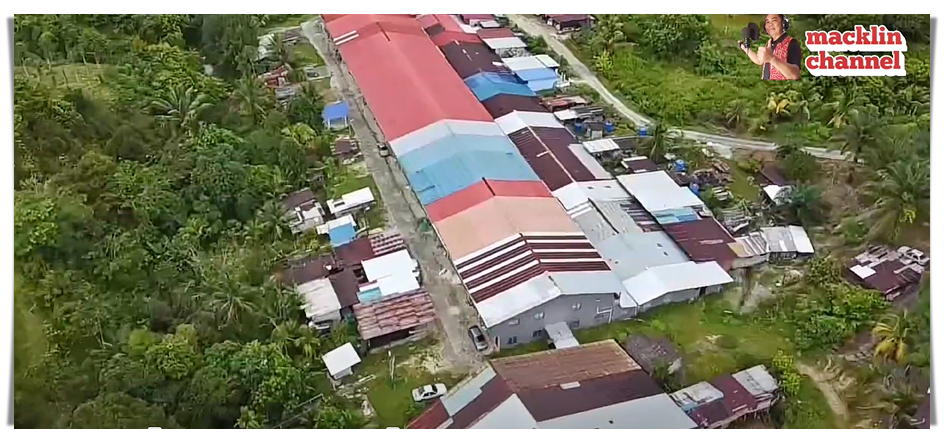
My father’s longhouse: Ng. Batang, Ulu Krian, Saratok. Image source: Youtube

I was ten years old when I first experienced Gawai Antu at my father’s longhouse in Ng. Batang, Ulu Krian, Saratok. At the time, I didn’t really understand its meaning. I just knew it was a rare and grand occasion that transformed the quiet longhouse into a place of celebration, ritual, and remembrance. Even now, decades later, I can still hear the loud gongs, see the elders in their ceremonial attire, and recall the haunting beauty of the invocations to the spirits and deities. It was a glimpse into something much bigger than myself, which was a connection between the living and the dead. This festival was deeply embedded into the very fabric of our identity.

Unlike Gawai Dayak, which is an annual celebration, Gawai Antu happens once in a generation. It is a collective effort that takes years of preparation, with families saving up to host this event in honor of their ancestors. This isn’t a normal feast. It’s an elaborate feast that symbolizes a final send-off for the souls of the departed. It’s a way of ensuring they are properly honored before moving on to the spirit world. It is both a farewell and a tribute, reinforcing the Iban belief that death is not an end but a transition to another realm.

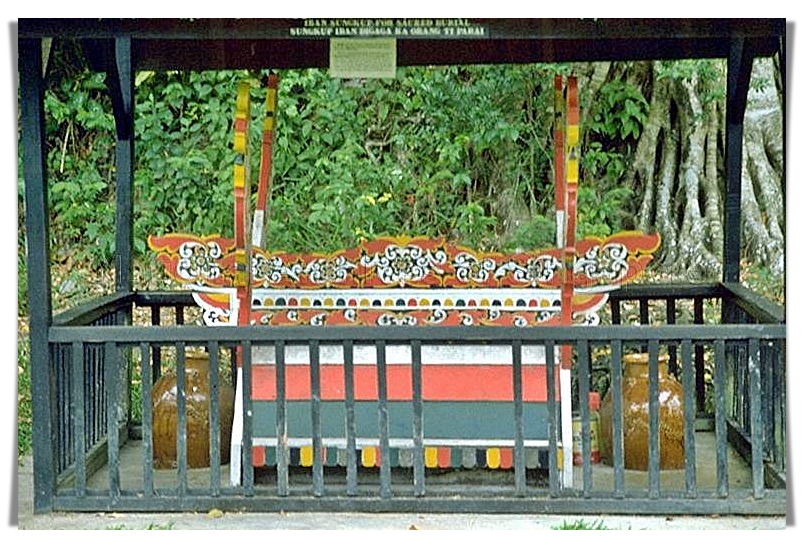
A “sungkup”. Image source: National Archives of Singapore

As a child, I was captivated by the sights and sounds of the festival. The longhouse came alive with music, laughter, and the smell of traditional food. Thousands of guests from neighboring longhouses (villages) gathered, filling the space with a sense of community and shared purpose. I watched as men skillfully built the “sungkup” (memorial huts) for the deceased, while women wove baskets called “garung” to hold the ceremonial rice wine, “tuak Indai Billai.”

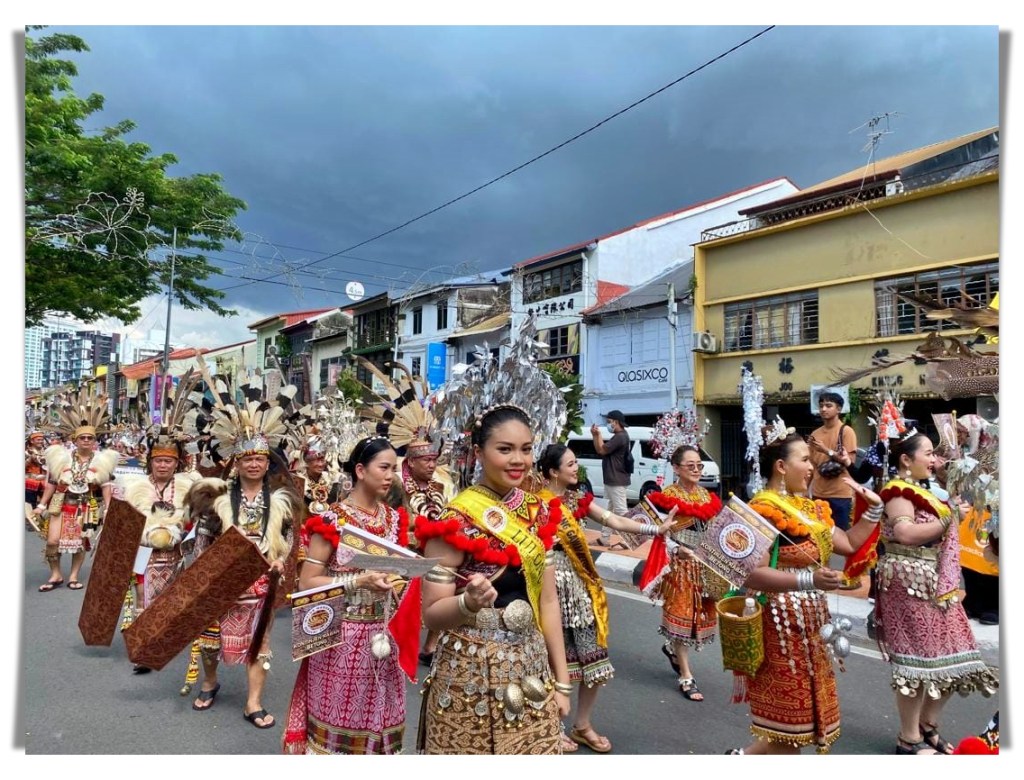
One of the most mesmerizing rituals was “ngalu petara,” where men and women, dressed in their finest, marched through the longhouse to welcome the spirits of the dead. Another unforgettable moment was watching the “lemambang” (bards) chant poetic invocations while carrying bowls of “ai jalung” (special rice wine) from midnight until dawn. Their lyrics, which were passed down through generations, painted vivid images of the spirits’ journey from the afterlife back to their longhouse for one final feast with their loved ones. At 4 a.m., the honored “bujang berani” (men of valor) drank the “ai jalung” to symbolize a moment of pride and recognition.

Image source: My sister

It wasn’t until adulthood that I fully grasped the significance of Gawai Antu. It is a festival of remembrance and a reaffirmation of our roots. It’s a way of keeping our ancestors’ legacies alive. As an Iban living away from my homeland, these memories have become even more precious. They remind me of who I am and where I come from, especially in a world where modern life often pulls us away from traditional practices.

Writing about Gawai Antu feels like my own way of preserving this tradition. In many ways, storytelling serves the same purpose as the rituals. It honors the past by keeping memories alive and strengthening our sense of belonging. But I won’t lie; this responsibility sometimes feels overwhelming. I wonder if my children will ever truly understand the depth of these traditions, or if they will see them as outdated practices of a time long gone. Still, I hold onto hope that through stories, whether in poetry, essays, or simple conversations, I can spark their curiosity and encourage them to explore their roots.

“Bujang Berani”, a man of valor drinking the “ai jalung”. Image source: Gawai Antu documentary

If there is one thing Gawai Antu has taught me, it is the value of memory. In a society that sometimes stresses development over history, this feast is a reminder that our identity is both about who we are and where we came from. Honoring our ancestors involves acknowledging their difficulties, successes, and sacrifices, as well as understanding how they influence our lives now.

Decades after my first Gawai Antu, the memories are still fresh in my mind. The loud gongs, sacred chanting, and communal spirit are memories from my childhood as well as pieces of a greater story about connection, heritage, and meaning. Gawai Antu has taught me that remembering our ancestors means, in many ways, honoring ourselves, as we are the living continuation of their journey.

My poem, “Gawai Antu”.


Note:
A documentary about Gawai Antu was made several years ago, you may watch the trailer here:

I don’t have any photographs of Gawai Antu from my childhood. They are kept safely in my parents’ home in Sarawak. The photographs in this post are credited to the sources listed below each image. For more information on Gawai Antu, you may visit these sites:

The Gawai Antu
Gawai Antu – the documentary