Lover’s Bridge | An Excerpt from My Novella-in-Progress

This is a short excerpt from my novella-in-progress. The story unfolds through fragments and moments that shape the narrative from beginning to end. It follows two people (a foreign woman and a local man) who meet by chance in Taipei, Taiwan, and how their bond deepens through small, ordinary exchanges.

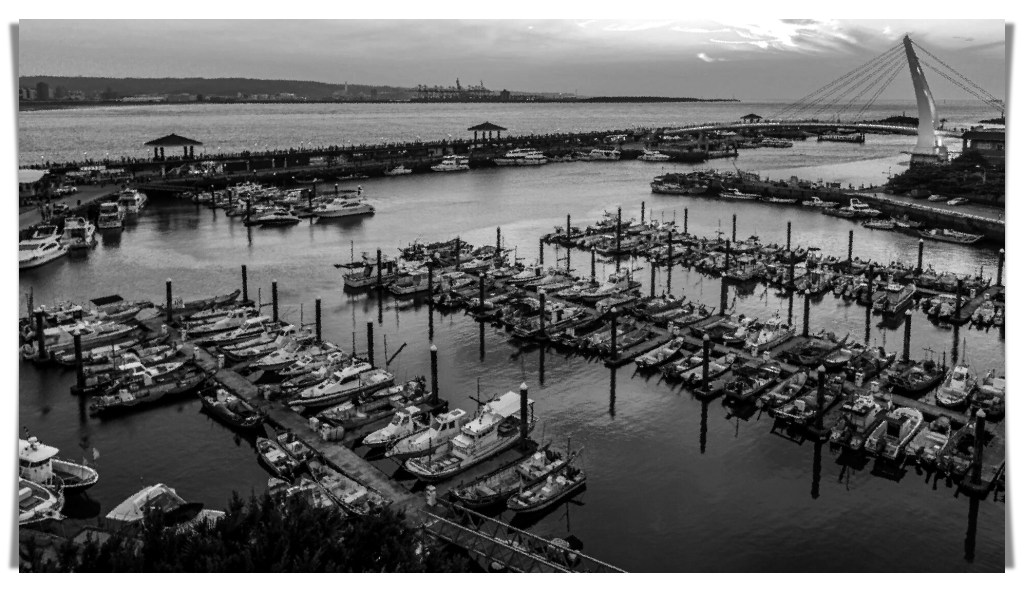
This scene takes place at Tamsui Fisherman’s Wharf, on a cold spring Sunday.

I chose to strip this piece (and the whole novella) of unnecessary description, leaving only the essentials—just enough for the reader to fill in the rest.

English is my third language. I used to think I needed big words or beautiful sentences to be taken seriously. But I don’t believe that anymore. This quote by Haruki Murakami reminds me why I write the way I do:

“Writing in a foreign language, with all the limitations that it entailed, removed this obstacle. It also led me to the realisation that I could express my thoughts and feelings with a limited set of words and grammatical structures, as long as I combined them effectively and linked them together in a skilful manner. Ultimately, I learned that there was no need for a lot of difficult words – I didn’t have to try to impress people with beautiful turns of phrase.”

I hope this piece lingers with you in its simplicity. If anything I write resonates with you, feel free to subscribe for updates on the novella and future posts.


Image source

It was a Sunday when he texted.

“Do you want to go somewhere you’ve never been?”

I stared at the message for a while. It was after three in the afternoon. The sky was cloudy, and it was quiet and dreary outside. I had just finished folding laundry, still in my shorts and tank top.

“Okay. But where?”

He picked me up at four. The car was warm, and the radio was set to low. We didn’t say anything on the journey to Tamsui. The windows blurred a little from the cold, and he touched the heater with the back of his knuckle. I remember watching the skyline thin out as the river widened.

It was a chilly spring day; it was slightly sunny, but the light appeared warmer than it actually was. I pulled the jacket around me as we strolled along the wharf. Couples were everywhere, holding hands and snapping photos, while children laughed with sticky hands.

When the cool breeze began to blow, he stayed close.

We went past the food kiosks, which offered grilled squid, fried sweet potatoes, and sugar-coated strawberries on skewers. He stopped at a freezer cart and bought us two soft-serve cones: one matcha and one black sesame.

I gave him a look. “Ice cream?”

He smirked. “Trust me.”

We sat on a bench facing the docks, eating silently. The ice cream quickly melted and dripped onto his wrist. He licked it clean without a word. I giggled. He looked at me and smiled.

As twilight drew near, we strolled toward the bridge.

The Lover’s Bridge arched across the river, its pale structure gleaming in the late afternoon sun. Tourists passed us, cameras in hand, but we strolled slowly, side by side, as if we had all the time in the world.

We stopped midway.

From there, the view widened. The water below shimmered with long strokes of orange and pink. The sun fell lower beneath the horizon. Boats bobbed softly in the harbor.

I stood silently beside him. The breeze brushed a loose strand of hair across my cheek.

We did not talk because there was no need for words.

I could feel him beside me, and that was enough.

We neither touch nor lean in.

But somehow, in that hush of twilight, we felt closer than we had before.

When we eventually turned to go, he said nothing. Neither did I.

But I believe we both realized something had changed.

Even if we weren’t quite ready to admit it.

Copyright © Olivia JD 2025
All Rights Reserved.

Yours, Once

Daily writing prompt
What tattoo do you want and where would you put it?

Image source

The Past

I found the tattoo parlor while wandering aimlessly through one of the narrow, lantern-lit streets of Datong District. The parlor looked old, tucked between a toy store and a Chinese medicine hall.

The needle vibrated and pierced. I closed my eyes and welcomed the sting. I imagined the ink seeping in, letter by letter.

Yours.

It was on my left breast, right above my heart.


Days later, his lips are on my skin. When he reaches the ink, he stops. His fingers tighten ever so slightly against my ribs. He exhales slowly. No questions asked. No words uttered. He kisses it tenderly at first, then again, firmer this time. His tongue traces the letters.

That night, it is different. Neither rough nor fast.

Just intense.


The Present

It’s been years. I have gray hairs now, mostly at my temples. I don’t think of him often—at least, not like I used to. But today, I catch a glimpse of myself in the mirror. Bare skin. My body is softer now, but there it is.

Yours.

My fingers brush over the letters, the ghost of his lips flickering behind my eyes. I should get it removed. I tell myself that sometimes.

But I won’t.


Back then, his fingertips grazed the ink absentmindedly. While the night bird called in the distance, he’d press his lips against it and whisper—mine.

Now, my fingers trace the letters, following the path his touch once took. The ink remains, but his touch is long gone. I keep waiting for the pain to dull, but it never does.

Back then, it was a vow.

Now, it’s just a relic.

Someone new notices it once. His fingertips pause over the letters.

“Who did this belong to?”

I hesitate. And then I say, “Me.”

Copyright © Olivia JD 2025

All Rights Reserved.

Fragments of Obsession III

Obsession is not just in longing; it’s also loving him in fragments. Here’s a series of short fragmented thoughts about him—scattered images, sensations, memories, desires. They are pieces of my obsession.

Part one – Fragments of Obsession | Part two – Fragments of Obsession 2

Image source

  • His hair gently brushing his forehead, blown by the fan as he sleeps on our bed.
  • Him standing on the kitchen sink washing the dishes after dinner. The slope of his bare shoulders, the muscles on his back, the scratches I made, naked except for his dark boxers.
  • The way he hums as he unloads the laundry.
  • He sits on the couch, shirtless, scrolling through the reels, smirking, chuckling depending on what he watches.
  • His prolonged silence after I uttered some cutting remarks.
  • The way my eyes drift lower, tracing the shift of fabric, wondering what lies beneath.
  • As he passes me on the way to the bathroom, I reach out, my fingers grazing over him in a teasing touch.
  • The curve of his shoulder in the half-light when we took a nap in the afternoon.
  • The way he stares at me, intense and serious, before he smiles.
  • The way his voice cracks when he’s tired, rough and tender at the edges.
  • The smell of earth and salt on his skin after rain.
  • As he shifts in his sleep, the fabric rides up, revealing just enough to make my breath catch.
  • The smell of his skin after a shower.
  • His hands, always his hands, calloused and tender, mapping my body in the late afternoon while the curtain gently blew by the breeze.
  • His gentle snores, and sometimes he snorted while sleeping. Depending on how tired I am, it either amuses me or annoys me.
  • The way he looks at me when he thinks I am not watching.
  • I gently kiss his scars on his arms and chest.
  • The taste of his lips.
  • The heat of his body against mine. The weight of his arm across my waist while spooning.
  • The sound of his key in the door. I could hear it jangle as he exited the lift.
  • The shadow of his stubble in the morning.
  • The sound of his footsteps faded down the hall.
  • The way he holds my legs and rests them on his shoulders, his breath mingling with mine as we dissolve into one another.
  • The way his mouth finds me, his tongue teasing, drawing a gasp from my lips.
  • The way he looks at the ocean and squeezes my hand gently.
  • The way his eyes turn dark after a desperate “I love you” right before he shatters.
  • The way he says “look at me” right before I unravel.
  • The way he moves through a room.
  • His pain and grief over the people he couldn’t save.
  • The emptiness he leaves behind, a hollow I carry with me, a shape I can’t stop trying to fill.

Copyright © Olivia JD 2025

All Rights Reserved.

Fragments of Obsession II

Obsession doesn’t always announce itself. Sometimes, it exists in the way his fingers grasp my arm and let go too slowly, or in the way I watch him without speaking. It’s in the moments I don’t say aloud. The glances stolen across a dinner table, or the scent of his cologne in a silent car ride home. I don’t need to explain this love. I only need to describe it—as it exists in my memory, in my body, in every small, quiet way it consumes me.

Part one – Fragments of Obsession

Image source

I didn’t like the things he said to me, so I retorted. He stared at me, raised his cup to his lips, and kept eating. We continued to eat amidst the clinks of cutlery and conversations around us. We finished our food, got up from our chairs, paid for it, and left. The air was balmy as we walked to the car. Nothing moved, not even a leaf. He switched the ignition; I reached for the AC, and seconds later, the radio. The DJ chattered on about a celebrity’s antics that I had no interest in, but I listened intently. When the ad came on, I kept listening. It was a promotion for a new fragrance. I thought about my almost empty perfume bottle at home. I glanced his way, taking a quick look at his jaw, hair, nose, lips, and eyes. Especially his eyes. He navigated the traffic cautiously, signaled before switching lanes, and braked when he needed to stop. The DJ continued to talk, the AC continued to hum—diffusing the heat between us.


It was late evening. The sky was deep navy, and the moon peeked gently over the clouds. I didn’t expect to see the stars, but a few dotted the sky. We had been sitting on the park bench right after leaving the cafe. We were in no rush to go home, though it was getting late. He wanted to walk me home, and I said okay. Trees lined the street. Their branches swaying softly in the breeze. Suddenly I misstepped slightly on the uneven sidewalk and stumbled. His hand darted out to steady me. His fingers wrapped around my arm, and he asked if I was okay. His grasp was firm, and after ensuring I was alright, his grip loosened but lingered slightly longer than necessary. I didn’t say anything but continued to walk, secretly hoping I would stumble again.


I love him so intensely that it aches. My heart clenches at the mere thought of him—and I think of him constantly. Never in my life have I experienced such overwhelming love for someone. Never did I believe such a love was possible. I don’t even know how to put my feelings for him into words, but I’m trying. Maybe not by proclaiming to the world how much he means to me or delving into philosophical debates about the nature of our love. My own thoughts feel jumbled and incoherent, so why bother explaining them to anyone else? Instead, why not simply describe the love itself? Describe the actions, the moments, and the way it unfolds in my memory?

He rarely talks about his work. I know he analyzes criminal behavior and patterns, making critical decisions based on his findings. I know he works long hours and is often gone for days at a time. He spares me the details, and I never ask. Not because I don’t care, but because I don’t want to be the one to remind him of the darkness he faces. Still, I can’t help but imagine it.

On the days he is with me, I see his eyes—the shadows lurking in their depths that he tries to hide. Sometimes, he stares into the distance, to a place I will never reach. I hear his quiet sighs. And at night, when we sleep, I feel his muscles tense as he thrashes in his dreams. On nights like these, I gently grasp his wrist and call his name, coaxing him back to me. His forehead and brows are damp with sweat, soaking his pillow. He wakes, startled, before his eyes focus and relief washes over him. On nights like these, I hold him in my arms, rocking him like a frightened child. He clings to me without a word, and we stay like that until we fall asleep. On nights like these, I pray—shamelessly, desperately—for God to pull him from the abyss, from demons I can neither see nor fight.

Copyright © Olivia JD 2025

All Rights Reserved.

The Truth Hurts, But It Heals

Writing requires an intimacy few are ready for. To write with vulnerability on the page is to bare your soul, to peel back what protects you, to expose the raw truths of your life, some of which you may not, in fact, fully grasp yourself. It’s frightening, messy, and gut-wrenchingly human. But instead, it is that vulnerability that makes writing not just words on a page but a lifeline that connects us to other people. This is the fundamental truth of vulnerability that enables stories to resonate, yet achieving it is not effortless.

For the majority of us, the fear of being judged is ever present. Vulnerability means revealing your fears, desires, and truths—and thus relinquishing control over how others see you. You are declaring to the world, “This is who I am,” and inviting the world to respond. Do they embrace you, or do they consider your words mere piffle and your truths undesirable? This fear silences many writers, imprisoning their deepest truths.

“Write what disturbs you, what you fear, what you have not been willing to speak about. Be willing to be split open.” ~ Natalie Goldberg

I know this fear very well because I am still struggling with it. And I want to dig deep; I want to uncover what is beneath the surface. But whenever I come close to it, I waver. What happens if I face judgment? What if what I expose is too much? And yet, I also recognized that my writing without vulnerability will never touch the depths I so admire in others.

Recently, I wrote in my journal about this struggle, attempting to give shape to my thoughts. Here is an excerpt:

I have a muse, and I don’t know how long this affair with him will last. Let’s call him a “he.” He has inspired me in ways I never anticipated, uncovering memories and stories I had buried deep within myself for nearly 30 years. These memories are ripe with potential, rich material for my writing. But they are also deeply personal. Writing them down makes me feel exposed, as if I’ve peeled back the protective layers I’ve spent decades building.

For so long, I felt compelled to bury these memories, weighed down by a profound sense of shame. Even though many of these experiences were beautiful in their time, I couldn’t separate them from the shame I carried. Now, as I write them down one by one, I’m finally allowing myself to face them. If you ever read these stories, you may think of them as trash, boring, or mediocre. That’s okay. It doesn’t matter. What matters is that I am writing them as honestly as I can. I’m capturing the vulnerability, the yearning, the fear, the exhilaration, the fantasy, the lust, the love. I don’t know where these words will take me, but for now, I’m writing for myself. I’m writing the truth.

Reading back on this, I see how much I have hidden myself over the years. No one taught me to embrace vulnerability. Instead, I learned to shield myself, to appear strong and impervious. But writing requires the opposite. It invites you to soften, to let down your defenses, and to allow the world in. For me, this process resembles the gradual opening of a long-closed door.

Writing with vulnerability is akin to navigating a narrow path. It asks you to face your own truths without self-censorship and resist the temptation to embellish or dramatize for effect. Authentic vulnerability is subtle; it doesn’t shout, “Look at me!” It tells truths—truths that ring true because they’re passionately felt.

And despite this knowledge, vulnerability remains elusive. Writing for myself, as I have done with my journal, is one thing; it’s another to share that writing with others. This process of exposing your vulnerability is analogous to entering a stage naked under the bright glare of a spotlight. It is terrifying, but it is also necessary.

I frequently reflect on my reasons for writing. Do I write to make myself heard, to understand others, or just to connect? Perhaps it’s all three. What I do know is that the writers I admire most are those who are unafraid to be vulnerable. Their words linger, because they have the bravery to speak their truths, however flawed or uncomfortable. This is the kind of writer I aspire to be—one who writes with honesty and heart, one who has enough courage to be exposed.

The process of getting to this level of openness is ongoing. There are days when I feel courageous enough to face my truths and days when I slink back, too scared to face judgment. But every word I write brings me a little closer to that ideal. Vulnerability is not weakness but strength, I tell myself. It’s what makes us human, and it’s what makes writing worth reading.

So here I am, writing my truths, one hesitant word at a time. I don’t know where I’ll go from here, but I do know that I’m finally beginning to embrace the vulnerability that once terrified me. And in doing so, I hope to uncover not only the stories within me but also the courage to share them with the world.

Reflection | On Being Enough As I Am

I spent years believing I had to measure up to something or to someone. Like many people, the idea that I wasn’t good enough was planted early by well-meaning adults who thought comparisons were a form of encouragement. I believe the term was “reverse psychology.” This is especially prevalent in Asian households. Asian parents love comparing their kids to their peers. We have to study hard so we can be at the top of the class or outshine so-and-so’s son or daughter. We have to be more obedient, more successful, and more beautiful. The adults meant well, but what they didn’t realize was that they reinforced the belief that being “enough” is conditional. It’s exhausting. I spent years trying to prove I was enough. But enough for who?

I remember hints of comparison were occasionally discussed among the adults. I was a plain-looking child and didn’t resemble my siblings. My mom was a beauty in her younger days. And there was I, an awkward, sullen, pimply, tomboyish teenager who always scowled. I wasn’t graceful or dainty; I hated skirts and dresses. I was always wearing sneakers. I believed I was lacking in so many ways. To compensate for my perceived lack, I vowed to excel in school and get good grades—which I did, graduating magna cum laude with a BSc. (Hons) in Information Technology in 2002. And later on career successes and many other achievements. They became the measure of my worth.

After these impressive achievements, did I feel enough? Not even close. When I inevitably fell short, the voice in my head whispered, “See? You’re still not enough.”

It took me well into my 40s to realize that no finish line existed. I wish I could say that I woke up one day and felt instantly enlightened—“Stop this b******t. I am enough as I am!” No. The realization came gradually.

This happened after years of some pretty impressive achievements—publishing books, radio interviews, being featured in magazines and a newspaper, collaborating on projects with artists worldwide, and publishing my poems. Despite all of that, I always felt a huge void in my heart because I felt I needed to achieve more and more things in life. No final achievement or external approval would ever silence the feeling of not being enough. Even when I reached milestones, the goalposts moved. Even when I improved, it still wasn’t enough—because the world always demands more. I was completely burned out. I had reached my lowest point and required months of counseling to achieve a breakthrough. Writing and making art helped. I channeled my frustrations and heartbreak into my work.

Then I quit.

I quit chasing an undefined version of “more.” I quit tying my worth to productivity, praise, validation, or comparisons. Along with that decision, I asked myself, “What if I was enough exactly as I am?”

I started to ask myself, what does being enough mean to me? Not according to the eyes of society, family, or anyone else, but me? This is what I discovered: enough is waking up and existing with all my flaws, my fears, my joys, and my struggles. Enough is embracing my experiences, my voice, my thoughts, my pace, my perspectives, and my opinions—without feeling ashamed and the need for external validation. Enough is understanding that I don’t have to prove my worth or anything to anyone because I exist simply as I am, complete as God intended me to be.

It’s a radical shift but a necessary one. And believe me, it doesn’t happen overnight. Some days the negative thoughts return, but I’m learning to meet them with kindness and grace. I keep reminding myself every day, like a mantra—even when I’m unproductive, have no achievements, think lustful thoughts, write explicit fictions, gain weight, have more and more gray hairs, financially struggle, be perimenopausal, not pray or read my Bible, curse, hate, or love—I am still enough.

Change is not sustainable without changing old habits. This includes rewiring my brain to speak kindly to myself. Instead of chastising myself for not doing better, I remind myself, “That was a good experience. You’re learning, and that is enough.”  I also started to be mindful of my excuses and my sense of guilt and shame. I stop over-explaining things to people or bending to meet expectations that don’t align with me. And most important of all, I give myself the love, kindness, and grace to be fully human. I am not a robot. I have emotions, I make mistakes, and I get tired. It’s okay if I can’t anymore. I am free to rest without guilt.

There is nothing more exhausting than trying to justify your existence. And nothing more freeing than realizing you never had to. Here is a poem I wrote months ago that encapsulates this whole thing.

Enough

I peel the mask,
layers like sunburned skin—
soft, blistered—beneath
the face forgotten in mirrors.

Naked,
I walk into the jaws of daylight,
each step a confession,
bones rattling truth
like marbles in a jar,
heavy with silence,
weighted with breath.

I wear the scars like medals,
silvered lines map the wars
I never won—
but here,
in the raw air—
I am enough.

I am enough, as I am. And so are you.

Copyright © Olivia JD 2025

All Rights Reserved.

Fragmented Story | First Date

This piece captures the meaningful moments of a young narrator, an 18-year-old girl, as she deals with the unexpected shift in her reality. The clipped sentences show her youthful hesitancy. There is no over-explanation, only feeling—raw and unfiltered—told in a voice still learning how to express the depth of its own desire.

Image source

At first he was just another presence in the background, like a page in a book that I kept flipping back to without knowing why. He was handsome, though I had never given it much thought. Until one day the words slipped out before I could stop them.

I hadn’t expected it to become anything more. But my friend decided otherwise. She took my offhand comment and made sure it reached him.

Days passed before I learned what she had done. It was a casual mention, out of my silent observation, but now it had become something larger. But much to my relief, nothing came of it. No reaction. No acknowledgment. Life moved on, and that one blunder faded into the stream of ordinary days.

Then one afternoon, everything completely changed.

The bus ride home was a blur of exhaustion. The lull of the engine hummed in the background. My thoughts drifted aimlessly as the scenery flickered past the window. And then, he was there.

The bus was pretty empty, with plenty of free seats, but he walked up to where I was sitting and took the seat next to mine. For a second I froze, my breath catching in my throat. The entire world had shifted on its axis.

I risked a glance in his direction. He had a black jacket on top of a navy blue t-shirt, dark trousers, and brown shoes. His short, straight black hair framed his face. His hands were tucked into his pockets.

The silence stretched between us, saved for the sounds of late afternoon traffic and the occasional ring of the bell.

And then, a simple invitation.

I wasn’t prepared for it or expecting it, but the answer left my lips before doubt could take hold. And with that, the path was set. The bus rattled forward as if nothing had changed. But everything had.

When we arrived at our stop, he met my gaze. Then he turned towards the street. Without hesitation, I followed.

We walked side by side in silence. The long shadows of the streetlights lay on the pavement, and the faint chatter of office workers rushing home floated in the air. Once we reached the door, he stepped ahead and held it open for me. His hands rested lightly against the frame.

I stepped inside. The warmth of the cafe wrapped around us. For a moment, I wasn’t able to even look at him. A flurry of emotions brewed in my chest; my heart pounded. But when I finally looked up, there he was, a slight smile on his lips.

And in that moment, I felt it. A soft, trembling hope for something I didn’t know if I was ready for, but I couldn’t help wanting it anyway.

Related story: First Sight

Copyright © Olivia JD 2025

All Rights Reserved.

Fragmented Story | First Sight

Some moments will never leave you. They creep into the silent corners of your memory and wait. It’s not love, but something more delicate and mysterious. I was eighteen when I first saw him. He wasn’t looking at me or even aware I existed. But then something changed. I didn’t realize it at the time, but that moment would stick with me, embedded into the fabric of my life and reappearing when I least anticipated. This is the fragmented story of an obsession that began before I had the words for it.


Image source

I was eighteen the first time I saw him. I was too young to fully comprehend how a single moment could change the course of time, but I was old enough to sense how important it was. He was twenty-two, though I didn’t know it then.  The light that late afternoon was soft and turned everything golden. It fell through the leaves as I walked home from class. A heavy bag hung across my shoulder, the monotonous rhythm of my day fading into the background.

Then I saw him.

He stood in the distance, partially obscured by the trees. There was something arresting about him that made him seem out of place in the moment. His jacket drew my attention right away. It was a deep brown, worn suede. The rich color seemed to absorb the light, making him stand out against the colors around him. His white trousers seemed an afterthought, subtle and plain. It was the type of look you don’t think about until later, when it won’t leave your mind.

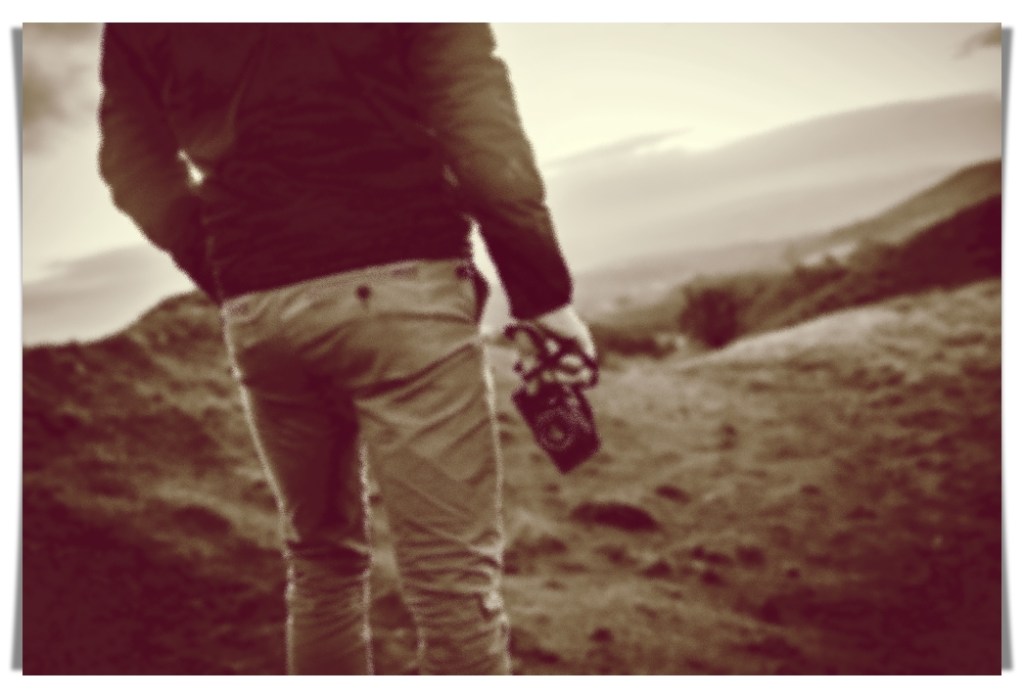
I recall that he had a camera in his hand. He was working it with his fingers as he turned it in his hands. His dark, straight hair fell just above his brow, softening the harshness of his face. Serious. Intense. His posture was nonchalant as if he didn’t care that the world might be watching.

But I was watching.

I didn’t intend or want to be there, but there I was, fixed in place. “Who is that?” I asked my friend, and the question came out before I could rethink it. She chuckled as if it were clear, then mumbled his name with a mocking grin. “You should go talk to him.”

I didn’t or couldn’t. It wasn’t just insecurity; there was something else. It seemed like he was untouchable, and whatever he was focusing on in silence was not meant to be disrupted. So I walked away, thinking I’d left the moment behind.

But the image of him stayed with me for days or weeks. It kept going through my mind: him standing alone, with the trees casting a shadow as light gathering around him. I’d find myself wondering what he was thinking about as he carefully held that camera in his hands. It drove me crazy that someone I had never talked to could occupy a corner in my head.

Even now, decades later, I find myself going back to that day. It wasn’t love then. It was something more fragile. It was like an obsession that nestles deep in your chest and stays there, waiting for reasons you don’t yet comprehend.

Copyright © Olivia JD 2025

All Rights Reserved.

The Criminologist

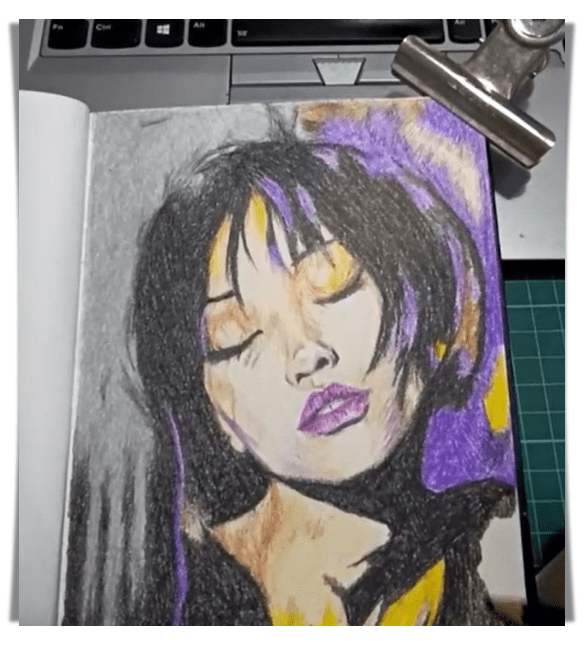
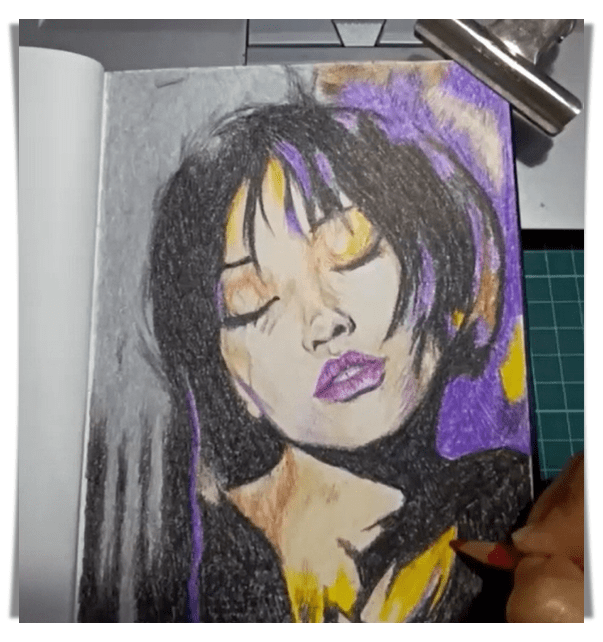
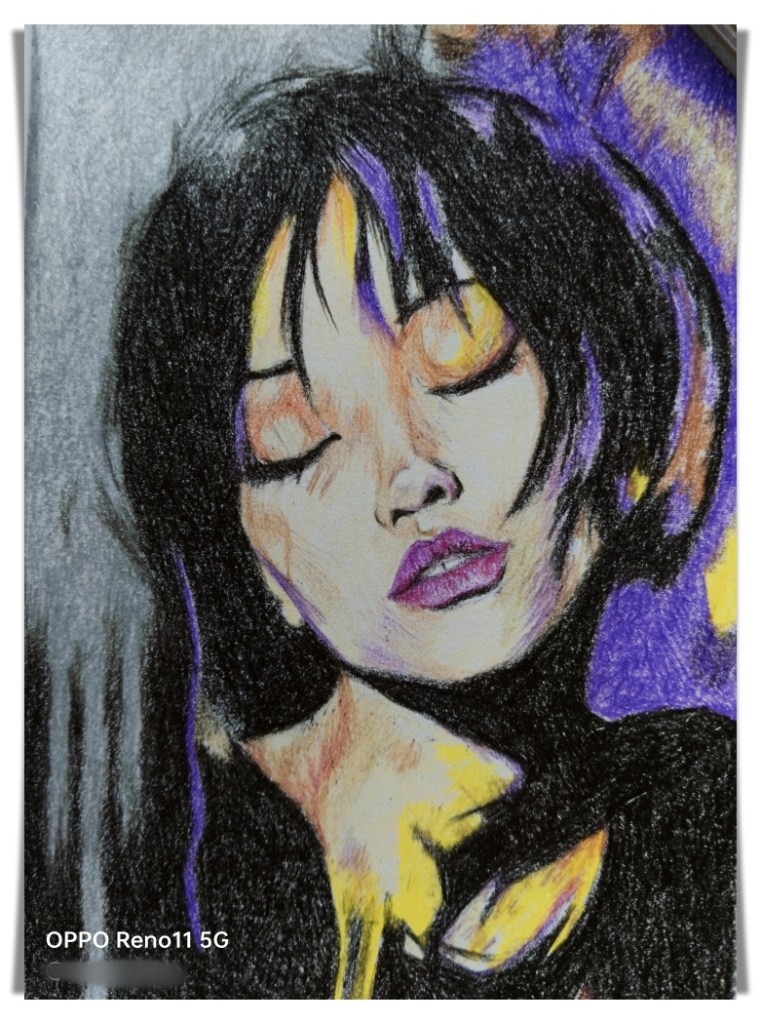
I worked on this piece over the weekend. The lines are taken from my poem, The Criminologist. So far, I have four of my poems published in online literary journals/art websites, but I hesitate to share the links here because that would expose my identity. I prefer to be anonymous for now so I can write more freely without my internal censors actively working to prevent me from writing truthfully. No explanation is needed for this piece; I just let the art and poem speak for themselves.

Copyright © Olivia JD 2025

All Rights Reserved.

Fragmented Story | Being In the Same Room Again

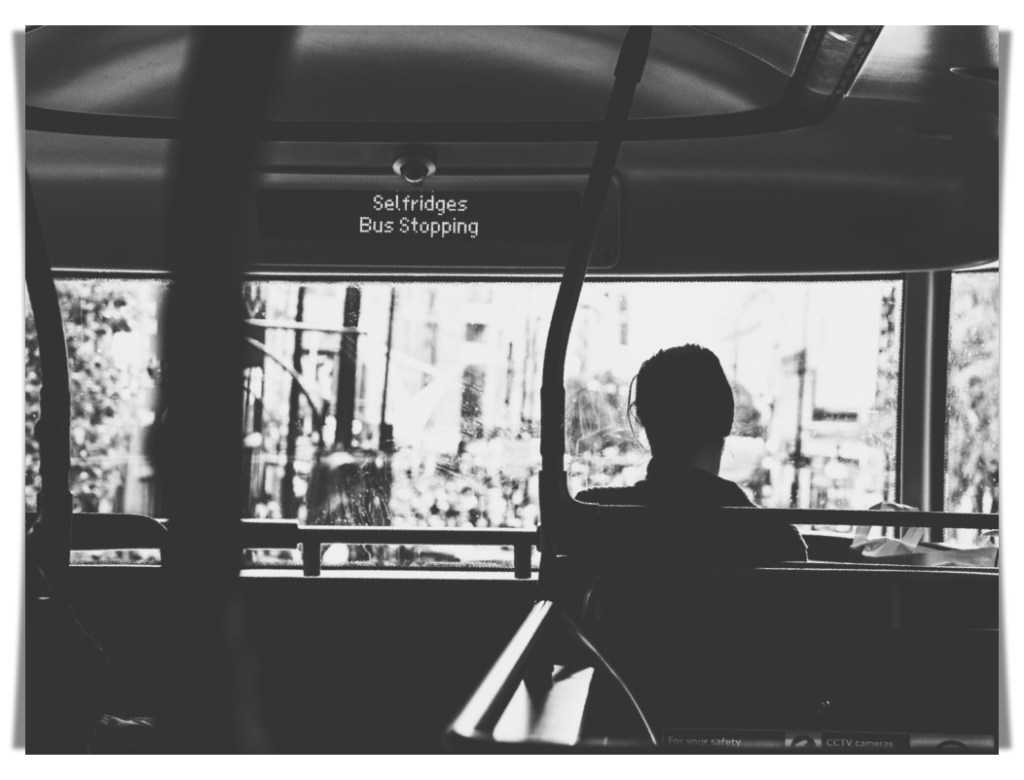
I wrote this introspective piece to capture unresolved emotions, the passage of time, and the delicate dance between nostalgia and moving forward. It’s about past love that is neither fully rekindled nor entirely lost. It’s fragmented because there is no backstory. It’s intentional because the absence of a backstory forces the reader to feel rather than just understand. However, it is related to another story I wrote previously – After All These Years.


Image source

The rain kept pouring, turning everything into a soft blend of grays and greens, like a painting that had come to life. It reflected the fog in my mind, the doubt that had brought me here. I didn’t want to go back at all. What was waiting for me when I got back to the city? Plenty of bills were sitting on the kitchen counter, ready for me to pick them up. There were tax notices in each envelope, and they kept coming on time. Of course, I was constantly getting glossy brochures from real estate agents advertising different homes for rent or sale, as if they could give me the security I really craved. They claimed that property was the foundation of our modern life. Have we forgotten what it means to belong in our quest for a place to call home?

The town was so different from the hectic pace of daily life that it felt like a different world. You could feel like time was moving slower here. When I walked into that little bookshop with its worn shelves and familiar atmosphere, it stirred up something deeper inside me. Not only did the past resurface again, but it also brought up something that hadn’t been resolved. Why does that feeling persist even after years of being apart? That question hung in the air.

Was it a spark that was about to go off again, or was it just the light of ashes from the past? To bring back an old love, you have to dig up what was hidden and accept both the joy and the pain that come with it. But could it be something else—a chance to put things to rest? Is it finally possible to break free from the maze of what-ifs and let the past rest?

There was also the issue of trust. Did it still matter that you understood instead of being validated after all this time? And even if it did, would that be enough to begin a new relationship? Maybe not love, but friendship for sure. We could have maintained a bright shared past, unaffected by the decisions we’ve made along the way.

I’ve learned that desire and lasting devotion aren’t the only things that define love. It was about the possibilities, the countless ways it could evolve, even after it had already slipped away from you once. With the sound of rain on the windows and the faint smell of books in the air, I stayed in that space and thought about whether love might just be being in the same room again after all this time and finding peace between us.

Copyright © Olivia JD 2025

All Rights Reserved.