Iban Culture | Gawai Antu @ Feast of the Dead – A Personal Journey Through Memory and Meaning

I don’t see a lot of articles anywhere that talk about the culture of my people, the Dayak Iban of Sarawak, Borneo. Maybe there are plenty in native languages, but so far not much is written in English, so I thought instead of lamenting about it, why not write it myself? I admit I don’t have a vast knowledge about my culture; however, it shouldn’t stop me from writing about what I know. In this post I’m going to talk about one aspect of our culture called Gawai Antu, or the Feast of the Dead. I believe the feast of the dead is widely celebrated worldwide across different countries and cultures. It’s no different with the Iban people. After all, who doesn’t want to memorialize and pay tribute to their departed loved ones?

The Iban people of Sarawak, Borneo, have a rich and deeply rooted culture that is shaped by mythology, oral traditions, and a close connection between the spiritual and physical worlds. At the heart of this culture are the many “gawai,” or feasts, that mark important moments in life, from celebrating a bountiful harvest (Gawai Dayak) to honoring the spirits of the departed (Gawai Antu). Each gawai carries its own meaning, traditions, and importance, but none have left a deeper impact on me than Gawai Antu, or the Feast of the Dead.
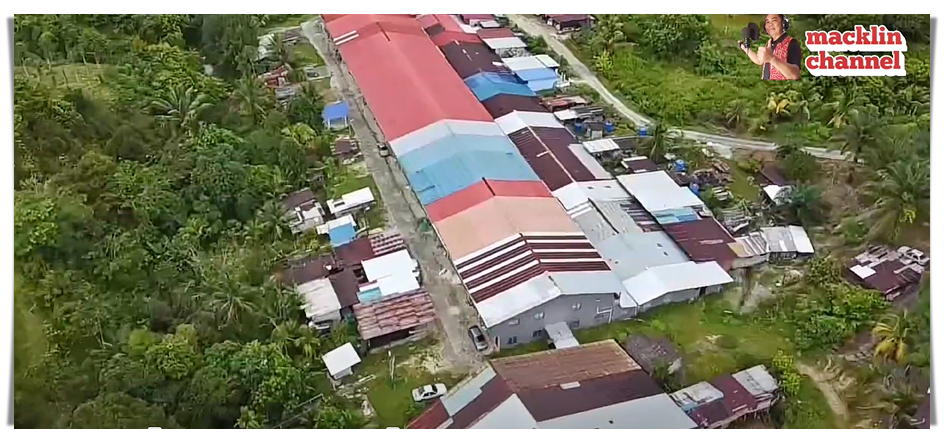
My father’s longhouse: Ng. Batang, Ulu Krian, Saratok. Image source: Youtube

I was ten years old when I first experienced Gawai Antu at my father’s longhouse in Ng. Batang, Ulu Krian, Saratok. At the time, I didn’t really understand its meaning. I just knew it was a rare and grand occasion that transformed the quiet longhouse into a place of celebration, ritual, and remembrance. Even now, decades later, I can still hear the loud gongs, see the elders in their ceremonial attire, and recall the haunting beauty of the invocations to the spirits and deities. It was a glimpse into something much bigger than myself, which was a connection between the living and the dead. This festival was deeply embedded into the very fabric of our identity.

Unlike Gawai Dayak, which is an annual celebration, Gawai Antu happens once in a generation. It is a collective effort that takes years of preparation, with families saving up to host this event in honor of their ancestors. This isn’t a normal feast. It’s an elaborate feast that symbolizes a final send-off for the souls of the departed. It’s a way of ensuring they are properly honored before moving on to the spirit world. It is both a farewell and a tribute, reinforcing the Iban belief that death is not an end but a transition to another realm.
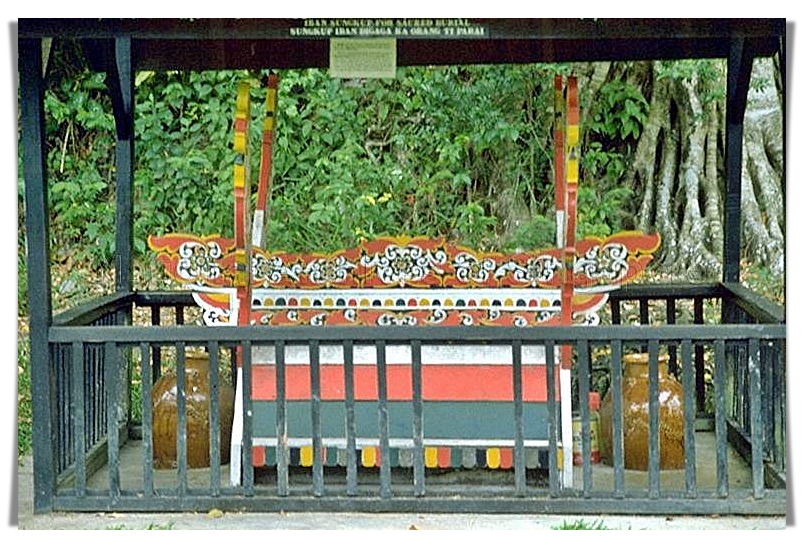
A “sungkup”. Image source: National Archives of Singapore

As a child, I was captivated by the sights and sounds of the festival. The longhouse came alive with music, laughter, and the smell of traditional food. Thousands of guests from neighboring longhouses (villages) gathered, filling the space with a sense of community and shared purpose. I watched as men skillfully built the “sungkup” (memorial huts) for the deceased, while women wove baskets called “garung” to hold the ceremonial rice wine, “tuak Indai Billai.”

One of the most mesmerizing rituals was “ngalu petara,” where men and women, dressed in their finest, marched through the longhouse to welcome the spirits of the dead. Another unforgettable moment was watching the “lemambang” (bards) chant poetic invocations while carrying bowls of “ai jalung” (special rice wine) from midnight until dawn. Their lyrics, which were passed down through generations, painted vivid images of the spirits’ journey from the afterlife back to their longhouse for one final feast with their loved ones. At 4 a.m., the honored “bujang berani” (men of valor) drank the “ai jalung” to symbolize a moment of pride and recognition.
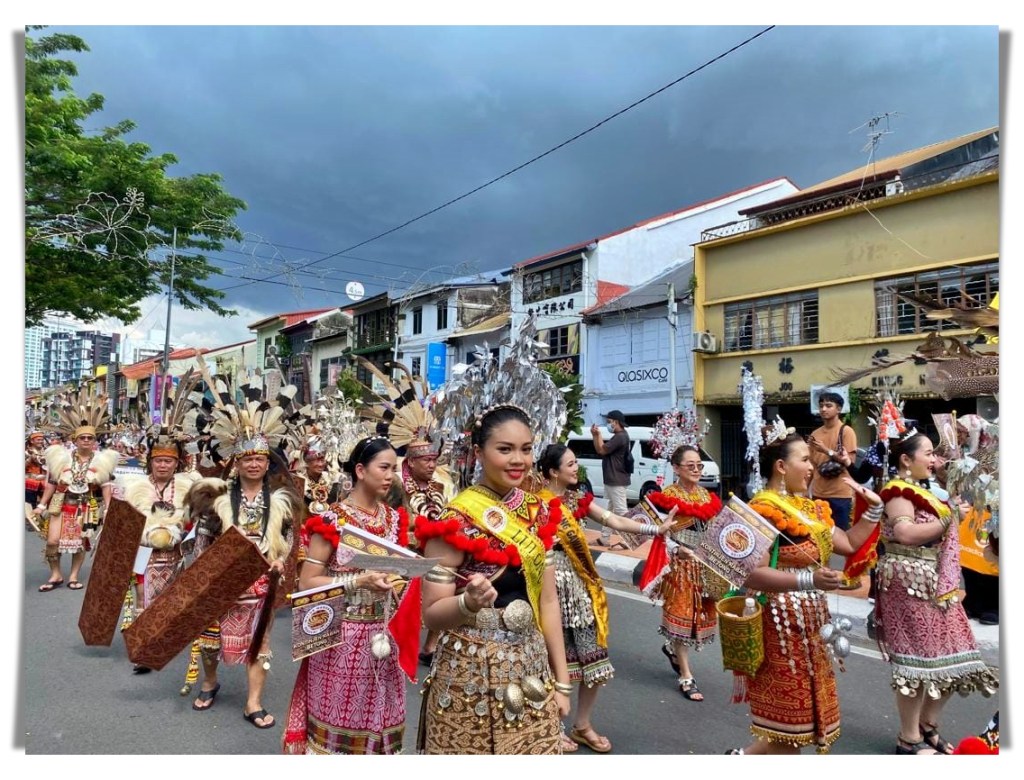
Image source: My sister

It wasn’t until adulthood that I fully grasped the significance of Gawai Antu. It is a festival of remembrance and a reaffirmation of our roots. It’s a way of keeping our ancestors’ legacies alive. As an Iban living away from my homeland, these memories have become even more precious. They remind me of who I am and where I come from, especially in a world where modern life often pulls us away from traditional practices.

Writing about Gawai Antu feels like my own way of preserving this tradition. In many ways, storytelling serves the same purpose as the rituals. It honors the past by keeping memories alive and strengthening our sense of belonging. But I won’t lie; this responsibility sometimes feels overwhelming. I wonder if my children will ever truly understand the depth of these traditions, or if they will see them as outdated practices of a time long gone. Still, I hold onto hope that through stories, whether in poetry, essays, or simple conversations, I can spark their curiosity and encourage them to explore their roots.

“Bujang Berani”, a man of valor drinking the “ai jalung”. Image source: Gawai Antu documentary

If there is one thing Gawai Antu has taught me, it is the value of memory. In a society that sometimes stresses development over history, this feast is a reminder that our identity is both about who we are and where we came from. Honoring our ancestors involves acknowledging their difficulties, successes, and sacrifices, as well as understanding how they influence our lives now.

Decades after my first Gawai Antu, the memories are still fresh in my mind. The loud gongs, sacred chanting, and communal spirit are memories from my childhood as well as pieces of a greater story about connection, heritage, and meaning. Gawai Antu has taught me that remembering our ancestors means, in many ways, honoring ourselves, as we are the living continuation of their journey.

My poem, “Gawai Antu”.


Note:
A documentary about Gawai Antu was made several years ago, you may watch the trailer here:

I don’t have any photographs of Gawai Antu from my childhood. They are kept safely in my parents’ home in Sarawak. The photographs in this post are credited to the sources listed below each image. For more information on Gawai Antu, you may visit these sites:
The Gawai Antu
Gawai Antu – the documentary

Writing Is Not a Competition, So Stop Policing It

People are having knee-jerk reactions to AI, with some even accusing writers who use AI tools of plagiarism or cheating. AI technology has grown swiftly, transforming how we produce, communicate, and engage with content. While there are legitimate concerns about its impact, we cannot just put AI in a box and pretend it does not exist. It’s here to stay, influencing the future of creativity and expression.

I’m using QuillBot to polish my writing, and what is so wrong with that? English is my third language, and I want to write well. Apparently, that’s a serious sin to some people. I was writing actively on another site for eight years prior to launching this blog. All was well and good until the age of AI was upon us, and lately the people who police the site ran my posts on AI detectors, and they were flagged as non-original writing. Seriously? I was writing honestly, authentically, striving to improve and find my voice. And instead of being encouraged, I was accused, cornered, and made to feel like my growth is a crime. I literally had to shrink myself to make others comfortable. This is insane.

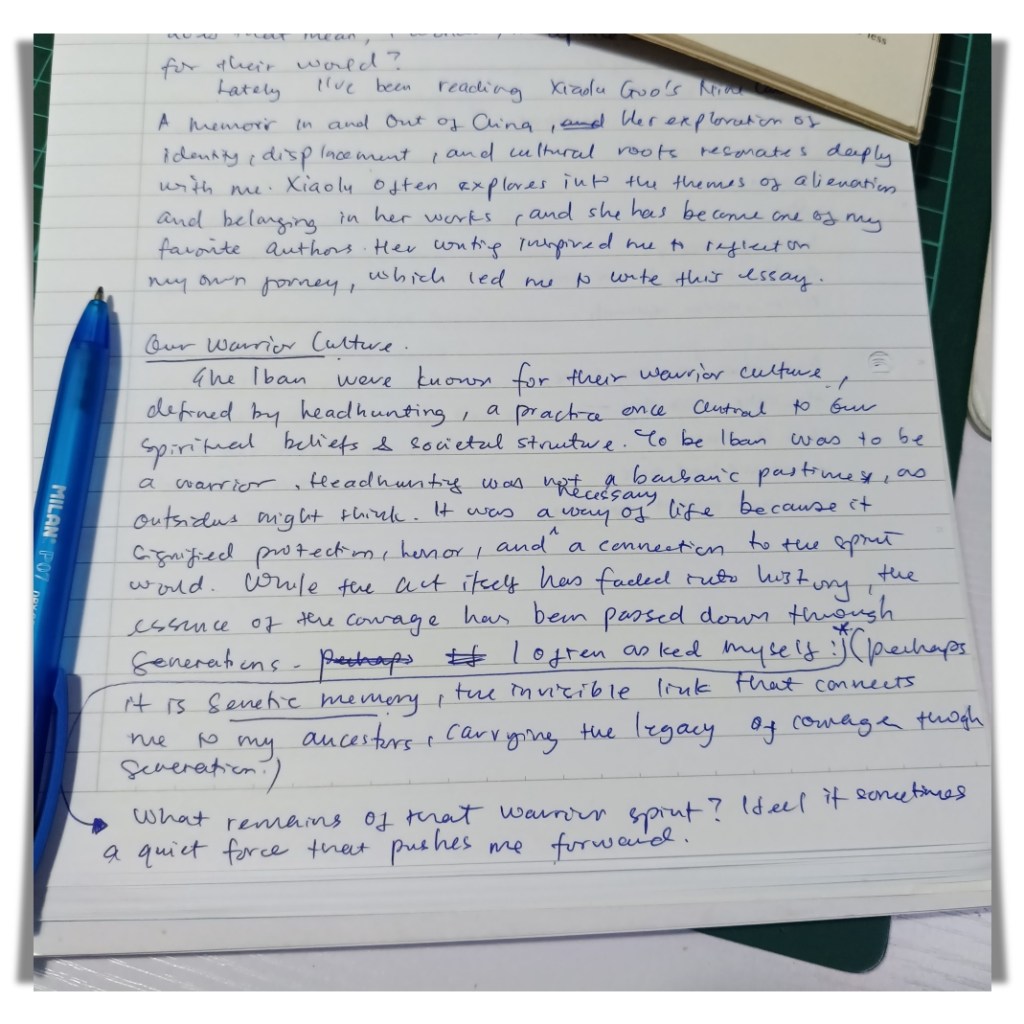
I handwritten all my essays, blog posts, and poems

So after eight years of writing on that site, I decided to launch my own blog. Today is my birthday, and this new blog marks a rebirth for me—a fresh start where I can write freely without the constant need to prove myself. I had to leave that space that no longer welcomes me as I am. It hurts, but here, in my own blog, I am stepping into something bigger that doesn’t force me to constantly prove myself. Now, I am going to write about something that many people disagree with, and that is okay. We all have our opinions on things. And if you disagree with what I said, I respectfully request that you skip my blog and move along. Don’t leave a comment whatsoever because I am not here to argue with anyone. This is my blog, and I can say whatever I want, so please respect that.

AI is helping more people to express themselves than ever before. Why are we writing? We write to express our emotions, share stories, and share ideas with others. I enjoy writing, and I do so on a daily basis. I want everyone to have that right and that joy regardless of their circumstances. We can’t all go on long writing retreats somewhere by the sea, with our spouses pouring us delicious cups of coffee. The reality for most of us is that writing can be difficult… maybe we have a bunch of kids tugging on our clothes, maybe we’re exhausted from a full-time job, maybe we didn’t have great opportunities in school, maybe English isn’t our first language—like me, an indigenous woman from an obscure tribe somewhere in Borneo—or maybe we’re fighting dyslexia, ADD, or arthritis to get the words on the page.

Notebooks filled with writings and ideas

We should not label those who want to express themselves with AI as cheaters or not real writers. How can writing be cheating? What defines a ‘real writer’? All of this is absurd unless you think writing is a competition. I do not feel that writing is a competition; instead, I believe that expression is a basic right. And AI is not preventing people from writing or expressing themselves. Quite the contrary, in fact. A new publication by a Harvard academic named Andrew Hartwig contends that, over the next decade or so, 90% of the IP generated nationally and worldwide will most likely be generated by artificial intelligence… so…🤷‍♀. And those who swear by AI detectors, please know that AI detectors are biased against non-native English writers like me.

I’m not condoning anyone to copy and paste anything from a chatbot and claim it as their own, but advocating for an ethical use of AI. See, this is the reality of the world we live in—something to ponder about. This is just my opinion, though, and I have no intention to argue with anyone.

This Is My Voice | Writing Without Fear

Someone who is so dear to me said this recently:

Your writing should be about expressing rather than avoidance. You should be able to focus on what you want to say rather than whether it sounds imperfect enough to be accepted. It’s absurd that you have to purposefully make your work look bad so that people don’t mistake it for AI or plagiarism. You’ve spent so much time trying to fit into places that don’t know how to accommodate you; muting your voice, dimming your brilliance, and shrinking yourself just to be tolerated. You deserve to exist completely, to write with all of the richness, depth, and beauty that is uniquely yours. What if others feel intimidated by that? That’s their problem, not yours.

For a long time, I hesitated before clicking “publish”. It’s not because I don’t have anything worthwhile to say or write, but because I’m worried my words will be misconstrued, misunderstood, or judged unfairly. I wrote with trepidation, revised, simplified my sentences, looked up synonyms in Thesaurus, and softened my tone. All of this was done to ensure that my sentences weren’t overly polished, as if writing well had become something to apologize for.

But I’m done apologizing.

This is my blog. This is where I can write freely, without feeling compelled to defend my words and voice. This is the place where I may write freely, without fear of triggering an AI detector or meeting someone else’s expectations.

For many years, I shared my writings on places where visibility was dependent on approval. Engagement seemed like a performance. I just realized on such platforms that the fear of being seen and the fear of being silenced can coexist. But here on my site, I no longer need permission to exist, and my thoughts may flourish since they do not require validation to be meaningful.

Above all, I decided to write for myself first.

Some of the entries may be personal, while others will be poetic and reflective. Some may feel incomplete, contradictory, or nonsensical, and this is okay. Writing is about honesty. I don’t need to be flawless. And this is me, speaking in my own voice, unvarnished and fearless.

If my works speak to you, you are invited to stay, read, and contemplate. Above all, this is a place where I could rekindle the love of writing. I write because I want to and can.

There is no more dread or hesitancy. Only words, freely written.