Writing About Iban Culture Without Taking the Easy Way Out

Indu Iban
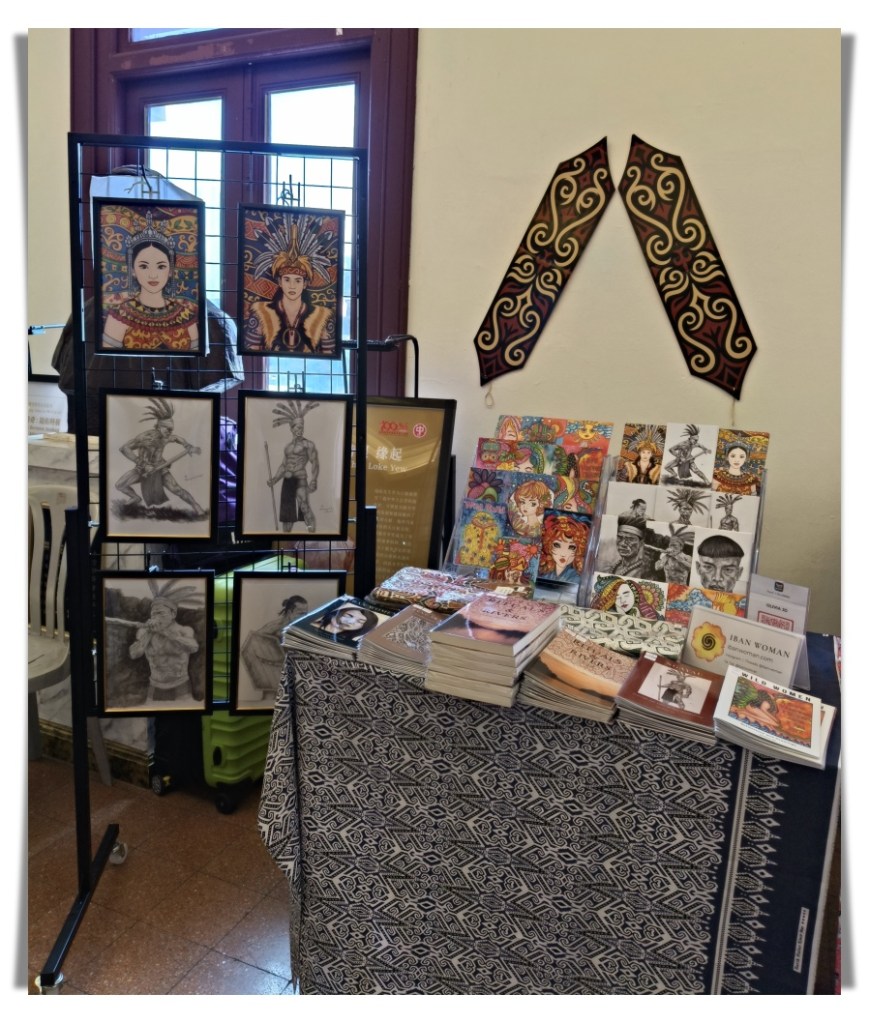
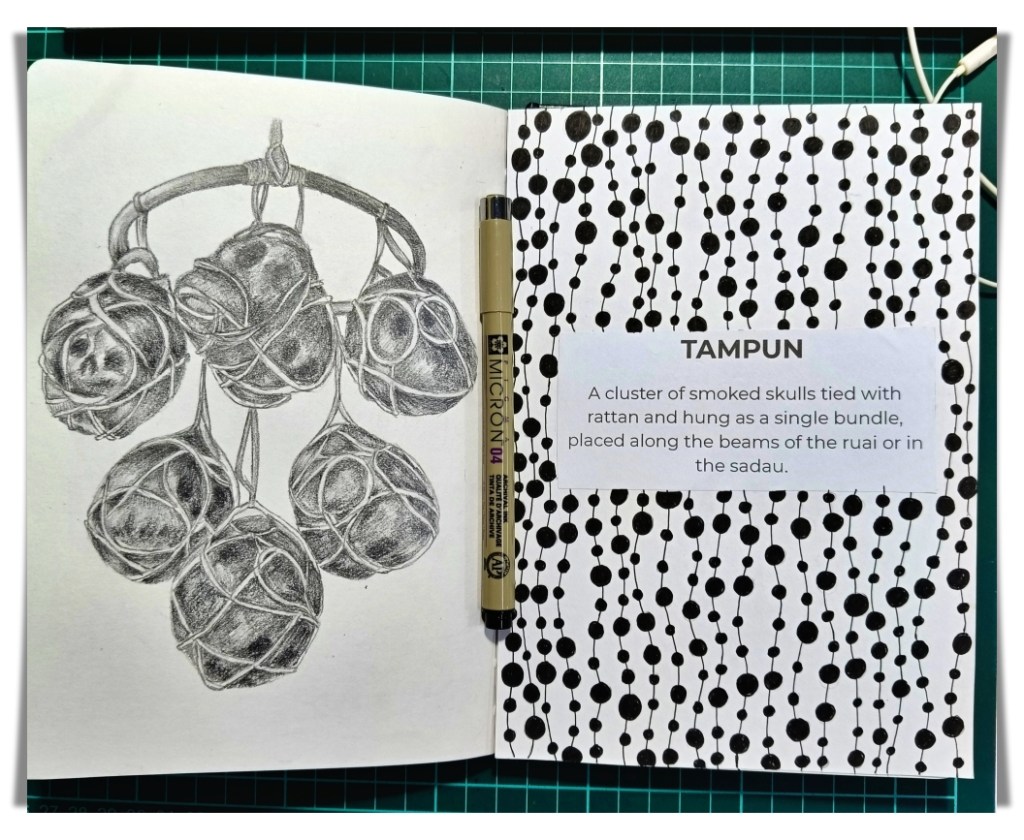
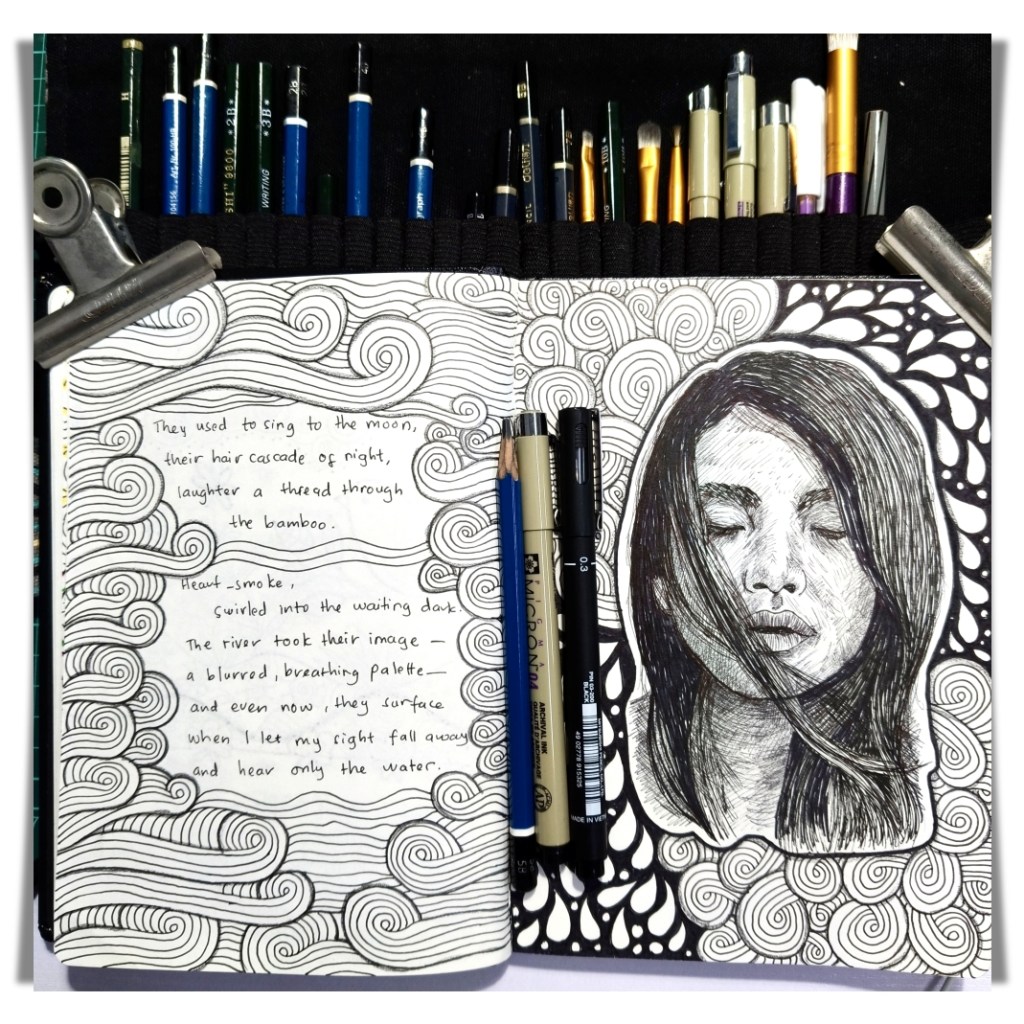
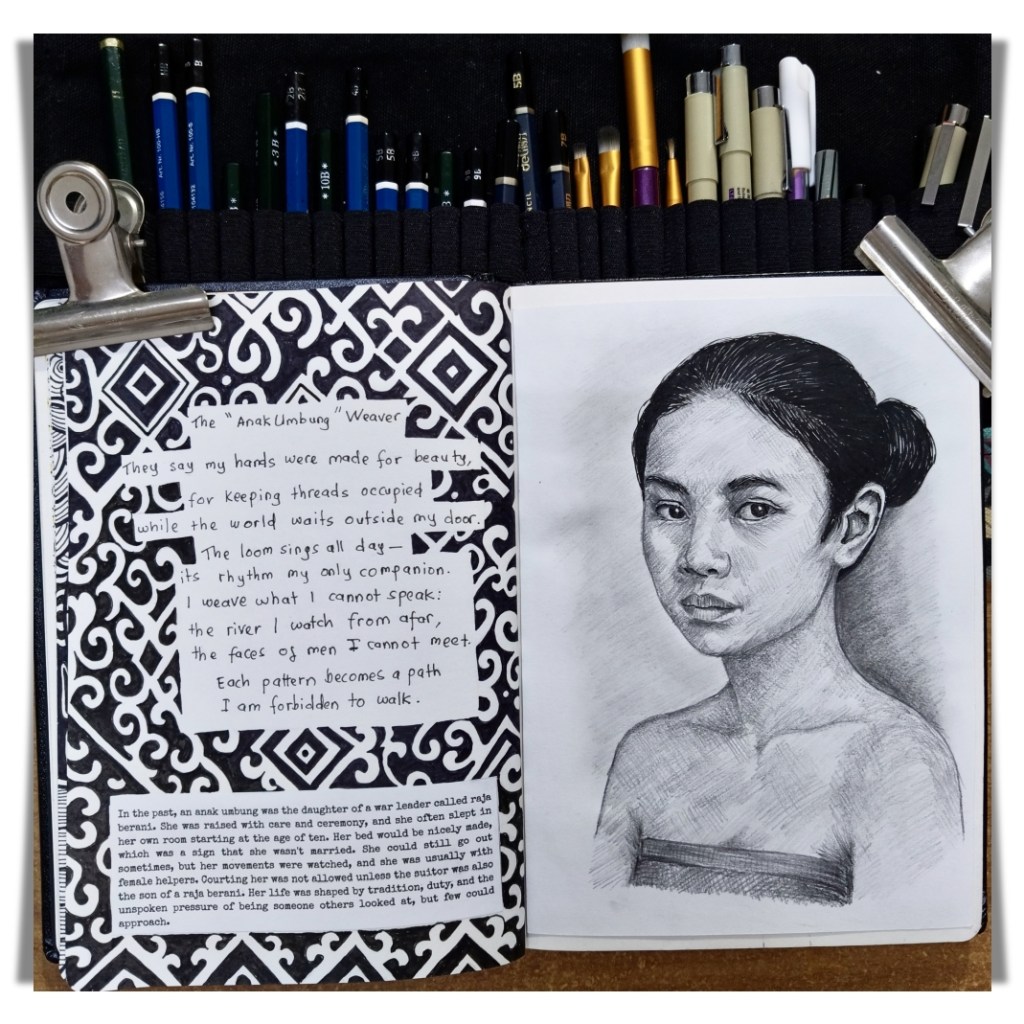
A spread from Iban Women zine

When I first read the CBC article on AI-generated Indigenous content, my stomach tightened. Not because I generated my content with AI, which I don’t, but because I understood how easy it would be for someone looking for Iban culture to find made-up “elders’ teachings” or made-up Iban phrases and think they were the real thing. I am an Iban woman living far from Sarawak and raising children of mixed heritage. While I utilize AI to assist in my writing process, I don’t generate it using an algorithm. My sources are from my family history and lived experiences. These are the datasets I train on. They are living memory and not predictive text.

The article quotes Michael Sherbert saying generative AI is “optimized for fluency, not for truth or for ethical or cultural responsibility.” I think about this every time I sit down to write a poem or draw cultural art. Cultural truth is difficult to tell and requires effort to check for accuracy. Telling cultural truth also means admitting I don’t know many things and need to learn from those who are more knowledgeable. I read all kinds of academic resources and cross-check my facts with family members before I post them on my blog or publish a new cultural zine. I avoid making assumptions, and when I am not sure of the accuracy, I admit that I don’t know and encourage others to share their experiences or information so we can all learn from one another.

Kaitlyn Lazore from the Mohawk community said something that stayed with me: “There’s no easy way to learn the language or gain culture without getting out in your community.” She is right. Still, I am raising my children far away from my homeland. I can’t take my children to a local social gathering to hear native speakers speak Iban. I can’t take them to Sungai Stambak and let the mud cling at their ankles like it did mine. So what do I do? I write and I draw. I make zines like Rituals and Rivers, Iban Women, and Iban Headhunters. I know that all these things are not substitutes for community. But they can turn into a perau, a small boat that will wait for them until they are ready to learn about their roots. They can launch it whenever they want. They can find their way to their roots through the names I’ve kept alive in my writings and art.

Budaya Iban
A spread from Iban Women zine

But I also do what the article emphasized: I am transparent. I include Iban words with definitions in most of the cultural poems I wrote. Every story distinguishes between traditional knowledge and my personal interpretation. I do not claim to be an elder. I am a mother and a learner who is learning to preserve her culture in her own ways.

The article talks about “pan-Indigenous representations that flatten distinct nations into one interchangeable identity.” This is very important to me. I am Iban, not a generic “Borneo culture” or simply an “Indigenous” group. When I write about details like the bungai terung tattoo motif, I name it instead of being vague. When I describe perau pengayau, I explain that they are tied to certain histories. My children are of mixed heritage, and I don’t want their Iban side becoming a blur; thus, I need to be more precise. Brian Ritchie of kama.ai said, “It can be difficult for any user to understand how responsible or accurate or authentic the information is.” That’s why I always mention my sources. I write down who my sources are: my family histories and Iban cultural experts or academicians. I don’t believe in vague statements like “tradition said this and this, so…”

My children may not grow up speaking Iban fluently. Some days, that thought breaks my heart. But they will know that their mother didn’t take the easy way out. She didn’t ask ChatGPT for a “traditional Iban sampi” and then copy and paste it. She had to deal with the pain of forgetting, so she read and conducted her own research to learn the real truth and facts.

Iban culture
A spread for an upcoming zine (still in progress)

At the end of the article, there is a reminder to use your judgment and ask for community vetting. This is what I would add: If you like my work, my poems, my art, or my zines, please also look for Iban elders or experts in Iban studies. Please use my work as an invitation to explore further. It should not be a replacement. I am just one voice who is trying to preserve my culture for the future generations. 

My children observe me write. They see me struggle with information, memory, and the pain of being far away from my homeland. And I hope that when they are adults, they will know the difference between something that is made up and something that is real. The difference between a perau that really floats on water and one that only exists in a machine’s algorithm. I will keep making perau until then: one article, one poem, one drawing, and one zine at a time.

When They Are Ready
for the ones I raise far from home

We build our lives on foreign soil,
where rivers have no stories
and the wind sighs emptily.
My children’s tongues are borrowed,
their laughter shaped by cities
that have never heard a gong.

I tell them of the longhouse glow,
the smell of rain,
the river bends like an elder.
They listen, but cannot feel
the ancient soil that holds their roots.

So I write these rivers into words,
each poem a small perau waiting.
When they are ready,
they will launch them,
navigate by the names I’ve kept alive
and find, at the source,
a home that never stopped calling.

(a poem from Rituals and Rivers)


I write about Iban culture, ancestral rituals, creative life, emotional truths, and the quiet transformations of love, motherhood, and identity. If this speaks to you, subscribe and journey with me.
My First Group Exhibition in Malaysia and A New Zine in the Making

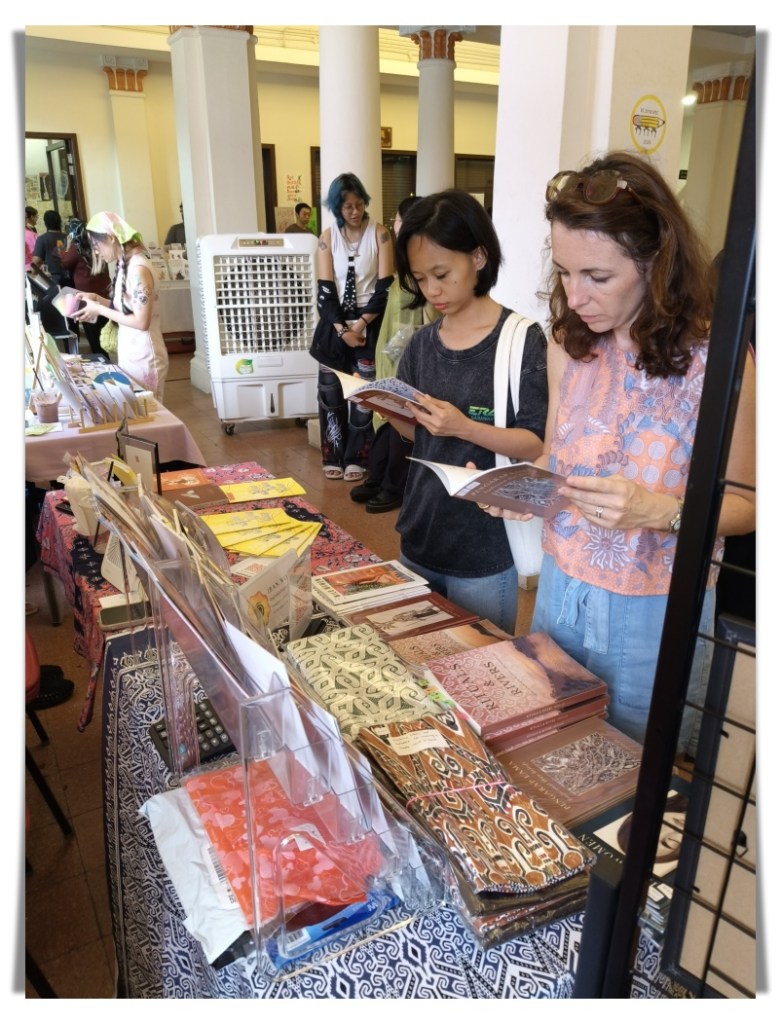
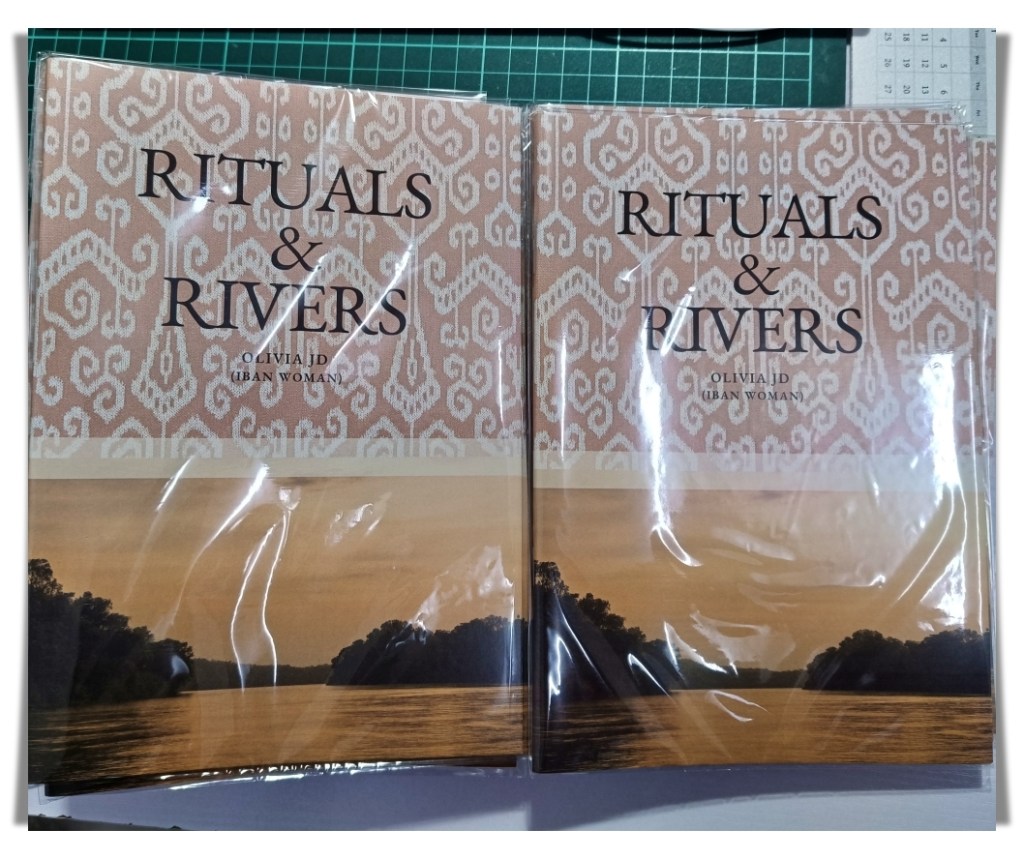
Tomorrow is the soft launch of Akar Kita Abadi, the group exhibition I’ve been preparing for the past few weeks. I will exhibit several of my Iban heritage poems called Rituals and Rivers, and holding these printed booklets, which just arrived, feels like a confirmation of all the time spent writing, editing, and polishing. This little booklet (or zine) has 10 poems from a much bigger collection of Iban heritage poetry that I want to publish in 2026. I will be selling these booklets during the exhibition and they are quite limited in number. I will share more about the exhibition after the launch tomorrow. I can’t share pictures until after the launch so I can’t really say much about the whole thing. The exhibition will last until 23 November so if you’re in Klang Valley, you may want to drop by and give us your support. 

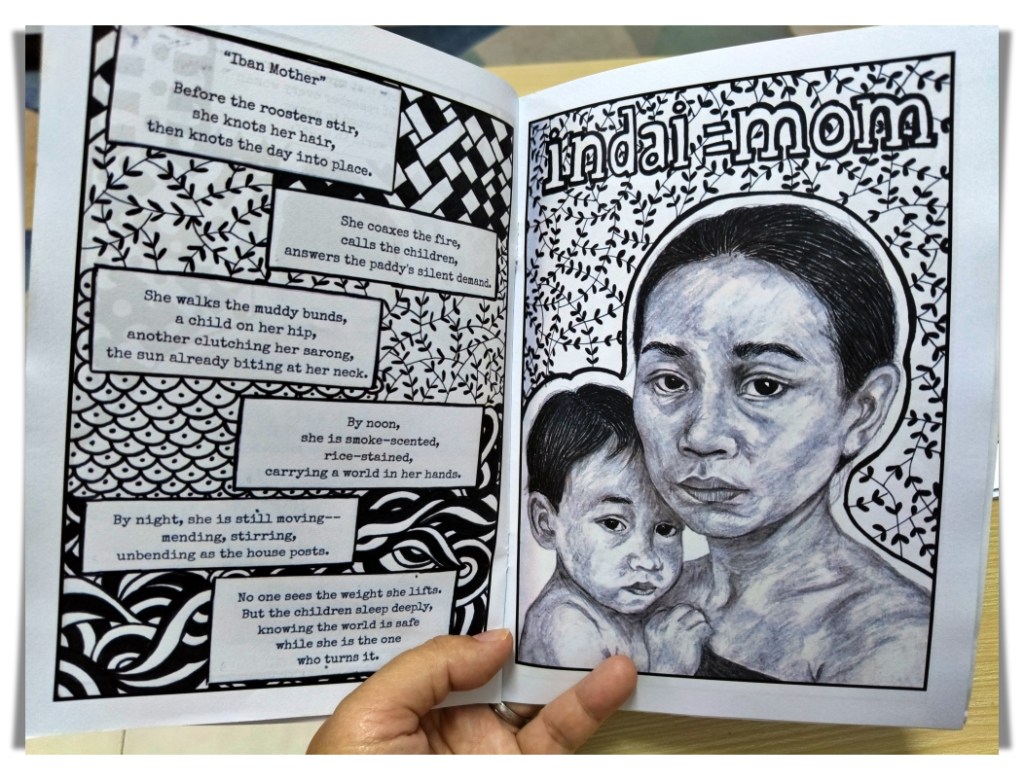
While this exhibition marks the beginning of sharing that collection publicly, another project has started to take root in parallel. I have begun working on a new zine that will focus entirely on Iban women. This project seems like a continuation of Rituals & Rivers, but through a more personal viewpoint. It will look at various facets of Iban womanhood, from ancient times to the present.

Every page will be hand-drawn using pencil and black fine liners, but for the actual zine they will be edited and printed. Drawing by hand has a grounding effect, allowing each line to have its own rhythm and imperfection. The only printed text will be the longer passages and explanations, saving space while keeping the design balanced. I have not planned the number of pages or illustrations yet. I like to let the process evolve spontaneously. Each piece generally begins as a poem or a brief reflection before taking on a visual shape.

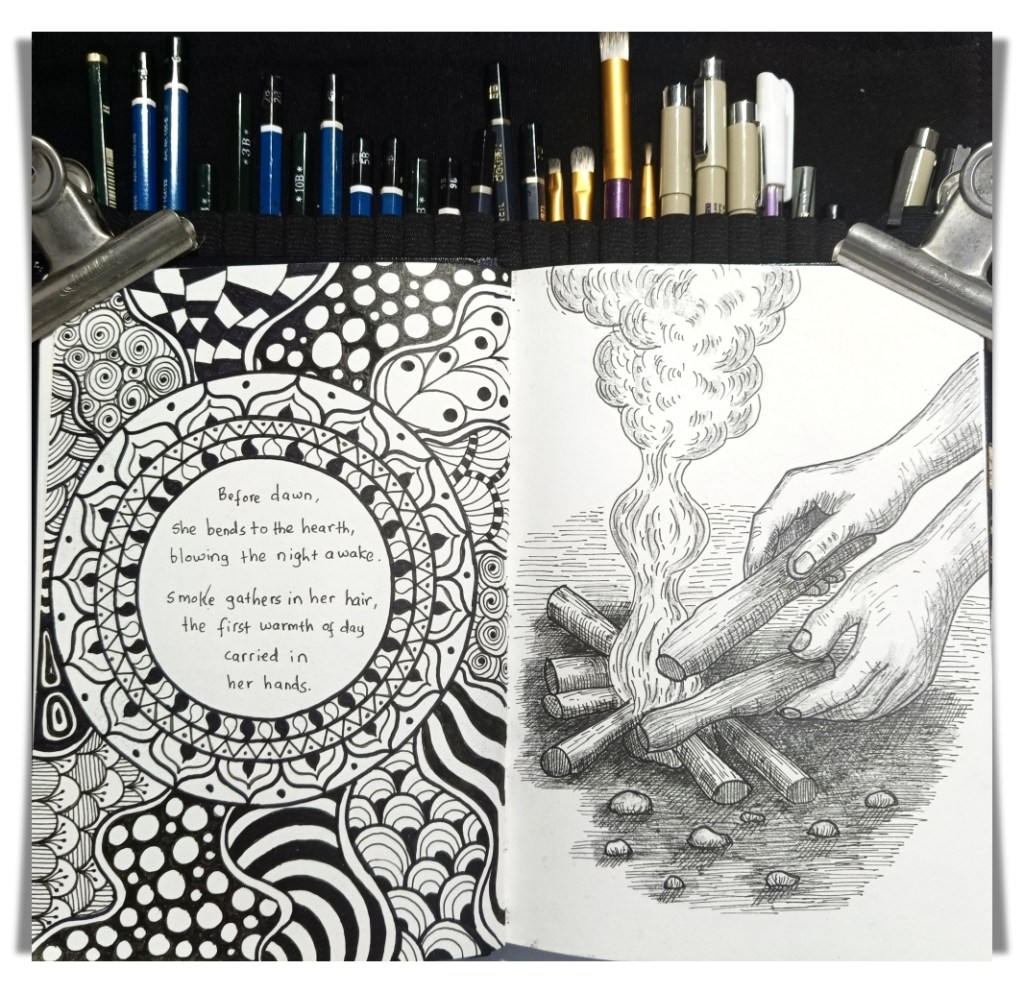
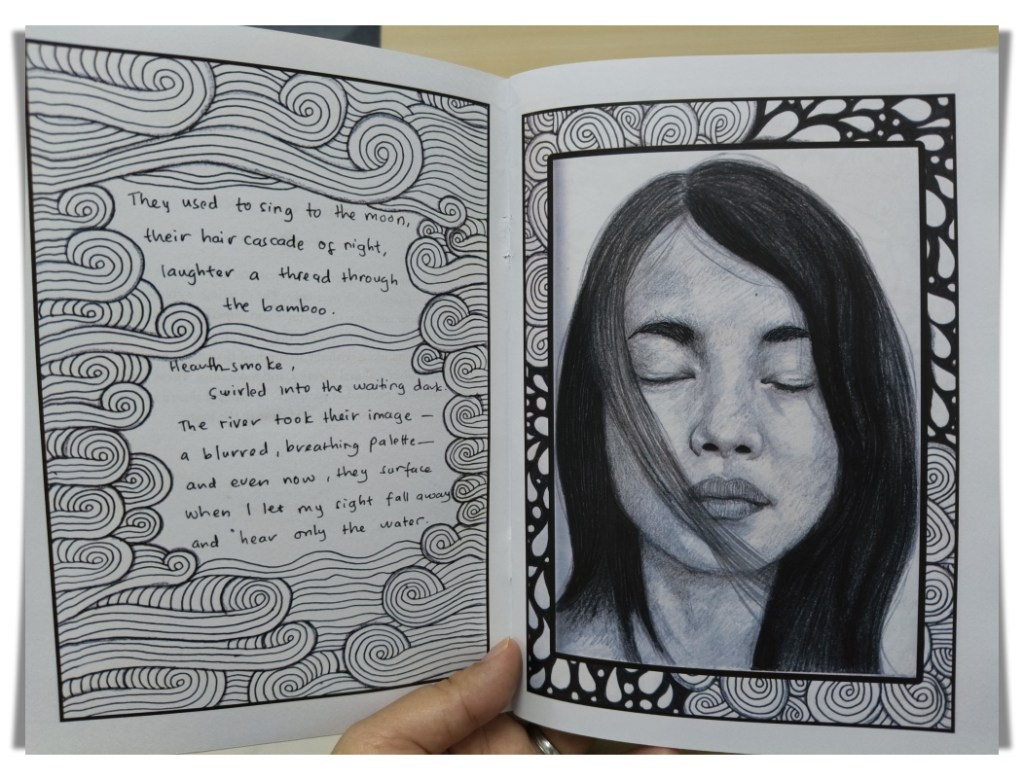
One of the first illustrations is inspired by women who sing to the moon as their laughter threads through the bamboo. Another drawing shows the anak umbung, the daughter of an Iban war leader who was raised apart from others and taught weaving skills. Her story has stayed with me, serving as a reminder of the beauty and self-control that once entwined women’s lives. There is also a drawing of a woman tending to the hearth before dawn. These aren’t big moments; they’re small actions that show tenderness, duty, and strength in Iban women. 

This new zine will be based on the same ideas as Rituals & Rivers, but it will focus more closely on the daily and the personal.  It will explore what it means to be an Iban woman across generations, including the traditions that are passed down, the unspoken resilience, and the actions that connect one life to another. It’s a way for me to listen to the voices of the women who came before me and to honor how their spirit still lives on in us now.

I don’t know what the completed zine will be like, but I know it will develop slowly, page by page, just like stories used to do, with care and patience.


I write about Iban culture, ancestral rituals, creative life, emotional truths, and the quiet transformations of love, motherhood, and identity. If this speaks to you, subscribe and journey with me.