What Beserara’ Bungai Taught Me About Letting Go

I used to think that rituals like beserara’ bungai were just old traditions that had no place in today’s world. Growing up, I believed they belonged to the past. I thought the Iban needed to leave them behind to move forward. Whenever elders talked about these beliefs, I felt restless. My world revolved around progress, education, and the principles of organized religion. I didn’t see the value of rituals, and I never took the time to understand what they really meant.

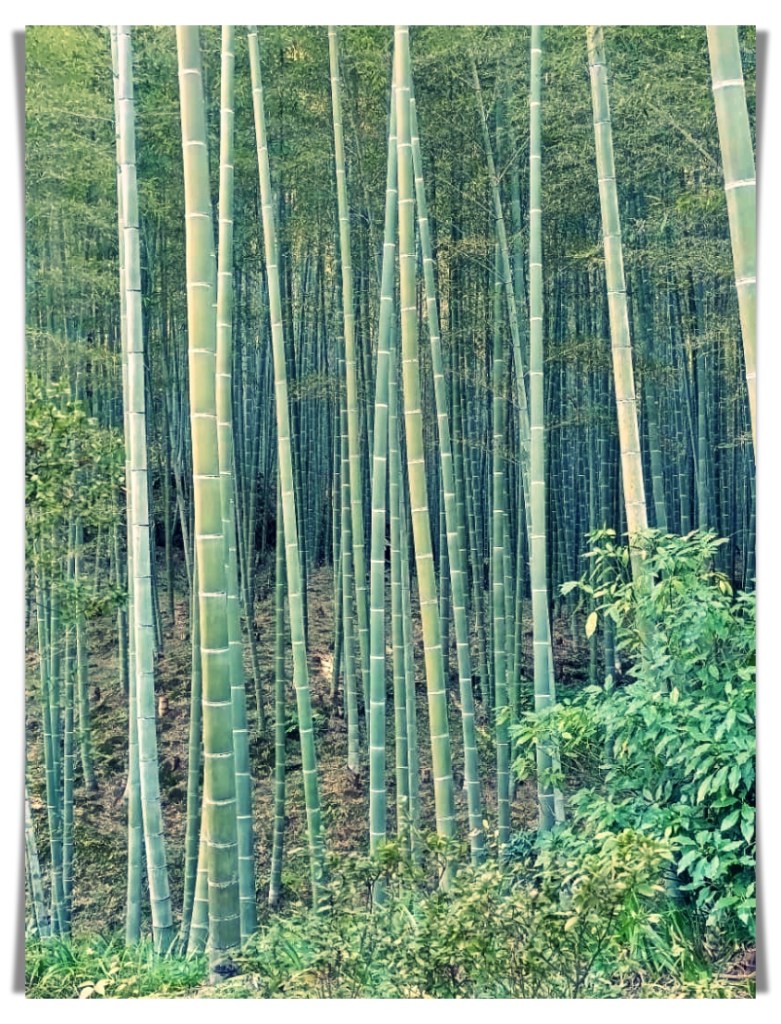
That mindset began to shift—slowly at first, then more clearly—as I read more about the Iban worldview. It wasn’t emotion or nostalgia that changed me, but understanding. I began to see that the Iban learned about life by watching the natural world. They noticed patterns in nature and connected them to how we live. For example, they saw how bamboo and banana plants grow in clusters. Each shoot is part of a single root system underground. If one shoot is unhealthy, it affects the others. When one dies, the root still supports new life. Death was not an ending but part of the cycle. This wasn’t superstition, but wisdom based on careful observation.

The bungai, the “plant-image” that represents each Iban person in the cosmic realm of Menjaya (the god of healing), began to make sense to me. I understood how it symbolized family and community. Each person is like a shoot, but we all come from the same root. When someone passes, the rest carry on, still connected. New life can grow from the same source. It’s a way of seeing life that is deeply connected and respectful of nature. The ancestors weren’t imagining things—they were describing the interconnected world they knew.

As I learned more, I started to feel a quiet pride in where I come from. I discovered that my ancestors included warriors and raja berani, people whose stories are still told in my family. I began to understand that even though I live far from my homeland, I am still part of that root system. This connection also extends to my children. They may not know all the customs or speak the language well, but the roots are still there. They are part of something that has been passed down through generations.

When I learned about beserara’ bungai, the ritual that separates the living from the dead, I felt something shift in me. This ritual is about care—not forgetting what we have lost. It helps both the living and the dead let go so they don’t hold each other back. The living need to keep moving forward, and the dead need peace on their journey to Sebayan. It’s a ritual of compassion that affirms the connection with the dead even as they journey on to the otherworld.

This understanding arrived at a time when I was wrestling with my own spiritual ties. I had been part of the same church community for many years. It shaped how I saw God, faith, and morality. But as I grew older, those teachings started to feel burdensome. I found myself questioning doctrines that encouraged separation from people who did not meet certain standards of spirituality. I began noticing the tension between fear-based expectations and the compassion-centered teachings of Jesus in the Gospels. As I continued to question, the burden of belonging to a system that no longer aligned with my conscience intensified.

Learning about beserara’ bungai gave me words for what I was feeling. I realized I was trying to protect my spirit. I wasn’t leaving faith behind—I was returning to what felt true. Jesus became the real rootstock. I wanted a faith grounded in his teachings: kindness, justice, presence, love, and compassion—not fear or guilt. I needed space to grow without feeling judged by a community that often equated questions with spiritual instability.

In a way, I’m experiencing my own kind of separation from the church rootstock. It is not a rejection of my past or of the people who have been a huge part of my life for the past two decades. It is a necessary separation so I can continue growing without feeling suffocated by expectations that no longer fit the life I am trying to build. I’m holding onto what still nourishes me and letting go of what drains me. The Iban worldview helped me understand that letting go can be a way of protecting both myself and the things I want to keep alive.

The more I reflect on it, the more I hope my children learn something different from what I learned in my early years of faith. I hope they are not afraid to ask questions. I hope they do not feel inferior in front of people who sound knowledgeable but speak without warmth. I want them to grow into a faith that welcomes curiosity, thoughtfulness, and conscience. I want them to recognize that their connection to God is direct, personal, and rooted in compassion—not fear. I want them to inherit a sense of strength that comes from understanding where they come from, both culturally and spiritually.

As I learn more about rituals like beserara’ bungai, I’ve come to understand that my ancestors didn’t divide life into “spiritual” and “ordinary.” Everything was connected. Life, death, nature, community, and spirit were all part of one whole. That way of seeing the world teaches me to live with care and humility. It shows me that letting go can be a loving act, and returning to our roots can take courage.


I write about Iban culture, ancestral rituals, creative life, emotional truths, and the quiet transformations of love, motherhood, and identity. If this speaks to you, subscribe and journey with me.
The Ritual of Water | An Iban Ceremony for New Life

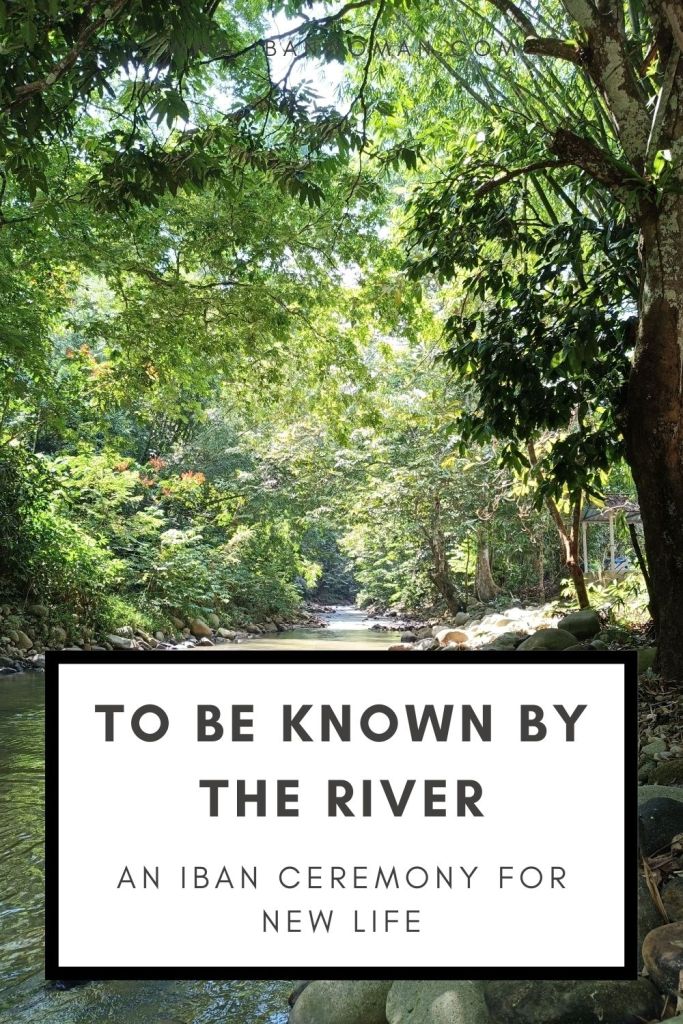
Last weekend, I found myself standing knee-deep in a shallow river in Janda Baik. The sunlight came through a canopy of trees above, casting soft streaks of light on the water’s surface. Everything felt quiet and peaceful. My kids splashed further upstream, and their laughter echoed off of rocks and trees. I stood still, closed my eyes, and let the water swirl around my legs as it flowed downstream.

It reminded me of the Iban traditional child-naming ritual. I’ve never seen it with my own eyes, but I learned about it from the elders and through reading. This ritual was held following the naming of the child and to formally “introduce” the child to the river. 

In the Iban way of life, water is more than a physical element. A body of water like a river is also a spiritual space. It gives life, but it is also a source of danger. We wash with water from the river, and sometimes, when the water is clear, we even drink and cook with it. It carries our boats to other villages, fields, and faraway places. However, it’s also where crocodiles and other dangers live. No Iban has grown up without hearing stories about someone who was attacked at the river. When a child is born, we don’t just give them a bath. We also hold a ritual to beg the river not to harm them. 

After the child is named, the bathing ritual begins. The night before the ceremony, the father informs the longhouse community of his intention. At dawn the next morning, the whole longhouse community walks to the river in a solemn procession. A flag bearer is at the front, and a man carrying a fowl follows him. Both of these men are chosen from among the respected elders. Two women walk behind them. One carries offerings and the other carries the child wrapped in handwoven pua kumbu. The rest follow, beating the gongs as they walk.

At the riverbank, the flag bearer cuts the water with a knife. The man with the fowl recites an invocation to call upon the spirits of water, earth, sky, and all the creatures that swim below the surface. He asks that the child be given good fortune, sharp vision, and safety. He calls the crocodile, the soft-shelled turtle, the barbus fish, the semah, and the tapah. He calls each one by name and tells them to regard this child as family, not food. He says, 

“If this son or grandson of ours happens to capsize and sink while he is visiting, you are the only ones who can lift him up and keep him afloat.”

It is not a metaphor but a real request, born out of fear and hope.

After the invocation, the child is bathed and the fowl is slaughtered. People make noise on purpose, like banging gongs and laughing, to drown out any bad omens. If the child is a boy, one wing of the bird is tied to a spear with red ribbon. The wing is attached to a heddle rod if it’s a girl. A bamboo basket full of offerings is then hung from a leafy pole. 

After that, they return to the longhouse and sprinkle the child with sacred water to get rid of bad omens. A feast is held and the gongs ring out to mark the ritual’s success. The child is now considered truly part of the community, and both the people and the river know it.

As I stood in that river at Janda Baik, I began to think about the rituals we’ve forgotten. What would it mean to reclaim a gesture like this, perhaps not literally but in spirit? The Ibans don’t all live in longhouses anymore. Some of us reside in cities and raise our kids as urbanites, but water still calls us. Maybe part of why we seek places like Janda Baik is because something in us still longs to make peace with the river. Rivers still take us places. They still give and take. And we too are still vulnerable to things we can’t see.

Maybe modern mothers need more moments like this, when they can recognize their fears, their prayers, and their desire to protect the people they love. We might not need to cut the water with a knife, but we can still offer a prayer, still whisper a blessing:

“We beseech you to confer on him fortune, give him sharp vision so that he will be fortunate, wealthy, and blessed with good health throughout his life. 

We can still speak to the river, and certainly we can still be heard. 


I write about Iban culture, ancestral rituals, creative life, emotional truths, and the quiet transformations of love, motherhood, and identity. If this speaks to you, subscribe and journey with me.

Marriage Traditions of the Iban of Sarawak, Borneo

Marriage is a timeless union that binds two souls together. It also functions as a mirror, reflecting the core of a community’s culture and identity. My people, the Iban of Sarawak, Borneo, fill their traditional wedding rituals with deep meanings based on ancestral traditions. However, these traditional ceremonies are gradually disappearing as time passes.

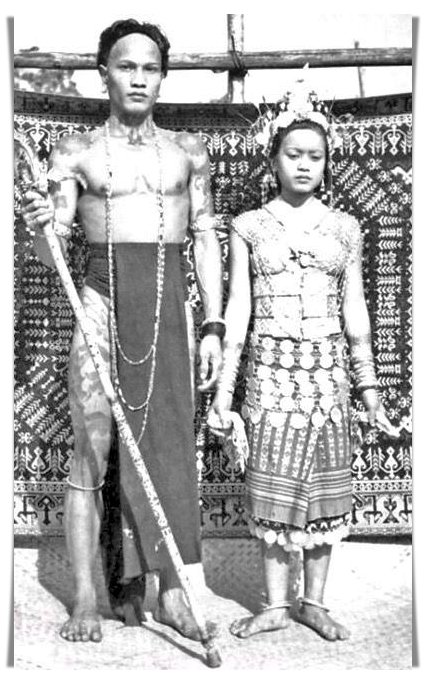
For the Iban, marriage was not just a bond between two individuals but a communion of families and communities. Traditionally, the groom’s parents carefully planned this arranged marriage. Ties of kinship often influence their choice of wife. Cousins were preferred matches because they preserved familial relationships while also reflecting the Iban’s value of unity within their extended network. When a bride was chosen, the groom’s parents would leave a rawai (silver girdle) or an ilang (sword) at her family’s home as proof of their dedication and intention.

Image source

The longhouse is the heart of Iban community life. During weddings, it becomes a lively epicenter. It was here that life and celebration collided, and the community joined together to honor the union. Careful planning is required days or weeks before the ceremony. This includes making tuak (rice wine) in enormous vats, preparing traditional buns and cookies, and selecting livestock for slaughter. Guests were invited with knotted strings to tally down the days till the celebration.

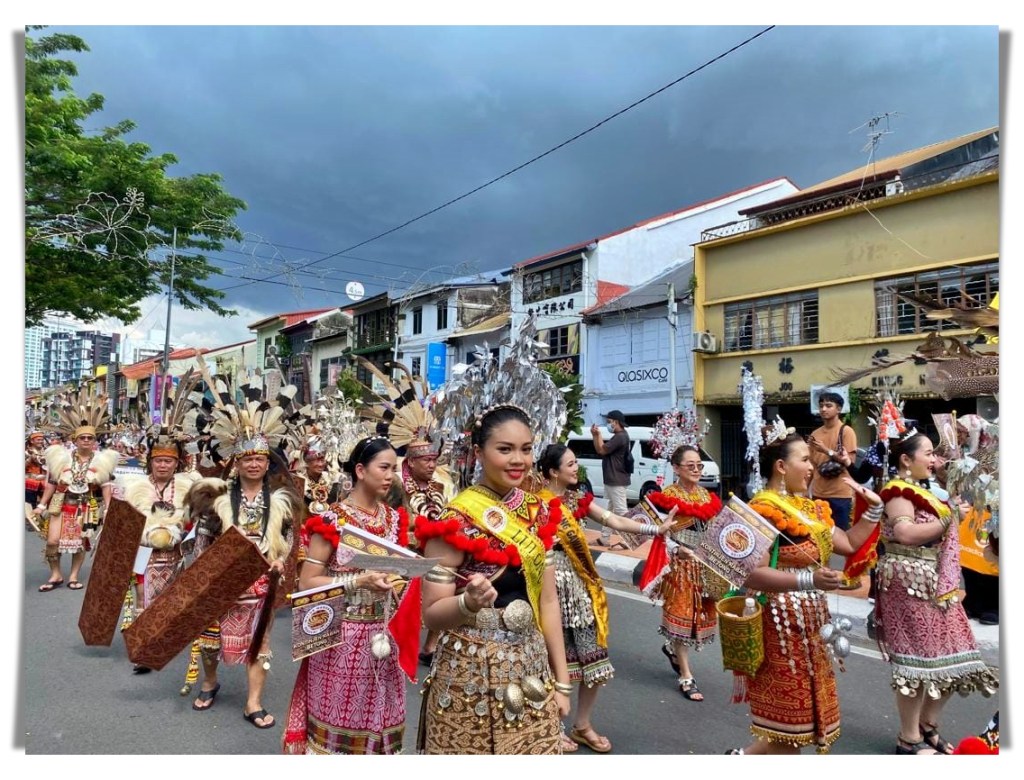
On the wedding day, the groom’s journey to the bride’s longhouse was a ceremony unto itself. The groom’s party traveled to the bride’s longhouse either by boat or on foot through the jungle. Guests were expected to dress in traditional ngepan (intricate traditional costumes), with women donning corsets or rawai (silver girdles) and men wearing armlets and feathers, among other traditional pieces. The groom’s party arrived to a joyous clash of gongs and the firing of brass cannons.

However, underneath the surface of celebration were rituals with deeper meanings. One of the most remarkable customs was the use of poetry or poetic language to provide the ceremony a sense of artistry and depth. When the official ceremony started, the host’s representative would offer the guest a drink, followed by a formal recitation inquiring about their purpose:

“I hesitate and feel nervous to talk in front of you all,
The reason I say so is because I realize that you are the mothers of porcupines,
Covered with cross-stripped white quills,
Pointed like bradawls.
I notice that you are the mothers of hornbills,
With tails striped,
crossing at right angles,
Which claim that they can fly to Brunei and return the same day.
I see that you are the mothers of bears,
Which have stout arms to make holes on the trunks of iron-wood trees.”

“We, therefore, have been sitting next to each other.
I would like to ask,
Which one of you is the mother of the hornbill?
For I am about to ask you to spit out the seeds of the belili tree,
In order that they can be picked up by a tall, unmarried lady,
So that they can be turned into the tusks of a pig,
As charms for the unripe ears left till the last in reaping,
With which we fill our padi bins.”
Poem source

These exchanges were rich in metaphor and eloquence. The poetic recitations continued throughout the ceremony, including a betusut (genealogical recitation) by an expert who detailed the bride and groom’s genealogy. This ritual not only validated the union but also ensured that the marriage respected cultural taboos and norms in order to avoid misfortune.

Image source

Elders sealed the union with feasting and storytelling, bestowing blessings and wisdom on the pair. They discussed respect, understanding, and the delicate balance required to navigate life together. Complex traditions and customs infused every action, from seating arrangements to gift exchange.

Today, such ceremonies are a rarity. The Iban embraced Christianity and Islam, abandoning many of their traditional practices in the process. The vibrant rituals of traditional Iban weddings now exist mostly in memory or retellings.

The ceremonies detailed here are not simply rituals. They depict a way of life that places a high priority on community, heritage, and balance. They remind us of the beauty of traditions that once connected people to their past while celebrating the present. The decline of this tradition is a loss not only for the Iban but also for the universal human story of connection, identity, and belonging.

The significance of the Iban wedding customs strikes me as I reflect on them. Marriage was never just about two people; it was about integrating their lives into the larger fabric of their community. It was about love, shared responsibility, and the power of a collective spirit.

Perhaps that is the true power of these traditions: their ability to touch something deep within us while also reminding us of the fragility and beauty of cultural heritage. And as we look forward, perhaps we have a tenacious hope that even as the old ways fade, their spirit will continue to shape the future in ways we may not fully comprehend.

Modern Iban weddingImage source.

Iban Culture | Gawai Antu @ Feast of the Dead – A Personal Journey Through Memory and Meaning

I don’t see a lot of articles anywhere that talk about the culture of my people, the Dayak Iban of Sarawak, Borneo. Maybe there are plenty in native languages, but so far not much is written in English, so I thought instead of lamenting about it, why not write it myself? I admit I don’t have a vast knowledge about my culture; however, it shouldn’t stop me from writing about what I know. In this post I’m going to talk about one aspect of our culture called Gawai Antu, or the Feast of the Dead. I believe the feast of the dead is widely celebrated worldwide across different countries and cultures. It’s no different with the Iban people. After all, who doesn’t want to memorialize and pay tribute to their departed loved ones?

The Iban people of Sarawak, Borneo, have a rich and deeply rooted culture that is shaped by mythology, oral traditions, and a close connection between the spiritual and physical worlds. At the heart of this culture are the many “gawai,” or feasts, that mark important moments in life, from celebrating a bountiful harvest (Gawai Dayak) to honoring the spirits of the departed (Gawai Antu). Each gawai carries its own meaning, traditions, and importance, but none have left a deeper impact on me than Gawai Antu, or the Feast of the Dead.

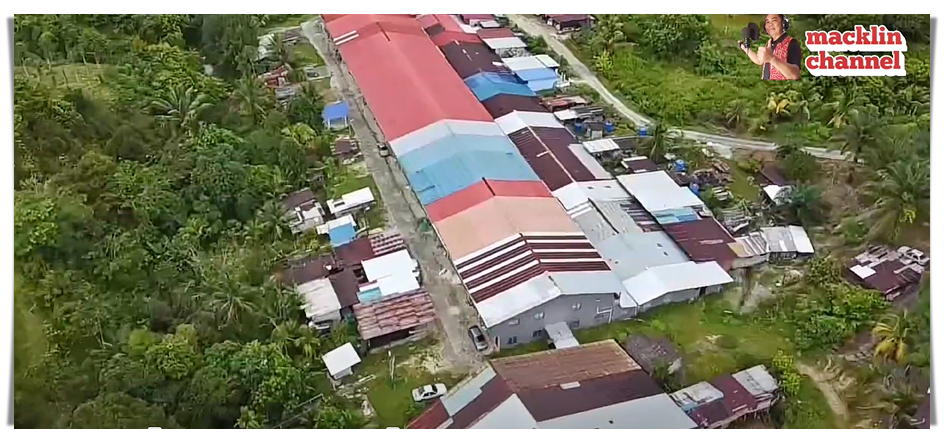
My father’s longhouse: Ng. Batang, Ulu Krian, Saratok. Image source: Youtube

I was ten years old when I first experienced Gawai Antu at my father’s longhouse in Ng. Batang, Ulu Krian, Saratok. At the time, I didn’t really understand its meaning. I just knew it was a rare and grand occasion that transformed the quiet longhouse into a place of celebration, ritual, and remembrance. Even now, decades later, I can still hear the loud gongs, see the elders in their ceremonial attire, and recall the haunting beauty of the invocations to the spirits and deities. It was a glimpse into something much bigger than myself, which was a connection between the living and the dead. This festival was deeply embedded into the very fabric of our identity.

Unlike Gawai Dayak, which is an annual celebration, Gawai Antu happens once in a generation. It is a collective effort that takes years of preparation, with families saving up to host this event in honor of their ancestors. This isn’t a normal feast. It’s an elaborate feast that symbolizes a final send-off for the souls of the departed. It’s a way of ensuring they are properly honored before moving on to the spirit world. It is both a farewell and a tribute, reinforcing the Iban belief that death is not an end but a transition to another realm.

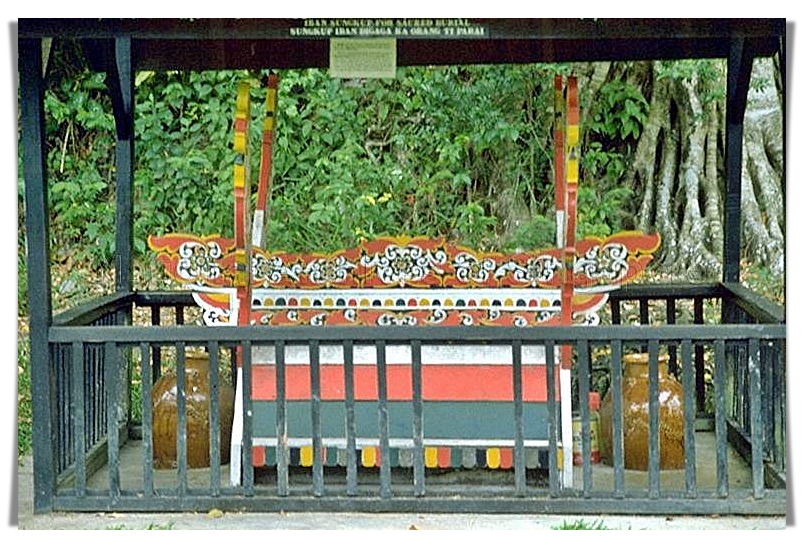
A “sungkup”. Image source: National Archives of Singapore

As a child, I was captivated by the sights and sounds of the festival. The longhouse came alive with music, laughter, and the smell of traditional food. Thousands of guests from neighboring longhouses (villages) gathered, filling the space with a sense of community and shared purpose. I watched as men skillfully built the “sungkup” (memorial huts) for the deceased, while women wove baskets called “garung” to hold the ceremonial rice wine, “tuak Indai Billai.”

One of the most mesmerizing rituals was “ngalu petara,” where men and women, dressed in their finest, marched through the longhouse to welcome the spirits of the dead. Another unforgettable moment was watching the “lemambang” (bards) chant poetic invocations while carrying bowls of “ai jalung” (special rice wine) from midnight until dawn. Their lyrics, which were passed down through generations, painted vivid images of the spirits’ journey from the afterlife back to their longhouse for one final feast with their loved ones. At 4 a.m., the honored “bujang berani” (men of valor) drank the “ai jalung” to symbolize a moment of pride and recognition.

Image source: My sister

It wasn’t until adulthood that I fully grasped the significance of Gawai Antu. It is a festival of remembrance and a reaffirmation of our roots. It’s a way of keeping our ancestors’ legacies alive. As an Iban living away from my homeland, these memories have become even more precious. They remind me of who I am and where I come from, especially in a world where modern life often pulls us away from traditional practices.

Writing about Gawai Antu feels like my own way of preserving this tradition. In many ways, storytelling serves the same purpose as the rituals. It honors the past by keeping memories alive and strengthening our sense of belonging. But I won’t lie; this responsibility sometimes feels overwhelming. I wonder if my children will ever truly understand the depth of these traditions, or if they will see them as outdated practices of a time long gone. Still, I hold onto hope that through stories, whether in poetry, essays, or simple conversations, I can spark their curiosity and encourage them to explore their roots.

“Bujang Berani”, a man of valor drinking the “ai jalung”. Image source: Gawai Antu documentary

If there is one thing Gawai Antu has taught me, it is the value of memory. In a society that sometimes stresses development over history, this feast is a reminder that our identity is both about who we are and where we came from. Honoring our ancestors involves acknowledging their difficulties, successes, and sacrifices, as well as understanding how they influence our lives now.

Decades after my first Gawai Antu, the memories are still fresh in my mind. The loud gongs, sacred chanting, and communal spirit are memories from my childhood as well as pieces of a greater story about connection, heritage, and meaning. Gawai Antu has taught me that remembering our ancestors means, in many ways, honoring ourselves, as we are the living continuation of their journey.

My poem, “Gawai Antu”.


Note:
A documentary about Gawai Antu was made several years ago, you may watch the trailer here:

I don’t have any photographs of Gawai Antu from my childhood. They are kept safely in my parents’ home in Sarawak. The photographs in this post are credited to the sources listed below each image. For more information on Gawai Antu, you may visit these sites:

The Gawai Antu
Gawai Antu – the documentary