A Visit to Borneo Cultures Museum, Kuching, Sarawak

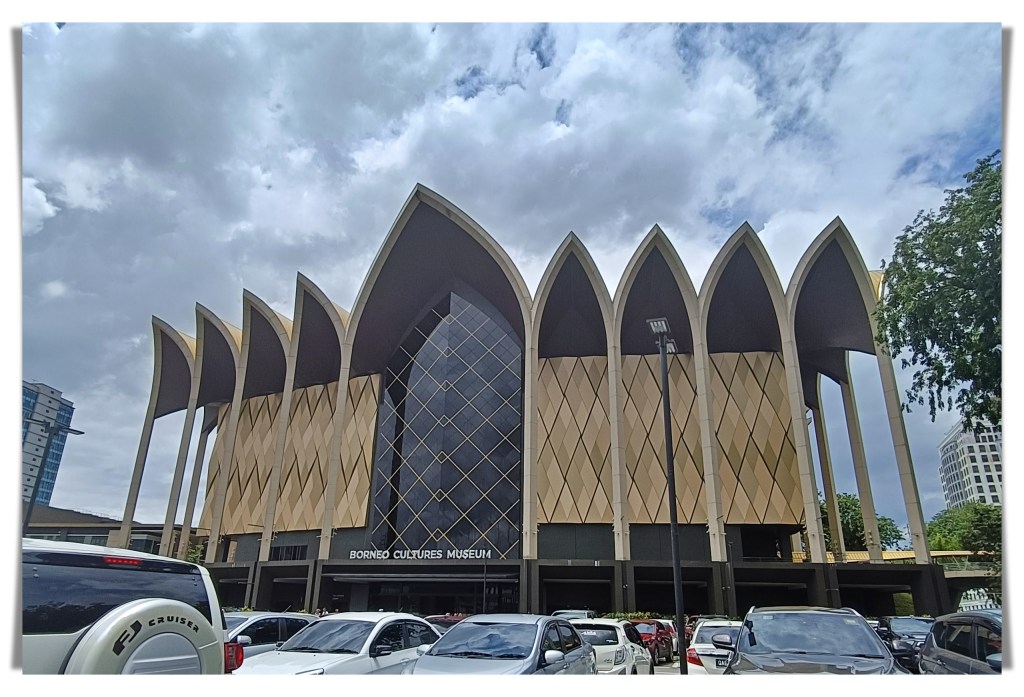
Have you heard of the Borneo Cultures Museum? It is in Kuching, Sarawak, and from the outside, it seems quiet, though the building looks very unique. However, the scale becomes clear once you get inside. It is the biggest museum in Malaysia and the second largest in Southeast Asia. My family and I visited on our last vacation to Kuching and spent a few hours there in the afternoon. We thought it would be enough, but it quickly became clear that it wasn’t.

There is too much to take in at once, so I will share a few things that caught my attention the most.

Repatriated bones of Niah Caves
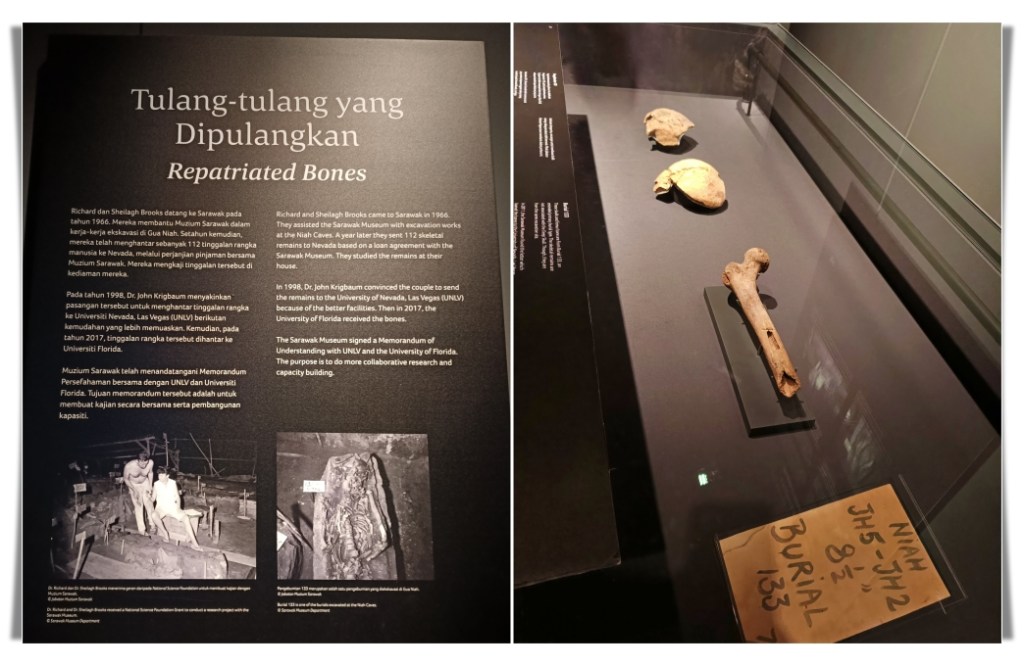
The repatriated bones from the Niah Caves were one of the first things that caught my attention. However, not all of the remains are displayed. Only fragments are shown, including one from Burial 133, which is part of the Neolithic cemetery found in the cave’s West Mouth. This site has one of the largest prehistoric burial cemeteries in Southeast Asia. Excavations in the 1950s and 1960s, as well as more recent studies, have found more than a hundred burials here. The University of Nevada used to keep these bones for research and safekeeping, but they have since been returned to Sarawak. I visited Niah Cave in my youth, and I have read about these bones in the past, and standing right beside them felt so surreal.

Orang Ulu Masks or the Hudo’ masks
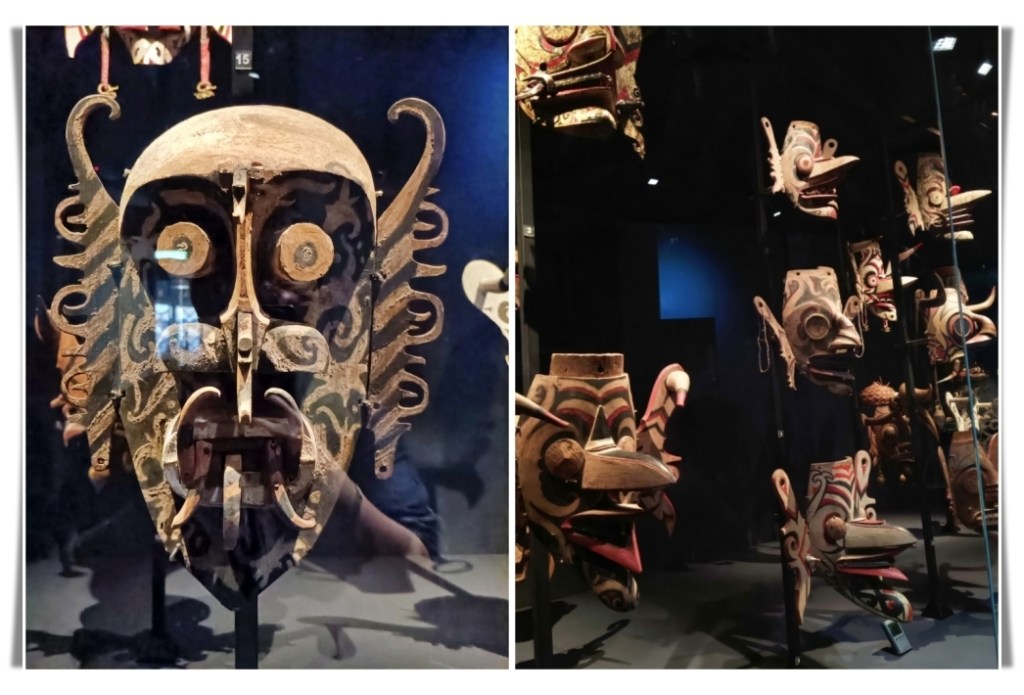
The Kayan and Kenyah people use these masks during harvest festivals to cast away bad spirits and make sure the crops are healthy. The masks are displayed on the fifth floor in the “Objects of Desire” gallery. I admit this section of the museum felt slightly unsettling with the masks quietly staring at you from the glass display. At first, I didn’t say anything but later, my sister said she felt the same way and even had goosebumps.

The Melanau burial pole or Jerunai
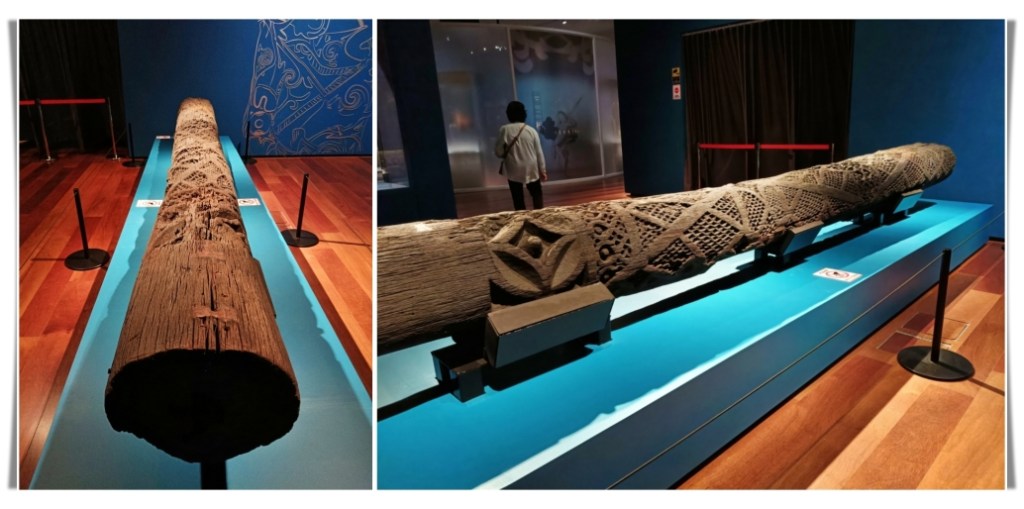
These carved wooden poles were used to bury wealthy Melanau people and nobility. The remains of the dead were placed in jars and kept in the hollow parts of the pole. The Jerunai was reserved for the Liko, or Melanau pagan nobility. Ancient rituals associated with the Jerunai often involved human sacrifice. Slaves were sometimes placed at the base of the structure believed to serve their dead master in the hereafter. This practice was long abolished when the community converted to Islam and Christianity.

Kelirieng – burial pole of the Punan Bah or Sekapan tribes
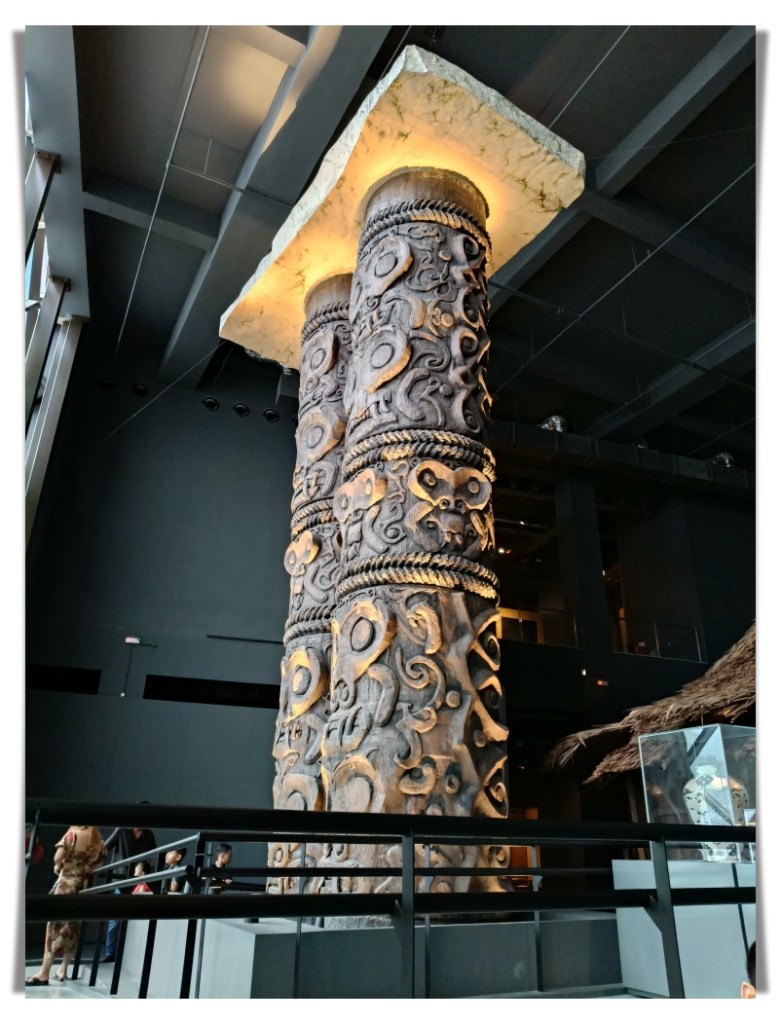
There was also a similar structure called the Kelirieng, a burial pole used by the Punan Bah and Sekapan communities. Like the Jerunai, it functioned as a secondary burial structure. The dead person’s bones were placed in large ceramic jars and then they were hauled up into a hollowed part at the top of the pole. The height of the structure symbolized status and was believed to bring the deceased closer to the spirit world.  To protect the jars, most of these poles have a huge stone slab on top.

However, the massive Kelirieng in this picture are replicas, and the original ones can be found outside within the museum’s compound. As I was staring at these burial poles, I kept thinking about the slaves. I heard that the slaves were crushed to death as they raised these poles on the ground. It’s a gruesome mental scene, but it’s part of our history. One benefit of religions is that they abolished slavery, as no one deserves to be treated as subhuman at the mercy of their masters. 

Headhunters swords
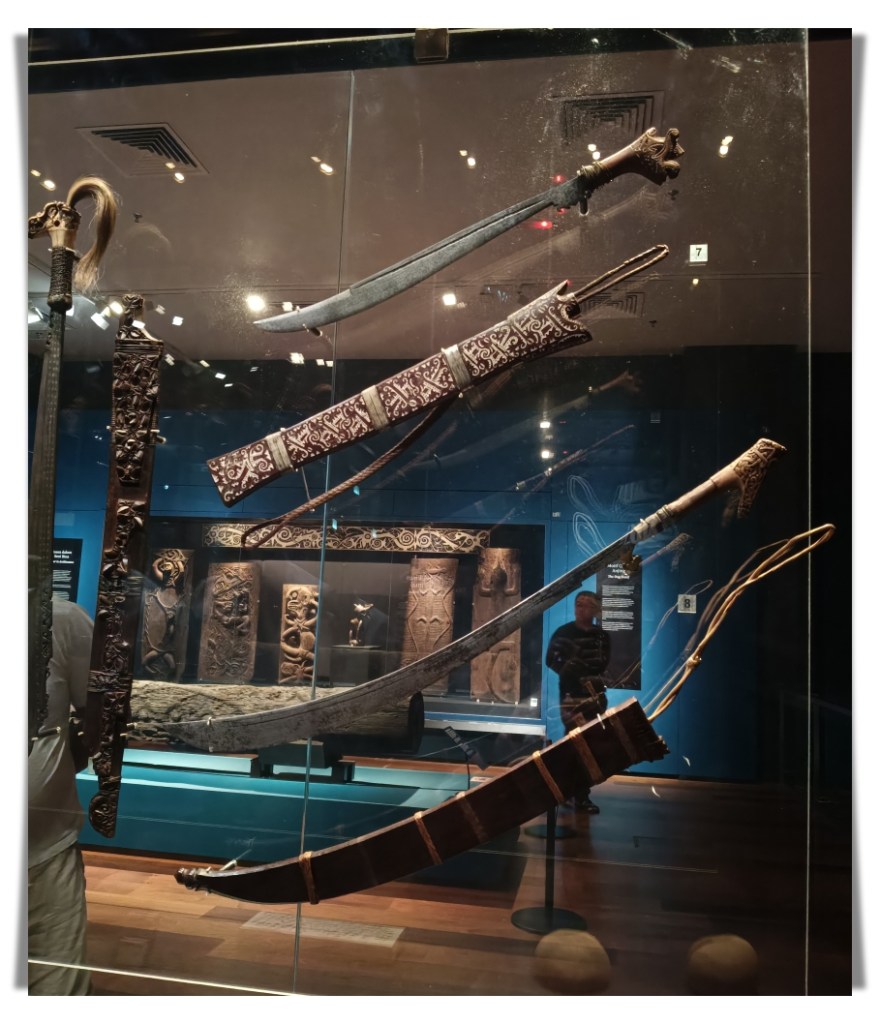
These swords were historically used for headhunting. While I was lingering near this exhibit and admiring their craftmanship, my husband had a different experience. He told me later that he felt a strong impulse, as if a voice was urging him to take one of the swords and kill someone. He felt so uncomfortable that he quickly left this section. I didn’t experience anything like that, and I believed him when he told me. The Iban people believe that such swords need to be kept properly, and certain rituals need to be conducted to appease the restless spirits of the swords. 

 Dayak human skull trophies
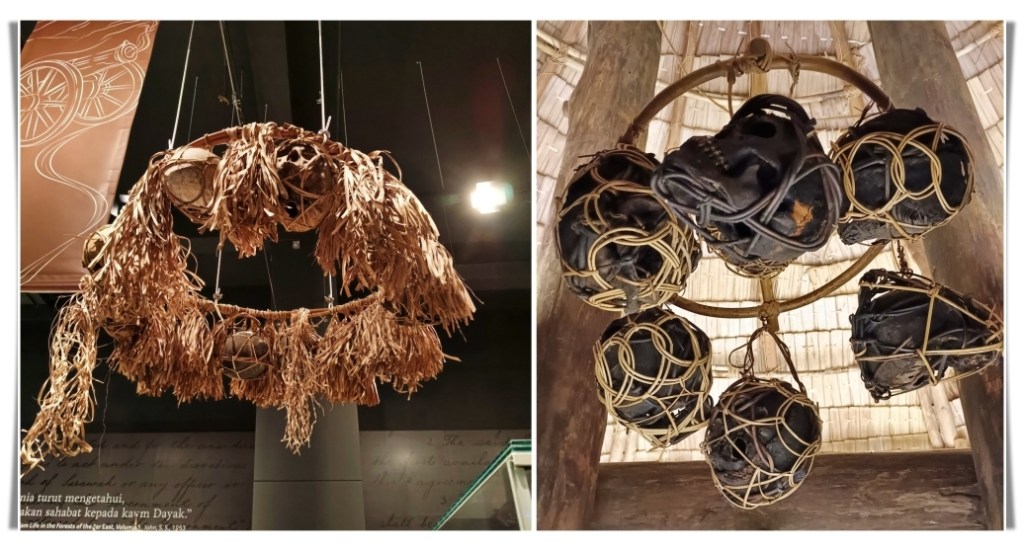
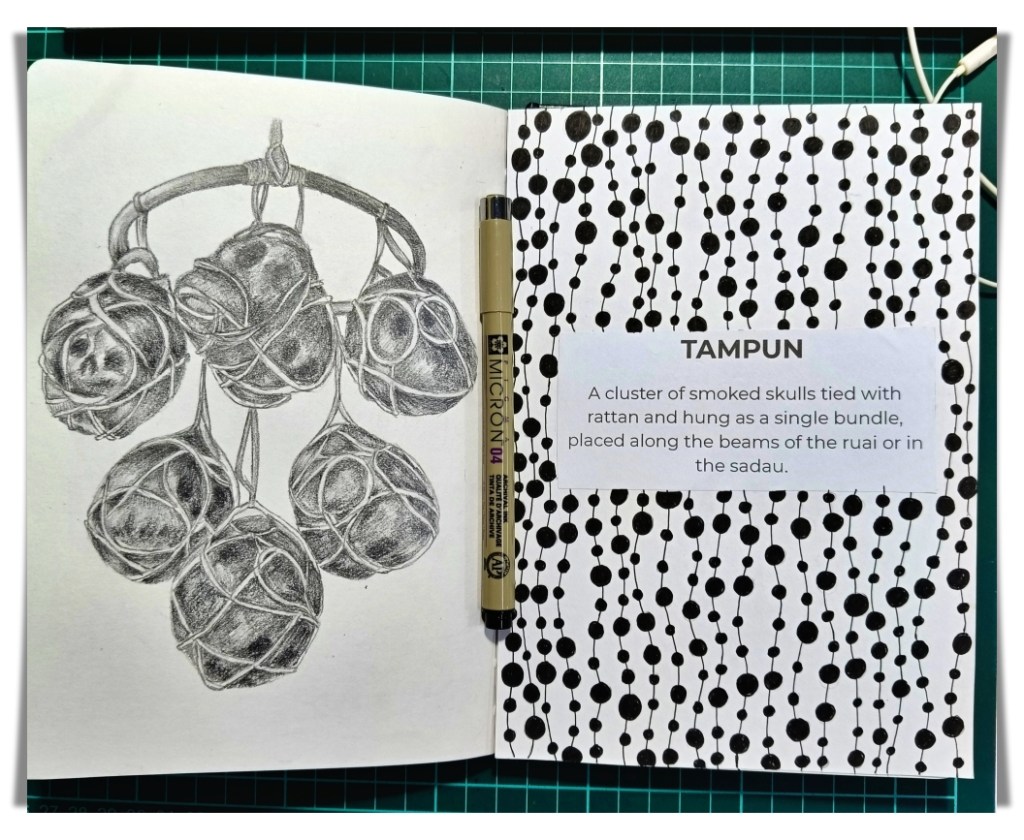
Finally, there were the skulls. These are real human skulls from Sarawak’s headhunting past. They are arranged in round rattan frames decorated with dried leaves. This collection is known as a tampun and is traditionally hung in the longhouse. Some of my relatives still keep them. The Iban people believe that the souls are still present, thus they should be treated with care. My family no longer keeps them, as my great-great grandparents gave up these practices after converting to Christianity in the early 20th century.

We were at the museum for about three hours, but it wasn’t enough time to view everything. If I go again, I shall go in the morning and take my time to view and read the information about every exhibit. You need to take your time so your visit will be totally worth it. 

If you ever go to Kuching, I suggest you spend a whole day there. It’s more than just looking at the exhibits. As I mentioned, I highly encourage you to understand the stories behind them in order to fully appreciate our cultures and Indigenous way of life.


I write about Iban culture, ancestral rituals, creative life, emotional truths, and the quiet transformations of love, motherhood, and identity. If this speaks to you, subscribe and journey with me.
Writing About Iban Culture Without Taking the Easy Way Out

Indu Iban
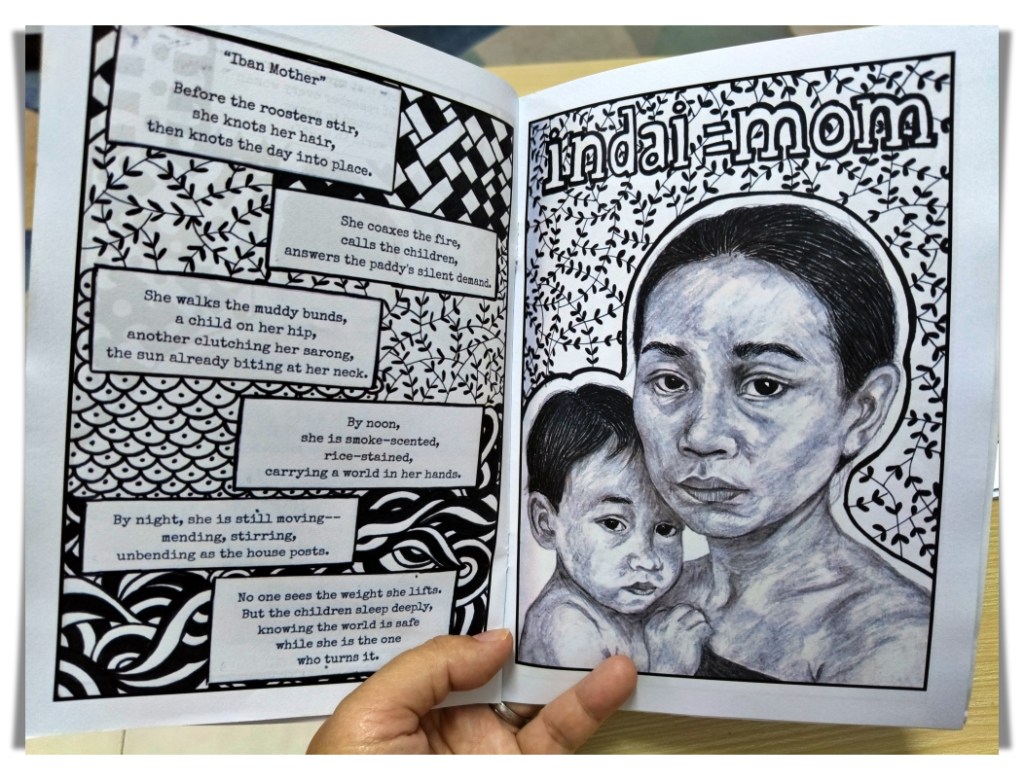
A spread from Iban Women zine

When I first read the CBC article on AI-generated Indigenous content, my stomach tightened. Not because I generated my content with AI, which I don’t, but because I understood how easy it would be for someone looking for Iban culture to find made-up “elders’ teachings” or made-up Iban phrases and think they were the real thing. I am an Iban woman living far from Sarawak and raising children of mixed heritage. While I utilize AI to assist in my writing process, I don’t generate it using an algorithm. My sources are from my family history and lived experiences. These are the datasets I train on. They are living memory and not predictive text.

The article quotes Michael Sherbert saying generative AI is “optimized for fluency, not for truth or for ethical or cultural responsibility.” I think about this every time I sit down to write a poem or draw cultural art. Cultural truth is difficult to tell and requires effort to check for accuracy. Telling cultural truth also means admitting I don’t know many things and need to learn from those who are more knowledgeable. I read all kinds of academic resources and cross-check my facts with family members before I post them on my blog or publish a new cultural zine. I avoid making assumptions, and when I am not sure of the accuracy, I admit that I don’t know and encourage others to share their experiences or information so we can all learn from one another.

Kaitlyn Lazore from the Mohawk community said something that stayed with me: “There’s no easy way to learn the language or gain culture without getting out in your community.” She is right. Still, I am raising my children far away from my homeland. I can’t take my children to a local social gathering to hear native speakers speak Iban. I can’t take them to Sungai Stambak and let the mud cling at their ankles like it did mine. So what do I do? I write and I draw. I make zines like Rituals and Rivers, Iban Women, and Iban Headhunters. I know that all these things are not substitutes for community. But they can turn into a perau, a small boat that will wait for them until they are ready to learn about their roots. They can launch it whenever they want. They can find their way to their roots through the names I’ve kept alive in my writings and art.

Budaya Iban
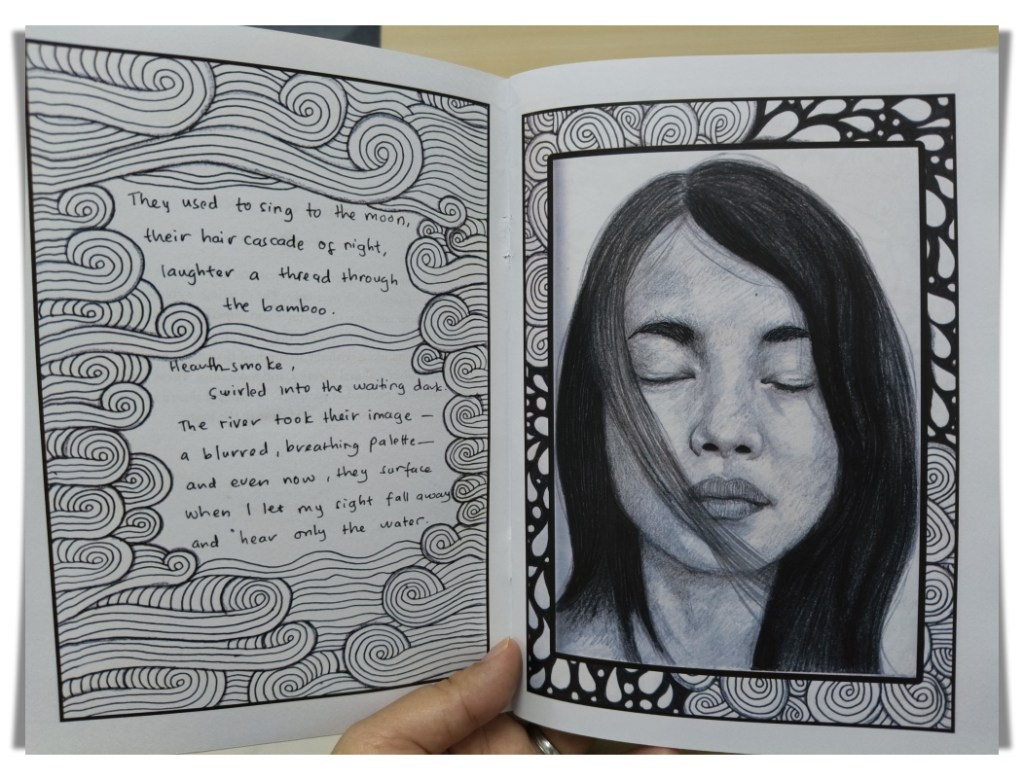
A spread from Iban Women zine

But I also do what the article emphasized: I am transparent. I include Iban words with definitions in most of the cultural poems I wrote. Every story distinguishes between traditional knowledge and my personal interpretation. I do not claim to be an elder. I am a mother and a learner who is learning to preserve her culture in her own ways.

The article talks about “pan-Indigenous representations that flatten distinct nations into one interchangeable identity.” This is very important to me. I am Iban, not a generic “Borneo culture” or simply an “Indigenous” group. When I write about details like the bungai terung tattoo motif, I name it instead of being vague. When I describe perau pengayau, I explain that they are tied to certain histories. My children are of mixed heritage, and I don’t want their Iban side becoming a blur; thus, I need to be more precise. Brian Ritchie of kama.ai said, “It can be difficult for any user to understand how responsible or accurate or authentic the information is.” That’s why I always mention my sources. I write down who my sources are: my family histories and Iban cultural experts or academicians. I don’t believe in vague statements like “tradition said this and this, so…”

My children may not grow up speaking Iban fluently. Some days, that thought breaks my heart. But they will know that their mother didn’t take the easy way out. She didn’t ask ChatGPT for a “traditional Iban sampi” and then copy and paste it. She had to deal with the pain of forgetting, so she read and conducted her own research to learn the real truth and facts.

Iban culture
A spread for an upcoming zine (still in progress)

At the end of the article, there is a reminder to use your judgment and ask for community vetting. This is what I would add: If you like my work, my poems, my art, or my zines, please also look for Iban elders or experts in Iban studies. Please use my work as an invitation to explore further. It should not be a replacement. I am just one voice who is trying to preserve my culture for the future generations. 

My children observe me write. They see me struggle with information, memory, and the pain of being far away from my homeland. And I hope that when they are adults, they will know the difference between something that is made up and something that is real. The difference between a perau that really floats on water and one that only exists in a machine’s algorithm. I will keep making perau until then: one article, one poem, one drawing, and one zine at a time.

When They Are Ready
for the ones I raise far from home

We build our lives on foreign soil,
where rivers have no stories
and the wind sighs emptily.
My children’s tongues are borrowed,
their laughter shaped by cities
that have never heard a gong.

I tell them of the longhouse glow,
the smell of rain,
the river bends like an elder.
They listen, but cannot feel
the ancient soil that holds their roots.

So I write these rivers into words,
each poem a small perau waiting.
When they are ready,
they will launch them,
navigate by the names I’ve kept alive
and find, at the source,
a home that never stopped calling.

(a poem from Rituals and Rivers)


I write about Iban culture, ancestral rituals, creative life, emotional truths, and the quiet transformations of love, motherhood, and identity. If this speaks to you, subscribe and journey with me.
Marriage Traditions of the Iban of Sarawak, Borneo

Marriage is a timeless union that binds two souls together. It also functions as a mirror, reflecting the core of a community’s culture and identity. My people, the Iban of Sarawak, Borneo, fill their traditional wedding rituals with deep meanings based on ancestral traditions. However, these traditional ceremonies are gradually disappearing as time passes.

For the Iban, marriage was not just a bond between two individuals but a communion of families and communities. Traditionally, the groom’s parents carefully planned this arranged marriage. Ties of kinship often influence their choice of wife. Cousins were preferred matches because they preserved familial relationships while also reflecting the Iban’s value of unity within their extended network. When a bride was chosen, the groom’s parents would leave a rawai (silver girdle) or an ilang (sword) at her family’s home as proof of their dedication and intention.

Image source

The longhouse is the heart of Iban community life. During weddings, it becomes a lively epicenter. It was here that life and celebration collided, and the community joined together to honor the union. Careful planning is required days or weeks before the ceremony. This includes making tuak (rice wine) in enormous vats, preparing traditional buns and cookies, and selecting livestock for slaughter. Guests were invited with knotted strings to tally down the days till the celebration.

On the wedding day, the groom’s journey to the bride’s longhouse was a ceremony unto itself. The groom’s party traveled to the bride’s longhouse either by boat or on foot through the jungle. Guests were expected to dress in traditional ngepan (intricate traditional costumes), with women donning corsets or rawai (silver girdles) and men wearing armlets and feathers, among other traditional pieces. The groom’s party arrived to a joyous clash of gongs and the firing of brass cannons.

However, underneath the surface of celebration were rituals with deeper meanings. One of the most remarkable customs was the use of poetry or poetic language to provide the ceremony a sense of artistry and depth. When the official ceremony started, the host’s representative would offer the guest a drink, followed by a formal recitation inquiring about their purpose:

“I hesitate and feel nervous to talk in front of you all,
The reason I say so is because I realize that you are the mothers of porcupines,
Covered with cross-stripped white quills,
Pointed like bradawls.
I notice that you are the mothers of hornbills,
With tails striped,
crossing at right angles,
Which claim that they can fly to Brunei and return the same day.
I see that you are the mothers of bears,
Which have stout arms to make holes on the trunks of iron-wood trees.”

“We, therefore, have been sitting next to each other.
I would like to ask,
Which one of you is the mother of the hornbill?
For I am about to ask you to spit out the seeds of the belili tree,
In order that they can be picked up by a tall, unmarried lady,
So that they can be turned into the tusks of a pig,
As charms for the unripe ears left till the last in reaping,
With which we fill our padi bins.”
Poem source

These exchanges were rich in metaphor and eloquence. The poetic recitations continued throughout the ceremony, including a betusut (genealogical recitation) by an expert who detailed the bride and groom’s genealogy. This ritual not only validated the union but also ensured that the marriage respected cultural taboos and norms in order to avoid misfortune.

Image source

Elders sealed the union with feasting and storytelling, bestowing blessings and wisdom on the pair. They discussed respect, understanding, and the delicate balance required to navigate life together. Complex traditions and customs infused every action, from seating arrangements to gift exchange.

Today, such ceremonies are a rarity. The Iban embraced Christianity and Islam, abandoning many of their traditional practices in the process. The vibrant rituals of traditional Iban weddings now exist mostly in memory or retellings.

The ceremonies detailed here are not simply rituals. They depict a way of life that places a high priority on community, heritage, and balance. They remind us of the beauty of traditions that once connected people to their past while celebrating the present. The decline of this tradition is a loss not only for the Iban but also for the universal human story of connection, identity, and belonging.

The significance of the Iban wedding customs strikes me as I reflect on them. Marriage was never just about two people; it was about integrating their lives into the larger fabric of their community. It was about love, shared responsibility, and the power of a collective spirit.

Perhaps that is the true power of these traditions: their ability to touch something deep within us while also reminding us of the fragility and beauty of cultural heritage. And as we look forward, perhaps we have a tenacious hope that even as the old ways fade, their spirit will continue to shape the future in ways we may not fully comprehend.

Modern Iban weddingImage source.