

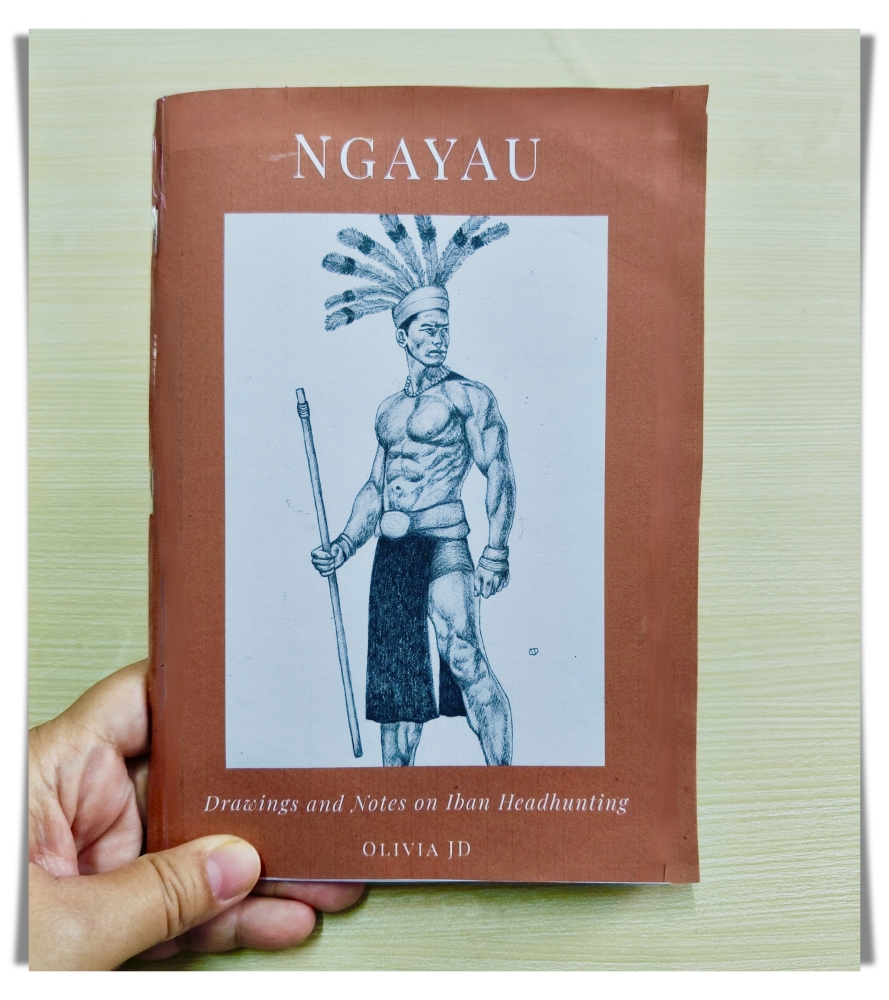
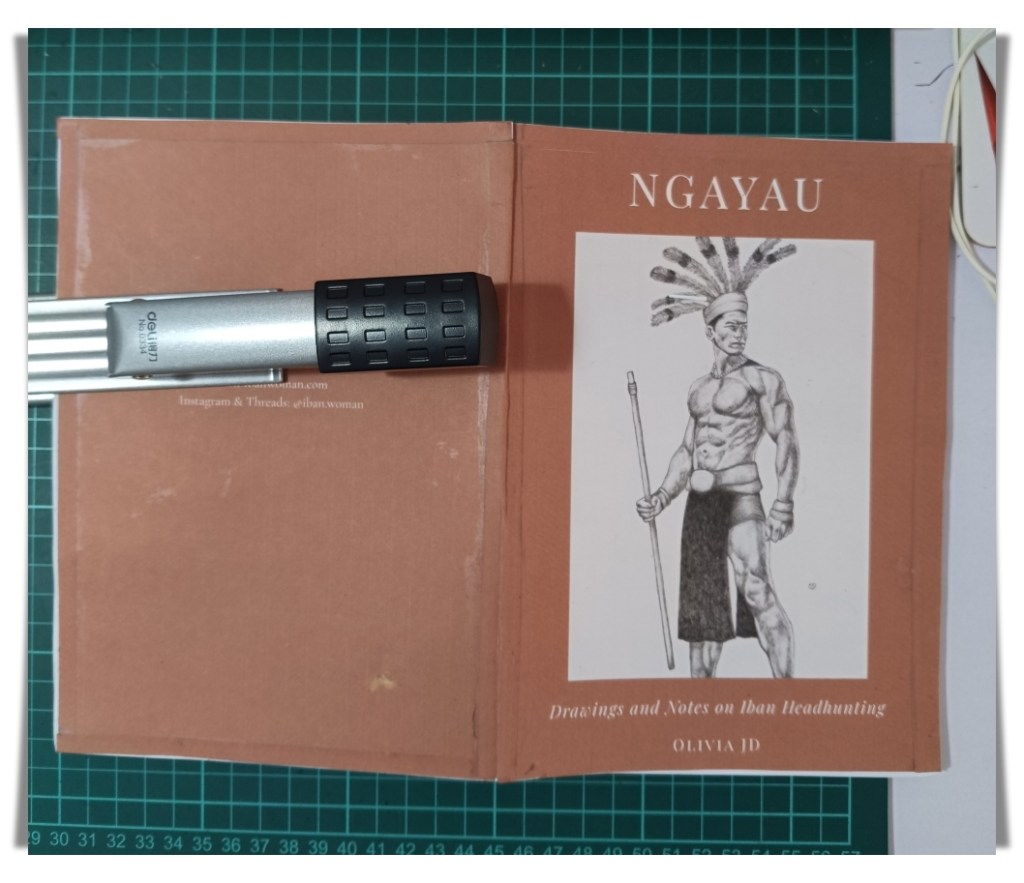
A few weeks ago I started putting together the first physical prototype of Ngayau, a small zine that explores Iban headhunting through drawings and short notes. At first it was just pencil drawings scattered on my desk. These drawings were of warriors and handwritten notes of research I made regarding the subject. At some point these materials began to form a real booklet.
There’s satisfaction after seeing your own work in booklet form for the first time. A PDF on a screen may looks good but it feels temporary and obviously untouchable. But after the pages are printed and folded and cut and glued together, the work suddenly has weight. It becomes a tangible thing that you can put on a shelf, forget for years, and rediscover again.
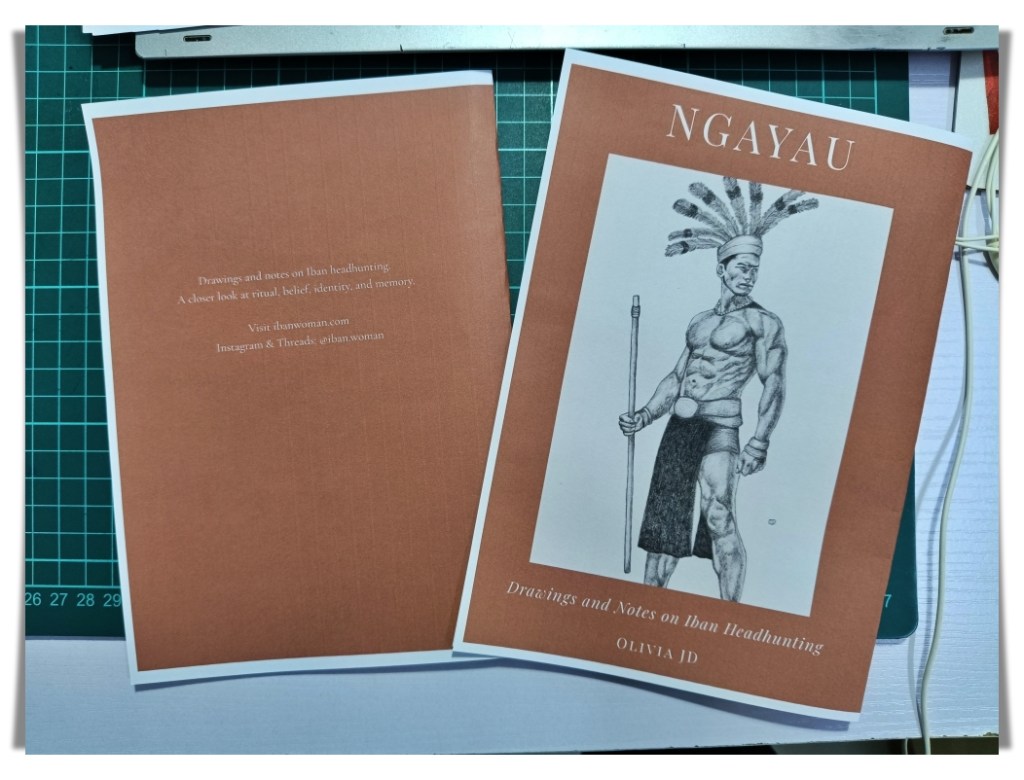
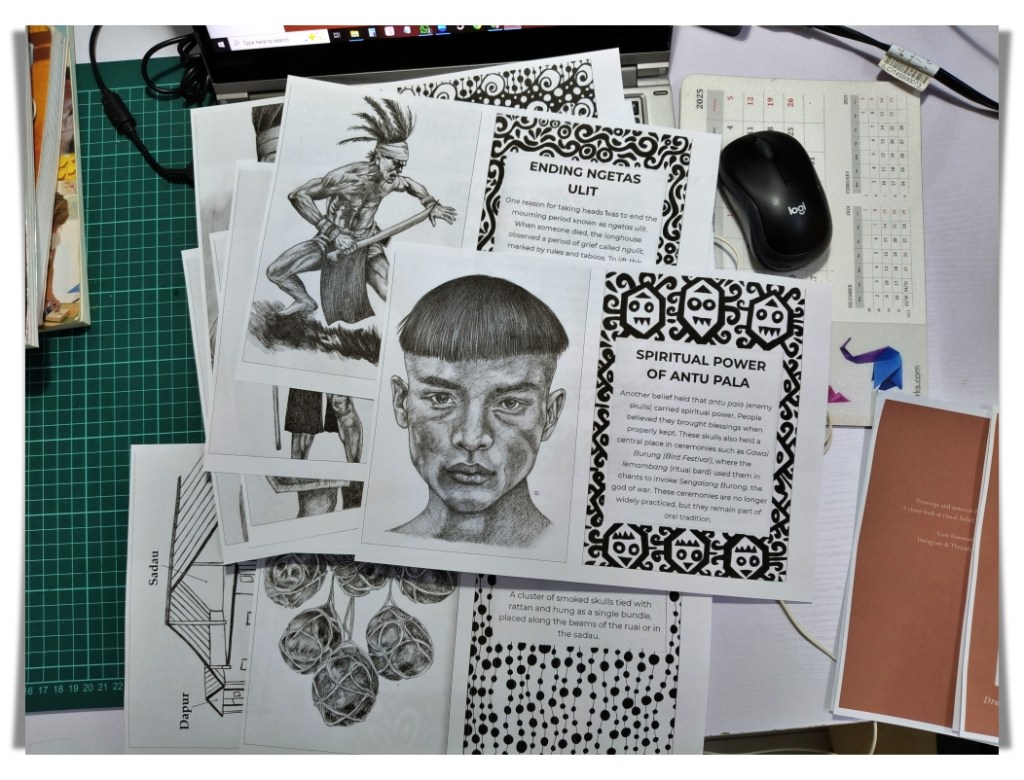
I wanted Ngayau to feel simple and homemade. Not shiny or over-designed. The process itself was messier than I had thought. I adjusted margins repeatedly, reprinted pages after noticing tiny alignment issues, and spent hours arranging drawings beside explanatory texts. My desk gradually disappeared under graphite drawings, patterned layouts, failed prints, paper trimmings, and coffee mugs.
Some of the drawings were made years before the zine was even in my mind. Seeing them all at once hit me more than I thought, like pieces from different times of my life had finally met. What interests me most about this subject is not violence for the sake of spectacle. I am more fascinated by the worldview surrounding it, grieving rituals, spiritual beliefs, protection, courage, sorrow, memory, and the way Iban culture interpreted the interaction between the living and the unseen world.
Modern discussions about Iban headhunting often reduce it to a caricature. The Ibans of old are seen as savage, primitive, and brutal. But history is rarely simple. The more I explore and create, the more I see how much ritual, spirituality, and community importance were embedded in activities that outsiders typically dismiss as shock value. This zine is not an attempt to glorify the past. My goal is to see it as it is without dismissing it as barbaric, understand the reasons behind this practice, and finally pass the knowledge to others. I felt content when I had finished the prototype. It felt like coming home to something that was meant to be held and shared after sitting in my mind for months.
I write about Iban culture, ancestral rituals, creative life, emotional truths, and the quiet transformations of love, motherhood, and identity. If this speaks to you, subscribe and journey with me.
 Olivia's Atelier