Antu Ngarung | The Guardian Spirit That Shapes My Iban Identity

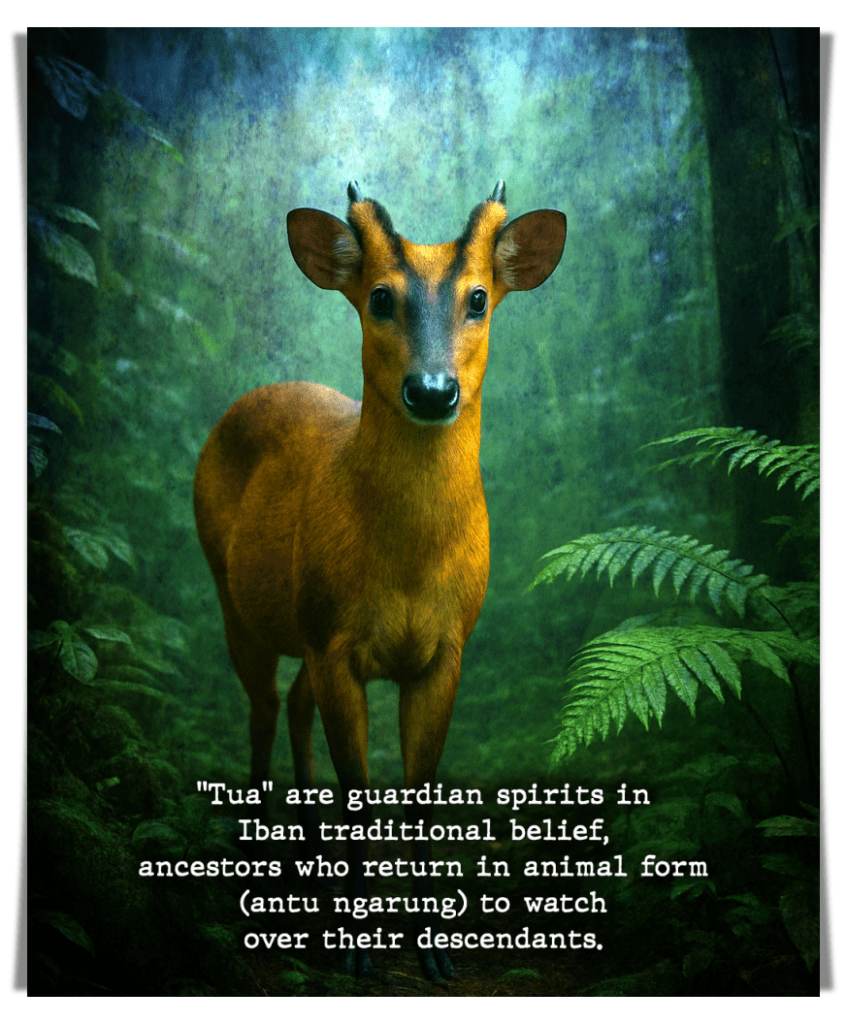
In Iban belief, the souls of those who die go to Sebayan, the afterworld. Some remain there permanently, but certain individuals are believed to return. These are people who lived with exceptional courage or accomplishment during their lifetime. When these ancestors come back, they do not appear as humans. They come ngarung, meaning concealed, taking the form of animals. These returning spirits are called tua, or guardian spirits.

In the Saribas region, guardian spirits are often seen as snakes such as cobras or pythons. They move quietly, stay in the shadows, and leave without drawing attention. When I picture antu ngarung, I always imagine a cobra coiled in the dark corner of a house or at the edge of the forest. It stays still for a long time and slips away the moment it decides to leave. To many people, it would be just an ordinary animal. To us, it can be an ancestor paying a visit.

A guardian spirit usually belongs to an entire lineage. Because of that connection, the family must never harm or eat the animal that represents their guardian. This is a form of respect. The belief is straightforward: the guardian protects the family, and the family must protect the guardian’s form on earth.

In my family, our guardian is the kijang, the Bornean yellow muntjac. When I was four or five, my late grandparents reminded us repeatedly never to harm, kill, or eat kijang. They did not offer long explanations, but the message was clear. Someone in our line was once a brave person, and that ancestor is believed to return as the kijang to watch over us.

That instruction frightened me growing up. I was afraid I might break the rule by accident. I used to remind myself to always ask what kind of meat was being served when we visited people. At that age, it felt like a tremendous responsibility. Over time, the fear changed. I started to feel that my life was connected to something older and larger than myself. I also realised that this experience was not common among many non-Iban communities, which made me value my heritage even more.

The belief in the kijang has shaped the way I understand myself. It gives me a sense of courage. I am still afraid of many things, but this belief keeps me steady. It reminds me that my ancestors lived through hardship, violence, and uncertainty. My problems today are nothing like what they endured. I often tell myself to live in a way that does not dishonor the people who came before me. I exist today because they survived so much. That thought helps me face difficult moments.

When I imagine the kijang watching me now, I think it sees a woman who lives differently from the Iban women of earlier generations. My lifestyle and interests are not the same. Yet I believe it recognises my effort to understand my roots. It may also encourage me to continue forging my own path even when no one else in my family is doing this kind of work. Many women in my family excel in traditional crafts like beadwork and weaving, but none of them are writers. I have to accept that I may be the first woman in my family to preserve our heritage through writing. Someone younger in the future may look at my work the way I once looked at my namesake, the master weaver. Remembering this keeps me going, even when the work feels lonely.

This leads to something important.

We risk losing our identity when we do not learn about our heritage. The loss does not happen suddenly. It happens slowly. We begin identifying more with other cultures. We forget the meaning behind our names, our customs, and our stories. When we fail to protect what we inherit, we leave an empty space that can be filled by influences that do not reflect who we are. This is happening in many communities around the world, and the Iban are no exception.

Iban identity will not endure by chance. It survives because someone chooses to learn, write, document, and share it. It stays alive when people believe their heritage is worth protecting. It continues when people care enough to ask questions and remember the stories their elders passed down.

Our ancestors returned as antu ngarung for a reason. We owe it to them to honor the heritage they entrusted to us.


I write about Iban culture, ancestral rituals, creative life, emotional truths, and the quiet transformations of love, motherhood, and identity. If this speaks to you, subscribe and journey with me.

What Beserara’ Bungai Taught Me About Letting Go

I used to think that rituals like beserara’ bungai were just old traditions that had no place in today’s world. Growing up, I believed they belonged to the past. I thought the Iban needed to leave them behind to move forward. Whenever elders talked about these beliefs, I felt restless. My world revolved around progress, education, and the principles of organized religion. I didn’t see the value of rituals, and I never took the time to understand what they really meant.

That mindset began to shift—slowly at first, then more clearly—as I read more about the Iban worldview. It wasn’t emotion or nostalgia that changed me, but understanding. I began to see that the Iban learned about life by watching the natural world. They noticed patterns in nature and connected them to how we live. For example, they saw how bamboo and banana plants grow in clusters. Each shoot is part of a single root system underground. If one shoot is unhealthy, it affects the others. When one dies, the root still supports new life. Death was not an ending but part of the cycle. This wasn’t superstition, but wisdom based on careful observation.

The bungai, the “plant-image” that represents each Iban person in the cosmic realm of Menjaya (the god of healing), began to make sense to me. I understood how it symbolized family and community. Each person is like a shoot, but we all come from the same root. When someone passes, the rest carry on, still connected. New life can grow from the same source. It’s a way of seeing life that is deeply connected and respectful of nature. The ancestors weren’t imagining things—they were describing the interconnected world they knew.

As I learned more, I started to feel a quiet pride in where I come from. I discovered that my ancestors included warriors and raja berani, people whose stories are still told in my family. I began to understand that even though I live far from my homeland, I am still part of that root system. This connection also extends to my children. They may not know all the customs or speak the language well, but the roots are still there. They are part of something that has been passed down through generations.

When I learned about beserara’ bungai, the ritual that separates the living from the dead, I felt something shift in me. This ritual is about care—not forgetting what we have lost. It helps both the living and the dead let go so they don’t hold each other back. The living need to keep moving forward, and the dead need peace on their journey to Sebayan. It’s a ritual of compassion that affirms the connection with the dead even as they journey on to the otherworld.

This understanding arrived at a time when I was wrestling with my own spiritual ties. I had been part of the same church community for many years. It shaped how I saw God, faith, and morality. But as I grew older, those teachings started to feel burdensome. I found myself questioning doctrines that encouraged separation from people who did not meet certain standards of spirituality. I began noticing the tension between fear-based expectations and the compassion-centered teachings of Jesus in the Gospels. As I continued to question, the burden of belonging to a system that no longer aligned with my conscience intensified.

Learning about beserara’ bungai gave me words for what I was feeling. I realized I was trying to protect my spirit. I wasn’t leaving faith behind—I was returning to what felt true. Jesus became the real rootstock. I wanted a faith grounded in his teachings: kindness, justice, presence, love, and compassion—not fear or guilt. I needed space to grow without feeling judged by a community that often equated questions with spiritual instability.

In a way, I’m experiencing my own kind of separation from the church rootstock. It is not a rejection of my past or of the people who have been a huge part of my life for the past two decades. It is a necessary separation so I can continue growing without feeling suffocated by expectations that no longer fit the life I am trying to build. I’m holding onto what still nourishes me and letting go of what drains me. The Iban worldview helped me understand that letting go can be a way of protecting both myself and the things I want to keep alive.

The more I reflect on it, the more I hope my children learn something different from what I learned in my early years of faith. I hope they are not afraid to ask questions. I hope they do not feel inferior in front of people who sound knowledgeable but speak without warmth. I want them to grow into a faith that welcomes curiosity, thoughtfulness, and conscience. I want them to recognize that their connection to God is direct, personal, and rooted in compassion—not fear. I want them to inherit a sense of strength that comes from understanding where they come from, both culturally and spiritually.

As I learn more about rituals like beserara’ bungai, I’ve come to understand that my ancestors didn’t divide life into “spiritual” and “ordinary.” Everything was connected. Life, death, nature, community, and spirit were all part of one whole. That way of seeing the world teaches me to live with care and humility. It shows me that letting go can be a loving act, and returning to our roots can take courage.


I write about Iban culture, ancestral rituals, creative life, emotional truths, and the quiet transformations of love, motherhood, and identity. If this speaks to you, subscribe and journey with me.
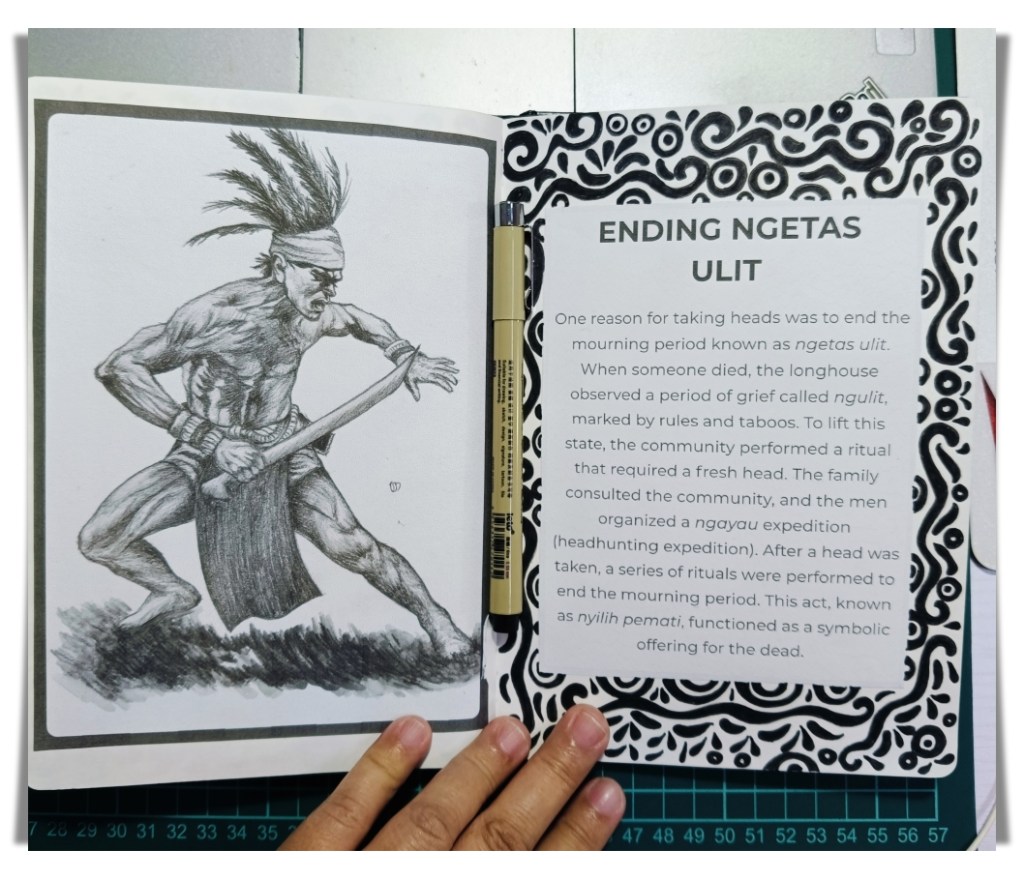
The Bungai: Ancestry, Identity, and the Iban Connection to Nature

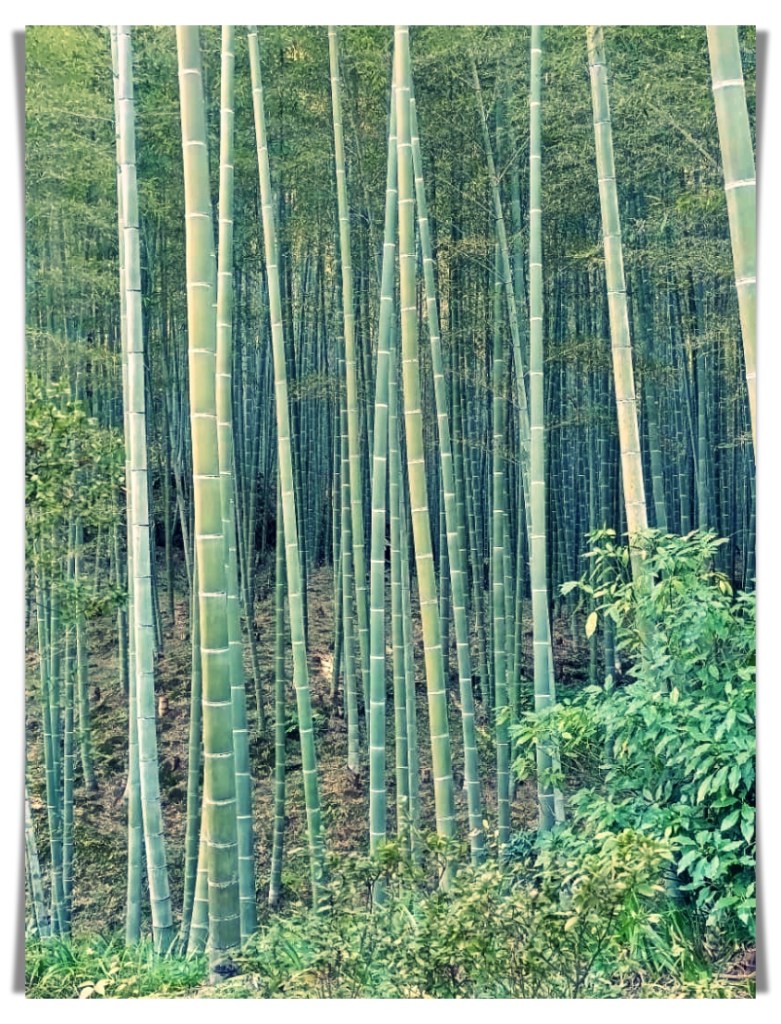
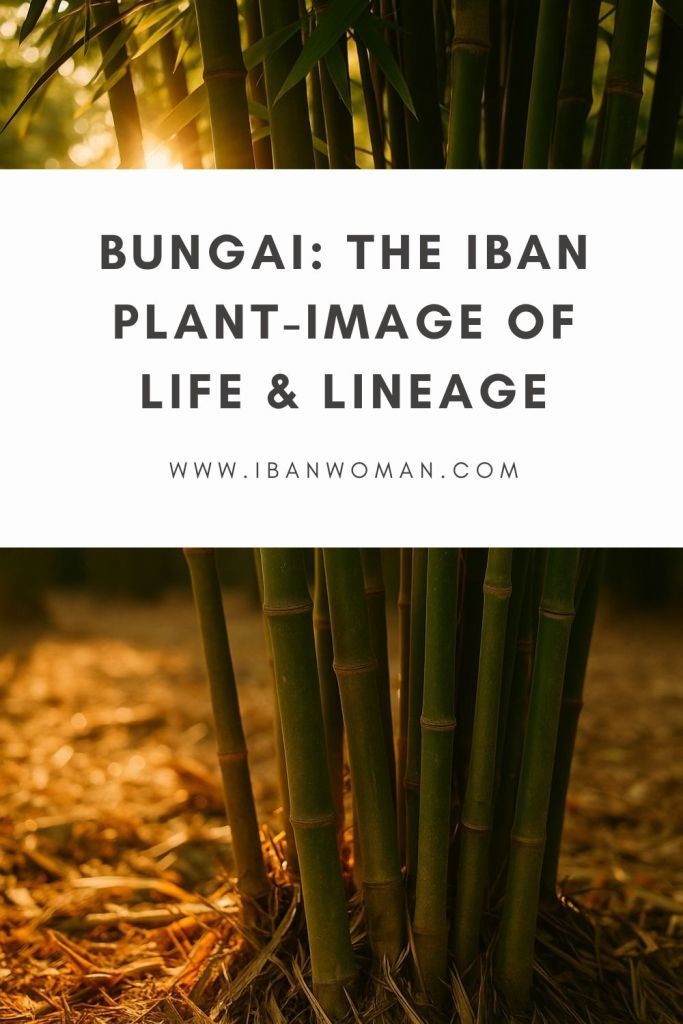
The Iban believe that the self is not limited to the body or the soul that wanders in dreams. Our ancestors believed that each person has a bungai, which is a plant-image that lives in the invisible world of Manang Menjaya, the god of healing. This plant-image takes the form of bamboo or banana and grows in clumps from a single rootstock. It is a powerful way of understanding human life. The bungai grows, strengthens, weakens, dies, and falls to the ground, just as a person does.

When I first heard about this idea, it stuck with me for days. It helped me see the forest differently and understand why the Iban imagine the community the way they do. In this worldview, no one grows alone. We rise from the same source. Relationships, ancestry, and connections we can’t see hold us together in ways that go far beyond our personal stories. This belief feels very grounding at a time when many of us feel adrift or disconnected.

The choice of bamboo and banana is meaningful. These plants do not grow by themselves. They grow in clumps, called bepumpun. A single shoot is part of a larger body that gets its nutrients from the same soil and root. Every shoot has its own height, shape, and direction, but they all come from the same source. This is how the Iban once understood family. A family is one clump. A longhouse community is made up of many clumps. The forest itself becomes a reflection of the social world.

This is not a metaphor for the sake of beauty. People who live close to the land learn its pattern by observing it daily. The Iban watched how plants behave, how they survive storms, and how they keep growing new shoots even after the old ones fall off. The Iban were shaped by the rainforest, and it was a teacher, a mirror, and a guide.

The bungai makes this idea clearer. It shows us that each person is both unique and part of a lineage. A child is a new shoot from an old rootstock. The state of one shoot affects the whole clump. The well-being of the entire garden reflects the condition of the longhouse. No one exists apart from the others who stand beside them. Even in the unseen world, the Iban imagined people living bepumpun, connected through generations, place, memory, and spiritual obligations. 

I find this comforting. There were times in my life when I felt distant from my roots. Leaving home for school, work and marriage created gaps I did not understand at the time. I lived away from Sarawak for many years. I felt as though I was a shoot attempting to thrive in soil that was not my own. Learning about the bungai made me see that the rootstock never disappears. The connection stays even after we leave. We are still held by the unseen garden. It doesn’t matter how far someone travels; the lineage remains.

Another thing I appreciate about the bungai is how it reflects emotional and spiritual states. The bungai becomes weaker when a person is sick. It withers when the soul wanders. This worldview recognizes how closely the body, mind, and emotions are connected. It respects how complicated it is to be human. A withered feeling is not seen as weakness but as a sign that the self needs care, grounding, or healing. Manang Menjaya is responsible for this realm, taking care of the gardens of human life like a healer tends to the sick. It is a gentle belief shaped by compassion.

The idea that the bungai falls when someone dies is also meaningful. The clump remains alive and ready to push a new shoot upward for the next generation. The rootstock stays strong. The lineage continues. There is sorrow, but there is also continuity. The living remain connected to those who came before them.

When I reflect on this, I see how the bungai offers us a way to think about community in today’s world.  Many of us live far from home. Some grow up with mixed heritage, navigating several identities at once. Some people don’t feel connected to their language, their land, or their family’s history. The bungai concept reminds us that belonging isn’t just about being close to someone physically. It also has to do with our shared ancestry, memories, and the unseen ties that still hold us together.

The forest shows us that we can’t survive alone. Bamboo stands because the clump stands. A community stays together because its roots are strong. Long before the words “ecology” or “sustainability” were even used, our ancestors knew this. They practiced it when they built longhouses, shared food, and worked the land. They lived in a world where the rhythms of nature and community supported each other.

Writing about the bungai feels like returning to a memory I never knew I had. It combines culture, spirituality, and nature in a way that feels very Iban. It makes me think of how our people used to observe the forest, learn its patterns, and keep it in balance. The bungai is more than just a spiritual idea. It is a way of looking at life that sees it as connected, continuous, and held by something greater than the self.

I want to honor this understanding as I continue working on my cultural projects. I want the Iban in the diaspora, those growing up with mixed heritage, and those rediscovering their language again to know that our roots are still alive, even when we feel far from them. The bungai reminds us that we come from the same source, and the clump endures.

One Clump
If we were bamboo,
we would be one rootstock.
Two shoots from the same source
fed by the same unseen tenderness
running under everything.

You would lean into me
when the wind turns,
and I would hold fast
with a strength drawn
from the ground we share.

A clump is a world.
A home where no stalk stands alone.
Each one rises
because the others do.
The root simply refuses
to forget a single one.

I want that with you—
a belonging without effort.
Our lives rising
from the same dark earth,
so that even Menjaya
counting lives in his garden,
would find us together.

If you falter, I stand closer.
If you bend, I become your spine.
We are two lives
shaped by each other’s nearness.

If we are a clump, love,
then we are one living thing—
one root,
one anchor,
one quiet refusal
to ever rise alone.


I write about Iban culture, ancestral rituals, creative life, emotional truths, and the quiet transformations of love, motherhood, and identity. If this speaks to you, subscribe and journey with me.
Iban Augury | The Language of Birds and the Art of Listening

Prior to the coming of Christianity and Islam, the Iban people had a sophisticated system of animistic beliefs. The world was believed to be filled with spirits—some friendly, others unpredictable—who lived in jungles, rivers, animals, and dreams. The desire to live in harmony with these invisible forces influenced many aspects of life, from farming and hunting to warfare and family decisions. 

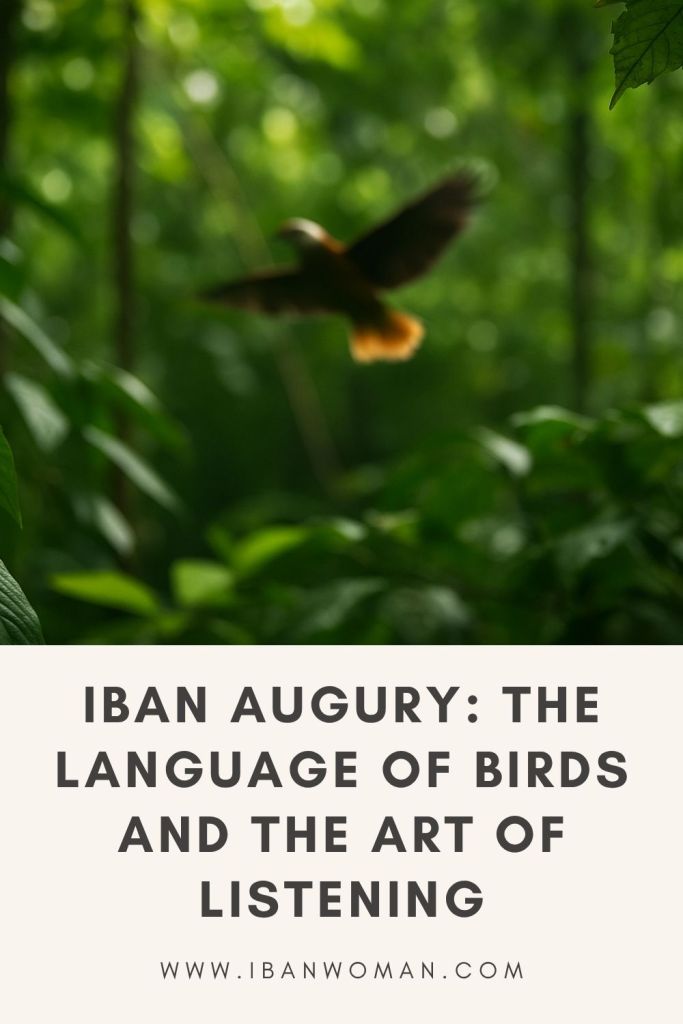
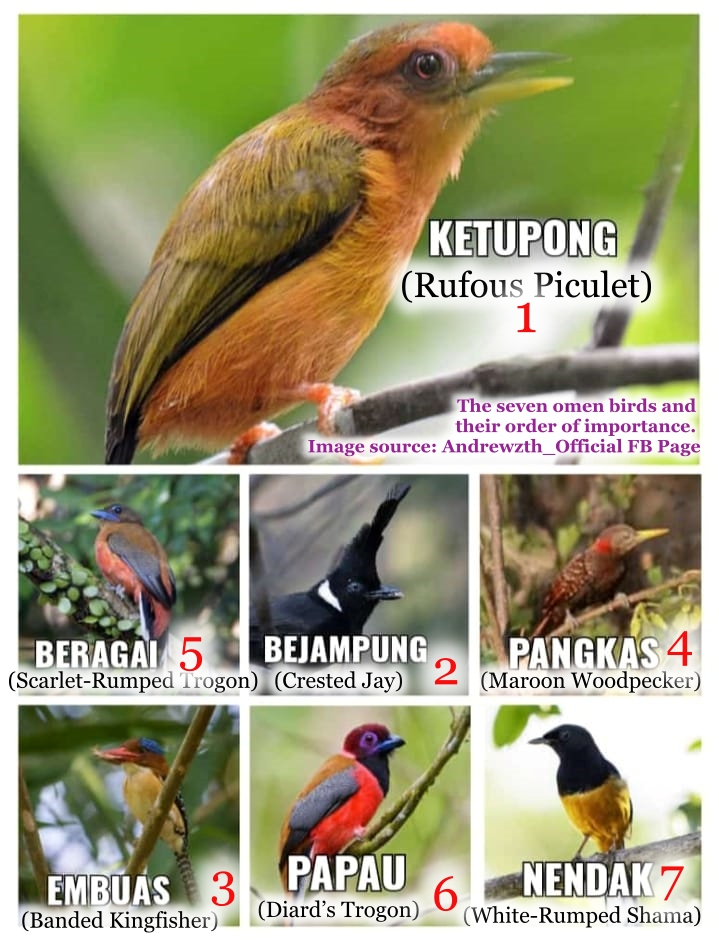
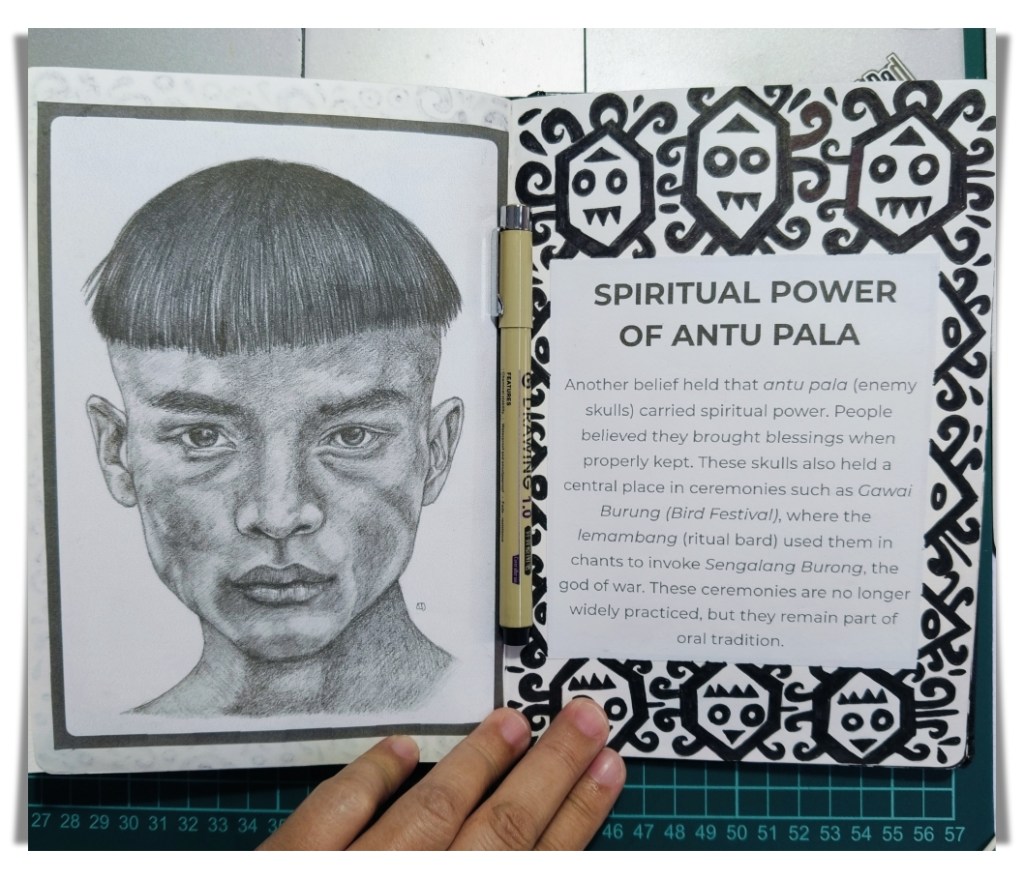
Augury, or “beburong” in Iban, was one of the most intricate systems in this belief. It is a sacred form of divination that uses the movements and sounds of certain birds known as burung mali (omen birds) to seek direction. The practice was said to have been taught to humans by Sengalang Burong, the Iban God of War and divine messenger. He taught that the gods do not speak directly but send their messages through the natural world.

Every omen bird has a specific meaning. The interpretation of their cries, flight paths, and actions guides important decisions, such as whether to start planting paddy, go on a journey, or go to war.  The tuai burong, an augur who can read and understand the language of birds, is responsible for figuring out what these signs mean. This cultural duty used to be a big part of Iban life because it was a way for people to connect spiritually and keep their conduct in line with God’s will.

Oral history states that Sengalang Burong and his wife, Endu Sudan Berinjan Bungkong, had seven daughters and one son. Each daughter married a nobleman who became one of the seven omen birds: Ketupong (Rufous Piculet), Beragai (Scarlet-Rumped Trogon), Bejampong (Crested Jay), Pangkas (Maroon Woodpecker), Embuas (Banded Kingfisher), Kelabu Papau (Diard’s Trogon), and Burung Malam, which literally means “night bird” but is a cricket. The eighth omen bird, Nendak (White-Rumped Shama), is Sengalang Burong’s faithful messenger. All of these are real, common bird species that live in the Borneo rainforest.

Sengalang Burong passed down the knowledge of augury to his grandson, Sera Gunting. Sera Gunting is the son of Sengalang Burong’s eldest daughter, Endu Dara Tinchin Temaga, and her second husband, a man named Menggin. Sera Gunting also learned the omens of war when he joined a ngayau (headhunting) expedition with his seven uncles—the noblemen who married Sengalang Burong’s daughters. He later passed his knowledge to his descendants. Linggir Mali Lebu, Orang Kaya Pemancha Dana Bayang, and Unggang Lebor Menoa were among the subsequent generations of Iban war leaders who observed and practiced the war omens he had learned.

Sengalang Burong also taught Sera Gunting about the different stages of Gawai Burong, the festival that war leaders had to hold to invite him and his followers to attend. That is a story and post for another time.

All the omen birds mentioned above can still be found in Borneo’s rainforests. I have never seen them in the wild or heard their calls in person, but last month, when I visited the Borneo Cultures Museum, I had the opportunity to hear recorded calls from Beragai and Embuas. I could hear the sound of wind, insects, and other birds in the distance along with their calls in the recordings. It was difficult to tell which bird made which sound. It reminded me that to practice augury, you needed to believe and have an attentive ear to pay close attention to the different bird calls.

Those recordings brought back a memory from my childhood. When I was nine years old, my parents decided to adopt the baby son of a relative. They had everything ready: a small bassinet, baby clothes, and the trip to the longhouse where the child was staying. They had to walk through the jungle for three hours to reach the place. 

Along the way, they encountered an omen bird. I don’t know which one it was, but a tuai burong was consulted to explain the sign. He advised my parents not to continue. He said that if they went through with the adoption, the boy would grow up to “overrule” me and my siblings, which means he would prosper more than us and that we might fall into misfortune. My parents took the advice and chose not to go through with it. The baby stayed with his other relatives, and that was the end of it.

Looking back, I understand that moment not as superstition but as a reflection of how much faith my parents had in the way things were meant to be. They thought that signs meant something and that the natural world could warn or guide us through nature’s language. It was a way of life built on attention, not control. However, it didn’t stop me from wondering, what if the boy experienced a difficult childhood filled with poverty and hardship and was denied the chance to live a better life due to the bird’s signs?

Today I realized how rarely I listen. The world around me is full of noise—machines, traffic, and incessant messages devoid of meaning. Even in silence, my mind is busy with thoughts, endless scrolling, or work. Listening feels like a lost art. I no longer know how to hear what my forefathers intuitively understood: that signs came quietly, without noise or spectacle.

I’m not sure if anyone still practices augury today. Perhaps a few elders still possess fragments of that knowledge. Even if it is no longer practiced, I hope that Ibans, particularly the younger generation, understand its origins and significance. Beburong was once central to how our people made decisions and understood their relationship with nature. It influenced how they approached the world—with respect, patience, and a willingness to listen. Perhaps I’ll never see those birds in the wild or hear their true calls across the forest. But I’d like to believe they’re still there, their voices blending with the wind, delivering guidance that once guided entire communities.


I write about Iban culture, ancestral rituals, creative life, emotional truths, and the quiet transformations of love, motherhood, and identity. If this speaks to you, subscribe and journey with me.
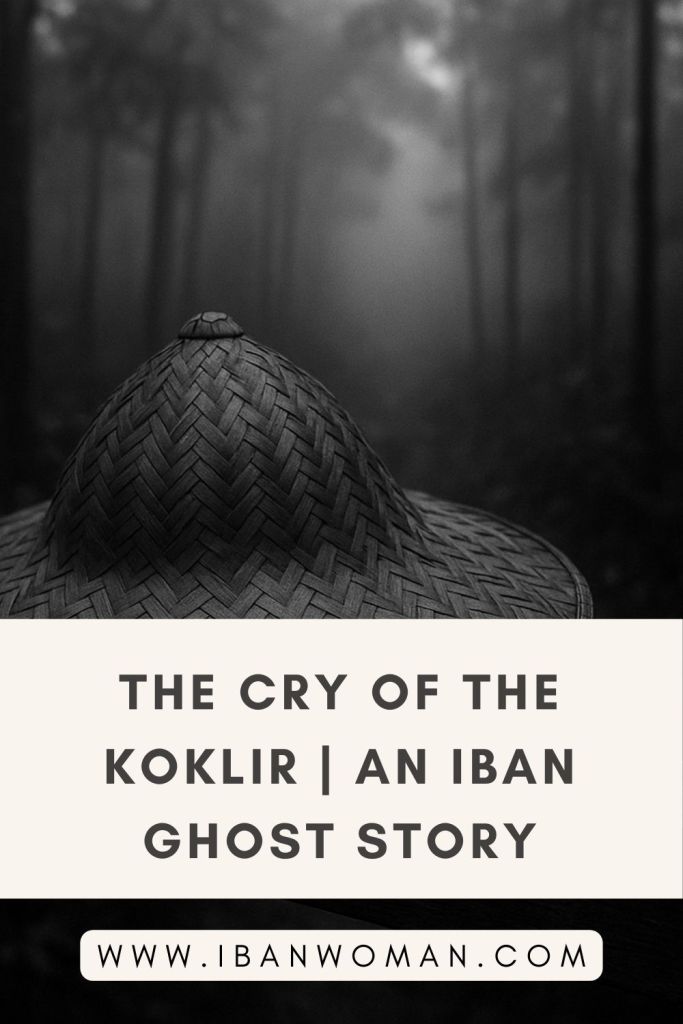
The Cry of the Koklir | An Iban Ghost Story

Before I share my experiences, I’d want to clarify who the koklir is and what she represents in Iban belief.

People often think of the Iban people of Sarawak as headhunters, which is a part of our history, but it tends to eclipse the deeper aspects of who we are. However, our culture is not only based on headhunting. We have a strong spiritual connection to the natural world, which is rich in stories about spirits that live in rivers, lands, mountains, and dreams. Our folklores are alive with omens, taboos, and the spirits of people who have departed. Some spirits protect, some guide, and others, like the koklir, are said to return because something in their death was left unresolved.

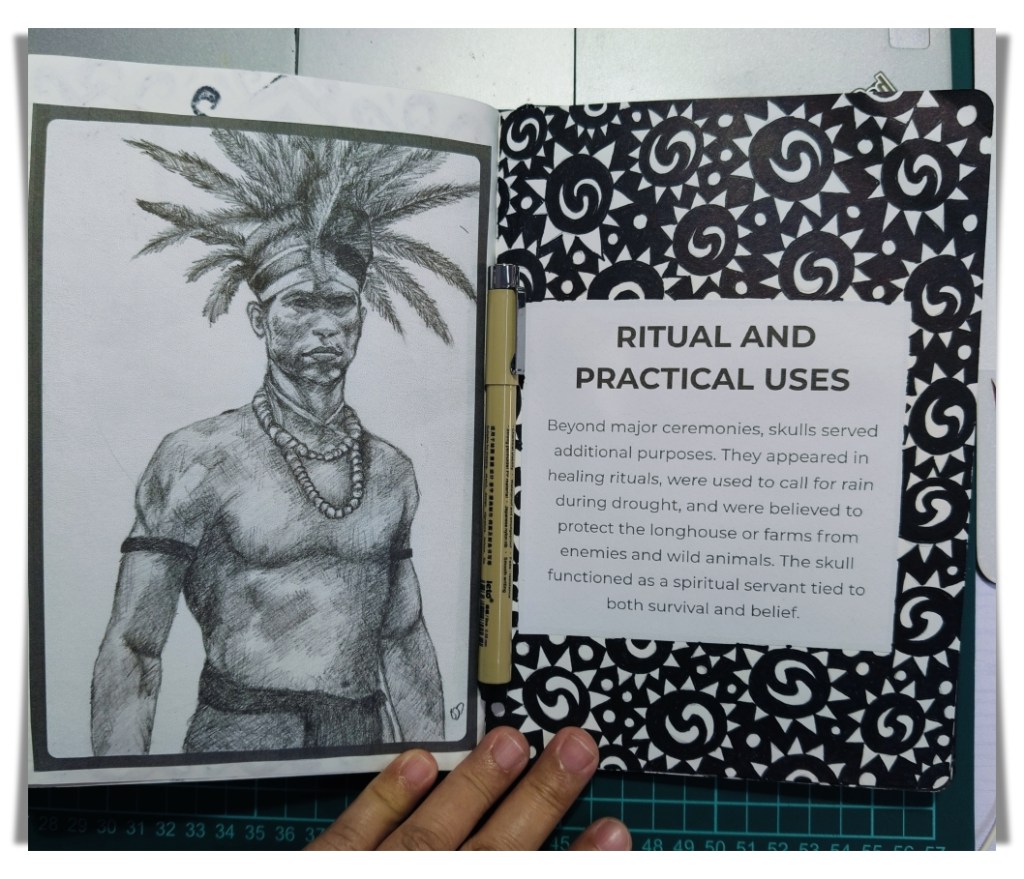
In Iban culture, the koklir is one of the most feared spirits. She is believed to be the spirit of a woman who died during childbirth or shortly thereafter, specifically during the vulnerable bekindu period, which lasts for forty days of healing and recuperation. Her death is known as busong mati, or a spiritually unfortunate death, and her soul is considered to become jai (malevolent). Her soul is malevolent not because she did something wrong in life, but because her death was unnatural and tragic. Her spirit doesn’t cross over to the other side in peace; instead, it lingers behind, transformed by pain and grief.

As a ritual precaution, lime thorns (duri limau) are poked into her hands and soles before she is buried. It’s a symbolic act aimed at weakening her spirit and preventing her from becoming a koklir. Some people allege that her tongue is also pierced.

Then a prayer is being offered, asking her to rest and not come back to bother the living. But if the ritual isn’t done or if the death is really violent or sudden, people say she might still come back to haunt, seek, and punish.

The koklir is believed to target men. Most of the time, you can hear her presence through a chilling cry that starts out like a hen calling her chicks: “kok, kok, kok…” and ends with a piercing, terrifying “haiiiiii waiiiiii!” Before she attacked her victim, she would scream “kokliiiiiiiiiiiiiiirrrrrrrrrr”. She sometimes takes the form of a beautiful woman, hiding her face with a tanggui serawong (woven sunhat) or a kubong leaf. Sometimes she manifests as an enturun, a shaggy, nocturnal bearcat with long claws. Some men say they’ve heard her voice in the jungle or by the river at night. Some people say they’ve seen her scratch at windows or doors with fingers that look like claws. The stories are shared quietly among men, usually late at night, and sometimes with fear or bravado.

I’ve never seen her. But would you believe me if I told you I heard her twice? And I remember it very well both times.

First Encounter

I was fourteen. It was the first day of the school break. Because my flight home was later that night, I was the only student left at the girls’ hostel at my boarding school. Everyone else had left throughout the day. The hostel was quiet and empty.

That morning, the warden told me to turn off the lights and close all the doors before I left. I said I would. After dinner, at about 6 PM, I took my bags outside and waited for my cousin to pick me up. It was getting dark already.

Before leaving, I went back in to do what I promised: turn off the lights and close the doors. I went up to the first floor, strolled through the empty corridor, and did what I had to do. The only sound was the rustling leaves blowing in the breeze. Everything else was still and quiet.

I heard something as I came back down, near the bathroom on the ground floor.

Kok… kok… kok…

It was soft and faint, exactly like a hen calling its chicks.

But this was a school compound. No nearby houses, no chickens. Just trees and a greenhouse. I stopped and listened again. I thought maybe I imagined it. I finished what I was doing and went back to the entrance. I stood there in the light of the corridor, looking out at the road. Everything else around me was dark.

Then, around 7PM, I heard it again.

Kok… kok… kok… kok…

It was slower and closer.

I felt chills and goosebumps all over my body. I was too scared to look around. I just kept my eyes on the road, expecting to see my cousin’s headlights. He came soon after that. I hastily loaded my bags into the car and drove away. I never looked back.

I didn’t see her, but I know what I heard. We believe that the koklir doesn’t harm girls or women because she only targets men. That gave me some comfort, but the sound stuck with me for years.

Second Encounter

I was still living in the same hostel a year later. I didn’t hear her voice this time, but I did hear something else. My bed was next to the door. Sometimes, I would wake up to a loud scratching sound at the door. I believed it was stray dogs trying to get in, so I went back to sleep.

However, I looked at the door one morning because I was curious. There were scratch marks, but they weren’t at the bottom where a dog could reach them. They were higher up, around chest height. That detail stuck with me. What kind of dog can scratch that high?

I didn’t say anything to anyone. I didn’t want to scare the others, especially the younger girls. But I remembered what the elders used to say: the koklir scratches at doors and windows with her long nails to find a way in.

After that, the scratching happened every now and then. I didn’t say anything about it until much later. I told the story years later in our WhatsApp group for former dormmates. I was surprised to learn that I wasn’t the only one. Others remembered the same sounds from the same door and that same feeling of unease. However, we all stayed quiet, but we were all scared.

Some people might not believe these stories. They can argue it’s merely animals, wind, imagination, or ridiculous stories from the natives. But I don’t think I made anything up since I know what I heard.

These encounters aren’t just stories about ghosts. She is a reminder of how deeply the Iban people see death and life as intertwined, how even grief has a place in our stories. As Iban people, we understand spiritual realms that involve death, grief, and the things that linger. The koklir is a reminder of women who died too young or too soon, often forgotten or feared, yet still searching for peace. She didn’t show herself to me. But I heard her cry and have never forgotten it, even after decades have passed.


I write about Iban culture, ancestral rituals, creative life, emotional truths, and the quiet transformations of love, motherhood, and identity. If this speaks to you, subscribe and journey with me.
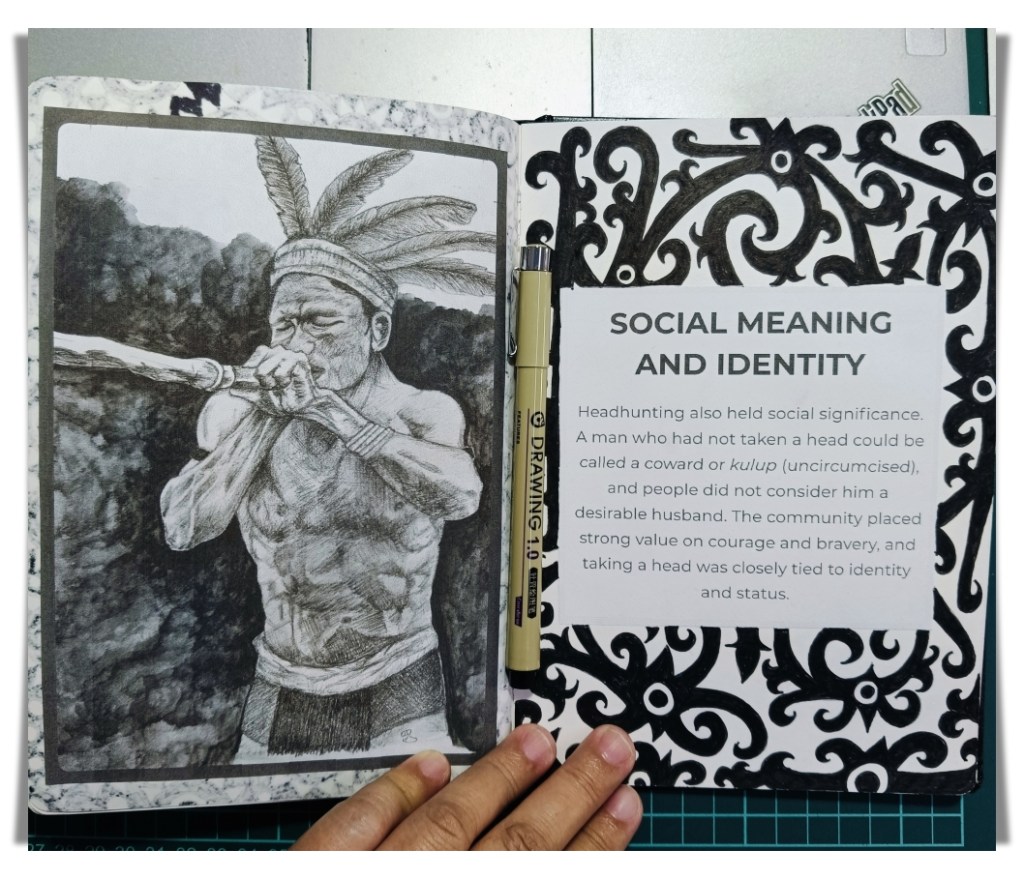
Flash Fiction | Before the Sun Takes Me

The night sky stretched out like a thick dark veil that would never end. The stars blinked, their usual brightness faded, seemingly taking the brunt of the choice I had to make. My warriors remained silent. Their eyes were full of trust in me. And yet, my heart roared with doubt. 

The dream from the night before clung to me like a second skin. Kumang had appeared. Her face sorrowful and her voice clear: “Do not strike at dawn. To do so would mean your death.”

I was raised to heed such signs. Dreams are not dismissed in our way of life. They come from the realm above the sky, Panggau Libau and Gelong, where spirits still keep watch and gods whisper their warnings to those willing to listen. 

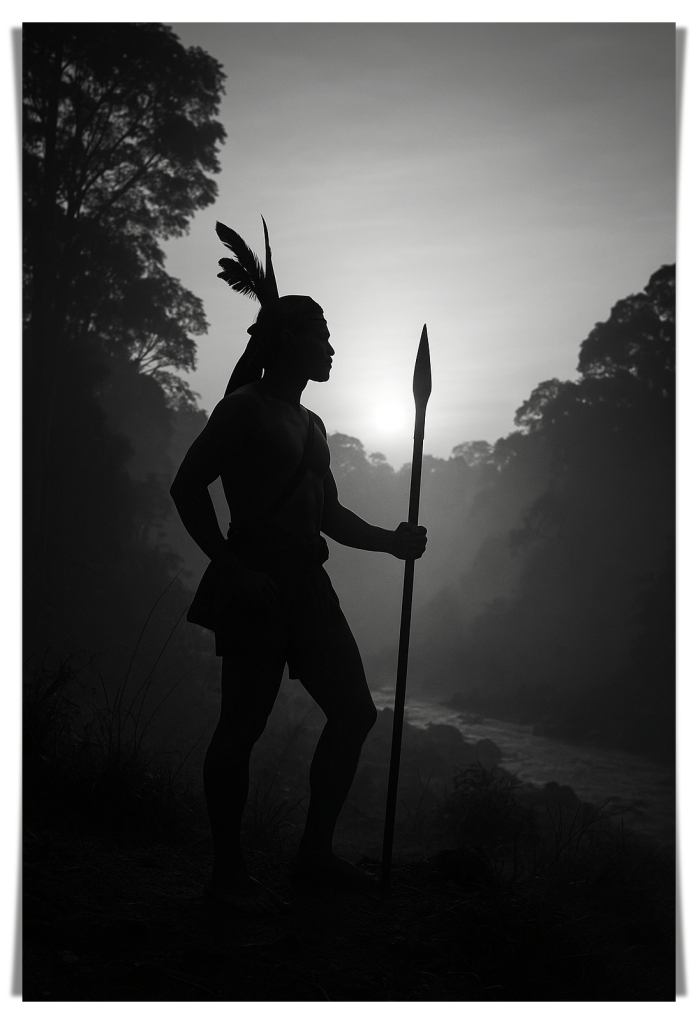
But how could I pause now? I am Aji Apai Limpa, son of Dana Bayang. I carry the weight of my lineage and the blood of warriors. I have a duty to protect our land from those orang putih who pretend to come in peace but seek to conquer it. The White Rajah’s men moved through our rivers and jungles like relentless mold beneath the rotten bark. I had promised my people to fight back. 

Doubt wound around me like a snake, growing tighter with each passing second. I thought about each consequence carefully. If I held back, people might think I was weak and couldn’t handle the challenges of war. And yet, to march forward meant possibly embracing the death that Kumang had warned me of. It’s not just my life but the lives of those who depended on me for safety. 

The fire beside me crackled softly, radiating out small bursts of warmth that couldn’t reach the cold in my bones. I thought of my father and the things he taught me. I could almost hear his voice now. “Son, a leader’s strength isn’t measured by how loud he yells or how many people he kills, but by how deeply he listens to the land and the spirits.”

There was only silence tonight.

I stared into the embers and saw our longhouse. The ruai filled with children’s laughter. I saw the old ones with rheumy eyes by the bedilang, telling stories even as war crept closer. I saw my people, worn out and wounded but still holding on. Could I really ask them to wait and trust in the dreams and omens that only I heard and saw?

I thought of Kumang’s face again. Her expression softened and a gentle acceptance shone in her eyes. Was she trying to test me? Did she see the path that I couldn’t? Or was this simply the fate of every leader to make choices in the shadows? 

I looked to the heavens for answers but none came. There was only an unrelenting silence. The river sprang to mind. It doesn’t resist the earth but bends and curves, following the land it loves. Maybe this was the lesson Kumang wanted to teach me. Sometimes strength is not found in striking but in knowing when not to. 

Still, I couldn’t look away from what the morning would bring. I couldn’t stop seeing flames that had burned our longhouses and fields. I’m haunted by the blood and the lifeless bodies of my warriors. I couldn’t ask my warriors to retreat into silence when everything within them was ready to rise. 

I gripped my sangkuh, finding strength on its solid surface. Death is never far from a warrior. If Kumang’s vision was true, my demise awaited me at daybreak. But what about it? My life has never been mine alone. It belongs to this land, the spirits, and the people who look to me for courage. 

Still, doubt gnawed at me. Would my death make any difference? Would it make my men fight harder, or would it break their spirits, making them vulnerable to the enemy’s advances? Such questions couldn’t be answered tonight. 

I closed my eyes and prayed for the strength to choose. I got up when the horizon began to pale with the morning sun. My men stirred and looked at me. No one said a word. They only waited for my voice. 

I took a deep breath, letting the air of our land fill me one last time. 

“Kitai mupuk udah makai pagi,” I said. The words tasted bitter. It carried the sorrow of defying a goddess. But these words were mine and the resolve of a man who had chosen. 

I looked up at the sky one more time as the warriors were getting their weapons ready. I half-expected to see Kumang’s face among the clouds. But there was only the rising sun shining over the land I loved. 

I would meet it standing, no matter if it marked my beginning or my end. 


Footnote:

This flash fiction is inspired by the life of my great-great-great-grandfather, Aji Apai Limpa, a well-known war leader of the Iban people of Borneo in the mid-nineteenth century. From 1854 to 1858, Aji commanded his warriors in resistance to the White Rajah’s forces. He died in a fierce battle at Sg. Langit (Langit River) in 1858. Aji’s courage and valor have been immortalized in Iban poetry, which is passed down through generations by bards.

The Iban people of Borneo were traditionally animists, believing that spirits, animals, nature, and other aspects of the earth are living and interrelated. Even though most Ibans are now Christians or Muslims, animist ideas are still very much a part of our traditional beliefs and customs. One of these traditions is augury, which is the practice of interpreting god’s signs based on the behavior of certain birds that are thought to be divine messengers. Along with dream interpretation, augury is an important part of Iban divination. These practices are based on a way of thinking that sees the sacred in nature and gives guidance and warnings to those who can read its signs.

Translation of Iban words

  • Ruai: the communal open area or covered verandah that runs along the length of a traditional longhouse.
  • Bedilang – hearth
  • Sangkuh – spear
  • “Kitai mupuk udah makai pagi” – we make a move after breakfast
  • Kumang – a supreme goddess of the Iban from the realm above the sky, Panggau Libau and Gelong
  • Orang putih – white men

Marriage Traditions of the Iban of Sarawak, Borneo

Marriage is a timeless union that binds two souls together. It also functions as a mirror, reflecting the core of a community’s culture and identity. My people, the Iban of Sarawak, Borneo, fill their traditional wedding rituals with deep meanings based on ancestral traditions. However, these traditional ceremonies are gradually disappearing as time passes.

For the Iban, marriage was not just a bond between two individuals but a communion of families and communities. Traditionally, the groom’s parents carefully planned this arranged marriage. Ties of kinship often influence their choice of wife. Cousins were preferred matches because they preserved familial relationships while also reflecting the Iban’s value of unity within their extended network. When a bride was chosen, the groom’s parents would leave a rawai (silver girdle) or an ilang (sword) at her family’s home as proof of their dedication and intention.

Image source

The longhouse is the heart of Iban community life. During weddings, it becomes a lively epicenter. It was here that life and celebration collided, and the community joined together to honor the union. Careful planning is required days or weeks before the ceremony. This includes making tuak (rice wine) in enormous vats, preparing traditional buns and cookies, and selecting livestock for slaughter. Guests were invited with knotted strings to tally down the days till the celebration.

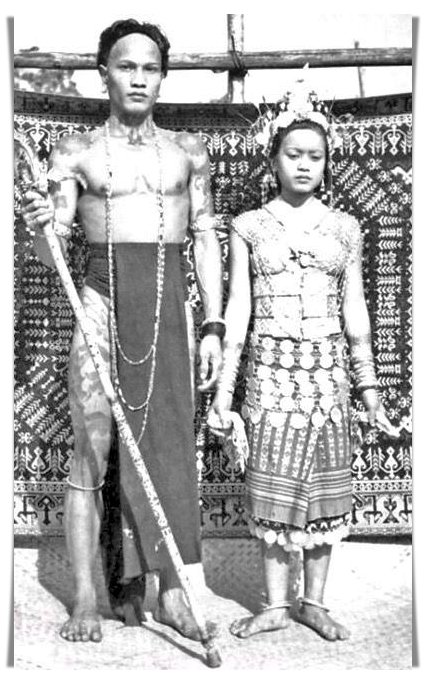
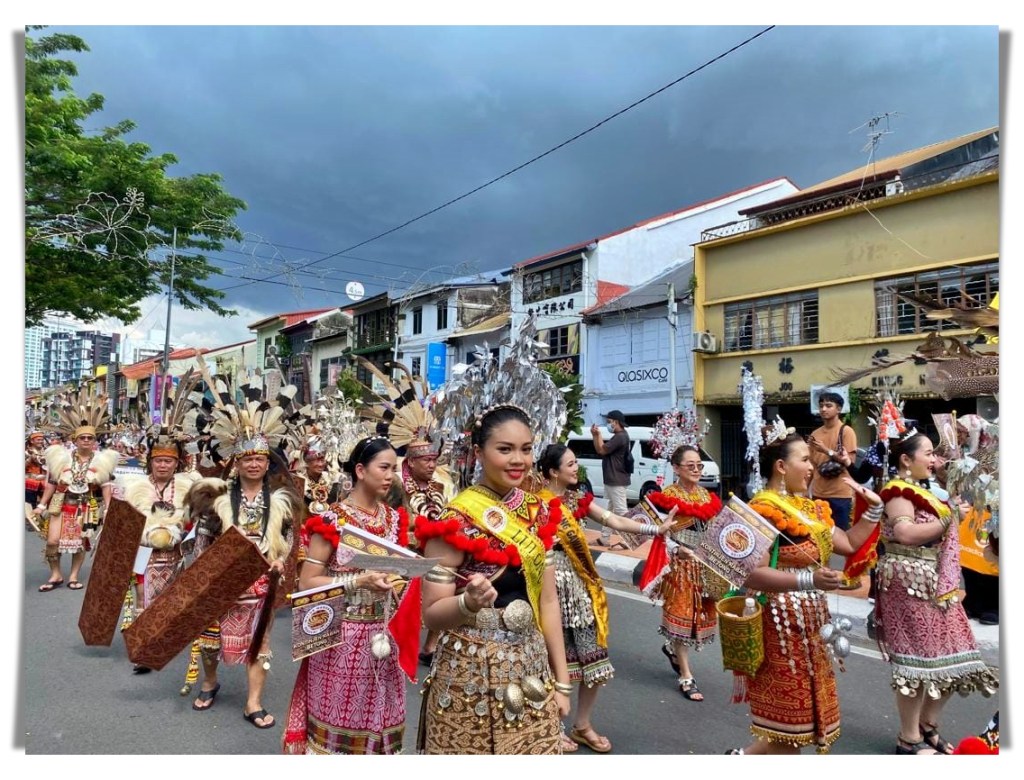
On the wedding day, the groom’s journey to the bride’s longhouse was a ceremony unto itself. The groom’s party traveled to the bride’s longhouse either by boat or on foot through the jungle. Guests were expected to dress in traditional ngepan (intricate traditional costumes), with women donning corsets or rawai (silver girdles) and men wearing armlets and feathers, among other traditional pieces. The groom’s party arrived to a joyous clash of gongs and the firing of brass cannons.

However, underneath the surface of celebration were rituals with deeper meanings. One of the most remarkable customs was the use of poetry or poetic language to provide the ceremony a sense of artistry and depth. When the official ceremony started, the host’s representative would offer the guest a drink, followed by a formal recitation inquiring about their purpose:

“I hesitate and feel nervous to talk in front of you all,
The reason I say so is because I realize that you are the mothers of porcupines,
Covered with cross-stripped white quills,
Pointed like bradawls.
I notice that you are the mothers of hornbills,
With tails striped,
crossing at right angles,
Which claim that they can fly to Brunei and return the same day.
I see that you are the mothers of bears,
Which have stout arms to make holes on the trunks of iron-wood trees.”

“We, therefore, have been sitting next to each other.
I would like to ask,
Which one of you is the mother of the hornbill?
For I am about to ask you to spit out the seeds of the belili tree,
In order that they can be picked up by a tall, unmarried lady,
So that they can be turned into the tusks of a pig,
As charms for the unripe ears left till the last in reaping,
With which we fill our padi bins.”
Poem source

These exchanges were rich in metaphor and eloquence. The poetic recitations continued throughout the ceremony, including a betusut (genealogical recitation) by an expert who detailed the bride and groom’s genealogy. This ritual not only validated the union but also ensured that the marriage respected cultural taboos and norms in order to avoid misfortune.

Image source

Elders sealed the union with feasting and storytelling, bestowing blessings and wisdom on the pair. They discussed respect, understanding, and the delicate balance required to navigate life together. Complex traditions and customs infused every action, from seating arrangements to gift exchange.

Today, such ceremonies are a rarity. The Iban embraced Christianity and Islam, abandoning many of their traditional practices in the process. The vibrant rituals of traditional Iban weddings now exist mostly in memory or retellings.

The ceremonies detailed here are not simply rituals. They depict a way of life that places a high priority on community, heritage, and balance. They remind us of the beauty of traditions that once connected people to their past while celebrating the present. The decline of this tradition is a loss not only for the Iban but also for the universal human story of connection, identity, and belonging.

The significance of the Iban wedding customs strikes me as I reflect on them. Marriage was never just about two people; it was about integrating their lives into the larger fabric of their community. It was about love, shared responsibility, and the power of a collective spirit.

Perhaps that is the true power of these traditions: their ability to touch something deep within us while also reminding us of the fragility and beauty of cultural heritage. And as we look forward, perhaps we have a tenacious hope that even as the old ways fade, their spirit will continue to shape the future in ways we may not fully comprehend.

Modern Iban weddingImage source.

Iban Culture | Gawai Antu @ Feast of the Dead – A Personal Journey Through Memory and Meaning

I don’t see a lot of articles anywhere that talk about the culture of my people, the Dayak Iban of Sarawak, Borneo. Maybe there are plenty in native languages, but so far not much is written in English, so I thought instead of lamenting about it, why not write it myself? I admit I don’t have a vast knowledge about my culture; however, it shouldn’t stop me from writing about what I know. In this post I’m going to talk about one aspect of our culture called Gawai Antu, or the Feast of the Dead. I believe the feast of the dead is widely celebrated worldwide across different countries and cultures. It’s no different with the Iban people. After all, who doesn’t want to memorialize and pay tribute to their departed loved ones?

The Iban people of Sarawak, Borneo, have a rich and deeply rooted culture that is shaped by mythology, oral traditions, and a close connection between the spiritual and physical worlds. At the heart of this culture are the many “gawai,” or feasts, that mark important moments in life, from celebrating a bountiful harvest (Gawai Dayak) to honoring the spirits of the departed (Gawai Antu). Each gawai carries its own meaning, traditions, and importance, but none have left a deeper impact on me than Gawai Antu, or the Feast of the Dead.

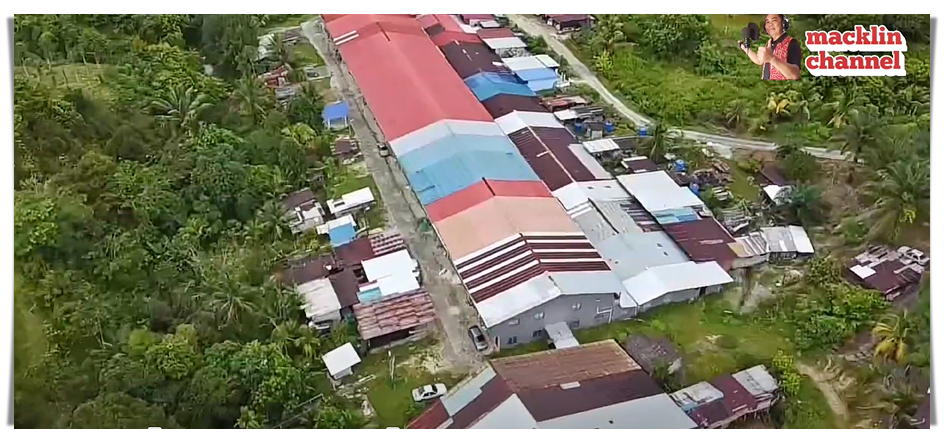
My father’s longhouse: Ng. Batang, Ulu Krian, Saratok. Image source: Youtube

I was ten years old when I first experienced Gawai Antu at my father’s longhouse in Ng. Batang, Ulu Krian, Saratok. At the time, I didn’t really understand its meaning. I just knew it was a rare and grand occasion that transformed the quiet longhouse into a place of celebration, ritual, and remembrance. Even now, decades later, I can still hear the loud gongs, see the elders in their ceremonial attire, and recall the haunting beauty of the invocations to the spirits and deities. It was a glimpse into something much bigger than myself, which was a connection between the living and the dead. This festival was deeply embedded into the very fabric of our identity.

Unlike Gawai Dayak, which is an annual celebration, Gawai Antu happens once in a generation. It is a collective effort that takes years of preparation, with families saving up to host this event in honor of their ancestors. This isn’t a normal feast. It’s an elaborate feast that symbolizes a final send-off for the souls of the departed. It’s a way of ensuring they are properly honored before moving on to the spirit world. It is both a farewell and a tribute, reinforcing the Iban belief that death is not an end but a transition to another realm.

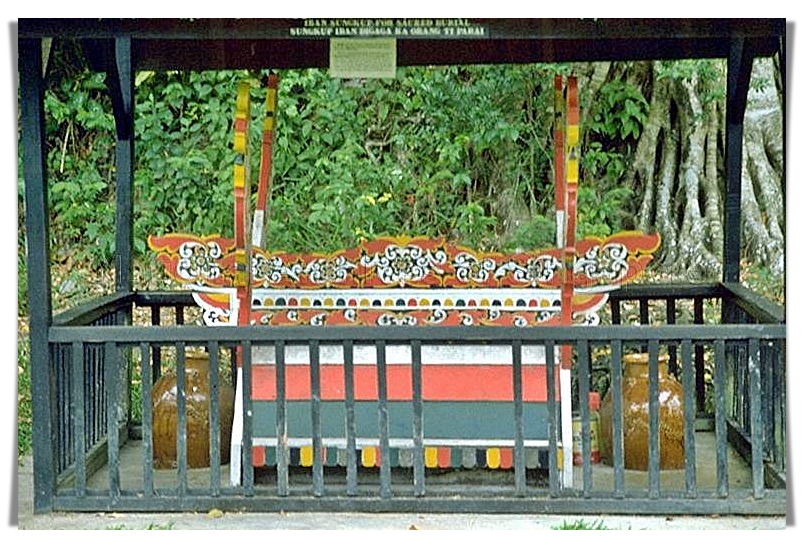
A “sungkup”. Image source: National Archives of Singapore

As a child, I was captivated by the sights and sounds of the festival. The longhouse came alive with music, laughter, and the smell of traditional food. Thousands of guests from neighboring longhouses (villages) gathered, filling the space with a sense of community and shared purpose. I watched as men skillfully built the “sungkup” (memorial huts) for the deceased, while women wove baskets called “garung” to hold the ceremonial rice wine, “tuak Indai Billai.”

One of the most mesmerizing rituals was “ngalu petara,” where men and women, dressed in their finest, marched through the longhouse to welcome the spirits of the dead. Another unforgettable moment was watching the “lemambang” (bards) chant poetic invocations while carrying bowls of “ai jalung” (special rice wine) from midnight until dawn. Their lyrics, which were passed down through generations, painted vivid images of the spirits’ journey from the afterlife back to their longhouse for one final feast with their loved ones. At 4 a.m., the honored “bujang berani” (men of valor) drank the “ai jalung” to symbolize a moment of pride and recognition.

Image source: My sister

It wasn’t until adulthood that I fully grasped the significance of Gawai Antu. It is a festival of remembrance and a reaffirmation of our roots. It’s a way of keeping our ancestors’ legacies alive. As an Iban living away from my homeland, these memories have become even more precious. They remind me of who I am and where I come from, especially in a world where modern life often pulls us away from traditional practices.

Writing about Gawai Antu feels like my own way of preserving this tradition. In many ways, storytelling serves the same purpose as the rituals. It honors the past by keeping memories alive and strengthening our sense of belonging. But I won’t lie; this responsibility sometimes feels overwhelming. I wonder if my children will ever truly understand the depth of these traditions, or if they will see them as outdated practices of a time long gone. Still, I hold onto hope that through stories, whether in poetry, essays, or simple conversations, I can spark their curiosity and encourage them to explore their roots.

“Bujang Berani”, a man of valor drinking the “ai jalung”. Image source: Gawai Antu documentary

If there is one thing Gawai Antu has taught me, it is the value of memory. In a society that sometimes stresses development over history, this feast is a reminder that our identity is both about who we are and where we came from. Honoring our ancestors involves acknowledging their difficulties, successes, and sacrifices, as well as understanding how they influence our lives now.

Decades after my first Gawai Antu, the memories are still fresh in my mind. The loud gongs, sacred chanting, and communal spirit are memories from my childhood as well as pieces of a greater story about connection, heritage, and meaning. Gawai Antu has taught me that remembering our ancestors means, in many ways, honoring ourselves, as we are the living continuation of their journey.

My poem, “Gawai Antu”.


Note:
A documentary about Gawai Antu was made several years ago, you may watch the trailer here:

I don’t have any photographs of Gawai Antu from my childhood. They are kept safely in my parents’ home in Sarawak. The photographs in this post are credited to the sources listed below each image. For more information on Gawai Antu, you may visit these sites:

The Gawai Antu
Gawai Antu – the documentary