What Beserara’ Bungai Taught Me About Letting Go

I used to think that rituals like beserara’ bungai were just old traditions that had no place in today’s world. Growing up, I believed they belonged to the past. I thought the Iban needed to leave them behind to move forward. Whenever elders talked about these beliefs, I felt restless. My world revolved around progress, education, and the principles of organized religion. I didn’t see the value of rituals, and I never took the time to understand what they really meant.

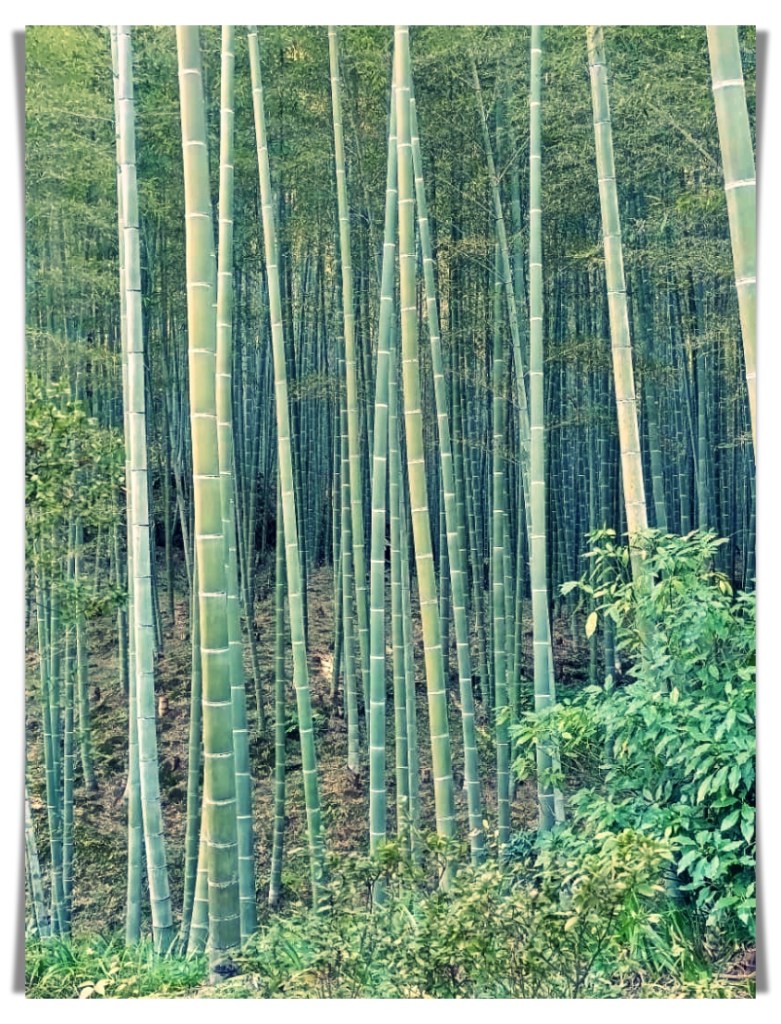
That mindset began to shift—slowly at first, then more clearly—as I read more about the Iban worldview. It wasn’t emotion or nostalgia that changed me, but understanding. I began to see that the Iban learned about life by watching the natural world. They noticed patterns in nature and connected them to how we live. For example, they saw how bamboo and banana plants grow in clusters. Each shoot is part of a single root system underground. If one shoot is unhealthy, it affects the others. When one dies, the root still supports new life. Death was not an ending but part of the cycle. This wasn’t superstition, but wisdom based on careful observation.

The bungai, the “plant-image” that represents each Iban person in the cosmic realm of Menjaya (the god of healing), began to make sense to me. I understood how it symbolized family and community. Each person is like a shoot, but we all come from the same root. When someone passes, the rest carry on, still connected. New life can grow from the same source. It’s a way of seeing life that is deeply connected and respectful of nature. The ancestors weren’t imagining things—they were describing the interconnected world they knew.

As I learned more, I started to feel a quiet pride in where I come from. I discovered that my ancestors included warriors and raja berani, people whose stories are still told in my family. I began to understand that even though I live far from my homeland, I am still part of that root system. This connection also extends to my children. They may not know all the customs or speak the language well, but the roots are still there. They are part of something that has been passed down through generations.

When I learned about beserara’ bungai, the ritual that separates the living from the dead, I felt something shift in me. This ritual is about care—not forgetting what we have lost. It helps both the living and the dead let go so they don’t hold each other back. The living need to keep moving forward, and the dead need peace on their journey to Sebayan. It’s a ritual of compassion that affirms the connection with the dead even as they journey on to the otherworld.

This understanding arrived at a time when I was wrestling with my own spiritual ties. I had been part of the same church community for many years. It shaped how I saw God, faith, and morality. But as I grew older, those teachings started to feel burdensome. I found myself questioning doctrines that encouraged separation from people who did not meet certain standards of spirituality. I began noticing the tension between fear-based expectations and the compassion-centered teachings of Jesus in the Gospels. As I continued to question, the burden of belonging to a system that no longer aligned with my conscience intensified.

Learning about beserara’ bungai gave me words for what I was feeling. I realized I was trying to protect my spirit. I wasn’t leaving faith behind—I was returning to what felt true. Jesus became the real rootstock. I wanted a faith grounded in his teachings: kindness, justice, presence, love, and compassion—not fear or guilt. I needed space to grow without feeling judged by a community that often equated questions with spiritual instability.

In a way, I’m experiencing my own kind of separation from the church rootstock. It is not a rejection of my past or of the people who have been a huge part of my life for the past two decades. It is a necessary separation so I can continue growing without feeling suffocated by expectations that no longer fit the life I am trying to build. I’m holding onto what still nourishes me and letting go of what drains me. The Iban worldview helped me understand that letting go can be a way of protecting both myself and the things I want to keep alive.

The more I reflect on it, the more I hope my children learn something different from what I learned in my early years of faith. I hope they are not afraid to ask questions. I hope they do not feel inferior in front of people who sound knowledgeable but speak without warmth. I want them to grow into a faith that welcomes curiosity, thoughtfulness, and conscience. I want them to recognize that their connection to God is direct, personal, and rooted in compassion—not fear. I want them to inherit a sense of strength that comes from understanding where they come from, both culturally and spiritually.

As I learn more about rituals like beserara’ bungai, I’ve come to understand that my ancestors didn’t divide life into “spiritual” and “ordinary.” Everything was connected. Life, death, nature, community, and spirit were all part of one whole. That way of seeing the world teaches me to live with care and humility. It shows me that letting go can be a loving act, and returning to our roots can take courage.


I write about Iban culture, ancestral rituals, creative life, emotional truths, and the quiet transformations of love, motherhood, and identity. If this speaks to you, subscribe and journey with me.
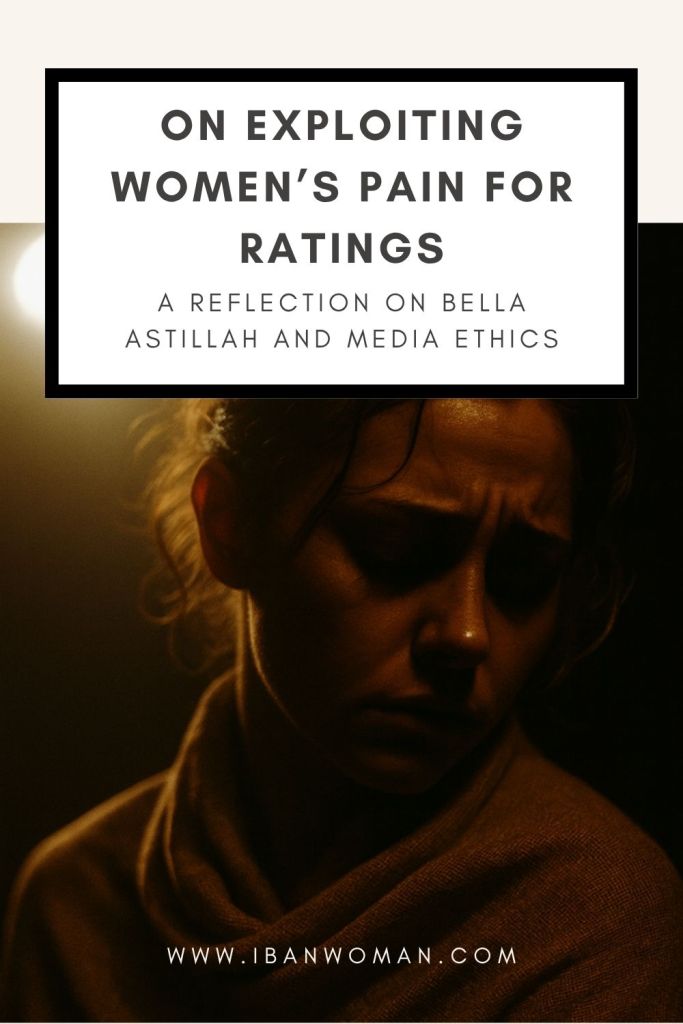
When Entertainment Crosses the Line | On Exploiting Women’s Pain for Ratings

Something very disturbing happened on Malaysian live TV last night. During Anugerah Melodi, Bella Astillah was made to present an award to the woman her ex-husband had cheated on her with. It was like watching a slow-motion car crash; you want to look away, but you can’t because you can’t believe that something so cruel could be planned, aired, and packaged as entertainment.

And what’s worse? Some people had the nerve to call Bella unprofessional for walking away. Let me be clear: Bella didn’t overreact. She didn’t make a fuss and was able to hold back. And the fact that she had to hold back at all, in a situation that no woman should ever have to be in, is the real tragedy. What happened wasn’t entertainment. It was a public humiliation well-dressed with glitter and applause.

It’s absolutely shameful for a system to think it’s okay to put a woman in the same spotlight as the person who hurt her family, just for shock value. And then to show it live, knowing all the history and emotional turmoil that went into it? It’s bad taste with a total lack of respect for human dignity.

I usually don’t pay much attention to the entertainment industry, whether it’s local or international. I’ve never really been interested in it, and most news about celebrities goes right by me. But this incident made me livid. Because this wasn’t a drama for Slot Akasia (TV segment for local drama) but real pain being paraded as a spectacle. And as someone who has been through a lot of trauma myself, I couldn’t help but feel triggered by how easily that pain was exploited and dismissed.

This is where we need to have a larger conversation about the ethics of our entertainment industry. And it doesn’t stop there. What we show on TV isn’t a random thing. Our kids are watching. They’re learning how to treat people by watching how we treat them, especially how we treat people who are hurting. And in a country where bullying in schools is becoming all too common, moments like these send a dangerous message: that it’s okay to make fun of someone’s misfortune and to humiliate them in public for fun. We are showing our kids that it is okay to mock someone’s pain instead of showing compassion.

This was bullying, plain and simple, with stage lights and applause. And if we’re not careful, we’re teaching the next generation that being mean is acceptable and even rewarded. How did we end up here? When did we start treating other people’s pain as a show? Bella’s case is not one of a kind. We’ve seen this happen over and over again: trauma being used to get ratings, tears being turned into headlines, and women being told they have to keep it all together for the show.

Some might say that’s how show business works. But no, it isn’t. That’s exploitation and there’s nothing glamorous or entertaining about it.

We should talk about how the media often takes advantage of women’s shame. The pattern is disturbingly consistent, whether it’s reality TV setting women up to be shamed, talk shows baiting vulnerable guests for views, or award ceremonies like this one forcing a confrontation that never needed to happen. The main idea is that your pain is only worth as much as the clicks or views it gets.

The aftermath makes it worse. Many people who watched Bella instead of standing by her side mocked her, questioned her professionalism, and invalidated her trauma. Because it seems that when a woman doesn’t smile and appear “redha” through her sorrow, she becomes the problem.

But let’s turn the tables for a second. Think about how it would feel for a man to have to give an award to the man his wife cheated on him with. Would people think he was being dramatic? Or would we be outraged on his behalf?

People expect women to always be gracious and smile politely. Women are always expected to rise above and endure. But when they don’t, the reaction is quick. However, endurance is not the same as healing. And being polite when someone betrays you isn’t professionalism but emotional suppression that comes at a cost. 

Mental health is not a joke. Emotional abuse leaves real scars on people. And being triggered on live TV is not something to be mocked or dissected for gossip. People should be kind and show empathy. But last night, there was no empathy to be found. Instead, we saw a media industry that cares more about viral moments than about people’s lives.

So let’s call this out for what it is: unethical, tone-deaf, and deeply irresponsible.

TV3 Malaysia, you had many opportunities to do better. You knew the history and what was at stake. And you still chose to be sensational over being sensitive. You didn’t read the room and let Bella down. And by doing that, you failed every woman who has ever been told to suck it up, “redha,” and move on.

If you defended the setup or laughed it off, I ask you to think more deeply. Would you have been as calm as she was if you were in her shoes? If the pain were yours, would you call it “just an award presentation”?

We need to stop making trauma into entertainment. And we really need to stop expecting women to be composed when they are badly betrayed. We need to make a clear distinction between storytelling and exploitation to increase ratings and views.

Bella, you didn’t do anything wrong. Your emotions were valid and it took a lot of courage to say her name out loud and present her that award. Many of us saw you as a person who deserved respect and dignity and not a humiliating headline.

To the rest of us: let this be a reminder that empathy should never be optional, especially when the cameras are rolling.


Olivia Atelier offers printables, templates, and art designed to inspire reflection, healing, and creativity. Visit Olivia’s Atelier for more.

When the Car Broke Down, So Did I | But Here’s What I Learned

The car broke down today. Again.

It’s my husband’s car, and this would be the third time this year. We’ve brought it to different workshops, different mechanics, each one poking around and shrugging like it’s just one of those ghosts in the machine. But today, the mechanics finally identified the issues: spark plugs, cooling gasket, weak battery, frayed cables, a clogged pipe, and a radiator that desperately needs cleaning.

RM2,000. That’s the estimate. We have savings, sure, but can we replenish that money in time? That question alone pulled me into a mental spiral I’ve come to know too well. A slow, heavy dread that swirls up in the pit of your stomach. But I caught myself. I reminded myself I had two choices: let that worry snowball and bury me, or breathe, look at the situation for what it is, and figure out what I can do.

We still need to fix the car and to keep living. And worrying, as familiar as it is, won’t do the fixing for me. What weighs heavier than the cost, though, is the guilt. There’s this stubborn voice inside whispering that I’m not doing enough. It keeps insisting I should be contributing more consistently. My husband works full-time, and I write, and I have small online hustles. Sometimes they bring in decent money but sometimes they don’t. But I squirrel away every ringgit I earn. And over the years, those small savings have paid for medical bills, groceries, furniture, school supplies, and, of course, rainy days that came without warning.

When I zoom out, I see that I’ve contributed steadily throughout the years. And yet, the guilt persists. Because we live in a world that ties a person’s worth to the size of their paycheck. Is that the only currency that matters? But what about everything else?

What about the sleepless nights, the emotional labor, the struggles of parenting and managing a household, especially when they are rarely acknowledged? What about the unpaid hours spent raising children into kind, curious humans? What about those people who hold things together behind the scenes? However, I’ve learned, slowly, not to compare. I tried not to look at working mothers and feel small. I make an intentional effort not to pit stay-at-home and working women against each other. We each make trade-offs and we all carry invisible costs. I’ve stopped wasting energy trying to measure myself against others. I’d rather pour that energy into things that feed my soul, like writing and making art.

Still, the financial anxiety is real. We’ve been living frugally for years. And yet, one broken part in a car can shake the balance. It’s a common story. Everywhere I look, people are stretched thin, in Malaysia or elsewhere around the world. Even in countries like the U.S., I read about 80-year-olds still working because they can’t afford not to. That article haunted me.

It reminded me how fragile things can be, how illness, aging, or a single emergency can drain years of careful saving. And it made me think, what kind of life do I want to build? What kind of resilience do I want to have? I don’t want to live in fear. So I’m choosing to stay patient, calm, and clear. I’m choosing to meet this setback with grace, even when it feels unfair. I tell myself this: take a deep breath. Don’t panic. Worry adds nothing. It just takes and drains. And right now, I need all my strength to stay grounded and keep creating and contributing, not just financially, but emotionally and meaningfully.

If you’re reading this in the middle of your own breakdown, whether mechanical or emotional, I want you to know: you’re not alone. It’s okay to feel overwhelmed and cry. It’s okay to spiral too. I did that often but  when the tears dry, try again. If you’re like me, you have people who are depending on you for survival, and no matter how unfair it might sound, we have to keep going even when we feel like falling apart. 

Sometimes, a broken car teaches you more than a working one ever could. It reminds you of what you’re capable of. And if you’re still standing after everything life has asked of you, then maybe you’re not broken at all. You’re probably just in the middle of building something unshakable.


Olivia Atelier offers printables, templates, and art designed to inspire reflection, healing, and creativity. Visit Olivia’s Atelier for more.

A Story of Motherhood, Resilience, and Healing After Surgery

It was a late, quiet evening in an operating theater when I first learned that even joy can arrive with a scar. My son was born through an emergency cesarean section, and I almost didn’t make it. Massive blood loss turned a moment meant for joy into a flurry of dread, beeping equipment, and desperate prayers. I recall trying to stay awake not for myself, but for him. For the child I hadn’t yet held.

That birth was my first major surgery. But it was also the first time I witnessed a new version of myself emerge, forged in pain but softened by fierce love. That moment shaped the beginning of my journey in motherhood and resilience.

Years later, I would have another surgery. This time, gallbladder surgery for cholecystitis, not delivery, brought me to my knees. My gallbladder had turned into a ticking bomb. What followed was not just the removal of an organ but the gradual deterioration of my physical health. Even after the surgery, I wasn’t recovering well. During the peak of the Covid-19 pandemic, I was hospitalized multiple times because of retained stones in my bile duct. Each admission was accompanied by fear: being alone, catching the virus, and not returning to my children.

One of the procedures used to remove the stones resulted in pancreatitis. The pain was excruciating, but the mental health after surgery nearly broke me. The never-ending anxiety, the exhaustion, and the uncertainty of whether my body would ever heal were overwhelming.

And yet. I survived. They were very difficult, but I persevered and survived.

Motherhood, in many ways, prepared me for these storms. You see, when you have children, you know deep down that you need to fight and pull through difficulties in life for their sake.

I didn’t discover the strength I needed to heal, to walk again after surgery, to smile through pain so my children wouldn’t be concerned, in a textbook or a self-help podcast. I discovered it in the middle of the night, as I cuddled my sick kid to my chest and whispered lullabies into the darkness. I discovered it when I folded laundry while nursing a headache, prepared meals on days I couldn’t eat, and said, “I’m fine,” even when I wasn’t.

These healing after surgery experiences left scars on my body, but they also carved new realities in my soul. Motherhood, illness, and these near-death experiences as a mom have transformed me into a different person. I became more intentional and thoughtful. I listen to my body more and take measures to safeguard my health. I became someone who sees life as a sacred space to be protected rather than a timeline to be fulfilled.

Motherhood didn’t just make me a mother. It shaped me into a woman who understands the value of life, of being present, and of holding both joy and suffering in her hand. And when I create today, whether it’s a poem or a work of art, it comes from a deep place. And this deep place understands what it means to unravel and still reassemble into someone wiser, more whole.

If you’re going through your own healing process, if you’ve been sewn back together more times than you can count, I see you. I have been there. And maybe the scarred places in us are where the light pours in.

This blog is where I share those reflections. Stories like these are part of a greater journey that I’m stitching together: of motherhood, transformation, and perseverance. If you’re searching for stories of emotional healing for mothers, I hope mine offers you a moment of recognition.

If this resonated with you, I hope you’ll stay a while. I’m slowly building something meaningful here, a refuge for women or anyone who carries both gentleness and strength in equal measure.


Olivia Writes offers printables, templates, and art designed to inspire reflection, healing, and creativity. Visit Olivia’s Atelier for more.

This Is Not the Mother I Meant to Be

I could name only one, but that wouldn’t be honest.

A lot of times in my early years as a mother haunted me quietly like background static in an otherwise happy song. The yelling, harsh words, and unwarranted anger all fell directly on little shoulders. I wrote a poem about it once. It’s titled This Is Not the Mother I Was Meant to Be. It is now available in my Etsy shop, which can be found here.

The poem is more than just a piece of text. This is my confession. A gentle, timid apology. A mirror I held up to my own face on days when I thought I had failed in the most important duty.

I meant to be gentler. I wanted to listen more. But there were times when I snapped, yelled when I should have breathed deeply, spanked when I should have paused, gave them junk food and called it dinner and said things I wish I could take back. Things like, “Be quiet. Enough. Just stop.” When all I truly wanted to say was, “I am exhausted, honey. I am trying. I love you so much, it hurts.”

Even now, the guilt weighs heavy. But, with time, I’ve realized that remorse isn’t supposed to tie me to the past. It is meant to teach me, then let me go.

As the kids grew older, I began having open conversations with them. I apologized. Not in grand speeches, but in quiet moments together: during car rides, at bedtime, or while having a meal. To my astonishment, they forgiven me. Completely, freely. As children frequently do when love triumphs over regret.

Their forgiveness was a balm. But can I forgive myself? This is still a work in progress.

What comforts me now is the realization that motherhood is not a destination. It is a process of growing. Every mistake I made was the result of a version of myself doing my best with what I knew. And I understand better now. I pause longer. I listen more carefully. I still make mistakes, but I’m more aware of them. I grow together with them.

So, if you’re a parent who’s been lugging guilt about like a hidden stone, maybe it’s time to let it go. Perhaps you can let the softer part of yourself speak. The one who continues to show up, try, and love with each broken, beautiful step.

Because this is not the mother I meant to be. But I’m still evolving to be a better version of myself.


Visit Olivia’s Atelier for printables, reel templates, and planners made to support overwhelmed moms with gentle, soulful tools.
🕊️ Enjoy 50% off everything until June 2.