Fragments of Obsession IV | The Criminologist

Some time ago I began writing Fragments of Obsession, brief glimpses into a private world of desire and distance. These new pieces pick up where the last ones left off, but they explore a darker area: the world of a criminologist.

I can’t sit at his desk or walk with him into the places he inhabits. All I have are fragments, imagined through the silence between us. They’re not about the crimes themselves but rather the places around them: his desk, the crime scene, and the interrogation room.

What interests me is not the evidence he gathers, but the burden that persists afterward. These pieces are how I watch from the outside and write about things I’ll never see. They belong to the same map of longing I began tracing in the first three Fragments of Obsession — part 1, part 2, part 3


The Desk

I never stood in front of it, but I know it like I’ve touched its surface a thousand times in my mind. A desk that holds the stories that no one wants to tell, and even fewer want to hear. Its top is scratched, probably from years of people dropping folders, forgotten coffee cups, and constant shuffles of pens and clips. Sturdy but with scars like him.

On one side, there is an uneven stack of papers threatening to tumble. Case notes, autopsy reports, and transcripts of late-night interviews with men who lie easily and women who have given up on getting justice. I imagine the edges fading from being read too often, held in worn hands. Underneath them, photographs turned face down, and the victim’s eyes still burning even when hidden. 

The other side is neater. A computer. A notebook with a page full of his neat, small handwriting. His pen would sometimes rest diagonally across it, with ink smudges on the margins where he applied pressure too hard. I imagine him hesitating mid-thought, his brows furrowing. 

There must be a hidden gun nearby. Cold, clinical, and within his reach. The barrel pointing nowhere, a constant reminder of how violence is always a part of his life. My people never lived with guns except for the ones that were passed down to us. My grandfather’s shotgun passed to my father and now to my eldest brother. A hunting tool, not for murder. Unloaded but heavy with potential, lingering like a sinister presence at the periphery of every thought. 

I can see his hand, with raised veins and long fingers, tracing the tabletop absentmindedly when fatigue creeps in. A gesture that seems almost loving, as if he were anchoring himself. He’s a man who has read too many lies in too many statements. He doesn’t stop. He keeps returning to this desk, like a man returning to his menua, the land he was born in, where his roots are waiting for him, no matter how far he has gone.

I’ll never sit across from him there. I only know it through imagination. This distance allows me to observe things that others may overlook: the silence around him, the way the desk has become an extension of his body, his determination, and his solitude. 


The Crime Scene

I picture it as the opposite of his desk. No order, no familiar scratches, no steady ground. There was chaos sealed off by yellow tape. It’s a place where a life has ended and everything normal—shoes by the door, a half-empty cup on the table, a curtain in the wind—suddenly feels obscene. 

The air is thick with things that can’t be cleaned. The iron tang of blood and the sour staleness of fear. A house where someone used to laugh is now silent. He goes through it methodically, but I know he notices everything. The scattered belongings. How things look wrong when they aren’t where they belong. The imprint of violence that remains like smoke after a fire. 

He kneels by the details others step over. A broken clasp. Mud tracked across the tiles. Fibers snagged on a nail. His hand hovers above them, never in a hurry or careless. He bends down low to collect evidence. I imagine how his eyes narrow as he gathers pieces that the rest of us can’t see. 

Somewhere close, a camera flashes, officers talk, and someone fills in a logbook. He moves like none of them are there. The scene is speaking to him. It tells him what to look for, what to doubt, and what doesn’t belong. 

And maybe he thinks of the victim too. Not just as a body drawn in chalk, but as a person who went barefoot over this floor and brushed their teeth at that sink. He’s seen too many of them. Each scene digs into him like a thumbnail. 

According to my people, when someone dies tragically, the place becomes restless. You don’t linger there long unless you want to carry that darkness home. He has to stay. He lets the silence seep into him and the darkness push against his skin. This is the only way to read what the dead left behind. The chaos doesn’t stay behind when he finally steps back over the tape. It follows him and becomes the real evidence he can never log. 


The Interrogation Room

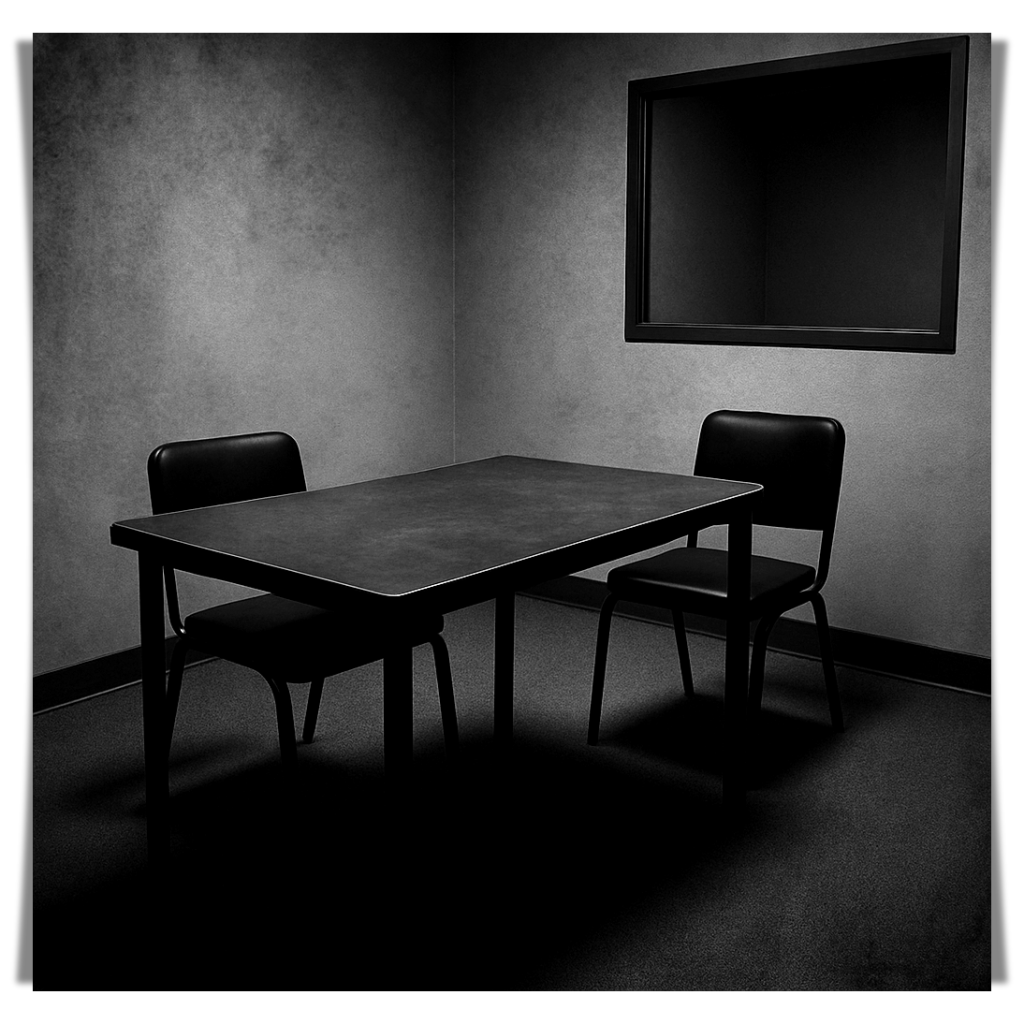
I can see it clearly, even though I’ve never been inside. The walls are bare and dull gray with faint finger prints on the paint from palms dragged in terror, boredom, or defiance. A single table in the center with uneven legs. One chair on each side but only one feels in charge. 

I imagine the air stale with breath and the absence of sunlight. There are no windows to the outside world. Only a dark pane of glass on one wall. He knows they’re watching. He doesn’t care. His focus is always here. This is a space where people stall, spin, crack, or burn. 

He sits across from them. Calm. Still like the river at dusk before swallowing the last light. He doesn’t raise his voice. He waits and lets them fill the silence with their own guilt. Lets them fidget, lie, and repeat themselves. Lets them feel uncomfortable about what they said. 

There’s always a file in front of him. Sometimes it’s closed. Sometimes it’s open to a photo or a sentence scribbled in red. He doesn’t look at it much. He stares at them, watches how their jaw moves, how they scratch their nose, and how their eyes dart to the door when they think no one’s watching. 

I wonder if he thinks of the victim while he listens. If he remembers the angle of the neck, the bruise on the cheek, and the time of death. If he keeps those pieces in his pockets like charms, reminding him of who he’s really speaking for. 

In my people’s old way of life, truth wasn’t pried out in rooms like these. We invoked Ini Andan, the goddess of justice, and waited for signs. Now there are only fluorescent lights and CCTV. The ritual remains the same. Watching. Listening. Putting the soul on a scale. 

He doesn’t need to catch them lying. They’ll hand it over eventually. Little by little, like decaying meat falling apart in their hands. 


Note:

I’m still working through two more fragments—The Victims and The Walk. They’ll come when they’re ready, and together they’ll complete this small sequence of obsession.


Copyright © Olivia JD 2025

All Rights Reserved.
I write about Iban culture, ancestral rituals, creative life, emotional truths, and the quiet transformations of love, motherhood, and identity. If this speaks to you, subscribe and journey with me.
Things I Was Told Not to Say (But I’m Saying Them Anyway)

Like everyone else, I was raised to be polite, to lower my gaze, and to keep my mouth shut before it bleeds arrogance or truth. But truth doesn’t always need to wait for permission and I’m done looking for it. 

This is a list of things I was told not to say because they are deemed shocking and inappropriate. But I’m saying them anyway, because being silent isn’t always safe. It was a slow suffocation and death.

I was told not to say:

  1. “I’m tired of being the emotional one, the one who feels things.”

But I am. It’s draining carrying the burden of my own feelings and everyone else’s. You say I’m too touchy. I say you need to be more sensitive.

  1. “Sometimes I don’t want to be a mother.”

It doesn’t mean I don’t love my children. It means I want to disappear sometimes. To be free of endless burdens and responsibilities. I want to just be me without being attached to roles and expectations, even just for a while. Just long enough to find myself again.

  1. “Marriage is lonely.”

Yes, even the good ones. Especially the good ones; when you’ve been together long enough, you know each other too much there are barely any surprises anymore. 

  1. “I still think about the one who left.”

No, I don’t want him back. But he lives in the hallways of my memory, like when I stop to think about certain songs or street names or places. That’s not being unfaithful. It’s my memory and the only way to forget it is if I lost my memories to dementia or brain damage. Otherwise the memory remains. And I’m allowed to carry it.

  1. “I don’t want to go to this church anymore.”

I believe in God. But I don’t believe in being controlled and being silenced. I don’t want to pretend everything’s fine when my spirit is clearly not. I’m not giving up on faith; I’m moving toward the truth.

  1. “I feel ugly on some days.”

No amount of affirmations makes it disappear. There are days when I can’t stand my body. Some days I don’t even notice it at all. Both truths exist.

  1. “I envy women who get to choose their identity.”

Because I never did. I was born into roles before I could choose which ones I liked. Wife and mother. Good girl. Christian. I played every one of them. But now I want to rewrite the script where the real me can finally be set free. 

  1. “I don’t want to be grateful all the time.”

Gratitude is holy. But forced gratitude is performance. I don’t owe anyone a smile when I’m breaking inside. I can be grateful and grieving at the same time.

  1. “I want more.”

More silence. More passion. More space to create without guilt. More people who see me without needing me to explain myself. I want more than I was told I should ask for.

And yes, sometimes I want to be desired and not just needed. There’s a difference. And I feel it every time I’m touched with obligation instead of longing. 

I was told not to say all of this. They are taboo and a good Christian woman, a wife and a mother, shouldn’t entertain these sinful thoughts. 

I was told to play it safe. To keep my life neat, soft, godly. I was told not to stumble others in their faith.

But truth isn’t always soft. Truth can hurt and burn sometimes. And I’d rather burn than spend another decade in silence.

Call me whatever you want. A premenopausal woman in the heat of a midlife crisis. A delusional Christian woman being lured by the devil. These are some of my truths and I’ll not stop writing about them and shrink myself for others’s comfort. I’m so done with being prim and proper and always saying the right things all the time. I’m done with lying. It’s time for me to proclaim my truths and make them known to others. 

The Things That Undid Me

I cooked my love down to tar,
a black syrup in the bottom of the pot.
It taste like a lie
but I said nothing.
I was raised to chew my
tongue for supper.

I sewn myself into the good wife’s dress,
blessed and above reproach,
but I swallowed my own teeth
like communion wafers.

My children pressed their ears to my palms
and heard singing.
But some nights,
my fingers were fists
full of burnt letters.
I’m no witch,
only a woman
who learned too late
that silence is murder.

The pastor preached be pure.
But I loved the smell of rain
in my dirty hair,
my body wanting
without shame.

God, forgive me–
not for sinning
but for the way I loved it:
the unwashed sheets,
the stains on the hymns,
the animal in me
that refused to kneel.

I’m not sorry for the smoke,
or the fire I’ve become.
I’m sorry it took me
this long to strike the match.

© 2025 Olivia JD


Olivia Atelier offers printables, templates, and art designed to inspire reflection, healing, and creativity. Visit Olivia’s Atelier for more.

The Other Me | The Woman Behind the Poem

When I wrote the poem “The Other Me,” I wasn’t trying to sound bold or dramatic. I was just being honest by telling my truth. 

People often assume they know me. They see a woman who is quiet. A wife. A mom. A Christian. Someone who shows up, serves, nods politely, and doesn’t cause trouble or controversy. I’m familiar with this image because I’ve lived inside it for most of my adult life. It’s not that it’s wrong. It’s just incomplete.

There has always been a deeper current under the surface. Beneath all that facade of neatness, there is someone who asks harder questions or feels hurt when silenced. There is someone that remembers who I was before all the roles and expectations started to pile up on me.

“The Other Me” is not a fictional character. She is a real person who has always been by my side. I put her away, hidden, so that I could make room for acceptance, safety, and community. In religious communities, women are often praised for being quiet, gentle, and obedient. Where doubt must be neatly dressed in submission, and discomfort is treated like rebellion.

The poem came from the grief of hiding and of living a half-truth because the whole truth felt like too much.

I was taught to be agreeable as a child or to be well-liked. I learned that being difficult was the same as being rejected. That if you had questions, you lacked faith. That wanting more, like more closeness, more freedom, and more honesty, was wrong or selfish.

So I stayed small. I stayed quiet. I played the role so well I almost forgot I was acting. But staying quiet has a price.

When you’re around people who only know the version of you that makes them comfortable, a certain kind of loneliness grows. They love that safe version of you and they honor her because she embodies the values they approved. But you start to wonder if they would still love you if you said something out of character. What if I stopped editing myself for the sake of their comfort? What if I let the fire show?

And then one day you write a poem.

You write it because you have things you want to say but can’t. Your body remembers what your mind tries to bury. Because there is a woman inside you who is sick of bending over backwards to meet other people’s expectations.

You don’t even know if you’ll share it when you write it. But that is beside the point because the truth is you need to see this woman and say to her, “I haven’t forgotten you.”

“The Other Me” is about the version of myself that doesn’t fit into polite spaces. She is the one who laughs too loudly, writes about God and desire in the same line, and asks questions about things she was told not to touch. She loves deeply but won’t let anyone else control her.

In the past, I was scared of her.

But now I know she isn’t a threat. She isn’t being defiant just to be dramatic. She is just being honest. She is the version of me that lived and survived. And I owe her more than just silence.

When I say I feel alone sometimes, I mean it in a specific way. I don’t mean that I don’t have anyone around me. What I mean is that I don’t have a place that feels like home and where I belong. I don’t quite fit in with the local creative community, where the type of poetry that gets attention is usually light, easy to read, and trendy. I write differently. I write deeply. And sometimes, that depth becomes a wall between me and the world I want to reach. 

At the same time, the people who connect with my work often live far away. They have different cultures, different worldviews. We connect through words, but we live in different worlds. That, too, feels like a dislocation.

But still, I write.

Because this is how I heal, and this is how I remember. This is how I get back the parts of myself that I’ve tried to hide for a long time.

The Other Me is not a rebellion. It is a way for me to return to the version of me that I’ve neglected.

And maybe, just maybe, if I keep writing her into existence, someone else out there who also feels out of place, half-formed, and unseen, will recognize themselves in my words. And that recognition will feel like belonging.

We might not need to fit in to be complete. Maybe we just need to be honest.

And that is what this poem gave me. A little more honesty. A little more light. A little more room to breathe.

And to the version of me that is still hiding: I see you. We’re coming home.

Note: This poem is not published yet, but you can read a short excerpt on my Threads post.


Olivia Atelier offers printables, templates, and art designed to inspire reflection, healing, and creativity. Visit Olivia’s Atelier for more.

The Hour After Midnight | Why I Stayed Awake When I Should’ve Slept

For years, I stayed up too late.

It wasn’t because I was working or I had boundless energy or I was busy chasing my dreams. The main reason was that I needed to feel like a person.

It didn’t start as revenge bedtime procrastination. That phrase only found me later, when I stumbled across an article that put a name to my nightly rebellion. It felt like intense desperation. You could say it was a craving or a desperate fight for space.

When my children were small, the days blended together in a mist of needs. I remember those years vividly and if I’m honest, it makes me shudder, but not because I feel ashamed. My daily life was full of milk-stained shirts, sticky fingers, and toys scattered like confetti across every surface. I loved my kids fiercely. Still do. But in those days, I didn’t know where I ended and they began. I gave them my body, my attention, and everything. And somewhere in that giving, I began to disappear.

When the kids were finally asleep and when the house finally went quiet, and the dishes were done, I sat down. Just for a moment, just to breathe.

And that moment stretched beyond what I intended. I stayed up. Scrolling. Reading. Writing. Wandering through Facebook memories of the woman I used to be. Buying time I couldn’t afford, just to feel like I still existed.

I’d tell myself, “Just one more post. One more chapter. One more scroll.”

But truthfully? I was afraid that if I slept, I’d wake up and do it all over again. The endless giving, pouring out myself and forgetting.

So I kept stealing those hours after midnight.

And in the morning, of course, I paid the price.

I was more irritable. More short-tempered. More ashamed of the mother I was becoming.

The irony was painful: I stayed up to save myself, but it only made me more fragile the next day.

I never told anyone how much I resented the way my life had shrunk. How much I missed myself and how ashamed I felt for even feeling that way.

That was the case until I began writing about it.

That’s how The Hour After Midnight came to life. It began as fragments and eventually evolved into a complete poem. A piece of me, speaking directly to the woman I used to be. Perhaps I still am that woman, but these days I go to bed at 12 AM or earlier. As the kids grow, I enjoy my sleep more, and the resentment has disappeared.

This poem is about a mother who gives her all and suffers in silence. It’s about a woman who craves stillness to survive her crazy life of constant giving. She was just a tired soul who wanted to feel seen.

If that sounds like you, I hope this poem wraps around you like a quiet hug. It’s more than a printable; it’s a recognition and a mirror. A gentle piece of emotional support for any overstimulated mom who needs a reminder to be kind to your mind.

This digital poem makes a thoughtful and unique Mother’s Day gift, especially for the tired mom who needs to hear she’s still enough. It’s a beautiful affirmation of motherhood for those navigating revenge bedtime procrastination, mom life burnout, and those quiet moments where you whisper, “I am enough.”

Find The Hour After Midnight in my shop Olivia’s Atelier. You’ll receive a high-resolution poem print in multiple sizes, ready to frame or gift. I hope it brings you what it brought me—a pause, a breath, a beginning.

Note: Yes, I launched my Etsy shop recently to share my poems with the world. Right now, everything in the shop is 50% off until June 2, including our featured Mother’s Day Poem Printables. They are designed as heartfelt gifts or tender self-reminders to moms everywhere. Feel free to check it out.

A Stranger In the Rain

Daily writing prompt
Describe a random encounter with a stranger that stuck out positively to you.

That evening it was pouring. The rain was unremarkable. It was a consistent, calm deluge that dulled the bustling city. Everything seemed muted: the buildings, the street signs, and the people walking by with their umbrellas slanted against the wind. The pavement glistened under headlights and puddles reflected fragments of neon from signs overhead. The air smelled like coffee, wet concrete, and something faintly sweet, perhaps caramel from the cafe I frequented. It was a little corner cafe with fogged-up windows, dim lighting, and jazz playing softly in the background. It was a place that usually smelled of freshly ground beans and spices.

Image source

I was there, like I usually am. I sat by the window with my notepad open and a blue pen in my fingers. I wasn’t writing, though. I was simply watching the rain blur the world outside. It was one of those times when the silence felt thicker than normal, and you began to hear the sound of your breathing. 

Then he walked in. 

I noticed the rain on his jacket first. He brushed it off at the door and ran a hand over his damp hair. He had short, tidy hair. There was something about him that I couldn’t quite put my finger on. A fluidity in his movements, a stillness that felt almost magnetic. Like he belonged in every room without having to announce it. Was he special? Perhaps not. All I could say was he knew how to take up space without drawing attention. He looked around and saw me. I shifted my gaze to the rivulets of rain on the glass. 

He sat a few tables away, ordered a coffee, and glanced out the window just like I did. I returned to my notepad, pretending not to notice him. I could sense him. He was handsome—strong jaw, deep-set brown eyes, tall, clean-shaven, with strong hands and long fingers that lightly tapped against his cup. There was something else, but I let that thought slide. 

He didn’t talk to anyone. He slowly sipped from his cup. At one point our eyes met briefly. 

And deep down, I knew that this moment, this stranger, meant something. Not in a romantic sense, but as if some quiet part of me recognized something familiar. I couldn’t pinpoint what exactly it was, but I felt silly for believing so.

When I got up to leave, I could feel his eyes on me. The bell above the door chimed as I stepped into the rain. 

At home, I realized I had forgotten my pen. I shrugged it off at first. It was just a pen. He was just a man. 

But still that encounter stayed with me. I couldn’t explain the strange pull it had on me. It reminded me that even in a foreign city where no one knows me, the world can still offer surprises. That maybe connections, even with strangers, don’t always require explanation. Some moments just are. 

And maybe that was the positive part. I didn’t feel less lonely. It simply reminded me that I’m still capable of feeling something real. Even if it begins and ends only in my mind. 

The Decision to Be More

There was never a single moment, or a major insight on the days leading to New Year’s, or on a birthday, or a milestone achieved. It was a slow, emerging truth I quit resisting. 

I am aging. And that is not a tragedy.

For years, I lamented the softness of my skin and the changing lines of a face I no longer recognized in photographs. I missed the firmness, glow, and smoothness of youth, which wrapped around me like a second skin. I yearned for the girl who moved through the world without realizing the burden she would one day bear.

But now that I’m nearing 50, I see her differently.

I no longer see myself as a lesser version. I am more.

At this age, I have increased knowledge and become more present. I’m more accepting of my flaws. This kind of self-acceptance in midlife didn’t happen overnight: it bloomed slowly, from the roots of every hardship, every choice, every shift in perspective.

With age comes experience, and with experience comes wisdom. These aren’t simply intellectual ideas; they are embodied experiences that influence my creativity. My writing and art are richer today because I’ve lived rather than just relied on techniques. I don’t just write from theory or imagination but from the scars and marvels of real life. I write from the experiences of heartbreaks, little delights, and the gentle discoveries that only time can teach.

As a woman approaching 50, I’ve learned that aging gracefully doesn’t mean staying youthful. It’s about honoring the life I’ve carried. My body has carried life, birthed babies, nursed them through illness, and made room for love, grief, and exhaustion. My skin has experienced both pleasure and suffering. My heart is shattered yet still pulses with hope. I’ve been silent and loud, scared and bold, gentle and hard.

The decision that altered everything wasn’t about reclaiming lost youth but about releasing the need to chase it. 

Now, I wear my years like a well-worn sweater: tattered at the edges, stretched in spots, but warm, treasured, and wholly mine.

I struggle with fatigue and aches. Occasionally, I wish I could turn back time. But then I recall what I’ve gained: clarity, discernment, and self-compassion. I’ve gained a deeper, braver love for my body, my truth, and my desires. This is what aging and self-growth look like: forgiving the past versions of myself while stepping fully into this one.

If I’m lucky, I’ll live another 20 to 40 years. Perhaps less. But I no longer pursue time; I walk alongside it.

That was the decision: to embrace aging rather than shy away from it.

And I’ve never felt more alive.

Evaporating No More

I never want to visit a place where I have to shrink to be accepted, loved, or tolerated. In this place, softness is seen as a warning sign, silence is misconstrued for compliance, and each mouthful feels like restraint.

I used to be there. It wasn’t a city with a name, but in living rooms where truth was unwelcome, in church pews filled with shame, in beds where I learned to sleep with absence and call it comfort.

Sometimes the cruelest places aren’t found on any map but rather built slowly by unspoken words, frozen stares, and the way someone you love says, “don’t make it a big deal” when your soul is tearing at the seams.

I never want to visit a place that demands me to chop myself into pieces to fit their platter.

I’d rather walk naked through misunderstanding than hide behind lies for others’ comfort.

Give me the wilderness—raw, shivering, and divine. In locations where no one speaks my language but still listens, where stray cats welcome me, and even the wind doesn’t ask for explanations.

I’ve spent too long evaporating, like breath against cold glass.

Never again.

Not for love.

Not for survival.

Not even for home.

When Superpowers Clash, We Feel It Too

Image source

It’s funny, isn’t it? How two men on opposite ends of the world can make a decision and affect the whole world. Tariffs and trade war threats have been dominating the news lately. The US says it’s slapping more tariffs on China. China fires back. It’s easy to scroll past, thinking it’s “boring and not my problem”. 

The truth is, this issue affects both me and you, regardless of your location in the world. However, my perspective is limited to my own country. If you live in Malaysia, whether you’re in a kampung or a longhouse, a city condo, or riding the LRT to work, it is your problem.

I’m no expert in global trade or politics. I’m just an ordinary Malaysian of Iban ethnicity, trying to make sense of how all this noise in the headlines ends up affecting people like us. What I’m writing here comes from my own shallow understanding. But it’s my opinion and deserves a place in the conversation too. 

Malaysia trades with both China and the US. When the US slaps China with high tariffs, Chinese companies may look for cheaper supplies or partners. They could turn to smaller nations like Malaysia. It seems like an opportunity but if the US suspects Malaysia is helping China “bypass” tariffs, we might get punished too. The rules keep changing and things are so uncertain right now. 

And let’s discuss the costs of things, which may go up. Costs trickle down. I’m not too concerned about basic necessities (for now), but what about machines and auto parts? My car repairs might cost double. I drive an old car, which is more likely to break down frequently compared to a new one. And what about medical costs? Will they go up too because our medicines are mostly imported?

Malaysia is part of global supply chains, especially in tech. For example, if a Malaysian company makes parts that go into Chinese products and China can’t sell those products to the US anymore, Malaysia’s economy also takes a hit. It’s a domino effect. We’d probably experience less overtime, fewer shifts, or, worse, layoffs.

When the global economy is shaky, investors pull back. Foreign companies that were thinking of setting up shop in Malaysia might delay or cancel. That means fewer new jobs, less innovation, and slower economic growth. Even local businesses hesitate to expand or hire, unsure of what’s coming next.

As you can see, this trade war is about us too. It’s not just about two bickering giants. 

And what’s the price of pride and power?

You pay it in whatever your country’s currency is. For me, it’s in Ringgit and daily worries that don’t make headlines.

But Malaysia (and other ASEAN countries) isn’t staying silent. It was recently announced that we’re planning a diplomatic mission to the US to talk things through. We don’t want to retaliate because we are tiny and want to play nice. We want to negotiate and protect our trade and, hopefully, our people. The date hasn’t been confirmed, but even that small step means we’re not just drifting in someone else’s storm.

The world is full of giants. As a small nation, we don’t have the means to fight with fists. We are trying to survive with grace and hold steady like a boat in choppy waters. Our sails may be torn and our oars weathered but we are still floating and moving because people’s lives are worth the journey. 

The Way She Moves

Daily writing prompt
What’s the most fun way to exercise?

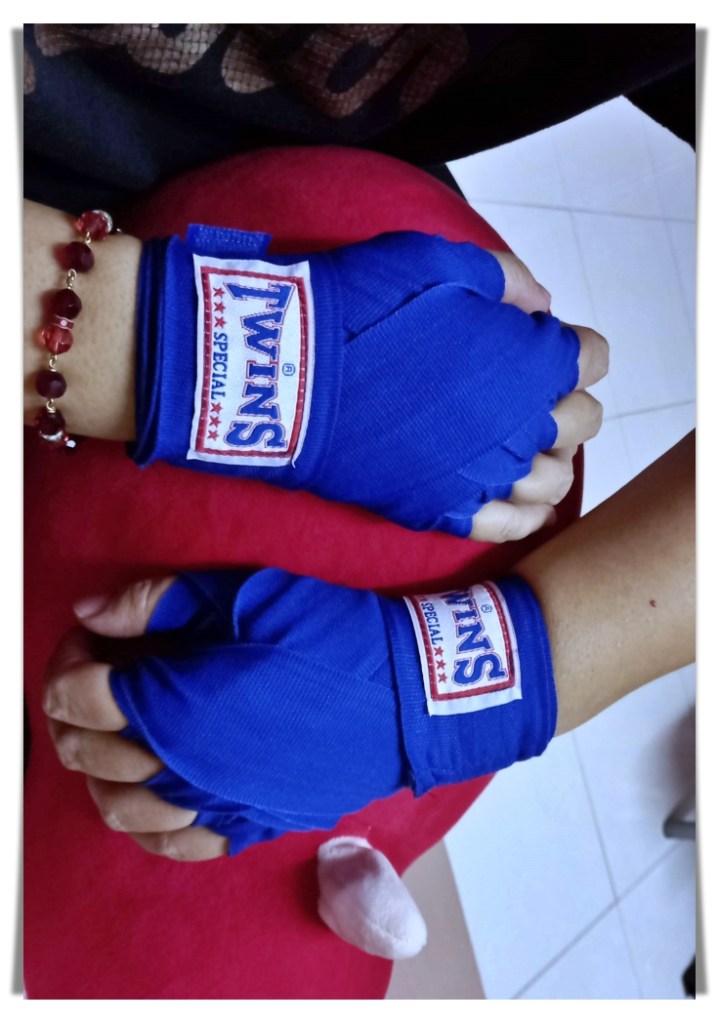
In 2021, I started doing boxing workouts, not to compete in fights, but to regain confidence in myself. It’s been my way of regaining energy, confidence, and joy. This mini story offers a little insight beneath that fire.


He walks with me to the gym, his hand brushing against mine every few steps. It’s enough to remind me that he’s here.

The sun has set low behind the trees, enveloping everything in that golden hour glow I like. The city noise fades. My hoodie clings to my lower back, and my skin feels warm before I’ve even thrown a single punch. I see him eyeing me out of the corner of his eye, like he usually does.

“You’re quiet,” I observe, glancing over.

He grins. “Just thinking how hot you look when you’re about to ruin someone.”

I roll my eyes but can’t control the smile that appears on my mouth. He knows. He’s seen me in the ring—gloves on, hair slick with sweat, arms sharp and fierce. He’s seen me transform into someone else. Or maybe become more of who I’ve always been, despite the weight of years, expectations, and softness I had to bear.

We pause at a bench near the entrance. I sit and sip my water. He leans on the railing next to me, close but not touching. He’s giving me space to breathe. 

“I used to hate this body,” I mutter softly. “I used to think it wasn’t mine. Huge, heavy, thick in the wrong places.”

He does not interrupt.

“Boxing gave it back to me. I no longer care about losing weight. All that matters is the fire in my blood, the energy and power it gives me. 

He turns to face me, his eyes serious. “It shows. The way you carry yourself now. “It’s… magnetic.”

I laugh. “Magnetic, huh?”

“Absolutely.”

I stand, slinging my towel over my shoulder. He leans closer.

“Try not to knock anyone out in there.”

“No promises.”

And then I walk in, knowing he’s watching. I know he’ll be there when I’m done. And I know too that I’ve already won something far more important than a fight.


And here’s a poem to accompany this story.

Grit

They said my body was a church.
No, it was a battlefield—
all pew and destruction.
I learned to swing
to pull breath from
the edge of bruise,
to let sweat baptize
what shame could not.
I fought like a searing fire,
feral that dances,
not soft or safe.

He watches,
as if I was the last
honest thing
he’d ever lay eyes on.

Copyright © Olivia JD 2025
All Rights Reserved.

Why I’ll Always Come Back to The English Patient

Daily writing prompt
What book could you read over and over again?

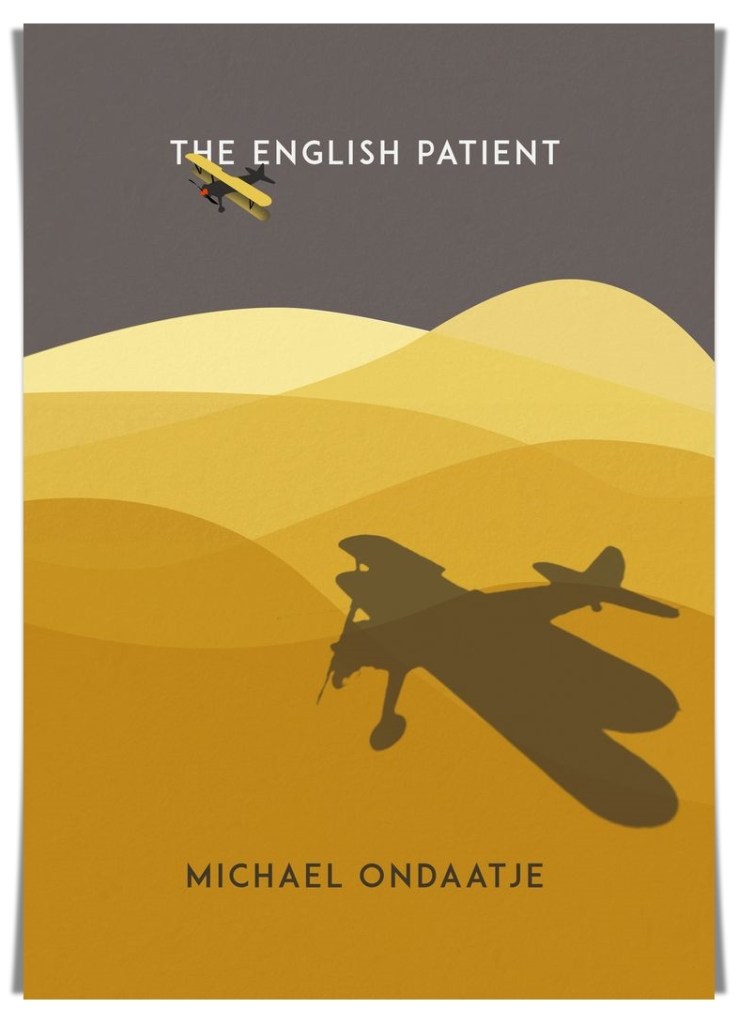
Some books become landmarks in your life. It becomes more than something you read when you return to its pages again and again, like a familiar scent or a half-remembered dream. For me, that book is The English Patient by Michael Ondaatje.

I got my copy in 1997 while waiting for my night shift to start. I was 20 at the time, working part-time while studying for my IT diploma. My shift began at 6 p.m. and finished at 6 a.m. the following day. After dinner, I went to a nearby bookshop and picked up the novel. The film adaptation was playing in cinemas at the time, but I didn’t watch it until years later. I read the book during my breaks at work, but it took me a long time to finish it.

Image source

Ondaatje’s prose was difficult. It didn’t care for neatness. The narrative was fragmented, the rhythm unpredictable—the whole narrative is a long lyrical poem. But I stuck with it, turning each page slowly, sometimes painfully. And I’m glad I did. While others found it disjointed, that was precisely what drew me in. It was too poetic for the mainstream, too fragmented for easy consumption, and too sensual for readers who prioritize plot. That’s what I enjoyed about it then—and still do.

When I went to university to pursue my IT degree, The English Patient became a silent friend. I read it during long, lonely afternoons in my hostel room as a soothing escape from the chaos of university life. Through Ondaatje’s pages, I could retreat to the worn walls of Villa San Girolamo, into the burned silence of the English Patient, and the sun-drenched memories of the Cave of Swimmers. I must have read the book ten times throughout the years. 

The story unfolds in the same way that memory does: disorganized, sensory, and half-lit. We learn about the English Patient’s past before, during, and after WWII. Of Katharine Clifton and their forbidden love. Of Hana, the grieving nurse who cares for him in the villa. Of Caravaggio, the thief turned British spy with missing thumbs. Of Kip, a gentle Indian sapper who dismantles bombs and falls in love with Hana despite their cultural differences.

The patient’s only possession is a battered, annotated copy of Herodotus’ Histories that survived the flames when his plane crashed in the desert. The crash badly burned him and caused amnesia. He couldn’t remember his name and lost his identity, but his voice led many to believe he was English. In time, we learn he is actually László de Almásy, a Hungarian cartographer and desert adventurer. Almásy’s character is loosely based on a real-life counterpart, Count László Almásy, a Hungarian aristocrat and explorer.

I remember reading passages aloud to my lover during late-night chats. We watched the movie adaptation on VCD, but I hated it. It lacked the haunting lyricism of the novel. The lushness of Ondaatje’s words cannot be translated to screen. His sentences breathe, linger, and seep in. They don’t just move the story forward. They remain in you long after you finish the novel.

I haven’t read the book in years. Maybe it’s time to read it again. Some parts of me have changed; others haven’t. I suspect the story will read differently now, the way all great books do when you return to them older and bruised with life.

There’s one passage that’s followed me for years, so much so that I placed it on my About Me page:

“She had always wanted words, she loved them; grew up on them. Words gave her clarity, brought reason, shape.”

This quote refers to Katharine Clifton, but I feel it suits me as well.

There are many other lines that have stayed with me through the years. There are too many to list, but here are a few that still haunt me:

“We die containing a richness of lovers and tribes, tastes we have swallowed, bodies we have plunged into and swum up as if rivers of wisdom, characters we have climbed into as if trees, fears we have hidden in as if caves. I wish for all this to be marked on by body when I am dead. I believe in such cartography—to be marked by nature, not just to label ourselves on a map like the names of rich men and women on buildings. We are communal histories, communal books. We are not owned or monogamous in our taste or experience.”

― Michael Ondaatje, The English Patient

“I believe this. When we meet those we fall in love with, there is an aspect of our spirit that is historian, a bit of a pedant who reminisces or remembers a meeting when the other has passed by innocently…but all parts of the body must be ready for the other, all atoms must jump in one direction for desire to occur.”

― Michael Ondaatje, The English Patient

“Moments before sleep are when she feels most alive, leaping across fragments of the day, bringing each moment into the bed with her like a child with schoolbooks and pencils. The day seems to have no order until these times, which are like a ledger for her, her body full of stories and situations.”

― Michael Ondaatje, The English Patient

“This was the time in her life that she fell upon books as the only door out of her cell. They became half her world.”

― Michael Ondaatje, The English Patient

“In the desert the most loved waters, like a lover’s name, are carried blue in your hands, enter your throat. One swallows absence.”

― Michael Ondaatje, The English Patient

“Sometimes when she is able to spend the night with him they are wakened by the three minarets of the city beginning their prayers before dawn. He walks with her through the indigo markets that lie between South Cairo and her home. The beautiful songs of faith enter the air like arrows, one minaret answering another, as if passing on a rumor of the two of them as they walk through the cold morning air, the smell of charcoal and hemp already making the air profound. Sinners in a holy city.”

― Michael Ondaatje, The English Patient

The English Patient is not a book you finish or a book you can read casually. It’s a book you carry, absorb, and savor.

And I’ll keep returning to it.

As long as I need to remember how language can ruin you.

And heal you.

And leave you haunted in the best way.