A Review of The Earthquake Bird Movie Adaptation | The Book vs The Movie

After reading Susanna Jones’ novel The Earthquake Bird, I felt compelled to rewatch the 2019 Netflix adaptation. The film, directed by Wash Westmoreland and starring Alicia Vikander, Riley Keough, and Naoki Kobayashi, takes creative liberties with its source material while maintaining its dark, melancholic atmosphere. Despite some changes, I found the directors’ ability to capture the story’s haunting atmosphere impressive. However, the ending deviates radically from the book, providing viewers with the closure that the author purposefully denies. Despite the clean conclusion, I couldn’t help but believe that the book’s emotional ambiguity was more fitting. However, the film still provides an intriguing representation of Jones’ writing.

Watching it again provided me a new perspective on how the film adapted certain key components and departed from the original.

Image source

Lucy: A Different Lucy, A Different Background

The most noticeable distinction in the movie is Lucy’s nationality. Lucy Fly, the novel’s protagonist, is a British expat living in Tokyo. Lucy in the film is Swedish. Alicia Vikander’s portrayal of Lucy is captivating, capturing the character’s subdued and brooding qualities as envisioned in the book. That part seemed to be tailor-made for Vikander, who portrays Lucy as cold but fiercely vulnerable. She is the film’s foundation, and no one else could have played the character as convincingly.

Teiji: A Beautiful Mystery with a Dark Side

In the movie, Naoki Kobayashi plays Lucy’s love interest, the intriguing photographer Teiji Matsuda. Kobayashi’s Teiji is colder and more detached from the one in the book. His calm demeanor conceals a mild but unmistakable hostility, which adds tension to his interactions with Lucy. He is more indifferent to Lucy in the movie, which makes it plain that she is little more than a muse and a physical comfort to him. Where the novel’s Teiji shows glimmers of tenderness, the film removes those layers, exposing a man who is equally compelling and creepy.

The filmmakers altered Teiji’s backstory, having him raised by an aunt instead of his mother. This change adds a layer of mystery to his character, but it’s an easy element to overlook amid Teiji’s ambiguous personality.

Lily Bridges: A Scene-Stealer

Riley Keough as Lily Bridges steals the scene. Lily in the movie is flirty and outgoing but slightly needy. At one point, she even suggested she slept in between Teiji and Lucy, a moment that perfectly captures her brazen personality. Keough brings Lily to life in a way that matches how I envisioned her in the book: vibrant, needy, and ultimately tragic. Her presence adds a volatile energy to the story, and her dynamic with Lucy and Teiji is one of the more compelling aspects of the film.

A Cinematic Key Moments

The film’s cinematic storytelling enhances some passages from the book while layering the tension and beauty. One such moment comes when Lucy realizes that Teiji’s love has turned toward Lily during their time on Sado Island. The shift is slight but devastating, and the filmmakers pull it off with precision. The cinematography nicely captures Lucy’s mounting discomfort and the way it frames her isolation against the backdrop of Japan’s breathtaking landscape.
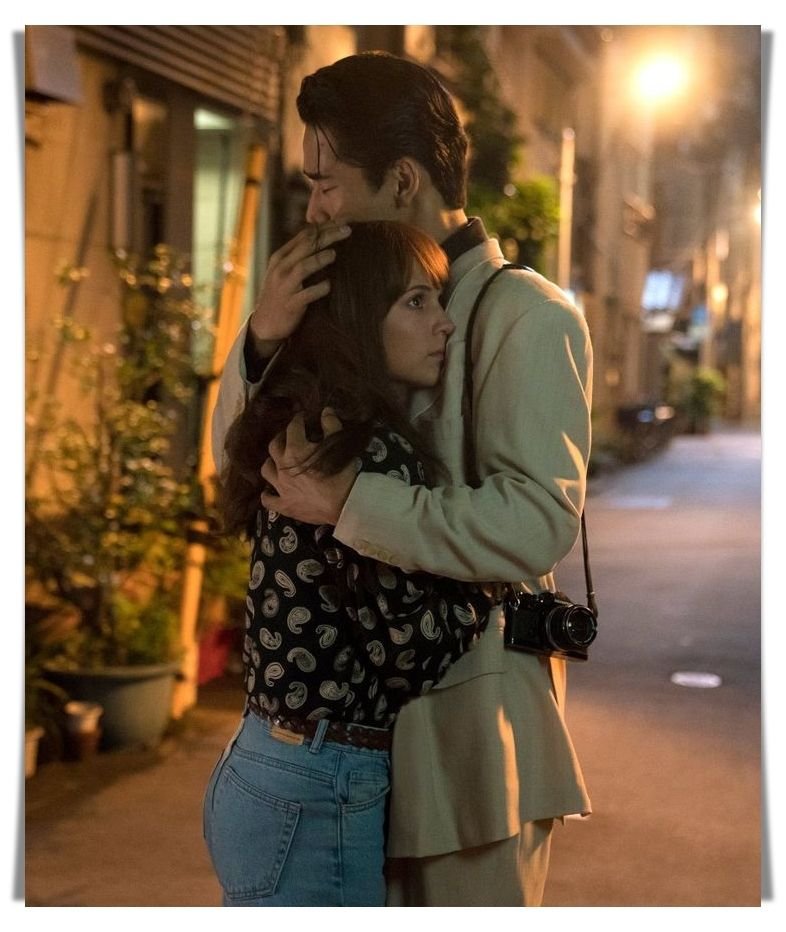
Image source

The other standout element in the film is Teiji’s apartment. Unlike the novel’s minimalist description, the film makes his living space a dingy and cluttered space mirroring his mysterious character. The apartment is almost a character in its own right, its junkyard atmosphere and eerie photographs lining the walls contributing to the film’s noir aesthetic.

The Earthquake Bird: A Haunting Force

One thing does get heightened in the movie: the titular “earthquake bird” reference. The bird is more vaguely referenced in the book, but the movie brings it to life, its haunting bird calls punctuating the moments of silence that follow an earthquake. That auditory detail adds another layer of unease, making the story’s themes of guilt and displacement all the more tangible.

Cinematography and the Haunting Soundtrack

The movie’s cinematography is breathtaking. It manages to capture the beauty of 80s Japan while also infusing it with a sense of foreboding. With such a subdued color palette and reserved framing, there’s even a noir-like feel to the film that works for its psychological aspects. Whether it is the bustling streets of Tokyo or the silent, windy fields of Sado Island, every shot seems meticulously crafted.

A special mention should also go to the haunting soundtrack. Composed by Atticus Ross, Leopold Ross, and Claudia Sarne, the music heightens the tension and melancholy of the story, settling into your head long after the last credits roll. It’s the kind of score that amplifies the emotional weight of every scene, transforming the movie into an immersive experience.

The Ending

The most significant departure from the book is the ending. The novel leaves a lot of questions unaddressed, requiring readers to contend with the ambiguity of Lucy’s guilt and the motives behind Teiji’s actions, but the movie prefers a more definite resolution. Without giving too much away, the movie does a good job of resolving some things and giving viewers a sense of closure. I admire the clarity, but I did find myself yearning for the unresolved tension of the book’s ending. That uncertainty seemed truer to the story’s themes.
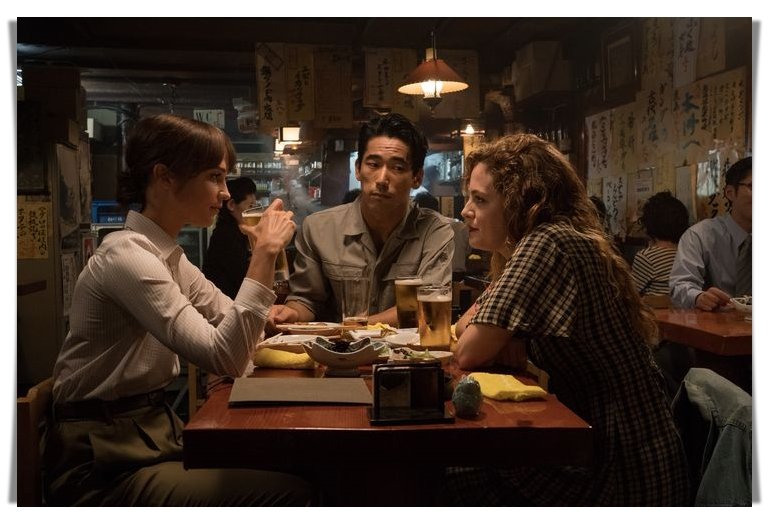
Image source

Final Thoughts

The Earthquake Bird movie is a rich, visually deep, and emotionally haunting adaptation of Susanna Jones’s novel. While it diverges from the novel in some ways, it opens the story in new directions that could not have happened in the book. Alicia Vikander shines as Lucy. She succeeded in capturing the character’s multifaceted nature with ease and intensity. Naoki Kobayashi and Riley Keough deliver equally compelling performances. While some changes, such as Lucy’s nationality or Teiji’s backstory, seemed inconsequential, others, like the ending, significantly changed the tone of the story. The film’s portrayal of Teiji as a slightly colder character brought a darker edge to the story too. These differences notwithstanding, the movie stays true to the original novel’s exploration of guilt, obsession, and identity.

If you’ve read the book, the film is an intriguing reinterpretation of the story. If you haven’t, the film is still a tense and tight psychological thriller that stands on its own. Either way, it’s worth watching it for its breathtaking cinematography, haunting soundtrack, and outstanding performances. It felt like when I watched the movie, it was like a different perspective on the novel—familiar but different, unsettling but beautiful. It’s a story I’ll carry with me, in both its written and cinematic forms.

Why I’ll Always Come Back to The English Patient

Daily writing prompt
What book could you read over and over again?

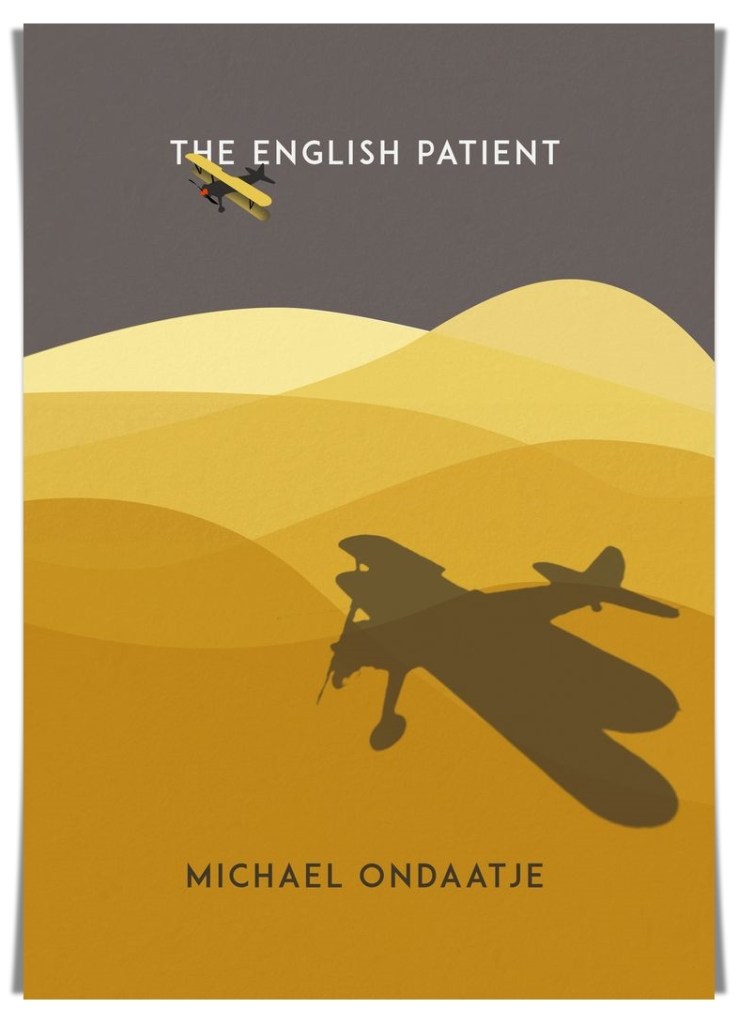
Some books become landmarks in your life. It becomes more than something you read when you return to its pages again and again, like a familiar scent or a half-remembered dream. For me, that book is The English Patient by Michael Ondaatje.

I got my copy in 1997 while waiting for my night shift to start. I was 20 at the time, working part-time while studying for my IT diploma. My shift began at 6 p.m. and finished at 6 a.m. the following day. After dinner, I went to a nearby bookshop and picked up the novel. The film adaptation was playing in cinemas at the time, but I didn’t watch it until years later. I read the book during my breaks at work, but it took me a long time to finish it.

Image source

Ondaatje’s prose was difficult. It didn’t care for neatness. The narrative was fragmented, the rhythm unpredictable—the whole narrative is a long lyrical poem. But I stuck with it, turning each page slowly, sometimes painfully. And I’m glad I did. While others found it disjointed, that was precisely what drew me in. It was too poetic for the mainstream, too fragmented for easy consumption, and too sensual for readers who prioritize plot. That’s what I enjoyed about it then—and still do.

When I went to university to pursue my IT degree, The English Patient became a silent friend. I read it during long, lonely afternoons in my hostel room as a soothing escape from the chaos of university life. Through Ondaatje’s pages, I could retreat to the worn walls of Villa San Girolamo, into the burned silence of the English Patient, and the sun-drenched memories of the Cave of Swimmers. I must have read the book ten times throughout the years. 

The story unfolds in the same way that memory does: disorganized, sensory, and half-lit. We learn about the English Patient’s past before, during, and after WWII. Of Katharine Clifton and their forbidden love. Of Hana, the grieving nurse who cares for him in the villa. Of Caravaggio, the thief turned British spy with missing thumbs. Of Kip, a gentle Indian sapper who dismantles bombs and falls in love with Hana despite their cultural differences.

The patient’s only possession is a battered, annotated copy of Herodotus’ Histories that survived the flames when his plane crashed in the desert. The crash badly burned him and caused amnesia. He couldn’t remember his name and lost his identity, but his voice led many to believe he was English. In time, we learn he is actually László de Almásy, a Hungarian cartographer and desert adventurer. Almásy’s character is loosely based on a real-life counterpart, Count László Almásy, a Hungarian aristocrat and explorer.

I remember reading passages aloud to my lover during late-night chats. We watched the movie adaptation on VCD, but I hated it. It lacked the haunting lyricism of the novel. The lushness of Ondaatje’s words cannot be translated to screen. His sentences breathe, linger, and seep in. They don’t just move the story forward. They remain in you long after you finish the novel.

I haven’t read the book in years. Maybe it’s time to read it again. Some parts of me have changed; others haven’t. I suspect the story will read differently now, the way all great books do when you return to them older and bruised with life.

There’s one passage that’s followed me for years, so much so that I placed it on my About Me page:

“She had always wanted words, she loved them; grew up on them. Words gave her clarity, brought reason, shape.”

This quote refers to Katharine Clifton, but I feel it suits me as well.

There are many other lines that have stayed with me through the years. There are too many to list, but here are a few that still haunt me:

“We die containing a richness of lovers and tribes, tastes we have swallowed, bodies we have plunged into and swum up as if rivers of wisdom, characters we have climbed into as if trees, fears we have hidden in as if caves. I wish for all this to be marked on by body when I am dead. I believe in such cartography—to be marked by nature, not just to label ourselves on a map like the names of rich men and women on buildings. We are communal histories, communal books. We are not owned or monogamous in our taste or experience.”

― Michael Ondaatje, The English Patient

“I believe this. When we meet those we fall in love with, there is an aspect of our spirit that is historian, a bit of a pedant who reminisces or remembers a meeting when the other has passed by innocently…but all parts of the body must be ready for the other, all atoms must jump in one direction for desire to occur.”

― Michael Ondaatje, The English Patient

“Moments before sleep are when she feels most alive, leaping across fragments of the day, bringing each moment into the bed with her like a child with schoolbooks and pencils. The day seems to have no order until these times, which are like a ledger for her, her body full of stories and situations.”

― Michael Ondaatje, The English Patient

“This was the time in her life that she fell upon books as the only door out of her cell. They became half her world.”

― Michael Ondaatje, The English Patient

“In the desert the most loved waters, like a lover’s name, are carried blue in your hands, enter your throat. One swallows absence.”

― Michael Ondaatje, The English Patient

“Sometimes when she is able to spend the night with him they are wakened by the three minarets of the city beginning their prayers before dawn. He walks with her through the indigo markets that lie between South Cairo and her home. The beautiful songs of faith enter the air like arrows, one minaret answering another, as if passing on a rumor of the two of them as they walk through the cold morning air, the smell of charcoal and hemp already making the air profound. Sinners in a holy city.”

― Michael Ondaatje, The English Patient

The English Patient is not a book you finish or a book you can read casually. It’s a book you carry, absorb, and savor.

And I’ll keep returning to it.

As long as I need to remember how language can ruin you.

And heal you.

And leave you haunted in the best way.

Becoming Celine

Daily writing prompt
If you could be a character from a book or film, who would you be? Why?

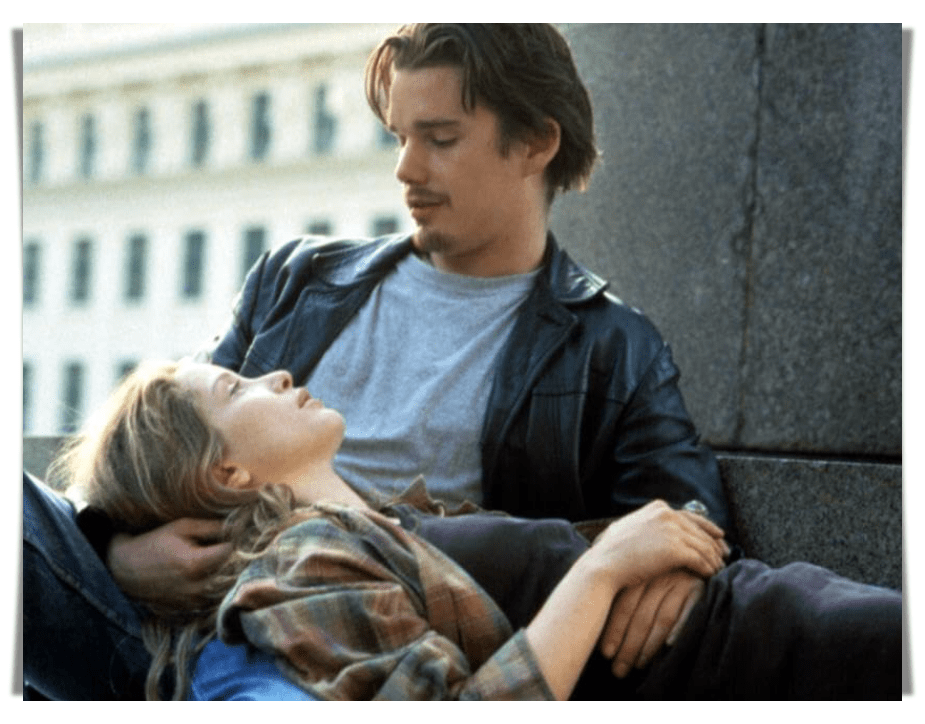
If I could be a character from a book or film, I would be Celine from the Before Trilogy. Yes, I’d love to be Celine—Julie Delpy’s character in Before Sunrise, Before Sunset, and Before Midnight.

Image source

Those films stayed with me for many years since I discovered Before Sunrise in the early 2000s. That movie was released in 1995, a year after Reality Bites—another hit movie starring Ethan Hawke. Its sequel, Before Sunset, was released nine years later in 2004, and the final installment, Before Midnight, another nine years later in 2013.

I adore the trilogy for its dreamy long walks, the poetic ramblings, the agonizing feeling of time passing, and also Celine’s character development. In Before Sunrise, she begins as a charming, idealistic Sorbonne undergraduate, wide-eyed and open-hearted. She was sweet and willing to talk to an American traveler, Jesse Wallace (Ethan Hawke), on a Eurail. They disembarked in Vienna to spend the night together and explore the mystery of what-if.

And then nine years pass. 

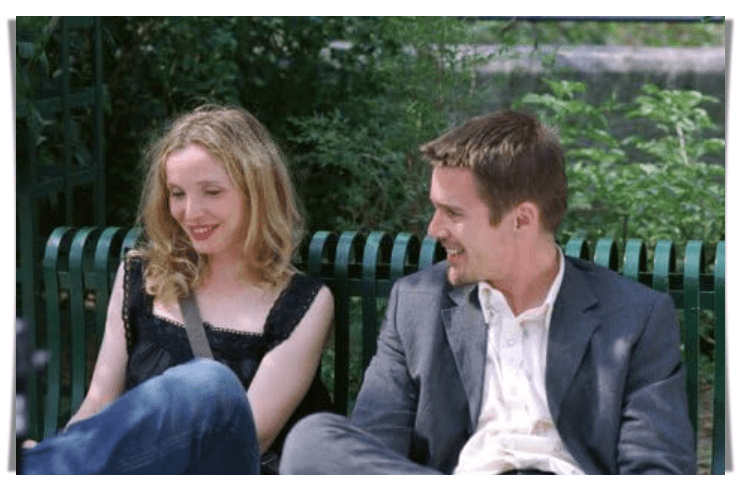
By Before Sunset, she has grown sharper. Her voice is steelier, and her eyes are more guarded. Life has touched and damaged her in many ways. But behind it all, she has the same curiosity, the desire to comprehend life, and what it means to belong to someone or not at all. Jesse is married and a writer now and has published a book about his experiences that fateful night nine years ago. Celine shows up at his book reading in Shakespeare & Co., watching and listening to him from the side of the room. And then their eyes met. That scene always gets me.

“I always feel this pressure of being a strong and independent icon of womanhood, and without making it look my whole life is revolving around some guy. But loving someone, and being loved means so much to me. We always make fun of it and stuff. But isn’t everything we do in life a way to be loved a little more?”

― Julie Delpy, Before Sunrise & Before Sunset: Two Screenplays

Image source

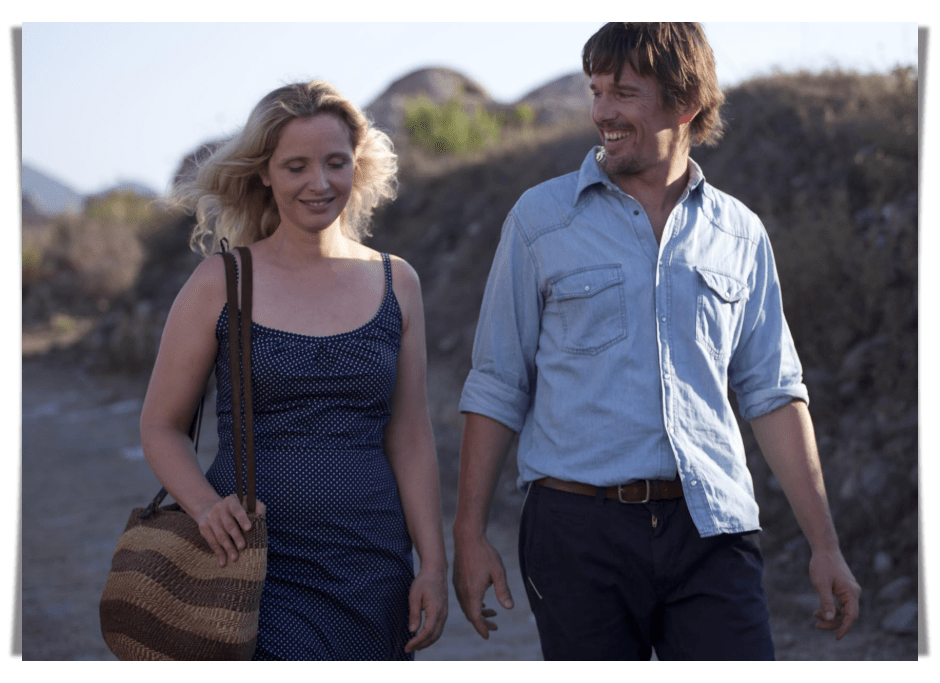
Then came Before Midnight, another nine years later. Celine and Jesse are now in their forties and parents to twin daughters. Their conversations are no longer romantic musings under moonlight, but fueled by the reality of parenthood, aging, and the jadedness that settles into long-term love. They’re on holiday in Greece, but even the beautiful scenery can’t hide the fractures that have begun to appear. There’s tension, resentment, and emotional exhaustion.

They take long walks and talk like they always have, but their conversation is no longer about dreams and philosophies. Now they talk about regret, sacrifice, and voids that love couldn’t fill. There’s a scene in a hotel room that feels like a slow, approaching storm. You begin to wonder, did Jesse cheat on her? Did Celine ever fully forgive him? Did they lose parts of themselves in choosing to stay?

Despite their love, it’s evident that love isn’t always enough.

Image source

That’s what makes Celine feel so authentic to me. 

Perhaps I see myself in her because I, too, often live in my head. I question everything—especially love. I pay attention to details and cherish them. 

“You can never replace anyone because everyone is made up of such beautiful specific details.”

― Julie Delpy, Before Sunset

I remember moments long after they have passed. I try to appear sensible, but I’m a huge romantic underneath it all. Like Celine, I struggle with guilt, restlessness, and the anguish of wanting something elusive. And like her, I strive to be honest, even if it hurts. 

In another life, I could see myself in Paris. Walking by the Seine, notebook in hand, or perhaps sitting at Shakespeare & Co. with cold coffee beside me. I aspire to visit that bookstore one day. Just stand there and breathe in the pages.

Celine isn’t perfect. She’s charmingly imperfect, impetuous, and multifaceted. But she’s also deeply present. She listens and sees people. Perhaps it’s what I admire most about her—she doesn’t run from questions. She asks, even if there are no answers.

“I believe if there’s any kind of God it wouldn’t be in any of us, not you or me but just this little space in between. If there’s any kind of magic in this world it must be in the attempt of understanding someone sharing something. I know, it’s almost impossible to succeed but who cares really? The answer must be in the attempt.”

― Julie Delpy, Before Sunrise & Before Sunset: Two Screenplays

And, if I could become her for a while, I wouldn’t do it for the romance or the cities. I’d choose it because of the way she continues to ask, feel, and try—even when the answers are ambiguous and love falters.

That is exactly what I’m hoping for as well.

To keep on walking.
To keep on asking.
To keep on becoming.