James Harrison Saved Lives—So Do Books and Storytellers

There’s a Facebook post circulating about James Harrison, an Australian man whose blood plasma donations saved 2.4 million babies. I never would have heard of this amazing man had I not stumbled upon this post on my newsfeed. So I did a quick Google search and found out he had passed away very recently at the age of 88. Harrison started donating his blood in 1954, and it was later discovered that his blood contained a high level of anti-D antibodies. I don’t know how to explain this, so I am going to quote Wikipedia verbatim:

Blood which contains a high level of anti-D antibodies can be processed to create immunoglobulin-based products used to prevent haemolytic disease of the newborn (HDN). These products are given to Rh(D) negative mothers of unknown or Rh(D) positive babies during and after pregnancy to prevent the creation of antibodies to the blood of the Rh(D) positive child. This antigen sensitization and subsequent incompatibility phenomenon causes Rh disease, the most common form of HDN. Source

Through his donations, he had provided countless doses of anti-D and helped prevent neonatal deaths and stillbirths. That is an extraordinary feat of kindness and human generosity.

Image source

However, underneath that Facebook post, a discussion erupted. Some commentators argued that he is more deserving of recognition than celebrities or authors who have won Nobel prizes. They said, after all, what is literature compared to saving human lives?

I beg to differ.

There is no doubt in anyone’s mind that saving a life through blood or plasma donation is unquestionably noble. His noble deed is tangible, irrefutable, with an immediate positive effect. But to dismiss the contributions of literature or to suggest that books and the written word (regardless of their form) do not save lives is to misunderstand the very essence of what it means to be human.

I was a reader long before I was an artist or a writer. Books have been my refuge since I was eight years old. They were my loyal and constant companions when the world felt too lonely, too loud, or too indifferent. And I believe with all my heart I am not alone in this. Across the world, people have found comfort in literature, be it in the carefully written stories of others or in poetry. There are countless, nameless people who stood on the edge of despair and were ready to give up their lives, only to find themselves pulled back from that edge by a book, a passage, a poem, or even a fictional character. All of these elements of literature become a reminder that they were never alone in facing their darkness.
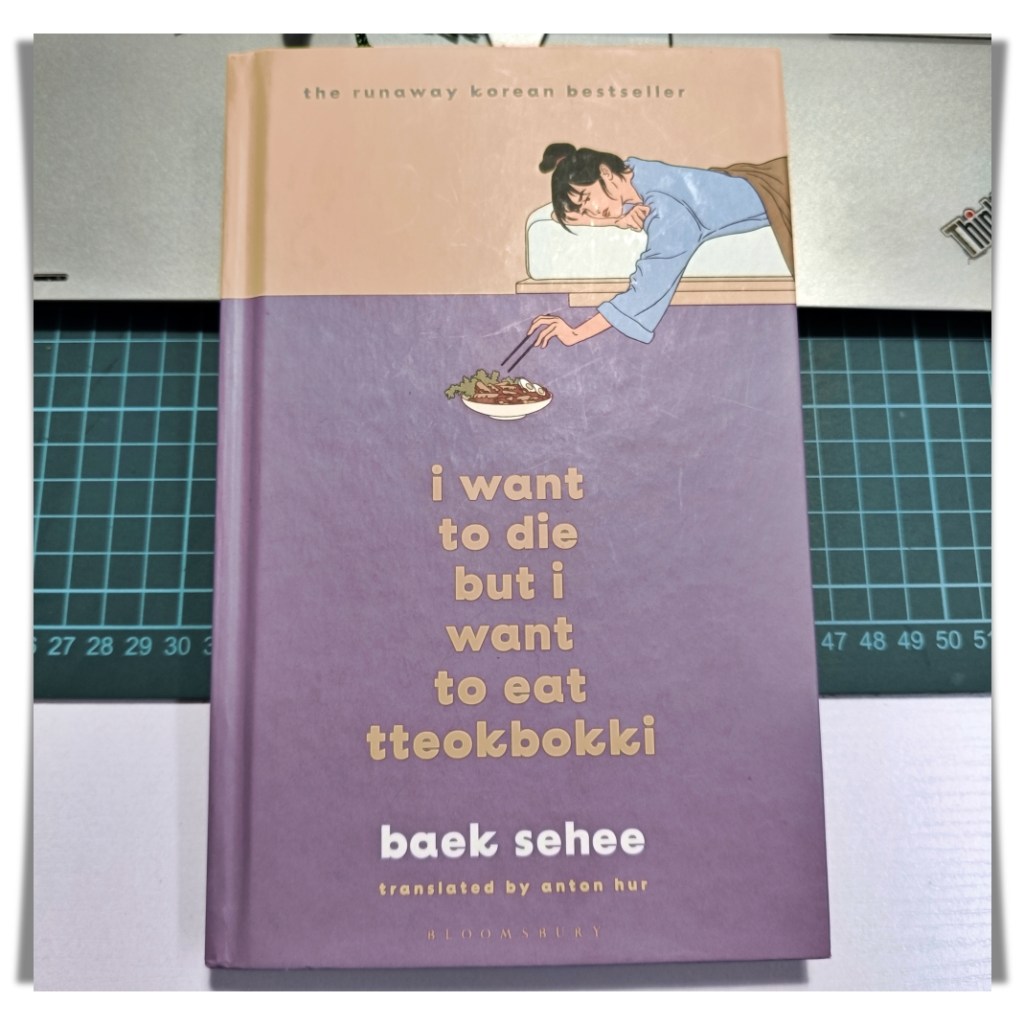
My latest read. It’s a comforting read for those suffering from depression (MDD or dysthymia).

Books do not just entertain. They also bring healing to those who invest time reading them. I wrote a post about this a couple of months ago, where I discussed the transformative power of literature. Literature and the written word offer clarity where confusion resides. They offer hope where darkness lingers. They validate the lonely, challenge the complacent, and give voice to the voiceless.

If a blood donor saves a body, an author can save a mind, a heart, and a reason to keep going.

So, should James Harrison be honored? Absolutely. But so should the authors, the poets, and all storytellers who brought comfort to the broken souls. There is a reason for every good thing we accomplished in this world. Our life is not just about survival. We can do good things too, just like blood/plasma donors, or write something to encourage someone. And both groups of people play their parts in making the world a place worth living in.
Fragmented Story | Being In the Same Room Again

I wrote this introspective piece to capture unresolved emotions, the passage of time, and the delicate dance between nostalgia and moving forward. It’s about past love that is neither fully rekindled nor entirely lost. It’s fragmented because there is no backstory. It’s intentional because the absence of a backstory forces the reader to feel rather than just understand. However, it is related to another story I wrote previously – After All These Years.


Image source

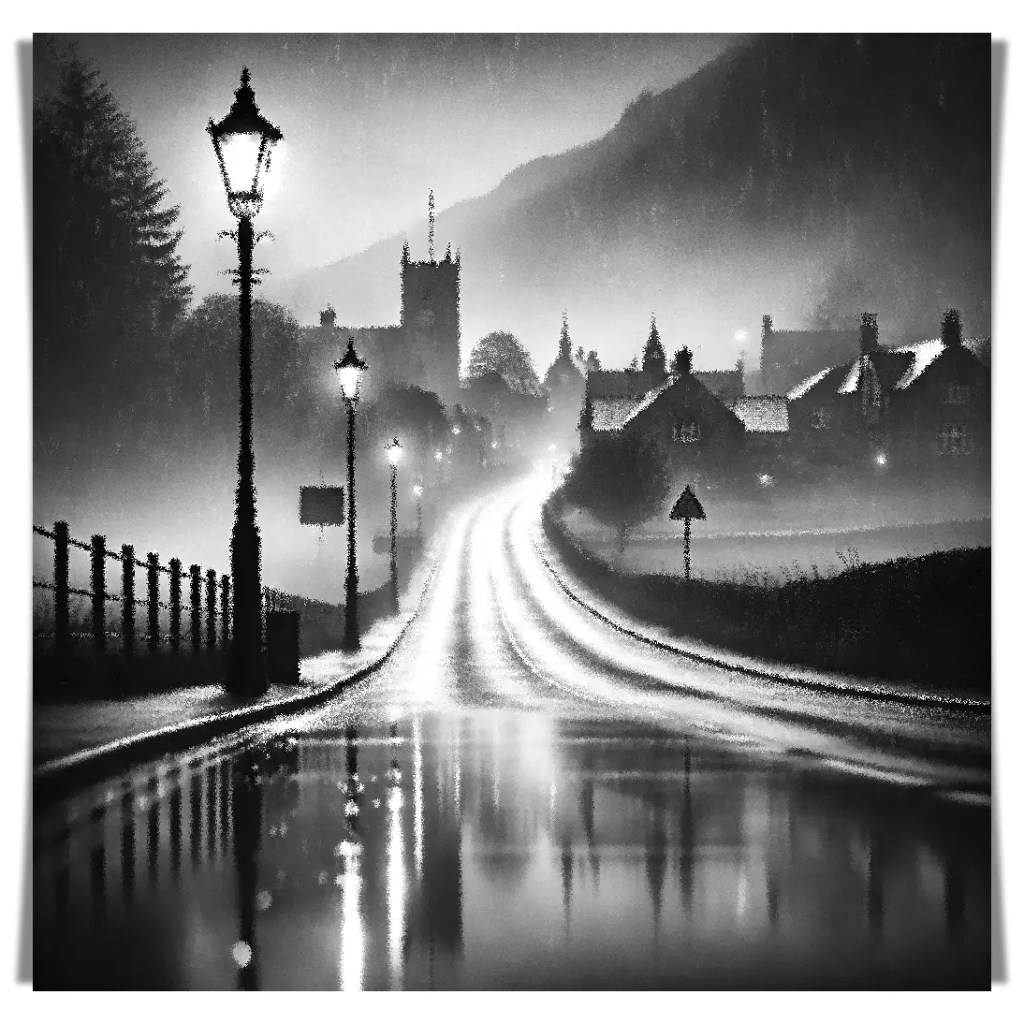
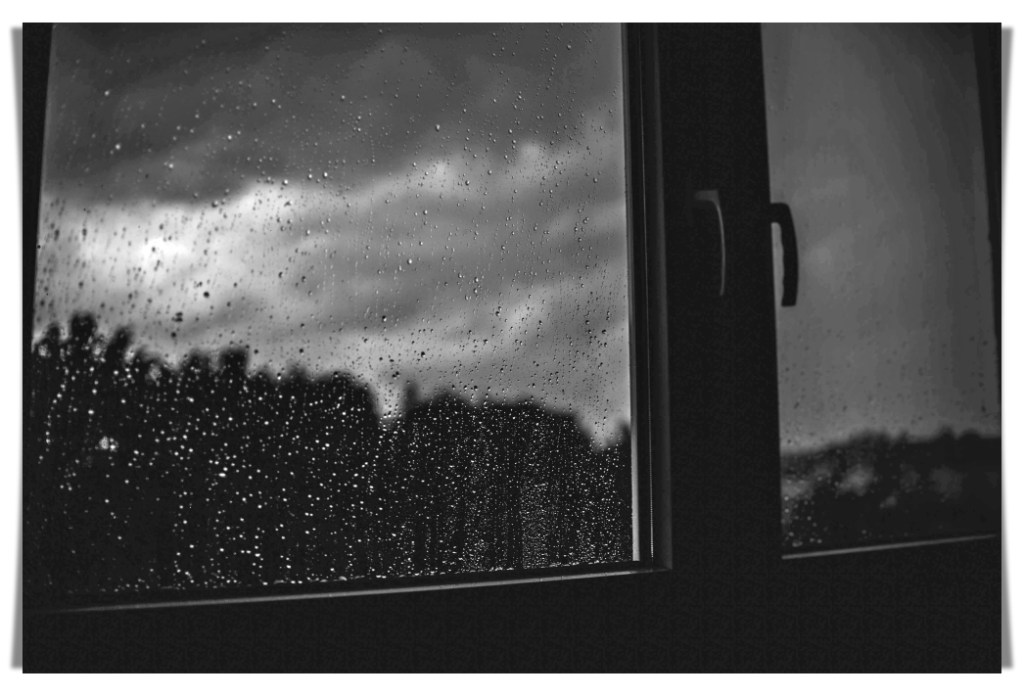
The rain kept pouring, turning everything into a soft blend of grays and greens, like a painting that had come to life. It reflected the fog in my mind, the doubt that had brought me here. I didn’t want to go back at all. What was waiting for me when I got back to the city? Plenty of bills were sitting on the kitchen counter, ready for me to pick them up. There were tax notices in each envelope, and they kept coming on time. Of course, I was constantly getting glossy brochures from real estate agents advertising different homes for rent or sale, as if they could give me the security I really craved. They claimed that property was the foundation of our modern life. Have we forgotten what it means to belong in our quest for a place to call home?

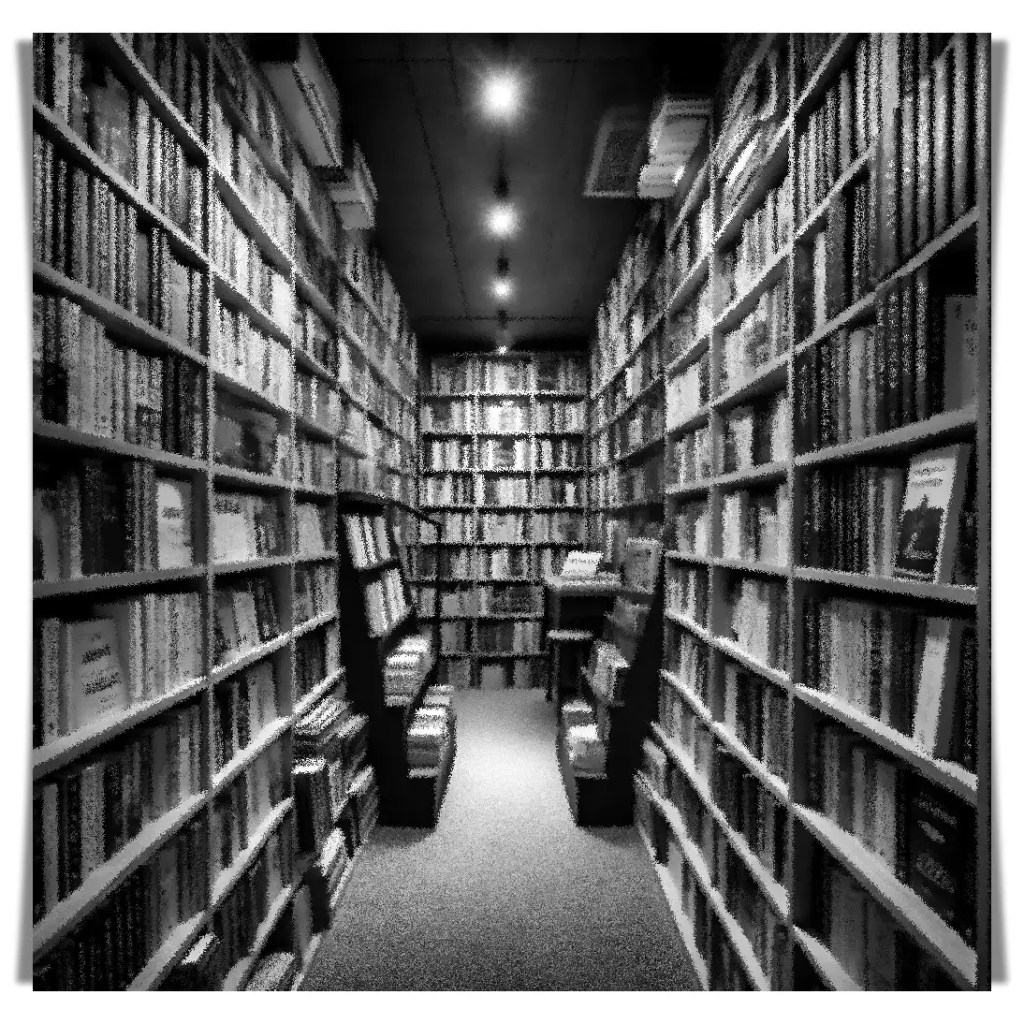
The town was so different from the hectic pace of daily life that it felt like a different world. You could feel like time was moving slower here. When I walked into that little bookshop with its worn shelves and familiar atmosphere, it stirred up something deeper inside me. Not only did the past resurface again, but it also brought up something that hadn’t been resolved. Why does that feeling persist even after years of being apart? That question hung in the air.

Was it a spark that was about to go off again, or was it just the light of ashes from the past? To bring back an old love, you have to dig up what was hidden and accept both the joy and the pain that come with it. But could it be something else—a chance to put things to rest? Is it finally possible to break free from the maze of what-ifs and let the past rest?

There was also the issue of trust. Did it still matter that you understood instead of being validated after all this time? And even if it did, would that be enough to begin a new relationship? Maybe not love, but friendship for sure. We could have maintained a bright shared past, unaffected by the decisions we’ve made along the way.

I’ve learned that desire and lasting devotion aren’t the only things that define love. It was about the possibilities, the countless ways it could evolve, even after it had already slipped away from you once. With the sound of rain on the windows and the faint smell of books in the air, I stayed in that space and thought about whether love might just be being in the same room again after all this time and finding peace between us.

Copyright © Olivia JD 2025

All Rights Reserved.

Why Stories Matter | The Transformative Power of Literature

There is a quiet power in stories that goes beyond entertainment and escapism. At its core, literature is the act of giving voice to things that can’t be seen or touched. It forms our feelings, hopes, fears, and questions into something we can hold and share. Stories don’t just reflect our lives; they also hold the weight of human experience across time and space.

The first thing that comes to mind when I think about the power of literature is how it can bring people together. Reading a book is like crossing a bridge; it lets us see and feel the world through someone else’s eyes. In this way, it breaks down the walls that separate us. By fostering empathy, literature reminds us of our shared humanity and allows us to see through another’s eyes. Literature makes us face the idea that our experiences, no matter how unique they seem, are reflections of something bigger than ourselves. When I was young, I read Catcher in the Rye by J.D. Salinger, and it changed the way I thought about how people connect with each other. Holden Caulfield’s cynicism and vulnerability proved how stories can reflect our deepest desire for understanding.

Literature helps us understand not only other people but also ourselves. A story can be like a mirror, showing us things we would rather not see. It reveals our inner wants and fears, as well as our flaws. Reading is a paradox. It makes us lose ourselves in another world, only to find pieces of ourselves reflected back. The lasting power of literature lies in this duality—the simultaneous journey both inside and outside of oneself. Also, Salinger’s book helped me see myself in new ways. Holden’s struggles with authenticity and alienation are a lot like my desire for belonging and self-acceptance.

In the same way, stories live on forever and can transcend time. Because writing is timeless, the words of a writer or a poet who has died a long time ago remain relevant to people today. This doesn’t mean that stories stay unchanged. In fact, they change with each reading based on the reader’s views and their context. What a text meant to the original audience might be very different from what it means to us now. A story is alive in the way it changes with us. Different generations’ readings and reinterpretations enrich it further. One Hundred Years of Solitude by Gabriel García Márquez was recently adapted into a drama, which debuted on Netflix in December 2024. The magical realism in the book has kept readers intrigued for decades, but this version gives the story new life. It enables a new group of viewers to experience its themes of love, loss, and history through a fresh lens.

There is also a bravery that comes with writing. When writing, a writer has to be courageous and believe that their words will touch someone and stay with them. When people write, they often reveal parts of themselves that they wouldn’t share in any other way. They embedded pieces of their own truths into the plot of a story or the flow of a poem. Ralph Keyes’s book The Courage to Write talks about how the courage to write comes from being ready to face overwhelming fears and self-doubt. Writing is brave because it forces the writer to be honest and open, even if the outcome is unknown. It’s not because it leads to fame or admiration. For readers, this vulnerability can change everything. It creates a bond between the writer and the readers, fostering a mutual understanding that surpasses the written word.

But, of course, not every story is pleasant. Some show us harsh realities and make us question what we believe. Some stories force us to face uncomfortable truths. But these stories are still important. The hallmark of enduring literature is that it does not shy away from complexity. It recognizes that beauty and pain, hope and sorrow, often go hand in hand. So, stories help us deal with the complicated things that happen in life; they don’t give us easy answers but instead push us to think, ask questions, and grow.

Stories have the capacity to establish continuity in a world that often appears fragmented. They remind us that we are a part of a bigger story that began a long time ago and will go on after we die. Literature connects us to each other and to the huge, complicated web of human experience.

Why do I write? It comes back to the idea that stories matter. It’s not that they make big, dramatic changes to the world; it’s that they change us in small, subtle ways. They invite us to pause, contemplate, and feel. Indeed, this invitation represents a revolution in a world that demands speed and certainty all the time.

Fragmented Story | After All These Years

Some things are never fully lost. They stay in pieces, in corners of the mind, surfacing as the scent of rain, the pages of an old book, or a place you never intended to return to.

This fragmented story, After All These Years, reflects on such moments—small towns and bookstores, old love, and the what-ifs that never fade away. Nostalgic, like turning through an old book and discovering a dried flower between its pages. A memory of something once vibrant that has faded but is never fully gone.

There is no big resolution here. Just realizing that certain relationships change over time but never completely disappear. They settle into the crevices of life, becoming part of our identities. And maybe that is enough.


The rain poured down without mercy, chilling and drenching, seeping through every layer of clothing and skin. The town loomed in the distance. Its narrow path meanders through shadows created by bent lampposts and the subtle shape of a river in the distance. Though I never intended to stop here, I did. The rain was relentless, and I needed a refuge. This place was as good as anywhere with cafes and warmth.

Then I caught sight of it. A little worn-out sign swinging in the rain. I read the name and felt my throat seize. How long has it been? A lifetime has passed, but the heart maintains its own sense of time, unencumbered by the limitations of calendars and years.

I felt a strong instinct to turn away. I suppose it’s easier to face the storm outside than what lies within. But my curiosity drove me forward. Parking and gathering my stuff, I braved the downpour. On the cold iron doorknob, my hand trembled. The cold seeped into my flesh, and before I could think twice, the door softly cracked open.

The aroma of old paper and a subtle earthy tone greeted me first. The dim light created shadows on the walls, which were filled with books that appeared to go on forever. It was like entering a place that seemed to stand still in time.

And then I spotted him.

He sat behind the counter, buried in the pages of a book. In some ways, he looked the same. However, there were also signs of time. Strands of silver in his hair, a sweater frayed at the cuffs, and the faint heaviness of a life lived alone.

He didn’t notice me at first. For a brief moment I forgot how to breathe. The soft rustling of the page he turned brought me back to the moment. He glanced upward. Our eyes met, and then those years vanished in an instant. There was no dramatic pause or rush of words.

Time has passed as it inevitably does. It leads us into lives that are separate and distant from one another. But in the soft glow of this overlooked part of the world, that distance seemed trivial.

The conversation that ensued didn’t focus on the past, at least not in a direct way. Our discourse danced around the periphery, hinting at years and stories that belonged to others. Our separate lives had been transformed by the absence of the other. Despite our best efforts to distance ourselves, the past remained between us.

The rain subsided while we talked. Its steady beat taps against the windowpanes. Our conversation didn’t lead to any resolution or sudden insight. Instead, there was something more nuanced, perhaps a sense of acceptance or a hesitant acknowledgement of what remained.

I found myself hesitating when it was time to go. Our conversation brought a sense of peace, like a gentle reminder of the shared moments with someone who once meant so much. But I had to go. Time went by, and the people we had turned into existed in separate realities.

I stepped back into the drizzle and back in my car. My heart aches because it finally understood that some connections, no matter how changed by time, never really disappear. They stay, though no longer in their original form. They turned into echoes that tightly knotted into the essence of our being.

And maybe that was all it needed to be.

Related story: Being In the Same Room Again

Copyright © Olivia JD 2025

All Rights Reserved.

Fragmented Story | His Days Were Long

Writing complete stories has never been my style. My mind wanders, seeking and focusing on moments and emotions that demand attention, even if they don’t always fit neatly into a beginning, middle, and end—like poetry. I find myself drawn to fragments of moments that exist between greater narratives. It’s in these fragments that I discover what I need to express, often eliciting more emotion with a single, still snapshot than an entire storyline.

This piece, His Days Were Long, is one such fragment. It’s a story of a man torn between his responsibilities and a yearning he can’t quite shake. It’s a little piece of a wider web of stories that live within me, ready to be told one at a time. These moments are disjointed and incomplete but filled with meaning, but these are where I feel most alive in my writing. So I’ll keep sharing them in bits and pieces, each with its own truth and emotion.

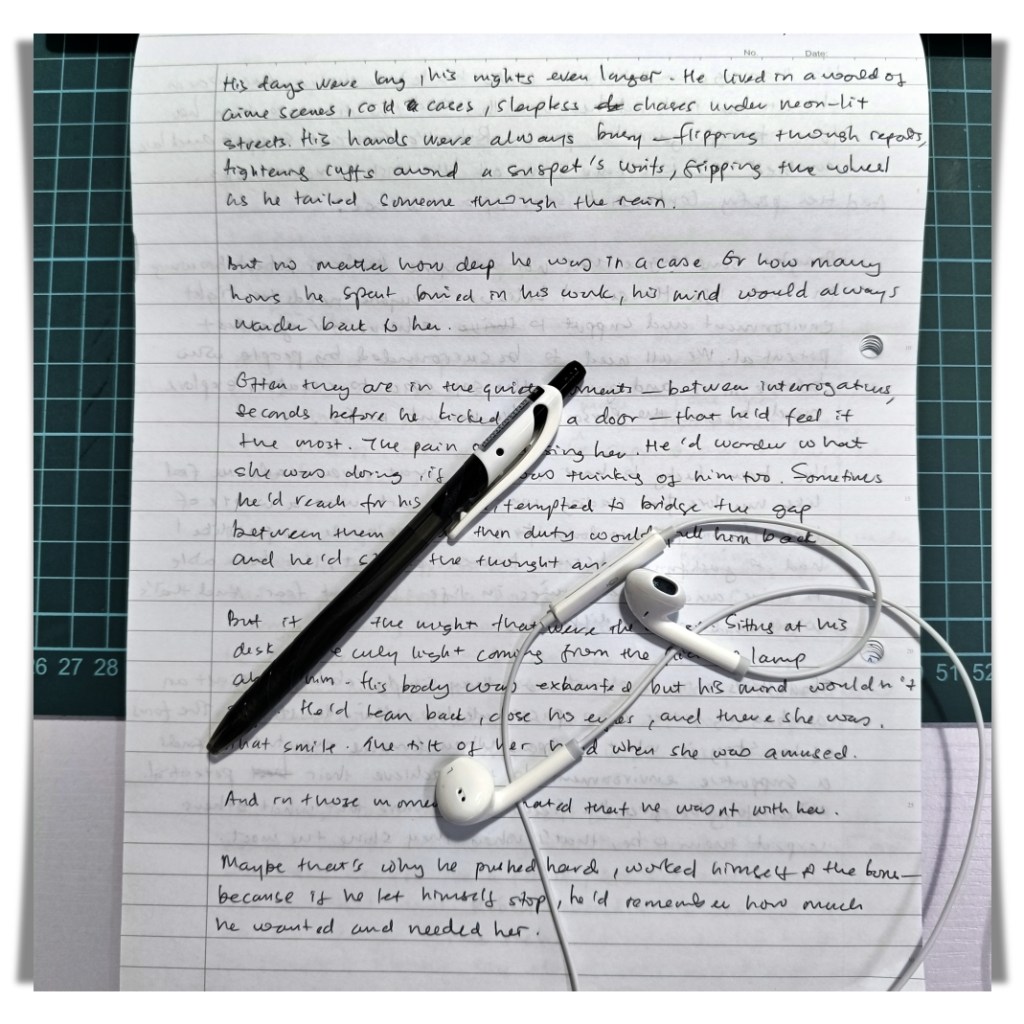
His days were long. His nights were even longer. He lived in a world of crime scenes, cold cases, and sleepless chases under neon-lit streets. Whether he was flipping through reports, putting cuffs on suspects, or driving while tailing someone through the rain, his hands were always busy.

But it didn’t matter how deep he was in a case or how many hours he worked; his mind would always go back to her.

He would often feel it in the quiet moments—between interrogations or right before he kicked open a door. The agony of missing her. He’d wonder what she was doing, if she was thinking of him too. Sometimes he’d reach for his phone, tempted to bridge the gap between them. But then duty would pull him back, and he’d shove the thought away.

But it was the nights that were the worst. Sitting at his desk, the only light coming from the flickering lamp above him. His body was exhausted, but his mind wouldn’t stop. He’d lean back, close his eyes, and there she was. That smile. Her giggle. The tilt of her head when she was amused.

And in those moments he hated that he wasn’t with her.

Maybe that’s why he pushed hard, worked himself to the bone because he was afraid that if he stopped, he’d remember how much he wanted and needed her.

Handwritten draft of this story.

Copyright © Olivia JD 2025

All Rights Reserved.