The Truth Hurts, But It Heals

Writing requires an intimacy few are ready for. To write with vulnerability on the page is to bare your soul, to peel back what protects you, to expose the raw truths of your life, some of which you may not, in fact, fully grasp yourself. It’s frightening, messy, and gut-wrenchingly human. But instead, it is that vulnerability that makes writing not just words on a page but a lifeline that connects us to other people. This is the fundamental truth of vulnerability that enables stories to resonate, yet achieving it is not effortless.

For the majority of us, the fear of being judged is ever present. Vulnerability means revealing your fears, desires, and truths—and thus relinquishing control over how others see you. You are declaring to the world, “This is who I am,” and inviting the world to respond. Do they embrace you, or do they consider your words mere piffle and your truths undesirable? This fear silences many writers, imprisoning their deepest truths.

“Write what disturbs you, what you fear, what you have not been willing to speak about. Be willing to be split open.” ~ Natalie Goldberg
I know this fear very well because I am still struggling with it. And I want to dig deep; I want to uncover what is beneath the surface. But whenever I come close to it, I waver. What happens if I face judgment? What if what I expose is too much? And yet, I also recognized that my writing without vulnerability will never touch the depths I so admire in others.

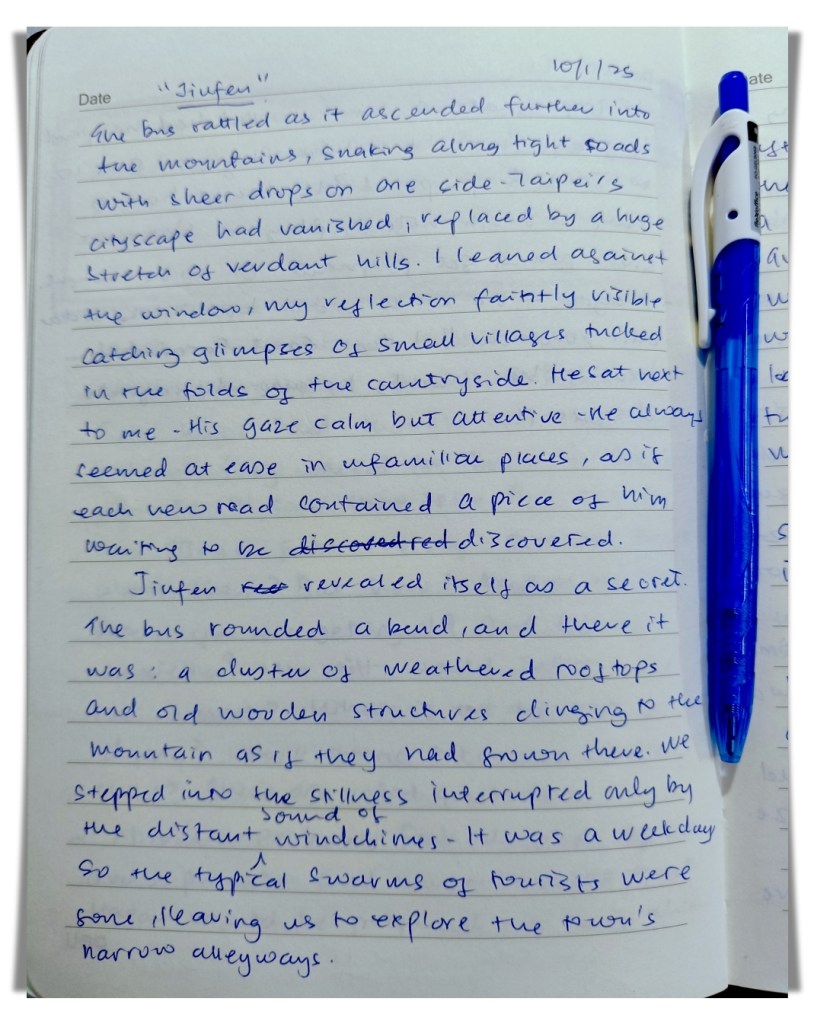
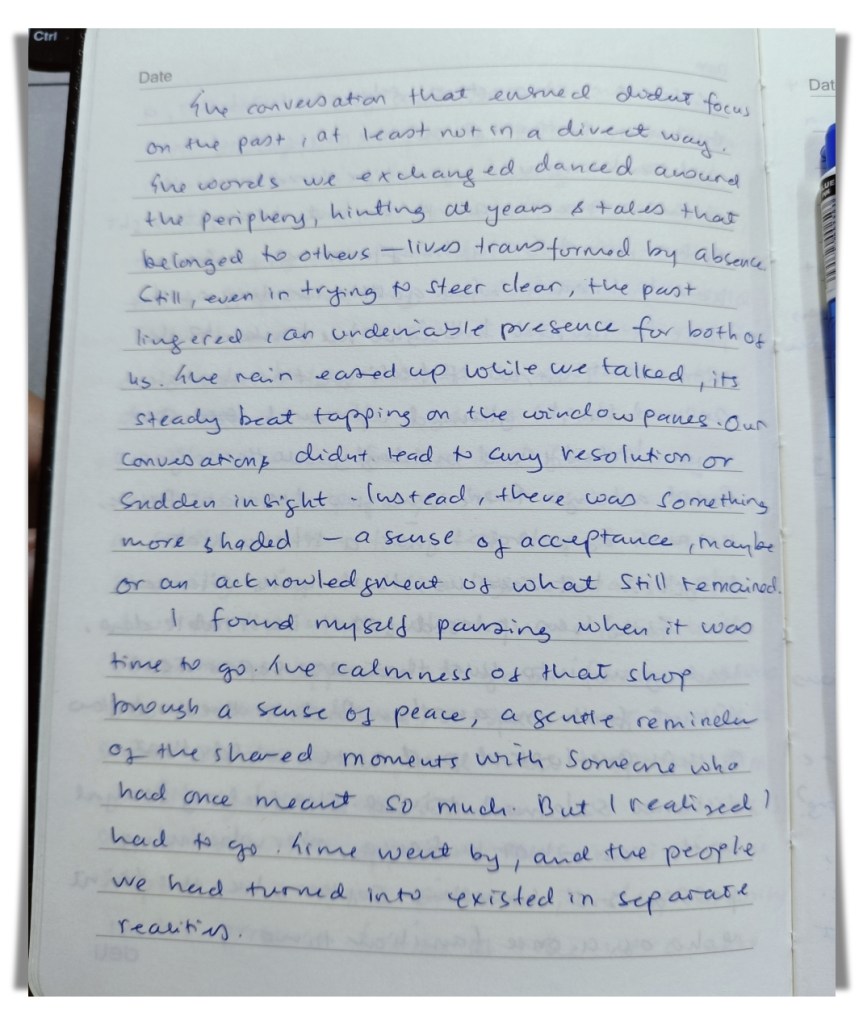
Recently, I wrote in my journal about this struggle, attempting to give shape to my thoughts. Here is an excerpt:

I have a muse, and I don’t know how long this affair with him will last. Let’s call him a “he.” He has inspired me in ways I never anticipated, uncovering memories and stories I had buried deep within myself for nearly 30 years. These memories are ripe with potential, rich material for my writing. But they are also deeply personal. Writing them down makes me feel exposed, as if I’ve peeled back the protective layers I’ve spent decades building.

For so long, I felt compelled to bury these memories, weighed down by a profound sense of shame. Even though many of these experiences were beautiful in their time, I couldn’t separate them from the shame I carried. Now, as I write them down one by one, I’m finally allowing myself to face them. If you ever read these stories, you may think of them as trash, boring, or mediocre. That’s okay. It doesn’t matter. What matters is that I am writing them as honestly as I can. I’m capturing the vulnerability, the yearning, the fear, the exhilaration, the fantasy, the lust, the love. I don’t know where these words will take me, but for now, I’m writing for myself. I’m writing the truth.

Reading back on this, I see how much I have hidden myself over the years. No one taught me to embrace vulnerability. Instead, I learned to shield myself, to appear strong and impervious. But writing requires the opposite. It invites you to soften, to let down your defenses, and to allow the world in. For me, this process resembles the gradual opening of a long-closed door.

Writing with vulnerability is akin to navigating a narrow path. It asks you to face your own truths without self-censorship and resist the temptation to embellish or dramatize for effect. Authentic vulnerability is subtle; it doesn’t shout, “Look at me!” It tells truths—truths that ring true because they’re passionately felt.
And despite this knowledge, vulnerability remains elusive. Writing for myself, as I have done with my journal, is one thing; it’s another to share that writing with others. This process of exposing your vulnerability is analogous to entering a stage naked under the bright glare of a spotlight. It is terrifying, but it is also necessary.

I frequently reflect on my reasons for writing. Do I write to make myself heard, to understand others, or just to connect? Perhaps it’s all three. What I do know is that the writers I admire most are those who are unafraid to be vulnerable. Their words linger, because they have the bravery to speak their truths, however flawed or uncomfortable. This is the kind of writer I aspire to be—one who writes with honesty and heart, one who has enough courage to be exposed.

The process of getting to this level of openness is ongoing. There are days when I feel courageous enough to face my truths and days when I slink back, too scared to face judgment. But every word I write brings me a little closer to that ideal. Vulnerability is not weakness but strength, I tell myself. It’s what makes us human, and it’s what makes writing worth reading.

So here I am, writing my truths, one hesitant word at a time. I don’t know where I’ll go from here, but I do know that I’m finally beginning to embrace the vulnerability that once terrified me. And in doing so, I hope to uncover not only the stories within me but also the courage to share them with the world.
Reflection | On Being Enough As I Am

I spent years believing I had to measure up to something or to someone. Like many people, the idea that I wasn’t good enough was planted early by well-meaning adults who thought comparisons were a form of encouragement. I believe the term was “reverse psychology.” This is especially prevalent in Asian households. Asian parents love comparing their kids to their peers. We have to study hard so we can be at the top of the class or outshine so-and-so’s son or daughter. We have to be more obedient, more successful, and more beautiful. The adults meant well, but what they didn’t realize was that they reinforced the belief that being “enough” is conditional. It’s exhausting. I spent years trying to prove I was enough. But enough for who?

I remember hints of comparison were occasionally discussed among the adults. I was a plain-looking child and didn’t resemble my siblings. My mom was a beauty in her younger days. And there was I, an awkward, sullen, pimply, tomboyish teenager who always scowled. I wasn’t graceful or dainty; I hated skirts and dresses. I was always wearing sneakers. I believed I was lacking in so many ways. To compensate for my perceived lack, I vowed to excel in school and get good grades—which I did, graduating magna cum laude with a BSc. (Hons) in Information Technology in 2002. And later on career successes and many other achievements. They became the measure of my worth.

After these impressive achievements, did I feel enough? Not even close. When I inevitably fell short, the voice in my head whispered, “See? You’re still not enough.”

It took me well into my 40s to realize that no finish line existed. I wish I could say that I woke up one day and felt instantly enlightened—“Stop this b******t. I am enough as I am!” No. The realization came gradually.

This happened after years of some pretty impressive achievements—publishing books, radio interviews, being featured in magazines and a newspaper, collaborating on projects with artists worldwide, and publishing my poems. Despite all of that, I always felt a huge void in my heart because I felt I needed to achieve more and more things in life. No final achievement or external approval would ever silence the feeling of not being enough. Even when I reached milestones, the goalposts moved. Even when I improved, it still wasn’t enough—because the world always demands more. I was completely burned out. I had reached my lowest point and required months of counseling to achieve a breakthrough. Writing and making art helped. I channeled my frustrations and heartbreak into my work.

Then I quit.

I quit chasing an undefined version of “more.” I quit tying my worth to productivity, praise, validation, or comparisons. Along with that decision, I asked myself, “What if I was enough exactly as I am?”

I started to ask myself, what does being enough mean to me? Not according to the eyes of society, family, or anyone else, but me? This is what I discovered: enough is waking up and existing with all my flaws, my fears, my joys, and my struggles. Enough is embracing my experiences, my voice, my thoughts, my pace, my perspectives, and my opinions—without feeling ashamed and the need for external validation. Enough is understanding that I don’t have to prove my worth or anything to anyone because I exist simply as I am, complete as God intended me to be.

It’s a radical shift but a necessary one. And believe me, it doesn’t happen overnight. Some days the negative thoughts return, but I’m learning to meet them with kindness and grace. I keep reminding myself every day, like a mantra—even when I’m unproductive, have no achievements, think lustful thoughts, write explicit fictions, gain weight, have more and more gray hairs, financially struggle, be perimenopausal, not pray or read my Bible, curse, hate, or love—I am still enough.

Change is not sustainable without changing old habits. This includes rewiring my brain to speak kindly to myself. Instead of chastising myself for not doing better, I remind myself, “That was a good experience. You’re learning, and that is enough.”  I also started to be mindful of my excuses and my sense of guilt and shame. I stop over-explaining things to people or bending to meet expectations that don’t align with me. And most important of all, I give myself the love, kindness, and grace to be fully human. I am not a robot. I have emotions, I make mistakes, and I get tired. It’s okay if I can’t anymore. I am free to rest without guilt.

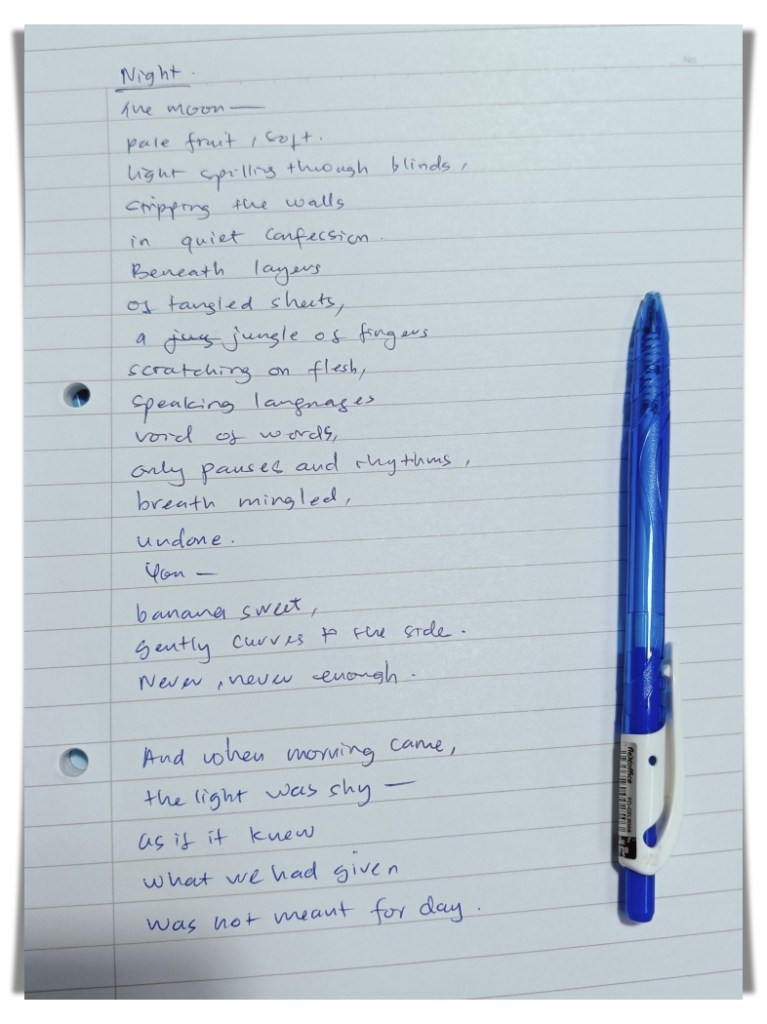
There is nothing more exhausting than trying to justify your existence. And nothing more freeing than realizing you never had to. Here is a poem I wrote months ago that encapsulates this whole thing.

Enough

I peel the mask,
layers like sunburned skin—
soft, blistered—beneath
the face forgotten in mirrors.

Naked,
I walk into the jaws of daylight,
each step a confession,
bones rattling truth
like marbles in a jar,
heavy with silence,
weighted with breath.

I wear the scars like medals,
silvered lines map the wars
I never won—
but here,
in the raw air—
I am enough.

I am enough, as I am. And so are you.

Copyright © Olivia JD 2025

All Rights Reserved.

Fragmented Story | First Date

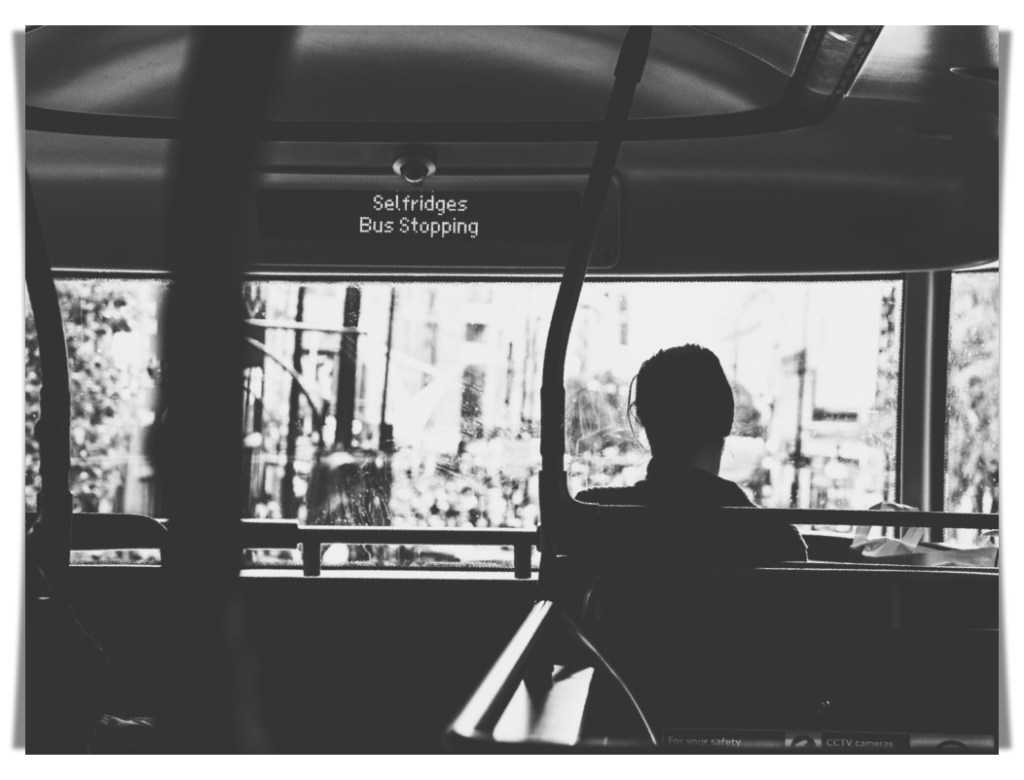
This piece captures the meaningful moments of a young narrator, an 18-year-old girl, as she deals with the unexpected shift in her reality. The clipped sentences show her youthful hesitancy. There is no over-explanation, only feeling—raw and unfiltered—told in a voice still learning how to express the depth of its own desire.

Image source

At first he was just another presence in the background, like a page in a book that I kept flipping back to without knowing why. He was handsome, though I had never given it much thought. Until one day the words slipped out before I could stop them.

I hadn’t expected it to become anything more. But my friend decided otherwise. She took my offhand comment and made sure it reached him.

Days passed before I learned what she had done. It was a casual mention, out of my silent observation, but now it had become something larger. But much to my relief, nothing came of it. No reaction. No acknowledgment. Life moved on, and that one blunder faded into the stream of ordinary days.

Then one afternoon, everything completely changed.

The bus ride home was a blur of exhaustion. The lull of the engine hummed in the background. My thoughts drifted aimlessly as the scenery flickered past the window. And then, he was there.

The bus was pretty empty, with plenty of free seats, but he walked up to where I was sitting and took the seat next to mine. For a second I froze, my breath catching in my throat. The entire world had shifted on its axis.

I risked a glance in his direction. He had a black jacket on top of a navy blue t-shirt, dark trousers, and brown shoes. His short, straight black hair framed his face. His hands were tucked into his pockets.

The silence stretched between us, saved for the sounds of late afternoon traffic and the occasional ring of the bell.

And then, a simple invitation.

I wasn’t prepared for it or expecting it, but the answer left my lips before doubt could take hold. And with that, the path was set. The bus rattled forward as if nothing had changed. But everything had.

When we arrived at our stop, he met my gaze. Then he turned towards the street. Without hesitation, I followed.

We walked side by side in silence. The long shadows of the streetlights lay on the pavement, and the faint chatter of office workers rushing home floated in the air. Once we reached the door, he stepped ahead and held it open for me. His hands rested lightly against the frame.

I stepped inside. The warmth of the cafe wrapped around us. For a moment, I wasn’t able to even look at him. A flurry of emotions brewed in my chest; my heart pounded. But when I finally looked up, there he was, a slight smile on his lips.

And in that moment, I felt it. A soft, trembling hope for something I didn’t know if I was ready for, but I couldn’t help wanting it anyway.

Related story: First Sight

Copyright © Olivia JD 2025

All Rights Reserved.

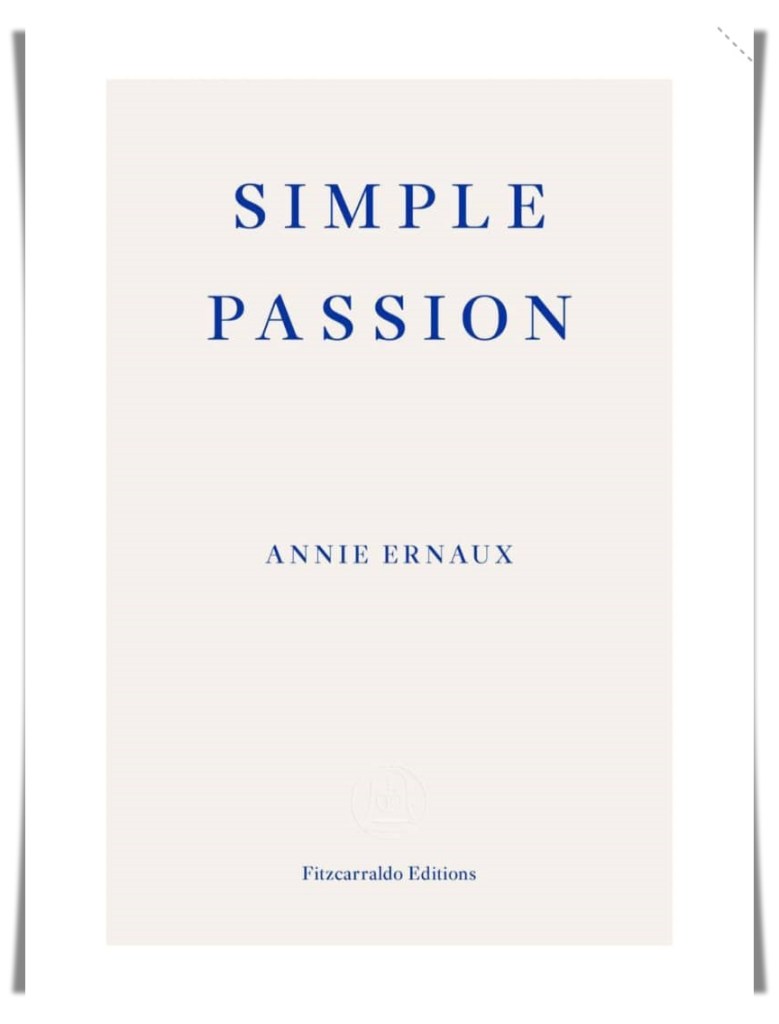
Book Review | Simple Passion by 2022 Nobel Laureate, Annie Ernaux

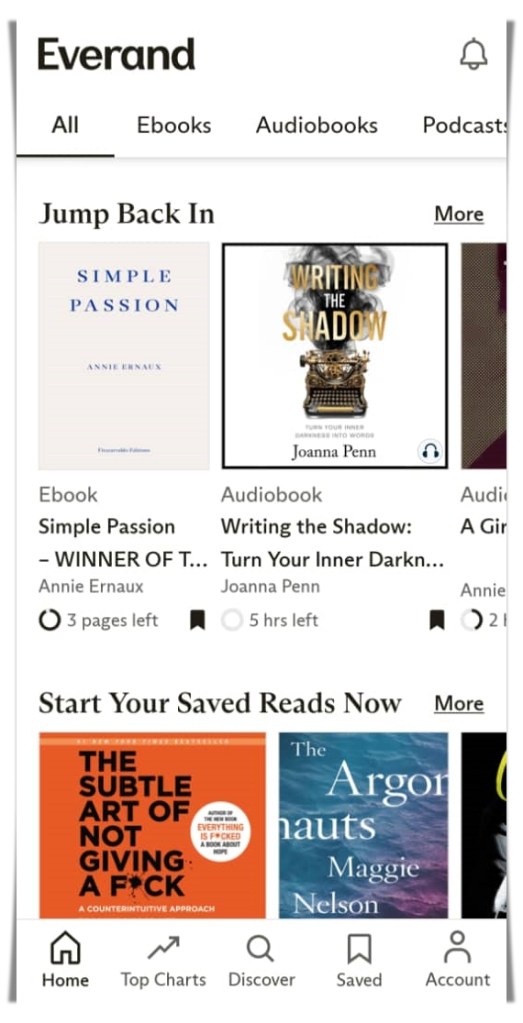
I have been wanting to read books by the French author, Annie Ernaux, since she was awarded the Nobel Prize in Literature in 2022, but I never got around to it until about a week ago. I was scrolling through my reading list on Everand and came across Ernaux’s book, Simple Passion. Since the book is short, 80 pages, I gave it a go. It took me one afternoon, in between daily routines, to finish it.

I’ve been a Scribd, and later Everand’s subscriber since 2018.

I’m blown away. Some books tell a story. Simple Passion does not. Instead, it captures her obsession with a man in its purest form. In this book, Ernaux presents a raw, unembellished account of her affair with a married man. This is an autofiction. Yes, it’s autobiographical with elements of fiction woven into the story.

The affair took place in the 80s, and I made a quick calculation. Ernaux would be in her late 40s when these events took place. Ernaux was divorced with two sons. The man was a lot younger, and I thought that was hot, but I digress.

Ernaux’s writing is fragmented, which surprised me. They bear resemblance to my (fiction) writing style. Ernaux’s narrative is not chronological. It’s like she’s jotting down memories and insights as they come to her. This rawness is what makes Simple Passion so devastatingly honest. She confesses:

I am incapable of describing the way in which my passion for A developed day by day. I can only freeze certain moments in time and single out isolated symptoms of a phenomenon whose chronology remains uncertain—as in the case of historical events.

Like I mentioned, this is my first Ernaux book. I wouldn’t say I love the language (perhaps the translation from French loses something), but I do admire the way she lays her experience bare. Ernaux wrote without using big, bombastic words and without self-pity. She stripped unnecessary details, and it’s brutal in the best way.

Her grief after her lover leaves for his home country is palpable. However, Ernaux doesn’t indulge us with the details of her feelings. She shows us instead through her actions, through her emptiness in her daily routine, and through the strange ways she tries to keep him close even in his absence.

One day, lying on my stomach, I gave myself an orgasm; somehow I felt that it was his orgasm.

It’s as if they were one entity, inseparable, even when apart.

And then there’s the bargaining. The desperate, irrational belief that she could will him back:

If he calls me before the end of the month, I’ll give five hundred francs to a charity.

She clings to the past by recreating moments as if reliving them could make moments repeat themselves:

If I went somewhere I had been to last year, when he was here—to the dentist or a staff meeting—I would wear the same suit as before, trying to convince myself that identical circumstances produce identical effects and that he would call me that evening.

Her lover did end up calling her one day, a week after the Gulf War was declared. After months of grieving for her lover, she finally got her closure. They had one last moment together, and that was the end of it. What remains now is her grief—for him and for the person she was when she was with him.

I had decided to learn his language. I kept, without washing it, a glass from which he had drunk.

I grieved with her. Not because I have lived her story, but because I have lived a version of it. I, too, have known an all-consuming love that was never meant to last. I have felt the bittersweet ache of moving forward without someone who once defined my existence. I have wondered, in private moments, what life would have been like if it had been him. If our child had been his. If he remembers me in passing thoughts, or comparing others to me. These are the kinds of things we don’t speak aloud, not even to our closest friends, but they remain, surfacing in the most unexpected moments.

One of the most striking passages in the book is this:

I do not wish to explain my passion, that would imply that it was a mistake or some disorder I need to justify—I just want to describe it.

In my opinion, this is what makes Ernaux’s writing so powerful. She does not seek redemption or understanding. She does not attempt to explain away her feelings. She simply describes them, and in doing so, she gives permission to readers to experience them in their own terms.

Ernaux did not write this book to boast about herself or her lover. She wrote it as a gift to those who have felt this same kind of passion and loss. In her own words, it’s an offering. As all great writers do, Ernaux knew that certain experiences are universal no matter how unique they seem.

I haven’t written a book about him, neither have I written a book about myself. All I have done is translate into words the way in which his existence has affected my life. An offering of a sort, bequeathed to others.

And that is exactly what Simple Passion feels like to me—an offering. It lingers in my mind even days after I turned the final page.

Note: There is a movie adaptation if you are interested. It was released in 2020. I haven’t watch it but here’s the trailer. In the novel, Ernaux described that her lover look a bit like Alain Delon which was wow.

Fragments of Obsession

What began as a single moment never really left me. It lives in fragments of touch, of distance, of memory, and of time.

Image source

There are days he couldn’t come to me. He is always needed wherever he is. He analyzes patterns, behaviors, minds. But does anyone truly know him? On the days he is with me—the late evening light reflected on his disheveled hair. The contour of his tired shoulders. His long, calloused fingers. His moans echo in the shadows.


The light around him softened his expression into something tender. One hand held a book, the other blindly traced the tabletop. I paused mid-sentence, staring. His brows furrowed, his gentle eyes on the page. At that moment, my heart found shelter after endless wandering. He sensed my gaze and glanced up. Our eyes met—just for a moment—before he shifted away.


This is one of the nights when the apartment feels damp and cold. Thoughts ran through my mind while washing dishes, doing the laundry, and folding our clothes. Is he tailing someone right at this moment? Has he eaten? I tried listening to the audiobook, but nothing felt right. This book is too wordy. That one has a flat narrator’s tone. I closed the app and scrolled through YouTube to find a playlist to match my mood. In this playlist, the songs are too catchy. The other playlist is too sappy. I disconnected my earbuds and put my phone away. Even with all the lights on, the room feels darker. How many hours before tomorrow comes?


His hands are a map of everything I cherished. His light tan hands have carried pain and tenderness in equal measure. They have wielded weapons, sifted through crime evidence, cuffed wrists, and tenderly stroked the deepest part of me. His fingers are long and tapered; half moons peeked on his trimmed nails. Sometimes I noticed faint traces of blood and grime. When they brush against my skin, it’s like the first ray of sunlight after a long, cold night. His hands have built and mended, held and released. They’ve cupped my face, traced my curves, and held me in place. They’ve wiped away my tears and made obscene gestures in moments of anger or to stir my laughter. When I think of his hands, I’m reminded of the roots of the ancient trees or the ocean with their endless ebb and flow pulled by the moon.


The bed now is just a bed. The sheets are now crumpled into hollows that hold the shape of him. I run my fingers over the fabric and the pillows. They still smell faintly of his skin and the faint, sharp tang of his cologne. I press my face into it, trying to hold onto what’s left, but the scent is already fading. The white walls have absorbed the echo of his voice. The door clicked shut with a finality and stays closed until he returns. On the table, his cup sits lonely with the faint imprint of his lips. I leave it there to become a relic of our morning. His jacket hangs on the back of the chair, slouched in a way that feels so like him, as if it might come alive and shrug itself back into motion. The room has exhaled. It has moved on and is settling into the rhythm of my day, one that doesn’t include him.

Copyright © Olivia JD 2025

All Rights Reserved.

Fragmented Story | First Sight

Some moments will never leave you. They creep into the silent corners of your memory and wait. It’s not love, but something more delicate and mysterious. I was eighteen when I first saw him. He wasn’t looking at me or even aware I existed. But then something changed. I didn’t realize it at the time, but that moment would stick with me, embedded into the fabric of my life and reappearing when I least anticipated. This is the fragmented story of an obsession that began before I had the words for it.


Image source

I was eighteen the first time I saw him. I was too young to fully comprehend how a single moment could change the course of time, but I was old enough to sense how important it was. He was twenty-two, though I didn’t know it then.  The light that late afternoon was soft and turned everything golden. It fell through the leaves as I walked home from class. A heavy bag hung across my shoulder, the monotonous rhythm of my day fading into the background.

Then I saw him.

He stood in the distance, partially obscured by the trees. There was something arresting about him that made him seem out of place in the moment. His jacket drew my attention right away. It was a deep brown, worn suede. The rich color seemed to absorb the light, making him stand out against the colors around him. His white trousers seemed an afterthought, subtle and plain. It was the type of look you don’t think about until later, when it won’t leave your mind.

I recall that he had a camera in his hand. He was working it with his fingers as he turned it in his hands. His dark, straight hair fell just above his brow, softening the harshness of his face. Serious. Intense. His posture was nonchalant as if he didn’t care that the world might be watching.

But I was watching.

I didn’t intend or want to be there, but there I was, fixed in place. “Who is that?” I asked my friend, and the question came out before I could rethink it. She chuckled as if it were clear, then mumbled his name with a mocking grin. “You should go talk to him.”

I didn’t or couldn’t. It wasn’t just insecurity; there was something else. It seemed like he was untouchable, and whatever he was focusing on in silence was not meant to be disrupted. So I walked away, thinking I’d left the moment behind.

But the image of him stayed with me for days or weeks. It kept going through my mind: him standing alone, with the trees casting a shadow as light gathering around him. I’d find myself wondering what he was thinking about as he carefully held that camera in his hands. It drove me crazy that someone I had never talked to could occupy a corner in my head.

Even now, decades later, I find myself going back to that day. It wasn’t love then. It was something more fragile. It was like an obsession that nestles deep in your chest and stays there, waiting for reasons you don’t yet comprehend.

Copyright © Olivia JD 2025

All Rights Reserved.

The Criminologist

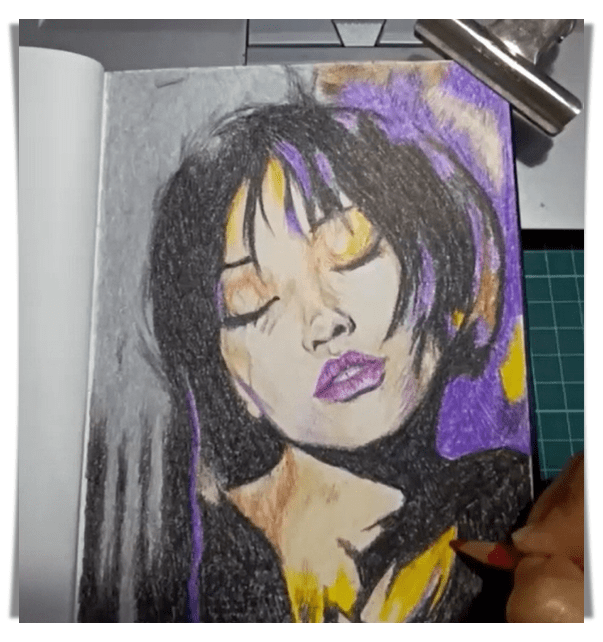
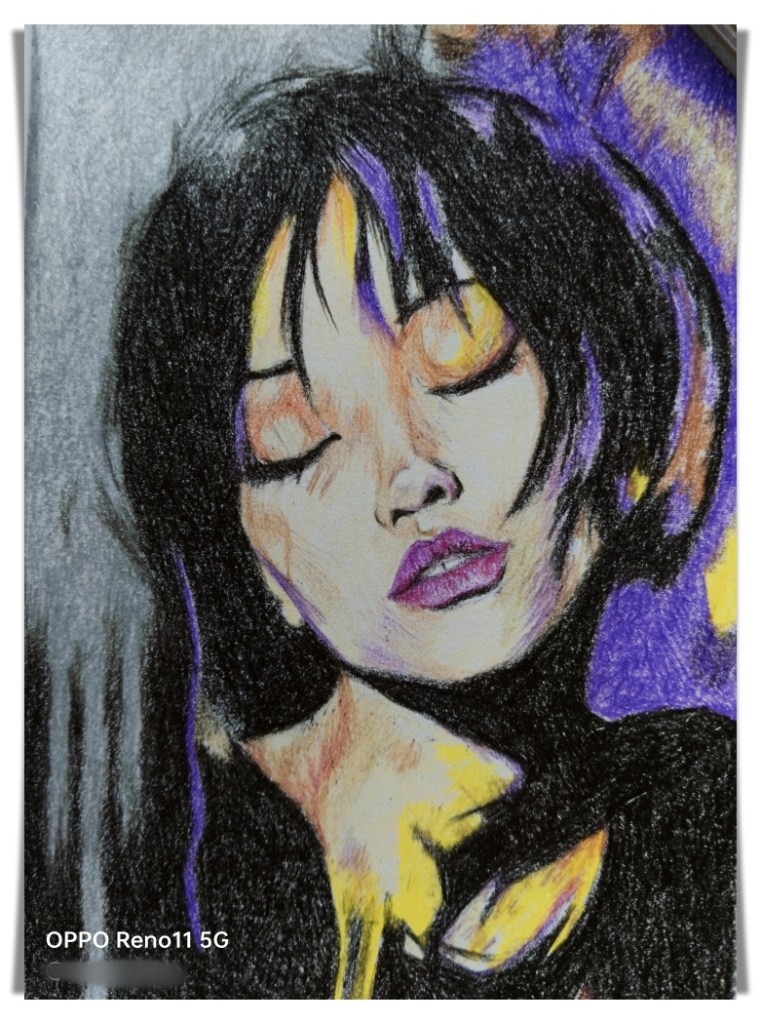
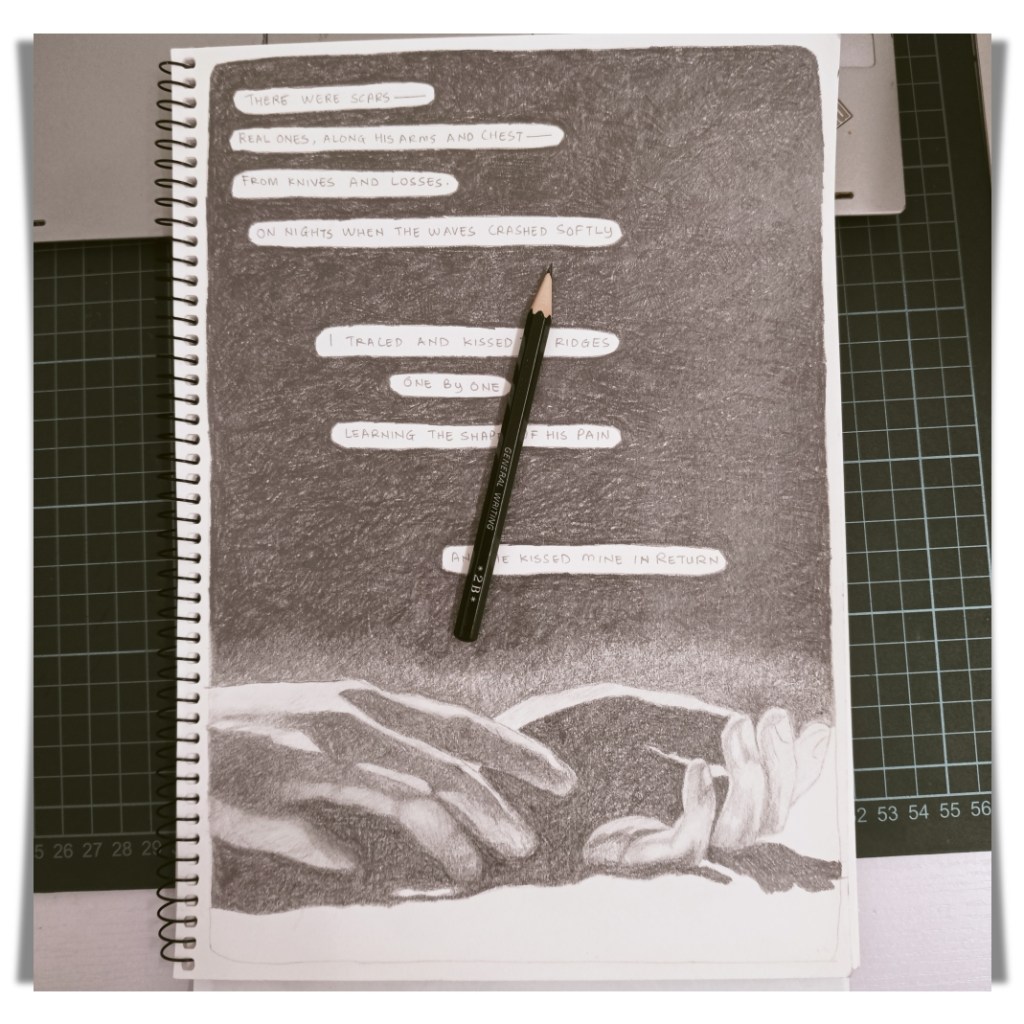
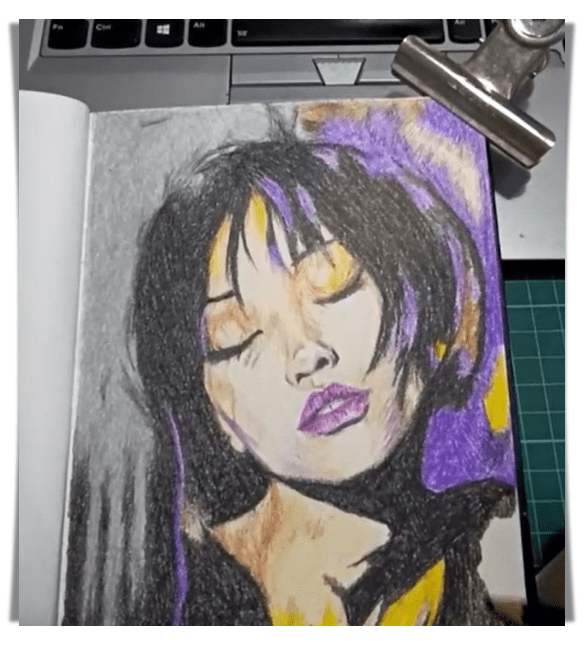
I worked on this piece over the weekend. The lines are taken from my poem, The Criminologist. So far, I have four of my poems published in online literary journals/art websites, but I hesitate to share the links here because that would expose my identity. I prefer to be anonymous for now so I can write more freely without my internal censors actively working to prevent me from writing truthfully. No explanation is needed for this piece; I just let the art and poem speak for themselves.

Copyright © Olivia JD 2025

All Rights Reserved.

Fragmented Story | Being In the Same Room Again

I wrote this introspective piece to capture unresolved emotions, the passage of time, and the delicate dance between nostalgia and moving forward. It’s about past love that is neither fully rekindled nor entirely lost. It’s fragmented because there is no backstory. It’s intentional because the absence of a backstory forces the reader to feel rather than just understand. However, it is related to another story I wrote previously – After All These Years.


Image source

The rain kept pouring, turning everything into a soft blend of grays and greens, like a painting that had come to life. It reflected the fog in my mind, the doubt that had brought me here. I didn’t want to go back at all. What was waiting for me when I got back to the city? Plenty of bills were sitting on the kitchen counter, ready for me to pick them up. There were tax notices in each envelope, and they kept coming on time. Of course, I was constantly getting glossy brochures from real estate agents advertising different homes for rent or sale, as if they could give me the security I really craved. They claimed that property was the foundation of our modern life. Have we forgotten what it means to belong in our quest for a place to call home?

The town was so different from the hectic pace of daily life that it felt like a different world. You could feel like time was moving slower here. When I walked into that little bookshop with its worn shelves and familiar atmosphere, it stirred up something deeper inside me. Not only did the past resurface again, but it also brought up something that hadn’t been resolved. Why does that feeling persist even after years of being apart? That question hung in the air.

Was it a spark that was about to go off again, or was it just the light of ashes from the past? To bring back an old love, you have to dig up what was hidden and accept both the joy and the pain that come with it. But could it be something else—a chance to put things to rest? Is it finally possible to break free from the maze of what-ifs and let the past rest?

There was also the issue of trust. Did it still matter that you understood instead of being validated after all this time? And even if it did, would that be enough to begin a new relationship? Maybe not love, but friendship for sure. We could have maintained a bright shared past, unaffected by the decisions we’ve made along the way.

I’ve learned that desire and lasting devotion aren’t the only things that define love. It was about the possibilities, the countless ways it could evolve, even after it had already slipped away from you once. With the sound of rain on the windows and the faint smell of books in the air, I stayed in that space and thought about whether love might just be being in the same room again after all this time and finding peace between us.

Copyright © Olivia JD 2025

All Rights Reserved.

Why Stories Matter | The Transformative Power of Literature

There is a quiet power in stories that goes beyond entertainment and escapism. At its core, literature is the act of giving voice to things that can’t be seen or touched. It forms our feelings, hopes, fears, and questions into something we can hold and share. Stories don’t just reflect our lives; they also hold the weight of human experience across time and space.

The first thing that comes to mind when I think about the power of literature is how it can bring people together. Reading a book is like crossing a bridge; it lets us see and feel the world through someone else’s eyes. In this way, it breaks down the walls that separate us. By fostering empathy, literature reminds us of our shared humanity and allows us to see through another’s eyes. Literature makes us face the idea that our experiences, no matter how unique they seem, are reflections of something bigger than ourselves. When I was young, I read Catcher in the Rye by J.D. Salinger, and it changed the way I thought about how people connect with each other. Holden Caulfield’s cynicism and vulnerability proved how stories can reflect our deepest desire for understanding.

Literature helps us understand not only other people but also ourselves. A story can be like a mirror, showing us things we would rather not see. It reveals our inner wants and fears, as well as our flaws. Reading is a paradox. It makes us lose ourselves in another world, only to find pieces of ourselves reflected back. The lasting power of literature lies in this duality—the simultaneous journey both inside and outside of oneself. Also, Salinger’s book helped me see myself in new ways. Holden’s struggles with authenticity and alienation are a lot like my desire for belonging and self-acceptance.

In the same way, stories live on forever and can transcend time. Because writing is timeless, the words of a writer or a poet who has died a long time ago remain relevant to people today. This doesn’t mean that stories stay unchanged. In fact, they change with each reading based on the reader’s views and their context. What a text meant to the original audience might be very different from what it means to us now. A story is alive in the way it changes with us. Different generations’ readings and reinterpretations enrich it further. One Hundred Years of Solitude by Gabriel García Márquez was recently adapted into a drama, which debuted on Netflix in December 2024. The magical realism in the book has kept readers intrigued for decades, but this version gives the story new life. It enables a new group of viewers to experience its themes of love, loss, and history through a fresh lens.

There is also a bravery that comes with writing. When writing, a writer has to be courageous and believe that their words will touch someone and stay with them. When people write, they often reveal parts of themselves that they wouldn’t share in any other way. They embedded pieces of their own truths into the plot of a story or the flow of a poem. Ralph Keyes’s book The Courage to Write talks about how the courage to write comes from being ready to face overwhelming fears and self-doubt. Writing is brave because it forces the writer to be honest and open, even if the outcome is unknown. It’s not because it leads to fame or admiration. For readers, this vulnerability can change everything. It creates a bond between the writer and the readers, fostering a mutual understanding that surpasses the written word.

But, of course, not every story is pleasant. Some show us harsh realities and make us question what we believe. Some stories force us to face uncomfortable truths. But these stories are still important. The hallmark of enduring literature is that it does not shy away from complexity. It recognizes that beauty and pain, hope and sorrow, often go hand in hand. So, stories help us deal with the complicated things that happen in life; they don’t give us easy answers but instead push us to think, ask questions, and grow.

Stories have the capacity to establish continuity in a world that often appears fragmented. They remind us that we are a part of a bigger story that began a long time ago and will go on after we die. Literature connects us to each other and to the huge, complicated web of human experience.

Why do I write? It comes back to the idea that stories matter. It’s not that they make big, dramatic changes to the world; it’s that they change us in small, subtle ways. They invite us to pause, contemplate, and feel. Indeed, this invitation represents a revolution in a world that demands speed and certainty all the time.

Book Review | The Courage to Write – How Writers Transcend Fear by Ralph Keyes

I returned to writing earlier last year after a decade-long hiatus to raise my children. Writing has always been my quiet refuge. It’s a space where I could slip away from the noise of daily life. But even in solitude, I have always sought connection and often reached for books on writing. These books are my source of advice, and I also seek reassurance and inspiration from those who have walked this path before me.

Years ago, I read Bird by Bird by Anne Lamott and Big Magic by Elizabeth Gilbert; both left a lasting impact on me. These are the kind of books that feel like old friends. Their words reveal new meanings with each reread. They have been my steady companions and also my source of encouragement whenever doubt crept in.

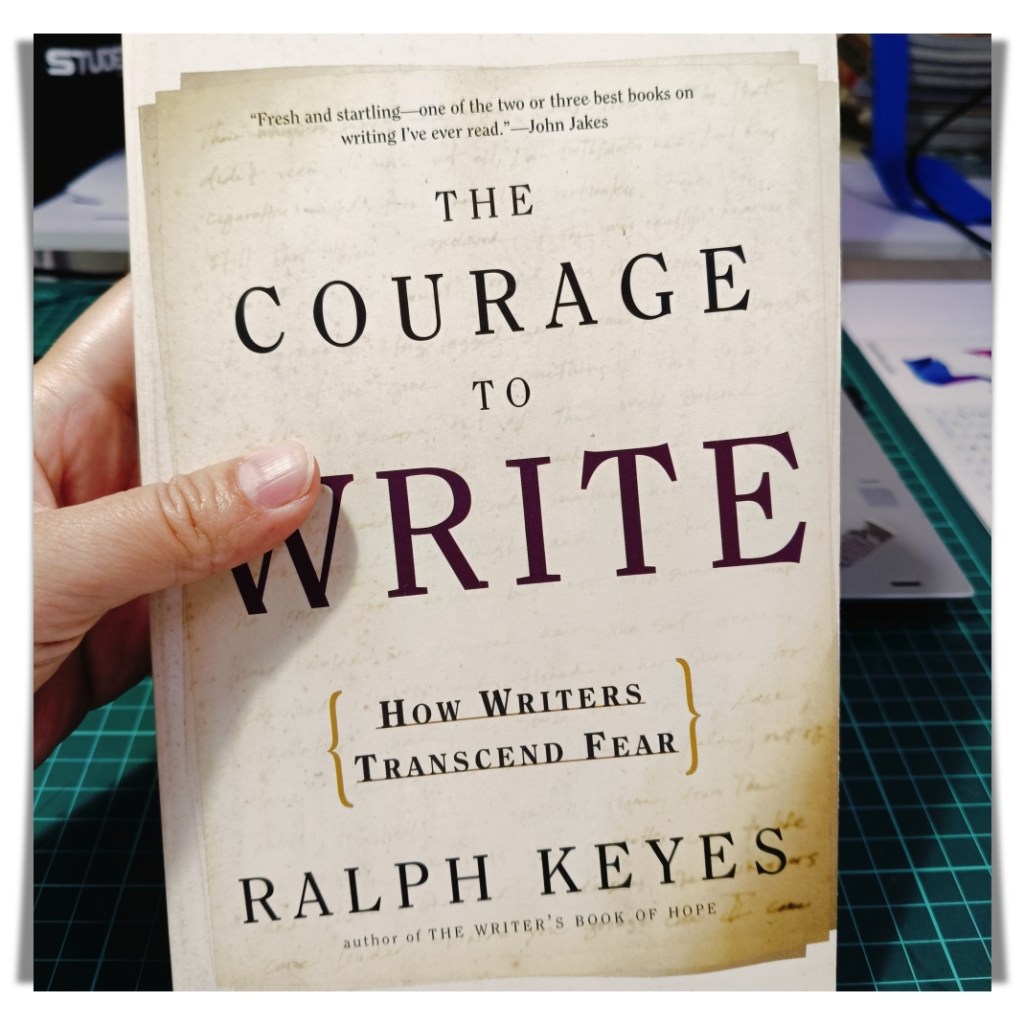
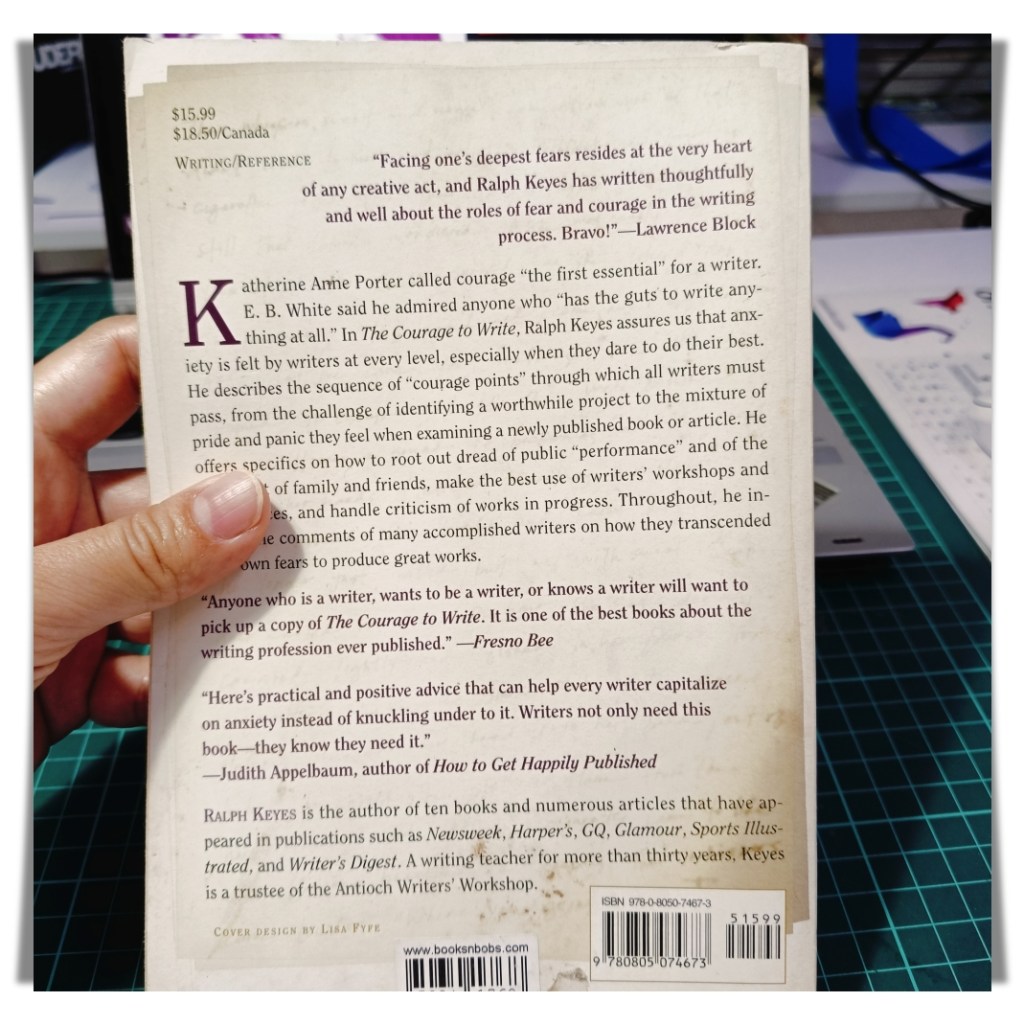
Three months ago, while browsing a secondhand bookshop, I stumbled upon The Courage to Write: How Writers Transcend Fear by Ralph Keyes. I had never heard of him before, but the title spoke directly to a truth I knew well—fear is an ever-present shadow in the creative process. It’s impossible to resist a book that promised to explore the relationship between the creative process and fear. Without hesitation, I added it to my cart, along with another classic, Natalie Goldberg’s Writing Down the Bones. The latter is familiar to many writers, though I have yet to read it myself.

Having finished The Courage to Write, I’ve spent some time reflecting on its message and how deeply it resonated with me. I’m currently halfway through Writing Down the Bones and will share my thoughts on it once I reach the final page. For now, I’ll concentrate on Keyes’ book, which explores what it means to write in the face of fear. It is a subject that feels intimately familiar to anyone who has ever confronted a blank page and wrestled with the enormity of creation.

A Conversation About Fear

The Courage to Write is not a how-to book. Instead, it reads like a conversation, which helps all writers deal with the fear, doubt, and anxiety they all feel. Keyes takes the mystery out of being creative and shines a light on the problems most writers experience but don’t talk about. He tells us to dig deep into our self-doubt and impostor syndrome to find the courage that’s hiding there. He believes that writing is both an honor and a duty that people who have never done it often don’t appreciate.

The Pros

The Courage to Write is so engaging because it is so honest. Keyes doesn’t romanticize writing; instead, he shows it as a deeply human activity that is full of uncertainty. “Am I good enough?” is a question that his book helps people deal with. Even the finest literary giants have had to deal with this question. Drawing on the experiences of writers like Virginia Woolf, Ernest Hemingway, and Anne Lamott, he shows us that anxiety is not a sign of failure but an important part of the process.

Keyes writes in a careful, even personal tone. His ideas seem to apply to everyone, which supports the idea that while writing can be isolating, the effort to overcome fear unites all authors.

One of the best things about the book is that it changes the way we think about anxiety. Anxiety is not a problem; it’s a vital force that makes insight sharper and pushes writers to be real. Keyes says that fear pushes us to write more honestly and dig deeper. This profound view tells writers to deal with their fears instead of battling them.

The Cons

Even though The Courage to Write has a lot of good points, it sometimes goes over familiar ground. If you’ve already read a lot on the subject, Keyes’ insights might not seem very new to you. A lot of the time, the stories are about well-known issues writers had, like how Hemingway drank to drown his fears or how Woolf questioned her own worth. A lot of writers are familiar with these stories.

Also, Keyes is great at acknowledging and validating anxiety, but his answers are more philosophical than practical. This book might not be right for you if you want to find real ways to deal with procrastination, perfectionism, or the problems that writers face every day. His core message that you should embrace your fear and let it lead you is powerful, but it comes up so often that some chapters feel like they’re just different takes on the same idea.

Final Thoughts

Reading The Courage to Write feels like wandering through a dense forest. Each tree represents a different fear, and the odd shaft of sunlight reminds you of how courageous you are. It’s not a guide. It gives you hope that the journey is worth continuing on, even if you can’t see the path. This book is for people who need to hear that fear is not the enemy but a voice telling us to be braver and write more deeply and honestly.

But this book might not be for everyone, just like a vast landscape can be both comforting and overwhelming. If you seek clear directions instead of reflection, you may want more concrete advice. The Courage to Write isn’t really about getting over your fears; it’s about learning how to live with them. And maybe that’s the most important lesson in and of itself. Writing, like life, is less about conquering every mountain and more about finding what it means to be human.