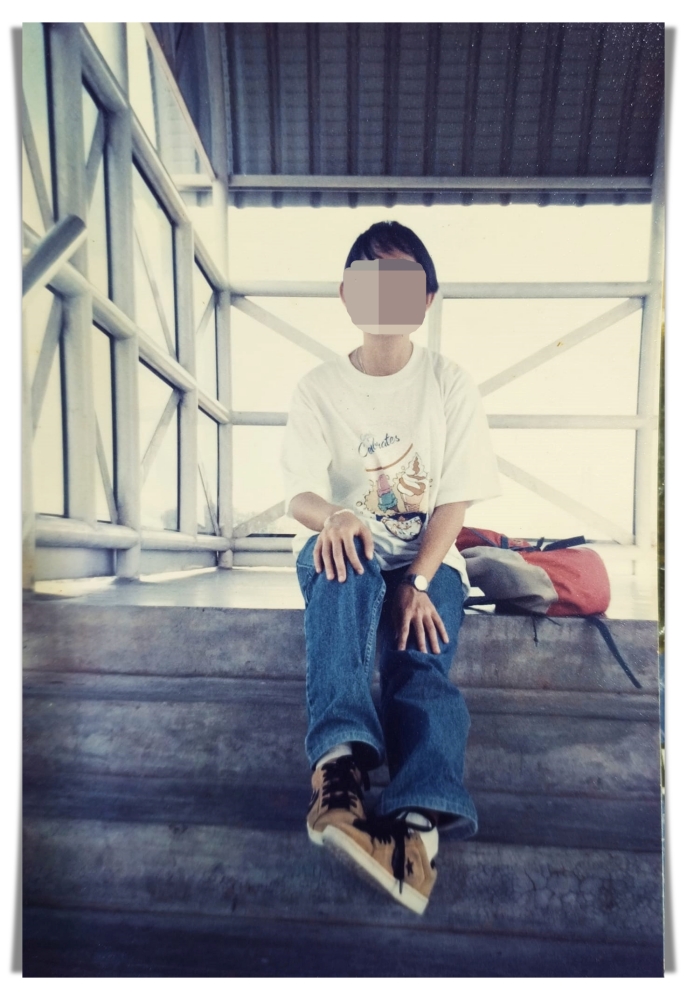
Sarawak Folk Noir | Red Eyes at the Ara Tree

This story was inspired by a real event, a memory from my childhood. I’ve always loved noir—the sense of dread, the fatalism, the uncertainties, and the things left unsaid. But I couldn’t find any noir stories told in an indigenous voice from Borneo. So I wrote my own. Red Eyes at the Ara Tree is what I call Sarawak folk noir. It carries the core tenets of classic noir: unseen forces, a haunting past, and the slow unraveling of certainty; but roots them in a rural, post-colonial setting where belief and memory still shape the edges of reality. There is no detective here. Just a child, and the adult they become, trying to make sense of what cannot be explained. The crime is an intrusion of something ancient and watching. It’s of the unknown stepping into an ordinary life.


When I was seven years old, we lived on top of a hill in a government housing complex. It was a modest row of boxy flats nestled along the slope, built for civil servants like my dad. Thick jungle pressed in from all sides. People said that years ago, communists camped all over this hill and the jungle beyond it. I guess that rumor was true because one afternoon while I was playing near the black drain, I saw a group of soldiers going down the hill. The town lay below. It was quiet during the day, but after nightfall, it was ghostlike, as if it had shrunk back to the edges of the footpath at night. 

My parents kept chickens and grew vegetables like kangkung, changkok, and daun ubi in our small backyard. There was always the smell of dirt, raw chicken feed, and shit in the air. My siblings and I played barefoot in the yard after school, with the red earth staining our soles. Life was simple and boring back then, until it wasn’t.

There was an ara jejawi tree about three hundred meters down the road, on the slope of the hill. People said these trees were old, too old, and not all of them were empty. Spirits dwelt in such trees. They were not necessarily bad, but never to be disturbed. The tree was huge. Its roots stretched over the earth like petrified pythons. In the afternoons, the tree cast wide shadows that spread to the road. Every family on the hill passed it on their way to town. Most of us walked faster around it or crossed to the other side of the road. Some others, like my mom, muttered short prayers. 

Our kitchen faced the ara tree. There were two doors at the back. One was a solid wooden door with a metal latch, and the other a lighter screen door made of wood and mesh. We usually left the solid door open so the air could move through, but we kept the screen door closed to keep mosquitoes and flies out. I never gave that door much thought. It was simply part of the kitchen, like the tiled counter or the creaky faucet. 

That night, everything was normal. It hadn’t rained for weeks. The heat lingered on your skin long after the sun went down. The cicadas were shrieking in the trees, and the chickens were quiet. We had dinner. My dad was at the head of the table, my mom was next to him, and the rest of us were spread out around the small table. My eldest sister sat right across from the screen door, looking out to the backyard and the ara tree beyond it. 

I remember my spoon scraping the bottom of the plate. My mom asked if anyone wanted more sambal belacan. Someone knocked over a cup and somebody wondered out loud who would win the WWE match later tonight. My sister stood up to get another helping of rice.

She paused. 

That’s what I remember. Her hand hovered above the rice cooker. Her face had gone still. Almost blank. She didn’t utter a word. She shifted her gaze and quietly scooped her rice and went back to her seat. The conversation went on. None of us noticed anything strange. Not then. 

She didn’t say a word until later, when we were in the living room and the dishes were clean. My dad had switched on the TV to watch the evening news and my brothers were bickering about whose armpits stank the most. 

She said she had seen eyes. Big, red, staring right at her from the ara tree. Right through the screen door. The eyes didn’t blink or move; they grew. Larger and larger with radial blur around the edges. Even while they stayed still, it appeared like they were getting closer. She swore they pulsed, like slow breathing. 

We didn’t speak for a long time after she told us. My mom told her not to bring it up again. That night my dad closed the solid kitchen door and pulled the bolt tighter than usual. No one complained. 

The next morning, it was a Tuesday and like any school day, we got up early to go to school. However, my sister complained of feeling chilly, though her skin was hot. My mom instructed her to stay home and prescribed Panadol. By afternoon, her temperature continued to rise. Her brow was sticky with sweat and her eyes couldn’t focus. Her appetite disappeared. She lay curled on her thin foam mattress, sweating and mumbling, eyes drifting in and out of focus. The doctor called it a viral fever and sent her home with Panadol. But after two more days, my parents started asking around and were given a number to contact. He was a manang who lived in a village near the town. 

I remember the manang arriving late in the evening, when it was a little cooler. His rusty white Corolla E70 arrived at precisely 7PM. A balding man with two beady eyes emerged from the car. He shook hands with my parents and my dad invited him in. He didn’t say much. He took off his sandals at the door and nodded politely at us. One of my brothers started to point to a strange-looking bag he was carrying on his back. It was an old wooden cylinder bag that looked more like a box—lupong manang, his healing kit. I had never seen one before, but I knew better than to ask. 

The manang sat next to my sister and opened his bag. Inside were small vials of various sizes, each one containing suspicious-looking liquid. A smooth stone that sparkled under the light—batu ilau—my mom whispered—and a small bundle of dried plants, a small bowl, and a white armlet. He softly murmured words I couldn’t understand and touched my sister’s forehead. 

My parents prepared a piring on a tray with betel nut, leaf, tobacco, glutinous rice, salt, two chicken eggs, and a small glass of tuak. I don’t remember how long he stayed because I fell asleep halfway through the strange healing ritual. But by the next morning, her fever had subsided. It wasn’t completely gone, but it seemed like something had finally released its grasp. 

The fever broke after five days. My sister woke up as if from a long dream. She never talked about the eyes anymore and refused to sit in that chair again. No one wanted to sit at that chair so we ended up squeezing on one side of the table, our elbows touching as we scooped food into our mouths. And after that, every time we drove by the ara tree in dad’s mung bean green Datsun, she would look at the miding sprouting above the bush along the road and never ahead.  

After all these decades, it’s likely that the tree is still standing. I never returned to that town, though my siblings had visited on their various work trips. None of them bother to check on our old neighborhood or the ara tree. The last time I looked on Google Maps, the area had been cleared and developed. More houses and buildings. The surrounding jungle is still there, but less menacing, somehow tamed. Even now, as an adult, I don’t try to explain it away. Maybe the fever would’ve broken on its own. Maybe the manang did nothing at all. But something changed that week—and I’ve never looked at shadows the same since.

Whether the tree still stands or not, in my memory it always does. It stands motionless with its thick trunks and aerial roots guarding its inhabitant.

Watching. Waiting. 

Note:

  • Kangkung – water spinach
  • Changkok – pucuk manis (popular leafy vegetable native to Southeast Asia
  • Daun ubi – cassava leaves
  • Ara jejawi – banyan tree
  • Sambal belacan – shrimp paste
  • Manang – shaman
  • Lupong manang – shaman healing/medicine kit
  • Batu ilau – divining stone used by Iban shamans during healing rituals.
  • Piring – offering
  • Tuak – rice wine
  • Miding – a type of fern, Stenochlaena palustris, a popular edible plant in Malaysia and other Southeast Asian countries.

I write about Iban culture, ancestral rituals, creative life, emotional truths, and the quiet transformations of love, motherhood, and identity. If this speaks to you, subscribe and journey with me.
The Cry of the Koklir | An Iban Ghost Story

Before I share my experiences, I’d want to clarify who the koklir is and what she represents in Iban belief.

People often think of the Iban people of Sarawak as headhunters, which is a part of our history, but it tends to eclipse the deeper aspects of who we are. However, our culture is not only based on headhunting. We have a strong spiritual connection to the natural world, which is rich in stories about spirits that live in rivers, lands, mountains, and dreams. Our folklores are alive with omens, taboos, and the spirits of people who have departed. Some spirits protect, some guide, and others, like the koklir, are said to return because something in their death was left unresolved.

In Iban culture, the koklir is one of the most feared spirits. She is believed to be the spirit of a woman who died during childbirth or shortly thereafter, specifically during the vulnerable bekindu period, which lasts for forty days of healing and recuperation. Her death is known as busong mati, or a spiritually unfortunate death, and her soul is considered to become jai (malevolent). Her soul is malevolent not because she did something wrong in life, but because her death was unnatural and tragic. Her spirit doesn’t cross over to the other side in peace; instead, it lingers behind, transformed by pain and grief.

As a ritual precaution, lime thorns (duri limau) are poked into her hands and soles before she is buried. It’s a symbolic act aimed at weakening her spirit and preventing her from becoming a koklir. Some people allege that her tongue is also pierced.

Then a prayer is being offered, asking her to rest and not come back to bother the living. But if the ritual isn’t done or if the death is really violent or sudden, people say she might still come back to haunt, seek, and punish.

The koklir is believed to target men. Most of the time, you can hear her presence through a chilling cry that starts out like a hen calling her chicks: “kok, kok, kok…” and ends with a piercing, terrifying “haiiiiii waiiiiii!” Before she attacked her victim, she would scream “kokliiiiiiiiiiiiiiirrrrrrrrrr”. She sometimes takes the form of a beautiful woman, hiding her face with a tanggui serawong (woven sunhat) or a kubong leaf. Sometimes she manifests as an enturun, a shaggy, nocturnal bearcat with long claws. Some men say they’ve heard her voice in the jungle or by the river at night. Some people say they’ve seen her scratch at windows or doors with fingers that look like claws. The stories are shared quietly among men, usually late at night, and sometimes with fear or bravado.

I’ve never seen her. But would you believe me if I told you I heard her twice? And I remember it very well both times.

First Encounter

I was fourteen. It was the first day of the school break. Because my flight home was later that night, I was the only student left at the girls’ hostel at my boarding school. Everyone else had left throughout the day. The hostel was quiet and empty.

That morning, the warden told me to turn off the lights and close all the doors before I left. I said I would. After dinner, at about 6 PM, I took my bags outside and waited for my cousin to pick me up. It was getting dark already.

Before leaving, I went back in to do what I promised: turn off the lights and close the doors. I went up to the first floor, strolled through the empty corridor, and did what I had to do. The only sound was the rustling leaves blowing in the breeze. Everything else was still and quiet.

I heard something as I came back down, near the bathroom on the ground floor.

Kok… kok… kok…

It was soft and faint, exactly like a hen calling its chicks.

But this was a school compound. No nearby houses, no chickens. Just trees and a greenhouse. I stopped and listened again. I thought maybe I imagined it. I finished what I was doing and went back to the entrance. I stood there in the light of the corridor, looking out at the road. Everything else around me was dark.

Then, around 7PM, I heard it again.

Kok… kok… kok… kok…

It was slower and closer.

I felt chills and goosebumps all over my body. I was too scared to look around. I just kept my eyes on the road, expecting to see my cousin’s headlights. He came soon after that. I hastily loaded my bags into the car and drove away. I never looked back.

I didn’t see her, but I know what I heard. We believe that the koklir doesn’t harm girls or women because she only targets men. That gave me some comfort, but the sound stuck with me for years.

Second Encounter

I was still living in the same hostel a year later. I didn’t hear her voice this time, but I did hear something else. My bed was next to the door. Sometimes, I would wake up to a loud scratching sound at the door. I believed it was stray dogs trying to get in, so I went back to sleep.

However, I looked at the door one morning because I was curious. There were scratch marks, but they weren’t at the bottom where a dog could reach them. They were higher up, around chest height. That detail stuck with me. What kind of dog can scratch that high?

I didn’t say anything to anyone. I didn’t want to scare the others, especially the younger girls. But I remembered what the elders used to say: the koklir scratches at doors and windows with her long nails to find a way in.

After that, the scratching happened every now and then. I didn’t say anything about it until much later. I told the story years later in our WhatsApp group for former dormmates. I was surprised to learn that I wasn’t the only one. Others remembered the same sounds from the same door and that same feeling of unease. However, we all stayed quiet, but we were all scared.

Some people might not believe these stories. They can argue it’s merely animals, wind, imagination, or ridiculous stories from the natives. But I don’t think I made anything up since I know what I heard.

These encounters aren’t just stories about ghosts. She is a reminder of how deeply the Iban people see death and life as intertwined, how even grief has a place in our stories. As Iban people, we understand spiritual realms that involve death, grief, and the things that linger. The koklir is a reminder of women who died too young or too soon, often forgotten or feared, yet still searching for peace. She didn’t show herself to me. But I heard her cry and have never forgotten it, even after decades have passed.


I write about Iban culture, ancestral rituals, creative life, emotional truths, and the quiet transformations of love, motherhood, and identity. If this speaks to you, subscribe and journey with me.
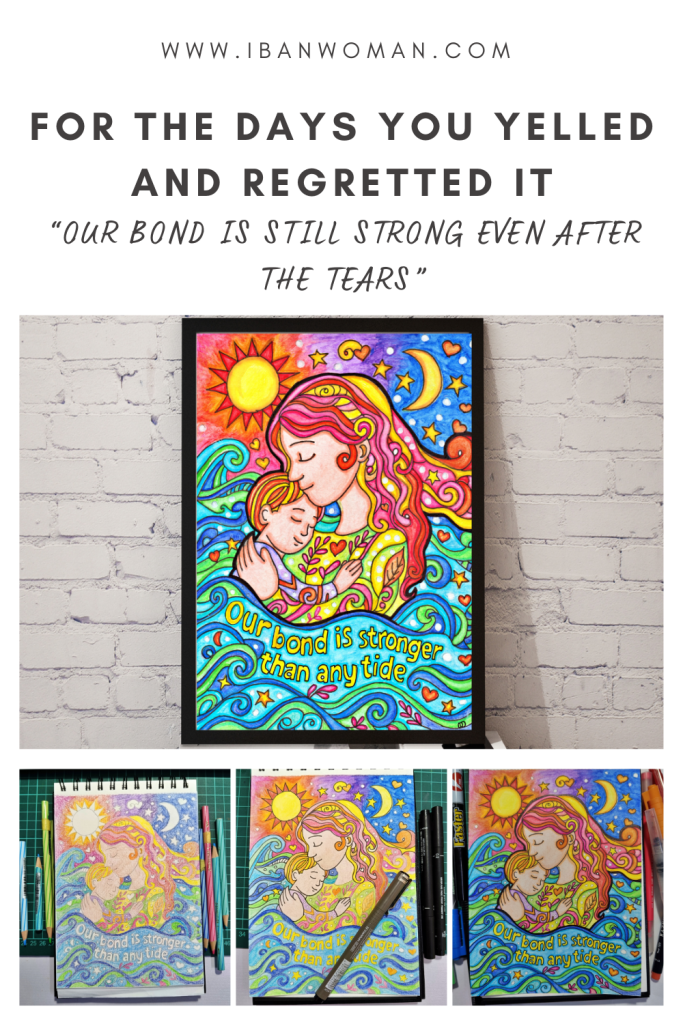
Printable Affirmation for Moms | Our Bond Is Stronger Than Any Tide

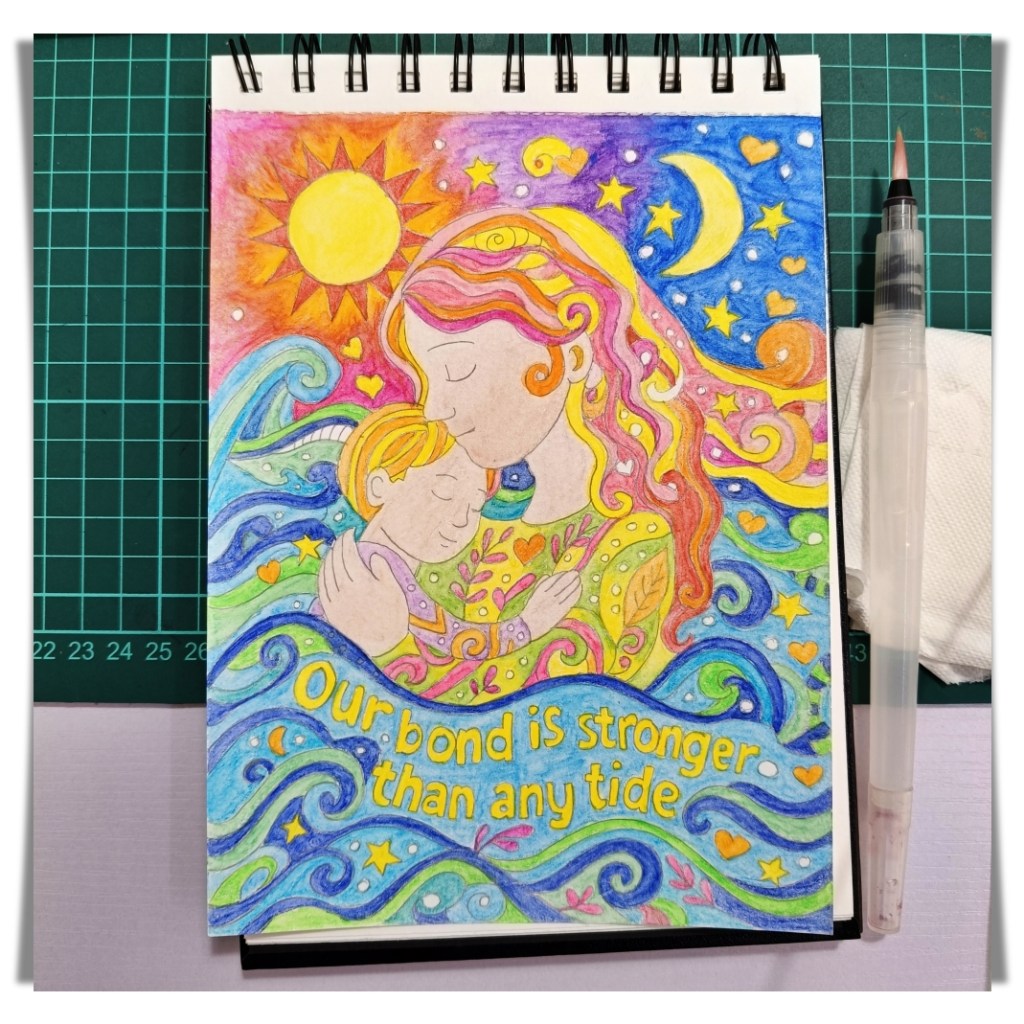
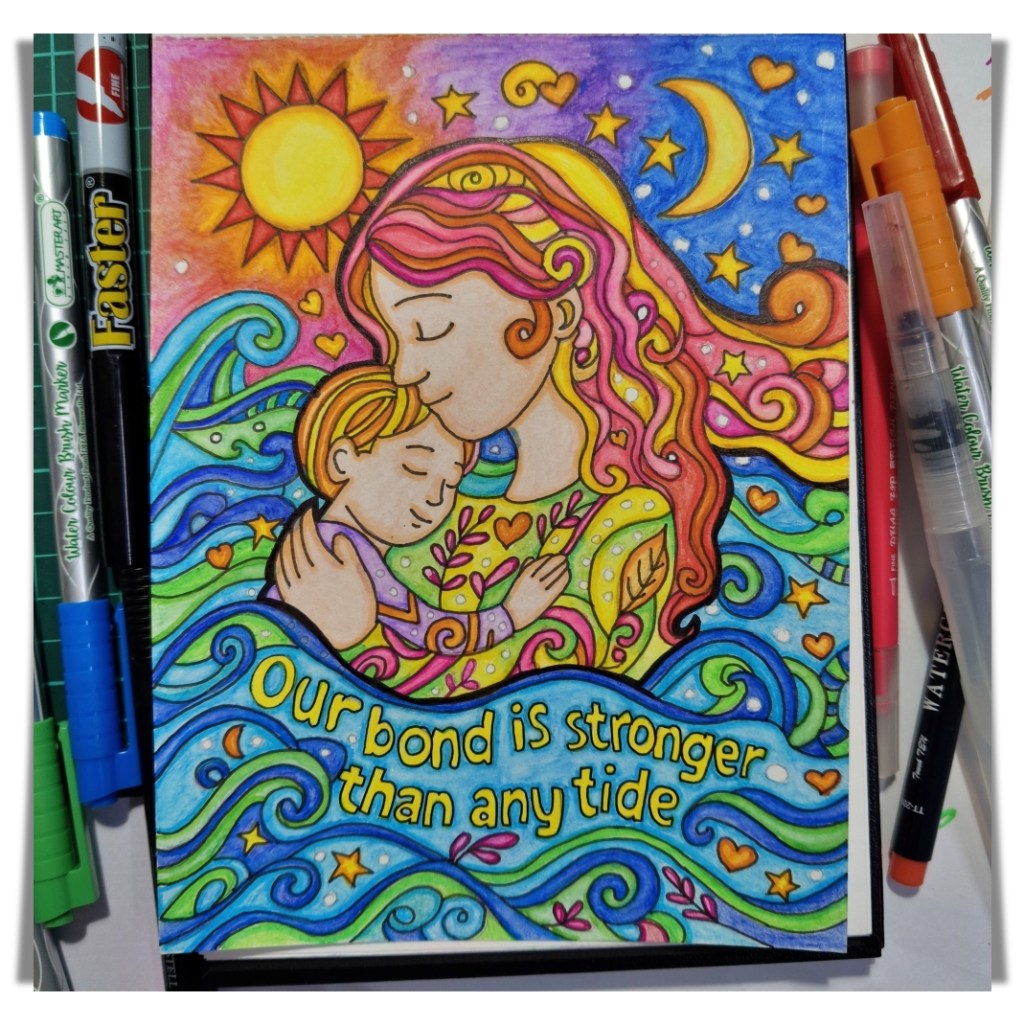
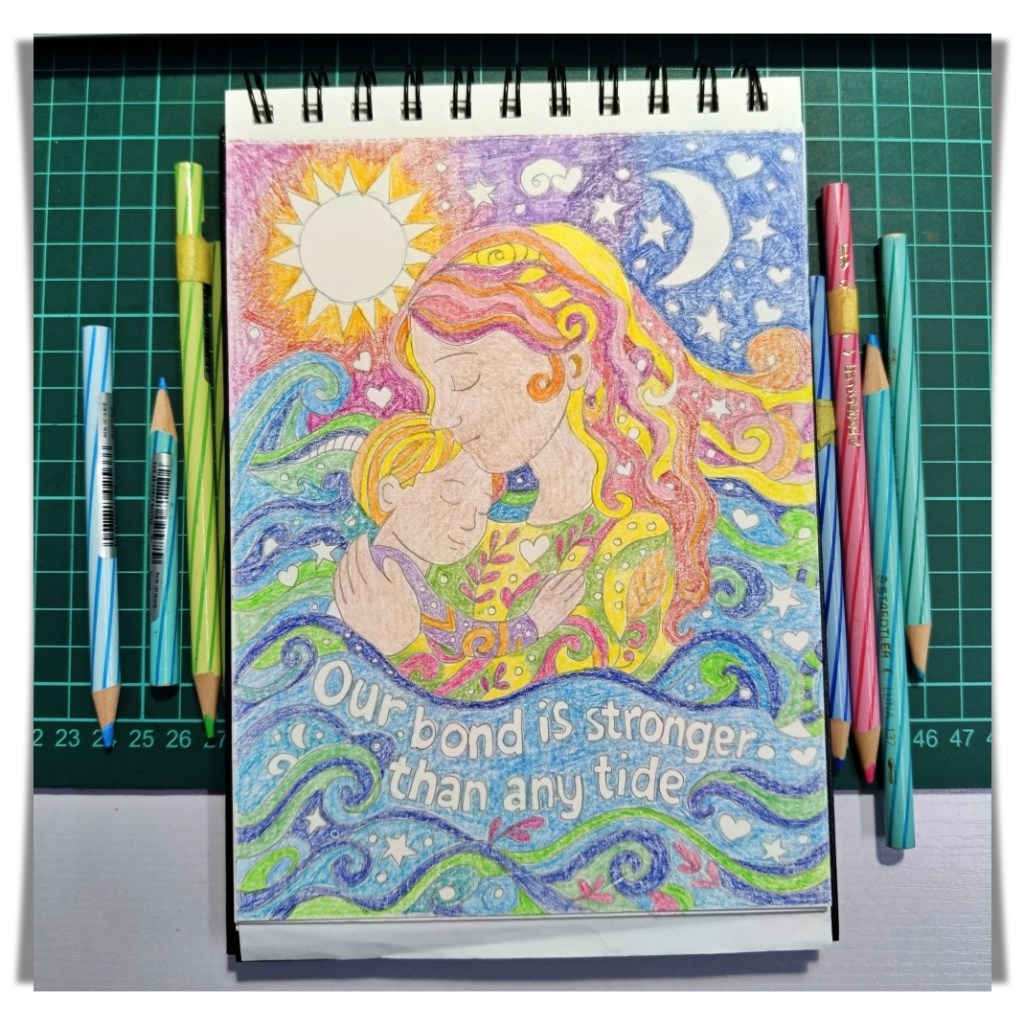
Hand-drawn printable affirmation art of mother and child with sun, moon, and waves — emotional support for overwhelmed moms.

My kids are older now. I’ve long moved past the stage of yelling. Through years of learning and reflection, I’ve softened. I still scold my kids when needed, but never in the uncontrolled way I used to when I was younger and overwhelmed. That part of me has grown quieter. But the memory? It still lives somewhere inside me, not to shame me, but to remind me of how far I’ve come.

I remember one particular moment when I yelled at my daughter. This happened many years ago. Later that evening, I sat on the edge of the bed, silent. My hands remained tightly clenched. My throat still raw. And my heart? That was the worst part. It stung with guilt and regret I’d experienced too often. When I saw her small shoulders shake, I wanted to swallow every hurtful word and undo my mistakes. But, of course, that’s not how time works.

I remembered a post I wrote not long ago, This Is Not the Mother I Meant to Be. Those words came from the same place where this printable affirmation was born: a dull aching between failure and love, a desperate desire to do better, to be more patient, to un-yell the things we shouted when we were too exhausted or too raw.

This new art piece—Our Bond Is Stronger Than Any Tide—came from reading late-night Reddit posts written by exhausted mothers. Posts full of remorse and shameful confessions. Most of these women probably didn’t need guidance. They just needed someone to sit next to them and say, “I know. I was there too.”

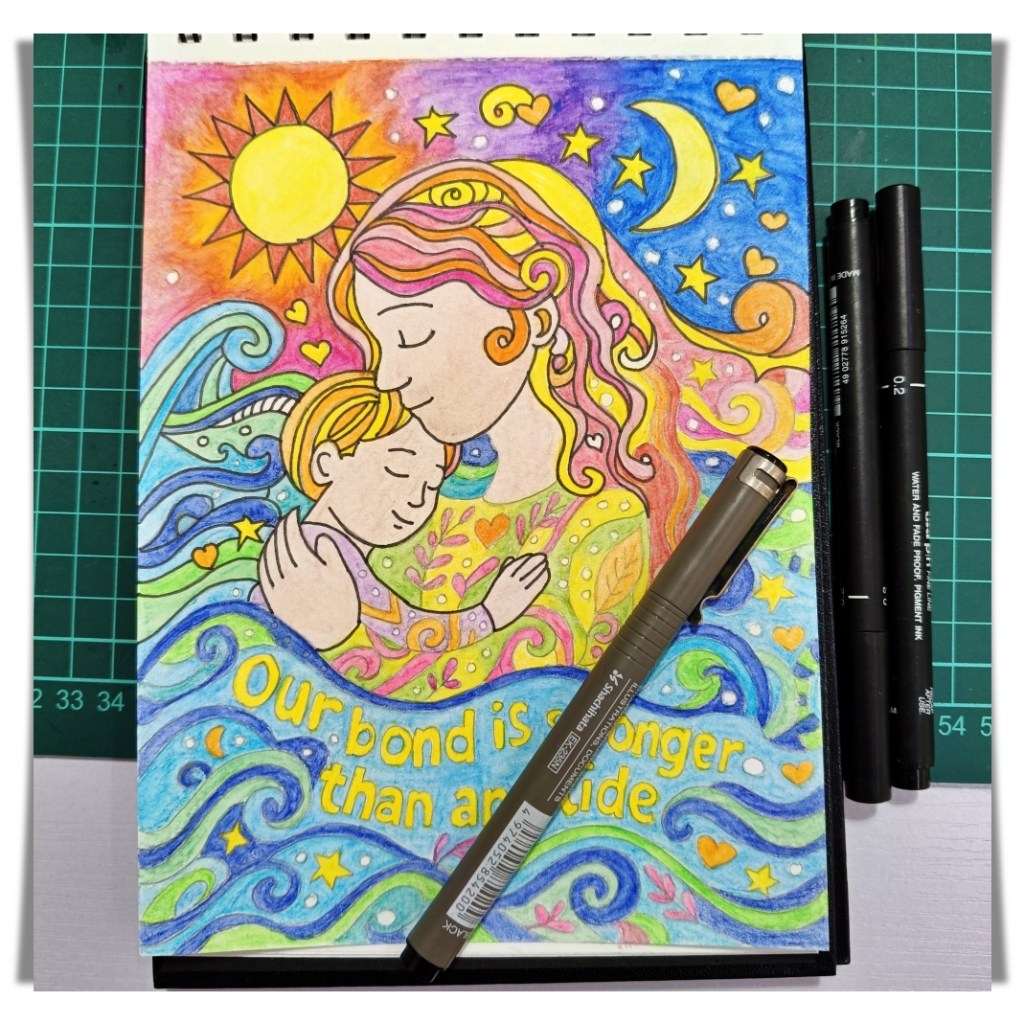
In the illustration, I drew a mother and child surrounded by waves. Above them, the sun and moon coexist, as if to indicate that both light and shadow belong together. It was my way of acknowledging that we all have both. The love that rocks us, and the exhaustion that drags us down. There are days we sing, and there are days we snap. And still, our bond endures. It may be bruised and tender. But never broken.

I wanted this printable affirmation to serve as a comforting presence in someone’s home. Not in a Pinterest-perfect way, but in the way love still finds its way in—despite the irritation, despite the frustration.

We don’t talk enough about these moments. When we talk about motherhood, we often focus on the good things while ignoring the difficult ones that come with a lot of guilt. The moments when we despise ourselves for our tone, for slamming doors, for causing disconnection when all we wanted was to connect. We show up for our kids with snacks, schedules, and crafts, but we sometimes forget to show up for ourselves. We forget that we are human, too.

And this is what I want this piece to convey: You are not alone. You are not defined by your worst moment. You are a mother, and that is the most human thing of all.

If you’ve ever whispered apologies through the crack of a bedroom door…

If you’ve sobbed in the bathroom, wondering why your patience never seems to last…

If you’ve ever thought, “This is not the mother I was meant to be”…

Then I hope that this printable affirmation for moms speaks to you.

Because our bond with our children isn’t defined by one bad day. Or even a hundred. It’s shaped by the “rhythm of return”: the apologies, the “I love yous,” the bedtime cuddles even after chaos.

Our Bond Is Stronger Than Any Tide is now available in my Etsy shop, Olivia’s Atelier. You can print this motherhood affirmation for your desk, your mirror, your journal, or your wall. Let it be a companion and a reminder. A safe place to land when everything else feels hard.

Because you, mom, are still growing and changing. And love? It never stops trying.

Explore the art here: Printable Affirmation – Our Bond Is Stronger Than Any Tide
© 2025 Olivia JD

When Motherhood Feels Like Too Much | A Reflection on Netflix’s Straw

Image source

I don’t watch many movies from Hollywood. But something about Straw, a Netflix movie, drew me in. I didn’t know the actors’ names. I didn’t read the reviews. I simply watched it and empathized.

Taraji Henson, who played Janiyah Wilkinson, a single mother struggling to make ends meet and to care for her sick daughter Aria, gripped my heart from the first scene. I didn’t care what critics said. Who needs them when we can form our own opinions? Watching Janiyah in that moment, she was like many mothers I’ve known. Every mother facing the struggles of motherhood, every mother who has fought, broken, and somehow kept going. I had never heard of Taraji Henson before this film, but her portrayal will stay with me.

Straw brought me to a world that was unfamiliar to me in some ways: an almost all-Black cast, a peek into lives and difficulties shaped by a reality I don’t live but deeply empathize with. It was a story of survival, love, and the crushing weight of systems created with little regard for people at the bottom. And at its core was Janiyah, a single mother who awoke that day believing she could handle everything, only to find herself in one difficult circumstance after another.

I saw myself in her. I saw many of us. Though I admit that my problems may pale in contrast to hers. The moment she snapped? I made no judgments about her. How could I? I understood. The never-ending cycle of striving to earn enough, care enough, and keep it all together in a society that keeps asking for more and more and giving so little in return. The dysfunctional healthcare system (healthcare that costs so much more than most people can afford—pure evil), the lack of emotional support for moms, and the feeling of being invisible in a world that only sees what it wants to see.

Motherhood can be so isolating, impacting motherhood mental health and contributing to motherhood exhaustion. Even when we are surrounded by people, we may feel alone in our struggles. And when there is no one to support us through the most difficult times, the weight of it all can feel intolerable. That is what Straw conveyed so powerfully for me. That is what I wanted to honor in this reflection.

I’m not writing this to offer solutions. As a mother, I understand that no one can fix what we’re going through. We don’t expect anyone to. We don’t ask for handouts or miracles. But sometimes what we want most is to be seen. To hear someone say, “I see you. I see your effort. I see the fatigue. You aren’t invisible or forgotten.”

That is why I began making emotional support materials for mothers, such as printables for mothers, poems for struggling mothers, and art for overwhelmed moms. Whether you’re seeking a printable for mothers or a poem for struggling mothers, these small creations are here for you. Small gestures that provide comfort, silent reassurance that someone out there understands. No, they don’t fix the problems. But perhaps, in some small way, they might shine a light on a dark day.

Before I close, I want to leave you with a poem. It’s a piece I wrote after watching the movie. It’s raw and honest, dedicated to mothers who feel unseen and overwhelmed.


For the Mother

This is for the mother who kneels
on the bathroom tiles, her sobs
swallowed by the flush of the toilet,
who locks the door not for privacy
but to cage the animal of her grief.

For the mother who starves herself
down to bone, who offers her child
the last crust of bread like a sacrament,
her own mouth full of nothing
but the bitter taste of absence.

For the mother whose spine bends
under the weight of a thousand silent storms,
who still paints her lips red at dawn
and sings lullabies through her teeth.

You are not invisible.
I see you—
your hands, cracked and holy,
your ribs, a cathedral of sacrifice.

You think you are drowning,
but darling, you are the ocean itself,
fierce and unforgiving,
swallowing the moon whole
and still rocking the shore to sleep.

You are not failing.
You are a war fought in silence,
a wound that blooms into a mouth
that says yes when the world says no.

You are more than enough.
You are the goddess no one prays to,
the unlit match in the dark,
the silence, the tempest, the aftermath.

©2025 Olivia JD


If you’re reading this, I want you to remember: your struggle is real, and so is your strength. You are seen. You are not alone. May we keep finding small ways to lift each other, and may you always know, you matter.

If this reflection resonates with you, I invite you to explore my creations at Olivia’s Atelier on Etsy, Teepublic, and Redbubble. Every piece is made with the intention to offer gentle support and inspiration.

A Mother’s Day Reflection

I didn’t grow up imagining myself as a mother.

Not as other girls did, pretending to cradle dolls or writing baby names in the margins of their schoolbooks. I wasn’t opposed to becoming a parent; it simply didn’t feel urgent, like something I needed to pursue or prepare for. And yet, I am here. It’s been years. A mother. With gentle hands and a heart that is always rearranging itself around little lives.

Mother’s Day used to pass with little thought. A day spent playing cards and making phone calls. Of seeing my own mother from a distance, attempting to decipher the aspects of her that I could never fully grasp. I had no idea she felt so invisible at the time. When you’ve given everything to others and lost yourselves, silence may be deafening.

Now I do.

Mother’s Day is now a quiet occasion in our family. The kids sometimes remember and sometimes they don’t. My hubby asks what I want to eat. I fold the laundry and do the dishes anyway. Life does not stop simply because it’s May. However, a part of me always wishes for a pause, if only for a moment. A pause that says, “We see you. It is not simply what you do, but who you are underneath it all.”

This year, I didn’t request flowers or breakfast in bed.

What I desire cannot be purchased or arranged.

I want someone to acknowledge my effort. How I manage to show up even when I’m very exhausted. How I manage to kiss their foreheads at night despite carrying the weight of invisible things like schedules, fears, and guilt. I want someone to say, “I see the woman you are, not just the mother you have become.”

Because I’m both.

A woman who once had aspirations that did not involve diaper bags or parent-teacher meetings. A woman who still longs for quiet mornings and uninterrupted thoughts. Also, a mother who has dedicated her body, sleep, and time to love so profound that it has utterly transformed her.

So, on Mother’s Day, I gave myself what the world frequently forgets to give: grace.

Grace for the things that remain undone.

Grace for the yelling I regret doing.

Grace for the dreams I’ve placed on hold.

Grace for the ways I am still learning to parent myself.

And maybe that’s all it needed.

Happy Belated Mother’s Day to the quiet mothers, the tired ones, the fierce ones. The ones who feel like they’re failing but keep showing up anyway.

I see you.
And I’m learning to see me, too.


Mother

They see
lunchboxes prepares,
schoolwork signed,
clothing neatly arranged into piles.

But they don’t see
the woman who forgot who she was
before responding to “Mama.”

They don’t see
how she holds her breath
until the door closes,
and she can cry
without needing to explain.

They don’t see
how she forgives herself
in small rituals—
a hot cup of tea,
a song in the car,
a scrawled poem
at midnight.

They don’t see
her saving herself
a little at a time.

And still
she shows up.
Every day.
with love nestled
into every nook of her weariness.

Because this is what she does.
That is who she is.

Copyright © Olivia JD 2025
All Rights Reserved.


Looking for digital tools that support your everyday life with gentleness and intention?
At Olivia’s Atelier on Etsy, I offer more than just pretty printables—I create emotional support kits, Instagram reel templates, children’s meal planners, and other soul-nourishing resources for moms who give so much but rarely feel seen. Whether you need a moment to breathe, a tool to stay organized, or a way to connect with your audience—there’s something here for you.

🕊️ Everything is 50% off until June 2—because you deserve support that feels doable, beautiful, and kind.

Declining Population Trend In Malaysia | My Perspective

Image source

I recently read a Facebook post that talked about how Malaysia’s population is going down. But it didn’t really surprise me because the birth rate has been falling around the world. Professor Dr. Sharifa Ezat Wan Puteh, a local health expert, said that if this trend keeps up, Malaysia could have a population that is mostly made up of older people by 2030. As a woman, I see this trend as a sign of how our lives and expectations are changing because of changes in society, the economy, and culture. Let’s look into what caused this change in the population and what it means for Malaysia and other places.

Mindset Shift

In the past few years, I’ve seen a lot of women decide not to get married or have kids. The way people think about family life is changing. In Malaysia and many other places, the idea that women should be the main providers is being examined again. More and more women want freedom and equality, and this can be seen in the choices they make about marriage and family. Birth rates are going down because more people want to be independent, travel, and find self-fulfillment.

In 1970, Malaysian women aged 15 to 49 had an average of 4.9 children per woman. This rate had dropped a lot by 2021, when it was only 1.7. This big drop shows that people’s priorities have changed. Many women are now focusing on education and jobs, which can be hard to balance with a traditional nuclear family. Women are changing how they think about fulfillment and achievement, and it’s not always about having children and getting married.

Economic Pressures and Career Priorities

As traditional views on family life change, women in Malaysia and around the world are putting their jobs and personal growth first. Pressures from the economy are a big part of this trend. As a mother, I am very aware of these problems. The sharp rise in the cost of living has made it harder for families to raise kids. People in Malaysia are having a hard time with money because more people are moving to cities, and the prices of housing, schooling, and health care are going up. This has caused many people to think about how big their families should be.

Access to Family Planning and Education

Women today have the freedom to make decisions that fit their desires and way of life. This includes making well-informed choices about their sexual health. Women in Malaysia have more power over their reproductive choices thanks to efforts to make family planning programs and sex education easier to access. This gives women more power so they can plan their families in ways that fit with their personal and work goals. This makes the drop in birth rates even greater.

Implications and Future Directions

This drop in population has effects that reach far and wide. In terms of the economy, it could cause a lack of workers, which would mean that foreign workers are needed. It also puts more stress on social aid services because there are fewer young people to help an aging population. In terms of society, this change can affect how communities are formed and how families work together.

As women continue to shape the future, it is important to deal with the reasons why birth rates are going down and make policies that help people match their work goals with family obligations. To solve Malaysia’s demographic problems, they will need to make workplaces more supportive and flexible for parents, offer cheap child care, and encourage a culture that values both career and personal success.

In conclusion, the world’s population is going down. This is a complicated problem that is caused by economic challenges, shifting perceptions about family size, and advancements in family planning. As a woman, I think that knowing about these things is important for dealing with and creating the future. We can lessen the effects of this trend by addressing its causes and backing policies that are fair for everyone, even though it is clear that the birth rate will probably never reach the levels it had in the 1980s and 1990s.

💃 Happy International Women’s Day 2025 💃

Reflection | The Legacies We Leave Behind

I wasn’t close to Michelle, but when I received news of her passing, it stirred something deep in me. It’s a quiet grief that lingered long after the news settled. It reminded me how one person’s kindness can ripple through your life and leave marks you only notice years later.

Michelle came into my life over 20 years ago when I was at my lowest and at a pivotal moment of my life. I barely knew her; she was literally a stranger, but she opened her door and her heart to me. She took me in and let me stay in her home for several days. She drove me around, and for a few precious days, she made me feel seen and safe. She introduced me to her wonderful family, and they welcomed me as if I belonged. In that moment she became a safe place for me when my world felt fractured.

She didn’t have to do that because we weren’t close friends. But there she was, extending a hand when I needed it most. Looking back, I can see how God placed her in my path like a lit candle in the dark. Her kindness changed something deep in my heart that changed the course of my life.

Since then, that memory has quietly shaped the way I move through the world. I made a promise to myself that I would pay that kindness forward in my own quiet ways. Michelle showed me that even the smallest gestures can leave lasting ripples far beyond what we might ever see.

Although I didn’t attend her wake service, I watched it live on Facebook. The hall was full with friends and family grieving and also celebrating her life. Eulogies painted a picture of someone who lived fully, who loved deeply, and who touched countless lives. And before she passed, Michelle left behind a message that touches my heart. Here’s an excerpt:

“My dearest friends and kindred spirits, do not cry, do not grieve, do not be sad for me, I have already taken flight—gracefully! The beauty of life lies in its fullness, to love and to hate, to laugh and to cry, to sing and to speak, to run and to dance, to journey through this world with passion and abandon, to stand against injustice, to live boldly and fiercely. I have lived, truly lived, and I leave this world without regret. Yet the hardest part is leaving behind my family and all of you. My heart is bound to you by love, and it is love that makes parting so bittersweet. My beloved ones, be brave. Live with strength, with purpose, with an unyielding spirit. Do not waste this precious journey on earth! Though imperfect, this world holds endless surprises of joy, sorrow, and wonder—do not let them pass you by.”

Her words are full of grace and clarity. It is a farewell I believe most of us never get the chance to write. It really made me think, what if life doesn’t give us that opportunity? What if we leave suddenly without a chance to say goodbye?

That question stays in my mind. Not everyone gets to leave behind a final message, but perhaps that’s why we should live in a way that doesn’t leave room for regret. We should make sure our love is felt in the present, not just left for the end. We can write our goodbyes not in a single letter before death but in the way we live, so that if tomorrow never comes, the people who matter already know what they meant to us.

Michelle’s passing made me think deeply about the kind of legacy I want to leave behind. While I may not touch lives in the same immediate way she did, I hope my art and words—through my blog and poetry—will be my offering. I want my way of self-expression to become a soft place for someone else to land.

We don’t always get to see the ripples we create in others’ lives. But I believe they exist somewhere because Michelle showed me that. And I hope in my own way, I can leave behind something meaningful: a legacy built not on outstanding achievements but on quiet truths.

Maybe for some of us, it’s not about how many people pay tribute at our funerals. Maybe it’s about the small, beautiful things we leave behind—kindness, goodness, or the moments when someone reads you words and feels understood, or when your art brings them a sense of belonging. And that’s the kind of legacy I hope to leave when my time comes.

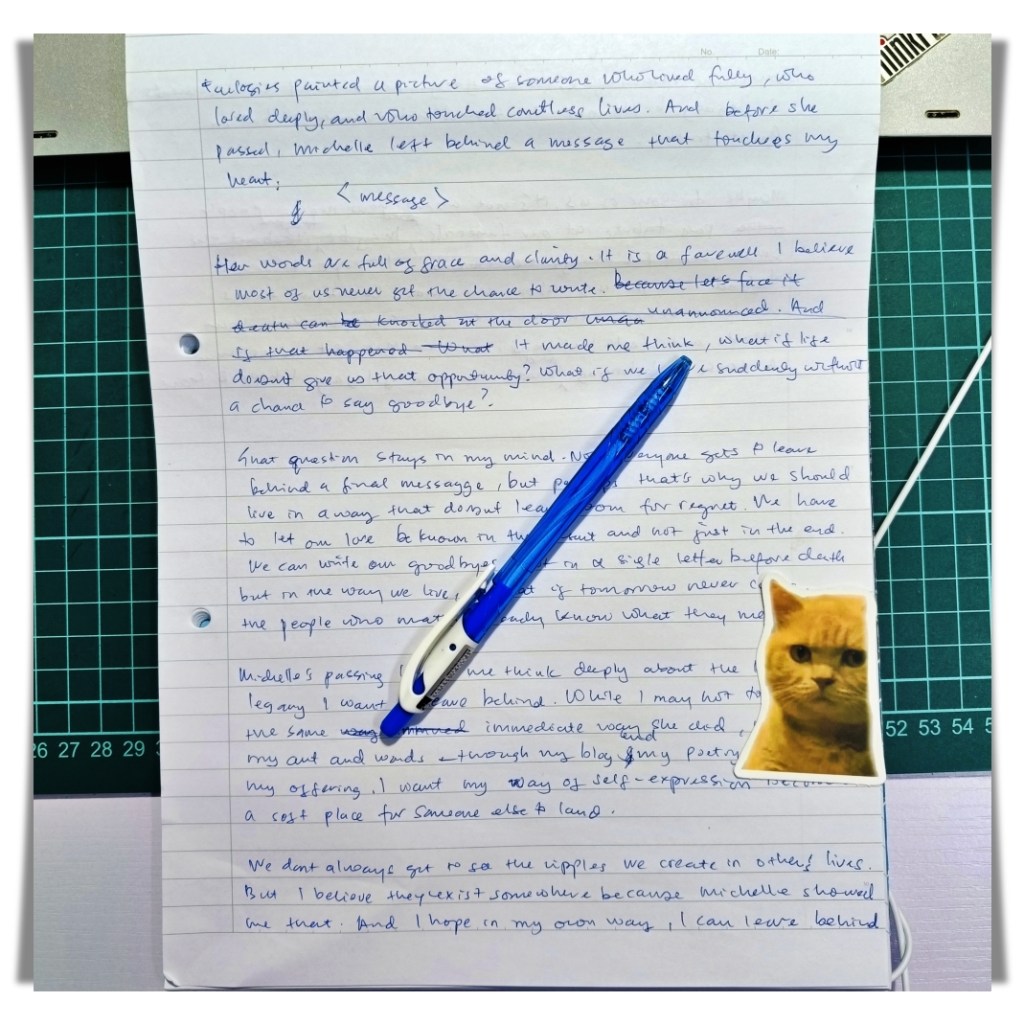
Handwritten draft of this post.

The Advice I Needed as a Teen (And Still Do Sometimes)

Daily writing prompt
What advice would you give to your teenage self?

If I could go back and sit beside my geeky teen self, I think I’d reach out, touch her cheek, and say this:

“You are enough, just as you are.”

I know she wouldn’t believe me right away. She’d probably frown and give me that skeptical side-eye, thinking I was just being nice. But I’d say it again, assuring her I’m not being cheesy, hoping it would sink into her heart and seep through her doubts.

“You don’t need to be prettier, louder, or more extroverted to be seen or loved. Your sensitivity, the depths you hold, the way you notice the smallest details, and the emotions you feel so deeply: they are not to be ashamed of. They are your gifts.”

When I was growing up, I often wondered why people liked me. I didn’t see what they saw. I wasn’t the popular kid, or the prettiest, gentlest girl, and I definitely wasn’t the life of the party. I was scrawny, awkward, quiet, and always second-guessing myself and my decisions. I spent so much time trying to figure out what made me special.

I’d tell her this too: “Don’t waste time wondering why others like you or if you’re worthy of it. You are worthy just as you are. Let yourself be vulnerable without feeling weak. Let yourself dream without fear of not being good enough.”

There were so many time when I felt like I was running, desperate to catch up, to fit in, to be noticed, to be the best. I’d want her to know she could stop running and start breathing.

I’d tell her, “Trust your voice because it will take you places you never imagined. And when the world feels overwhelming, turn to the things that make your heart sing—music, poetry, art. They will remind you of who you are when you feel lost.”

If I could give my teenage self anything, it would be that sense of peace. The peace that gives her understanding that she didn’t need to constantly strive to be more. She was already enough and complete. And maybe, just maybe, hearing that would have made her journey a little gentler.

So, if any of you are reading this and feel like you’re still that teenager inside, this is for you too:

You are enough, just as you are.