What Beserara’ Bungai Taught Me About Letting Go

I used to think that rituals like beserara’ bungai were just old traditions that had no place in today’s world. Growing up, I believed they belonged to the past. I thought the Iban needed to leave them behind to move forward. Whenever elders talked about these beliefs, I felt restless. My world revolved around progress, education, and the principles of organized religion. I didn’t see the value of rituals, and I never took the time to understand what they really meant.

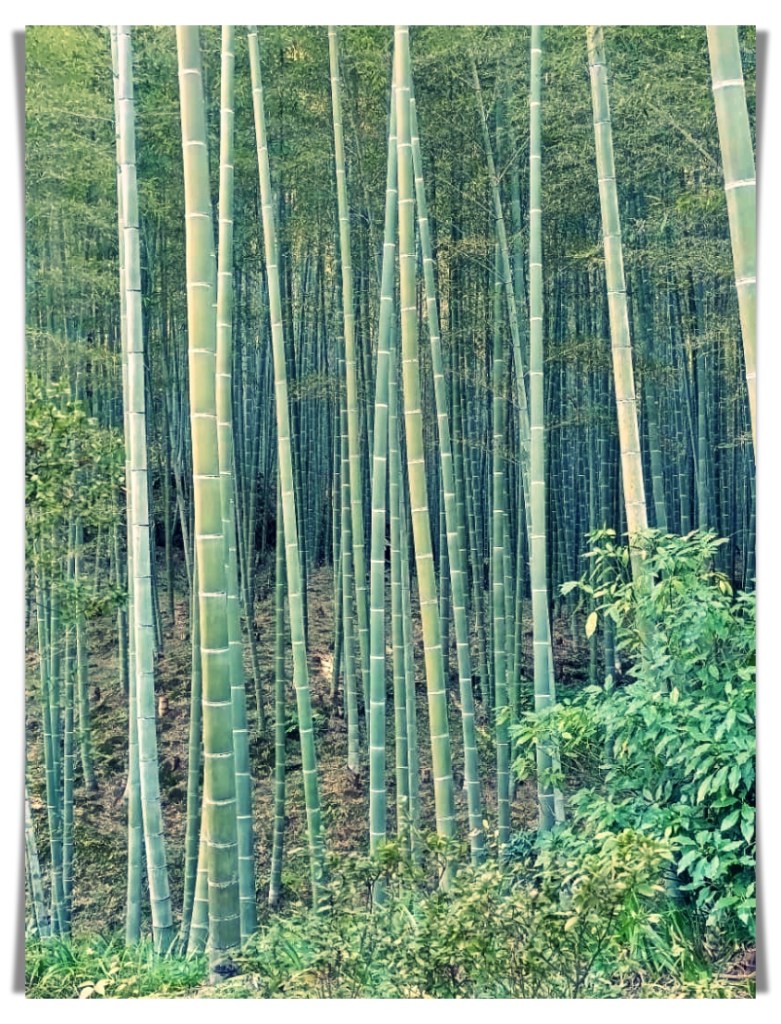
That mindset began to shift—slowly at first, then more clearly—as I read more about the Iban worldview. It wasn’t emotion or nostalgia that changed me, but understanding. I began to see that the Iban learned about life by watching the natural world. They noticed patterns in nature and connected them to how we live. For example, they saw how bamboo and banana plants grow in clusters. Each shoot is part of a single root system underground. If one shoot is unhealthy, it affects the others. When one dies, the root still supports new life. Death was not an ending but part of the cycle. This wasn’t superstition, but wisdom based on careful observation.

The bungai, the “plant-image” that represents each Iban person in the cosmic realm of Menjaya (the god of healing), began to make sense to me. I understood how it symbolized family and community. Each person is like a shoot, but we all come from the same root. When someone passes, the rest carry on, still connected. New life can grow from the same source. It’s a way of seeing life that is deeply connected and respectful of nature. The ancestors weren’t imagining things—they were describing the interconnected world they knew.

As I learned more, I started to feel a quiet pride in where I come from. I discovered that my ancestors included warriors and raja berani, people whose stories are still told in my family. I began to understand that even though I live far from my homeland, I am still part of that root system. This connection also extends to my children. They may not know all the customs or speak the language well, but the roots are still there. They are part of something that has been passed down through generations.

When I learned about beserara’ bungai, the ritual that separates the living from the dead, I felt something shift in me. This ritual is about care—not forgetting what we have lost. It helps both the living and the dead let go so they don’t hold each other back. The living need to keep moving forward, and the dead need peace on their journey to Sebayan. It’s a ritual of compassion that affirms the connection with the dead even as they journey on to the otherworld.

This understanding arrived at a time when I was wrestling with my own spiritual ties. I had been part of the same church community for many years. It shaped how I saw God, faith, and morality. But as I grew older, those teachings started to feel burdensome. I found myself questioning doctrines that encouraged separation from people who did not meet certain standards of spirituality. I began noticing the tension between fear-based expectations and the compassion-centered teachings of Jesus in the Gospels. As I continued to question, the burden of belonging to a system that no longer aligned with my conscience intensified.

Learning about beserara’ bungai gave me words for what I was feeling. I realized I was trying to protect my spirit. I wasn’t leaving faith behind—I was returning to what felt true. Jesus became the real rootstock. I wanted a faith grounded in his teachings: kindness, justice, presence, love, and compassion—not fear or guilt. I needed space to grow without feeling judged by a community that often equated questions with spiritual instability.

In a way, I’m experiencing my own kind of separation from the church rootstock. It is not a rejection of my past or of the people who have been a huge part of my life for the past two decades. It is a necessary separation so I can continue growing without feeling suffocated by expectations that no longer fit the life I am trying to build. I’m holding onto what still nourishes me and letting go of what drains me. The Iban worldview helped me understand that letting go can be a way of protecting both myself and the things I want to keep alive.

The more I reflect on it, the more I hope my children learn something different from what I learned in my early years of faith. I hope they are not afraid to ask questions. I hope they do not feel inferior in front of people who sound knowledgeable but speak without warmth. I want them to grow into a faith that welcomes curiosity, thoughtfulness, and conscience. I want them to recognize that their connection to God is direct, personal, and rooted in compassion—not fear. I want them to inherit a sense of strength that comes from understanding where they come from, both culturally and spiritually.

As I learn more about rituals like beserara’ bungai, I’ve come to understand that my ancestors didn’t divide life into “spiritual” and “ordinary.” Everything was connected. Life, death, nature, community, and spirit were all part of one whole. That way of seeing the world teaches me to live with care and humility. It shows me that letting go can be a loving act, and returning to our roots can take courage.


I write about Iban culture, ancestral rituals, creative life, emotional truths, and the quiet transformations of love, motherhood, and identity. If this speaks to you, subscribe and journey with me.
Things I Was Told Not to Say (But I’m Saying Them Anyway)

Like everyone else, I was raised to be polite, to lower my gaze, and to keep my mouth shut before it bleeds arrogance or truth. But truth doesn’t always need to wait for permission and I’m done looking for it. 

This is a list of things I was told not to say because they are deemed shocking and inappropriate. But I’m saying them anyway, because being silent isn’t always safe. It was a slow suffocation and death.

I was told not to say:

  1. “I’m tired of being the emotional one, the one who feels things.”

But I am. It’s draining carrying the burden of my own feelings and everyone else’s. You say I’m too touchy. I say you need to be more sensitive.

  1. “Sometimes I don’t want to be a mother.”

It doesn’t mean I don’t love my children. It means I want to disappear sometimes. To be free of endless burdens and responsibilities. I want to just be me without being attached to roles and expectations, even just for a while. Just long enough to find myself again.

  1. “Marriage is lonely.”

Yes, even the good ones. Especially the good ones; when you’ve been together long enough, you know each other too much there are barely any surprises anymore. 

  1. “I still think about the one who left.”

No, I don’t want him back. But he lives in the hallways of my memory, like when I stop to think about certain songs or street names or places. That’s not being unfaithful. It’s my memory and the only way to forget it is if I lost my memories to dementia or brain damage. Otherwise the memory remains. And I’m allowed to carry it.

  1. “I don’t want to go to this church anymore.”

I believe in God. But I don’t believe in being controlled and being silenced. I don’t want to pretend everything’s fine when my spirit is clearly not. I’m not giving up on faith; I’m moving toward the truth.

  1. “I feel ugly on some days.”

No amount of affirmations makes it disappear. There are days when I can’t stand my body. Some days I don’t even notice it at all. Both truths exist.

  1. “I envy women who get to choose their identity.”

Because I never did. I was born into roles before I could choose which ones I liked. Wife and mother. Good girl. Christian. I played every one of them. But now I want to rewrite the script where the real me can finally be set free. 

  1. “I don’t want to be grateful all the time.”

Gratitude is holy. But forced gratitude is performance. I don’t owe anyone a smile when I’m breaking inside. I can be grateful and grieving at the same time.

  1. “I want more.”

More silence. More passion. More space to create without guilt. More people who see me without needing me to explain myself. I want more than I was told I should ask for.

And yes, sometimes I want to be desired and not just needed. There’s a difference. And I feel it every time I’m touched with obligation instead of longing. 

I was told not to say all of this. They are taboo and a good Christian woman, a wife and a mother, shouldn’t entertain these sinful thoughts. 

I was told to play it safe. To keep my life neat, soft, godly. I was told not to stumble others in their faith.

But truth isn’t always soft. Truth can hurt and burn sometimes. And I’d rather burn than spend another decade in silence.

Call me whatever you want. A premenopausal woman in the heat of a midlife crisis. A delusional Christian woman being lured by the devil. These are some of my truths and I’ll not stop writing about them and shrink myself for others’s comfort. I’m so done with being prim and proper and always saying the right things all the time. I’m done with lying. It’s time for me to proclaim my truths and make them known to others. 

The Things That Undid Me

I cooked my love down to tar,
a black syrup in the bottom of the pot.
It taste like a lie
but I said nothing.
I was raised to chew my
tongue for supper.

I sewn myself into the good wife’s dress,
blessed and above reproach,
but I swallowed my own teeth
like communion wafers.

My children pressed their ears to my palms
and heard singing.
But some nights,
my fingers were fists
full of burnt letters.
I’m no witch,
only a woman
who learned too late
that silence is murder.

The pastor preached be pure.
But I loved the smell of rain
in my dirty hair,
my body wanting
without shame.

God, forgive me–
not for sinning
but for the way I loved it:
the unwashed sheets,
the stains on the hymns,
the animal in me
that refused to kneel.

I’m not sorry for the smoke,
or the fire I’ve become.
I’m sorry it took me
this long to strike the match.

© 2025 Olivia JD


Olivia Atelier offers printables, templates, and art designed to inspire reflection, healing, and creativity. Visit Olivia’s Atelier for more.

Reflection | Fossils, Letters, and Love Across Time

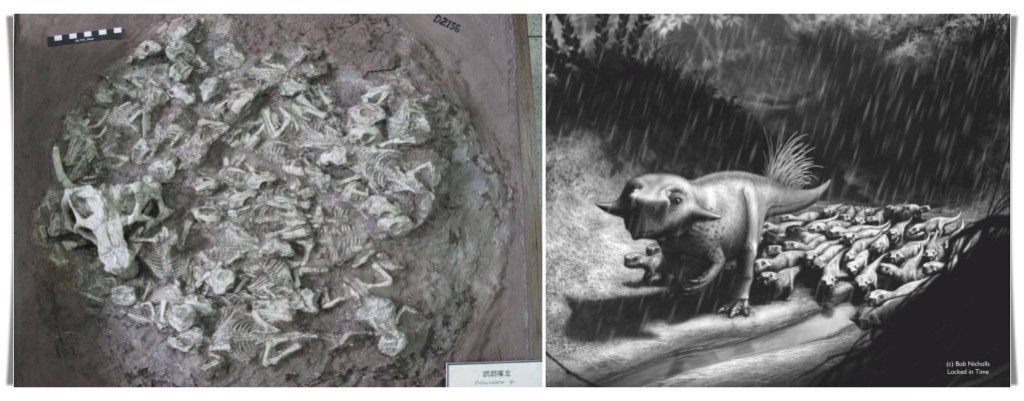
So, I came across The Last Guard the other day. No, it’s not the latest K-drama or Hollywood movie. It refers to the discovery of multiple fossilized psittacosaur cubs found alongside what appears to be an older sibling. The older sibling was guarding or babysitting the cubs when they were buried by a volcanic debris flow. This group of fossils was discovered by a paleontologist, Dean Lomax.

“The largest fossil does not have the dimensions of a sexually mature adult, so it is not it could have been one of the parents; most likely who has been the older brother of the little babies” The find is exceptionally preserved, and appears in his book “Locked in Time – Animal Behavior Unearthed in 50 Extraordinary Fossils” Source

Image source

It stopped me in my tracks and made me reflect. I mean, imagine that a big dino brother is protecting the younger siblings and its final act is frozen in time. It’s heartbreaking, but it got me thinking: why did dinosaurs even exist? Were they here just to live their lives and then become the fossil fuel that now powers our world?

It’s kind of wild to think about it. Now, just a side point: do you know that during the time of dinosaurs, the earth’s atmosphere was thicker due to higher levels of volcanic activity and greenhouse gases? The sky would be hazier, possibly obscuring the clarity of the night sky. So these dinosaurs probably couldn’t see the crystal-clear starlit night we enjoy today. These massive creatures never saw a sky full of stars the way we do, but now millions of years later, their fossils power our rockets, propelling us into that very sky. It’s poetic, isn’t it? That nothing in this world really lost. They were just transformed. Dinosaurs that once roamed the earth are now the force sending us into the universe. It’s all connected, a continuum of life, death, and dreams.

And millions of years later, here we are looking at their fossils and reflecting on their existence. An older sibling protecting the cubs. If this is not love, though instinctual in nature, I don’t know what is. Their story didn’t end with extinction. It lives on in the fuel that powers our world and in moments like this when we pause to think about them.

Have you heard about The Letter to Lee Eung Tae? The Last Guard made me think of that letter too. The Letter to Lee Eung Tae was written 500 years ago by a grieving pregnant Korean Joseon widow to her deceased husband Lee Eung Tae. The Last Guard versus The Letter to Lee Eung Tae. Two moments in history, so different but connected. One is a silent act of love embedded in ash, and the other is a deep grief written onto paper. Both moments are remnants of love carried through time.

Image source

I wept when I read the widow’s letter to her beloved husband. Five hundred years didn’t erase the pain and longing in her words.

“You always said to me, “We’ll be together until our hair turns gray, then die together”, so how could you go and leave without me? Whom should I and our child turn to; how should we live? How could you leave us all behind and go on your own?…Each time we lay together, I asked you “Dear, do other people love and cherish each other as we do? Are they like us?” How could you forget my words and abandon me?…I cannot live without you. I want to go to you quickly, so please take me to you. I cannot forget the feelings I had for you in this life, there is no limit to my sorrow. I don’t know if I can go on; where do I put these feelings that I have, while raising a child that misses their father? Please read this letter, then come to me in my dreams…” Source

Definitely stuff of K-drama.

This letter is like The Last Guard; it silently speaks of that protective love. This is love in all its forms, instinctual or deeply human, that transcends time.

And maybe that’s the real point. Nothing is ever really gone. Whether it’s a dinosaur’s final sacrifice or a widow’s grieving words, their legacies find us. They connect past and present, life and death, in this vast web of existence. Even in extinction or loss, there’s continuity and transformation that reached us at this present age.

It makes me wonder, what if millions of years from now, someone looks back at us? Someone finds our digital fossil buried beneath layers of forgotten time. And there they’d be reading our words and confessions, once alive and fragile but burning deeply. Would they feel the same reflection and connection we feel now when we look at fossils or read ancient letters?

In the end, maybe love is what truly matters. And maybe that’s also what it’s all about, leaving traces of ourselves behind. Traces of our existence, our love, our dreams, waiting for someone to find them and feel them all over again.

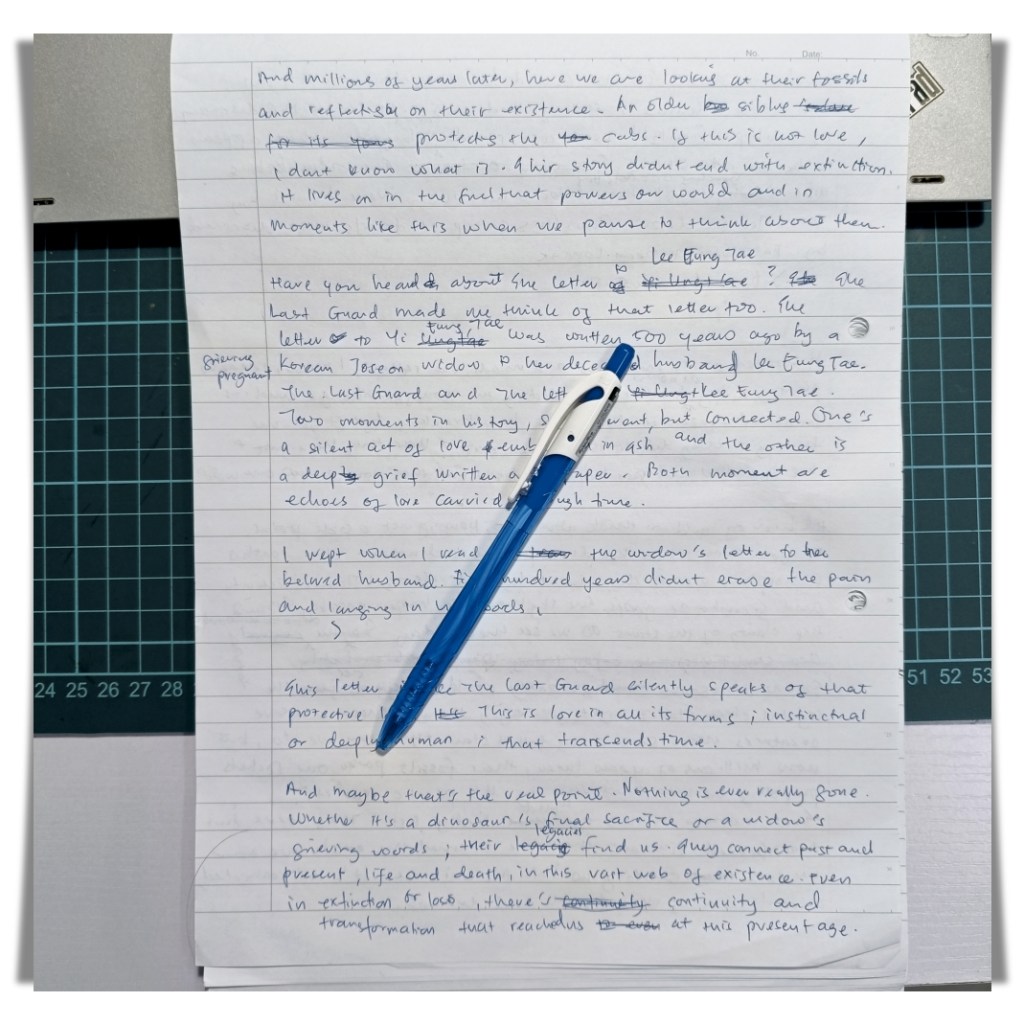
Handwritten draft of this post.