When I Am an Older Woman, I Shall Continue to Write with AI

Daily writing prompt
How has technology changed your job?

I know my title is going to ruffle some feathers, but hear me out. 

“When I am an old woman, I shall wear purple…” Jenny Joseph wrote these words in her best-loved poem, Warning. She wrote it as a form of rebellion and a declaration that she no longer needed permission to be who she is. She used the poem to assert her freedom to live, dress, and speak on her own terms. 

I found this poem after stumbling upon a video of Helena Bonham Carter reading it.

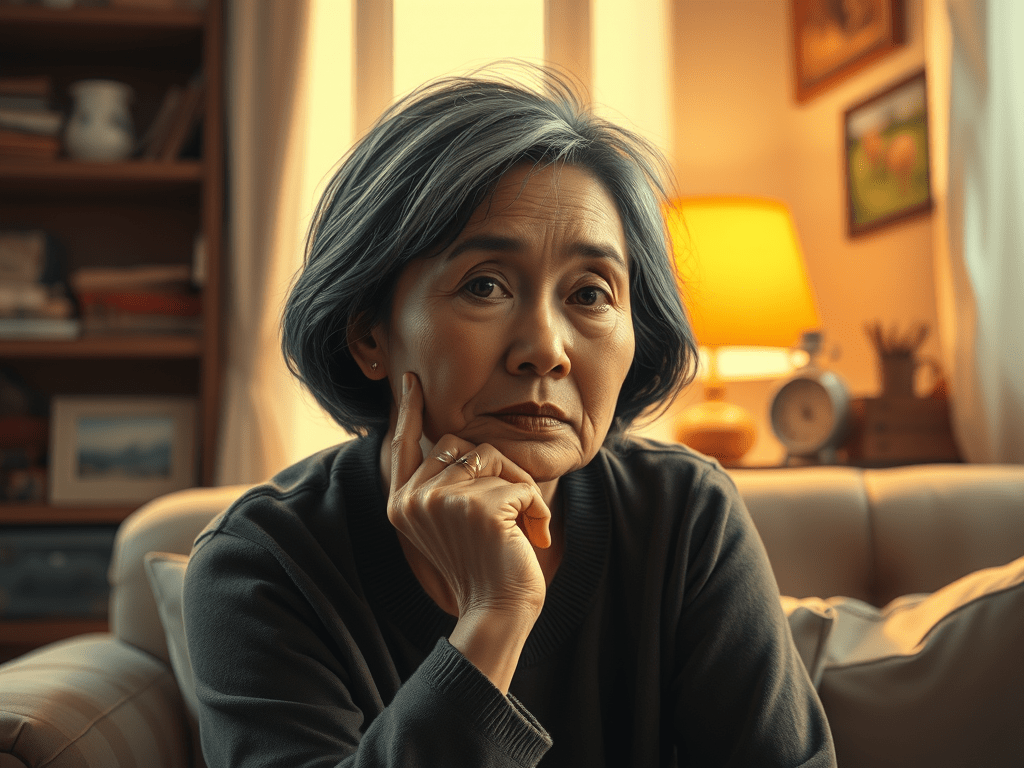
As someone in her late 40s, I think about that poem more often these days. No, I don’t feel old (well, slightly). I’m no spring chicken anymore, but I think of that poem because I feel done. Done asking for permission, done explaining myself, done seeking validation—to and from anyone. This sentiment is especially true when it comes to how I write. 

Here is my declaration: I use AI, and I am not ashamed of it.

I’ve written about this before—here—when I discussed the growing tendency to shame people for using AI in their creative work. I’ve watched from the sidelines as creatives everywhere bickered among themselves about who is original versus who is not (read: cheaters). Right versus wrong.

It’s as if we’re all secretly cheating on some literary or art exam, as if the tools we use somehow invalidate the core essence or soul of what we’re trying to say or illustrate.

Let me be clear: I don’t condone copying and pasting from a chatbot and claiming it as your own. That’s not my message. I advocate for the ethical use of AI—as a thinking partner, a sounding board, a tool that helps me do the work I’ve always done, just faster and more efficiently. 

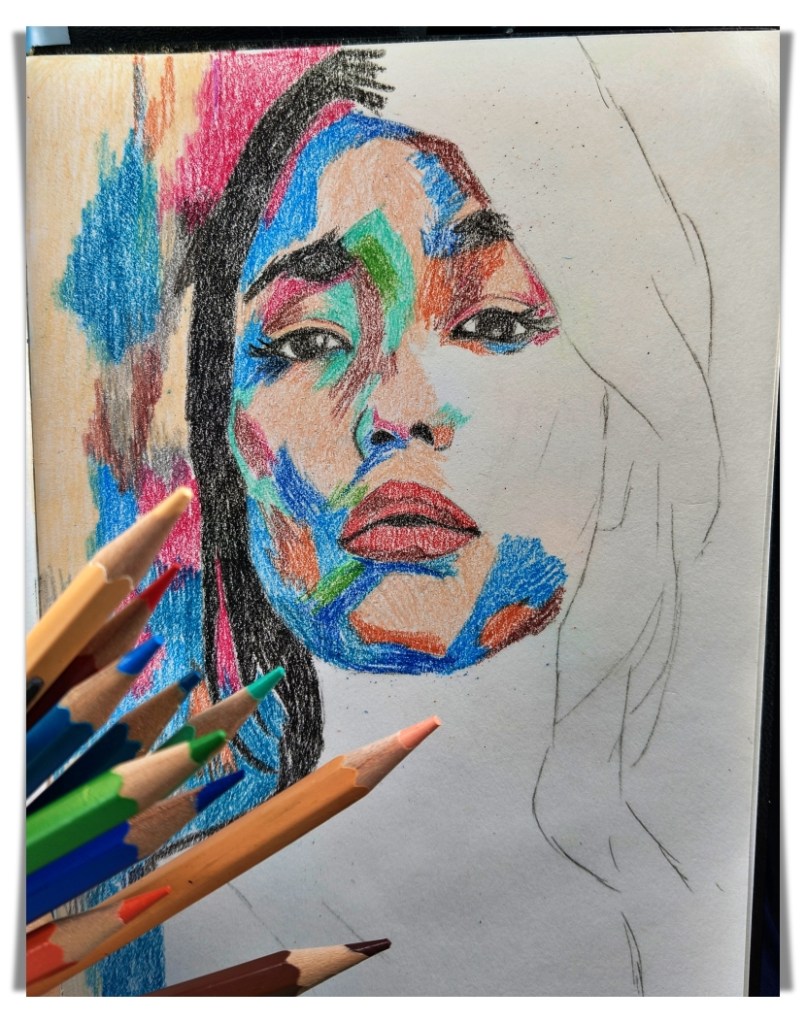
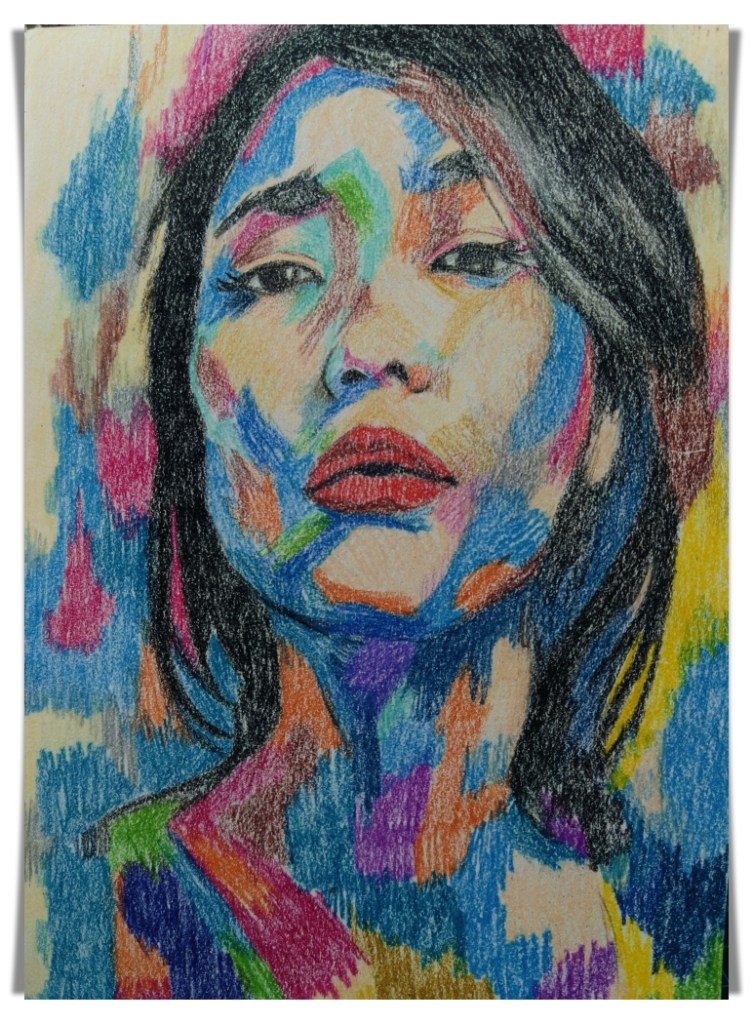
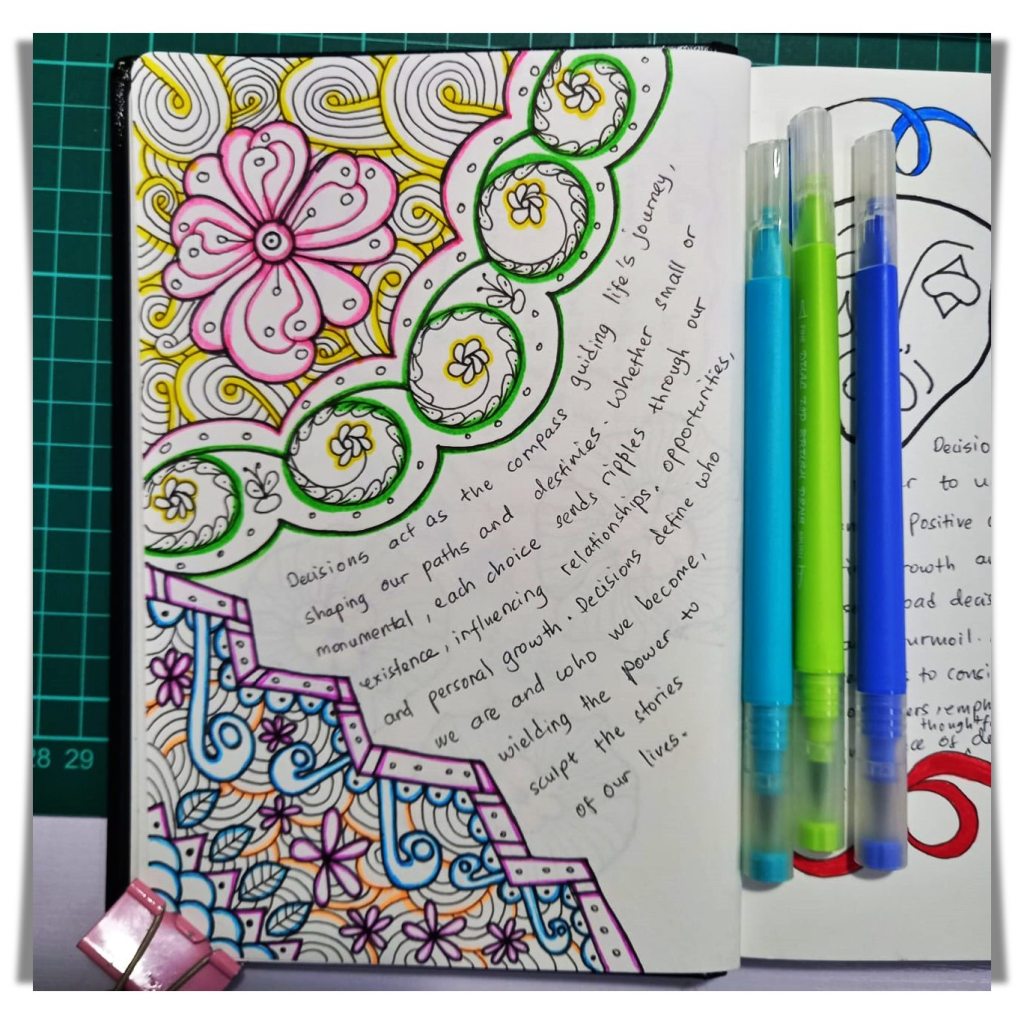
I’m a portrait artist too. This is one of my past works.

AI helps me brainstorm. It guides me in structuring my ideas, refining my voice, and clarifying my points. It helps me generate new angles I might have overlooked when I’m struggling with perimenopausal brain fog. AI also reminds me to be grateful that I live in an era where I have access to high-tech tools and that my creativity doesn’t have to work alone.

Could I do all these things without AI? Absolutely. But it would take me days. And often, time is a luxury I can’t afford—not with work, family, responsibilities, and a thousand other things that make up my life. I’ve written this before and I’m repeating it again:

AI is helping more people to express themselves than ever before. Why are we writing? We write to express our emotions, share stories, and communicate ideas. I enjoy writing, and I do so on a daily basis. I want everyone to have that right and that joy, regardless of their circumstances. We can’t all go on long writing retreats by the sea, with our spouses pouring us delicious cups of coffee. The reality for most of us is that writing can be difficult. Maybe we have kids tugging at our clothes, maybe we’re exhausted from a full-time job, maybe we didn’t have great opportunities in school. Maybe English isn’t our first language—like me, an indigenous woman from an obscure tribe in Borneo—or maybe we’re fighting dyslexia, ADHD, or arthritis just to get the words on the page.

So I use what’s available, with intention and discernment. And I keep writing and making art. 

AI is a tool, just like Photoshop is to photographers. No one accuses a skilled photographer of cheating when they enhance their work using Photoshop. The tool doesn’t make the art, but it helps bring the artist’s vision to life. It’s the same with me. I brainstorm and discuss my ideas with a chatbot (ChatGPT, Gemini, DeepSeek) before writing my own work. Then I refine it using tools like QuillBot or Grammarly. Others might prefer ProWriting Aid. These are just part of the process—like spellcheck, revision, or editing.

To my fellow middle-aged friends—especially those of us who’ve lived long enough to know what we want but are still figuring out how to say it—don’t be afraid of AI or feel ashamed of using it. Never let someone else’s discomfort dictate how you create. We have to speak boldly, not shrink.

The truth is, AI is here to stay. We can’t put it back in the box and pretend it doesn’t exist. There is no going back to a world before it. And if you can’t go against it, make it your ally. Use it wisely, and with integrity.

That’s what Jenny Joseph was really talking about, wasn’t she? The unapologetic freedom.

When I am an older woman—well, older than I am now—I shall continue to write with AI. I shall ignore the gatekeepers and the purists. I shall write freely, fiercely, authentically, and without shame. And I shall wear purple.

Just because I can.

I handwrote all of my writing, including this blog post, before editing it using QuillBot.

Reflection | A Rebellion Beneath My Breasts

Daily writing prompt
How often do you say “no” to things that would interfere with your goals?

Image source

I don’t usually say “no” out loud. Not like people imagine—with steely resolve or loud announcements.

But I speak quietly—in small decisions, in between invitations, or when I left several trivial texts unanswered.

When I moved to Taipei two decades ago (for work), I didn’t have a set list of goals. I arrived with curiosity and a bag full of lonely ambition. The first several months felt like a jumble of polite conversations and an endless stream of data on spreadsheets. I attended dinners with coworkers because I had to, not because I wanted to. I replied yes because of responsibility but no in my heart.

However, I gradually began to make other choices.

I stopped wasting my evenings with pointless nonsense. I found cafes with fogged-up windows and dim lighting where I could write. I stopped accepting weekend plans simply to avoid being alone. I began declining activities that diverted my attention away from what was important: reflection, art, and authentic experiences.

Some people express “no” by closing doors. I say it while slowly walking in the opposite direction.

I may not always know where I’m heading, but I do know what I’m no longer willing to participate in. That’s a start.

These days, my “no” does not imply rejection. It’s a diversion or a simple acknowledgment of the space I require to breathe, create, and exist.

I recall the moment I nodded and allowed him to sit across from me in that café. It was hardly anything. However, it was pregnant with meaning.

I had always said no to strangers, spontaneous encounters, and anything that threatened the careful solitude I had built around myself like armor. But that day, I didn’t.

I didn’t say “yes” aloud. I simply didn’t say “no”.

And sometimes, that’s okay.


Quiet Nod

It wasn’t a yes.
Just a twitch in my neck
and a rebellion beneath my breasts—
a dare whispered to the
soft animal of my body:
Stay.

You dragged the chair
and stirred something feral
I’d buried beneath work
and loneliness.

You sat and
asked nothing.
Still, I answered
by not running.

And maybe that’s how it starts—
without longing,
but with the smallest betrayal
of your own solitude.

Maybe the truest ‘no’ is the one we say to fear—so that something else can finally answer yes.

Copyright © Olivia JD 2025
All Rights Reserved.

After the Rain | When He Returns—in the light, the puddles, the sky

Daily writing prompt
What is your favorite type of weather?

My favorite weather is right after it rains—when the sky turns clear and blue, and the air feels cool against my skin. There’s something about that moment that always makes me think of him.

This poem is my response to the blogging prompt “What is your favorite type of weather?” For me, it’s not solely about the weather but the memories it brings back: the cafe we used to go to, neon reflections in rain puddles, our walks by the riverside, his glance when I turned slightly toward him, then looked away. And that one moment I’ll never forget—when love became something sacred between us.

I wrote this to hold onto all of that. Maybe you’ll feel a bit of it too.

Image source

After the Rain

After the rain,
a sky reborn in blue and cool air—
where I miss you most.

I remember the café,
between raindrops and neon on puddles—
pink, yellow, red, blue—
of cooled steel and second chances.

You were always most beautiful in that light—
when the clouds shifted
to make way for clarity.
There you sat, gazing through the window.
I nodded—
and we stepped outside,
two shadows in the wet streets,
to the path along the riverside,
where children raced their scooters,
wild, unburdened joy.

Your hands in your pockets.
I turned just enough to meet your gaze,
then looked away.

And then,
in the aftermath, unbound by the gentle drizzle,
I found you—
on bended knees,
where I was both altar and sinner,
reminding me that love,
in its truest form,
is its own sacred weather.

Do you remember
how even the storm became a confession,
and every clear sky
revealed the beauty
of our impermanence?

I still wander in the clear wake—
a pilgrim of rain and neon dreams,
and every breath of cool air
carries the wonder of you.

Copyright © Olivia JD 2025

All Rights Reserved.

Little Things I Wish I Had More Time For

Daily writing prompt
What do you wish you could do more every day?

Image source

Waking up before dawn

The darkness is soft, almost porous. I lie on my bed for a moment, in half-light, listening to the world exhale. The refrigerator hums in the kitchen. Somewhere above, a toilet flushes. And far away, in my mind, a train shudders along its tracks.

Then—silence.

This silence is my companion. I want to sit with it longer and let it wrap around me like a blanket. But the world is already stirring. The koel calls for its mate. A muezzin’s call to prayer rises in the cool morning air. The day’s demands creep in like the first rays of sun.

I answer, always, because I must. The world moves, and I move with it.


Being a flâneur

Flâneur. It’s called being a flâneur. Wandering aimlessly without a destination or agenda. Just feet on pavement and hands in my pockets, watching people, and life. I’d notice things—sunlight cracking through the sidewalk, ants hauling crumbs from a toppled trash can. I go nowhere in particular, but in that nowhere, I find everything.

But being a flâneur is a luxury. Everyone wakes already moving. Our minds rushing three steps ahead, ticking off tasks, rehearsing conversations, calculating time. Even before our feet touch the ground. There’s no space for aimless wandering. Even when we try to slow down, something reminds us: idle time is wasted time.


Writing before the world intrudes

I write every day, carving out one to three hours, but what I long for is unhurried time, quiet hours where the mind is soft and open and the words flow smoothly. I have so much to say. But the day rushes in, relentless and loud. Its noise chips away at the focus I try to guard.


Reading without guilt

One page, one sentence, savored for the sheer pleasure of it. Like stealing time in a world that never stops asking. But the books pile up like a reminder of the time I don’t have or the attention I can’t spare.

What do you wish you could do more of every day?

Yours, Once

Daily writing prompt
What tattoo do you want and where would you put it?

Image source

The Past

I found the tattoo parlor while wandering aimlessly through one of the narrow, lantern-lit streets of Datong District. The parlor looked old, tucked between a toy store and a Chinese medicine hall.

The needle vibrated and pierced. I closed my eyes and welcomed the sting. I imagined the ink seeping in, letter by letter.

Yours.

It was on my left breast, right above my heart.


Days later, his lips are on my skin. When he reaches the ink, he stops. His fingers tighten ever so slightly against my ribs. He exhales slowly. No questions asked. No words uttered. He kisses it tenderly at first, then again, firmer this time. His tongue traces the letters.

That night, it is different. Neither rough nor fast.

Just intense.


The Present

It’s been years. I have gray hairs now, mostly at my temples. I don’t think of him often—at least, not like I used to. But today, I catch a glimpse of myself in the mirror. Bare skin. My body is softer now, but there it is.

Yours.

My fingers brush over the letters, the ghost of his lips flickering behind my eyes. I should get it removed. I tell myself that sometimes.

But I won’t.


Back then, his fingertips grazed the ink absentmindedly. While the night bird called in the distance, he’d press his lips against it and whisper—mine.

Now, my fingers trace the letters, following the path his touch once took. The ink remains, but his touch is long gone. I keep waiting for the pain to dull, but it never does.

Back then, it was a vow.

Now, it’s just a relic.

Someone new notices it once. His fingertips pause over the letters.

“Who did this belong to?”

I hesitate. And then I say, “Me.”

Copyright © Olivia JD 2025

All Rights Reserved.

If I Could Speak Every Language

Daily writing prompt
What’s a secret skill or ability you have or wish you had?

Image source

He often walked me home, and sometimes we ended up on the rooftop of my apartment. I never invited him to my apartment. It was too soon for that.

From the rooftop, the city shimmered like a galaxy spilled across the earth. Neon light—electric blue and fiery red—streaked through the darkness. I can hear the distant traffic and feel the cool breeze carrying the faint scent of a nearby night market. Above, Taipei 101 tower pierced the sky, glowing against the stars. He leaned against the railing, gazing into the distance.

We talked about anything. There was no rush of pressure with him, just a gentle assurance that he would hold whatever I shared with care.

Tonight, I asked him what he would do if he woke up one day able to speak every language, even those of animals.

I watched the way the wind played with his hair.

He smirked. A small, knowing curve appeared on his lips.

“That’s a very you question. What would you do with it?”

I thought for a moment.

“I’d talk to the stray cats near the cafe. I’d ask them if they’re hungry or safe. Maybe they’d tell me where they hide when it rains.”

“You’d befriend all the strays. What else?”

I talked about my culture.

“The Burung Bubut* isn’t just a bird; it’s a messenger of omens. Its eerie call is thought to announce the passing of a soul to the realm of the dead. I’d ask it if it truly carries omens or if it knows when a soul is about to pass.”

“I’d also ask the Malayan tiger and the Bornean orangutan how they feel about losing their home. I’d listen to the stories that humans never hear.”

He tilted his head, considering.

“You think animals would trust us with their truths?”

The distant wail of a cat in heat cut through the night. It echoed down the narrow alley and off the damp brick walls like an eerie plea. I thought briefly about that pitiful, horny creature before answering.

“Maybe they wouldn’t trust us at first. But if they did, we could offer help. Imagine knowing what an endangered species really needs instead of assuming. Conservation would be a collaboration and not just a human effort.”

His fingers tapped idly against the metal railing.

“And humans? What about all the dying languages?”

“I’d want to preserve them. Speak to the last few speakers and hear their stories before they’re lost forever, like the language of Orang Kanaq that has fewer than 35 speakers left. If I could learn and document their language, maybe it wouldn’t disappear. And what would it be like if I could speak to the Sentinelese in the Andaman Sea? Maybe we’d find common ground without breaking their solitude.”

I could hear a couple arguing somewhere in the distance, probably further down the alley.

He looked at me with a gentle smile.

“Imagine cooperating with animals to make art. Bird melodies for songwriting. Dance movements from the dolphins. Poems inspired by the haunting cries of the whales.”

I nodded and smiled at the possibility.

He exhaled and was quiet for a while.

“You don’t have to speak to them all the time. You want to listen too.”

“Yeah. I’d love to sit peacefully next to an orange stray cat who basked lazily under the sun.”

Our gaze met, and I quickly averted my eyes. We stayed silent while the city stretched endlessly before us. In that moment, perched on the edge of the rooftop, it felt like the world was alive with voices—rising, falling, each one clamoring to be heard and to be understood.


Note:

  • Burung Bubut—Greater Coucal. In Iban culture, it is believed that when the bird calls, someone has passed away.
  • Orang Kanaq—One of the 18 Orang Asli ethnic groups in Malaysia. They are classified under the Proto-Malay people group, which forms the three major people groups of the Orang Asli. (source: wikipedia)

Copyright © Olivia JD 2025

All Rights Reserved.

The Word He Chose for Me

Daily writing prompt
What is one word that describes you?

I’ve never been able to describe myself in just one word. Maybe because I am too many things at once. Or maybe because I don’t see myself the way others do. The way I feel changes depending on the circumstances in my life, and often these circumstances involve family and those I hold dear. My feelings also shift depending on the things that weigh heavily on my mind. They could be anything—the weather, financial challenges, the news, or health issues. Some days, I am quiet and contemplative. Other days, I am restless with anxiety, burning with the need to create, to write, or to complete whatever in my to-do list. How could I ever reduce myself to a single word?

As an INFJ, I am made of many layers, each one revealing itself to different people in different ways. To some, I am reserved and intense. To others, I am something else entirely. I exist in fragments—never fully visible all at once. Perhaps that’s why I struggle to define myself. I am never just one thing.

So I asked him.

One word that describes me without hesitation. I want him to tell me the first thing that comes to mind when he thinks of me.


The room is quiet. The late afternoon light is slipping through the curtains and spilling across the floorboards. It illuminates the dust dancing in the air. The breeze blows the curtain gently, playing with the edge, lifting it, and letting it fall. It cools down my skin where the sweat still clings. His chest rises and falls under my cheek. The sheets lie twisted. Half are on the floor, while the remaining ones are still clinging to us.

I don’t know why I ask, but the question comes out before I can stop them.

Tell me. One word only. What’s one word to describe me?”

He pauses for a second. “Unforgettable.”

I didn’t expect that. I don’t move or look up. I let it sink into me before curiosity bubbles up.

Why?”

Because once someone knows you, they can’t go back to a time before you.”

The curtain lifts again. The breeze is brushing over us. His hand moves to my back, caressing. The light is fading now. I close my eyes and press my cheek closer to his heart.


Unforgettable.

It caught me off guard because I had never thought of myself that way. I had never thought that I could leave an impression on someone so deeply that the idea of me could never be erased. It made me wonder how much of myself I have left behind—in the places I’ve been, in the people I’ve met and loved. It made me question if I truly see my worth and accept and love myself as I truly am.

We all go through many things in life that alter our perceptions of ourselves. And our brains have ‘negativity bias,’ where they are wired to process negative information more intensely than positive ones. So it is safe to say we internalized unflattering things about ourselves, including lies, more than our good qualities.

And maybe other people see us differently than how we perceive ourselves. And maybe that’s the tragedy of it—we spend our lives searching for the words to best describe ourselves when all along we are already leaving our impact in ways we don’t even realize.

Unforgettable is not a word I would have chosen for myself. But maybe he is right after all.

Copyright © Olivia JD 2025

All Rights Reserved.

Becoming Me | A Journey Through Love, Heritage, and Doubt

Daily writing prompt
What experiences in life helped you grow the most?

It’s funny how the experiences that change us the most often slip by quietly. There is little fanfare, and we rarely recognize them until much later. However, in retrospect, I can trace my growth to the struggles and the soft, persistent ways life nudged me forward.

I believe it started with loneliness. Growing up, I often felt invisible and alone. I wasn’t the most outgoing, pretty, or popular. I was just…there, among other outstanding siblings and peers. It’s strange, but loneliness formed the foundation of who I am now. It taught me to listen to both myself and others. It taught me to be more observant and sensitive to details that most people overlook, which I now use in my art and writing.

Then later came love. It was messy, imperfect, but glorious nonetheless. My relationship with my husband—my lover—has been one of my biggest teachers. We’re opposites in so many ways, and those differences have forced me to stretch, to compromise, and to forgive. Being married this long (two decades), going through joys, heartbreaks, financial strains, and raising kids has all been a daily practice of choosing love, even when it’s hard. Especially when it’s hard.

However, I believe that reconnecting with my Iban roots has been the most transforming experience for me. For a long time, I felt detached from my cultural identity, as if I were witnessing it from afar. It was not intentional. Life was tugging me in different directions. But being a mother changed that. I realized how much I wanted my children to know where they came from. I want them to learn and feel that deep connection I had almost let go of. Teaching them about my Iban heritage has been like teaching myself again by rediscovering the stories, the poetry, and the parts of me I had tucked away.

I am currently working on a collection of poems that explores my Iban roots and traditions, weaving together memories, folklore, and the cultural theme that continues to shape who I am today.

And then there’s the lifetime of inner journey: the insecurities, the doubts, and the fear of not being good enough. Those have been some of my hardest teachers. I’ve struggled with impostor syndrome more times than I can remember, particularly when it comes to my art and writing. Moments such as being harshly criticized for lack of originality, feeling misunderstood, or being dismissed had a deep effect on me. But these experiences also pushed me to create a space where I feel free without fear of judgment, like starting this blog.

All of these experiences—loneliness, love, the return to my Iban roots, and issues with self-doubt—have influenced me the most. These experiences didn’t come with shiny lessons, but they taught me to be more compassionate, patient, and a little kinder to myself.

I’m still growing and figuring things out. But if there’s one thing I’ve learned, it’s that growth doesn’t always happen in the big, loud moments. Sometimes it is in the moments you least expect, gently nudging you forward, one tentative step at a time.

The Advice I Needed as a Teen (And Still Do Sometimes)

Daily writing prompt
What advice would you give to your teenage self?

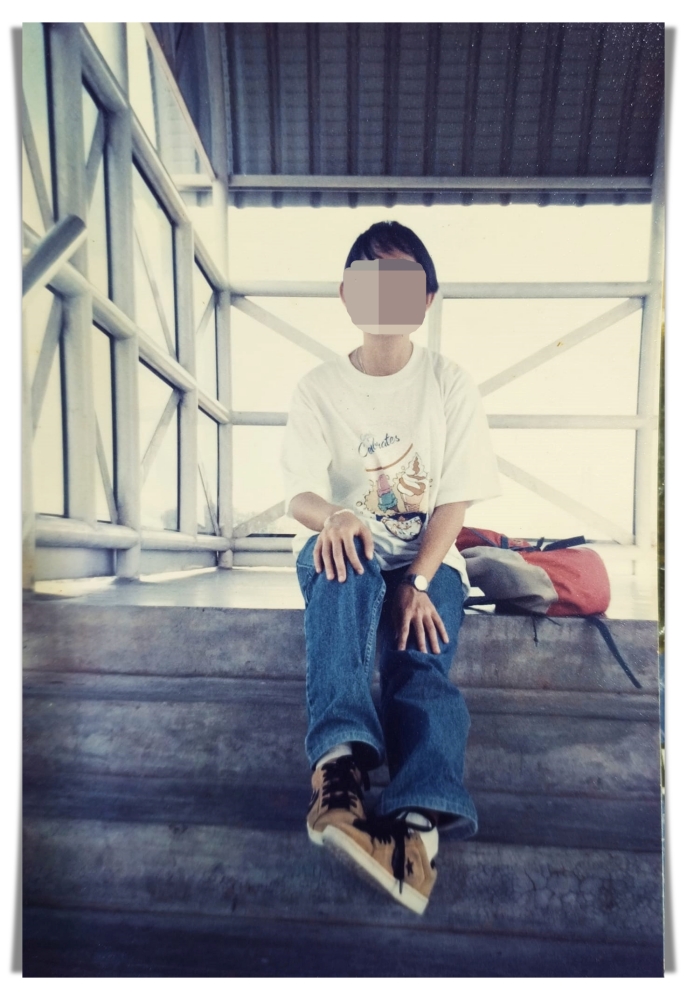
If I could go back and sit beside my geeky teen self, I think I’d reach out, touch her cheek, and say this:

“You are enough, just as you are.”

I know she wouldn’t believe me right away. She’d probably frown and give me that skeptical side-eye, thinking I was just being nice. But I’d say it again, assuring her I’m not being cheesy, hoping it would sink into her heart and seep through her doubts.

“You don’t need to be prettier, louder, or more extroverted to be seen or loved. Your sensitivity, the depths you hold, the way you notice the smallest details, and the emotions you feel so deeply: they are not to be ashamed of. They are your gifts.”

When I was growing up, I often wondered why people liked me. I didn’t see what they saw. I wasn’t the popular kid, or the prettiest, gentlest girl, and I definitely wasn’t the life of the party. I was scrawny, awkward, quiet, and always second-guessing myself and my decisions. I spent so much time trying to figure out what made me special.

I’d tell her this too: “Don’t waste time wondering why others like you or if you’re worthy of it. You are worthy just as you are. Let yourself be vulnerable without feeling weak. Let yourself dream without fear of not being good enough.”

There were so many time when I felt like I was running, desperate to catch up, to fit in, to be noticed, to be the best. I’d want her to know she could stop running and start breathing.

I’d tell her, “Trust your voice because it will take you places you never imagined. And when the world feels overwhelming, turn to the things that make your heart sing—music, poetry, art. They will remind you of who you are when you feel lost.”

If I could give my teenage self anything, it would be that sense of peace. The peace that gives her understanding that she didn’t need to constantly strive to be more. She was already enough and complete. And maybe, just maybe, hearing that would have made her journey a little gentler.

So, if any of you are reading this and feel like you’re still that teenager inside, this is for you too:

You are enough, just as you are.

What Bores Olivia? (From Her Lover’s Perspective)

Daily writing prompt
What bores you?

What bores me? Instead of answering the question like others did, I sent it to my lover to check how well he knew me. He said he’d send the responses via email since, in his words, “you’re a lot to handle.” 😂. Here are his answers, edited for clarity.

Perfection

What is the first thing that comes to mind? People who appear to have everything together: always happy, always in control, and never a hair out of place. You can’t bear it. It bores you because it feels so fake. You seek authenticity, those raw, unpolished moments that reveal who someone truly is. You’re not really interested in perfection. You are drawn to the faults and weaknesses that make someone real.

Small Talks

If someone wants to quickly lose your attention, they can engage you in small talk or any other surface-level conversation. Talk about the weather for too long, or go on about a reality program without getting into the underlying issues, and you’ll mentally fade out. You desire depth. You like discussions about emotions, dreams, fears, and everything in between.

Playing It Too Safe

It’s not that you despise routine and predictability. You thrive on them. What bores you is when individuals live too conservatively, never taking risks or venturing outside of their comfort zones. When someone lives their life strictly by the book, avoiding adventures and fresh experiences, it feels stagnant to you. You like those who embrace spontaneity, take risks, and are prepared to stray from the usual path.

Lack of Authenticity

This one relates to the perfection part, but it goes deeper. You despise fakery, whether it’s someone claiming to be someone they aren’t or stuff that shouts “look at me!” with no true substance. You require honesty, even if it is messy or uncomfortable.

Indulging in Fluff

Scrolling endlessly through social media, surrounded by polished perfection and trendy fluff? You become bored quickly. You enjoy thoughtful material because it challenges you to think, feel, or even question your own perspectives. Fluff without substance is simply pointless.

Surface-Level Relationships

This is a big one. You’re not wired for shallow connections. You desire depth and honesty in your relationships, and when someone keeps things light and never reveals their actual self, you lose interest. You seek the deep, real connections that result from being open and authentic.

Indecisiveness and Selfishness

Especially in men. This is a huge turnoff for you. You admire those who understand themselves and can make difficult decisions. But indecisiveness combined with selfishness? That combination is more boring than anything else.

Obsession with Outward Success

Nothing turns you off faster than those who solely care about outer appearances such as physical beauty, riches, high-paying jobs, position, and titles. You find it shallow and tiring when someone’s self-worth is primarily based on their accomplishments or appearance. You feel there is far more to a person than what appears on the surface or on paper.

At your core, Olivia, you want depth, honesty, and authenticity in people, conversations, and life itself. You want to experience something genuine, even if it is chaotic, confusing, or imperfect.

So that are his answers. Some may redundant but you know what? He got it right 😍🥰😘💋