I’d Rather Be Doubted Than Silent

Not too long ago, someone flagged a piece I wrote. There was nothing mean in that piece, and I didn’t break any rules. Can you guess what the reason is? Because it was too well written for a non-native English writer. Ridiculous! But someone really thought it didn’t sound like it came from me.

I didn’t respond publicly. I didn’t start a thread or reply to her accusation to defend myself. I didn’t even remove the post. What I did do was let the shame sink in. Today I want to write about it. I don’t intend to reopen a wound but I want to acknowledge the silent damage that stays with you when someone tells you that this can’t be yours. 

Writing has been a part of my life since I was a child. I wrote in journals, on pieces of paper, and as letters to myself. I write as naturally as I breathe. Sometimes as letters to myself. Sometimes raw. Sometimes lyrical and poetic. Sometimes with confidence or insecurity. They are all mine. Always. So when someone flagged my post for sounding too polished, I was in disbelief. Like it was some kind of a joke. I didn’t quite know how to describe it. Because if I dug deeper, I knew it wasn’t about that particular post, but what that skepticism implied—that my voice, my lived experience, my hard work, and my growth couldn’t possibly be real. 

That I, as an Indigenous woman, mother, artist, and non-native English writer/speaker, couldn’t write with depth, nuance, or clarity without cheating. That if my writing sounded confident, careful, or flawless, it had to be fake or AI-generated. 

The fear that comes from that is weird. It doesn’t rage or roar loudly. It feels like something petty that you should quietly let go. However, it lingers in the shadows of your next sentence. Should I simplify this sentence? Should I cut the metaphor? Should I get rid of this em dash or that Oxford comma so it doesn’t sound AI-ish? 

Should I water myself down to avoid suspicion?

I hate that I have those thoughts right now. But I know I’m not the only one. I’ve seen it in other writers as well, especially those who write from the margins: obscure and unknown. Or in those who write in a language that is foreign to them. I’ve seen it in the ones who tell hard truths through rhythm, restraint, and image. Or those who write not to impress, but to stay alive. We’re often told to write honestly but punished when we do it well. We’re told to share our stories but questioned when our pieces are too good. We are told to write in our voice, but only if that voice sounds a certain way. 

There are too many gatekeepers who claim to be defenders. People who think they’re protecting literature when they’re really just reinforcing old hierarchies in place. 

They think people like me who didn’t grow up with English can’t produce good stories or poems. That if I do, God forbid, that must have been AI generated. That’s bloody censorship. It’s not imposed by platforms but by what they internalize. Prejudice. Don’t write like that. That sounds too good to be written by you. 

Some of us shrink before we even begin. 

I’m done dumbing myself down. I never write to impress anyone. I use it to express my truth. And the truth is that it has taken me years to find the right words. Years spent with memories. Years spent revising, rewriting, and returning to the page—not to make it sound perfect, but to sound like the real me. 

If that voice has become sharper, it’s because I’ve earned it. If it sounds clear, that’s because I’ve been carrying fog for too long. If it rings true, it’s because I wrote long hours struggling with myself to put truth into words. 

To the ones who doubted me: I won’t name you, but fuck you, paloi ko ya, and remember this—every time you silence a writer who has finally found her voice, you aren’t protecting integrity. You’re only showing how little you believe in growth, change, and acceptance. People grow, even those of us you didn’t expect to. 

Sometimes I can still feel the sting of that rejection. But I won’t feel ashamed anymore. And this voice you hear now—shaped by memory, motherhood, culture, and survival—is real. I’d rather be doubted than stay silent. 


I write about Iban culture, ancestral rituals, creative life, emotional truths, and the quiet transformations of love, motherhood, and identity. If this speaks to you, subscribe and journey with me.
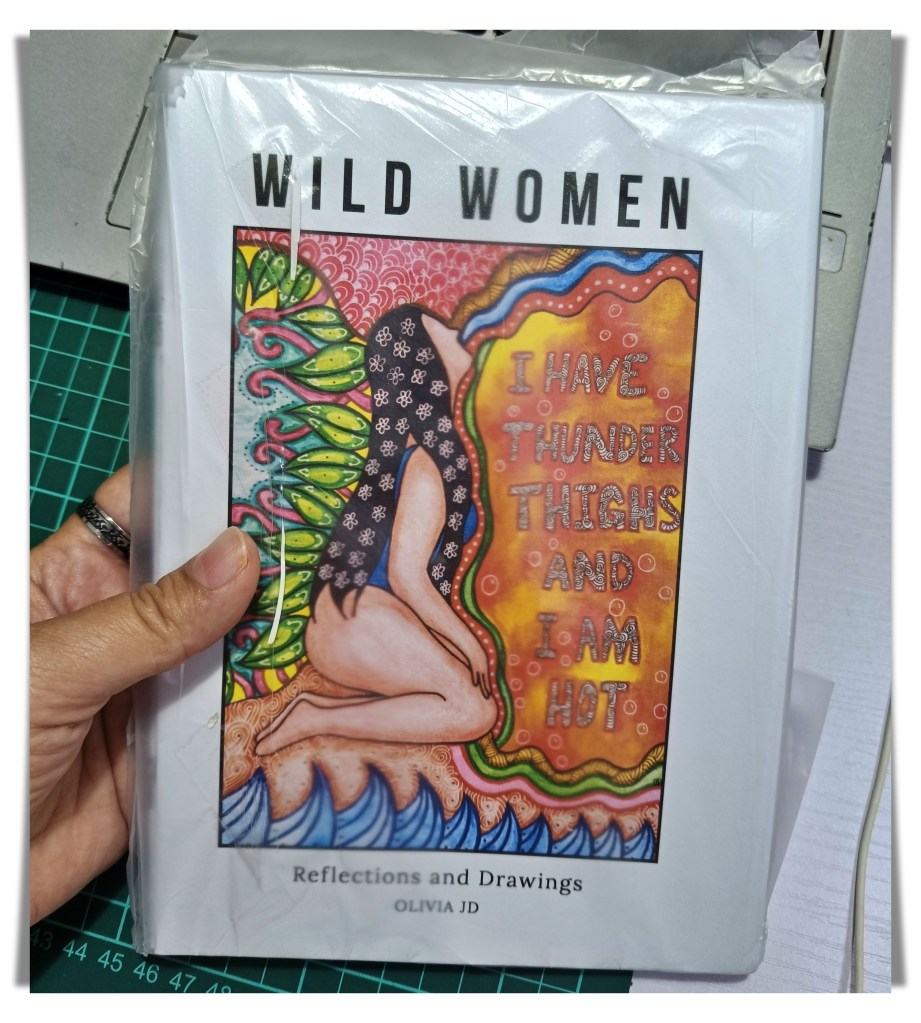
The Farthest I’ve Been From Home

I always feel like I have to do more. Write more, draw more, make more, improve more, and perform more. There’s always something I haven’t finished. A file I haven’t uploaded, a design I need to tweak, a poem I must refine, a post I need to write, a plan I need to make. The list goes on for days and weeks, and even when I finish one thing, another takes its place before I can breathe.

I wake up thinking about it. I go to bed, still mentally rearranging tasks. I convince myself I am being responsible. I convince myself that I’m doing what I love. I tell myself that this is what I have chosen. But to be honest, most days all I want is to be done. I’m done with the expectations. I’m done with continually showing up. I’m done with the excessive urge to be productive. Everything seems to be extremely tiring, and I’ve almost reached the limit of what my mental, emotional, and physical state could cope with. 

Most days, all I really want to do is read in bed in the afternoon. I want to let myself fall asleep while a book slips from my grasp. I want to wake up when I want to, not when the alarm goes off or someone needs me. I want to stop feeling guilty for taking a break. I want to stop seeing time as something I owe to others. 

It sounds easy, right? Not at all, because I’ve built a life where I have to earn my rest. I keep telling myself that I don’t deserve to stop until everything is done. I’ve always believed that slowing down was a sign of weakness and that being worn out was proof that I was accomplishing enough.

Maybe it’s aging or the weariness of parenting. Maybe it’s the silent accumulation of years spent prioritizing the needs of others. However, these days I don’t dream of escape or achievement. I want silence. I want weightlessness. I want the freedom to stop carrying everything for everyone all the time. Sometimes I think the farthest I’ve ever been from home isn’t an actual place, but rather this version of myself that feels I must earn my rest.

Even when I traveled far, like when I lived in other countries, stayed in new cities, or walked streets where no one knew my name—I still carried the same urge to prove my worth. I wish I could go back and tell the younger version of myself that you don’t have to fill every moment. Your life doesn’t have to be a performance. You’re allowed to exist without having to produce or create anything. You’re free to just be. 

The truth is, I’m struggling to believe it now. I can’t convince myself that it’s okay to read in bed anytime I want, and I doze off when my eyes feel heavy. I’m struggling to believe that everything I’ve built won’t fall apart if I do nothing for a few hours. Because if I never feel free in my creative life, what good is it?

I experienced that same heaviness after lunch today. I guess it stems from sheer exhaustion. 

I looked at my to-do list. I looked at my computer. And then I looked away. I carried a novel and jumped into bed. I let the afternoon go. I could always write and draw something new tomorrow. They all could wait. And right now, I need to read. And sleep. 


I write about Iban culture, ancestral rituals, creative life, emotional truths, and the quiet transformations of love, motherhood, and identity. If this speaks to you, subscribe and journey with me.

The Story Behind My Name | Pop Culture, Ancestral Power, and the Pua Kumbu

My first name, Olivia, was given to me by my aunt, who was an avid Olivia Newton-John fan. She loved the music and for her, the name represented something beautiful and worth passing on. So I became Olivia, named after a beautiful and talented singer. 

Growing up, I didn’t think much about it. It was just my name, four syllables, easy enough to pronounce, and slightly more trendy than the names around me. But back then it was common to see kids with names such as Donny Osmond or Cliff Richard. It was tacky, I admit, but I still take the compliment of being named after a superstar. However, over time, I began to notice how names carry stories and I realized mine was only half told. 

While Olivia came from pop culture, my second name came from something far older, deeper, and more spiritual. It was given to me in honor of a woman in my family, a great-grand-aunt who was once an early 20th-century Iban master weaver of the sacred pua kumbu (ceremonial cloth). She was not only skilled in her craft but also legendary. In our culture, women like her were known as “indu takar, indu ngar.” These were women who could receive weaving patterns in dreams from the supreme deity, Kumang, and translate them into woven cloths imbued with spiritual power. 

In days of old, the pua kumbu held a sacred role in the ritual and festival of enchaboh arung, where severed enemy heads were received. These clothes were woven by the wives or mothers of Iban warriors, guided by spiritual forces from the heavenly realms of Panggau Libau and Gelong. Upon their husbands’ and sons’ return from war, the women would spread the pua kumbu across their arms, welcoming them home and placing the enemy heads upon the cloth. (Refer to the footnote for more details). 

For Iban women, including my great-grand-aunt, weaving was more than just a craft. It was their “warpath,” parallel in sacredness and risk to the men’s headhunting expeditions. Before they could begin a new ceremonial piece, they needed to receive it in a dream and enter a specific spiritual state. One wrong move, even in how they prepared their threads, may lead to misfortune or even death. Their work carried great responsibility and risk. It required focus, discipline, and faith in the divine. 

I may not entirely understand the weight my great-grand-aunt bore, but I have always felt an echo of it. Receiving her name was an inheritance. It connected me not only to her but also to the spirit of her work and her path. 

I don’t weave cloth, but I do write and draw. Often it begins with a dreamy vision, like a found phrase or an emotion that I can’t fully articulate. There’s always that strong urge to make sense of it and mold it into something tangible. When I started my blog, I named it Olivia’s Atelier because I wanted it to be a personal and meaningful space. As Virginia Woolf once said, this is a room of my own. This is a space where I could shape something substantial based on my truths. 

Recently, I updated the blog header to reflect more of where I come from. I didn’t want anything generic or trendy but I wanted something that expressed my culture and heritage. So I chose an image of pua kumbu, the sacred textile woven by women like my great-grand-aunt. It carries more than visual beauty, with rich deep reds, blacks, and intricate patterns throughout. It holds power, dignity, and sacredness. 

To some, it may just look decorative. However, for me, it serves as a subtle way to assert my identity and heritage in this fast-moving, globalized world. 

My great-grand-aunt likely never imagined her name and legacy would live on in a digital space, passed down to a woman who lives a century apart. But I think of her often when I work, especially late at night when the house is quiet and I am writing or drawing. I wonder if this page I write or draw on is my version of the loom. 

That thought changes the way I approach my work. I don’t follow trends or write for algorithms. I build my work and portfolio slowly and with care. I try to create things that have meaning, even if they are simple. This is my way of remembering and continuing a legacy that is otherwise pushed aside by the more flashy things the crowd chases. 

I won’t mention my great-grand-aunt’s or my second name here. Some things should be kept private but rest assured, I carry her with me. She is part of my story and also why this blog exists. 

I was named after a singer whose voice brought joy to many. And I was also named after a woman whose hands transformed dreams into sacred cloth. Both of those women live inside me. They influenced how I perceive the world and the way I write or create. 

When you visit this blog and notice the patterned header, know that it holds a layer of memory and pride of a culture. It holds a legacy and strength that runs beneath everything I share. 

I have a first and a second name. One name was given; the other inherited, and both live on in everything I write and create. 

Footnote:
After returning from war expeditions, Iban warriors would spend about a week in huts away from the longhouse, cleansing themselves and preparing their “war trophies” (enemy heads). The heads were carefully skinned, the brains removed, and then smoked for several days. Once properly preserved, the warriors dressed in their finest regalia for a grand arrival during the enchaboh arung festival, where the skulls were placed into the waiting arms of their wives or mothers.


Olivia Atelier offers printables, templates, and art designed to inspire reflection, healing, and creativity. Visit Olivia’s Atelier for more.

What Motivates Me to Keep Creating as a Writer and Artist

I sometimes wonder if it’s foolish to keep doing this. I write, create, draw, and start all over again. There’s no assurance that anyone is listening or anything will come of it. But still, I keep coming back. I wake up before the world stirs and write. I build and dream out loud. Why? Because something inside me refuses to stay silent. 

I believe my primary motivation is the need to express myself truthfully. I don’t do it for performance or to convince anyone. I just express myself either through writing or drawing without having any expectations. I’ve spent far too many years conforming to the expectations of others. I am a wife and a mother. I am reliable and strong. But when I write, I can be tender, unfiltered, and fully myself. Even if the words come out wrong or the idea is incomplete, it is still mine. Creating allows me to regain the parts of myself that were left behind. It’s how I come back to myself. 

Writing helps me express things I can’t say out loud. It makes room for contradictions like guilt and delight, compassion and tiredness. It allows me to say things that I’ve been holding back for years. Some of my poems or essays contain silent confessions. Others are simply letters I’ve never sent. However, they all stem from the same place: a desire to live truthfully, even if just on the page. 

And something wonderful happens when I release that into the world. My words reach out and connect with the right people. People crave connection. Everyone. You and me. My words may give comfort to those who scroll past the noise and pause at a sentence because it sounds like something they previously felt but never said out loud. I don’t share my writing for likes or analytics, but I have hopes that someone, somewhere, would read what I wrote and feel seen. 

Connection doesn’t always mean interaction. Sometimes it’s just the feeling of being less alone. A stranger may read my words and find a piece of themselves in them. It may seem trivial and unimportant, but there’s something deeply rooted about it. It’s honest, authentic, even mundane. 

And there’s something else that draws me in—my culture. Iban women weren’t always taught to speak up, though they did have important roles in the hierarchy of things. No matter where I am in the world, I carry my ancestors with me. I carry their strength and courage in my veins. And I want to record that because I want to remember. I want my children to remember too. Writing helps me to cling onto what the world keeps trying to erase. 

When I write about Iban culture or way of life, I feel as if I am reconstructing myself. I know these stories matter even if just a handful of people read them. 

I am also deeply motivated by creative freedom. I’ve had roles, jobs, and seasons where I adhered to the rules. It paid the bills, certainly, but it drained my spirit. This space I’ve built—my blogs, art, and shops—is mine. I don’t need to wait for anyone’s permission. I can write anything I want, like a parenting essay on Monday, publish a poem on Wednesday, and draw something for fun on Friday. The flexibility and ownership are essential for my creative spirit. 

There’s something powerful about knowing I can change course if I need to. I don’t have to adhere to a specific niche or present a specific version of myself. All my creative work reflects every aspect of me, whether they are messy, raw, or incomplete, they are all mine. 

Perhaps the most tender motivation is I do this for my children. Money is important, of course; I do earn from some of my work, but money is less important when it comes to showing my children who their mother truly is. It’s important for them to know that I have dreams and aspirations, and I wasn’t just the mother who prepared their meals and helped with homework. I want them to know that I was also someone who wrote her way through pain and hope. I want them to see me grow and not simply survive. This, I hope, may give them permission to do the same. 

I want my children to know that it’s okay to change direction, to outgrow old narratives and start again. I want them to see that growth doesn’t always look like a straight line. Sometimes it’s slow, silent, or even invisible. But regardless of the progress, it’s still growth. And I want them to have the courage to follow their own paths, no matter how long or winding they get. 

So when things become hard, and they do, I try to come back to these five truths. I don’t always get it right. There were days when I doubted or gave up, but the fire never completely went out. And when I return, it welcomes me back like a lover with wide open arms. 


Olivia Atelier offers printables, templates, and art designed to inspire reflection, healing, and creativity. Visit Olivia’s Atelier for more.

What I Enjoy Most About Writing

I’ve been writing since I was a child, but it wasn’t until I was an adult that I figured out what I enjoyed most about it. It’s not always the act of writing itself, like filling up notebook after notebook or the satisfying click of the “publish” button. What I love most about writing is how it helps me understand myself and the world in ways that nothing else can.

Writing has always helped me see things more clearly. It calms my mind and helps me sort through complicated feelings and thoughts. I sometimes start writing without knowing what I want to say. But as the words come, my ideas begin to settle. The unpleasant feelings start to fade and the fog clears. Writing gives me a sanctuary to think, reflect, and heal.

I often write to work through feelings I haven’t fully processed, like grief, confusion, doubt, or painful memories. Writing gives those emotions a safe place to land. It helps me carry what would otherwise feel too heavy. Sometimes I don’t need a solution. Just putting the words down is enough. It becomes a form of release that quietly brings me back to myself.

Writing also helps me connect with others. Whether it’s a blog post, a poem, or a message on social media, it creates an invisible thread between me and someone else. I may not know who reads my work, but I write with the hope that my words might make someone feel seen, understood, or a little less alone. That subtle and honest connection has become something I deeply value.

Writing is also a wonderful way to leave a legacy. My Iban poems and cultural reflections are more than just creative expressions. They are a way to preserve and pass on language, traditions, and identity to the next generation. I want my kids to know where they came from when they grow up. I want them to read my words and experience a sense of recognition, rootedness, and curiosity about their heritage. This is how I use writing to become a bridge between generations.

I also love how writing lets me be creative. Fiction allows me to step into different characters and have different experiences. I can explore new points of view, see other possibilities, and live other lives without leaving my own. It stretches my thinking and enhances my sense of empathy. Writing fiction helps me deal with truths that I’m not ready to face head-on yet. And it sometimes leads me to discoveries I didn’t expect, like revealing emotions or insights I didn’t know I had.

Writing also makes me think more clearly. It helps me make sense of an issue or an argument by breaking it down and looking at it from different perspectives. It forces me to be honest, think more deeply, and clarify what I really believe. That process is good for my mind and heart. It helps me sit with complicated things without rushing to resolve them.

And then there’s the simple joy of making something that never existed before. It is satisfying to create something that has meaning for me and perhaps for others, whether it’s a poem, a blog post, or a whole collection of work. I like the feeling of completing a piece of writing and being proud of how I shaped it from start to finish.

Some days I write because I feel inspired and some days I write because I need to. But no matter what, writing never feels like work. It feels like returning to something that has always belonged to me. It’s a place where I don’t have to perform or pretend and can just be me.

So, when I think about what I enjoy most about writing, it comes down to this: it helps me live more honestly. It helps me think better, feel better, and observe the world better. It helps me connect, remember, and make sense of things. Writing has helped me heal, find clarity, find purpose, and build connection with others. I can’t think of anything more satisfying than that.


Olivia Atelier offers printables, templates, and art designed to inspire reflection, healing, and creativity. Visit Olivia’s Atelier for more.

If We Had Stayed | A Prose Poem from an Alternate Life

It was never loud between us. Our love never needed proof. Just subtle signs. A gaze that lasted too long. A jacket shrugged off without being asked. How his silence moved toward mine and made room.

We live above the bookstore near the station. The one with crooked shelves and a leaking pipe that drips near the poetry section. On quiet mornings, I wake first. The kettle whispers steam. He is still asleep, half-buried in the blankets, one arm flung across my side of the bed. I write before the city wakes up. One lamp on. My pen moves slowly and carefully across the page because some mornings are fragile. 

Some days, we walk to the cafe where we first met. The one where the windows get foggy, and I forgot a pen once. He never mentions that he kept it. Never asks why I replaced it. But he returns it anyway, weeks later, as if it was never gone. The pen, not the moment we shared.

We have a habit of not explaining. He says it once, at the door, without turning around. 

We often stroll to Yanping Riverside Park. It is our routine. We never call it that, but we keep coming back to it. On quieter days, we walk under trees that offer more than just shade. Kids dart past on scooters, while we walk slowly. His hand near mine. Sometimes he stops at the railing and looks at the river. I can feel him and the constellation he carries between us.

He rarely talks about work, and when he does, it’s only in fragments. Just enough to remind me that there are things that can’t be put into words. And that’s enough. I don’t have to know everything about him to love him.

I learn to read his silences. The way he checks the locks twice. The way his eyes drift when he’s too tired to pretend. I never think of his silence as distance. It’s a huge part of the whole.

We don’t talk about forever. We just stay.

There are rooftops and rain, the wind carrying jasmine from someone else’s balcony. Matcha soft-serve he buys without asking. The way he looks at me when I hand him a poem. How he holds it like a feather.

We don’t make any promises. But he and I stay.

He once told me that being around me hurt him like a third lung. I don’t say anything. I just trace my thumb over his knuckles and let the silence remain. There are no anniversaries. No statements. Just the ritual of being there.

He catches me when I slip on uneven pavement. His fingers wrap around my arm like the answer to the questions I’ve been too scared to ask. He says, “I guess I’m here to catch you.” I smile and file that sentence in the back of my mind, where the most important things live. 

Our life together isn’t always perfect. We fight. We turn our backs in sleep. But we stay. He doesn’t save me. I don’t save him. We just stop pretending we don’t need each other.

And in this world we’ve carved our lives into, the silence isn’t absence—it’s alive, trembling like a living thing.


Olivia Atelier offers printables, templates, and art designed to inspire reflection, healing, and creativity. Visit Olivia’s Atelier for more.

Where Is God in a Universe That Expands?

A couple of nights ago, I found myself thinking about black holes and the curvature of spacetime. It wasn’t a planned deep dive into physics. It all started with a simple question: how can a black hole not be seen/invisible? That question led to one of the most intense conversations I’ve ever had. It started with astrophysics and then slowly turned into theology. And like most of the things I reflect on late at night, it made me more curious than it did give me answers.

I learned that space is not empty. It is a real piece of “fabric” that can bend, stretch, and ripple. This fabric curves because of mass, which is what we feel as gravity. The more mass there is, the stronger the curvature and the stronger the gravity. This is why a black hole’s pull is so strong: its mass is compressed into such a tiny point that even light can’t get away from it. The event horizon is the line that marks the end of visibility (what we can see). Beyond it, not even light can come back. It’s not that the black hole is an empty hole; it’s that our limited perception doesn’t allow us to see past a certain point.

But what excited me was finding out that time is also a part of this fabric. Time doesn’t flow evenly throughout the universe. Time slows down around massive objects because their gravity pulls on the fabric of space more strongly. Time goes by more slowly when there is more gravity. This means that time moves a little slower on Earth than it does in space. And time almost stops close to a black hole. Do you know that one hour near the black hole is equal to thousands of years on earth? That alone changes how I perceive reality. Time doesn’t go in a straight line; it bends or curves relative to the surrounding mass.

And then there’s the expansion of the universe. I used to believe that the galaxies are moving away from each other in some cosmic ocean. Little did I know that the space itself is stretching like an elastic fabric. Space isn’t moving galaxies through it; it’s actively growing and pulling them apart. And here’s the interesting part: this expansion is speeding up. But what or who did it? The scientists call it dark energy, and it’s a force in the universe that we don’t really understand. Dark energy makes up about 68% of the universe we know about. It pushes everything away from one another, making the space between galaxies grow bigger and bigger.

All of this left me thinking: where is God in all this?

What kind of God made the universe that keeps stretching, spacetime that is constantly changing, and stars that collapse and disappear into black holes that bend reality to the point of no return? What kind of God exists in that?

For a while now, I’ve been deconstructing my faith. I have questions that I’m sometimes scared to ask out loud. I grew up believing in a God who was all-knowing, all-loving, and in control. But the more I learn about suffering, physics, and history, the harder it is to hold on to that version of God.

But still… I still have faith in God but not necessarily the all-powerful entity on a throne somewhere above the universe. I still believe in a God that started all of this.

It’s possible that God isn’t outside the universe, looking in. It’s possible that God is the universe—the intelligence within the fabric of spacetime and the consciousness behind every expansion and collapse. He is not a puppeteer or a micromanager but a divine presence that orchestrated the cosmic mystery.

Two years ago, I bought a book by Daniel S. Zachary called “A Leap in Science and a Step of Faith.” He’s an astronomer. I went to one of his talks once, a couple of years ago. The subtitle of the book is “Seeking God for the Scientifically Curious”. I didn’t read it back then. Maybe I wasn’t ready or was still too scared to confess that I didn’t believe the version of God I had been raised up with. But what about now? I believe I’m ready to read it and slowly explore and find answers to my doubts.

The truth is that I’m not looking for a perfect theology anymore. I’m looking for a God who makes sense in a world where stars are born and die, time bends, and the universe is expanding to somewhere or nowhere. I’m looking for a God who can deal with my doubts and doesn’t get scared when I ask, are we the only intelligent beings in all of this?

The design is too accurate and intelligent so I tend to believe that we might not be the only ones. Some entity might be lying awake somewhere else, asking the same questions under a different sky. Or maybe we are alone, but I don’t think we have the capacity to figure it out. It’s just not possible.

I don’t believe in a God who needs me to do everything right anymore. I believe in a God who sees my reconstructing as a gift to myself. And if that means I have to float through this cosmic mystery for a while longer, so be it.

This drifting is holy.

And maybe God isn’t the answer I was searching for but the gravity that keeps pulling me back to the questions.


Olivia Atelier offers printables, templates, and art designed to inspire reflection, healing, and creativity. Visit Olivia’s Atelier for more.

Let Me Write in Peace | What I’d Change About How We Treat Non-Native Writers

I hand-wrote every piece of my writing.

If I could change one thing about modern society, it would be this: how we shame non-native English speakers and writers for how they write and express themselves, especially when they use AI tools (Grammarly, QuillBot, etc.) to make their voices clearer.

We claim we value authenticity and diversity, but when someone’s English doesn’t “sound native” or they use em-dashes or contrastive phrasing, people often ignore them. People think a sentence is AI if it seems “too polished.” There’s a term they used to label such writing – AI slop. How elitist and gatekeeping.

But what if we (bloggers or writers), like me, are trying our best to make sense and be understood? This issue has been weighing heavily on my chest for several months now. And maybe writing this and putting it out here on the blog is my way of letting some light through that heaviness. 

I’m a non-native English writer/speaker. I use tools like QuillBot to improve my writing and generative AI tools to help me explore new ideas. I also use em-dashes and Oxford commas because they make my writing clearer. I use contrast in my writing too because why not? Life is full of contradictions, and sometimes the best way to explain how I feel is to show it through a shift of perspective.

Apparently, to many people out there on the Internet, all of that seems to make my writing look like “AI slop.”

I didn’t know that using punctuation could be made fun of. I didn’t know that using too many em-dashes, or writing that sounds too polished, or having your ideas shaped by a tool could make people think you’re lazy or fake. I’ve seen again and again on the Internet how native speakers make fun of us for not knowing how to write “properly.”

I had no idea that after writing poems since I was ten, or writing hundreds of essays and poems over the years, and then returning to writing after more than a decade of motherhood, I would be made to feel like a fraud.

The sentiment is everywhere. It’s subtle but sharp and cutting. It’s loud and condescending when you already feel so small: “This writing sounds like AI. So it must not be worth anything. Plagiarism. Lazy. Fake.”

But these language purists don’t see the effort I put into rewording or rewriting my posts. They don’t see the weariness of constantly questioning each sentence to see if it sounds right or if it conveys the intended meaning. They don’t see the emotional strain of attempting to mold my voice in a language that is not my first. They don’t see the courage required to publish anything at all. Now this is beside the point but English is my third language (I’m fluent in 5 languages). Let me ask these gatekeepers, how many languages do they speak and write in?

I didn’t plagiarize anything. However, I used a tool, similar to Lightroom or Photoshop, which is used by photographers to enhance their photos. Like how designers use templates. And somehow, that’s enough for some people to reduce what I made to nothing.

It hurts. It feels like persecution rather than merely criticism.

Sometimes I feel too scared to publish anything. I’m worried that I’ll be accused of being lazy or being dismissed with “This sounds like it was written by a bot.” But what about the soul of my writing—pain, memories, lived experience? Can they be undone by sentence structure?

What about the truths inside the writing, may I ask? The ones about identity, faith, loneliness, grief, and motherhood? Do those not count just because I refined them using a tool?

What about the fact that I edit or that I write or that I give it a shot? What about the emotional labor that goes into the words? There is nothing fake or artificial about any of those things. So yes. I use tools. I use em-dashes. I use contrast. I use help.

But I’m the one who feels the words before they exist. I’m the one who decides to speak up when it might be safer to be silent. I am the one who sorts through memories, longings, and fragments of myself to shape what eventually gets read. There is a human behind all these, not some made-up AI text.

And I’m sick of being ashamed of that. Let us write the way we need to. Let’s use what we need to. Let us tell our stories, even if we do so with tools and a language that isn’t our first.

It doesn’t matter if it looks like AI or not. It’s whether it came from something real and true, like every word of this. They all came from me.

Read more here:
AI-Detectors Biased Against Non-Native English Writers

© 2025 Olivia JD


Olivia Atelier offers printables, templates, and art designed to inspire reflection, healing, and creativity. Visit Olivia’s Atelier for more.

What Romance Means to Me Now

A couple holding hands in a quiet park, showing what romantic love looks like after years together

I used to think that romantic love was supposed to be grand. Surprises, flowers, and long letters written by hand that show how much you miss them. Maybe it was because I grew up with 90s love songs and paperbacks that always had that one scene, you know, the one where everything fell into place and you replayed it in your head for years. I’ve desired that kind of love for a long time. I used to think that if love didn’t look like it did in the movies, it probably wasn’t love.

But now? This is what romance means to me.

It’s in the small, mundane things. How he puts my mug in the same place every morning because he knows it’s the only one I use. How he listens even when I talk about things he doesn’t understand, like my blog traffic, my latest art idea, or why I spent an hour editing a blog post. It’s how he laughs at my jokes that aren’t funny to anyone else. It’s how he doesn’t flinch when I break down for the fifth time in a week or when my anxiety keeps me up at night.

For me, the definition of romantic is all about being present for the one you love. It’s not loud or demanding attention. It’s in the effort to keep choosing someone even after the butterflies have settled into the routine of everyday life.

And to be honest, I had to unlearn a lot of what I thought I knew about love to understand this. I had to stop waiting for scenes in movies and start paying attention to what was happening in my life. I pay attention to things like the way our hands touch when we’re having a tense conversation. The way he carries the groceries when I’m too tired to talk. The way he makes time for the kids even when he’s tired from work.

I think about how our love has changed over the years. How it grew to hold grief, misunderstandings, financial challenges, and stress from being a parent. We came close to giving up at times. There were times when I wasn’t sure I still liked him. He probably didn’t like me at times too. But we stayed. We learned how to communicate to each other. We fought, made up, fell apart, and started over.

I think that’s romantic too. Romance in real life is not the absence of conflict, but the commitment to return. To make peace. To say you’re sorry even when it’s hard. To give each other room to grow, even when it’s hard.

Learning how to be your own safe place is another part of romance. It took me years to understand that I couldn’t keep hoping that someone else would save me from my loneliness, sadness, and exhaustion. I also had to learn how to take care of myself. I learned to listen to and parent my inner child by whispering kind things to myself when I felt ugly or unworthy.

Now, everyday romance is my husband standing by the kitchen’s door while I cook, just to be near me. It’s him asking if I’ve eaten. It’s the silence we share at night, when the house is finally quiet and we are just two people who have made it through another day together.

And sometimes, romance looks like him leaving me alone when I need time alone.

I used to feel guilty about the lack of passion in our love. That it didn’t make me swoon anymore. Now, though, I see the beauty in this gradual, steady burn and the way it grounds me.

I want to say this to anyone who thinks their relationship is too ordinary to be romantic: don’t underestimate your quiet love. The love that keeps trying. The love that stays despite knowing your worst. The love that continues to thrive in the mundane.

Romance is not always in the gestures. Sometimes, it’s in the staying.

Sometimes, it’s in the letting go.

And sometimes, it’s in the way we turn the ordinary into something sacred.

Romance

He doesn’t bring me roses—
because I said they’re useless.
So he brings silence
when the room inside me aches.

He doesn’t write letters—
he reads my face
and answers with
a gentle hand
on my lower back.

He doesn’t call me beautiful—
but he finds my mug,
pours the water,
watches the rice,
mops the floor.

No fireworks,
no symphonies—
just staying
that doesn’t beg to be seen.

And I,
still learning not to ask for more
than this
steady, worn-in miracle.

© 2025 Olivia JD


Olivia Atelier offers printables, templates, and art designed to inspire reflection, healing, and creativity. Visit Olivia’s Atelier for more.

Marriage Refines You (If You Let It)

Nobody warned me that marriage would teach me the lessons I never anticipated.

They said it would take work. They said communication was key. They said love changes. All of this is true. But no one told me that marriage is fundamentally a slow-burning crucible of personal transformation. Of course there are romance and domestic joy, but those aren’t the main things. Marriage refines you. But only if you allow it.

If I had written this post twenty years ago, things would have been different. I would have told you about the joys of growing older together, about shared jokes and parenting accomplishments, and the comfort of being wanted and desired. I might have glossed over the friction. Or made it poetic, full of excuses.

But now, I want to tell the truth: Marriage teaches you who you truly are, often through pain.

This isn’t the kind of pain that stays with you forever, at least not in a good marriage anyway. But this pain would show you how weak, selfish, and proud you are. It’d expose the parts of you that you didn’t realize needed healing until you kept bumping up against another human being who sees you completely, and sometimes unflatteringly.

In the early years, I believed that in order to be respected, I had to be right. I used to believe that a good wife was someone who was nice and made quiet sacrifices. I thought conflict meant something was wrong.

Then came the truth: Conflict is the classroom. Friction is the fire. Silence is not always peace, and compliance is not intimacy. I learned this slowly and painfully, through nights of misunderstanding, long periods of emotional detachment, and the grief of feeling invisible.

Marriage has pushed me to confront my shadow selves: the part of me that resents when he doesn’t read my mind, the part that wants to be acknowledged for invisible labor, and the part that withdraws rather than communicates when I’m upset.

He has his parts too. When both of us are weary, stressed, or simply being human, those parts collide like stones.

But here’s what I’ve learned: Stones sharpen one another.

We grow as a result of the friction, not in spite of it. This relationship has gradually dispelled some of my misconceptions. I’ve become less concerned with appearing good and more interested in becoming whole. I’ve learned how to stay present during an argument without dissociating. I’ve learned to say, “I need this,” without shame. I’ve learned to apologize and own up to my mistakes because I value the connection more than the ego battle.

Marriage has taught me about perseverance. This perseverance is not the kind where you smile and bear it, but the kind where you continue to show up to face the difficult conversations, the painful realities, and the pain of building your character.

It has taught me that love is not the absence of conflict, but the willingness to hold space for each other’s growth.

This isn’t a post about martyrdom. This isn’t about perpetuating toxic behaviors or glorifying suffering. This is about the refinement that happens in long-term relationships, when two people choose to keep coming back to the table, even when it is a mess. Especially when things are messy.

Some days, love looks like scrubbing the kitchen while the other sits quietly. Some days, it looks like asking, “Can we talk?” even when the previous talk didn’t end well. Some days, it means choosing forgiveness over keeping score. Other times, it involves setting a boundary that says, “I will not carry this alone anymore.”

Marriage as a teacher is subtle, persistent, and deeply transformative. Refinement doesn’t happen all at once. It’s gradual, and at times it feels like failure. But what I do know is that I am not the same person I was when I agreed to this life together. And I’m thankful.

Marriage, in its own imperfect, beautiful and annoying way, is a never-ending teacher. And I’m slowly turning into someone I can be proud of, not because I’ve mastered love, but because I’ve let love master me.


This Is Not a Love Poem (But It Is)

This is not a love poem.
It doesn’t lace silk into longing
or wraps itself around your wrist
like a bracelet of breathless metaphors.

It’s the crack under the door
when we don’t speak for hours.
The grease-stained dinner plate
left by your elbow
and the silence I sit with,
like a burning candle.

This is not a sonnet.
This is the sound
of your sigh in the middle of my sentence.
The way you leave the room,
still loving me.

I wanted something softer, once,
but this? This is love
that turns me over like soil.
That presses its palms into my spine
and says: grow here.

I have.

And it hurts.
And it heals.
And it is you.

© 2025 Olivia JD


Olivia’s Atelier offers printables, templates, and art designed to inspire reflection, healing, and creativity. Visit Olivia’s Atelier, Redbubble, and Teepublic for more.