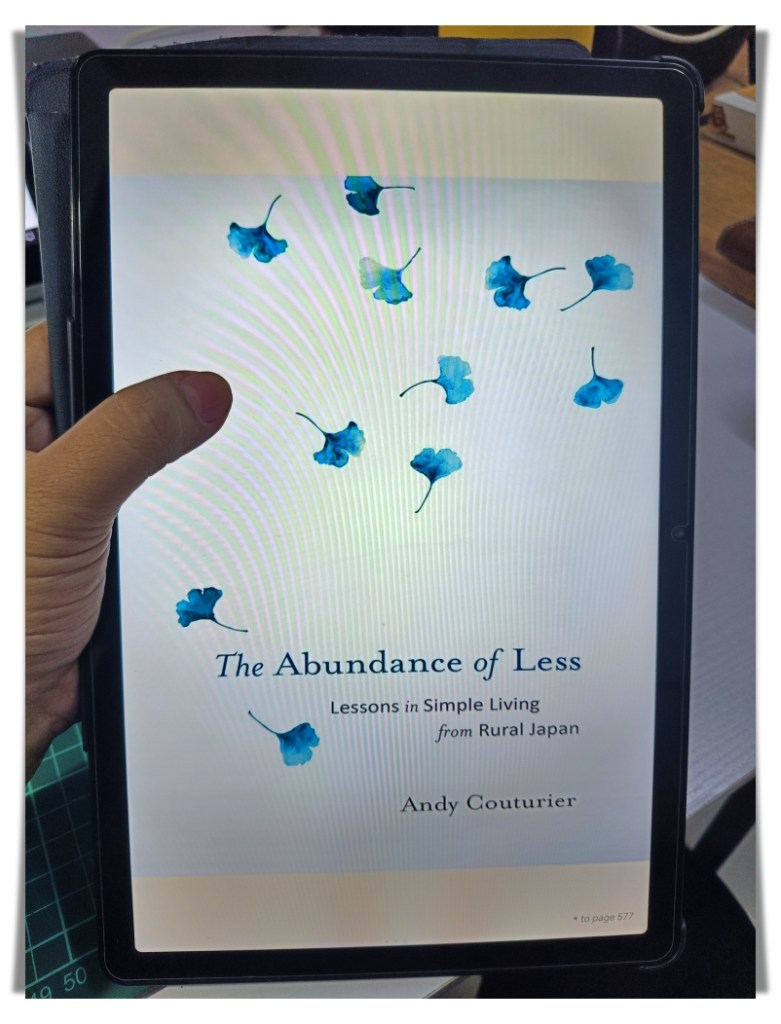
Who Gets to Choose Simple Living? A Reflection on The Abundance of Less

I finished The Abundance of Less today. I don’t think I’ll read this book from start to finish again. There are parts of the book that I might read again because some of the people in it have inspired me one way or another. Their lives were at peace and consistent over time. That has remained with me.

What I liked most was how some of them lived without separating things. There was no separation between work, art, and everyday life. Making meals, growing food, making art or writing, or carving wood all come from the same place. There was no clear line between survival and meaning and I can see why that might be appealing because it feels solid and complete.
Some of the people in the book choose to live with less. They kept their needs minimal. They worked with their hands and they were aware of their surroundings. Living that way takes discipline but it brings clarity. You know what you need and what you don’t. However, a tension that was hard to ignore grew as I read on.

In the Afterword chapter, the author mentioned one of his book reading sessions when someone asked if these people were just surviving at a basic level of survival. That question lingered because it sounded familiar. Where I come from, many people already live that way. It’s not a philosophy or a decision made after reflecting on it. That’s just how life is.

I come from an Iban background. My grandparents were paddy farmers who lived in longhouses. They grew their own food and they depended on the land. Life in the longhouse community was close and practical. It wasn’t considered meaningful or spiritual. It was simply necessary and it wasn’t easy. Farming is hard work and the yield is sometimes uncertain. There are limits to what you can access, especially education and healthcare. Many people in these communities wish to have a stable income. They need money to send their kids to school or pay for healthcare. They want to repair their homes or build new ones. They want to help their elderly parents. These concerns are genuine and constant.

When I read about people who want to live a simpler life, I see two separate realities. Some people choose to live with less. And some people have always lived with less. The difference is in the choosing. Choice allows you to choose that life and leave whenever you want to. Choice lets you regard it as meaningful. If something goes wrong, it allows you to return to a system that supports you. But without that choice, that same life would look very different. 

In the Afterword, the author asks if small “green” changes to one’s lifestyle are really meaningful. They say that these changes let people stay comfortable while calling it sustainability. The concern is real, especially when certain changes are made more for show than for a good reason. But this perspective doesn’t take into account that not everyone can make big adjustments to their lives. Some people can’t move away from the city, change jobs, or move closer to nature. They can’t make those kinds of adjustments because of their jobs, finances, and other circumstances in their lives.

For them, small changes let them do things within their limits. Making small changes like consuming less, being more mindful, or doing less harm to the environment can still reflect a genuine effort to live with awareness. These decisions may not seem like enough from the outside, but they are based on what a person can realistically change at that point in their life.
This doesn’t mean that the people in the book are wrong. I understand what they’re attempting to achieve. I can see the benefits of living with purpose and cutting back on things I don’t need. I can see they care about the land and their communities. But I can’t ignore the other side either. Moving to a city or looking for a job that pays cash does not mean giving up on values. People are just responding to their circumstances. They are trying to make their life more stable by making decisions based on what they need.

Both ways of living arise from different needs and situations and are shaped by different circumstances. One is often chosen and can be left behind. The other is lived without the option to leave. That difference should not be overlooked. To be frank, this book did not give me a model to follow. It just offered me another perspective to consider and it made me think more about my own life and what I already value. It also made me think about how some ways of living are described and seen in a higher regard.

I will remember certain chapters of this book. The chapters about Asha Amemiya, Akira Ito, Koichi Yamashita, and Wakako Oe are worth reading. They are not offering answers, but rather something that can fuel my inspiration. I will return to those chapters when I need a reminder of some kind of discipline or attention. I will also give my perspective the same weight because it also means something important to me.


I write about Iban culture, ancestral rituals, creative life, emotional truths, and the quiet transformations of love, motherhood, and identity. If this speaks to you, subscribe and journey with me.

Why I’ll Always Come Back to The English Patient

Daily writing prompt
What book could you read over and over again?

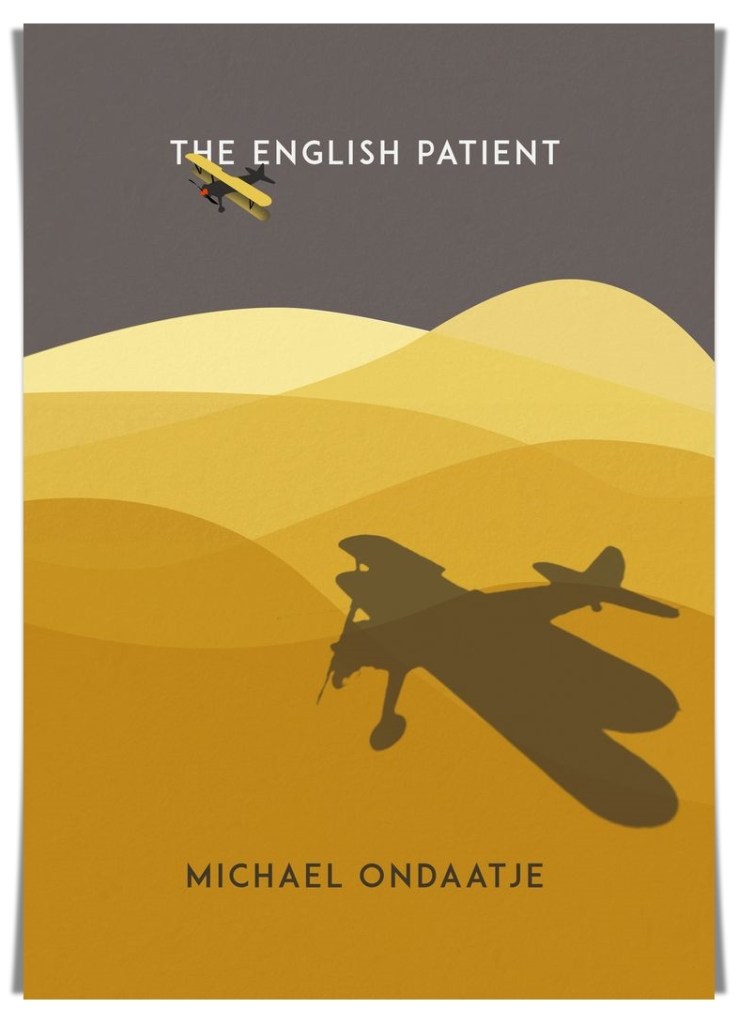
Some books become landmarks in your life. It becomes more than something you read when you return to its pages again and again, like a familiar scent or a half-remembered dream. For me, that book is The English Patient by Michael Ondaatje.

I got my copy in 1997 while waiting for my night shift to start. I was 20 at the time, working part-time while studying for my IT diploma. My shift began at 6 p.m. and finished at 6 a.m. the following day. After dinner, I went to a nearby bookshop and picked up the novel. The film adaptation was playing in cinemas at the time, but I didn’t watch it until years later. I read the book during my breaks at work, but it took me a long time to finish it.

Image source

Ondaatje’s prose was difficult. It didn’t care for neatness. The narrative was fragmented, the rhythm unpredictable—the whole narrative is a long lyrical poem. But I stuck with it, turning each page slowly, sometimes painfully. And I’m glad I did. While others found it disjointed, that was precisely what drew me in. It was too poetic for the mainstream, too fragmented for easy consumption, and too sensual for readers who prioritize plot. That’s what I enjoyed about it then—and still do.

When I went to university to pursue my IT degree, The English Patient became a silent friend. I read it during long, lonely afternoons in my hostel room as a soothing escape from the chaos of university life. Through Ondaatje’s pages, I could retreat to the worn walls of Villa San Girolamo, into the burned silence of the English Patient, and the sun-drenched memories of the Cave of Swimmers. I must have read the book ten times throughout the years. 

The story unfolds in the same way that memory does: disorganized, sensory, and half-lit. We learn about the English Patient’s past before, during, and after WWII. Of Katharine Clifton and their forbidden love. Of Hana, the grieving nurse who cares for him in the villa. Of Caravaggio, the thief turned British spy with missing thumbs. Of Kip, a gentle Indian sapper who dismantles bombs and falls in love with Hana despite their cultural differences.

The patient’s only possession is a battered, annotated copy of Herodotus’ Histories that survived the flames when his plane crashed in the desert. The crash badly burned him and caused amnesia. He couldn’t remember his name and lost his identity, but his voice led many to believe he was English. In time, we learn he is actually László de Almásy, a Hungarian cartographer and desert adventurer. Almásy’s character is loosely based on a real-life counterpart, Count László Almásy, a Hungarian aristocrat and explorer.

I remember reading passages aloud to my lover during late-night chats. We watched the movie adaptation on VCD, but I hated it. It lacked the haunting lyricism of the novel. The lushness of Ondaatje’s words cannot be translated to screen. His sentences breathe, linger, and seep in. They don’t just move the story forward. They remain in you long after you finish the novel.

I haven’t read the book in years. Maybe it’s time to read it again. Some parts of me have changed; others haven’t. I suspect the story will read differently now, the way all great books do when you return to them older and bruised with life.

There’s one passage that’s followed me for years, so much so that I placed it on my About Me page:

“She had always wanted words, she loved them; grew up on them. Words gave her clarity, brought reason, shape.”

This quote refers to Katharine Clifton, but I feel it suits me as well.

There are many other lines that have stayed with me through the years. There are too many to list, but here are a few that still haunt me:

“We die containing a richness of lovers and tribes, tastes we have swallowed, bodies we have plunged into and swum up as if rivers of wisdom, characters we have climbed into as if trees, fears we have hidden in as if caves. I wish for all this to be marked on by body when I am dead. I believe in such cartography—to be marked by nature, not just to label ourselves on a map like the names of rich men and women on buildings. We are communal histories, communal books. We are not owned or monogamous in our taste or experience.”

― Michael Ondaatje, The English Patient

“I believe this. When we meet those we fall in love with, there is an aspect of our spirit that is historian, a bit of a pedant who reminisces or remembers a meeting when the other has passed by innocently…but all parts of the body must be ready for the other, all atoms must jump in one direction for desire to occur.”

― Michael Ondaatje, The English Patient

“Moments before sleep are when she feels most alive, leaping across fragments of the day, bringing each moment into the bed with her like a child with schoolbooks and pencils. The day seems to have no order until these times, which are like a ledger for her, her body full of stories and situations.”

― Michael Ondaatje, The English Patient

“This was the time in her life that she fell upon books as the only door out of her cell. They became half her world.”

― Michael Ondaatje, The English Patient

“In the desert the most loved waters, like a lover’s name, are carried blue in your hands, enter your throat. One swallows absence.”

― Michael Ondaatje, The English Patient

“Sometimes when she is able to spend the night with him they are wakened by the three minarets of the city beginning their prayers before dawn. He walks with her through the indigo markets that lie between South Cairo and her home. The beautiful songs of faith enter the air like arrows, one minaret answering another, as if passing on a rumor of the two of them as they walk through the cold morning air, the smell of charcoal and hemp already making the air profound. Sinners in a holy city.”

― Michael Ondaatje, The English Patient

The English Patient is not a book you finish or a book you can read casually. It’s a book you carry, absorb, and savor.

And I’ll keep returning to it.

As long as I need to remember how language can ruin you.

And heal you.

And leave you haunted in the best way.