Living Between Places

Most people don’t understand what it feels like to live between places. It is not exactly sadness. That is what I would want people to understand first. When they hear “between places,” they think of a wound, like a hole in the heart that never heals. That description does not fit. A “stretching” is more accurate. 

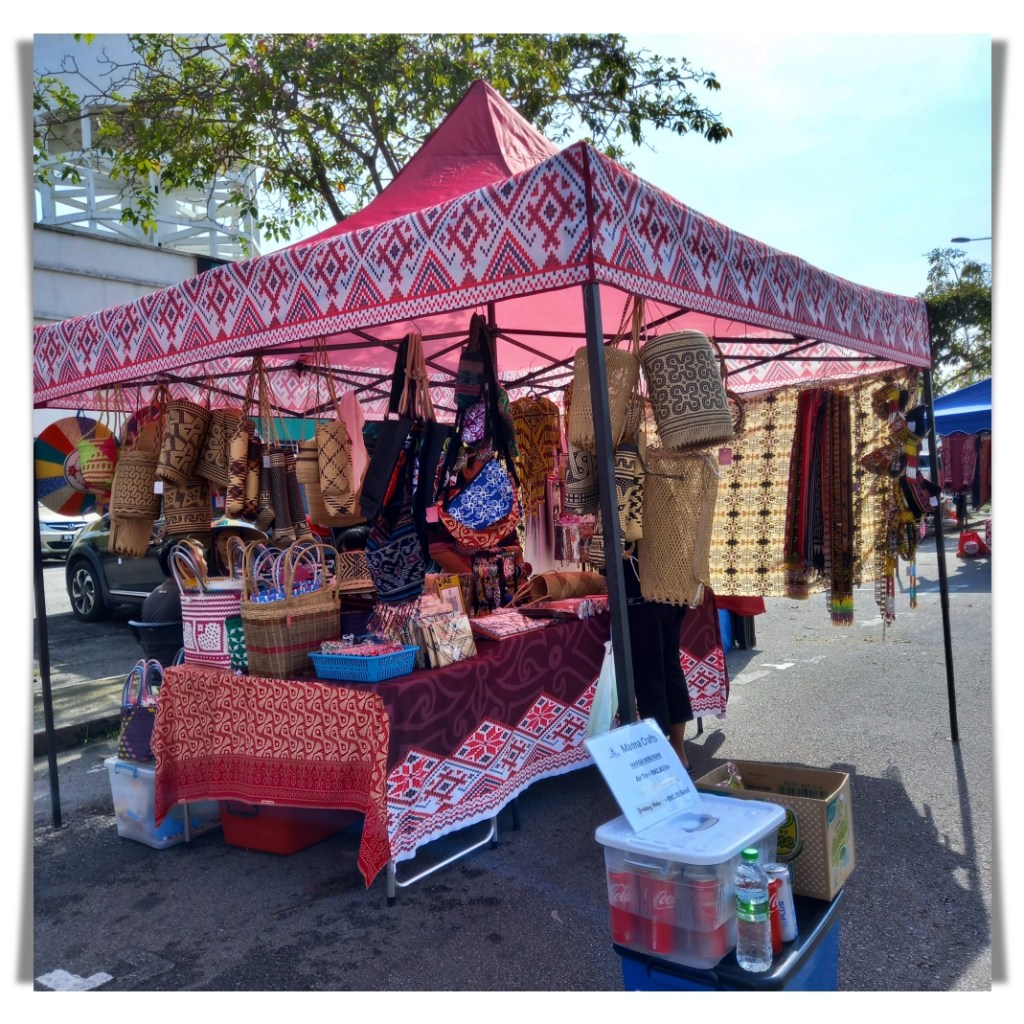
I am Iban. My bones know the red earth of Sarawak. That is what my body recognizes first. But I have now lived in Kuala Lumpur longer than I ever lived there. I have a husband who grew up in Penampang, Sabah, and children who have only ever known this city as home. I pay the condo rent and fees. I navigate the highway to Puchong. I visit the Pasar Borneo in Seri Kembangan, where vendors sell dabai that has been flown in from Sarawak. My life is here but “here” does not feel like home in a complete way.

When I go back to the longhouse, I notice it in my cousins’ expressions. I am “the one from KL.” I speak the language, but sometimes the rhythm is slightly off. I have to pause to remember the right word for something I haven’t touched in years. I am welcomed, always, with warmth, food, and laughter, but there is a politeness to it. It’s a subtle sense that I am now a guest. My children, when they come with me, are treated with affection, but also with a gentle bewilderment. They are Iban, but they do not know how to be Iban in the way that is expected. I am no longer fully at home there either.
This leaves me in a scattered position. My identity is not a single point on a map. It is a thread that runs back and forth across the South China Sea. My children are the living proof of this stretch. Their identity extends across even more layers than mine. They are Iban-Kadazan by blood and suburban KL-ites by every lived experience. They eat nasi lemak for breakfast and request ayam pansoh or hinava for their birthday dinner. They speak English and Malay with a city accent and only understand a word or two of Iban or Kadazan. They are not disconnected from their heritage, I make sure of that, but they are also not rooted in it the way I once was. I see them working through their sense of being between places at school when asked where they’re “from.”

I used to feel guilty about this. As if I had not given them a single, stable foundation. I do not feel that way anymore. I have come to understand that geographical distance often reflects a connection, not a lack of it. I remain connected to my family through WhatsApp or Facebook.

Living between places means I am constantly translating language, meaning, belonging, and self. To my KL friends, I am the “exotic” one from Borneo, with the tattoos, living atop the trees, and the stories of the headhunter ancestors. To my family back home, I am the modern one, the city-dweller, and the one who left. Neither captures the full picture. The full truth is that I am both. People who have never left their home place might see this as a tragedy of loss. This misses something important. Staying in one place would have limited what I could carry with me.
I am not fully home in one place. The result is that I have made small homes in many. My identity is scattered like seeds. I am watching them grow, in my children and in the friendships I have built across this country.

It is a complicated way to live, but it is mine. It has made me capable of understanding something essential: that you can love a place deeply and still not belong to it entirely. That belonging can be a choice, a meal you cook, a story you tell, or a journey you make again and again. Many people do not understand what it feels like to live between places. But I do. And in that stretching I have found a form of wholeness I did not expect.


I write about Iban culture, ancestral rituals, creative life, emotional truths, and the quiet transformations of love, motherhood, and identity. If this speaks to you, subscribe and journey with me.

The Loneliness That Lives Inside Love

Daily writing prompt
What’s something most people don’t understand?

Image source

Most people don’t understand that you can love someone deeply, share a life with them, raise children together, sleep side by side every night—and still feel alone.

You still feel alone—not because they don’t love you or they don’t try. It’s because they can’t meet some of your deepest needs. Again, this is not because they’re unwilling or are dense but because that’s not how they’re built. That’s not who they are. You can’t force people to be what they are not. 

This post is not meant to bash my husband.

My husband and I had been together for 26 years. That’s a long time to share a life. Throughout our marriage, he carries many burdens. He works hard and often under tremendous pressure. He provides and makes sure we have what we need. The kids and I never lack anything and I see that and never take it for granted. Every time he comes home from work, no matter how exhausted he is, he still smiles and gives me a warm hug. When the kids were little, they would race to the door to greet him. And sometimes they still do, even as teenagers. I know what that kind of weight does to a person—the pressure of being the provider and the silent burden of responsibility.

But I carry a lot of weight too. And most of them are invisible. It’s emotional and mental load. The labor of noticing, of anticipating needs, of asking questions to diffuse stress, soothing tensions, bridging gaps.

People rarely see that part. They think that if a marriage lasts, it must be balanced. But many don’t realize that love doesn’t always mean symmetry. 

My husband is a sweet, sweet man. He is not cruel or careless. He simply wasn’t taught how to sit inside discomfort and witness pain without attempting to fix or fleeing from it. He tries in his own way by cracking awkward jokes, physical closeness, showing up with food or spoiling me rotten. And I’ve learned, over the years, to see the love in those things.

But I must be honest and as a writer, confronting my deepest truth is necessary. I want more than physical efforts or gestures. I want to be seen and not just supported. I want conversations that delve deep and not just coexistence. I want someone to meet me at the door of my inner world and not be afraid to come in. 

Am I being bitter and writing all these down under the cloak of anonymity? Certainly not. We discussed this many times and he’s admitted he can’t meet me there because he is who he is and not built that way. And I acknowledge and accept him as who he truly is. And with acceptance, there is peace. Because I know I haven’t met all of his needs either. Marriage always goes both ways.

Most people don’t understand that kind of grief. It’s the grief that comes with loving someone who can’t meet you where you are. It’s bittersweet and lonely. That loneliness doesn’t scream—it’s just there, aches, and lingers.

But even within that grief, there is love. There’s kindness, history, forgiveness, effort, sacrifice, and acceptance of all that is good and bad. I love him so much. We are trying. Maybe not always in the same way, but still—we try each and every day. 

We both carry weight. His is visible, important, and perhaps measurable in the eyes of the world. Mine is not. And that’s what most people don’t understand. 


I wrote this poem to accompany this post. Here you go:

Marriage

I fold the laundry—
his shirts, inside out,
boxers with holes,
T-shirts over-stretched,
but we wear them anyway—
like this marriage—
flawed, warm in its own weather.

My mind jumbled with lists—
he doesn’t see them.

He brings home groceries
but forgets the eggs.
The kale is yellowing on the edges.
When good mood returns
he touches my hip like a question,
but never waits for the answer.

Still, he comes home.

Every night,
hanging his silence next to mine.
We sit.
We eat.
Scroll through our newsfeed.

I carry the emotional X-rays,
the careful calibration of my moods
to his weather.

But he carries things too—
numbers, bills,
the fear of shame
of not being the man
his father never taught him to be.

We are not broken,
only bruised by expectation.

And still,
he holds the child when I break,
warms the bed before I slip in.
Calls me “babe”.
In return,
I still reach for his length
to soothe myself to sleep.

So no—
I don’t need rescue.
This is the truthful
opening of the hearts
of two people
carrying what they can.

He lifts the roof.
I hold the floor.

And in the middle,
we meet.

Copyright © Olivia JD 2025
All Rights Reserved.

You are welcome to subscribe to my blog if my words resonate with you. Thank you.