Reflection | Writing Between Emotion and Detachment

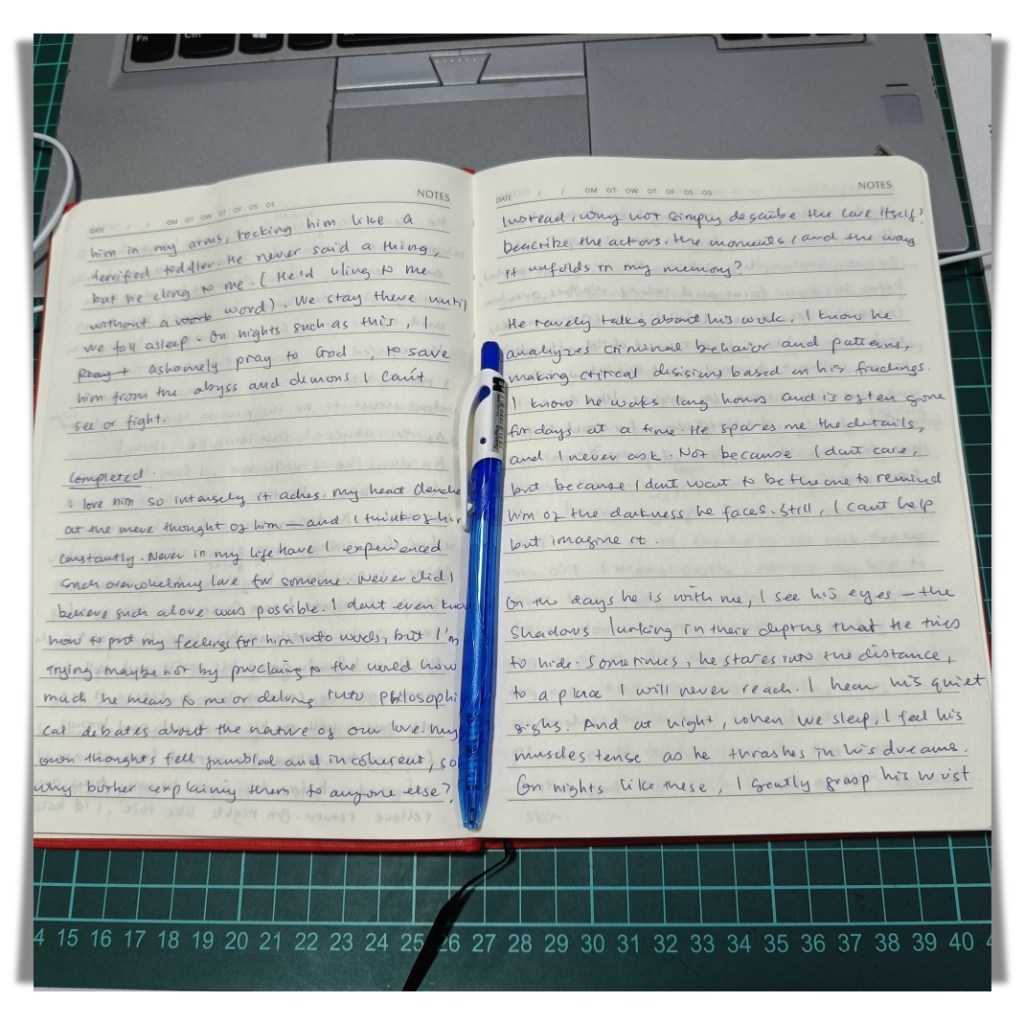
I discovered Annie Ernaux’s writing pretty recently and at a time when I was learning to trust my own voice. I’ve been writing for a long time, but apart from blog updates, I almost never published my work. (I published 4 poems in online literary journals last year). Though I love writing, I spent the last 15 years focusing on my art, pushing writing to the back burner.

Image source: My Everand subscription

I write poetry and short stories now and then. They are nothing grand or serious because I don’t feel compelled to write a whole book with a complete plotline and characters. I collected my short stories; some are purely fiction, and some are based on true experiences and stories. I have never met anyone who writes like me until I came across Annie Ernaux’s work.

Reading Ernaux was like finding a mirror I never knew existed. Ernaux, like me, dissects the past obsessively. She revisits memories repeatedly, searching for meaning in fragmented events of the past. But there was a difference I couldn’t ignore. Ernaux writes with a stark, almost clinical detachment. She lays out the details of her life as if she is simply recording facts. She does not romanticize or dramatize; she just records the experiences. Her writing reads like an autopsy of the past, as if she had already processed it, wrapped it up, and put it on a shelf labeled “This happened in the past.” She records the details of her love affairs, including the lurid moments, without nostalgia, shame, or guilt. This is what she wrote about one of her lovers:

“The man for whom I had learned them had ceased to exist in me, and I no longer cared whether he was alive or dead.” ~ Getting Lost

And that, I realized, is where she and I diverge.

I don’t just remember the past—I relive it. Every emotion returns, undiluted by time. I don’t just recall what happened; I feel it as if it’s still unfolding inside me. The joy, the pain, the longing, the grief—they rush back in full force. Because of this, my writing is anything but detached. When I write essays, blog posts, poems, or stories inspired by past events, they carry the pulse of my emotions. They are raw and undiminished. And for a long, long time, I felt ashamed of my voice and lacked confidence in expressing myself. I thought that was a flaw.
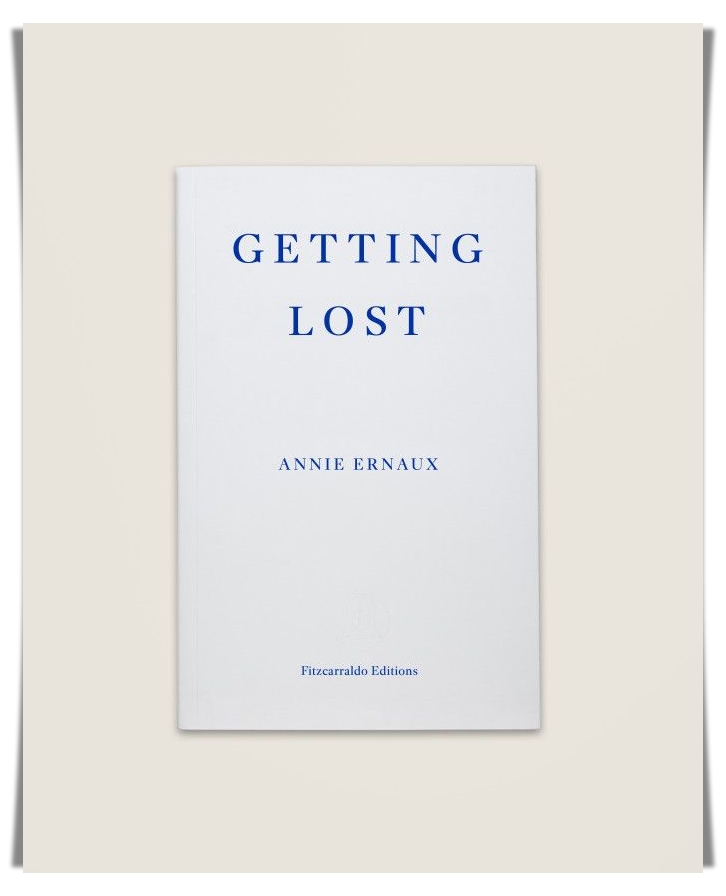
Image source: My Everand subscription

I admired Ernaux’s ability to write without apology or hesitation. I wondered if I needed to learn detachment and strip my words of emotions so they could be seen as more “literary” and taken more seriously. After all, isn’t that what makes writing powerful—the ability to observe without being consumed? But the more I wrote, the more I realized: I don’t have to be like her. I don’t have to sever myself from my emotions to be a writer.

I realized that I don’t have to strive to be as detached as Ernaux. I can learn to be confident in my voice and embrace my own way of writing. My writing is where memory stays alive, where emotions breathe between the lines, unfiltered, unsoftened.

My words do not have to be clinical to be valid. They do not have to be detached to hold power. I am learning to write without shame, guilt, and hesitation. I will not erase the emotions—I will let them exist freely.

Perhaps I will never reach the kind of distance Ernaux has from her past. But that’s okay; my voice is mine, and it is enough.

So I wonder—must we detach from memory to write about it? Or is feeling everything deeply has its own power?
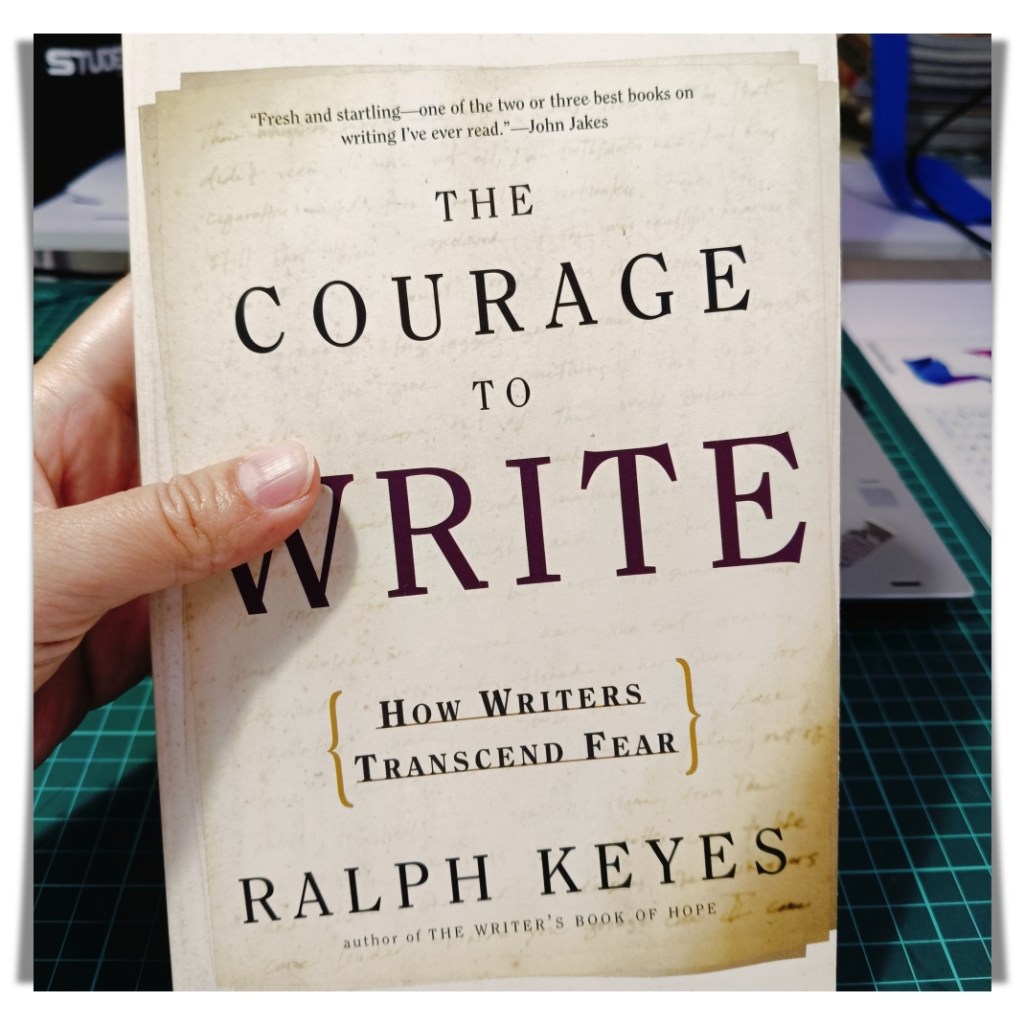
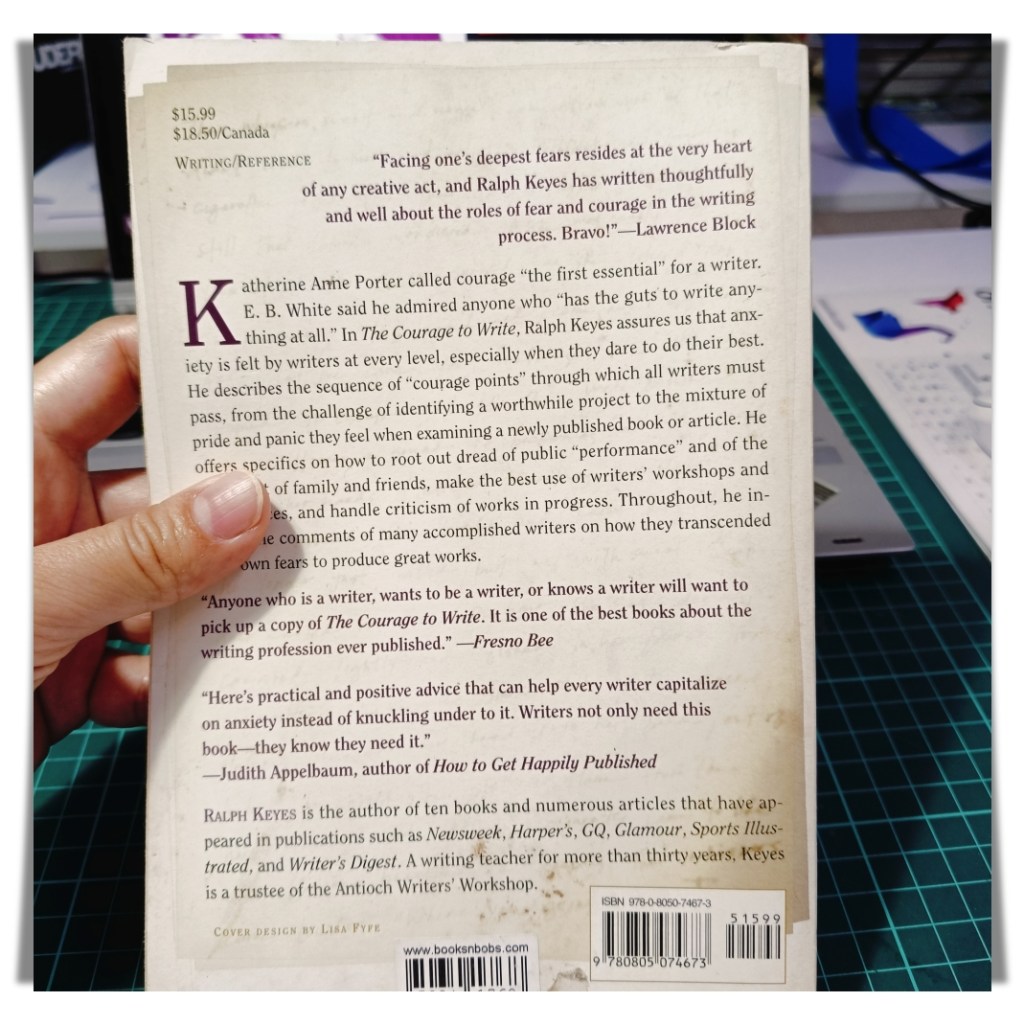
Book Review | The Courage to Write – How Writers Transcend Fear by Ralph Keyes

I returned to writing earlier last year after a decade-long hiatus to raise my children. Writing has always been my quiet refuge. It’s a space where I could slip away from the noise of daily life. But even in solitude, I have always sought connection and often reached for books on writing. These books are my source of advice, and I also seek reassurance and inspiration from those who have walked this path before me.

Years ago, I read Bird by Bird by Anne Lamott and Big Magic by Elizabeth Gilbert; both left a lasting impact on me. These are the kind of books that feel like old friends. Their words reveal new meanings with each reread. They have been my steady companions and also my source of encouragement whenever doubt crept in.

Three months ago, while browsing a secondhand bookshop, I stumbled upon The Courage to Write: How Writers Transcend Fear by Ralph Keyes. I had never heard of him before, but the title spoke directly to a truth I knew well—fear is an ever-present shadow in the creative process. It’s impossible to resist a book that promised to explore the relationship between the creative process and fear. Without hesitation, I added it to my cart, along with another classic, Natalie Goldberg’s Writing Down the Bones. The latter is familiar to many writers, though I have yet to read it myself.

Having finished The Courage to Write, I’ve spent some time reflecting on its message and how deeply it resonated with me. I’m currently halfway through Writing Down the Bones and will share my thoughts on it once I reach the final page. For now, I’ll concentrate on Keyes’ book, which explores what it means to write in the face of fear. It is a subject that feels intimately familiar to anyone who has ever confronted a blank page and wrestled with the enormity of creation.

A Conversation About Fear

The Courage to Write is not a how-to book. Instead, it reads like a conversation, which helps all writers deal with the fear, doubt, and anxiety they all feel. Keyes takes the mystery out of being creative and shines a light on the problems most writers experience but don’t talk about. He tells us to dig deep into our self-doubt and impostor syndrome to find the courage that’s hiding there. He believes that writing is both an honor and a duty that people who have never done it often don’t appreciate.

The Pros

The Courage to Write is so engaging because it is so honest. Keyes doesn’t romanticize writing; instead, he shows it as a deeply human activity that is full of uncertainty. “Am I good enough?” is a question that his book helps people deal with. Even the finest literary giants have had to deal with this question. Drawing on the experiences of writers like Virginia Woolf, Ernest Hemingway, and Anne Lamott, he shows us that anxiety is not a sign of failure but an important part of the process.

Keyes writes in a careful, even personal tone. His ideas seem to apply to everyone, which supports the idea that while writing can be isolating, the effort to overcome fear unites all authors.

One of the best things about the book is that it changes the way we think about anxiety. Anxiety is not a problem; it’s a vital force that makes insight sharper and pushes writers to be real. Keyes says that fear pushes us to write more honestly and dig deeper. This profound view tells writers to deal with their fears instead of battling them.

The Cons

Even though The Courage to Write has a lot of good points, it sometimes goes over familiar ground. If you’ve already read a lot on the subject, Keyes’ insights might not seem very new to you. A lot of the time, the stories are about well-known issues writers had, like how Hemingway drank to drown his fears or how Woolf questioned her own worth. A lot of writers are familiar with these stories.

Also, Keyes is great at acknowledging and validating anxiety, but his answers are more philosophical than practical. This book might not be right for you if you want to find real ways to deal with procrastination, perfectionism, or the problems that writers face every day. His core message that you should embrace your fear and let it lead you is powerful, but it comes up so often that some chapters feel like they’re just different takes on the same idea.

Final Thoughts

Reading The Courage to Write feels like wandering through a dense forest. Each tree represents a different fear, and the odd shaft of sunlight reminds you of how courageous you are. It’s not a guide. It gives you hope that the journey is worth continuing on, even if you can’t see the path. This book is for people who need to hear that fear is not the enemy but a voice telling us to be braver and write more deeply and honestly.

But this book might not be for everyone, just like a vast landscape can be both comforting and overwhelming. If you seek clear directions instead of reflection, you may want more concrete advice. The Courage to Write isn’t really about getting over your fears; it’s about learning how to live with them. And maybe that’s the most important lesson in and of itself. Writing, like life, is less about conquering every mountain and more about finding what it means to be human.

Fragmented Story | His Days Were Long

Writing complete stories has never been my style. My mind wanders, seeking and focusing on moments and emotions that demand attention, even if they don’t always fit neatly into a beginning, middle, and end—like poetry. I find myself drawn to fragments of moments that exist between greater narratives. It’s in these fragments that I discover what I need to express, often eliciting more emotion with a single, still snapshot than an entire storyline.

This piece, His Days Were Long, is one such fragment. It’s a story of a man torn between his responsibilities and a yearning he can’t quite shake. It’s a little piece of a wider web of stories that live within me, ready to be told one at a time. These moments are disjointed and incomplete but filled with meaning, but these are where I feel most alive in my writing. So I’ll keep sharing them in bits and pieces, each with its own truth and emotion.

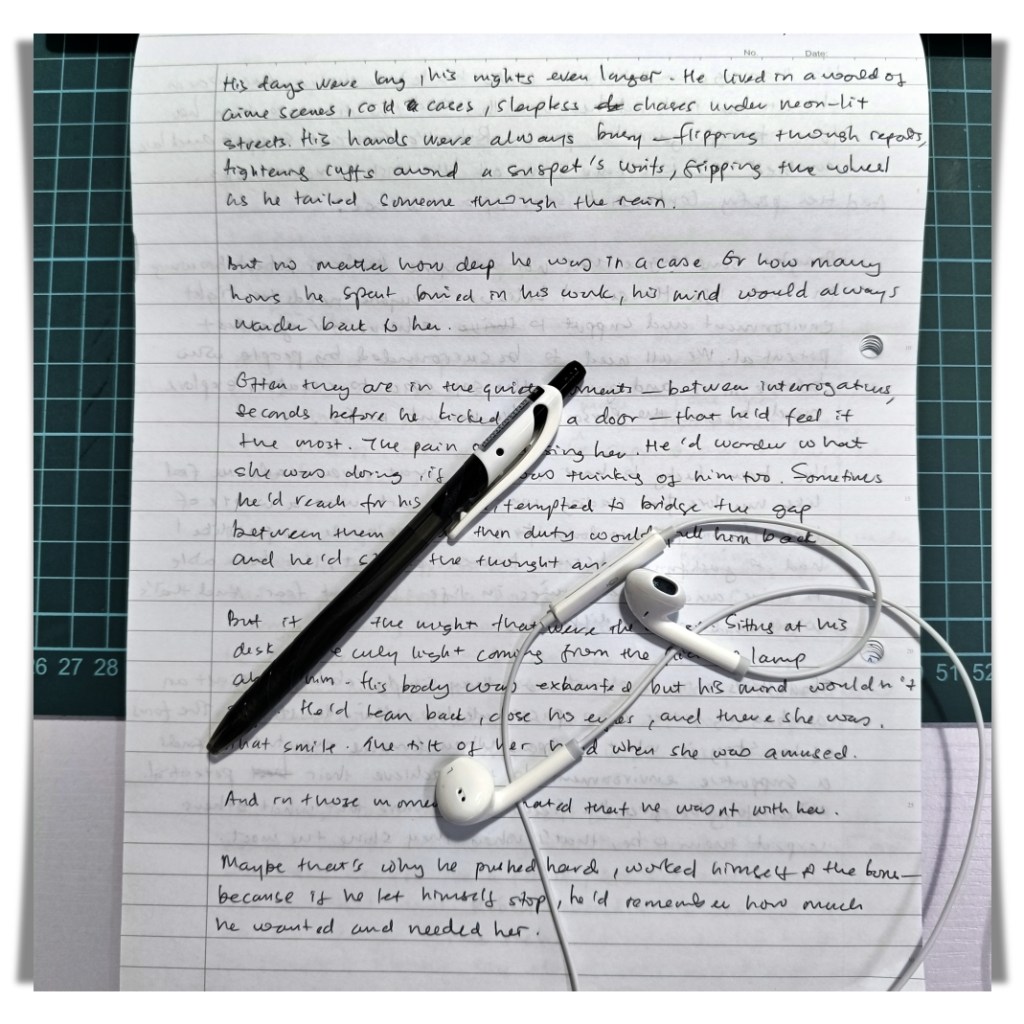
His days were long. His nights were even longer. He lived in a world of crime scenes, cold cases, and sleepless chases under neon-lit streets. Whether he was flipping through reports, putting cuffs on suspects, or driving while tailing someone through the rain, his hands were always busy.

But it didn’t matter how deep he was in a case or how many hours he worked; his mind would always go back to her.

He would often feel it in the quiet moments—between interrogations or right before he kicked open a door. The agony of missing her. He’d wonder what she was doing, if she was thinking of him too. Sometimes he’d reach for his phone, tempted to bridge the gap between them. But then duty would pull him back, and he’d shove the thought away.

But it was the nights that were the worst. Sitting at his desk, the only light coming from the flickering lamp above him. His body was exhausted, but his mind wouldn’t stop. He’d lean back, close his eyes, and there she was. That smile. Her giggle. The tilt of her head when she was amused.

And in those moments he hated that he wasn’t with her.

Maybe that’s why he pushed hard, worked himself to the bone because he was afraid that if he stopped, he’d remember how much he wanted and needed her.

Handwritten draft of this story.

Copyright © Olivia JD 2025

All Rights Reserved.