

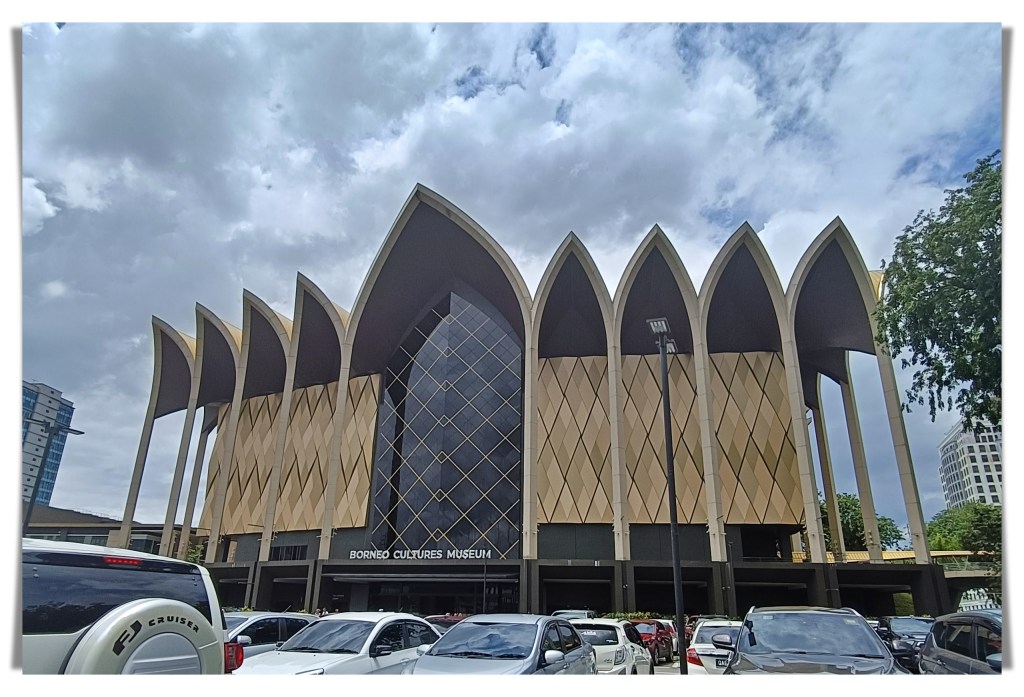
Have you heard of the Borneo Cultures Museum? It is in Kuching, Sarawak, and from the outside, it seems quiet, though the building looks very unique. However, the scale becomes clear once you get inside. It is the biggest museum in Malaysia and the second largest in Southeast Asia. My family and I visited on our last vacation to Kuching and spent a few hours there in the afternoon. We thought it would be enough, but it quickly became clear that it wasn’t.
There is too much to take in at once, so I will share a few things that caught my attention the most.
Repatriated bones of Niah Caves
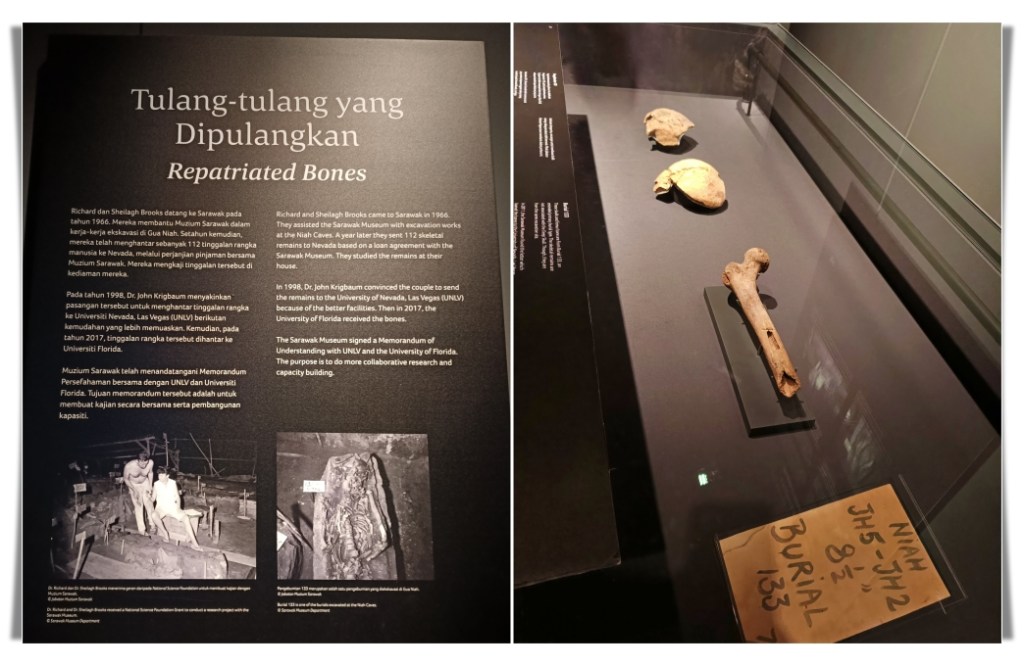
The repatriated bones from the Niah Caves were one of the first things that caught my attention. However, not all of the remains are displayed. Only fragments are shown, including one from Burial 133, which is part of the Neolithic cemetery found in the cave’s West Mouth. This site has one of the largest prehistoric burial cemeteries in Southeast Asia. Excavations in the 1950s and 1960s, as well as more recent studies, have found more than a hundred burials here. The University of Nevada used to keep these bones for research and safekeeping, but they have since been returned to Sarawak. I visited Niah Cave in my youth, and I have read about these bones in the past, and standing right beside them felt so surreal.
Orang Ulu Masks or the Hudo’ masks
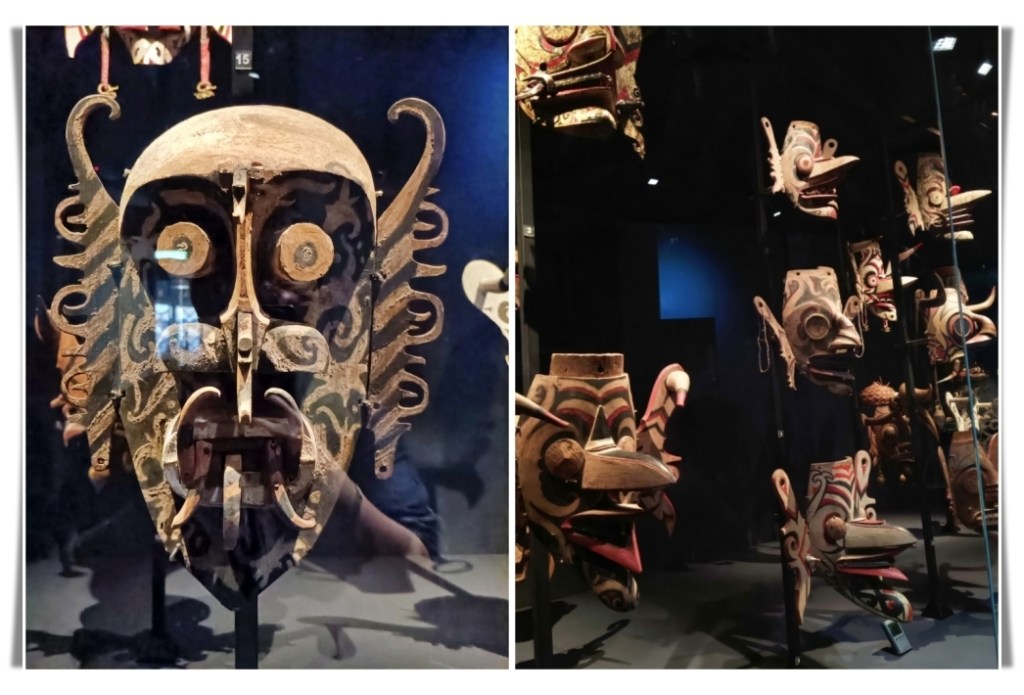
The Kayan and Kenyah people use these masks during harvest festivals to cast away bad spirits and make sure the crops are healthy. The masks are displayed on the fifth floor in the “Objects of Desire” gallery. I admit this section of the museum felt slightly unsettling with the masks quietly staring at you from the glass display. At first, I didn’t say anything but later, my sister said she felt the same way and even had goosebumps.
The Melanau burial pole or Jerunai
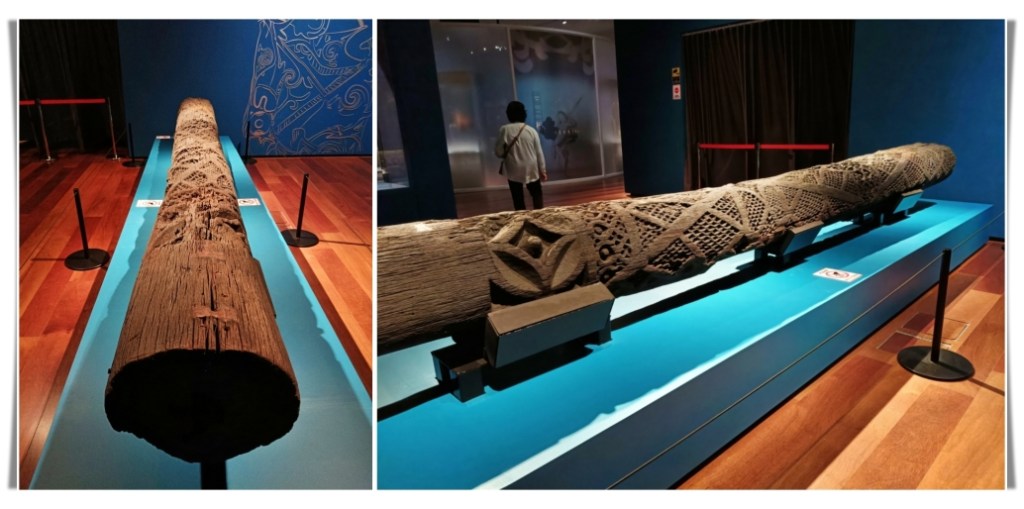
These carved wooden poles were used to bury wealthy Melanau people and nobility. The remains of the dead were placed in jars and kept in the hollow parts of the pole. The Jerunai was reserved for the Liko, or Melanau pagan nobility. Ancient rituals associated with the Jerunai often involved human sacrifice. Slaves were sometimes placed at the base of the structure believed to serve their dead master in the hereafter. This practice was long abolished when the community converted to Islam and Christianity.
Kelirieng – burial pole of the Punan Bah or Sekapan tribes
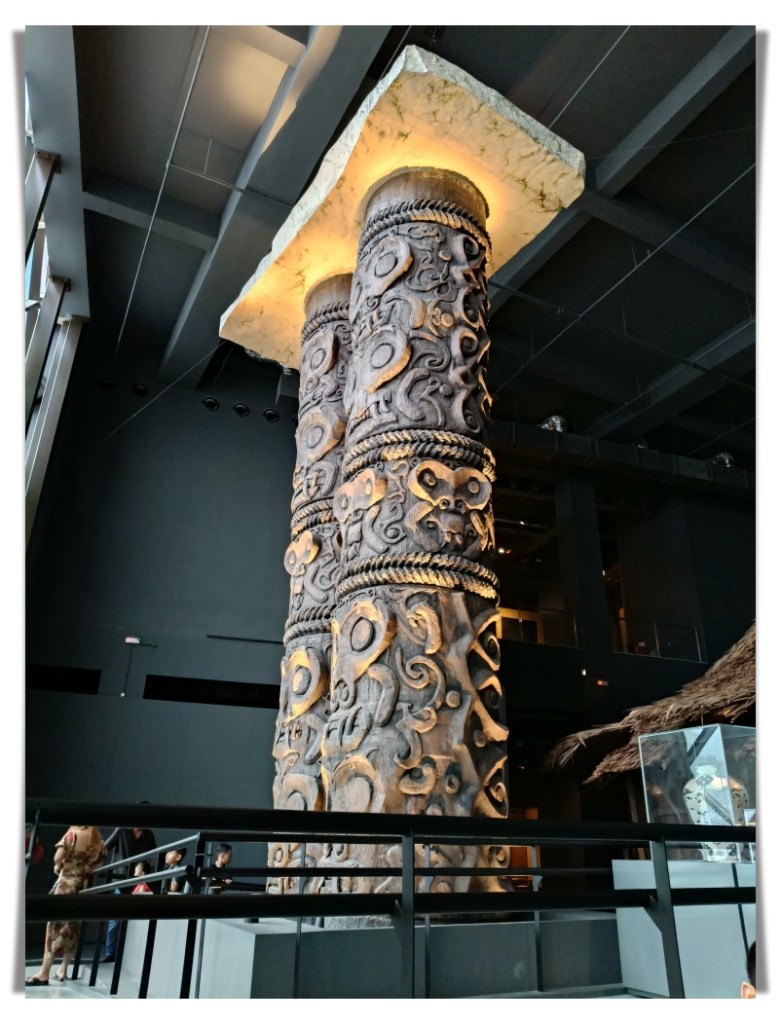
There was also a similar structure called the Kelirieng, a burial pole used by the Punan Bah and Sekapan communities. Like the Jerunai, it functioned as a secondary burial structure. The dead person’s bones were placed in large ceramic jars and then they were hauled up into a hollowed part at the top of the pole. The height of the structure symbolized status and was believed to bring the deceased closer to the spirit world. To protect the jars, most of these poles have a huge stone slab on top.
However, the massive Kelirieng in this picture are replicas, and the original ones can be found outside within the museum’s compound. As I was staring at these burial poles, I kept thinking about the slaves. I heard that the slaves were crushed to death as they raised these poles on the ground. It’s a gruesome mental scene, but it’s part of our history. One benefit of religions is that they abolished slavery, as no one deserves to be treated as subhuman at the mercy of their masters.
Headhunters swords
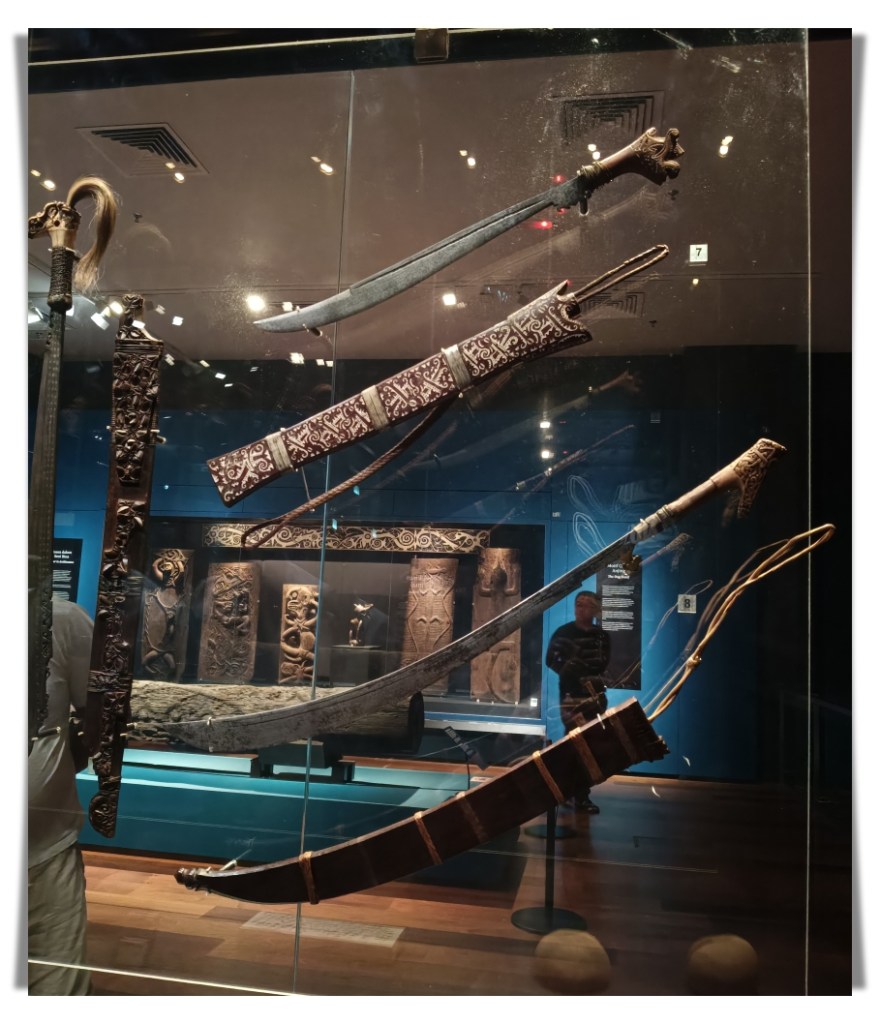
These swords were historically used for headhunting. While I was lingering near this exhibit and admiring their craftmanship, my husband had a different experience. He told me later that he felt a strong impulse, as if a voice was urging him to take one of the swords and kill someone. He felt so uncomfortable that he quickly left this section. I didn’t experience anything like that, and I believed him when he told me. The Iban people believe that such swords need to be kept properly, and certain rituals need to be conducted to appease the restless spirits of the swords.
Dayak human skull trophies
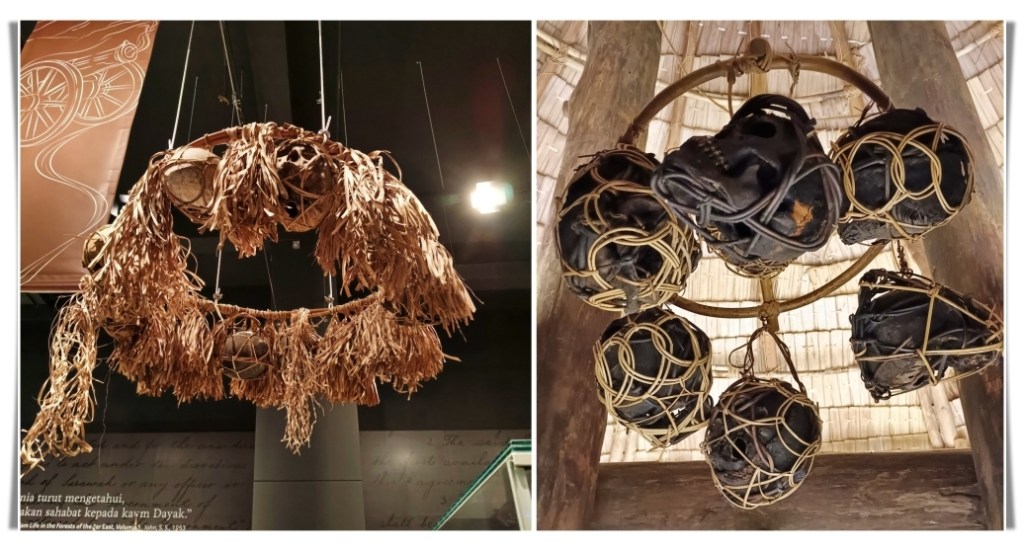
Finally, there were the skulls. These are real human skulls from Sarawak’s headhunting past. They are arranged in round rattan frames decorated with dried leaves. This collection is known as a tampun and is traditionally hung in the longhouse. Some of my relatives still keep them. The Iban people believe that the souls are still present, thus they should be treated with care. My family no longer keeps them, as my great-great grandparents gave up these practices after converting to Christianity in the early 20th century.
We were at the museum for about three hours, but it wasn’t enough time to view everything. If I go again, I shall go in the morning and take my time to view and read the information about every exhibit. You need to take your time so your visit will be totally worth it.
If you ever go to Kuching, I suggest you spend a whole day there. It’s more than just looking at the exhibits. As I mentioned, I highly encourage you to understand the stories behind them in order to fully appreciate our cultures and Indigenous way of life.
I write about Iban culture, ancestral rituals, creative life, emotional truths, and the quiet transformations of love, motherhood, and identity. If this speaks to you, subscribe and journey with me.

 Olivia's Atelier