Passing Stories Along | A Visit to BFBW Subang Parade

Books are expensive in Malaysia. Anyone who reads a lot already know this. A single paperback can cost as much as a meal for two people at times. And when you’re trying to pay your bills, parenting, buy groceries, or just get through the month, buying a new book feels like a luxury that’s easy to postpone.

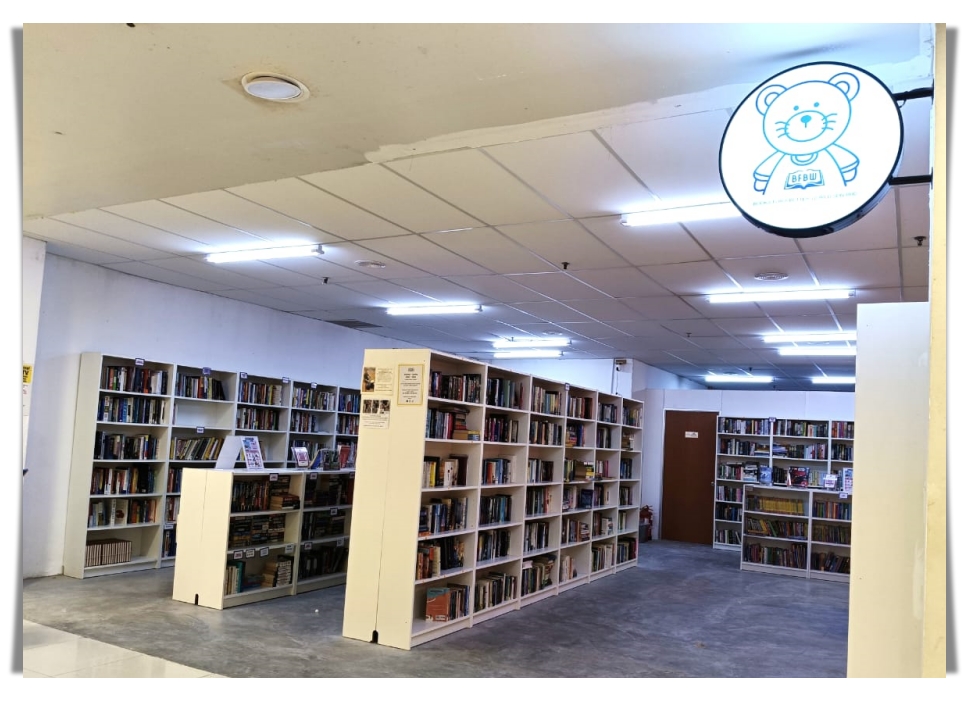
That’s why I’ve always liked used bookstores. Yesterday I went to a small, quiet bookstore in Subang Parade called BFBW – Books for a Better World. I wrote a short post about it on Threads, but the visit stayed with me. The variety of titles and the reasonably priced books weren’t the only factors. It was the mood and what the place stands for.

The bookstore is small. There aren’t any cozy corners or mood lighting for photos. There were just clean white shelves, a blue donation box with a cartoon bear on it, and fluorescent lights above. There were no frills in the room, and the floor was just cement. But it still felt good, simple, welcoming, and real.
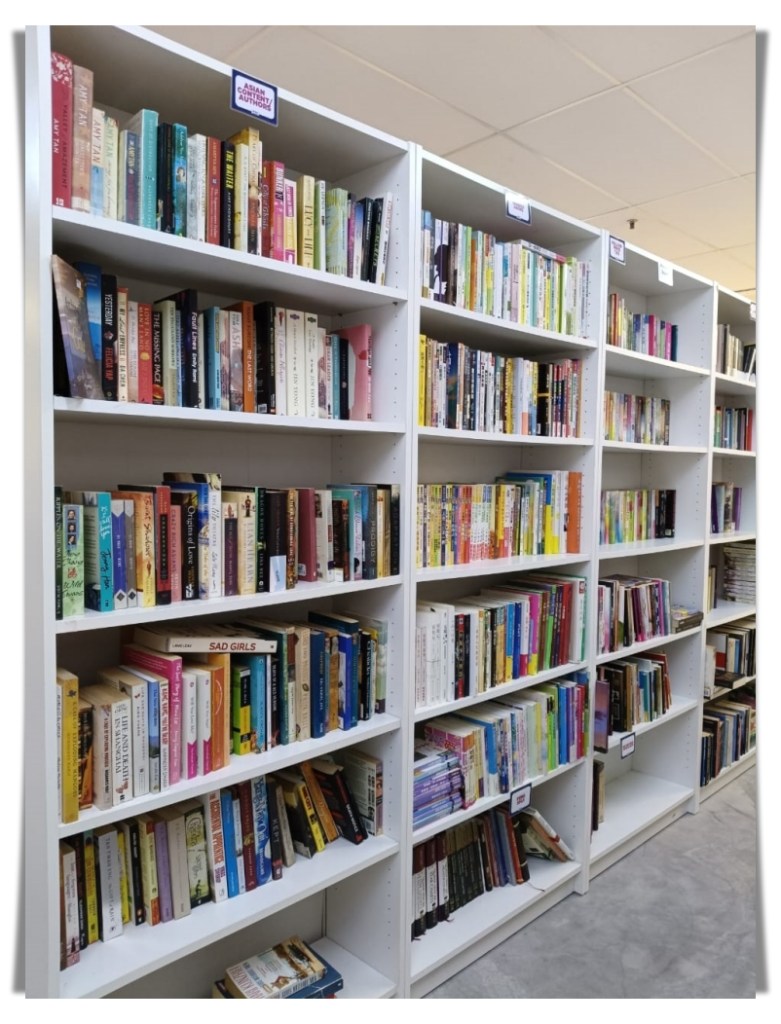
What made it feel meaningful was the sense that every book had already lived a life. Each one had been read, or maybe left unread, carried in someone’s bag, or left waiting on a nightstand. They were now waiting for someone else to bring them home. That continuity, stories passed from person to person, makes used books unique and special.

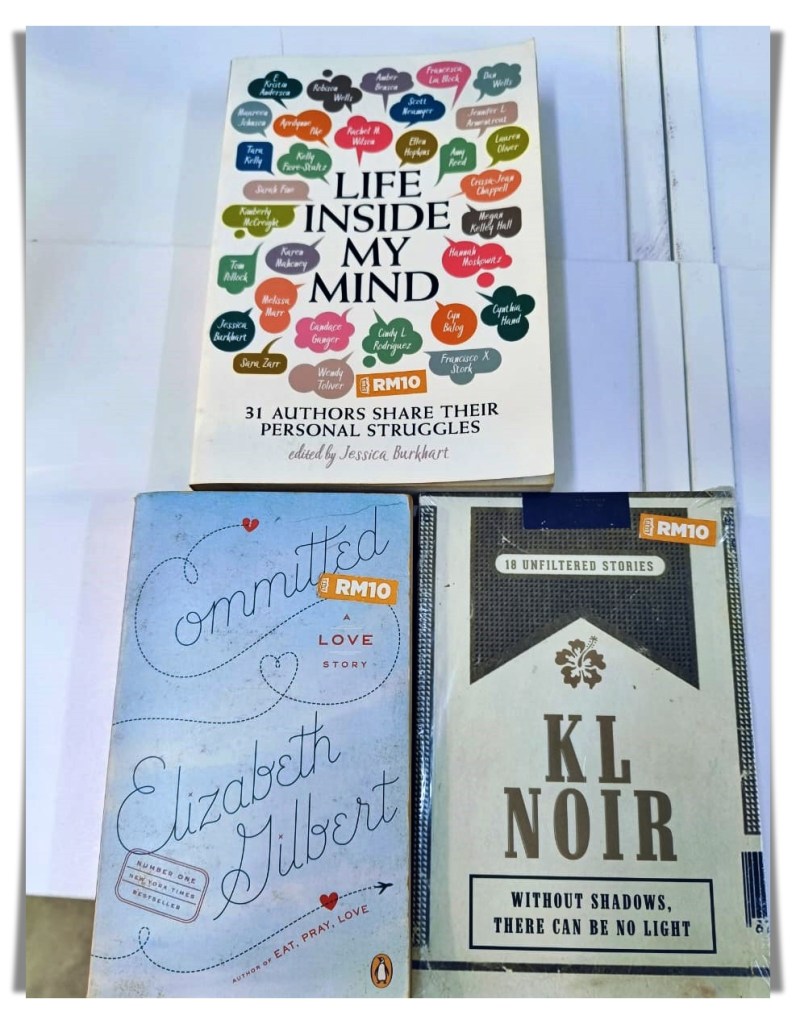
I ended up buying three books for RM10 each. One was Committed by Elizabeth Gilbert, which I’ve wanted to read for a long time. KL Noir was another one that caught my eye because of its subtitle: “Without shadows, there can be no light.” The last one was Life Inside My Mind, a book of essays by different writers about mental health. That one hit home.

These books weren’t in perfect shape. One had corners that were folded. The edges of the other one had faded. But that didn’t matter. I liked that they had been somewhere before me. Someone else had opened these pages and read them, or maybe they didn’t. It’s possible that the book was passed on without being read. It had traveled in any case.
That’s one of the little things that make used bookstores so nice. When you buy a book, you’re getting more than just a book; you’re getting a piece of someone else’s journey. It gives the book a deeper meaning that new books don’t always have.

At the front of the store, BFBW also has a donation box where people can leave books they don’t need anymore. The donated books aren’t just sold again; they’re also given to literacy programs and charities. Communities, schools, and small libraries benefit directly. It’s a simple system that supports access to reading.

While standing there, I reflected on my own bookshelves at home and the books I have kept but no longer read. Some of those books meant something to me at one time, but now they’re ready to go. I also bought books on a whim and never read them all the way through. I realized that giving them away could give them a new life.

It reminded me that sharing stories is more than just writing and publishing. It’s also about letting go and letting a book continue its journey by giving it to someone else. By letting go, we are passing on what helped us in the past or what we never got around to reading.

As a mother and a writer/artist, I often think about the kind of legacy I want to leave behind. This includes not only my own work but also the values I pass on. I want my kids to grow up in a world where they can get their hands on books. Where knowledge and imagination aren’t limited by price and where stories travel. Bookstores like BFBW make that vision feel possible.

If you live in the Klang Valley and have books that are in good shape, whether they are fiction, nonfiction, or children’s books, think about giving them away. Or take a little time to look around and pick up a few. You might find something you didn’t expect. You might rediscover the joy of reading without pressure.

I’m glad I stopped by. I left with three books and the feeling that I was part of something bigger. You are not just a reader but a link in a generous chain of people passing stories along. It really is that simple sometimes.


Olivia Atelier offers printables, templates, and art designed to inspire reflection, healing, and creativity. Visit Olivia’s Atelier for more.
Book Review | A Weekend with Susanna Jones’s The Earthquake Bird

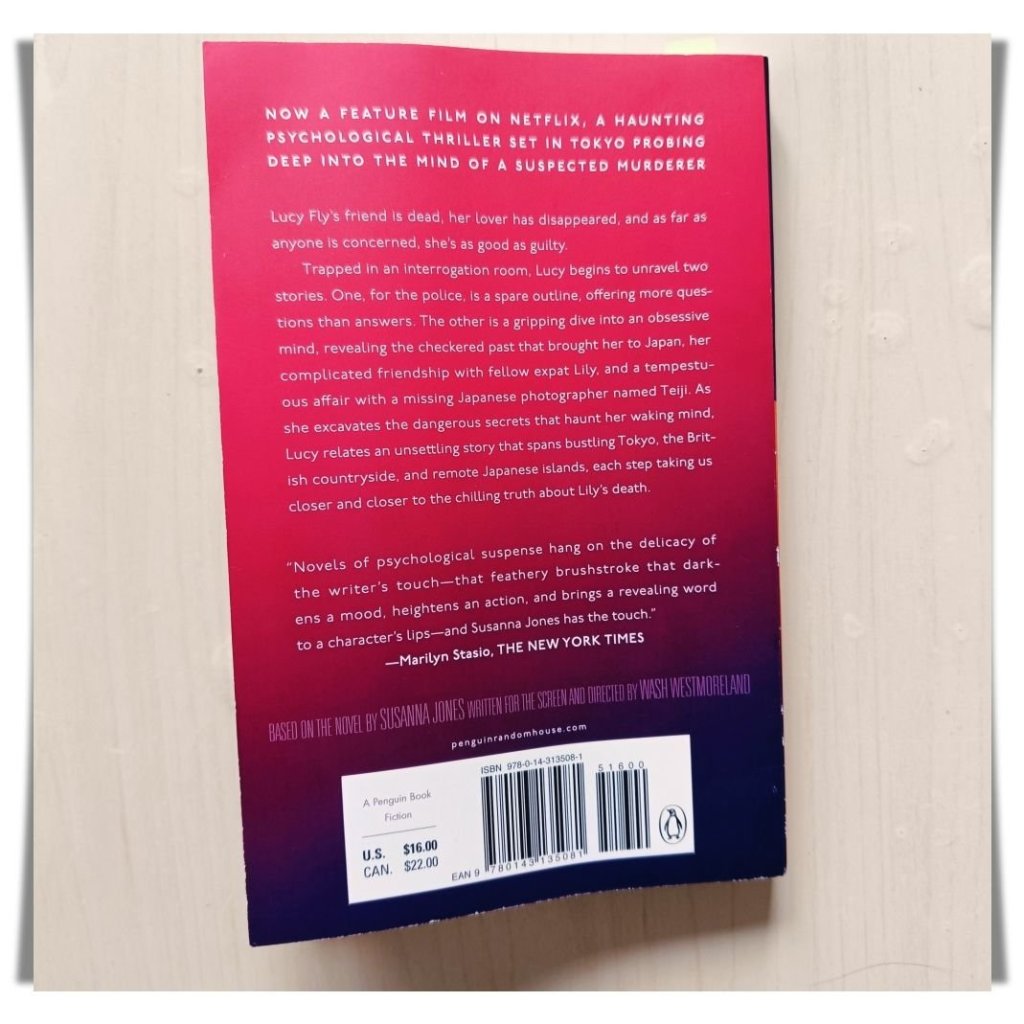
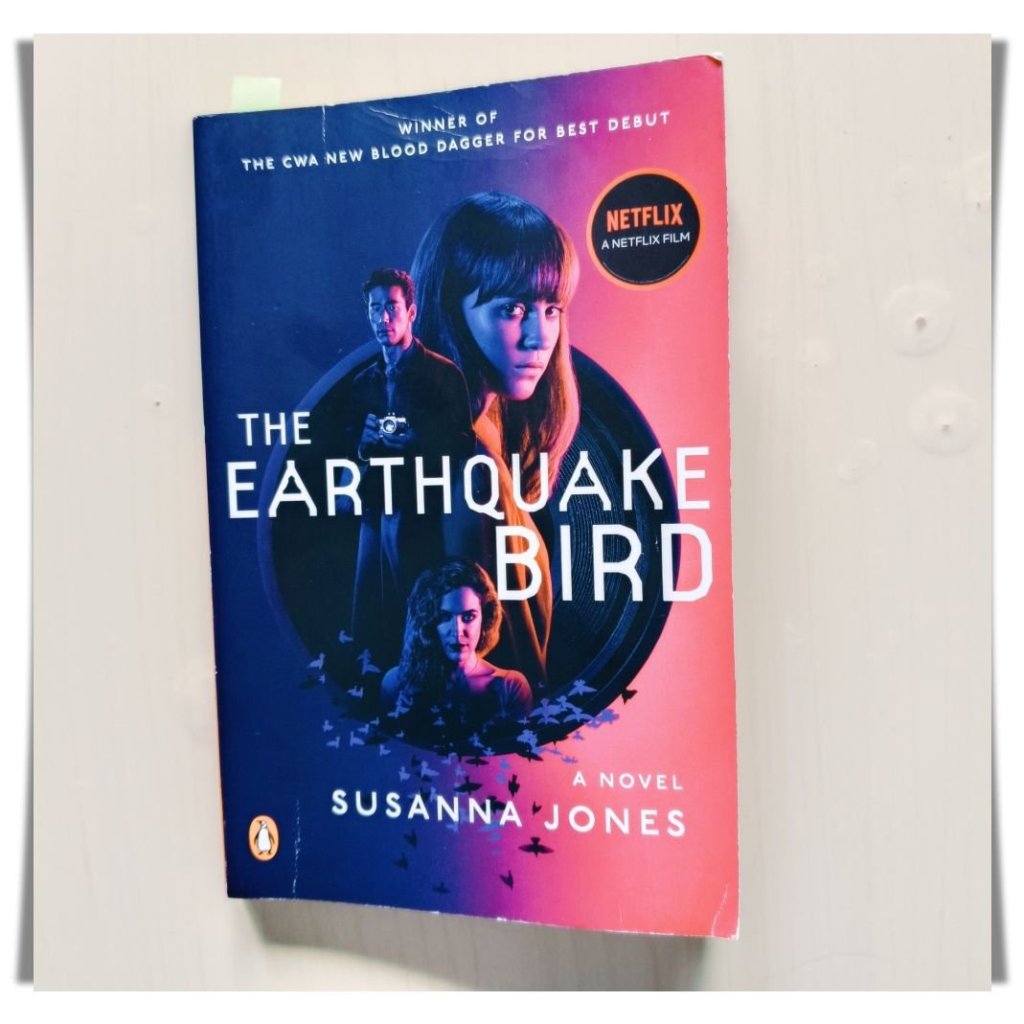
Last weekend, I finally had the chance to read Susanna Jones’s novel, The Earthquake Bird. It was a long-awaited opportunity. I watched the movie adaptation on Netflix back in 2019, and it left a lasting impression on me. I was enchanted by the haunting atmosphere, the layered characters, and the psychological tension. And that left me wanting to dig up the original source material. But since the novel was published in 2001, it was difficult to find a copy. That is, until recently. The second I discovered it, I knew I needed to revisit Lucy Fly’s story, this time in the author’s own words.

Reading The Earthquake Bird was an intense experience. The novel immerses you in Lucy’s fragmented memories and unreliable narration, plunging you deep inside her mind. As I turned the pages, I could feel her guilt, her isolation, and her complicated relationships with the people around her. The raw emotional force of Jones’s spare, precise prose lingers long after you close the book.

Plot Summary of The Earthquake Bird

The Earthquake Bird is set in Tokyo, following Lucy Fly, a British expatriate who works as a translator and whose solitary existence is upturned when she becomes the prime suspect in the murder of fellow expat and her newfound friend, Lily Bridges. Lucy is the narrator, recounting her life, her entanglement with a mysterious Japanese photographer, Teiji Matsuda, and her intricate, troubled friendship with Lily.

The novel intertwines themes of guilt, cultural dislocation, and the indistinct boundary between love and obsession. The novel unfolds through Lucy’s recounts of the events leading up to Lily’s death, but her memories are disjointed and unreliable, leading readers to wonder how much of her version of reality can be believed. With its haunting atmosphere and complex character dynamics, The Earthquake Bird is as much a psychological portrait as a murder mystery.

Lucy’s Third-Person Narration

One of the most striking aspects of the novel is Lucy’s tendency to refer to herself in the third person when recounting her past. This shall seem, at first, an odd and disorienting narrative choice. But as I delved further, it was obvious that this was a conscious mirroring of Lucy’s psychological state. Her disconnection from her own memories reflects her emotional detachment, a coping mechanism she’s developed through her traumatic experiences and unbearable sense of guilt.

Lucy’s belief that she brings disaster and death to those around her is a recurring theme. She bears the burden of past tragedies, believing she is somehow to blame. This third-person narration creates a distance between her present self and her past actions, as though she’s attempting to disassociate from the person she used to be. This narrative technique enhances the haunting quality of the novel, immersing readers in Lucy’s splintered self.

The Mystery of Teiji

Lucy’s relationship with Teiji is at the core of the story, and it is as mysterious as the man himself. Despite being his girlfriend, Lucy realizes how little she truly knows about him. She doesn’t even know his last name. Surprising moments like Teiji’s casual mention of his love for mopping floors and washing up, or Lucy’s hearing him sing, remind us that people are always more complicated than we imagine. There are facets of Teiji that remain hidden from Lucy, even after they’ve spent a great deal of time together.

This realization resonated with me deeply. It’s a humbling reminder that we never fully know someone, no matter how close we are or how long we’ve been in each other’s lives. People have depths, and their inner worlds often remain a mystery. For Lucy, this lack of understanding becomes both a source of fascination and frustration, adding tension to their already strained relationship.

Chapter 12: Grief and Betrayal

If I had to pick a favorite part of the novel, it would be Chapter 12. In this chapter, Lucy is grieving the loss of her lover while grappling with the emotional aftermath of Teiji and Lily’s betrayal. What most impressed me was the way Jones portrayed Lucy’s pain so subtly. The chapter doesn’t linger on Lucy’s heartbreak explicitly, but her suffering is all but tangible in every sentence. The emptiness that she feels, the way in which her world appears to collapse in on itself—it’s all there, woven into the fabric of the narrative.

Jones’s ability to evoke such deep emotions without resorting to melodrama is truly masterful. It made me feel Lucy’s pain as if it were my own. It’s a testament to the power of understated writing—show, don’t tell.

My Thoughts on Lily Bridges

Lily Bridges is a character that elicits mixed feelings. From the start, Lucy is wary of her. Lily’s wimpy, needy attitude irritates Lucy, and it’s not hard to see why. However, Lucy secretly relishes Lily’s need for her. For someone like Lucy, who frequently feels invisible and isolated, Lily’s dependence on her makes her feel smart and capable. This dichotomy makes for an intriguing dynamic between the two women.

But I couldn’t help but disapprove of Lucy’s decision to include Lily in her private time with Teiji. If I were Lucy, I’d be even more territorial. I would not feel good about the idea of my man getting too friendly with a female friend, especially someone I am not personally fond of. And still, Lucy’s decision to allow Lily into her world says so much about who she is. It reflects her desire for validation and her struggle to navigate the dynamic of friendship and intimacy.

A Story That Haunts You

The reason The Earthquake Bird is so compelling is because it tackles guilt and identity. Lucy’s perception of herself is that she is a natural-born destroyer, that her very existence brings harm to the people she loves. It’s a guilt that permeates all facets of her life, from her relationships to how she sees her own worth.

The novel also takes up the theme of cultural displacement. As an expatriate in Japan, Lucy sometimes feels like an outsider, caught between two worlds. This alienation only exacerbates her identity crisis, heightening the poignancy of her struggles.

Final Thoughts

Reading The Earthquake Bird was an unforgettable experience. Susanna Jones has created a haunting and provocative novel, with a protagonist of such complexity whose presence reverberates long after the last page has been turned. Lucy Fly is not a loveable character; she’s full of imperfections and fear, making her narrative even more relatable.

If you’ve only seen the Netflix adaptation, then I recommend checking out the book. Although the film impressively conveys the tone of the story, the novel is a deeper exploration of Lucy’s mind and the labyrinthine relationships that make up her landscape. It’s a story about guilt, love, betrayal, and the fragmented nature of identity—a story that lingers with you, quietly unsettling, long after you turn the last page.

I’ll be reviewing the Netflix adaptation in a separate post, where I’ll explore how the movie differs from the book and whether it captures the same depth and nuance. Now, though, I’m glad to have finally read the novel. It was worth the wait, and, I suspect, a story I’ll return to, discovering different layers and meanings each time I do so.

Reflection | Writing Between Emotion and Detachment

I discovered Annie Ernaux’s writing pretty recently and at a time when I was learning to trust my own voice. I’ve been writing for a long time, but apart from blog updates, I almost never published my work. (I published 4 poems in online literary journals last year). Though I love writing, I spent the last 15 years focusing on my art, pushing writing to the back burner.

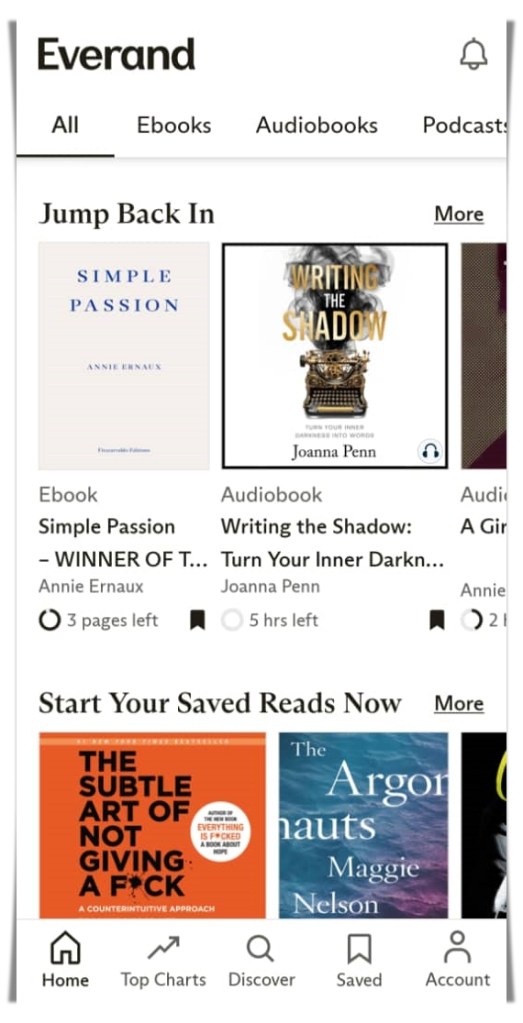
Image source: My Everand subscription

I write poetry and short stories now and then. They are nothing grand or serious because I don’t feel compelled to write a whole book with a complete plotline and characters. I collected my short stories; some are purely fiction, and some are based on true experiences and stories. I have never met anyone who writes like me until I came across Annie Ernaux’s work.

Reading Ernaux was like finding a mirror I never knew existed. Ernaux, like me, dissects the past obsessively. She revisits memories repeatedly, searching for meaning in fragmented events of the past. But there was a difference I couldn’t ignore. Ernaux writes with a stark, almost clinical detachment. She lays out the details of her life as if she is simply recording facts. She does not romanticize or dramatize; she just records the experiences. Her writing reads like an autopsy of the past, as if she had already processed it, wrapped it up, and put it on a shelf labeled “This happened in the past.” She records the details of her love affairs, including the lurid moments, without nostalgia, shame, or guilt. This is what she wrote about one of her lovers:

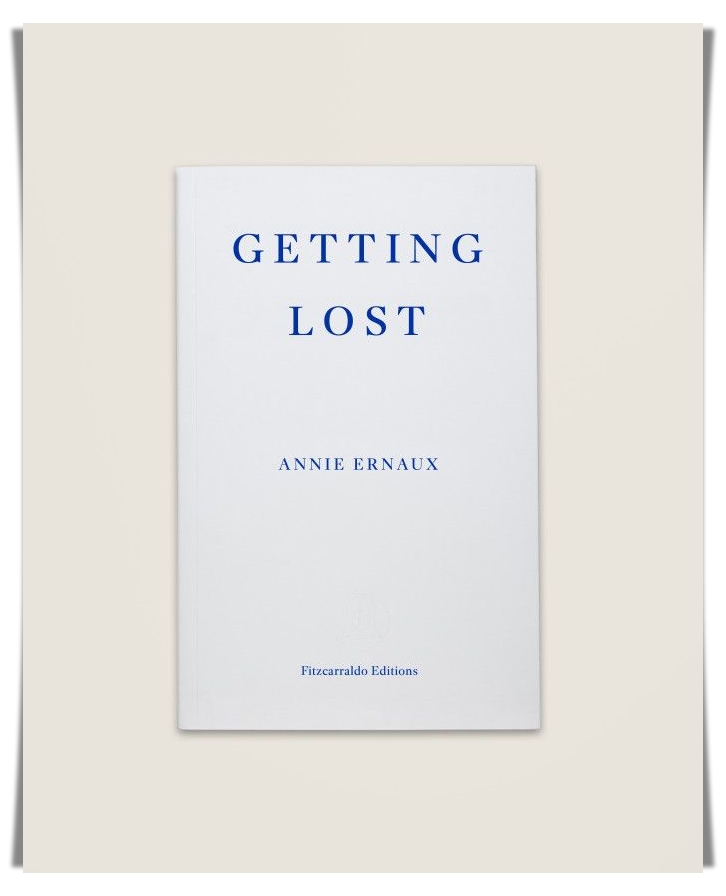
“The man for whom I had learned them had ceased to exist in me, and I no longer cared whether he was alive or dead.” ~ Getting Lost

And that, I realized, is where she and I diverge.

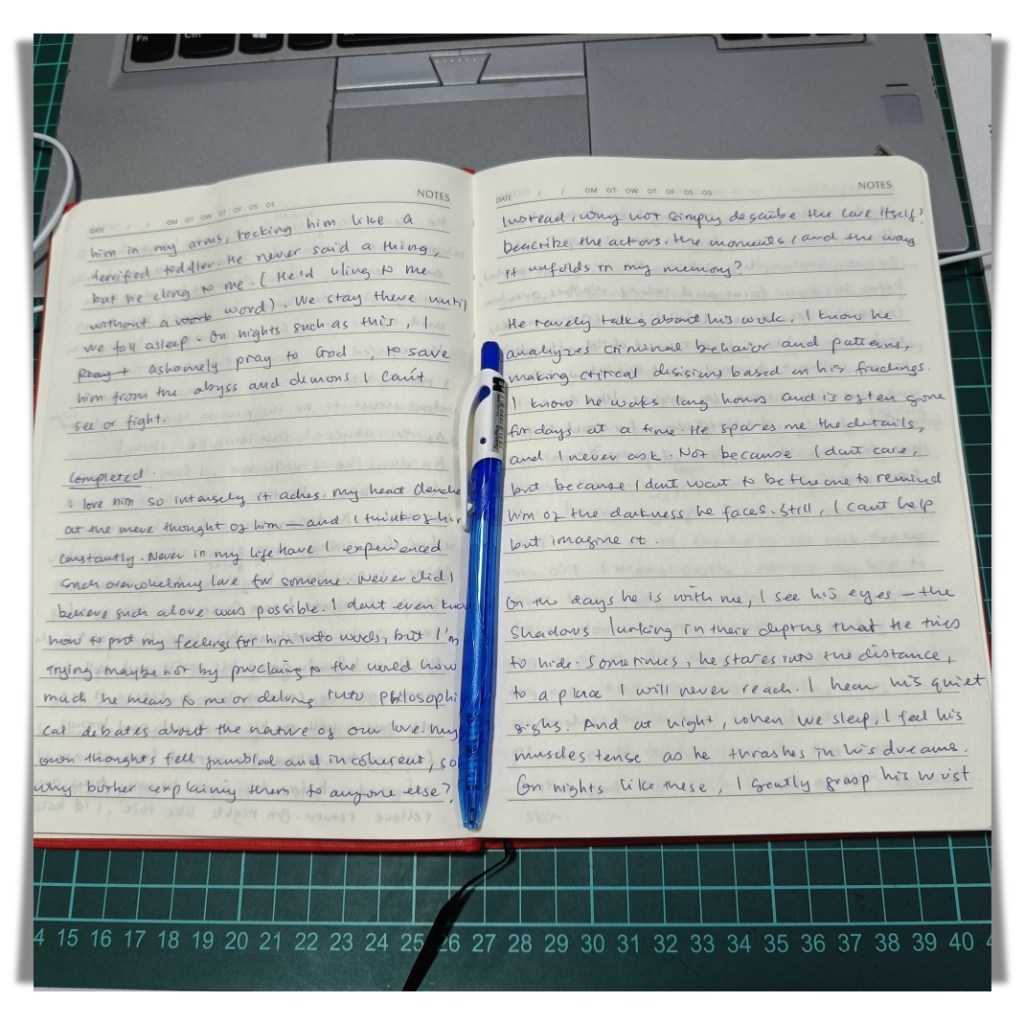
I don’t just remember the past—I relive it. Every emotion returns, undiluted by time. I don’t just recall what happened; I feel it as if it’s still unfolding inside me. The joy, the pain, the longing, the grief—they rush back in full force. Because of this, my writing is anything but detached. When I write essays, blog posts, poems, or stories inspired by past events, they carry the pulse of my emotions. They are raw and undiminished. And for a long, long time, I felt ashamed of my voice and lacked confidence in expressing myself. I thought that was a flaw.

Image source: My Everand subscription

I admired Ernaux’s ability to write without apology or hesitation. I wondered if I needed to learn detachment and strip my words of emotions so they could be seen as more “literary” and taken more seriously. After all, isn’t that what makes writing powerful—the ability to observe without being consumed? But the more I wrote, the more I realized: I don’t have to be like her. I don’t have to sever myself from my emotions to be a writer.

I realized that I don’t have to strive to be as detached as Ernaux. I can learn to be confident in my voice and embrace my own way of writing. My writing is where memory stays alive, where emotions breathe between the lines, unfiltered, unsoftened.

My words do not have to be clinical to be valid. They do not have to be detached to hold power. I am learning to write without shame, guilt, and hesitation. I will not erase the emotions—I will let them exist freely.

Perhaps I will never reach the kind of distance Ernaux has from her past. But that’s okay; my voice is mine, and it is enough.

So I wonder—must we detach from memory to write about it? Or is feeling everything deeply has its own power?

Book Review | Simple Passion by 2022 Nobel Laureate, Annie Ernaux

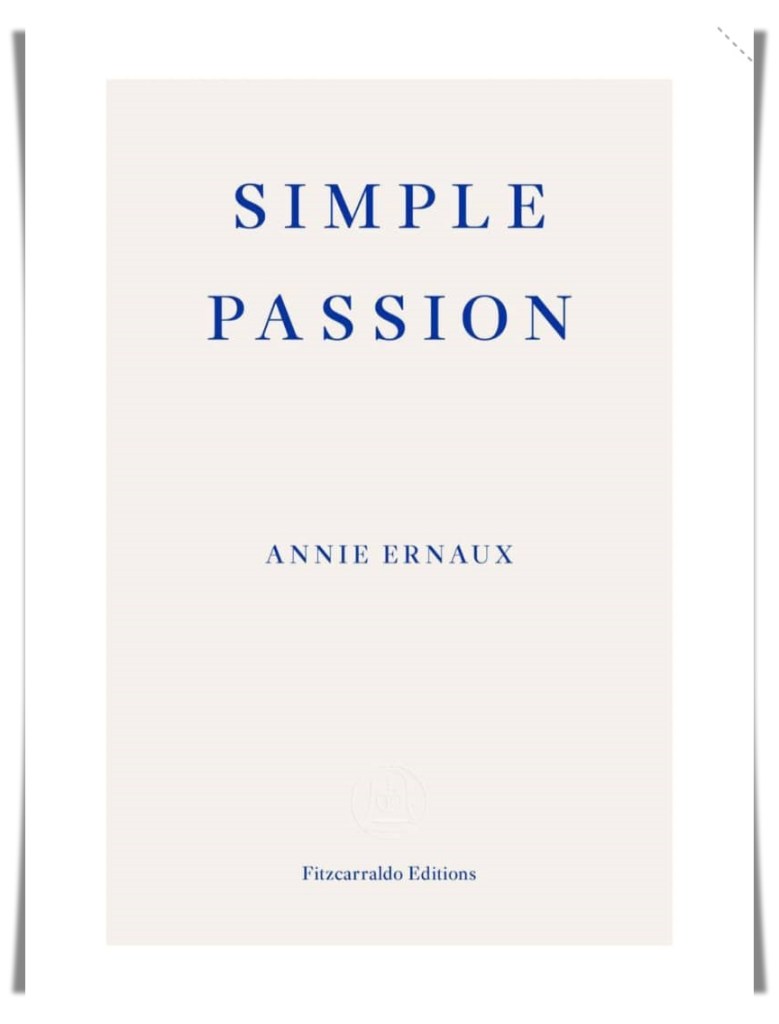
I have been wanting to read books by the French author, Annie Ernaux, since she was awarded the Nobel Prize in Literature in 2022, but I never got around to it until about a week ago. I was scrolling through my reading list on Everand and came across Ernaux’s book, Simple Passion. Since the book is short, 80 pages, I gave it a go. It took me one afternoon, in between daily routines, to finish it.

I’ve been a Scribd, and later Everand’s subscriber since 2018.

I’m blown away. Some books tell a story. Simple Passion does not. Instead, it captures her obsession with a man in its purest form. In this book, Ernaux presents a raw, unembellished account of her affair with a married man. This is an autofiction. Yes, it’s autobiographical with elements of fiction woven into the story.

The affair took place in the 80s, and I made a quick calculation. Ernaux would be in her late 40s when these events took place. Ernaux was divorced with two sons. The man was a lot younger, and I thought that was hot, but I digress.

Ernaux’s writing is fragmented, which surprised me. They bear resemblance to my (fiction) writing style. Ernaux’s narrative is not chronological. It’s like she’s jotting down memories and insights as they come to her. This rawness is what makes Simple Passion so devastatingly honest. She confesses:

I am incapable of describing the way in which my passion for A developed day by day. I can only freeze certain moments in time and single out isolated symptoms of a phenomenon whose chronology remains uncertain—as in the case of historical events.

Like I mentioned, this is my first Ernaux book. I wouldn’t say I love the language (perhaps the translation from French loses something), but I do admire the way she lays her experience bare. Ernaux wrote without using big, bombastic words and without self-pity. She stripped unnecessary details, and it’s brutal in the best way.

Her grief after her lover leaves for his home country is palpable. However, Ernaux doesn’t indulge us with the details of her feelings. She shows us instead through her actions, through her emptiness in her daily routine, and through the strange ways she tries to keep him close even in his absence.

One day, lying on my stomach, I gave myself an orgasm; somehow I felt that it was his orgasm.

It’s as if they were one entity, inseparable, even when apart.

And then there’s the bargaining. The desperate, irrational belief that she could will him back:

If he calls me before the end of the month, I’ll give five hundred francs to a charity.

She clings to the past by recreating moments as if reliving them could make moments repeat themselves:

If I went somewhere I had been to last year, when he was here—to the dentist or a staff meeting—I would wear the same suit as before, trying to convince myself that identical circumstances produce identical effects and that he would call me that evening.

Her lover did end up calling her one day, a week after the Gulf War was declared. After months of grieving for her lover, she finally got her closure. They had one last moment together, and that was the end of it. What remains now is her grief—for him and for the person she was when she was with him.

I had decided to learn his language. I kept, without washing it, a glass from which he had drunk.

I grieved with her. Not because I have lived her story, but because I have lived a version of it. I, too, have known an all-consuming love that was never meant to last. I have felt the bittersweet ache of moving forward without someone who once defined my existence. I have wondered, in private moments, what life would have been like if it had been him. If our child had been his. If he remembers me in passing thoughts, or comparing others to me. These are the kinds of things we don’t speak aloud, not even to our closest friends, but they remain, surfacing in the most unexpected moments.

One of the most striking passages in the book is this:

I do not wish to explain my passion, that would imply that it was a mistake or some disorder I need to justify—I just want to describe it.

In my opinion, this is what makes Ernaux’s writing so powerful. She does not seek redemption or understanding. She does not attempt to explain away her feelings. She simply describes them, and in doing so, she gives permission to readers to experience them in their own terms.

Ernaux did not write this book to boast about herself or her lover. She wrote it as a gift to those who have felt this same kind of passion and loss. In her own words, it’s an offering. As all great writers do, Ernaux knew that certain experiences are universal no matter how unique they seem.

I haven’t written a book about him, neither have I written a book about myself. All I have done is translate into words the way in which his existence has affected my life. An offering of a sort, bequeathed to others.

And that is exactly what Simple Passion feels like to me—an offering. It lingers in my mind even days after I turned the final page.

Note: There is a movie adaptation if you are interested. It was released in 2020. I haven’t watch it but here’s the trailer. In the novel, Ernaux described that her lover look a bit like Alain Delon which was wow.

Book Review | Waiting by Ha Jin

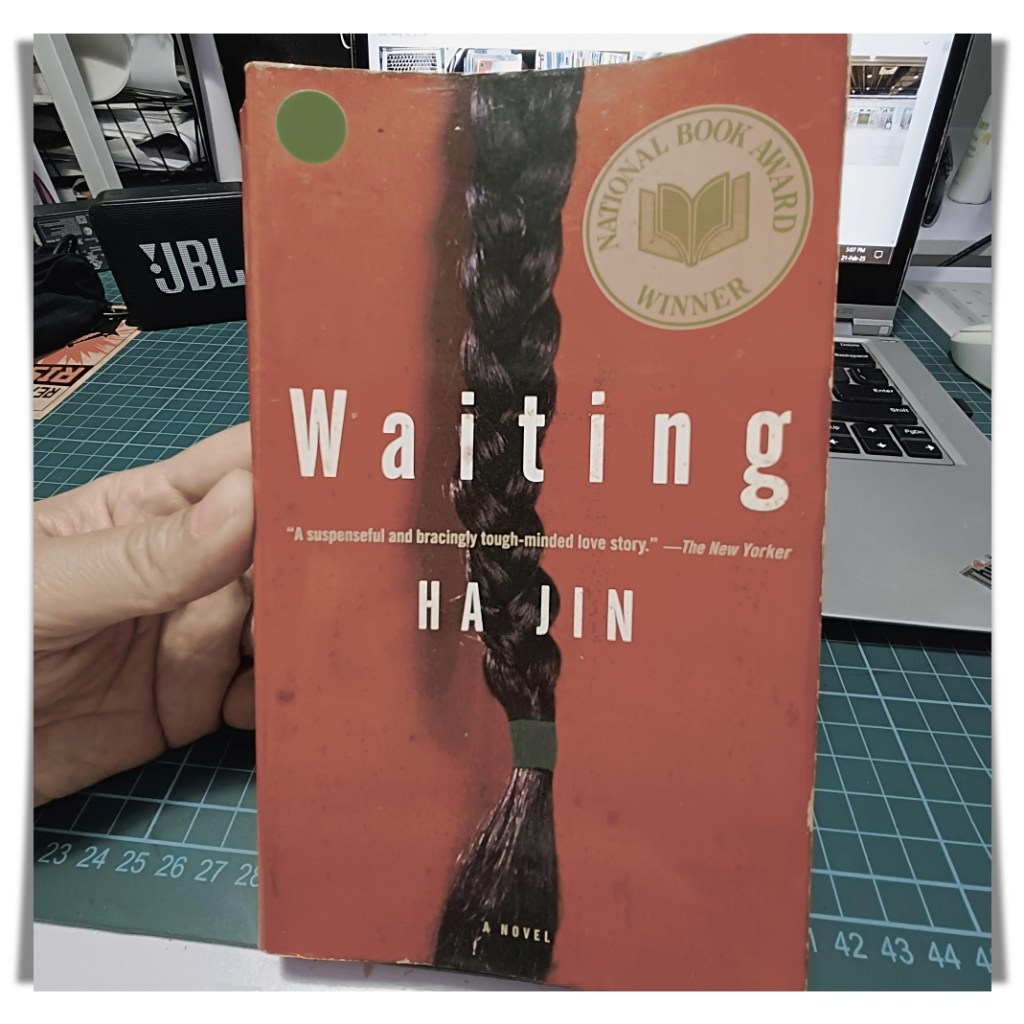
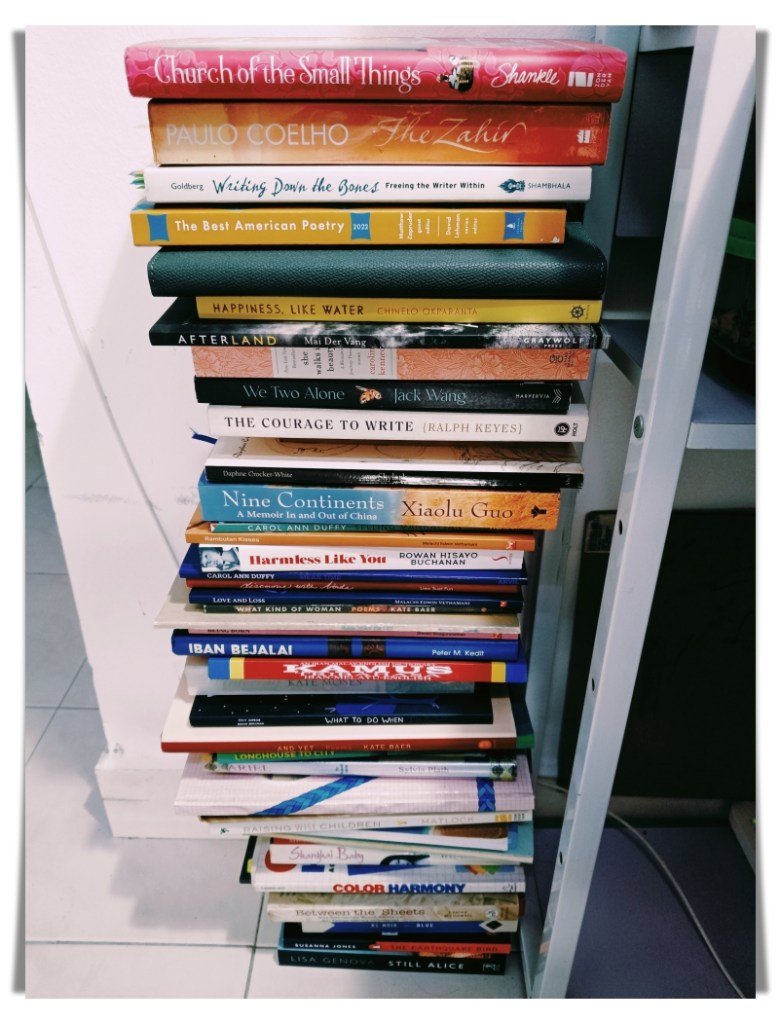
I bought Waiting by Ha Jin from a used bookstore some months ago. It had been sitting among the stack of books on my desk, untouched, until lately. I picked up this book to read since my unread stack was growing. I simply couldn’t quit buying new books. It took me weeks to finish it since life got in the way, but I finished reading it last night.

Waiting is one of those novels that lingers with you long after you’ve finished reading it. The book lacks sweeping romance, but you will be drawn to its exploration of human indecision and societal limits.

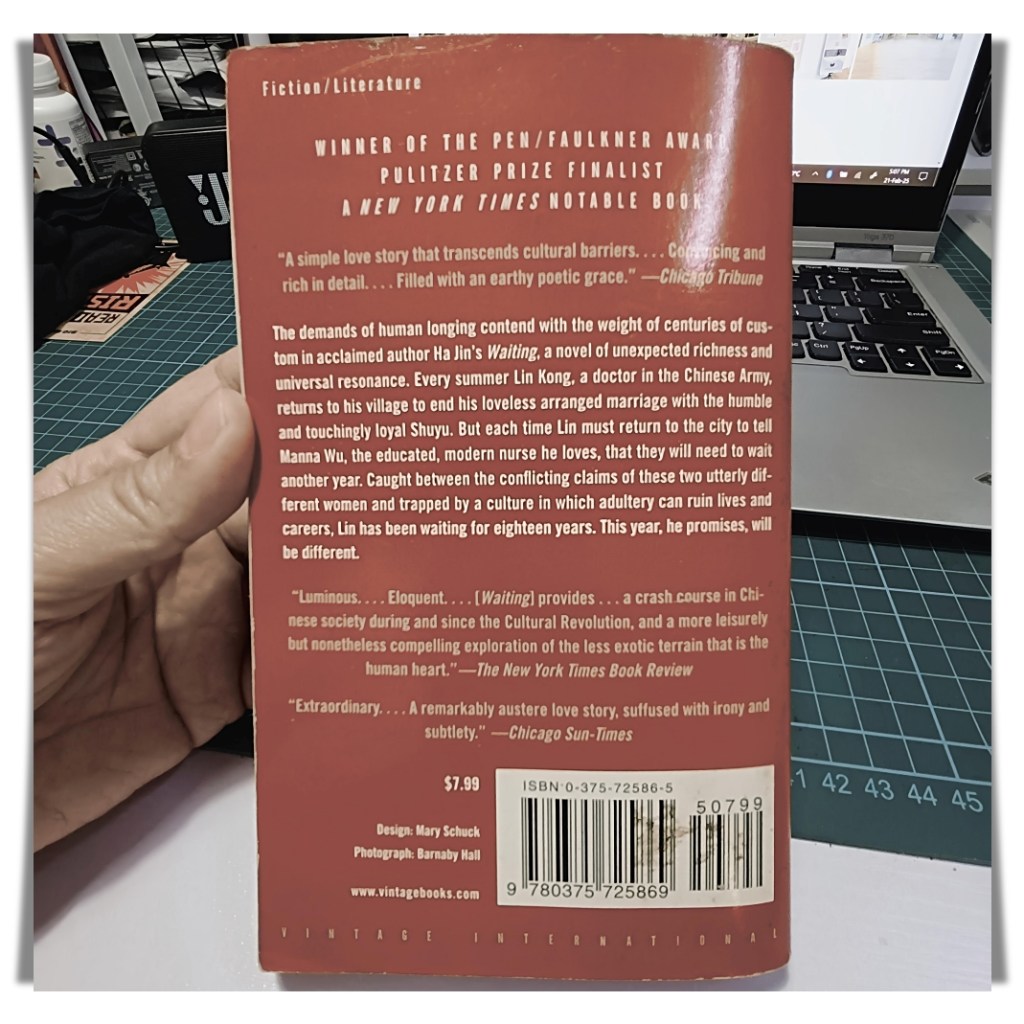
The story follows Lin Kong, a Chinese army doctor, who spends 18 years in limbo between two women: Shuyu, his devoted, traditional wife, and Manna, his modern, independent lover. Every year, Lin returns to his village to seek a divorce from Shuyu, who agrees but later refuses in court. The story is more than just a love triangle—it’s also about a man paralyzed by indecision.

What struck me the most about Lin was not his indecisiveness but what it showed about his personality. It became evident to me that his hesitancy was not about love but rather about his inability to confront himself. He didn’t know what he wanted, so he drifted through life, letting others’ expectations and societal pressures influence his choices. At the same time, I couldn’t help but understand him. Living in a rigid communist culture made it difficult for Lin to follow his heart. Divorce was frowned upon, personal desires were frequently sacrificed for the greater good, and external judgment had a significant impact on every action.

It’s easy for those of us who live in a freer society to condemn Lin and ask why he didn’t just decide between Shuyu and Manna. However, a closer look reveals a man trapped by society as well as his own passivity and illusions. He assumed that what he couldn’t have was what his heart truly desired, confusing lust with longing for love.

“His heart began aching. It dawned on him that he had never loved a woman wholeheartedly and that he had always been the loved one. This must have been the reason why he knew so little about love and women. In other words, emotionally he hadn’t grown up.”

Reading this made me realize how different I was from Lin Kong. I’ve fallen in love soulfully. I’ve taken chances, experienced sorrow, and allowed love to transform me. I’ve shown up in my relationships, even when it meant failing and starting over. Lin, on the other hand, never allowed himself to experience deep emotions. He lived on the surface, terrified of true vulnerability, and as a result, he never genuinely experienced love.

But I get it. I understand his fear and hesitancy. In his world, there was so much at risk. The tight restrictions of society, the dread of making the wrong decision, and the conflict between duty and desire all contribute to Lin’s personality. Lin’s story is tragic because he allowed life to happen to him instead of taking charge of his own happiness.

Waiting prompted me to reflect on deeper realities about love and marriage. Love is complex. It is not all romance. Marriage is not for the weak. It demands forgiveness, humility, compromise, and sacrifice. And sometimes the presence or absence of children may make or break a marriage.

This book offers profound insights into society, love, personal responsibility, and the delicate balance between desire and obligation. But I must be honest that it is a slow read, somewhat draggy and monotonous. However, it forces you to sit through the discomfort, just like Lin Kong did.

In the end, Waiting isn’t just about Lin Kong and his love triangle. This story is also a mirror, reflecting our own hesitations and the way we let life pass us by. The story also made me thankful for the chances I’ve taken, the love I’ve risked, and the courage to keep showing up even when things are difficult.

Do I recommend it? Yes, but only if you’re willing to live with the discomfort of indecision, the sorrow of unfulfilled desires, and the bittersweet realization that we may be our own worst obstacles.

The stack of read/unread books next to my desk.