
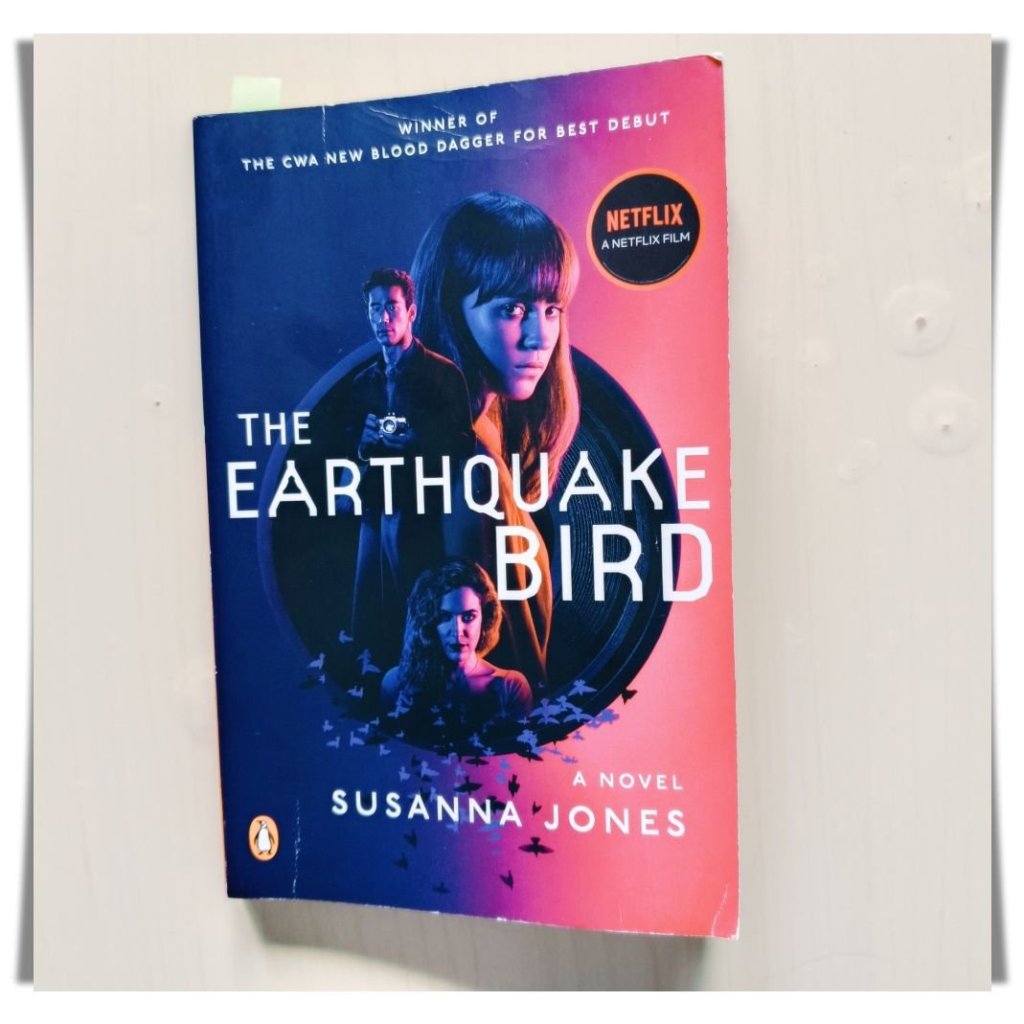
Last weekend, I finally had the chance to read Susanna Jones’s novel, The Earthquake Bird. It was a long-awaited opportunity. I watched the movie adaptation on Netflix back in 2019, and it left a lasting impression on me. I was enchanted by the haunting atmosphere, the layered characters, and the psychological tension. And that left me wanting to dig up the original source material. But since the novel was published in 2001, it was difficult to find a copy. That is, until recently. The second I discovered it, I knew I needed to revisit Lucy Fly’s story, this time in the author’s own words.
Reading The Earthquake Bird was an intense experience. The novel immerses you in Lucy’s fragmented memories and unreliable narration, plunging you deep inside her mind. As I turned the pages, I could feel her guilt, her isolation, and her complicated relationships with the people around her. The raw emotional force of Jones’s spare, precise prose lingers long after you close the book.
Plot Summary of The Earthquake Bird
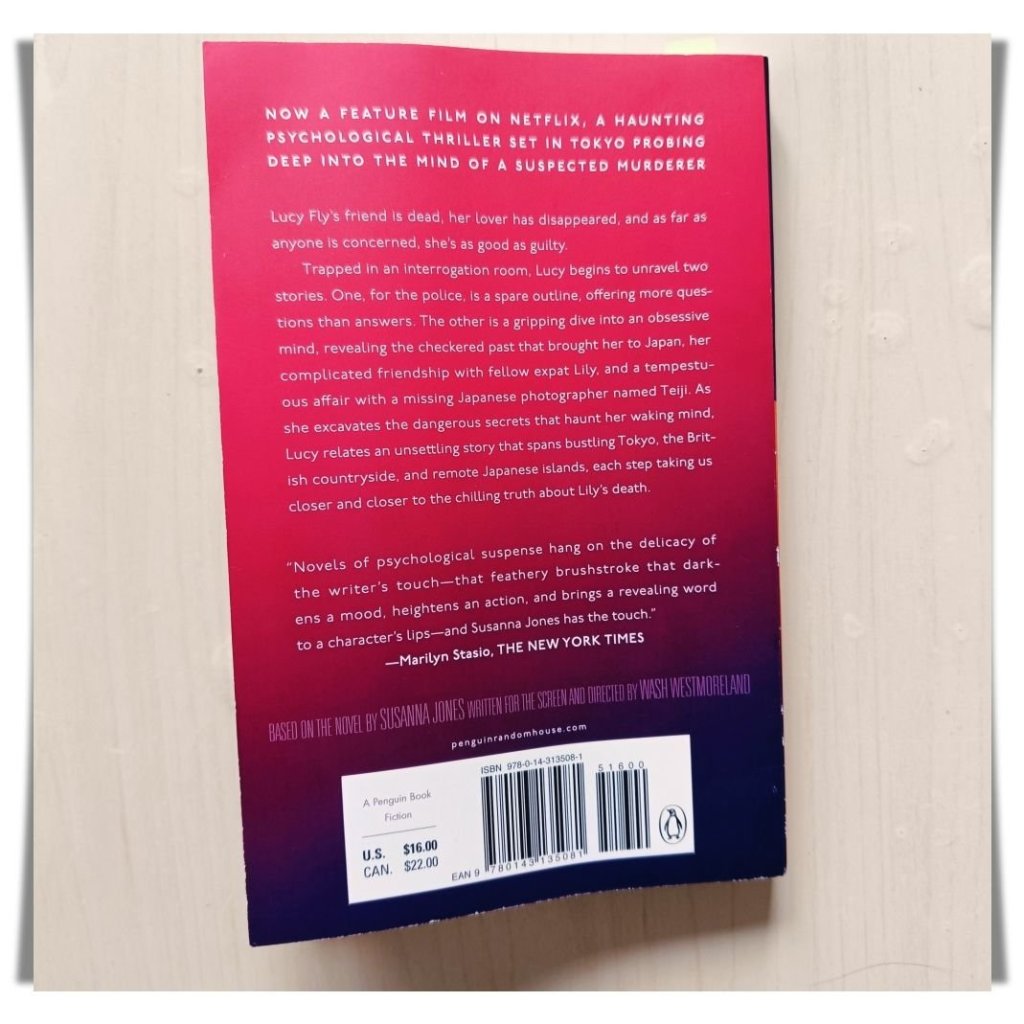
The Earthquake Bird is set in Tokyo, following Lucy Fly, a British expatriate who works as a translator and whose solitary existence is upturned when she becomes the prime suspect in the murder of fellow expat and her newfound friend, Lily Bridges. Lucy is the narrator, recounting her life, her entanglement with a mysterious Japanese photographer, Teiji Matsuda, and her intricate, troubled friendship with Lily.
The novel intertwines themes of guilt, cultural dislocation, and the indistinct boundary between love and obsession. The novel unfolds through Lucy’s recounts of the events leading up to Lily’s death, but her memories are disjointed and unreliable, leading readers to wonder how much of her version of reality can be believed. With its haunting atmosphere and complex character dynamics, The Earthquake Bird is as much a psychological portrait as a murder mystery.
Lucy’s Third-Person Narration
One of the most striking aspects of the novel is Lucy’s tendency to refer to herself in the third person when recounting her past. This shall seem, at first, an odd and disorienting narrative choice. But as I delved further, it was obvious that this was a conscious mirroring of Lucy’s psychological state. Her disconnection from her own memories reflects her emotional detachment, a coping mechanism she’s developed through her traumatic experiences and unbearable sense of guilt.
Lucy’s belief that she brings disaster and death to those around her is a recurring theme. She bears the burden of past tragedies, believing she is somehow to blame. This third-person narration creates a distance between her present self and her past actions, as though she’s attempting to disassociate from the person she used to be. This narrative technique enhances the haunting quality of the novel, immersing readers in Lucy’s splintered self.
The Mystery of Teiji
Lucy’s relationship with Teiji is at the core of the story, and it is as mysterious as the man himself. Despite being his girlfriend, Lucy realizes how little she truly knows about him. She doesn’t even know his last name. Surprising moments like Teiji’s casual mention of his love for mopping floors and washing up, or Lucy’s hearing him sing, remind us that people are always more complicated than we imagine. There are facets of Teiji that remain hidden from Lucy, even after they’ve spent a great deal of time together.
This realization resonated with me deeply. It’s a humbling reminder that we never fully know someone, no matter how close we are or how long we’ve been in each other’s lives. People have depths, and their inner worlds often remain a mystery. For Lucy, this lack of understanding becomes both a source of fascination and frustration, adding tension to their already strained relationship.
Chapter 12: Grief and Betrayal

If I had to pick a favorite part of the novel, it would be Chapter 12. In this chapter, Lucy is grieving the loss of her lover while grappling with the emotional aftermath of Teiji and Lily’s betrayal. What most impressed me was the way Jones portrayed Lucy’s pain so subtly. The chapter doesn’t linger on Lucy’s heartbreak explicitly, but her suffering is all but tangible in every sentence. The emptiness that she feels, the way in which her world appears to collapse in on itself—it’s all there, woven into the fabric of the narrative.
Jones’s ability to evoke such deep emotions without resorting to melodrama is truly masterful. It made me feel Lucy’s pain as if it were my own. It’s a testament to the power of understated writing—show, don’t tell.
My Thoughts on Lily Bridges
Lily Bridges is a character that elicits mixed feelings. From the start, Lucy is wary of her. Lily’s wimpy, needy attitude irritates Lucy, and it’s not hard to see why. However, Lucy secretly relishes Lily’s need for her. For someone like Lucy, who frequently feels invisible and isolated, Lily’s dependence on her makes her feel smart and capable. This dichotomy makes for an intriguing dynamic between the two women.
But I couldn’t help but disapprove of Lucy’s decision to include Lily in her private time with Teiji. If I were Lucy, I’d be even more territorial. I would not feel good about the idea of my man getting too friendly with a female friend, especially someone I am not personally fond of. And still, Lucy’s decision to allow Lily into her world says so much about who she is. It reflects her desire for validation and her struggle to navigate the dynamic of friendship and intimacy.
A Story That Haunts You
The reason The Earthquake Bird is so compelling is because it tackles guilt and identity. Lucy’s perception of herself is that she is a natural-born destroyer, that her very existence brings harm to the people she loves. It’s a guilt that permeates all facets of her life, from her relationships to how she sees her own worth.
The novel also takes up the theme of cultural displacement. As an expatriate in Japan, Lucy sometimes feels like an outsider, caught between two worlds. This alienation only exacerbates her identity crisis, heightening the poignancy of her struggles.
Final Thoughts
Reading The Earthquake Bird was an unforgettable experience. Susanna Jones has created a haunting and provocative novel, with a protagonist of such complexity whose presence reverberates long after the last page has been turned. Lucy Fly is not a loveable character; she’s full of imperfections and fear, making her narrative even more relatable.
If you’ve only seen the Netflix adaptation, then I recommend checking out the book. Although the film impressively conveys the tone of the story, the novel is a deeper exploration of Lucy’s mind and the labyrinthine relationships that make up her landscape. It’s a story about guilt, love, betrayal, and the fragmented nature of identity—a story that lingers with you, quietly unsettling, long after you turn the last page.
I’ll be reviewing the Netflix adaptation in a separate post, where I’ll explore how the movie differs from the book and whether it captures the same depth and nuance. Now, though, I’m glad to have finally read the novel. It was worth the wait, and, I suspect, a story I’ll return to, discovering different layers and meanings each time I do so.



 Olivia's Atelier