Fragments of Obsession IV | The Criminologist

Some time ago I began writing Fragments of Obsession, brief glimpses into a private world of desire and distance. These new pieces pick up where the last ones left off, but they explore a darker area: the world of a criminologist.

I can’t sit at his desk or walk with him into the places he inhabits. All I have are fragments, imagined through the silence between us. They’re not about the crimes themselves but rather the places around them: his desk, the crime scene, and the interrogation room.

What interests me is not the evidence he gathers, but the burden that persists afterward. These pieces are how I watch from the outside and write about things I’ll never see. They belong to the same map of longing I began tracing in the first three Fragments of Obsession — part 1, part 2, part 3


The Desk

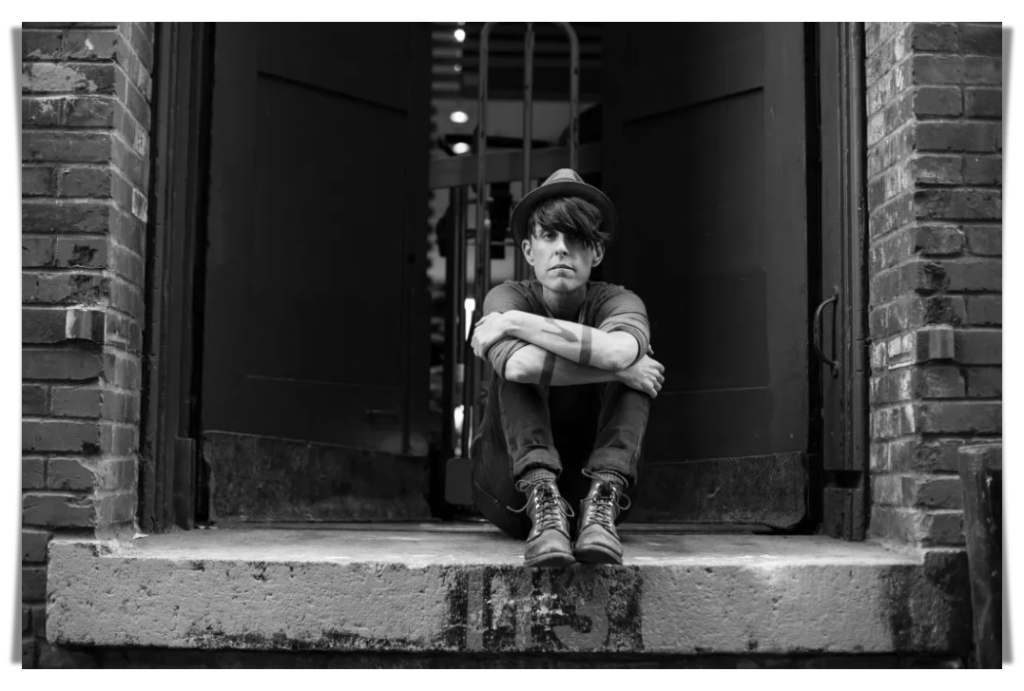
I never stood in front of it, but I know it like I’ve touched its surface a thousand times in my mind. A desk that holds the stories that no one wants to tell, and even fewer want to hear. Its top is scratched, probably from years of people dropping folders, forgotten coffee cups, and constant shuffles of pens and clips. Sturdy but with scars like him.

On one side, there is an uneven stack of papers threatening to tumble. Case notes, autopsy reports, and transcripts of late-night interviews with men who lie easily and women who have given up on getting justice. I imagine the edges fading from being read too often, held in worn hands. Underneath them, photographs turned face down, and the victim’s eyes still burning even when hidden. 

The other side is neater. A computer. A notebook with a page full of his neat, small handwriting. His pen would sometimes rest diagonally across it, with ink smudges on the margins where he applied pressure too hard. I imagine him hesitating mid-thought, his brows furrowing. 

There must be a hidden gun nearby. Cold, clinical, and within his reach. The barrel pointing nowhere, a constant reminder of how violence is always a part of his life. My people never lived with guns except for the ones that were passed down to us. My grandfather’s shotgun passed to my father and now to my eldest brother. A hunting tool, not for murder. Unloaded but heavy with potential, lingering like a sinister presence at the periphery of every thought. 

I can see his hand, with raised veins and long fingers, tracing the tabletop absentmindedly when fatigue creeps in. A gesture that seems almost loving, as if he were anchoring himself. He’s a man who has read too many lies in too many statements. He doesn’t stop. He keeps returning to this desk, like a man returning to his menua, the land he was born in, where his roots are waiting for him, no matter how far he has gone.

I’ll never sit across from him there. I only know it through imagination. This distance allows me to observe things that others may overlook: the silence around him, the way the desk has become an extension of his body, his determination, and his solitude. 


The Crime Scene

I picture it as the opposite of his desk. No order, no familiar scratches, no steady ground. There was chaos sealed off by yellow tape. It’s a place where a life has ended and everything normal—shoes by the door, a half-empty cup on the table, a curtain in the wind—suddenly feels obscene. 

The air is thick with things that can’t be cleaned. The iron tang of blood and the sour staleness of fear. A house where someone used to laugh is now silent. He goes through it methodically, but I know he notices everything. The scattered belongings. How things look wrong when they aren’t where they belong. The imprint of violence that remains like smoke after a fire. 

He kneels by the details others step over. A broken clasp. Mud tracked across the tiles. Fibers snagged on a nail. His hand hovers above them, never in a hurry or careless. He bends down low to collect evidence. I imagine how his eyes narrow as he gathers pieces that the rest of us can’t see. 

Somewhere close, a camera flashes, officers talk, and someone fills in a logbook. He moves like none of them are there. The scene is speaking to him. It tells him what to look for, what to doubt, and what doesn’t belong. 

And maybe he thinks of the victim too. Not just as a body drawn in chalk, but as a person who went barefoot over this floor and brushed their teeth at that sink. He’s seen too many of them. Each scene digs into him like a thumbnail. 

According to my people, when someone dies tragically, the place becomes restless. You don’t linger there long unless you want to carry that darkness home. He has to stay. He lets the silence seep into him and the darkness push against his skin. This is the only way to read what the dead left behind. The chaos doesn’t stay behind when he finally steps back over the tape. It follows him and becomes the real evidence he can never log. 


The Interrogation Room

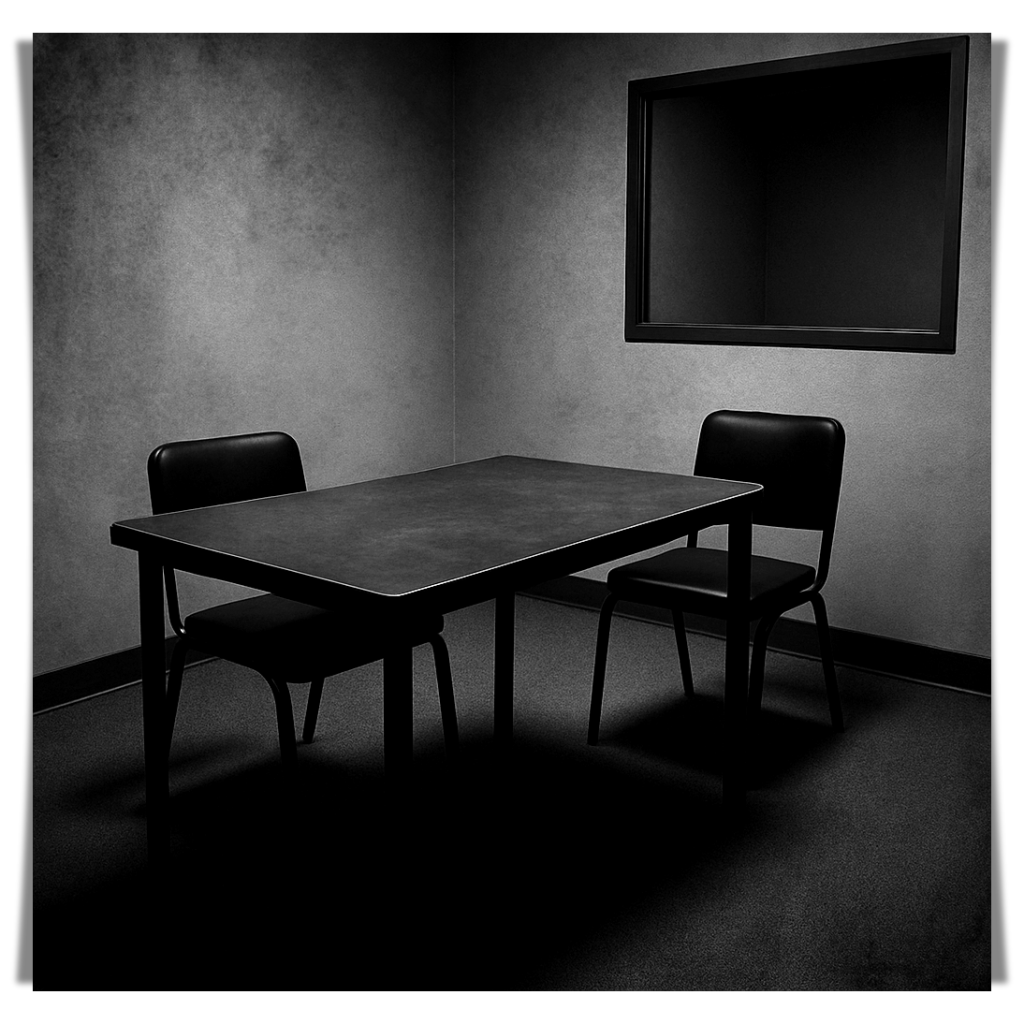
I can see it clearly, even though I’ve never been inside. The walls are bare and dull gray with faint finger prints on the paint from palms dragged in terror, boredom, or defiance. A single table in the center with uneven legs. One chair on each side but only one feels in charge. 

I imagine the air stale with breath and the absence of sunlight. There are no windows to the outside world. Only a dark pane of glass on one wall. He knows they’re watching. He doesn’t care. His focus is always here. This is a space where people stall, spin, crack, or burn. 

He sits across from them. Calm. Still like the river at dusk before swallowing the last light. He doesn’t raise his voice. He waits and lets them fill the silence with their own guilt. Lets them fidget, lie, and repeat themselves. Lets them feel uncomfortable about what they said. 

There’s always a file in front of him. Sometimes it’s closed. Sometimes it’s open to a photo or a sentence scribbled in red. He doesn’t look at it much. He stares at them, watches how their jaw moves, how they scratch their nose, and how their eyes dart to the door when they think no one’s watching. 

I wonder if he thinks of the victim while he listens. If he remembers the angle of the neck, the bruise on the cheek, and the time of death. If he keeps those pieces in his pockets like charms, reminding him of who he’s really speaking for. 

In my people’s old way of life, truth wasn’t pried out in rooms like these. We invoked Ini Andan, the goddess of justice, and waited for signs. Now there are only fluorescent lights and CCTV. The ritual remains the same. Watching. Listening. Putting the soul on a scale. 

He doesn’t need to catch them lying. They’ll hand it over eventually. Little by little, like decaying meat falling apart in their hands. 


Note:

I’m still working through two more fragments—The Victims and The Walk. They’ll come when they’re ready, and together they’ll complete this small sequence of obsession.


Copyright © Olivia JD 2025

All Rights Reserved.
I write about Iban culture, ancestral rituals, creative life, emotional truths, and the quiet transformations of love, motherhood, and identity. If this speaks to you, subscribe and journey with me.
The Cry of the Koklir | An Iban Ghost Story

Before I share my experiences, I’d want to clarify who the koklir is and what she represents in Iban belief.

People often think of the Iban people of Sarawak as headhunters, which is a part of our history, but it tends to eclipse the deeper aspects of who we are. However, our culture is not only based on headhunting. We have a strong spiritual connection to the natural world, which is rich in stories about spirits that live in rivers, lands, mountains, and dreams. Our folklores are alive with omens, taboos, and the spirits of people who have departed. Some spirits protect, some guide, and others, like the koklir, are said to return because something in their death was left unresolved.

In Iban culture, the koklir is one of the most feared spirits. She is believed to be the spirit of a woman who died during childbirth or shortly thereafter, specifically during the vulnerable bekindu period, which lasts for forty days of healing and recuperation. Her death is known as busong mati, or a spiritually unfortunate death, and her soul is considered to become jai (malevolent). Her soul is malevolent not because she did something wrong in life, but because her death was unnatural and tragic. Her spirit doesn’t cross over to the other side in peace; instead, it lingers behind, transformed by pain and grief.

As a ritual precaution, lime thorns (duri limau) are poked into her hands and soles before she is buried. It’s a symbolic act aimed at weakening her spirit and preventing her from becoming a koklir. Some people allege that her tongue is also pierced.

Then a prayer is being offered, asking her to rest and not come back to bother the living. But if the ritual isn’t done or if the death is really violent or sudden, people say she might still come back to haunt, seek, and punish.

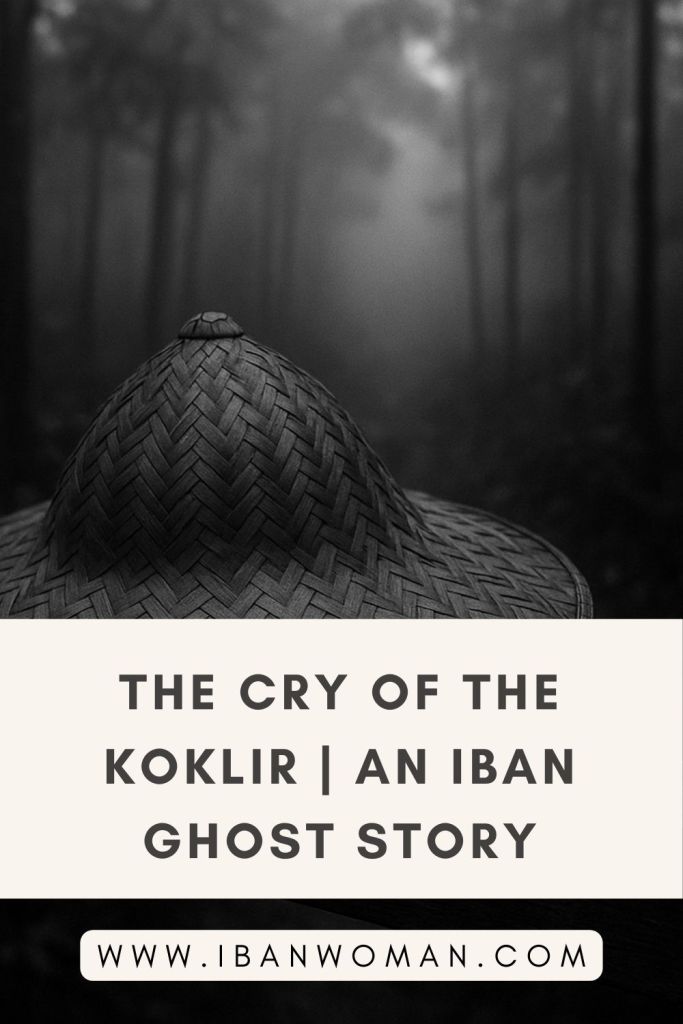
The koklir is believed to target men. Most of the time, you can hear her presence through a chilling cry that starts out like a hen calling her chicks: “kok, kok, kok…” and ends with a piercing, terrifying “haiiiiii waiiiiii!” Before she attacked her victim, she would scream “kokliiiiiiiiiiiiiiirrrrrrrrrr”. She sometimes takes the form of a beautiful woman, hiding her face with a tanggui serawong (woven sunhat) or a kubong leaf. Sometimes she manifests as an enturun, a shaggy, nocturnal bearcat with long claws. Some men say they’ve heard her voice in the jungle or by the river at night. Some people say they’ve seen her scratch at windows or doors with fingers that look like claws. The stories are shared quietly among men, usually late at night, and sometimes with fear or bravado.

I’ve never seen her. But would you believe me if I told you I heard her twice? And I remember it very well both times.

First Encounter

I was fourteen. It was the first day of the school break. Because my flight home was later that night, I was the only student left at the girls’ hostel at my boarding school. Everyone else had left throughout the day. The hostel was quiet and empty.

That morning, the warden told me to turn off the lights and close all the doors before I left. I said I would. After dinner, at about 6 PM, I took my bags outside and waited for my cousin to pick me up. It was getting dark already.

Before leaving, I went back in to do what I promised: turn off the lights and close the doors. I went up to the first floor, strolled through the empty corridor, and did what I had to do. The only sound was the rustling leaves blowing in the breeze. Everything else was still and quiet.

I heard something as I came back down, near the bathroom on the ground floor.

Kok… kok… kok…

It was soft and faint, exactly like a hen calling its chicks.

But this was a school compound. No nearby houses, no chickens. Just trees and a greenhouse. I stopped and listened again. I thought maybe I imagined it. I finished what I was doing and went back to the entrance. I stood there in the light of the corridor, looking out at the road. Everything else around me was dark.

Then, around 7PM, I heard it again.

Kok… kok… kok… kok…

It was slower and closer.

I felt chills and goosebumps all over my body. I was too scared to look around. I just kept my eyes on the road, expecting to see my cousin’s headlights. He came soon after that. I hastily loaded my bags into the car and drove away. I never looked back.

I didn’t see her, but I know what I heard. We believe that the koklir doesn’t harm girls or women because she only targets men. That gave me some comfort, but the sound stuck with me for years.

Second Encounter

I was still living in the same hostel a year later. I didn’t hear her voice this time, but I did hear something else. My bed was next to the door. Sometimes, I would wake up to a loud scratching sound at the door. I believed it was stray dogs trying to get in, so I went back to sleep.

However, I looked at the door one morning because I was curious. There were scratch marks, but they weren’t at the bottom where a dog could reach them. They were higher up, around chest height. That detail stuck with me. What kind of dog can scratch that high?

I didn’t say anything to anyone. I didn’t want to scare the others, especially the younger girls. But I remembered what the elders used to say: the koklir scratches at doors and windows with her long nails to find a way in.

After that, the scratching happened every now and then. I didn’t say anything about it until much later. I told the story years later in our WhatsApp group for former dormmates. I was surprised to learn that I wasn’t the only one. Others remembered the same sounds from the same door and that same feeling of unease. However, we all stayed quiet, but we were all scared.

Some people might not believe these stories. They can argue it’s merely animals, wind, imagination, or ridiculous stories from the natives. But I don’t think I made anything up since I know what I heard.

These encounters aren’t just stories about ghosts. She is a reminder of how deeply the Iban people see death and life as intertwined, how even grief has a place in our stories. As Iban people, we understand spiritual realms that involve death, grief, and the things that linger. The koklir is a reminder of women who died too young or too soon, often forgotten or feared, yet still searching for peace. She didn’t show herself to me. But I heard her cry and have never forgotten it, even after decades have passed.


I write about Iban culture, ancestral rituals, creative life, emotional truths, and the quiet transformations of love, motherhood, and identity. If this speaks to you, subscribe and journey with me.
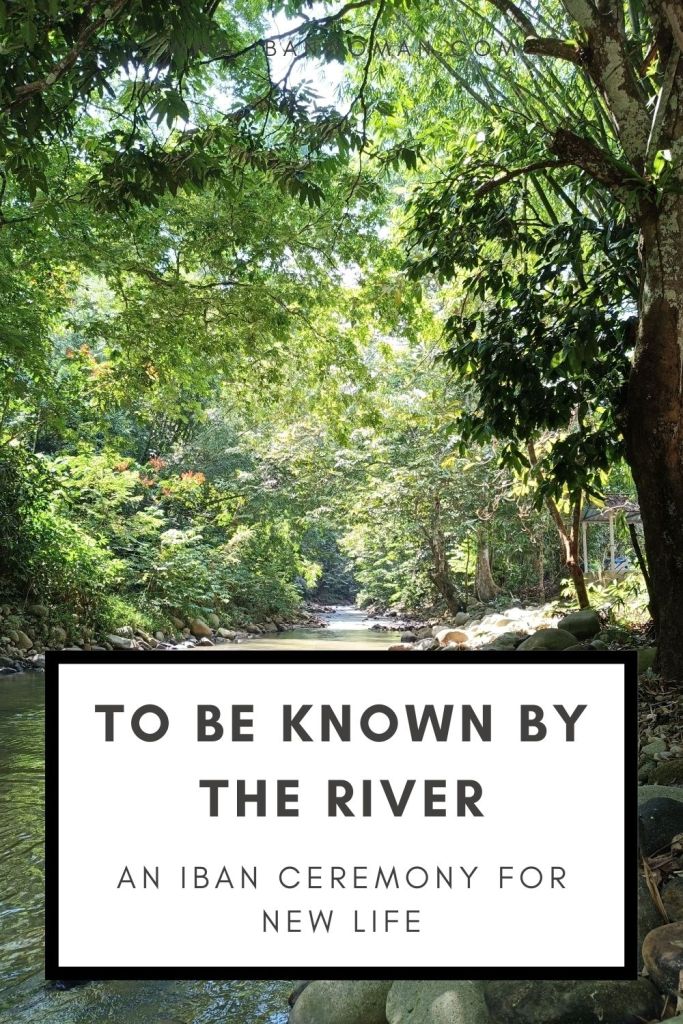
The Ritual of Water | An Iban Ceremony for New Life

Last weekend, I found myself standing knee-deep in a shallow river in Janda Baik. The sunlight came through a canopy of trees above, casting soft streaks of light on the water’s surface. Everything felt quiet and peaceful. My kids splashed further upstream, and their laughter echoed off of rocks and trees. I stood still, closed my eyes, and let the water swirl around my legs as it flowed downstream.

It reminded me of the Iban traditional child-naming ritual. I’ve never seen it with my own eyes, but I learned about it from the elders and through reading. This ritual was held following the naming of the child and to formally “introduce” the child to the river. 

In the Iban way of life, water is more than a physical element. A body of water like a river is also a spiritual space. It gives life, but it is also a source of danger. We wash with water from the river, and sometimes, when the water is clear, we even drink and cook with it. It carries our boats to other villages, fields, and faraway places. However, it’s also where crocodiles and other dangers live. No Iban has grown up without hearing stories about someone who was attacked at the river. When a child is born, we don’t just give them a bath. We also hold a ritual to beg the river not to harm them. 

After the child is named, the bathing ritual begins. The night before the ceremony, the father informs the longhouse community of his intention. At dawn the next morning, the whole longhouse community walks to the river in a solemn procession. A flag bearer is at the front, and a man carrying a fowl follows him. Both of these men are chosen from among the respected elders. Two women walk behind them. One carries offerings and the other carries the child wrapped in handwoven pua kumbu. The rest follow, beating the gongs as they walk.

At the riverbank, the flag bearer cuts the water with a knife. The man with the fowl recites an invocation to call upon the spirits of water, earth, sky, and all the creatures that swim below the surface. He asks that the child be given good fortune, sharp vision, and safety. He calls the crocodile, the soft-shelled turtle, the barbus fish, the semah, and the tapah. He calls each one by name and tells them to regard this child as family, not food. He says, 

“If this son or grandson of ours happens to capsize and sink while he is visiting, you are the only ones who can lift him up and keep him afloat.”

It is not a metaphor but a real request, born out of fear and hope.

After the invocation, the child is bathed and the fowl is slaughtered. People make noise on purpose, like banging gongs and laughing, to drown out any bad omens. If the child is a boy, one wing of the bird is tied to a spear with red ribbon. The wing is attached to a heddle rod if it’s a girl. A bamboo basket full of offerings is then hung from a leafy pole. 

After that, they return to the longhouse and sprinkle the child with sacred water to get rid of bad omens. A feast is held and the gongs ring out to mark the ritual’s success. The child is now considered truly part of the community, and both the people and the river know it.

As I stood in that river at Janda Baik, I began to think about the rituals we’ve forgotten. What would it mean to reclaim a gesture like this, perhaps not literally but in spirit? The Ibans don’t all live in longhouses anymore. Some of us reside in cities and raise our kids as urbanites, but water still calls us. Maybe part of why we seek places like Janda Baik is because something in us still longs to make peace with the river. Rivers still take us places. They still give and take. And we too are still vulnerable to things we can’t see.

Maybe modern mothers need more moments like this, when they can recognize their fears, their prayers, and their desire to protect the people they love. We might not need to cut the water with a knife, but we can still offer a prayer, still whisper a blessing:

“We beseech you to confer on him fortune, give him sharp vision so that he will be fortunate, wealthy, and blessed with good health throughout his life. 

We can still speak to the river, and certainly we can still be heard. 


I write about Iban culture, ancestral rituals, creative life, emotional truths, and the quiet transformations of love, motherhood, and identity. If this speaks to you, subscribe and journey with me.

First Image of a Black Hole | Looking Across Space and Time

I didn’t think I would cry. I just wanted to watch something that wouldn’t make my grief worse. Netflix’s documentary, Black Holes: The Edge of All We Know, wasn’t supposed to make me weep, but I wept anyway.

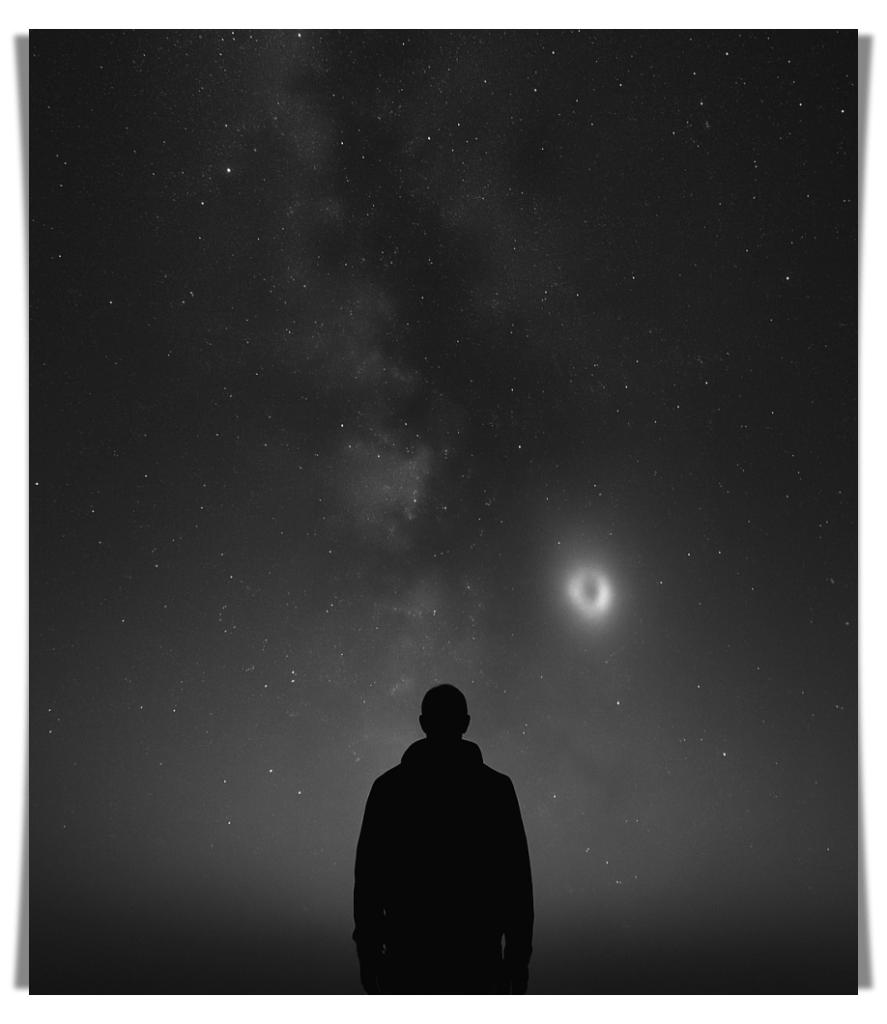
I lost it as soon as they showed the first image of the M87 supermassive black hole. It was an image of a dark center with a faint, perfect ring of light around it. Such an event had never happened before in human history. We used to think we could never capture it. And there it was. It was no longer just theory or math but something we could finally see and name. We could finally see the unseeable.

It wasn’t the mind-blowing science that got to me. It was the time it took for that image to travel to our planet. That image of light we saw in 2019 had been traveling for 55 million years from the galaxy M87. We somehow caught that image of the black hole in this present day during our lifetime. What we were really looking at wasn’t just a region in space. We were looking back in time.

Image source

Fifty-five million years ago, the Earth was in the early Eocene epoch, which was only ten million years after the dinosaurs vanished. The world was warm and tropical and teeming with early mammals. Forests covered much of the land. Our distant ancestors were small, curious primates who climbed trees and lived on a planet that was still recovering from extinction.

The light began its journey somewhere in that ancient, lush world. It left behind a galaxy that no living thing on Earth had ever thought of. It traveled through the universe quietly and steadily as life on Earth evolved. It kept going as continents shifted, species came and went, and the first humans learned to make fire, sing songs, build temples, write poetry, and wage wars. It travelled throughout millions of millennia and arrived in our lifetimes.

That’s why I cried. So poetic. It felt like divine timing, a cosmic coincidence that was too beautiful to ignore. Our existence coincided with this fleeting moment in history, marking the completion of that ancient light’s journey. That all of human history had aligned so that we could see the shadow of something that used to only exist in the realms of physics and imagination. A black hole is a void so complete that it bends reality, and the light that falls into it makes it visible to our eyes.

I felt small and humbled. I reflected on the countless generations that had lived and died without ever being aware of this. In the grand scheme of things, our stories are extremely small. But somehow, we were able to look back 55 million years and make sense of what we saw. We were able to see it because we had the courage to ask questions and persistently search for answers. 

I think that’s what stayed with me. It’s a reminder that certain things we perceive as unknowable may not remain so. Sometimes, truth comes like light from far away – slowly, patiently, and without fail. And sometimes, the edge of everything we know is just the beginning of the realm of future discoveries.

I wonder how many more truths are coming our way right now. If we keep looking, I wonder what other things that seem impossible we might discover.


Olivia Atelier offers printables, templates, and art designed to inspire reflection, healing, and creativity. Visit Olivia’s Atelier for more.

How I’ve Been Moving My Own Goalposts

I’ve been creating and publishing my work for years, but if you heard me talk about my work, you might think I’m just getting started.

I have this strange habit that I’ve noticed. I always add a “but” to every milestone I reach. In 2015, I published my first coloring book. This was long before the age of AI and before everyone was selling and publishing coloring books in droves. It was a huge feat for me because I had no formal education in design or tools but in the back of my mind it wasn’t a big deal because it wasn’t a novel. I sold my art and designs to people all over the world, but it was only a few dollars at a time. I’ve been interviewed on the radio a couple of times…but they were only thirty minutes. I’ve been featured in a local newspaper (The Star) and magazines…but no one remembers them. Even my poems, two in a local online literary journal and one in an international one, also come with the quiet disclaimer that they weren’t in a fancy, hardbound anthology.

In 2018, two of my paintings were part of a group show in Lisbon, Portugal. At the time, I remember feeling honored…and then telling myself right away that they were only small pieces, as if that made it less important that people on the other side of the world had chosen and seen them.

My brain seems to be programmed to move the goalposts as soon as I score. Everything I’ve done immediately ceases to count because it wasn’t more extensive, profitable, or longer. It’s a silent erasure of my own work and not humility. And the more I consider it, the more I see how deeply ingrained it is. Somewhere along the way, I learned that worth could only be measured in extremes.

I think part of it stems from the way accomplishments are often celebrated. Best-sellers, award winners, and overnight sensations often make the headlines. Seldom do the slower, more steady steps receive the same attention. Perhaps that’s why I find it difficult to appreciate them in my own life because they’re not the kind of victories that garner much attention.

But lately, I’ve been thinking about the new voices I’ve seen online. People who are just starting out as artists or writers are celebrating their first novel draft, drawing, or Etsy sale. Their happiness is apparent. They aren’t comparing it to some unseen standard. They don’t say “but” after their announcement. I wish I could have that. And it makes me think about how many moments I’ve missed out on because I wouldn’t let myself be proud for more than a second.

The truth is that my creative life has been full. I’ve brought six coloring books from idea to market, my art and designs have traveled farther than I have, I’ve done an overseas group show, I’ve done radio interviews, print features, and years of steady blogging. It exists not because I waited for permission, but because I put it out there into the world. And yet, I’ve been the one who’s diminishing it.

Here’s another truth: I don’t share links to my interviews or published works on my blog or social media. They carry my real identity, but I want to stay anonymous for now. That gives me a sense of freedom because I can create without worrying about my name, my face, or the expectations that come with them. Without that attachment, I can try new things, explore, and even fail without worrying that my whole identity is at stake.

The price of this mindset, both the anonymity and the constant moving of the goalposts, isn’t just emotional. It seeps into motivation. You never feel like you’ve arrived when you keep moving the finish line. And without that rest and a moment of acknowledgement and gratitude, the trip starts to feel like an endless uphill climb.

I’ve been trying to change this by creating tangible reminders that my work is real and worth noticing, not by forcing myself to feel proud. I made a “Proof Folder.” I keep screenshots of kind messages from readers or buyers, pictures of my books and art in the world, sales confirmations, and links to features or interviews. It’s an effort to fight against my habit of forgetting. I’ll open the folder on days when the “but” tries to take over. I’ll remind myself that the work was done, that it mattered, and that it still does.

I don’t know if I’ll ever be able to completely silence the voice in my head that says, ‘It’s not enough.’ But I might be able to learn to say something more true: It’s all mine. I made it and that counts.


Olivia Atelier offers printables, templates, and art designed to inspire reflection, healing, and creativity. Visit Olivia’s Atelier for more.

When Entertainment Crosses the Line | On Exploiting Women’s Pain for Ratings

Something very disturbing happened on Malaysian live TV last night. During Anugerah Melodi, Bella Astillah was made to present an award to the woman her ex-husband had cheated on her with. It was like watching a slow-motion car crash; you want to look away, but you can’t because you can’t believe that something so cruel could be planned, aired, and packaged as entertainment.

And what’s worse? Some people had the nerve to call Bella unprofessional for walking away. Let me be clear: Bella didn’t overreact. She didn’t make a fuss and was able to hold back. And the fact that she had to hold back at all, in a situation that no woman should ever have to be in, is the real tragedy. What happened wasn’t entertainment. It was a public humiliation well-dressed with glitter and applause.

It’s absolutely shameful for a system to think it’s okay to put a woman in the same spotlight as the person who hurt her family, just for shock value. And then to show it live, knowing all the history and emotional turmoil that went into it? It’s bad taste with a total lack of respect for human dignity.

I usually don’t pay much attention to the entertainment industry, whether it’s local or international. I’ve never really been interested in it, and most news about celebrities goes right by me. But this incident made me livid. Because this wasn’t a drama for Slot Akasia (TV segment for local drama) but real pain being paraded as a spectacle. And as someone who has been through a lot of trauma myself, I couldn’t help but feel triggered by how easily that pain was exploited and dismissed.

This is where we need to have a larger conversation about the ethics of our entertainment industry. And it doesn’t stop there. What we show on TV isn’t a random thing. Our kids are watching. They’re learning how to treat people by watching how we treat them, especially how we treat people who are hurting. And in a country where bullying in schools is becoming all too common, moments like these send a dangerous message: that it’s okay to make fun of someone’s misfortune and to humiliate them in public for fun. We are showing our kids that it is okay to mock someone’s pain instead of showing compassion.

This was bullying, plain and simple, with stage lights and applause. And if we’re not careful, we’re teaching the next generation that being mean is acceptable and even rewarded. How did we end up here? When did we start treating other people’s pain as a show? Bella’s case is not one of a kind. We’ve seen this happen over and over again: trauma being used to get ratings, tears being turned into headlines, and women being told they have to keep it all together for the show.

Some might say that’s how show business works. But no, it isn’t. That’s exploitation and there’s nothing glamorous or entertaining about it.

We should talk about how the media often takes advantage of women’s shame. The pattern is disturbingly consistent, whether it’s reality TV setting women up to be shamed, talk shows baiting vulnerable guests for views, or award ceremonies like this one forcing a confrontation that never needed to happen. The main idea is that your pain is only worth as much as the clicks or views it gets.

The aftermath makes it worse. Many people who watched Bella instead of standing by her side mocked her, questioned her professionalism, and invalidated her trauma. Because it seems that when a woman doesn’t smile and appear “redha” through her sorrow, she becomes the problem.

But let’s turn the tables for a second. Think about how it would feel for a man to have to give an award to the man his wife cheated on him with. Would people think he was being dramatic? Or would we be outraged on his behalf?

People expect women to always be gracious and smile politely. Women are always expected to rise above and endure. But when they don’t, the reaction is quick. However, endurance is not the same as healing. And being polite when someone betrays you isn’t professionalism but emotional suppression that comes at a cost. 

Mental health is not a joke. Emotional abuse leaves real scars on people. And being triggered on live TV is not something to be mocked or dissected for gossip. People should be kind and show empathy. But last night, there was no empathy to be found. Instead, we saw a media industry that cares more about viral moments than about people’s lives.

So let’s call this out for what it is: unethical, tone-deaf, and deeply irresponsible.

TV3 Malaysia, you had many opportunities to do better. You knew the history and what was at stake. And you still chose to be sensational over being sensitive. You didn’t read the room and let Bella down. And by doing that, you failed every woman who has ever been told to suck it up, “redha,” and move on.

If you defended the setup or laughed it off, I ask you to think more deeply. Would you have been as calm as she was if you were in her shoes? If the pain were yours, would you call it “just an award presentation”?

We need to stop making trauma into entertainment. And we really need to stop expecting women to be composed when they are badly betrayed. We need to make a clear distinction between storytelling and exploitation to increase ratings and views.

Bella, you didn’t do anything wrong. Your emotions were valid and it took a lot of courage to say her name out loud and present her that award. Many of us saw you as a person who deserved respect and dignity and not a humiliating headline.

To the rest of us: let this be a reminder that empathy should never be optional, especially when the cameras are rolling.


Olivia Atelier offers printables, templates, and art designed to inspire reflection, healing, and creativity. Visit Olivia’s Atelier for more.

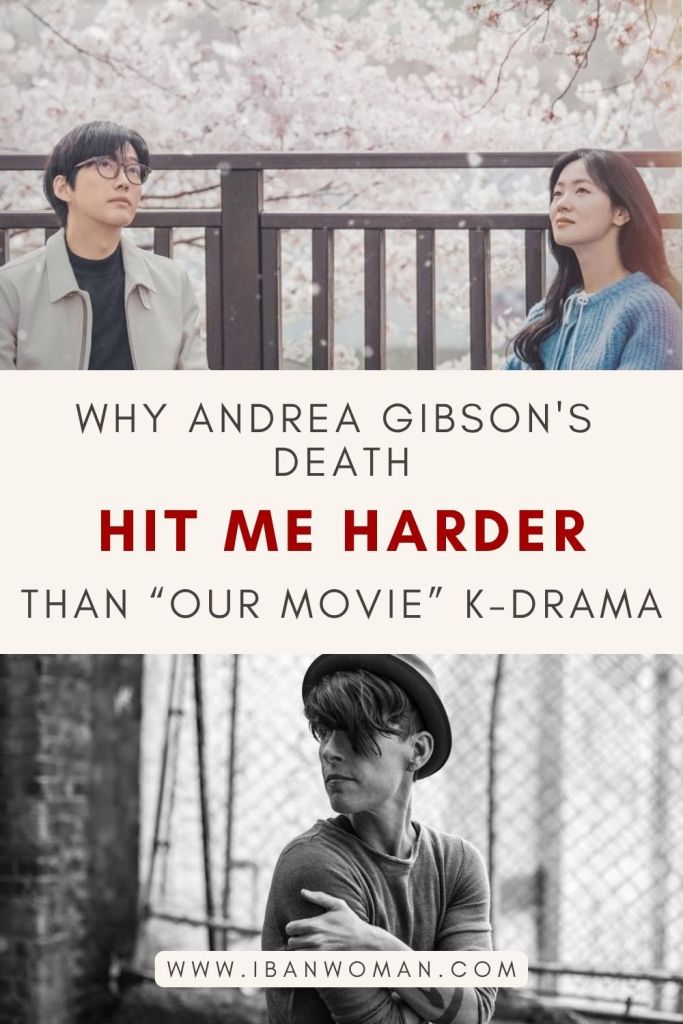
Why Andrea Gibson’s Death Hit Me Harder Than Our Movie K-Drama

This past week was hard because Andrea Gibson died, and I’m still trying to figure out what that means. I never met them, but their death feels strangely personal to me. But if you’ve read Andrea’s poems, you know exactly why. Andrea’s poems aren’t just pretty words but they are pieces of themselves they left behind. They are bloody, honest, and vulnerable.

I also watched Our Movie, a Korean drama about the slow, painful journey of dying and saying goodbye, that same week. The themes of death, memory, and love all fit together, but my response to each couldn’t have been more different.

Our Movie is exceptional. The cinematography is soft and dreamy. The acting is gentle, the soundtrack minimal. Namkoong Min plays Lee Je-ha, a quiet man who watches the woman he loves, Daeum (played by Jeon Yeo-been), die of a rare, incurable disease. She is calm, joyful, and completely at peace with dying. And he is steady, restrained, and almost stoic in the way he grieves. It’s not a bad drama; in fact, many people praise it for the gut-wrenching themes of death, dying, and hope. But for someone like me, who demands emotional rawness, it made me feel underfed.

I know the character choices were intentional. Daeum doesn’t fight her death because she is content and fulfilled. She has lived, loved, and achieved her dreams. She got what she wanted. Je-ha doesn’t break down or scream when he thinks of her. His grief is not outward but you still see it in his eyes and gestures. You see the grief, but you don’t feel it.

And maybe the show makers wanted to show us that some losses are quiet. Some people don’t break when they’re hurting. They simply retreat, bend inwards, and go still. But for me, that restraint made it hard to connect. I was waiting for something to break open. I wanted Je-ha to scream, cry, or do something that would show me how much Daeum meant to him besides memory flashbacks and stares into space. Oh, he did cry but  somehow I couldn’t connect with the way he grieves.

The drama wasn’t wrong. It’s just that I couldn’t connect with it emotionally. And that made me think of Andrea.

Andrea Gibson didn’t whisper about death. They roared and cried on stage. They made you feel uncomfortable because their truths were so intimate. Their words weren’t polished or pretty; they were rough with honesty. Andrea’s poems made you feel seen. And that’s why so many people are mourning their passing.

Andrea wasn’t afraid of being vulnerable and real. They weren’t afraid of naming the pain, sitting with it, and saying, “You’re not alone in this mess because I’m here too.”

And maybe that’s why their death feels more real than a fictional one. Andrea was there for us in the kind of grief that makes you feel like your heart is breaking and your voice is shaking, and it reminds you that this life is fragile, but it’s also worth feeling everything for.

I realized this week that I don’t just want beauty in art. I want pain and emotional bruises. I want to feel the grief and not just admire it from a safe distance. And I’m not ashamed of that anymore.

It’s not selfish to want art that speaks your emotional language. Our Movie was very well made but I think it’s okay to say that it didn’t satisfy me on the level that I had hoped for. The way I live—intensely, with longing, and an endless desire for truth—shapes my expectations. So when something falls short of that, I notice. And I’ve learned to be honest about it.

Maybe that’s the reflection for this week. This is not a review or critique. It’s just a simple truth that some stories observe grief and others enter it with you. And this week, Andrea Gibson reminded me that I will always need the latter.

I’m grateful for the reminder. And I hope that when my time comes, I’ve written even a little bit as honestly as Andrea did.

Rest gently, Andrea. And thank you for the gift of your words.

I leave this excerpt from Andrea’s poem, Love Letter From the Afterlife. You can read the complete poem on their Substack. Mind you, the imagery in this poem is breathtaking. 

“My love, I was so wrong. Dying is the opposite of leaving. When I left my body, I did not go away. That portal of light was not a portal to elsewhere, but a portal to here. I am more here than I ever was before. I am more with you than I ever could have imagined.”

And this poem, When Death Comes to Visit was written by Andrea years ago and released posthumously by their wife, Meg, today (25 July 2025).

© 2025 Olivia JD


Olivia Atelier offers printables, templates, and art designed to inspire reflection, healing, and creativity. Visit Olivia’s Atelier for more.

Things I Was Told Not to Say (But I’m Saying Them Anyway)

Like everyone else, I was raised to be polite, to lower my gaze, and to keep my mouth shut before it bleeds arrogance or truth. But truth doesn’t always need to wait for permission and I’m done looking for it. 

This is a list of things I was told not to say because they are deemed shocking and inappropriate. But I’m saying them anyway, because being silent isn’t always safe. It was a slow suffocation and death.

I was told not to say:

  1. “I’m tired of being the emotional one, the one who feels things.”

But I am. It’s draining carrying the burden of my own feelings and everyone else’s. You say I’m too touchy. I say you need to be more sensitive.

  1. “Sometimes I don’t want to be a mother.”

It doesn’t mean I don’t love my children. It means I want to disappear sometimes. To be free of endless burdens and responsibilities. I want to just be me without being attached to roles and expectations, even just for a while. Just long enough to find myself again.

  1. “Marriage is lonely.”

Yes, even the good ones. Especially the good ones; when you’ve been together long enough, you know each other too much there are barely any surprises anymore. 

  1. “I still think about the one who left.”

No, I don’t want him back. But he lives in the hallways of my memory, like when I stop to think about certain songs or street names or places. That’s not being unfaithful. It’s my memory and the only way to forget it is if I lost my memories to dementia or brain damage. Otherwise the memory remains. And I’m allowed to carry it.

  1. “I don’t want to go to this church anymore.”

I believe in God. But I don’t believe in being controlled and being silenced. I don’t want to pretend everything’s fine when my spirit is clearly not. I’m not giving up on faith; I’m moving toward the truth.

  1. “I feel ugly on some days.”

No amount of affirmations makes it disappear. There are days when I can’t stand my body. Some days I don’t even notice it at all. Both truths exist.

  1. “I envy women who get to choose their identity.”

Because I never did. I was born into roles before I could choose which ones I liked. Wife and mother. Good girl. Christian. I played every one of them. But now I want to rewrite the script where the real me can finally be set free. 

  1. “I don’t want to be grateful all the time.”

Gratitude is holy. But forced gratitude is performance. I don’t owe anyone a smile when I’m breaking inside. I can be grateful and grieving at the same time.

  1. “I want more.”

More silence. More passion. More space to create without guilt. More people who see me without needing me to explain myself. I want more than I was told I should ask for.

And yes, sometimes I want to be desired and not just needed. There’s a difference. And I feel it every time I’m touched with obligation instead of longing. 

I was told not to say all of this. They are taboo and a good Christian woman, a wife and a mother, shouldn’t entertain these sinful thoughts. 

I was told to play it safe. To keep my life neat, soft, godly. I was told not to stumble others in their faith.

But truth isn’t always soft. Truth can hurt and burn sometimes. And I’d rather burn than spend another decade in silence.

Call me whatever you want. A premenopausal woman in the heat of a midlife crisis. A delusional Christian woman being lured by the devil. These are some of my truths and I’ll not stop writing about them and shrink myself for others’s comfort. I’m so done with being prim and proper and always saying the right things all the time. I’m done with lying. It’s time for me to proclaim my truths and make them known to others. 

The Things That Undid Me

I cooked my love down to tar,
a black syrup in the bottom of the pot.
It taste like a lie
but I said nothing.
I was raised to chew my
tongue for supper.

I sewn myself into the good wife’s dress,
blessed and above reproach,
but I swallowed my own teeth
like communion wafers.

My children pressed their ears to my palms
and heard singing.
But some nights,
my fingers were fists
full of burnt letters.
I’m no witch,
only a woman
who learned too late
that silence is murder.

The pastor preached be pure.
But I loved the smell of rain
in my dirty hair,
my body wanting
without shame.

God, forgive me–
not for sinning
but for the way I loved it:
the unwashed sheets,
the stains on the hymns,
the animal in me
that refused to kneel.

I’m not sorry for the smoke,
or the fire I’ve become.
I’m sorry it took me
this long to strike the match.

© 2025 Olivia JD


Olivia Atelier offers printables, templates, and art designed to inspire reflection, healing, and creativity. Visit Olivia’s Atelier for more.

The Other Me | The Woman Behind the Poem

When I wrote the poem “The Other Me,” I wasn’t trying to sound bold or dramatic. I was just being honest by telling my truth. 

People often assume they know me. They see a woman who is quiet. A wife. A mom. A Christian. Someone who shows up, serves, nods politely, and doesn’t cause trouble or controversy. I’m familiar with this image because I’ve lived inside it for most of my adult life. It’s not that it’s wrong. It’s just incomplete.

There has always been a deeper current under the surface. Beneath all that facade of neatness, there is someone who asks harder questions or feels hurt when silenced. There is someone that remembers who I was before all the roles and expectations started to pile up on me.

“The Other Me” is not a fictional character. She is a real person who has always been by my side. I put her away, hidden, so that I could make room for acceptance, safety, and community. In religious communities, women are often praised for being quiet, gentle, and obedient. Where doubt must be neatly dressed in submission, and discomfort is treated like rebellion.

The poem came from the grief of hiding and of living a half-truth because the whole truth felt like too much.

I was taught to be agreeable as a child or to be well-liked. I learned that being difficult was the same as being rejected. That if you had questions, you lacked faith. That wanting more, like more closeness, more freedom, and more honesty, was wrong or selfish.

So I stayed small. I stayed quiet. I played the role so well I almost forgot I was acting. But staying quiet has a price.

When you’re around people who only know the version of you that makes them comfortable, a certain kind of loneliness grows. They love that safe version of you and they honor her because she embodies the values they approved. But you start to wonder if they would still love you if you said something out of character. What if I stopped editing myself for the sake of their comfort? What if I let the fire show?

And then one day you write a poem.

You write it because you have things you want to say but can’t. Your body remembers what your mind tries to bury. Because there is a woman inside you who is sick of bending over backwards to meet other people’s expectations.

You don’t even know if you’ll share it when you write it. But that is beside the point because the truth is you need to see this woman and say to her, “I haven’t forgotten you.”

“The Other Me” is about the version of myself that doesn’t fit into polite spaces. She is the one who laughs too loudly, writes about God and desire in the same line, and asks questions about things she was told not to touch. She loves deeply but won’t let anyone else control her.

In the past, I was scared of her.

But now I know she isn’t a threat. She isn’t being defiant just to be dramatic. She is just being honest. She is the version of me that lived and survived. And I owe her more than just silence.

When I say I feel alone sometimes, I mean it in a specific way. I don’t mean that I don’t have anyone around me. What I mean is that I don’t have a place that feels like home and where I belong. I don’t quite fit in with the local creative community, where the type of poetry that gets attention is usually light, easy to read, and trendy. I write differently. I write deeply. And sometimes, that depth becomes a wall between me and the world I want to reach. 

At the same time, the people who connect with my work often live far away. They have different cultures, different worldviews. We connect through words, but we live in different worlds. That, too, feels like a dislocation.

But still, I write.

Because this is how I heal, and this is how I remember. This is how I get back the parts of myself that I’ve tried to hide for a long time.

The Other Me is not a rebellion. It is a way for me to return to the version of me that I’ve neglected.

And maybe, just maybe, if I keep writing her into existence, someone else out there who also feels out of place, half-formed, and unseen, will recognize themselves in my words. And that recognition will feel like belonging.

We might not need to fit in to be complete. Maybe we just need to be honest.

And that is what this poem gave me. A little more honesty. A little more light. A little more room to breathe.

And to the version of me that is still hiding: I see you. We’re coming home.

Note: This poem is not published yet, but you can read a short excerpt on my Threads post.


Olivia Atelier offers printables, templates, and art designed to inspire reflection, healing, and creativity. Visit Olivia’s Atelier for more.

After Andrea | A Tribute to Andrea Gibson

Image source

When Andrea Gibson left this world, they didn’t vanish. They simply changed form.

That’s what I believe. What I’ve always believed. That death isn’t the end but a transformation. It’s a reassembly of light, soul, and memory. It becomes energy that lingers in the folds of pillows, in dog-eared pages, in the sound of your laughter.

Andrea said it best in one of their final gifts to the world: “Dying is the opposite of leaving. When I left my body, I did not go away.”

I read those words with a lump in my throat, but not because I was grieving. They reminded me of something I wrote months ago, not knowing then how it would one day connect me to someone I admired from afar.

So when we grieve for an unbearable loss and feel the crushing weight of absence, perhaps we can take comfort in knowing that nothing is ever truly gone.

The ones we miss exist in a different form now. They are scattered across the cosmos, carried in rays of sunshine, drifting in the gentle breeze. The photons that once danced across their skin continue their journey through space. Their laughter still lingers around us, waiting to be felt by those who remember.

If we explain death by physics alone, the conservation of energy means that when we die, our energy disperses into heat, into the environment, and into the people we loved. ~ Excerpt from my blog: The Physics of Goodbye

Andrea’s poems weren’t just poems; they were silent revolts against erasure and the lie that pain and beauty must live apart.

And maybe that’s what we leave behind: words and permission. Especially permission. Permission to grief and cry. To be angry. To acknowledge love out loud. To die beautifully. To stay, even after.

After Andrea 

I want to call you by the sound your bones made when they fell into the light. I want to call you return instead of loss, to pin your spirit to my wall like the last goodnight of a sunbeam. You are not gone. You are still here. You are a new verb. You breathe through my ribcage at midnight when I forget my name and remember yours. Your echoes make me who I am. You are the ghost of the lamp turning on by itself, the sudden music when no one’s home. What trick of physics lets a soul remain when the body collapses? What cruel grace? Andrea, I never touched your hands, but I have held your sorrow, your laughter, your thunder, your holy queerness. I carry it now. In me, and in everyone who heard your voice before they knew you. Thank you for the light. Thank you for the absence that still feels full. Thank you for dying like a poet; all metaphor, without end.

© 2025 Olivia JD


Olivia Atelier offers printables, templates, and art designed to inspire reflection, healing, and creativity. Visit Olivia’s Atelier for more.