How I’ve Been Moving My Own Goalposts

I’ve been creating and publishing my work for years, but if you heard me talk about my work, you might think I’m just getting started.

I have this strange habit that I’ve noticed. I always add a “but” to every milestone I reach. In 2015, I published my first coloring book. This was long before the age of AI and before everyone was selling and publishing coloring books in droves. It was a huge feat for me because I had no formal education in design or tools but in the back of my mind it wasn’t a big deal because it wasn’t a novel. I sold my art and designs to people all over the world, but it was only a few dollars at a time. I’ve been interviewed on the radio a couple of times…but they were only thirty minutes. I’ve been featured in a local newspaper (The Star) and magazines…but no one remembers them. Even my poems, two in a local online literary journal and one in an international one, also come with the quiet disclaimer that they weren’t in a fancy, hardbound anthology.

In 2018, two of my paintings were part of a group show in Lisbon, Portugal. At the time, I remember feeling honored…and then telling myself right away that they were only small pieces, as if that made it less important that people on the other side of the world had chosen and seen them.

My brain seems to be programmed to move the goalposts as soon as I score. Everything I’ve done immediately ceases to count because it wasn’t more extensive, profitable, or longer. It’s a silent erasure of my own work and not humility. And the more I consider it, the more I see how deeply ingrained it is. Somewhere along the way, I learned that worth could only be measured in extremes.

I think part of it stems from the way accomplishments are often celebrated. Best-sellers, award winners, and overnight sensations often make the headlines. Seldom do the slower, more steady steps receive the same attention. Perhaps that’s why I find it difficult to appreciate them in my own life because they’re not the kind of victories that garner much attention.

But lately, I’ve been thinking about the new voices I’ve seen online. People who are just starting out as artists or writers are celebrating their first novel draft, drawing, or Etsy sale. Their happiness is apparent. They aren’t comparing it to some unseen standard. They don’t say “but” after their announcement. I wish I could have that. And it makes me think about how many moments I’ve missed out on because I wouldn’t let myself be proud for more than a second.

The truth is that my creative life has been full. I’ve brought six coloring books from idea to market, my art and designs have traveled farther than I have, I’ve done an overseas group show, I’ve done radio interviews, print features, and years of steady blogging. It exists not because I waited for permission, but because I put it out there into the world. And yet, I’ve been the one who’s diminishing it.

Here’s another truth: I don’t share links to my interviews or published works on my blog or social media. They carry my real identity, but I want to stay anonymous for now. That gives me a sense of freedom because I can create without worrying about my name, my face, or the expectations that come with them. Without that attachment, I can try new things, explore, and even fail without worrying that my whole identity is at stake.

The price of this mindset, both the anonymity and the constant moving of the goalposts, isn’t just emotional. It seeps into motivation. You never feel like you’ve arrived when you keep moving the finish line. And without that rest and a moment of acknowledgement and gratitude, the trip starts to feel like an endless uphill climb.

I’ve been trying to change this by creating tangible reminders that my work is real and worth noticing, not by forcing myself to feel proud. I made a “Proof Folder.” I keep screenshots of kind messages from readers or buyers, pictures of my books and art in the world, sales confirmations, and links to features or interviews. It’s an effort to fight against my habit of forgetting. I’ll open the folder on days when the “but” tries to take over. I’ll remind myself that the work was done, that it mattered, and that it still does.

I don’t know if I’ll ever be able to completely silence the voice in my head that says, ‘It’s not enough.’ But I might be able to learn to say something more true: It’s all mine. I made it and that counts.


Olivia Atelier offers printables, templates, and art designed to inspire reflection, healing, and creativity. Visit Olivia’s Atelier for more.

What I Know Now That I’m in My 40s

As I get older, I realize that change doesn’t stop. You don’t reach a certain point where you finally feel “together.” When I was in my 20s, I thought that women in their 40s had it all figured out. They knew how to love, how to parent, and how to stay calm when their world fell apart and the bills were late and the kids were fighting. But now that I’m here, I know the truth: we’re all still learning and figuring things out.

In my 40s, I no longer chase the idea of being extraordinary. I want to be real, present, and kind to myself. I’ve stopped apologizing for being quiet, for needing time alone, or for feeling deeply. I used to shrink myself so people would find me easier to digest and tolerate. Now I let the fullness of who I am take up space, even if it makes other people feel uncomfortable.

I have learned that performance doesn’t determine one’s worth. Worth doesn’t come from being productive, getting praise, or doing everything right. Even when I’m still, I am still worthy. Or when I’m unseen or unnoticed. Or when I am not achieving a single thing. This kind of emotional growth doesn’t happen overnight. It came through years of burnout and soul-wrestling, trying to be everything to everyone and having nothing left for myself.

Motherhood taught me that but not in a pretty, “Pinterest-quote” way. It taught me in the messy, heartbreaking moments that often happen in the trenches of parenting. Motherhood revealed the gaps in my patience, where I lost my sense of self or the ghosts I hadn’t exorcised yet. It forced me to look at myself when I was at my worst and ask, “Can I still be nice to my kids? Can I still stay and get through it all?”

Marriage, too, has been a teacher but not always a gentle one. Love in your 40s is less exciting and can be boring but I’m speaking from my experience. It’s less about the big, impressive things and more about the small, boring things like showing up for each other. Or listening when you’re tired and don’t really care about the nitty-gritty of it. Or saying you’re sorry first. I used to think that being in love was like being high. But now I know better.

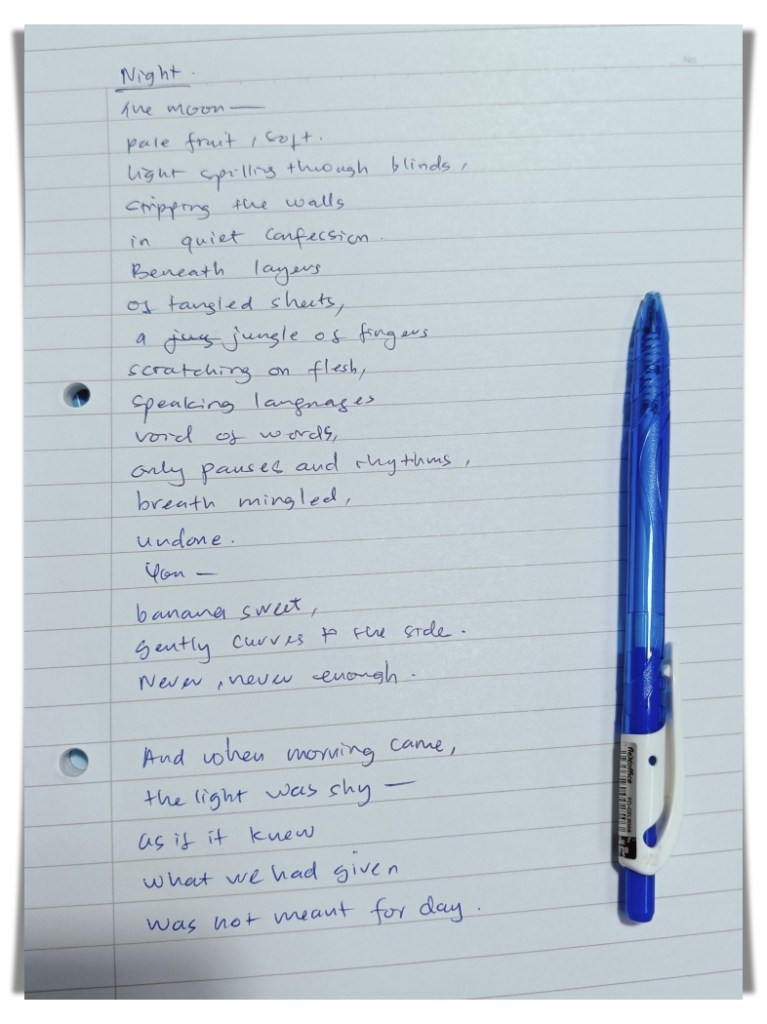
My art and writing have saved me more times than I can count. They gave shape to emotions I couldn’t name. They held me when I felt invisible. When I returned to writing poetry after years on hiatus, it felt like coming home to an old friend who never stopped waiting. I don’t write to impress anymore; I write to learn and understand. I want to tell the truth without worrying about how it sounds or how it looks. That’s the heart of my creative healing.

And this is my truth: I am a woman who is no longer afraid to feel everything.

I’ve learned to slow down and take my time. I’ve learned to walk away when something costs me my peace. I’ve learned to take a break without guilt. I’ve learned to feed myself what nourishes, not what numbs. I’ve learned that joy isn’t something you chase relentlessly. Joy is something you notice. You can find joy anywhere you look hard enough. In your child’s laughter. In the soft, fading light at 7.30pm. In the peaceful and dull parts of your life.

I’ve stopped needing everyone to like me. Not everyone will. And that’s okay. I am not for everyone. But I am for the people who value honesty over performance, presence over perfection, and depth over decorum.

Being a woman in your 40s means I carry both tenderness and steel in my bones. I know how to hold space and when to keep things to myself. I know how to tell the truth even when it hurts. I still make mistakes, of course. I still feel anxious most of the time, but I’m not as scared of being seen as imperfect. There is no pretending. What you see is what you get.

I don’t have it all figured out. But I know who I am now. And I like her more than I ever have.

Now That I Know

I don’t need fireworks.
I light my own sky
with the hush
of knowing I survived.
No more performance prayers.
No more bloodletting for love.
If I bend now, it’s not to please–
but to plant.
My thighs and belly are soft.
My words are sharp.
I’m no longer a girl
waiting to be chosen.
I have chosen myself,
my whole being–
transforming.

© 2025 Olivia JD


Olivia Atelier offers printables, templates, and art designed to inspire reflection, healing, and creativity. Visit Olivia’s Atelier for more.

When Passion Feels Like Work

Today I felt as if I were running in place. Not because I’m lost, but because the journey is long.

I’ve recently been devoting a lot of time to my Etsy shop. Learning, doing, testing, improving, failing, and adjusting. And doing it all again. This is not my first venture. I’ve had multiple internet stores on different sites that have generated passive income for years. But Etsy is a completely different beast. A new challenge for growth.

I’ve been building digital shops while raising my children for over a decade. There is no nanny or assistant. Just me, showing up every day, struggling to balance the invisible weight of being a parent and ambition with whatever strength I can muster. My capital is limited. My energy was often stretched thin. Everything is hands-on.

I’m not saying this to complain.

I say this because we need to recognize what it takes to create something from nearly nothing.

People talk a lot about passion but rarely about what happens when passion becomes a career. When inspiration alone is not enough. It demands stamina, fortitude, and faith in the unseen.

This isn’t a glamorous path. But it is mine.

And I am still walking it. Still deciding to show up. Still believe that slow is not the same as stagnant. I’m still discovering that perseverance doesn’t have to be loud. It is often quiet, exhausting, and unchanging.

If you’re there, I see you. And if you aren’t there yet, you will understand one day, when your heart is totally invested in something that also leaves you drained.

This is what it means to care.

This is what it means to keep striving.


✨ Visit Olivia’s Atelier for printables, reel templates, and planners made to support overwhelmed moms with gentle, soulful tools.
🕊️ Enjoy 50% off everything until June 30.

The Truth Hurts, But It Heals

Writing requires an intimacy few are ready for. To write with vulnerability on the page is to bare your soul, to peel back what protects you, to expose the raw truths of your life, some of which you may not, in fact, fully grasp yourself. It’s frightening, messy, and gut-wrenchingly human. But instead, it is that vulnerability that makes writing not just words on a page but a lifeline that connects us to other people. This is the fundamental truth of vulnerability that enables stories to resonate, yet achieving it is not effortless.

For the majority of us, the fear of being judged is ever present. Vulnerability means revealing your fears, desires, and truths—and thus relinquishing control over how others see you. You are declaring to the world, “This is who I am,” and inviting the world to respond. Do they embrace you, or do they consider your words mere piffle and your truths undesirable? This fear silences many writers, imprisoning their deepest truths.

“Write what disturbs you, what you fear, what you have not been willing to speak about. Be willing to be split open.” ~ Natalie Goldberg

I know this fear very well because I am still struggling with it. And I want to dig deep; I want to uncover what is beneath the surface. But whenever I come close to it, I waver. What happens if I face judgment? What if what I expose is too much? And yet, I also recognized that my writing without vulnerability will never touch the depths I so admire in others.

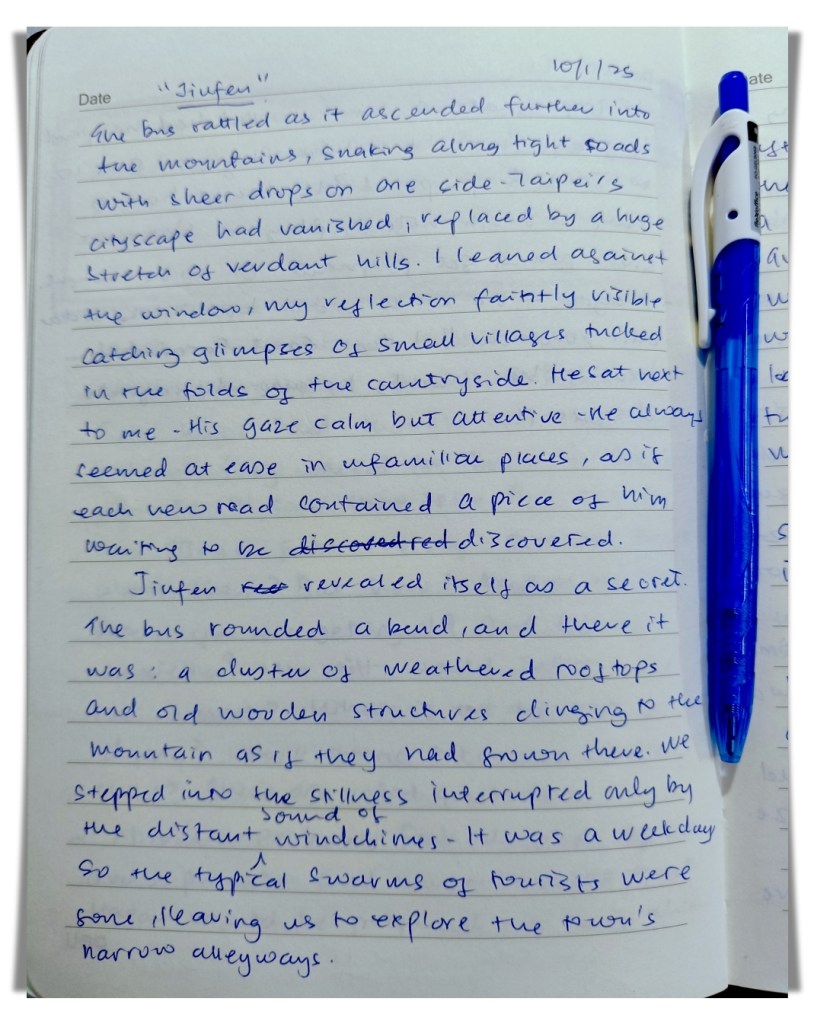
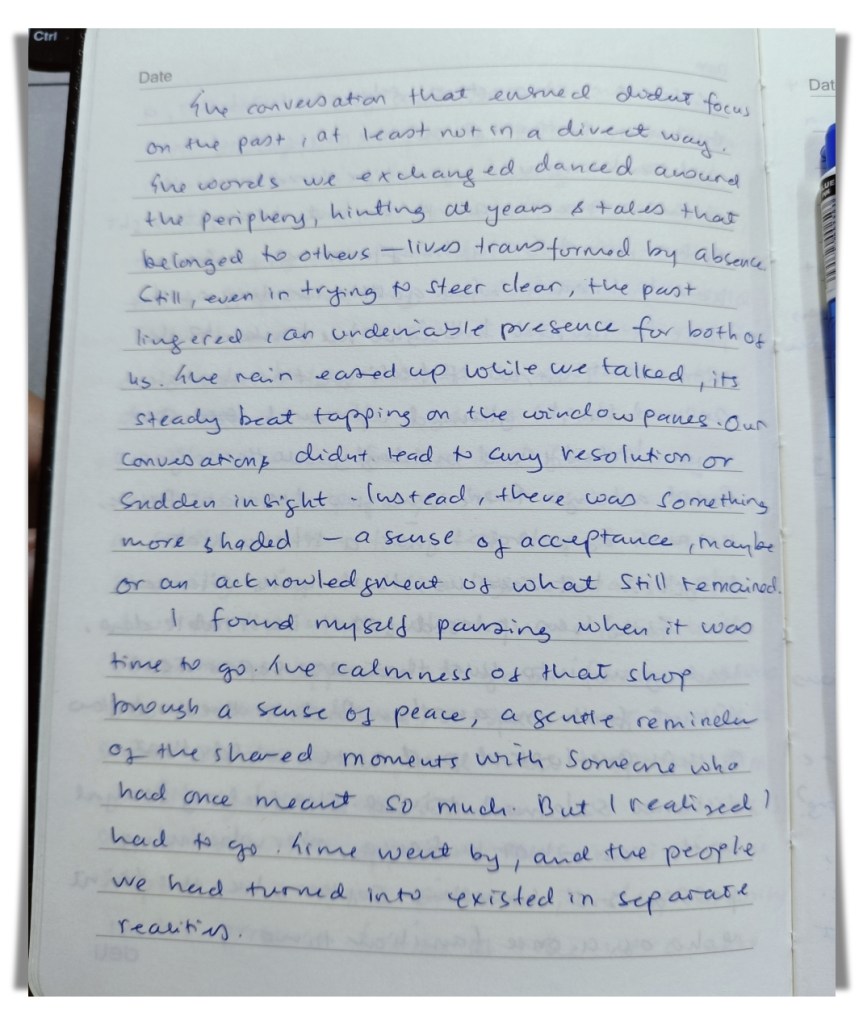
Recently, I wrote in my journal about this struggle, attempting to give shape to my thoughts. Here is an excerpt:

I have a muse, and I don’t know how long this affair with him will last. Let’s call him a “he.” He has inspired me in ways I never anticipated, uncovering memories and stories I had buried deep within myself for nearly 30 years. These memories are ripe with potential, rich material for my writing. But they are also deeply personal. Writing them down makes me feel exposed, as if I’ve peeled back the protective layers I’ve spent decades building.

For so long, I felt compelled to bury these memories, weighed down by a profound sense of shame. Even though many of these experiences were beautiful in their time, I couldn’t separate them from the shame I carried. Now, as I write them down one by one, I’m finally allowing myself to face them. If you ever read these stories, you may think of them as trash, boring, or mediocre. That’s okay. It doesn’t matter. What matters is that I am writing them as honestly as I can. I’m capturing the vulnerability, the yearning, the fear, the exhilaration, the fantasy, the lust, the love. I don’t know where these words will take me, but for now, I’m writing for myself. I’m writing the truth.

Reading back on this, I see how much I have hidden myself over the years. No one taught me to embrace vulnerability. Instead, I learned to shield myself, to appear strong and impervious. But writing requires the opposite. It invites you to soften, to let down your defenses, and to allow the world in. For me, this process resembles the gradual opening of a long-closed door.

Writing with vulnerability is akin to navigating a narrow path. It asks you to face your own truths without self-censorship and resist the temptation to embellish or dramatize for effect. Authentic vulnerability is subtle; it doesn’t shout, “Look at me!” It tells truths—truths that ring true because they’re passionately felt.

And despite this knowledge, vulnerability remains elusive. Writing for myself, as I have done with my journal, is one thing; it’s another to share that writing with others. This process of exposing your vulnerability is analogous to entering a stage naked under the bright glare of a spotlight. It is terrifying, but it is also necessary.

I frequently reflect on my reasons for writing. Do I write to make myself heard, to understand others, or just to connect? Perhaps it’s all three. What I do know is that the writers I admire most are those who are unafraid to be vulnerable. Their words linger, because they have the bravery to speak their truths, however flawed or uncomfortable. This is the kind of writer I aspire to be—one who writes with honesty and heart, one who has enough courage to be exposed.

The process of getting to this level of openness is ongoing. There are days when I feel courageous enough to face my truths and days when I slink back, too scared to face judgment. But every word I write brings me a little closer to that ideal. Vulnerability is not weakness but strength, I tell myself. It’s what makes us human, and it’s what makes writing worth reading.

So here I am, writing my truths, one hesitant word at a time. I don’t know where I’ll go from here, but I do know that I’m finally beginning to embrace the vulnerability that once terrified me. And in doing so, I hope to uncover not only the stories within me but also the courage to share them with the world.