This Is Not the Mother I Meant to Be

I could name only one, but that wouldn’t be honest.

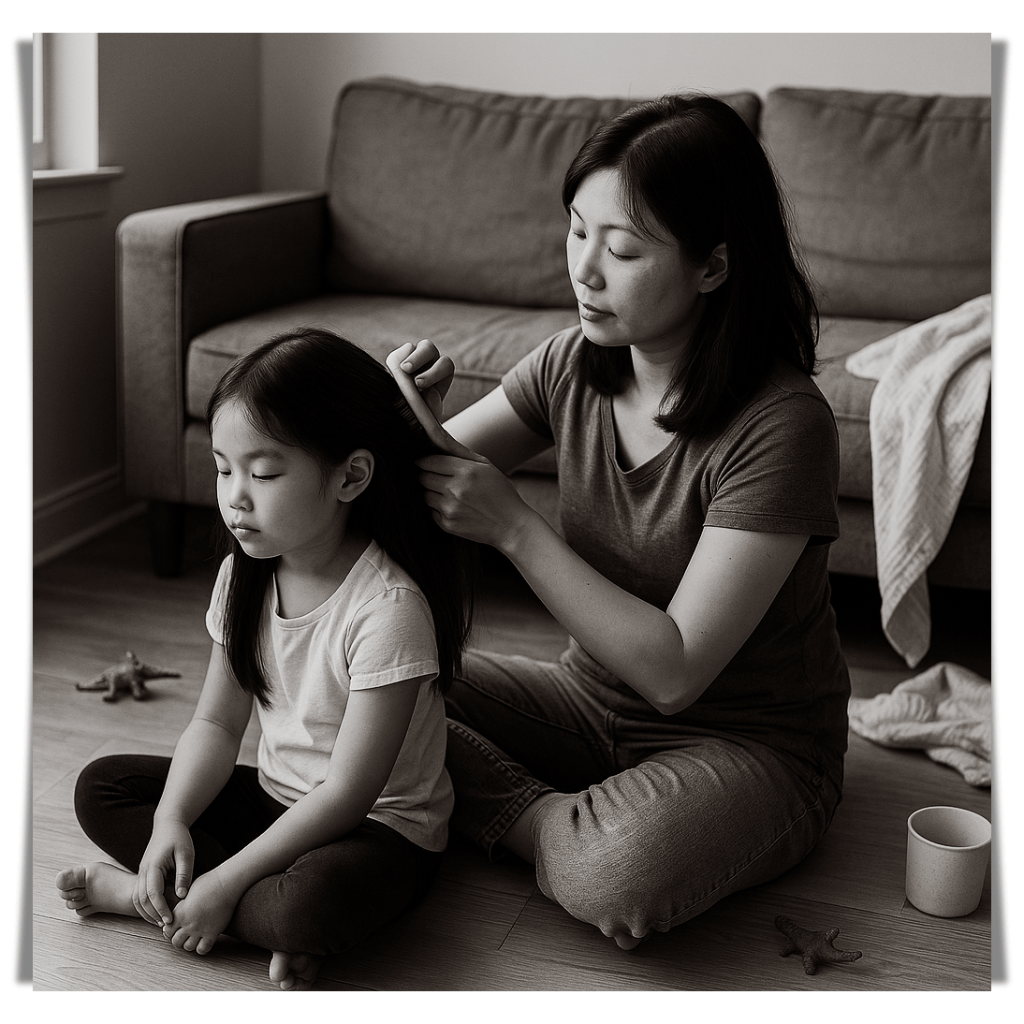
A lot of times in my early years as a mother haunted me quietly like background static in an otherwise happy song. The yelling, harsh words, and unwarranted anger all fell directly on little shoulders. I wrote a poem about it once. It’s titled This Is Not the Mother I Was Meant to Be. It is now available in my Etsy shop, which can be found here.

The poem is more than just a piece of text. This is my confession. A gentle, timid apology. A mirror I held up to my own face on days when I thought I had failed in the most important duty.

I meant to be gentler. I wanted to listen more. But there were times when I snapped, yelled when I should have breathed deeply, spanked when I should have paused, gave them junk food and called it dinner and said things I wish I could take back. Things like, “Be quiet. Enough. Just stop.” When all I truly wanted to say was, “I am exhausted, honey. I am trying. I love you so much, it hurts.”

Even now, the guilt weighs heavy. But, with time, I’ve realized that remorse isn’t supposed to tie me to the past. It is meant to teach me, then let me go.

As the kids grew older, I began having open conversations with them. I apologized. Not in grand speeches, but in quiet moments together: during car rides, at bedtime, or while having a meal. To my astonishment, they forgiven me. Completely, freely. As children frequently do when love triumphs over regret.

Their forgiveness was a balm. But can I forgive myself? This is still a work in progress.

What comforts me now is the realization that motherhood is not a destination. It is a process of growing. Every mistake I made was the result of a version of myself doing my best with what I knew. And I understand better now. I pause longer. I listen more carefully. I still make mistakes, but I’m more aware of them. I grow together with them.

So, if you’re a parent who’s been lugging guilt about like a hidden stone, maybe it’s time to let it go. Perhaps you can let the softer part of yourself speak. The one who continues to show up, try, and love with each broken, beautiful step.

Because this is not the mother I meant to be. But I’m still evolving to be a better version of myself.


Visit Olivia’s Atelier for printables, reel templates, and planners made to support overwhelmed moms with gentle, soulful tools.
🕊️ Enjoy 50% off everything until June 2.

What I’m Learning to See in Myself

I stared at the blinking cursor for a while.

Because, to be honest, I’m not sure how to answer it. I’m not someone who walks into a room and says, “I’m great at this.” I question myself too much. I downplay. I laugh it off. I’m better at admitting my flaws, as if self-deprecation makes me feel safer.

But I’m learning that honoring our strengths is not arrogance. It’s permission.

So perhaps I’ll start here.

I’m good at feeling intensely. Not just the loud, obvious feelings, but also the subtle ones that people hide under small talk. The loneliness in someone’s eyes, the grief hidden behind their smile. I pick up on such things. I can feel them in my body. I carry them.

And I’m good at putting those feelings into words. Not always perfectly or poetically, but with a rawness that causes others to stop and think, “Me too.” And I think that’s what matters. 

I’m good at seeing beauty in what’s overlooked. The uneven texture of a handwoven mat. The silence between two people in love. The anguish in a voice. I don’t avoid the chaos that comes with being human. I write toward it.

I’m good at starting again. After rejections or self-doubt. After a prolonged silence. Even if it hurts. Especially if it hurts. For me, reinvention is more than a choice; it is a matter of survival.

I’m also good at mothering. Not just my children, but mothering in a broader sense. Holding space. Soothing. Feeding. Protecting. Loving fiercely and completely, even when it’s hard.

Perhaps I’m not good at expressing my worth but I am learning to write it and I guess that’s enough. 


Looking for digital tools that support your everyday life with gentleness and intention?
At Olivia’s Atelier on Etsy, I offer more than just pretty printables—I create emotional support kits, Instagram reel templates, children’s meal planners, and other soul-nourishing resources for moms who give so much but rarely feel seen. Whether you need a moment to breathe, a tool to stay organized, or a way to connect with your audience—there’s something here for you.

🕊️ Everything is 50% off until June 2—because you deserve support that feels doable, beautiful, and kind.

A Mother’s Day Reflection

I didn’t grow up imagining myself as a mother.

Not as other girls did, pretending to cradle dolls or writing baby names in the margins of their schoolbooks. I wasn’t opposed to becoming a parent; it simply didn’t feel urgent, like something I needed to pursue or prepare for. And yet, I am here. It’s been years. A mother. With gentle hands and a heart that is always rearranging itself around little lives.

Mother’s Day used to pass with little thought. A day spent playing cards and making phone calls. Of seeing my own mother from a distance, attempting to decipher the aspects of her that I could never fully grasp. I had no idea she felt so invisible at the time. When you’ve given everything to others and lost yourselves, silence may be deafening.

Now I do.

Mother’s Day is now a quiet occasion in our family. The kids sometimes remember and sometimes they don’t. My hubby asks what I want to eat. I fold the laundry and do the dishes anyway. Life does not stop simply because it’s May. However, a part of me always wishes for a pause, if only for a moment. A pause that says, “We see you. It is not simply what you do, but who you are underneath it all.”

This year, I didn’t request flowers or breakfast in bed.

What I desire cannot be purchased or arranged.

I want someone to acknowledge my effort. How I manage to show up even when I’m very exhausted. How I manage to kiss their foreheads at night despite carrying the weight of invisible things like schedules, fears, and guilt. I want someone to say, “I see the woman you are, not just the mother you have become.”

Because I’m both.

A woman who once had aspirations that did not involve diaper bags or parent-teacher meetings. A woman who still longs for quiet mornings and uninterrupted thoughts. Also, a mother who has dedicated her body, sleep, and time to love so profound that it has utterly transformed her.

So, on Mother’s Day, I gave myself what the world frequently forgets to give: grace.

Grace for the things that remain undone.

Grace for the yelling I regret doing.

Grace for the dreams I’ve placed on hold.

Grace for the ways I am still learning to parent myself.

And maybe that’s all it needed.

Happy Belated Mother’s Day to the quiet mothers, the tired ones, the fierce ones. The ones who feel like they’re failing but keep showing up anyway.

I see you.
And I’m learning to see me, too.


Mother

They see
lunchboxes prepares,
schoolwork signed,
clothing neatly arranged into piles.

But they don’t see
the woman who forgot who she was
before responding to “Mama.”

They don’t see
how she holds her breath
until the door closes,
and she can cry
without needing to explain.

They don’t see
how she forgives herself
in small rituals—
a hot cup of tea,
a song in the car,
a scrawled poem
at midnight.

They don’t see
her saving herself
a little at a time.

And still
she shows up.
Every day.
with love nestled
into every nook of her weariness.

Because this is what she does.
That is who she is.

Copyright © Olivia JD 2025
All Rights Reserved.


Looking for digital tools that support your everyday life with gentleness and intention?
At Olivia’s Atelier on Etsy, I offer more than just pretty printables—I create emotional support kits, Instagram reel templates, children’s meal planners, and other soul-nourishing resources for moms who give so much but rarely feel seen. Whether you need a moment to breathe, a tool to stay organized, or a way to connect with your audience—there’s something here for you.

🕊️ Everything is 50% off until June 2—because you deserve support that feels doable, beautiful, and kind.

The Hour After Midnight | Why I Stayed Awake When I Should’ve Slept

For years, I stayed up too late.

It wasn’t because I was working or I had boundless energy or I was busy chasing my dreams. The main reason was that I needed to feel like a person.

It didn’t start as revenge bedtime procrastination. That phrase only found me later, when I stumbled across an article that put a name to my nightly rebellion. It felt like intense desperation. You could say it was a craving or a desperate fight for space.

When my children were small, the days blended together in a mist of needs. I remember those years vividly and if I’m honest, it makes me shudder, but not because I feel ashamed. My daily life was full of milk-stained shirts, sticky fingers, and toys scattered like confetti across every surface. I loved my kids fiercely. Still do. But in those days, I didn’t know where I ended and they began. I gave them my body, my attention, and everything. And somewhere in that giving, I began to disappear.

When the kids were finally asleep and when the house finally went quiet, and the dishes were done, I sat down. Just for a moment, just to breathe.

And that moment stretched beyond what I intended. I stayed up. Scrolling. Reading. Writing. Wandering through Facebook memories of the woman I used to be. Buying time I couldn’t afford, just to feel like I still existed.

I’d tell myself, “Just one more post. One more chapter. One more scroll.”

But truthfully? I was afraid that if I slept, I’d wake up and do it all over again. The endless giving, pouring out myself and forgetting.

So I kept stealing those hours after midnight.

And in the morning, of course, I paid the price.

I was more irritable. More short-tempered. More ashamed of the mother I was becoming.

The irony was painful: I stayed up to save myself, but it only made me more fragile the next day.

I never told anyone how much I resented the way my life had shrunk. How much I missed myself and how ashamed I felt for even feeling that way.

That was the case until I began writing about it.

That’s how The Hour After Midnight came to life. It began as fragments and eventually evolved into a complete poem. A piece of me, speaking directly to the woman I used to be. Perhaps I still am that woman, but these days I go to bed at 12 AM or earlier. As the kids grow, I enjoy my sleep more, and the resentment has disappeared.

This poem is about a mother who gives her all and suffers in silence. It’s about a woman who craves stillness to survive her crazy life of constant giving. She was just a tired soul who wanted to feel seen.

If that sounds like you, I hope this poem wraps around you like a quiet hug. It’s more than a printable; it’s a recognition and a mirror. A gentle piece of emotional support for any overstimulated mom who needs a reminder to be kind to your mind.

This digital poem makes a thoughtful and unique Mother’s Day gift, especially for the tired mom who needs to hear she’s still enough. It’s a beautiful affirmation of motherhood for those navigating revenge bedtime procrastination, mom life burnout, and those quiet moments where you whisper, “I am enough.”

Find The Hour After Midnight in my shop Olivia’s Atelier. You’ll receive a high-resolution poem print in multiple sizes, ready to frame or gift. I hope it brings you what it brought me—a pause, a breath, a beginning.

Note: Yes, I launched my Etsy shop recently to share my poems with the world. Right now, everything in the shop is 50% off until June 2, including our featured Mother’s Day Poem Printables. They are designed as heartfelt gifts or tender self-reminders to moms everywhere. Feel free to check it out.

The Muse I Made to Survive

Daily writing prompt
Jot down the first thing that comes to your mind.

What comes to mind is the quiet world I live in—inside my head.

It’s difficult to describe to others, but some of my richest experiences often occur where no one can see them. Emotions surge across my mind like storms. I carry full conversations in my head, ask challenging questions, find solutions, cry, fall in love, and sometimes break a little. I do this again and again. What about outside? I simply maintain a cool demeanor. I grin, nod, and function like everyone else.

I have this depth that I don’t know what to do with. It can be a burden on some days. Because I think too deeply at times, few people know how to meet me there. Sometimes it’s not because they don’t want to but because they don’t know how—and they can’t relate to the way I process my thoughts. However, when I try to simplify myself in order to be understood, it makes me feel hollow.

I’ve always been deeply introspective. My thoughts loop, plunge, and stretch. I don’t simply feel things. I analyze them, question them, and seek their origins. Understanding me is akin to unraveling the layers of an onion skin. There’s always another layer or a different version of me waiting underneath. This multifaceted way of thinking often amazes people. This is why some people turn to me for advice and clarity. They believe I have answers or could shed light on their problems. I don’t. I just spend a lot of time thinking about things that most people miss. It often puzzles me that others don’t, because I used to believe that everyone had the same inner complexity. Apparently, they don’t.

Thus, this depth becomes lonely. It becomes too difficult to convey in casual conversation. That’s why my mind created him, this fictitious soulmate or muse who can meet me there. He listens without rushing to the next thing. He stays curious and reflects my depth, and never pulls away when things become intense or messy. I didn’t make him up to avoid reality; he exists in my mind to help me survive it. He’s a coping mechanism that I gave myself when the real world wasn’t offering what I needed.

This type of imaginative creation isn’t the same as dissociative identity disorder (DID). There are no memory gaps, no personality switches, and I never lose track of who I am. I am perfectly aware that he is not real. But emotionally, the presence I’ve given him fills what’s been missing in my life, someone who can mirror my inner world back to me with understanding. It’s not a disorder. It’s my mind doing what it’s supposed to do: giving me comfort, understanding, and connection, even if only through fictitious bonds. It’s creative survival.

In fact, what I’m going through is considered imaginative coping, the ability to use fiction consciously to navigate emotional distress. It differs from maladaptive daydreaming, which can be disruptive or involuntary. Imaginative coping is an intentional, creative approach to dealing with unmet needs, intense loss, and the longing for connection. For me, it’s been a safe place to reflect, process, and feel seen. And now I’m learning how to apply what I’ve learned from that inner world to my real life, one small, brave step at a time.

Recently, I’ve begun asking myself difficult questions. Why am I returning to this inner world over and over? Why do I seek something that I know isn’t real? Why does my grief feel heavier when I’m alone in a crowd than when I’m by myself?

The fact is, I created safety in my mind because I couldn’t find it elsewhere. In that space, I found someone who sees me, listens patiently, and reflects my soul in a way no one else has. But he’s not real, and that’s the hardest part to accept.

I know it might sound strange, and honestly, I used to worry that I was losing touch. But I’m not. I’m fully aware. I’ve just had to create what wasn’t available.

I keep coming back to him because I want to feel understood, protected, desired, and emotionally connected. And I’m gradually seeing that the way out of this pattern isn’t to destroy him, but to understand what he’s been trying to teach me about what I need in real life.

If I don’t try to meet myself fully and then try to bring those needs into the real world, I’ll continue to live halfway—half in the present, and half in a realm no one else can see. And maybe that’s okay for a while, but not forever.

Because I want more than just safety. I want presence, real touch, connection, and understanding. These things need time and patience to build.

This is the first thing that came to mind today: the beauty, and the possibility of a life lived rather than imagined.

The Decision to Be More

There was never a single moment, or a major insight on the days leading to New Year’s, or on a birthday, or a milestone achieved. It was a slow, emerging truth I quit resisting. 

I am aging. And that is not a tragedy.

For years, I lamented the softness of my skin and the changing lines of a face I no longer recognized in photographs. I missed the firmness, glow, and smoothness of youth, which wrapped around me like a second skin. I yearned for the girl who moved through the world without realizing the burden she would one day bear.

But now that I’m nearing 50, I see her differently.

I no longer see myself as a lesser version. I am more.

At this age, I have increased knowledge and become more present. I’m more accepting of my flaws. This kind of self-acceptance in midlife didn’t happen overnight: it bloomed slowly, from the roots of every hardship, every choice, every shift in perspective.

With age comes experience, and with experience comes wisdom. These aren’t simply intellectual ideas; they are embodied experiences that influence my creativity. My writing and art are richer today because I’ve lived rather than just relied on techniques. I don’t just write from theory or imagination but from the scars and marvels of real life. I write from the experiences of heartbreaks, little delights, and the gentle discoveries that only time can teach.

As a woman approaching 50, I’ve learned that aging gracefully doesn’t mean staying youthful. It’s about honoring the life I’ve carried. My body has carried life, birthed babies, nursed them through illness, and made room for love, grief, and exhaustion. My skin has experienced both pleasure and suffering. My heart is shattered yet still pulses with hope. I’ve been silent and loud, scared and bold, gentle and hard.

The decision that altered everything wasn’t about reclaiming lost youth but about releasing the need to chase it. 

Now, I wear my years like a well-worn sweater: tattered at the edges, stretched in spots, but warm, treasured, and wholly mine.

I struggle with fatigue and aches. Occasionally, I wish I could turn back time. But then I recall what I’ve gained: clarity, discernment, and self-compassion. I’ve gained a deeper, braver love for my body, my truth, and my desires. This is what aging and self-growth look like: forgiving the past versions of myself while stepping fully into this one.

If I’m lucky, I’ll live another 20 to 40 years. Perhaps less. But I no longer pursue time; I walk alongside it.

That was the decision: to embrace aging rather than shy away from it.

And I’ve never felt more alive.

Evaporating No More

I never want to visit a place where I have to shrink to be accepted, loved, or tolerated. In this place, softness is seen as a warning sign, silence is misconstrued for compliance, and each mouthful feels like restraint.

I used to be there. It wasn’t a city with a name, but in living rooms where truth was unwelcome, in church pews filled with shame, in beds where I learned to sleep with absence and call it comfort.

Sometimes the cruelest places aren’t found on any map but rather built slowly by unspoken words, frozen stares, and the way someone you love says, “don’t make it a big deal” when your soul is tearing at the seams.

I never want to visit a place that demands me to chop myself into pieces to fit their platter.

I’d rather walk naked through misunderstanding than hide behind lies for others’ comfort.

Give me the wilderness—raw, shivering, and divine. In locations where no one speaks my language but still listens, where stray cats welcome me, and even the wind doesn’t ask for explanations.

I’ve spent too long evaporating, like breath against cold glass.

Never again.

Not for love.

Not for survival.

Not even for home.

Why I’ll Always Come Back to The English Patient

Daily writing prompt
What book could you read over and over again?

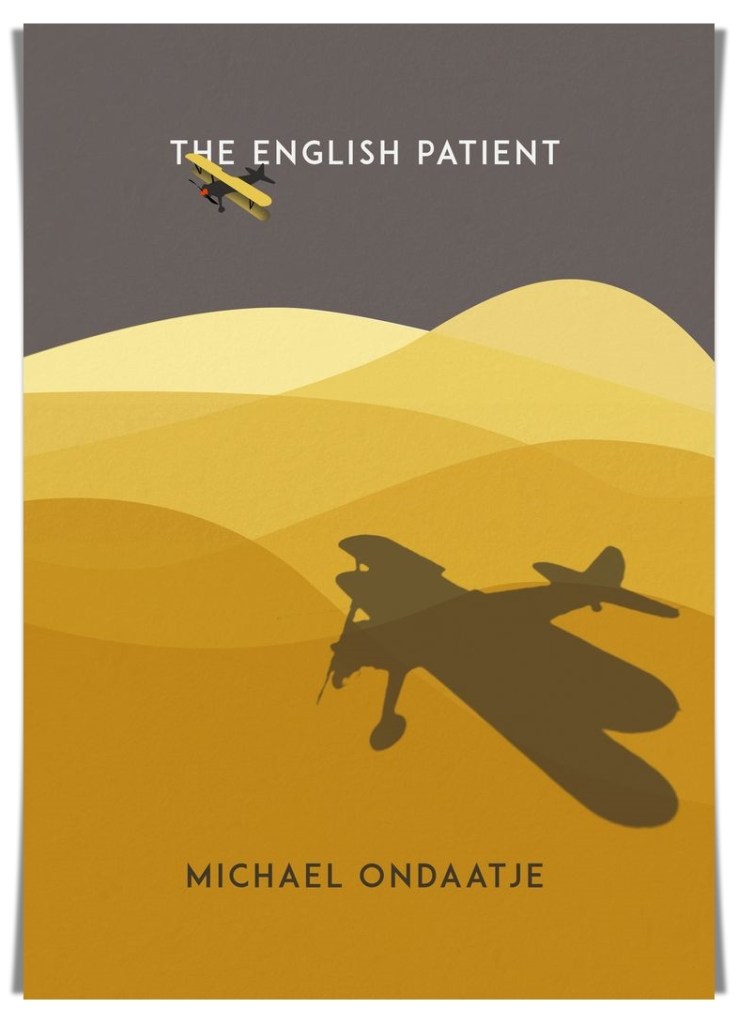
Some books become landmarks in your life. It becomes more than something you read when you return to its pages again and again, like a familiar scent or a half-remembered dream. For me, that book is The English Patient by Michael Ondaatje.

I got my copy in 1997 while waiting for my night shift to start. I was 20 at the time, working part-time while studying for my IT diploma. My shift began at 6 p.m. and finished at 6 a.m. the following day. After dinner, I went to a nearby bookshop and picked up the novel. The film adaptation was playing in cinemas at the time, but I didn’t watch it until years later. I read the book during my breaks at work, but it took me a long time to finish it.

Image source

Ondaatje’s prose was difficult. It didn’t care for neatness. The narrative was fragmented, the rhythm unpredictable—the whole narrative is a long lyrical poem. But I stuck with it, turning each page slowly, sometimes painfully. And I’m glad I did. While others found it disjointed, that was precisely what drew me in. It was too poetic for the mainstream, too fragmented for easy consumption, and too sensual for readers who prioritize plot. That’s what I enjoyed about it then—and still do.

When I went to university to pursue my IT degree, The English Patient became a silent friend. I read it during long, lonely afternoons in my hostel room as a soothing escape from the chaos of university life. Through Ondaatje’s pages, I could retreat to the worn walls of Villa San Girolamo, into the burned silence of the English Patient, and the sun-drenched memories of the Cave of Swimmers. I must have read the book ten times throughout the years. 

The story unfolds in the same way that memory does: disorganized, sensory, and half-lit. We learn about the English Patient’s past before, during, and after WWII. Of Katharine Clifton and their forbidden love. Of Hana, the grieving nurse who cares for him in the villa. Of Caravaggio, the thief turned British spy with missing thumbs. Of Kip, a gentle Indian sapper who dismantles bombs and falls in love with Hana despite their cultural differences.

The patient’s only possession is a battered, annotated copy of Herodotus’ Histories that survived the flames when his plane crashed in the desert. The crash badly burned him and caused amnesia. He couldn’t remember his name and lost his identity, but his voice led many to believe he was English. In time, we learn he is actually László de Almásy, a Hungarian cartographer and desert adventurer. Almásy’s character is loosely based on a real-life counterpart, Count László Almásy, a Hungarian aristocrat and explorer.

I remember reading passages aloud to my lover during late-night chats. We watched the movie adaptation on VCD, but I hated it. It lacked the haunting lyricism of the novel. The lushness of Ondaatje’s words cannot be translated to screen. His sentences breathe, linger, and seep in. They don’t just move the story forward. They remain in you long after you finish the novel.

I haven’t read the book in years. Maybe it’s time to read it again. Some parts of me have changed; others haven’t. I suspect the story will read differently now, the way all great books do when you return to them older and bruised with life.

There’s one passage that’s followed me for years, so much so that I placed it on my About Me page:

“She had always wanted words, she loved them; grew up on them. Words gave her clarity, brought reason, shape.”

This quote refers to Katharine Clifton, but I feel it suits me as well.

There are many other lines that have stayed with me through the years. There are too many to list, but here are a few that still haunt me:

“We die containing a richness of lovers and tribes, tastes we have swallowed, bodies we have plunged into and swum up as if rivers of wisdom, characters we have climbed into as if trees, fears we have hidden in as if caves. I wish for all this to be marked on by body when I am dead. I believe in such cartography—to be marked by nature, not just to label ourselves on a map like the names of rich men and women on buildings. We are communal histories, communal books. We are not owned or monogamous in our taste or experience.”

― Michael Ondaatje, The English Patient

“I believe this. When we meet those we fall in love with, there is an aspect of our spirit that is historian, a bit of a pedant who reminisces or remembers a meeting when the other has passed by innocently…but all parts of the body must be ready for the other, all atoms must jump in one direction for desire to occur.”

― Michael Ondaatje, The English Patient

“Moments before sleep are when she feels most alive, leaping across fragments of the day, bringing each moment into the bed with her like a child with schoolbooks and pencils. The day seems to have no order until these times, which are like a ledger for her, her body full of stories and situations.”

― Michael Ondaatje, The English Patient

“This was the time in her life that she fell upon books as the only door out of her cell. They became half her world.”

― Michael Ondaatje, The English Patient

“In the desert the most loved waters, like a lover’s name, are carried blue in your hands, enter your throat. One swallows absence.”

― Michael Ondaatje, The English Patient

“Sometimes when she is able to spend the night with him they are wakened by the three minarets of the city beginning their prayers before dawn. He walks with her through the indigo markets that lie between South Cairo and her home. The beautiful songs of faith enter the air like arrows, one minaret answering another, as if passing on a rumor of the two of them as they walk through the cold morning air, the smell of charcoal and hemp already making the air profound. Sinners in a holy city.”

― Michael Ondaatje, The English Patient

The English Patient is not a book you finish or a book you can read casually. It’s a book you carry, absorb, and savor.

And I’ll keep returning to it.

As long as I need to remember how language can ruin you.

And heal you.

And leave you haunted in the best way.

Becoming Celine

Daily writing prompt
If you could be a character from a book or film, who would you be? Why?

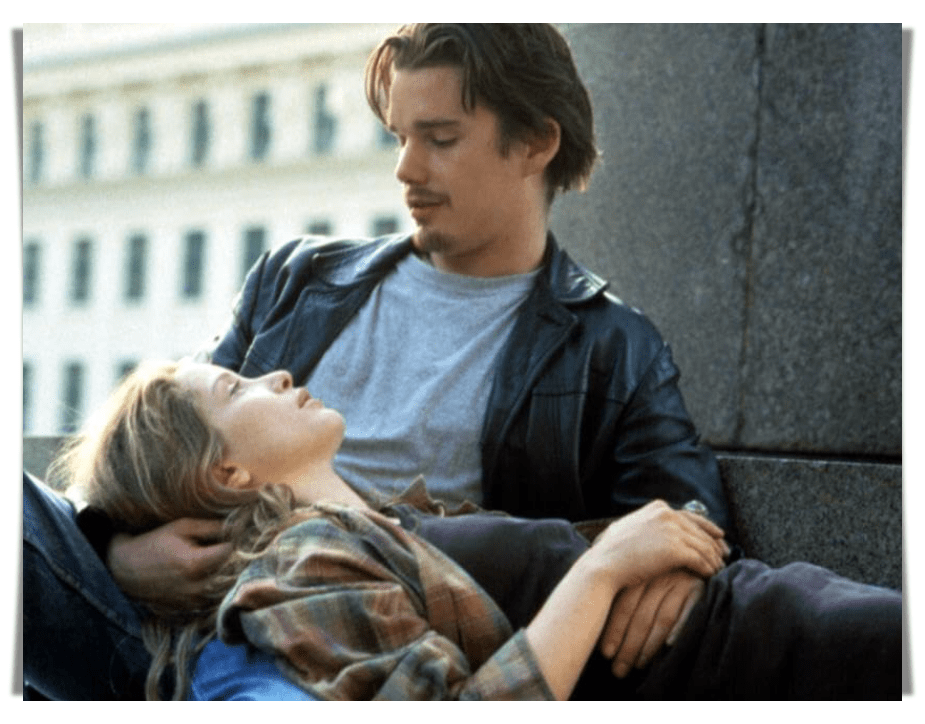
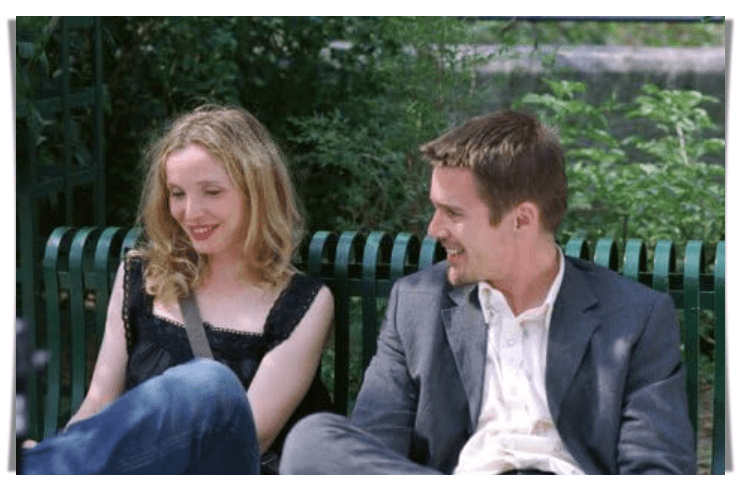
If I could be a character from a book or film, I would be Celine from the Before Trilogy. Yes, I’d love to be Celine—Julie Delpy’s character in Before Sunrise, Before Sunset, and Before Midnight.

Image source

Those films stayed with me for many years since I discovered Before Sunrise in the early 2000s. That movie was released in 1995, a year after Reality Bites—another hit movie starring Ethan Hawke. Its sequel, Before Sunset, was released nine years later in 2004, and the final installment, Before Midnight, another nine years later in 2013.

I adore the trilogy for its dreamy long walks, the poetic ramblings, the agonizing feeling of time passing, and also Celine’s character development. In Before Sunrise, she begins as a charming, idealistic Sorbonne undergraduate, wide-eyed and open-hearted. She was sweet and willing to talk to an American traveler, Jesse Wallace (Ethan Hawke), on a Eurail. They disembarked in Vienna to spend the night together and explore the mystery of what-if.

And then nine years pass. 

By Before Sunset, she has grown sharper. Her voice is steelier, and her eyes are more guarded. Life has touched and damaged her in many ways. But behind it all, she has the same curiosity, the desire to comprehend life, and what it means to belong to someone or not at all. Jesse is married and a writer now and has published a book about his experiences that fateful night nine years ago. Celine shows up at his book reading in Shakespeare & Co., watching and listening to him from the side of the room. And then their eyes met. That scene always gets me.

“I always feel this pressure of being a strong and independent icon of womanhood, and without making it look my whole life is revolving around some guy. But loving someone, and being loved means so much to me. We always make fun of it and stuff. But isn’t everything we do in life a way to be loved a little more?”

― Julie Delpy, Before Sunrise & Before Sunset: Two Screenplays

Image source

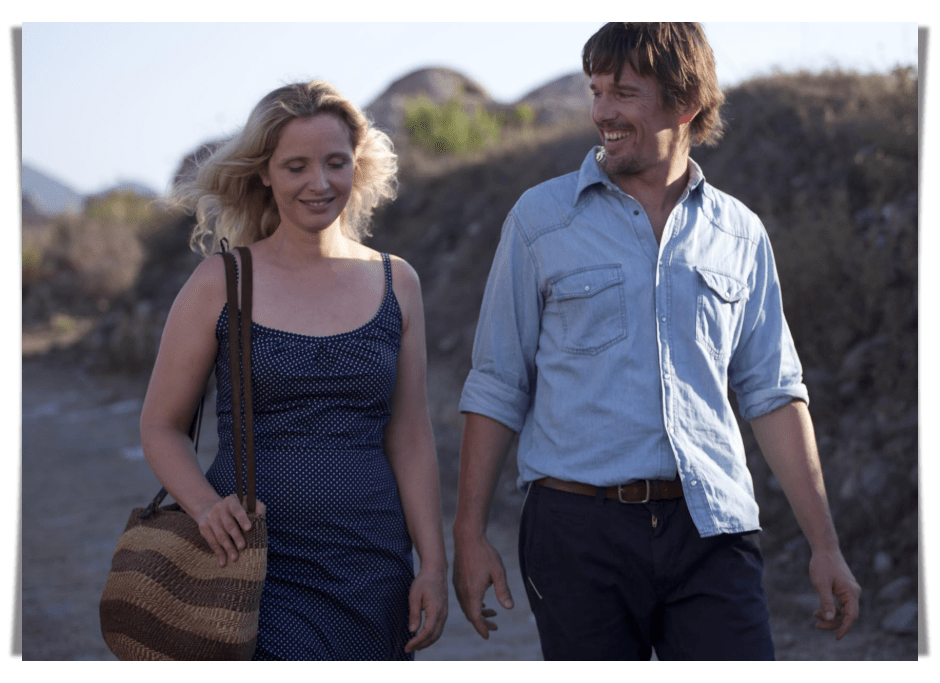
Then came Before Midnight, another nine years later. Celine and Jesse are now in their forties and parents to twin daughters. Their conversations are no longer romantic musings under moonlight, but fueled by the reality of parenthood, aging, and the jadedness that settles into long-term love. They’re on holiday in Greece, but even the beautiful scenery can’t hide the fractures that have begun to appear. There’s tension, resentment, and emotional exhaustion.

They take long walks and talk like they always have, but their conversation is no longer about dreams and philosophies. Now they talk about regret, sacrifice, and voids that love couldn’t fill. There’s a scene in a hotel room that feels like a slow, approaching storm. You begin to wonder, did Jesse cheat on her? Did Celine ever fully forgive him? Did they lose parts of themselves in choosing to stay?

Despite their love, it’s evident that love isn’t always enough.

Image source

That’s what makes Celine feel so authentic to me. 

Perhaps I see myself in her because I, too, often live in my head. I question everything—especially love. I pay attention to details and cherish them. 

“You can never replace anyone because everyone is made up of such beautiful specific details.”

― Julie Delpy, Before Sunset

I remember moments long after they have passed. I try to appear sensible, but I’m a huge romantic underneath it all. Like Celine, I struggle with guilt, restlessness, and the anguish of wanting something elusive. And like her, I strive to be honest, even if it hurts. 

In another life, I could see myself in Paris. Walking by the Seine, notebook in hand, or perhaps sitting at Shakespeare & Co. with cold coffee beside me. I aspire to visit that bookstore one day. Just stand there and breathe in the pages.

Celine isn’t perfect. She’s charmingly imperfect, impetuous, and multifaceted. But she’s also deeply present. She listens and sees people. Perhaps it’s what I admire most about her—she doesn’t run from questions. She asks, even if there are no answers.

“I believe if there’s any kind of God it wouldn’t be in any of us, not you or me but just this little space in between. If there’s any kind of magic in this world it must be in the attempt of understanding someone sharing something. I know, it’s almost impossible to succeed but who cares really? The answer must be in the attempt.”

― Julie Delpy, Before Sunrise & Before Sunset: Two Screenplays

And, if I could become her for a while, I wouldn’t do it for the romance or the cities. I’d choose it because of the way she continues to ask, feel, and try—even when the answers are ambiguous and love falters.

That is exactly what I’m hoping for as well.

To keep on walking.
To keep on asking.
To keep on becoming.

A Gentle Offering to the Quiet Ones

Daily writing prompt
How would you improve your community?

Image source

I don’t have a community in the traditional sense. There’s no physical space to which I belong where people gather on a regular basis to exchange pleasantries and check in on one another. However, I have a discreet online presence where I build a slow-growing digital connection through words, art, and vulnerability.

If I could improve any community, it would be the invisible one. Women who write in the darkness. The silent creatives. Mothers who are stretched thin. Those who carry shame in their bodies, fear in their voices, and tenderness that they rarely express.

I want to spread gentleness where the world has been harsh. 

I hope that my honest, imperfect, emotionally raw writing may help others feel less alone. They can breathe a bit better knowing that someone else understands how they feel. I aim to create a body of work that not only informs but also offers understanding. I want it to be a place where truth may exist unpolished.

My poetry, art, blog posts, essays, and even my online presence aren’t intended to impress. They are invitations to everyone to slow down, to feel, and to remember. 

I come from a culture that seldom discusses grief, shame, or women’s private lives. By sharing my truths, I hope to offer people the freedom to explore their own. I want to be a part of a peaceful movement promoting honesty. It’s a movement in which we say to each other, “You are not broken. You are just human.”

So, how can I improve my community? By showing up with words, with heart, and with everything I used to hide. I don’t set out to fix anyone, but to say:

I see you. I’m still here and I understand.