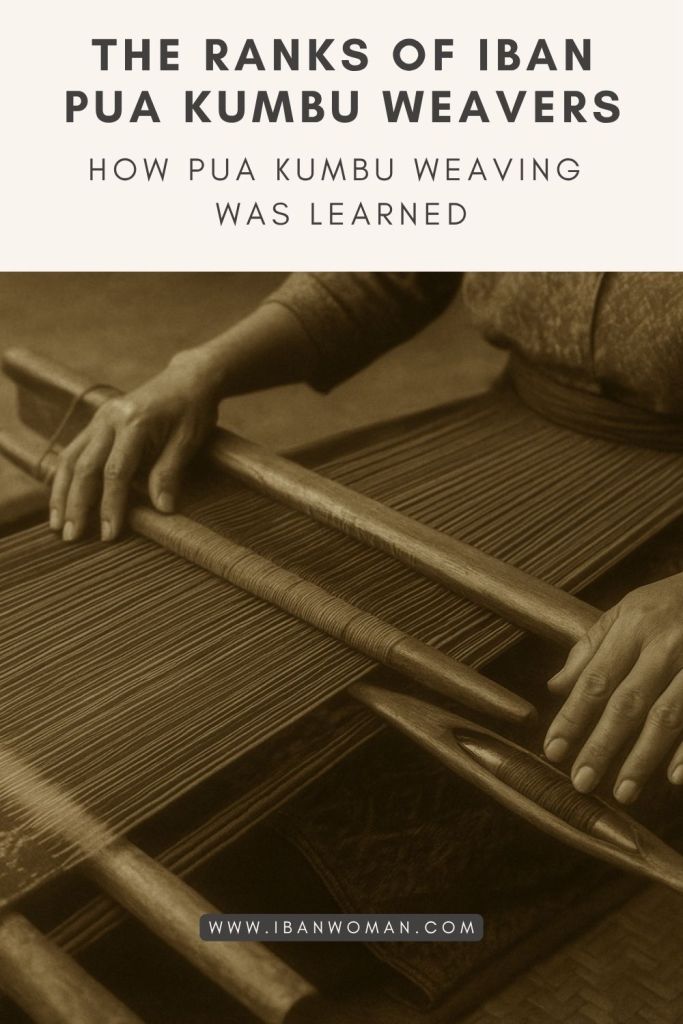
The Traditional Path of an Iban Weaver

Among the Iban, weaving has always been a measure of a woman’s place in the community. The knowledge is passed down from mother to daughter, usually when a girl enters her teenage years. She learns each stage with patience: preparing cotton yarn, tying the threads, selecting designs, and working through the complex dyeing process. Every step includes a ritual to maintain balance with the spirit world. A weaver must be skilled, but she must also be spiritually open in order to progress. Through weaving, she learns how to approach the unseen forces that shape her life as a woman and as an artist.

A weaver must follow the traditional sequence of learning. If she attempts skills before she is ready, she risks falling into layu, a state of spiritual deadness. Elders say this condition can affect both the mind and body, and once it takes hold, death is believed to be the only release. Every Iban woman understands this danger, so she approaches her craft with devotion and deep caution.

Pua kumbu is a way to understand a woman’s status. Her rank depends on the dyes she uses, the complexity of her patterns, the precision of her technique, and her relationship with the spiritual world. A pua is not judged by beauty alone. It reflects the weaver’s inner state, her discipline, and the spiritual guidance she receives. Even though many Iban families today have adopted modern beliefs, the traditional criteria for judging a pua still hold meaning. The rituals and techniques behind each piece continue to define its value.
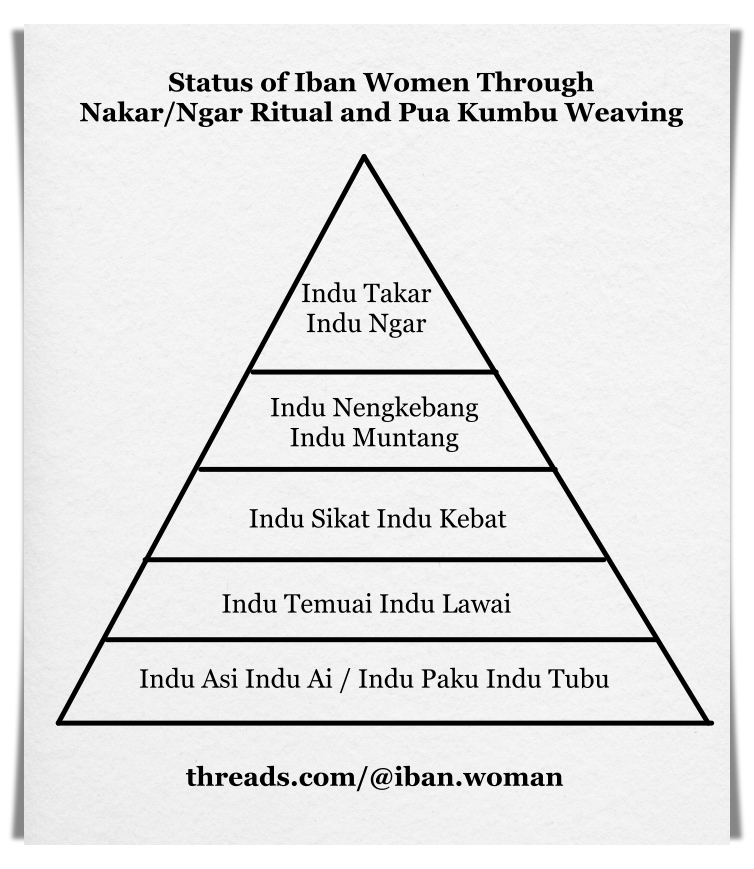
There are several ranks within the weaving world. At the first level are women who do not weave, called Indu Asi Indu Ai or Indu Paku Indu Tubu. They may not come from weaving families or may lack the resources to learn. Much of their time is spent farming and managing household life, and they cannot afford the labour or materials needed for weaving.

The next group consists of women known for their hospitality, called Indu Temuai Indu Lawai. These women usually have enough rice, help, and stability to weave simple designs. With guidance from others, they can produce basic patterns such as creepers or bamboo motifs.

A novice learns within strict boundaries set by tradition. She begins with a small piece of cloth and a simple pattern called buah randau takong randau. She may only weave a cloth that is fifty kayu in width. As her skills improve, she increases the width of her work. By her tenth pua, she will reach a width of 109 kayu. These rules are deeply respected, as they are believed to originate from the spirit world.

When a woman becomes skillful, she is known as Indu Sikat Indu Kebat. She can weave recognised patterns but cannot create her own. Her designs come from motifs passed down through her ancestry. If she wishes to learn new patterns, she must make ritual payment to a more experienced weaver in exchange for permission to use them.

A higher rank is held by the Indu Nengkebang Indu Muntang. She is able to invent new designs, often revealed to her through dreams. She has the ability to attempt complex and spiritually demanding motifs. Her community respects her greatly, and she wears a porcupine quill tied with red thread as a mark of distinction. Other weavers pay her well for new motifs.

At the top of the hierarchy is the Indu Takar Indu Ngar. She is a master dyer, a master weaver, and a ritual specialist. She understands the exact balance of mordants and natural dyes and knows how to fix colour to cotton successfully. Many people know the basic ingredients, but only those with spiritual guidance can complete the process with precision. Her knowledge is both technical and sacred.

To reach this level, a woman must excel in all areas of weaving and dyeing. She must also receive recognition from the spiritual world. This acknowledgment often comes in dreams, which serve as both initiation and confirmation. Sometimes another person dreams on her behalf, affirming her role. Many women at this level come from long lines of weavers and dyers, inheriting designs, dye knowledge, charms, and the support of ancestors whose status once brought additional labour to their families. This allows her to devote herself fully to her craft.

The Indu Takar Indu Ngar is responsible for the ritual preparations of the mordant bath. The ceremony includes animal sacrifice, offerings, and prayer. It is known as kayau indu, or women’s warfare. The ritual is private and demanding, and the leader must be courageous. If she loses control of the spiritual forces present, she risks falling into layu. Her bravery is regarded as equal to that of a warrior.

She also plays an important role in public ceremonies. During Gawai Burong, she scatters glutinous rice at the ceremonial pole. During Gawai Antu, she prepares garong baskets to honour the master weavers of earlier generations. When she dies, her funeral is filled with praise, and her worth is compared to that of a prized jar. Her husband receives honour as well.

Every pua kumbu carries the status of its weaver. Its complexity, width, ritual purpose, and intended use shape its value. Pua kumbu textiles accompany every stage of life and death for those who still observe traditional Iban practices. Each design is tied to a specific ritual, and the ritual gains its character from the cloth chosen for it. This is why pua kumbu remains central to the spiritual life of Iban women.


I write about Iban culture, ancestral rituals, creative life, emotional truths, and the quiet transformations of love, motherhood, and identity. If this speaks to you, subscribe and journey with me.
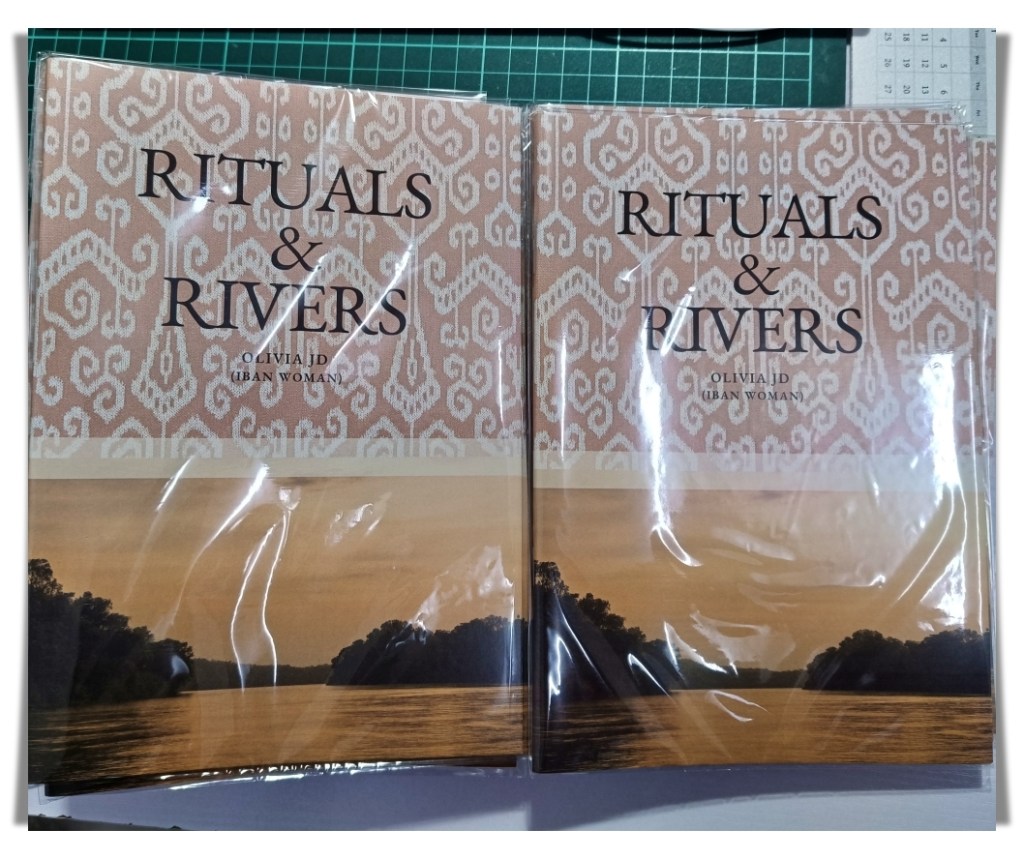
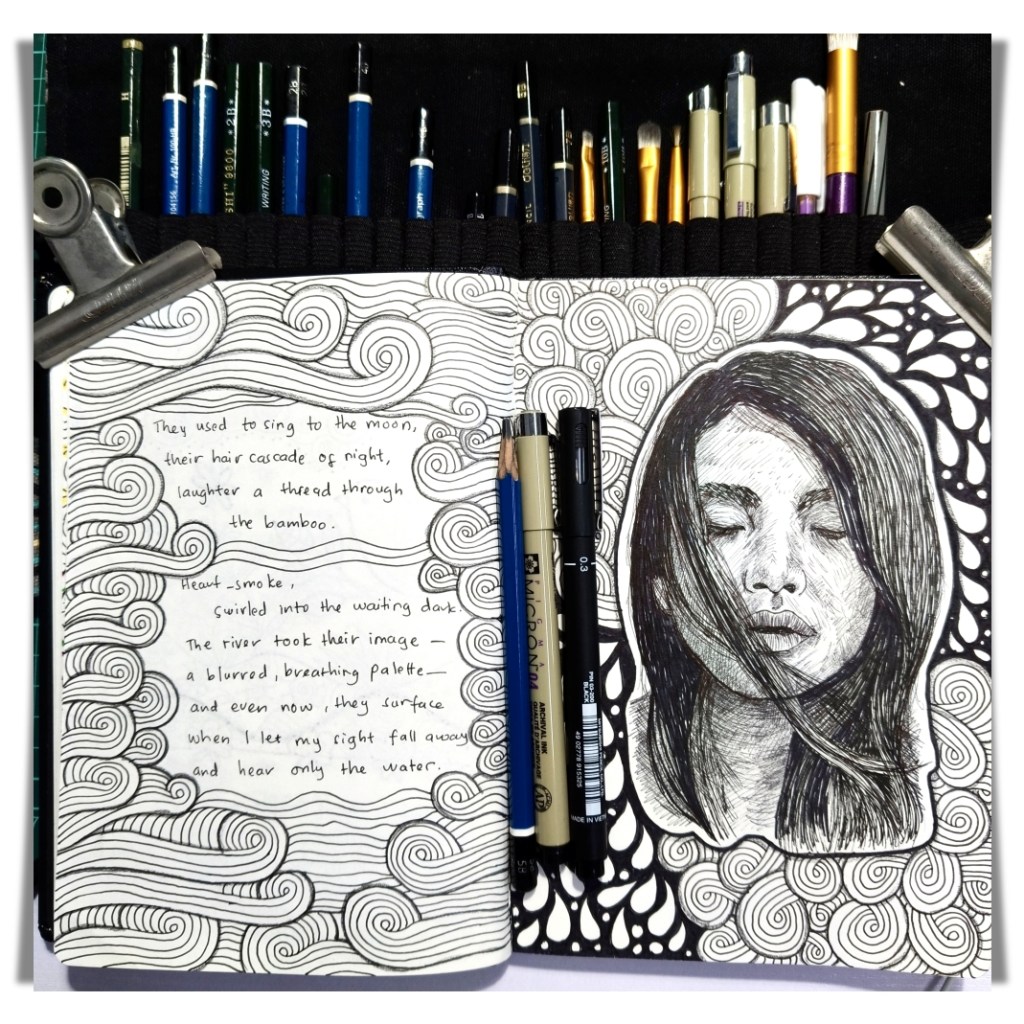
My First Group Exhibition in Malaysia and A New Zine in the Making

Tomorrow is the soft launch of Akar Kita Abadi, the group exhibition I’ve been preparing for the past few weeks. I will exhibit several of my Iban heritage poems called Rituals and Rivers, and holding these printed booklets, which just arrived, feels like a confirmation of all the time spent writing, editing, and polishing. This little booklet (or zine) has 10 poems from a much bigger collection of Iban heritage poetry that I want to publish in 2026. I will be selling these booklets during the exhibition and they are quite limited in number. I will share more about the exhibition after the launch tomorrow. I can’t share pictures until after the launch so I can’t really say much about the whole thing. The exhibition will last until 23 November so if you’re in Klang Valley, you may want to drop by and give us your support. 

While this exhibition marks the beginning of sharing that collection publicly, another project has started to take root in parallel. I have begun working on a new zine that will focus entirely on Iban women. This project seems like a continuation of Rituals & Rivers, but through a more personal viewpoint. It will look at various facets of Iban womanhood, from ancient times to the present.

Every page will be hand-drawn using pencil and black fine liners, but for the actual zine they will be edited and printed. Drawing by hand has a grounding effect, allowing each line to have its own rhythm and imperfection. The only printed text will be the longer passages and explanations, saving space while keeping the design balanced. I have not planned the number of pages or illustrations yet. I like to let the process evolve spontaneously. Each piece generally begins as a poem or a brief reflection before taking on a visual shape.

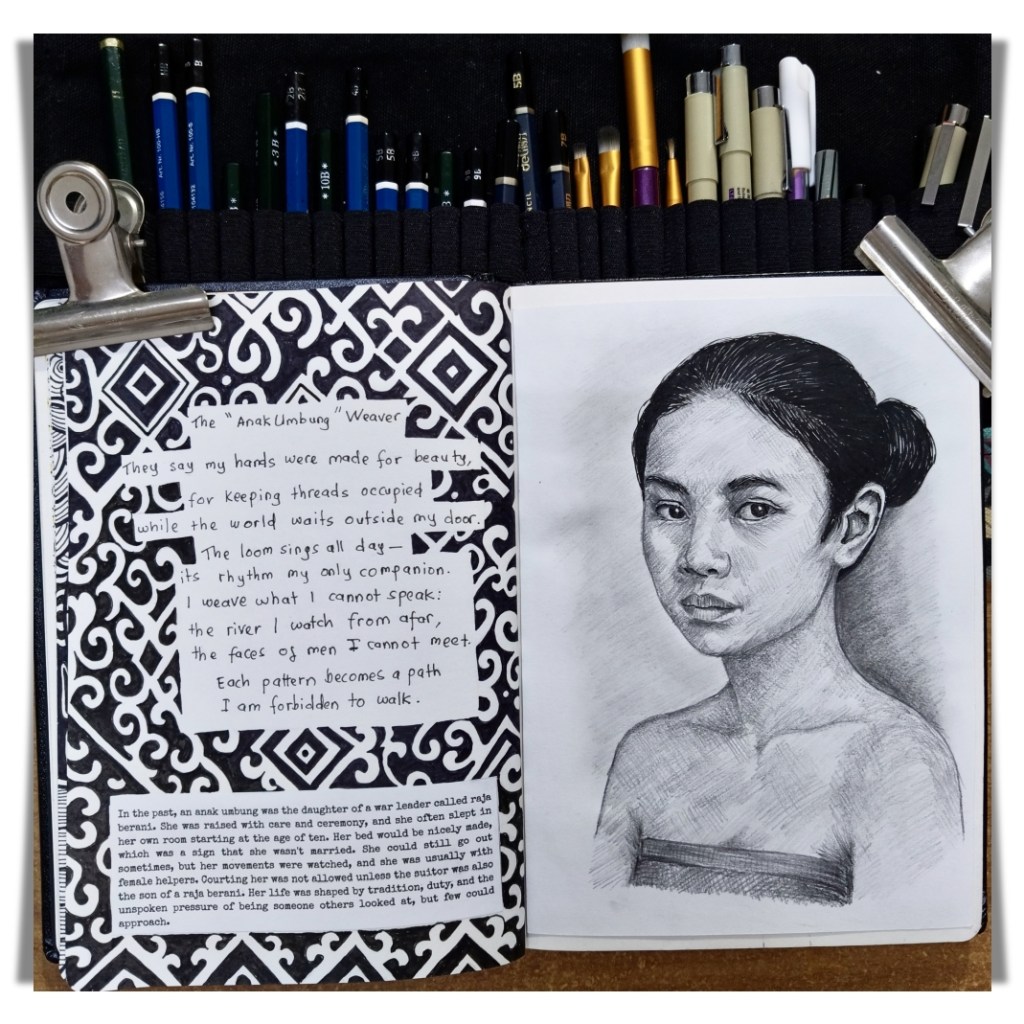
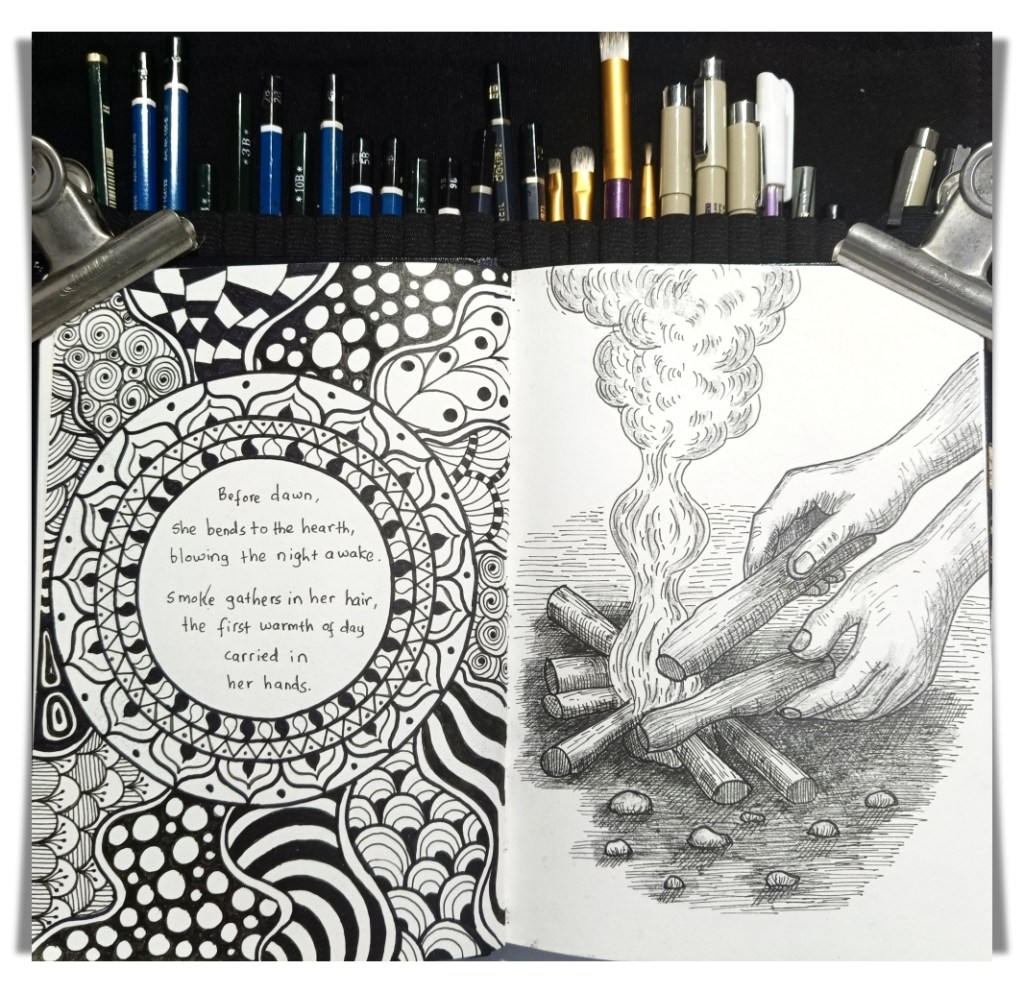
One of the first illustrations is inspired by women who sing to the moon as their laughter threads through the bamboo. Another drawing shows the anak umbung, the daughter of an Iban war leader who was raised apart from others and taught weaving skills. Her story has stayed with me, serving as a reminder of the beauty and self-control that once entwined women’s lives. There is also a drawing of a woman tending to the hearth before dawn. These aren’t big moments; they’re small actions that show tenderness, duty, and strength in Iban women. 

This new zine will be based on the same ideas as Rituals & Rivers, but it will focus more closely on the daily and the personal.  It will explore what it means to be an Iban woman across generations, including the traditions that are passed down, the unspoken resilience, and the actions that connect one life to another. It’s a way for me to listen to the voices of the women who came before me and to honor how their spirit still lives on in us now.

I don’t know what the completed zine will be like, but I know it will develop slowly, page by page, just like stories used to do, with care and patience.


I write about Iban culture, ancestral rituals, creative life, emotional truths, and the quiet transformations of love, motherhood, and identity. If this speaks to you, subscribe and journey with me.
Headhunting | The Rituals and Care of Antu Pala

Disclaimer: This post is only for sharing purposes. I’m not an expert, just sharing what I know. The information here is general and may not cover every detail. For Iban readers who know more, feel free to add in the comments. This post is not meant to glorify the practice of headhunting but to share knowledge for better understanding.

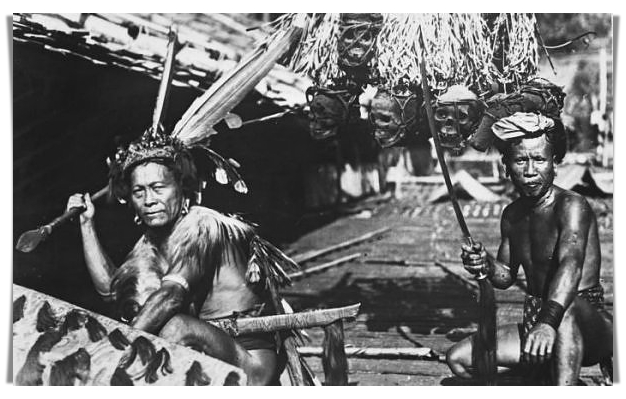
As I mentioned in my previous post, headhunting among the Iban was not random violence but part of specific mourning rituals. It was carried out to complete rites after the death of a family member. But after the warriors returned from ngayau (headhunting expedition), what happened to the severed heads? Were they hung immediately? The answer is no. Certain rituals had to be performed before the heads could be brought into the longhouse and later hung in the ruai (communal gallery).

The first thing the bujang berani (warriors) did upon returning was to manjung, which means to shout and announce their arrival. They could not enter the longhouse right away because it was taboo.  Specific rituals had to be followed. Practices varied from one Iban community to another, but what I’m sharing here is the way of the Saribas Iban from the Betong Division.

Image source

After announcing their arrival, the bujang berani stayed for a week in a small hut called langkau near the longhouse. During this time, they rested, cleansed themselves, and prepared the heads. This included cleaning and removing skin, flesh, and brain matter to prevent decay. The process took place by the river, where the heads were skewered on sticks, washed thoroughly, and boiled to loosen any remaining flesh. Once cleaned to bare skulls, they were smoked over the bedilang (hearth) until black and dry. At this stage, they were known as antu pala.

When the skulls were ready, the warriors prepared to re-enter the longhouse in full Iban regalia—baju gagong, ketapu or lanjang (headgear), sirat (loincloth), tumpa (silver armlets), and marik betaring (toothed beads). Only men who had gone on ngayau were permitted to wear the full attire. Those considered kulup (cowards) who had never participated in a headhunting expedition could only wear a sirat.

Image source

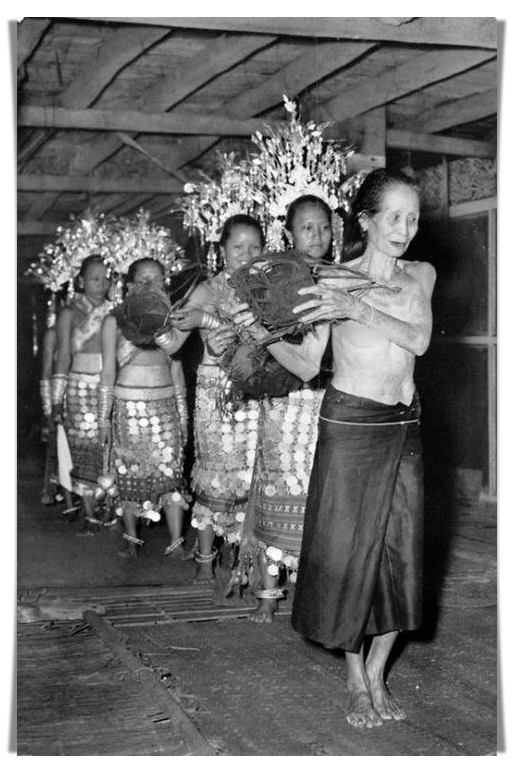
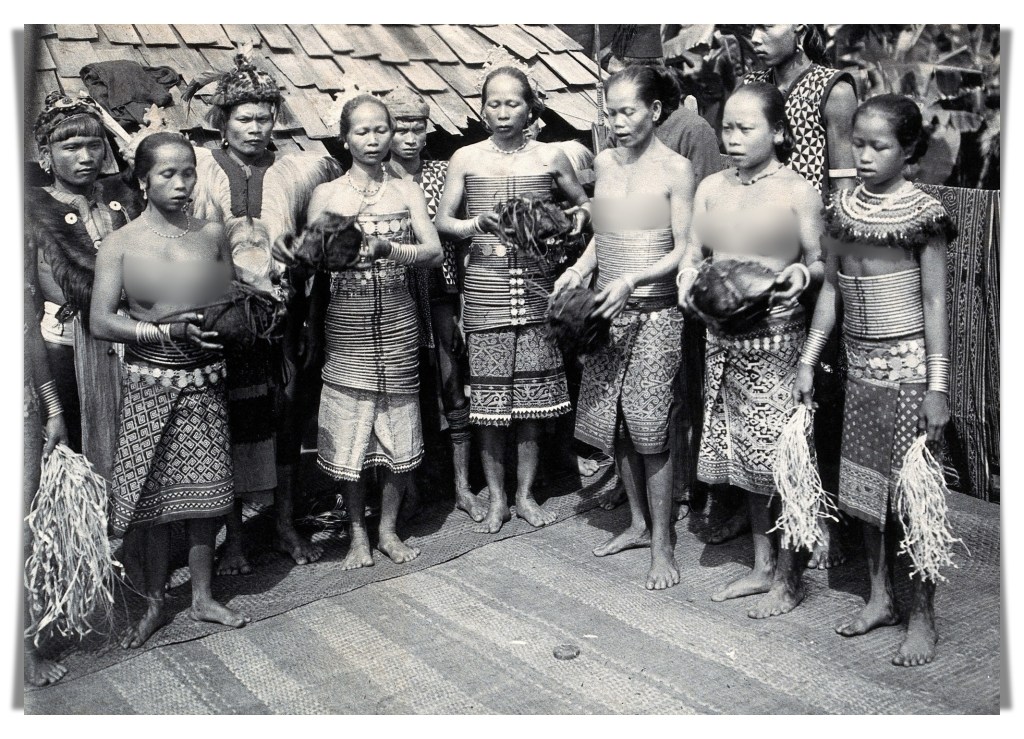
A procession called Mangka Ke Selaing was then held to welcome them home. The warriors were welcomed with panjung (victory shouts) and the beat of the Gendang Pampat. At the doorway, they were received by their mother or wife carrying a chapan (winnowing tray) covered with pua kumbu, a ceremonial textile woven only by the mother or wife of the warrior. The cleaned skulls were placed on the pua kumbu, not fresh or bloody as often imagined. The Iban always followed adat (custom) in their rituals, so there was never any confusion or disorder.

Image source

The mother or wife then played a key role in the Naku Antu Pala procession, carrying the tray of skulls along the ruai while nyangkah (chanting). The warriors marched behind the women to the rhythm of the Gendang Rayah. During this moment, they could not be touched or spoken to, as it was believed that the deities Keling and Kumang of Panggau Libau accompanied them. Disturbing them was said to cause one to faint.

The lemambang, or bards, were also present at the procession. They carried a garong, which is a bamboo container full of tuak, or rice wine. Only the bujang berani could drink this wine, and they drank it at the end of the procession. The ritual was over when the mother or wife performing Naku Antu Pala bit the skull, which meant that her spirit had won over the skull’s spirit. The antu pala then became the servant of its owner.

After the ritual, a feast called Gawai Enchaboh Arung was held in honor of Bujang Berani. There was food, ngajat (traditional dance), and happiness all night long. The mourning period came to an end with this feast. The antu pala was believed to nyilih pemati, to replace the soul of the deceased with that of the enemy, allowing the departed to rest peacefully in Sebayan (the afterlife).

Image source

Taking care of the antu pala also included different rituals, depending on the purpose. Whenever the skulls were moved or ceremonies were performed, miring or bedara’ was always required. Miring was a ceremony of prayers and offerings to Petara (God), the deities of Panggau Libau, and the ancestral spirits (Petara Aki Ini) for blessings, harmony, and protection from harm.

This was followed by bebiau, a rite using a fowl with accompanying prayers. Before it began, a piring (offering) was prepared, consisting of tobacco, betel nut, betel leaf, gambier, rice, salt, glutinous rice, rice flour, yellow rice, eggs, tuak, and chicken feathers dipped in blood from the sacrificed fowl. Larger ceremonies like Gawai Burong required even more offerings.

After miring, the antu pala had to be “fed.” This act was similar to the Chinese tradition of offering food to ancestors. Rice, water, and sometimes cigarettes were placed as offerings, and in some rituals, a pig was also sacrificed, especially when moving the antu pala to another location.

Not everyone was allowed to touch the antu pala. Only its owner or heirs could handle it. In some regions, this role was reserved for men. If a skull fell, it could not simply be picked up; a miring had to be done first, with a chicken offered before it was lifted and rehung.

These were only the basic practices. There are many more rituals surrounding the antu pala, each layered with meaning and guided by adat. These rituals may seem strange or even unsettling today, but they used to be crucial to the Iban’s understanding of life, death, and the spirit world. They show a community that was deeply guided by adat, a system that balanced courage with respect and ritual with meaning. 

If you have stories or knowledge passed down from your elders about antu pala or other old practices, I’d love to hear them in the comments. Every story adds another thread to our shared history. 

If you’d like to see a performance of the Naku Antu Pala procession, you can check out this video:


I write about Iban culture, ancestral rituals, creative life, emotional truths, and the quiet transformations of love, motherhood, and identity. If this speaks to you, subscribe and journey with me.
The Story Behind the Iban Hand Tattoo, Tegulun

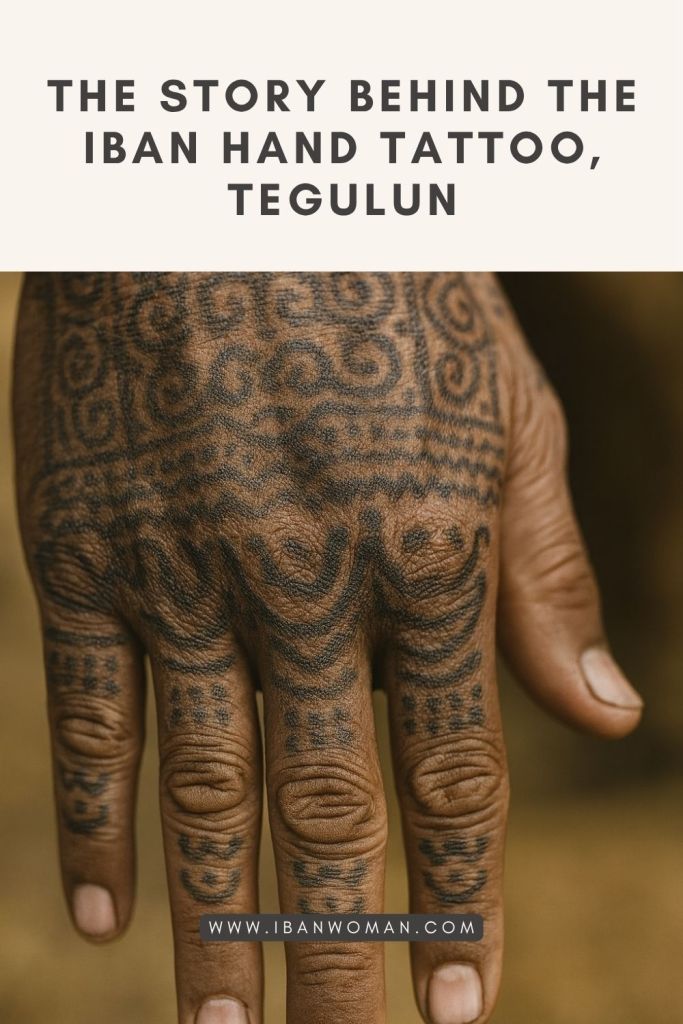
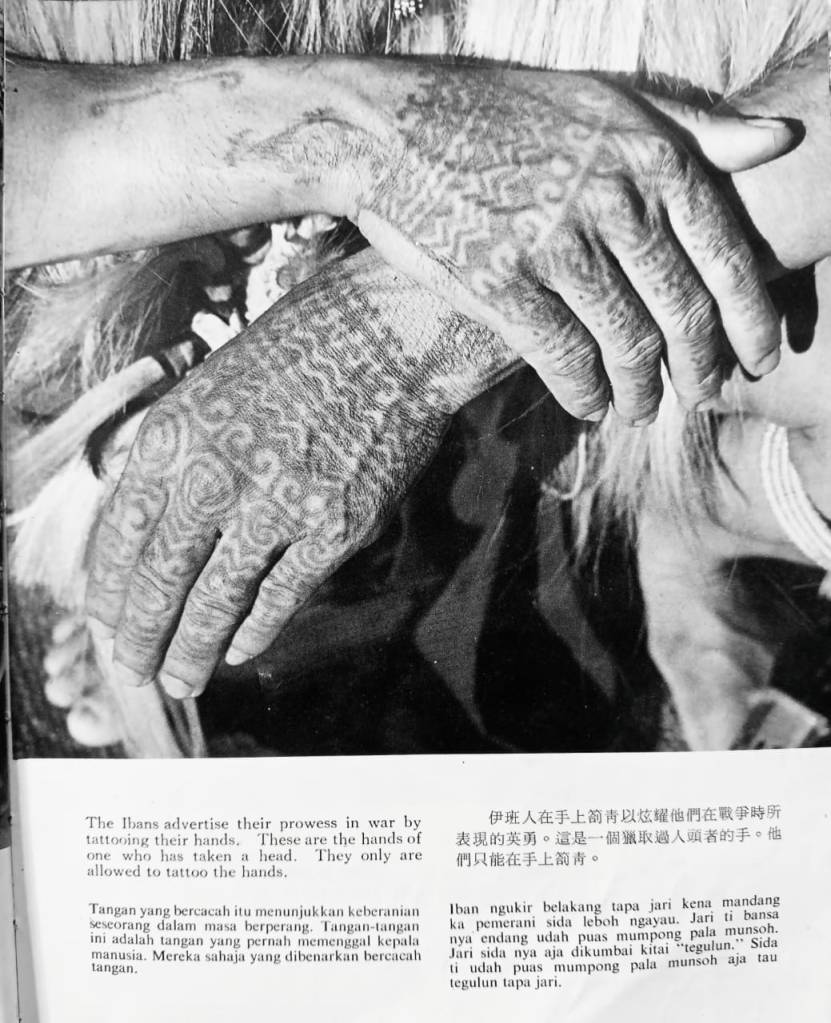
Have you ever heard of the Iban hand tattoo called tegulun? It’s one of the most striking forms of body art in our culture, yet not many people know what it really means. I found an old photo taken in 1962 from Life in a Longhouse by Hedda Morrison. It shows the hands of an Iban man with very detailed tattoos that go all the way down to his fingers. The pattern is tegulun.

In the Iban language, tattoos are called pantang or kalingai. Every tattoo on the body used to mean something. Tattoos weren’t fashion statements but they were living records of a person’s journey, courage, and place in the community. Each motif, like bungai terung (eggplant flower), ketam (crab), or kala (scorpion), meant something. For men, tattoos often showed that they participated in headhunting expeditions, or gone through rites of passage. For women, only the most skilled pua kumbu weavers were allowed to bear them.

Among women, the right to be tattooed was not given lightly. A woman known as “Indu Tau Nakar, Indu Tau Gaar”, was a master weaver who earned her tegulun through artistic and spiritual labor. With her hands, she made sacred pua kumbu cloths used in rituals such as receiving enemy heads. The tattoo on her fingers didn’t symbolize violence; it reflected her connection to the spirit world through weaving. These women were highly respected, for they were believed to hold the gift to translate dreams and visions into woven form.

The meaning of tegulun was very different for men. Those who carried it were known as kala bedengah—warriors who had taken part in ngayau, or headhunting expeditions. Someone who had tegulun on his hands was a man who had proven himself in battle. The tattoo was a visible sign of his courage and strength of spirit. It was said that every line or curve on the fingers stood for a head of an enemy that had been killed in the war.

Looking at those tattooed fingers in old photographs, one can almost feel their importance in the past. The men who bore them were not only fighters but also protectors of their culture and their way of life. They lived by a complex set of moral codes that were based on omens, dreams, and rituals. Taking a head was never an act of impulse; it was part of a ceremony tied to the safety, fertility, and prosperity of the longhouse.

One of the most well-known Iban warriors who carried tegulun was Temenggong Koh (1870–1956), a tuai serang (war leader) from Kapit, Sarawak. His fingers were covered in tegulun, each one telling a story of victory and survival. Temenggong Koh once gave his nyabur, the sword he used during ngayau, to Malcolm MacDonald, a British diplomat. The blade still bore traces of dried blood and is now displayed at the Durham University Oriental Museum in the UK.

It’s difficult to imagine that such traditions existed within living memory. Today, there are no Iban men who bear tegulun. The British made headhunting illegal after World War II. The last “licensed” expeditions took place during the Malayan Emergency and Communist Insurgency, when Iban trackers were recruited to assist the British. After that time, the custom of taking heads and the tattoos that went with it completely died out.

The tegulun is more than a reminder of war. It refers to a time when everything, from fighting to making art, was connected to the spiritual order of the world. Tattoos linked the body to the world that can’t be seen. They reflected not only bravery but also a sense of belonging. A man or woman who bore them carried the stories of their people and passed them down through the generations.

Those meanings are at risk of being lost today. Most young Ibans have only seen people with tegulun in books or museum photos. But it’s important to understand them. These tattoos show us how our ancestors thought about life, death, and the sacred balance between the two. They remind us that strength can show itself in many ways, like when you swing a nyabur (sword) or sometimes in the patient rhythm of weaving a pua kumbu.

To learn about tegulun, you have to look beyond the surface of the skin. Though the ink has faded and the rituals have ended, the meanings remain alive in memory. They are echoes from another time, reminding us that every mark and line once carried a story worth telling and remembering.

Image source: Life in a Longhouse by Hedda Morrison


I write about Iban culture, ancestral rituals, creative life, emotional truths, and the quiet transformations of love, motherhood, and identity. If this speaks to you, subscribe and journey with me.

Printable Affirmation for Moms | Our Bond Is Stronger Than Any Tide

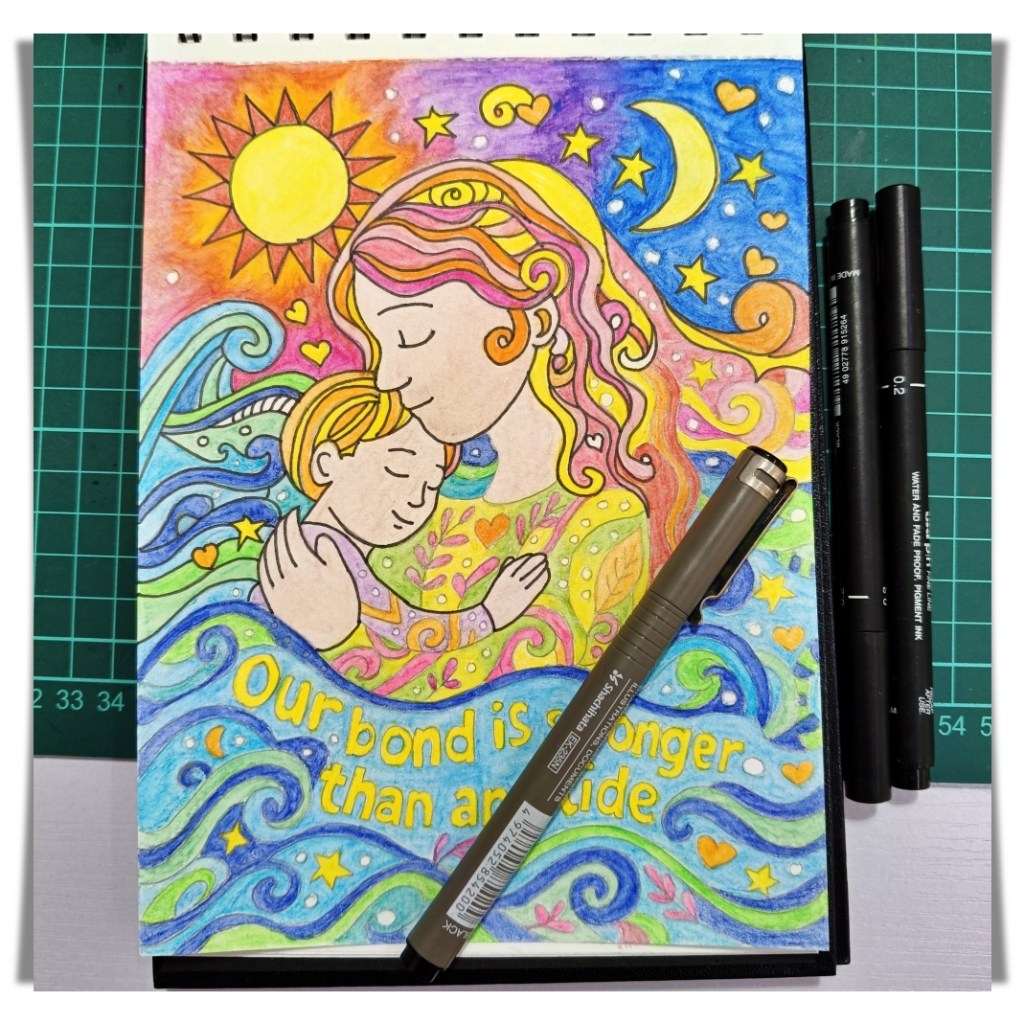
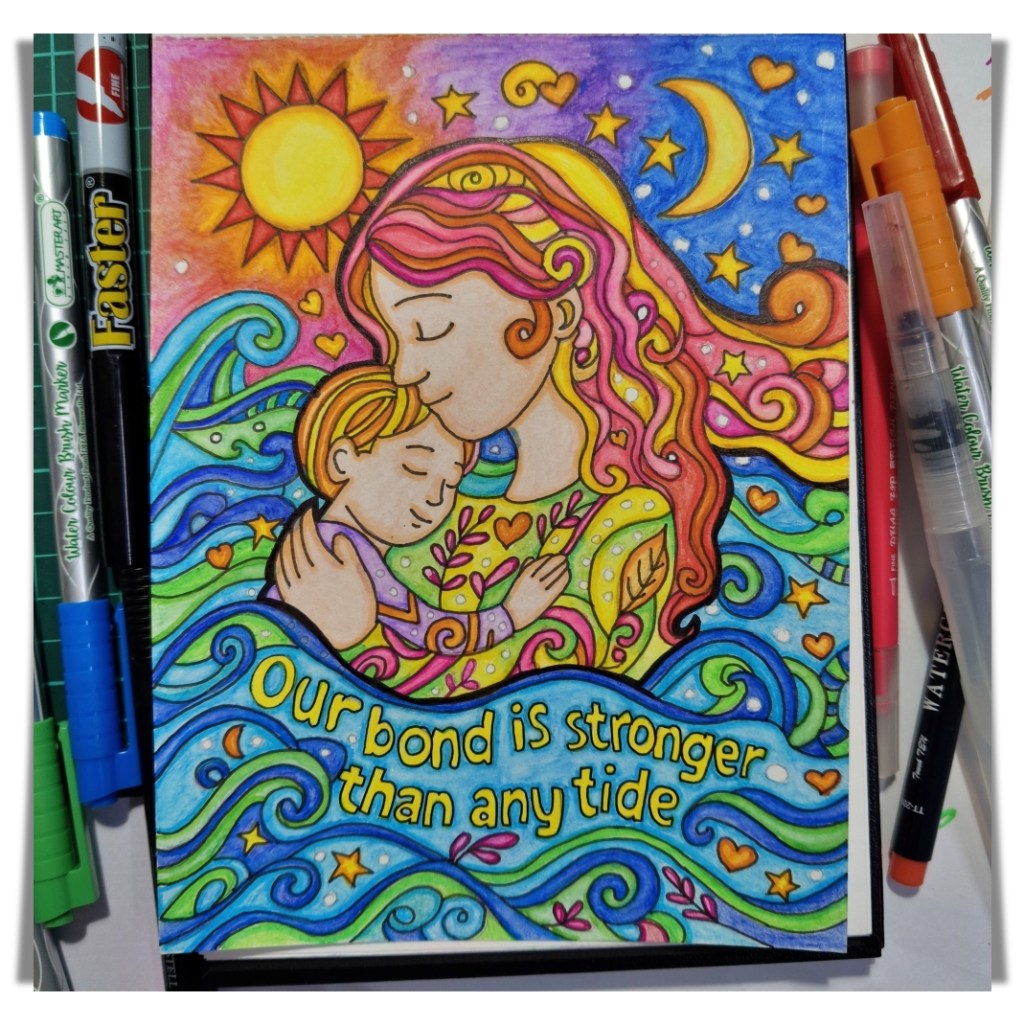
Hand-drawn printable affirmation art of mother and child with sun, moon, and waves — emotional support for overwhelmed moms.

My kids are older now. I’ve long moved past the stage of yelling. Through years of learning and reflection, I’ve softened. I still scold my kids when needed, but never in the uncontrolled way I used to when I was younger and overwhelmed. That part of me has grown quieter. But the memory? It still lives somewhere inside me, not to shame me, but to remind me of how far I’ve come.

I remember one particular moment when I yelled at my daughter. This happened many years ago. Later that evening, I sat on the edge of the bed, silent. My hands remained tightly clenched. My throat still raw. And my heart? That was the worst part. It stung with guilt and regret I’d experienced too often. When I saw her small shoulders shake, I wanted to swallow every hurtful word and undo my mistakes. But, of course, that’s not how time works.

I remembered a post I wrote not long ago, This Is Not the Mother I Meant to Be. Those words came from the same place where this printable affirmation was born: a dull aching between failure and love, a desperate desire to do better, to be more patient, to un-yell the things we shouted when we were too exhausted or too raw.

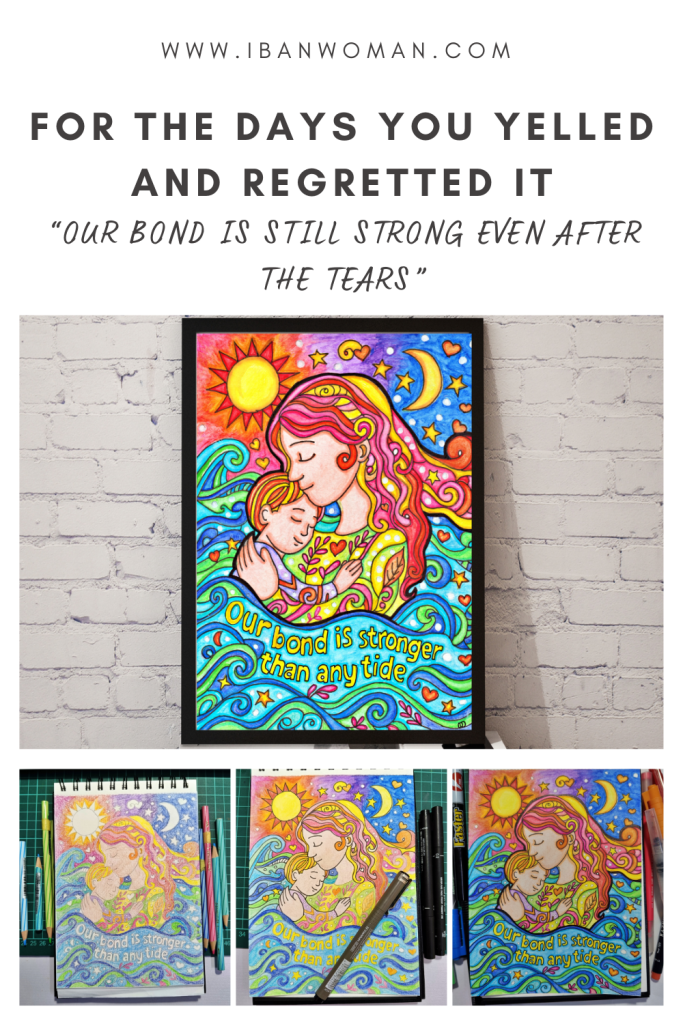
This new art piece—Our Bond Is Stronger Than Any Tide—came from reading late-night Reddit posts written by exhausted mothers. Posts full of remorse and shameful confessions. Most of these women probably didn’t need guidance. They just needed someone to sit next to them and say, “I know. I was there too.”

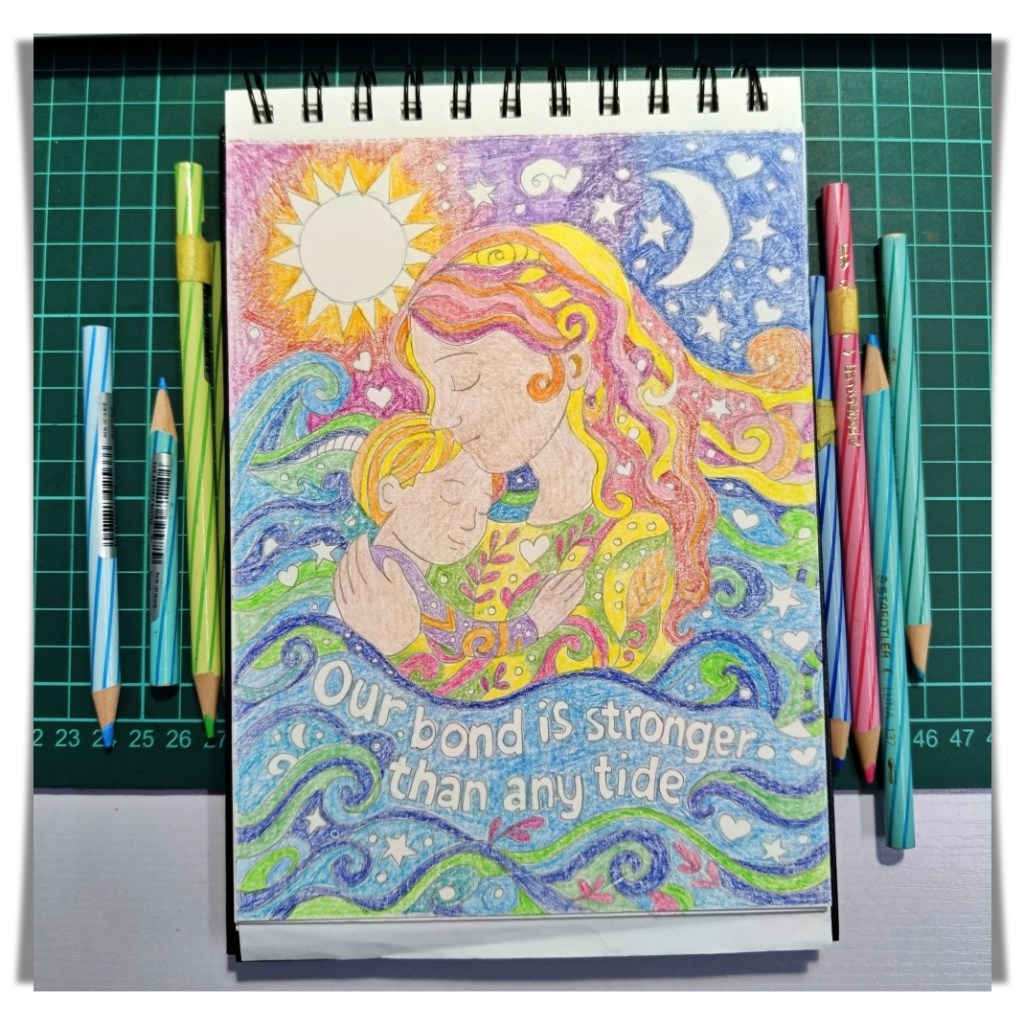
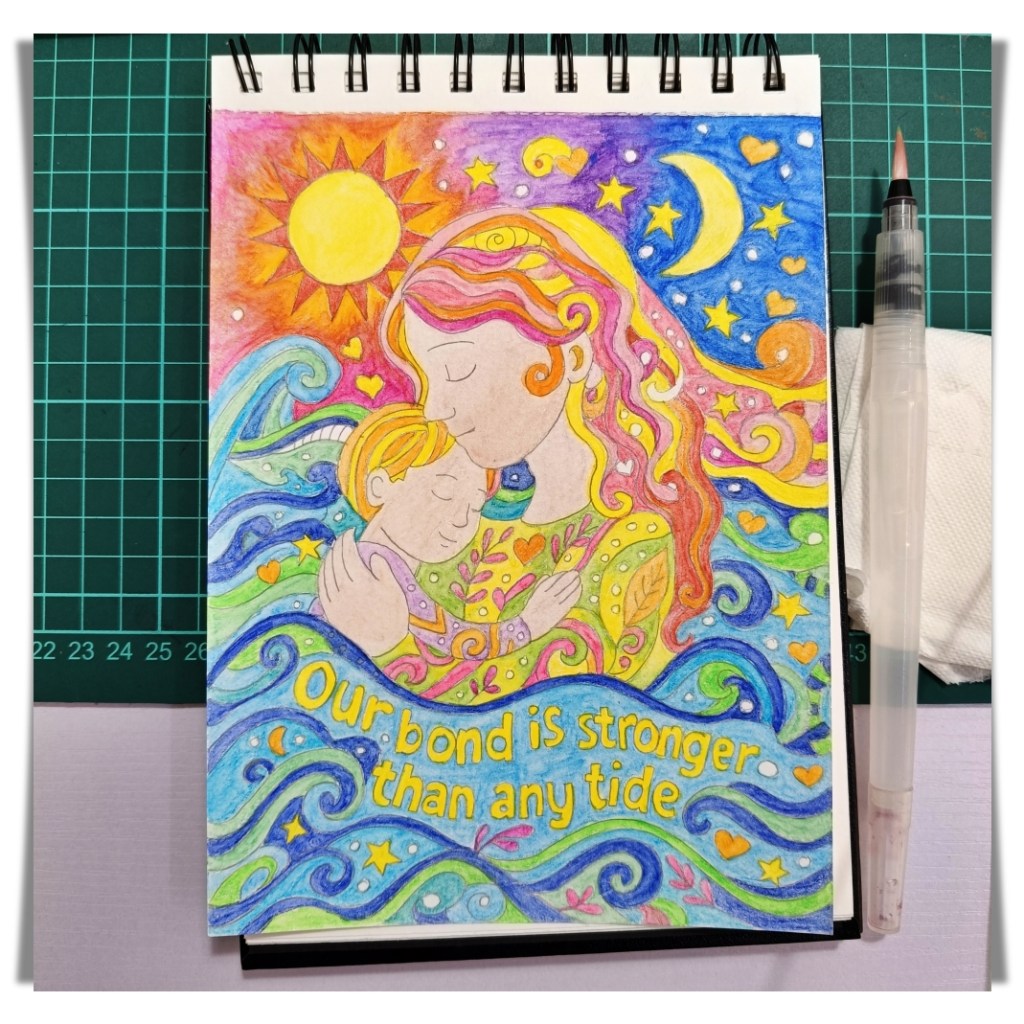
In the illustration, I drew a mother and child surrounded by waves. Above them, the sun and moon coexist, as if to indicate that both light and shadow belong together. It was my way of acknowledging that we all have both. The love that rocks us, and the exhaustion that drags us down. There are days we sing, and there are days we snap. And still, our bond endures. It may be bruised and tender. But never broken.

I wanted this printable affirmation to serve as a comforting presence in someone’s home. Not in a Pinterest-perfect way, but in the way love still finds its way in—despite the irritation, despite the frustration.

We don’t talk enough about these moments. When we talk about motherhood, we often focus on the good things while ignoring the difficult ones that come with a lot of guilt. The moments when we despise ourselves for our tone, for slamming doors, for causing disconnection when all we wanted was to connect. We show up for our kids with snacks, schedules, and crafts, but we sometimes forget to show up for ourselves. We forget that we are human, too.

And this is what I want this piece to convey: You are not alone. You are not defined by your worst moment. You are a mother, and that is the most human thing of all.

If you’ve ever whispered apologies through the crack of a bedroom door…

If you’ve sobbed in the bathroom, wondering why your patience never seems to last…

If you’ve ever thought, “This is not the mother I was meant to be”…

Then I hope that this printable affirmation for moms speaks to you.

Because our bond with our children isn’t defined by one bad day. Or even a hundred. It’s shaped by the “rhythm of return”: the apologies, the “I love yous,” the bedtime cuddles even after chaos.

Our Bond Is Stronger Than Any Tide is now available in my Etsy shop, Olivia’s Atelier. You can print this motherhood affirmation for your desk, your mirror, your journal, or your wall. Let it be a companion and a reminder. A safe place to land when everything else feels hard.

Because you, mom, are still growing and changing. And love? It never stops trying.

Explore the art here: Printable Affirmation – Our Bond Is Stronger Than Any Tide
© 2025 Olivia JD

Hand-Painted Affirmation Art, “Be Brave” | A Gentle Nudge Toward Your Own Courage

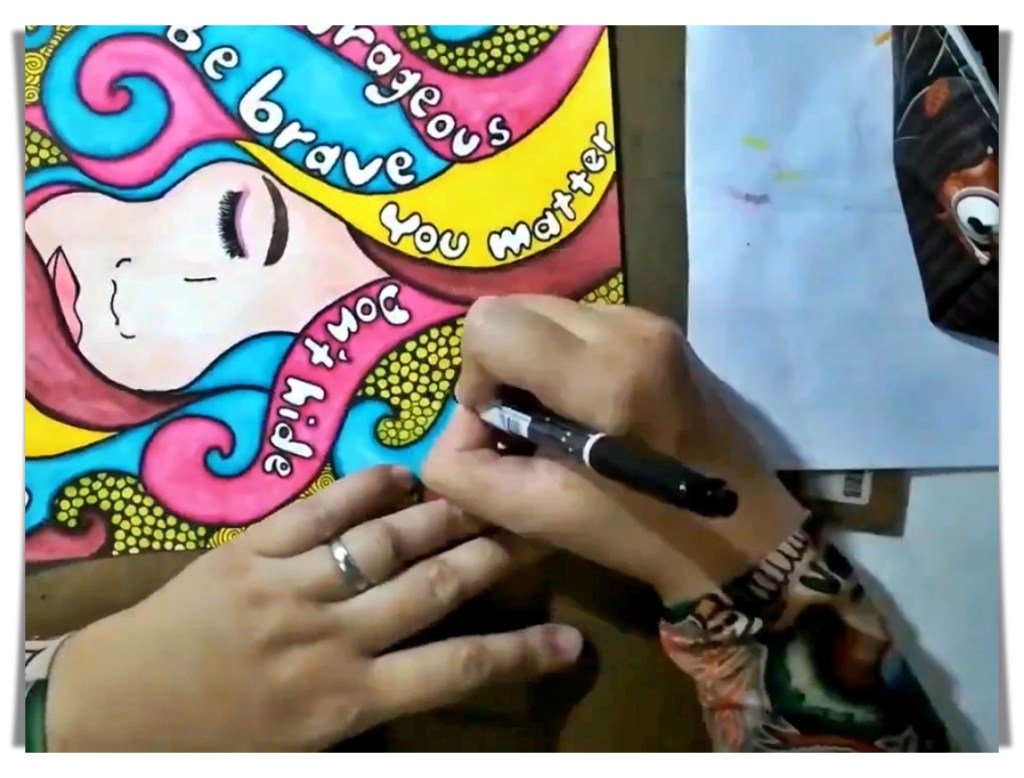
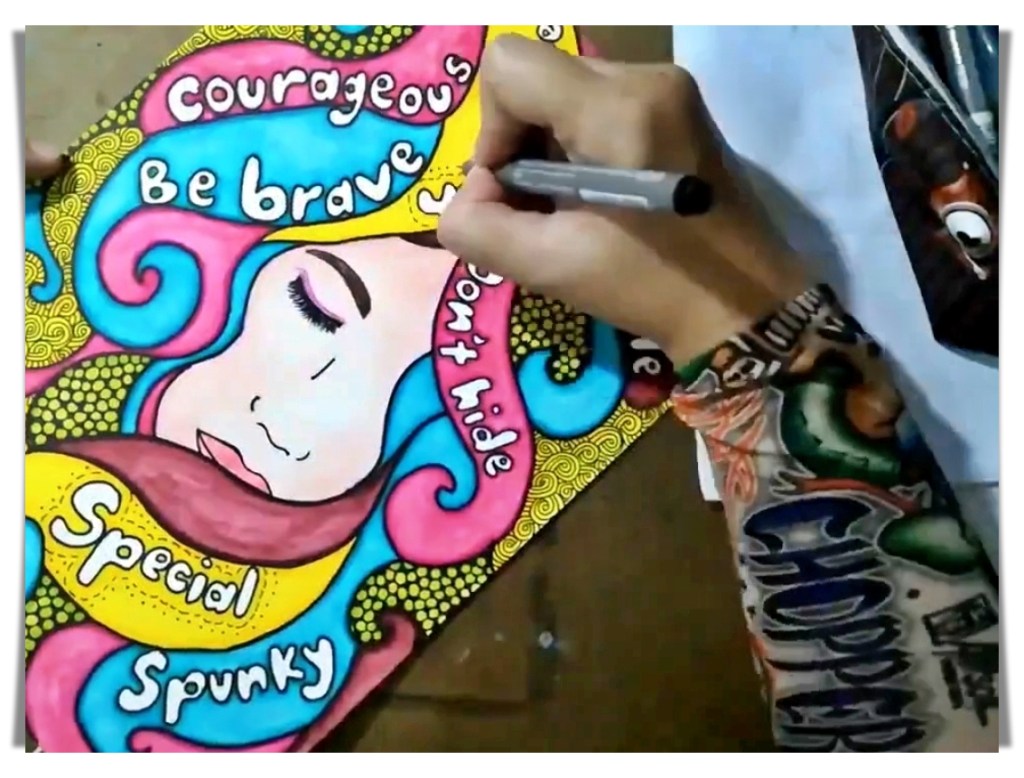
There are days when the world seems too loud. These are the days when the to-do lists keep getting longer, the dishes in the sink continue to accumulate, and the little, quiet voice within gets lost behind all we should be doing. I created Be Brave for such days, for myself, and perhaps for you as well.

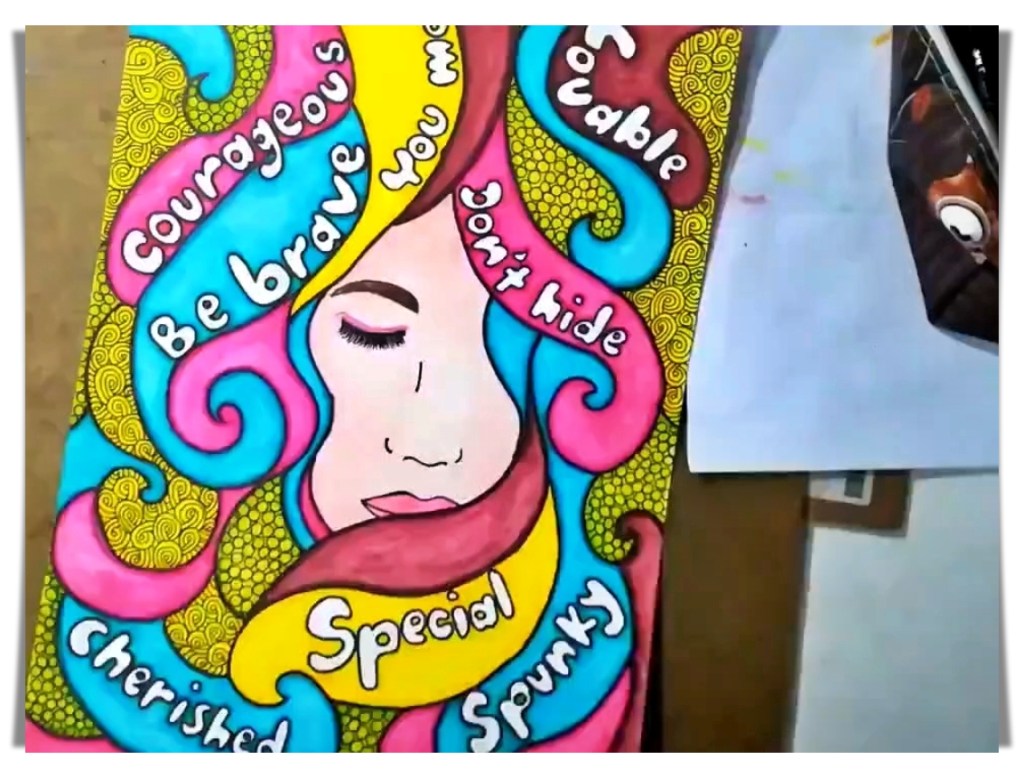
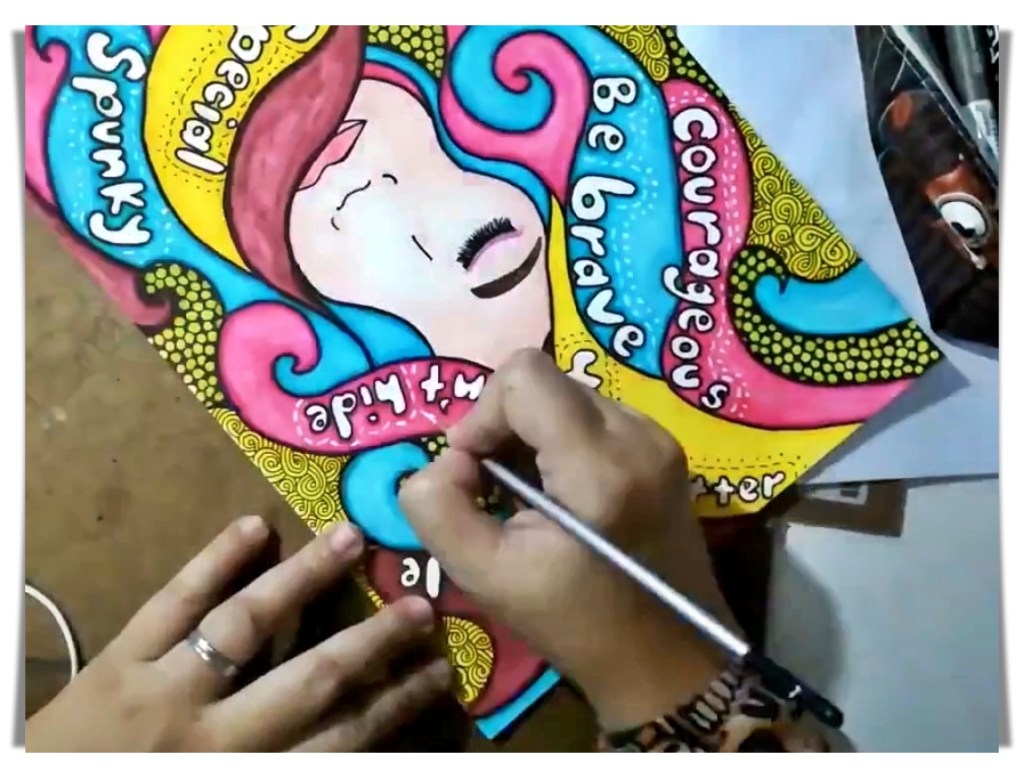
It began because I wanted to release the stress that had been quietly mounting. I was feeling overwhelmed by the need to be everything to everyone. I remember sitting at my cluttered table late one night, the old fan humming in the background, the room dimly lit. Everyone else was asleep. Without hesitation, I let my pencils and brush move over the paper, filling it with flowing lines, swirls of color, and words that had been ringing inside me: be brave. Don’t hide. You are cherished. You are special. And as the drawing took shape, I felt lighter.

Be Brave is more than a fancy drawing; it’s a reminder. A peaceful companion who doesn’t expect anything from you. It exists to hold space for you to gather your courage. I wanted this piece to be a whisper rather than a shout. I wanted it to blend into your space, like sunshine streaming through a window or the soothing sound of a familiar tune. I wanted it to be an art that makes you pause, breathe, and be kind to yourself. 

I think of this piece as a love letter to all women, not just mothers. To the weary mother who worries if she is doing enough. To the dreamer who keeps showing up for her work and her family, even on the hard days. And to any woman who, at quiet moments, doubts her worth or hides parts of herself, despite her incredible strength within. The words weaved within the artwork—courageous, treasured, lovable, don’t hide—are things I needed to hear myself. Words that I had long forgotten belonged to me too. And I know I’m not alone in this. Whether you’re raising children, pursuing a passion, caring for others, or simply trying to care for yourself, Be Brave was created to accompany you in those moments. It becomes a reminder that bravery isn’t loud or flashy. Often, it is in the mundane, steady ways that we keep going and choosing ourselves, even when it is difficult.

Every swirl, dot, and word in Be Brave was hand-painted. There’s something grounding about that process. It felt like I was putting together all of the pieces of myself that had been scattered. I used brilliant, deep colors: rich pinks to reflect tenderness and vulnerability, yellows for strength and resilience, and teals for emotional clarity and inner peace. Each stroke was a color-coded memory, pulled from places I’ve been and emotions I’ve carried. What about the doodling style? That’s my way of playing, allowing art to be flawed and human, just like us.

I’m creating this artwork as a printable wall art in my shop, Olivia’s Atelier. And because it’s a printable, Be Brave becomes whatever you need it to be. A reminder on your office wall, a present for a friend or for yourself, because sometimes we’re the ones who need reminding the most.

Have you been needing a gentle reminder today? If so, I’m glad you’re here. Maybe you’ve been carrying more than you let on, or maybe you just need someone to say: you’re doing okay. Perhaps you have felt invisible, worn out, or unsure. I hope Be Brave reminds you that you already do far more than you give yourself credit for. That you’re allowed to take up space, to rest, to dream, and to begin again. My drawing is a reminder to myself and to you that we don’t have to be perfect. All we need to do right at this moment is to be present and create small moments in our day that remind us that we’re still evolving and growing, and that is a beautiful, brave thing.

If this piece speaks to you, I invite you to check out Be Brave in my Etsy shop. It’s a heartfelt printable made from original hand-painted art, designed for mothers, dreamers, and every woman who needs a reminder of her strength.

Olivia’s Atelier offers printables, templates, and art designed to inspire reflection, healing, and creativity. Visit Olivia’s Atelier for more.

A Reflection on My Self-Care | Returning to Myself

The other night, when the house had settled into its usual silence, I sat alone with a cup of tea that had gone cold without me knowing it. Not only was I weary from the day’s routines and tasks, but I was also drained from the burden of my thoughts. I stared at the cup for a time, allowing myself to sit. There was no to-do list going through my thoughts. There’s no strategy for what happens next. Just me, solitude, and a reminder that sometimes, this is enough and I am content. In that little moment, I felt a glimmer of peace, a reminder that I am free to rest without having to earn it.

For me, self-care has never been remarkable. It is quiet. It is unremarkable in appearance, but profound in its impact. I find that breaking this idea into smaller thoughts mirrors the gentler rhythm I want to share. Spa days and costly treats are seldom considered, yet they do have their place. Instead, it exists in the fleeting, nearly invisible moments when I return to myself. It’s the five minutes I sneak to draw without care for how it looks. Or the words I scribble in my journal that will never be read by another soul. It’s stepping outside for a few breaths of night air, letting the darkness embrace me like an old friend. These small gestures are how I create a soft shelter for myself, a place where I can slow down, heal, and begin again.

I believe we are often taught that self-care needs to look a specific way. It has to be glossy, curated, and impressive. But in reality it might be as simple as letting ourselves be, without expectations. When I create, whether it’s a drawing, a poem, or a printable, I aim to include the same intention: an invitation to slow down, breathe, and reconnect. Each artwork I create becomes a reminder to myself and others that small moments are important. They often serve as the starting points for healing.

In the past, I assumed that self-care meant doing more. I tried to make every minute count by fixing, improving, or doing something. But I’ve learned that gentle self-care can sometimes mean doing less, or perhaps nothing at all. It means learning to say, “This is enough for now.” I am enough for now. And in that space, I can hear my heart again.

If you’re looking for ways to practice self-care, here are a few ideas that have helped me over the years.

Simple Self-Care Ideas That Have Helped Me

Sketch without purpose. Let your pencil wander and see where it takes you. There is freedom in creating without expectation.

Write one honest sentence. No pressure, no rules. Just your truth. Some of my most honest moments come out this way, in fragments that don’t need to become anything more.

Sit quietly with tea (or coffee, or water) and do nothing else. Allow the present to be enough. When the world becomes too distracting, even a few minutes of silence may be soothing.

Print out an affirmation or phrase that soothes you. Place it somewhere you’ll see when you need it most. Sometimes I tape mine to the mirror, or tuck it inside my journal.

Go outside, even for a minute. Allow the breeze to remind you that the world continues to spin and that you are a part of something greater.

Take deep, focused breaths. Close your eyes, if possible, and feel your breath travel through you. When everything becomes too much, just a small act of anchoring can help.

Let go of perfection for a while. You don’t need to be perfect in whatever you’re doing, whether cooking, sketching, writing, or simply being. All you have to do is be kind to yourself.

Make something just for you. You can create something as simple as a doodle, a few words of poetry, or a note to yourself. It doesn’t have to be shared or finished. You’re caring for yourself. 

Unplug for a moment. Even five minutes away from screens might seem like a mental refresher.

When I think of my own self-care, I see it as a silent commitment I make to myself. A promise to appreciate the parts of myself that are sometimes overlooked. These are the parts that long for peace, for simplicity, for gentle reminders that I don’t have to do or be more to be worthy of rest. This is something I strive to integrate into my work as well. When I produce something, whether it’s a printable, a template, a poem, or a work of art, I hope it serves as a companion to someone else’s self-care journey. May we all find small ways to return to ourselves.

If this gentle self-care reflection speaks to you, I hope you can find small ways to be kind and patient with yourself today. And if it feels right, you’re welcome to explore my shop. It’s a small beginning, and I look forward to adding more gentle offerings over time.


Olivia’s Atelier offers printables, templates, and art designed to inspire reflection, healing, and creativity. Visit Olivia’s Atelier for more.

Poetry Art | Unattainable

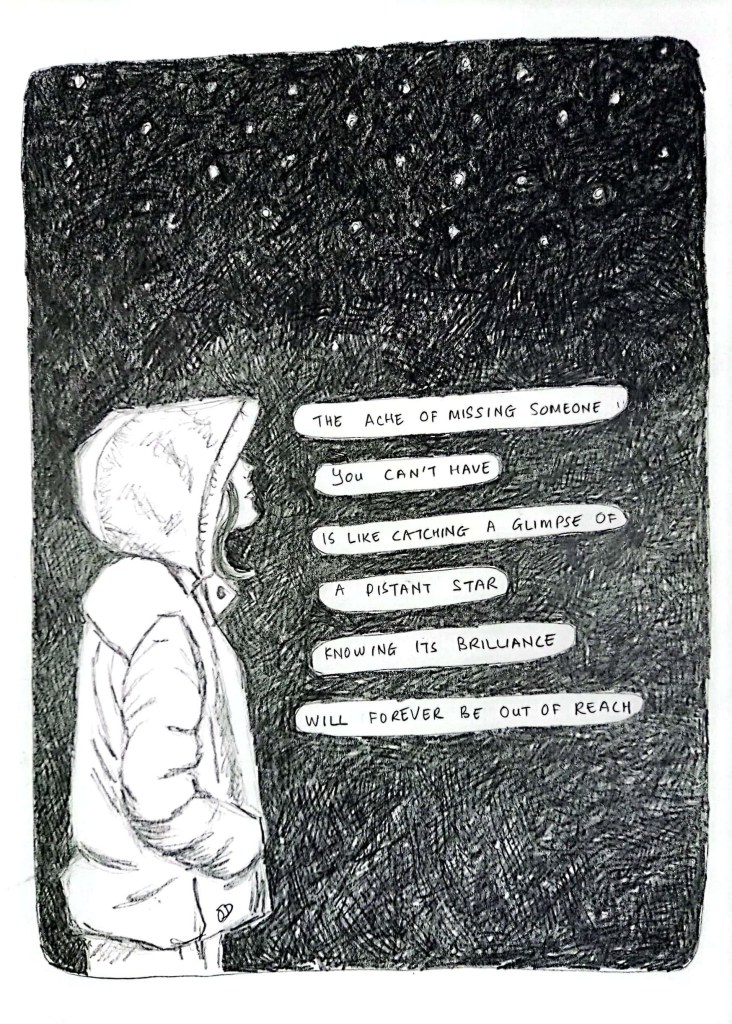
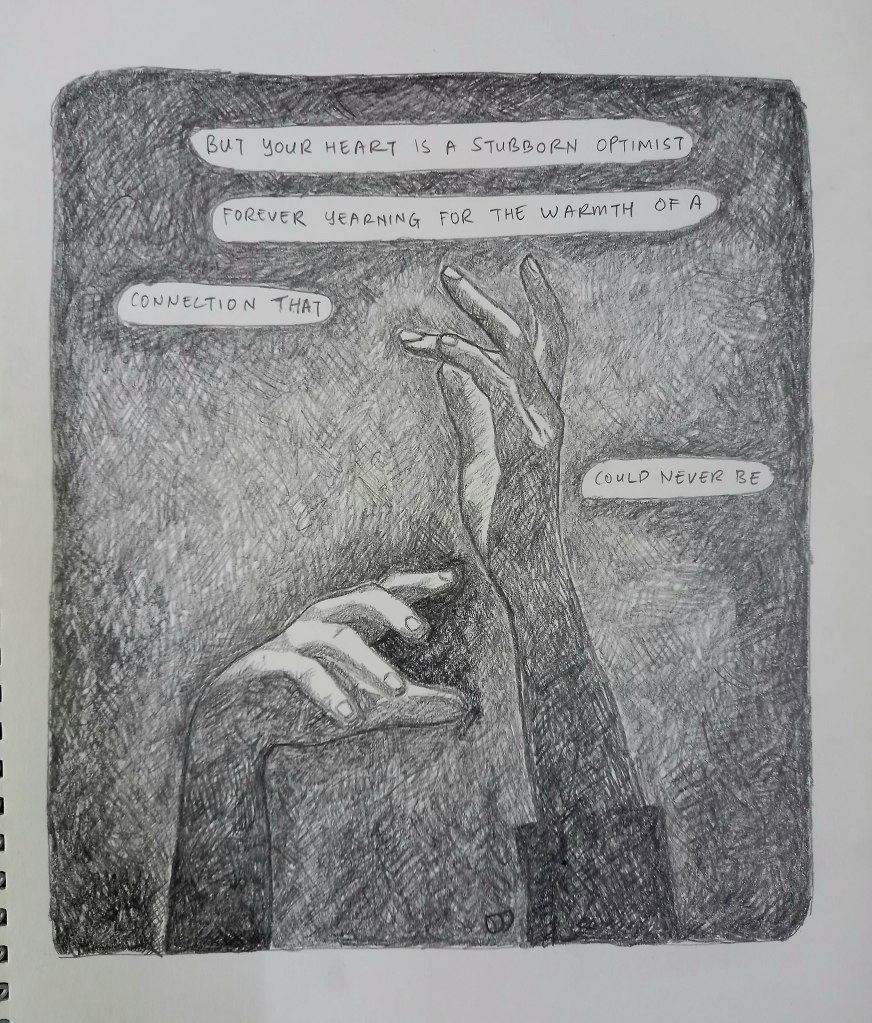
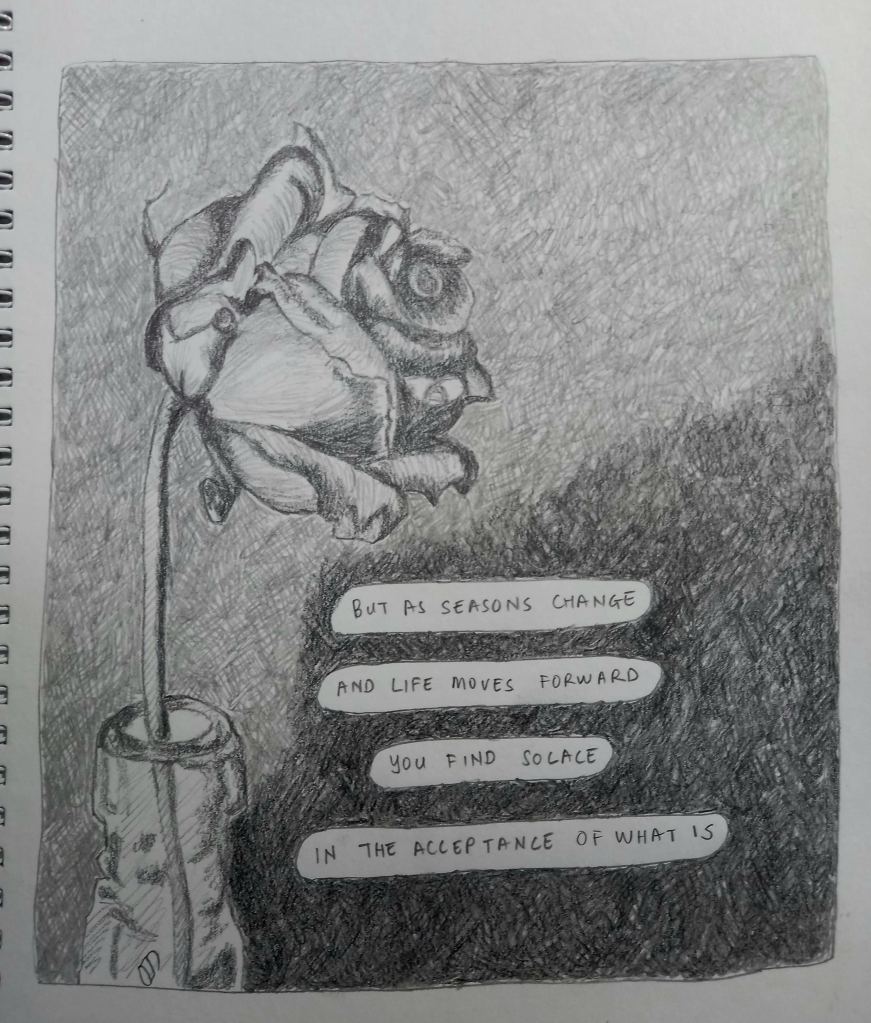
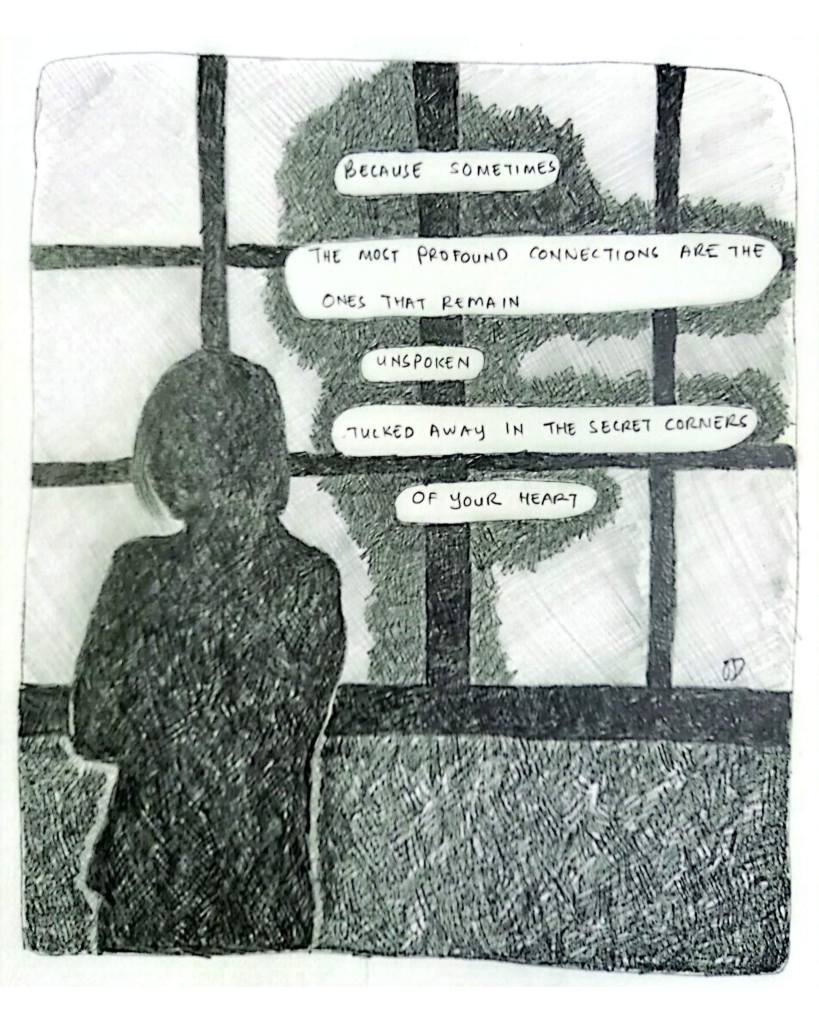
This is one of the series of poetry art I sketched throughout the years. This series of four drawings is titled Unattainable. There is no need for background story because this series is deeply personal. I let the words speak for themselves. All rights reserved.

The ache of missing someone you can’t have

is like catching a glimpse of

a distant star,

knowing its brilliance

will forever be out of reach.

But your heart is a stubborn optimist

forever yearning for the warmth of a

connection that

could never be.

But as seasons change

and life moves forward

you find solace

in the acceptance of what is.

Because sometimes

the most profound connections are the ones

that remain unspoken,

tucked away in the secret corners

of your heart.

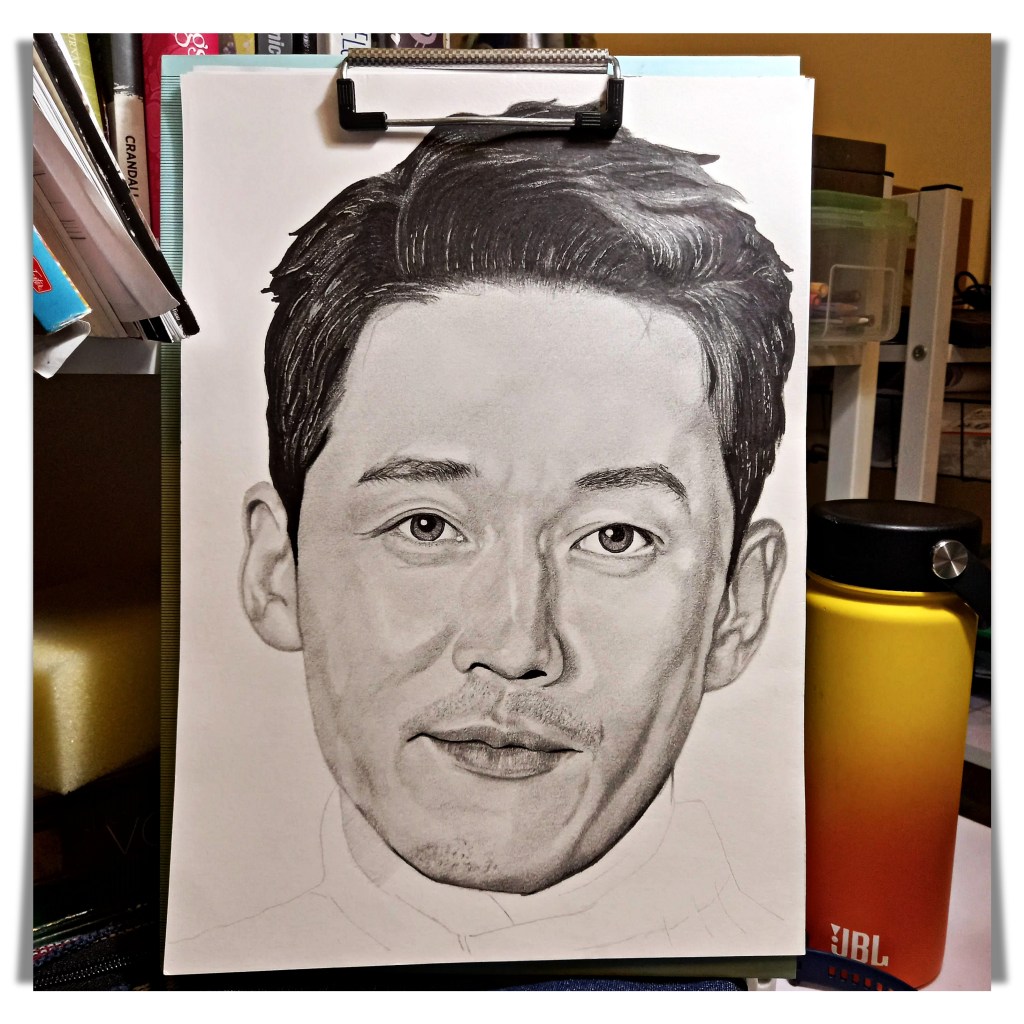
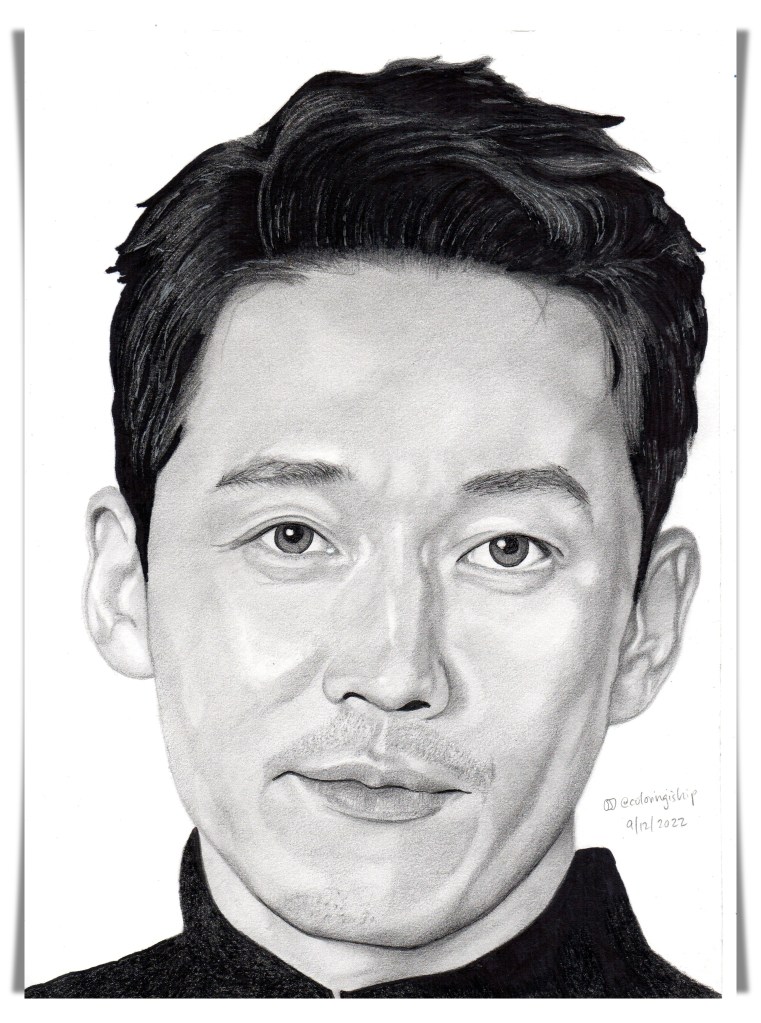
Jang Hyuk Portrait 1

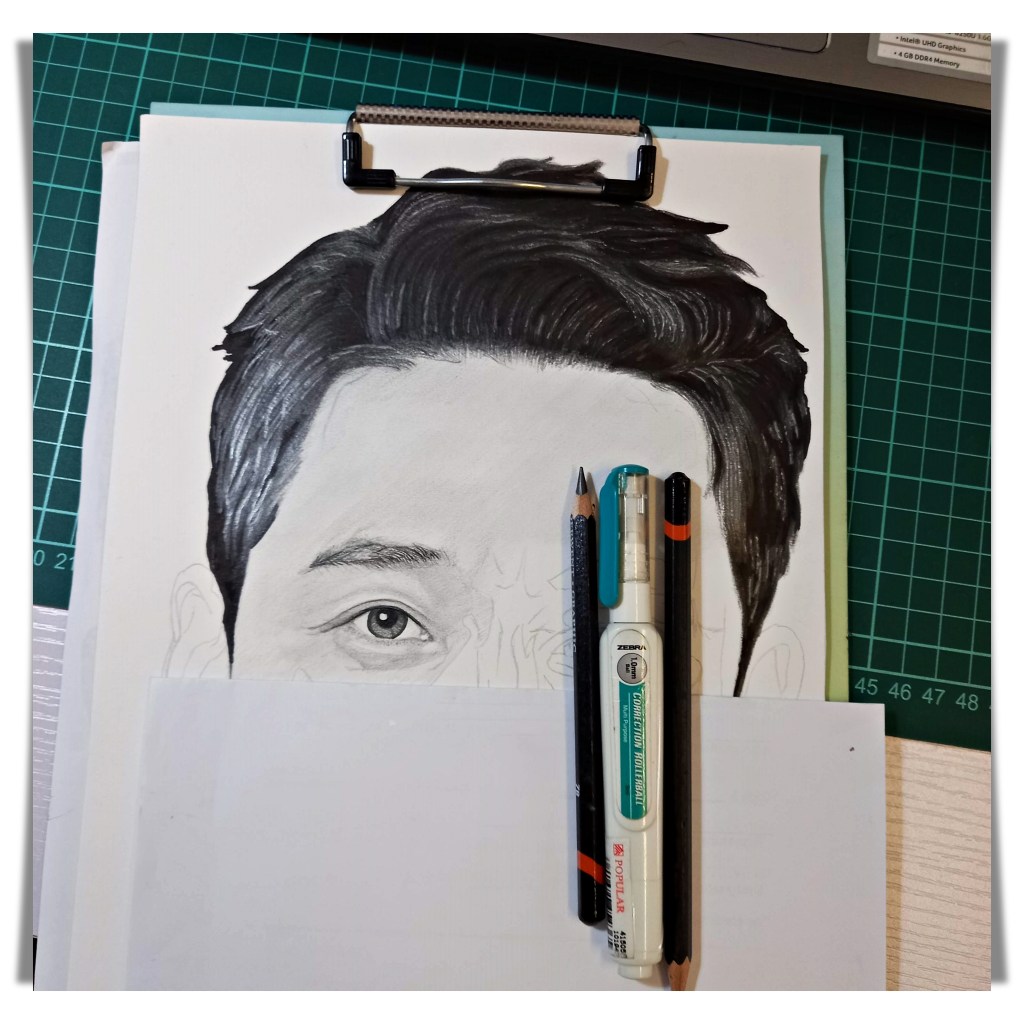
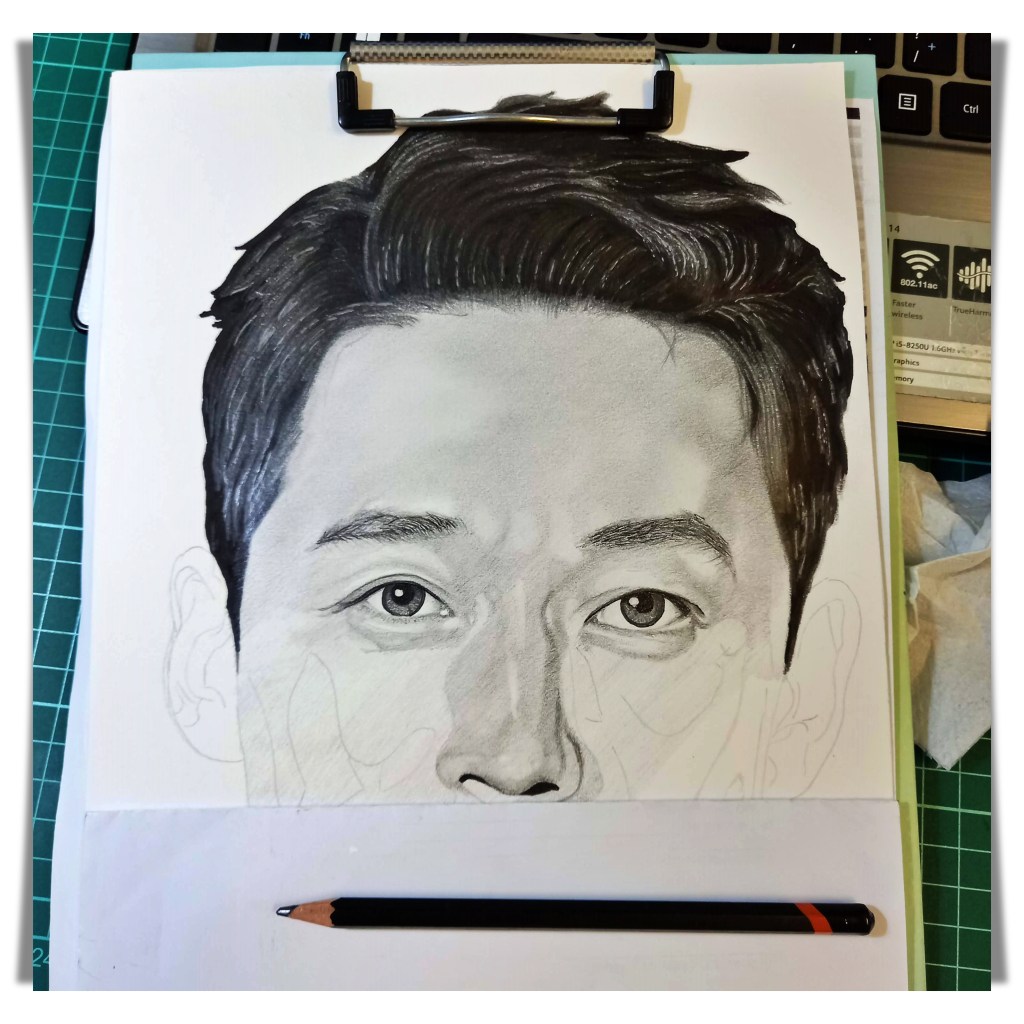
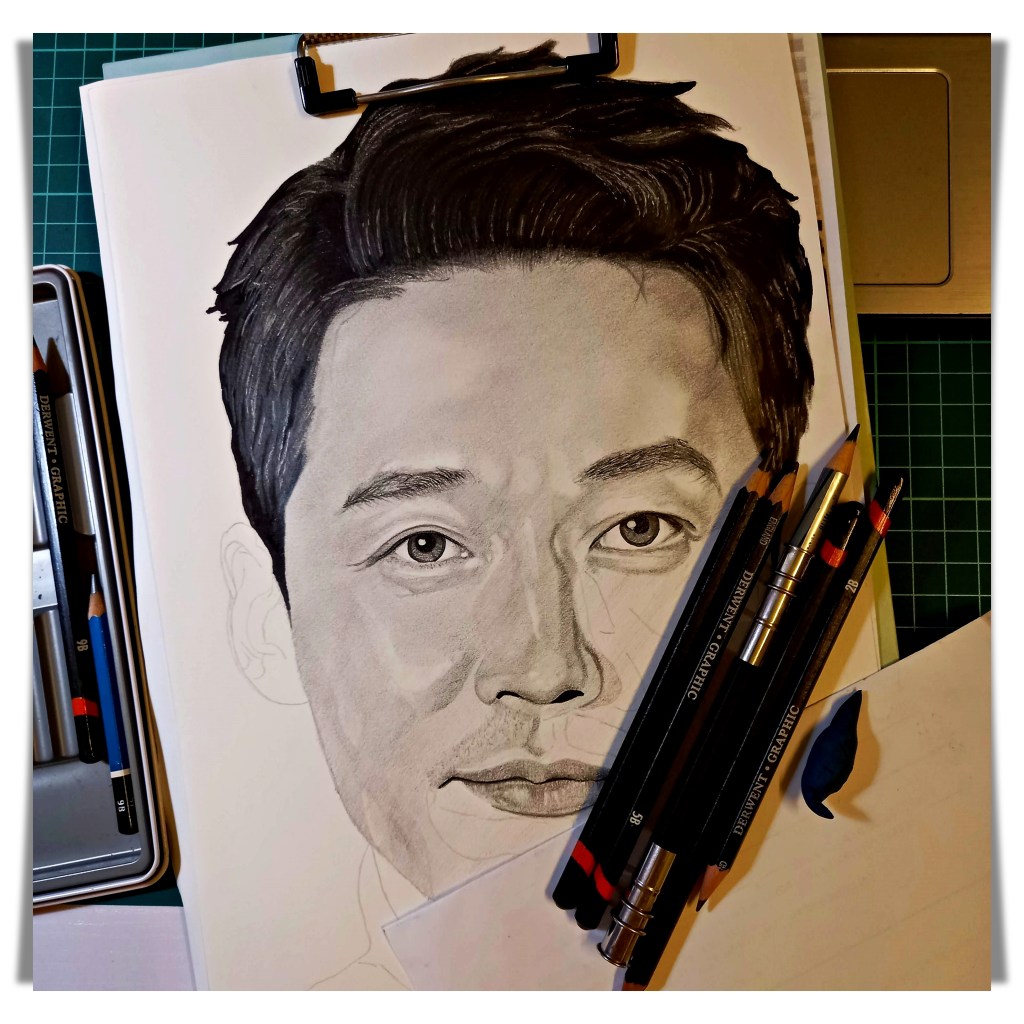
As previously said, this blog is more than just me talking about life and things; it is also a platform for me to share my artwork. I do a lot of portrait drawing and used to do commissions, but I’m taking a hiatus now to focus on writing.

This is a portrait of the South Korean actor Jang Hyuk. Of course I’m a big fan. The reference photograph for this portrait was taken during the Gangneung (English title: Tomb of the River / Paid In Blood) press junket in 2021.

Jang Hyuk starred in Gangneung, a 2021 crime noir film. Jang Hyuk played Lee Min-Seok, a Seoul crime lord who found himself in conflict with another gang leader, Chairman Oh, over a newly built resort in Gangneung. Gangneung is a seaside city in Gangwon-do province, on South Korea’s east coast.

I watched this film when it was released in 2021, and because it is noir, there are many gruesome fights between the two criminal gangs. There are no romantic scenes in the film, and the sole female character is Eun-Seon, who sold her body to Min Seok to pay off her debts. Unless you enjoy the noir genre, this film is not for you. It is dark and violent. I just watched it because of Jang Hyuk.

Two of Jang Hyuk’s real-life friends, Shin Seung-hwan and Choi Ki-Seop, played Min Seok’s sidekicks.

The reference image is taken from a fan’s Instagram page. This is the link to the source image.

Materials I used:

  • 165gsm acid-free paper
  • Mars Lumograph Black pencils
  • Derwent Graphic pencils
  • Black marker
  • Black pen
  • Black and silver color pencils
  • Sakura White Gelly Roll pen

And the progress photos:

And here is the completed portrait…