Becoming Alara

If I had to change my name, I think I would choose Alara.

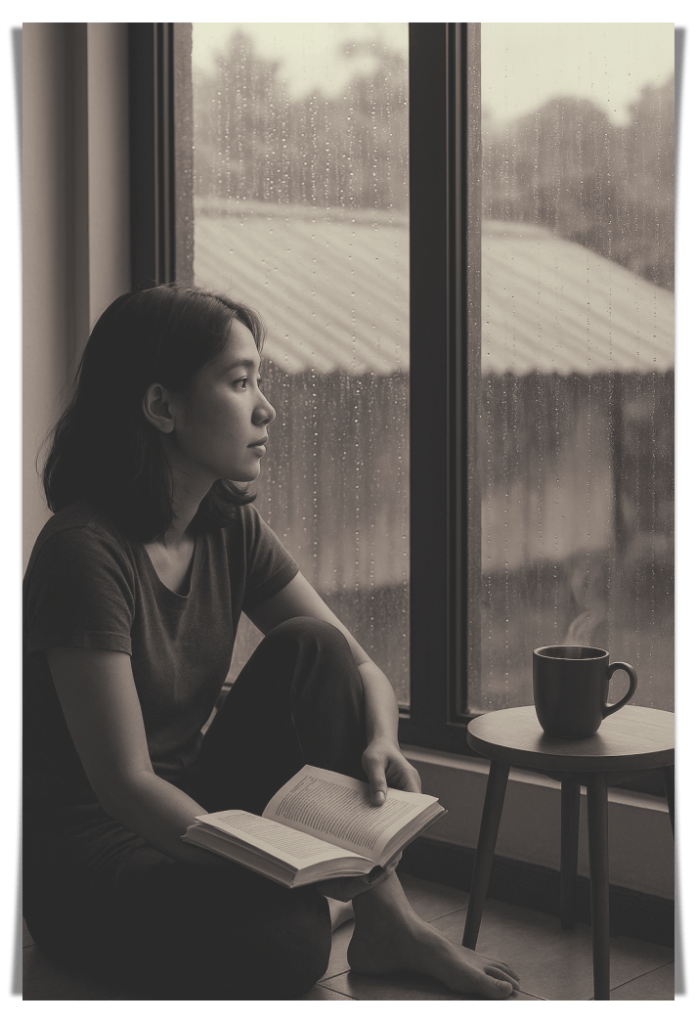
It’s not that I don’t like my name; Olivia has served me well. It’s soothing, familiar, and if I’m allowed to be honest, it’s gorgeous. I like my name, and I also have a beautiful second name, which is my indigenous Iban name; however, to protect my identity, I won’t disclose it here. But sometimes I imagine slipping into another skin, one free of past associations, like cooling rain falling on virgin land.

Alara.

There is something liquid about it. Like water rushing through stone. It reminds me of rivers, of things that adapt and keep going, carving their way through barriers with patience rather than force. That is the woman I am striving to become. Less harsh edges, more grace in motion. 

Alara is said to mean “water fairy” in Turkish legend. I like it for the thought of living near water, gently transporting things from one place to another, rather than for the whimsy of wings and magic. Some people believe it implies the qualities of a guardian, being exalted and joyful. I’ll take all of it. I’ve spent years learning to keep my sanity, to lift myself when things get heavy, and to find joy even in the midst of silent suffering.

Will the name change me? Maybe not. However, it would be a turning point, like a reclaiming or a reminder that I’m allowed to become someone new if I want to. That I may wrap my past stories in silk and place them on a shelf as relics from a life I lived.

Alara would write barefoot, under the trees. She would talk only when she felt moved. She would love without apologizing for how deeply she feels. She would walk away from things that crushed her spirit, no matter how painful it was. She would live, not perform.

But here I am, still Olivia. And that’s perfectly fine too. Maybe I don’t have to change my name to be more like myself.

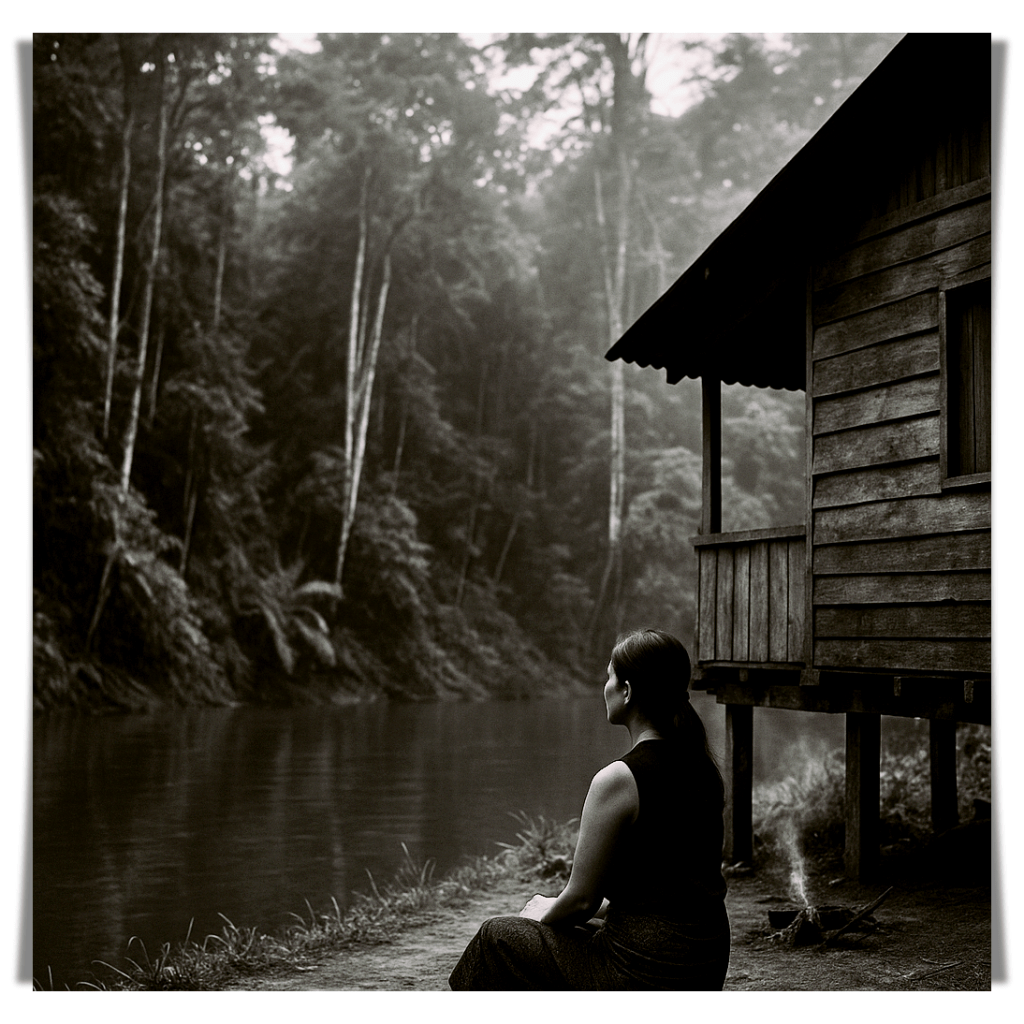
Still… if I ever did, you’d find Alara somewhere by the shore, writing poetry and stories about the woman she used to be.


✨ Visit Olivia’s Atelier for printables, reel templates, and planners made to support overwhelmed moms with gentle, soulful tools.
🕊️ Enjoy 50% off everything until June 30.

You Don’t Have to Know Everything to Care Deeply

I don’t have a personal story about autism. I’m not autistic. I’m not the parent of an autistic child. I don’t teach in a special needs classroom. I haven’t walked that journey firsthand. But I’ve been watching silently from the sidelines, trying to comprehend.

I have friends and family with autistic children. My nephew exhibits characteristics that would place him on the spectrum, but he has never been properly diagnosed. I’ve heard stories about public meltdowns, heartache caused by being misunderstood, and fear and love that coexist in a parent’s eyes. I’ve read, asked, and reflected. And through it all, I understood something: you don’t have to have been through the experience to stand with someone who has.

This bundle (in my Etsy shop) is my way of doing that.

Ten designs created with color and care. Each quote was picked to affirm, encourage, and advocate.  Whether you’re a parent, a teacher, a neurodivergent individual, or just someone who wants to express their feelings, these pieces were designed to say: I see you. I support you. I think that inclusion is more than simply knowledge; it is love in action.

Perhaps I don’t have the right words. Perhaps I’ll never truly understand it. But I want to try. I want my art to be like a kind touch on someone’s shoulder, a simple reminder that they are important and that their existence brightens the world.

I hope this bundle gets to the people that need it. Not because I know best but because I care.


✨ Visit Olivia’s Atelier for printables, reel templates, and planners made to support overwhelmed moms with gentle, soulful tools.
🕊️ Enjoy 50% off everything until June 30.

What His Silence Taught Me About Intimacy

It wasn’t an awkward silence. Nor the silence of distance or dismissal. His silence was something else entirely. It had gravity. Shape. It wrapped around me like twilight settling over the city. And in that silence, I discovered something I never fully understood before: intimacy does not necessarily manifest itself through words or touch.

In those early days, I remember him across the café table. We spoke, certainly. But it was in fragments. There were lengthy intervals where nothing needed to be said, yet I never felt compelled to fill the silence. He never pushed. Never filled silences just to hear himself speak. And maybe that’s why I found myself letting my guard down, little by little, without even meaning to.

There was something sacred in how he listened. He didn’t listen to respond. He listened like he was trying to memorize me. When he finally did speak, it wasn’t to impress or correct me but to reflect something I hadn’t realized I was trying to express. His silence wasn’t an absence. It was presence without intrusion.

One evening, we stood side by side on Lover’s Bridge. The river shimmered beneath us, and the sky was painted in pink and gold. We didn’t touch. We didn’t speak. But something passed between us, though, that couldn’t be seen or touched. Somehow right then and there, our bodies found a rhythm beside each other, like the choreography of trust.

What surprised me the most was how seen I felt in his silence. He didn’t demand performance. He didn’t ask for confessions. And yet, standing next to him, I felt understood. It felt as though he was able to hear everything I didn’t say yet still chose to stay.

That kind of intimacy is unusual. It asks nothing but provides everything. It is not based on lofty declarations but on humble agreements. Like how he read my poems and didn’t say anything after but looked at me with nonjudgmental eyes. Just understanding.

In a culture obsessed with noise and proof, he reminded me that some truths are whispered. Some of the most personal experiences we may have are felt rather than expressed. Some bonds are born not in words, but in willingness. To stay. To witness.

So no, his silence never made me anxious. It made me feel safe. It taught me that intimacy isn’t always loud or clear. Sometimes it’s a quiet agreement between two people who stop pretending they have to explain everything to be understood.


✨ Visit Olivia’s Atelier for printables, reel templates, and planners made to support overwhelmed moms with gentle, soulful tools.
🕊️ Enjoy 50% off everything until June 30.

Marriage Traditions of the Iban of Sarawak, Borneo

Marriage is a timeless union that binds two souls together. It also functions as a mirror, reflecting the core of a community’s culture and identity. My people, the Iban of Sarawak, Borneo, fill their traditional wedding rituals with deep meanings based on ancestral traditions. However, these traditional ceremonies are gradually disappearing as time passes.

For the Iban, marriage was not just a bond between two individuals but a communion of families and communities. Traditionally, the groom’s parents carefully planned this arranged marriage. Ties of kinship often influence their choice of wife. Cousins were preferred matches because they preserved familial relationships while also reflecting the Iban’s value of unity within their extended network. When a bride was chosen, the groom’s parents would leave a rawai (silver girdle) or an ilang (sword) at her family’s home as proof of their dedication and intention.

Image source

The longhouse is the heart of Iban community life. During weddings, it becomes a lively epicenter. It was here that life and celebration collided, and the community joined together to honor the union. Careful planning is required days or weeks before the ceremony. This includes making tuak (rice wine) in enormous vats, preparing traditional buns and cookies, and selecting livestock for slaughter. Guests were invited with knotted strings to tally down the days till the celebration.

On the wedding day, the groom’s journey to the bride’s longhouse was a ceremony unto itself. The groom’s party traveled to the bride’s longhouse either by boat or on foot through the jungle. Guests were expected to dress in traditional ngepan (intricate traditional costumes), with women donning corsets or rawai (silver girdles) and men wearing armlets and feathers, among other traditional pieces. The groom’s party arrived to a joyous clash of gongs and the firing of brass cannons.

However, underneath the surface of celebration were rituals with deeper meanings. One of the most remarkable customs was the use of poetry or poetic language to provide the ceremony a sense of artistry and depth. When the official ceremony started, the host’s representative would offer the guest a drink, followed by a formal recitation inquiring about their purpose:

“I hesitate and feel nervous to talk in front of you all,
The reason I say so is because I realize that you are the mothers of porcupines,
Covered with cross-stripped white quills,
Pointed like bradawls.
I notice that you are the mothers of hornbills,
With tails striped,
crossing at right angles,
Which claim that they can fly to Brunei and return the same day.
I see that you are the mothers of bears,
Which have stout arms to make holes on the trunks of iron-wood trees.”

“We, therefore, have been sitting next to each other.
I would like to ask,
Which one of you is the mother of the hornbill?
For I am about to ask you to spit out the seeds of the belili tree,
In order that they can be picked up by a tall, unmarried lady,
So that they can be turned into the tusks of a pig,
As charms for the unripe ears left till the last in reaping,
With which we fill our padi bins.”
Poem source

These exchanges were rich in metaphor and eloquence. The poetic recitations continued throughout the ceremony, including a betusut (genealogical recitation) by an expert who detailed the bride and groom’s genealogy. This ritual not only validated the union but also ensured that the marriage respected cultural taboos and norms in order to avoid misfortune.

Image source

Elders sealed the union with feasting and storytelling, bestowing blessings and wisdom on the pair. They discussed respect, understanding, and the delicate balance required to navigate life together. Complex traditions and customs infused every action, from seating arrangements to gift exchange.

Today, such ceremonies are a rarity. The Iban embraced Christianity and Islam, abandoning many of their traditional practices in the process. The vibrant rituals of traditional Iban weddings now exist mostly in memory or retellings.

The ceremonies detailed here are not simply rituals. They depict a way of life that places a high priority on community, heritage, and balance. They remind us of the beauty of traditions that once connected people to their past while celebrating the present. The decline of this tradition is a loss not only for the Iban but also for the universal human story of connection, identity, and belonging.

The significance of the Iban wedding customs strikes me as I reflect on them. Marriage was never just about two people; it was about integrating their lives into the larger fabric of their community. It was about love, shared responsibility, and the power of a collective spirit.

Perhaps that is the true power of these traditions: their ability to touch something deep within us while also reminding us of the fragility and beauty of cultural heritage. And as we look forward, perhaps we have a tenacious hope that even as the old ways fade, their spirit will continue to shape the future in ways we may not fully comprehend.

Modern Iban weddingImage source.

Unplug | Clearer. Lighter. Me

I don’t usually see it at first.

The signs begin subtly, like a familiar fatigue that persists despite rest. I scroll longer but feel empty. I start comparing rather than connecting. I feel like I’m behind, that I should be doing more, yet I lack the motivation to start.

That’s when I realize it’s time to unplug.

Not only from social media, but from anything that takes me out of myself. The noise. Validation seeking. The constant pressure to be productive. Even the urge to keep creating when my heart feels dry.

When I feel scattered, I unplug. When I lose control of my own rhythm. When my body tenses, my thoughts become rigid. I don’t wait for burnout anymore. I notice it earlier now. I don’t always succeed, but I try.

When I unplug, I get back to simple things:

  • A slow walk without my phone.
  • A long shower without a sense of urgency.
  • Pen and paper—writing with no audience or outcome.
  • Music. Books. Blank space. Silence.

Unplugging isn’t an escape. It’s a return to serenity, peace, and the gentle rhythm of who I am beneath all that noise.

And when I come back, I come back clearer. Lighter. More like myself.


✨ Visit Olivia’s Atelier for printables, reel templates, and planners made to support overwhelmed moms with gentle, soulful tools.
🕊️ Enjoy 50% off everything until June 2.

On Friendship | A Constellation of Qualities

What quality do I value most in a friend?

I’ve been staring at this question for a while, trying to think of one thing. Only one. But the fact is that I can’t. I’m not wired that way.

Because the sort of friend I need, particularly at this point in life, is not characterized by a single trait. They are more like a constellation. A consistent, steady presence held together by little, delicate details that most people overlook.

I value emotional depth. That is the first thing. I want to sit across from someone and talk about grief, about old love that never left the body, motherhood’s challenges, and the sense of not knowing who you are at times.

But depth without safety is dangerous. So I value a friend who gives me a safe space to unravel. The ones who don’t rush to fix or dismiss what I say. Who don’t recoil when I cry or go quiet. Who don’t see my softness as a burden to carry or a puzzle to solve. Just someone who can sit with me in the dark without needing to turn on the light.

Then there’s “soulful curiosity,” which isn’t the nosy kind. The sort of friend that says, “What have you been thinking about lately? What moved you this week?” Or the sort of friend that sends me a poem, meme, article, or quote because it made them think of me. The kind that listens when I talk about my culture, my writing, and the fears I’m still grappling with. The type of friend that doesn’t shy away from depth, but instead leans in closer and with care.

I also appreciate loyalty. Not the performative kind that only appears when things are going well, but the kind that sticks around. The sort that recalls what I said months ago, follows up, and forgives my silences. Who doesn’t require constant tending yet is always there when I return. I don’t open up easily. So, when I do, I want to know that it mattered.

And, because I often live in my head, I appreciate people who understand my silences. Who is not insulted when I take a step back to breathe. Who don’t associate presence with constant texting (I dislike this type of people. They need to connect all the time and that’s suffocating and tedious). Who recognizes that solitude is part of how I survive, and yet remain close.

Lastly, I value kindness in words like honest, gentle affirmation. Not flattery or forced optimism. I second-guess myself too often. I often feel like an imposter even in rooms I’ve earned my place in. So a kind word from a friend that is spoken without expectation, lingers. It becomes an anchor and assurance for me.

So no, I can’t choose just one quality because I’ve never been the type to love in halves.

Not in friendship.

Not in life.

Not even in my answers to questions like this.


✨ Visit Olivia’s Atelier for printables, reel templates, and planners made to support overwhelmed moms with gentle, soulful tools.
🕊️ Enjoy 50% off everything until June 2.

This Is Not the Mother I Meant to Be

I could name only one, but that wouldn’t be honest.

A lot of times in my early years as a mother haunted me quietly like background static in an otherwise happy song. The yelling, harsh words, and unwarranted anger all fell directly on little shoulders. I wrote a poem about it once. It’s titled This Is Not the Mother I Was Meant to Be. It is now available in my Etsy shop, which can be found here.

The poem is more than just a piece of text. This is my confession. A gentle, timid apology. A mirror I held up to my own face on days when I thought I had failed in the most important duty.

I meant to be gentler. I wanted to listen more. But there were times when I snapped, yelled when I should have breathed deeply, spanked when I should have paused, gave them junk food and called it dinner and said things I wish I could take back. Things like, “Be quiet. Enough. Just stop.” When all I truly wanted to say was, “I am exhausted, honey. I am trying. I love you so much, it hurts.”

Even now, the guilt weighs heavy. But, with time, I’ve realized that remorse isn’t supposed to tie me to the past. It is meant to teach me, then let me go.

As the kids grew older, I began having open conversations with them. I apologized. Not in grand speeches, but in quiet moments together: during car rides, at bedtime, or while having a meal. To my astonishment, they forgiven me. Completely, freely. As children frequently do when love triumphs over regret.

Their forgiveness was a balm. But can I forgive myself? This is still a work in progress.

What comforts me now is the realization that motherhood is not a destination. It is a process of growing. Every mistake I made was the result of a version of myself doing my best with what I knew. And I understand better now. I pause longer. I listen more carefully. I still make mistakes, but I’m more aware of them. I grow together with them.

So, if you’re a parent who’s been lugging guilt about like a hidden stone, maybe it’s time to let it go. Perhaps you can let the softer part of yourself speak. The one who continues to show up, try, and love with each broken, beautiful step.

Because this is not the mother I meant to be. But I’m still evolving to be a better version of myself.


Visit Olivia’s Atelier for printables, reel templates, and planners made to support overwhelmed moms with gentle, soulful tools.
🕊️ Enjoy 50% off everything until June 2.

Childhood, Unplugged

Daily writing prompt
Do you remember life before the internet?

Do I remember life before the Internet?

Of course I do.

I grew up in the ’80s and became a teenager in the ’90s. Life then was quieter, slower, and strangely blissful. We didn’t carry the weight of a world always online. We were present in our bodies, in our neighborhoods, in the heat of the afternoon sun.

I remember riding my bicycle endlessly, barefoot on some days. The playground was our gathering place. We hung out at each other’s houses without needing to text beforehand. Plans were made on the spot, and laughter didn’t need filters.

Our entertainment came in tangible forms: television with fixed schedules, cassette tapes we rewound with a pencil, video tapes worn thin from repeated viewings. I used to save up to buy cassettes of my favorite rock bands (Guns n Roses, Nirvana, Smashing Pumpkin, Green Day, Soul Asylum, Radiohead, Pearl Jam); the thrill of opening a new tape, lyrics printed on that folded sleeve, memorized by heart.

We socialized face to face. If you had a disagreement, you talked it out, or didn’t; but it was direct. There were no curated posts seeking validation from strangers. Our stories stayed among those who lived them.

We wrote letters. Real ones, with pens and paper. We found pen pals through magazine sections, excitedly waiting weeks for replies. Our words stretched across borders without the instant gratification of likes.

We researched by visiting libraries, thumbing through encyclopedias and taking notes by hand. We read books—more books. Not because it was trending, but because it was a portal to something bigger.

Life felt simpler. Not easier, but less fractured. There were no pop-up notifications dragging us from one thought to another. Time moved differently. Slower. Deeper.

We met potential girlfriends or boyfriends through mutual friends or social gatherings. You knew the sound of their voice before reading their texts. You knew their face before their username.

And maybe one of the greatest gifts of that time was this: we didn’t suffer from FOMO the way we do now. We weren’t constantly exposed to what everyone else was doing. We lived our lives without needing to compare them.

Life before the Internet wasn’t perfect. But it was more present. And sometimes, I miss that.


Looking for digital tools that support your everyday life with gentleness and intention?
At Olivia’s Atelier on Etsy, I offer more than just pretty printables. I create emotional support kits, Instagram reel templates, children’s meal planners, and other soul-nourishing resources for moms who give so much but rarely feel seen. Whether you need a moment to breathe, a tool to stay organized, or a way to connect with your audience, there’s something here for you.

Everything is 50% off until June 2—because you deserve support that feels doable, beautiful, and kind.

What I’m Learning to See in Myself

I stared at the blinking cursor for a while.

Because, to be honest, I’m not sure how to answer it. I’m not someone who walks into a room and says, “I’m great at this.” I question myself too much. I downplay. I laugh it off. I’m better at admitting my flaws, as if self-deprecation makes me feel safer.

But I’m learning that honoring our strengths is not arrogance. It’s permission.

So perhaps I’ll start here.

I’m good at feeling intensely. Not just the loud, obvious feelings, but also the subtle ones that people hide under small talk. The loneliness in someone’s eyes, the grief hidden behind their smile. I pick up on such things. I can feel them in my body. I carry them.

And I’m good at putting those feelings into words. Not always perfectly or poetically, but with a rawness that causes others to stop and think, “Me too.” And I think that’s what matters. 

I’m good at seeing beauty in what’s overlooked. The uneven texture of a handwoven mat. The silence between two people in love. The anguish in a voice. I don’t avoid the chaos that comes with being human. I write toward it.

I’m good at starting again. After rejections or self-doubt. After a prolonged silence. Even if it hurts. Especially if it hurts. For me, reinvention is more than a choice; it is a matter of survival.

I’m also good at mothering. Not just my children, but mothering in a broader sense. Holding space. Soothing. Feeding. Protecting. Loving fiercely and completely, even when it’s hard.

Perhaps I’m not good at expressing my worth but I am learning to write it and I guess that’s enough. 


Looking for digital tools that support your everyday life with gentleness and intention?
At Olivia’s Atelier on Etsy, I offer more than just pretty printables—I create emotional support kits, Instagram reel templates, children’s meal planners, and other soul-nourishing resources for moms who give so much but rarely feel seen. Whether you need a moment to breathe, a tool to stay organized, or a way to connect with your audience—there’s something here for you.

🕊️ Everything is 50% off until June 2—because you deserve support that feels doable, beautiful, and kind.

A Mother’s Day Reflection

I didn’t grow up imagining myself as a mother.

Not as other girls did, pretending to cradle dolls or writing baby names in the margins of their schoolbooks. I wasn’t opposed to becoming a parent; it simply didn’t feel urgent, like something I needed to pursue or prepare for. And yet, I am here. It’s been years. A mother. With gentle hands and a heart that is always rearranging itself around little lives.

Mother’s Day used to pass with little thought. A day spent playing cards and making phone calls. Of seeing my own mother from a distance, attempting to decipher the aspects of her that I could never fully grasp. I had no idea she felt so invisible at the time. When you’ve given everything to others and lost yourselves, silence may be deafening.

Now I do.

Mother’s Day is now a quiet occasion in our family. The kids sometimes remember and sometimes they don’t. My hubby asks what I want to eat. I fold the laundry and do the dishes anyway. Life does not stop simply because it’s May. However, a part of me always wishes for a pause, if only for a moment. A pause that says, “We see you. It is not simply what you do, but who you are underneath it all.”

This year, I didn’t request flowers or breakfast in bed.

What I desire cannot be purchased or arranged.

I want someone to acknowledge my effort. How I manage to show up even when I’m very exhausted. How I manage to kiss their foreheads at night despite carrying the weight of invisible things like schedules, fears, and guilt. I want someone to say, “I see the woman you are, not just the mother you have become.”

Because I’m both.

A woman who once had aspirations that did not involve diaper bags or parent-teacher meetings. A woman who still longs for quiet mornings and uninterrupted thoughts. Also, a mother who has dedicated her body, sleep, and time to love so profound that it has utterly transformed her.

So, on Mother’s Day, I gave myself what the world frequently forgets to give: grace.

Grace for the things that remain undone.

Grace for the yelling I regret doing.

Grace for the dreams I’ve placed on hold.

Grace for the ways I am still learning to parent myself.

And maybe that’s all it needed.

Happy Belated Mother’s Day to the quiet mothers, the tired ones, the fierce ones. The ones who feel like they’re failing but keep showing up anyway.

I see you.
And I’m learning to see me, too.


Mother

They see
lunchboxes prepares,
schoolwork signed,
clothing neatly arranged into piles.

But they don’t see
the woman who forgot who she was
before responding to “Mama.”

They don’t see
how she holds her breath
until the door closes,
and she can cry
without needing to explain.

They don’t see
how she forgives herself
in small rituals—
a hot cup of tea,
a song in the car,
a scrawled poem
at midnight.

They don’t see
her saving herself
a little at a time.

And still
she shows up.
Every day.
with love nestled
into every nook of her weariness.

Because this is what she does.
That is who she is.

Copyright © Olivia JD 2025
All Rights Reserved.


Looking for digital tools that support your everyday life with gentleness and intention?
At Olivia’s Atelier on Etsy, I offer more than just pretty printables—I create emotional support kits, Instagram reel templates, children’s meal planners, and other soul-nourishing resources for moms who give so much but rarely feel seen. Whether you need a moment to breathe, a tool to stay organized, or a way to connect with your audience—there’s something here for you.

🕊️ Everything is 50% off until June 2—because you deserve support that feels doable, beautiful, and kind.