The first timeI saw him, it was raining. I was sitting in the corner of a small, quiet cafe that smells of burnt beans and old wood. I was busy with my notebook, trying to finish a thought, when the bell above the door rang. He looked like he had wandered in by mistake. His hair was damp, sticking to his forehead in uneven clumps, and his jacket was slightly oversized and hung off his shoulders. He looked like he had not slept in days. He didn’t stand out. He felt out of place in that cafe. I noticed him, then returned to my notebook.
The shift happened months later on a Tuesday evening. We were walking toward a bus stop, and the wind was biting. I was complaining about a lost pen, and he stopped walking. He did not look at me. He peered at a little crack in the sidewalk where a weed was growing. He reached into his pocket, pulled out a piece of candy, and placed the wrapper carefully back. He said, “Most people look at the sky when they’re lost, but the answers are usually stuck to the bottom of your shoe.”
After that, I began to notice him more closely.
He notices things that other people ignore. He can tell when someone is lying by the way their hand shakes or how the barista hides chipped mugs at the back of the shelf. In conversation, he does not speak in a conventional way. He observes. He waits for the silence to become uncomfortable, then asks a question that lands where it is difficult to respond. He says things casually, like “Life is just a series of things we survive until we don’t,” while chewing on a lollipop.
He often has something in his hand. A lollipop, a toothpick, a plastic stick. He keeps his mouth occupied so he does not need to smile. When he thinks no one is looking, he rubs his temples and stares into space with an expression of concentration. He looks worn in those moments, an exhaustion that sleep does not resolve.
He once told me, “Don’t bother remembering the things that don’t want to be found.” I return to that moment often because of how still he was when he said it. His eyes were distant, yet he seemed aware of everything around him. It felt like he was giving me permission to stop looking for parts of him he had chosen to keep hidden.
When I think of him now, I remember the smell of sugar and cold rain. He made me pause because he was the first person I met who seemed to be living in the aftermath of something significant, yet he never asked for sympathy. He existed within it and occasionally pointed out something he thought was worth mentioning.
If someone met him briefly, they would miss the sharpness. They would see a messy, eccentric man who cannot keep his hair combed and seems slow to respond. They might think he is lazy. With time, it becomes clear that he is always aware of what is happening around him and that he often knows what you are about to say before you finish your sentence.
If I had to describe what makes him unique in one sentence, it would be this: he observes things that most people ignore and keeps facing them, even when it makes him uncomfortable.
I write about Iban culture, ancestral rituals, creative life, emotional truths, and the quiet transformations of love, motherhood, and identity. If this speaks to you, subscribe and journey with me.
This is one of the things I did for fun and did it with only my memory and imagination as company. It’s an old habit: writing fragments of obsession that I started years ago and keep coming back to when I’m feeling heavy or restless. When I finished Fragments of Obsession V: What Remains of Him, I knew there was still more to figure out—more shadows, more tenderness, and more moments haunted by tragedy. So I let myself return to his rooms, his silences, and his gaze, and I wrote a few more. This is what play looks like for me now. This is not an escape but a way for me to process past experiences and to turn them into gentle longing, finally tame and set free.
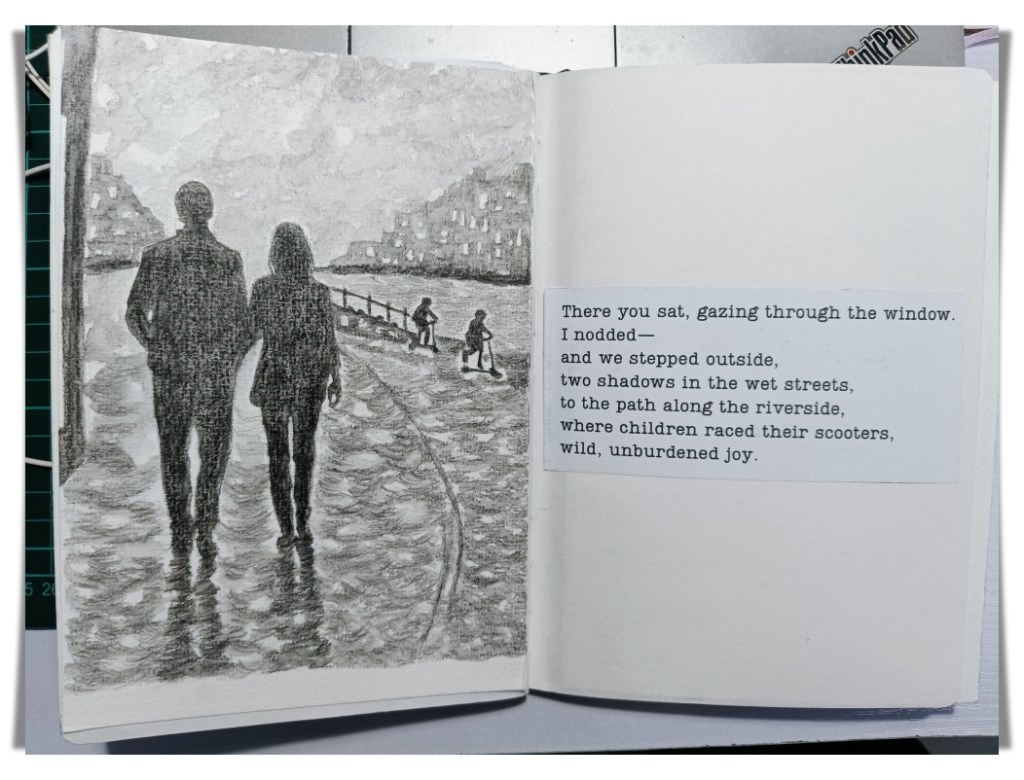
Riverside
I fall behind pretending I care about the river, when all I really want to do is watch him move ahead. He never misses anything. His hands in his pockets and his shoulders tight. But then he slows down, turns around, and gives me that look, like he’s been waiting for me all his life. I see that half-smile he only gives me. It almost feels private, something he keeps to himself and lets slip just for me.
I could live in that space between us just for the thrill of him staying still and making me want to get closer. He doesn’t say my name. He never does. He stands there with his boots on, the city and river catching in the leather of his jacket, making him look both real and unattainable.
He watches every step I take. He doesn’t fill the gap. He makes me feel the anguish of wanting to be closer. He let me reach him and let me be the one to move first. He tilts his head, keeps his eyes focused and drawls softly, “Took you long enough.”
I can’t help it. I smile. Because I know I’ll always keep chasing him, and he’ll always let me find him.
His Apartment
His apartment is nothing like I imagined, though in some ways it’s exactly what I expected. There are books all over the place. Some were stacked, some were abandoned in the middle of a thought, and some had bent pages where he stopped reading. When he isn’t looking, I run my fingers along the spines and read the titles like clues. I wonder about the books he returns to, those he doesn’t finish, and the ones he holds close. I try to picture which lines he remembered and which sentences he underlined in his mind.
His boots are next to the door, with the laces loose and the toes pointing out like he kicked them off without thinking. There’s a mug on the table with a faint coffee ring drying at the bottom. I pick it up, turn it slowly, and picture his mouth there. I always do that—touch the things he touched, like maybe I can learn something from him that he doesn’t say.
A jacket hangs off the chair, slumped over and heavy in the shoulders. It looks worn out. I wonder how long it’s been carrying him like that. A scarf draped carelessly over the back, still holding the shape of his neck. I don’t touch it. I don’t want to change how he left it.
There are pictures by the window. I look at them when he’s in the other room. Family. People I don’t know. I study them for too long, trying to remember their faces and figure out where he came from and what made him who he is now. He doesn’t explain them. I don’t ask. But my mind keeps going around and around them, restless and unfulfilled. I want to know who he was before he learned how to hold back.
In the morning, sunlight spills over the rug, revealing dust, creases, and the signs of the days he’s lived without me. I see everything. The fact that he always puts his keys in the same place. The small pile of my belongings that have started to gather—a pen, a hair tie, and a notebook that I left on purpose and pretended was an accident. He never moves them.
When I sit on his couch, I pull the blanket over my legs and breathe in his scent. His smell is faint but stubbornly sticking to the fabric. There are dents in the pillows. I press my hand into the hollow and imagine how he fell asleep there on the nights he was too exhausted to care.
In his bedroom, the bed is never made. The sheets were twisted, and the blankets were half fallen to the floor. A shirt is hanging over the chair, and the sleeves are knotted like it was taken off in a hurry. I lie there and stare at the ceiling, counting the cracks and listening to the city breathe outside. Here, my body relaxes in a way it doesn’t anywhere else. Here, his hands don’t have to hold evidence, or grief, or anything but me.
At night, I watch him sleep. I memorize how he breathes, the slight pause before it settles. I tell myself that I will remember it later. That’s what I always think. Like memory is something I can stockpile.
In the morning, the light climbs the wall slowly, indifferent. I know I’ll be leaving again. I do it all the time. But I also know that I leave parts of myself behind that are too small to see but impossible to take back. A strand of hair in his bed. A warmth that stays even after my body is gone. A familiarity he’ll feel later and not know why.
His apartment is not mine. But my desire is everywhere in it. And every time I leave, I can’t help but think that I know him better through his absence than his words.
Haunted
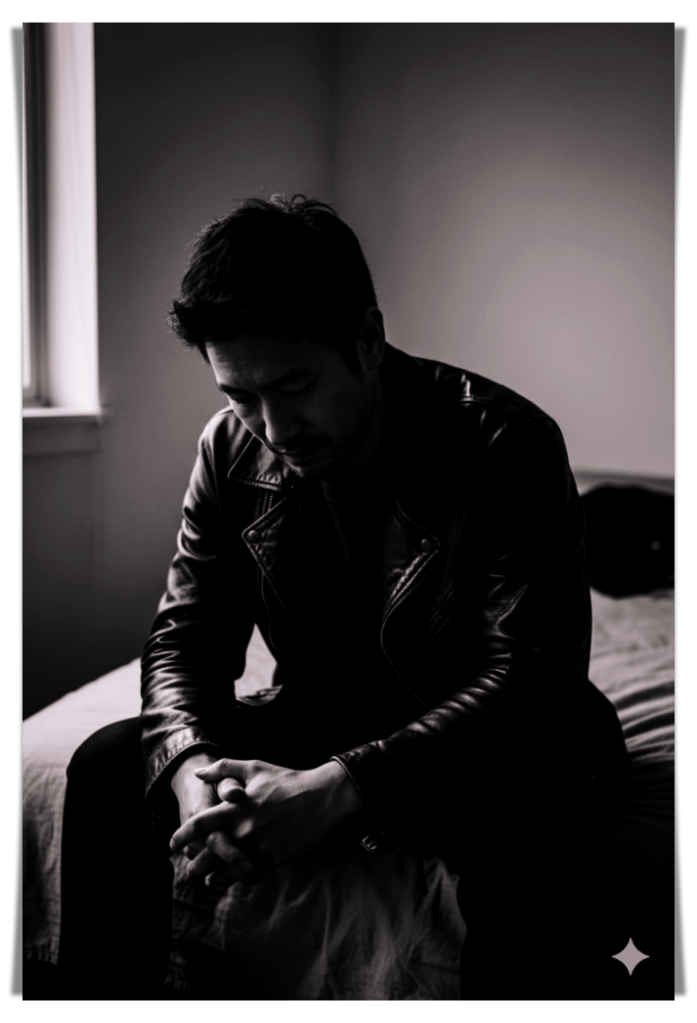
He comes in late, and the door closes quietly behind him. He doesn’t turn on the main lights; instead, he lets the dusk hang softly between us. His shoulders are hunched under the old leather jacket, and I know right away that something heavy followed him home. I can tell by the way he takes off his boots and the silence he carries with him.
He sits on the couch, elbows on his knees, head bowed, and hands dangling. There is blood on the edge of his shirt cuff, but it might not be his. I see how his fingers flex and how he runs a hand through his hair. He’s not with me yet. Still stuck in whatever he saw and can’t say out loud.
This is how I remember him: the hollows under his eyes, the day-old stubble on his jaw, the cut on his knuckle from a door he probably shouldn’t have punched. I look at him and see the small tremor in his hands and the shallow breaths he inhaled. He stares at the wall instead of me.
He doesn’t talk about work, at least not the real stuff. But the story always creeps into the room, clinging to his skin, hair, and the distance between us. I want to reach out to him, pull the darkness off his back, and hold all the sorrow he tries to hide. But I don’t. I just watch and let myself memorize him when he’s like this: unreachable, falling apart, but still here.
He finally looks up, and there’s something wild in his eyes. A flash of pain that isn’t meant for me but finds me anyway. I take it all at once. I tell myself that if I can remember him like this, haunted and broken, then nothing the world throws at us will ever make me forget him.
So I keep watching. I let my eyes linger, wanting to see every scar and every unnamed pain. I keep watching until he starts to come back, when his breathing slows and his hands stop shaking. And when he finally looks me in the eye, it feels like apologies and resignation to survive.
I write about Iban culture, ancestral rituals, creative life, emotional truths, and the quiet transformations of love, motherhood, and identity. If this speaks to you, subscribe and journey with me.
It was never loud between us. Our love never needed proof. Just subtle signs. A gaze that lasted too long. A jacket shrugged off without being asked. How his silence moved toward mine and made room.
We live above the bookstore near the station. The one with crooked shelves and a leaking pipe that drips near the poetry section. On quiet mornings, I wake first. The kettle whispers steam. He is still asleep, half-buried in the blankets, one arm flung across my side of the bed. I write before the city wakes up. One lamp on. My pen moves slowly and carefully across the page because some mornings are fragile.
Some days, we walk to the cafe where we first met. The one where the windows get foggy, and I forgot a pen once. He never mentions that he kept it. Never asks why I replaced it. But he returns it anyway, weeks later, as if it was never gone. The pen, not the moment we shared.
We have a habit of not explaining. He says it once, at the door, without turning around.
We often stroll to Yanping Riverside Park. It is our routine. We never call it that, but we keep coming back to it. On quieter days, we walk under trees that offer more than just shade. Kids dart past on scooters, while we walk slowly. His hand near mine. Sometimes he stops at the railing and looks at the river. I can feel him and the constellation he carries between us.
I learn to read his silences. The way he checks the locks twice. The way his eyes drift when he’s too tired to pretend. I never think of his silence as distance. It’s a huge part of the whole.
We don’t talk about forever. We just stay.
There are rooftops and rain, the wind carrying jasmine from someone else’s balcony. Matcha soft-serve he buys without asking. The way he looks at me when I hand him a poem. How he holds it like a feather.
We don’t make any promises. But he and I stay.
He once told me that being around me hurt him like a third lung. I don’t say anything. I just trace my thumb over his knuckles and let the silence remain. There are no anniversaries. No statements. Just the ritual of being there.
He catches me when I slip on uneven pavement. His fingers wrap around my arm like the answer to the questions I’ve been too scared to ask. He says, “I guess I’m here to catch you.” I smile and file that sentence in the back of my mind, where the most important things live.
Our life together isn’t always perfect. We fight. We turn our backs in sleep. But we stay. He doesn’t save me. I don’t save him. We just stop pretending we don’t need each other.
And in this world we’ve carved our lives into, the silence isn’t absence—it’s alive, trembling like a living thing.
Olivia Atelier offers printables, templates, and art designed to inspire reflection, healing, and creativity. Visit Olivia’s Atelier for more.
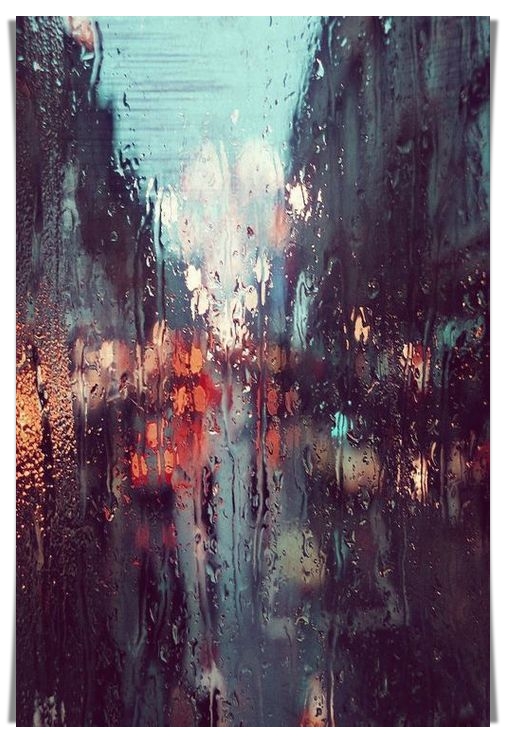
That evening it was pouring. The rain was unremarkable. It was a consistent, calm deluge that dulled the bustling city. Everything seemed muted: the buildings, the street signs, and the people walking by with their umbrellas slanted against the wind. The pavement glistened under headlights and puddles reflected fragments of neon from signs overhead. The air smelled like coffee, wet concrete, and something faintly sweet, perhaps caramel from the cafe I frequented. It was a little corner cafe with fogged-up windows, dim lighting, and jazz playing softly in the background. It was a place that usually smelled of freshly ground beans and spices.
I was there, like I usually am. I sat by the window with my notepad open and a blue pen in my fingers. I wasn’t writing, though. I was simply watching the rain blur the world outside. It was one of those times when the silence felt thicker than normal, and you began to hear the sound of your breathing.
Then he walked in.
I noticed the rain on his jacket first. He brushed it off at the door and ran a hand over his damp hair. He had short, tidy hair. There was something about him that I couldn’t quite put my finger on. A fluidity in his movements, a stillness that felt almost magnetic. Like he belonged in every room without having to announce it. Was he special? Perhaps not. All I could say was he knew how to take up space without drawing attention. He looked around and saw me. I shifted my gaze to the rivulets of rain on the glass.
He sat a few tables away, ordered a coffee, and glanced out the window just like I did. I returned to my notepad, pretending not to notice him. I could sense him. He was handsome—strong jaw, deep-set brown eyes, tall, clean-shaven, with strong hands and long fingers that lightly tapped against his cup. There was something else, but I let that thought slide.
He didn’t talk to anyone. He slowly sipped from his cup. At one point our eyes met briefly.
And deep down, I knew that this moment, this stranger, meant something. Not in a romantic sense, but as if some quiet part of me recognized something familiar. I couldn’t pinpoint what exactly it was, but I felt silly for believing so.
When I got up to leave, I could feel his eyes on me. The bell above the door chimed as I stepped into the rain.
At home, I realized I had forgotten my pen. I shrugged it off at first. It was just a pen. He was just a man.
But still that encounter stayed with me. I couldn’t explain the strange pull it had on me. It reminded me that even in a foreign city where no one knows me, the world can still offer surprises. That maybe connections, even with strangers, don’t always require explanation. Some moments just are.
And maybe that was the positive part. I didn’t feel less lonely. It simply reminded me that I’m still capable of feeling something real. Even if it begins and ends only in my mind.
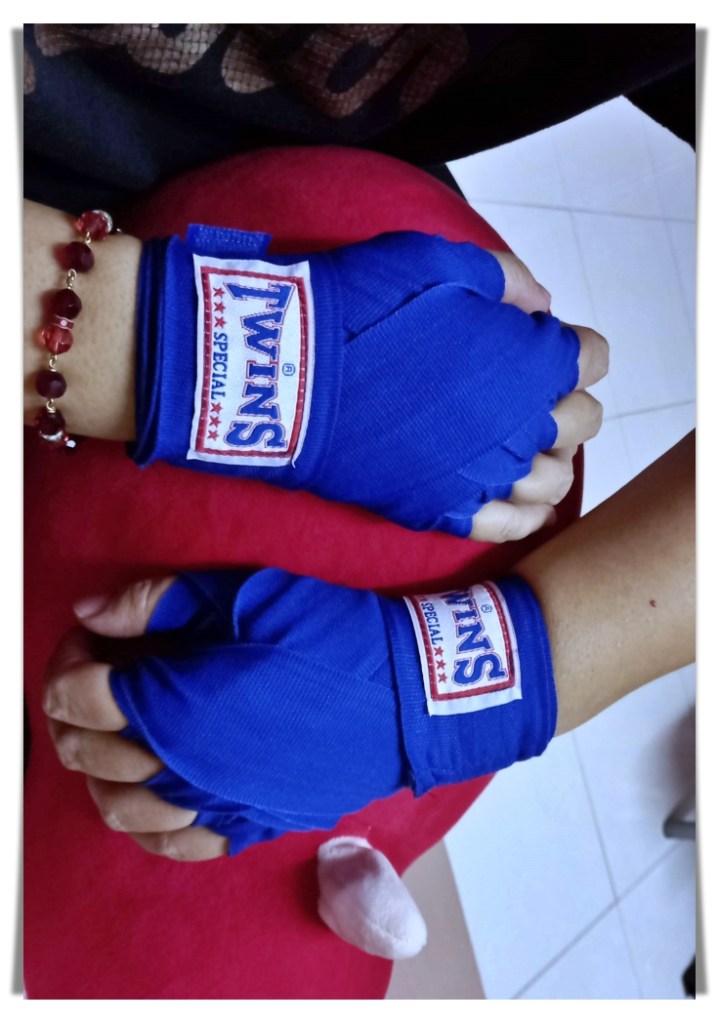
In 2021, I started doing boxing workouts, not to compete in fights, but to regain confidence in myself. It’s been my way of regaining energy, confidence, and joy. This mini story offers a little insight beneath that fire.
He walks with me to the gym, his hand brushing against mine every few steps. It’s enough to remind me that he’s here.
The sun has set low behind the trees, enveloping everything in that golden hour glow I like. The city noise fades. My hoodie clings to my lower back, and my skin feels warm before I’ve even thrown a single punch. I see him eyeing me out of the corner of his eye, like he usually does.
“You’re quiet,” I observe, glancing over.
He grins. “Just thinking how hot you look when you’re about to ruin someone.”
I roll my eyes but can’t control the smile that appears on my mouth. He knows. He’s seen me in the ring—gloves on, hair slick with sweat, arms sharp and fierce. He’s seen me transform into someone else. Or maybe become more of who I’ve always been, despite the weight of years, expectations, and softness I had to bear.
We pause at a bench near the entrance. I sit and sip my water. He leans on the railing next to me, close but not touching. He’s giving me space to breathe.
“I used to hate this body,” I mutter softly. “I used to think it wasn’t mine. Huge, heavy, thick in the wrong places.”
He does not interrupt.
“Boxing gave it back to me. I no longer care about losing weight. All that matters is the fire in my blood, the energy and power it gives me.
He turns to face me, his eyes serious. “It shows. The way you carry yourself now. “It’s… magnetic.”
I laugh. “Magnetic, huh?”
“Absolutely.”
I stand, slinging my towel over my shoulder. He leans closer.
“Try not to knock anyone out in there.”
“No promises.”
And then I walk in, knowing he’s watching. I know he’ll be there when I’m done. And I know too that I’ve already won something far more important than a fight.
And here’s a poem to accompany this story.
Grit
They said my body was a church. No, it was a battlefield— all pew and destruction. I learned to swing to pull breath from the edge of bruise, to let sweat baptize what shame could not. I fought like a searing fire, feral that dances, not soft or safe.
He watches, as if I was the last honest thing he’d ever lay eyes on.
This prose poem is not exactly a story, but something I carry deep in my heart. Some of it might be true. Some of it might be fiction. I don’t think it matters. The man. The city. Our warren of wild, soulful, tender “rabbits”—that’s what we called our children. It started as a joke between us. Five—wild, loud, deeply loved—and a sixth on the way. We bred like rabbits.
It’s a dream, truth and fiction, a love poem, but a lament too. A grief for a love suspended across timelines and realities. A love that endures in absence. In what could have been. And maybe—what still is, in another dimension of the heart.
What job would I do for free? I’d write. I’d write about things no one else sees or knows about. About memories. About experiences no one else stayed long enough to remember. I’d write about the years in Taipei, about things that transpired long ago. Maybe they’re truth. Maybe fiction. No one needs to know. I’d write about the loneliness of walking alone through Da’an Forest Park, how the trees sheltered my secrets. About stray cats weaving between puddles in Datong alleyways. About the buzz of Ningxia night market, the smell of grilled squid, sweet mochi, stinky tofu hung in the air like incense for the gods of desire. I’d write about him, about you.
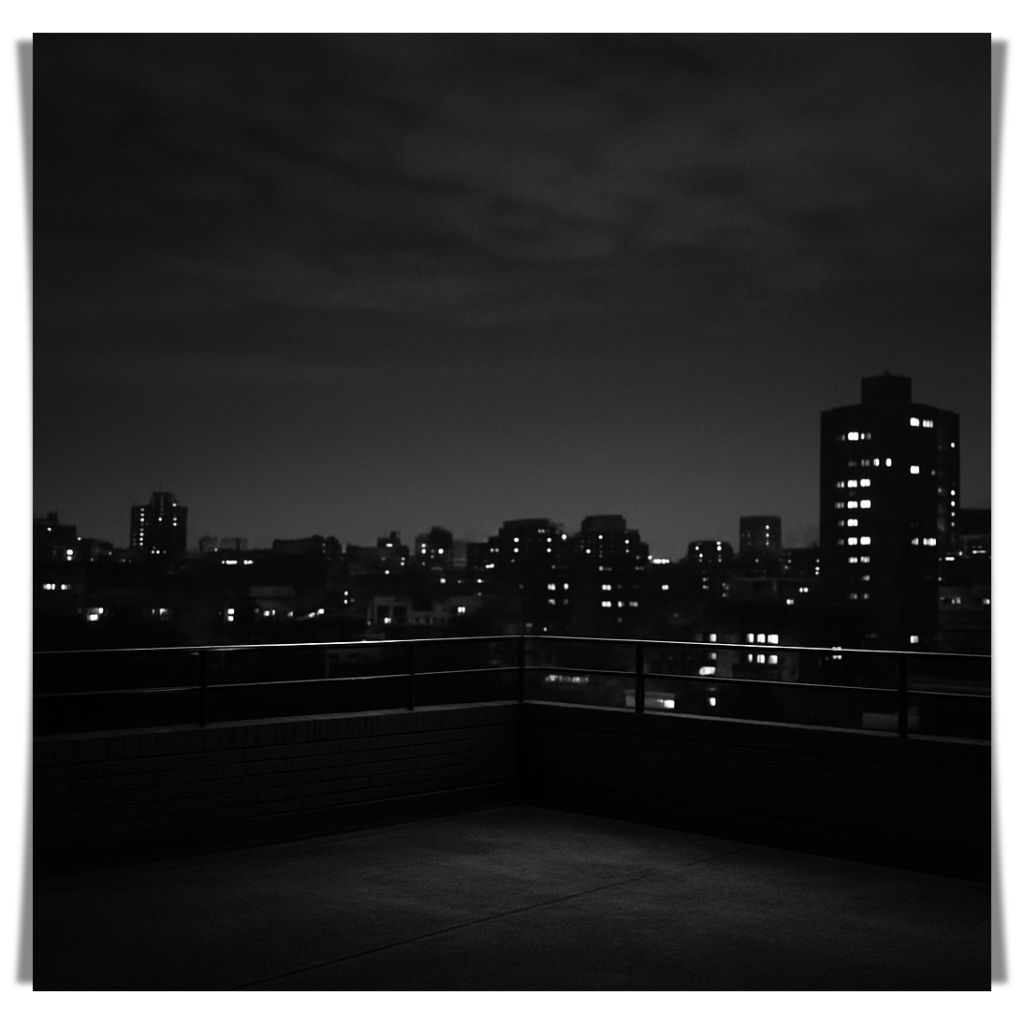
Our rooftop talks, sunsets at Tamsui Lover’s Bridge, our trips to Jiufen, to Sanmao’s house in Chingchuan, to Okinawa, to Kunming. About how silence is more powerful than words when two people want to touch but don’t, not yet, not now. I’d write about him walking the city when sleep won’t come— crime cases wrapped around his mind like smoke. About the nights he barely made it home before dawn. Keys tossed, shoes kicked off, collapsing into the couch still in his wrinkled shirt, smelling of gunpowder, coffee, and the rain that doesn’t wash anything clean. And in that half-dream state, he’d swear he could feel me there—my warmth brushed against his back.
I’d write about the nights when ghosts clawed their way back into his mind, when the faces of the dead refused to fade, and he’d hold me close, mooring himself in the beat of my skin, needing to remember he was here, not there. I’d write about the version of him no one sees—the one who stares into the dark, haunted, distant. The one I loved quietly. The one I reached for with firm hands, fingers running through his hair as if I could smooth away everything he didn’t say. I’d write about the moments when I knew that no matter how much I loved him, a part of him would always remain just out of reach.
And I’d write about our sweet rabbits. Our warren of tenderness and imagination. Aidan Do, Lina Do, Elias Do, Rayya Do, Noel Do. They were born out of desire and longing, not blood, and were spun into life with whispered what-ifs and gentle memories. Maybe no one else remembers them. Do you? I do. Their stories return to me while folding laundry or when my tea goes cold. Even now, two decades later. Aidan, with his quiet mischief and cloud-gazing heart. Lina, messy and luminous, chasing the world with charcoal hands and galaxy eyes. Elias, our sweet Elias, who has your eyes, hands, and feet, keeper of broken things. Rayya, a breeze in motion, laughter tucked behind her teeth. Noel, youngest and oldest somehow, knowing the end before the beginning even began.
They were ours. They are ours.
You brought them to life with your words, love. And I gave them breath with my remembering. We made them together. If I could bend time, I’d keep them safe in a garden behind our home. You’d sketch while I write. We’d argue over dinner, then laugh about it before bed. On mornings we rushed to work and school, you, darling, begged me to bend over the sink while our babies bickered in the car. And on rainy nights, we’d tell stories to our rabbits about the world before and after us and everything we tried to save.
But we can’t bend time.
So I write. Even when no one asks me to. Even when no one reads. Even when you forget me and our babies. Because, love, some stories don’t want to be sold. Some stories just want to be kept. And some jobs are not about money. They’re about keeping love from vanishing.
It started with the way he looked at the tea I made.
“You put mushrooms in this?” he asked, peering into the mug.
I fought a smile. “It’s reishi. It’s good for your liver. Just drink it.”
He leaned in and sniffed, suspicion all over his face. “It smells like regret.”
That got a laugh out of me. “Don’t be such a baby.”
He narrowed his eyes, took a dramatic sip, and instantly recoiled. “Are you trying to kill me? Admit it. This is revenge for the pen.”
“You stole it,” I said.
“I borrowed it indefinitely.”
He drank another sip, dramatically clutching his chest. “If I die from this, please delete my browser history.”
I burst out laughing again.
He looked pleased with himself.
I tried to change the subject, flipping through a magazine on the table. He leaned over, peering at a photo of a hairless cat.
“Is that a testicle with whiskers?”
I almost choked on my tea.
“That’s it. Get out of my apartment.” I was still laughing.
He held up his hands. “I’ll go. But only if you admit that laugh means you’re secretly in love with me.”
I threw a cushion at him. He caught it midair and hugged it to his chest. “Even your cushion loves me.”
“You’re so full of yourself.”
He wandered over to my bookshelf, checking the titles. “Didn’t peg you for a Murakami girl.”
“Didn’t peg you for someone who uses the word ‘peg.’”
He smirked. “Careful. You’re laughing again.”
And I was.
Later, when the conversation slowed, we sat on the couch. I didn’t want him to leave. Not just yet. He retrieved a pen from my desk and held it in front of him.
“This one yours too?”
“Maybe.”
“Should I take it? Just in case I need another reason to come back.”
He didn’t need a reason.
But I let him have it anyway.
I Gave You Tea
I gave you tea for healing. You drank it. Your fingers brushed mine when I handed you the cup, and neither of us flinched.
You made a face, said it tasted like regret.
I laughed. And laughed again.
See, love— I don’t laugh easily, like something that escapes from deep inside, and betrays the body.
I gave you bad tea. And you say things that unmake me in all the right places.
I don’t usually say “no” out loud. Not like people imagine—with steely resolve or loud announcements.
But I speak quietly—in small decisions, in between invitations, or when I left several trivial texts unanswered.
When I moved to Taipei two decades ago (for work), I didn’t have a set list of goals. I arrived with curiosity and a bag full of lonely ambition. The first several months felt like a jumble of polite conversations and an endless stream of data on spreadsheets. I attended dinners with coworkers because I had to, not because I wanted to. I replied yes because of responsibility but no in my heart.
However, I gradually began to make other choices.
I stopped wasting my evenings with pointless nonsense. I found cafes with fogged-up windows and dim lighting where I could write. I stopped accepting weekend plans simply to avoid being alone. I began declining activities that diverted my attention away from what was important: reflection, art, and authentic experiences.
Some people express “no” by closing doors. I say it while slowly walking in the opposite direction.
I may not always know where I’m heading, but I do know what I’m no longer willing to participate in. That’s a start.
These days, my “no” does not imply rejection. It’s a diversion or a simple acknowledgment of the space I require to breathe, create, and exist.
I recall the moment I nodded and allowedhimto sit across from me in that café. It was hardly anything. However, it was pregnant with meaning.
I had always said no to strangers, spontaneous encounters, and anything that threatened the careful solitude I had built around myself like armor. But that day, I didn’t.
I didn’t say “yes” aloud. I simply didn’t say “no”.
And sometimes, that’s okay.
Quiet Nod
It wasn’t a yes. Just a twitch in my neck and a rebellion beneath my breasts— a dare whispered to the soft animal of my body: Stay.
You dragged the chair and stirred something feral I’d buried beneath work and loneliness.
You sat and asked nothing. Still, I answered by not running.
And maybe that’s how it starts— without longing, but with the smallest betrayal of your own solitude.
Maybe the truest ‘no’ is the one we say to fear—so that something else can finally answer yes.
This is a short excerpt from my novella-in-progress. The story unfolds through fragments and moments that shape the narrative from beginning to end. It follows two people (a foreign woman and a local man) who meet by chance in Taipei, Taiwan, and how their bond deepens through small, ordinary exchanges.
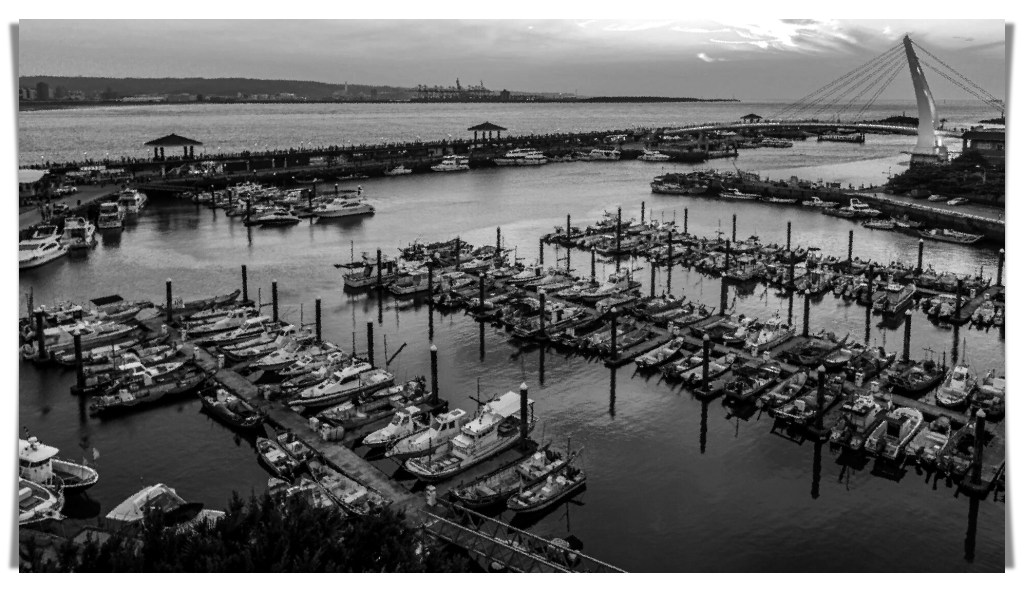
This scene takes place at Tamsui Fisherman’s Wharf, on a cold spring Sunday.
I chose to strip this piece (and the whole novella) of unnecessary description, leaving only the essentials—just enough for the reader to fill in the rest.
English is my third language. I used to think I needed big words or beautiful sentences to be taken seriously. But I don’t believe that anymore. This quote by Haruki Murakami reminds me why I write the way I do:
“Writing in a foreign language, with all the limitations that it entailed, removed this obstacle. It also led me to the realisation that I could express my thoughts and feelings with a limited set of words and grammatical structures, as long as I combined them effectively and linked them together in a skilful manner. Ultimately, I learned that there was no need for a lot of difficult words – I didn’t have to try to impress people with beautiful turns of phrase.”
I hope this piece lingers with you in its simplicity. If anything I write resonates with you, feel free to subscribe for updates on the novella and future posts.
I stared at the message for a while. It was after three in the afternoon. The sky was cloudy, and it was quiet and dreary outside. I had just finished folding laundry, still in my shorts and tank top.
“Okay. But where?”
He picked me up at four. The car was warm, and the radio was set to low. We didn’t say anything on the journey to Tamsui. The windows blurred a little from the cold, and he touched the heater with the back of his knuckle. I remember watching the skyline thin out as the river widened.
It was a chilly spring day; it was slightly sunny, but the light appeared warmer than it actually was. I pulled the jacket around me as we strolled along the wharf. Couples were everywhere, holding hands and snapping photos, while children laughed with sticky hands.
When the cool breeze began to blow, he stayed close.
We went past the food kiosks, which offered grilled squid, fried sweet potatoes, and sugar-coated strawberries on skewers. He stopped at a freezer cart and bought us two soft-serve cones: one matcha and one black sesame.
I gave him a look. “Ice cream?”
He smirked. “Trust me.”
We sat on a bench facing the docks, eating silently. The ice cream quickly melted and dripped onto his wrist. He licked it clean without a word. I giggled. He looked at me and smiled.
As twilight drew near, we strolled toward the bridge.
The Lover’s Bridge arched across the river, its pale structure gleaming in the late afternoon sun. Tourists passed us, cameras in hand, but we strolled slowly, side by side, as if we had all the time in the world.
We stopped midway.
From there, the view widened. The water below shimmered with long strokes of orange and pink. The sun fell lower beneath the horizon. Boats bobbed softly in the harbor.
I stood silently beside him. The breeze brushed a loose strand of hair across my cheek.
We did not talk because there was no need for words.
I could feel him beside me, and that was enough.
We neither touch nor lean in.
But somehow, in that hush of twilight, we felt closer than we had before.
When we eventually turned to go, he said nothing. Neither did I.
But I believe we both realized something had changed.
I found the tattoo parlor while wandering aimlessly through one of the narrow, lantern-lit streets of Datong District. The parlor looked old, tucked between a toy store and a Chinese medicine hall.
The needle vibrated and pierced. I closed my eyes and welcomed the sting. I imagined the ink seeping in, letter by letter.
Yours.
It was on my left breast, right above my heart.
Days later, his lips are on my skin. When he reaches the ink, he stops. His fingers tighten ever so slightly against my ribs. He exhales slowly. No questions asked. No words uttered. He kisses it tenderly at first, then again, firmer this time. His tongue traces the letters.
That night, it is different. Neither rough nor fast.
Just intense.
The Present
It’s been years. I have gray hairs now, mostly at my temples. I don’t think of him often—at least, not like I used to. But today, I catch a glimpse of myself in the mirror. Bare skin. My body is softer now, but there it is.
Yours.
My fingers brush over the letters, the ghost of his lips flickering behind my eyes. I should get it removed. I tell myself that sometimes.
But I won’t.
Back then, his fingertips grazed the ink absentmindedly. While the night bird called in the distance, he’d press his lips against it and whisper—mine.
Now, my fingers trace the letters, following the path his touch once took. The ink remains, but his touch is long gone. I keep waiting for the pain to dull, but it never does.
Back then, it was a vow.
Now, it’s just a relic.
Someone new notices it once. His fingertips pause over the letters.














 Olivia's Atelier